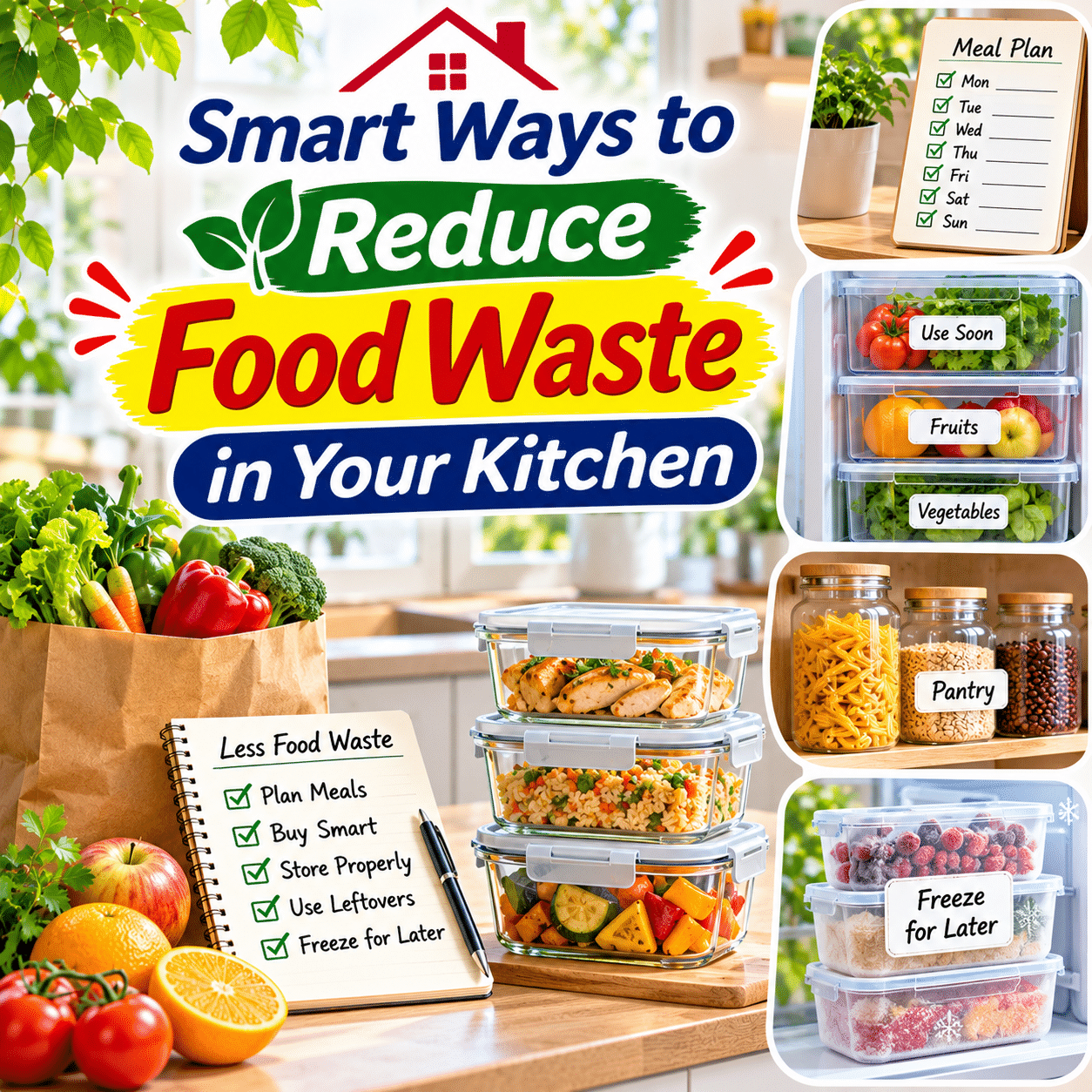
Food waste is an everyday challenge that can develop quietly in even the most organized kitchens. A forgotten container of leftovers, vegetables that lose their freshness, ingredients purchased without a clear plan, or pantry products that remain unused for months can all contribute to food being discarded unnecessarily.
Although individual amounts may seem small, food waste can gradually affect household budgets, kitchen organization, and the resources used to produce, transport, and prepare food.
Reducing food waste does not mean keeping every ingredient indefinitely, eating food that may no longer be safe, or following complicated meal-planning systems. Instead, it involves making thoughtful decisions about what to buy, how to store ingredients, when to prepare meals, and how to use food before it deteriorates.
Many effective strategies are surprisingly simple. Checking the refrigerator before shopping, planning meals around ingredients already available, storing produce appropriately, freezing suitable foods, and using leftovers creatively can all help reduce unnecessary waste.
The most successful approach is one that fits real household routines. A person cooking for one may need different strategies from a large family, while someone who prepares meals daily may organize ingredients differently from a household that cooks only a few times each week.
This guide explores practical, sustainable ways to reduce food waste in your kitchen, from smarter grocery shopping and food storage to portion planning, leftover management, and everyday habits that make better use of the food you already have.
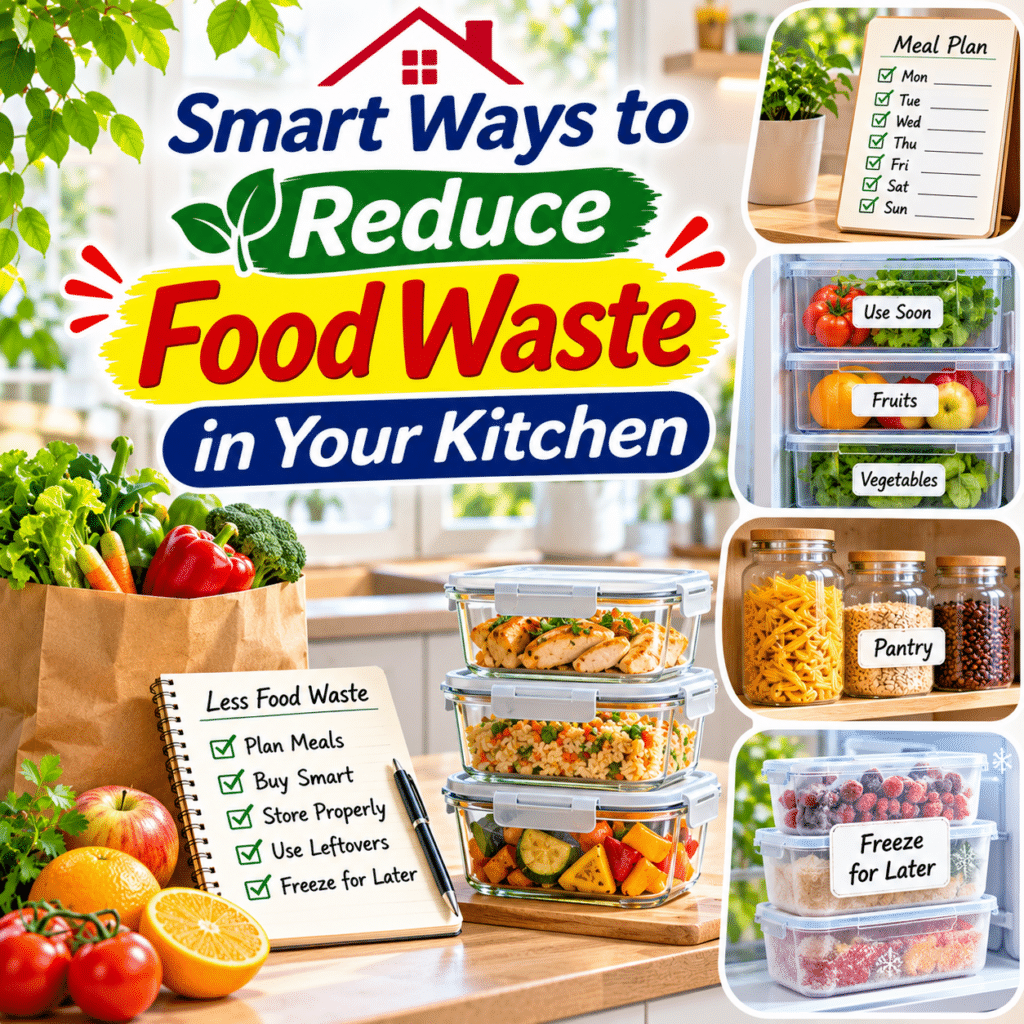
1. Understand Why Food Waste Happens at Home
Before changing kitchen habits, it helps to recognize the common reasons food is discarded.
Food waste is not always caused by buying excessive quantities. It can also result from poor visibility, unsuitable storage, changing schedules, or uncertainty about whether ingredients are still safe to eat.
Common Causes of Household Food Waste
| Cause | What Usually Happens | Practical Solution |
|---|---|---|
| Buying more than needed | Ingredients spoil before they can be used | Plan realistic quantities |
| Forgetting refrigerated food | Items remain hidden behind newer groceries | Improve refrigerator visibility |
| Poor meal planning | Perishable ingredients are purchased without a purpose | Plan meals around existing supplies |
| Improper food storage | Produce or leftovers deteriorate prematurely | Follow suitable storage practices |
| Preparing oversized portions | Excess cooked food is repeatedly discarded | Adjust serving quantities |
| Confusing date labels | Usable food may be discarded unnecessarily | Understand label meanings while following safety guidance |
| Ignoring leftovers | Cooked food remains unused until it spoils | Plan specific leftover meals |
| Overcrowded pantry shelves | Older ingredients become difficult to find | Organize by category and date |
| Purchasing large packages | Food cannot be consumed before quality declines | Compare package size with actual consumption |
| Changing household schedules | Planned meals are not prepared | Keep meal plans flexible |
| Unclear freezer contents | Frozen food is forgotten | Label and inventory freezer items |
| Excessive trimming | Edible portions are discarded during preparation | Use appropriate edible parts when safe |
Recognizing these patterns makes it easier to focus on the habits that will have the greatest practical effect.
2. Start With a Simple Kitchen Food-Waste Assessment
A useful first step is observing what food is regularly discarded.
This does not require complicated tracking software or a detailed household audit.
Notice What You Throw Away
For one or two weeks, pay attention to discarded food.
Common examples include:
- Wilted vegetables.
- Overripe fruit.
- Uneaten cooked meals.
- Forgotten leftovers.
- Expired or spoiled dairy products.
- Stale bread.
- Unused fresh herbs.
- Partially used sauces.
- Pantry ingredients that are no longer suitable for consumption.
Consider why each item was discarded.
Was too much purchased? Was it stored incorrectly? Did a meal plan change? Was the item forgotten?
Identify Recurring Patterns
If fresh herbs frequently spoil, buying smaller quantities or freezing suitable herbs may help.
If cooked rice is often left over, preparing smaller portions may be more effective.
If fruit becomes overripe, purchasing a mixture of ripe and less-ripe fruit may better match consumption patterns.
Focus on Preventable Waste
Some food scraps, such as certain shells, pits, and inedible peels, are unavoidable.
The main priority should be reducing waste from food that could reasonably have been eaten.
3. Check Your Kitchen Before Grocery Shopping
One of the simplest ways to reduce food waste is to review existing ingredients before purchasing more.
Without this step, households may repeatedly buy products they already have.
Check the Refrigerator
Look for:
- Vegetables that need to be used soon.
- Fruit approaching peak ripeness.
- Opened dairy products.
- Cooked leftovers.
- Partially used ingredients.
- Foods with approaching use-by dates.
Identify ingredients that could form the basis of upcoming meals.
Review the Pantry
Check dry goods such as:
- Rice and grains.
- Pasta.
- Canned foods.
- Beans and lentils.
- Flour.
- Baking ingredients.
- Cooking oils.
- Condiments.
Avoid purchasing duplicates unless they are genuinely needed.
Look Through the Freezer
Frozen ingredients are easy to forget.
Review available proteins, vegetables, bread, and prepared meals before adding more.
Build a Shopping List Around What Is Missing
Instead of planning meals entirely from new purchases, begin with ingredients already available.
For example, if the refrigerator contains carrots, cabbage, and eggs, consider meals that use those ingredients before buying additional vegetables.
This approach can reduce unnecessary purchases and make better use of existing food.
4. Plan Meals Without Making the Schedule Too Rigid
Meal planning can reduce food waste, but an overly detailed plan may become difficult to follow.
The most effective system is realistic and adaptable.
Plan a Few Core Meals
Rather than assigning a completely different recipe to every day, choose several meals that use overlapping ingredients.
For example:
- A vegetable stir-fry.
- A soup using similar vegetables.
- A rice or noodle dish.
- A meal incorporating suitable leftovers.
This allows ingredients to be used across multiple preparations.
Account for Your Actual Schedule
Consider which days are likely to involve cooking at home.
Avoid buying fresh ingredients for meals that may not happen.
Include a Flexible Meal
Leave room for a meal based on ingredients that need to be used soon.
This could be a soup, omelet, grain bowl, or another adaptable dish.
Prioritize Perishable Ingredients
Plan meals using delicate greens, fresh herbs, seafood, and other highly perishable foods earlier, while following their specific storage and safety requirements.
Longer-lasting ingredients can be reserved for later.
5. Buy Realistic Quantities Instead of Automatically Choosing Larger Packages
Large packages may appear economical, but they are not always the best value when part of the contents is wasted.
Consider Actual Consumption
Before buying, ask:
- How often will this ingredient be used?
- How much is required for planned meals?
- Can it be stored safely until needed?
- Can a portion be frozen?
- Is the package size practical for the household?
Compare Usable Value
A larger package with a lower price per unit may still cost more if a substantial portion is discarded.
For example, purchasing a large bag of delicate greens may not be economical for a household that uses only a small amount each week.
Choose Smaller Quantities for Highly Perishable Foods
Smaller purchases may be especially useful for:
- Fresh herbs.
- Leafy vegetables.
- Berries.
- Certain dairy products.
- Fresh seafood.
- Specialty ingredients used infrequently.
Use Bulk Buying Selectively
Bulk purchasing can work well for foods with suitable storage characteristics and predictable consumption.
Dry grains, certain canned products, and appropriately frozen ingredients may be practical examples.
Always consider storage conditions and product shelf life.
6. Organize Your Refrigerator to Make Food Visible
A refrigerator can contain plenty of food while still making ingredients difficult to find.
When products are hidden behind other containers, they are more likely to be forgotten.
Create Simple Refrigerator Zones
| Refrigerator Area | Suitable Organization Principle |
|---|---|
| Upper and middle shelves | Keep appropriate ready-to-eat foods and leftovers visible |
| Lower shelves | Store raw animal products in leakproof containers, separated from ready-to-eat foods |
| Produce drawers | Store compatible fruits and vegetables according to their needs |
| Door compartments | Use for products suitable for the door’s more variable temperatures |
| Designated use-soon area | Keep suitable ingredients needing prompt attention visible |
Exact shelf placement should follow the refrigerator manufacturer’s guidance and the needs of specific foods.
Avoid Overcrowding
A refrigerator packed too tightly can restrict airflow and make ingredients difficult to see.
Leave enough room for appropriate cooling and easy access.
Use Clear Containers When Practical
Transparent food-safe containers can make leftovers and prepared ingredients easier to identify.
Keep Older Products Visible
Place suitable older products toward the front so they are more likely to be used before newer purchases.
This is especially useful for products with similar storage requirements.
7. Maintain Appropriate Refrigerator and Freezer Temperatures
Good organization cannot compensate for unsafe storage temperatures.
Proper refrigeration is essential for reducing spoilage and protecting food safety.
Recommended Temperature Targets
| Appliance | Recommended Temperature |
|---|---|
| Refrigerator | 40°F (4°C) or below |
| Freezer | 0°F (-18°C) or below |
These are widely used food-safety targets.
A refrigerator thermometer can help verify actual conditions, especially if the appliance’s temperature display is inaccurate or unavailable.
Refrigerate Perishable Foods Promptly
Perishable foods generally should not remain at room temperature for more than two hours, or one hour when the surrounding temperature exceeds 90°F (32°C).
Avoid Relying on Smell Alone
Harmful microorganisms may be present even when food looks and smells normal.
Use appropriate storage times, temperature controls, product instructions, and food-safety guidance.
Keep Appliance Doors Closed When Possible
Avoid leaving refrigerator and freezer doors open unnecessarily.
Regularly check that seals close properly.
8. Store Fruits and Vegetables According to Their Needs
Different types of produce have different storage requirements.
Treating all fruits and vegetables the same way can shorten their useful life.
General Produce Storage Approaches
| Produce Type | Practical Storage Consideration |
|---|---|
| Leafy greens | Refrigerate appropriately and manage excess moisture |
| Berries | Refrigerate promptly; wash shortly before use unless following a suitable prewashing method |
| Apples | Refrigeration can help maintain quality |
| Bananas | Ripen at room temperature; refrigerating ripe bananas may darken the peel |
| Potatoes | Store in a cool, dark, well-ventilated place, following appropriate food-safety guidance |
| Dry onions | Store in a cool, dry, ventilated area |
| Tomatoes | Storage depends on ripeness and intended use |
| Fresh herbs | Use storage methods suited to the particular herb |
| Carrots | Refrigerate appropriately to maintain freshness |
| Citrus fruit | Refrigeration may help extend storage life |
These are general guidelines. Storage needs can vary with produce variety, ripeness, climate, and packaging.
Separate Ethylene-Sensitive Produce When Useful
Some fruits release ethylene gas as they ripen.
Ethylene can accelerate ripening or deterioration in certain nearby produce.
Apples, bananas, and other ethylene-producing fruits may need separation from sensitive vegetables when practical.
Avoid Excess Moisture
Excess moisture can encourage deterioration in some produce.
However, certain vegetables benefit from appropriately controlled humidity.
Use storage methods suited to the ingredient rather than applying one rule to everything.
9. Use the First-In, First-Out Principle
First-in, first-out, often abbreviated as FIFO, is a simple inventory practice.
It means using older suitable ingredients before newer ones.
Apply FIFO to Pantry Storage
When bringing home new products, place them behind older equivalent products when practical.
Use older packages first, provided they remain safe and appropriate for consumption.
Apply FIFO to Refrigerated Foods
Check existing products before opening new containers.
Avoid keeping several partially used packages of the same ingredient unless necessary.
Apply FIFO to Frozen Foods
Label freezer items with their contents and freezing dates.
Use older suitable packages before newer ones.
Remember That FIFO Does Not Override Safety
An older food item should not be consumed merely because it was purchased first.
Always consider spoilage, storage conditions, use-by dates, and applicable safety recommendations.
10. Understand Food Date Labels
Food date labels can be confusing because different terms may refer to quality, safety, or regulatory requirements.
Their meanings can vary by country and product category.
Common Date Label Terms
| Label | General Meaning | Practical Consideration |
|---|---|---|
| Best Before / Best If Used By | Often indicates expected quality under stated storage conditions | Quality may decline after the date; assess applicable safety guidance |
| Use By | May indicate a safety-related deadline, depending on jurisdiction and product | Follow the date and relevant safety instructions |
| Sell By | Often relates to retail inventory management | Not necessarily a consumer safety deadline |
| Freeze By | May indicate a recommended time for freezing to maintain quality | Follow packaging and food-safety instructions |
Do not assume all date labels are interchangeable.
Follow Local Rules and Product Instructions
Food labeling regulations differ between regions.
Always follow applicable local guidance and manufacturer instructions.
Never Ignore Signs of Spoilage
Visible mold, unusual texture, damaged packaging, or other concerning changes may indicate that food should be discarded.
However, the absence of visible spoilage does not guarantee safety.
Avoid Risky Taste Tests
Do not taste questionable food to determine whether it is safe.
When safety is uncertain, discarding the food is preferable to risking illness.
11. Store Leftovers Safely and Make Them Easy to Use
Leftovers can reduce food waste when handled properly.
However, forgotten or improperly stored leftovers may become another source of waste.
Refrigerate Promptly
Place perishable cooked food into refrigeration within recommended time limits.
Divide large quantities into shallow containers to help them cool more quickly.
Label Leftovers
A simple label can include:
- Name of the food.
- Date prepared.
- Intended use when helpful.
Follow Safe Storage Timeframes
Many cooked leftovers can generally be refrigerated for three to four days at 40°F (4°C) or below.
Some foods have different requirements, so follow relevant food-specific guidance.
Freeze Suitable Portions
If leftovers will not be eaten within a safe refrigerated period, freezing them promptly can be useful.
Reheat Appropriately
Many leftovers should be reheated to an internal temperature of 165°F (74°C).
Use a food thermometer when appropriate.
12. Turn Leftovers Into New Meals
Leftovers do not always need to be served exactly as they were originally prepared.
With appropriate handling, some cooked ingredients can become the basis of another meal.
Practical Leftover Ideas
| Leftover Ingredient | Possible New Use |
|---|---|
| Cooked vegetables | Soup, omelet, grain bowl |
| Cooked chicken | Sandwich, salad, soup |
| Cooked rice | Rice bowl or properly reheated fried rice |
| Roasted vegetables | Wrap, pasta dish, grain bowl |
| Cooked beans | Soup, salad, spread |
| Plain cooked pasta | Pasta salad or another suitable dish |
| Stale but safe bread | Toast, croutons, breadcrumbs |
| Cooked potatoes | Hash, soup, potato cakes |
| Suitable fruit | Smoothie, cooked fruit topping |
| Cooked lentils | Soup, grain bowl, vegetable patties |
Keep Food Safety in Mind
Transforming leftovers into another recipe does not reset their safe storage period.
Only reuse food that has been handled and stored appropriately.
Avoid Repeated Temperature Changes
Repeatedly warming and cooling large quantities can increase food-safety risks.
Portion leftovers before storage when practical.
Plan Leftover Meals Intentionally
Instead of waiting until leftovers become urgent, assign them a place in the next meal or two.
13. Learn How to Freeze Foods Effectively
Freezing is one of the most useful methods for preserving suitable ingredients and reducing waste.
It can help households manage changing schedules and avoid discarding food that cannot be used immediately.
Foods Commonly Suitable for Freezing
Depending on preparation and intended use, examples include:
- Bread.
- Cooked soups.
- Suitable cooked meals.
- Many vegetables.
- Certain fruits.
- Cooked beans.
- Appropriate meat and poultry.
- Some sauces.
- Fresh herbs prepared for freezing.
Not every food freezes well in terms of texture or quality.
Divide Food Into Practical Portions
Freeze amounts that match likely future meals.
Smaller portions can be easier to thaw and use without unnecessary waste.
Use Freezer-Suitable Packaging
Choose appropriate containers or freezer bags.
Reduce unnecessary air exposure while allowing for expansion in foods that require headspace.
Label Everything
Include the food name and freezing date.
For prepared meals, additional notes may be helpful.
Thaw Safely
Suitable methods include thawing in the refrigerator, in cold water with appropriate precautions, or in the microwave when the food will be cooked immediately afterward.
Do not thaw perishable foods on the counter at room temperature.
14. Reduce Waste From Fresh Herbs
Fresh herbs are flavorful but can deteriorate quickly, especially when purchased in quantities larger than needed.
Buy According to Planned Meals
Choose realistic quantities rather than purchasing large bunches without a clear purpose.
Use Appropriate Storage Methods
Some herbs benefit from refrigeration with controlled moisture.
Others may be stored differently depending on their characteristics.
Freeze Suitable Herbs
Chopped herbs may be frozen for later use in cooked dishes.
Texture may change after freezing, so frozen herbs are often more suitable for cooking than fresh garnishes.
Incorporate Herbs Into Multiple Meals
For example, suitable herbs can be used in:
- Soups.
- Sauces.
- Omelets.
- Rice dishes.
- Vegetable preparations.
- Dressings.
Avoid Keeping Spoiled Herbs
Discard herbs that show unsafe deterioration or other concerning spoilage.
15. Make Better Use of Fruits Before They Become Overripe
Fruit can move from ripe to overripe faster than expected, particularly in warm conditions.
A flexible plan can help reduce waste.
Buy Fruit at Different Stages of Ripeness
When appropriate, choose some fruit ready to eat and some that will ripen later.
Check Fruit Regularly
Move suitable ripe fruit to refrigeration when recommended.
Use Soft but Safe Fruit Creatively
Depending on the fruit, possibilities include:
- Smoothies.
- Baked goods.
- Fruit sauces.
- Cooked toppings.
- Frozen fruit preparations.
Freeze Fruit Before It Spoils
Suitable fruit can be cut and frozen for later recipes.
Follow appropriate preparation and storage practices.
Do Not Use Moldy or Unsafe Fruit
Soft fruit with visible mold or signs of unsafe deterioration should generally be discarded.
Do not assume that cutting away a visibly affected portion makes all produce safe.
16. Use Vegetables More Efficiently
Vegetable waste can occur during storage, preparation, and cooking.
Thoughtful handling can help make better use of edible portions.
Prepare Only What You Need
Avoid cutting more vegetables than required unless the remainder will be stored appropriately.
Use Edible Parts When Suitable
Some stems, leaves, and peels are edible when properly identified, cleaned, and prepared.
However, not all plant parts are safe to eat.
Use only parts known to be edible.
Turn Suitable Vegetable Scraps Into Stock
Clean, appropriate vegetable trimmings may be used to prepare stock.
Avoid spoiled material and unsuitable plant parts.
Plan Flexible Vegetable Meals
Soups, stir-fries, roasted vegetable dishes, and grain bowls can accommodate different combinations of suitable vegetables.
Store Prepared Vegetables Properly
Cut vegetables may have different storage needs from whole produce.
Refrigerate perishable prepared vegetables promptly and follow safe storage guidance.
17. Reduce Bread and Bakery Waste
Bread can become stale or develop mold before it is fully consumed.
Buy According to Household Needs
Choose package sizes that match expected consumption.
Freeze Extra Bread
Bread often freezes well when packaged appropriately.
Freezing individual portions can make it easier to use only what is needed.
Repurpose Stale but Safe Bread
Possible uses include:
- Toast.
- Croutons.
- Breadcrumbs.
- Bread pudding.
- Suitable baked dishes.
Distinguish Staleness From Spoilage
Stale bread may remain usable when safely stored.
Moldy bread should be discarded rather than simply removing the visible mold.
18. Reduce Waste From Rice, Pasta, and Grains
Rice, pasta, and grains are common staples, but preparing too much can create unnecessary leftovers.
Measure Portions Before Cooking
Use measuring cups, kitchen scales, or familiar household estimates to prepare realistic quantities.
Adjust Based on Experience
If a particular recipe consistently produces too much food, reduce the quantity next time.
Refrigerate Cooked Grains Promptly
Cooked rice and other grains can present food-safety risks when left at unsafe temperatures.
Cool and refrigerate them promptly in suitable containers.
Reuse Safely Stored Portions
Cooked grains may be incorporated into suitable soups, bowls, or other dishes.
Follow appropriate refrigerated storage and reheating guidance.
Freeze Suitable Cooked Grains
Portioning and freezing can help preserve excess cooked grains for later meals.
19. Reduce Waste From Dairy and Other Perishable Products
Milk, yogurt, cheese, and other perishable products require careful handling.
Purchase Realistic Quantities
Choose package sizes based on actual consumption.
Store Products According to Instructions
Keep refrigerated products at appropriate temperatures.
Avoid leaving them out during meal preparation longer than necessary.
Check Opened Products
Some products have specific instructions for consumption after opening.
Follow packaging guidance.
Use Suitable Ingredients Before They Deteriorate
For example, appropriate dairy ingredients may be incorporated into cooking or baking before their safe storage period ends.
Do Not Attempt to Rescue Unsafe Dairy
Products showing spoilage or exceeding safety-related limits should be discarded.
Cooking does not necessarily make spoiled food safe.
20. Use Pantry Ingredients Before They Are Forgotten
Dry goods may last longer than fresh foods, but they can still lose quality or become unsuitable for use.
Organize by Category
Group:
- Grains and pasta.
- Beans and lentils.
- Canned foods.
- Baking supplies.
- Oils and condiments.
- Snacks.
- Beverage ingredients.
Keep Labels Visible
Original packaging often contains important information about ingredients, allergens, storage, and dates.
If transferring food to another container, preserve necessary product information.
Check Older Ingredients First
Use suitable older packages before opening newer ones.
Inspect Storage Conditions
Pantry foods should be protected from moisture, pests, excessive heat, and other unsuitable conditions.
Avoid Accumulating Specialty Ingredients
Before buying a product needed for one recipe, consider whether it can be used in other meals.
21. Plan Portions More Thoughtfully
Oversized portions can lead to unnecessary food waste.
The goal is not to restrict food intake but to prepare quantities that better match household needs.
Learn Typical Household Consumption
Observe how much food is usually eaten at meals.
Adjust preparation quantities gradually.
Serve Flexible Portions
When practical, allow people to serve themselves according to appetite and preferences.
Keep unserved food under appropriate temperature control.
Separate Extra Food Before Serving
If preparing a large recipe, place suitable extra portions into storage promptly rather than leaving them exposed throughout the meal.
Consider Planned Leftovers
Cooking extra food can be efficient when the additional portions are intentionally stored and used later.
The key difference is having a realistic plan.
22. Make Meal Preparation More Flexible
Unexpected schedule changes can disrupt even carefully planned meals.
Flexible preparation helps prevent ingredients from being wasted when plans change.
Prepare Versatile Ingredients
Suitable ingredients such as washed vegetables, cooked beans, or appropriately prepared proteins may support several meals.
Store them safely according to their characteristics.
Avoid Preparing Everything Too Far in Advance
Some foods lose quality after cutting or cooking.
Choose preparation methods that suit the ingredient and intended storage period.
Keep Backup Meal Options
Shelf-stable or frozen ingredients can provide alternatives when fresh meal plans change.
Adjust Recipes to Available Ingredients
A recipe does not always require every optional ingredient.
Use safe, suitable substitutions when practical.
23. Create a Use-Soon Food Area
A designated area for food needing attention can make it easier to prevent waste.
Choose a Visible Location
A small refrigerator section or appropriately placed container may hold suitable items that should be used soon.
Keep Food Categories Safe
Do not mix raw meat, seafood, or other contamination risks with ready-to-eat foods.
Maintain proper separation and packaging.
Review the Area Daily
Before planning meals or snacks, check which ingredients need attention.
Avoid Treating the Area as a Safety Exception
Food in a use-soon area must still meet appropriate storage and food-safety requirements.
Items that are unsafe should be discarded.
24. Build a Simple Freezer Inventory
Freezers can reduce food waste, but only when their contents remain identifiable.
Keep a Basic Inventory
Record:
- Food name.
- Quantity or portion count.
- Freezing date.
- Intended use when helpful.
A notebook, whiteboard, or simple digital list may be sufficient.
Group Similar Foods
Separate suitable categories such as vegetables, proteins, bread, and prepared meals.
Review Before Shopping
Check the freezer inventory when planning meals.
Rotate Frozen Foods
Use older suitable foods first.
Although food kept continuously frozen at 0°F (-18°C) can remain safe for extended periods, quality may decline over time, and safety also depends on proper handling before freezing and after thawing.
25. Make Smart Use of Food Scraps
Not every food scrap is waste.
Some edible portions can be incorporated into meals, while other organic material may be suitable for composting.
Use Safe Edible Trimmings
Certain vegetable stems, leaves, and peels can be used in recipes when they are known to be edible and appropriately prepared.
Save Suitable Ingredients for Stock
Appropriate vegetable trimmings may be frozen and later used for homemade stock.
Compost Suitable Organic Waste
Where facilities and local rules allow, composting can divert certain food scraps from general waste.
Know What Not to Compost
Home composting methods differ.
Some systems are unsuitable for meat, dairy, oily foods, or other materials that may attract pests or create problems.
Follow the requirements of the specific composting method.
Prioritize Eating Food Over Composting It
Composting can help manage unavoidable organic waste, but preventing edible food from being discarded is generally the more direct way to reduce food waste.
26. Reduce Food Waste When Cooking for One or Two People
Smaller households may face particular challenges because many products are sold in quantities larger than they can consume quickly.
Choose Smaller Packages When Practical
Especially for perishable ingredients, smaller quantities may reduce spoilage.
Divide Large Purchases
Portion suitable foods and freeze what will not be used promptly.
Plan Recipes With Shared Ingredients
For example, one vegetable may be used in a stir-fry, soup, and grain bowl over several meals.
Cook Smaller Batches
Adjust recipes to realistic serving quantities.
Use Leftovers Intentionally
Prepare extra food only when there is a clear plan for safe storage and later consumption.
Keep a Flexible Pantry
A selection of suitable shelf-stable staples can help create meals without purchasing numerous fresh ingredients for every recipe.
27. Reduce Food Waste in Larger Households
Larger households may have different challenges, including varying appetites, preferences, and schedules.
Estimate Portions Based on Actual Consumption
Review how much food is usually eaten rather than relying only on standard recipe yields.
Encourage Clear Communication
Before shopping or cooking, check whether household members expect to eat at home.
Store Extra Portions Promptly
Separate suitable leftovers into containers before they remain at room temperature too long.
Use Shared Food Labels
Labels can help everyone identify prepared meals and ingredients that should be used soon.
Make Leftovers Easy to Find
Keep appropriate prepared foods visible and organized.
28. Develop a Weekly Food-Waste Prevention Routine
A simple weekly routine can help reduce waste without requiring constant monitoring.
Sample Weekly Kitchen Routine
| Stage | Practical Action | Purpose |
|---|---|---|
| Before shopping | Check refrigerator, freezer, and pantry | Avoid unnecessary purchases |
| Meal planning | Prioritize ingredients already available | Use existing food |
| Grocery shopping | Purchase realistic quantities | Reduce excess |
| After shopping | Store ingredients promptly and appropriately | Maintain freshness and safety |
| During the week | Check the use-soon area | Prevent forgotten food |
| After cooking | Refrigerate or freeze leftovers safely | Preserve suitable portions |
| Before the next shopping trip | Review remaining ingredients | Adjust future purchases |
This routine can be adapted to any shopping schedule.
The objective is consistency, not perfect adherence to a fixed plan.
29. Common Mistakes That Increase Kitchen Food Waste
Shopping Without Checking Existing Supplies
This can lead to duplicate purchases.
Better approach: Review the kitchen before making a shopping list.
Buying Too Much Fresh Produce
Highly perishable foods may spoil before they are used.
Better approach: Purchase realistic quantities and plan meals around them.
Storing All Produce the Same Way
Different ingredients have different storage needs.
Better approach: Follow suitable produce-specific storage practices.
Overcrowding the Refrigerator
Hidden items may be forgotten, and restricted airflow can affect cooling.
Better approach: Maintain visibility and appropriate circulation.
Forgetting to Label Leftovers
Unidentified containers can become difficult to manage.
Better approach: Label contents and preparation dates.
Leaving Cooked Food Out Too Long
Improper temperature control can make food unsafe.
Better approach: Refrigerate perishable food promptly.
Freezing Food Without a Plan
Unlabeled frozen food may remain unused.
Better approach: Portion, label, and maintain a simple inventory.
Preparing Too Much Food Repeatedly
Consistent excess portions can increase waste.
Better approach: Adjust recipes based on actual household consumption.
Misunderstanding Date Labels
Confusion may lead to unnecessary disposal or unsafe decisions.
Better approach: Understand the applicable label and follow food-safety guidance.
Trying to Save Unsafe Food
Avoiding waste should never justify consuming spoiled or improperly stored food.
Better approach: Prioritize health and prevent future waste through better planning.
30. Troubleshooting Common Kitchen Food-Waste Problems
| Problem | Likely Cause | Practical Solution |
|---|---|---|
| Vegetables spoil before use | Too much purchased or unsuitable storage | Buy smaller quantities and improve storage |
| Fruit becomes overripe | Ripeness not considered during shopping | Purchase different ripeness stages |
| Leftovers are forgotten | Containers are hidden or unlabeled | Use visible storage and date labels |
| Bread develops mold | Package not consumed quickly enough | Freeze suitable extra portions |
| Herbs wilt quickly | Improper storage or excessive quantity | Buy less and use appropriate storage |
| Cooked rice is regularly discarded | Portions are too large | Measure before cooking |
| Refrigerator feels overcrowded | Excess purchases or poor organization | Review contents and improve visibility |
| Freezer contains unidentified food | No labeling system | Label contents and freezing dates |
| Pantry products expire unused | Duplicate purchases or poor rotation | Apply FIFO and review inventory |
| Dairy spoils before consumption | Package size exceeds actual use | Choose realistic quantities |
| Meal plans frequently change | Schedule is too rigid | Use flexible recipes and backup options |
| Specialty ingredients remain unused | Purchased for one recipe | Plan additional suitable uses |
| Cooked meals are repeatedly wasted | No leftover plan | Portion and schedule safe reuse |
| Food storage containers accumulate | Too many unmatched pieces | Organize matching sets |
| Shopping costs remain high | Excess buying and repeated waste | Review discarded food and purchasing patterns |
31. Frequently Asked Questions
1. What is the easiest way to reduce food waste at home?
Start by checking your refrigerator, freezer, and pantry before shopping. Plan meals around ingredients already available and purchase realistic quantities.
2. Why do I waste so much fresh produce?
Common reasons include buying too much, improper storage, forgetting ingredients, and not planning meals around highly perishable foods.
3. How can I keep vegetables fresh longer?
Follow storage methods suited to each vegetable, maintain appropriate refrigerator temperatures, and manage moisture and airflow.
4. Should all fruits and vegetables be refrigerated?
No. Storage requirements vary by produce type and ripeness. Some benefit from refrigeration, while others are better stored at room temperature until ripe.
5. What does first-in, first-out mean?
It means using older suitable food before newer equivalent products, provided the older food remains safe to consume.
6. How can I stop forgetting leftovers?
Store leftovers in visible, appropriate containers, label them with preparation dates, and include them in upcoming meal plans.
7. How long can cooked leftovers stay in the refrigerator?
Many cooked leftovers can generally be refrigerated for three to four days at 40°F (4°C) or below, although some foods require different handling.
8. Can I freeze leftovers to prevent waste?
Yes. Many cooked foods can be frozen when cooled, packaged, and handled appropriately.
9. What is the safest way to thaw frozen food?
Common safe methods include thawing in the refrigerator, using cold water with appropriate precautions, or using a microwave followed by immediate cooking.
10. Can food be safe after its best-before date?
Some best-before dates primarily concern quality, but meanings vary by jurisdiction and product. Follow applicable labeling and food-safety guidance.
11. Is a use-by date the same as a best-before date?
Not necessarily. A use-by date may be safety-related, while a best-before date often refers to quality. Always follow the applicable product instructions and local rules.
12. Can I eat food if it smells normal?
Normal smell does not guarantee food safety. Harmful microorganisms may be present without obvious sensory changes.
13. How can I reduce waste when cooking for one?
Buy smaller quantities, prepare realistic portions, freeze suitable ingredients, and choose recipes that share ingredients.
14. How can I avoid wasting fresh herbs?
Buy quantities that match planned meals, store herbs appropriately, and freeze suitable portions before they deteriorate.
15. What can I do with stale bread?
Stale but safely stored bread may be used for toast, croutons, breadcrumbs, or suitable baked dishes. Moldy bread should be discarded.
16. How can I reduce waste from cooked rice?
Measure portions before cooking, refrigerate cooked rice promptly, and freeze suitable extra portions when appropriate.
17. Is buying in bulk always better for reducing waste?
No. Bulk buying is useful only when the household can safely store and consume the quantity purchased.
18. How can I organize my refrigerator to prevent waste?
Group foods appropriately, keep older suitable products visible, maintain safe separation, and avoid overcrowding.
19. What temperature should my refrigerator be?
A widely recommended target is 40°F (4°C) or below.
20. What temperature should my freezer be?
A widely recommended target is 0°F (-18°C) or below.
21. Can I use vegetable scraps to make stock?
Yes, when the scraps come from safe, edible, properly handled ingredients. Do not use spoiled or unsuitable plant parts.
22. Does composting reduce food waste?
Composting can help manage suitable organic waste, but preventing edible food from being discarded should remain a priority.
23. How can I reduce waste without detailed meal planning?
Check existing ingredients, choose flexible recipes, maintain a use-soon area, and shop according to realistic consumption.
24. How often should I check my refrigerator?
A brief check before shopping and regular attention to highly perishable foods can help prevent forgotten ingredients.
25. What should I do with food that may be unsafe?
Discard it rather than risking foodborne illness. Reducing food waste should never override food safety.
26. Can freezing make spoiled food safe again?
No. Freezing does not reliably eliminate harmful microorganisms or reverse spoilage.
27. How can I keep track of freezer contents?
Use labels and a simple written or digital inventory containing food names and freezing dates.
28. What is the best way to avoid wasting specialty ingredients?
Choose recipes that use overlapping ingredients and consider whether the product can be used in several meals before purchasing it.
29. How can I reduce waste when my schedule changes frequently?
Keep meal plans flexible, buy fewer highly perishable ingredients at once, and freeze suitable foods before they deteriorate.
30. What is the most important long-term habit for reducing food waste?
Consistently reviewing existing food before buying or preparing more is one of the most effective habits. Combined with safe storage and realistic meal planning, it helps prevent unnecessary accumulation.
32. Practical Checklist for Reducing Food Waste in Your Kitchen
Use this checklist to establish manageable habits that reduce unnecessary food waste while maintaining food safety.
Before Grocery Shopping
- Check the refrigerator for ingredients that need attention.
- Review pantry supplies.
- Check freezer contents.
- Identify suitable leftovers.
- Plan meals around existing ingredients.
- Make a realistic shopping list.
- Avoid unnecessary duplicates.
- Choose package sizes that match actual consumption.
When Buying Food
- Consider how quickly perishable ingredients will be used.
- Choose appropriate quantities of fresh produce.
- Check product labels and storage instructions.
- Avoid buying specialty ingredients without a practical plan.
- Consider whether extra portions can be frozen.
- Keep refrigerated and frozen purchases appropriately cold during transport.
Organizing the Refrigerator
- Maintain a refrigerator temperature of 40°F (4°C) or below.
- Keep food visible and organized.
- Separate raw animal products from ready-to-eat foods.
- Avoid overcrowding shelves.
- Store produce according to its needs.
- Keep suitable older products accessible.
- Establish a safe use-soon area.
- Review highly perishable foods regularly.
Managing the Pantry
- Group similar ingredients together.
- Keep important labels visible.
- Apply first-in, first-out when appropriate.
- Protect dry goods from moisture and pests.
- Check older products before opening new ones.
- Review unused specialty ingredients.
- Avoid excessive stockpiling.
Preparing and Cooking Food
- Measure realistic portions.
- Use ingredients that need attention first.
- Choose recipes with overlapping ingredients.
- Use suitable edible vegetable parts.
- Avoid excessive trimming.
- Prepare extra portions only with a storage or reuse plan.
- Follow safe food-handling practices.
Managing Leftovers
- Refrigerate perishable leftovers promptly.
- Use shallow containers for large quantities.
- Label prepared foods with dates.
- Follow appropriate refrigerated storage limits.
- Reheat leftovers safely.
- Freeze suitable portions when necessary.
- Never use unsafe leftovers simply to avoid waste.
Freezer Organization
- Maintain a freezer temperature of 0°F (-18°C) or below.
- Use suitable freezer packaging.
- Freeze realistic portions.
- Label food names and freezing dates.
- Maintain a simple freezer inventory.
- Use older suitable frozen foods first.
- Thaw perishable foods safely.
Long-Term Food-Waste Prevention
- Notice which foods are discarded most often.
- Adjust shopping quantities based on actual use.
- Keep meal plans flexible.
- Use suitable leftovers creatively.
- Review food storage habits periodically.
- Compost appropriate unavoidable scraps when practical.
- Prioritize food safety over avoiding waste.
- Focus on consistent improvement rather than perfection.
Final Thoughts
Reducing food waste in the kitchen begins with a simple principle: make better use of the food you already have before purchasing or preparing more.
Food waste often develops through small, repeated habits. Ingredients are forgotten in crowded refrigerators, larger packages are purchased without a realistic plan, leftovers remain unused, and fresh produce deteriorates before it reaches the table.
Fortunately, many of these problems can be reduced through practical adjustments rather than complicated systems.
Checking existing supplies before shopping, planning flexible meals, choosing appropriate quantities, organizing storage areas, and freezing suitable foods can all help reduce unnecessary waste.
Thoughtful food preparation also matters. Measuring portions, using safe edible ingredients efficiently, and planning how leftovers will be consumed can make everyday cooking more economical and manageable.
At the same time, food safety must remain the priority. Reducing waste should never involve consuming spoiled food, ignoring safety-related dates, or keeping perishable ingredients under unsafe conditions.
The most effective approach is one that fits the household’s actual needs. A small household may benefit from smaller purchases and portioned freezing, while a larger family may focus on coordinated meal planning and shared storage routines.
There is no need to eliminate every food scrap or follow a perfect weekly menu. Even modest improvements can make a difference when practiced consistently.
Over time, smarter shopping, safer storage, flexible cooking, and better awareness of existing ingredients can help create a kitchen that is more organized, resource-conscious, and economical.
By treating food as something to plan for, care for, and use thoughtfully, households can reduce avoidable waste while making everyday cooking simpler and more satisfying.