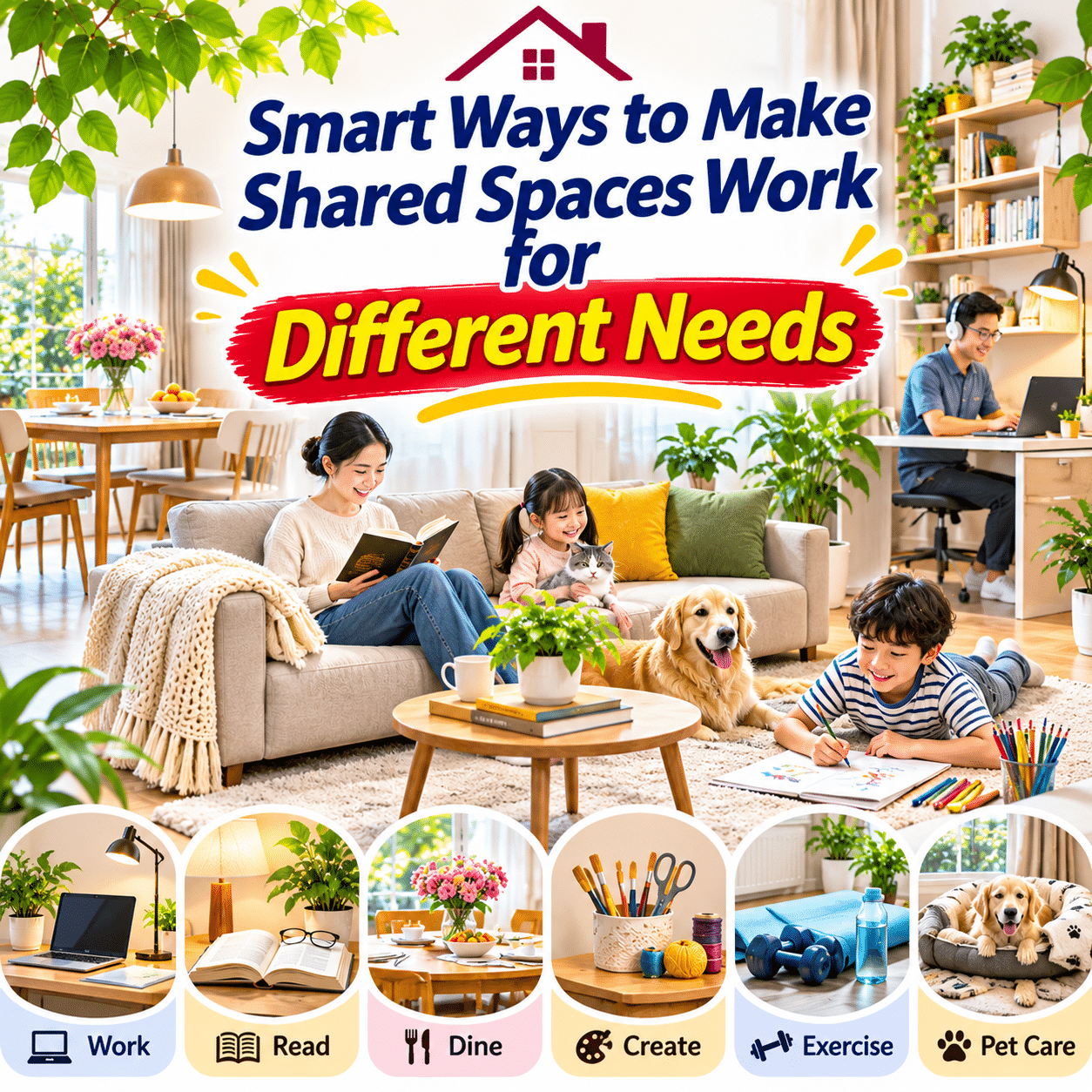
A shared space often needs to do more than one job. A living room may serve as a place for relaxation, entertainment, reading, and occasional work. A dining table may accommodate family meals, homework, creative projects, and social gatherings. Even a small bedroom or home office may need to support several activities throughout the day.
When different people or activities compete for the same area, maintaining comfort and organization can become challenging. Furniture may be moved repeatedly, personal belongings may accumulate on shared surfaces, and one activity may interfere with another.
However, a multifunctional room does not necessarily require more square footage, expensive renovations, or separate furniture for every purpose. Thoughtful organization, flexible layouts, and clear expectations can help shared spaces accommodate different needs while remaining comfortable and practical.
The key is to understand how the space is used, which activities require dedicated areas, and which functions can comfortably overlap. A successful shared environment should support everyday routines without making people feel that they must constantly rearrange the entire room.
Lighting, furniture placement, storage accessibility, noise management, and personal preferences all influence how effectively a shared space functions. Small adjustments in these areas can make a meaningful difference.
Whether you share a home with family members, roommates, a partner, children, or visiting guests, the following strategies can help create adaptable spaces that support different activities, encourage cooperation, and remain easy to maintain over time.
1. Understand the Different Needs of a Shared Space
Before rearranging furniture or purchasing organizers, identify the activities that regularly take place in the room.
A shared space works best when its layout reflects actual household routines rather than an idealized arrangement that looks attractive but proves inconvenient.
Identify the Main Activities
Common activities in shared spaces include:
- Relaxing and watching television.
- Reading or studying.
- Working on a laptop.
- Eating meals.
- Playing games.
- Exercising.
- Enjoying creative hobbies.
- Spending time with pets.
- Hosting visitors.
- Completing household tasks.
Not every activity requires a separate area. Some can use the same furniture at different times.
For example, a dining table may serve as a workspace during the day and return to its primary function during meals.
Consider Individual Preferences
People may have different expectations regarding:
- Noise levels.
- Lighting brightness.
- Seating comfort.
- Personal space.
- Storage accessibility.
- Room temperature.
- Visual organization.
- Privacy.
Recognizing these differences helps prevent arrangements that work well for one person but create difficulties for others.
Match Activities With Practical Requirements
| Activity | Main Requirements | Possible Shared-Space Solution |
|---|---|---|
| Reading | Comfortable seating, suitable lighting | Reading corner with an adjustable lamp |
| Remote work | Stable surface, appropriate seating, manageable noise | Temporary workstation |
| Family meals | Clear table, accessible seating | Dining area with a simple reset routine |
| Children’s activities | Safe floor space, accessible supplies | Defined play area with portable storage |
| Exercise | Clear movement area, suitable flooring | Flexible open floor zone |
| Hobbies | Work surface, organized materials | Portable project kit |
| Entertainment | Comfortable seating, appropriate sound levels | Shared media area |
| Relaxation | Comfortable atmosphere, reduced interruptions | Quiet seating zone |
| Pet care | Safe resting area, accessible supplies | Designated pet corner |
| Social gatherings | Flexible seating, clear circulation | Movable furniture arrangement |
The goal is to accommodate essential activities without overcrowding the room.
2. Divide Shared Spaces Into Functional Zones
Functional zoning is one of the most effective ways to organize a multifunctional room.
A zone is an area associated with a particular activity. It does not necessarily require walls, partitions, or permanent furniture.
Use Furniture Placement to Define Zones
A sofa can visually separate a relaxation area from a dining space.
A desk positioned near a wall can establish a work area without occupying the center of the room.
A small chair and lamp can create a reading corner.
Furniture placement should preserve comfortable circulation and avoid blocking doors or essential access points.
Use Rugs to Create Visual Boundaries
Rugs can help distinguish different activities within an open room.
For example, one rug may define a seating area while another visually separates a reading or play space.
Choose rugs appropriate for the flooring and use suitable nonslip measures where necessary.
Use Lighting to Distinguish Activities
Different lighting arrangements can make zones feel more intentional.
A reading corner may benefit from a focused lamp, while a relaxation area may use softer ambient lighting.
Avoid Creating Too Many Zones
Dividing a small room into numerous tiny areas can make it feel crowded.
Prioritize the activities that occur most frequently and combine compatible functions where possible.
3. Choose Furniture That Supports Multiple Activities
Multifunctional furniture can help shared spaces adapt to different needs without requiring a separate piece for every activity.
However, flexibility should not come at the expense of comfort or safety.
Consider Extendable Tables
An extendable dining table can provide additional surface space when needed.
When not extended, it may preserve more room for movement.
Use Existing Storage Furniture Strategically
A sideboard, cabinet, or bookshelf may hold supplies for several activities.
Organize its contents into practical categories so each activity can be prepared and cleared efficiently.
Choose Lightweight Movable Furniture
Small side tables, suitable chairs, and portable accessories may be repositioned when activities change.
Select furniture that is stable and easy for intended users to move safely.
Avoid Furniture That Requires Constant Rearrangement
A room that must be completely reorganized several times each day may become inconvenient.
Choose arrangements that support the most common activities with minimal effort.
4. Create a Living Room That Supports Different Needs
Living rooms frequently serve as the central shared area of a home.
They may need to accommodate entertainment, conversation, reading, hobbies, and occasional work.
Establish a Primary Seating Area
Arrange seating around the room’s most common activity.
For many households, this may involve conversation, television, or general relaxation.
Avoid allowing secondary functions to make the main seating area uncomfortable.
Add a Flexible Activity Surface
An existing coffee table, side table, or suitable portable surface may support occasional activities.
For extended computer work, a stable work surface and appropriate seating are preferable to prolonged use of an uncomfortable position.
Create a Quiet Corner
A small reading chair or comfortable seat can provide an alternative to the main entertainment area.
This is particularly useful when household members prefer different activities.
Keep Shared Surfaces Manageable
Remote controls, books, hobby supplies, and personal belongings can accumulate quickly.
Assign convenient storage locations and return temporary activity materials after use.
5. Make Dining Areas Work for Meals and Other Activities
Dining tables often become multifunctional surfaces.
They may be used for homework, paperwork, crafts, or computer tasks between meals.
The challenge is allowing these activities without making dining inconvenient.
Establish a Clear Primary Function
Decide when the table needs to be available for meals.
Other activities can use it outside those periods.
Use Portable Activity Kits
A portable container can hold materials for a particular activity.
Examples include:
- Homework supplies.
- Journaling accessories.
- Craft materials.
- Paperwork.
- Board games.
When the activity ends, the entire kit can be returned to storage.
Protect the Table Surface
Use appropriate protective mats for activities involving writing, crafts, or materials that could damage the furniture.
Follow product safety guidance when using adhesives, paints, or other craft supplies.
Introduce a Simple Table Reset
Before meals:
- Complete or pause the current activity.
- Gather related supplies.
- Return materials to their designated locations.
- Clean the surface appropriately.
- Prepare the table for dining.
A predictable routine reduces the effort required to switch between activities.
6. Design a Shared Home Office or Study Area
A shared workspace may need to support multiple people, different schedules, or different types of tasks.
Good organization can reduce interruptions and make limited desk space more useful.
Identify Individual Work Requirements
Some activities require quiet concentration.
Others involve video meetings, paperwork, or collaborative discussion.
Understanding these requirements helps determine whether activities can comfortably occur at the same time.
Assign Personal Storage Areas
Separate drawers, folders, or containers can help prevent supplies and documents from becoming mixed together.
Each person should have a clear location for their belongings.
Organize Shared Equipment
Common equipment may include printers, chargers, stationery, and reference materials.
Keep shared supplies in consistent locations.
Consider Noise and Privacy
Headphones may help reduce distractions, provided their use is appropriate and safe.
For confidential meetings or conversations, a separate room or more private location may be necessary.
Prioritize Ergonomic Comfort
Frequently used workstations should support appropriate posture, lighting, and equipment placement.
Avoid relying on unsuitable seating for prolonged computer work.
7. Balance Quiet Activities and Noisy Activities
Different activities can create conflicting sound requirements.
One person may want to watch television while another needs to study or read.
A shared space becomes more comfortable when noise is considered during planning.
Identify Noise-Sensitive Activities
Activities that may require reduced distractions include:
- Studying.
- Focused work.
- Reading.
- Online meetings.
- Resting.
- Certain creative tasks.
Separate Activities When Possible
Position quieter activities away from televisions, speakers, or busy walkways.
Furniture placement and distance may help reduce interruptions.
Use Soft Furnishings Appropriately
Curtains, rugs, and upholstered furniture can influence how sound behaves within a room.
However, ordinary furnishings do not provide complete soundproofing.
Agree on Practical Noise Expectations
Household members can establish reasonable expectations for television volume, music, calls, and quiet periods.
The aim is cooperation rather than requiring complete silence.
8. Use Lighting That Adapts to Different Activities
Lighting is an important part of making shared spaces flexible.
A single overhead light may not provide suitable illumination for every activity.
Combine Ambient and Task Lighting
Ambient lighting provides general room illumination.
Task lighting supports specific activities such as reading, writing, or crafts.
Using both can make a room more adaptable.
Choose Adjustable Lighting When Practical
Adjustable lamps or suitable dimmable fixtures can accommodate different preferences.
Follow compatibility and electrical safety requirements.
Make Use of Natural Light
Position appropriate activities near windows when useful.
Natural light may be particularly helpful for reading, working, and creative activities.
However, glare can make computer screens difficult to see.
Use suitable window coverings or adjust furniture placement when needed.
Avoid Lighting Conflicts
A bright task lamp should not unnecessarily disturb someone relaxing nearby.
Direct light toward the intended activity whenever possible.
9. Create Flexible Storage for Shared Activities
Storage plays an important role in keeping multifunctional spaces organized.
Without clear systems, supplies for different activities can become mixed together.
Separate Shared and Personal Belongings
Shared items may include:
- Remote controls.
- Board games.
- Household stationery.
- Common charging accessories.
- Cleaning tools.
- General activity supplies.
Personal belongings should have clearly assigned storage locations.
Use Portable Containers
Portable storage makes it easier to move supplies between activity areas.
For example, a craft kit can be brought to the dining table and returned to a cabinet afterward.
Label Storage When Helpful
Simple labels can make shared storage easier to understand.
Avoid overly detailed systems that require excessive effort to maintain.
Keep Frequently Used Supplies Accessible
Store common items near their point of use.
Move occasional-use materials to appropriate secondary storage.
10. Make Shared Bedrooms More Comfortable
Shared bedrooms require particular attention to personal belongings, privacy, and sleeping routines.
Whether the room is shared by siblings, roommates, or partners, the layout should support each occupant’s basic needs.
Establish Personal Areas
Separate drawers, shelves, or bedside storage can help maintain individual organization.
Consider Different Sleep Schedules
One person may need to sleep while another is reading or preparing for the next day.
Individual task lighting and thoughtful routines may reduce unnecessary disturbances.
Keep Walkways Clear
Furniture should not obstruct safe movement around beds and doors.
Respect Personal Preferences
People may have different comfort needs regarding lighting, temperature, and noise.
Discuss practical compromises rather than assuming one arrangement will suit everyone.
Avoid Overcrowding the Room
Additional furniture may reduce comfort and circulation.
Use existing storage efficiently before introducing more pieces.
11. Create Family-Friendly Shared Spaces
Family living areas often support activities for people of different ages.
A successful arrangement should balance convenience, safety, and flexibility.
Provide Accessible Activity Storage
Children may benefit from clearly defined locations for suitable toys, books, and creative supplies.
Use storage appropriate for their age and abilities.
Preserve Adult Functionality
A family living room can accommodate children’s activities without permanently losing its function as a comfortable shared space.
Portable storage and simple cleanup routines can help.
Choose Safe Furniture Arrangements
Secure furniture against tipping where appropriate.
Keep sharp objects, small choking hazards, hazardous products, and electrical risks away from young children.
Encourage Simple Shared Routines
Age-appropriate participation in returning toys and activity materials can make organization easier.
Keep expectations realistic and supportive.
12. Make Shared Spaces Comfortable for Pets
Pets are also part of household routines.
A shared living area may need to accommodate pet resting, play, feeding, or grooming without interfering with human activities.
Create a Designated Resting Area
Choose a comfortable location away from excessive foot traffic, drafts, and hazards.
Provide bedding appropriate for the animal.
Organize Pet Accessories
Keep suitable toys, grooming tools, and walking accessories in designated locations.
Preserve Clear Pathways
Avoid placing pet bowls, beds, or toys where people may trip over them.
Consider Noise and Activity Levels
Some animals prefer quiet areas away from loud entertainment or busy gatherings.
Provide a suitable retreat where the pet can rest without disturbance.
Prioritize Pet Safety
Check household plants, electrical cords, small objects, and cleaning products for potential hazards.
Do not assume that products safe for humans are safe for animals.
13. Use Time-Based Sharing When Activities Conflict
Not every activity needs a permanent zone.
Some spaces can serve different purposes at different times.
This approach is especially useful in compact homes.
Identify Activities That Cannot Happen Together
For example:
- A dining table may not comfortably support a large craft project during meals.
- A living room may not be suitable for focused study during loud entertainment.
- An exercise area may require furniture to be moved temporarily.
Establish Predictable Activity Periods
Household members can coordinate when shared spaces are needed for particular tasks.
This does not require a rigid schedule.
A simple understanding of typical routines may be sufficient.
Use Quick Transition Systems
Portable supplies, accessible storage, and clear surfaces can make switching activities easier.
Allow Flexibility
Schedules and needs change.
Shared-space arrangements should accommodate reasonable adjustments rather than becoming unnecessarily restrictive.
14. Create Privacy Within Open Shared Areas
Shared spaces can sometimes feel uncomfortable when people have no opportunity for personal focus or quiet.
Privacy does not always require permanent walls.
Use Furniture to Create Visual Separation
A suitable bookshelf, seating arrangement, or existing furniture piece may provide partial visual separation.
Secure tall furniture appropriately and preserve safe circulation.
Consider Curtains or Screens
Lightweight partitions may help define temporary personal areas.
Choose stable products and avoid obstructing exits, ventilation, or essential light.
Use Personal Activity Corners
A small reading or journaling area can provide a sense of personal space within a larger room.
Recognize the Limits of Visual Privacy
A screen or curtain may reduce visibility but will not necessarily provide acoustic privacy.
Confidential conversations may require a separate room.
15. Make Small Shared Spaces Feel More Open
Compact multifunctional rooms can become crowded when too many activities compete for limited floor space.
Thoughtful arrangement can improve both usability and comfort.
Preserve a Clear Main Pathway
Identify how people normally move through the room.
Keep this route free of unnecessary furniture and belongings.
Avoid Oversized Furniture
Choose furniture proportions that suit the available space.
Large pieces may reduce flexibility even when they technically fit.
Use Existing Vertical Storage
Wall shelves and appropriately secured storage units can help reduce floor clutter.
Do not block windows, vents, or essential access points.
Limit Visual Clutter
Too many decorative objects, containers, and accessories can make a small room feel crowded.
Keep frequently used belongings organized and leave some surfaces open.
Use Consistent Design Elements
Coordinated colors, materials, and finishes can help different functional zones feel connected.
16. Design Shared Spaces for Easy Transitions
A multifunctional room is most useful when switching between activities requires minimal effort.
Keep Transition Supplies Together
For example, a dining table used for crafts may benefit from a portable kit containing the relevant materials.
Make Storage Convenient
If putting away supplies requires several complicated steps, clutter may accumulate.
Use accessible containers and clearly assigned locations.
Avoid Permanent Setups for Occasional Activities
Equipment used only occasionally should not dominate the room unless there is a clear practical reason.
Establish a Reset Routine
After completing an activity:
- Gather related belongings.
- Return equipment and supplies.
- Clean the area when necessary.
- Restore furniture to its usual arrangement.
- Check that the space is ready for its next purpose.
A short reset can make shared-space transitions smoother.
17. Establish Simple Shared-Space Agreements
Physical organization alone cannot resolve every challenge in a shared environment.
Communication is equally important.
Discuss Common Frustrations
Identify recurring problems such as:
- Noise during focused work.
- Belongings left on shared surfaces.
- Difficulty accessing common supplies.
- Conflicting use of furniture.
- Unequal responsibility for tidying.
- Lack of personal space.
Agree on Practical Expectations
Examples might include returning shared items after use, clearing the dining table before meals, and keeping common walkways unobstructed.
Avoid Excessive Rules
Too many detailed expectations can make everyday living feel unnecessarily restrictive.
Focus on a small number of useful agreements.
Review Arrangements When Needs Change
Work schedules, hobbies, family routines, and household composition may evolve.
Adjust shared-space agreements accordingly.
18. Make Shared Spaces More Accessible
A shared room should accommodate the people who use it, including those with different physical abilities.
Consider Reach and Movement
Frequently used belongings should be accessible to their intended users.
Avoid arrangements that require repeated unsafe reaching or bending.
Preserve Appropriate Circulation
Keep walkways clear and avoid furniture layouts that create obstacles.
Households using mobility aids may require additional clearance.
Choose Comfortable Seating
Seating should support the activities and needs of the intended users.
Different people may benefit from different seat heights, support, or positioning.
Keep Lighting Controls Convenient
Position switches and suitable lamps where they can be operated comfortably.
Seek Individualized Guidance When Needed
For specific mobility or accessibility requirements, a qualified occupational therapist or accessibility professional may help identify suitable arrangements.
19. Avoid Overcrowding Shared Spaces With Storage
When several activities take place in one room, it can be tempting to add storage furniture for every function.
However, excessive storage can reduce the usable area.
Review Existing Storage First
Check whether current drawers, cabinets, and shelves can accommodate reorganized supplies.
Reduce Unnecessary Duplicates
Shared items may not need to be purchased separately for every activity.
However, individual needs and hygiene requirements should guide what can reasonably be shared.
Use Portable Storage for Occasional Activities
A compact container may be more practical than a permanent cabinet for supplies used only occasionally.
Keep the Room’s Primary Function Clear
Storage should support the room rather than dominate it.
20. Adapt Shared Spaces as Household Needs Change
A flexible room should remain useful over time.
The activities taking place in a home may change because of work arrangements, hobbies, family circumstances, or personal preferences.
Review How the Room Is Used
Periodically consider:
- Which activities occur most frequently?
- Which areas are underused?
- Where do conflicts happen?
- Which storage arrangements are inconvenient?
- Does the furniture still support current routines?
Reassign Underused Zones
A former play area may become a reading corner.
A temporary workstation may be moved when work arrangements change.
Choose Adaptable Solutions
Movable furniture, portable containers, and simple organization systems can make adjustments easier.
Avoid Unnecessary Permanent Alterations
Before making structural changes, consider whether a flexible arrangement could meet the same need.
21. Common Mistakes When Organizing Shared Spaces
Trying to Give Every Activity a Permanent Area
This can overcrowd the room.
Better approach: Use flexible zones and time-based sharing for occasional activities.
Ignoring Different Noise Requirements
Loud entertainment may interfere with studying, working, or resting.
Better approach: Separate incompatible activities or coordinate their timing.
Choosing Furniture Based Only on Appearance
Attractive furniture may not provide appropriate comfort, storage, or flexibility.
Better approach: Consider everyday use before making furniture decisions.
Allowing Shared Surfaces to Become Permanent Storage
Tables and counters can lose their intended functions.
Better approach: Assign storage locations and introduce simple reset routines.
Providing No Personal Storage
Belongings may become mixed together or difficult to find.
Better approach: Create clearly defined personal storage areas.
Overcomplicating Household Rules
Too many restrictions can create frustration.
Better approach: Agree on a few practical expectations.
Ignoring Accessibility
An arrangement that works for one person may be uncomfortable for another.
Better approach: Consider individual reach, mobility, and comfort requirements.
Overcrowding the Room
Excessive furniture can restrict movement.
Better approach: Preserve circulation and prioritize essential functions.
Failing to Adapt Over Time
A room may stop meeting household needs as routines change.
Better approach: Review and adjust the layout periodically.
22. Troubleshooting Common Shared-Space Problems
| Problem | Possible Cause | Practical Solution |
|---|---|---|
| Living room feels overcrowded | Too many permanent activity zones | Combine compatible functions and remove unnecessary furniture |
| Dining table is always cluttered | No transition routine | Use portable activity kits and a table reset |
| Work and entertainment conflict | Different noise requirements | Separate activities by location or timing |
| Shared supplies are difficult to find | Storage categories are unclear | Establish consistent shared storage |
| Personal belongings become mixed | No individual storage areas | Assign separate drawers or containers |
| Room feels visually chaotic | Too many objects remain visible | Simplify displays and organize supplies |
| Furniture must be moved constantly | Layout does not support common activities | Reconsider primary zones and furniture placement |
| One person dominates the space | Expectations are unclear | Discuss shared use and establish reasonable agreements |
| Lighting suits only one activity | Insufficient lighting flexibility | Add suitable task lighting |
| Children’s supplies spread everywhere | No convenient activity storage | Use accessible, age-appropriate containers |
| Pet accessories obstruct movement | No designated pet area | Create a safe, practical pet corner |
| Room lacks privacy | Activities overlap without separation | Use appropriate visual zoning or another room when needed |
| Shared workspace becomes disorganized | Active projects are mixed | Separate project materials and personal supplies |
| Walkways are obstructed | Furniture arrangement is too dense | Restore clear circulation routes |
| Organization does not last | Systems are difficult to maintain | Simplify storage and reset routines |
23. A Step-by-Step Plan for Improving a Shared Space
A systematic approach can help create a room that accommodates different activities without requiring a complete redesign.
Step 1: Identify the Room’s Primary Functions
List the activities that regularly take place in the space.
Separate daily functions from occasional ones.
Step 2: Understand Individual Needs
Consider comfort, noise, lighting, storage, accessibility, and privacy preferences.
Step 3: Observe Current Problems
Notice where clutter accumulates, where movement becomes difficult, and which activities interfere with each other.
Step 4: Measure the Available Space
Record room dimensions, furniture sizes, and important clearances.
Include doors, windows, vents, and access points.
Step 5: Establish Functional Zones
Use furniture placement, rugs, or lighting to define appropriate activity areas.
Avoid unnecessary partitions.
Step 6: Improve Storage
Separate personal and shared belongings.
Keep activity supplies organized and accessible.
Step 7: Introduce Flexible Elements
Use suitable movable furniture or portable activity kits where helpful.
Step 8: Create Transition Routines
Make it easy to restore shared surfaces after activities.
Step 9: Agree on Shared Expectations
Discuss practical rules for noise, tidying, and use of common areas.
Step 10: Test and Adjust
Use the new arrangement during normal routines.
Make changes based on actual experience rather than appearance alone.
24. Frequently Asked Questions
1. What is a multifunctional shared space?
A multifunctional shared space is an area used by multiple people or for several activities, such as a living room that supports relaxation, work, reading, and entertainment.
2. How can I make one room serve several purposes?
Identify the main activities, create functional zones, organize supplies, and use flexible arrangements that allow the room to transition between uses.
3. Do I need separate furniture for every activity?
No. Existing tables, cabinets, and seating may support multiple activities when used appropriately.
4. How can I divide a shared room without building walls?
Furniture placement, rugs, lighting, and suitable temporary partitions can create visual separation.
5. How do I keep a multifunctional room from becoming cluttered?
Assign storage locations, use portable activity kits, and establish simple routines for clearing shared surfaces.
6. Can a living room also function as a home office?
Yes, provided the arrangement supports appropriate seating, lighting, equipment placement, and manageable distractions.
7. How can I use a dining table for work and meals?
Keep work materials in portable containers and establish a predictable routine for clearing the table before meals.
8. What is the best way to manage noise in shared spaces?
Identify incompatible activities, adjust their timing or location, and agree on reasonable noise expectations.
9. How can I create privacy in an open-plan room?
Use furniture placement or suitable screens for visual separation. Confidential activities may require a separate room.
10. What furniture works well in multifunctional rooms?
Furniture that is appropriately sized, comfortable, stable, and adaptable can be useful. Examples include extendable tables and suitable movable pieces.
11. How can I organize a shared workspace?
Separate personal supplies, establish common storage areas, and arrange equipment according to how the space is used.
12. How do I make a shared bedroom more comfortable?
Provide personal storage, consider different sleep schedules, preserve clear pathways, and respect individual comfort preferences.
13. How can I make a family living room more flexible?
Use accessible activity storage, preserve comfortable adult seating, and establish simple routines for returning toys and supplies.
14. How can I accommodate pets in a shared living space?
Provide a safe resting area, organize pet supplies, and avoid placing pet accessories where they obstruct movement.
15. Is it better to divide a room into many small zones?
Not necessarily. Too many zones can make a room feel crowded. Prioritize essential functions and combine compatible activities.
16. How can lighting support different activities?
Combine general lighting with suitable task lighting so that reading, working, and relaxation can have appropriate illumination.
17. How can I make a small shared room feel larger?
Preserve clear pathways, reduce unnecessary furniture, organize visible belongings, and choose layouts that support multiple activities efficiently.
18. Should everyone have separate storage in a shared room?
Personal storage can be helpful, especially for belongings that should not be mixed. Shared supplies can remain in common storage locations.
19. How do I prevent disagreements about shared-space use?
Discuss needs and expectations, agree on practical routines, and review arrangements when circumstances change.
20. Can shared spaces work for people with different schedules?
Yes. Flexible lighting, organized supplies, and time-based use can help accommodate different routines.
21. How can I make shared spaces accessible?
Consider individual mobility, comfortable reach, appropriate seating, clear circulation, and safe storage arrangements.
22. What should I do if a room has too many functions?
Identify the most important activities and consider whether occasional tasks can use temporary setups or another suitable location.
23. How often should I rearrange a multifunctional room?
There is no fixed schedule. Review the arrangement when activities change or recurring problems indicate that the layout is no longer effective.
24. What is the biggest mistake in designing shared spaces?
Creating an arrangement that looks attractive but does not reflect the actual needs, routines, and preferences of the people using it.
25. What is the most important principle for making shared spaces work?
Balance flexibility, comfort, accessibility, and cooperation so the room supports different activities without unnecessary conflict or complexity.
25. Practical Checklist for Making Shared Spaces Work for Different Needs
Use this checklist when planning or improving a multifunctional room.
Understand the Space
- Identify the room’s primary activities.
- List occasional activities.
- Consider the needs of everyone using the space.
- Identify conflicting noise or lighting requirements.
- Observe recurring clutter and movement problems.
- Measure furniture and available floor space.
Create Functional Zones
- Define the main activity areas.
- Use furniture placement to create natural boundaries.
- Consider rugs or lighting where useful.
- Avoid creating too many small zones.
- Preserve clear pathways.
- Keep doors, windows, and essential access points unobstructed.
Improve Furniture and Storage
- Use existing furniture for compatible activities.
- Choose appropriately sized, flexible pieces.
- Separate personal and shared belongings.
- Create portable activity kits.
- Keep frequently used supplies accessible.
- Avoid overcrowding cabinets and surfaces.
- Secure furniture and wall-mounted storage appropriately.
Support Comfort and Accessibility
- Provide suitable lighting for different activities.
- Consider noise-sensitive tasks.
- Make seating comfortable for intended users.
- Respect privacy needs.
- Keep important belongings within comfortable reach.
- Preserve safe circulation.
- Consider the needs of children and pets.
Establish Shared Routines
- Agree on practical expectations for common areas.
- Create a routine for clearing shared tables.
- Return activity supplies after use.
- Keep shared storage categories understandable.
- Coordinate activities that cannot happen comfortably together.
- Review household agreements when necessary.
Maintain Long-Term Flexibility
- Observe how well the arrangement works.
- Identify underused zones.
- Adjust furniture placement when needed.
- Reconsider storage as activities change.
- Avoid unnecessary permanent alterations.
- Keep the room functional rather than perfectly staged.
- Prioritize cooperation and everyday comfort.
Final Thoughts
Shared spaces are an important part of everyday living because they bring different people, activities, and routines together within the same environment.
A living room may need to support relaxation and work. A dining table may serve as both a place for meals and a temporary creative workspace. A shared bedroom or study area may need to accommodate different schedules, personal preferences, and storage requirements.
These overlapping needs do not necessarily require larger rooms or major renovations. Thoughtful furniture placement, flexible activity zones, accessible storage, appropriate lighting, and simple transition routines can help existing spaces work more effectively.
The most successful arrangements also recognize that a shared room is not only a physical environment. It is a place where different expectations must coexist.
Clear communication, reasonable agreements, and respect for individual needs can be just as important as furniture and storage choices.
Flexibility is particularly valuable. Household routines change, and a room that works well today may need adjustments in the future. Portable supplies, adaptable furniture, and straightforward organization systems can make those changes easier.
A well-designed shared space does not need to accommodate every possible activity simultaneously. Instead, it should support the most important functions comfortably while allowing occasional activities to take place without excessive disruption.
By balancing practicality, accessibility, personal comfort, and cooperation, shared areas can become more organized, welcoming, and adaptable places that support everyday life for everyone who uses them.