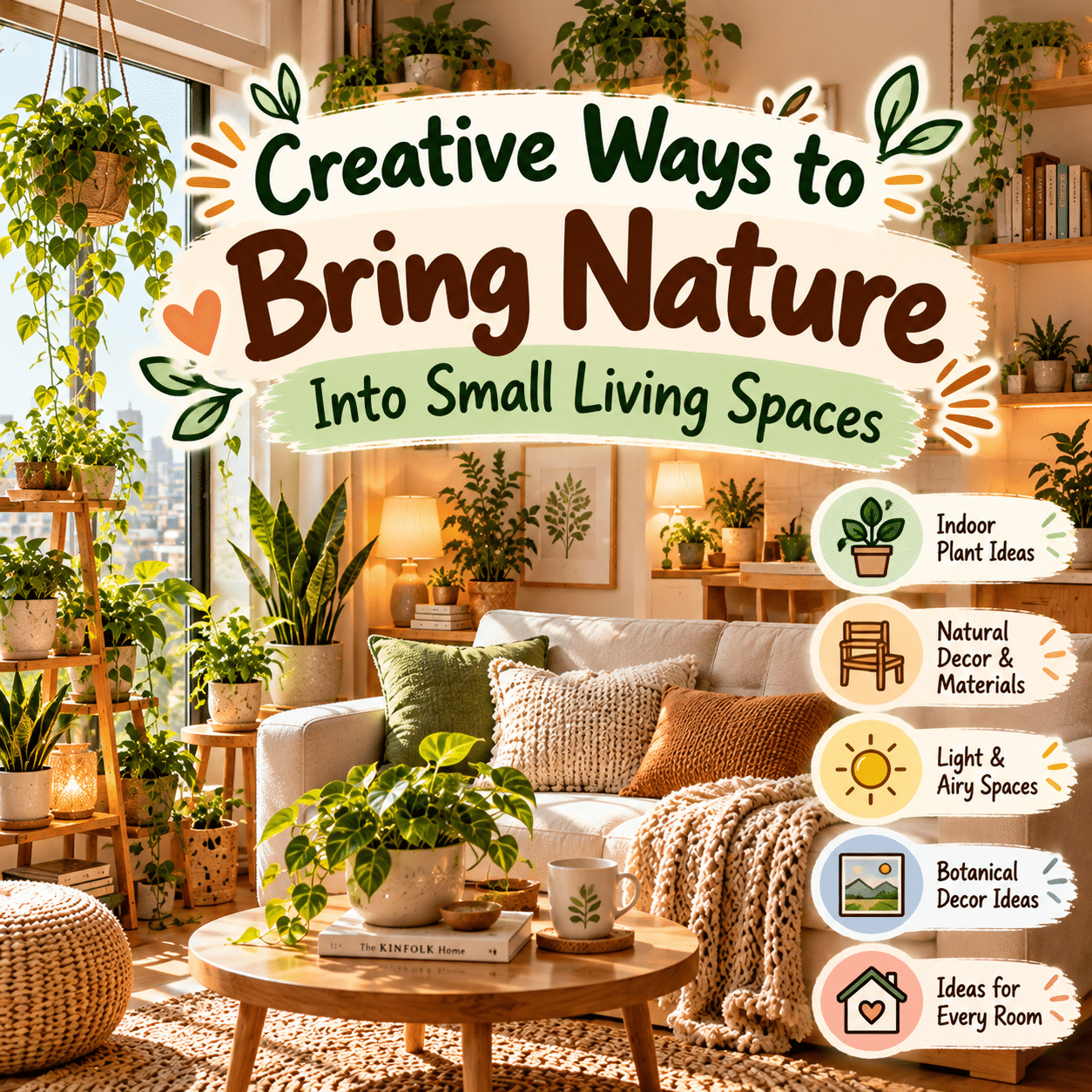
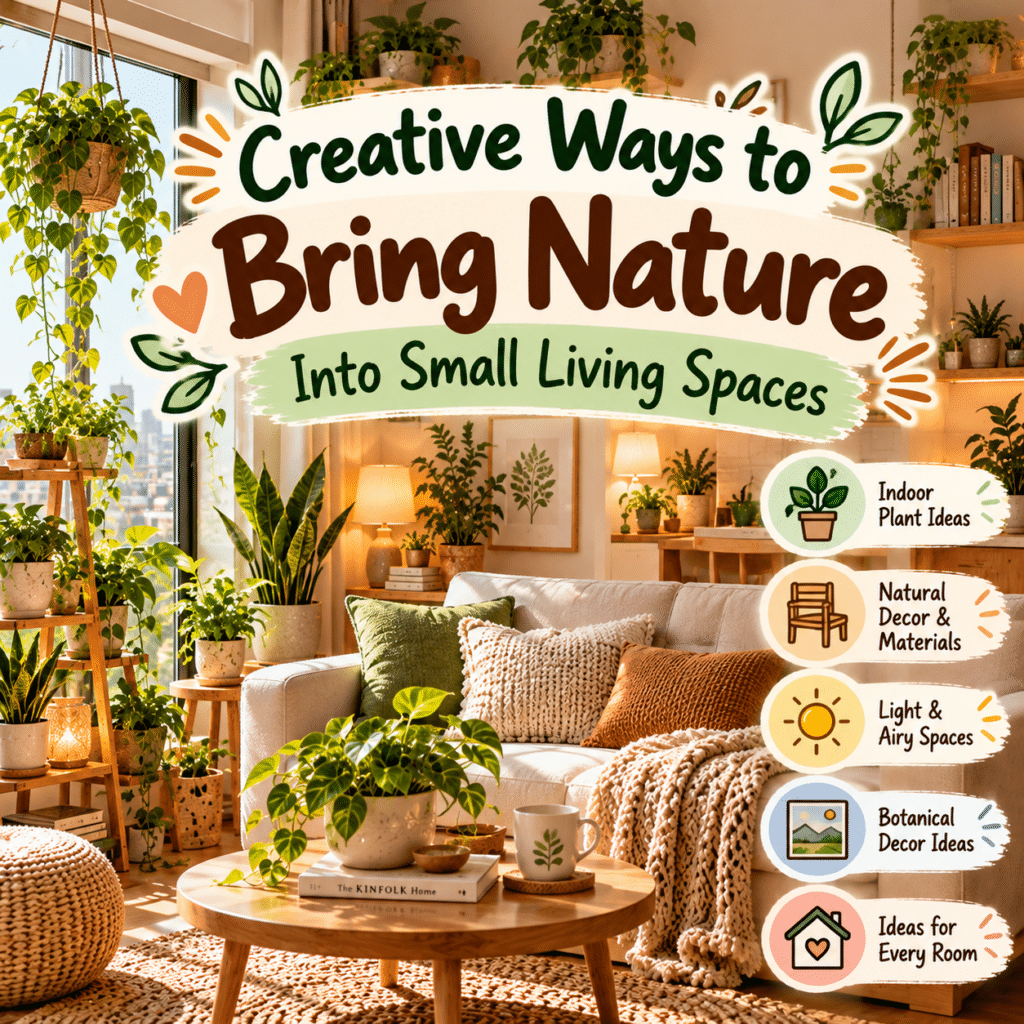
Living in a small home does not mean giving up the beauty, warmth, and refreshing atmosphere of nature. Even the most compact apartment, studio, or cozy living room can incorporate natural elements through thoughtful decorating choices, carefully selected plants, organic materials, and creative use of available space.
Nature-inspired interiors have an enduring appeal because they connect everyday living environments with the textures, colors, and patterns found outdoors. The gentle green of foliage, the warmth of natural wood, the character of stone, and the softness of woven textiles can make a small space feel more welcoming and personal.
However, bringing nature indoors is not simply about filling every corner with houseplants. In compact homes, thoughtful design matters more than quantity. Too many decorative objects, oversized planters, or poorly positioned furniture can make a room feel crowded rather than peaceful.
The most successful nature-inspired spaces balance visual beauty with functionality. They preserve comfortable movement, make use of natural light, and incorporate materials and decorative details that complement the existing interior.
You can create this connection to nature in many ways. A small windowsill garden can introduce living greenery. A wooden side table can add warmth. Botanical artwork can bring outdoor inspiration into a room without requiring plant care. Natural fabrics, earthy colors, and carefully arranged accessories can help establish a cohesive atmosphere.
Whether you enjoy growing indoor plants, decorating with organic textures, or simply creating a calmer and more inviting home, there are plenty of practical ideas for small spaces.
This guide explores creative ways to bring nature into compact living environments, from vertical plant displays and natural materials to lighting, botanical decor, multifunctional furniture, and thoughtful room arrangements.
1. Start With a Nature-Inspired Vision for Your Space
Before introducing plants or decorative accessories, consider what kind of natural atmosphere you want to create.
Nature-inspired interiors can take many forms.
Some spaces feel bright and airy, with light wood, soft neutrals, and a few carefully selected plants. Others feature rich green foliage, earthy colors, woven textures, and layered decorative details.
Neither approach is inherently better.
The most suitable style depends on your preferences, existing furniture, room dimensions, and maintenance habits.
Identify Your Preferred Natural Elements
Think about which features of nature appeal to you most.
You might be drawn to:
- Fresh green foliage.
- Warm wooden furniture.
- Smooth stones and natural ceramics.
- Botanical illustrations.
- Soft linen and cotton fabrics.
- Woven baskets and natural fibers.
- Earth-inspired color palettes.
- Sunlight and outdoor views.
- Floral patterns.
- Organic shapes and textures.
You do not need to incorporate everything.
Choosing a few related elements can create a more cohesive appearance.
Consider the Existing Interior
Look at your furniture, wall colors, flooring, and lighting.
A modern apartment may benefit from a few organic accessories that soften clean architectural lines.
A traditional interior may already contain wooden furniture that provides a natural foundation.
Define Your Practical Priorities
Decide whether your main goal is to introduce living plants, create a warmer visual atmosphere, improve the use of daylight, or establish a nature-inspired decorating style.
This helps you make intentional choices without overcrowding the space.
2. Introduce Greenery With Small Indoor Plants
Indoor plants are one of the most recognizable ways to bring nature into a home.
Even one well-positioned plant can introduce organic shapes and a refreshing visual accent.
Begin With One or Two Plants
If you are new to houseplants, start with a manageable collection.
Choose plants suited to your available light and care routine.
A compact plant on a shelf or side table may be enough to establish a natural focal point.
Consider Plant Size
Small homes benefit from plants that fit comfortably within the available area.
Compact foliage plants, appropriately sized succulents, and smaller trailing varieties can work well in suitable conditions.
Remember that many plants grow significantly over time.
Choose Plants for the Actual Light Conditions
A plant that looks attractive in a photograph may not thrive in your home.
Observe the available natural light before selecting a variety.
Some plants tolerate lower light levels, while others require bright indirect or direct sunlight.
Keep Plant Care Practical
Choose containers that support appropriate drainage and are easy to maintain.
Avoid placing plants where watering could damage furniture or electronics.
Check Household Safety
Some popular houseplants are toxic to pets or children if ingested.
Verify the safety of each species before bringing it into your home.
3. Make the Most of Window Sills
Windowsills can provide valuable display space in compact homes.
They may also offer suitable light for certain plants.
Create a Mini Windowsill Garden
Arrange a few small plants in coordinated containers.
Vary leaf shapes and heights to create visual interest.
Avoid overcrowding the sill.
Try a Small Herb Collection
A bright kitchen window may support culinary herbs when their individual light and care requirements are met.
Basil, mint, parsley, and other herbs have different growing needs, so choose varieties appropriate for the location.
Use Decorative Pots
Terracotta, ceramic, and other suitable containers can add texture and color.
Select stable pots that fit securely on the sill.
Preserve Window Functionality
Do not obstruct windows that are needed for ventilation, access, or emergency escape.
Protect Surfaces
Use appropriate drainage trays or waterproof protection.
Avoid allowing excess water to collect on wooden or painted windowsills.
Consider Seasonal Light Changes
The amount of sunlight reaching a window can change throughout the year.
Adjust plant placement when necessary.
4. Use Vertical Plant Displays to Save Floor Space
Vertical arrangements are especially useful when living space is limited.
They allow greenery to become part of the room without occupying large areas of the floor.
Install Floating Shelves
Floating shelves can hold small plants alongside books and decorative objects.
Choose suitable mounting hardware and respect weight limits.
Remember that containers become heavier when filled with soil and water.
Try a Wall-Mounted Plant Rack
A wall-mounted rack can create a coordinated display.
Select a design appropriate for the wall and the weight of the plants.
Use a Narrow Tiered Stand
A compact tiered stand may accommodate several plants within a relatively small footprint.
Arrange plants so each receives suitable light.
Create a Small Green Wall
A modest collection of wall-mounted planters can introduce greenery as a decorative feature.
Plan for drainage, maintenance, and wall protection.
Keep Plants Accessible
A beautiful display should not require unsafe climbing or awkward reaching to water plants.
Avoid Overcrowding
Leave enough space for foliage to grow and for air to circulate.
5. Add Hanging Plants for Natural Movement
Hanging plants can create a graceful, layered appearance.
Trailing foliage introduces downward lines that contrast with the straight edges of walls and furniture.
Hang Plants Near Suitable Windows
Choose a location that provides the light required by the plant.
Avoid assuming that every trailing variety thrives in shade.
Use Decorative Hanging Planters
Macramé-style hangers, ceramic hanging pots, and other suitable containers can complement different interiors.
Create Height Variation
Hanging plants at different heights can make an arrangement more dynamic.
However, keep them clear of walkways and seating areas.
Install Supports Securely
Ceiling hooks and wall brackets must be suitable for the structural surface and total weight.
Plan for Watering
Choose arrangements that allow safe access.
Protect floors, furniture, and nearby electrical equipment from drainage.
Keep the Display Simple
One hanging plant beside a window may create enough visual interest for a compact room.
6. Choose Natural Wood Furniture
Wood introduces warmth, texture, and visual character.
It can complement many interior styles, from minimalist and Scandinavian-inspired spaces to cozy traditional homes.
Start With a Small Wooden Accent
You do not need to replace all your furniture.
A wooden side table, small shelf, stool, or picture frame can introduce a natural material into the room.
Explore Different Wood Tones
Light wood can create a bright, airy appearance.
Medium tones may add warmth.
Darker finishes can provide contrast and a more traditional atmosphere.
Combine Wood With Neutral Colors
Cream, beige, white, soft gray, and muted green often complement wooden surfaces.
Consider Multifunctional Pieces
In small homes, a wooden storage bench or compact shelving unit may provide both function and decorative value.
Choose Durable Finishes
Select furniture suited to the room’s conditions.
Protect wood from prolonged moisture exposure and follow appropriate care instructions.
Consider Responsible Sourcing
When purchasing new furniture, look for credible information about materials, durability, and responsible sourcing.
Reusing suitable existing furniture can also be a practical choice.
7. Decorate With Natural Textures
Natural textures can make a room feel layered and inviting without requiring additional large furniture.
Linen and Cotton
Curtains, cushion covers, and suitable upholstery fabrics can introduce soft texture.
Choose materials based on comfort, durability, and maintenance needs.
Woven Baskets
Baskets can provide decorative storage for blankets, magazines, or other household items.
They work well in living rooms and bedrooms.
Cork Accessories
Cork coasters, desk mats, or small decorative items can add warmth and texture.
Ceramic Objects
Handmade-style ceramics can introduce organic shapes and subtle variations in finish.
Natural-Fiber Rugs
Rugs made from materials such as jute or sisal can create a distinctive appearance.
Consider texture, cleaning requirements, and comfort before choosing them.
Balance Rough and Smooth Surfaces
Combining textured materials with smooth furniture can create visual contrast.
For example, a woven basket beside a simple wooden cabinet may feel more interesting than several identical finishes.
8. Build a Nature-Inspired Color Palette
Color can establish a natural atmosphere even when living plants are limited.
A cohesive palette helps small spaces feel visually connected.
Soft Green
Sage, olive, and muted botanical greens can introduce a connection to foliage.
Warm Beige and Cream
Neutral shades can create a versatile foundation.
Earthy Brown
Brown tones can complement wooden furniture and natural fibers.
Terracotta
Terracotta adds warmth and works beautifully with green accents.
Muted Blue
Soft blue can evoke water and sky.
Gentle Stone Gray
Gray inspired by natural stone can provide a subtle contrast.
Use a Limited Number of Colors
Choose one primary color, one or two supporting colors, and a few accents.
This creates visual harmony without requiring every object to match.
9. Bring Nature Indoors With Botanical Artwork
Botanical artwork offers a way to introduce natural imagery without the care requirements of living plants.
It is particularly useful in rooms with limited natural light.
Display Botanical Prints
Illustrations of leaves, flowers, and branches can complement many decorating styles.
Choose Landscape Photography
Photographs of forests, mountains, gardens, or coastlines can introduce outdoor inspiration.
Create a Small Gallery Wall
Combine several related artworks.
Use coordinated frames or a consistent color palette.
Try One Statement Piece
A single larger print may be more effective than numerous small decorations in a compact room.
Use Personal Nature Photography
Photographs from meaningful places can make the space feel more individual.
Keep the Arrangement Balanced
Avoid covering every wall with artwork.
Empty space helps decorative pieces stand out.
10. Use Natural Light as a Design Feature
Daylight can make a small room feel bright and welcoming.
Thoughtful furniture placement can help you enjoy available natural light.
Keep Windows Relatively Clear
Avoid unnecessarily blocking windows with tall furniture.
Choose Suitable Window Coverings
Light-filtering curtains can soften daylight.
Adjustable blinds may help control glare and privacy.
Position Seating Near Windows
A reading chair or compact table beside a window can create a pleasant everyday corner.
Use Mirrors Thoughtfully
A mirror may reflect daylight and create a sense of openness.
Position it to avoid uncomfortable glare.
Consider Heat and Sun Exposure
Strong sunlight can increase room temperature and fade some materials.
Choose window treatments appropriate for your climate and room conditions.
Avoid Overcomplicating the Arrangement
Sometimes moving furniture away from a window makes a greater difference than adding new decorations.
11. Create a Nature-Inspired Living Room Corner
A small living room can accommodate a natural focal point without becoming crowded.
Start With One Plant
A medium-sized plant can soften the appearance of a sofa or cabinet.
Add a Wooden Side Table
A compact table provides a useful surface and introduces natural texture.
Include a Soft Throw
A neutral cotton or linen-look throw can complement the arrangement.
Choose Botanical Artwork
A small framed print can reinforce the theme.
Use Warm Lighting
A suitable lamp can create a welcoming atmosphere during the evening.
Preserve Open Space
Keep walkways clear and avoid filling every corner.
12. Design a Small Indoor Garden Corner
A dedicated plant corner can create the feeling of a miniature indoor garden.
Choose the Right Location
Look for an area with suitable light and enough space for maintenance.
Use Plants of Different Heights
Combine a taller plant with smaller supporting plants.
Add a Compact Plant Stand
A stand can create vertical layers without requiring a large footprint.
Coordinate Containers
Planters in related colors or materials can make the display feel intentional.
Leave Space Between Plants
Allow room for growth and airflow.
Keep Watering Convenient
Arrange plants so every container can be reached safely.
Monitor Plant Health
Inspect foliage and soil regularly.
A small, healthy collection often creates a more attractive display than a large, difficult-to-maintain one.
13. Bring Natural Elements Into the Bedroom
A nature-inspired bedroom can feel warm, personal, and visually peaceful.
Choose Soft Colors
Cream, warm beige, muted green, and gentle earth tones can create a cohesive palette.
Add a Small Plant
A suitable plant on a dresser or near a window may introduce greenery.
Use Natural-Look Textiles
Cotton bedding, linen-look curtains, and textured cushions can add warmth.
Include Wooden Furniture
A wooden bedside table or shelf can complement the theme.
Display Nature Photography
Landscape or botanical artwork can create a gentle visual focal point.
Keep the Room Practical
Avoid placing large plants or decorative furniture where they interfere with movement.
Maintain Realistic Expectations
Ordinary houseplant arrangements should not be relied upon to significantly purify bedroom air.
Appropriate ventilation remains important.
14. Create a Natural Atmosphere in the Kitchen
Kitchens can incorporate nature-inspired details through greenery, materials, and functional accessories.
Add a Windowsill Herb Garden
Choose herbs suited to the available light.
Use Wooden Accessories
Suitable cutting boards, trays, and shelves can add warmth.
Display Natural-Look Ceramics
Ceramic containers can complement everyday kitchen storage.
Choose a Simple Plant Arrangement
A small plant may work on a shelf or counter away from food preparation areas.
Introduce Earthy Colors
Warm neutrals and muted greens can complement kitchen cabinets.
Protect Food Preparation Areas
Keep soil, fertilizers, and plant drainage away from food and utensils.
Avoid Heat Sources
Do not position plants or flammable decorative materials near open flames or intense heat.
15. Add Nature-Inspired Details to the Bathroom
A small bathroom can feel more welcoming with organic textures and carefully selected greenery.
Consider a Suitable Plant
A bathroom with natural light may support plants adapted to its conditions.
A windowless bathroom generally requires appropriate grow lighting for living plants.
Use Wooden-Look Accessories
Choose moisture-resistant materials designed for bathroom environments.
Add a Small Woven Basket
A basket can organize towels or other supplies.
Choose Natural Colors
Stone gray, cream, soft green, and warm beige can create a cohesive appearance.
Display Botanical Artwork
Moisture-resistant framed prints can introduce nature-inspired imagery.
Maintain Ventilation
Plants and decorations should not interfere with ventilation or moisture control.
16. Create a Nature-Inspired Home Office
A small home office can feel more inviting with natural materials and carefully placed greenery.
Add a Compact Desk Plant
Choose a plant that does not interfere with equipment.
Use Wooden Desk Accessories
A wooden organizer or monitor stand may complement the overall design.
Introduce a Cork Desk Mat
A suitable desk mat can add texture while protecting the work surface.
Display Botanical Artwork
A simple print can provide a natural visual accent.
Use Soft Natural Colors
Muted green, cream, and warm wood tones can create a cohesive workspace.
Keep Electronics Safe
Position plants and drinks away from electrical equipment.
Preserve Working Space
Decorative elements should not reduce comfort or functionality.
17. Create a Small Reading Nook Inspired by Nature
A reading corner can combine comfortable furniture with natural textures and greenery.
Choose a Comfortable Chair
Select seating appropriate for the available space.
Add a Plant Beside the Chair
A small or medium plant can soften the arrangement.
Use a Wooden Side Table
A compact table provides space for books and reading essentials.
Introduce Soft Textiles
A throw blanket and cushion can add warmth.
Display Landscape Artwork
A framed nature photograph can complement the atmosphere.
Provide Suitable Lighting
Natural daylight can be pleasant, but reading also requires appropriate task illumination.
Avoid Overcrowding
A few thoughtful details are usually enough.
18. Use Nature-Inspired Decor in Entryways
An entryway can introduce the home’s decorating style.
Even a narrow entrance may accommodate natural details.
Add a Small Console Plant
A compact plant can complement a suitable entryway table.
Choose a Wooden Tray
A tray can organize keys and small essentials.
Display Botanical Artwork
A simple print can establish a natural theme.
Use a Woven Basket
A basket may provide storage for appropriate everyday items.
Keep the Floor Clear
Avoid planters or furniture that obstruct doors and walkways.
Consider Lighting
Entryways with limited natural light may be better suited to botanical artwork or artificial greenery.
19. Bring Nature Into Dining Areas
A dining area can feel welcoming with simple natural accents.
Create a Small Plant Centerpiece
Choose a compact arrangement that does not block conversation.
Use Natural-Look Table Textiles
Cotton or linen table runners can introduce texture.
Add Wooden Serving Accessories
Wooden trays and suitable table accessories can complement the decor.
Choose Earthy Ceramics
Ceramic tableware can reinforce a natural palette.
Introduce a Nearby Floor Plant
A plant beside a sideboard may provide a focal point.
Keep Dining Surfaces Practical
Avoid decorations that interfere with meals or cleaning.
20. Explore Stone and Mineral-Inspired Decor
Stone-inspired materials can add texture and visual weight to a small interior.
Ceramic and Stone-Look Trays
A decorative tray can organize small accessories.
Natural Stone Coasters
Coasters can provide practical surface protection.
Stone-Look Planters
These can complement greenery and wooden furniture.
Pebble Displays
A small decorative arrangement may introduce natural texture.
Keep loose stones away from young children and pets who might swallow them.
Balance Heavy Materials
Stone and mineral-inspired accessories often look best when combined with softer textiles or wood.
Consider Weight
Heavy decorative objects require stable surfaces.
21. Use Organic Shapes in Furniture and Accessories
Nature-inspired design is not limited to natural materials.
Shapes can also create an organic atmosphere.
Rounded Side Tables
Curved furniture can soften the appearance of rectangular rooms.
Irregular Mirrors
Mirrors with gently curved outlines can introduce visual interest.
Sculptural Ceramic Vases
Organic shapes can add character to shelves.
Curved Lamps
A rounded lamp may complement natural textures.
Soft-Edged Rugs
A rug with a curved outline can help define a seating area.
Keep Proportions Appropriate
Choose pieces that fit the room without interfering with movement.
22. Decorate With Dried Botanical Arrangements
Dried botanical arrangements can introduce natural forms without requiring regular watering.
Choose Simple Branch Arrangements
Decorative branches can create an elegant display in a stable vase.
Try Dried Flowers
Dried flowers can add subtle color and texture.
Use Decorative Grasses
Suitable dried grasses can complement neutral interiors.
Keep Displays Away From Heat
Dried botanical materials may be flammable.
Do not place them near candles, open flames, or hot equipment.
Consider Allergies and Dust
Dried materials can collect dust or shed particles.
Choose arrangements suited to your household.
Avoid Overdecorating
One small arrangement may be sufficient for a compact room.
23. Make Small Spaces Feel More Open With Natural Design
Nature-inspired decorating can work alongside visual techniques that make compact rooms feel less crowded.
Use Light Colors
Soft neutrals can create a bright foundation.
Preserve Natural Light
Keep windows as unobstructed as practical.
Choose Appropriately Sized Furniture
Oversized furniture can overwhelm a small room.
Introduce Vertical Elements
A tall plant or narrow shelf can draw attention upward.
Limit Decorative Clutter
Select meaningful accessories rather than filling every available surface.
Create Visual Continuity
Repeating wood tones, greenery, or similar colors can help different areas feel connected.
Keep Walkways Clear
A comfortable layout matters more than maximizing the number of decorations.
24. Create a Nature-Inspired Space Without Living Plants
Not every home is suitable for a large collection of houseplants.
Limited light, travel schedules, allergies, and household safety considerations may make living greenery impractical.
Fortunately, there are many alternatives.
Botanical Prints
Artwork can introduce leaves, flowers, and landscapes.
Artificial Greenery
Well-designed artificial plants can provide decorative foliage without watering.
Natural Wood Furniture
Wood can add warmth and organic texture.
Earthy Color Palettes
Green, brown, beige, and terracotta can evoke natural environments.
Woven Accessories
Baskets and textiles can add tactile variety.
Nature Photography
Personal photographs or landscape artwork can create a meaningful connection to outdoor places.
Organic-Shaped Decor
Curved mirrors, ceramic vases, and sculptural accessories can reinforce the theme.
A nature-inspired interior does not need living plants to feel welcoming.
25. Make Nature-Inspired Decorating Budget-Friendly
Bringing natural elements into a home does not require expensive renovations.
Small, intentional improvements can make a noticeable difference.
Rearrange Existing Plants
Moving a suitable plant to a more visible location may refresh the room.
Make sure the new location meets its growing needs.
Reuse Decorative Containers
Existing pots, trays, or baskets may work with a new arrangement.
Display Personal Nature Photography
Print a favorite landscape or garden photograph.
Repurpose Suitable Furniture
An existing wooden stool may become a plant stand if it is stable and supports the weight safely.
Choose Small Accessories
A cushion cover, ceramic planter, or botanical print can introduce a natural theme.
Shop Thoughtfully
Prioritize durable items that suit your home.
Avoid Buying Too Many Plants at Once
Begin with a manageable collection and expand only when you are comfortable with the care requirements.
26. Use Multifunctional Furniture to Support Natural Decor
In compact homes, furniture often needs to perform more than one role.
Nature-inspired styling can work beautifully with practical storage solutions.
Wooden Storage Benches
A bench can provide seating and storage.
Bookshelves With Plant Displays
A shelf can hold books, decorations, and suitable plants.
Side Tables With Storage
A compact table may provide both a decorative surface and practical compartments.
Narrow Consoles
A slim console can organize essentials while displaying a small plant or artwork.
Storage Baskets
Decorative baskets can help contain household clutter.
Choose Functional Pieces First
Furniture should support everyday activities before serving as decoration.
27. Maintain a Healthy Indoor Plant Environment
Living plants require appropriate care to remain attractive.
Understand Individual Watering Needs
Different plants require different watering schedules.
Check potting mix conditions rather than watering every plant automatically.
Provide Suitable Light
Monitor whether plants receive the light they need.
Choose Appropriate Containers
Many houseplants benefit from drainage holes.
Avoid allowing roots to remain in standing water for prolonged periods.
Inspect for Pests
Check foliage and stems regularly.
Clean Leaves When Appropriate
Dust can accumulate on leaves.
Use cleaning methods suited to the species.
Avoid Excessive Fertilizer
Follow product instructions and plant-specific guidance.
Protect Household Surfaces
Use suitable trays and waterproof barriers.
Adjust Care Over Time
Plant needs may change with growth, season, and room conditions.
28. Common Nature-Inspired Decorating Mistakes to Avoid
Thoughtful design can prevent small spaces from becoming crowded or difficult to maintain.
Adding Too Many Plants
A large collection may overwhelm limited floor space.
Ignoring Light Requirements
Plants cannot thrive without suitable illumination.
Choosing Oversized Furniture
Large pieces may restrict movement.
Mixing Too Many Unrelated Materials
A cohesive palette can help natural textures work together.
Using Unstable Plant Stands
Heavy containers need secure support.
Forgetting Moisture Protection
Water can damage furniture and flooring.
Overlooking Pet Safety
Some plants and natural decorative materials may be harmful if ingested.
Blocking Ventilation
Plants and furniture should not obstruct airflow.
Relying on Plants for Air Purification
Ordinary houseplant collections are not substitutes for proper ventilation or effective air filtration.
Designing Only for Appearance
The best nature-inspired spaces remain comfortable and practical.
29. Nature-Inspired Decorating Ideas for Different Small Spaces
| Space | Creative Natural Element | Practical Benefit |
|---|---|---|
| Small living room | Statement plant and wooden side table | Creates a natural focal point |
| Studio apartment | Vertical plant shelf | Preserves floor space |
| Bedroom | Botanical artwork and soft textiles | Adds gentle visual warmth |
| Kitchen | Windowsill herb display | Combines greenery with culinary use |
| Bathroom | Suitable greenery or botanical prints | Adds natural character |
| Home office | Small plant and wooden accessories | Softens technology-focused decor |
| Reading nook | Floor plant and textured throw | Creates a welcoming retreat |
| Entryway | Compact planter and wooden tray | Introduces a natural first impression |
| Dining area | Small plant centerpiece | Adds a simple decorative accent |
| Window corner | Tiered plant stand | Makes use of available daylight |
| Narrow hallway | Botanical wall art | Adds nature-inspired imagery without floor clutter |
| Low-light room | Artificial greenery and natural textures | Provides a decorative alternative |
Each idea can be adapted to the room’s dimensions, lighting, and household needs.
30. A Step-by-Step Nature-Inspired Small Space Makeover
A gradual decorating process can help you create a cohesive result without unnecessary purchases.
Step 1: Evaluate the Existing Space
Observe the room’s size, lighting, furniture, and available surfaces.
Step 2: Choose Your Natural Theme
Decide whether you prefer greenery, wood textures, botanical artwork, earthy colors, or a combination.
Step 3: Select a Color Palette
Choose a primary color and a few supporting shades.
Step 4: Introduce One Focal Element
This might be a plant, wooden furniture piece, or botanical artwork.
Step 5: Add Supporting Textures
Introduce suitable textiles, ceramics, or woven accessories.
Step 6: Use Vertical Space
Consider shelves or hanging displays when appropriate.
Step 7: Improve Lighting
Make better use of daylight and add suitable artificial lighting.
Step 8: Organize Everyday Items
Reduce unnecessary clutter and preserve functional surfaces.
Step 9: Check Safety and Maintenance
Ensure plants, containers, furniture, and decorative objects are appropriately positioned.
Step 10: Refine the Arrangement
Live with the new setup for a while.
Adjust elements based on comfort, convenience, and personal preference.
31. Nature-Inspired Small Space Checklist
Use this checklist when creating a natural atmosphere in a compact home.
Design and Style
- The color palette feels cohesive.
- Natural textures complement the existing furniture.
- Decorative objects are appropriately sized.
- The arrangement includes visual breathing room.
- The overall atmosphere reflects my preferences.
Plants and Greenery
- Plants are suited to available light.
- Containers provide appropriate drainage.
- Plant safety has been checked for children and pets.
- Plants have enough room to grow.
- Watering and maintenance remain convenient.
Space Efficiency
- Walkways remain clear.
- Furniture supports everyday activities.
- Vertical storage is used where helpful.
- Decorations do not overcrowd surfaces.
- Windows and ventilation remain functional.
Materials and Accessories
- Furniture and accessories are stable.
- Moisture-sensitive surfaces are protected.
- Textiles are practical to maintain.
- Decorative objects complement one another.
- Purchases are based on actual needs.
Long-Term Enjoyment
- The space is easy to clean.
- Plant care fits my routine.
- Decorations can be rearranged over time.
- The design remains comfortable.
- The room feels welcoming and personal.
Frequently Asked Questions About Bringing Nature Into Small Homes
1. How can I bring nature into a small apartment?
Start with a few suitable plants, natural wood accents, botanical artwork, and a cohesive earth-inspired color palette.
Use vertical shelves and compact accessories to preserve floor space.
Focus on a few meaningful elements rather than filling every corner.
2. What are the best natural materials for small living spaces?
Wood, cotton, linen, cork, ceramic, and suitable woven fibers can work well.
The best choices depend on durability, maintenance, room conditions, and personal style.
Combining a few complementary materials often creates a more cohesive appearance than using too many unrelated textures.
3. Can I create a nature-inspired home without indoor plants?
Yes. Botanical prints, landscape photography, natural wood furniture, earthy colors, and organic-shaped accessories can create a strong connection to nature.
Artificial greenery may also be useful in spaces unsuitable for living plants.
4. How do I display plants when I have very little floor space?
Consider floating shelves, narrow plant stands, windowsills, or securely installed hanging planters.
Choose compact plants and leave enough space for maintenance.
Avoid overcrowding or blocking walkways.
5. Which colors make a small room feel nature-inspired?
Muted green, warm beige, cream, earthy brown, terracotta, soft blue, and stone gray are versatile options.
Choose a limited palette that complements existing furniture and lighting.
6. Are indoor plants suitable for rooms with little natural light?
Some houseplants tolerate lower light levels, but all living plants need adequate light for sustained growth.
A very dark or windowless room may require suitable grow lighting.
Botanical artwork or artificial plants can be practical alternatives.
7. How can I make my living room feel more natural without spending much money?
Rearrange existing plants, display personal nature photographs, reuse suitable wooden furniture, and introduce a few textured accessories.
A small number of thoughtful changes can refresh the room without a major investment.
8. How can I prevent a nature-inspired small room from looking cluttered?
Choose appropriately sized furniture and accessories.
Use vertical storage carefully, maintain clear walkways, and leave some surfaces undecorated.
A single focal plant or artwork can often provide more impact than numerous competing objects.
9. Do indoor plants improve air quality?
Indoor plants can be enjoyable decorative elements, but ordinary household plant collections generally do not remove indoor pollutants at a meaningful rate under typical living conditions.
Ventilation, source control, and appropriate air filtration are more reliable approaches to indoor air quality.
10. How can I maintain a nature-inspired interior over time?
Choose durable materials, keep decorative arrangements manageable, and care for plants according to their individual needs.
Review the space periodically and adjust decorations as your preferences or household activities change.
Conclusion: Create a Natural Retreat in Any Size Home
Bringing nature into a small living space is not about recreating an entire garden indoors or filling every available corner with greenery. It is about choosing thoughtful details that introduce natural beauty while preserving comfort, functionality, and personal style.
A small plant beside a window, a wooden side table, a botanical print, or a soft woven texture can make a meaningful visual difference.
When these elements are combined with suitable lighting, a cohesive color palette, and practical furniture arrangements, even a compact apartment can feel warm and connected to the outdoors.
The most successful nature-inspired interiors also respect the realities of everyday living. Plants need appropriate growing conditions, furniture must fit comfortably, and decorative arrangements should remain easy to maintain.
Start with one corner or one natural element that you genuinely enjoy. Add complementary details gradually and observe how they work within your home.
You do not need a large budget, extensive floor space, or a complicated decorating plan to create a welcoming natural atmosphere.
With creativity, thoughtful organization, and an appreciation for simple organic details, any small living space can become a comfortable retreat that celebrates the beauty of nature in everyday life.