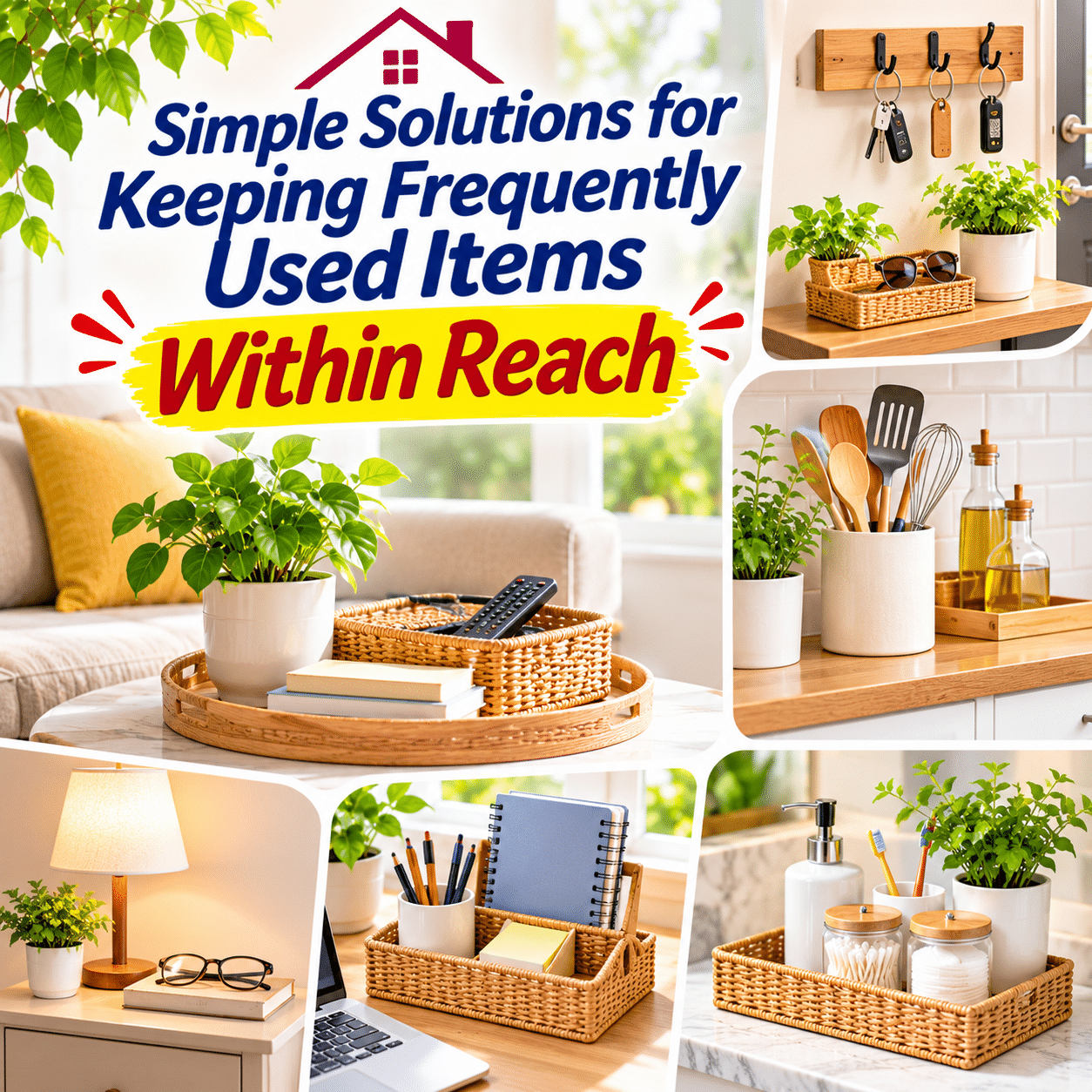
Everyday life involves reaching for the same belongings repeatedly. Keys, glasses, phone chargers, cooking utensils, cleaning cloths, notebooks, and personal care products are small essentials that support familiar routines. When these items are difficult to find or stored in inconvenient locations, even simple activities can become unnecessarily frustrating.
A home may have plenty of storage space and still feel disorganized if frequently used belongings are kept too far from where they are needed. A kitchen tool stored in the wrong cabinet, a charging cable buried in a drawer, or a pair of glasses left in different rooms can create repeated interruptions throughout the day.
Keeping everyday essentials within reach is not about leaving everything visible or filling every surface with organizers. It is about arranging belongings thoughtfully so that the items used most often are accessible, easy to identify, and simple to return after use.
Small changes can make a meaningful difference. Relocating a few objects, creating dedicated activity zones, simplifying drawers, or making better use of existing storage can improve convenience without requiring major renovations or expensive furniture.
The most effective arrangements also consider safety, comfort, and individual needs. Items should be easy to access without excessive bending, stretching, climbing, or moving other belongings. At the same time, hazardous objects must remain appropriately secured, even when they are used frequently.
This guide explores practical ways to keep frequently used household items within reach, organize different rooms around everyday activities, avoid common storage mistakes, and develop simple systems that remain useful over time.
1. Understand What It Means to Keep Items Within Reach
Keeping belongings within reach means placing them where they can be accessed conveniently during normal activities.
This does not necessarily mean every object must remain on a countertop, desk, or open shelf.
An item stored in a nearby drawer may be just as accessible as one left on a visible surface.
The goal is to reduce unnecessary movement and effort while maintaining an organized environment.
Three Levels of Everyday Accessibility
A useful way to organize belongings is to divide them into three groups.
| Accessibility Level | Typical Items | Recommended Storage |
|---|---|---|
| Immediate access | Items used repeatedly during an activity | Nearby work surface, accessible drawer, or suitable organizer |
| Regular access | Items used daily or several times weekly | Convenient cabinet, shelf, or designated storage area |
| Occasional access | Items used infrequently | Less accessible but safe storage locations |
For example, a frequently used cooking spatula may belong near the stove, while a specialized baking tool can remain in a less accessible cabinet.
Similarly, everyday stationery should be easy to reach from a desk, while rarely used office supplies can be stored elsewhere.
Accessibility Is About Convenience, Not Visibility
An object does not need to be displayed to remain accessible.
In fact, keeping too many items visible can create visual clutter and make important belongings harder to identify.
A well-organized drawer, cabinet, or container can provide convenient access while preserving clear surfaces.
2. Identify the Items You Use Most Often
Before changing storage arrangements, observe your normal routines.
Different households use different objects throughout the day.
A person who cooks frequently may prioritize kitchen tools, while someone working from home may need convenient access to office supplies and electronic accessories.
Conduct a Simple Daily-Use Assessment
Over several ordinary days, notice which items you repeatedly reach for.
Examples may include:
- Keys and wallets.
- Eyeglasses.
- Phone chargers.
- Reusable shopping bags.
- Cooking utensils.
- Coffee and tea accessories.
- Cleaning cloths.
- Remote controls.
- Notebooks and pens.
- Personal care products.
- Frequently worn clothing.
- Pet care accessories.
Consider how often each item is used and where the activity usually takes place.
Ask Practical Questions
For each frequently used object, consider:
- Where do I normally use this item?
- Where is it currently stored?
- How many steps are required to retrieve it?
- Do I need to move other belongings to reach it?
- Is the storage location comfortable and safe?
- Is it easy to return the item afterward?
These questions can reveal opportunities to improve organization without purchasing additional furniture.
Avoid Organizing Around Rare Activities
Occasional activities should not dominate the most convenient storage areas.
Reserve prime storage locations for belongings that genuinely support everyday routines.
3. Create Activity-Based Storage Zones
One of the most effective ways to improve accessibility is to organize belongings around activities rather than simply by room.
An activity-based zone keeps related objects near the location where they are used.
Examples of Practical Household Zones
| Activity Zone | Frequently Used Items | Suitable Organization |
|---|---|---|
| Entryway | Keys, wallet, everyday bag | Tray, hooks, or accessible drawer |
| Cooking | Utensils, suitable cooking tools | Nearby drawer or utensil holder |
| Coffee and tea | Cups, tea, coffee accessories | Designated cabinet or counter section |
| Home office | Pens, notebooks, chargers | Desk drawer or small organizer |
| Reading | Glasses, books, reading light | Side table or nearby shelf |
| Personal care | Daily grooming products | Bathroom drawer or suitable cabinet |
| Laundry | Detergent, clothespins, laundry accessories | Accessible utility storage |
| Pet care | Leash, grooming supplies, toys | Designated pet accessory area |
| Cleaning | Cloths, brushes, appropriate supplies | Safe storage near the relevant task |
| Hobbies | Frequently used tools and materials | Portable activity container |
The most important principle is to place related items together whenever practical.
This reduces repeated searching and makes it easier to complete familiar tasks.
4. Keep Entryway Essentials Easy to Find
The entryway is an important location for frequently used belongings.
Keys, bags, shoes, and accessories often move in and out of the home every day.
Without a consistent storage system, these items may end up scattered across different rooms.
Establish a Dedicated Key Location
Choose one convenient location for keys.
Possible options include:
- A small tray.
- A designated drawer.
- A wall-mounted key holder.
- A suitable hook near the entrance.
The exact method matters less than using the same location consistently.
Avoid leaving keys in exposed locations where they may create unnecessary security concerns.
Organize Everyday Bags
Keep frequently used bags on appropriate hooks or shelves.
Avoid hanging heavy bags from fixtures not designed to support their weight.
Keep Frequently Worn Shoes Accessible
Store regularly worn footwear in a convenient location without blocking the entrance.
Occasional-use shoes can remain in a closet or other suitable storage area.
Prepare an Outgoing-Items Area
A small basket or designated shelf can hold belongings that need to leave the house.
Examples include library books, reusable shopping bags, or items awaiting return.
Review the area regularly to prevent it from becoming permanent clutter.
5. Arrange Kitchen Essentials Around Cooking Activities
The kitchen is one of the clearest examples of how storage location affects everyday convenience.
Cooking often involves repeated movement between ingredients, utensils, appliances, and preparation surfaces.
Thoughtful organization can reduce unnecessary searching and make meal preparation more comfortable.
Keep Frequently Used Utensils Nearby
Common cooking tools may include:
- Spatulas.
- Ladles.
- Tongs.
- Measuring spoons.
- Mixing utensils.
- Oven mitts.
Store these items near the areas where they are used, while keeping them away from direct heat and other hazards.
Organize Food Preparation Tools
Cutting boards, mixing bowls, and appropriate preparation utensils should be accessible near the main preparation area.
Sharp knives require secure storage designed to reduce accidental contact.
Arrange Cabinets by Frequency of Use
Keep everyday dishes and cookware at comfortable heights.
Store occasional-use serving pieces or specialized equipment in less accessible locations.
Avoid placing heavy cookware on high shelves.
Keep Ingredients Organized
Frequently used dry ingredients may be stored in a convenient pantry section.
Group similar products together and follow appropriate food storage requirements.
Do not place ingredients or packaging where they may be exposed to excessive heat, moisture, or contamination.
6. Create a Convenient Coffee and Tea Station
Coffee and tea routines often involve several small items used together.
Keeping these accessories in one location can make preparation simpler.
Group Related Supplies
Depending on personal preferences, a beverage station might include:
- Coffee or tea.
- Mugs.
- Suitable measuring tools.
- Filters or infusers.
- Stirring accessories.
- Frequently used beverage ingredients.
Use Existing Cabinet Space
A dedicated cabinet shelf or drawer may provide sufficient storage.
There is no need to create a large display if a compact arrangement works better.
Keep Electrical Equipment Safe
Coffee makers, kettles, and other appliances should be positioned according to manufacturer instructions.
Maintain required ventilation and clearance.
Keep electrical connections away from water and avoid overloaded outlets.
Prevent the Station From Becoming Cluttered
Limit the area to items genuinely used for beverage preparation.
Return unrelated objects to their proper locations.
7. Organize a Home Workspace for Easy Access
A functional workspace should make essential materials available without overcrowding the desk.
The ideal arrangement depends on the type of work performed.
Identify Daily Desk Essentials
Common items include:
- Computer accessories.
- Notebook.
- Pens and pencils.
- Eyeglasses.
- Phone charger.
- Frequently referenced documents.
- Task lighting.
Keep these items within comfortable reach.
Use the Primary Reach Area
The primary reach area is the space that can be accessed comfortably while maintaining a natural seated position.
Place frequently used tools within this area when possible.
Less frequently used materials can remain in nearby drawers or shelves.
Organize Desk Drawers
Use simple categories for stationery, accessories, and active work materials.
Avoid mixing unrelated items in one large compartment.
Create a Charging Location
Keep charging accessories in a consistent location.
Use appropriate cable organizers to reduce tangling.
Avoid damaged cords, overloaded outlets, and arrangements that trap heat.
Keep the Desk Surface Functional
Not every office supply needs to remain visible.
A clear working area makes it easier to write, use a computer, and organize active projects.
8. Keep Bedside Essentials Conveniently Accessible
Bedside organization should support comfort and reduce unnecessary movement during rest periods.
However, overcrowded bedside tables can make essential items harder to find.
Identify Genuine Bedside Necessities
Depending on individual needs, these might include:
- Eyeglasses.
- A book.
- Reading light.
- Water in a stable container.
- Tissues.
- Phone or alarm clock.
- Other appropriate personal essentials.
Use a Small Tray or Drawer
A tray can help contain small objects.
Drawers are useful for accessories that do not need to remain visible.
Position Lighting Conveniently
Bedside lighting should be easy to operate without uncomfortable stretching.
Choose stable fixtures and follow electrical safety instructions.
Avoid Storing Unnecessary Items
Move unrelated paperwork, old packaging, and miscellaneous objects to more appropriate locations.
Keep enough surface space for the items actually needed near the bed.
9. Make Bathroom Essentials Easy to Reach
Bathroom routines involve numerous small products that are often used in a predictable sequence.
Organizing these items by frequency of use can improve convenience and reduce counter clutter.
Separate Daily and Occasional-Use Products
Daily essentials might include:
- Toothbrush and toothpaste.
- Frequently used skincare products.
- Hairbrush or comb.
- Suitable grooming accessories.
- Handwashing supplies.
Occasional-use products can remain in less accessible storage.
Organize by Routine
Group products used together.
For example, oral care items may occupy one section, while hair care accessories occupy another.
Keep Countertops Manageable
A small tray or suitable organizer can contain frequently used products.
Avoid covering every available surface.
Consider Moisture and Safety
Bathrooms can be humid environments.
Follow storage instructions for cosmetics, medications, and electrical grooming devices.
Some products require dry storage outside the bathroom.
Keep sharp grooming tools and hazardous products secured when necessary.
10. Improve Laundry Area Accessibility
Laundry routines often involve repeated use of the same supplies.
Keeping these items organized can make washing, drying, folding, and clothing care easier.
Group Laundry Supplies
Depending on the equipment and routine, frequently used items may include:
- Laundry detergent.
- Appropriate stain-treatment products.
- Clothespins.
- Laundry bags.
- Lint-removal tools.
- Folding accessories.
Store Supplies Near Their Intended Use
Choose a suitable cabinet, shelf, or utility storage area.
Keep products in their original labeled containers unless the manufacturer provides appropriate alternative storage guidance.
Prioritize Chemical Safety
Laundry detergents and other cleaning products should remain securely stored away from children and pets.
Convenient access for adults should never override safe storage requirements.
Keep Folding Areas Available
If a counter or table is used for folding laundry, avoid allowing unrelated objects to accumulate there.
11. Make Cleaning Tools Accessible Without Leaving Them Exposed
Cleaning supplies are most useful when they are easy to locate.
However, cleaning products may present chemical or physical hazards and require appropriate storage.
Separate Tools From Chemicals
Nonhazardous tools such as suitable cloths, dusters, and brushes may be stored conveniently near cleaning areas.
Chemical products should be stored according to their labels and safety instructions.
Create Practical Cleaning Categories
Possible categories include:
- Kitchen cleaning tools.
- Bathroom cleaning tools.
- Floor care accessories.
- Dusting supplies.
- Laundry-related cleaning materials.
Avoid Unnecessary Duplication
Some households benefit from having suitable nonhazardous cleaning tools in multiple locations.
However, excessive duplicates can consume storage space.
Choose quantities that match actual needs.
Keep Hazardous Products Secure
Never place cleaning chemicals in food or beverage containers.
Do not mix cleaning products unless the manufacturer explicitly directs it.
Store hazardous materials away from children, pets, food, and incompatible substances.
12. Organize Living Room Essentials Around Relaxation
Living rooms often support several activities, including reading, watching television, socializing, and hobbies.
Frequently used items should be easy to access without overwhelming shared surfaces.
Give Remote Controls a Consistent Location
A small tray, drawer, or suitable organizer can prevent remote controls from disappearing between cushions or moving between rooms.
Keep Reading Materials Nearby
Books and magazines currently being read can remain on an accessible shelf or side table.
Move completed or unused materials back to their designated storage locations.
Organize Blankets and Cushions
Fold blankets and place them in an existing suitable storage area when not in use.
Avoid overcrowding seating surfaces.
Use Activity-Specific Containers
Board games, hobby materials, or other frequently used accessories can be grouped in portable containers.
Return them to storage after activities end.
13. Make Pet Care Essentials Convenient and Safe
Pet care often involves repeated daily routines such as feeding, walking, grooming, and play.
Keeping appropriate supplies organized can make these activities more manageable.
Create a Walking Essentials Area
For pets that require walks, a designated location may hold:
- Leash.
- Harness.
- Waste bags.
- Suitable walking accessories.
- Towel for cleaning paws when needed.
Store these items where they are easy for the caregiver to access.
Organize Feeding Supplies
Keep appropriate food measuring tools and feeding accessories near the feeding area.
Store pet food according to packaging instructions.
Maintain clean food and water bowls.
Group Grooming Tools
Brushes, combs, and suitable grooming accessories can remain in a dedicated container.
Sharp tools and grooming products should be stored securely.
Consider the Pet’s Safety
Avoid placing hazardous supplies, small swallowable objects, or inappropriate products within a pet’s reach.
Convenience should always be balanced with the animal’s safety and needs.
14. Use Existing Drawers More Effectively
Drawers can provide excellent accessibility when their contents are organized thoughtfully.
Poorly arranged drawers often require repeated searching.
Place Frequently Used Items at the Front
Keep daily essentials in the easiest-to-reach sections.
Occasional-use items can remain toward the back.
Use Dividers for Small Objects
Dividers help separate items that might otherwise mix together.
Examples include:
- Stationery.
- Hair accessories.
- Small household tools.
- Electronic accessories.
- Sewing supplies.
Avoid Overfilling Drawers
Leave enough room to retrieve and replace items comfortably.
A drawer should open and close without excessive force.
Reevaluate Drawer Contents Periodically
If certain objects are rarely used, consider moving them to less accessible storage.
Reserve convenient drawer space for everyday essentials.
15. Use Hooks and Wall Accessories Strategically
Hooks and wall-mounted accessories can make selected items easy to access without occupying additional floor space.
They are particularly useful in entryways, bedrooms, kitchens, and utility areas.
Choose Suitable Locations
Hooks may hold:
- Everyday bags.
- Lightweight jackets.
- Aprons.
- Reusable shopping bags.
- Selected household accessories.
Install at Comfortable Heights
Position hooks where intended users can reach them safely.
Avoid locations that require excessive stretching.
Respect Weight Limits
Use suitable mounting hardware for the wall material and intended load.
Do not overload adhesive hooks or wall fixtures.
Keep Walkways Clear
Avoid placing hooks or hanging objects where they may obstruct doors, create head-height hazards, or interfere with movement.
16. Organize Frequently Used Items in Small Homes
Compact homes require careful decisions about which belongings deserve the most accessible locations.
Limited storage space makes prioritization especially important.
Reserve Prime Storage for Daily Essentials
Use convenient drawers and shelves for items needed regularly.
Move seasonal or occasional-use belongings to appropriate secondary storage.
Choose Compact Organizers
Small trays, drawer dividers, and suitable containers can improve organization without adding bulky furniture.
Avoid Overcrowding Surfaces
A small room may feel cluttered when too many items remain visible.
Keep essential objects accessible while returning others to storage.
Use Multifunctional Existing Furniture
An existing side table, cabinet, or console may support more than one activity.
Organize its contents according to nearby routines.
Preserve Movement and Accessibility
Do not use narrow walkways or essential clearances as storage areas.
Comfortable circulation is part of an effective home organization system.
17. Adapt Storage for Different Physical Needs
Accessibility is not the same for every person.
Age, height, mobility, strength, and individual circumstances can influence which storage locations are comfortable.
Avoid Repeated Bending and Stretching
Place frequently used belongings within a comfortable reach range.
Heavy items should generally be stored at lower, accessible heights.
Consider Seated Access
For someone who frequently performs activities while seated, essential items should be reachable without unsafe leaning or twisting.
Choose Easy-to-Operate Storage
Drawers, handles, and containers should be manageable for the intended user.
Avoid complicated closures for everyday items when simpler alternatives are appropriate.
Preserve Clear Pathways
Storage arrangements should not create obstacles or tripping hazards.
For households with specific accessibility requirements, an occupational therapist or qualified accessibility professional may provide individualized guidance.
18. Use Portable Everyday Essentials Kits
Some items are needed in multiple locations.
Instead of leaving them scattered throughout the home, a portable kit can provide convenient access.
Create a Small Work Kit
A portable container might hold a notebook, pens, and selected accessories.
It can move between a desk and another suitable work surface.
Organize a Hobby Kit
Keep the materials for a regularly enjoyed activity together.
For example, a journaling kit may contain a notebook, pens, and selected decorative accessories.
Prepare a Travel Essentials Kit
A designated container can hold suitable travel accessories such as luggage tags, packing aids, and other nonperishable supplies.
Avoid Overloading Portable Kits
Keep each kit focused on a specific activity.
A container filled with unrelated belongings becomes difficult to manage.
19. Reduce the Number of Steps Required to Put Things Away
An organization system should make returning items almost as convenient as retrieving them.
If putting something away requires several unnecessary steps, it may repeatedly end up on a nearby surface instead.
Simplify Storage Access
Avoid placing frequently used items behind multiple containers.
Choose accessible locations and straightforward organization methods.
Match Storage to Natural Habits
If an item is consistently used in one location, consider storing it nearby.
For example, a notebook used at the dining table may belong in an existing nearby drawer rather than a distant office cabinet.
Avoid Excessive Categorization
Too many storage categories can make simple tasks complicated.
Use labels and divisions only when they improve convenience.
Make Returning Items Part of the Activity
After finishing an activity, return the related tools to their designated locations.
This helps prevent frequently used belongings from becoming everyday clutter.
20. Keep Accessibility From Turning Into Visual Clutter
Keeping essentials within reach does not mean leaving every object exposed.
An effective arrangement balances convenience with a comfortable appearance.
Use Small Trays
A tray can visually group frequently used objects.
Examples include bedside essentials, desk accessories, or suitable kitchen items.
Limit Countertop Collections
Keep only genuinely useful objects on work surfaces.
Move occasional-use belongings into nearby storage.
Use Closed Storage for Small Accessories
Drawers and cabinets can provide easy access while reducing visual clutter.
Keep Categories Consistent
Related objects should remain together.
Avoid scattering similar items across multiple unrelated locations.
Leave Functional Space Available
A desk should have room for work.
A kitchen counter should have room for food preparation.
A dining table should remain usable for meals and other intended activities.
21. Common Mistakes When Keeping Items Within Reach
Leaving Too Many Items on Countertops
A surface filled with everyday objects can become difficult to use.
Better approach: Keep the most frequently needed items accessible and store the rest nearby.
Storing Items Too Far From Their Point of Use
This creates repeated movement and unnecessary searching.
Better approach: Arrange storage around actual household activities.
Keeping Heavy Items on High Shelves
This can make retrieval uncomfortable or unsafe.
Better approach: Store heavy objects at appropriate lower heights.
Overloading Hooks and Organizers
Excessive weight can damage fixtures or cause objects to fall.
Better approach: Follow installation instructions and load limits.
Ignoring Safety for Convenience
Hazardous products should not be left exposed simply because they are used regularly.
Better approach: Use secure, appropriately located storage.
Creating Too Many Storage Categories
Complicated systems can be difficult to maintain.
Better approach: Use broad, meaningful categories.
Placing Everything in One Miscellaneous Drawer
This can make individual items difficult to locate.
Better approach: Separate belongings by purpose.
Forgetting to Review Changing Habits
Storage arrangements may become inconvenient as routines evolve.
Better approach: Reassess frequently used items periodically.
22. Troubleshooting Common Accessibility and Organization Problems
| Problem | Possible Cause | Practical Solution |
|---|---|---|
| Keys are frequently misplaced | No consistent storage location | Establish a dedicated key area |
| Kitchen tools are difficult to find | Items are stored away from cooking activities | Reorganize drawers by function |
| Desk essentials create clutter | Too many items remain visible | Keep core essentials accessible and store others nearby |
| Bathroom products cover the vanity | Daily and occasional-use products are mixed | Separate products by frequency of use |
| Bedside table becomes crowded | Unrelated belongings accumulate | Limit contents to genuine bedside essentials |
| Cleaning tools are inconvenient | Supplies are stored far from their point of use | Relocate suitable tools while maintaining safe chemical storage |
| Remote controls disappear | No designated location | Use a consistent tray or drawer |
| Pet accessories are scattered | Supplies lack a dedicated area | Create an organized pet care station |
| Drawers are difficult to use | Contents are overcrowded | Sort items and introduce simple divisions |
| Hooks are overloaded | Too many objects share limited fixtures | Reduce weight and use appropriate storage |
| Frequently used items remain on chairs | Storage locations are inconvenient | Reassign accessible storage |
| Household members cannot find supplies | Locations are inconsistent | Use simple shared categories and labels |
| Organizers are rarely used | System requires too much effort | Simplify access and reduce unnecessary steps |
| Important items are stored too high | Storage does not match physical needs | Relocate them to comfortable reaching heights |
| Surfaces remain cluttered | Too many objects are considered essential | Prioritize actual daily use |
23. A Step-by-Step Plan for Improving Everyday Accessibility
Improving access to frequently used items does not require reorganizing the entire home at once.
A gradual approach can produce practical results.
Step 1: Choose One Daily Activity
Start with an activity that involves repeated searching or unnecessary movement.
Examples include preparing breakfast, leaving the house, working at a desk, or getting ready for bed.
Step 2: Identify the Essential Items
List the objects genuinely needed for the activity.
Avoid including occasional-use belongings unless they are relevant.
Step 3: Observe Their Current Locations
Notice how far you must move to retrieve each item.
Identify storage that requires excessive bending, stretching, or moving other objects.
Step 4: Choose Convenient and Safe Locations
Place appropriate items near their point of use.
Consider accessibility, safety, and available space.
Step 5: Use Existing Storage First
Review nearby drawers, shelves, cabinets, and suitable containers.
Additional furniture may not be necessary.
Step 6: Organize Related Items Together
Create simple categories based on the activity.
Keep the arrangement easy to understand.
Step 7: Test the New Setup
Use the space normally for several days.
Notice whether retrieving and returning items feels easier.
Step 8: Make Small Adjustments
Move objects that remain inconvenient.
Remove unnecessary accessories or simplify containers.
Step 9: Establish a Return Routine
After completing the activity, return the related items to their designated locations.
Step 10: Apply the Same Approach Elsewhere
Once one activity zone works well, improve another area of the home.
24. Frequently Asked Questions
1. What does it mean to keep frequently used items within reach?
It means storing everyday essentials in convenient, accessible locations near where they are normally used, while maintaining safety and organization.
2. How can I identify which items should be easiest to access?
Observe your daily routines and note which belongings you use repeatedly. Prioritize those items over occasional-use possessions.
3. Should frequently used items always remain visible?
No. A nearby drawer or cabinet can provide convenient access while keeping surfaces clear.
4. What is the best place to keep everyday keys?
Choose a consistent, reasonably secure location near the entrance, such as a designated drawer, tray, or suitable key holder.
5. How can I make kitchen utensils easier to reach?
Store frequently used tools near the relevant cooking or preparation area, while keeping them away from heat and other hazards.
6. How do I organize a desk for convenient access?
Keep essential equipment and supplies within a comfortable reach area. Store occasional-use materials in nearby drawers or shelves.
7. How can I prevent bedside tables from becoming cluttered?
Limit the surface to items genuinely needed near the bed and use drawers for smaller accessories.
8. What is an activity-based storage zone?
It is an area where belongings related to a particular activity are stored together near the place where that activity occurs.
9. Can I improve accessibility without buying organizers?
Yes. Rearranging existing drawers, cabinets, trays, and containers may be enough to make everyday essentials easier to reach.
10. How should I organize frequently used bathroom products?
Separate daily essentials from occasional-use products and store them in suitable, accessible locations according to their storage requirements.
11. Where should cleaning supplies be stored?
Store tools conveniently when appropriate, but keep chemical products secured according to their labels and away from children, pets, and incompatible materials.
12. How can I make laundry supplies easier to access?
Group frequently used supplies in an appropriate utility storage area while following product safety requirements.
13. What is the best way to organize remote controls?
Use a consistent location, such as a small tray, drawer, or suitable organizer near the seating area.
14. How can I keep pet walking accessories organized?
Create a designated location for the leash, harness, waste bags, and other suitable walking essentials.
15. Should heavy everyday items be stored at eye level?
Not necessarily. Heavy items are generally safer on suitable lower shelves where they can be handled without excessive reaching.
16. How can I make a small home more convenient?
Reserve accessible storage for frequently used belongings, group related items, and avoid overcrowding surfaces and walkways.
17. Are wall hooks useful for everyday organization?
Yes, when appropriately installed and used within their load limits. They can provide convenient storage for suitable lightweight belongings.
18. How do I organize items used in several rooms?
A portable activity kit or designated shared storage location may work well, depending on the items and routines.
19. How can I make storage easier for someone with limited mobility?
Place essentials within comfortable reach, reduce unnecessary bending and stretching, and preserve clear pathways. Individual accessibility needs may require professional guidance.
20. What should I do when frequently used items keep ending up in the wrong place?
Consider whether their assigned storage location is inconvenient. Moving storage closer to the point of use may improve consistency.
21. How do I prevent accessible storage from becoming cluttered?
Limit prime storage locations to genuinely useful items and review their contents periodically.
22. Is open storage better than closed storage for daily essentials?
Both can work. Open storage offers visibility, while closed storage can reduce visual clutter. Choose based on the item, activity, and safety requirements.
23. How often should I review storage locations?
Review them when daily routines change or when items repeatedly become difficult to find or return.
24. What is the biggest mistake when organizing frequently used items?
Prioritizing appearance or maximum storage capacity over practical accessibility and safety.
25. What is the simplest way to make everyday essentials easier to find?
Give each item a consistent, convenient location near where it is used and return it there after each activity.
25. Practical Checklist for Keeping Frequently Used Items Within Reach
Use this checklist to create a convenient, safe, and manageable organization system.
Identify Everyday Essentials
- Observe frequently repeated household activities.
- List items used daily or several times weekly.
- Identify objects that are regularly misplaced.
- Note storage locations that require unnecessary movement.
- Separate daily essentials from occasional-use belongings.
Improve Storage Accessibility
- Place appropriate items near their point of use.
- Keep frequently used belongings at comfortable heights.
- Store heavy items on suitable lower shelves.
- Avoid overcrowding drawers and cabinets.
- Keep related items together.
- Use simple labels where helpful.
- Preserve safe access and clear walkways.
Organize Key Household Areas
- Establish a consistent location for keys and everyday bags.
- Keep cooking utensils near relevant preparation areas.
- Organize coffee and tea supplies together.
- Arrange desk essentials within comfortable reach.
- Keep bedside surfaces manageable.
- Separate daily bathroom products from occasional-use items.
- Organize laundry tools and supplies appropriately.
- Give remote controls a designated location.
- Create practical storage for pet care accessories.
Maintain Safety
- Secure hazardous cleaning products.
- Store sharp tools appropriately.
- Follow electrical appliance clearance requirements.
- Avoid overloading hooks and shelves.
- Keep dangerous objects away from children and pets.
- Preserve ventilation and maintenance access.
- Avoid unsafe reaching, climbing, or bending.
Keep Organization Simple
- Use existing drawers and cabinets before buying new furniture.
- Choose a manageable number of storage categories.
- Keep only genuine essentials on visible surfaces.
- Return belongings after use.
- Review storage locations when routines change.
- Adjust arrangements that are difficult to maintain.
- Prioritize comfort, convenience, and functionality.
Final Thoughts
Keeping frequently used items within reach is one of the simplest ways to make a home more convenient and functional.
Small household objects often play important roles in everyday routines, yet their storage locations are easily overlooked. When essentials are difficult to find, buried beneath unrelated belongings, or stored far from where they are needed, ordinary activities can require unnecessary time and effort.
Thoughtful organization begins with understanding how a home is actually used. By identifying frequently repeated activities, grouping related belongings, and assigning convenient storage locations, it becomes easier to create arrangements that support daily life.
The most effective solutions do not necessarily involve purchasing additional furniture or specialized organizers. Existing drawers, cabinets, shelves, hooks, and containers can often provide everything needed when used more efficiently.
Accessibility must also be balanced with safety. Frequently used belongings should be easy to retrieve without excessive bending or stretching, while hazardous materials and sharp objects must remain appropriately secured.
Equally important is making items easy to return. A convenient storage location encourages consistent habits and reduces the likelihood that everyday essentials will accumulate on tables, counters, and chairs.
Over time, these small improvements can make household routines feel smoother, reduce repeated searching, and help living spaces remain organized without requiring constant tidying.
A well-arranged home is not one where everything is hidden or every surface is perfectly empty. It is a home where the things people use most often are thoughtfully positioned, safely stored, and ready whenever they are needed.