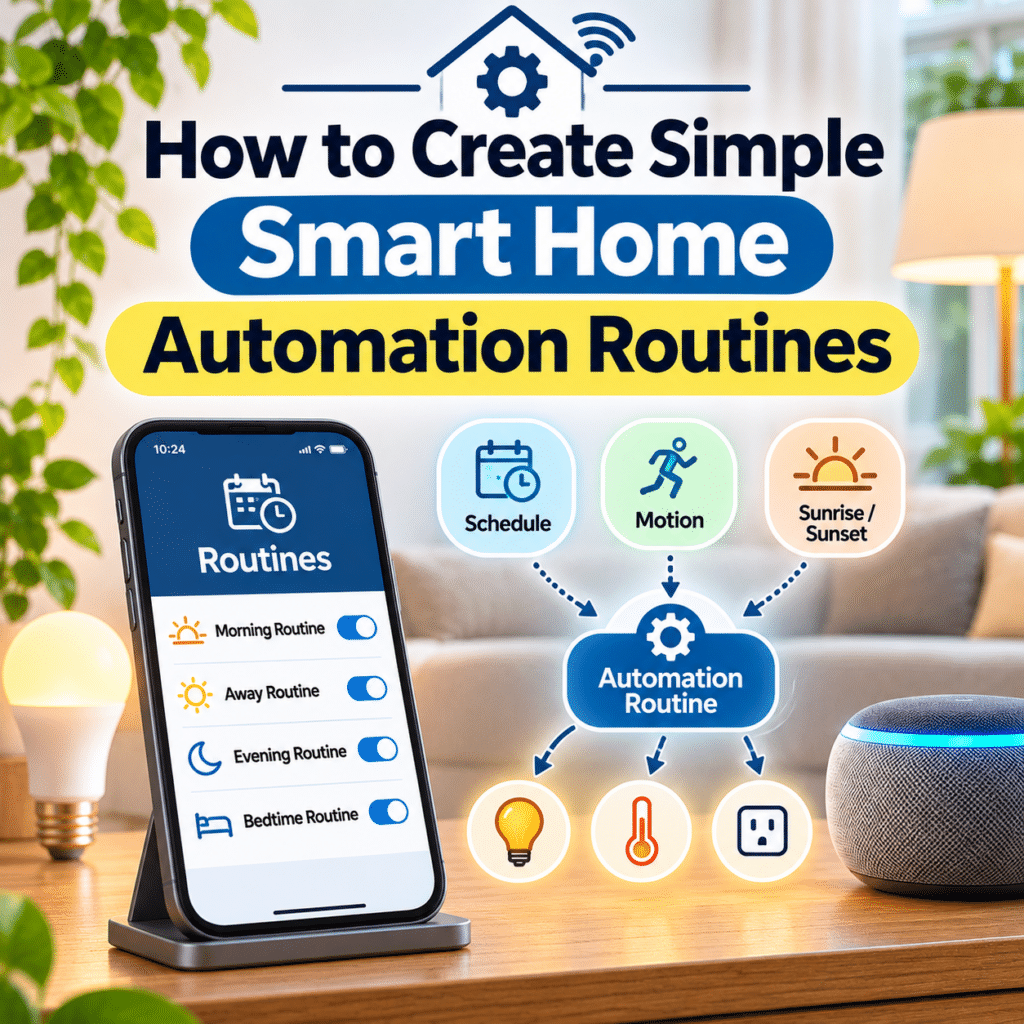
Imagine waking up to softly illuminated lights, a comfortable room temperature, and a home that has already begun preparing for your morning routine. As you leave, unnecessary lights turn off, selected appliances stop running, and your security system switches to its preferred away settings.
These experiences illustrate how smart home technology is changing everyday living. What once required several separate actions can now be managed through connected devices, automated routines, and personalized settings.
But a smarter home is not simply a house filled with gadgets. Its real value comes from making everyday activities easier, more comfortable, and more manageable.
From lighting and energy management to home security and accessibility, smart technology is gradually changing how people interact with their living spaces. Understanding these changes can help households decide which innovations genuinely improve daily life—and which may introduce unnecessary complexity.
What Is Smart Home Technology?
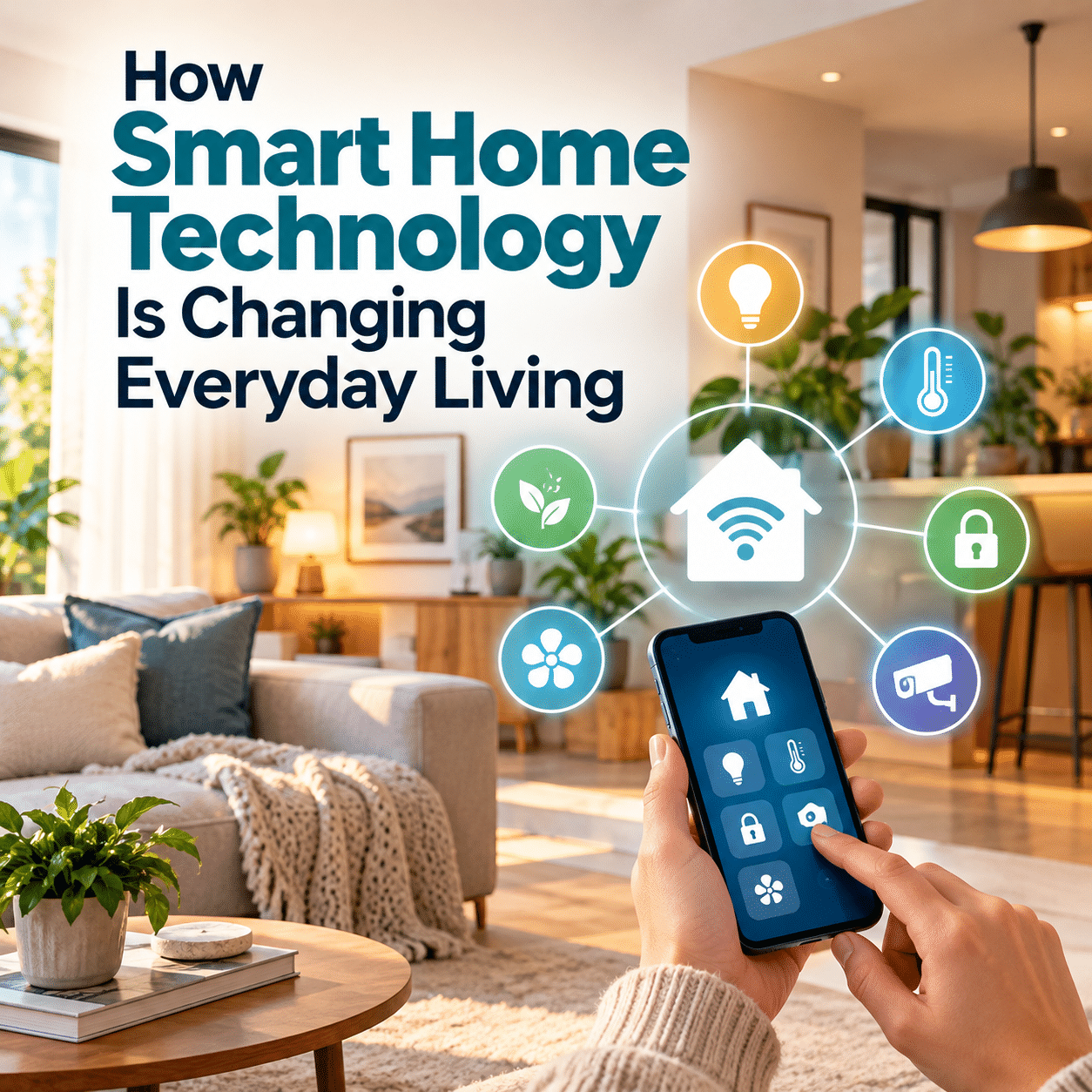
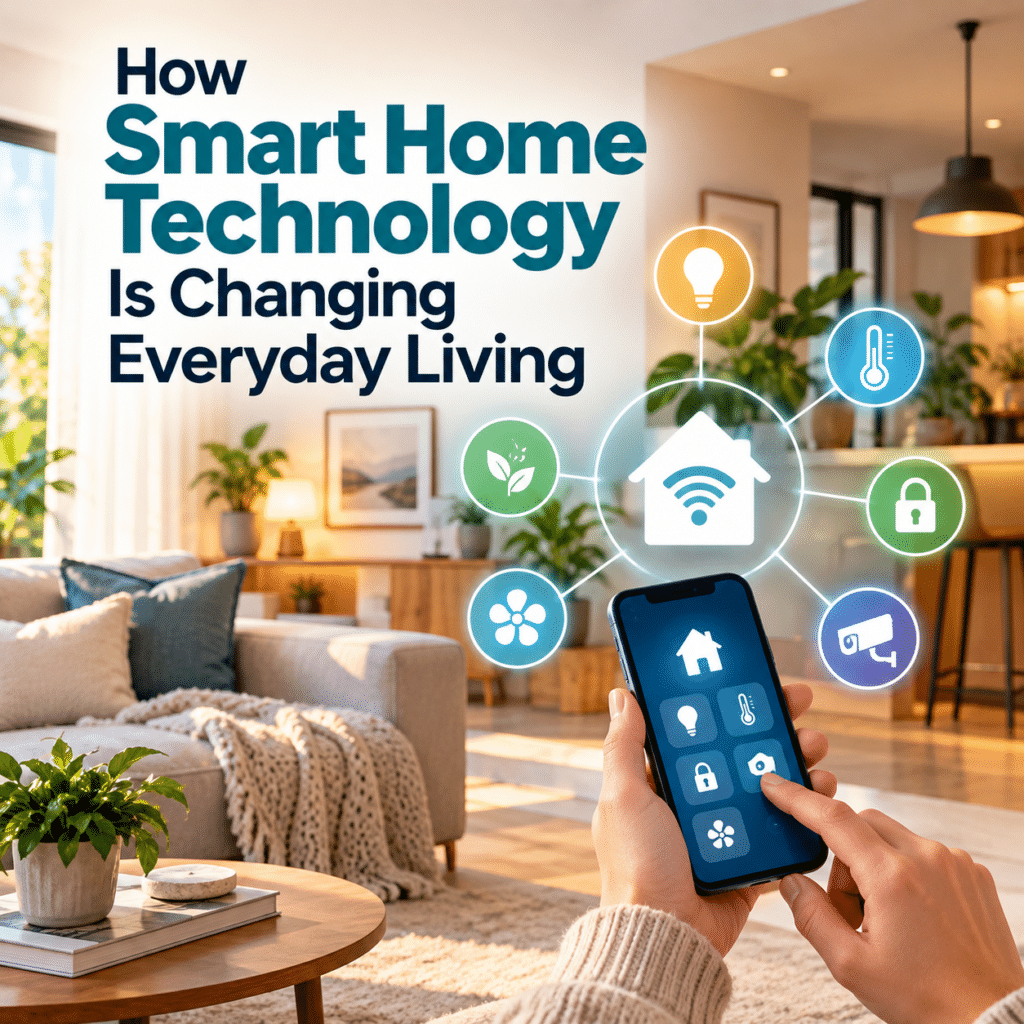
Smart home technology refers to connected devices and systems that allow people to monitor, control, or automate household functions.
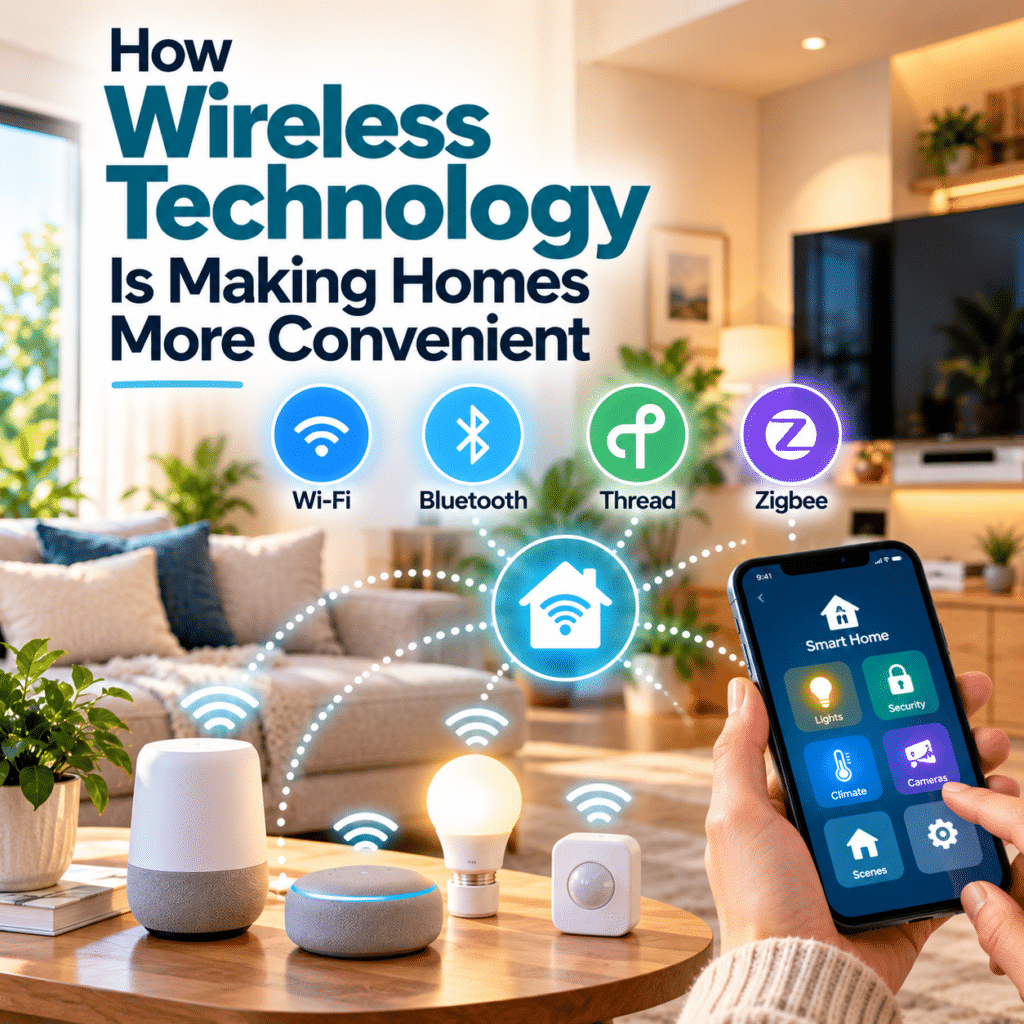
These devices may communicate through Wi-Fi, Bluetooth, Thread, or other networking technologies. Depending on the system, they can be managed through smartphone applications, voice assistants, dedicated controllers, or automated routines.
Common examples include:
- Smart lighting: Lights that can be dimmed, scheduled, or controlled remotely.
- Smart thermostats: Devices that manage compatible heating and cooling systems according to schedules, preferences, or occupancy.
- Smart security systems: Connected cameras, doorbells, locks, and sensors that provide alerts or remote monitoring.
- Smart plugs: Devices that control power to compatible electrical appliances.
- Smart speakers: Voice-controlled assistants that help manage connected devices and everyday tasks.
- Smart appliances: Household equipment offering connected controls, notifications, or automated functions.
The defining feature is connectivity. Instead of operating entirely independently, compatible devices can share information and respond to predetermined conditions.
For example, a motion sensor may trigger a hallway light, while a thermostat adjusts its settings when household members leave.
The result is a living environment that can respond to everyday routines rather than requiring constant manual attention.
1. Everyday Routines Are Becoming More Automated
One of the most noticeable changes brought by smart home technology is the ability to automate repetitive household tasks.
Traditional homes require people to operate individual switches, controls, and appliances. Smart homes can coordinate some of these actions through schedules, sensors, or specific triggers.
Making Mornings More Convenient
A morning routine might include gradually brightening bedroom lights, adjusting the temperature, and turning on selected connected devices.
These actions can be scheduled around a regular wake-up time or activated through a voice command.
For people with predictable schedules, automation can reduce the number of small decisions needed at the beginning of the day.
Simplifying Evening Routines
Evening automation can be equally useful.
A household might configure a bedtime routine that:
- Dims selected lights.
- Adjusts compatible heating or cooling controls.
- Turns off designated smart plugs.
- Checks the status of connected door locks.
- Activates appropriate security settings.
Instead of managing every device individually, users can initiate several coordinated actions.
However, automation works best when it reflects real household behavior. Overly complicated routines may become inconvenient when schedules change or different family members have conflicting preferences.
The important shift is from controlling individual devices to managing everyday activities.
2. Home Energy Management Is Becoming More Responsive
Heating, cooling, and lighting are important parts of household energy consumption.
Smart home technology offers additional ways to manage these systems according to actual needs rather than relying entirely on fixed settings.
Smarter Temperature Control
Compatible smart thermostats can adjust heating and cooling based on programmed schedules, occupancy information, or household preferences.
For example, a thermostat may reduce unnecessary heating or cooling while a home is unoccupied and restore comfortable settings before residents return.
Some models also provide energy-use information that helps users understand how their equipment operates.
ENERGY STAR notes that certified smart thermostats must demonstrate energy savings using real-world performance data.
However, actual savings depend on factors such as climate, equipment compatibility, insulation, existing settings, and household behavior.
A smart thermostat is not automatically a money-saving solution for every home.
More Efficient Lighting Habits
Smart lighting can help households avoid leaving lights on unnecessarily.
Motion sensors may illuminate hallways only when someone is present, while schedules can turn off selected lights at predetermined times.
Dimming and automation may also support lower electricity consumption, depending on the lighting technology and how it is used.
The biggest benefit often comes from better control rather than connectivity alone.
Understanding Energy Consumption
Some smart plugs and energy-monitoring devices provide information about electricity usage.
This can help households identify devices that consume power while idle or recognize patterns in everyday electricity use.
Not every smart plug measures energy consumption, however, and monitoring features vary between models.
Connected devices also consume some electricity themselves, so adding automation does not guarantee lower total energy use.
The most effective approach is to use smart technology to support practical energy-saving habits rather than treating it as a replacement for them.
3. Home Security Is Becoming More Accessible
Smart security technology has changed how people monitor their homes and receive information about unusual activity.
Connected doorbells, cameras, locks, and sensors can provide alerts and status information through compatible applications.
Greater Awareness While Away
A smart doorbell may notify residents when someone approaches the entrance.
A connected camera may allow users to view designated areas remotely, while door or window sensors can report when an entry point opens.
These capabilities can be useful for people who travel frequently, receive deliveries, or want additional awareness of activity around their homes.
More Flexible Access Management
Certain smart locks support temporary access codes or remote management.
For example, a household may provide limited access to a trusted visitor without distributing additional physical keys.
The available features depend on the lock, its connectivity, and the manufacturer’s system.
Security Technology Has Limits
Smart devices should not be confused with guaranteed protection.
Cameras may have blind spots, alerts can be delayed, batteries can fail, and internet-dependent functions may become unavailable during an outage.
Connected security devices also introduce cybersecurity and privacy considerations.
A thoughtful home security approach combines appropriate physical security, reliable devices, sensible configuration, and awareness of system limitations.
Smart technology can improve visibility and convenience, but it cannot eliminate every security risk.
4. Smart Homes Are Supporting More Personalized Comfort
Comfort means different things to different people.
Some prefer cooler bedrooms, while others appreciate warm lighting in the evening or a quiet environment during working hours.
Smart home technology allows certain household settings to be adapted to these preferences.
Lighting That Matches Daily Activities
Adjustable smart lighting can support different activities throughout the day.
A household might use brighter lighting for cleaning or working and softer illumination for relaxing in the evening.
Depending on the products involved, users may control brightness, color temperature, or lighting scenes.
These settings can make rooms more flexible without requiring major changes to their physical layout.
Room-by-Room Adjustments
Compatible temperature sensors, smart shades, and connected climate-control equipment may help residents respond to conditions in different rooms.
For example, automated shades can reduce direct sunlight at certain times, while temperature information may help users identify rooms that become unusually warm.
Not every heating or cooling system supports independent room control, so the available benefits depend on the home’s equipment.
Personalization Without Constant Adjustment
Once useful preferences are established, automation can help maintain them.
This is particularly valuable when several small adjustments would otherwise need to be repeated every day.
Still, manual controls remain important. Residents should be able to change settings easily when automated behavior does not match their immediate needs.
A comfortable smart home should adapt to its occupants—not require occupants to constantly adapt to the technology.
5. Connected Technology Can Make Homes More Accessible
Smart home technology can offer meaningful convenience for older adults, people with disabilities, and individuals with temporary mobility limitations.
Its value often comes from providing alternative ways to interact with the home.
Voice and Remote Controls
Voice commands may allow users to operate compatible lights, entertainment systems, or temperature controls without reaching physical switches.
Remote controls and smartphone applications can also make certain tasks easier when devices are difficult to access.
For example, a person with limited mobility may benefit from controlling several lights from a bedside device.
Automated Lighting and Reminders
Motion-activated lighting may reduce the need to search for switches in dark hallways.
Connected speakers or displays can also provide reminders for everyday activities.
These features can support independence and convenience, although their usefulness varies according to individual needs and abilities.
Accessibility Requires Thoughtful Design
Voice interfaces are not suitable for everyone. Speech recognition may be unreliable in noisy environments or difficult for people with certain communication needs.
Similarly, touchscreen-only controls may create barriers for some users.
The most accessible setup usually provides multiple control options, including straightforward physical switches where practical.
Smart home technology should complement appropriate accessibility adaptations and support systems rather than replace essential care or emergency assistance.
6. Smart Appliances Are Changing Household Management
Connected appliances are extending smart home functionality beyond lighting and security.
Depending on their capabilities, smart washing machines, refrigerators, ovens, and other household devices may offer remote status information, notifications, or specialized automated functions.
Staying Informed About Household Tasks
A connected washing machine may notify users when a cycle finishes.
A compatible dishwasher might display its operating status through an application.
These features can be helpful in busy households, especially when appliances are located away from frequently used living areas.
More Flexible Control
Some appliances allow users to select settings or prepare functions through connected interfaces.
However, remote operation may be restricted by safety requirements. Certain appliances require physical confirmation before starting, and remote features should never override manufacturer instructions.
Convenience Versus Complexity
A connected appliance is not necessarily better than a conventional one.
Its practical value depends on whether the additional functions solve a genuine problem.
A reliable appliance with simple controls may be more appropriate than a connected model requiring frequent troubleshooting or an unnecessary subscription.
Smart features should improve the core household task, not distract from it.
7. Smart Home Devices Are Becoming Better at Working Together
An important development in smart home technology is the effort to improve compatibility between devices from different manufacturers.
Historically, connected household products have often relied on separate applications, proprietary systems, and incompatible communication methods.
This fragmentation can make it difficult to build a coordinated smart home.
The Role of Matter
Matter is an interoperability standard developed by the Connectivity Standards Alliance.
It is designed to help compatible smart home devices work across participating platforms and ecosystems.
Rather than requiring every manufacturer to create entirely separate integrations, Matter provides a common technical foundation for supported device categories.
This can simplify setup and broaden consumers’ choices.
However, Matter certification does not guarantee that every advanced feature will work identically across all platforms. Users still need to check device-category support, controller requirements, and specific functionality.
Why Compatibility Matters
Better interoperability can help households:
- Combine supported devices from different manufacturers.
- Reduce dependence on a single product ecosystem.
- Create coordinated routines across compatible devices.
- Expand an existing smart home more gradually.
Local communication is another useful development. Certain systems can perform supported functions within the home network without routing every command through an external cloud service.
Nevertheless, local functionality varies. Remote access, voice features, notifications, and some integrations may still depend on internet connectivity.
The broader direction is toward connected systems that are easier to combine and manage.
8. Privacy and Cybersecurity Are Becoming Everyday Household Concerns
As more household devices connect to networks and online services, protecting personal information becomes increasingly important.
Smart cameras, voice assistants, occupancy sensors, and connected appliances may collect different types of data.
Depending on their design and settings, this information can reveal household routines, device activity, or aspects of the home environment.
Understanding the Privacy Tradeoff
Remote access and personalized automation often require devices to process information about their surroundings or users.
Some processing occurs locally, while other functions may rely on cloud services.
Households should understand what information a device collects, how it is used, and whether optional data-sharing features can be disabled.
Practical Ways to Reduce Risk
A sensible smart home security routine includes:
- Choosing manufacturers with clear security and software-support policies.
- Replacing default passwords and using unique credentials.
- Enabling multifactor authentication where available.
- Keeping device firmware, applications, and routers updated.
- Reviewing camera, microphone, and data-sharing permissions.
- Removing unused devices and connected accounts.
- Considering a separate network for smart devices when the router supports it and the setup is appropriate.
The National Institute of Standards and Technology (NIST) emphasizes the importance of cybersecurity capabilities for consumer Internet of Things products.
These precautions cannot eliminate every vulnerability, but they can reduce avoidable exposure.
A truly useful smart home should balance convenience with privacy, reliability, and user control.
9. Smart Home Technology Still Has Practical Limitations
Despite its advantages, connected technology is not equally useful in every household.
Understanding the tradeoffs helps people make better decisions.
| Potential benefit | Practical limitation |
|---|---|
| Automated daily routines | Initial setup and troubleshooting may take time |
| Remote device control | Some features require internet connectivity |
| More responsive energy management | Savings depend on actual usage and equipment |
| Connected security alerts | Devices cannot guarantee physical security |
| Personalized comfort | Household members may have different preferences |
| Cross-brand integration | Not all devices and features are compatible |
| Expanded accessibility options | Some interfaces may be difficult for certain users |
Cost is another consideration.
A basic smart plug or light bulb may require a relatively small investment, while comprehensive climate-control, security, or automation systems can involve substantial equipment and installation expenses.
Some services also require ongoing subscriptions.
Long-term reliability matters as well. A device may remain physically functional after its manufacturer stops providing software updates or cloud services, but some connected features may become unavailable.
Before investing in a larger system, households should consider maintenance, technical support, replacement costs, and what happens when connectivity fails.
10. How Smart Home Technology Fits Into a Typical Day
The practical impact of smart home technology becomes easier to understand when viewed through ordinary household activities.
Consider a home with several compatible connected devices.
Morning: Bedroom lighting gradually brightens, and the temperature follows a preset schedule. A voice assistant provides a weather update when requested.
Leaving home: An away routine turns off selected lights, adjusts climate settings, and activates compatible security functions.
During the day: A connected appliance sends a cycle-completion notification. A doorbell alerts the household to a visitor.
Returning home: Selected lighting and temperature settings return to preferred levels, either through a schedule or a supported arrival trigger.
Evening: Softer lighting creates a relaxing atmosphere. Residents can adjust connected devices without moving between rooms.
Bedtime: A single routine switches off designated lights and checks supported security-device status.
This example does not require every device to be connected or every activity to be automated.
It illustrates how a small number of coordinated functions can simplify repetitive tasks.
For many households, a few dependable automations will be more valuable than an elaborate system filled with rarely used features.
11. What the Future of Smart Home Living May Look Like
Smart home technology continues to develop, but its long-term direction is not simply about adding more connected devices.
Several enduring areas of innovation are especially relevant.
More Context-Aware Automation
Sensors and software can help connected systems respond to conditions such as occupancy, temperature, and lighting.
Future improvements may make automation more responsive to changing household routines.
However, greater automation also increases the importance of accurate sensing, understandable settings, and meaningful user control.
More Natural Interfaces
Voice interaction, simplified applications, and increasingly capable software assistants may make connected devices easier to operate.
The most useful developments will likely be those that reduce unnecessary steps without making systems harder to understand or override.
Better Energy Coordination
Connected systems may help households coordinate heating, cooling, appliances, solar generation, battery storage, and electricity pricing where the required equipment and services are available.
The potential benefits depend heavily on local infrastructure, utility programs, and compatible technology.
Greater Emphasis on Reliability and Privacy
As smart homes become more interconnected, long-term software support, local functionality, cybersecurity, and interoperability will remain important design considerations.
A successful smart home should continue to perform essential functions predictably, even when an application, internet connection, or external service becomes unavailable.
These developments suggest that the future of smart living will be shaped as much by reliability and simplicity as by advanced automation.
12. How to Approach Smart Home Technology Thoughtfully
Creating a useful smart home does not require replacing every conventional device.
A more practical approach begins with everyday needs.
Identify a Real Problem
Consider which household activities are repetitive, inconvenient, or difficult to manage.
Examples might include lights frequently left on, uncomfortable temperature schedules, or the need for better awareness of the front entrance.
Start With One Useful Function
Choose a small improvement that addresses a specific need.
This makes it easier to understand the technology and evaluate whether it delivers meaningful benefits.
Check Compatibility Before Expanding
Confirm that new devices work with existing equipment, networks, controllers, and preferred control methods.
For electrical, heating, or security installations, follow manufacturer requirements and use qualified professionals when appropriate.
Keep Essential Controls Simple
Household members should be able to operate important functions without depending entirely on a smartphone or voice assistant.
Physical controls and sensible fallback options improve everyday usability.
Review the System Over Time
Remove unnecessary automations, check software updates, and reconsider settings when household routines change.
The goal is not to create the most technologically advanced home possible.
It is to create a home that works better for the people living in it.
Conclusion: A Smarter Home Is One That Makes Life Easier
Smart home technology is changing everyday living by making household systems more connected, responsive, and adaptable.
Automated lighting, flexible temperature control, connected security, accessible interfaces, and coordinated appliances can reduce repetitive tasks and give residents greater control over their surroundings.
At the same time, privacy, cybersecurity, compatibility, cost, and reliability deserve careful consideration.
The greatest benefit does not come from owning the largest collection of smart devices. It comes from choosing technology that solves meaningful problems and fits naturally into daily routines.
As connected home systems continue to evolve, the most valuable innovations will be those that make living spaces simpler, safer to manage, more comfortable, and easier for everyone to use.
A truly smart home is not defined by how much technology it contains, but by how thoughtfully that technology supports everyday life.