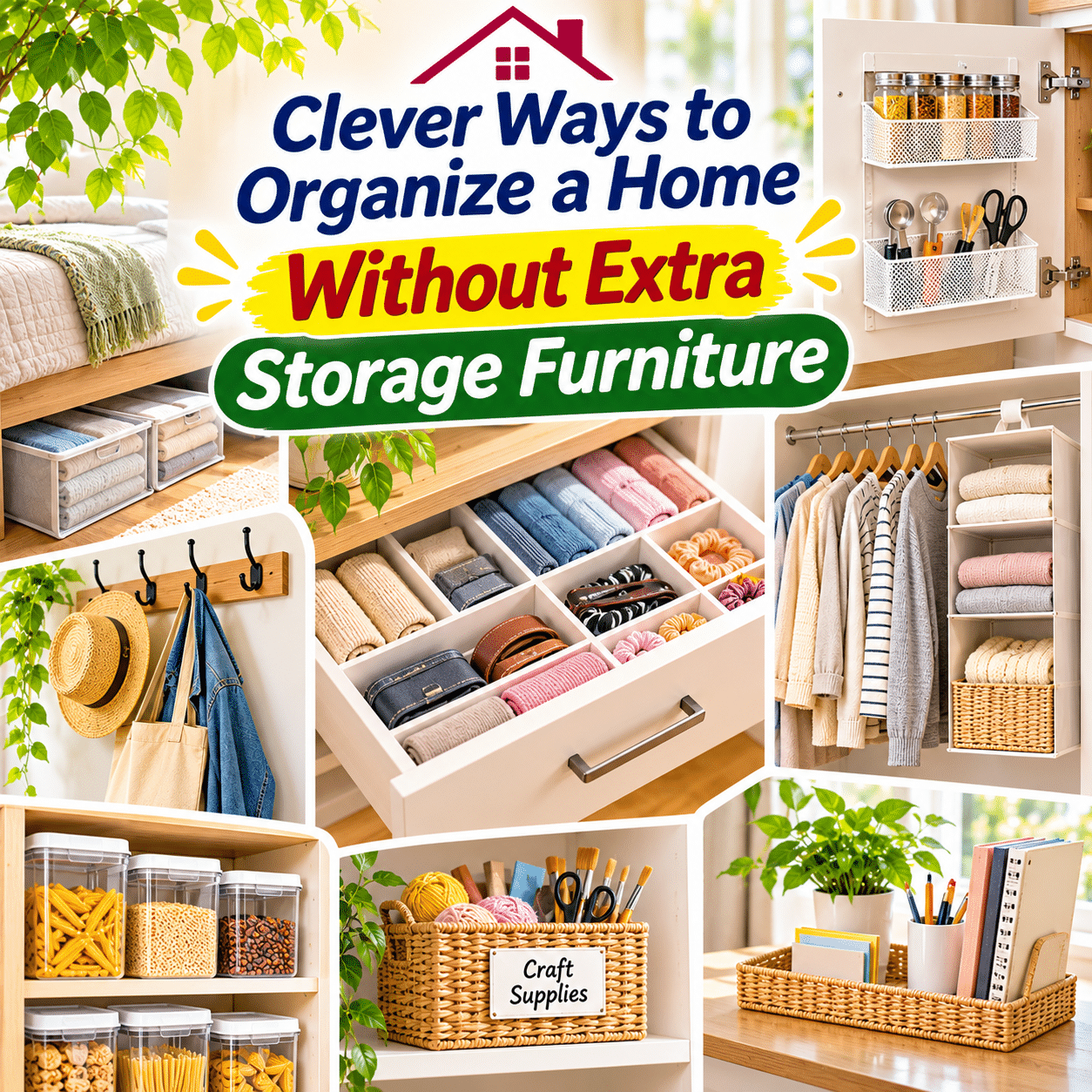
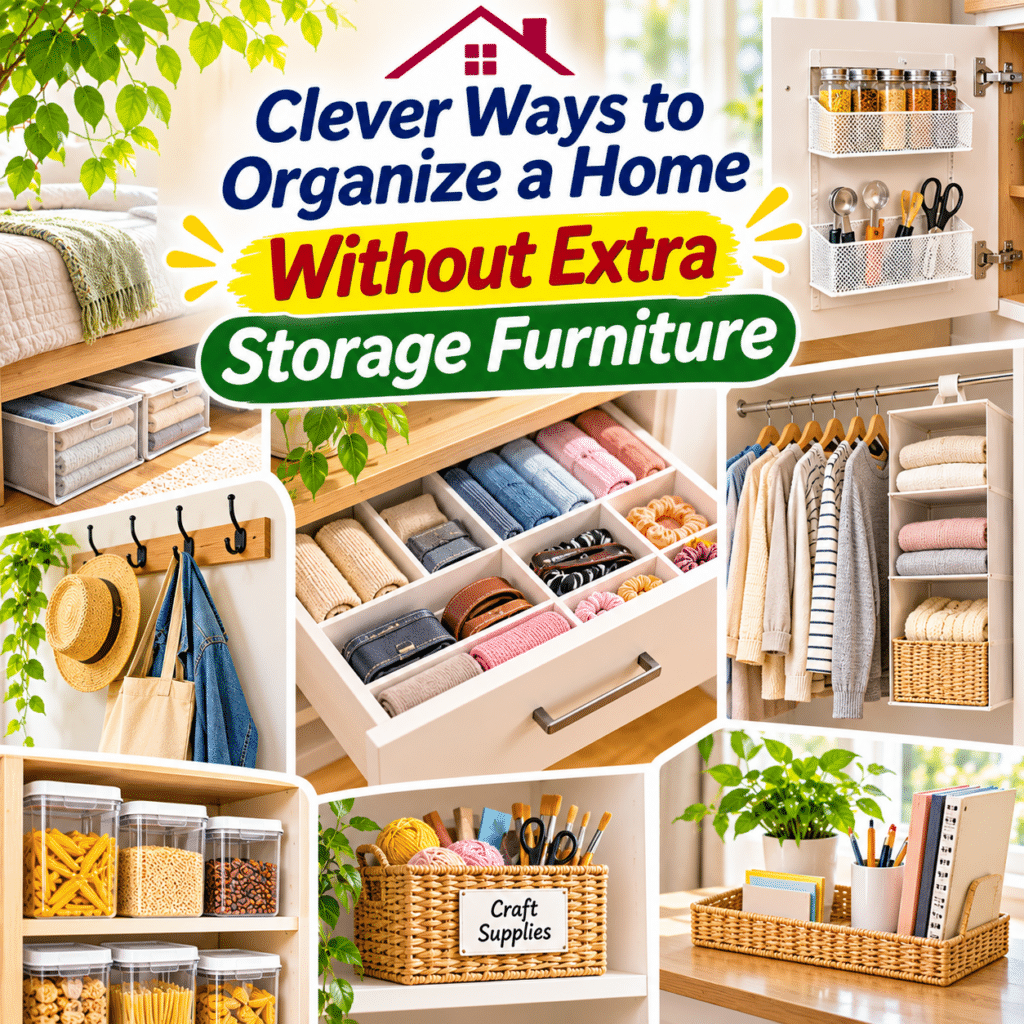
An organized home does not necessarily require more cabinets, shelves, drawers, or storage furniture. In many households, the real challenge is not a complete lack of storage space but how effectively the existing space is being used.
Closets may contain forgotten belongings, drawers may hold unrelated objects, and countertops may become temporary storage areas for things that already have a place elsewhere. When these patterns continue, purchasing additional furniture can seem like the easiest solution.
However, bringing more storage furniture into a home can introduce new challenges. Extra cabinets and shelving units occupy floor space, increase visual clutter, and may eventually become filled with items that are rarely used.
A more practical approach begins with making better use of what is already available. By reorganizing existing storage, simplifying household systems, and using overlooked areas thoughtfully, it is often possible to improve organization without adding bulky furniture.
This approach can be especially useful in apartments, smaller homes, rental properties, and rooms where maintaining open floor space is important. It can also help households reduce unnecessary purchases while creating arrangements that are easier to maintain.
The goal is not to hide every possession or create a perfectly minimalist interior. Instead, it is to make everyday belongings easier to find, use, and return while preserving comfort and functionality.
This guide explores clever, practical ways to organize different areas of a home using existing furniture, simple accessories, thoughtful habits, and more efficient storage arrangements.
1. Understand Why More Storage Furniture Is Not Always the Answer
When a room feels crowded, adding another cabinet or shelving unit may appear to solve the problem.
Yet additional storage does not automatically create a more organized home.
If the underlying issue involves excessive belongings, inconvenient storage locations, or unclear organization systems, new furniture may simply provide another place for clutter to accumulate.
Common Organization Problems and Better Alternatives
| Organization Problem | Common Reaction | More Practical Alternative |
|---|---|---|
| Overcrowded drawers | Buy another drawer unit | Sort contents and use existing space more efficiently |
| Cluttered countertops | Add a storage cabinet | Relocate items to appropriate existing storage |
| Shoes scattered near the entrance | Purchase a large shoe rack | Reduce the number of shoes kept in the entryway |
| Clothing piled on chairs | Add another wardrobe | Improve closet organization and laundry routines |
| Paperwork accumulating | Buy a filing cabinet | Create a simple document-sorting system |
| Kitchen cabinets feel full | Install additional shelving | Review duplicates and reorganize cabinet contents |
| Bathroom products cover surfaces | Add a bathroom cabinet | Group products and use existing drawers effectively |
| Living room accessories lack organization | Buy a storage ottoman | Assign practical locations within existing furniture |
| Hobby supplies spread across rooms | Purchase dedicated storage furniture | Consolidate supplies into portable containers |
| Seasonal belongings occupy everyday storage | Add another cabinet | Reorganize existing storage by frequency of use |
The most effective solution depends on identifying why the current arrangement is not working.
Sometimes additional storage is genuinely necessary. However, reviewing existing capacity first can prevent unnecessary purchases.
2. Begin by Reassessing What You Already Own
Before reorganizing furniture or purchasing accessories, examine the belongings occupying your current storage space.
Many homes contain items that are no longer used, unnecessary duplicates, or objects stored in locations that do not match daily routines.
Work With One Small Area at a Time
Start with a manageable location, such as:
- A kitchen drawer.
- A bathroom cabinet.
- A bedroom shelf.
- A desk organizer.
- An entryway closet.
- A storage basket.
- A bedside table.
Remove the contents and review each item.
Consider whether it is useful, needed, personally meaningful, or appropriate for the location.
Separate Items Into Practical Categories
A simple sorting system can include:
Keep in the current location: Items that are regularly used and belong in that area.
Move elsewhere: Useful belongings that have a more appropriate storage location.
Donate or give away: Items in usable condition that are no longer needed.
Recycle or dispose: Items that are broken, unusable, or unsuitable for reuse.
Handle electronics, batteries, chemicals, and other materials requiring special disposal according to applicable guidance.
Avoid Reorganizing Unnecessary Items
Organizing belongings that are no longer useful can consume time and valuable space.
Deciding what genuinely needs to remain is often more effective than finding increasingly complicated ways to store everything.
3. Make Better Use of Existing Drawers
Drawers can hold more useful belongings when their contents are organized according to size, purpose, and frequency of use.
A poorly organized drawer often contains unused space between objects, even when it appears full.
Group Similar Items Together
Instead of mixing unrelated belongings, create practical categories.
For example, a household utility drawer might contain separate sections for:
- Pens and pencils.
- Scissors and tape.
- Small measuring tools.
- Spare charging cables.
- Notepads.
- Everyday household accessories.
Use Simple Drawer Dividers
Dividers can prevent small items from mixing together.
Adjustable dividers are useful when storage needs change.
Existing small boxes or clean, sturdy containers may also serve as organizers.
Choose materials appropriate for the contents and environment.
Arrange Items by Frequency of Use
Place frequently used objects near the front of the drawer.
Occasional-use items can occupy less accessible sections.
Avoid storing heavy or sharp objects where they may shift unexpectedly or create hazards.
Keep Drawers Easy to Open
A drawer that must be forced shut is usually overcrowded.
Leave enough room for objects to be retrieved without disturbing everything around them.
4. Improve Closet Organization Without Buying Another Wardrobe
Closets can become inefficient when clothing, accessories, and seasonal belongings are mixed together.
Reorganizing the existing wardrobe may create more usable space than adding another piece of furniture.
Group Clothing by Category
Separate clothing into logical groups:
- Everyday tops.
- Pants and skirts.
- Dresses.
- Work clothing.
- Casual clothing.
- Outerwear.
- Seasonal items.
- Accessories.
Choose categories that reflect actual dressing habits.
Use Consistent Folding Methods
Neatly folded clothing can make drawers and shelves easier to manage.
For suitable garments, vertical or file-style folding allows individual pieces to remain visible.
Avoid folding delicate materials in ways that create unnecessary creasing.
Reconsider Hanging Space
Not every garment needs to hang.
Depending on fabric and garment construction, some clothing can be folded to free hanging space for items that benefit from hangers.
Use appropriate hangers and avoid overloading closet rods.
Keep Seasonal Items Separate
Store out-of-season clothing in existing upper shelves, drawers, or suitable containers.
Keep frequently worn clothing at comfortable reaching heights.
Review Clothing That Is No Longer Worn
Clothing that no longer fits, suits current needs, or remains in usable condition may be suitable for donation or other responsible reuse.
Reducing unnecessary wardrobe contents can improve accessibility without increasing storage capacity.
5. Use Existing Cabinet Space More Efficiently
Cabinets often contain more usable space than their current arrangement suggests.
The challenge is to make contents visible, accessible, and appropriately grouped.
Reorganize by Height and Frequency of Use
Place frequently used items at convenient heights.
Store occasional-use belongings in less accessible areas.
Heavy items should generally remain on suitable lower shelves.
Avoid Stacking Too Many Unrelated Objects
Tall, unstable stacks can make items difficult to retrieve.
Group similar objects together and keep stacks within safe, manageable limits.
Use Existing Containers to Create Categories
Clean boxes, baskets, or suitable containers already available at home can help organize cabinet contents.
For example, separate:
- Baking accessories.
- Food storage containers.
- Small kitchen tools.
- Household linens.
- Cleaning accessories.
- Occasional-use supplies.
Preserve Necessary Clearance
Do not block ventilation openings, electrical equipment, plumbing access, or other areas requiring maintenance.
A cabinet should remain functional and safe after reorganization.
6. Take Advantage of Cabinet Doors
The inside surfaces of existing cabinet doors may provide useful organization opportunities without requiring another storage unit.
However, not every door is suitable for added accessories.
Organize Lightweight Kitchen Accessories
Appropriately designed door-mounted organizers may hold:
- Measuring spoons.
- Lightweight cleaning cloths.
- Small household tools.
- Selected kitchen accessories.
Avoid heavy objects that could damage hinges or prevent doors from closing properly.
Organize Bathroom Essentials
Cabinet-door organizers may accommodate lightweight grooming accessories or small personal care items.
Keep products away from excessive moisture when their storage instructions require dry conditions.
Use Removable Hooks Where Appropriate
Removable hooks may be suitable for certain smooth surfaces.
Follow manufacturer instructions regarding surface compatibility, load limits, and removal.
Do not assume that adhesive products are suitable for every cabinet finish.
Check Door Clearance
Before installation, verify that organizers will not strike shelves, stored items, or nearby fixtures.
The cabinet door should open and close freely.
7. Reorganize Kitchen Storage Without Adding Furniture
Kitchen organization can often improve significantly through better use of existing drawers, cabinets, and pantry areas.
The most important principle is to organize items according to how food preparation and cooking actually happen.
Create Functional Kitchen Zones
Group items by activity.
| Kitchen Zone | Items to Keep Nearby | Organization Goal |
|---|---|---|
| Food preparation | Cutting boards, suitable knives, mixing tools | Easy access during preparation |
| Cooking | Pots, pans, utensils | Reduce unnecessary movement |
| Baking | Measuring tools, baking accessories | Keep related supplies together |
| Beverage preparation | Cups, tea, coffee accessories | Simplify daily routines |
| Food storage | Containers, lids, wraps | Make matching items easy to find |
| Cleaning | Dishwashing and cleaning supplies | Keep appropriate products safely organized |
| Pantry | Dry ingredients and packaged foods | Improve visibility and rotation |
These zones do not require separate furniture.
They simply guide how existing storage should be arranged.
Match Food Containers With Their Lids
Unmatched lids and containers can occupy substantial cabinet space.
Group matching sets and remove damaged or unusable pieces.
Nest compatible containers when their design allows it.
Store Similar Pantry Items Together
Organize dry goods into practical categories.
Keep packaging labels or transfer essential product information when using suitable food containers.
Pay attention to expiration dates, storage instructions, and food safety requirements.
Keep Countertops Purposeful
Frequently used appliances may remain on the counter when space allows.
Store occasional-use equipment elsewhere.
Avoid filling every available surface with containers or decorative organizers.
8. Use Wall Space Without Installing Additional Shelving Furniture
Walls can support organization without requiring bulky floor-standing furniture.
Simple wall accessories may be useful in suitable locations.
Install Hooks for Everyday Items
Hooks can provide convenient storage for:
- Bags.
- Hats.
- Lightweight jackets.
- Aprons.
- Reusable shopping bags.
- Selected household accessories.
Choose suitable mounting methods and respect weight limits.
Use Pegboards for Flexible Organization
Pegboards can hold lightweight tools, stationery, and hobby supplies.
They are especially useful near desks or craft areas.
Hooks and small containers can be rearranged as needs change.
Consider Wall-Mounted Rails
Rails with appropriate hooks can organize selected kitchen or utility accessories.
Keep sharp objects and hazardous materials safely secured.
Avoid Overloading Walls
Wall-mounted organization should not interfere with doors, walkways, or electrical systems.
Use appropriate anchors for the wall construction and intended load.
Renters should check property rules before drilling or making permanent changes.
9. Make Better Use of Space Behind Doors
The area behind a door can sometimes accommodate lightweight accessories without requiring additional furniture.
Use Over-the-Door Organizers
Depending on the room, these may hold:
- Scarves.
- Small clothing accessories.
- Lightweight personal care items.
- Cleaning cloths.
- Craft supplies.
- Selected everyday essentials.
Add Hooks for Frequently Used Belongings
Hooks can help organize robes, bags, or other suitable items.
Position them so that hanging objects do not interfere with door movement.
Avoid Blocking Important Doors
Do not obstruct emergency exits, fire-rated doors, or doors that must operate freely.
Check that the organizer does not damage the frame or prevent proper closure.
10. Use Existing Furniture for More Than One Purpose
Some furniture already in the home may provide storage opportunities that are being overlooked.
The objective is to use these pieces more efficiently rather than purchasing replacements.
Reorganize Bookshelves
Bookshelves can sometimes accommodate more than books.
Existing shelves may also hold:
- Document folders.
- Small decorative collections.
- Hobby supplies.
- Lightweight storage baskets.
- Frequently used reference materials.
Keep heavier items on lower shelves and secure tall furniture against tipping when appropriate.
Use Existing Sideboards More Effectively
A sideboard may contain underused drawers or cabinets.
Organize its contents according to the activities taking place nearby.
For example, a dining room sideboard might hold table linens, serving accessories, and occasional-use dining items.
Review Bedside Tables
Bedside drawers often accumulate miscellaneous belongings.
Keep items needed near the bed and relocate unrelated objects.
Reconsider Console Tables
An existing console can serve as an organized drop zone when equipped with a small tray or appropriately sized container.
Avoid allowing it to become permanent storage for unrelated items.
11. Organize Small Spaces With Portable Containers
Portable containers can provide flexibility without adding permanent storage furniture.
They are especially useful when an activity takes place in different rooms.
Create Activity-Specific Kits
Examples include:
Journaling kit: Notebook, pens, stickers, and selected accessories.
Craft kit: Basic tools and materials for a particular hobby.
Home maintenance kit: Appropriate small tools and frequently used maintenance accessories.
Pet grooming kit: Brushes, grooming cloths, and suitable pet care accessories.
Travel preparation kit: Luggage tags, travel accessories, and packing supplies.
Keep Each Kit Focused
Avoid combining unrelated items into one container.
A kit should contain what is genuinely needed for its intended activity.
Store Kits in Existing Cabinets
When not in use, return the container to a designated shelf or drawer.
This allows shared tables and counters to remain available for other purposes.
12. Organize the Entryway Without Buying a Shoe Cabinet
Entryways can become cluttered even when the household already has adequate storage elsewhere.
A simple organization system can help reduce visible mess.
Limit Everyday Footwear
Keep only frequently worn shoes near the entrance.
Store occasional-use footwear in existing closets or other appropriate locations.
Assign a Place for Keys
Use an existing tray, drawer, or suitable wall hook.
Choose a location that is convenient when entering and leaving.
Organize Bags and Accessories
Use existing closet hooks, shelves, or suitable wall-mounted accessories.
Avoid hanging excessive weight on doors or unstable fixtures.
Keep the Floor Clear
Preserve comfortable walking space.
Do not store belongings where they create tripping hazards or interfere with exits.
13. Keep Bathrooms Organized With Existing Storage
Bathrooms often contain numerous small products that can overwhelm limited counter space.
A more efficient arrangement can reduce clutter without adding cabinets.
Separate Daily and Occasional-Use Products
Keep frequently used items accessible.
Store backup products and occasional-use accessories in existing drawers or cabinets.
Group Products by Purpose
Categories might include:
- Oral care.
- Hair care.
- Skincare.
- Grooming tools.
- Bathing supplies.
- Cleaning products.
Review Expiration and Storage Requirements
Remove empty containers and dispose of expired or unusable products appropriately.
Some medications, cosmetics, and electrical devices require storage conditions that may not be suitable for humid bathrooms.
Use Existing Drawer Space
Small dividers or suitable containers can help organize products already stored in drawers.
Avoid purchasing additional accessories unless they solve a specific problem.
14. Make Better Use of the Space Under Beds
Under-bed areas can provide storage without introducing additional furniture.
However, the available space and suitability depend on the bed design.
Store Appropriate Seasonal Items
Possible items include:
- Spare linens.
- Seasonal clothing.
- Lightweight accessories.
- Occasionally used textiles.
Choose Suitable Containers
Use existing low-profile containers when possible.
Keep items clean and dry.
Avoid containers that scrape flooring or interfere with the bed frame.
Maintain Accessibility
Do not place items so far beneath the bed that retrieving them becomes difficult or unsafe.
Preserve any ventilation required by the bed or mattress manufacturer.
Avoid Storing Unsuitable Materials
Do not store hazardous chemicals, combustible materials, or objects requiring special environmental conditions beneath beds.
15. Use Existing Vertical Space Inside Closets
Vertical storage does not always require new shelves.
Existing closet arrangements can often be improved through better placement.
Review Upper Shelves
Upper shelves may be suitable for lightweight, infrequently used belongings.
Use stable containers and avoid excessive stacking.
Keep Everyday Items at Accessible Heights
Frequently used belongings should not require climbing or unsafe reaching.
Organize Hanging Accessories
Suitable hanging organizers may help group scarves, belts, or lightweight accessories.
Avoid overloading closet rods.
Make Use of Existing Lower Areas
The floor area beneath hanging clothing may accommodate appropriately sized containers or footwear.
Keep the space organized and avoid blocking access to other items.
16. Reduce Visual Clutter Without Hiding Everything
A home can feel crowded even when belongings are technically organized.
Visual clutter often results from too many objects competing for attention.
Group Similar Objects
A collection of small accessories may appear more intentional when arranged together.
For example, several frequently used items can be placed on an existing tray rather than scattered across a surface.
Limit Unnecessary Displays
Not every decorative object needs to be visible at the same time.
Consider rotating selected decorations while storing others appropriately.
Keep Some Surfaces Open
Empty space can improve usability and visual balance.
A clear section of a desk, dining table, or kitchen counter supports everyday activities.
Use Consistent Organization Categories
Simple categories make storage easier to understand.
Avoid mixing unrelated objects merely because they fit inside the same container.
17. Organize Paperwork Without a Filing Cabinet
Paper clutter can often be managed using a small number of folders stored in an existing drawer or cabinet.
Create a Simple Filing Structure
Useful categories may include:
- Documents requiring action.
- Important household records.
- Financial and administrative documents.
- Manuals and warranties.
- Temporary reference materials.
Separate Active and Archived Documents
Keep frequently needed paperwork accessible.
Store older records securely according to applicable retention requirements.
Digitize Suitable Documents
Scanning certain documents can reduce physical storage needs.
However, retain originals when legally required or otherwise important.
Protect sensitive digital documents with appropriate security measures and backups.
Review Paperwork Regularly
A brief review can prevent incoming documents from becoming permanent piles.
Dispose of sensitive papers securely.
18. Keep Hobby and Craft Supplies Under Control
Hobbies can involve numerous small tools and materials.
Without a clear system, supplies may spread across desks, dining tables, and living areas.
Organize by Activity
Separate supplies for different hobbies or projects.
For example:
- Drawing materials.
- Painting supplies.
- Sewing accessories.
- Journaling tools.
- Paper crafts.
- Small DIY projects.
Use Existing Containers
Repurpose suitable boxes, jars, or organizers already available at home.
Choose containers that protect the materials and allow easy access.
Create Portable Project Kits
Keep the materials for an active project together.
When the activity ends, return the kit to its designated storage location.
Store Hazardous Materials Safely
Sharp tools, adhesives, solvents, and other potentially hazardous supplies require appropriate storage.
Follow product instructions and keep unsuitable materials away from children and pets.
19. Use Simple Labels to Improve Existing Organization
Labels can make storage systems easier to maintain, especially in shared households.
However, labeling every object is rarely necessary.
Label Containers With Similar Appearances
Labels are useful when several containers look alike.
Examples include seasonal accessories, spare cables, office supplies, and craft materials.
Use Broad Categories
A label such as “Charging Accessories” is often more practical than multiple labels for individual cable types.
Keep Labels Easy to Update
Storage needs change.
Removable or replaceable labels allow categories to evolve without replacing containers.
Avoid Labeling Obvious Items
If the contents are clearly visible and the category is self-explanatory, a label may add little value.
20. Create Organization Systems Around Everyday Habits
Even an efficient storage arrangement can fail when it does not match how people use their home.
Observe daily routines before deciding where items should belong.
Place Items Near Their Point of Use
For example:
- Keep cleaning cloths near the appropriate cleaning area.
- Store writing supplies near the workspace.
- Place reusable bags near the usual departure point.
- Keep frequently used kitchen tools near food preparation areas.
Reduce Unnecessary Steps
A storage location should be easy to access and simple to maintain.
Avoid systems that require repeatedly moving several objects to retrieve one item.
Adjust Locations When Habits Change
If an item consistently ends up in a different location, consider whether its assigned storage place is inconvenient.
Keep Shared Systems Understandable
Household members should be able to find and return common belongings without complicated instructions.
21. Prevent New Clutter From Filling Existing Storage
Improving storage efficiency is only one part of maintaining an organized home.
New belongings can gradually fill the space again.
Check Existing Supplies Before Purchasing
Review what is already available before buying replacements or duplicates.
This is especially useful for stationery, personal care products, household accessories, and kitchen tools.
Consider Where New Items Will Be Stored
Before bringing something home, identify a suitable location.
If no practical space exists, reconsider whether the purchase is necessary.
Avoid Buying Organizers Without a Clear Need
Storage accessories should solve an identified problem.
Buying containers simply because they look attractive can create additional clutter.
Review Unused Belongings Periodically
Occasional decluttering can help preserve available storage capacity.
Donate, reuse, recycle, or dispose of items appropriately.
22. Maintain Organization With Short Daily Routines
An organized home does not need to require extensive daily maintenance.
Simple habits can prevent clutter from accumulating.
A Practical Daily Reset
| Area | Quick Action | Intended Benefit |
|---|---|---|
| Entryway | Return shoes and bags to designated locations | Keep pathways clear |
| Kitchen | Put away ingredients and tools | Preserve preparation space |
| Dining area | Remove unrelated belongings | Keep the table functional |
| Living room | Return books, blankets, and accessories | Maintain a comfortable shared space |
| Bedroom | Sort clothing into appropriate locations | Prevent furniture from becoming temporary storage |
| Bathroom | Return personal care products | Keep surfaces manageable |
| Workspace | Organize active materials | Make the desk ready for future use |
The routine does not need to follow a strict schedule.
Choose natural transition points, such as after meals, after completing activities, or before ending the day.
Use the Put-Away-After-Use Principle
Whenever practical, return an item immediately after using it.
This works best when its storage location is convenient.
Avoid Turning Organization Into Constant Work
A home is meant to be lived in.
Temporary messes are normal, and organization systems should reduce effort rather than create unrealistic expectations.
23. Common Mistakes When Organizing Without Extra Furniture
Keeping Too Many Items
Trying to fit every possession into limited storage can make organization unnecessarily difficult.
Better approach: Review what is useful and appropriate to keep before rearranging storage.
Overfilling Existing Drawers
A drawer that is tightly packed may become difficult to use.
Better approach: Leave enough room to retrieve and replace belongings comfortably.
Using Too Many Small Containers
Excessive compartmentalization can make simple tasks complicated.
Better approach: Choose a manageable number of meaningful categories.
Ignoring Accessibility
Storage that looks tidy but is difficult to reach may not remain organized.
Better approach: Keep frequently used belongings at convenient heights and locations.
Placing Heavy Items on High Shelves
This can make retrieval difficult and potentially unsafe.
Better approach: Store heavy objects on suitable lower shelves.
Installing Hooks Without Checking Load Limits
Improperly mounted accessories can damage surfaces or fall.
Better approach: Use suitable hardware and follow manufacturer instructions.
Storing Items in Unsafe Locations
Unused spaces may contain ventilation openings, electrical equipment, or maintenance access points.
Better approach: Check safety requirements before using an area for storage.
Hiding Unnecessary Belongings
Moving clutter into existing cabinets without reviewing it may only postpone the problem.
Better approach: Decide what needs to remain before assigning storage space.
Creating Systems That Do Not Match Daily Routines
An inconvenient arrangement is unlikely to remain effective.
Better approach: Observe household habits and simplify storage accordingly.
24. Troubleshooting Common Home Organization Problems
| Problem | Possible Cause | Practical Solution |
|---|---|---|
| Drawers remain overcrowded | Too many unrelated items | Sort contents and remove unnecessary belongings |
| Closets feel full | Poor clothing arrangement or unused items | Reorganize categories and review wardrobe contents |
| Kitchen cabinets are difficult to use | Items are stacked inefficiently | Group by activity and improve accessibility |
| Countertops collect clutter | Belongings lack convenient storage | Assign locations in existing drawers or cabinets |
| Shoes accumulate near the door | Too many pairs remain in the entryway | Keep only frequently worn footwear nearby |
| Bathroom products cover surfaces | Daily and occasional-use items are mixed | Separate products by frequency of use |
| Desk becomes disorganized | Active projects lack clear categories | Use existing folders and designated project areas |
| Small accessories disappear | Items are mixed in large drawers | Introduce simple dividers |
| Storage containers are difficult to identify | Contents are unclear | Add practical labels |
| Shelves appear crowded | Too many objects are displayed | Reduce visible items and improve grouping |
| Door organizers interfere with closing | Inadequate clearance | Reposition or remove accessories |
| Items repeatedly end up in the wrong room | Storage locations are inconvenient | Move storage closer to the point of use |
| Seasonal items occupy everyday storage | Storage is not organized by frequency | Move occasional-use belongings to suitable less-accessible areas |
| Organization does not last | System is too complicated | Simplify categories and daily routines |
| Home still feels cluttered | Visual clutter remains high | Keep some surfaces open and limit unnecessary displays |
25. A Step-by-Step Plan to Organize Your Home Without Buying Furniture
A structured approach can make the process easier and prevent unnecessary purchases.
Step 1: Choose One Problem Area
Start with a location that causes frequent inconvenience.
Examples include a crowded kitchen drawer, cluttered desk, or disorganized entryway.
Step 2: Empty and Review the Contents
Remove the items and assess what genuinely belongs there.
Separate unnecessary objects from useful belongings.
Step 3: Identify Existing Storage Capacity
Look at available drawers, shelves, cabinets, hooks, and suitable containers.
Consider whether belongings can be rearranged more efficiently.
Step 4: Group Items by Purpose
Create categories that reflect how the items are used.
Avoid overly detailed systems.
Step 5: Assign Convenient Locations
Keep frequently used belongings accessible.
Store occasional-use items in suitable less-accessible locations.
Step 6: Reuse Appropriate Organizers
Before purchasing accessories, check whether existing containers, trays, or dividers can serve the purpose.
Step 7: Test the Arrangement
Use the area normally for several days.
Notice whether objects are easy to retrieve and return.
Step 8: Adjust the System
Move containers, simplify categories, or change storage locations when needed.
Step 9: Establish a Maintenance Habit
Introduce a short reset routine that fits naturally into daily activities.
Step 10: Expand Gradually
Once one area works well, apply the same principles to another room.
Small improvements can accumulate into a more functional home.
26. Frequently Asked Questions
1. Can I organize my home without buying more storage furniture?
Yes. Many homes can become more organized through decluttering, rearranging existing storage, using suitable containers, and improving everyday habits.
2. What should I do first when my home feels disorganized?
Identify one frequently used area that causes inconvenience. Review its contents, remove unnecessary items, and establish practical storage locations.
3. How can I create more storage space without adding cabinets?
Improve the arrangement of existing drawers, closets, and shelves. Use suitable dividers, reorganize belongings by frequency of use, and make better use of available vertical space.
4. How can I organize a small apartment without extra furniture?
Focus on multifunctional use of existing furniture, accessible storage, and reducing unnecessary duplicates. Keep walkways and important surfaces clear.
5. Are drawer dividers worth using?
They can be useful for separating small objects and preventing items from mixing. Existing small containers may provide similar benefits.
6. How do I organize a closet without buying another wardrobe?
Group clothing by type, improve folding methods, review unused garments, and organize seasonal items separately.
7. How can I keep kitchen counters clear?
Store occasional-use appliances and accessories in existing cabinets, organize items by activity, and return supplies after cooking.
8. What can I use instead of purchasing storage bins?
Suitable containers already available at home, such as sturdy boxes, trays, baskets, or jars, may work depending on the items being stored.
9. How do I organize a bathroom without installing shelves?
Use existing drawers and cabinets more efficiently. Separate daily essentials from occasional-use products and reduce unnecessary duplicates.
10. Can I use the inside of cabinet doors for storage?
Sometimes. Lightweight organizers or hooks may be suitable when they do not damage the cabinet, overload hinges, or interfere with door movement.
11. How can I organize paperwork without a filing cabinet?
Use a small number of labeled folders stored in an existing drawer or cabinet. Separate active documents from long-term records.
12. Is under-bed storage a practical solution?
It can be useful for clean, dry, lightweight belongings when the bed design provides suitable clearance and ventilation.
13. How can I organize craft supplies without a craft cabinet?
Group materials by activity and use portable kits stored in existing drawers, closets, or shelves.
14. What is the best way to organize miscellaneous drawers?
Sort contents by purpose, remove unnecessary objects, and use simple dividers to separate categories.
15. How do I make better use of vertical space?
Review existing upper shelves, use appropriate wall hooks or rails, and organize closet height efficiently without blocking essential access.
16. Should I keep all my belongings hidden?
No. Frequently used items and meaningful decorative objects can remain visible when they support the room’s function and do not create unnecessary clutter.
17. How can I reduce visual clutter?
Group similar objects, limit excessive displays, coordinate storage arrangements, and preserve some open surfaces.
18. What should I do when existing cabinets are completely full?
Review the contents for duplicates, unused belongings, and inefficient arrangements. If essential storage needs still exceed capacity, additional storage may be justified.
19. How can I keep organization systems from becoming complicated?
Use broad categories, convenient locations, and a limited number of containers. Avoid systems that require unnecessary steps.
20. How can I organize an entryway without a shoe rack?
Keep only frequently used footwear near the entrance and use suitable existing closet space or storage locations for other shoes.
21. Can wall hooks replace some storage furniture?
For certain lightweight items, hooks can provide convenient storage without occupying floor space. They must be installed appropriately and used within their load limits.
22. How often should I reorganize my home?
Reorganize when storage systems become inconvenient or household needs change. Regular small reviews may reduce the need for major projects.
23. How do I prevent clutter from returning?
Assign convenient storage locations, return items after use, review incoming purchases, and maintain realistic reset routines.
24. Is it better to declutter or organize first?
Decluttering is often the more effective starting point because it reduces the number of items that require storage.
25. What is the most important principle of organizing without extra furniture?
Make existing storage work better before expanding it. Prioritize useful belongings, convenient access, simple categories, and arrangements that support daily routines.
27. Practical Checklist for Organizing Without Extra Storage Furniture
Use this checklist to improve your home’s organization while making the most of existing resources.
Review Existing Belongings
- Identify the areas that feel overcrowded.
- Choose one manageable space to organize first.
- Remove items that do not belong in the area.
- Review unused or unnecessary duplicates.
- Separate items for donation, reuse, recycling, or disposal.
- Keep belongings that are useful or personally meaningful.
Improve Drawers and Cabinets
- Group similar items together.
- Use existing containers as dividers where appropriate.
- Place frequently used items within easy reach.
- Avoid overcrowding drawers.
- Keep heavy objects on suitable lower shelves.
- Label containers when helpful.
- Preserve access to vents and utilities.
Organize Closets and Bedrooms
- Group clothing by category.
- Use appropriate folding methods.
- Separate seasonal clothing.
- Review unused garments.
- Organize accessories in existing drawers.
- Use suitable under-bed storage when available.
- Keep bedside surfaces functional.
Improve Kitchen and Bathroom Storage
- Organize kitchen tools by activity.
- Match food containers with their lids.
- Group pantry items logically.
- Keep food preparation surfaces available.
- Separate daily bathroom essentials from occasional-use products.
- Review product expiration and storage requirements.
- Avoid overcrowding cabinets and countertops.
Use Overlooked Existing Space
- Check whether cabinet doors can safely support lightweight organizers.
- Consider suitable behind-door storage.
- Review available closet height.
- Use appropriate wall hooks where helpful.
- Reorganize existing bookshelves and sideboards.
- Preserve door clearance and walking space.
- Follow mounting and load-capacity instructions.
Establish Simple Daily Habits
- Return belongings after use when practical.
- Keep shoes and bags in designated locations.
- Clear kitchen surfaces after major activities.
- Return hobby supplies to their containers.
- Organize paperwork regularly.
- Reset frequently used rooms.
- Adjust storage locations that are inconvenient.
Maintain Long-Term Organization
- Review storage systems periodically.
- Avoid unnecessary storage purchases.
- Check existing supplies before buying replacements.
- Keep categories simple and understandable.
- Remove items that no longer serve a purpose.
- Adapt storage arrangements when routines change.
- Prioritize everyday functionality over perfect appearance.
Final Thoughts
Creating a more organized home does not always require additional cabinets, shelves, wardrobes, or specialized storage furniture.
In many cases, meaningful improvements begin with using existing space more thoughtfully. Drawers can become easier to navigate, closets can accommodate clothing more efficiently, and cabinets can provide better access when their contents are arranged according to everyday needs.
The most useful organization strategies also address the reasons clutter develops. Belongings without convenient storage locations, unnecessary duplicates, and complicated systems can make a home feel crowded even when substantial storage already exists.
By reviewing what you own, grouping similar items, repurposing suitable containers, and creating practical routines, you can often improve organization without occupying additional floor space.
It is equally important to preserve comfort and accessibility. An efficient storage system should make belongings easier to find and return, not require excessive effort or create safety concerns.
The goal is not to fit as many possessions as possible into every available corner. It is to create a home where useful belongings have appropriate places, daily activities remain convenient, and rooms feel comfortable rather than overcrowded.
With thoughtful planning and consistent habits, existing furniture and storage areas can often support a more organized, adaptable, and welcoming home for years to come.