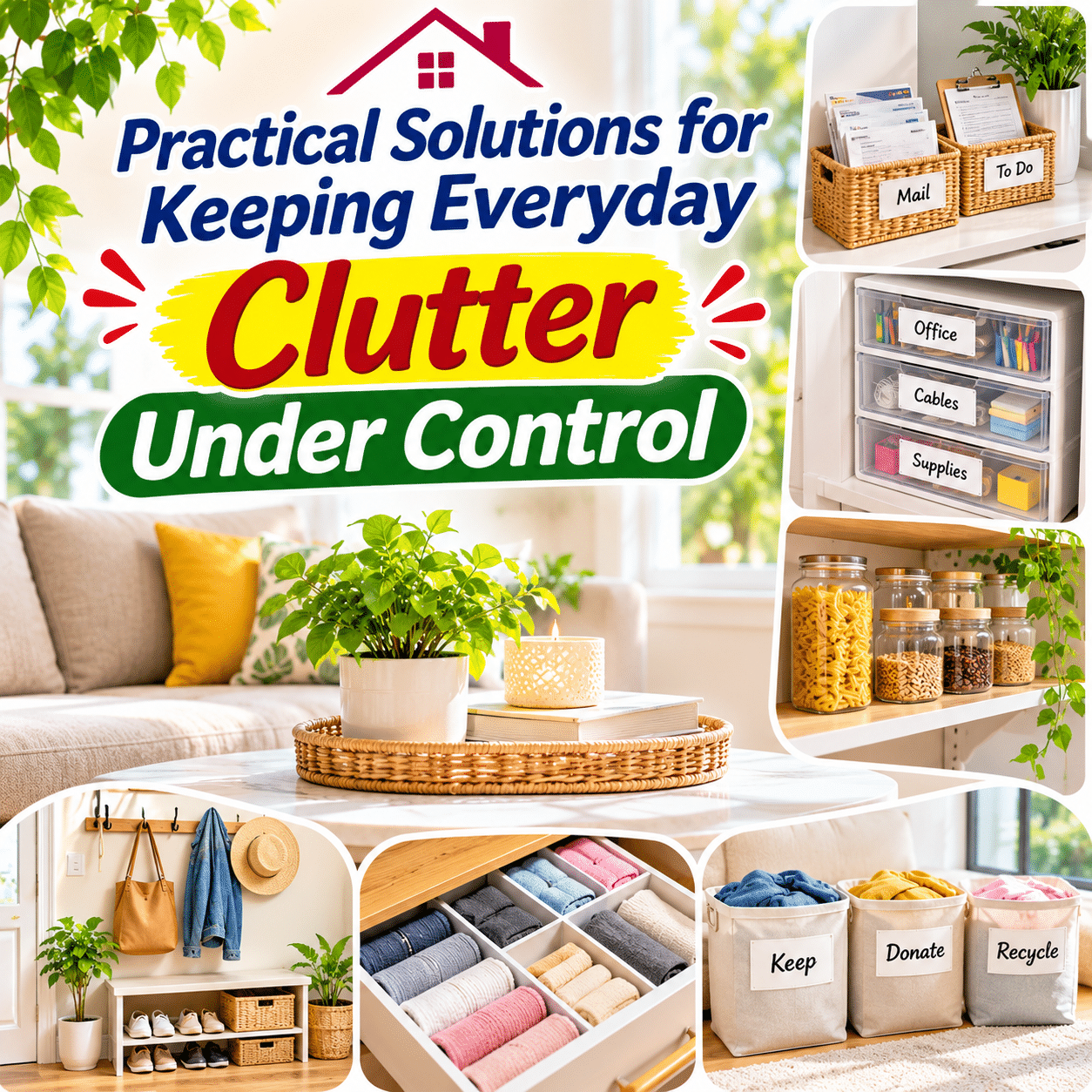
Clutter has a way of accumulating quietly. A few letters left on the kitchen counter, shoes scattered near the entrance, clothing placed on a chair, or small household items without a designated home can gradually make even a comfortable living space feel disorganized.
Everyday clutter is not necessarily the result of owning too many belongings. Often, it develops because storage systems do not match daily habits, frequently used items are inconvenient to put away, or household routines leave little time for regular organization.
The good news is that maintaining an orderly home does not require constant cleaning, expensive storage furniture, or a perfectly minimalist lifestyle. Small, practical changes can make a meaningful difference in how easily a household stays organized.
The most effective clutter-control strategies focus on preventing unnecessary accumulation, simplifying storage, and making everyday tidying easier. Rather than repeatedly organizing the same mess, the goal is to create systems that reduce the likelihood of clutter returning.
Different rooms also require different approaches. Kitchen counters, entryways, bedrooms, bathrooms, and workspaces each attract particular types of clutter, and understanding those patterns helps identify solutions that work in real life.
This guide explores practical ways to recognize common clutter problems, organize frequently used belongings, develop manageable routines, and maintain a more functional home without turning organization into an exhausting daily responsibility.
1. Understand Why Everyday Clutter Accumulates
Before choosing storage containers or beginning a major organizing project, it helps to understand why clutter develops.
Clutter is often a symptom of an inefficient household system rather than a problem that can be solved through cleaning alone.
Common Causes of Everyday Clutter
| Cause | What Usually Happens | Practical Solution |
|---|---|---|
| Items lack designated locations | Belongings are left wherever convenient | Assign a consistent storage location |
| Storage is difficult to access | Putting things away takes too much effort | Move frequently used items closer to where they are needed |
| Too many items occupy one area | Drawers and cabinets become overcrowded | Reduce duplicates and unnecessary belongings |
| Surfaces become temporary storage | Counters and tables collect unrelated objects | Establish clear surface-use rules |
| Paperwork accumulates | Mail, receipts, and documents form piles | Create a simple paper-sorting system |
| Daily routines are inconsistent | Small messes remain until they become overwhelming | Introduce short, repeatable reset routines |
| Storage categories are unclear | Items are placed in random containers | Group belongings by purpose |
| New purchases exceed available space | Cabinets gradually fill beyond capacity | Review available storage before acquiring more items |
| Household members use different systems | Objects are returned to inconsistent locations | Agree on simple shared organization rules |
| Unfinished tasks remain visible | Objects become reminders of incomplete activities | Create a dedicated action area |
Identifying the main cause makes it easier to select a solution that addresses the problem rather than temporarily hiding it.
2. Start With a Simple Clutter Assessment
Trying to organize an entire home at once can feel overwhelming.
A more practical approach is to identify the areas where clutter interferes most with everyday activities.
Walk Through Your Home
Observe each room without immediately moving anything.
Look for:
- Surfaces covered with unrelated belongings.
- Drawers that are difficult to open or close.
- Frequently used items stored far from where they are needed.
- Piles of paperwork or unopened mail.
- Clothing that regularly accumulates on furniture.
- Shoes and bags left in walkways.
- Containers filled with miscellaneous objects.
- Items that repeatedly move between rooms.
Notice which areas become cluttered again shortly after cleaning.
These recurring problem spots often reveal where the current storage system is not working.
Identify High-Impact Areas
Focus first on spaces that affect daily routines.
For many households, these include the entryway, kitchen counter, dining table, bathroom vanity, and bedroom.
Improving one frequently used area can make everyday activities noticeably easier.
Distinguish Clutter From Necessary Belongings
Not every visible object is clutter.
A frequently used coffee maker, a reading lamp, or a basket of everyday essentials may have a legitimate place in a room.
The important question is whether an item supports the intended function of the space.
A useful organizing system should accommodate real habits rather than demand that every object remain hidden.
3. Give Frequently Used Items a Designated Home
One of the simplest ways to prevent clutter is to establish a consistent location for everyday belongings.
When an item has no obvious storage place, it often ends up on the nearest available surface.
Store Items Near Their Point of Use
Consider where an object is typically used.
For example:
- Keep keys near the entrance.
- Store cooking utensils near food preparation areas.
- Place frequently used cleaning supplies near the relevant cleaning location.
- Keep chargers near designated charging stations.
- Store notebooks and pens close to the workspace.
- Place reusable shopping bags near the door or another convenient departure point.
The easier it is to return an item, the more likely the system is to remain effective.
Avoid Overcomplicated Storage
A storage system should not require several steps to access a frequently used object.
For example, placing everyday accessories inside multiple nested boxes may look tidy but create unnecessary effort.
Open baskets, shallow drawers, and accessible shelves often work better for items used repeatedly throughout the day.
Label Storage When Helpful
Labels can make shared or less frequently accessed storage easier to understand.
They are especially useful for:
- Household supplies.
- Seasonal decorations.
- Craft materials.
- Office accessories.
- Spare cables.
- Maintenance tools.
- Children’s activity supplies.
Use broad, meaningful categories rather than creating an excessive number of narrowly defined labels.
4. Create a Practical Entryway Organization System
The entryway is often one of the first places where clutter accumulates.
Shoes, bags, keys, mail, umbrellas, and outerwear can quickly crowd the area.
Establish an Everyday Drop Zone
A drop zone is a designated location for belongings used when entering or leaving the home.
A simple arrangement might include:
- A tray for keys.
- Hooks for bags and jackets.
- A shoe rack or cabinet.
- A basket for reusable shopping bags.
- A small container for outgoing items.
- A place for umbrellas when needed.
Choose furniture that fits the available space without obstructing doors or walkways.
Limit the Number of Shoes Kept Near the Door
Keeping every pair of shoes in the entryway can create unnecessary clutter.
Store frequently worn footwear in an accessible location and move occasional-use shoes elsewhere.
A small shoe cabinet or designated rack can help maintain clear flooring.
Create an Outgoing-Items Area
Belongings that need to leave the house can accumulate in random locations.
A dedicated basket or shelf can hold items such as library books, returns, or belongings that need to be delivered.
Review this area regularly so it does not become permanent storage.
5. Keep Kitchen Counters Clear and Functional
Kitchen counters attract clutter because they are convenient surfaces used throughout the day.
Mail, appliances, dishes, groceries, and miscellaneous household objects can compete for limited preparation space.
Divide the Counter Into Functional Zones
Identify areas for:
- Food preparation.
- Cooking-related activities.
- Beverage preparation.
- Dish handling.
- Frequently used appliances.
Keep the most important working surfaces available for their intended purpose.
Store Appliances According to Frequency of Use
An appliance used every day may reasonably remain on the counter.
Equipment used only occasionally can often be stored in a cabinet or pantry.
Consider weight, accessibility, ventilation requirements, and safe handling before moving appliances.
Use Trays to Contain Small Essentials
A tray can help organize a small group of frequently used items.
For example, a beverage station might contain tea accessories, coffee supplies, or a few regularly used cups.
However, trays should not become collection points for unrelated objects.
Clear Counters After Major Activities
After cooking or preparing meals:
- Return ingredients to their storage locations.
- Wash or appropriately contain used dishes.
- Put away cooking tools.
- Wipe food preparation surfaces.
- Remove unrelated belongings.
This short reset prevents small messes from accumulating throughout the day.
6. Prevent Dining Tables From Becoming Storage Areas
Dining tables often serve multiple purposes.
They may be used for meals, homework, hobbies, paperwork, or occasional work.
Without a clear routine, unfinished activities can leave the table permanently cluttered.
Establish a Table Reset Habit
After each activity, return supplies to their designated locations.
Keep nearby storage available for items used regularly at the table.
Use Portable Activity Containers
A basket or portable organizer can hold materials for activities such as journaling, drawing, or paperwork.
When the activity ends, the entire collection can be moved to its storage location.
Avoid Permanent Miscellaneous Piles
A dining table should not become the default location for objects that belong elsewhere.
If certain items repeatedly collect there, identify why they lack a more convenient home.
7. Manage Paper Clutter Before It Builds Up
Paperwork can accumulate quickly because individual documents seem too minor to organize immediately.
Mail, receipts, instructions, warranties, school papers, and household records may gradually form difficult-to-manage piles.
Create a Simple Paper-Sorting System
Use a few practical categories.
| Category | Examples | Recommended Action |
|---|---|---|
| Action required | Bills, forms, appointment notices | Place in an action folder |
| Important records | Contracts, certificates, essential documents | Store securely |
| Reference materials | Instructions and useful information | File or digitize when appropriate |
| Temporary papers | Short-term reminders and notices | Review regularly |
| Recycling | Unneeded non-sensitive papers | Recycle appropriately |
| Secure disposal | Documents containing sensitive information | Shred or use an appropriate secure disposal method |
Avoid creating dozens of categories that make filing unnecessarily complicated.
Process Incoming Mail Regularly
Instead of placing all incoming mail in a pile, sort it into the appropriate category.
Remove unnecessary envelopes and advertising materials when safe to do so.
Use Digital Storage Selectively
Some documents can be scanned and organized digitally.
However, do not discard original documents that must be retained for legal, financial, warranty, or other purposes.
Follow applicable retention requirements and protect sensitive digital files with appropriate security measures.
8. Reduce Bedroom Clutter With Simple Daily Systems
Bedrooms can become cluttered with clothing, accessories, books, personal care products, and items brought in from other rooms.
A comfortable bedroom benefits from storage that supports everyday routines.
Address the Clothing Chair Problem
A chair or bench can easily become a temporary wardrobe.
Create separate destinations for:
- Clean clothing.
- Clothing that can be worn again.
- Laundry.
- Items requiring repair or special care.
A small designated hook or basket for reusable clothing may help prevent piles from forming.
Keep Bedside Surfaces Manageable
Bedside tables often collect books, chargers, glasses, tissues, and miscellaneous objects.
Limit the surface to items genuinely needed near the bed.
Use drawers or small organizers for accessories that do not need to remain visible.
Organize Closets by Use
Group clothing into practical categories.
Frequently worn items should be easy to reach.
Seasonal or occasional-use belongings can occupy less accessible storage areas.
Avoid overcrowding shelves and hanging rails.
Use Under-Bed Storage Carefully
Low-profile containers may provide additional space for spare bedding or seasonal clothing.
Keep stored items clean and dry, and avoid blocking required ventilation.
9. Keep Bathroom Clutter Under Control
Bathrooms often contain numerous small products, making them especially vulnerable to clutter.
Limited counter space and moisture can complicate organization.
Review Personal Care Products
Group items by purpose:
- Daily skincare.
- Hair care.
- Oral hygiene.
- Grooming tools.
- Bathing supplies.
- Occasional-use products.
Remove empty containers and dispose of expired or unusable products according to their instructions.
Keep Daily Essentials Accessible
Products used every day should be easy to reach.
Less frequently used items can be stored in cabinets or appropriate drawers.
Avoid Overcrowding the Vanity
Use small trays or organizers to contain frequently used items.
Leave enough clear space for washing, grooming, and cleaning.
Consider Moisture and Product Safety
Bathrooms can experience elevated humidity.
Follow product storage instructions, especially for medications, cosmetics, and electrical grooming devices.
Some products are better stored in a dry location outside the bathroom.
10. Organize Living Room Clutter Without Sacrificing Comfort
Living rooms support relaxation, entertainment, social activities, and sometimes work or hobbies.
Because several activities take place in one area, belongings can accumulate quickly.
Use Storage That Matches Daily Activities
Consider the objects commonly used in the room.
These might include:
- Remote controls.
- Books and magazines.
- Blankets.
- Board games.
- Charging accessories.
- Children’s toys.
- Pet accessories.
Provide convenient storage for the categories that genuinely belong there.
Choose Multifunctional Furniture
Furniture with built-in storage can help reduce visible clutter.
Examples include storage ottomans, cabinets, and appropriately designed benches.
Select pieces based on actual storage needs rather than purchasing additional furniture simply to hide belongings.
Establish a Simple Evening Reset
Before leaving the room for the evening:
- Return remote controls to their location.
- Fold or store blankets.
- Put away activity supplies.
- Remove dishes.
- Return belongings that belong in other rooms.
A brief reset can help the room remain comfortable without requiring extensive cleaning.
11. Keep Workspaces Organized for Better Daily Function
Home offices and study areas often accumulate papers, stationery, cables, notebooks, and unfinished projects.
An organized workspace can reduce time spent searching for materials and help preserve usable desk space.
Keep Only Current Essentials on the Desk
Frequently used equipment and supplies should remain accessible.
Store backup stationery, old notebooks, and occasional-use accessories elsewhere.
Create a System for Active Projects
Use folders, trays, or clearly labeled containers to separate ongoing work.
Avoid mixing completed documents with materials requiring action.
Manage Cables Safely
Cable clips, sleeves, and suitable organizers can help reduce tangling.
Do not tightly bundle cords in ways that trap heat, place cables under rugs, or overload electrical outlets.
End Each Work Session With a Reset
Return stationery, close unnecessary materials, and organize the next day’s essentials.
This can make it easier to begin work without first clearing the desk.
12. Control Clutter From Small Household Accessories
Small objects can create a surprisingly large amount of visual clutter.
Batteries, cables, spare buttons, tools, adapters, and miscellaneous accessories often accumulate in drawers.
Group Similar Items Together
Create broad categories such as:
- Electronics accessories.
- Household tools.
- Sewing supplies.
- Office accessories.
- Spare hardware.
- Travel accessories.
Use Drawer Dividers
Dividers help prevent small items from mixing together.
Adjustable organizers can accommodate changing storage needs.
Avoid Keeping Every Unknown Item
Unidentified cables, broken accessories, and unused parts may remain in storage for years.
Check whether an item has a genuine purpose before deciding to keep it.
Dispose of batteries, electronics, and other regulated materials through appropriate collection or recycling programs.
13. Prevent Storage Containers From Becoming Hidden Clutter
Storage containers can make a room look organized even when their contents are not useful.
A home filled with unidentified boxes may simply have relocated its clutter.
Organize Before Buying Containers
Sort belongings first.
Determine what needs to remain, where it belongs, and how much storage space is actually required.
Then select suitable containers.
Avoid Oversized Miscellaneous Bins
Large containers filled with unrelated items can become difficult to manage.
Smaller categories make belongings easier to locate and return.
Keep Storage Visible Enough to Manage
Transparent containers can be useful for identifying contents.
Opaque containers may create a cleaner appearance but benefit from clear labels.
Choose based on the location and purpose.
Review Stored Items Periodically
Occasionally inspect containers that are rarely opened.
If their contents are no longer useful, consider donating, recycling, or disposing of them appropriately.
14. Introduce a One-Minute Put-Away Habit
One of the most practical clutter-control strategies is returning small items immediately after use.
This works especially well when storage locations are convenient.
Examples of Quick Actions
- Hang a jacket after arriving home.
- Return scissors to their drawer.
- Place dirty clothing in the laundry basket.
- Put shoes on their rack.
- Return books to their shelf.
- Place used cups in the appropriate dishwashing area.
- File a document after processing it.
The goal is not to interrupt important activities constantly.
Instead, complete simple put-away tasks at natural transition points.
Reduce the Number of Steps
If returning an item requires opening several containers or walking to another room, the system may be unnecessarily complicated.
Simplify the storage arrangement so that putting things away feels natural.
15. Create a Manageable Daily Reset Routine
A daily reset helps prevent small messes from becoming larger organizing projects.
It should be short enough to maintain consistently.
A Sample 10-Minute Evening Reset
<text color=”secondary” italic={true}>The times below are illustrative, not strict requirements.</text>
| Time | Task |
|---|---|
| 2 minutes | Return misplaced belongings to their designated locations |
| 2 minutes | Clear kitchen and dining surfaces |
| 2 minutes | Organize entryway shoes, bags, and accessories |
| 2 minutes | Reset living room seating and activity areas |
| 2 minutes | Prepare frequently used essentials for the next day |
Adjust the routine according to the household’s needs.
Some days may require only a few minutes, while others may involve more cleanup.
Consistency matters more than following an exact schedule.
16. Use Weekly Maintenance to Prevent Clutter From Returning
Daily tidying addresses visible messes, but periodic maintenance helps prevent deeper accumulation.
A weekly review can focus on areas that gradually collect unnecessary belongings.
Review High-Clutter Locations
Check:
- Kitchen counters.
- Entryway storage.
- Bathroom surfaces.
- Bedside tables.
- Work desks.
- Paperwork trays.
- Frequently used drawers.
Empty Temporary Collection Baskets
A temporary basket can help gather items that belong in other rooms.
However, it should be emptied regularly.
Otherwise, the basket itself becomes another cluttered storage area.
Return Items to Their Proper Locations
Review belongings that have migrated from one room to another.
If an item repeatedly ends up in the same unexpected location, consider whether its designated home should change.
17. Manage Clutter When Several People Share a Home
Shared households may experience clutter because different people have different habits and expectations.
An organization system is more likely to succeed when everyone can understand and use it.
Create Simple Shared Rules
Agree on a few practical expectations.
Examples include returning shoes to the entryway rack, placing dishes in the designated area, and keeping shared tables available for their intended activities.
Provide Personal Storage Areas
Individual baskets, drawers, or shelves can help separate belongings.
This reduces confusion about where personal items should be stored.
Make Storage Accessible
Consider the needs and abilities of everyone in the household.
Children may benefit from low hooks and clearly labeled containers.
Heavy or hazardous items should remain securely stored and inaccessible to those who should not handle them.
Avoid Overly Rigid Standards
A home does not need to look perfectly organized at every moment.
Focus on maintaining functional shared spaces and preventing clutter from interfering with everyday life.
18. Reduce Clutter by Making More Thoughtful Purchasing Decisions
Organizing existing belongings is only part of clutter prevention.
New purchases can gradually overwhelm even well-designed storage systems.
Check Existing Supplies Before Buying
Before purchasing household accessories, stationery, personal care products, or storage containers, review what is already available.
This can help reduce unnecessary duplicates.
Consider Storage Requirements
Ask whether the new item has a suitable place in the home.
Large or bulky products may create additional storage challenges.
Choose Versatile Items When Appropriate
Multifunctional products can sometimes reduce the number of separate belongings required.
However, versatility should not come at the expense of quality, safety, or actual usefulness.
Avoid Buying Organizers as a Substitute for Decluttering
Additional baskets and cabinets do not automatically solve overcrowding.
Review what needs to be stored before expanding storage capacity.
19. Create a Simple System for Items You No Longer Need
Unused belongings can remain in drawers and closets because deciding what to do with them feels inconvenient.
A clear removal process can make decluttering easier.
Use Four Practical Categories
| Category | Meaning | Next Step |
|---|---|---|
| Keep | Useful, needed, or personally meaningful | Return to appropriate storage |
| Donate or give away | Usable but no longer needed | Arrange transfer to an appropriate recipient |
| Sell | Suitable for resale and worth the effort | Prepare for listing or sale |
| Recycle or dispose | Broken, unusable, or unsuitable for reuse | Follow appropriate disposal guidance |
Avoid creating large, indefinite piles of items awaiting decisions.
Set a Reasonable Removal Schedule
Choose a practical time to deliver donations, arrange recycling, or complete other disposal tasks.
Do not allow outgoing items to occupy important living areas indefinitely.
Handle Sensitive and Hazardous Items Properly
Personal documents should be securely destroyed when no longer needed.
Batteries, electronics, medications, chemicals, and similar materials may require special handling.
Follow local disposal rules and product safety guidance.
20. Make Clutter Control Easier in Small Homes
Compact homes can become visually crowded quickly because storage and living activities share limited space.
However, a smaller home does not necessarily require complicated organization systems.
Use Vertical Storage Carefully
Wall shelves and appropriately secured tall storage units can increase usable capacity.
Avoid blocking windows, vents, or walkways.
Choose Furniture With Useful Storage
Storage benches, beds with drawers, and multifunctional cabinets may reduce the need for separate storage furniture.
Keep Surfaces Purposeful
Limit the number of unrelated objects displayed on counters, tables, and shelves.
A few functional items can remain visible without making the space feel disorganized.
Avoid Overfilling Cabinets
Overcrowded cabinets make belongings difficult to access and can encourage items to remain outside their designated locations.
Leave enough room to retrieve and replace objects comfortably.
21. Develop a Clutter-Control System That Matches Your Lifestyle
A system that works for one household may be inconvenient for another.
The most effective organization strategies reflect how people actually use their homes.
Observe Daily Patterns
Notice where belongings naturally accumulate.
For example, if bags consistently end up beside a particular doorway, that location may be the most convenient place for hooks or a small storage unit.
Reduce Friction
A practical storage system should require minimal effort.
If a drawer is difficult to open or a container is too full, people may avoid using it.
Adapt to Changing Needs
Household routines change over time.
Work schedules, hobbies, family activities, and storage requirements may evolve.
Review organization systems when they stop supporting everyday activities.
Focus on Function Rather Than Perfection
An organized home can still contain books, toys, hobby supplies, and other signs of daily life.
The objective is to make belongings manageable, accessible, and easy to return.
22. Common Mistakes That Allow Clutter to Return
Understanding common organizing mistakes can help prevent repeated frustration.
Trying to Organize Everything in One Day
Large organizing projects can become exhausting and difficult to finish.
Better approach: Begin with one drawer, surface, or frequently used area.
Buying Too Many Storage Containers
Extra containers can increase clutter when they are purchased without a clear purpose.
Better approach: Sort belongings before choosing storage products.
Creating Complicated Categories
Highly detailed systems can require too much maintenance.
Better approach: Use simple categories that are easy to understand.
Hiding Clutter Instead of Resolving It
Moving miscellaneous belongings into closets or boxes may temporarily improve appearance without addressing the underlying problem.
Better approach: Decide whether items are needed and assign appropriate storage locations.
Keeping Too Many Duplicates
Multiple versions of rarely used products can consume valuable storage space.
Better approach: Retain quantities that reasonably match household needs.
Ignoring Daily Habits
An attractive organizing arrangement may fail if it does not reflect how the space is used.
Better approach: Position storage near actual activities.
Expecting Every Room to Remain Perfect
Unrealistic expectations can make organization feel discouraging.
Better approach: Aim for manageable clutter levels and functional living spaces.
Neglecting Maintenance
Even a well-organized home requires occasional attention.
Better approach: Use brief daily resets and periodic reviews.
23. Troubleshooting Everyday Clutter Problems
| Problem | Likely Cause | Practical Solution |
|---|---|---|
| Kitchen counter becomes cluttered daily | Items lack nearby storage | Create convenient storage zones |
| Shoes collect near the entrance | Shoe storage is inadequate or inconvenient | Add accessible shoe storage |
| Clothing piles up on chairs | No location for reusable clothing | Provide a designated hook or basket |
| Paperwork accumulates | No sorting routine | Establish an action folder and regular review |
| Desk becomes crowded | Active and inactive materials are mixed | Separate current projects from stored materials |
| Bathroom products cover the counter | Storage categories are unclear | Group products and move occasional-use items |
| Drawers become messy | Small items mix together | Add dividers and reduce unnecessary contents |
| Storage boxes are difficult to manage | Categories are too broad | Sort into smaller, clearly labeled groups |
| Clutter returns after cleaning | Organization does not match habits | Relocate storage closer to where items are used |
| Family members cannot find items | Storage locations are inconsistent | Establish simple shared categories |
| Living room accumulates miscellaneous objects | Multiple activities lack dedicated storage | Add activity-specific containers |
| Donation bags remain for months | No removal schedule | Arrange a practical drop-off or collection plan |
| Cabinets are overcrowded | More items than usable storage capacity | Review duplicates and unnecessary belongings |
| Tidying feels exhausting | Tasks are too large or infrequent | Introduce short, manageable reset routines |
| Organizers remain unused | They are inconvenient or unnecessary | Simplify the system and remove excess organizers |
24. Frequently Asked Questions
1. What is everyday clutter?
Everyday clutter consists of belongings that accumulate in inconvenient locations, interfere with activities, or make spaces difficult to use. It often includes clothing, paperwork, accessories, dishes, and miscellaneous household objects.
2. Why does my home become cluttered so quickly?
Common causes include insufficient storage, inconvenient organization systems, unclear item locations, and inconsistent tidying routines.
3. What is the easiest way to start controlling clutter?
Choose one frequently used surface or small area. Remove unnecessary items, assign storage locations, and introduce a simple routine for maintaining the space.
4. How can I reduce clutter without becoming a minimalist?
Focus on keeping belongings organized and accessible rather than reducing possessions to a predetermined number. A functional home can accommodate personal collections, hobbies, and meaningful objects.
5. How much time should I spend tidying every day?
There is no universal requirement. A short routine of several minutes may be sufficient for some households, while others need more time depending on their activities and circumstances.
6. What is the best way to prevent kitchen counter clutter?
Keep preparation areas available, store occasional-use appliances elsewhere, and return cooking supplies after use.
7. How can I stop paperwork from piling up?
Create a simple system for documents requiring action, important records, temporary papers, and secure disposal.
8. Should I buy storage containers before decluttering?
Usually, it is more practical to sort belongings first. This helps determine the type and quantity of storage actually needed.
9. How can I organize a small home with limited storage?
Use appropriate vertical storage, multifunctional furniture, and accessible containers. Reduce unnecessary duplicates and avoid overcrowding cabinets.
10. What should I do with items I might need someday?
Consider how likely they are to be used, how difficult they would be to replace, and how much storage space they require. Important emergency supplies and specialized items may justify long-term storage.
11. How do I keep my bedroom from becoming cluttered?
Create separate locations for clean clothing, laundry, reusable clothing, bedside essentials, and personal accessories.
12. What is a clutter drop zone?
A drop zone is a designated place for frequently carried items such as keys, bags, and mail. It helps prevent belongings from being left throughout the home.
13. How can I organize miscellaneous drawers?
Empty the drawer, group items by purpose, remove unnecessary belongings, and use suitable dividers.
14. How do I prevent clutter from returning after a major cleanup?
Make storage convenient, establish realistic reset routines, and review areas where clutter repeatedly accumulates.
15. Are open shelves or closed cabinets better for clutter control?
Both can work. Open shelves provide visibility and easy access, while closed cabinets conceal contents and may reduce visual clutter. Choose according to the items and location.
16. How can I keep my living room organized?
Provide storage for common activities, return items after use, and maintain clear surfaces and walkways.
17. How do I organize belongings shared by several people?
Use consistent storage locations, simple labels, and accessible containers. Agree on practical expectations for shared spaces.
18. What is the difference between cleaning and decluttering?
Cleaning removes dirt, dust, and other unwanted substances. Decluttering involves deciding what belongs in a space and removing or relocating unnecessary items.
19. Can too many organizers make a home more cluttered?
Yes. Excess containers and storage furniture can consume space and make organization more complicated when they do not serve a clear purpose.
20. How often should I declutter my home?
Small reviews can be incorporated into regular routines. More extensive decluttering may be useful when storage becomes overcrowded or household needs change.
21. How can I manage clutter when I am very busy?
Focus on a few high-impact habits, such as returning frequently used items, keeping essential surfaces clear, and completing short resets at convenient times.
22. What should I do with items that belong in another room?
Use a temporary collection basket or return them during natural transitions between rooms. Empty temporary baskets regularly.
23. How can I make organization systems easier to maintain?
Use broad categories, accessible storage, simple labels, and arrangements that match actual household habits.
24. Is a completely clutter-free home realistic?
Homes are active living environments, so temporary messes are normal. A more practical goal is to keep clutter manageable and prevent it from interfering with daily life.
25. What is the most important habit for long-term clutter control?
Consistently returning belongings to convenient, designated locations is one of the most useful habits. It works best alongside thoughtful purchasing and periodic reviews.
25. Practical Checklist for Keeping Everyday Clutter Under Control
Use this checklist to establish a manageable organization system.
Identify Clutter Problems
- Walk through each room and observe recurring clutter.
- Identify surfaces that frequently collect unrelated objects.
- Check drawers and cabinets for overcrowding.
- Notice items that repeatedly end up in the wrong location.
- Prioritize areas that interfere with daily activities.
Establish Practical Storage
- Give frequently used items designated locations.
- Store belongings near their point of use.
- Keep storage categories simple.
- Use labels where they improve organization.
- Choose containers only after assessing storage needs.
- Keep heavy items in appropriate, accessible locations.
- Avoid blocking doors, vents, and walkways.
Organize High-Traffic Areas
- Create an entryway drop zone.
- Keep kitchen preparation surfaces functional.
- Establish a dining table reset routine.
- Provide accessible storage for living room activities.
- Organize bathroom products by frequency of use.
- Create separate locations for bedroom clothing categories.
- Keep workspaces clear of unnecessary materials.
Manage Incoming Items
- Sort mail and paperwork regularly.
- Review existing supplies before purchasing replacements.
- Avoid unnecessary duplicates.
- Consider storage requirements before buying new items.
- Establish a system for donations and recycling.
- Dispose of sensitive or hazardous materials appropriately.
Build Daily Habits
- Return small items after use when practical.
- Put shoes and bags in their designated locations.
- Place laundry in the appropriate basket.
- Clear dishes after meals.
- Reset frequently used surfaces.
- Return activity supplies when finished.
- Keep daily tidying routines realistic.
Maintain Long-Term Organization
- Review recurring clutter spots.
- Empty temporary collection baskets.
- Check storage containers for unnecessary items.
- Adjust systems that are difficult to use.
- Review storage needs when routines change.
- Keep shared organization rules simple.
- Focus on functionality rather than perfection.
Final Thoughts
Keeping everyday clutter under control is less about constant tidying and more about creating practical systems that support the way a home is actually used.
Clutter often returns because belongings lack convenient storage locations, household routines are difficult to maintain, or too many items compete for limited space. Addressing these underlying causes can make organization easier and more sustainable.
Simple improvements can have a lasting effect. A designated place for keys can prevent repeated searching, an accessible laundry basket can reduce clothing piles, and a straightforward paperwork system can keep important documents from disappearing beneath everyday mail.
Equally important is recognizing that organization should serve the people living in a home. A comfortable living environment does not need to resemble a perfectly staged interior. Books, hobbies, personal belongings, and everyday activities all have a place in a functional household.
The goal is to create enough structure that belongings remain manageable without requiring excessive effort.
By combining thoughtful storage, realistic daily habits, periodic reviews, and more intentional purchasing decisions, it becomes easier to prevent clutter from accumulating in the first place.
Over time, these practical habits can help create a home that feels calmer, more accessible, and better suited to everyday living—without turning the pursuit of organization into another demanding household task.