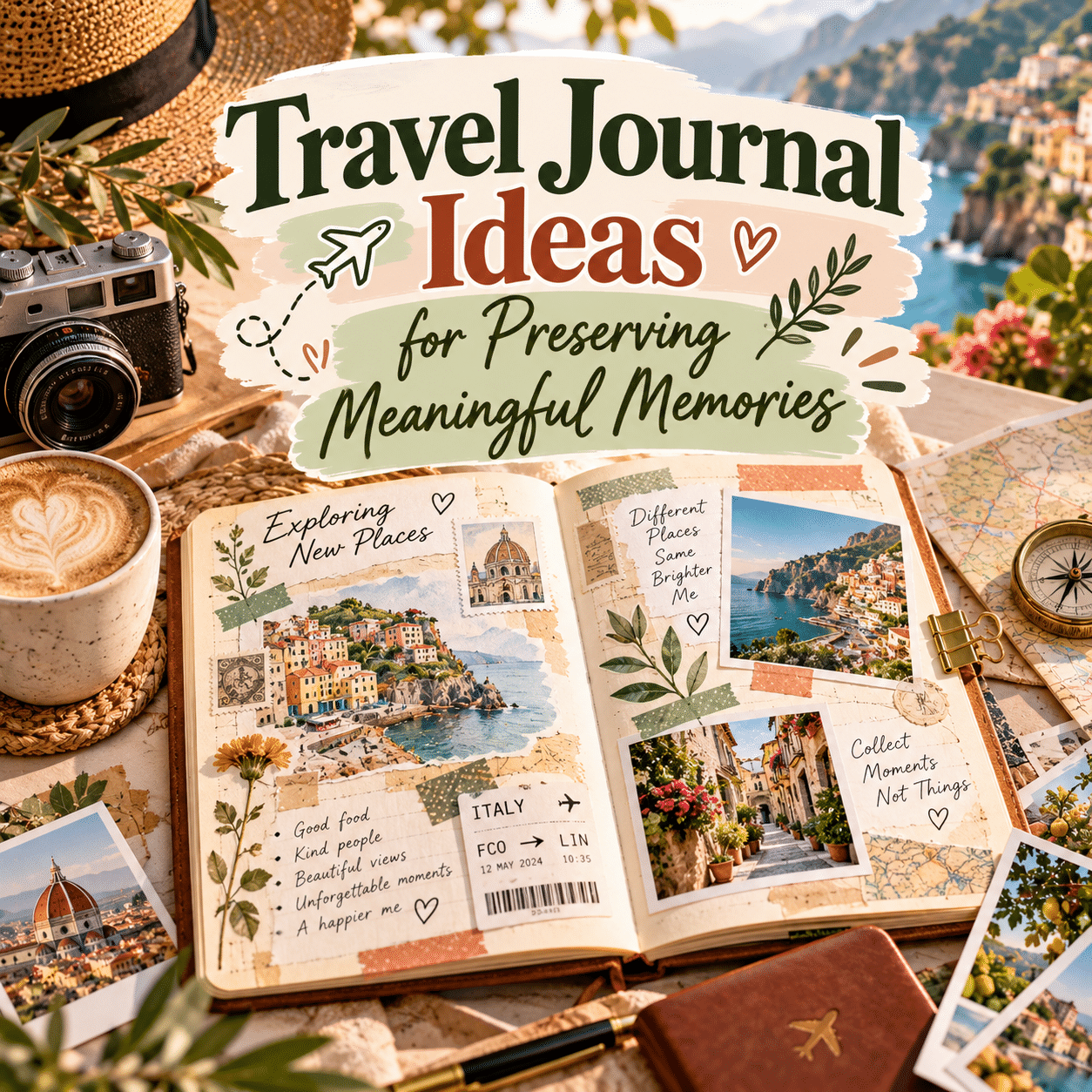
Travel experiences often leave us with memories that are difficult to capture through photographs alone. A beautiful landscape, a conversation with a stranger, the aroma of a local café, or the quiet excitement of exploring an unfamiliar street can become part of a journey’s most meaningful moments.
Yet as time passes, small details may gradually fade. We might remember visiting a famous landmark but forget how the morning air felt, what made us laugh during lunch, or why a particular place left such a lasting impression.
A travel journal offers a personal way to preserve these experiences.
Unlike a simple collection of photographs, a travel journal can capture the thoughts, emotions, observations, and discoveries that make every journey unique. It becomes a creative record of not only where you traveled but also how those experiences shaped your perspective.
Travel journaling can take many forms. Some travelers enjoy writing detailed daily reflections, while others prefer quick notes, sketches, ticket stubs, photographs, maps, or colorful scrapbook pages. A journal may be beautifully decorated or wonderfully simple, filled with only a few handwritten sentences each day.
There is no single correct way to document a journey. The most meaningful travel journals reflect the interests, personality, and experiences of the person creating them.
Whether you are planning a weekend getaway, a family vacation, a solo adventure, or a journey through several countries, thoughtful journaling can help transform fleeting experiences into lasting personal keepsakes.
This guide explores creative travel journal ideas, practical page layouts, meaningful writing prompts, memory-preserving techniques, and simple ways to organize travel stories. From traditional handwritten notebooks to illustrated journals and digital travel diaries, these timeless ideas can help you create a collection of memories worth revisiting for years to come.
1. Understand What Makes a Travel Journal Meaningful
A travel journal is more than a chronological record of destinations.
Its real value comes from preserving the personal meaning behind an experience.
Two travelers may visit the same city, walk through the same streets, and photograph the same landmarks, yet their memories can be entirely different.
One person may remember the architecture, while another recalls a conversation with a local shopkeeper or the excitement of discovering an unexpected café.
A meaningful travel journal captures these individual perspectives.
Instead of recording only what happened, consider exploring:
- What surprised you.
- What made you feel happy or curious.
- What challenged your expectations.
- What you learned about a place.
- Which moments felt especially peaceful.
- What you would like to remember in the future.
- How the experience influenced your thoughts.
The goal is not to create a perfect travel report.
It is to preserve an authentic record of moments that matter to you.
2. Choose a Travel Journal Format That Fits Your Style
The best travel journal is one you genuinely enjoy using.
Some travelers prefer a compact notebook that fits easily into a bag, while others enjoy larger journals with space for photographs, drawings, and decorative elements.
Digital formats can also be convenient for travelers who prefer typing or organizing multimedia memories.
| Journal Format | Best For | Main Advantages |
|---|---|---|
| Pocket notebook | Quick notes during sightseeing | Lightweight and portable |
| Traditional lined journal | Daily reflections and storytelling | Comfortable for extended writing |
| Blank sketchbook | Drawing and creative layouts | Flexible page design |
| Dotted notebook | Mixed writing, diagrams, and planning | Easy to organize |
| Scrapbook journal | Photographs and collected keepsakes | Rich visual storytelling |
| Ring-bound journal | Adding and rearranging pages | Flexible organization |
| Digital journal | Multimedia memories and searchable notes | Convenient storage and editing |
| Hybrid journal | Combining handwritten and digital records | Creative flexibility |
Consider the weight, durability, available writing space, and materials you plan to use.
A simple notebook can preserve memories just as effectively as an elaborate scrapbook.
3. Create a Beautiful Travel Journal Cover
The cover sets the tone for your travel journal.
It can reflect the destination, purpose, or overall feeling of your journey.
A minimalist cover might feature the destination name and travel dates.
A more decorative approach could include illustrated landmarks, botanical motifs, maps, or travel-inspired patterns.
Creative cover ideas include:
- A handwritten destination title.
- A simple illustration of a suitcase or airplane.
- A collage of travel-themed paper.
- A favorite photograph from the journey.
- A meaningful travel quote written in your own lettering.
- A map-inspired background.
- A small drawing representing the destination.
For journals used during travel, choose decorations that will not easily detach or become damaged inside a bag.
A durable cover protects the pages and makes the journal more enjoyable to carry.
4. Begin with a Personal Travel Introduction
The first page of a travel journal can explain why the journey matters to you.
Write a short introduction before leaving home.
Describe where you are going, what inspired the trip, and what you hope to experience.
You might include questions such as:
- Why did I choose this destination?
- What am I most excited about?
- What do I hope to discover?
- How do I feel before departure?
- Is there something meaningful about this particular journey?
For example, a traveler visiting a childhood destination might write about returning to familiar places with a new perspective.
Someone taking their first solo trip might describe feelings of excitement, uncertainty, and independence.
These introductory reflections become especially meaningful when compared with thoughts recorded after returning home.
5. Make a Travel Bucket List Page
A travel bucket list page captures the experiences you hope to enjoy.
Instead of listing only famous attractions, include personal interests and small moments.
For example:
- Visit a local market.
- Try a traditional breakfast.
- Watch the sunrise from a peaceful location.
- Explore a neighborhood on foot.
- Visit a museum or gallery.
- Learn a few useful local expressions.
- Find a quiet place to read.
- Take photographs of interesting architecture.
- Discover a local craft tradition.
- Enjoy an unplanned afternoon.
Leave space to mark completed experiences.
You may also want to record unexpected discoveries that became more memorable than the original plans.
A travel bucket list should provide inspiration rather than become a rigid schedule.
6. Design a Travel Itinerary Journal Spread
An itinerary spread helps connect practical travel planning with personal memories.
Create a simple overview of the trip, including destinations, travel dates, and planned activities.
Use a table or timeline to organize the information.
| Day | Destination | Planned Activity | Memory to Record |
|---|---|---|---|
| Day 1 | Arrival city | Explore nearby streets | First impressions |
| Day 2 | Historic district | Visit cultural landmarks | Favorite discovery |
| Day 3 | Countryside | Enjoy scenic surroundings | Most peaceful moment |
| Day 4 | Local neighborhood | Visit cafés and markets | Interesting conversations |
| Day 5 | Departure | Reflect on the journey | Final thoughts |
After each day, add notes about what actually happened.
The differences between your plans and real experiences often create some of the most interesting travel stories.
7. Create a Travel Map with Personal Highlights
Maps provide a visual way to remember the places you explored.
Print a small map of the destination or draw a simplified version by hand.
Mark important locations with symbols, numbers, or colored dots.
You could identify:
- Places you stayed.
- Favorite cafés and restaurants.
- Museums and landmarks.
- Scenic viewpoints.
- Unexpected discoveries.
- Walking routes.
- Memorable neighborhoods.
Add short handwritten notes beside selected locations.
For example, a small heart might mark a café where you enjoyed a particularly memorable morning.
A star could represent your favorite viewpoint.
The map becomes more personal when it records experiences rather than simply showing geography.
8. Write Daily Travel Diary Entries
Daily entries are one of the simplest ways to preserve travel memories.
You do not need to write several pages every evening.
A few thoughtful paragraphs can capture the essence of the day.
A useful daily structure includes:
Where I Went
Record the main locations you visited.
What I Experienced
Describe activities, discoveries, and memorable interactions.
How I Felt
Write about your emotions and personal reactions.
My Favorite Moment
Choose one experience you especially want to remember.
Something Unexpected
Include a surprise, change of plans, or unusual observation.
One Thing I Learned
Reflect on a new insight or discovery.
This structure makes journaling manageable while encouraging deeper reflection.
9. Capture Your First Impressions of a Destination
First impressions often contain details that become less noticeable as you grow familiar with a place.
When arriving somewhere new, take a few minutes to observe your surroundings.
What catches your attention first?
Perhaps it is the architecture, the pace of daily life, the colors of the buildings, or the sounds of a busy street.
Record your immediate reactions before they fade.
Consider writing about:
- The atmosphere of the arrival area.
- The weather and lighting.
- Interesting sounds.
- Local transportation.
- Street scenes.
- Your emotional response.
- Differences from your expectations.
Revisit these notes at the end of the journey.
You may discover that your understanding of the destination changed significantly.
10. Use the Five Senses to Describe Travel Memories
Sensory details can make journal entries more vivid.
Instead of writing only that you visited a market, describe what you saw, heard, smelled, tasted, and felt.
Sight
Record colors, architecture, landscapes, and visual details.
Sound
Describe music, conversations, traffic, birds, or natural surroundings.
Smell
Remember the aroma of coffee, flowers, food, rain, or the sea.
Taste
Write about local dishes, unfamiliar ingredients, and favorite treats.
Touch
Describe the warmth of sunlight, cool stone surfaces, gentle breezes, or the texture of handmade objects.
You do not need to include all five senses in every entry.
Choose the details that made the experience memorable.
11. Create a Favorite Travel Moments Page
Not every memorable experience deserves an entire journal entry.
A dedicated highlights page allows you to preserve small moments in a simple format.
You might record:
- The most beautiful view.
- The friendliest interaction.
- The most surprising discovery.
- The funniest moment.
- The best meal.
- The most relaxing afternoon.
- The most meaningful conversation.
- The place you would love to revisit.
Add one or two sentences explaining each choice.
Over time, these pages provide a quick and enjoyable way to revisit the emotional highlights of a journey.
12. Preserve Travel Memories with Photographs
Photographs can complement written memories beautifully.
Choose images that tell a story rather than including every picture taken.
A travel journal might feature photographs of landscapes, meals, streets, architecture, and meaningful personal moments.
Arrange photographs beside handwritten descriptions.
For each image, consider adding:
- The location.
- The date.
- The story behind the photograph.
- Your feelings at the time.
- A detail not visible in the picture.
Small printed photographs are often easier to incorporate into compact journals.
If using adhesive materials, choose products suitable for photographs and long-term paper storage.
13. Create a Travel Photo Collage
A photo collage brings several memories together on one page.
Choose a theme, such as a day in the city, favorite meals, or beautiful architectural details.
Arrange photographs in a balanced layout.
Leave room for short captions and decorative accents.
Possible collage themes include:
- Morning walks.
- Colorful doors and windows.
- Local food discoveries.
- Nature and landscapes.
- Street markets.
- Travel companions.
- Unexpected details.
- Favorite cafés.
A cohesive collage can tell a story without requiring lengthy written explanations.
14. Collect Meaningful Paper Keepsakes
Small paper objects can become powerful reminders of travel experiences.
Museum tickets, transit cards, postcards, brochures, and café receipts may help bring specific memories back to life.
Select keepsakes that have personal significance.
Avoid collecting large quantities of paper simply to fill pages.
Before attaching an item, write a short note explaining why you saved it.
For example, a train ticket might represent a spontaneous journey to a beautiful town.
A café receipt might remind you of a memorable conversation.
Only collect items you are permitted to keep, and avoid including sensitive personal or payment information in journals that may be shared.
15. Make a Travel Ticket and Postcard Collection
Tickets and postcards are classic travel journal elements.
Create a dedicated page or pocket for these keepsakes.
Arrange items by date, destination, or type.
Add handwritten captions that describe the experiences connected to them.
For postcards, you might write a message to your future self on the reverse side.
Consider using removable photo corners or archival-quality sleeves for items you want to preserve without permanent adhesive.
Some thermal-paper receipts fade over time, so photographing or scanning them can provide a useful backup.
16. Create a Food Memories Travel Journal
Food is often an important part of discovering a destination.
A dedicated food journal section can preserve memorable meals, local specialties, and culinary discoveries.
For each experience, record:
- The name of the dish.
- Where you tried it.
- Ingredients or flavors you noticed.
- How it was presented.
- What made it memorable.
- Whether you would try it again.
You can add photographs, sketches, or small illustrations.
Rather than treating the section as a restaurant ranking, focus on the stories connected to each meal.
A simple breakfast enjoyed during a peaceful morning may be more meaningful than an elaborate dinner.
17. Document Memorable Cafés and Tea Experiences
Cafés and tea shops often provide quiet moments during busy travel days.
Create a journal spread dedicated to these experiences.
Record the atmosphere, drinks, interior details, and surrounding neighborhood.
You might sketch a coffee cup, attach a paper sleeve, or include a photograph of the table.
Consider writing about:
- The view from your seat.
- The music or background sounds.
- The drink you ordered.
- The people around you.
- How the moment made you feel.
These everyday experiences can become some of the most comforting memories to revisit.
18. Create an Architecture and Design Inspiration Journal
Travel offers opportunities to discover different architectural styles and design traditions.
Use your journal to record buildings, materials, colors, and decorative details that interest you.
Sketch an unusual doorway, photograph patterned tiles, or describe a beautiful courtyard.
You could organize pages around:
- Historic buildings.
- Traditional houses.
- Modern architecture.
- Decorative windows.
- Doors and entrances.
- Local materials.
- Interior design details.
- Public spaces and gardens.
Include notes about what you find appealing and how the design reflects the surrounding environment.
This approach is particularly useful for travelers interested in art, architecture, and creative inspiration.
19. Keep a Nature and Landscape Travel Journal
Natural landscapes often inspire thoughtful reflection.
Create pages dedicated to mountains, forests, coastlines, gardens, or other environments you visit.
Describe the scenery using words, photographs, or sketches.
Pay attention to changing light, weather, textures, and colors.
A nature journal might include:
- A sketch of a landscape.
- Notes about local plants.
- Observations of birds or wildlife.
- A description of the weather.
- A favorite scenic viewpoint.
- Reflections on peaceful moments outdoors.
Avoid collecting protected plants, wildlife materials, rocks, or other natural objects where removal is prohibited.
Photographs and drawings are excellent ways to preserve nature memories without disturbing the environment.
20. Record Conversations and Human Connections
Some of the most meaningful travel memories involve people rather than places.
A conversation with a guide, a friendly exchange with a shopkeeper, or time spent with travel companions may leave a lasting impression.
Write about the interaction and what made it special.
Consider recording:
- Where the conversation happened.
- What you discussed.
- Something interesting you learned.
- How the interaction changed your perspective.
- Why you want to remember it.
Respect privacy when documenting other people.
Avoid including sensitive personal details without permission, and seek consent before sharing identifiable stories or photographs publicly.
A thoughtful travel journal celebrates human connection without treating other people merely as decorative parts of a travel experience.
21. Create a Local Culture Discovery Page
Travel can introduce you to unfamiliar traditions, customs, and everyday routines.
A cultural discovery page provides space to record what you observed and learned.
You might explore:
- Traditional crafts.
- Local celebrations.
- Clothing and textiles.
- Music and performances.
- Markets and community spaces.
- Food customs.
- Architectural traditions.
- Everyday social practices.
Distinguish between your personal impressions and information you have verified.
Avoid making broad conclusions about an entire culture based on a single interaction.
Thoughtful cultural journaling encourages curiosity, respect, and continued learning.
22. Keep a Travel Language and Expressions Page
Learning a few words in a local language can become a memorable part of a journey.
Create a page for useful expressions and interesting vocabulary.
Include greetings, polite phrases, food names, and words connected to places you visit.
A simple format might include:
| Expression | Meaning | Memory or Context |
|---|---|---|
| Local greeting | Hello | First conversation at a café |
| Thank-you phrase | Thank you | Interaction at a market |
| Food name | Traditional dish | Memorable lunch |
| Place name | Neighborhood or landmark | Favorite walking route |
| Local expression | Cultural meaning | Conversation with a guide |
Verify spelling and meaning when possible.
Add pronunciation notes if they help you remember the words.
The purpose is to preserve meaningful language encounters rather than create an exhaustive vocabulary list.
23. Make a Travel Sketchbook Journal
Sketching provides a creative alternative to photography.
You do not need advanced drawing skills to enjoy it.
Simple line drawings can capture the shape of a building, the arrangement of a café table, or the outline of a landscape.
Begin with small sketches that take only a few minutes.
Add labels and handwritten notes to provide context.
A travel sketchbook can include:
- Street scenes.
- Windows and doorways.
- Local plants.
- Food illustrations.
- Architectural details.
- Landscapes.
- Personal belongings.
- Everyday objects.
The drawings do not need to be technically perfect.
Their value comes from recording how you observed a moment.
24. Add Watercolor Illustrations to Travel Pages
Watercolor can introduce color and atmosphere into a travel journal.
A compact watercolor kit, small brush, and suitable paper may be enough for simple illustrations.
Paint landscapes, buildings, flowers, or abstract color impressions.
You can also create small watercolor backgrounds behind handwritten titles.
Choose a journal with paper designed for wet media if you plan to paint directly on its pages.
For ordinary notebooks, paint on separate watercolor paper and attach the finished pieces after drying.
Avoid carrying excessive art supplies when traveling.
A small creative kit is often easier to use consistently.
25. Use Creative Hand Lettering for Journal Titles
Hand lettering can help organize your travel journal while adding visual personality.
Use different lettering styles for destination names, dates, and section headings.
For example, large decorative letters might introduce a new city, while simple printed lettering can label daily entries.
Choose a limited number of styles to maintain consistency.
Colored pens, brush markers, and fine liners can provide variety.
Test pens on spare paper before using them in the journal, especially if the pages are thin.
Clear, readable lettering is more useful than elaborate decoration that makes information difficult to understand.
26. Create a Travel Mood Board
A travel mood board captures the atmosphere of a destination through images, colors, textures, and words.
Begin by choosing a few photographs or illustrations that represent the journey.
Add color swatches inspired by landscapes, architecture, or local design.
Include short phrases describing the overall feeling.
For example, a coastal destination might inspire soft blue, sandy beige, white, and sea-green tones.
A mountain retreat might feature forest green, warm brown, gray, and muted gold.
A mood board can be created before traveling to capture expectations or afterward to summarize the experience.
Comparing the two can reveal how your perception of the destination evolved.
27. Create a Page of Unexpected Discoveries
Unexpected experiences often become the most memorable parts of travel.
A change in weather may lead you to a charming café.
A missed turn might reveal a beautiful street.
An unplanned conversation may introduce you to a local tradition.
Create a dedicated page for these surprises.
Record what happened, how you reacted, and why the experience mattered.
This approach encourages appreciation for spontaneous moments rather than focusing only on completed plans.
It also reminds you that meaningful travel memories do not always come from famous attractions.
28. Record Challenges and Lessons Learned
Travel is not always effortless.
Delayed transportation, unfamiliar environments, communication difficulties, and changes in plans can create challenges.
A travel journal can provide a constructive space to reflect on these experiences.
Write about what happened without feeling obligated to make every memory positive.
Consider:
- What was difficult?
- How did I respond?
- What helped resolve the situation?
- What would I do differently?
- What did I learn about myself?
These reflections may become especially valuable when planning future journeys.
They also create a more authentic record of the experience.
29. Create a Gratitude Page for Travel Memories
A gratitude page encourages reflection on experiences you appreciate.
At the end of each day or journey, write a few things that made you feel thankful.
These might include:
- A peaceful morning.
- Helpful directions from a stranger.
- Time spent with loved ones.
- Beautiful weather.
- A meaningful conversation.
- An unexpected opportunity.
- A comfortable place to rest.
- A moment of personal confidence.
Keep the reflections specific.
Instead of writing only that you enjoyed the day, describe the particular moment that made it meaningful.
Gratitude journaling should feel personal and natural rather than forced.
30. Document Personal Growth Through Travel
Travel can provide opportunities to reflect on independence, adaptability, curiosity, and personal priorities.
A dedicated reflection page can explore how a journey influenced your perspective.
Ask yourself:
- Did I discover a new interest?
- Did I become more comfortable with unfamiliar situations?
- What surprised me about my reactions?
- Did I reconsider an assumption?
- What experience made me feel proud?
- What would I like to carry into everyday life?
Not every trip needs to produce a dramatic personal transformation.
Sometimes the most meaningful realization is simply that you enjoy slower mornings, quiet neighborhoods, or spending more time outdoors.
Small discoveries can be worth preserving.
31. Create a Travel Journal for Family Vacations
Family travel journals can preserve shared experiences from different perspectives.
Invite family members to contribute short notes, drawings, or favorite memories.
Children might enjoy adding stickers, simple sketches, or descriptions of favorite activities.
Adults can record stories, conversations, and practical details.
Consider creating pages such as:
- Everyone’s favorite moment.
- The funniest family memory.
- Our favorite meal.
- A place we explored together.
- Something new we learned.
- A photograph of the day.
- A memory we want to repeat.
A collaborative journal can become a meaningful family keepsake.
Allow each person to contribute in a way that feels comfortable.
32. Make a Travel Journal for Solo Adventures
Solo travel journals offer space for personal reflection.
Without the need to coordinate every experience with companions, solo travelers may have more opportunities to notice their own thoughts and preferences.
Write about the decisions you made, places you explored, and moments you enjoyed independently.
You might reflect on:
- Your first impressions.
- Unexpected confidence.
- Quiet moments of relaxation.
- Interesting conversations.
- Challenges you navigated.
- Personal discoveries.
- Activities you would enjoy again.
A solo travel journal can become a record of both external experiences and inner reflections.
Keep sensitive itinerary details and personal information secure, particularly when using digital platforms or sharing journal pages online.
33. Create a Weekend Getaway Journal
Short trips can produce meaningful memories even when they last only a day or two.
A weekend journal does not need the same structure as a long travel diary.
Consider using a compact format with:
- One introduction page.
- A simple itinerary.
- A few favorite photographs.
- Short daily reflections.
- A memorable food experience.
- One page of highlights.
- Final thoughts.
This approach makes journaling manageable and encourages you to document smaller journeys.
A nearby town, countryside retreat, or familiar destination can provide just as much inspiration as a long international trip.
34. Design a Road Trip Travel Journal
Road trips offer opportunities to record changing landscapes, unexpected stops, and the experience of traveling between destinations.
Create a route overview at the beginning of the journal.
Mark planned stops and leave room for spontaneous discoveries.
A road trip journal might include:
- Route maps.
- Scenic viewpoints.
- Interesting roadside stops.
- Favorite meals.
- Memorable conversations.
- Weather changes.
- Unexpected detours.
- Music or podcasts associated with the journey.
Use a simple timeline to organize the experience.
Passengers can make notes during the journey, while drivers should wait until safely parked before writing or interacting with a journal.
35. Create a Digital Travel Journal
Digital journaling offers a flexible way to preserve memories.
You can combine written notes, photographs, audio recordings, maps, and other digital materials.
A digital journal may be organized using a notes application, document, or dedicated journaling platform.
Create folders or sections for each destination.
Use consistent titles and dates to make entries easier to find.
Digital journaling is especially convenient for travelers who prefer typing or want to include multimedia content.
However, digital memories still require thoughtful organization and backups.
Avoid relying on a single device or account as the only copy of important travel records.
36. Combine Handwritten and Digital Travel Memories
A hybrid approach combines the personal feeling of handwriting with the convenience of digital storage.
During travel, use a compact notebook to record immediate impressions.
Take photographs and save relevant digital materials separately.
After returning home, select favorite memories and incorporate them into a more detailed journal.
You might print photographs, create illustrated pages, or expand short notes into longer reflections.
This approach reduces the pressure to complete elaborate layouts while traveling.
It also allows time to reflect on which experiences were most meaningful.
37. Organize Travel Journals by Themes Instead of Dates
Chronological journaling is useful, but it is not the only option.
Some travelers prefer organizing memories by themes.
For example:
- Favorite landscapes.
- Beautiful architecture.
- Food discoveries.
- Local culture.
- Interesting conversations.
- Creative inspiration.
- Quiet moments.
- Personal reflections.
Thematic organization can make it easier to compare experiences across different destinations.
You might create an entire journal dedicated to memorable cafés or another focused on nature and botanical discoveries.
Choose the structure that best reflects your interests.
38. Create a Travel Memory Timeline
A timeline provides a visual overview of the journey.
Draw a horizontal or vertical line across a page and mark important events.
Include dates, locations, and short descriptions.
Add small photographs or icons to highlight meaningful moments.
A timeline might show:
- Departure.
- Arrival.
- First major discovery.
- Favorite excursion.
- Unexpected experience.
- Memorable gathering.
- Final day.
- Return home.
This format is particularly useful for longer journeys with many destinations.
It also helps connect individual memories into a larger story.
39. Add a Favorite Quotes and Reflections Page
A journal can include meaningful phrases that capture the atmosphere of a journey.
These might be your own observations, short personal reflections, or memorable words shared during conversations.
Write them in decorative lettering or place them beside related photographs.
For example, you might record a personal reflection about the beauty of an ordinary morning or the pleasure of exploring without a strict schedule.
If including quotations from other people or published works, attribute them appropriately and respect copyright.
Original reflections are often especially meaningful because they capture your own voice.
40. End Every Travel Journal with a Meaningful Reflection
The final pages of a travel journal offer an opportunity to look back on the entire experience.
Rather than simply summarizing the itinerary, reflect on what made the journey memorable.
Consider writing about:
- Your favorite experience.
- The biggest surprise.
- A meaningful conversation.
- Something you learned.
- A moment that challenged you.
- What you appreciated most.
- What you would like to experience again.
- How the journey compares with your expectations.
You might also write a short letter to your future self.
Describe what you hope to remember when you reopen the journal years later.
A thoughtful conclusion gives the journal a sense of completeness while leaving space for future adventures.
Creative Travel Journal Page Layout Ideas
Different layouts can help you organize memories while keeping the journal visually interesting.
| Page Layout | Main Elements | Best Use |
|---|---|---|
| Daily diary | Date, location, reflections | Everyday travel memories |
| Photo collage | Small photographs and captions | Visual highlights |
| Map spread | Route, locations, handwritten notes | Multi-destination journeys |
| Memory pockets | Tickets, postcards, small keepsakes | Physical souvenirs |
| Illustrated page | Sketches and short descriptions | Creative observations |
| Food journal | Meal photographs, tasting notes | Culinary experiences |
| Mood board | Colors, images, descriptive words | Capturing atmosphere |
| Reflection page | Questions and personal responses | Meaningful insights |
| Timeline | Events arranged chronologically | Trip overview |
| Highlights page | Favorite moments and short stories | Quick memory review |
You can repeat favorite layouts throughout the journal or experiment with different formats.
Consistency can make the journal easier to navigate, while variety keeps the creative process enjoyable.
Step-by-Step Guide: How to Start a Travel Journal
Beginning a travel journal is easier when you use a simple process.
Step 1: Choose Your Journal
Select a notebook, sketchbook, digital document, or hybrid format.
Consider portability, durability, and the types of materials you want to include.
Step 2: Decide What You Want to Remember
Think about the experiences that matter most to you.
These may include places, emotions, food, conversations, architecture, nature, or personal reflections.
Step 3: Create an Opening Page
Write the destination, travel dates, and a short introduction.
Include your expectations and reasons for taking the journey.
Step 4: Prepare a Simple Page Structure
Choose a few repeatable sections.
For example, use daily reflections, favorite moments, photographs, and a final summary.
Step 5: Pack Basic Journaling Supplies
Bring only what you need.
A notebook, reliable pen, and small pouch may be sufficient.
Step 6: Capture Quick Notes During the Day
Write short observations when convenient.
Record details that may be difficult to remember later.
Step 7: Reflect in the Evening
Spend a few minutes expanding your notes.
Focus on meaningful experiences rather than trying to document everything.
Step 8: Add Photographs and Keepsakes
Choose items that contribute to the story.
Avoid overcrowding pages with unnecessary materials.
Step 9: Complete the Journal After Returning Home
Review your notes, organize photographs, and finish any incomplete entries.
Step 10: Preserve and Revisit Your Journal
Store the finished journal carefully.
Return to it occasionally to enjoy the memories and reflect on how your experiences have influenced you.
Essential Travel Journaling Supplies
You do not need a large collection of stationery to create a meaningful travel journal.
A few reliable supplies are usually enough.
Basic Supplies
- Portable notebook or journal.
- Comfortable writing pen.
- Pencil and eraser.
- Small stationery pouch.
- Bookmark or page markers.
- Protective journal cover if needed.
Creative Supplies
- Colored pens or markers.
- Washi tape.
- Decorative stickers.
- Glue stick or photo-safe adhesive.
- Small ruler.
- Lightweight watercolor kit if desired.
- Compact scissors where travel rules permit.
- Photo corners or small paper pockets.
Digital Supplies
- Smartphone or camera.
- Notes or journaling application.
- Reliable backup method.
- Charging cable or appropriate power bank.
- Organized photo folders.
- Offline access to essential notes when needed.
Choose supplies according to your journaling style rather than carrying everything on the list.
Meaningful Travel Journal Writing Prompts
Writing prompts can help when you are unsure what to record.
Use them as inspiration rather than questions that must all be answered.
Observations and Discoveries
- What was the first thing I noticed today?
- Which place surprised me the most?
- What detail might I forget if I do not write it down?
- What did I discover by exploring without a strict plan?
- Which view or scene would I love to see again?
Emotions and Personal Experiences
- When did I feel most relaxed?
- What made me laugh today?
- Did anything challenge my expectations?
- What experience made me feel proud?
- What moment felt especially meaningful?
People and Culture
- Did I have an interesting conversation?
- What did I learn about local daily life?
- Which tradition or creative practice caught my attention?
- What act of kindness did I notice?
- How did this destination differ from my assumptions?
Food and Sensory Memories
- What was the most memorable thing I tasted?
- Which sounds defined the atmosphere?
- What colors stood out?
- Was there a scent that reminded me of the destination?
- Which small sensory detail would I like to remember?
Reflection and Growth
- What did this journey teach me?
- What would I do differently next time?
- Which experience changed my perspective?
- What am I grateful for?
- What story would I tell someone about this day?
A single thoughtful response can become the foundation of a memorable journal entry.
How to Build a Sustainable Travel Journaling Habit
Many travelers begin with enthusiasm but find it difficult to maintain daily entries.
The solution is to make journaling flexible and manageable.
Keep Entries Short When Necessary
A few sentences are better than abandoning the journal because you cannot write several pages.
Record Details Soon After They Happen
Short notes made during breaks can preserve details that might otherwise fade.
Use Photographs as Memory Prompts
Reviewing a few photographs can help you recall the day’s experiences.
Choose a Consistent Journaling Moment
Some people enjoy writing over morning coffee, while others prefer reflecting before bed.
Avoid Perfectionism
Missed days, unfinished sketches, and imperfect handwriting are normal.
Focus on Meaning Rather Than Quantity
One thoughtful paragraph may preserve more personal value than several pages of routine descriptions.
Allow Different Formats
On busy days, use bullet points, sketches, or short captions instead of full diary entries.
A sustainable habit makes travel journaling enjoyable rather than another obligation.
How to Preserve Travel Journals for Years
A completed travel journal can become a treasured personal keepsake.
Thoughtful storage helps protect the materials and memories inside.
Protect Paper from Moisture
Store journals in a dry environment away from leaks and excessive humidity.
Avoid Prolonged Direct Sunlight
Sunlight can contribute to fading in photographs, inks, and decorative materials.
Choose Suitable Adhesives
Use photo-safe or archival-quality materials when long-term preservation is important.
Handle Delicate Keepsakes Carefully
Tickets, receipts, and thin paper items may become fragile.
Protect valuable pieces in suitable sleeves or pockets.
Create Digital Backups
Photograph or scan important pages, particularly those containing irreplaceable stories or fragile keepsakes.
Organize Finished Journals
Label journals by destination, year, or journey.
Store them where they can be accessed without unnecessary handling or damage.
Protect Personal Information
Avoid exposing passport numbers, payment details, private addresses, or other sensitive information when photographing or sharing journal pages.
Preserving a journal is not only about protecting the physical object but also ensuring that the memories remain accessible.
Common Travel Journaling Mistakes to Avoid
Travel journaling should enhance your experiences rather than create unnecessary pressure.
Trying to Document Everything
Recording every activity can become exhausting.
Focus on experiences that matter most.
Waiting Too Long to Write
Small details may fade after several days.
Capture quick notes when possible.
Making Every Page Too Elaborate
Decorative layouts can be enjoyable, but they should not prevent you from recording memories.
Comparing Your Journal with Others
Travel journals are personal records, not competitions in artistic ability.
Including Too Many Keepsakes
Excessive paper items can make a journal bulky and difficult to close.
Choose meaningful objects selectively.
Ignoring Personal Reflections
A journal containing only locations and dates may miss the emotional meaning of the journey.
Include thoughts and feelings when comfortable.
Forgetting Digital Backups
Important digital photographs and notes can be lost if stored in only one location.
Maintain appropriate backups.
Treating Journaling as an Obligation
A travel journal should support enjoyment and reflection.
Allow yourself to skip days or change formats when necessary.
Frequently Asked Questions About Travel Journaling
1. What should I write in a travel journal?
Record destinations, activities, personal reflections, memorable conversations, favorite meals, unexpected discoveries, and meaningful moments. Focus on what made the experience special to you.
2. How do I start a travel journal as a beginner?
Choose a simple notebook or digital format, create an opening page, and begin with short daily notes. You can add photographs and decorative elements later.
3. Do I need artistic skills to create a beautiful travel journal?
No. Meaningful writing, simple layouts, photographs, and personal keepsakes can create a beautiful journal without advanced drawing or design skills.
4. What is the difference between a travel diary and a travel scrapbook?
A travel diary usually emphasizes written experiences and reflections, while a travel scrapbook focuses more on photographs, keepsakes, and visual arrangements. Many journals combine both approaches.
5. How often should I write in my travel journal?
Write as often as feels manageable. Daily entries can capture details consistently, but occasional reflections or short notes may be more practical during busy trips.
6. What size notebook is best for travel journaling?
A compact notebook is convenient for carrying throughout the day. Larger notebooks provide more room for artwork and photographs but may be less portable.
7. Can I create a travel journal after returning home?
Yes. Use photographs, saved notes, tickets, maps, and personal memories to reconstruct the journey. Add reflections about which experiences remain meaningful.
8. What can I include besides photographs?
You can include tickets, postcards, sketches, maps, handwritten notes, color swatches, food memories, and other permitted keepsakes.
9. How can I make my travel journal more personal?
Write about emotions, unexpected discoveries, conversations, and small moments. Include details that reflect your unique perspective rather than only famous attractions.
10. Is digital travel journaling as meaningful as handwriting?
Both formats can preserve meaningful memories. The best choice depends on how you prefer to write, organize information, and revisit experiences.
11. How can I keep my travel journal organized?
Use dates, destination headings, page numbers, an index, or themed sections. A consistent structure makes memories easier to locate.
12. How do I journal when traveling with a busy itinerary?
Capture short notes or voice memos during breaks, then expand them later. Focus on one or two memorable experiences each day.
13. How can I protect travel journal keepsakes?
Store delicate paper items in suitable sleeves or pockets, avoid prolonged sunlight and moisture, and consider scanning fragile or irreplaceable materials.
14. What makes a travel journal worth keeping?
Its personal meaning. A journal becomes valuable when it preserves experiences, emotions, discoveries, and stories that you want to remember and revisit.
Final Thoughts
A travel journal is a meaningful way to preserve the experiences that make every journey unique.
Photographs can capture beautiful places, but thoughtful words, sketches, keepsakes, and personal reflections help preserve the stories behind those images.
A memorable travel journal does not need perfect handwriting, elaborate artwork, or carefully designed pages. It can be as simple as a pocket notebook filled with honest observations or as creative as a scrapbook combining photographs, maps, illustrations, and collected memories.
The most valuable entries often describe moments that might otherwise be forgotten: a peaceful morning in an unfamiliar city, a conversation that changed your perspective, a favorite meal shared with someone special, or the quiet satisfaction of discovering something new.
By recording these experiences, you create more than a travel diary. You build a personal collection of stories that reflects your curiosity, emotions, creativity, and changing perspective.
Begin with a format that feels comfortable, capture the details that matter, and allow your journal to evolve naturally with each journey.
Years later, when you open its pages again, you may find that the smallest observations bring back the richest memories.
And that is the enduring beauty of travel journaling: transforming meaningful moments from the past into stories you can continue to enjoy, appreciate, and share for years to come.