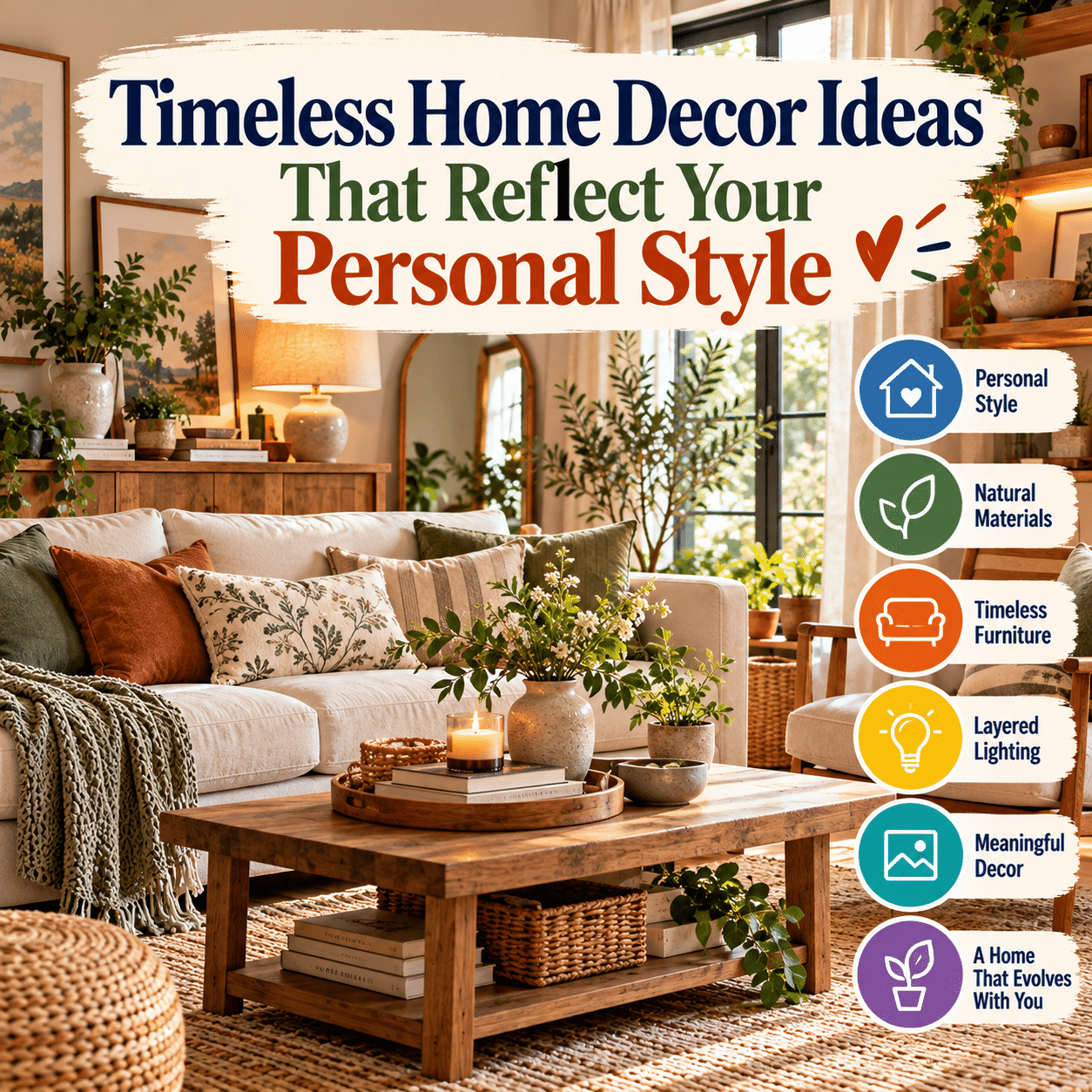
A beautiful home is not simply a collection of attractive furniture, fashionable colors, or carefully arranged accessories. It is a space that reflects the people who live there—their personalities, experiences, interests, and everyday routines. While decorating trends come and go, a home that feels genuinely personal can remain welcoming and meaningful for many years.
Timeless home decor is often misunderstood as a particular aesthetic filled with neutral colors, classic furniture, and traditional details. In reality, timeless decorating is less about following a fixed style and more about making thoughtful choices that continue to feel appropriate, functional, and enjoyable over time.
A timeless home might feature modern furniture, vintage discoveries, colorful artwork, handmade ceramics, or a combination of several design influences. What makes these elements work together is a sense of intention, balance, and personal connection.
Creating this kind of home does not require a large budget or a complete renovation. It begins with understanding what you genuinely enjoy, choosing furnishings that support your lifestyle, and building an interior gradually rather than trying to recreate a perfectly coordinated showroom.
This guide explores practical and creative ways to develop a timeless decorating style that feels authentic to you. From choosing colors and furniture to displaying meaningful objects, mixing old and new pieces, and designing rooms that evolve with your life, these ideas can help you create a home that remains beautiful, comfortable, and distinctly yours.
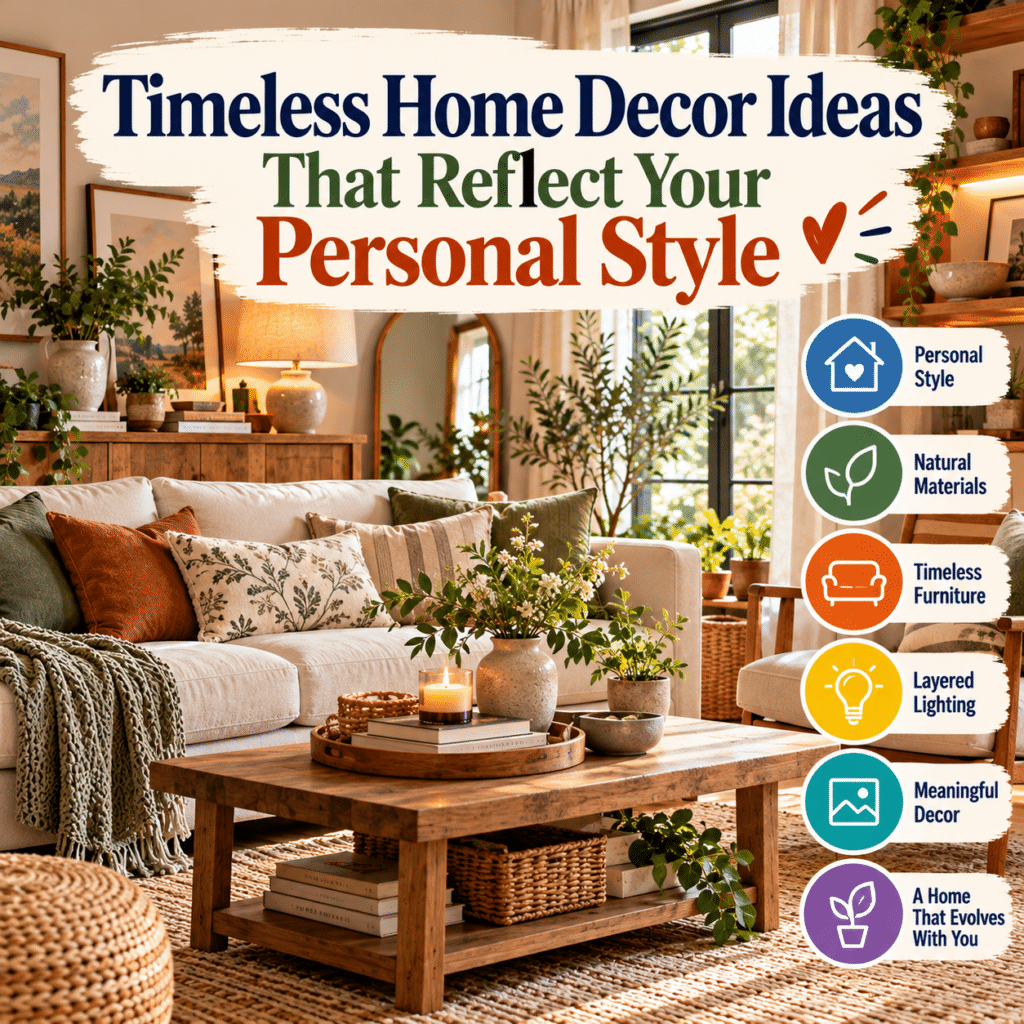
1. What Does Timeless Home Decor Really Mean?
Timeless home decor describes an approach to decorating that prioritizes lasting appeal, practical comfort, and personal meaning over temporary fashion.
It does not mean that every piece must look traditional or that a room should remain unchanged forever.
Instead, timeless interiors tend to have several important characteristics.
They Reflect Genuine Preferences
A room feels more authentic when its colors, artwork, furniture, and decorative details reflect the preferences of the people using it.
For example, someone who loves nature might choose wooden furniture, botanical artwork, and earthy colors.
Someone who enjoys contemporary design might prefer streamlined furniture, geometric accents, and carefully selected statement pieces.
Both approaches can create timeless interiors when the choices feel intentional and personally meaningful.
They Balance Beauty and Function
An attractive dining table is less valuable if it cannot accommodate everyday meals comfortably.
Similarly, a beautiful sofa may become frustrating if its upholstery is difficult to maintain or its proportions do not suit the room.
Timeless decorating considers how furnishings will perform in daily life.
They Allow for Change
Personal preferences and household needs evolve.
A flexible decorating foundation makes it easier to refresh a room without replacing everything.
For example, a well-proportioned sofa in a versatile fabric can work with different cushions, rugs, artwork, and accent colors over time.
They Avoid Unnecessary Excess
Timeless interiors do not need to be minimalist, but they usually benefit from thoughtful editing.
Rather than filling every available surface, they give important objects enough space to be appreciated.
The goal is to create a home that feels collected and lived-in rather than overly staged.
2. Discover Your Personal Decorating Style
Before buying new furniture or selecting paint colors, spend time understanding what makes a space feel comfortable and appealing to you.
Personal style is rarely defined by a single decorating category.
You may appreciate the simplicity of Scandinavian interiors, the warmth of rustic materials, and the personality of eclectic artwork.
These preferences can coexist when combined thoughtfully.
Look for Patterns in What You Love
Think about rooms, furniture, materials, and colors that consistently attract your attention.
Consider questions such as:
- Do you prefer bright, open spaces or intimate, softly lit rooms?
- Are you drawn to natural wood, painted furniture, metal, or glass?
- Do you enjoy bold colors or quieter palettes?
- Do you prefer clean lines or decorative details?
- Are you more comfortable in carefully organized rooms or relaxed, layered interiors?
- Which objects in your current home make you happiest?
Your answers can reveal useful patterns.
Create a Personal Inspiration Collection
Collect photographs, fabric samples, color combinations, and furniture ideas that appeal to you.
A digital inspiration board or simple folder can help organize these references.
However, avoid copying every detail from a single image.
Instead, identify the underlying qualities you appreciate.
Perhaps you love the natural lighting, comfortable seating, warm materials, or balanced arrangement rather than the exact furniture shown.
Identify Three Guiding Words
Choose three words that describe how you want your home to feel.
Examples include:
- Warm, natural, relaxed
- Bright, simple, peaceful
- Colorful, creative, welcoming
- Elegant, comfortable, personal
- Calm, functional, refined
These words can guide future decisions and help you avoid purchases that do not fit your overall vision.
Consider Your Actual Lifestyle
A home designed for entertaining guests may require different furniture arrangements from one primarily used for quiet evenings.
Households with children or pets may prioritize durable fabrics and easy-care surfaces.
People who work from home may need flexible spaces that support both productivity and relaxation.
Your lifestyle should shape your decorating choices as much as your visual preferences.
3. Build a Flexible Color Palette That Can Evolve
Color provides continuity throughout a home.
A thoughtful palette helps different furniture pieces and decorative objects feel connected, even when they come from different styles or periods.
Start With a Comfortable Foundation
Neutral colors are popular in timeless interiors because they work with many accent shades.
Options include warm white, cream, beige, taupe, soft gray, and natural wood tones.
However, neutral does not have to mean colorless.
Muted green, dusty blue, clay, and other gentle colors can also serve as versatile foundations.
Introduce Colors That Have Personal Meaning
Choose accent colors because you genuinely enjoy them.
A favorite shade might appear in artwork, cushions, pottery, or upholstery.
Repeating it in different parts of a room can create visual harmony.
For example, a living room with cream walls might include deep green cushions, a botanical print, and a ceramic vase in a related tone.
Use Bold Colors Intentionally
Timeless decorating does not require avoiding bold colors.
A rich blue armchair, colorful rug, or vibrant artwork can become a lasting focal point.
The important consideration is whether the color works with the surrounding elements and continues to appeal to you.
Test Colors in Real Conditions
Paint and fabric colors can appear different depending on daylight, artificial lighting, and nearby surfaces.
Before making a major change, examine samples at different times of day.
This is especially important for large surfaces such as walls, curtains, and upholstered furniture.
Keep the Palette Flexible
A useful approach is to choose a small group of foundation colors and allow accent colors to change gradually.
This makes seasonal updates or future decorating adjustments easier without requiring a complete redesign.
4. Invest Thoughtfully in Furniture You Will Use Every Day
Furniture often represents one of the largest decorating expenses.
Choosing pieces carefully can reduce unnecessary replacements and help create a more consistent interior.
Prioritize Comfort and Function
Before choosing furniture, consider how it will be used.
For a sofa, evaluate seat depth, support, upholstery, and available space.
For a dining table, consider seating capacity, surface durability, and ease of cleaning.
For a bed, prioritize suitable dimensions and comfortable support.
A piece that looks beautiful but does not function well may lose its appeal quickly.
Choose Proportions That Suit the Room
Furniture should feel balanced within the available space.
Oversized pieces can restrict movement, while very small furniture may appear disconnected in a large room.
Measure carefully before purchasing.
Consider doorways, walking paths, storage access, and how furniture will relate to nearby pieces.
Look Beyond Surface Appearance
Materials, construction, and maintenance requirements influence how furniture performs over time.
Solid wood, engineered wood, metal, upholstered frames, and other materials all have different advantages and limitations.
A higher price does not automatically guarantee better quality.
Evaluate construction, stability, repairability, and suitability for your household.
Consider Versatile Designs
Furniture with balanced proportions and relatively simple forms can adapt to different decorative styles.
A wooden dining table, for example, may work with contemporary chairs, traditional lighting, or colorful textiles.
Versatility can make future changes easier.
Buy Gradually When Possible
There is no need to furnish every room immediately.
Living with a space for a while can reveal which furniture pieces are genuinely necessary.
This approach also allows time to find items that feel personally meaningful rather than making rushed purchases.
5. Use Natural Materials to Create Lasting Warmth
Natural materials often contribute to timeless interiors because they offer varied textures, familiar colors, and distinctive visual character.
Wood, stone, linen, cotton, wool, ceramic, and woven fibers can work across many decorating styles.
Bring Warmth With Wood
Wooden furniture and accessories introduce natural variation.
Light oak can create an airy atmosphere, while walnut and darker wood tones may feel richer and more intimate.
Mixing different wood finishes can work when the tones are balanced thoughtfully.
For example, a dark wooden dining table can complement lighter shelving when other elements connect the room visually.
Add Softness With Textiles
Curtains, rugs, cushions, and upholstered furniture soften hard surfaces.
Combining smooth and textured fabrics adds depth without requiring excessive decoration.
Choose textiles according to comfort, cleaning needs, and climate.
Introduce Ceramics and Stone
Ceramic vases, bowls, lamps, and planters can provide subtle decorative interest.
Stone surfaces and accessories introduce additional texture.
Consider the weight, porosity, and maintenance requirements of different materials before using them.
Incorporate Woven Details
Baskets, woven trays, and natural-fiber rugs can create a relaxed atmosphere.
These accessories are especially useful when they provide practical storage as well as decoration.
Balance Materials Rather Than Overusing Them
A room does not need every natural material at once.
A wooden coffee table, cotton cushions, ceramic vase, and textured rug may be enough to create a comfortable, cohesive arrangement.
6. Mix Vintage and Modern Pieces for a Collected Look
One of the most effective ways to create a personal interior is to combine furniture and accessories from different periods.
A room containing only newly purchased matching furniture may feel coordinated, but it can sometimes lack individuality.
Mixing older and newer pieces introduces variety and character.
Start With a Common Element
When combining styles, look for a connection through color, material, proportion, or shape.
For example, a vintage wooden sideboard can work with a modern dining table if both share compatible wood tones.
Let One Piece Become the Focal Point
A distinctive vintage mirror, antique cabinet, or contemporary statement chair can anchor a room.
Keep nearby elements relatively simple so the focal piece has room to stand out.
Balance Decorative Detail
Highly ornate furniture can pair well with simpler modern pieces.
A traditional carved table, for example, may look balanced beside streamlined chairs.
The contrast can feel intentional rather than mismatched.
Consider Condition and Safety
Inspect secondhand and vintage furniture carefully.
Look for structural damage, unstable joints, pests, sharp edges, and finishes that may require special handling.
Older painted furniture may contain hazardous substances, including lead in some cases. Use appropriate precautions and professional guidance before disturbing unknown coatings.
Avoid Forcing a Perfect Match
A collected interior often develops gradually.
Objects do not need identical finishes or styles to work together.
A shared sense of scale, color, and purpose can create harmony.
7. Decorate With Meaningful Artwork
Artwork is one of the most personal elements of home decor.
It can reflect interests, memories, cultural experiences, or simply a love of particular colors and forms.
Choose Art That Resonates With You
Instead of selecting artwork only because it matches the furniture, consider whether you genuinely enjoy looking at it.
A landscape may remind you of a favorite destination.
An abstract painting may appeal because of its movement and colors.
A handmade illustration may hold sentimental value.
Personal connection can make artwork more satisfying over time.
Mix Different Art Forms
A home can include paintings, photography, prints, textiles, ceramics, and handmade objects.
Combining different forms creates visual interest.
Maintain balance through consistent framing, color relationships, or thoughtful placement.
Create a Gallery Wall
A gallery wall can display photographs, prints, and meaningful artwork together.
Before hanging anything, arrange the pieces on the floor or create paper templates to test spacing.
A consistent frame finish can create unity, but mixed frames can also work in a more eclectic interior.
Consider Scale
A very small picture may feel lost above a large sofa.
Conversely, oversized artwork can overwhelm a narrow wall.
Choose proportions that suit the surrounding furniture and available wall space.
Allow Art to Evolve
Your collection does not need to be permanent.
Rotating artwork occasionally can refresh a room without replacing furniture.
8. Display Personal Collections Thoughtfully
Books, travel souvenirs, handmade objects, photographs, and other collections can make a home feel distinctive.
The challenge is displaying them without creating unnecessary clutter.
Group Related Objects
Objects often look more intentional when arranged around a shared theme.
For example, a collection of handmade pottery might be displayed together on a shelf.
Travel souvenirs could be grouped with photographs or books connected to the same destinations.
Vary Height and Shape
Combining objects of different heights can create visual interest.
A tall vase, a small framed photograph, and a horizontal stack of books may form a balanced arrangement.
Leave Space Between Displays
Open space allows individual objects to stand out.
It also makes surfaces easier to clean.
Use Functional Display Furniture
Bookshelves, cabinets, and wall-mounted shelving can provide both storage and display opportunities.
Secure furniture and shelves appropriately, especially when displaying heavy or fragile objects.
Rotate Collections
Not every meaningful item needs to be visible all the time.
Rotating selected pieces can keep displays interesting while protecting objects from overcrowding.
9. Create a Timeless Living Room
The living room often serves several purposes, including relaxation, conversation, entertainment, and family activities.
A timeless living room should support these functions while reflecting personal style.
Start With Comfortable Seating
Choose a sofa and chairs that suit the room’s dimensions and the people who use them.
Comfortable seating creates a welcoming foundation.
Arrange Furniture for Interaction
Position seating so people can converse naturally.
Keep walking paths clear and ensure that frequently used tables and storage remain accessible.
Layer the Lighting
Combine general lighting with table lamps, floor lamps, or other task lighting.
Flexible lighting allows the room to accommodate different activities.
Add Texture and Personality
Use cushions, rugs, curtains, artwork, and meaningful objects to introduce warmth.
A few carefully chosen accessories may be more effective than numerous unrelated decorations.
Choose a Practical Coffee Table
Select a table that suits the seating arrangement and everyday needs.
Consider surface durability, cleaning requirements, and available walking space.
A timeless living room is not necessarily formal. It should feel comfortable enough to enjoy every day.
10. Design a Bedroom That Feels Personal and Restful
A bedroom should reflect personal taste while supporting comfort, privacy, and rest.
Choose Bedding for Comfort First
Select sheets, blankets, and pillows according to sleeping preferences and climate.
Colors and textures can enhance the room’s appearance, but comfort should remain the priority.
Keep the Palette Cohesive
A limited range of colors can create a peaceful atmosphere.
However, personal preferences matter more than following a strict neutral-only rule.
Use Gentle, Functional Lighting
Bedside lamps, wall-mounted reading lights, and suitable general illumination provide flexibility.
Consider how the room is used for reading, dressing, and relaxing.
Add Personal Details
Artwork, books, photographs, and small meaningful objects can make the bedroom feel more individual.
Avoid placing heavy or fragile objects where they could fall onto the bed.
Prioritize Organization
Accessible storage helps maintain a calm atmosphere.
Choose furniture and organizers that suit the room’s dimensions and everyday habits.
11. Bring Personality Into the Dining Area
A dining space can feel timeless when it balances practicality with welcoming details.
Choose a Table That Fits Daily Life
Consider how many people regularly use the dining area and whether additional seating is occasionally needed.
An extendable table may offer flexibility in some households.
Mix Dining Chairs Carefully
Matching chairs are not essential.
Different chair designs can work together when their seat heights, proportions, and materials are compatible.
Comfort and stability should remain priorities.
Use Lighting to Define the Space
A pendant light or other appropriately positioned fixture can help establish the dining area as a focal point.
Ensure that the lighting provides adequate illumination without uncomfortable glare.
Add a Simple Centerpiece
A ceramic bowl, vase, or small botanical arrangement can introduce personality.
Keep centerpieces low enough to allow comfortable conversation across the table.
Display Meaningful Tableware
Beautiful dishes, serving pieces, or handmade ceramics can become part of the room’s character.
Choose storage and display arrangements that protect fragile items.
12. Make Entryways and Hallways Feel Welcoming
Entryways create the first impression of a home.
Even a small entrance can express personal style through practical details.
Provide Convenient Storage
Hooks, a shoe cabinet, or a narrow console can help organize everyday belongings.
Choose pieces that do not obstruct movement.
Add a Mirror
A mirror can provide a convenient place for a final appearance check before leaving home.
It may also reflect light into a narrow entrance.
Introduce Artwork
A framed photograph, illustration, or small gallery arrangement can make a hallway feel more personal.
Use Durable Materials
Entryways often experience heavy use.
Choose rugs and furniture surfaces that can withstand frequent cleaning and everyday wear.
Keep the Area Uncluttered
An inviting entrance should feel easy to navigate.
Practical organization often contributes more than elaborate decoration.
13. Use Lighting as Both a Functional and Decorative Element
Lighting affects the appearance of colors, materials, and furniture.
It also influences how comfortable a room feels during different activities.
Combine Several Lighting Layers
Ambient lighting provides general illumination.
Task lighting supports activities such as reading, cooking, or working.
Accent lighting highlights artwork or architectural features.
Using these layers together creates flexibility.
Choose Fixtures That Complement Your Style
Lighting fixtures can express personal taste.
A simple metal floor lamp may suit a modern interior, while a ceramic table lamp may complement a relaxed or traditional room.
Consider Warmth and Brightness
Warm-white lighting often creates a comfortable atmosphere in living spaces.
However, task areas may require brighter illumination.
Choose lighting according to function rather than appearance alone.
Use Dimmers Where Appropriate
Compatible dimmable fixtures can help adjust the atmosphere throughout the day.
Follow electrical safety guidance and manufacturer specifications.
Avoid Excessive Decorative Lighting
Too many fixtures can create clutter.
Choose lighting that improves the room’s usability and overall design.
14. Incorporate Nature-Inspired Details
Nature-inspired decorating can create a sense of connection to the outdoors.
This approach works across many styles, from modern minimalism to rustic and eclectic interiors.
Introduce Indoor Plants
Plants add organic shapes and color.
Choose species suited to available light and maintenance conditions.
Check toxicity before introducing plants into homes with pets or young children.
Display Botanical Artwork
Botanical prints, landscape photography, and nature-inspired illustrations can provide visual interest without requiring plant maintenance.
Use Earth-Inspired Colors
Muted greens, warm browns, sandy neutrals, and terracotta tones can create a grounded atmosphere.
Choose Natural Textures
Wood, woven fibers, ceramics, and stone can contribute subtle variation.
Make the Most of Daylight
Arrange furniture to benefit from natural light where practical.
Use suitable window treatments to manage glare, privacy, and heat.
15. Blend Decorating Styles Without Losing Cohesion
Many people appreciate elements from several decorating traditions.
Combining styles can create a distinctive interior when guided by a clear sense of balance.
| Style Combination | Shared Elements | Practical Approach |
|---|---|---|
| Modern + Rustic | Simple shapes, natural materials | Pair clean-lined furniture with textured wood |
| Scandinavian + Traditional | Comfort, craftsmanship, soft colors | Combine light furnishings with classic details |
| Minimalist + Bohemian | Personal expression, thoughtful materials | Use selected patterns and handmade accents |
| Contemporary + Vintage | Contrast, distinctive character | Balance statement pieces with simple surroundings |
| Coastal + Modern | Light colors, natural textures | Use restrained coastal details with functional furniture |
Establish a Common Color Palette
A shared palette can connect furniture from different styles.
Repeat Materials
Using similar wood tones, metal finishes, or fabrics creates continuity.
Balance Visual Weight
A large ornate cabinet may work best beside simpler furnishings.
Avoid Equal Emphasis Everywhere
Choose a few focal points rather than making every piece compete for attention.
Let Personal Preference Guide the Mix
There is no requirement to assign a fixed percentage to each style.
The most successful combination is one that feels comfortable and intentional.
16. Decorate With Texture Instead of Constantly Changing Colors
Texture can make a room feel interesting even when the color palette is simple.
It introduces visual depth through differences in surface, weave, and finish.
Combine Smooth and Textured Surfaces
A smooth wooden table can contrast with a woven rug.
A linen sofa may look appealing beside a ceramic lamp or metal side table.
Use Textiles Thoughtfully
Cushions, throws, curtains, and upholstery provide opportunities to add texture.
Choose materials suited to the climate and maintenance requirements.
Add Subtle Wall Texture
Paint finishes, suitable wallpaper, or decorative wall treatments can create depth.
However, textured surfaces may require additional cleaning or maintenance.
Avoid Too Many Competing Textures
A room filled with numerous highly textured surfaces may feel visually busy.
Balance rough and smooth materials, and allow some simpler elements to provide contrast.
17. Choose Decorative Accessories With Purpose
Accessories are often the easiest elements to change, but they can also become a source of unnecessary spending and clutter.
A timeless approach emphasizes thoughtful selection.
Ask Whether an Item Adds Value
Before purchasing an accessory, consider whether it provides beauty, usefulness, personal meaning, or a combination of these qualities.
Choose Appropriate Scale
A small object may disappear visually on a large table.
A large decorative piece may overwhelm a narrow shelf.
Consider proportions carefully.
Use Trays to Organize Small Objects
A tray can group candles, books, or other accessories into a more intentional arrangement.
Avoid Filling Every Surface
Open space can be an important part of a balanced interior.
Consider Maintenance
Highly delicate accessories may require frequent cleaning or careful handling.
Choose objects that suit the household’s daily activities.
18. Refresh Your Home Without Replacing Everything
Timeless decorating allows a home to evolve gradually.
Small changes can refresh the atmosphere while preserving the elements you already enjoy.
Rearrange Existing Furniture
Changing furniture placement can improve movement, conversation, or natural lighting.
Update Textiles
New cushion covers, curtains, or a different rug can change the mood of a room.
Rotate Artwork
Moving artwork between rooms can create a fresh perspective.
Refinish Suitable Furniture
Painting or refinishing furniture may extend its usefulness.
Use appropriate materials, ventilation, and safety precautions, especially when working with older finishes.
Change Decorative Displays
Rearrange books, ceramics, photographs, and other objects.
Introduce Seasonal Details Sparingly
Seasonal colors or lightweight decorative changes can add variety without requiring major purchases.
The goal is to refresh the space while preserving its underlying character.
19. Create a More Sustainable Decorating Approach
Thoughtful decorating can reduce unnecessary consumption and support longer-term use of household items.
However, sustainability depends on factors such as materials, production methods, durability, transportation, and disposal.
No single material or decorating style is automatically the most environmentally responsible choice.
Use What You Already Own
Before buying something new, consider whether existing furniture or accessories can be rearranged, repaired, or repurposed.
Choose Durable, Repairable Items
Furniture that can be maintained or repaired may remain useful for longer.
Consider Secondhand Furniture
Secondhand items can provide character and extend the use of existing products.
Inspect them carefully for safety and condition.
Avoid Impulse Purchases
Take time to evaluate whether an item genuinely fits your space and needs.
Maintain Furniture Properly
Follow care instructions for upholstery, wood, stone, and other materials.
Good maintenance can help preserve appearance and function.
Donate or Rehome Usable Items
When furniture no longer suits your needs, consider whether it can be reused by someone else.
20. Common Mistakes That Make Home Decor Feel Less Personal
Understanding common decorating mistakes can help you make more satisfying choices.
Copying a Room Exactly
An inspirational photograph may not reflect your room dimensions, lighting, or lifestyle.
Use it as a starting point rather than a strict template.
Buying Everything at Once
A fully coordinated room may look polished, but rushed purchases can lead to unnecessary compromises.
Allow time for your preferences to develop.
Ignoring Comfort
Furniture and accessories should support everyday use.
Following Every Trend
Frequent trend-driven purchases may create a room that feels inconsistent or quickly outdated.
Choose trends selectively when they genuinely appeal to you.
Overdecorating
Too many accessories can make meaningful objects difficult to appreciate.
Choosing Materials Without Considering Maintenance
Some materials require specialized cleaning or careful handling.
Understand these requirements before making major purchases.
Forgetting Personal Meaning
A beautifully decorated room may still feel impersonal if it contains nothing connected to your interests or experiences.
Include objects that tell your story.
21. A Step-by-Step Plan for Developing Your Timeless Decorating Style
Creating a personal home is an ongoing process.
A simple plan can make decorating decisions more intentional.
Step 1: Identify Your Priorities
Consider which rooms need improvement and what problems you want to solve.
Step 2: Define Your Personal Style
Choose guiding words, preferred colors, and materials.
Step 3: Evaluate Existing Furniture
Identify pieces worth keeping, repairing, moving, or replacing.
Step 4: Create a Flexible Color Palette
Choose foundation colors and a few meaningful accents.
Step 5: Plan Furniture Layouts
Measure rooms and ensure that furniture supports comfortable movement.
Step 6: Improve Lighting
Provide appropriate general, task, and accent lighting.
Step 7: Introduce Texture
Use rugs, curtains, upholstery, and natural materials to create depth.
Step 8: Add Meaningful Objects
Display artwork, photographs, books, and personal collections thoughtfully.
Step 9: Edit the Arrangement
Remove unnecessary objects and allow focal points to stand out.
Step 10: Let the Home Evolve
Live with your choices and make adjustments as your needs change.
A home that develops gradually often feels more authentic than one completed in a single shopping trip.
22. Timeless Home Decor Checklist
Use this checklist when evaluating a room or planning future purchases.
Personal Style
- The room reflects my genuine preferences.
- Colors and materials feel comfortable to me.
- Artwork and accessories have personal meaning.
- The design supports my everyday lifestyle.
Furniture and Layout
- Furniture proportions suit the room.
- Seating and work surfaces are comfortable.
- Walking paths remain clear.
- Storage supports daily routines.
- Major pieces are practical to maintain.
Visual Harmony
- Colors work together.
- Materials and textures feel balanced.
- Decorative focal points are clear.
- Accessories do not overwhelm surfaces.
- Different furniture styles feel intentionally connected.
Long-Term Value
- Purchases are based on real needs.
- Furniture quality and repairability have been considered.
- The room can adapt to future changes.
- Existing items are reused when practical.
- Decorating decisions are not driven solely by temporary trends.
Frequently Asked Questions About Timeless Home Decor
1. What is the difference between timeless decor and traditional decor?
Traditional decor refers to a recognizable style associated with classic furniture forms, decorative details, and established design influences. Timeless decor is a broader approach that emphasizes lasting appeal, functionality, and personal relevance. Modern, minimalist, rustic, and eclectic interiors can all be timeless.
2. Does timeless home decor have to use neutral colors?
No. Neutral colors are versatile, but bold or distinctive colors can also remain appealing over time. The most important consideration is whether the palette reflects your preferences and works harmoniously with the room.
3. How can I discover my personal decorating style?
Begin by collecting images of interiors you enjoy. Look for recurring colors, materials, furniture shapes, and atmospheres. Consider your lifestyle and identify a few guiding words that describe how you want your home to feel.
4. Can I mix modern and vintage furniture?
Yes. Combining modern and vintage pieces can create a personal, collected appearance. Use shared colors, compatible materials, balanced proportions, or complementary shapes to connect the different styles.
5. How can I decorate timelessly on a limited budget?
Start with existing furniture, improve layouts, refresh textiles, and display meaningful objects. Consider carefully selected secondhand pieces and prioritize purchases that improve comfort or functionality. There is no need to decorate every room immediately.
6. How often should I update my home decor?
There is no fixed schedule. Update your decor when your needs, preferences, or circumstances change. Small adjustments to lighting, textiles, artwork, or furniture placement may be enough to refresh a room.
7. How do I prevent my home from looking like a showroom?
Include personal artwork, photographs, books, handmade objects, and meaningful collections. Mix furniture and accessories thoughtfully, and design around everyday activities rather than appearance alone.
Conclusion: A Timeless Home Is a Reflection of You
Timeless home decor is not about achieving a perfect interior or following a strict set of decorating rules. It is about creating a space that remains comfortable, functional, and personally meaningful as life changes.
Thoughtful furniture choices, harmonious colors, natural materials, layered textures, flexible lighting, and meaningful objects can all contribute to a home with lasting appeal.
Yet the most important element is personal connection.
A favorite painting, a well-used reading chair, a handmade ceramic bowl, or a family photograph may bring more satisfaction than an expensive decorative object chosen simply because it is fashionable.
Rather than trying to complete your home all at once, allow it to develop gradually. Choose pieces carefully, appreciate what you already own, and make changes that improve how your home feels and functions.
The result may not resemble a perfectly coordinated magazine interior—and that is part of its beauty.
A truly timeless home does not need to follow every trend. It becomes timeless when it reflects your personality, supports your everyday life, and continues to feel like a place where you belong.