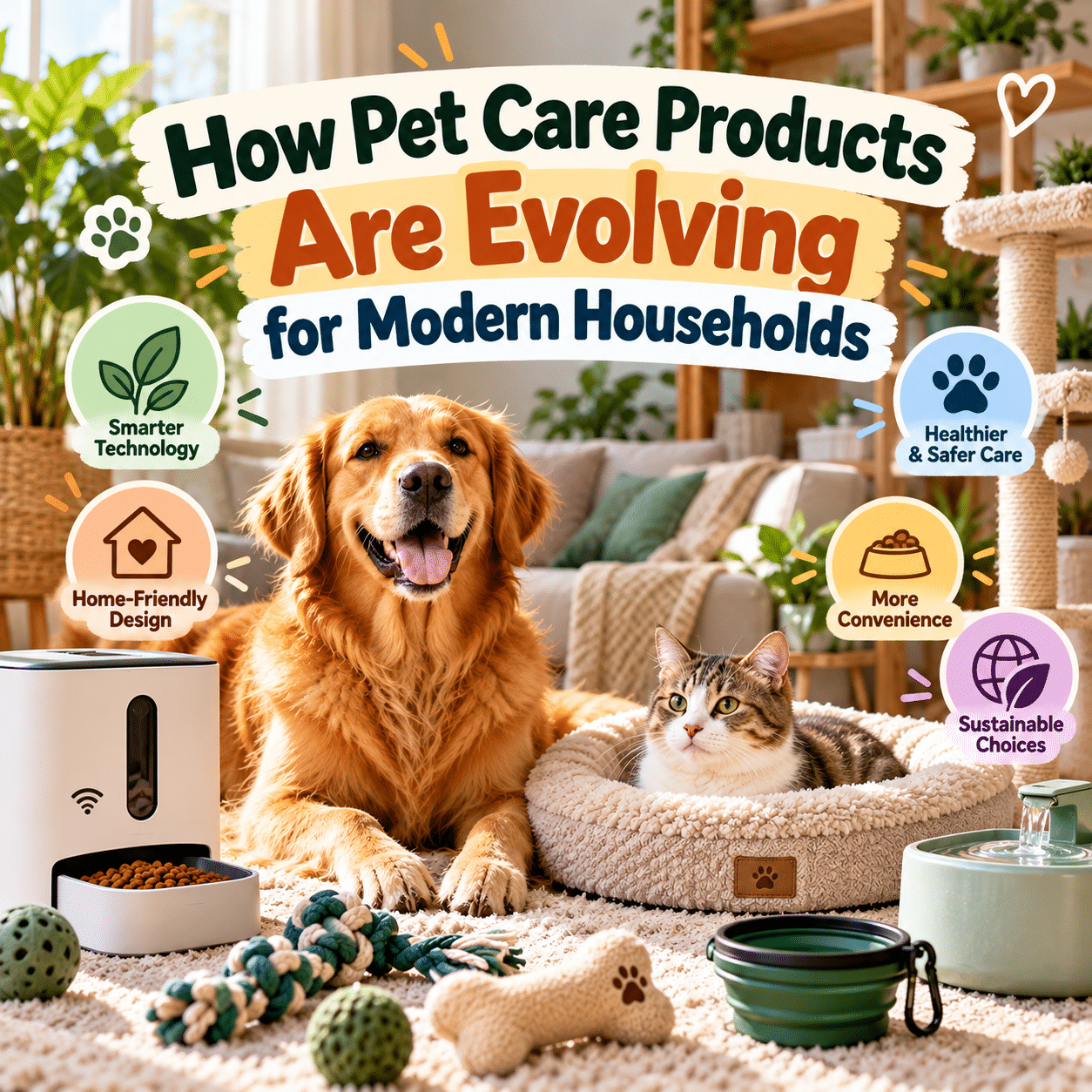
Pets have become an integral part of modern household life. Dogs, cats, and other companion animals are no longer viewed simply as animals that live alongside people. They are increasingly considered important members of the household, influencing everything from daily routines and home organization to shopping decisions and lifestyle choices.
As the relationship between people and their pets evolves, so do the products designed to support animal care.
Traditional pet supplies once focused primarily on essential needs such as feeding, grooming, sleeping, and basic hygiene. Today, the pet care market includes a much wider range of solutions designed to improve convenience, support animal well-being, accommodate different living environments, and make everyday responsibilities easier for pet owners.
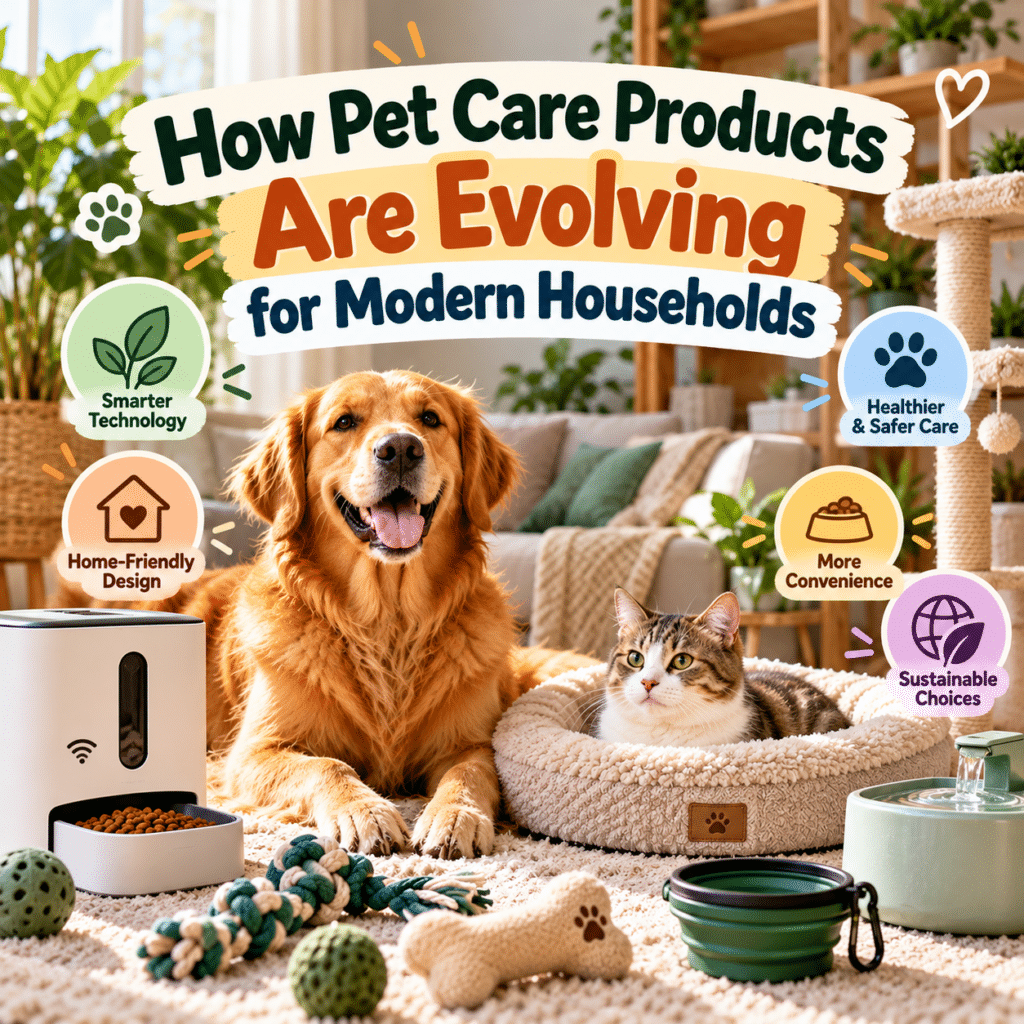
Automatic feeders, interactive toys, smart water fountains, ergonomic grooming tools, washable bedding, and thoughtfully designed storage systems illustrate how pet care products are adapting to contemporary households.
However, innovation in pet care is not simply about adding technology or introducing new features. Some of the most meaningful improvements involve making everyday products safer, easier to clean, more durable, and better suited to the natural behaviors of animals.
Understanding these developments can help households make thoughtful decisions about the products they choose, the routines they establish, and the environments they create for their pets.
This article explores how pet care products are evolving, why these changes matter, and how modern households can benefit from practical, responsible approaches to pet care.
1. The Changing Role of Pets in Modern Households
The evolution of pet care products begins with a broader change in how people view companion animals.
For many households, pets contribute companionship, enjoyment, emotional connection, and a sense of daily routine. Their needs are increasingly considered when families organize living spaces, plan activities, and select household products.
This shift has encouraged manufacturers to develop products that integrate more naturally into everyday domestic life.
Pets as Part of the Household
Pet ownership often involves much more than providing food and shelter.
Responsible care includes:
- Appropriate nutrition and access to fresh water.
- Regular physical activity.
- Mental stimulation and opportunities for natural behavior.
- Comfortable sleeping and resting areas.
- Preventive veterinary care.
- Grooming and hygiene.
- Safe environments.
- Consistent social interaction.
Modern pet products increasingly address these interconnected needs rather than treating them as unrelated activities.
For example, a thoughtfully designed feeding station may help contain spills, simplify cleaning, and accommodate a pet’s physical requirements while fitting neatly into a kitchen or utility area.
Similarly, a comfortable pet bed may combine washable materials, supportive cushioning, and a design that works with the surrounding furniture.
Different Households Have Different Needs
Pet care requirements vary considerably depending on the household.
A family with an energetic dog and a large outdoor space may prioritize durable toys, outdoor cleaning equipment, and portable water containers.
An apartment resident with an indoor cat may focus on vertical climbing furniture, scratching surfaces, odor management, and interactive enrichment.
A household caring for an older pet may need accessible resting areas, nonslip surfaces, and mobility-supporting accessories.
The growing diversity of pet care products reflects these differences.
Rather than relying on one universal solution, manufacturers increasingly offer products intended for specific animals, environments, routines, and life stages.
2. Why Pet Care Products Are Becoming More Specialized
One of the most noticeable developments in pet care is the movement from general-purpose supplies toward products designed for more specific needs.
This specialization reflects a better appreciation of differences between species, breeds, body sizes, ages, and individual behaviors.
Species-Specific Design
Dogs, cats, rabbits, birds, and other companion animals have different physical and behavioral requirements.
Products designed for one species may be inappropriate or unsafe for another.
For example:
- Cats benefit from scratching surfaces, climbing opportunities, and hiding spaces.
- Dogs may benefit from appropriate chew toys, walking equipment, and scent-based enrichment.
- Rabbits require suitable chewing materials, hiding areas, and opportunities to move naturally.
- Birds need species-appropriate perches, enrichment, and safe materials.
Modern product development increasingly recognizes that effective pet care begins with understanding the animal rather than adapting a human-centered product to an animal’s needs.
Age-Appropriate Products
Young, adult, and senior animals may require different forms of support.
Puppies and kittens often need products that accommodate growth, learning, and exploration.
Adult pets may benefit from durable accessories suited to established activity patterns.
Older pets may need additional comfort, accessible feeding arrangements, and support for reduced mobility.
Examples include low-entry litter boxes, orthopedic-style bedding, nonslip mats, and ramps for reaching elevated surfaces.
These products should be selected according to the animal’s actual needs rather than age alone.
Individual Comfort and Accessibility
Even animals of the same species and age can have very different preferences.
One cat may enjoy an elevated sleeping platform, while another prefers an enclosed resting area.
One dog may be comfortable wearing a harness, while another requires careful fitting and gradual introduction.
The increasing variety of product designs gives households more opportunities to accommodate individual differences.
The goal is not to purchase the most specialized product available. It is to choose products that genuinely suit the animal.
3. Smart Technology Is Changing Everyday Pet Care
Connected technology has become an increasingly visible part of modern pet care.
Smart pet products use sensors, timers, cameras, software, or wireless connections to automate selected tasks or provide information about a pet’s environment.
These features can offer convenience, particularly for households with busy or changing schedules.
However, technology works best when it supports attentive care rather than attempting to replace it.
Automatic Pet Feeders
Automatic feeders dispense food according to programmed schedules.
Some models provide simple timed portions, while others include mobile applications, feeding records, cameras, or notifications.
Potential advantages include:
- More consistent feeding times.
- Convenient portion scheduling.
- Reduced dependence on manual feeding for every meal.
- Useful support for households with irregular daily routines.
- Feeding reminders and records on compatible devices.
Automatic feeders also have limitations.
Food may become jammed, batteries may fail, power can be interrupted, and portions may be inaccurate if the device is poorly calibrated.
Wet food requires particular attention to refrigeration and safe holding times.
A feeder should therefore be tested regularly and should not be treated as a substitute for checking that a pet has actually eaten.
For animals with medical conditions or specialized diets, feeding schedules and portions should follow veterinary guidance.
Smart Water Fountains
Pet water fountains circulate water through a reservoir, often using a small electric pump and replaceable filters.
Some animals, particularly certain cats, may show a preference for moving water.
A fountain can make water more accessible or appealing for some pets, but individual preferences vary.
Important considerations include:
- Reservoir capacity.
- Ease of disassembly.
- Pump reliability.
- Noise level.
- Filter replacement requirements.
- Material quality.
- Electrical safety.
- Availability of replacement parts.
A water fountain does not eliminate the need for regular cleaning.
Biofilm, debris, and mineral deposits can accumulate even when water appears clear.
Households should follow the manufacturer’s cleaning instructions, replace water frequently, and maintain an alternative water source when appropriate.
Pet Monitoring Cameras
Indoor pet cameras allow owners to observe selected areas of the home remotely.
Depending on the model, features may include motion alerts, night vision, two-way audio, and recorded video.
These devices can help owners understand what happens when they are away.
For example, a camera may reveal that a dog spends most of the afternoon resting or that a cat regularly visits a particular window.
However, cameras cannot provide companionship, exercise, or hands-on care.
They may also introduce privacy considerations, especially when connected to cloud services.
Strong passwords, software updates, and appropriate privacy settings are important when using connected cameras.
Smart Litter Boxes
Automatic litter boxes are designed to separate waste from litter or transfer waste into a collection compartment.
They can reduce some manual scooping tasks, but they still require cleaning, inspection, and waste disposal.
Safety is especially important because some mechanisms move while animals are nearby.
Households should evaluate sensor reliability, emergency stopping features, suitability for the animal’s size and age, and the manufacturer’s safety instructions.
Kittens, very small cats, or animals with mobility difficulties may not be suitable for certain automatic designs.
A conventional litter box should remain available during any transition, and owners should continue monitoring changes in urination and defecation.
4. Convenience Is Becoming a Major Design Priority
Modern households often balance employment, commuting, family responsibilities, and other activities.
Pet care products are increasingly designed to simplify routine tasks without compromising animal welfare.
Easy-Clean Materials
Cleaning is an unavoidable part of pet ownership.
Products that are difficult to wash may accumulate hair, dirt, moisture, odors, or food residue.
Modern designs often emphasize removable components, smooth surfaces, and materials that can tolerate regular cleaning.
Examples include:
- Pet beds with removable covers.
- Dishwasher-safe feeding bowls where the manufacturer permits.
- Washable feeding mats.
- Litter accessories with fewer hard-to-reach corners.
- Grooming tools with removable hair-collection components.
- Waterproof or water-resistant protective covers.
Ease of cleaning can influence how consistently an item is maintained.
A simple product that is cleaned regularly may be more useful than a sophisticated alternative that is difficult to maintain.
Multifunctional Products
Some products combine several functions into one item.
A pet carrier might include storage pockets, a removable washable pad, and multiple carrying options.
A feeding station may integrate bowls, a spill-catching tray, and storage for accessories.
A grooming tool may offer interchangeable attachments for different coat-care tasks.
Multifunctional design can be particularly useful in smaller homes where storage is limited.
However, combining functions is only beneficial when each function performs well.
A complicated product that is difficult to clean, repair, or use may offer less practical value than several straightforward tools.
Portable and Foldable Accessories
Collapsible bowls, foldable travel crates, compact grooming kits, and portable pet mats are examples of products designed around flexible routines.
They can be useful for:
- Weekend trips.
- Visits to family or friends.
- Outdoor activities.
- Temporary accommodation.
- Travel with pets.
- Homes with limited storage.
Portability should never come at the expense of stability, ventilation, or safety.
For example, a collapsible carrier must still provide appropriate structural support and secure containment.
5. Pet Furniture Is Becoming Part of Interior Design
Pet furniture once tended to be selected primarily for function.
Modern households increasingly look for products that also complement their living spaces.
This has encouraged the development of pet beds, climbing structures, feeding stations, and storage units with more considered materials, shapes, and finishes.
Furniture That Blends Into the Home
Contemporary pet furniture may use neutral upholstery, natural-looking wood finishes, simple silhouettes, or modular construction.
Examples include:
- Cat trees designed to resemble modern shelving.
- Pet beds with furniture-inspired frames.
- Enclosed litter cabinets.
- Wall-mounted cat climbing systems.
- Storage benches with designated pet accessory compartments.
These designs can make pet equipment feel more integrated into the home.
However, visual appearance should remain secondary to animal safety and comfort.
A decorative cat tree still needs stable construction and appropriate climbing surfaces.
An enclosed litter cabinet should provide adequate access and ventilation, and it should not make the litter area unpleasant or difficult to use.
Dedicated Pet Zones
Another development is the creation of organized spaces for pet-related activities.
A household might establish:
- A feeding zone in the kitchen.
- A grooming station near a bathroom or utility sink.
- A resting area in a quiet corner.
- A storage area for leashes and outdoor supplies.
- A litter area away from busy household traffic.
Dedicated zones can simplify routines and reduce clutter.
They can also help animals develop predictable habits.
The ideal location depends on the pet’s preferences and the household layout.
Space-Saving Designs
Smaller homes often require more careful planning.
Vertical cat furniture, compact feeding stations, and wall-mounted storage can help households use available space efficiently.
For cats, vertical space may provide meaningful environmental enrichment.
For dogs, a well-placed resting area can offer comfort without occupying a major circulation route.
The objective is to create a home that functions comfortably for both people and animals.
6. Grooming Products Are Becoming More Ergonomic and Practical
Grooming supports cleanliness, comfort, and routine observation of a pet’s skin, coat, paws, and other visible features.
The appropriate grooming routine depends on the species, coat type, health, and individual tolerance of handling.
Modern grooming products increasingly emphasize ease of use, adjustability, and reduced mess.
Ergonomic Brushes and Combs
Grooming tools may feature textured handles, flexible heads, or designs intended for particular coat types.
Examples include slicker brushes, undercoat rakes, grooming combs, and rubber grooming mitts.
A tool suitable for one animal may be uncomfortable or inappropriate for another.
Excessive brushing, forceful pressure, or unsuitable blades can irritate skin or damage the coat.
Owners should choose tools based on the animal’s needs and use gentle techniques.
Grooming Tools With Hair Collection
Some modern brushes include mechanisms that release collected hair from the bristles.
Others connect to vacuum systems intended to capture loose fur.
These designs may simplify cleanup, but vacuum noise and suction can frighten some animals.
Gradual introduction and positive reinforcement are important.
An animal should never be forced to tolerate a grooming device that causes significant distress.
Paw Cleaning Accessories
Paw-cleaning cups, soft towels, and portable cleaning kits are useful for pets that regularly walk outdoors.
These products can help remove surface dirt after walks.
However, they should be used gently, especially when paws are irritated or injured.
Paws should be dried appropriately after washing, particularly between the toes.
Safer Nail-Care Tools
Pet nail-care products include conventional clippers, guillotine-style cutters, and electric grinders.
Some tools incorporate guards or lights, but these features do not guarantee safe trimming.
The quick inside the nail contains blood vessels and nerves, and cutting into it can cause pain and bleeding.
Owners who are unsure about nail trimming should seek instruction from a veterinarian or qualified groomer.
7. Feeding Accessories Are Moving Beyond Basic Bowls
Food and water bowls remain essential, but feeding accessories now include products designed to address specific behaviors and practical challenges.
Slow Feeders
Slow-feeder bowls use raised patterns or compartments to make food less immediately accessible.
They may help some animals eat more slowly.
However, they are not appropriate for every pet.
A feeder that causes frustration, difficulty reaching food, or excessive stress may be counterproductive.
The design should suit the animal’s muzzle shape, eating style, and physical abilities.
Puzzle Feeders
Puzzle feeders require animals to interact with an object to access food.
They may encourage exploration, problem-solving, and slower food consumption.
For example, a cat may need to move a small object to release dry food.
A dog may need to investigate compartments to find treats.
The difficulty should match the animal’s experience.
A puzzle that is too difficult can cause frustration rather than enrichment.
Feeding Mats
Textured feeding mats can hold spreadable foods and encourage licking.
They are sometimes used during grooming or other supervised activities.
Only foods appropriate for the species should be used, and the mat must be made from suitable materials.
Damaged mats should be replaced if pieces could be swallowed.
Adjustable Feeding Stations
Some feeding stations allow bowl height or position to be adjusted.
This can improve accessibility in selected circumstances, but raised feeding is not universally beneficial.
For example, elevated feeders are not a proven general solution for preventing gastric dilatation-volvulus, commonly called bloat, in dogs.
Households should seek veterinary advice when selecting feeding arrangements for animals with particular medical or mobility needs.
8. Interactive Toys Are Supporting Mental Enrichment
Physical exercise is important, but animals also benefit from opportunities to explore, investigate, play, and engage in natural behaviors.
Modern pet toys increasingly focus on mental enrichment alongside physical activity.
Food-Dispensing Toys
Food-dispensing toys require pets to manipulate an object to obtain food.
They can make some feeding experiences more engaging.
These products are available in different shapes, materials, and difficulty levels.
Owners should select appropriately sized toys and supervise initial use.
Food used in enrichment activities should be included in the pet’s overall daily dietary allowance.
Interactive Cat Toys
Cats often enjoy activities that involve stalking, chasing, pouncing, and capturing objects.
Interactive wand toys, rolling balls, and track-based toys can support these behaviors.
Some electronic toys introduce unpredictable movement or timed activity.
However, direct play with a person remains valuable.
Owners should also provide opportunities for the cat to successfully catch an appropriate toy rather than relying exclusively on inaccessible moving targets.
Chew Toys for Dogs
Chewing is a natural behavior for many dogs.
Appropriate chew toys can provide an outlet for this activity.
Product selection should consider chewing strength, size, material, and the animal’s history of destroying or swallowing objects.
Extremely hard chews may damage teeth, while poorly sized toys may create choking or obstruction risks.
No chew toy should be assumed indestructible.
Rotating Toys Instead of Constantly Buying More
A modern approach to enrichment does not necessarily require a large collection of toys.
Rotating a smaller selection can help maintain interest.
For example, a household might provide a puzzle feeder on one day, a scent-based game on another, and an interactive play session later in the week.
Variety can be achieved through activities and environments, not only through purchases.
9. Pet Safety Products Are Becoming More Thoughtfully Designed
Safety is one of the most important considerations in pet product development.
Modern accessories increasingly include features intended to improve visibility, containment, comfort, and everyday control.
Harnesses and Walking Equipment
Dog harnesses are available in different shapes, attachment configurations, and adjustment systems.
A suitable harness should allow comfortable movement while remaining secure.
Poorly fitted equipment may rub the skin, restrict movement, or allow escape.
The correct design depends on the dog’s body shape, behavior, and activity.
Leashes, collars, and harnesses should be inspected regularly for wear.
Reflective and Visibility Accessories
Reflective collars, leash attachments, and illuminated accessories can help make pets more visible during low-light walks.
They do not replace attentive handling, appropriate supervision, or safe walking locations.
Visibility equipment should also be comfortable and securely attached.
Pet Gates and Barriers
Pet gates help manage access to selected household areas.
They may be useful for separating animals during introductions, preventing access to hazards, or managing household routines.
The gate must be appropriate for the animal’s size, strength, and jumping ability.
Pressure-mounted gates may not be suitable for all locations, particularly near stairs.
Travel Restraints
Travel accessories have evolved to include vehicle harness systems, secured carriers, and travel crates.
The purpose is to reduce uncontrolled movement and improve safety during transportation.
Not all products marketed as travel restraints have been independently crash-tested.
Households should look for credible testing information and follow installation instructions carefully.
A pet should not ride unrestrained in a moving vehicle.
10. Sustainability Is Influencing Pet Product Design
Environmental considerations are increasingly shaping how everyday products are manufactured, packaged, maintained, and discarded.
Pet supplies are part of this broader development.
However, environmental claims deserve careful evaluation.
A product described as natural, biodegradable, recyclable, or sustainable is not automatically better in every circumstance.
Recycled and Responsibly Sourced Materials
Some pet beds, toys, and accessories incorporate recycled textiles or other recovered materials.
Others emphasize responsibly sourced fibers or durable components.
The environmental benefit depends on factors such as material processing, product lifespan, transportation, and disposal.
A durable product used for years may reduce replacement frequency.
Refillable and Reusable Products
Reusable food containers, washable grooming accessories, and refillable storage systems can reduce dependence on some disposable products.
These solutions are particularly useful when they are easy to clean and maintain.
However, reusable products still require resources for manufacturing and washing.
Their practical value depends on how they are used over time.
Durable Construction
Durability is an important but sometimes overlooked part of responsible consumption.
A well-made leash, washable bed, or sturdy feeding bowl may remain useful much longer than a poorly constructed alternative.
Replaceable components can also extend product life.
For electronic products, the availability of replacement filters, pumps, batteries, and other parts may be especially important.
Evaluating Environmental Claims
Households can ask several questions before choosing a product marketed as environmentally friendly:
- What materials are used?
- Is the product designed for repeated use?
- Can it be repaired or maintained?
- Is the packaging necessary?
- Are recycling or disposal instructions clear?
- Does the manufacturer provide specific evidence for environmental claims?
Thoughtful purchasing often matters more than choosing products based on attractive sustainability language alone.
11. Hygiene and Odor Management Are Receiving Greater Attention
Pet hygiene affects both animal comfort and household cleanliness.
Modern products increasingly aim to simplify routine cleaning and improve management of common household challenges.
Litter Management
Cat litter products vary in texture, absorbency, dust production, odor control, and disposal requirements.
The most suitable option depends on the cat’s preferences and any relevant health considerations.
Some cats are sensitive to strong fragrances or unfamiliar textures.
Changing litter gradually may help avoid litter-box aversion.
Regardless of the product, litter boxes require regular waste removal and cleaning.
Washable Protective Covers
Furniture covers, waterproof liners, and washable mats can help protect household surfaces.
These accessories are especially useful in homes with shedding pets, young animals, or pets experiencing temporary accidents.
Materials should be comfortable and suitable for repeated laundering.
Odor-Control Products
Odor-control sprays, absorbent materials, and cleaning solutions are widely available.
Products intended for use around animals should be evaluated carefully.
Some fragrances, essential oils, and cleaning chemicals can be irritating or toxic to pets.
Owners should follow product labels, provide ventilation, and prevent animals from contacting treated surfaces until safe.
Persistent unusual odors or changes in elimination habits may indicate a health or behavioral issue rather than a cleaning problem.
Grooming and Cleaning Routines
No single product can replace consistent household maintenance.
A practical routine might include daily food-bowl cleaning, regular bedding washing, litter-box maintenance, and appropriate grooming.
The frequency depends on the animal and the household.
12. Pet Products Are Adapting to Smaller Living Spaces
Urban living and compact homes create distinct challenges for pet owners.
Limited floor space does not automatically prevent responsible pet ownership, but it increases the importance of planning.
Vertical Enrichment for Cats
Cats often benefit from opportunities to climb, perch, observe, and retreat.
Wall-mounted shelves, climbing towers, and window perches can expand usable space without requiring a large floor area.
All mounted products must be securely installed and appropriate for the animal’s weight and activity.
Compact Storage
Organized storage can make pet care easier in smaller homes.
A single designated cabinet or shelf may hold grooming tools, toys, waste bags, and other accessories.
Food should be stored according to manufacturer instructions in containers that protect it from contamination and pests.
Foldable Equipment
Foldable carriers, collapsible bowls, and portable play equipment can be useful when storage space is limited.
However, items intended for daily use should remain readily accessible.
A product that must be assembled repeatedly may become inconvenient if the process is complicated.
Balancing Space and Activity
The amount of floor space available is only one aspect of a pet’s environment.
Exercise, enrichment, predictable routines, and appropriate social interaction also matter.
An apartment dog may benefit from regular outdoor walks and scent-based activities.
An indoor cat may benefit from climbing opportunities, interactive play, and multiple resting areas.
The goal is to make available space meaningful rather than simply filling it with equipment.
13. Pet Travel Accessories Are Becoming More Practical
Pets increasingly accompany their owners on trips, outdoor activities, and visits to other households.
Travel products have evolved to support these activities.
Portable Feeding and Hydration
Collapsible bowls and travel water containers make it easier to provide food and water away from home.
Owners should carry sufficient water for the animal and conditions.
Portable bowls must be cleaned and dried appropriately after use.
Comfortable Carriers
Modern carriers may include ventilation panels, removable pads, secure closures, and multiple carrying options.
The carrier should provide adequate room for the animal to adopt a comfortable position.
Suitability depends on the pet’s size, temperament, journey duration, and transportation method.
Air travel requires additional attention to the specific airline’s rules and applicable animal transport requirements.
Travel Organization
Pet travel organizers can keep essential supplies together.
A practical kit may contain:
- Food and suitable containers.
- Drinking water.
- Waste-cleanup supplies.
- A leash or harness.
- Identification information.
- Required medications.
- A familiar blanket or resting mat.
- Basic grooming supplies.
- Relevant veterinary documentation.
Organization can reduce the chance of forgetting important items.
Travel Comfort and Stress
Not every pet enjoys travel.
A carrier or travel accessory cannot automatically make a stressful journey comfortable.
Gradual familiarization, appropriate breaks, temperature control, and veterinary guidance when needed are important.
Animals should never be left unattended in parked vehicles where temperatures can become dangerous.
14. Products for Senior Pets Are Becoming More Accessible
As companion animals age, some experience changes in mobility, sensory ability, activity, or comfort.
Modern products increasingly address these needs through accessible design.
Supportive Bedding
Beds with supportive cushioning and low entry points may help some older animals rest more comfortably.
The best design depends on the animal’s body size, sleeping preferences, and mobility.
A bed should be easy to enter and leave.
Ramps and Steps
Pet ramps and steps can reduce the need for jumping onto furniture or into vehicles.
They must be stable, appropriately angled, and equipped with suitable traction.
Not every pet will use them immediately.
Gradual training may be necessary.
Nonslip Surfaces
Slippery floors can be challenging for animals with reduced mobility.
Nonslip mats or runners may improve traction in frequently used areas.
Products should lie flat and should not create tripping hazards.
Accessible Feeding and Hygiene
Some senior pets benefit from feeding stations or litter boxes that are easier to reach.
Cats with mobility difficulties may need litter boxes with lower entry points.
Dogs with limited movement may need assistance reaching outdoor elimination areas.
Changes in mobility, appetite, thirst, or elimination should be discussed with a veterinarian rather than addressed through accessories alone.
15. Pet Product Design Is Becoming More Behavior-Focused
One of the most valuable changes in pet care is greater attention to natural animal behavior.
A product can look attractive and offer convenient features while still failing to meet the animal’s needs.
Behavior-focused design begins by asking what the animal is motivated to do.
Supporting Natural Instincts
Different animals have different behavioral needs.
Cats may seek elevated spaces, scratching opportunities, and places to hide.
Dogs may enjoy sniffing, exploring, chewing, and social interaction.
Small mammals may need appropriate opportunities for digging, hiding, foraging, or gnawing.
Products that support these behaviors can contribute to a more engaging environment.
Giving Animals Choices
Choice is an important aspect of environmental comfort.
A pet may benefit from having several appropriate resting locations rather than being expected to use one designated bed.
A cat may prefer one scratching surface over another.
A dog may enjoy certain toys but ignore others.
Observing these preferences helps households select products more effectively.
Reducing Frustration
Interactive products should challenge animals without creating excessive frustration.
For example, a puzzle feeder should offer an achievable task.
A motion-activated toy should not repeatedly startle an animal.
A grooming tool should be introduced gradually rather than used forcefully.
Successful design respects the animal’s experience.
16. The Importance of Human Interaction in Modern Pet Care
As pet technology becomes more sophisticated, it is important to recognize what products cannot provide.
Automatic feeding, remote monitoring, and interactive devices can support household routines.
They cannot fully replace direct care and meaningful interaction.
Technology as a Supporting Tool
An automatic feeder may dispense meals on schedule, but it cannot reliably evaluate every aspect of appetite, behavior, or health.
A camera may show that a dog is moving around the room, but it cannot provide the physical exercise or social engagement the animal needs.
An electronic toy may encourage activity, but it does not replace all forms of play.
The most effective approach combines useful tools with consistent human attention.
Observing Changes in Behavior
Daily interaction helps owners notice changes that devices may not detect.
These may include:
- Reduced interest in food.
- Unusual drinking habits.
- Changes in movement.
- Altered grooming behavior.
- Avoidance of familiar activities.
- Changes in elimination.
- Increased withdrawal or distress.
Such changes may warrant veterinary evaluation.
Building Positive Routines
Feeding, grooming, walking, play, and quiet companionship are opportunities to develop predictable, positive interactions.
Products should make these routines easier and more comfortable, not remove the relationship at their center.
17. Comparing Traditional and Modern Pet Care Products
The following table illustrates how product design has expanded over time.
| Pet Care Category | Traditional Approach | Modern Developments | Main Consideration |
|---|---|---|---|
| Feeding | Basic food bowls | Timed feeders, slow feeders, puzzle feeders | Appropriate nutrition and reliable operation |
| Hydration | Stationary water bowls | Circulating fountains and monitored reservoirs | Cleanliness and adequate water access |
| Grooming | Standard brushes and combs | Ergonomic tools and hair-collection systems | Coat suitability and animal comfort |
| Bedding | Basic cushions and blankets | Washable, supportive, and furniture-inspired beds | Comfort, hygiene, and accessibility |
| Toys | Balls, ropes, and simple chew toys | Puzzle toys and electronic interactive toys | Safety and meaningful enrichment |
| Litter care | Conventional litter trays | Automated boxes and specialized litter systems | Safety, hygiene, and animal preference |
| Monitoring | Direct observation | Connected cameras and activity devices | Privacy and responsible interpretation |
| Travel | Standard carriers and bowls | Foldable equipment and organized travel kits | Security, ventilation, and comfort |
| Home organization | Separate accessories | Integrated storage and space-saving furniture | Practicality and ease of maintenance |
Modern products are not automatically superior.
A conventional bowl may be the best feeding solution for one animal, while a specialized feeder may be helpful for another.
The most appropriate choice depends on the pet, the household, and the purpose of the product.
18. How to Choose Pet Care Products for a Modern Household
With so many available options, choosing pet products can become overwhelming.
A practical decision-making process can help households focus on genuine needs.
Step 1: Identify the Actual Problem
Begin by asking what the product is supposed to improve.
Is the goal to reduce cleaning time?
Provide enrichment?
Improve mobility?
Organize supplies?
Support a consistent feeding routine?
A clear purpose helps prevent unnecessary purchases.
Step 2: Consider the Individual Pet
Evaluate the animal’s:
- Species.
- Age and life stage.
- Body size.
- Activity level.
- Physical abilities.
- Temperament.
- Existing preferences.
- Relevant health requirements.
A product that works well for another household may not suit your pet.
Step 3: Prioritize Safety
Examine materials, construction, sizing, and potential hazards.
Look for sharp edges, detachable small parts, unstable structures, exposed electrical components, and materials unsuitable for the animal.
Review the manufacturer’s instructions and warnings.
For connected or motorized products, consider how the device behaves during power loss or malfunction.
Step 4: Evaluate Cleaning and Maintenance
Ask how often the product must be cleaned.
Determine whether parts are removable and whether replacements are available.
A product that requires expensive consumables or difficult maintenance may be less convenient than it initially appears.
Step 5: Consider Long-Term Costs
The purchase price is only one part of ownership.
Other costs may include:
- Replacement filters.
- Batteries.
- Cleaning supplies.
- Subscription services.
- Replacement components.
- Repairs.
- Consumable accessories.
Long-term affordability should be part of the decision.
Step 6: Introduce the Product Gradually
Animals may be cautious about unfamiliar objects, sounds, textures, or routines.
Allow time for exploration.
Use appropriate positive reinforcement and avoid forcing interaction.
For essential equipment, such as litter boxes or feeding systems, maintain familiar alternatives during the transition when appropriate.
Step 7: Observe Whether It Actually Helps
After introducing the product, assess its practical value.
Does the animal use it comfortably?
Has the intended problem improved?
Is maintenance manageable?
Does it fit naturally into household routines?
A product is successful when it improves everyday life, not simply when it offers impressive features.
19. Common Mistakes When Buying Modern Pet Products
Innovation can be appealing, but several purchasing mistakes are worth avoiding.
Choosing Technology Without a Clear Need
Connected features may add cost and complexity.
If a simple product already meets the household’s needs, a smart alternative may offer little additional value.
Prioritizing Appearance Over Function
Attractive pet furniture should still be comfortable, stable, and appropriate for the animal.
A visually appealing product that an animal refuses to use is not necessarily a good purchase.
Assuming One Product Fits Every Pet
Animals differ in size, behavior, physical ability, and preferences.
General recommendations should be adapted to individual circumstances.
Ignoring Maintenance Requirements
Automatic equipment still needs inspection, cleaning, and occasional replacement parts.
Neglecting maintenance can undermine convenience and create hygiene or safety problems.
Buying Too Many Products at Once
Introducing several unfamiliar products simultaneously may make it difficult to understand what a pet likes or dislikes.
Gradual changes are often easier to evaluate.
Trusting Marketing Claims Without Evidence
Terms such as smart, premium, calming, natural, and eco-friendly do not guarantee effectiveness.
Look for clear specifications, credible evidence, suitable safety information, and practical benefits.
20. Building a Practical Pet Care Setup
A well-organized household does not need every modern pet accessory.
A balanced setup can begin with essentials and expand according to observed needs.
Essential Daily-Care Products
Most households need appropriate food and water containers, a comfortable resting area, safe containment or walking equipment where relevant, hygiene supplies, and suitable enrichment.
The exact essentials depend on the species.
Useful Convenience Upgrades
Convenience products might include washable mats, organized storage, portable bowls, or grooming tools that simplify regular care.
These additions should address recurring household challenges.
Optional Technology
Automatic feeders, cameras, and electronic toys may be useful when they serve a specific purpose.
Their value should be weighed against reliability, maintenance, cost, and animal welfare.
A Simple Product-Priority Framework
| Priority | Product Type | Main Purpose | Example |
|---|---|---|---|
| Essential | Food and water equipment | Daily nutrition and hydration | Suitable bowls |
| Essential | Resting and hygiene supplies | Comfort and cleanliness | Bed and species-appropriate toilet setup |
| Essential | Safety equipment | Secure handling and transport | Properly fitted harness or carrier |
| Important | Enrichment products | Physical and mental engagement | Scratching post or interactive toy |
| Useful upgrade | Easy-clean accessories | Simplify household maintenance | Washable mat |
| Optional upgrade | Automated equipment | Support selected routines | Timed feeder |
| Optional upgrade | Connected monitoring | Provide remote observations | Indoor pet camera |
This framework encourages thoughtful spending rather than collecting products simply because they are new.
21. What the Future of Pet Care Product Design May Look Like
Pet care products will likely continue evolving as manufacturers respond to household expectations, advances in technology, and growing attention to animal welfare.
Several directions are especially relevant.
More Thoughtful Automation
Future devices may improve reliability, simplify maintenance, and offer clearer information about their operation.
The most useful improvements may be those that reduce complexity rather than add more features.
Greater Emphasis on Animal-Centered Design
Products may increasingly reflect species-specific behavior, comfort, and accessibility.
Designs that respect natural movement, sensory preferences, and individual differences could become more important.
More Repairable and Durable Products
As consumers pay greater attention to product lifespan, manufacturers may face stronger incentives to offer replaceable parts and longer-lasting construction.
Better Integration With Household Spaces
Pet furniture and accessories may continue blending into modern interior design while retaining practical animal-care functions.
More Responsible Use of Data
Connected devices may provide increasingly detailed information about activity and routines.
However, consumer devices have limitations.
Their data should be interpreted carefully and should not be treated as a replacement for veterinary diagnosis.
Privacy, security, and transparency will remain important considerations.
Simpler, More Useful Products
Not every future improvement will involve electronics.
Better materials, more accessible designs, easier cleaning, and more reliable construction may provide some of the greatest everyday benefits.
The direction of meaningful innovation is toward products that solve real problems while respecting the animals that use them.
22. Frequently Asked Questions
1. What are the biggest changes in modern pet care products?
Major developments include smart feeding and monitoring devices, more specialized grooming tools, interactive enrichment products, washable materials, space-saving furniture, and accessories designed around different life stages and household environments.
These changes reflect growing attention to convenience, animal comfort, and practical home organization.
2. Are smart pet products worth buying?
Smart pet products can be useful when they solve a specific problem.
For example, a reliable timed feeder may help maintain a consistent feeding schedule.
However, connected features can introduce additional costs, maintenance, and technical limitations.
The best choice depends on whether the product offers meaningful benefits for the pet and household.
3. Can automatic pet care devices replace daily human attention?
No.
Automatic devices can assist with selected tasks, but they cannot replace direct observation, exercise, social interaction, veterinary care, or appropriate supervision.
They should support responsible ownership rather than substitute for it.
4. What pet products are most useful for small apartments?
Useful products may include compact storage, washable bedding, appropriately sized feeding stations, and enrichment equipment that uses space efficiently.
For cats, secure vertical climbing structures can be particularly valuable.
The best choices depend on the animal’s needs and the available living space.
5. Are expensive pet products always better?
No.
A higher price does not necessarily indicate greater safety, comfort, or usefulness.
Material quality, suitability, durability, maintenance, and actual performance are more important than price alone.
A simple, well-designed product may be more effective than a complicated premium alternative.
6. How can pet owners choose more sustainable products?
Focus on durability, appropriate materials, reusable designs, repairability, and realistic maintenance requirements.
Evaluate environmental claims carefully.
Buying fewer products that remain useful for longer can be a practical approach to reducing unnecessary consumption.
7. How often should households replace pet accessories?
Replacement depends on the product’s condition, safety, hygiene, and manufacturer recommendations.
Damaged toys, worn walking equipment, cracked bowls, and malfunctioning electrical devices may need prompt replacement.
Other items can remain useful for years when properly maintained.
Regular inspection is more helpful than replacing everything according to an arbitrary schedule.
Conclusion: Better Pet Care Through Thoughtful Innovation
Pet care products are evolving alongside the households that use them.
From smart feeders and interactive toys to washable bedding and accessible furniture, modern designs offer new ways to support animal well-being while simplifying everyday responsibilities.
Yet the most meaningful progress is not defined by the number of features a product contains.
It is defined by how effectively the product meets a genuine need.
A reliable feeding bowl, a comfortable resting place, an engaging toy, or a thoughtfully designed grooming tool can make a lasting difference when it suits the individual animal.
For modern households, the best approach is to combine practical innovation with careful observation, responsible purchasing, and consistent personal attention.
Technology can make routines easier. Better materials can improve durability. Thoughtful design can create more comfortable spaces.
But the foundation of good pet care remains unchanged: understanding animals, respecting their needs, and providing a safe, enriching environment in which they can thrive.
The future of pet care is not simply about smarter products. It is about creating better everyday experiences for pets and the people who care for them.