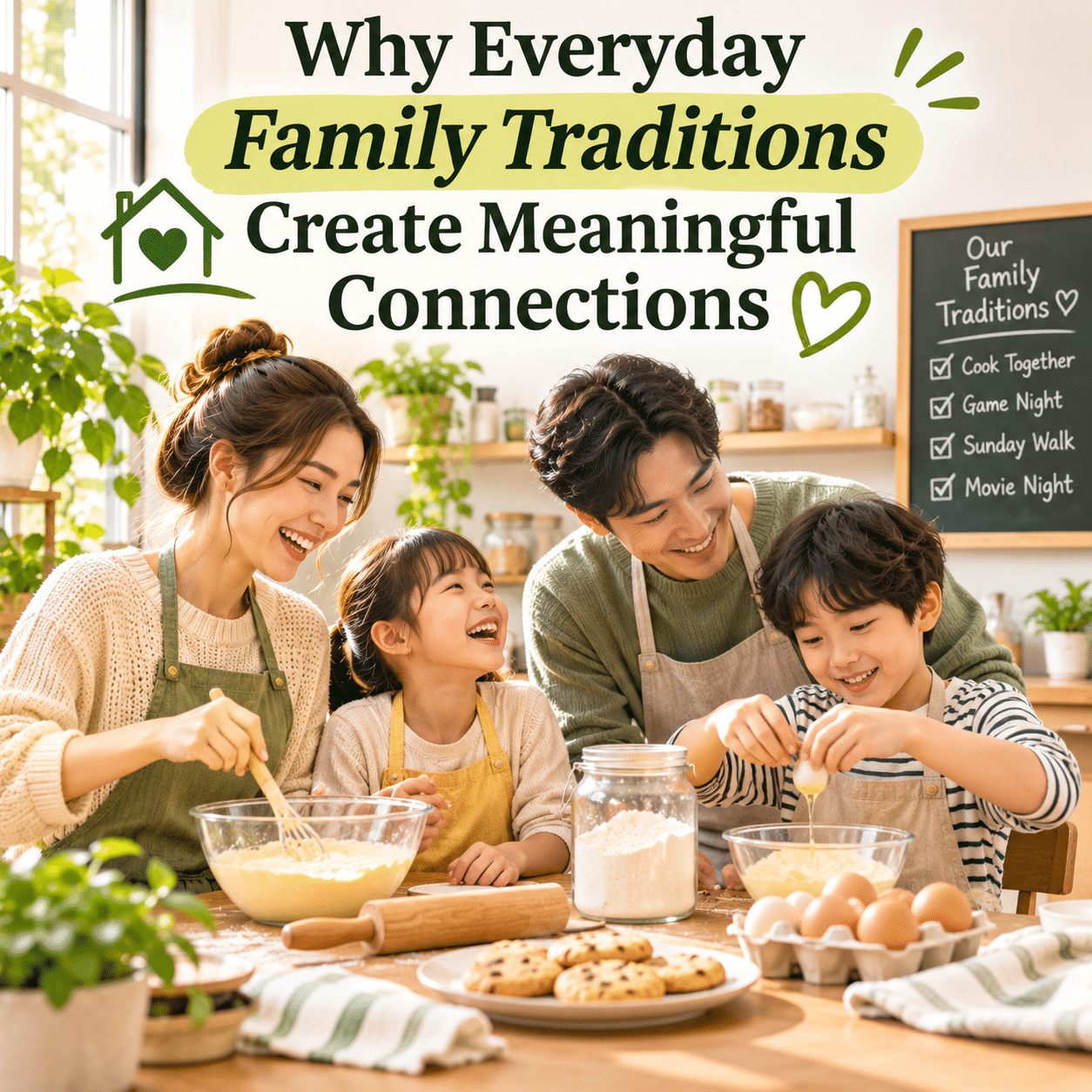
Family traditions are often associated with holidays, birthdays, anniversaries, and other special occasions. These celebrations can create lasting memories, but some of the most meaningful family traditions are much simpler. They happen during ordinary mornings, familiar evenings, shared meals, weekend activities, and small moments that gradually become part of everyday life.
A family might enjoy breakfast together on Sunday mornings, prepare a favorite meal at the end of the week, take an evening walk, or share stories before bedtime. Another household may have a tradition of playing board games, caring for plants together, celebrating small accomplishments, or gathering in the living room for a regular conversation.
These activities may seem ordinary when viewed individually. Their significance often develops through repetition, familiarity, and the experiences people associate with them.
Everyday family traditions provide opportunities for connection without requiring elaborate planning or expensive celebrations. They create familiar moments when household members can spend time together, express care, share responsibilities, and participate in something that feels uniquely their own.
Traditions can also help establish a sense of continuity. As family members grow older, routines change, and living arrangements evolve, familiar activities may provide reminders of shared experiences and relationships.
However, meaningful traditions do not need to follow a single model. Families differ in size, structure, culture, schedules, interests, and personal preferences. A tradition that works well for one household may feel inconvenient or unnecessary in another.
The most valuable traditions are generally those that fit naturally into everyday life, encourage willing participation, and remain flexible enough to accommodate changing circumstances.
Understanding why everyday family traditions matter can help households create opportunities for meaningful connection while respecting individual needs, practical responsibilities, and the natural changes that occur over time.
1. Understanding What Makes an Everyday Family Tradition
An everyday family tradition is a recurring activity, practice, or shared experience that holds particular meaning for the people involved.
Unlike an ordinary task performed only for practical reasons, a tradition often carries an additional sense of familiarity, enjoyment, or shared identity.
For example, preparing dinner is a routine household responsibility. Preparing a favorite family recipe together every Friday evening may become a tradition.
Similarly, walking to a nearby park is an ordinary activity. Taking the same family walk every Sunday morning may become a meaningful shared ritual.
The difference is not necessarily the activity itself.
It is the significance that household members attach to repeating it.
Traditions may be daily, weekly, monthly, seasonal, or connected to particular circumstances.
They do not need formal rules or long histories.
A simple activity can gradually become a tradition when people look forward to it and recognize it as part of their shared life.
2. Why Small Repeated Moments Can Become Meaningful
Meaningful relationships are often shaped by repeated everyday experiences rather than isolated grand occasions.
A brief conversation during breakfast may seem unremarkable.
However, when household members regularly make time to listen to one another, these moments can become familiar opportunities for communication.
The same principle applies to shared walks, cooking sessions, games, and quiet evening activities.
Repetition can create recognizable patterns that people associate with companionship and belonging.
The emotional meaning of these activities may grow as they become connected to memories, personal stories, and changes in family life.
Not every repeated activity becomes meaningful automatically.
Its value depends partly on whether participants experience it positively and feel that their involvement matters.
A simple tradition can become significant because it creates a dependable opportunity for connection.
3. The Relationship Between Traditions and Belonging
Belonging involves feeling accepted, recognized, and included within a group.
Family traditions can contribute to this experience by creating activities that household members identify as something they share.
A family may have a particular way of celebrating achievements, preparing weekend meals, or welcoming someone home after a long journey.
These practices can become familiar expressions of togetherness.
They may also help individuals feel that they have a place within the household.
However, belonging should not depend on participating in every tradition.
People have different interests, abilities, and needs.
A supportive family allows reasonable flexibility and avoids treating occasional absence as a lack of affection.
Traditions are most constructive when they create opportunities for inclusion rather than obligations that cause unnecessary pressure.
4. How Traditions Help Build Shared Family Identity
Every household develops its own combination of habits, preferences, stories, and ways of spending time.
Some families enjoy outdoor activities.
Others connect through cooking, music, reading, games, gardening, or creative projects.
Over time, recurring activities can become part of how family members describe their shared experiences.
Someone may remember that their household always prepared a particular breakfast on weekends.
Another may associate family life with evening walks or conversations around the dining table.
These memories can contribute to a sense of shared identity.
Family identity does not require everyone to have identical interests or personalities.
Instead, traditions provide common reference points within a household that may contain many individual differences.
5. Why Consistency Can Support Family Connection
Consistency makes recurring activities easier to recognize and anticipate.
When family members know that a shared activity usually happens at a particular time, they may find it easier to plan around it.
For example, a regular Sunday breakfast can provide an opportunity to gather without requiring a new arrangement every week.
Predictability can also reduce uncertainty about when people will spend time together.
However, consistency should not become inflexibility.
Work obligations, illness, travel, school activities, and personal needs may occasionally interrupt a tradition.
A missed gathering does not erase its meaning.
The purpose of consistency is to make connection easier, not to create rigid expectations that are difficult to maintain.
6. The Emotional Value of Familiar Experiences
Familiar activities can become associated with comfort, enjoyment, and shared memories.
A particular recipe may remind someone of childhood.
A favorite board game may bring back memories of family gatherings.
An evening conversation may become a welcome transition after a busy day.
These associations can make ordinary activities feel personally meaningful.
However, emotional experiences differ.
Some people may find comfort in repetition, while others prefer variety.
Families should remain attentive to these preferences.
A meaningful tradition does not need to produce the same emotional response in every participant.
Its value may lie in offering a shared opportunity that people can experience in their own ways.
7. Shared Meals as Everyday Family Traditions
Meals are among the most accessible opportunities for recurring family activities.
A shared breakfast, weekend lunch, or occasional family dinner can provide time for conversation and companionship.
The meal does not need to be elaborate.
A simple homemade dish, familiar recipe, or relaxed gathering around the table may be enough.
Household members can participate by preparing ingredients, setting the table, serving food, or cleaning afterward.
Shared meals can also become opportunities to discuss plans, exchange stories, and recognize everyday accomplishments.
However, schedules and dietary needs vary.
Families should avoid assuming that everyone must eat together at every meal.
A manageable recurring gathering may be more sustainable than an unrealistic daily requirement.
8. The Meaning of Cooking Together
Cooking can become a family tradition because it combines practical work with opportunities for interaction.
Preparing a familiar dish may encourage conversation, cooperation, and the sharing of personal knowledge.
Children can participate in age-appropriate tasks under suitable supervision.
Adults may exchange techniques or adapt recipes according to preferences.
Cooking together can also preserve memories associated with particular foods.
A recipe may be passed between generations or gradually modified to reflect changing tastes.
The experience does not need to produce a perfect meal.
Its meaning often comes from participation, shared effort, and the familiarity of preparing something together.
Kitchen safety, dietary requirements, and individual abilities should always be considered.
9. Morning Traditions That Create a Positive Start
Morning routines are often shaped by work, school, and household responsibilities.
However, small shared activities may create opportunities for connection before the day becomes busy.
Examples include preparing breakfast together, greeting one another over a warm drink, or sharing a few minutes of conversation.
Families with young children may develop familiar morning songs or simple preparation rituals.
Other households may prefer quiet companionship.
Morning traditions should be realistic.
A household with different waking times may find that a daily gathering is impractical.
In such cases, a weekend morning tradition may be more suitable.
The goal is to create a pleasant shared moment rather than add another demanding task to the schedule.
10. Evening Traditions That Encourage Togetherness
Evenings often provide opportunities to reconnect after separate daytime activities.
A family might enjoy a short walk, share highlights from the day, read together, or spend time in a comfortable common area.
These activities can become familiar transitions into quieter household routines.
Evening traditions should respect individual needs for rest and privacy.
Some people may want conversation immediately after returning home, while others prefer time to unwind first.
A flexible arrangement can accommodate both.
For example, household members may gather after dinner rather than immediately upon arriving home.
A meaningful evening tradition creates space for connection without requiring constant interaction.
11. Weekend Traditions and Shared Leisure
Weekends can provide opportunities for activities that are difficult to fit into ordinary weekdays.
Families may visit a local park, prepare a special breakfast, play games, work on a hobby, or explore a nearby neighborhood.
A weekend tradition does not require travel or significant spending.
A regular afternoon spent gardening or watching a favorite family film can become equally familiar.
The most suitable activity depends on household interests and schedules.
Families should also preserve time for rest, personal commitments, and independent activities.
A tradition should contribute to the weekend rather than consume every available hour.
12. The Role of Conversation in Family Traditions
Conversation is a central part of many meaningful household rituals.
A regular opportunity to talk can help family members exchange experiences, discuss plans, and learn about one another’s interests.
The conversation does not need to be serious.
Humorous stories, everyday observations, and simple questions can all contribute.
Some families enjoy sharing one memorable moment from the day.
Others prefer informal discussions during meals or walks.
Participation should remain comfortable.
Not everyone wants to discuss personal experiences immediately or in front of a group.
Respectful listening and freedom to decline certain topics are important.
A conversation tradition works best when it creates opportunities to be heard without making people feel interrogated.
13. How Family Traditions Support Communication
Communication often becomes easier when households have familiar opportunities to interact.
Regular shared activities can create natural moments for discussing everyday matters.
For example, preparing dinner together may allow a conversation to develop without requiring a formal family meeting.
A weekly gathering may provide time to coordinate upcoming plans.
However, traditions do not automatically resolve communication difficulties.
Their usefulness depends on whether participants listen respectfully, allow different perspectives, and respond thoughtfully.
A recurring activity should not become a setting for repeated criticism or unwanted questioning.
Positive communication requires attention to the quality of interaction, not simply the frequency of gathering.
14. Creating Traditions Around Reading and Stories
Reading and storytelling can become meaningful traditions for households with different ages and interests.
Parents may read bedtime stories with young children.
Family members may share favorite books or discuss something interesting they have learned.
Older relatives may tell stories about earlier experiences.
These activities can create opportunities for imagination, conversation, and shared understanding.
The tradition can also evolve.
A child who once listened to bedtime stories may eventually enjoy reading independently or recommending books to others.
Not every family member needs to enjoy the same genre.
The shared element may simply be making time for stories and exchanging ideas.
15. Family Game Nights and Playful Connection
Games can create opportunities for laughter, cooperation, friendly competition, and shared attention.
Board games, card games, puzzles, and simple group activities may become recurring family traditions.
The most suitable games depend on participants’ ages, abilities, and preferences.
Some households enjoy competitive games, while others prefer cooperative activities.
Rules should be explained clearly, and younger participants may need appropriate support.
The goal is shared enjoyment rather than constant winning.
If a particular game regularly creates frustration, families can choose a different activity.
A successful game tradition should remain welcoming and adaptable.
16. Outdoor Traditions and Time Together
Outdoor activities can become familiar ways for families to spend time together.
Walking, gardening, visiting parks, observing nature, and enjoying suitable recreational activities may provide opportunities for conversation and shared experiences.
A regular neighborhood walk can become a simple tradition.
Families may also enjoy observing seasonal changes or visiting a favorite outdoor location.
Activities should reflect weather conditions, accessibility, safety, and individual physical abilities.
Not every household member needs to participate in the same level of activity.
A tradition can remain meaningful when it allows different forms of involvement.
Outdoor family time should be enjoyable rather than treated as a demanding performance goal.
17. How Creative Activities Become Family Traditions
Creative activities can provide opportunities for personal expression and collaboration.
Families may draw, paint, craft, decorate, make handmade cards, or work on small projects together.
A recurring creative afternoon can become a tradition even when the finished projects are simple.
The process often matters more than the result.
Participants may learn techniques, exchange ideas, or enjoy working beside one another.
Creative traditions should accommodate different abilities and interests.
Someone may prefer organizing supplies while another enjoys making the artwork.
The goal is to create a welcoming environment where participation feels meaningful.
18. Celebrating Small Everyday Achievements
Not every celebration needs to mark a major milestone.
Families may develop traditions around recognizing small accomplishments, completed projects, or personal progress.
A household might share positive news during a weekly meal.
Children may enjoy describing something new they have learned.
Adults may acknowledge efforts that are often overlooked.
Recognition should be sincere and proportionate.
A tradition focused only on measurable achievements may unintentionally create pressure.
It can be equally meaningful to appreciate kindness, persistence, cooperation, or thoughtful gestures.
The purpose is to notice everyday contributions rather than turn family life into a competition.
19. The Importance of Family Humor
Shared humor can become part of a household’s identity.
Families often develop familiar jokes, playful expressions, or amusing stories that are remembered over time.
A recurring game, funny greeting, or lighthearted activity may become a tradition.
Humor can make ordinary moments enjoyable and provide opportunities for connection.
However, it should remain considerate.
Jokes that embarrass, exclude, or repeatedly target one person may undermine the positive purpose of a tradition.
Family humor is most constructive when participants feel comfortable and included.
A small shared laugh can become a meaningful part of everyday life without requiring an elaborate activity.
20. Traditions That Encourage Cooperation
Some family traditions involve working toward a shared practical goal.
Household members may prepare meals, care for a garden, organize a common area, or complete a seasonal project together.
These activities can create opportunities for cooperation and shared responsibility.
However, routine chores should not automatically be presented as enjoyable traditions.
People may experience household work differently.
A cooperative activity becomes more meaningful when responsibilities are fair and participants understand its purpose.
For example, preparing a weekend meal together may combine practical work with conversation and shared enjoyment.
The goal is to encourage participation without disguising unequal labor as family togetherness.
21. How Traditions Help Children Understand Family Life
Children often learn about household expectations through repeated experiences.
Familiar activities can help them understand how family members spend time together, cooperate, and express care.
A bedtime reading tradition may provide a recognizable transition toward sleep.
A weekend cooking activity may introduce practical skills.
A regular family game may offer opportunities to practice taking turns and following rules.
However, children differ in age, temperament, and developmental needs.
Traditions should be adapted accordingly.
They should also leave room for children to express preferences and gradually participate in decisions.
The objective is to provide positive shared experiences rather than enforce participation regardless of comfort.
22. Including Teenagers in Family Traditions
As children grow into teenagers, their interests, schedules, and need for independence often change.
Traditions that were enjoyable during childhood may no longer feel appropriate.
Families can respond by inviting teenagers to help shape activities.
A bedtime story tradition might evolve into a weekly film discussion.
A childhood craft afternoon may become a shared cooking project or occasional outing.
Teenagers may also prefer shorter or less frequent gatherings.
Respecting these preferences can help traditions remain relevant.
Family connection should not require teenagers to abandon reasonable privacy or personal interests.
Flexible traditions are more likely to accommodate changing relationships.
23. Traditions Between Adults in the Same Household
Family traditions are not limited to households with children.
Couples, siblings, adult relatives, and other family members may develop meaningful recurring activities.
A couple might prepare a favorite breakfast on weekends.
Adult siblings may maintain a monthly meal tradition.
Relatives sharing a home may enjoy gardening, cooking, or regular conversations.
These activities provide opportunities to connect outside practical responsibilities.
However, adults may have different preferences for social interaction.
Traditions should respect individual schedules and personal space.
A small, manageable activity can be more meaningful than an elaborate plan that becomes difficult to sustain.
24. The Role of Grandparents and Older Relatives
Older family members may contribute memories, knowledge, skills, and familiar practices to household traditions.
They may share recipes, stories, songs, gardening techniques, or other activities learned over time.
These experiences can create opportunities for connection across generations.
However, older adults should not be expected to participate in every activity or serve only as sources of family history.
Their current interests, preferences, and abilities matter equally.
A meaningful intergenerational tradition should allow everyone to contribute in ways that feel comfortable.
Activities may need adjustment for mobility, hearing, vision, or other practical considerations.
The goal is shared participation and respect across different life stages.
25. Preserving Family Stories Through Traditions
Family stories often become more meaningful when they are shared naturally.
A familiar recipe may lead to a conversation about where it originated.
A photograph may prompt memories of an earlier home.
A regular gathering may provide opportunities to discuss past experiences.
These stories can help family members understand aspects of their shared history.
However, not every memory is positive, and not everyone wishes to discuss personal experiences.
Storytelling should remain voluntary and respectful.
Families may preserve selected memories through photographs, written notes, recipe collections, or recordings made with permission.
The value lies in maintaining meaningful connections rather than documenting every detail.
26. Cultural Traditions in Everyday Home Life
Family traditions often reflect cultural backgrounds and community practices.
Food, language, music, greetings, celebrations, and everyday customs may become part of household life.
Some traditions are passed down through generations.
Others are adapted as families move, grow, or encounter new influences.
Cultural traditions can provide opportunities to share knowledge and maintain meaningful connections with heritage.
However, cultural identity is not fixed or identical within every family.
Household members may interpret traditions differently.
A respectful approach allows discussion, adaptation, and voluntary participation while recognizing the significance that particular practices hold for different individuals.
27. Creating New Traditions Without Losing Old Ones
Families do not need to choose between preserving familiar traditions and creating new ones.
As circumstances change, households may retain some activities while introducing others.
A family may continue preparing a traditional holiday dish while developing a new weekly walking routine.
A childhood tradition may evolve into a different activity as children become adults.
Change does not necessarily diminish the meaning of earlier experiences.
New traditions can reflect current interests, living arrangements, and practical needs.
The most useful approach is to preserve what remains meaningful while allowing space for new forms of connection.
28. Family Traditions in Small Households
Meaningful traditions do not depend on having a large family.
Two people sharing a home may develop recurring activities that are just as significant as those in a larger household.
A parent and child might enjoy a weekly library visit.
A couple may prepare dinner together on a particular evening.
Adult relatives may share a regular afternoon conversation.
The scale of the activity is less important than its meaning to participants.
Small households may also find it easier to adapt traditions quickly.
A tradition can be simple, quiet, and personal while still contributing to a strong sense of connection.
29. Maintaining Traditions Across Different Homes
Not all family members live under the same roof.
Relatives may live in different neighborhoods, cities, or countries.
Shared traditions can still continue through planned visits, telephone calls, video conversations, letters, or other forms of communication.
For example, family members may exchange updates on a particular day each month.
They might prepare the same familiar recipe in different homes or share photographs of a recurring activity.
Distance may change the format of a tradition, but it does not necessarily eliminate its meaning.
The arrangement should remain practical across time zones, schedules, and communication preferences.
30. The Value of Simple and Affordable Traditions
Meaningful traditions do not require expensive purchases, elaborate decorations, or frequent travel.
Some of the most accessible activities use resources already available at home.
Examples include reading together, preparing simple meals, walking, playing familiar games, or sharing stories.
Low-cost traditions may be easier to repeat consistently.
They can also reduce pressure to make every gathering unusually impressive.
The value of a tradition should not be measured by the amount spent.
A comfortable conversation around the dining table may become more meaningful than an elaborate activity that creates financial stress.
Affordability and simplicity can support long-term sustainability.
31. Why Traditions Should Not Become Obligations
A tradition can lose its positive meaning when participation becomes excessively demanding.
Household members may feel pressured to attend every gathering, follow rigid rules, or maintain activities that no longer suit their circumstances.
This can create frustration rather than connection.
A healthy tradition should allow reasonable flexibility.
People may occasionally need rest, privacy, or time for other responsibilities.
Families should also be willing to reconsider activities that consistently create conflict.
The purpose of a tradition is to support meaningful relationships.
It should not become a measure of loyalty or affection.
Voluntary participation and mutual respect help preserve its value.
32. Respecting Different Personalities and Preferences
Family members do not always enjoy the same activities.
One person may love lively gatherings.
Another may prefer quiet conversation.
Some enjoy outdoor activities, while others prefer reading, cooking, or creative projects.
Traditions should consider these differences.
A family might alternate activities or choose something that allows different forms of participation.
For example, a shared creative afternoon could include drawing, organizing materials, or simply enjoying quiet companionship.
Not every person must participate in exactly the same way.
Recognizing individual preferences helps traditions remain inclusive without requiring everyone to become identical.
33. Balancing Traditions With Personal Space
Togetherness and personal independence are both important aspects of household life.
Family traditions create opportunities for shared experiences, but they should not eliminate time for individual interests.
A household may enjoy a regular weekend meal while allowing the rest of the day for personal activities.
A family game night might be followed by quiet time.
These arrangements help preserve balance.
Some household members may need more solitude than others.
Respecting personal boundaries does not weaken family traditions.
It can make shared activities more comfortable because participation occurs within reasonable expectations.
34. How Traditions Change During Busy Life Stages
Work commitments, education, caregiving, and other responsibilities can affect how often families spend time together.
A tradition that once occurred daily may become difficult to maintain.
Rather than abandoning it completely, families can adjust its frequency or format.
A nightly conversation might become a weekly gathering.
A long weekend outing may become a shorter neighborhood walk.
A shared meal may move to a different day.
The meaning of a tradition does not necessarily depend on maintaining an exact schedule forever.
Adaptation can help preserve connection while respecting practical limitations.
35. Traditions During Major Family Changes
Families experience transitions such as moving homes, welcoming new members, children growing older, retirement, and changes in living arrangements.
Familiar traditions may provide continuity during these periods.
For example, preparing a favorite meal in a new home may create a connection with earlier experiences.
Maintaining a regular call with relatives may help sustain relationships after a move.
However, major changes can also make certain traditions impractical or emotionally difficult.
Families should remain sensitive to individual circumstances.
Sometimes preserving a tradition is comforting.
At other times, creating a new one may be more appropriate.
Both approaches can be meaningful.
36. Remembering Loved Ones Through Family Traditions
Some traditions become associated with relatives or friends who are no longer present.
Preparing a familiar recipe, visiting a meaningful place, or sharing a remembered story may provide opportunities to honor those connections.
However, experiences of grief and remembrance vary.
An activity that comforts one person may feel difficult for another.
Participation should remain voluntary.
Families can discuss whether a tradition should continue, change, or be set aside.
There is no single correct way to remember someone.
The most respectful approach recognizes individual feelings and allows traditions to evolve naturally.
37. Creating Traditions Around Gratitude and Appreciation
Some households develop recurring ways to express appreciation.
Family members may share something they enjoyed during the week or acknowledge a thoughtful gesture.
These activities can encourage people to notice positive experiences.
However, gratitude should not become a requirement to appear happy or ignore genuine difficulties.
People should remain free to discuss disappointment, frustration, or challenging experiences.
A meaningful appreciation tradition allows sincere expression.
It may involve thanking someone for preparing a meal, recognizing shared effort, or simply noticing a pleasant moment.
Small expressions of appreciation can become familiar parts of household communication.
38. Using Technology to Support Family Traditions
Technology can help families maintain recurring activities when members cannot gather in person.
Video calls, shared photo albums, digital calendars, and messaging groups may support communication across different locations.
Families might exchange photographs from a weekly activity or schedule a regular online conversation.
However, digital traditions should respect privacy and personal boundaries.
Not everyone wants photographs or personal information shared widely.
Technology should support meaningful interaction rather than create constant expectations for immediate responses.
A short, intentional conversation may be more valuable than frequent messages that feel obligatory.
The best digital arrangement is one that suits participants’ preferences and circumstances.
39. Recognizing When a Tradition Needs to Change
Not every tradition remains suitable forever.
Children grow older, interests change, schedules become more demanding, and family relationships evolve.
Signs that a tradition may need adjustment include repeated scheduling difficulties, declining interest, unnecessary conflict, or participation that feels increasingly forced.
Families can discuss what participants still enjoy and what has become inconvenient.
Sometimes a small change is enough.
A weekly gathering may become monthly.
An activity may be shortened or replaced with something more accessible.
Changing a tradition does not erase the memories associated with it.
Flexibility can help preserve its underlying purpose.
40. Building Traditions That Last Through Everyday Life
Sustainable family traditions are usually simple enough to repeat and flexible enough to adapt.
They reflect genuine interests rather than expectations about what a family should do.
A successful tradition does not require perfect attendance, elaborate preparation, or identical enthusiasm from every participant.
Instead, it creates a recognizable opportunity for shared experience.
Households can begin with one manageable activity and observe how people respond.
If the activity feels enjoyable and meaningful, it may gradually become part of the family’s rhythm.
Over time, familiar moments can accumulate into shared memories.
The lasting value of a tradition comes not from its complexity, but from the care, attention, and connection that people bring to it.
Practical Reference: Everyday Family Traditions and Their Meaning
Different traditions can support different forms of household connection.
| Type of Tradition | Everyday Examples | Potential Value | Practical Considerations |
|---|---|---|---|
| Shared Meals | Sunday breakfast, weekly family dinner | Conversation and togetherness | Dietary needs, schedules |
| Morning Rituals | Breakfast greetings, shared tea | Familiarity and connection | Different waking times |
| Evening Rituals | Short walks, bedtime stories | Shared time and winding down | Rest and privacy |
| Weekend Activities | Gardening, games, local outings | Leisure and shared experiences | Weather, accessibility, cost |
| Creative Traditions | Craft afternoons, cooking projects | Collaboration and self-expression | Supplies, safety, interests |
| Storytelling | Family memories, reading sessions | Shared knowledge and continuity | Privacy and voluntary participation |
| Appreciation Rituals | Recognizing kindness, sharing positive moments | Thoughtful communication | Avoid forced positivity |
| Seasonal Traditions | Decorating, seasonal meals | Continuity and shared identity | Time and budget |
| Long-Distance Traditions | Regular calls, shared photo updates | Maintaining relationships | Time zones and availability |
| Intergenerational Traditions | Recipes, gardening, music | Sharing skills and experiences | Different abilities and preferences |
These examples are starting points rather than rules. The most meaningful traditions are those that fit the people involved.
A Step-by-Step Guide to Creating Everyday Family Traditions
Step 1: Identify Activities the Family Already Enjoys
Begin with familiar activities that household members naturally appreciate.
These may include cooking, walking, reading, playing games, or spending quiet time together.
A tradition is easier to maintain when it grows from genuine interests.
Step 2: Choose One Simple Activity
Avoid beginning with an elaborate plan.
Select something that requires manageable preparation and fits ordinary household life.
Step 3: Find a Practical Time
Consider work schedules, school commitments, rest, and other responsibilities.
The activity might happen daily, weekly, or monthly.
Choose a frequency that feels sustainable.
Step 4: Invite Participation
Explain the idea and ask household members what they think.
Allow reasonable suggestions and adjustments.
Participation should feel welcoming rather than compulsory.
Step 5: Keep Expectations Realistic
A tradition does not need to happen perfectly every time.
Plans may change because of illness, travel, or unexpected responsibilities.
Step 6: Make the Experience Enjoyable
Focus on shared attention, conversation, and participation.
Avoid turning the activity into a performance or competition.
Step 7: Allow Individual Differences
Not everyone needs to participate in exactly the same way.
Adapt tasks and activities to different ages, abilities, and interests.
Step 8: Notice What Becomes Meaningful
Observe which parts of the activity people enjoy and remember.
A small detail may gradually become the most recognizable part of the tradition.
Step 9: Preserve Memories Naturally
Photographs, recipes, notes, or stories may help preserve meaningful experiences when participants are comfortable with them.
Documentation should not become more important than the activity itself.
Step 10: Let the Tradition Evolve
Review the arrangement as circumstances change.
Keep what remains meaningful and adjust what no longer fits.
Everyday Family Tradition Ideas for Different Household Situations
| Household Situation | Simple Tradition Idea | Why It May Work |
|---|---|---|
| Couple | Weekend breakfast together | Creates recurring time for conversation |
| Family With Young Children | Bedtime reading ritual | Provides familiar shared storytelling |
| Family With Teenagers | Weekly meal chosen together | Allows growing independence and input |
| Multigenerational Household | Shared recipe preparation | Encourages exchange of skills and stories |
| Adult Siblings | Monthly lunch or video call | Maintains connection despite busy schedules |
| Parent and Child | Regular park visit or creative activity | Provides shared experiences |
| Family Living Apart | Scheduled family conversation | Supports long-distance relationships |
| Busy Working Household | Short weekly gathering | More manageable than daily expectations |
| Household With Different Interests | Rotating activity choices | Recognizes individual preferences |
| Family on a Limited Budget | Walks, games, or home cooking | Supports connection without major expenses |
A tradition should be chosen because it suits the household, not because it appears impressive or resembles another family’s activities.
How Family Traditions Can Evolve Across Life Stages
| Life Stage | Possible Tradition | How It May Evolve |
|---|---|---|
| Early Childhood | Bedtime stories | Independent reading and book discussions |
| School Years | Weekend craft sessions | More complex creative projects |
| Teenage Years | Family game nights | Shared meals or activities chosen together |
| Young Adulthood | Regular family dinners | Occasional gatherings or scheduled calls |
| Adult Family Life | Holiday cooking | Sharing recipes across households |
| Later Adulthood | Family storytelling | Recorded memories or intergenerational conversations |
| Long-Distance Living | Occasional visits | Recurring calls and shared digital activities |
The form of a tradition can change while its underlying purpose remains meaningful.
Seven Simple Family Traditions That Require Little Preparation
1. The Weekly Shared Breakfast
Choose one morning when household members can enjoy a relaxed breakfast together.
Keep the meal simple and focus on conversation.
2. The Evening Walk
Take a short walk together when schedules, weather, and physical abilities allow.
Use the time for conversation or quiet companionship.
3. The Family Recipe Tradition
Prepare a familiar dish together on a recurring basis.
Allow family members to contribute ideas or variations.
4. The Story-Sharing Moment
Create an occasional opportunity to share an interesting experience, memory, or observation.
Participation should remain voluntary.
5. The Game or Puzzle Session
Choose a game or puzzle that suits the participants.
Focus on enjoyment rather than competition.
6. The Creative Afternoon
Spend time drawing, crafting, gardening, or working on another shared project.
Different participants can contribute in different ways.
7. The Appreciation Moment
Recognize thoughtful gestures, shared efforts, or pleasant experiences.
Keep the exchange sincere and informal.
These traditions can be adapted to different household sizes, schedules, and preferences.
Common Mistakes When Creating Family Traditions
Making Traditions Too Complicated
Activities that require extensive preparation may become difficult to maintain.
Begin with manageable ideas.
Expecting Perfect Attendance
Family members have individual responsibilities and needs.
Occasional absence should not automatically be interpreted as a lack of care.
Choosing Activities That Only One Person Enjoys
A tradition should consider the preferences of those involved.
Invite suggestions and remain willing to adapt.
Turning Traditions Into Obligations
Excessive pressure can undermine enjoyment.
Participation should remain respectful and reasonably flexible.
Spending More Than the Household Can Comfortably Afford
Meaningful experiences do not require expensive purchases or elaborate celebrations.
Choose activities that fit the household budget.
Ignoring Different Ages and Abilities
A suitable activity for young children may not appeal to teenagers or older adults.
Adapt traditions as family circumstances change.
Focusing Too Much on Photographs
Documenting memories can be enjoyable, but it should not interfere with participation.
Allow some moments to remain private and unrecorded.
Comparing Family Traditions With Others
Different households have different cultures, resources, and interests.
There is no universal standard for meaningful traditions.
Refusing to Change an Outdated Tradition
An activity may lose relevance as schedules and preferences evolve.
Adaptation can preserve connection.
Forgetting the Purpose of the Tradition
The goal is meaningful shared experience.
A tradition should support relationships rather than become another task to complete.
Everyday Family Traditions Checklist
Use this checklist to evaluate whether a tradition is practical, welcoming, and meaningful.
Choosing a Tradition
- The activity reflects genuine household interests.
- Participants have opportunities to express preferences.
- The tradition fits the available time and resources.
- Costs are manageable.
- Different ages and abilities are considered.
- The activity does not depend on elaborate preparation.
Encouraging Connection
- Participants have opportunities for meaningful interaction.
- Everyone is treated respectfully.
- Conversation and participation remain comfortable.
- Individual differences are recognized.
- The tradition encourages shared enjoyment rather than competition.
- People can participate in different ways when appropriate.
Maintaining Flexibility
- Occasional schedule changes are accepted.
- Personal space and rest are respected.
- Participation is not used as a measure of affection.
- The activity can be adjusted when circumstances change.
- Household members can suggest improvements.
- The tradition remains enjoyable rather than burdensome.
Preserving Meaning
- The activity has a purpose beyond simply following a schedule.
- Shared memories can develop naturally.
- Cultural or family significance is respected where relevant.
- Privacy is considered when documenting experiences.
- Traditions can evolve across life stages.
- The focus remains on connection, care, and shared experience.
A tradition does not need to satisfy every item perfectly. The checklist is intended to encourage thoughtful planning rather than create additional household expectations.
Frequently Asked Questions
1. What are everyday family traditions?
Everyday family traditions are recurring activities or practices that hold shared meaning for household members. Examples include weekly meals, evening walks, reading sessions, game nights, and familiar weekend activities.
2. Why are family traditions important?
Family traditions can provide opportunities for connection, communication, shared memories, and a sense of belonging. Their value depends on how participants experience them rather than how elaborate they are.
3. Do family traditions have to be passed down through generations?
No. Families can create new traditions at any time. A simple recurring activity may gradually become meaningful through shared experiences.
4. Can small daily habits become family traditions?
Yes. A familiar breakfast conversation, bedtime story, or evening walk can become a tradition when household members attach shared meaning to it.
5. Do family traditions need to happen every day?
No. Traditions may occur daily, weekly, monthly, seasonally, or during particular circumstances. A sustainable frequency is more important than constant repetition.
6. How can busy families maintain traditions?
Choose manageable activities, coordinate schedules, and allow flexibility. A short weekly gathering may be easier to maintain than an elaborate daily commitment.
7. Are family traditions important for children?
Traditions can provide children with familiar shared experiences and opportunities to participate in household life. Activities should be age-appropriate and responsive to individual needs.
8. How can families include teenagers in traditions?
Invite teenagers to suggest activities, respect their growing independence, and adapt traditions to changing interests. Participation should remain reasonably flexible.
9. Can couples have meaningful family traditions?
Yes. Couples may develop traditions around shared meals, walks, hobbies, conversations, or other recurring activities.
10. What are inexpensive family tradition ideas?
Examples include home-cooked meals, board games, neighborhood walks, reading together, gardening, storytelling, and simple creative projects.
11. How can families maintain traditions when living far apart?
Regular calls, shared recipes, photo exchanges, planned visits, and recurring online activities can help maintain connections across different locations.
12. Should family traditions ever change?
Yes. Traditions can evolve as people grow older, schedules change, and interests develop. Adjusting an activity does not erase its earlier meaning.
13. What if some family members do not enjoy a tradition?
Discuss their preferences and consider modifying the activity. Meaningful connection should not depend on forcing everyone to participate in the same way.
14. Can family traditions help preserve cultural heritage?
Yes. Recurring practices involving food, language, music, stories, and customs can provide opportunities to share cultural knowledge and maintain meaningful connections with heritage.
15. What makes a family tradition meaningful?
A tradition becomes meaningful when participants associate it with positive shared experiences, personal significance, familiarity, or connection. Its value comes from the relationships and memories involved rather than its complexity.
Final Thoughts
Everyday family traditions remind us that meaningful connections do not always depend on extraordinary occasions.
A shared breakfast, a familiar evening walk, a favorite recipe, or a weekly conversation may appear simple, but repeated experiences can gradually become important parts of family life.
These traditions provide opportunities for people to spend time together, exchange stories, express appreciation, and develop shared memories.
They can also contribute to a sense of continuity as household members grow older and circumstances change.
However, the most meaningful traditions are not necessarily the most elaborate or the most frequently repeated.
They are the ones that reflect genuine interests, encourage respectful participation, and fit comfortably into everyday routines.
Families differ in size, culture, schedules, resources, and personal preferences. A tradition that works beautifully for one household may be unsuitable for another.
For this reason, flexibility is essential.
Traditions should be allowed to evolve as children mature, adults take on new responsibilities, relatives move away, and household needs change.
Preserving connection is more important than preserving every detail of an activity.
A family may eventually forget the exact meal served during a particular gathering or the rules of a favorite childhood game. Yet the memories of conversation, laughter, cooperation, and shared attention may remain meaningful.
Ultimately, everyday traditions are valuable because they create opportunities to recognize and appreciate the people who share our lives.
The most meaningful family traditions are often built from ordinary moments repeated with care—small experiences that gradually become lasting memories of connection, belonging, and home.