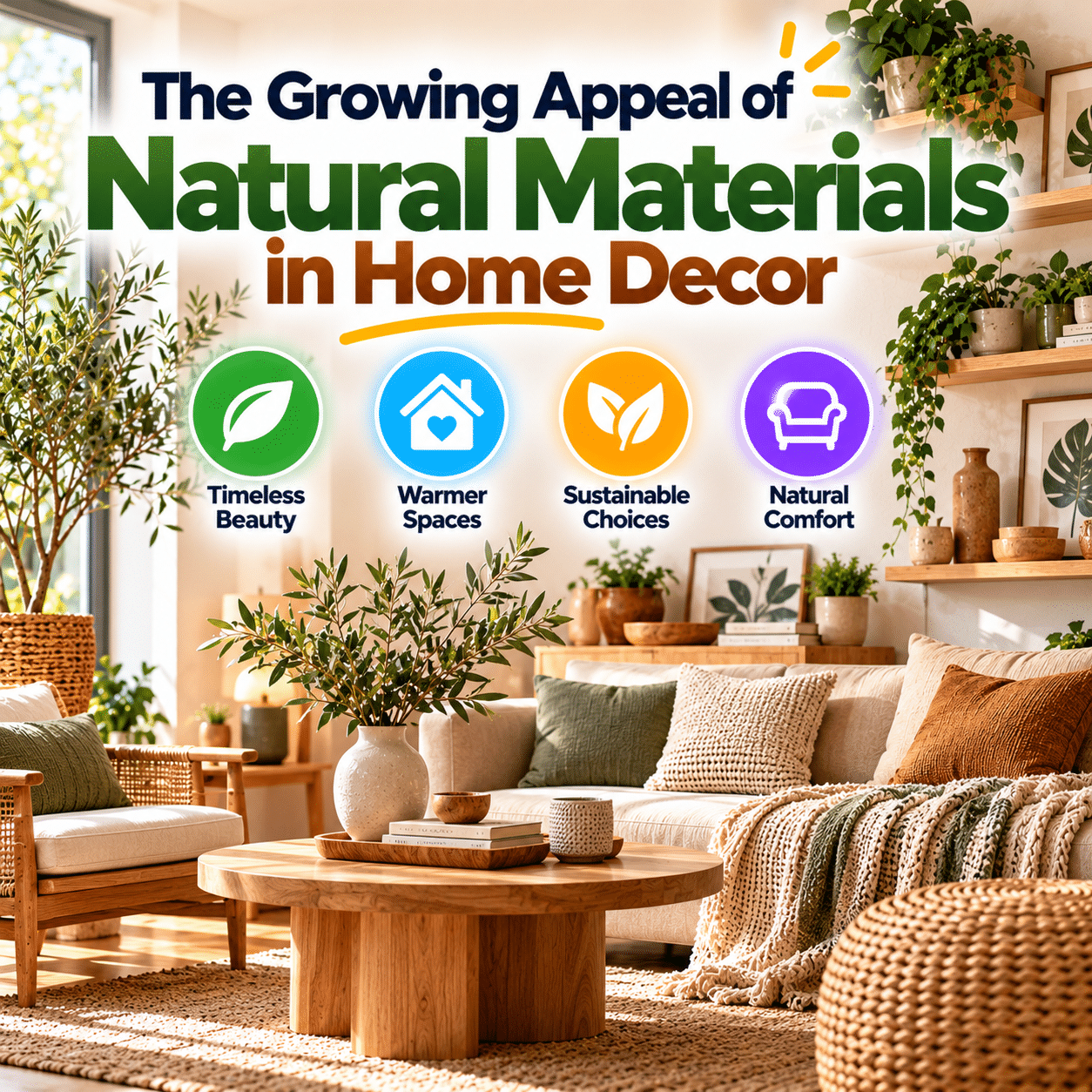
A room can feel welcoming long before anyone notices its decorative details.
The grain of a wooden table, the texture of a linen curtain, the irregular surface of a ceramic vase, or the softness of a wool rug can influence how a space looks and feels.
These qualities help explain the enduring appeal of natural materials in home decor.
Wood, stone, bamboo, rattan, cotton, linen, wool, and clay-based products have been used in homes for generations. Their presence in contemporary interiors is not a completely new development.
What continues to evolve is how these materials are combined with modern furniture, practical layouts, and changing expectations about comfort, durability, and responsible consumption.
Natural materials can introduce texture, visual warmth, and distinctive character without requiring elaborate decoration.
However, natural does not automatically mean sustainable, safe, durable, or suitable for every room.
A wooden surface may require protection from moisture. A woven basket may be difficult to clean. Some natural fibers need specialized care, while certain stone products require sealing or careful maintenance.
Understanding the strengths and limitations of natural materials can help households create interiors that are attractive, practical, and comfortable over time.
1. What Are Natural Materials in Home Decor?
Natural materials are substances obtained from plants, animals, or geological sources and used in furniture, textiles, decorative objects, and interior finishes.
They may be used in relatively recognizable forms or processed into finished products.
Plant-Based Materials
Common examples include wood, bamboo, rattan, cork, cotton, linen, and jute.
These materials appear in furniture, flooring, baskets, upholstery, curtains, and decorative accessories.
Animal-Derived Materials
Wool, silk, leather, and certain other fibers or materials come from animals.
Their suitability depends on the product, sourcing, processing, and household preferences.
Mineral and Earth-Based Materials
Stone, clay, and related materials are used in tiles, countertops, pottery, and decorative objects.
Natural Does Not Mean Unprocessed
A wooden table may contain adhesives, coatings, or engineered components.
A linen curtain may be dyed or treated.
Ceramics are shaped and fired, often with glazes or other finishes.
The final product’s properties depend on both its source material and its manufacturing process.
This distinction is important when evaluating durability, maintenance, safety, and environmental claims.
2. Why Natural Materials Continue to Appeal to Homeowners
The appeal of natural materials involves more than appearance.
They can contribute to a room’s atmosphere, tactile qualities, and long-term usefulness.
Visual Warmth
Wood grain, woven fibers, and earthy colors can soften the appearance of highly uniform interiors.
Distinctive Texture
Natural materials often contain visible variation.
This can make a simple room feel more layered without requiring many decorative objects.
Versatility
Wood, linen, stone, and ceramics can complement contemporary, traditional, rustic, minimalist, and eclectic interiors.
Connection to Craftsmanship
Certain materials are associated with woodworking, weaving, pottery, and other established crafts.
Potential Longevity
Well-made furniture and accessories can remain useful for many years when maintained appropriately.
Personal Preference
Some people simply enjoy the appearance and feel of natural surfaces.
These qualities help explain why natural materials remain relevant across different design movements.
Their value lies in how well they support a particular home, not in following a universal decorating trend.
3. Wood Brings Warmth and Character to Interior Spaces
Wood is one of the most widely recognized natural materials in home decor.
It can be used in furniture, flooring, shelving, wall features, frames, and smaller accessories.
Visible Grain and Variation
Wood grain introduces patterns that differ between species and individual pieces.
This variation can make even simple furniture visually interesting.
Different Wood Tones
Light wood finishes may create an airy appearance.
Medium and darker finishes can add depth and contrast.
The best choice depends on the room’s lighting and existing colors.
Solid Wood and Engineered Wood
Solid wood products are made primarily from pieces of natural timber.
Engineered wood products may use wood fibers, particles, veneers, or layered construction.
Neither category is automatically superior in every application.
Performance depends on design, manufacturing quality, finishes, and intended use.
Moisture and Temperature Sensitivity
Wood can expand or contract as environmental conditions change.
Excessive moisture may cause swelling, staining, or other damage.
Maintenance
Follow the manufacturer’s cleaning instructions.
Avoid assuming that all wooden surfaces can tolerate the same cleaners, oils, or refinishing methods.
Practical Applications
Wooden tables, sideboards, picture frames, shelving, and decorative trays can introduce warmth without requiring a major renovation.
The most useful wooden pieces combine attractive construction with appropriate durability.
4. Bamboo Offers a Distinctive Plant-Based Design Option
Bamboo is a fast-growing group of grasses used in many household products.
Depending on processing and construction, it can be made into furniture components, panels, baskets, organizers, and decorative accessories.
A Clean, Natural Appearance
Bamboo products often have a light or warm tone that works well with restrained interiors.
Versatile Applications
Common uses include small furniture, trays, organizers, shelving components, and decorative objects.
Processing Matters
Bamboo products may be laminated, bonded, treated, or finished.
Their durability and environmental characteristics depend on these processes.
Moisture Considerations
Bamboo is not automatically waterproof.
Products intended for kitchens or bathrooms should be evaluated for the specific conditions they will encounter.
Sustainability Claims Require Context
Bamboo’s growth characteristics can be advantageous in some circumstances, but transportation, manufacturing, adhesives, land management, and product lifespan also influence environmental impact.
A bamboo label alone does not establish that a product is environmentally preferable.
Choose bamboo products based on construction quality, suitability, and credible sourcing information.
5. Rattan and Woven Materials Add Organic Texture
Rattan and other woven materials are often used to introduce texture into furniture and home accessories.
What Is Rattan?
Rattan comes from climbing palms and is used in furniture frames, weaving, and decorative products.
It should not be confused with every product marketed as wicker.
Wicker generally describes a weaving technique rather than one specific material.
Common Applications
Rattan and woven materials may appear in:
- Chairs and side tables.
- Baskets and storage accessories.
- Lampshades.
- Decorative trays.
- Cabinet panels.
- Wall decorations.
Why They Appeal
The woven structure creates visual depth and a handcrafted appearance.
These materials can complement both relaxed and contemporary interiors.
Maintenance Challenges
Open weaving can collect dust.
Some natural fibers may be affected by prolonged moisture exposure or unsuitable cleaning methods.
Indoor and Outdoor Suitability
Natural rattan and synthetic outdoor wicker products have different properties.
Do not assume that furniture designed for indoor use can tolerate outdoor weather.
Woven materials work best when their texture is balanced with practical maintenance requirements.
6. Linen Adds Relaxed Texture to Home Textiles
Linen is a textile made from flax fibers.
It is used in curtains, cushion covers, table linens, bedding, and upholstery.
Natural-Looking Texture
Linen often has a visible weave and relaxed appearance.
This can add softness to minimalist or contemporary interiors.
Breathability and Comfort
Linen textiles may feel comfortable in suitable applications, although performance depends on fabric weight, weave, and finishing.
Wrinkling Is Common
Linen tends to crease.
Some people appreciate this relaxed appearance, while others prefer smoother fabrics.
Care Requirements
Washing and drying instructions vary by product.
Some linen textiles may shrink or require special care.
Where Linen Works Well
Linen curtains can soften window areas.
Cushion covers and table textiles can introduce subtle texture without dominating a room.
Consider Fabric Blends
Some products combine linen with other fibers to modify texture, durability, or maintenance.
The material label should be checked rather than assuming every linen-look fabric is pure linen.
7. Cotton Remains a Practical and Versatile Textile
Cotton is widely used in home textiles because it can be woven or knitted into many different fabrics.
Common Uses
Cotton appears in bedding, towels, curtains, cushion covers, throws, and decorative textiles.
Different Fabric Constructions
Cotton products can vary greatly in softness, weight, absorbency, and durability.
These differences depend on yarn, weave, finishing, and manufacturing quality.
Easy Styling
Cotton textiles are available in many colors and patterns.
They can complement natural wood, stone, and woven accessories.
Maintenance
Some cotton products are machine washable, but care instructions should always be checked.
Shrinkage, fading, and wear depend on the specific product.
Environmental Considerations
Cotton cultivation and textile processing can require substantial resources.
Environmental performance varies with agricultural practices, manufacturing, product durability, and care.
Cotton’s natural origin should not be treated as proof of low environmental impact.
8. Wool and Other Natural Fibers Add Softness
Wool is commonly used in rugs, blankets, upholstery, and decorative textiles.
Its characteristics vary by fiber type, construction, and finishing.
Tactile Comfort
Wool textiles can introduce softness and a substantial feel.
Visual Texture
Woven, knitted, and tufted products offer different surface appearances.
Rugs and Throws
A wool rug may help define a seating area.
A throw can provide comfort while adding texture to a sofa or chair.
Cleaning Considerations
Some wool products require specialized cleaning.
Certain finishes or constructions may be unsuitable for frequent washing.
Household Preferences
Animal-derived materials may not suit every household’s ethical or lifestyle choices.
Alternative fibers can provide similar decorative effects.
Evaluate the Whole Product
Backing materials, dyes, finishes, and construction quality influence durability and maintenance.
A well-chosen textile should suit both the room’s appearance and its everyday use.
9. Stone Introduces Texture and Visual Permanence
Natural stone is used in flooring, countertops, tables, decorative objects, and architectural details.
Different stones have different physical properties.
Marble
Marble is valued for its distinctive veining.
However, some marble surfaces can be sensitive to acidic substances and staining.
Granite
Granite is commonly used in countertops and other durable surfaces.
Its properties vary, and maintenance requirements depend on the specific material and finish.
Slate
Slate may be used for tiles, surfaces, and decorative accessories.
Its appearance and performance depend on the product.
Travertine and Limestone
These stones can introduce warm, earthy tones.
They may require particular care because of their porosity and chemical sensitivity.
Weight and Installation
Stone products can be heavy.
Furniture, shelving, and mounting systems must be suitable for the load.
Maintenance
Some stone surfaces benefit from appropriate sealing.
Cleaning products should be compatible with the stone and finish.
Stone can provide long-lasting character, but its natural origin does not eliminate maintenance needs.
10. Clay, Terracotta, and Ceramics Bring Handcrafted Character
Clay-based materials have a long history in household objects.
They appear in pottery, planters, tiles, tableware, and decorative accessories.
Terracotta
Terracotta often has warm reddish or earthy tones.
It can be used for planters and decorative objects.
Unglazed terracotta is generally porous and may absorb moisture.
Ceramic Vases
Ceramic objects can provide subtle visual interest through shape, texture, and glaze.
Handmade Variation
Handcrafted pieces may contain small differences in form or finish.
These characteristics can contribute to their appeal.
Food-Contact Suitability
Decorative ceramics are not automatically suitable for serving or storing food.
Products intended for food contact should meet applicable requirements.
Planter Considerations
Planters should suit the plant’s drainage and moisture needs.
A decorative pot without drainage may require an appropriate inner container or careful watering practices.
Durability
Ceramics can chip or break when dropped or struck.
Placement should account for children, pets, and everyday movement.
A few carefully selected ceramic objects can add personality without overcrowding a room.
11. Cork and Jute Offer Additional Natural Textures
Not every natural material needs to appear in large furniture pieces.
Smaller accessories can introduce variety.
Cork
Cork is harvested from the bark of cork oak trees.
It may be used in coasters, notice boards, flooring, and decorative accessories.
Its properties depend on processing and product construction.
Jute
Jute is a plant fiber used in rugs, baskets, and other woven products.
It can provide a coarse, natural-looking texture.
Practical Limitations
Jute products may be unsuitable for certain damp environments.
Some woven rugs can shed fibers or require careful cleaning.
Matching Material to Use
A cork coaster and a jute rug serve different purposes.
Their suitability should be evaluated according to moisture exposure, wear, and maintenance.
Small material accents can make a room feel more layered without requiring major purchases.
12. Natural Materials Work With Many Interior Design Styles
Natural materials are not limited to rustic or traditional interiors.
They can support a wide range of decorating approaches.
Warm Minimalism
Wood, linen, ceramics, and restrained colors can soften clean-lined interiors.
Scandinavian-Inspired Spaces
Light woods, practical furniture, and simple textiles often complement bright, functional rooms.
Contemporary Interiors
Stone, timber, and textured fabrics can introduce contrast alongside modern furniture.
Rustic Interiors
Visible wood grain, earthy colors, and handcrafted details can create a relaxed atmosphere.
Coastal-Inspired Decor
Light-colored woods, woven textures, and suitable textiles may contribute to an airy appearance.
Eclectic Homes
Natural materials can provide continuity between objects from different periods or styles.
Traditional Interiors
Wood furniture, stone surfaces, and textiles can complement established architectural details.
The key is to select materials that support the room’s existing character rather than forcing every object into a single design category.
13. Mixing Natural Materials Creates Depth and Balance
A room does not need to use only one natural material.
Combining different surfaces can create a richer interior.
Wood and Linen
A wooden table or bed frame can pair naturally with linen textiles.
The contrast between solid and soft surfaces adds visual interest.
Stone and Wood
Stone surfaces can provide contrast against the grain and warmth of wood.
Rattan and Cotton
Woven accessories can complement simple cotton upholstery or curtains.
Ceramics and Textiles
A ceramic vase beside a textured table runner can create a balanced arrangement.
Use a Consistent Color Direction
Materials do not need to match perfectly.
However, a restrained palette can help different textures feel connected.
Avoid Overcrowding
Too many competing textures may make a room feel visually busy.
A few thoughtfully combined materials often create a more cohesive result.
Consider Scale
A large wooden table may be the dominant feature.
Smaller baskets, textiles, and ceramics can support it without competing for attention.
Material mixing is most successful when each element has a clear role.
14. Natural Materials Can Help Create a Calmer Atmosphere
Many people associate wood, plants, textiles, and earthy colors with comfort and relaxation.
These associations can influence decorating preferences.
Visual Connection to Nature
Materials with recognizable grain, fibers, or mineral patterns may remind occupants of natural environments.
Softer Visual Contrast
Warm colors and textured surfaces can make a room appear less stark.
Tactile Experience
The feel of a woven cushion, wooden surface, or soft rug can contribute to everyday comfort.
Personal and Cultural Associations
Different materials may carry memories, traditions, or meanings for different people.
Avoid Overstating Psychological Effects
A natural-looking interior does not guarantee reduced stress, better sleep, or improved mental health.
Comfort depends on many factors, including lighting, temperature, noise, personal preferences, and the broader living environment.
Natural materials can support a pleasant atmosphere, but they are only one part of a comfortable home.
15. Natural Does Not Automatically Mean Sustainable
Environmental claims are an important part of modern home decor marketing.
However, a product’s environmental impact cannot be determined solely by whether its main material comes from nature.
Responsible Sourcing
Wood and plant-based materials should be sourced with attention to forest management, land use, and ecological impacts.
Manufacturing Processes
Drying, weaving, dyeing, finishing, firing, and bonding may require energy, water, or chemical inputs.
Transportation
Products may travel long distances before reaching the consumer.
Product Lifespan
A durable item that remains useful for many years may offer advantages over one that requires frequent replacement.
Repairability
Furniture that can be repaired or refinished may remain useful longer.
End-of-Life Considerations
Recycling, reuse, and disposal options depend on the complete product, including coatings and mixed materials.
Certifications and Claims
Credible certifications can provide useful information about specific sourcing or manufacturing standards.
However, consumers should understand what a certification actually covers.
A responsible purchasing decision considers the complete product rather than relying on broad labels such as natural or eco-friendly.
16. Choosing Materials for Different Rooms
Natural materials perform differently depending on their environment.
Living Room
Wood furniture, woven baskets, textiles, and ceramics can introduce warmth.
Consider cleaning needs and expected wear.
Bedroom
Cotton, linen, wool, and suitable wooden furniture may support a comfortable atmosphere.
Personal comfort and maintenance should guide textile choices.
Kitchen
Wood, stone, and ceramic products may be useful, but food-contact suitability, moisture exposure, and cleaning requirements matter.
Bathroom
High humidity can affect certain wood, bamboo, rattan, and textile products.
Choose items designed for damp environments.
Dining Area
Tables, chairs, and textiles should tolerate the expected level of use and cleaning.
Home Office
Wood surfaces and natural-looking accessories can add character.
Ergonomics, durability, and equipment needs remain priorities.
Outdoor Spaces
Not all natural materials are weather-resistant.
Products should be specifically suitable for outdoor exposure.
The right material depends on the room’s conditions and how the object will be used.
17. How to Care for Natural Materials
Proper maintenance can help furniture and decorative objects remain attractive and functional.
Wood
Use cleaning methods appropriate for the finish.
Avoid prolonged exposure to standing water and excessive heat.
Bamboo
Follow product-specific cleaning instructions.
Do not assume that bamboo accessories can be soaked or exposed to high humidity.
Rattan and Woven Materials
Remove dust carefully and avoid cleaning methods that damage fibers or finishes.
Linen and Cotton
Check textile care labels for washing, drying, and ironing instructions.
Wool
Use suitable cleaning methods and address spills according to the product’s guidance.
Stone
Avoid cleaners that are incompatible with the specific stone.
Follow sealing and maintenance recommendations where applicable.
Ceramics
Handle fragile objects carefully.
Use food-contact products only for their intended purposes.
General Maintenance Principle
The material name alone is not enough to determine the correct care method.
Construction, coatings, dyes, adhesives, and finishes can substantially change cleaning requirements.
18. Common Mistakes When Decorating With Natural Materials
Several common assumptions can lead to disappointing results.
Assuming Every Natural Material Is Durable
Natural materials vary widely in strength, wear resistance, and moisture tolerance.
Ignoring Maintenance
Some finishes and textiles require more care than others.
Mixing Too Many Textures
Excessive variation can create visual clutter.
Choosing Materials Based Only on Appearance
A delicate surface may be unsuitable for a heavily used table.
Believing Natural Always Means Safe
Natural materials and finishes can still present risks related to allergens, emissions, breakage, or inappropriate use.
Overpaying for Marketing Claims
Terms such as organic, natural, and sustainable may refer to different attributes.
Their meaning should be checked.
Replacing Functional Decor Unnecessarily
A room can incorporate natural materials gradually.
There is no need to discard useful belongings simply to achieve a particular look.
Ignoring Household Needs
Homes with children, pets, or high levels of activity may require more durable and easily maintained products.
Good design balances appearance with realistic everyday use.
19. How to Introduce Natural Materials Without Redecorating Everything
Natural materials can be incorporated gradually.
A few changes may be enough to create a different atmosphere.
Step 1: Review Existing Materials
Identify furniture and accessories that already contribute texture or warmth.
Step 2: Choose One Area
A coffee table, sofa, bedside table, or dining area can be a practical starting point.
Step 3: Add a Useful Textile
Consider a suitable cushion cover, curtain, table runner, or rug.
Step 4: Introduce a Functional Accessory
A wooden tray, woven basket, or ceramic container may add character while serving a practical purpose.
Step 5: Balance Colors
Use tones that complement the room’s existing furniture and finishes.
Step 6: Consider Maintenance
Choose products that fit the household’s cleaning habits and environmental conditions.
Step 7: Reuse Before Replacing
Rearrange existing items and consider repairing or refinishing suitable furniture.
Step 8: Evaluate the Result
Live with the changes before adding more objects.
A gradual approach can create a more personal and durable interior than purchasing an entire coordinated collection at once.
20. The Future of Natural Materials in Home Decor
Natural materials are likely to remain relevant because they serve practical and aesthetic purposes that extend beyond short-lived trends.
Several priorities may shape how they are used.
Greater Attention to Traceability
Consumers may increasingly value information about where materials come from and how products are made.
More Durable Construction
Long-lasting furniture and accessories may become more important than disposable decoration.
Better Material Combinations
Designers may continue combining natural and engineered materials to achieve suitable performance.
Improved Repairability
Products designed for refinishing, repair, or component replacement may offer longer useful lives.
Thoughtful Craftsmanship
Traditional techniques and contemporary manufacturing can both contribute to durable, attractive products.
More Realistic Sustainability Claims
Clearer information about sourcing, manufacturing, and lifespan can help consumers make informed choices.
Design That Supports Everyday Living
The strongest natural-material products will remain those that balance appearance, function, maintenance, and long-term value.
The future is not simply about using more natural materials.
It is about choosing the right materials for the right purposes.
Frequently Asked Questions
What are the most common natural materials used in home decor?
Common materials include wood, bamboo, rattan, linen, cotton, wool, stone, clay, cork, and jute. Their uses range from furniture and textiles to storage accessories and decorative objects.
Why are natural materials popular in interior design?
Natural materials can add texture, warmth, visual variation, and character. They also work with many decorating styles and can be used in both functional furniture and decorative accessories.
Are natural materials always environmentally friendly?
No. Environmental impact depends on sourcing, manufacturing, transportation, durability, maintenance, and disposal. Natural origin alone does not establish sustainability.
Which natural materials work well in minimalist interiors?
Wood, linen, cotton, ceramics, and stone can complement minimalist interiors when used thoughtfully. A limited selection of materials can create warmth without excessive decoration.
Are bamboo and rattan the same material?
No. Bamboo belongs to a group of grasses, while rattan comes from climbing palms. They have different structures, uses, and processing requirements.
How can I decorate with natural materials on a budget?
Start with existing furniture and introduce a few practical accessories, such as a wooden tray, cotton cushion cover, or suitable woven basket. Secondhand and repaired items may also be useful options.
Do natural materials require special maintenance?
Some do. Wood, stone, woven fibers, and textiles have different care requirements. Always follow the instructions for the finished product rather than relying on the material name alone.
Conclusion: Natural Materials Bring Lasting Character to Everyday Spaces
The growing appeal of natural materials in home decor reflects an enduring appreciation for texture, craftsmanship, visual warmth, and practical comfort.
Wood, bamboo, rattan, linen, cotton, wool, stone, and ceramics can help create interiors that feel layered and welcoming without relying on excessive decoration.
Their versatility allows them to complement many different design styles, from warm minimalism to traditional and contemporary interiors.
However, thoughtful material selection requires more than appreciating appearance.
Durability, maintenance, moisture resistance, sourcing, product safety, and long-term usefulness all deserve attention.
The most successful interiors use materials that suit the people, activities, and conditions of the home.
Natural materials are most valuable not simply because they come from nature, but because they can bring lasting beauty, useful function, and meaningful character to the spaces where everyday life happens.