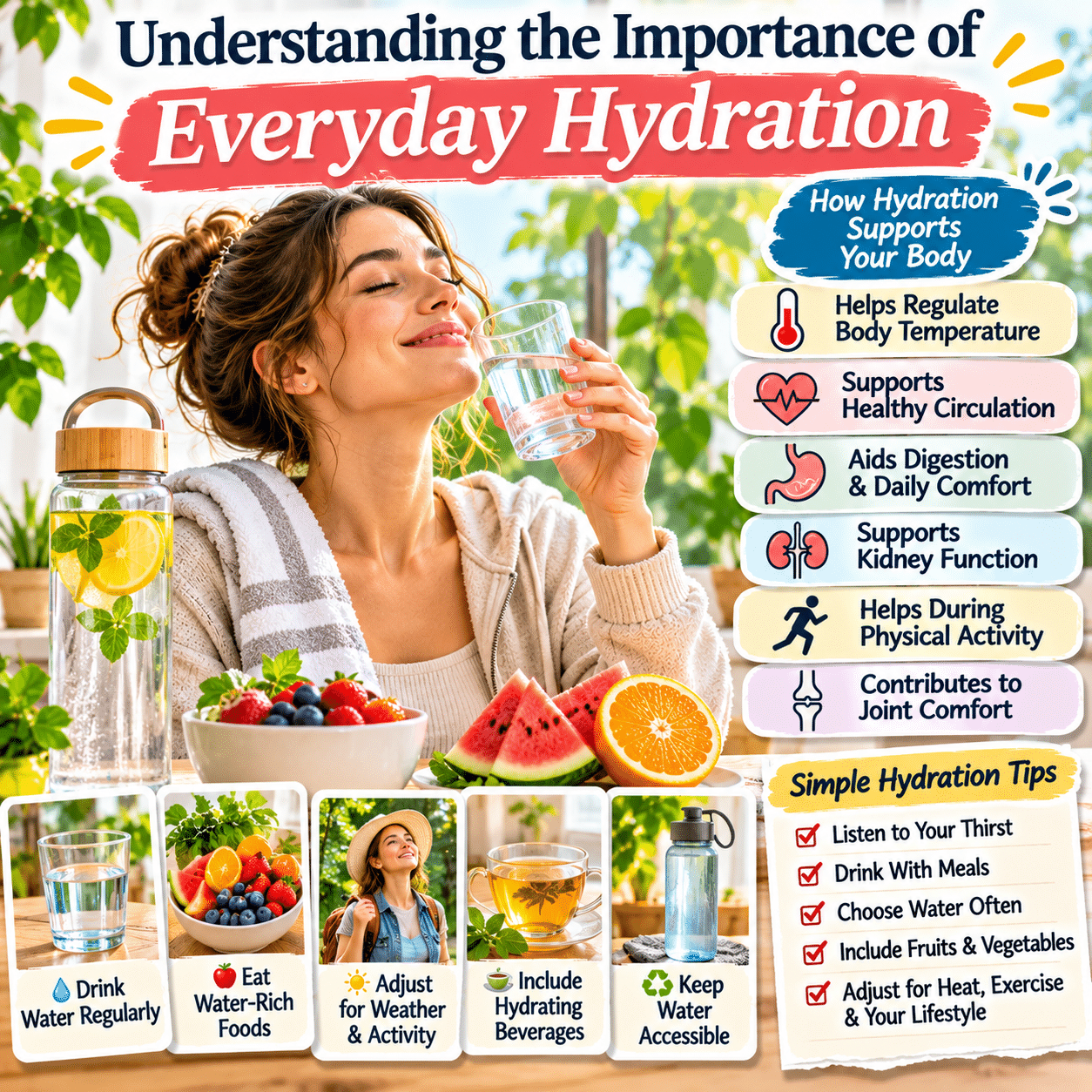
Water is one of the most essential parts of everyday life. It is involved in countless processes that help the human body function, from regulating temperature and transporting nutrients to supporting digestion and maintaining normal physical activity. Yet despite its importance, hydration is often treated as a minor detail within busy daily routines.
People may remember to drink water when they feel thirsty, exercise outdoors, or experience hot weather, but hydration matters throughout the day—not only during moments of obvious thirst. Everyday activities, environmental conditions, food choices, and personal circumstances all influence how much fluid the body needs.
Maintaining adequate hydration does not require complicated tracking systems, expensive beverages, or rigid drinking schedules. For many healthy adults, a practical approach involves responding to thirst, drinking regularly with meals and activities, and adjusting fluid intake according to individual needs.
Hydration is also about balance. Drinking too little can contribute to dehydration, while excessive water intake can sometimes be harmful. The goal is not to consume the greatest possible amount of water but to maintain an appropriate balance between fluid intake and the body’s needs.
Understanding everyday hydration can help people make informed choices about beverages, recognize common misconceptions, and develop sustainable habits that support daily comfort and normal bodily functions.
1. Hydration Is a Fundamental Part of Everyday Health
Hydration refers to maintaining an appropriate amount of water in the body to support normal physiological processes.
Water is present in blood, cells, tissues, and many other parts of the body.
It helps transport substances, regulate temperature, and support the removal of waste through normal bodily functions.
Because the body continually loses water through urine, perspiration, breathing, and other processes, fluids must be replenished regularly.
Adequate hydration is therefore not an occasional wellness activity.
It is an ongoing requirement of everyday life.
2. Water Makes Up a Significant Portion of the Human Body
Water accounts for a substantial proportion of human body weight, although the exact percentage varies with age, body composition, and other individual factors.
It is found both inside and outside cells and contributes to the environment in which biological processes occur.
Muscles, blood, organs, and other tissues all contain water.
The body regulates fluid distribution through complex mechanisms involving the kidneys, hormones, and electrolyte balance.
This explains why hydration cannot be understood simply as drinking a fixed number of glasses.
The body’s needs and regulatory processes are more complex.
3. Hydration Helps Regulate Body Temperature
Water plays an important role in temperature regulation.
When the body becomes warm, sweating helps release heat as moisture evaporates from the skin.
This process can increase fluid loss, particularly during physical activity or exposure to hot conditions.
In humid environments, sweat may evaporate less efficiently, making heat management more challenging.
Replacing fluids lost through perspiration is an important consideration during warm weather and exercise.
However, hydration alone does not prevent heat-related illness.
Shade, rest, appropriate clothing, and avoiding excessive heat exposure are also important.
4. Water Supports Normal Blood Circulation
Water is a major component of blood plasma.
Maintaining appropriate fluid balance helps support normal blood volume and the transportation of oxygen, nutrients, and other substances throughout the body.
Significant dehydration can affect circulation and may contribute to symptoms such as dizziness or weakness.
The body uses several mechanisms to regulate fluid balance and blood pressure.
Adequate hydration supports these processes, but drinking extra water beyond individual needs does not automatically improve circulation.
The objective is maintaining balance rather than maximizing intake.
5. Hydration Is Involved in Nutrient Transport
Nutrients obtained from food must be absorbed, transported, and used by the body.
Water contributes to the fluid environment in which these processes take place.
Blood and other body fluids carry dissolved substances to different tissues.
Hydration therefore supports the body’s normal systems for distributing nutrients.
However, drinking excessive amounts of water does not make nutrients more effective or replace the need for balanced meals.
Hydration and nutrition work together as complementary aspects of everyday health.
6. Water Plays a Role in Digestion
Fluids are involved in several stages of digestion.
Water contributes to saliva production, the movement of food through the digestive system, and normal digestive processes.
Adequate fluid intake can also support bowel function, particularly when combined with suitable dietary fiber and physical activity.
Some people find drinking water with meals comfortable, while others prefer beverages between meals.
For most healthy individuals, either approach can be appropriate.
Hydration is one part of digestive health rather than a solution to every digestive concern.
7. Hydration Supports Normal Kidney Function
The kidneys help regulate fluid and electrolyte balance while filtering waste products from the blood.
Water is necessary for urine production and the elimination of certain waste substances.
Maintaining appropriate hydration supports normal kidney function.
However, people with kidney disease, heart failure, or other conditions may require individualized fluid guidance.
In some circumstances, excessive fluid intake can be dangerous.
General hydration advice should never override recommendations from a qualified healthcare professional.
8. Hydration Contributes to Normal Joint Function
Joints contain structures and fluids that support movement.
Water is an important component of many body tissues, including cartilage and synovial fluid.
Maintaining overall hydration supports normal physiological conditions.
However, drinking additional water beyond what the body needs has not been shown to repair damaged joints or cure joint pain.
Joint comfort depends on many factors, including physical activity, injury history, and medical conditions.
Hydration should be viewed as basic bodily maintenance rather than a specialized joint treatment.
9. Water Is Important for Everyday Physical Activity
Physical activity can increase fluid loss through perspiration and breathing.
The amount lost depends on exercise intensity, duration, temperature, humidity, clothing, and individual sweating patterns.
For many short or moderate activities, water is a suitable beverage.
Longer or more strenuous exercise may require additional attention to electrolytes and fluid replacement.
Individual needs vary considerably.
Drinking according to thirst and activity demands is generally more sensible than forcing large quantities of water.
10. Hydration Can Influence Physical Comfort
Inadequate fluid intake may contribute to thirst, dry mouth, and other uncomfortable sensations.
More significant dehydration can produce symptoms such as dizziness, fatigue, or reduced urine output.
These symptoms are not specific to dehydration and may have other causes.
Maintaining suitable hydration can help avoid discomfort related to fluid deficiency.
However, water is not a universal remedy for tiredness, headaches, or poor concentration.
Persistent or concerning symptoms deserve appropriate medical evaluation.
11. Thirst Is an Important Biological Signal
Thirst is one of the body’s primary mechanisms for encouraging fluid intake.
It is influenced by changes in fluid concentration, blood volume, and other physiological factors.
For many healthy adults in ordinary circumstances, thirst provides useful guidance.
However, thirst perception may be less reliable in some older adults, young children, and people with certain medical conditions.
Heavy exercise, extreme heat, or illness may also require additional planning.
Recognizing thirst is useful, but it should be considered alongside circumstances and individual needs.
12. Hydration Needs Differ From Person to Person
There is no single fluid intake target that is appropriate for everyone.
Needs vary according to body size, age, diet, activity level, climate, pregnancy, breastfeeding, and health conditions.
Someone performing outdoor physical work in hot weather may lose considerably more fluid than someone resting indoors.
Diet also matters because foods contribute water.
General intake recommendations can provide context, but they should not be treated as rigid rules for every individual.
13. Daily Fluid Needs Include Water From Food
Hydration does not come exclusively from beverages.
Many foods contain substantial amounts of water.
Fruits, vegetables, soups, yogurt, and other foods can contribute to daily fluid intake.
The proportion supplied by food varies with dietary patterns.
For example, a person eating meals rich in vegetables and soups may obtain more water from food than someone consuming mostly dry foods.
This is one reason daily hydration cannot be evaluated solely by counting glasses of plain water.
14. Plain Water Is a Practical Everyday Beverage
Plain water is widely available, contains no added sugar, and provides hydration without unnecessary calories.
For many people, it is a convenient default beverage throughout the day.
Tap water may be suitable where drinking-water quality is reliably maintained.
In other locations, appropriate filtration, treatment, or bottled water may be necessary.
The most important consideration is access to safe drinking water.
Choosing plain water regularly can be a simple habit without requiring special ingredients or elaborate preparation.
15. Tea and Coffee Can Contribute to Hydration
Tea and coffee contain water and contribute to total fluid intake.
Although caffeine has mild diuretic effects, ordinary consumption of caffeinated beverages generally still contributes to hydration.
However, caffeine sensitivity varies.
Some people experience sleep disruption, nervousness, or other unwanted effects from caffeinated drinks.
Added sugar and other ingredients also influence the nutritional characteristics of beverages.
Tea and coffee can fit into a hydration routine, but they should be considered within broader dietary and personal needs.
16. Milk and Other Beverages Also Provide Fluids
Milk, fortified plant-based beverages, and various other drinks contain water.
They can contribute to total daily fluid intake while providing different nutrients depending on their composition.
However, not all beverages have the same nutritional profile.
Some contain substantial amounts of added sugar, caffeine, or other ingredients.
Choosing beverages should involve both hydration and overall dietary considerations.
Plain water remains a straightforward option, but variety can be compatible with adequate hydration.
17. Fruits and Vegetables Support Fluid Intake
Many fruits and vegetables naturally contain water.
Examples include watermelon, oranges, cucumbers, tomatoes, strawberries, and lettuce.
These foods also provide varying amounts of fiber, vitamins, minerals, and other nutrients.
Including them in meals and snacks can contribute to hydration while supporting a varied diet.
However, high-water-content foods should not be expected to replace all drinking needs, particularly during heavy fluid loss.
Their role is complementary.
18. Soups and Water-Rich Meals Can Be Helpful
Soups, stews, and other moisture-rich dishes contribute fluids through food.
They may be especially appealing when someone prefers warm meals or has limited interest in plain water.
However, some prepared soups contain high amounts of sodium.
Nutritional balance and individual dietary requirements should remain considerations.
A homemade vegetable soup or other water-rich meal can be one practical component of a varied eating pattern.
Hydration can be supported through ordinary meals rather than treated as a separate project.
19. Morning Hydration Can Be a Useful Habit
After several hours without drinking during sleep, some people enjoy having water in the morning.
A glass of water with breakfast or after waking can be a convenient way to respond to thirst.
However, there is no universal requirement to drink a specific amount immediately after waking.
Nor is morning water a special detoxification treatment.
The body already has physiological systems responsible for processing and eliminating waste.
The value of a morning drinking habit lies in its convenience and contribution to daily fluid intake.
20. Drinking With Meals Can Support Consistency
Mealtimes provide familiar opportunities to consume fluids.
Keeping a glass of water available during breakfast, lunch, or dinner can make hydration easier to remember.
For most healthy people, drinking water with meals does not interfere with normal digestion.
Some individuals may need to adjust timing or quantities because of specific medical conditions or digestive symptoms.
A flexible approach works best.
Drinking with meals is a practical habit, not a compulsory rule.
21. Hydration Matters During Work and Study
People concentrating on work or study may overlook thirst for extended periods.
Keeping safe drinking water nearby can make it easier to respond to fluid needs without unnecessary interruptions.
This is especially useful during long meetings, desk work, or demanding schedules.
However, constantly sipping water beyond thirst is not necessary for everyone.
Hydration supports normal functioning, but extra water is not guaranteed to improve productivity or concentration in someone who is already adequately hydrated.
Convenience and balance should guide the habit.
22. Outdoor Activities Increase Hydration Considerations
Walking, gardening, cycling, and other outdoor activities may increase fluid needs.
Heat, sunlight, wind, and physical exertion can influence fluid loss.
Planning access to drinking water is particularly important when activities take place away from convenient facilities.
Suitable clothing, rest periods, and attention to weather conditions are also essential.
During extreme heat, water alone may not be sufficient to prevent heat illness.
Reducing exposure and recognizing warning signs remain important.
23. Hot Weather Can Increase Fluid Loss
Warm temperatures often increase perspiration, particularly during physical activity.
In hot and humid climates, fluid replacement deserves additional attention.
People may benefit from carrying water, choosing cooler times for outdoor activities, and taking breaks in shaded or air-conditioned spaces.
Fluid needs can rise substantially under demanding conditions.
However, excessive water consumption without appropriate electrolyte balance can also be dangerous.
Practical hydration should be combined with sensible heat precautions.
24. Cold Weather Does Not Eliminate Hydration Needs
People sometimes associate dehydration only with hot weather.
However, the body continues losing water through breathing, urine, and other processes in cooler conditions.
Physical activity and heavy clothing may also contribute to perspiration.
Some individuals feel less thirsty in cold environments, making fluid intake easier to overlook.
Warm beverages, soups, and ordinary drinking habits can help maintain intake.
Hydration remains relevant throughout the year, even when sweating is less noticeable.
25. Air-Conditioned Environments May Affect Comfort
Air-conditioned spaces can feel dry, and some people notice dry mouth or other discomfort while spending extended periods indoors.
However, indoor air conditioning does not automatically cause clinically significant dehydration.
Fluid needs still depend on overall losses, activity, and individual circumstances.
Keeping water accessible may be convenient.
Managing indoor humidity appropriately can also improve comfort.
Hydration and environmental adjustments should be considered separately rather than assuming that drinking more water will solve every dryness-related symptom.
26. Travel Can Disrupt Familiar Drinking Habits
Travel often changes daily schedules and access to beverages.
Long journeys, unfamiliar environments, and busy itineraries may make regular drinking less convenient.
Carrying a suitable reusable bottle or planning access to safe water can help.
Air travel may involve dry cabin conditions, while outdoor travel can increase fluid losses.
However, fluid requirements vary, and excessive drinking is unnecessary.
Travel hydration is best approached through preparation, thirst awareness, and attention to environmental conditions.
27. Older Adults May Need Additional Hydration Awareness
Aging can influence thirst perception and the body’s response to fluid changes.
Some older adults may not feel thirst as strongly as younger adults.
Mobility limitations, medications, and certain health conditions may also affect drinking habits.
Accessible beverages and familiar routines can help support appropriate intake.
However, older adults with heart, kidney, or other medical conditions may require fluid restrictions or individualized advice.
Hydration support should account for both adequate intake and medical safety.
28. Children Have Different Hydration Needs
Children’s fluid requirements vary with age, body size, activity, diet, and environmental conditions.
Young children depend on caregivers to provide appropriate beverages and recognize signs of illness or dehydration.
Infants have specific feeding and hydration requirements and should not be given additional water without age-appropriate guidance.
Older children may benefit from easy access to water during play, school, and outdoor activities.
Caregivers should follow pediatric recommendations rather than applying adult drinking targets.
29. Pregnancy and Breastfeeding Can Change Fluid Needs
Pregnancy and breastfeeding may increase fluid requirements.
Needs vary with individual physiology, activity, climate, and health circumstances.
People who are pregnant or breastfeeding may find it useful to keep beverages accessible and respond to thirst regularly.
However, nausea, vomiting, medical complications, or other concerns may require individualized guidance.
Fluid recommendations should come from qualified healthcare professionals when specific medical considerations are present.
There is no universal drinking schedule that suits every pregnancy or breastfeeding experience.
30. Illness Can Increase the Risk of Dehydration
Vomiting, diarrhea, fever, and certain illnesses can increase fluid losses or make drinking difficult.
In these situations, ordinary hydration habits may not be sufficient.
Oral rehydration solutions can be useful in appropriate circumstances because they provide a specific balance of water and electrolytes.
Young children, older adults, and people with underlying medical conditions may be especially vulnerable.
Severe dehydration, inability to keep fluids down, confusion, fainting, or other concerning symptoms require prompt medical attention.
Hydration during illness should be guided by the situation rather than routine wellness advice.
31. Electrolytes Help Maintain Fluid Balance
Electrolytes are minerals that carry electrical charges when dissolved in body fluids.
Sodium, potassium, and other electrolytes contribute to fluid regulation, nerve signaling, and muscle function.
Most people obtain electrolytes through ordinary food and beverages.
Specialized electrolyte products are not necessary for every daily activity.
However, prolonged heavy sweating or certain illnesses may create circumstances where electrolyte replacement becomes important.
Appropriate use depends on the type and extent of fluid loss.
32. Sports Drinks Are Not Necessary for Everyone
Sports drinks are designed for particular situations involving exercise, fluid replacement, and sometimes carbohydrate intake.
They may be useful during prolonged or demanding physical activity.
For ordinary daily routines or shorter exercise sessions, plain water is often sufficient.
Some sports drinks contain added sugars and sodium that may not be needed outside their intended context.
Choosing a beverage should reflect activity demands rather than marketing claims.
More specialized does not automatically mean healthier.
33. Drinking Too Much Water Can Be Harmful
Hydration advice sometimes emphasizes drinking as much water as possible.
However, excessive intake can dilute sodium in the blood, potentially causing a dangerous condition called hyponatremia.
This risk can occur in certain circumstances, including prolonged endurance exercise accompanied by excessive fluid consumption.
Symptoms may include headache, nausea, confusion, and, in severe cases, seizures.
Drinking beyond the body’s needs is not inherently beneficial.
Hydration is about maintaining balance, not achieving the highest possible intake.
34. Urine Color Can Offer Limited Hydration Clues
Urine color is sometimes used as a rough indicator of hydration.
Pale yellow urine is often associated with adequate hydration, while darker urine may suggest more concentrated urine.
However, color can also be influenced by foods, medications, supplements, and medical conditions.
It is not a definitive measurement of hydration status.
Very clear urine does not necessarily indicate superior health.
Urine color should be considered alongside thirst, circumstances, and other relevant signs.
35. Dehydration Symptoms Should Be Interpreted Carefully
Common signs of dehydration can include thirst, dry mouth, reduced urination, darker urine, dizziness, and unusual tiredness.
However, these symptoms may also occur for reasons unrelated to hydration.
Their significance depends on severity and context.
Mild fluid deficits may be addressed through appropriate drinking, but more serious dehydration can require medical treatment.
Confusion, severe weakness, fainting, or an inability to retain fluids are warning signs that should not be ignored.
Self-assessment has limits.
36. Hydration Does Not Require Constant Tracking
Water-tracking applications and marked bottles can be useful for some individuals.
However, detailed tracking is not necessary for every healthy adult.
A practical routine may simply involve drinking with meals, keeping water accessible, and responding to thirst.
People with specific medical or athletic needs may benefit from more structured guidance.
For others, constant monitoring can make an ordinary habit unnecessarily complicated.
The best system is one that supports appropriate intake without creating pressure.
37. Reusable Water Bottles Can Improve Convenience
A reusable bottle can make drinking water more accessible during work, travel, or outdoor activities.
Choosing a bottle that is easy to carry, refill, and clean may encourage consistent use.
Material, capacity, durability, and ease of maintenance are practical considerations.
Reusable bottles should be cleaned regularly according to manufacturer instructions.
They also need to be filled with safe drinking water.
The bottle itself does not improve hydration unless it helps someone meet actual fluid needs.
38. Sustainable Hydration Habits Can Reduce Waste
Hydration habits can be compatible with environmentally thoughtful choices.
Using safe refillable water sources, maintaining reusable bottles, and avoiding unnecessary single-use packaging may reduce waste.
However, drinking-water safety must remain the priority.
In locations where tap water is unsafe, appropriate treatment or reliable packaged water may be necessary.
Sustainability should be considered alongside local infrastructure, affordability, and personal circumstances.
A practical approach avoids turning hydration into a purchasing trend.
39. Hydration Myths Can Create Unnecessary Confusion
Popular advice sometimes claims that everyone must drink exactly eight glasses of water daily, that caffeine always causes dehydration, or that drinking more water automatically improves skin appearance.
These claims oversimplify complex physiological processes.
Fluid needs vary, caffeinated beverages can contribute to hydration, and extra water does not guarantee cosmetic benefits when someone is already adequately hydrated.
Hydration is essential, but it should not be presented as a cure for unrelated problems.
Reliable guidance emphasizes individual needs and balanced intake.
40. Everyday Hydration Works Best as a Flexible Habit
The most sustainable hydration routines are often simple.
Having water available, drinking with meals, responding to thirst, and adjusting intake during heat or physical activity can provide a practical foundation.
Needs change across seasons, activities, and life stages.
A rigid schedule may be less useful than awareness of these differences.
Hydration should support everyday living rather than become another complicated task.
The goal is to maintain appropriate fluid balance through ordinary, realistic habits.
Understanding the Main Functions of Water in the Body
Water contributes to several important physiological processes.
| Body function | Role of water | Everyday relevance |
|---|---|---|
| Temperature regulation | Supports sweating and heat transfer | Important during warm weather and exercise |
| Circulation | Contributes to blood plasma volume | Supports normal transportation of substances |
| Nutrient transport | Provides a fluid medium for dissolved nutrients | Works alongside normal digestion and metabolism |
| Digestion | Participates in digestive processes | Supports ordinary digestive function |
| Kidney function | Supports urine production and fluid regulation | Helps maintain normal waste elimination |
| Joint tissues | Contributes to the composition of body fluids and tissues | Supports normal physiological conditions |
| Cellular function | Provides the environment for many biological reactions | Essential throughout the body |
| Physical activity | Replaces fluid lost through sweating and breathing | Important during exertion |
| Electrolyte balance | Works with minerals and hormonal regulation | Supports normal nerve and muscle function |
| Daily comfort | Helps prevent discomfort associated with inadequate intake | Relevant throughout everyday routines |
These functions illustrate why hydration matters even when someone is not exercising or feeling particularly thirsty.
They also demonstrate why fluid balance is more important than excessive consumption.
How to Build a Practical Everyday Hydration Routine
A useful hydration routine should reflect individual needs and daily activities.
Step 1: Begin With Safe Drinking Water
Identify a reliable source of drinking water.
Depending on local conditions, this may involve treated tap water, appropriate filtration, or packaged drinking water.
Water safety should always come before convenience.
Step 2: Notice Your Existing Drinking Habits
Consider when you usually drink and whether you frequently overlook thirst.
Think about work schedules, meals, exercise, and time spent outdoors.
The purpose is to identify practical opportunities rather than criticize existing habits.
Step 3: Keep Water Conveniently Available
Place drinking water where it is easy to access.
A glass at the dining table or a clean bottle at the workspace may be sufficient.
Convenience can reduce the need to interrupt activities repeatedly.
Step 4: Connect Drinking With Familiar Activities
Meals, breaks, and physical activities provide natural opportunities to drink.
Use these moments as flexible reminders rather than mandatory targets.
Step 5: Adjust for Weather and Activity
Pay attention to heat, humidity, physical exertion, and perspiration.
Increase access to appropriate fluids when losses are likely to rise.
Avoid forcing excessive water intake.
Step 6: Include Fluids From Different Sources
Remember that water-rich foods and other beverages contribute to hydration.
Choose options that fit nutritional needs and personal preferences.
Step 7: Respect Medical Considerations
Follow individualized advice if you have a condition requiring fluid restrictions, electrolyte management, or specific hydration planning.
General recommendations are not substitutes for medical guidance.
Step 8: Keep the Routine Flexible
Review your needs when schedules, seasons, or activities change.
A simple routine that adapts to circumstances is often easier to maintain.
Everyday Hydration Examples for Different Situations
| Situation | Hydration consideration | Practical approach |
|---|---|---|
| Typical office day | Long periods of concentration | Keep water accessible and drink according to thirst |
| Working from home | Irregular breaks | Include beverages with meals and routine pauses |
| Outdoor gardening | Heat and perspiration | Plan water access and take appropriate cooling breaks |
| Light exercise | Modest fluid loss | Water is generally suitable |
| Prolonged strenuous exercise | Greater fluid and electrolyte losses | Use activity-appropriate replacement strategies |
| Hot and humid weather | Increased sweating and heat stress | Combine hydration with shade, cooling, and rest |
| Cold weather | Less noticeable thirst | Maintain ordinary drinking habits |
| Long-distance travel | Disrupted schedules | Carry safe water and plan refill opportunities |
| Older adulthood | Potentially reduced thirst perception | Support accessible drinking while following medical advice |
| Illness with vomiting or diarrhea | Increased fluid and electrolyte losses | Seek appropriate rehydration guidance and medical care when needed |
These examples are general illustrations rather than fixed prescriptions.
Individual requirements may differ considerably.
Hydrating Foods and Beverages for Everyday Meals
A varied diet can provide fluids from multiple sources.
| Food or beverage | Hydration contribution | Additional consideration |
|---|---|---|
| Plain water | Direct source of fluid | No added sugar or calories |
| Unsweetened tea | Contributes water | Caffeine content varies |
| Coffee | Contributes water | Consider caffeine sensitivity |
| Milk | Provides fluid and nutrients | Nutritional profile depends on type |
| Unsweetened plant-based drinks | Contribute fluid | Nutrient content varies by product |
| Watermelon | Naturally high in water | Also provides carbohydrates and nutrients |
| Cucumber | High water content | Useful in meals and snacks |
| Oranges | Provide water and nutrients | Whole fruit also contains fiber |
| Tomatoes | Contribute water | Versatile in meals |
| Yogurt | Contains water and nutrients | Added sugar varies |
| Vegetable soup | Provides fluid through food | Sodium content varies |
| Strawberries | High water content | Suitable as part of a varied diet |
No single food or beverage needs to dominate a hydration routine.
Variety and suitability are more important than following a special hydration trend.
Simple Ways to Make Drinking Water More Enjoyable
Some people find plain water easy to drink, while others prefer a little variety.
Serve Water at a Comfortable Temperature
Chilled, room-temperature, or warm water can all contribute to hydration.
Choose according to personal preference and circumstances.
Add Fresh Fruit for Flavor
Slices of lemon, orange, or berries can provide a mild flavor.
Wash produce appropriately and handle infused water safely.
Include Unsweetened Beverages
Unsweetened tea or other suitable drinks can add variety without relying on sugary beverages.
Keep a Clean Reusable Bottle
Choose a container that is convenient to carry and easy to maintain.
Make Water Accessible During Meals
A filled glass at the table can make drinking more convenient.
Choose Water-Rich Foods
Include fruits, vegetables, and appropriate soups in a varied diet.
Prepare for Outdoor Activities
Bring enough suitable fluids for the planned activity and environmental conditions.
Avoid Unnecessary Drinking Rules
Do not force water consumption simply to meet an arbitrary target.
A comfortable hydration routine should respond to actual needs.
Common Hydration Mistakes and How to Avoid Them
Mistake 1: Assuming Everyone Needs Exactly Eight Glasses Daily
Fluid needs vary considerably.
Better approach: Consider individual circumstances, thirst, food intake, and relevant professional guidance.
Mistake 2: Drinking Only During Exercise
Fluid balance matters throughout the day.
Better approach: Maintain ordinary drinking habits alongside activity-related adjustments.
Mistake 3: Ignoring Heat and Humidity
Warm conditions can increase fluid losses.
Better approach: Plan appropriate hydration and heat-safety measures.
Mistake 4: Believing More Water Is Always Better
Excessive intake can be harmful.
Better approach: Aim for appropriate balance rather than maximum consumption.
Mistake 5: Treating All Beverages as Nutritionally Equivalent
Beverages differ in sugar, caffeine, sodium, and nutrient content.
Better approach: Consider both hydration and overall dietary needs.
Mistake 6: Assuming Coffee Always Causes Dehydration
Ordinary coffee consumption generally contributes to fluid intake.
Better approach: Consider caffeine tolerance and total beverage intake.
Mistake 7: Relying Exclusively on Urine Color
Urine color is influenced by multiple factors.
Better approach: Interpret it cautiously alongside other signs and circumstances.
Mistake 8: Buying Specialized Hydration Products Without a Need
Electrolyte powders and sports drinks are not necessary for every routine.
Better approach: Match beverage choices to actual activity and health requirements.
Mistake 9: Overlooking Hydration During Illness
Vomiting, diarrhea, and fever can increase fluid losses.
Better approach: Use appropriate rehydration guidance and seek medical care when indicated.
Mistake 10: Treating Water as a Cure for Every Symptom
Fatigue, headaches, and skin concerns can have many causes.
Better approach: Maintain appropriate hydration without overlooking other explanations.
Everyday Hydration Checklist
Use this checklist as a flexible reminder rather than a rigid daily target.
Daily Habits
- Safe drinking water is available.
- Thirst signals receive appropriate attention.
- Beverages are included naturally with meals or breaks.
- Fluid intake reflects daily activities.
- Water-rich foods are included as part of a varied diet.
- Unnecessary excessive drinking is avoided.
- Beverage choices consider nutritional needs.
Activity and Weather
- Drinking water is available during outdoor activities.
- Hot weather and perspiration are considered.
- Appropriate rest and cooling measures are used in heat.
- Longer physical activities are planned with fluid needs in mind.
- Cold-weather hydration is not overlooked.
- Travel arrangements include access to safe water.
Practical Organization
- Reusable bottles are cleaned appropriately.
- Water containers are stored safely.
- Drinking-water sources are reliable.
- Supplies are easy to access.
- Unnecessary single-use packaging is reduced when practical.
- Hydration habits remain simple and manageable.
Personal Awareness
- Individual health conditions are considered.
- Medical fluid restrictions are followed when applicable.
- Symptoms of possible dehydration are not ignored.
- Severe or persistent symptoms receive appropriate attention.
- Fluid needs are reviewed when circumstances change.
Frequently Asked Questions About Everyday Hydration
1. Why is hydration important every day?
Hydration supports essential functions such as temperature regulation, circulation, digestion, kidney function, and normal cellular activity. Because the body continually loses water, fluids must be replenished regularly.
2. How much water should an adult drink daily?
There is no single amount suitable for every adult. Needs depend on factors such as body size, diet, activity, climate, and health conditions. General intake recommendations may provide context, but individual needs vary.
3. Does the eight-glasses-a-day rule apply to everyone?
No. Eight glasses is a familiar guideline, not a universal physiological requirement. Total water intake also includes fluids from food and other beverages.
4. Is it better to drink water before or after meals?
For most healthy people, either approach can be appropriate. Drinking with meals is also generally acceptable. Individual digestive or medical circumstances may influence preferences.
5. Can coffee and tea count toward daily hydration?
Yes. Both contain water and contribute to fluid intake. However, caffeine sensitivity and other ingredients should be considered.
6. Do fruits and vegetables help with hydration?
Yes. Many fruits and vegetables contain substantial amounts of water and contribute to overall fluid intake as part of a varied diet.
7. Is drinking cold water less healthy than room-temperature water?
For most healthy individuals, both can provide hydration. Temperature preference is generally a matter of comfort, although specific medical circumstances may require different guidance.
8. Can drinking too much water be dangerous?
Yes. Excessive water intake can dilute blood sodium and cause hyponatremia, which may be serious. Drinking should reflect actual needs rather than arbitrary maximum targets.
9. Are sports drinks necessary after every workout?
No. Plain water is generally sufficient for many shorter or moderate exercise sessions. Prolonged strenuous activity may require additional fluid and electrolyte planning.
10. How can I recognize possible dehydration?
Thirst, dry mouth, reduced urination, darker urine, dizziness, and unusual tiredness may occur. These signs are not specific to dehydration, and severe or persistent symptoms require medical attention.
11. Does drinking more water automatically improve skin appearance?
Not necessarily. Adequate hydration supports normal bodily functions, but drinking extra water beyond individual needs does not guarantee improved skin appearance or resolve dermatological concerns.
12. Should I drink water even when I am not thirsty?
Thirst is useful guidance for many healthy adults, but some situations require additional awareness. Older age, illness, heavy exercise, and extreme heat can affect hydration needs and thirst reliability.
13. Can hydration help with concentration?
Significant dehydration may affect normal functioning, including aspects of cognition. However, drinking extra water does not necessarily improve concentration in someone who is already adequately hydrated.
14. What is the easiest way to maintain hydration during busy days?
Keep safe drinking water accessible, include beverages with meals, and respond to thirst. Adjust intake when activities or environmental conditions increase fluid loss.
15. When should someone seek medical advice about hydration?
Medical advice is important for persistent dehydration symptoms, significant fluid losses, concerning illness, or conditions requiring fluid restrictions. Severe symptoms such as confusion, fainting, or inability to retain fluids warrant urgent assessment.
Final Thoughts
Everyday hydration is a fundamental part of maintaining normal bodily functions and supporting daily comfort.
Water contributes to temperature regulation, circulation, digestion, kidney function, and many other processes that occur continuously throughout life. Because fluid losses are ongoing, hydration deserves attention during ordinary routines as well as periods of increased activity or environmental heat.
However, maintaining hydration does not require complicated rules, expensive products, or constant monitoring.
For many healthy adults, a practical foundation includes access to safe drinking water, attention to thirst, beverages with meals, and appropriate adjustments for weather and physical activity.
Food also contributes to fluid intake, and a variety of beverages can fit within a balanced approach.
Equally important is recognizing that hydration needs are individual. Age, health conditions, medications, activity levels, and other circumstances can influence appropriate intake.
More water is not always better, and excessive consumption can sometimes be harmful.
The most useful hydration habits are therefore informed, flexible, and realistic.
Rather than treating water as a special wellness solution, it is more helpful to recognize hydration as one ordinary but essential part of caring for the body.
Good hydration is not about drinking as much water as possible—it is about giving the body the fluids it needs, in a balanced and practical way, every day.