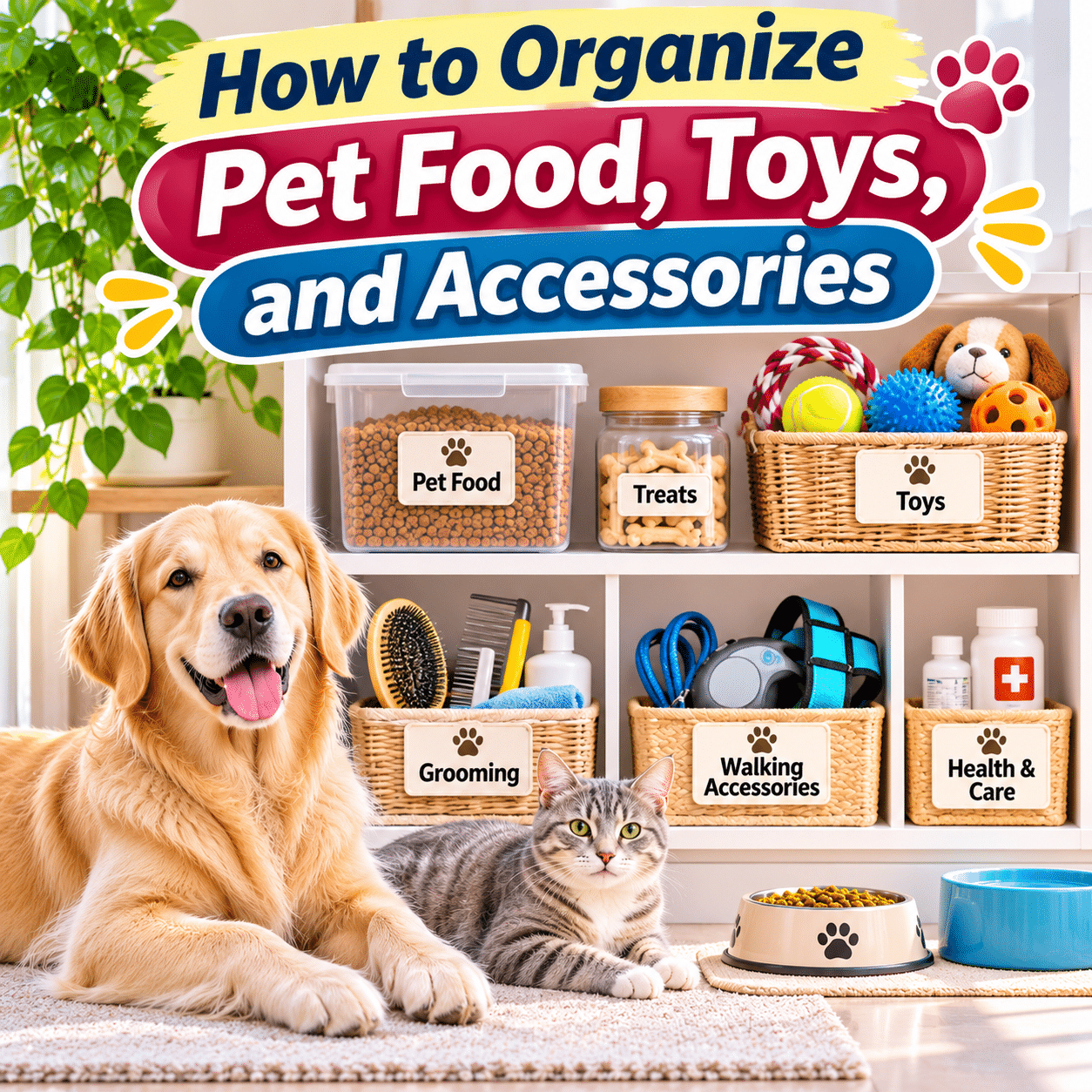
Sharing your home with a pet brings companionship, joy, and plenty of everyday responsibilities. From food bags and feeding bowls to favorite toys, grooming brushes, leashes, and cleaning supplies, pet essentials can quickly spread throughout the house if they do not have designated storage spaces.
A well-organized pet care area makes daily routines easier, helps protect food quality, reduces household clutter, and allows you to find important supplies when you need them. It also creates a more comfortable living environment for both pets and the people who care for them.
Organizing pet belongings does not require a large home, expensive storage furniture, or an elaborate system. With a few practical containers, clearly defined storage zones, and consistent habits, even a small apartment can accommodate everything your pet needs.
The key is to organize supplies according to how frequently they are used, how they should be stored, and how safely they can be accessed.
This guide explores practical ways to organize pet food, toys, grooming tools, walking accessories, cleaning supplies, and other everyday essentials. It also includes step-by-step instructions, storage ideas for different living spaces, maintenance routines, and solutions to common organization challenges.
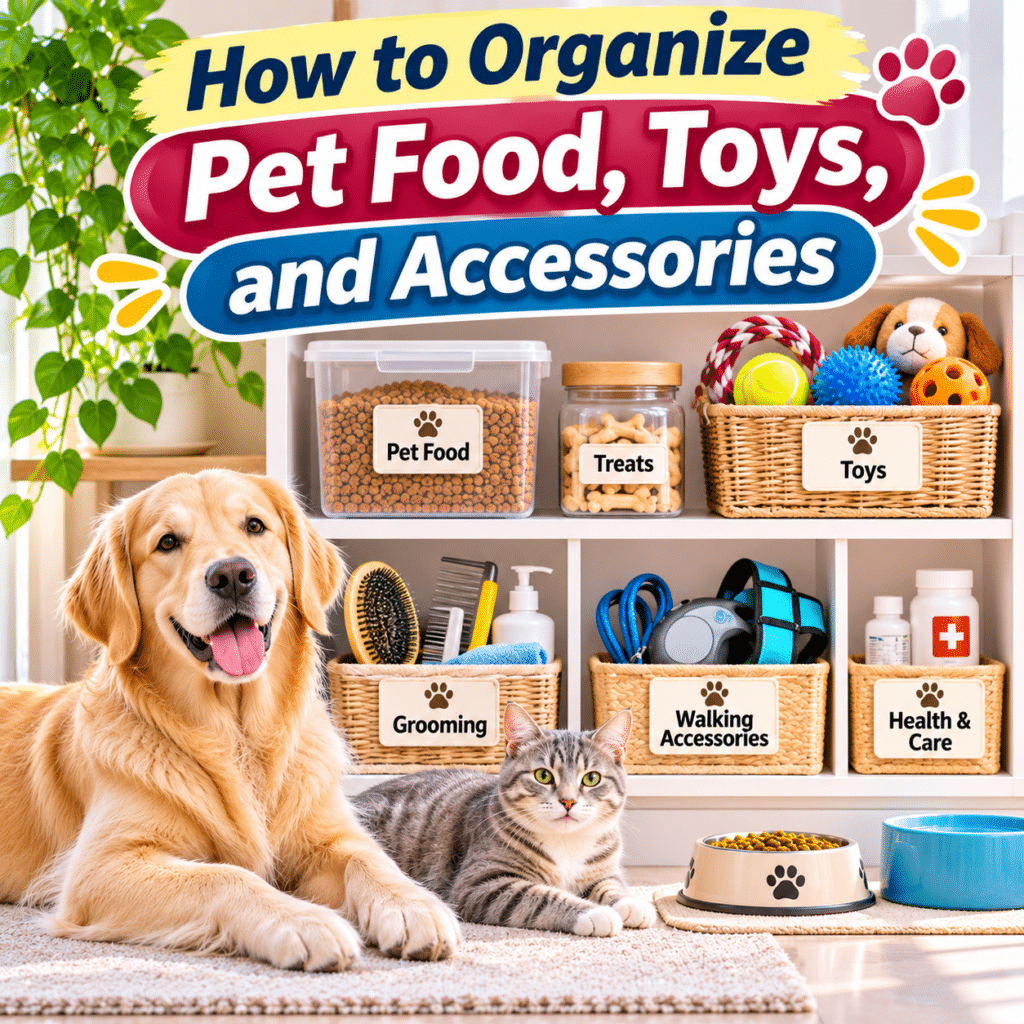
1. Why Organizing Pet Supplies Matters
Pet organization is about more than keeping your home looking tidy. A thoughtful storage system supports efficient daily care and helps reduce preventable problems.
Make Everyday Pet Care Easier
Pets often depend on consistent routines for feeding, exercise, grooming, and rest.
When supplies have designated locations, these activities become simpler.
For example, keeping food measuring tools beside the food container reduces unnecessary searching during mealtimes. Storing a leash near the entrance makes preparing for walks more convenient.
Small improvements can save time and make routines easier to maintain.
Protect Food and Treats
Pet food requires appropriate storage to maintain its quality and reduce exposure to moisture, pests, and contamination.
A well-organized food area makes it easier to check expiration dates, monitor remaining quantities, and follow storage instructions.
It also helps prevent accidental access by pets.
Reduce Clutter and Household Hazards
Loose toys, scattered grooming tools, and misplaced accessories can create unnecessary clutter.
Some items may also present hazards if left unattended.
Organized storage helps keep potentially dangerous objects, such as grooming scissors, medications, and cleaning chemicals, securely out of reach.
Avoid Unnecessary Purchases
When pet supplies are visible and easy to inventory, you are less likely to purchase duplicates or forget about items already available.
A simple organization system can also help identify damaged accessories and supplies that are no longer useful.
2. Start by Sorting All Your Pet Supplies
Before purchasing storage containers or rearranging furniture, gather your pet supplies and assess what you already own.
This step creates a clear picture of your storage needs.
Step 1: Collect Items From Around the Home
Check common locations such as:
- Kitchen cabinets.
- Pantry shelves.
- Living room drawers.
- Entryway storage.
- Bedroom closets.
- Laundry areas.
- Pet resting corners.
- Storage baskets.
- Travel bags.
Bring the items together in a clean, convenient space.
Step 2: Divide Everything Into Categories
Organize items according to their purpose.
| Category | Common Items | Storage Priority |
|---|---|---|
| Food and treats | Dry food, canned food, treats | Proper food storage |
| Feeding supplies | Bowls, scoops, measuring cups | Cleanliness and convenience |
| Toys | Balls, plush toys, puzzle toys | Accessibility and safety |
| Walking accessories | Leashes, harnesses, collars | Quick daily access |
| Grooming supplies | Brushes, combs, nail clippers | Clean and secure storage |
| Hygiene supplies | Waste bags, litter accessories, cleaning cloths | Separation and sanitation |
| Health supplies | Medications, first-aid items, veterinary documents | Secure, appropriate storage |
| Travel accessories | Carriers, travel bowls, travel mats | Organized occasional access |
| Seasonal items | Cooling mats, coats, extra blankets | Space-efficient storage |
These categories provide a starting point. Adjust them to match your pet’s needs.
Step 3: Identify What You Actually Use
Review each item and ask:
- Is it used regularly?
- Is it still in good condition?
- Is it suitable for my pet?
- Is it safe to keep?
- Does it serve a useful purpose?
- Do I already have several similar items?
Discard damaged toys and unsafe accessories.
Check food expiration dates and storage conditions.
Consider donating clean, usable items that your pet no longer needs, provided a local animal organization accepts them.
Step 4: Separate Everyday and Occasional Items
Daily essentials should be easy to reach.
Items used less frequently can be stored on higher shelves or in labeled containers, provided they remain accessible when needed.
This distinction helps prevent everyday storage areas from becoming overcrowded.
3. Create Dedicated Pet Supply Storage Zones
One of the most effective organization strategies is to establish storage zones based on daily activities.
Instead of keeping every pet item in one large cabinet, group related supplies near where they are used.
Feeding Zone
Store food, appropriate treats, measuring tools, and clean feeding accessories near the feeding area.
Choose a dry location away from excessive heat and direct sunlight.
Play Zone
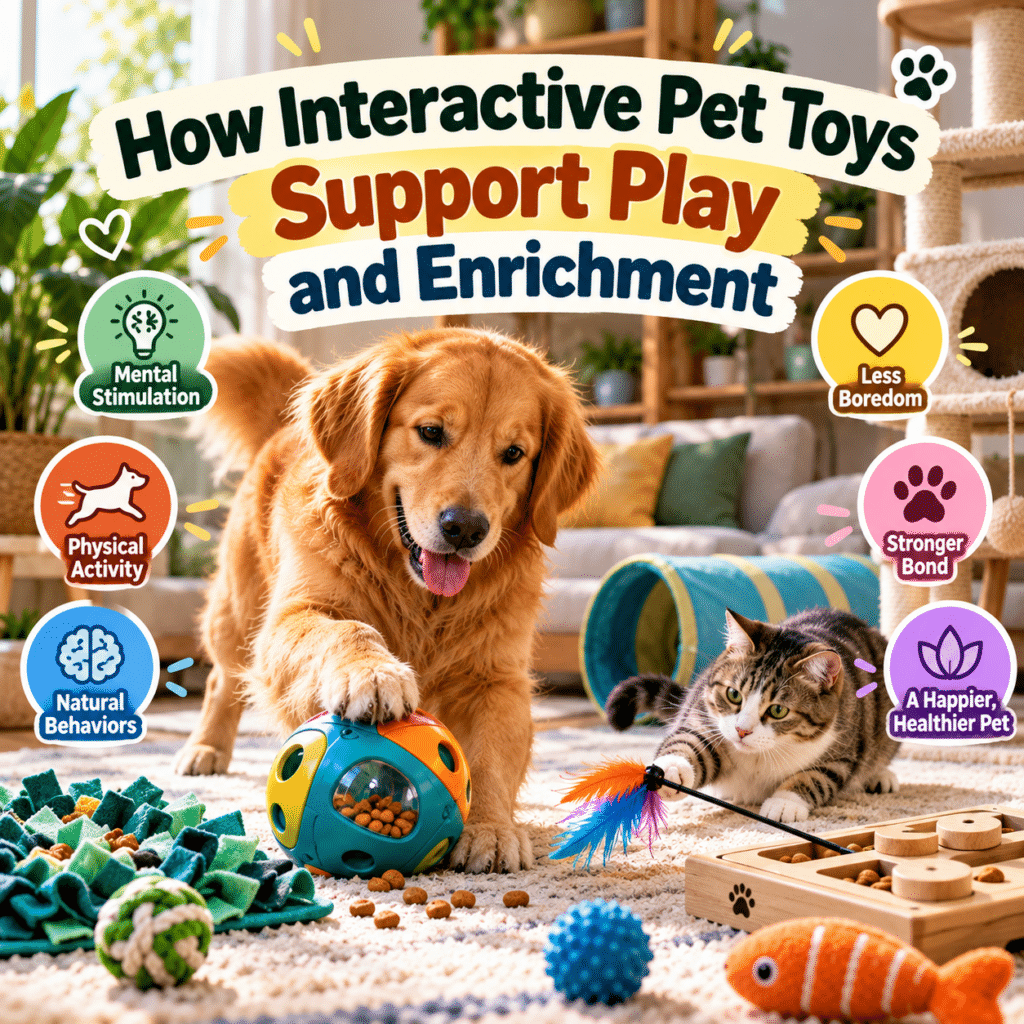
Keep suitable toys in a designated basket or container near the area where your pet normally plays.
Avoid placing toy storage in busy walkways.
Walking Zone
For dogs, an entryway station can hold leashes, harnesses, waste bags, and other walking essentials.
Grooming Zone
Keep brushes, combs, and grooming accessories in a clean, dry cabinet or drawer.
Hygiene Zone
Store cleaning supplies separately from food and feeding equipment.
Hazardous products must remain inaccessible to pets and children.
Health and Emergency Zone
Maintain a secure location for veterinary information, medications, and essential health supplies.
This area should be easy for responsible household members to locate but inaccessible to pets.
4. How to Store Dry Pet Food Properly
Dry pet food is one of the most important supplies to organize carefully.
Incorrect storage can expose food to moisture, pests, and environmental conditions that may affect its quality.
Keep Food in Its Original Packaging
A practical approach is to retain dry pet food in its original bag and place the entire bag inside a clean, appropriately sized storage container.
The original packaging provides important information, including:
- Product name.
- Feeding instructions.
- Ingredient information.
- Expiration or best-by date.
- Lot or batch number.
- Manufacturer details.
Keeping the packaging also makes it easier to identify the product if a recall or quality concern arises.
Choose a Suitable Storage Container
Look for a container that is:
- Intended for food storage.
- Clean and completely dry.
- Large enough to hold the original bag.
- Equipped with a secure lid.
- Easy to open and close.
- Resistant to pests.
- Convenient to clean.
A tightly closing container can help protect the bag from environmental exposure.
However, a storage container does not extend the manufacturer’s recommended shelf life.
Choose a Cool, Dry Location
Store dry food away from:
- Direct sunlight.
- Heating appliances.
- Damp floors.
- Excessively humid spaces.
- Strong household chemicals.
- Areas exposed to pests.
Follow the manufacturer’s specific storage recommendations.
Avoid Mixing Old and New Food
Do not routinely pour new food directly over leftover food in a storage container.
This can make it difficult to track product age and may allow old residue to remain.
If food is transferred out of its original bag, retain the label and lot information, use a suitable food-contact container, and clean and dry the container thoroughly before refilling.
Use a Dedicated Measuring Scoop
Keep a clean measuring tool near the food storage area.
For consistent portions, follow your veterinarian’s feeding guidance and the food manufacturer’s instructions, adjusting for your pet’s individual needs.
A kitchen scale may provide more consistent measurements than an unmarked scoop.
5. Organize Wet Food, Treats, and Special Diets
Different food types require different storage arrangements.
Unopened Wet Food
Unopened canned or pouch food should be stored according to its packaging instructions.
Arrange products so that older stock is used first, provided it remains within its safe use period.
Avoid storing cans in excessively hot or damp environments.
Inspect packaging for damage, leaks, swelling, or other signs of compromised integrity.
Opened Wet Food
Once opened, wet food generally requires refrigeration and timely use according to the manufacturer’s instructions.
Transfer leftovers to a suitable covered container when necessary.
Label the container with the opening date if that helps prevent confusion.
Discard food that has been left out beyond appropriate safety limits.
Pet Treats
Organize treats by type and purpose.
For example:
- Everyday training treats.
- Dental treats.
- Occasional reward treats.
- Special dietary treats.
Keep them in their original packaging or retain complete product information when using another container.
Do not assume all treats remain fresh for the same amount of time.
Prescription and Special Diets
Pets with prescribed diets may require careful separation of food supplies.
Clearly label these products and follow veterinary instructions.
In multi-pet households, store different diets separately to reduce accidental feeding mistakes.
6. Create an Efficient Pet Feeding Station
A feeding station should be practical, easy to clean, and comfortable for your pet.
Choose a Suitable Location
Look for a location that is:
- Away from heavy foot traffic.
- Easy to clean.
- Accessible to your pet.
- Separate from litter boxes and waste areas.
- Free from nearby hazardous materials.
Some pets prefer eating in a quiet location with minimal disturbance.
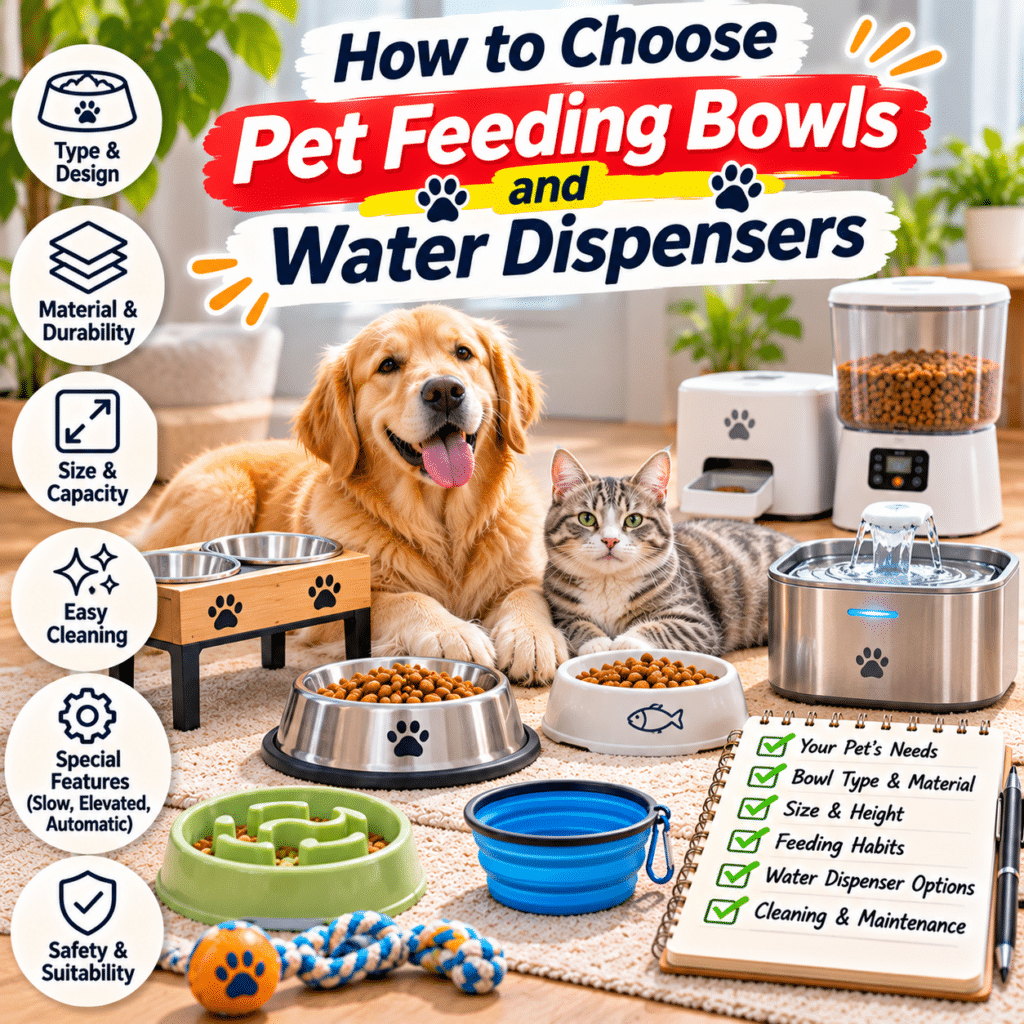
Organize Feeding Accessories
Keep commonly used items nearby:
- Food measuring tools.
- Clean spare bowls.
- Feeding mats.
- Appropriate food storage.
- Cleaning cloths designated for pet equipment.
Avoid storing dirty cleaning cloths alongside clean feeding utensils.
Use a Washable Feeding Mat
A washable mat beneath food and water bowls can help contain small spills.
Choose one that stays flat and does not create a slipping hazard.
Clean and dry the mat regularly.
Maintain Bowl Hygiene
Wash food bowls after meals, particularly when serving wet food.
Clean water bowls regularly and refresh drinking water as needed.
Follow appropriate cleaning guidance for the bowl material.
Inspect bowls for cracks, rough edges, or damage that could make cleaning difficult.
7. How to Organize Pet Toys
Pet toys can quickly accumulate throughout a home.
A simple toy organization system helps reduce clutter while keeping suitable play options available.
Sort Toys by Type
Separate toys into useful categories.
| Toy Category | Examples | Suggested Storage |
|---|---|---|
| Fetch toys | Balls, suitable retrieving toys | Open basket or bin |
| Plush toys | Soft stuffed toys | Fabric basket |
| Interactive toys | Puzzle feeders, treat puzzles | Shelf or designated container |
| Chew toys | Durable chewing accessories | Easy-to-clean container |
| Cat wand toys | Wand and string-based toys | Secure drawer or closed storage |
| Occasional toys | Seasonal or less frequently used toys | Labeled storage bin |
Always consider whether a toy is suitable for unsupervised access.
String-based toys, toys with small detachable parts, and other potentially hazardous items should be secured when not actively supervised.
Use a Dedicated Toy Basket
A low basket or open bin can make daily cleanup easier.
Choose a container without sharp edges, loose decorative pieces, or materials your pet may chew and swallow.
For pets that frequently chew storage baskets, a more durable container placed out of reach may be preferable.
Avoid Overfilling the Basket
An overcrowded toy basket makes it difficult to see what is available.
Keep frequently used toys accessible and store extras separately.
This also makes it easier to inspect toys for damage.
Try a Toy Rotation System
Instead of leaving every toy available at once, rotate a selection periodically.
For example:
- Keep several appropriate favorites available.
- Store additional toys in a separate container.
- Exchange some toys when your pet appears interested in variety.
- Retain familiar comfort toys if your pet prefers them.
Toy rotation is optional, and its usefulness varies by animal.
Do not remove a favorite comfort item simply to follow a schedule.
Inspect Toys Regularly
Check for:
- Torn fabric.
- Exposed stuffing.
- Loose squeakers.
- Cracked plastic.
- Fraying ropes.
- Detached small parts.
- Excessive wear.
Remove toys that present a choking, swallowing, or injury hazard.
8. Organize Leashes, Collars, and Walking Accessories
For households with dogs, walking supplies are among the most frequently used pet accessories.
Keeping them together can make departures more convenient.
Create an Entryway Walking Station
Choose a location near the door, such as a small wall-mounted organizer, drawer, or cabinet.
Useful items include:
- Everyday leash.
- Harness.
- Collar.
- Waste bags.
- Portable water bowl.
- Suitable walking accessories.
- Towel for muddy paws.
Keep the area tidy and avoid hanging heavy items where they may fall.
Use Hooks and Small Compartments
Hooks can work well for leashes and harnesses.
Small compartments can hold waste bag rolls and other compact items.
Install hooks securely and keep dangling straps away from pets that might chew or become entangled in them.
Separate Accessories for Multiple Dogs
If you have more than one dog, assign each animal a separate hook or labeled compartment.
This helps prevent confusion when accessories differ in size or fit.
Store Occasional Walking Gear Separately
Raincoats, seasonal accessories, and travel equipment can be stored in a nearby cabinet rather than occupying everyday hooks.
9. Organize Grooming Tools and Personal Care Supplies
Grooming supplies should remain clean, dry, and easy to identify.
Group Tools by Function
Create categories such as:
Coat care
- Brushes.
- Combs.
- Deshedding tools.
- Grooming mitts.
Nail care
- Pet nail clippers.
- Nail files.
- Appropriate grooming accessories.
Bathing supplies
- Pet shampoo.
- Towels.
- Suitable bathing tools.
Dental care
- Pet toothbrushes.
- Veterinary-appropriate toothpaste.
- Other recommended dental supplies.
Choose Suitable Storage Containers
Small drawers, compartment organizers, or washable bins can keep grooming tools separated.
Sharp tools should be stored securely.
Avoid leaving scissors or nail clippers where pets or children can reach them.
Clean Tools After Use
Remove accumulated hair from brushes and combs.
Clean grooming tools according to their materials and manufacturers’ instructions.
Dry tools thoroughly before returning them to storage.
Keep Products in Their Original Containers
Shampoos, ear cleaners, dental products, and other pet care preparations should retain their original labels.
Do not transfer chemical products into unmarked containers.
Store them according to their instructions and keep them away from food.
10. Store Pet Cleaning and Hygiene Supplies Safely
Cleaning products are necessary in many pet households, but they require careful storage.
Create a Separate Cleaning Supply Zone
Keep hygiene products away from pet food, treats, and feeding utensils.
Common supplies include:
- Waste bags.
- Cleaning cloths.
- Litter scoops.
- Pet-safe cleaning products.
- Laundry supplies.
- Disposable gloves.
- Appropriate odor-control products.
Store cleaning chemicals in a secure cabinet.
Organize Cat Litter Supplies
For households with cats, keep litter-related accessories near the litter area without crowding the cat’s access.
A nearby storage container may hold unopened litter and cleaning tools.
Keep litter dry and follow the manufacturer’s storage recommendations.
Separate Clean and Used Items
Do not place used litter scoops, dirty cleaning cloths, or contaminated accessories alongside clean feeding equipment.
Use dedicated containers and clean tools appropriately.
Avoid Unsafe Cleaning Products
Not every household cleaning product is suitable for use around animals.
Follow product labels, ensure appropriate ventilation, and keep pets away from treated areas until the product has been used and dried or rinsed as directed.
Never mix household cleaning chemicals.
If you are unsure whether a product is appropriate for a particular animal species, consult a veterinarian or the product manufacturer.
11. Organize Pet Medications and Health Supplies
Pet health supplies require a more secure storage system than ordinary accessories.
Keep Medications in Original Packaging
Prescription medications should remain in their labeled containers whenever possible.
The label provides essential information about the medication, dosage, expiration date, and storage requirements.
Follow Specific Storage Instructions
Some medications require refrigeration, while others must remain at controlled room temperatures.
Follow veterinary and manufacturer instructions.
Do not place all medications in the same storage environment without checking their requirements.
Prevent Accidental Access
Store medications securely out of reach of pets and children.
This includes flavored veterinary medications that animals may find appealing.
Maintain a Pet Health Folder
A simple folder can hold:
- Veterinary contact information.
- Vaccination records.
- Medication instructions.
- Relevant medical history.
- Identification information.
- Emergency contact details.
Digital copies can also be useful, provided they are stored securely.
Check Expiration Dates
Review medications and health supplies periodically.
Dispose of expired or unused medications according to veterinary, pharmacy, or local disposal guidance.
Do not place medications into ordinary pet treat containers.
12. Organize Pet Supplies in a Small Apartment
Limited space does not have to mean constant clutter.
A compact home can accommodate an efficient pet storage system with careful planning.
Use Vertical Storage
Wall shelves, secure cabinets, and hanging organizers can help free floor space.
Ensure that shelves are properly installed and that hazardous items remain inaccessible.
Choose Multi-Purpose Furniture
Some furniture provides concealed storage for pet supplies.
Examples include:
- Storage benches.
- Cabinets with adjustable shelves.
- Side tables with drawers.
- Entryway furniture with compartments.
Avoid storing food or hazardous products in furniture that pets can easily open.
Use Under-Bed Storage Carefully
Flat storage containers can hold occasional accessories, spare bedding, or seasonal items.
Keep them clean, dry, and easy to retrieve.
Do not store food in locations that are difficult to inspect for pests or moisture.
Keep Everyday Supplies Close to Their Activity Areas
Instead of creating one crowded storage corner, distribute supplies logically.
For example:
- Food in a suitable kitchen cabinet.
- Toys in a living room basket.
- Walking accessories near the entrance.
- Grooming supplies in a secure bathroom cabinet.
This arrangement can reduce unnecessary movement and keep each area manageable.
13. Create an Organized Pet Storage Cabinet
A dedicated cabinet can be useful for households with many supplies.
The goal is to arrange items according to frequency of use and storage requirements.
Suggested Cabinet Layout
| Cabinet Area | Suggested Contents | Organization Tip |
|---|---|---|
| Upper shelves | Occasional accessories and spare supplies | Use labeled containers |
| Middle shelves | Frequently used safe accessories | Keep items visible and easy to reach |
| Lower shelves | Heavy, securely packaged supplies | Avoid unstable stacking |
| Small drawers | Brushes, combs, measuring tools | Use compartment dividers |
| Separate secured section | Medications or hazardous supplies | Restrict access and follow storage instructions |
| Door organizer | Lightweight, nonhazardous accessories | Avoid overloading the door |
Food should be stored separately from chemicals and contaminated equipment, even when using a multi-purpose cabinet.
Label Containers Clearly
Useful labels include:
- TOYS
- GROOMING
- WALKING
- SPARE BOWLS
- TRAVEL
- BEDDING
- SEASONAL ACCESSORIES
Simple labels are usually sufficient.
Avoid Overcomplicated Systems
A storage system with too many categories can become difficult to maintain.
Choose categories that match how you naturally use supplies.
The best system is one that remains practical during busy days.
14. Organize Supplies for Multiple Pets
Multi-pet households often require additional planning.
Different animals may have different food, grooming, and equipment needs.
Assign Individual Storage Areas
Consider separate labeled containers for each pet.
This is particularly helpful when animals use different harness sizes, medications, or diets.
Separate Specialized Food
If one pet follows a veterinary diet, clearly distinguish its food from other products.
Avoid relying solely on container colors.
Written labels provide more reliable identification.
Provide Individual Resting and Feeding Resources
Storage organization should support each pet’s access to appropriate resources.
Separate feeding locations may help reduce competition in some households.
Cats may also benefit from multiple resting, feeding, and toileting resources distributed appropriately throughout the home.
Keep Shared Supplies Together
General cleaning tools, spare bedding, and other suitable shared accessories can be stored in a common area.
Avoid sharing grooming tools between animals when doing so could spread an infection or when veterinary guidance recommends separate equipment.
15. Create a Practical Pet Supply Inventory
A simple inventory helps you understand what is available and when supplies need replenishment.
You do not need complicated software.
A notebook, spreadsheet, or basic checklist can work.
Example Pet Supply Inventory
| Item | Storage Location | Quantity Status | Next Action |
|---|---|---|---|
| Dry pet food | Kitchen cabinet | Half bag remaining | Monitor supply |
| Wet food | Pantry shelf | Several unopened portions | Check dates |
| Training treats | Food storage area | Low | Add to shopping list |
| Waste bags | Entryway drawer | One spare roll | Replenish soon |
| Pet shampoo | Grooming cabinet | Adequate | No action |
| Spare bedding | Linen cabinet | Two clean covers | Maintain rotation |
| Toys | Living room basket | Several available | Inspect condition |
| Travel bowl | Travel supply bin | Available | Check before trip |
The quantities and categories can be adapted to your household.
Establish Replenishment Points
Identify when frequently used supplies should be added to a shopping list.
For example, you might plan to replenish waste bags when the final spare roll is opened.
For food, consider delivery availability, storage space, and your pet’s consumption rate.
Avoid purchasing excessive quantities that may expire before use.
Review Supplies Before Shopping
A quick inventory check can help prevent duplicate purchases.
It also provides an opportunity to identify products that should be replaced or discarded.
16. Build a Simple Daily, Weekly, and Monthly Organization Routine
A good storage system should be easy to maintain.
Small, regular tasks are usually more manageable than occasional major reorganizations.
Daily Tasks
- Return toys to their designated location.
- Clean feeding bowls as appropriate.
- Wipe up food and water spills.
- Return walking accessories after use.
- Check for visibly damaged items.
- Keep walkways free of scattered supplies.
Weekly Tasks
- Clean toy storage containers when needed.
- Wash suitable toys according to care instructions.
- Check food and treat supplies.
- Clean storage surfaces.
- Review grooming tools.
- Wash pet bedding as needed.
Monthly Tasks
- Review inventory levels.
- Check expiration dates.
- Inspect containers for damage.
- Reorganize overcrowded storage areas.
- Remove unused or unsafe accessories.
- Assess whether the system still suits your routines.
Seasonal Tasks
- Review seasonal clothing and accessories.
- Inspect travel equipment.
- Reassess bedding and storage conditions.
- Donate suitable unused items.
- Adjust storage for changing household needs.
These schedules are flexible. Increase cleaning frequency whenever necessary.
17. Common Pet Organization Mistakes to Avoid
Even a tidy-looking storage system can become inconvenient or unsafe if it overlooks practical needs.
Storing Food in Unlabeled Containers
Removing food from its packaging without retaining product information can make it difficult to track expiration dates, feeding instructions, and recalls.
Keep original packaging or preserve all relevant details.
Keeping Too Many Toys Available
Large piles of toys can create clutter and make damaged items harder to notice.
Keep a manageable selection accessible and store extras appropriately.
Mixing Food and Cleaning Products
Pet food and feeding accessories should not be stored alongside household chemicals or contaminated cleaning tools.
Separate these categories to reduce the risk of accidental exposure.
Using Containers That Are Difficult to Clean
Containers with complicated surfaces or inaccessible corners may accumulate dirt.
Choose practical storage that can be cleaned and dried thoroughly.
Placing Heavy Items on Unstable Shelves
Large food bags and heavy containers should be stored on stable shelving.
Avoid overloading wall-mounted organizers or stacking heavy items where they could fall.
Ignoring Your Pet’s Behavior
Some pets chew baskets, open cabinets, pull objects from shelves, or play with dangling straps.
Storage must account for these behaviors.
A system that is safe for one animal may not be suitable for another.
Creating Too Many Storage Categories
Excessive labeling and complicated sorting rules can make everyday cleanup harder.
Begin with broad categories and add subdivisions only when they improve convenience.
18. Troubleshooting Common Pet Storage Problems
| Problem | Likely Cause | Practical Solution |
|---|---|---|
| Toys are scattered throughout the house | No consistent storage location | Introduce a designated toy basket |
| Food bags occupy too much space | Poorly planned food storage | Use a suitable cabinet and appropriately sized container |
| Leashes are frequently misplaced | Accessories stored in different rooms | Create an entryway walking station |
| Grooming tools are difficult to find | Mixed storage categories | Use drawer dividers or labeled compartments |
| Storage baskets become overcrowded | Too many unused items | Review and remove unnecessary supplies |
| Food supplies expire unnoticed | Poor inventory rotation | Arrange products by expiration date |
| Pet opens storage containers | Inadequate access control | Use secure cabinets or suitable latches |
| Cleaning supplies mix with pet accessories | No separate hygiene zone | Establish dedicated secured storage |
| Multiple pets’ supplies become confused | Similar equipment or diets | Use individual labels and compartments |
| Small apartment feels cluttered | Too many visible supplies | Use secure vertical and concealed storage |
19. Frequently Asked Questions
1. What is the best way to organize pet supplies at home?
Start by sorting supplies into categories such as food, toys, grooming, walking, hygiene, and health care. Assign each category a practical storage location based on how frequently it is used and its safety requirements.
2. Should all pet supplies be stored in one place?
Not necessarily. Frequently used supplies are often easier to manage when stored near the activities they support. Food, toys, grooming tools, and cleaning chemicals may require different locations.
3. What is the safest way to store dry pet food?
Follow the manufacturer’s storage instructions. Keeping the original food bag inside a clean, dry, tightly closing storage container is often a practical approach.
4. Can dry pet food be poured directly into a plastic container?
It can be transferred into an appropriate food-contact container, but the original product information should be retained. The container must be cleaned and completely dried before refilling.
5. How should I organize pet treats?
Group treats by type, retain product information, and store them according to packaging instructions. Keep them secure so pets cannot access them without supervision.
6. How many pet toys should be kept out at once?
There is no universal number. Keep a manageable selection of safe, suitable toys available and store additional items separately if needed.
7. Is toy rotation useful for pets?
Toy rotation may provide variety for some animals, but preferences differ. Familiar comfort toys can remain available, and unsafe toys should never be included in a rotation.
8. What kind of basket is best for pet toys?
Choose a stable, easy-to-clean container without sharp edges or detachable parts. Consider your pet’s chewing habits before selecting fabric, wicker, plastic, or other materials.
9. Where should dog leashes and harnesses be stored?
An entryway drawer, securely mounted hook, or small organizer can provide convenient access. Keep dangling straps away from pets that might chew or become entangled in them.
10. How should grooming tools be organized?
Separate tools by function and store them in clean, dry containers. Sharp equipment should remain securely out of reach.
11. Can pet shampoo be stored with pet food?
It is better to keep shampoos and other grooming preparations separate from food and feeding accessories to reduce the risk of contamination or accidental misuse.
12. How should pet medications be stored?
Keep medications in their original labeled containers and follow specific storage instructions. Store them securely away from pets and children.
13. How can I organize pet supplies in a small apartment?
Use compact storage furniture, secure vertical shelving, labeled containers, and activity-based storage zones. Prioritize frequently used items and avoid overcrowding.
14. What should I do with old pet toys?
Inspect them for damage. Discard unsafe toys, clean suitable reusable items, and consider donating items that are in good condition if an organization accepts them.
15. How often should pet storage containers be cleaned?
Clean containers whenever they become dirty and establish a routine appropriate to their contents. Food-contact containers require particular attention to cleanliness and complete drying.
16. How can I prevent buying duplicate pet accessories?
Maintain a simple inventory and review existing supplies before shopping. Clearly labeled storage also makes it easier to see what you already own.
17. How should supplies be organized for two or more pets?
Assign separate labeled areas for individual diets, medications, and equipment. Store appropriate shared supplies together while maintaining safe separation where needed.
18. Where should pet travel accessories be kept?
Store carriers, travel bowls, and other occasional equipment in a clean, dry location that remains reasonably accessible before trips or emergencies.
19. Should pet food be stored near the feeding station?
Keeping food nearby can be convenient, provided the location meets storage requirements and the food remains protected from moisture, heat, pests, and unauthorized pet access.
20. What is the easiest pet organization system to maintain?
A simple system with clearly defined categories, convenient storage locations, and short daily cleanup routines is often the most sustainable.
20. A Complete Pet Organization Checklist
Use this checklist to establish or improve your household pet storage system.
Food and Feeding Supplies
- Dry food is stored according to manufacturer instructions.
- Original packaging or complete product information is retained.
- Food containers are clean, dry, and secure.
- Wet food is stored appropriately before and after opening.
- Treats are organized and protected.
- Expiration dates are easy to check.
- Measuring tools are clean and accessible.
- Food and water bowls are maintained regularly.
Toys and Play Accessories
- Toys are sorted into useful categories.
- A designated toy storage area is available.
- Damaged toys are removed.
- Toys requiring supervision are stored securely.
- Extra toys are organized separately.
- Toy containers are suitable for the pet’s behavior.
Walking and Outdoor Supplies
- Leashes and harnesses have designated locations.
- Waste bags are easy to find.
- Outdoor accessories are clean and dry before storage.
- Seasonal equipment is organized separately.
- Multiple pets’ accessories are clearly identified.
Grooming and Hygiene
- Grooming tools are grouped by function.
- Sharp tools are stored securely.
- Grooming products retain their original labels.
- Cleaning chemicals are separated from food.
- Litter and waste-related equipment have dedicated storage.
- Clean and used accessories are kept separate.
Health and Emergency Supplies
- Medications are stored according to instructions.
- Prescription labels remain intact.
- Health supplies are inaccessible to pets and children.
- Veterinary contact information is available.
- Medical records are organized.
- Expiration dates are reviewed periodically.
General Organization
- Everyday items are easy to access.
- Occasional items have designated storage.
- Containers are labeled where useful.
- Shelves and storage furniture are stable.
- Walkways remain clear.
- Storage areas are cleaned regularly.
- Inventory is reviewed before purchasing supplies.
- The system is simple enough to maintain consistently.
Final Thoughts
Organizing pet food, toys, and accessories is a practical way to create a more comfortable and manageable home for both pets and their owners.
A thoughtful organization system makes everyday care easier, helps protect food and essential supplies, and reduces the clutter that can accumulate when pet belongings are scattered throughout the house.
The most effective approach begins with understanding what your pet needs, sorting supplies into useful categories, and assigning each category a safe and convenient storage location.
Food should be stored according to its specific requirements. Toys should remain organized and regularly inspected. Grooming equipment, walking accessories, and hygiene supplies should have clearly defined places, while medications and potentially hazardous products require secure storage.
Whether you live in a spacious house or a compact apartment, a few practical storage solutions can make a meaningful difference.
Remember that organization does not need to be elaborate to work well. Simple containers, clear categories, regular maintenance, and consistent daily habits are often more valuable than complicated storage systems.
As your pet grows and your household routines change, review and adjust the arrangement to keep it practical.
A well-organized pet care space supports smoother daily routines, a tidier home, and more time to enjoy the companionship that makes sharing life with a pet so rewarding.