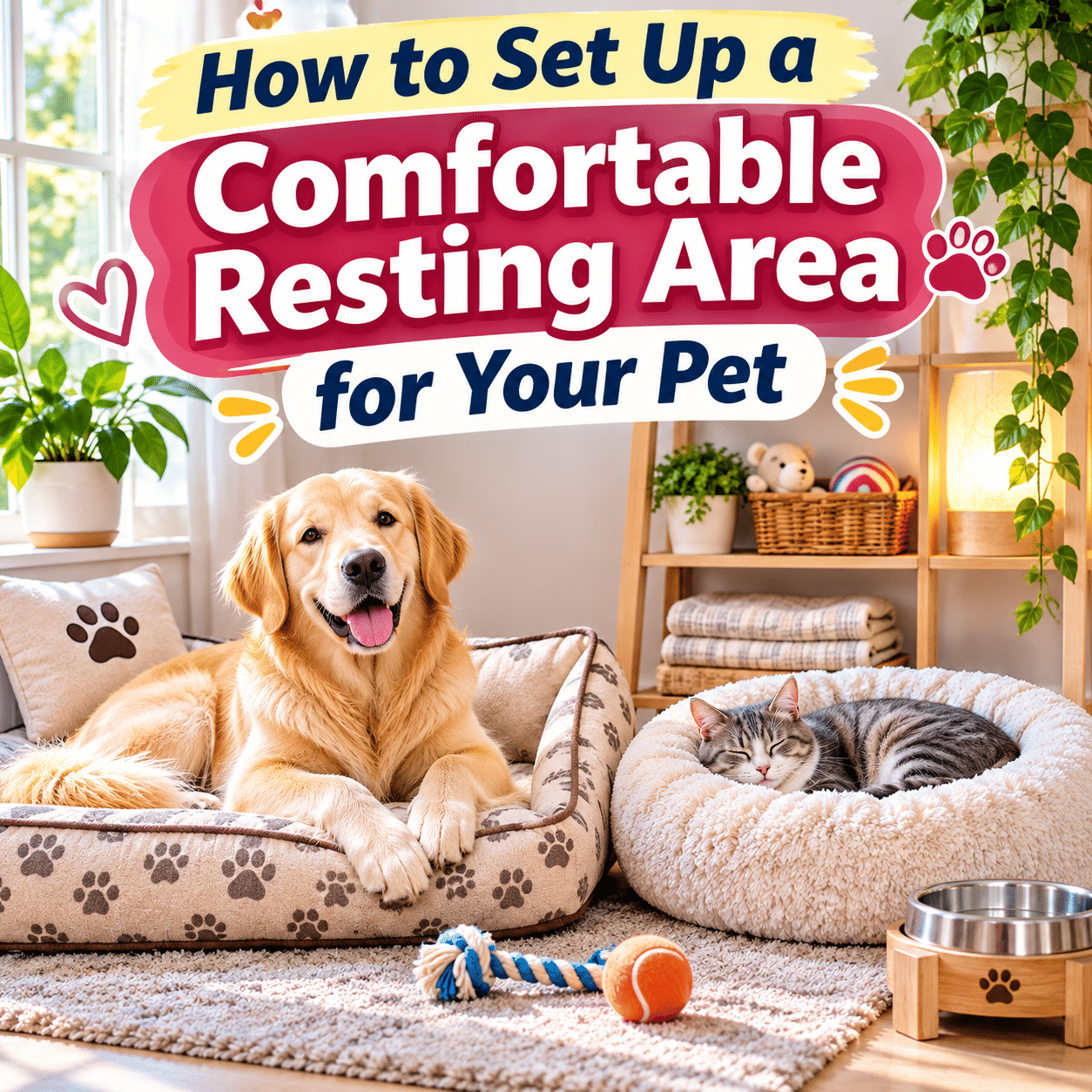
A comfortable resting area is one of the most valuable spaces you can create for a pet at home. Whether you share your home with a playful puppy, a curious cat, or an older companion who enjoys peaceful afternoons, having a dedicated place to relax can make everyday life more comfortable and predictable.
Pets spend a significant portion of their day resting, sleeping, observing their surroundings, and recovering from physical activity. A thoughtfully arranged resting space supports these natural behaviors while giving them somewhere familiar to retreat when they want quiet time.
Creating this area does not necessarily require expensive furniture, a separate room, or a large home. A cozy corner, a well-positioned pet bed, and a few carefully selected accessories can often provide everything a pet needs.
The most important considerations are comfort, safety, accessibility, cleanliness, and your pet’s individual preferences. A resting area that looks beautiful but does not suit your pet’s habits may remain unused, while a simple, well-planned space can quickly become a favorite spot.
This guide explains how to choose a suitable location, select comfortable bedding, organize essential accessories, maintain a pleasant environment, and adapt the resting area as your pet’s needs change.
1. Understand Your Pet’s Natural Resting Preferences
Before choosing a bed or rearranging furniture, observe how your pet prefers to rest.
Different animals have different sleeping habits, and even pets of the same species may enjoy very different environments.
Notice Where Your Pet Naturally Sleeps
Spend a few days observing the places your pet chooses when relaxing.
Some pets prefer:
- Quiet corners away from household activity.
- Warm spots with gentle natural light.
- Soft cushions near their favorite family members.
- Cool flooring during warmer weather.
- Covered spaces that provide a sense of privacy.
- Elevated surfaces with a view of the room.
- Open areas where they can easily observe their surroundings.
These preferences offer useful clues about where a permanent resting area might work best.
For example, a cat that regularly naps on a windowsill may appreciate a secure resting perch near a window. A dog that settles beside the sofa may prefer a comfortable bed within sight of family activities.
Consider Age, Size, and Mobility
Your pet’s physical characteristics influence the type of resting area that will be most comfortable.
Young pets may need easily washable bedding, a safe location, and a space protected from household hazards.
Adult pets often benefit from a consistent resting location with enough room to stretch and change positions.
Senior pets may need supportive bedding, low entry points, nonslip flooring, and convenient access to water.
Pets with limited mobility may require additional accommodations, such as avoiding stairs, raised beds, or narrow entrances.
A resting area should accommodate your pet’s current needs rather than simply match the surrounding furniture.
Respect Individual Personality
Some pets enjoy being close to people throughout the day. Others prefer privacy and minimal disturbance.
Neither preference is necessarily better.
A social dog may enjoy a bed beside a desk where someone works. A shy cat may feel more comfortable in a quiet corner with a partially enclosed sleeping space.
The goal is to create an environment your pet willingly chooses.
2. Choose the Best Location for a Pet Resting Area
Location is often more important than the appearance of the bed itself.
A comfortable sleeping surface placed in a noisy, drafty, or frequently disturbed area may not provide the restful environment your pet needs.
Look for a Quiet but Accessible Spot
Choose an area where your pet can relax without constant interruptions.
Suitable locations may include:
- A quiet corner of the living room.
- A section of the bedroom.
- A sheltered area beside a home office.
- A low-traffic space near a familiar piece of furniture.
- A dedicated pet corner away from busy walkways.
Avoid placing the resting area directly in front of doors, in narrow hallways, or where people regularly step over the bed.
Pets should be able to enter and leave their resting space freely.
Avoid Extreme Temperatures
A resting area should remain reasonably comfortable throughout the day and across seasons.
Avoid locations directly beside:
- Heating appliances.
- Fireplaces or exposed heat sources.
- Strong air-conditioning drafts.
- Frequently opened exterior doors.
- Windows receiving intense afternoon sunlight.
- Damp walls or poorly ventilated corners.
Some pets enjoy warm sunshine, but they should always have the option to move into a cooler area.
Likewise, pets that prefer cool surfaces should have access to comfortable alternatives when temperatures change.
Balance Privacy and Social Connection
A good resting area allows your pet to relax without feeling isolated from normal household activity.
For many dogs, a location near family members but outside the main walking path works well.
Cats may appreciate having more than one option, including a quiet enclosed space and a secure elevated resting location.
If your home has several rooms, consider providing multiple resting choices rather than expecting your pet to use only one spot.
3. Select the Right Pet Bed
A suitable bed provides a comfortable surface while allowing your pet to rest in natural positions.
The best choice depends on size, sleeping habits, physical needs, and the environment.
Choose the Correct Bed Size
Observe how your pet sleeps.
Does your dog curl into a small circle, stretch out completely, or sleep on its side?
Does your cat prefer a compact nest or a broad cushion?
As a general guide, the bed should allow your pet to lie comfortably in its preferred position without being forced against the edges.
For pets that stretch out, measure their approximate resting length and allow additional space.
For pets that curl up, a slightly more enclosed design may feel comfortable.
Avoid choosing a bed based only on the manufacturer’s general size category.
Compare Common Pet Bed Styles
| Bed Style | Main Features | Often Suitable For |
|---|---|---|
| Flat cushion bed | Open surface with flexible sleeping positions | Pets that stretch out |
| Bolster bed | Raised edges for resting the head | Pets that enjoy leaning against cushions |
| Donut-style bed | Rounded shape with soft surrounding sides | Pets that prefer curling up |
| Orthopedic-style bed | Supportive cushioning designed to distribute weight | Some senior pets or pets needing additional support |
| Covered cave bed | Partially enclosed sleeping space | Pets that prefer privacy |
| Elevated cot | Raised sleeping surface with airflow underneath | Some dogs that enjoy a cooler, open surface |
| Washable floor mat | Simple, portable resting surface | Travel, temporary resting areas, or easy cleaning |
These categories describe general designs rather than guaranteed benefits.
For example, a bed marketed as orthopedic is not automatically appropriate for every pet with joint discomfort. Support needs vary, and pets with medical conditions may benefit from veterinary guidance.
Evaluate Cushioning and Support
A comfortable bed should provide enough cushioning to prevent your pet from resting directly against a hard surface.
However, excessive softness can also be inconvenient, particularly for animals that struggle to stand up.
Look for bedding that:
- Maintains its shape during regular use.
- Does not collapse completely under your pet’s weight.
- Allows easy movement and repositioning.
- Has a stable base.
- Uses materials appropriate for the animal.
- Can be cleaned regularly.
For older dogs, a supportive mattress with a low entrance may be easier to use than a deeply cushioned bed with high sides.
Choose Practical, Pet-Safe Materials
Durability and washability are especially important.
Consider fabrics that are comfortable against your pet’s skin and suitable for regular laundering.
Removable covers are convenient because they allow more frequent cleaning without washing the entire bed.
Avoid beds with easily detachable decorations, loose buttons, accessible stuffing, or other components that your pet might chew and swallow.
For pets that frequently chew bedding, prioritize durable, closely supervised options and remove damaged items promptly.
4. Prepare a Comfortable Foundation
The surface beneath the resting area can influence stability, cleanliness, and comfort.
Use a Stable Floor Surface
Place the bed on a level surface where it will not slide easily.
Smooth tile or polished flooring may require a nonslip mat beneath the bed.
This is particularly useful for older dogs and pets with reduced mobility.
A stable resting surface makes entering and leaving the bed easier.
Add a Suitable Blanket
A lightweight blanket can make a resting area feel familiar and inviting.
Choose one that:
- Is appropriate for the room temperature.
- Can be washed easily.
- Does not contain loose threads or hazardous decorations.
- Is large enough for comfortable use without excessive loose fabric.
- Does not create an overheating risk.
Some pets enjoy arranging blankets before lying down, while others prefer sleeping directly on a mattress.
Let your pet’s behavior guide the setup.
Keep Bedding Simple
It may be tempting to fill a pet bed with decorative pillows, stuffed animals, and multiple blankets.
However, too many items can reduce usable sleeping space or create unnecessary hazards.
Start with the essentials:
- One appropriately sized bed.
- One optional washable blanket.
- A stable, clean foundation.
Add accessories only when they serve a clear purpose.
5. Create a Calm and Relaxing Atmosphere
A comfortable resting area involves more than physical bedding.
Lighting, noise, temperature, and nearby activity all influence how inviting the space feels.
Use Gentle Lighting
Pets do not need decorative lighting to rest comfortably.
During the day, natural light can make a room pleasant, provided the resting area does not become excessively hot.
In the evening, ordinary soft household lighting is generally sufficient.
Avoid placing bright, flashing, or frequently changing lights directly beside the resting space.
Reduce Unnecessary Noise
Try to position the bed away from consistently loud appliances and high-traffic activity.
Potential disturbances include:
- Washing machines.
- Vacuum cleaners.
- Loud entertainment systems.
- Frequently closing doors.
- Busy kitchen equipment.
- Children’s active play areas.
Complete silence is not necessary. Many pets relax comfortably with familiar background household sounds.
The priority is to reduce unpredictable disturbances.
Avoid Strong Fragrances
Scented candles, essential oil diffusers, and heavily fragranced sprays are not necessary for a pet resting area.
Some fragrance ingredients and essential oils can be irritating or harmful to animals, particularly cats and birds.
A clean, well-ventilated room is preferable to adding artificial scents.
If odor control is needed, focus on washing bedding, cleaning nearby surfaces, and addressing the source of the odor.
6. Organize Essential Items Around the Resting Area
A dedicated pet corner can include a few useful accessories without becoming cluttered.
Keep Water Accessible
Fresh drinking water should be available in an appropriate location.
The bowl does not have to sit directly beside the bed, but your pet should be able to reach it conveniently.
For older pets or animals with mobility difficulties, reducing the distance to water may be especially helpful.
Choose a stable bowl and clean it regularly.
Provide a Small Toy Area
A favorite toy may help make the resting area familiar.
However, avoid placing too many toys inside the sleeping space.
Keep active play toys nearby rather than directly on the mattress.
Remove toys that are damaged, small enough to swallow, or unsuitable for unsupervised use.
Create Simple Storage
A small basket, drawer, or shelf can hold pet accessories.
Useful items may include:
- Spare bedding covers.
- Clean blankets.
- Grooming supplies.
- Appropriate toys.
- Pet-safe cleaning materials.
Keep medications, cleaning chemicals, and other potentially hazardous products securely out of reach.
Organized storage makes routine maintenance easier and keeps the resting area visually calm.
7. Set Up the Resting Area Step by Step
Creating a comfortable pet corner can be a straightforward home project.
Step 1: Observe Your Pet’s Habits
Identify the locations where your pet naturally relaxes.
Pay attention to preferred temperatures, sleeping positions, and proximity to people.
Step 2: Select a Suitable Location
Choose a quiet, accessible area away from major hazards.
Check for drafts, direct heat, electrical cords, and frequent foot traffic.
Step 3: Measure the Available Space
Measure the floor area before purchasing or positioning a bed.
Leave enough room for your pet to enter, turn around, and exit comfortably.
Avoid blocking doors, walkways, or ventilation openings.
Step 4: Prepare the Floor
Clean and dry the surface.
Add a nonslip mat if necessary.
Make sure the bed will remain stable when your pet moves.
Step 5: Position the Bed
Place the bed where your pet can comfortably observe or avoid household activity according to its preferences.
Check that the bed is not exposed to excessive sunlight, drafts, or heat.
Step 6: Add Familiar Bedding
Place a clean, familiar blanket or another suitable item on the bed.
Familiar household scents may help some pets recognize the space.
Avoid using dirty bedding simply to preserve a scent.
Step 7: Arrange Nearby Essentials
Provide convenient access to water and store appropriate toys nearby.
Keep the immediate sleeping surface uncluttered.
Step 8: Introduce the Area Gradually
Allow your pet to explore the new space voluntarily.
Reward calm interest with gentle praise or an appropriate treat.
Never force your pet to remain on the bed.
Step 9: Observe and Adjust
Watch how your pet uses the resting area over several days.
If your pet consistently avoids the bed, reconsider its location, texture, shape, or temperature.
Small adjustments can make a significant difference.
8. Make the Resting Area Suitable for Dogs
Dogs often appreciate a predictable place to relax while remaining connected to family activity.
Position the Bed Near Familiar Activity
Many dogs enjoy resting within sight of their owners.
A quiet corner of the living room or bedroom may be more appealing than an isolated room.
Avoid positioning the bed where people regularly step around or over the dog.
Provide Enough Stretching Space
Dogs change positions throughout the day.
A bed should accommodate normal movement, including lying on the side, curling up, and stretching out.
Larger dogs may particularly benefit from spacious, supportive bedding.
Consider Crate Resting Areas Carefully
Some dogs willingly use a properly introduced crate as a resting space.
If using a crate:
- Choose an appropriate size.
- Provide suitable bedding when safe for the individual dog.
- Ensure adequate ventilation.
- Keep the crate away from extreme temperatures.
- Introduce it gradually through positive experiences.
- Never use the crate as punishment.
A crate should not replace opportunities for movement, exercise, social interaction, and appropriate bathroom breaks.
A resting crate should be a comfortable option, not a place where a dog is routinely confined for excessive periods.
9. Make the Resting Area Suitable for Cats
Cats often have distinctive preferences for privacy, height, warmth, and observation.
Providing several resting choices can be more effective than creating a single elaborate bed.
Offer Elevated Resting Options
Many cats enjoy observing their surroundings from above.
A stable cat tree, secure window perch, or suitable shelf may provide an appealing resting location.
Any elevated structure should be properly secured and able to support the cat safely.
Avoid unstable furniture or locations near unsafe windows and balconies.
Include a Quiet Hiding Space
Some cats prefer partially enclosed beds or quiet hiding areas.
A covered cat bed or suitable enclosed resting structure can provide privacy.
Ensure the space has adequate ventilation and allows the cat to enter and leave freely.
Separate Resting Areas From Litter Boxes
Cats generally benefit from having resting, feeding, and toileting areas appropriately separated.
Avoid placing a sleeping bed immediately beside a litter box.
Keep litter areas clean and accessible while allowing the cat to rest in a separate, comfortable location.
Respect Independent Choices
Cats may alternate between several sleeping places depending on temperature, time of day, and activity.
It is normal for a cat to ignore an expensive bed while choosing a cardboard box or familiar chair.
Observe these choices and adapt accordingly.
10. Adapt the Resting Area for Senior Pets
Older pets may experience changes in mobility, temperature tolerance, and sleeping patterns.
A resting area that worked well for years may eventually need adjustments.
Choose Easy-Access Bedding
Low-profile beds can reduce the need to step over raised edges.
For pets with mobility limitations, avoid beds that require jumping or climbing.
Improve Floor Traction
Place nonslip mats around the resting area if the surrounding floor is slippery.
Stable footing can help pets move more confidently.
Consider Supportive Bedding
A mattress that distributes weight comfortably may be helpful for some older pets.
However, bedding should not be viewed as treatment for arthritis or other medical conditions.
If your pet shows stiffness, pain, difficulty standing, or a sudden change in resting habits, consult a veterinarian.
Keep Essentials Nearby
Water, suitable resting surfaces, and accessible routes to toileting areas can make everyday life easier.
For senior cats, consider whether elevated sleeping spots remain practical.
For senior dogs, minimize unnecessary stairs or obstacles between the bed and commonly used areas.
11. Design a Resting Area for Small Homes
A comfortable pet space does not require a large room.
Even compact apartments can accommodate thoughtful resting areas.
Use Underutilized Corners
Look for spaces beside sofas, desks, or bedroom furniture that do not interfere with movement.
A small pet bed can fit naturally into a quiet corner.
Choose Furniture That Serves Multiple Purposes
Some pet furniture combines resting space with household storage or other functions.
When considering these designs, prioritize ventilation, stability, safe materials, and easy access.
Avoid enclosed furniture that traps heat or restricts movement.
Keep the Design Visually Simple
Neutral bedding, a compact storage basket, and a clean surrounding area can help the pet corner blend into the home.
Matching colors is optional.
Comfort and safety should always take priority over appearance.
Avoid Overcrowding
A small but open resting area is generally more practical than a decorative setup filled with unnecessary accessories.
Leave enough space for your pet to move naturally.
12. Maintain a Clean and Hygienic Resting Area
Regular cleaning helps control dirt, loose fur, odors, and environmental allergens.
Cleaning frequency depends on the pet, bedding materials, household conditions, and how heavily the area is used.
Establish a Practical Cleaning Routine
| Frequency | Suggested Tasks | Purpose |
|---|---|---|
| Daily | Remove visible debris and inspect the bed | Maintain basic cleanliness and identify damage |
| Several times weekly | Vacuum nearby flooring and remove loose fur as needed | Reduce accumulated hair and dirt |
| Weekly or as needed | Wash removable bedding according to care instructions | Maintain freshness and hygiene |
| Periodically | Clean beneath the bed and inspect its condition | Prevent hidden dirt buildup |
| Seasonally | Reassess bedding, placement, and temperature suitability | Adapt to environmental changes |
These are general starting points, not fixed requirements.
Bedding may need more frequent cleaning if your pet sheds heavily, spends time outdoors, has accidents, or experiences certain skin conditions.
Wash Bedding Properly
Follow the manufacturer’s care instructions.
Use a detergent appropriate for the fabric and household pets, and rinse thoroughly.
Avoid unnecessary fragrances or cleaning additives that may irritate sensitive animals.
Dry bedding completely before returning it to the resting area.
Damp bedding can create an unpleasant environment and encourage unwanted microbial growth.
Inspect for Wear and Damage
Check for:
- Torn seams.
- Exposed stuffing.
- Broken zippers.
- Loose decorative components.
- Damaged foam.
- Excessive flattening.
- Persistent odors that remain after cleaning.
Replace bedding when damage creates a safety concern or the bed no longer provides adequate support.
13. Adjust the Resting Area for Different Seasons
Seasonal changes may affect your pet’s preferred sleeping location and bedding.
During Warmer Weather
Consider:
- Moving the bed away from intense sunlight.
- Choosing breathable, washable fabrics.
- Maintaining comfortable ventilation.
- Providing access to cooler resting surfaces.
- Ensuring fresh water remains available.
Avoid assuming that every pet needs a cooling product.
Some pets naturally prefer cool flooring, while others continue to use their regular beds.
During Cooler Weather
Consider:
- Moving the bed away from cold drafts.
- Adding an appropriate washable blanket.
- Using a thicker cushion when suitable.
- Keeping the resting area dry.
- Maintaining a comfortable indoor temperature.
Avoid placing the bed directly against heaters or other hot surfaces.
Electric heating pads and heated beds require particular caution and should only be used when specifically designed for pets and appropriate for the animal, following the manufacturer’s safety instructions.
During Humid Conditions
Pay attention to moisture accumulation.
Wash and dry bedding thoroughly, maintain ventilation, and avoid positioning beds against damp surfaces.
In humid climates, breathable materials and removable covers can make maintenance easier.
14. Help Your Pet Become Comfortable With the New Space
A newly arranged resting area may not immediately become your pet’s favorite place.
Familiarity often develops gradually.
Introduce the Space Without Pressure
Allow your pet to investigate the bed at its own pace.
Place it near an existing favorite resting spot if practical.
Use gentle praise or suitable rewards when your pet voluntarily approaches or settles there.
Keep the Location Consistent
Once your pet begins using the resting area, avoid moving it unnecessarily.
A predictable location may help the space become part of the animal’s daily routine.
However, consistency should not prevent changes when the original location proves uncomfortable.
Never Use the Resting Area as Punishment
A dedicated resting place should remain associated with comfort and security.
Do not send your pet to its bed as punishment or repeatedly disturb it while resting.
Teach household members to respect the animal’s need for uninterrupted downtime.
Respect Your Pet’s Choice
Not every pet will use a dedicated bed every day.
Some animals prefer different surfaces depending on their mood, temperature, or activity.
The purpose of the resting area is to provide a comfortable option, not to control every sleeping location.
15. Common Pet Resting Area Problems and Solutions
Even a carefully planned space may require adjustments.
| Problem | Possible Explanation | Practical Solution |
|---|---|---|
| Pet ignores the new bed | Unfamiliar texture or location | Move it closer to a preferred resting spot |
| Pet sleeps beside the bed | Bed may be too warm, soft, or restrictive | Try a different surface or style |
| Bed slides across the floor | Smooth flooring or unstable base | Add a suitable nonslip mat |
| Pet chews the bedding | Chewing behavior or unsuitable materials | Remove damaged bedding and provide appropriate alternatives |
| Resting area develops odors | Accumulated dirt or insufficient cleaning | Wash bedding and clean nearby surfaces |
| Pet avoids the area during the day | Excessive sunlight, noise, or disturbance | Adjust location and environmental conditions |
| Senior pet struggles to enter | Raised sides or unsuitable bed height | Choose a low-entry design |
| Multiple pets compete for one bed | Insufficient resting choices or resource conflict | Provide separate comfortable resting spaces |
If a pet suddenly avoids resting, appears uncomfortable, vocalizes in pain, or has difficulty lying down or standing, seek veterinary advice rather than assuming the bed is the only problem.
16. Create a Pet Resting Area That Complements Your Home
A dedicated pet corner can be functional and visually appealing without compromising comfort.
Choose a Coordinated Color Palette
Select bedding colors that work with nearby furniture if desired.
Neutral shades, earthy tones, and simple patterns often blend easily into living rooms and bedrooms.
However, color coordination should never outweigh washable materials and suitable construction.
Use Natural-Looking Textures
Cotton fabrics, washable woven covers, and other appropriate materials can create a warm appearance.
Avoid decorative elements that shed fibers, fray easily, or present chewing hazards.
Keep Accessories Minimal
A pet bed, one useful storage container, and a nearby water station may be enough.
Decorative plants should be selected carefully because many common houseplants are toxic to cats or dogs.
Keep unsafe plants out of reach, and remember that elevated shelves are not necessarily inaccessible to cats.
Maintain Clear Walkways
Position the resting area so that both people and pets can move comfortably.
Avoid creating tripping hazards with electrical cords, loose mats, or oversized accessories.
A well-integrated pet space should make the home easier to use, not more complicated.
17. Practical Checklist for Setting Up a Pet Resting Area
Use this checklist when preparing a new space or reviewing an existing one.
Location and Environment
- The location is reasonably quiet.
- The area is accessible to the pet.
- The bed does not block household walkways.
- The space is protected from extreme heat and cold.
- Ventilation is appropriate.
- The area is away from obvious household hazards.
- The pet can leave the resting space freely.
Bedding and Comfort
- The bed is appropriately sized.
- The surface suits the pet’s preferred sleeping position.
- Cushioning provides suitable support.
- The bed has a stable foundation.
- Fabrics are appropriate for the animal.
- Bedding can be cleaned effectively.
- No loose or damaged components are present.
Organization and Safety
- Fresh water is conveniently accessible.
- Toys are appropriate and safely stored.
- Electrical cords are secured.
- Cleaning products are out of reach.
- Nearby plants are pet-safe or inaccessible.
- Elevated structures, if used, are secure.
- Multiple pets have suitable resting choices.
Maintenance and Adjustment
- Bedding is inspected regularly.
- Removable covers are washed as needed.
- The floor beneath the bed is cleaned.
- The area is adjusted for seasonal conditions.
- The pet’s changing needs are considered.
- The animal voluntarily uses or explores the space.
18. Frequently Asked Questions
1. Where is the best place to put a pet bed?
A quiet, accessible location away from extreme temperatures and frequent disturbances is usually a good starting point. The ideal position depends on whether your pet prefers privacy or proximity to family members.
2. Should a pet bed be placed in the bedroom or living room?
Either can work. Choose the location that best suits your pet’s habits and household routine. Some pets benefit from having resting options in both rooms.
3. How big should a pet bed be?
The bed should accommodate your pet’s natural sleeping positions. Pets that stretch out generally need more open space than those that prefer curling up.
4. Do pets need a dedicated resting area?
A dedicated resting area is beneficial for many pets because it provides a predictable, comfortable option. However, pets may also choose other safe resting locations throughout the home.
5. Can a pet sleep directly on the floor?
Some healthy pets voluntarily prefer cool or firm flooring. However, a suitable cushioned option should remain available, particularly for animals that need additional support or warmth.
6. What type of bed is best for an older dog?
A supportive, stable bed with easy access is often practical. Dogs with arthritis, pain, or mobility difficulties may need individualized recommendations from a veterinarian.
7. Do cats prefer covered or open beds?
Preferences vary. Some cats enjoy enclosed spaces, while others prefer open cushions or elevated perches. Offering more than one safe option can help accommodate different behaviors.
8. Should a pet bed be placed near a window?
It can be, provided the location does not become excessively hot or expose the pet to unsafe windows, drafts, or direct hazards.
9. How often should pet bedding be washed?
Wash bedding whenever it becomes dirty or develops odors, and establish a regular routine based on your pet’s activities and the manufacturer’s care instructions.
10. Is it safe to use a regular household pillow as a pet bed?
A household pillow may not provide suitable support or durability. Loose stuffing, removable decorations, or damaged fabric can also present hazards. Purpose-designed bedding is often easier to evaluate for pet use.
11. Should toys be kept inside the pet bed?
A suitable favorite toy may be fine, but avoid overcrowding the sleeping area. Remove damaged or potentially hazardous toys, especially when your pet is unsupervised.
12. How can I encourage my pet to use a new bed?
Place it near a familiar resting location, allow voluntary exploration, and reward calm interest. Avoid forcing the pet onto the bed.
13. Why does my dog sleep beside the bed instead of on it?
The dog may prefer a cooler, firmer, or more open surface. Bed size, texture, temperature, and location may all influence the choice.
14. Why does my cat ignore an expensive cat bed?
Cats may prefer familiar textures, particular temperatures, or locations that provide privacy or visibility. Price does not determine whether a bed suits an individual cat.
15. Can two pets share the same resting area?
Some pets willingly rest together, but each animal should have access to its own suitable resting space. Do not require animals to share a bed if they show discomfort or tension.
16. Should a pet resting area include a water bowl?
Water should be conveniently accessible, although the bowl does not need to be immediately beside the bed. A stable location that prevents spills is preferable.
17. Are heated pet beds necessary?
Most pets do not require heated bedding in a comfortably maintained indoor environment. Heated products may be appropriate in certain situations but require careful selection and safe use.
18. Can I place a pet bed under furniture?
It may be suitable if the space is well ventilated, accessible, stable, and free of hazards. Avoid cramped areas where the pet could become trapped or overheated.
19. How do I know whether my pet is comfortable in its resting area?
Signs may include voluntarily returning to the space, settling into relaxed positions, and resting without frequent disturbance. Persistent restlessness, difficulty lying down, or unusual behavior may warrant further attention.
20. When should I replace a pet bed?
Replace it when the structure becomes unsafe, cushioning no longer provides suitable support, damage exposes hazardous materials, or cleaning can no longer maintain acceptable hygiene.
19. A Simple Resting Area Setup for Different Pets
The following examples can help you adapt the general principles to different household situations.
| Pet or Situation | Suggested Setup | Important Consideration |
|---|---|---|
| Small adult dog | Washable bolster bed in a quiet living room corner | Allow enough space for stretching |
| Large adult dog | Spacious supportive floor mattress | Choose stable cushioning and durable materials |
| Indoor cat | Soft bed plus secure elevated resting option | Provide privacy and safe access |
| Senior dog | Low-entry supportive bed with nonslip surroundings | Minimize obstacles and difficult movements |
| Senior cat | Accessible cushion in a quiet location | Avoid requiring unnecessary jumping |
| Puppy | Washable, appropriately sized resting surface | Monitor chewing and bedding safety |
| Multi-pet household | Separate beds in several quiet locations | Respect individual space preferences |
| Small apartment | Compact bed beside familiar furniture | Keep walkways open |
| Warm climate | Breathable bedding with access to cooler surfaces | Avoid overheating and direct intense sunlight |
| Cooler climate | Cushioned bed away from drafts with optional blanket | Avoid unsafe heating sources |
These examples are starting points. Individual preferences and health needs should guide the final arrangement.
Final Thoughts
Setting up a comfortable resting area for your pet is a thoughtful way to make your home more welcoming for the animals who share it.
The most successful resting spaces are not necessarily the largest, most decorative, or most expensive. They are the ones that reflect a pet’s natural habits, provide appropriate physical comfort, and offer a peaceful place to relax.
By choosing a suitable location, selecting supportive and washable bedding, maintaining a safe environment, and keeping essential items organized, you can create a resting area that fits naturally into everyday life.
Remember that pets have individual preferences. Some enjoy cozy enclosed beds, others prefer open cushions, and many appreciate having several resting choices throughout the home.
Observe your pet, introduce changes gradually, and adjust the space as their needs evolve.
A simple, clean, and comfortable corner can become a familiar part of your pet’s daily routine—a welcoming place to rest, recharge, and feel at home.