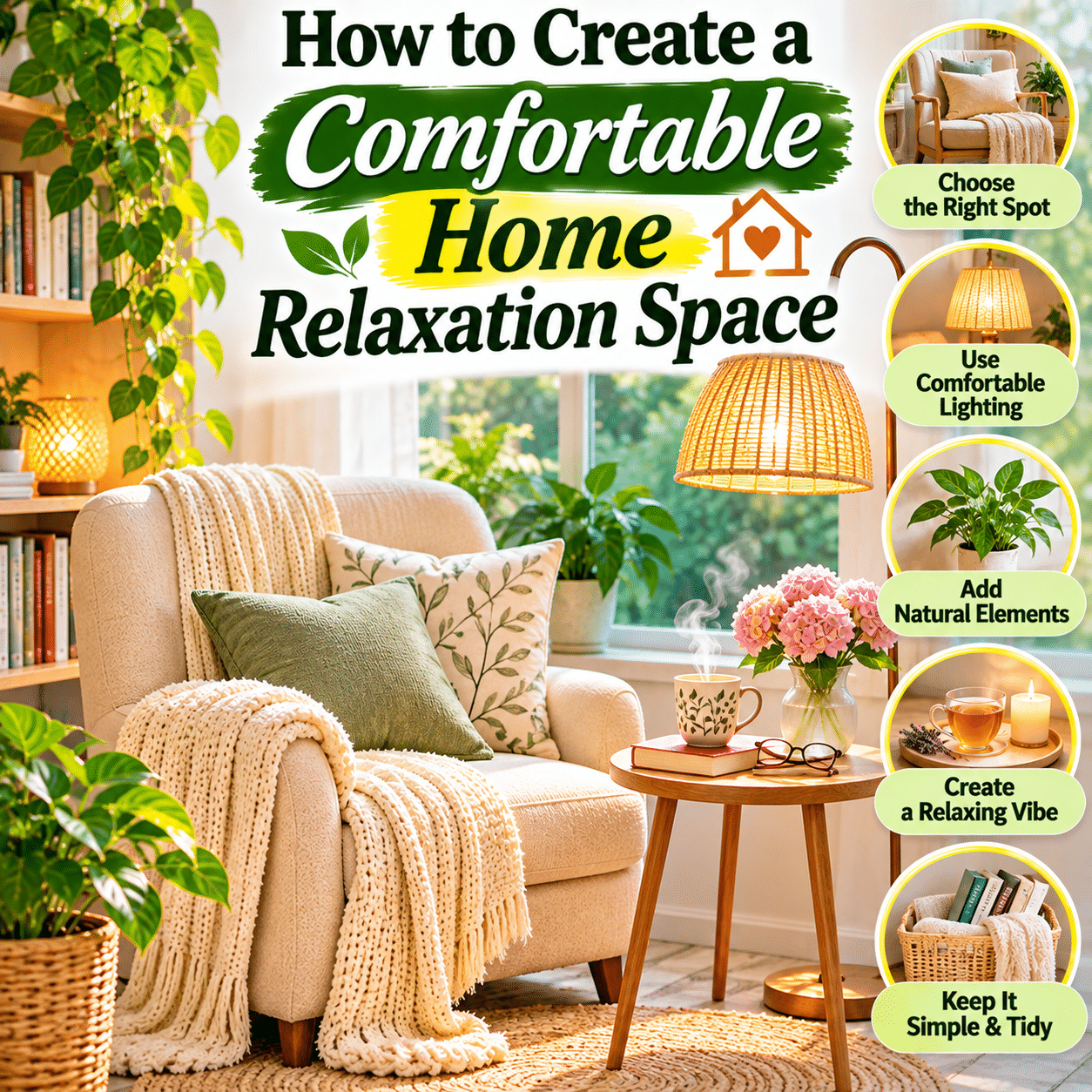
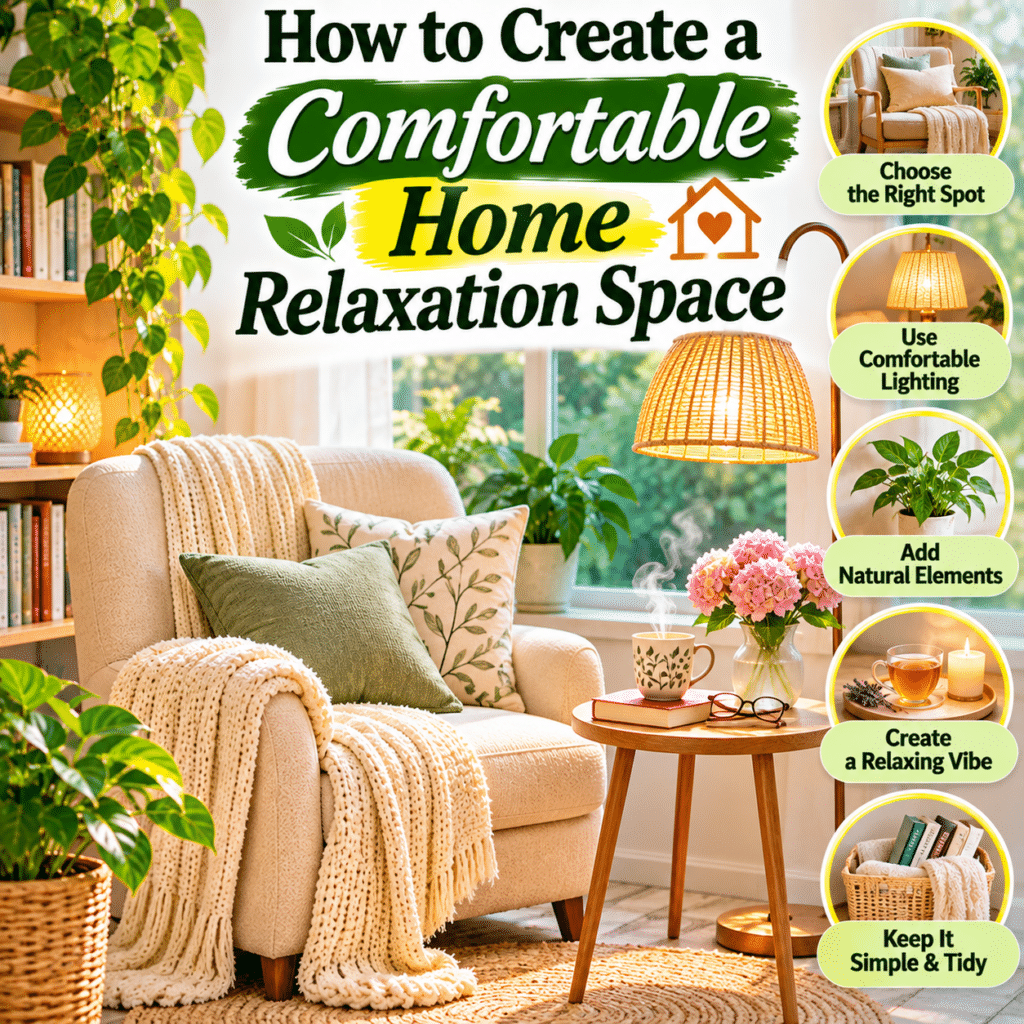
Home is more than a place to sleep, prepare meals, and complete everyday responsibilities. It can also be a personal retreat where you step away from daily demands, enjoy quiet moments, and spend time doing activities that help you feel comfortable and refreshed.
However, creating a relaxing atmosphere at home is not always easy. Work materials, household clutter, digital distractions, limited space, and competing responsibilities can make it difficult to find an area dedicated to rest.
The good news is that a comfortable home relaxation space does not require a large room, expensive furniture, or an elaborate interior design project.
A quiet corner beside a window, a comfortable chair in the bedroom, a small reading nook, or a thoughtfully arranged section of the living room can become a welcoming place to unwind.
What matters most is how the space supports your personal needs.
Some people relax by reading, listening to music, or enjoying a warm beverage. Others prefer gentle stretching, journaling, creative hobbies, or simply sitting quietly without distractions.
A useful relaxation space should reflect these preferences while providing appropriate seating, comfortable lighting, manageable noise, and an atmosphere that feels inviting.
It should also be practical enough to maintain over time. A beautifully decorated corner that is uncomfortable, difficult to access, or constantly filled with unrelated belongings may not serve its intended purpose.
This guide explores how to choose the right location, arrange comfortable furniture, use lighting and natural elements, organize personal belongings, and create a peaceful atmosphere without unnecessary expense.
Whether you live in a spacious house, a compact apartment, or a shared home, these ideas can help you create a comfortable relaxation space that fits naturally into everyday life.
1. Understand What a Home Relaxation Space Is
A home relaxation space is an area intentionally arranged for rest, leisure, and personal comfort.
It may be used for:
- Reading books.
- Listening to music.
- Enjoying coffee or tea.
- Practicing gentle stretching.
- Journaling.
- Meditating.
- Spending quiet time alone.
- Enjoying creative hobbies.
- Looking outdoors.
- Resting between daily activities.
Unlike a home office or a kitchen workspace, its primary purpose is not productivity.
Instead, it provides a setting where you can temporarily step away from responsibilities and enjoy activities at a comfortable pace.
The space does not need to be used exclusively for relaxation.
A living room chair or bedroom corner can serve several purposes throughout the day.
2. Recognize That Relaxation Looks Different for Everyone
A peaceful environment is a personal experience.
Some people prefer silence, soft lighting, and minimal decoration.
Others feel comfortable surrounded by books, plants, colorful cushions, or familiar objects.
One person may enjoy a cozy enclosed corner, while another prefers an open space with natural light and outdoor views.
Before arranging your relaxation area, consider what helps you feel at ease.
Ask yourself:
- Do I prefer bright or softly lit spaces?
- Would I rather sit upright or recline?
- Do I enjoy reading, music, or quiet reflection?
- Do I prefer natural materials or modern furnishings?
- Would plants make the space more inviting?
- How much privacy do I need?
- What activities will I realistically enjoy here?
Your answers should guide the design.
3. Focus on Comfort Before Decoration
It is easy to begin a home relaxation project by choosing attractive furniture, decorative pillows, or wall art.
However, appearance alone does not determine comfort.
A chair may look beautiful but provide inadequate support.
A decorative lamp may create a pleasant atmosphere but be too dim for reading.
A soft rug may feel inviting but create a tripping hazard if it slides across the floor.
Begin with practical considerations:
- Comfortable seating.
- Appropriate lighting.
- Suitable temperature.
- Adequate ventilation.
- Manageable noise.
- Safe movement.
- Easy access to useful items.
Once these foundations are in place, decorative details can enhance the space.
4. Keep the Relaxation Space Simple and Manageable
A relaxing area should not become another demanding household project.
You do not need to purchase a complete furniture collection or redesign an entire room.
Begin with a small arrangement.
For example:
- One comfortable chair.
- One suitable lamp.
- A small side table.
- A soft cushion.
- A favorite book.
- A plant or personal decoration.
These few items may be enough to create an inviting corner.
Additional accessories can be introduced gradually if they serve a useful purpose.
Choosing the Right Location for Your Relaxation Space
5. Look for a Naturally Comfortable Area
Walk through your home and identify places that already feel pleasant.
Potential locations include:
- A quiet living room corner.
- A bedroom beside a window.
- An unused area near a bookshelf.
- A covered balcony.
- A small space beside indoor plants.
- A corner of a home office.
- A window seat.
- A section of a guest room.
The best location is not necessarily the largest.
It is the one that offers a useful combination of comfort, accessibility, and privacy.
6. Consider Natural Light
Natural light can make an indoor space feel open and welcoming.
A chair near a window may provide pleasant daytime illumination and a connection to the outdoors.
However, direct sunlight can create glare or excessive heat.
Consider the direction of the window and how sunlight changes throughout the day.
Sheer curtains, adjustable blinds, or suitable window coverings can help manage brightness.
If your relaxation space is primarily used in the evening, artificial lighting may be more important than natural light.
7. Pay Attention to Household Noise
Noise can influence how comfortable a relaxation area feels.
A location beside a busy hallway, television, or frequently used appliance may be distracting.
If possible, choose an area away from the busiest parts of the home.
When complete quiet is not available, consider:
- Soft furnishings.
- Curtains.
- Rugs.
- Upholstered furniture.
- Closed doors.
- Comfortable background sounds.
These elements may help soften or mask some everyday noise, although they do not provide complete soundproofing.
8. Think About Privacy
Privacy can make it easier to enjoy uninterrupted personal time.
In a shared home, consider choosing a location that is not directly in the main traffic path.
Possible solutions include:
- A corner behind a bookshelf.
- A comfortable chair in the bedroom.
- A lightweight room divider.
- Curtains where appropriate.
- A clearly designated personal seating area.
Privacy does not necessarily require physical separation.
Household agreements about quiet time can also help.
9. Make the Space Easy to Access
A relaxation area is more useful when you can reach it without rearranging furniture or moving stored belongings.
Avoid creating a corner that becomes blocked by laundry baskets, storage boxes, or household equipment.
Keep walking paths clear.
Place frequently used items within comfortable reach.
A convenient space is more likely to become part of your everyday routine.
10. Consider Temperature and Airflow
Temperature strongly influences physical comfort.
A relaxation corner beside a sunny window may become too warm during certain hours.
An area directly beneath an air-conditioning vent may feel too cold.
Consider:
- Air circulation.
- Sun exposure.
- Humidity.
- Nearby heat sources.
- Seasonal changes.
- Personal temperature preferences.
Use fans, curtains, ventilation, or cooling systems when appropriate.
The goal is a comfortable environment rather than a specific universal temperature.
Choosing Comfortable Furniture
11. Start With Supportive Seating
Seating is often the central element of a home relaxation space.
Possible options include:
- An upholstered armchair.
- A compact lounge chair.
- A small sofa.
- A cushioned bench.
- A window seat.
- A reclining chair.
- A supportive floor chair.
Choose seating based on your preferred activities.
A reading chair may need good back support and an upright position.
A lounge chair may be more suitable for listening to music or resting.
12. Consider Seat Height and Depth
A chair should allow you to sit comfortably without unnecessary strain.
When evaluating seating, consider:
- Whether your feet can rest comfortably.
- Whether the seat feels too deep or shallow.
- Whether your back receives appropriate support.
- Whether the armrests are comfortable.
- Whether you can sit down and stand up easily.
People have different body proportions and mobility needs.
Whenever possible, test furniture before purchasing.
13. Use Cushions Thoughtfully
Cushions can improve comfort and add personality.
They may provide support for:
- The lower back.
- The neck.
- The arms.
- The sides of a chair.
However, too many cushions can reduce usable seating space.
Choose a few that provide genuine comfort.
Wash removable covers according to their care instructions.
14. Add a Footrest When Useful
A footrest can make some seating arrangements more comfortable.
Options include:
- A small upholstered ottoman.
- A compact footstool.
- A built-in chair extension.
- A stable cushioned bench.
Choose a height that allows a comfortable sitting position.
Avoid unstable furniture or arrangements that obstruct walking paths.
15. Include a Small Side Table
A side table can make the relaxation space more convenient.
It may hold:
- A book.
- A cup of tea.
- A water bottle.
- Reading glasses.
- A notebook.
- A small lamp.
- A decorative object.
Choose a stable surface that is easy to reach.
Avoid overcrowding it with unnecessary items.
16. Consider Floor Seating Carefully
Floor cushions and low seating can create an informal, cozy atmosphere.
However, they may not be comfortable or accessible for everyone.
Consider whether you can sit down and stand up easily.
Use supportive cushions when appropriate.
People with joint discomfort or mobility limitations may prefer conventional seating.
Comfort should take priority over appearance.
Creating Relaxing Lighting
17. Combine Natural and Artificial Light
A flexible lighting arrangement allows the space to serve different purposes throughout the day.
Natural light may be useful for daytime reading.
A floor lamp can provide illumination during the evening.
A small decorative lamp may create a softer atmosphere when bright task lighting is unnecessary.
Combining light sources gives you more control.
18. Choose Warm Lighting for a Cozy Atmosphere
Warm-toned lighting is often associated with a softer, more inviting environment.
It can be useful for evening relaxation.
However, lighting preferences vary.
Choose bulbs that provide comfortable brightness and suitable color temperature for the activity.
Avoid lighting that creates uncomfortable glare.
19. Use Task Lighting for Reading
Reading requires enough light to see text comfortably.
A lamp positioned beside or slightly behind the chair may provide useful illumination.
Adjust the angle to reduce shadows and glare.
If the lamp is too dim, reading may become uncomfortable.
A relaxing atmosphere should not come at the expense of visibility.
20. Consider Dimmable Lighting
Dimmable lamps allow you to adjust brightness according to the time of day.
For example:
- Brighter lighting for reading.
- Moderate lighting for journaling.
- Softer lighting for quiet music.
- Low lighting for evening winding down.
Make sure bulbs and fixtures are compatible with dimming controls.
21. Avoid Excessive Decorative Lighting
String lights and decorative lamps can add visual interest.
However, too many light sources may make a small space feel cluttered.
Choose a limited number of useful fixtures.
Follow electrical safety instructions.
Avoid overloading outlets or placing hot bulbs against flammable materials.
Using Color to Create a Comfortable Atmosphere
22. Choose Colors That Feel Pleasant to You
Color preferences are personal.
Some people enjoy neutral palettes, while others feel more comfortable with warm or colorful surroundings.
Common relaxation-space palettes include:
- Warm white and beige.
- Soft gray and natural wood.
- Sage green and cream.
- Muted blue and white.
- Terracotta and warm neutrals.
- Pale pink and light wood.
- Earth tones and botanical greens.
There is no single scientifically guaranteed relaxing color.
Choose shades that create an atmosphere you enjoy.
23. Use a Simple Color Palette
A limited color palette can help create visual consistency.
For example:
Base color: Cream.
Secondary color: Natural wood.
Accent color: Sage green.
These colors might appear in the chair, rug, cushions, and decorative objects.
A simple palette does not require everything to match perfectly.
24. Introduce Color Through Accessories
If you do not want to repaint walls or replace furniture, use smaller items.
Examples include:
- Cushion covers.
- Throws.
- Curtains.
- Artwork.
- Rugs.
- Plant pots.
- Decorative trays.
Accessories are easier to change as preferences evolve.
25. Avoid Visual Overcrowding
Too many competing colors, patterns, and decorative objects may make a small space feel busy.
If you prefer a calmer visual environment, leave some surfaces clear.
Allow larger furniture pieces to anchor the space.
Choose a few meaningful accents instead of filling every corner.
Adding Comfortable Textures and Materials
26. Use Soft Textiles
Textiles can make a relaxation space feel more inviting.
Consider:
- Cotton cushions.
- Linen covers.
- Soft blankets.
- Upholstered chairs.
- Woven throws.
- Comfortable rugs.
Choose materials based on climate, comfort, and ease of maintenance.
In warm environments, lightweight breathable fabrics may be preferable to heavy textiles.
27. Add a Rug When Appropriate
A rug can visually define a relaxation area.
It may also provide warmth and softness underfoot.
Choose a size that fits the furniture arrangement.
Use a suitable nonslip backing when necessary.
Avoid rugs that curl at the edges or create tripping hazards.
28. Incorporate Natural Materials
Wood, bamboo, cotton, linen, and woven fibers can create a warm, organic appearance.
Possible additions include:
- A wooden side table.
- A woven storage basket.
- A linen cushion.
- A bamboo tray.
- A cotton throw.
- A natural-fiber rug.
Choose materials that are practical for the room’s humidity and maintenance needs.
29. Balance Softness With Easy Cleaning
A comfortable space should also be manageable.
Very delicate fabrics or difficult-to-clean accessories may require more maintenance than you want.
Look for removable cushion covers, washable throws, and durable surfaces.
If you have pets, consider fabrics that are easier to clean and less likely to trap hair.
Bringing Nature Into Your Relaxation Space
30. Add Indoor Plants
Indoor plants can introduce greenery and visual interest.
They may help create a pleasant connection with nature.
Possible choices include:
- Pothos.
- Spider plants.
- Snake plants.
- ZZ plants.
- Peperomia.
- Parlor palms.
Select plants according to available light, watering needs, and household conditions.
If you have pets or small children, check plant toxicity before bringing a species into the home.
Some common houseplants are harmful if chewed or swallowed.
31. Choose Plants That Match the Available Light
Different plants require different lighting conditions.
A bright window may suit some species, while others tolerate lower indoor light levels.
Observe the location before choosing plants.
Avoid assuming that every indoor plant thrives in shade.
Use reliable species-specific care instructions.
32. Avoid Overcrowding the Area With Plants
Plants can make a space feel inviting, but too many may create maintenance problems.
Consider:
- Available floor space.
- Natural light.
- Watering access.
- Drainage.
- Air circulation.
- Potential spills.
- Pet safety.
One healthy, well-placed plant may be more practical than a crowded collection.
33. Use Natural Views When Available
A window overlooking trees, a garden, or the sky can become a focal point.
Position seating to enjoy the view without excessive glare.
Even in urban environments, a glimpse of greenery or daylight may make the space feel more connected to the outdoors.
34. Consider Nature-Inspired Decoration
If living plants are impractical, natural themes can still be introduced through:
- Botanical artwork.
- Landscape photography.
- Wood textures.
- Nature-inspired patterns.
- Earth-toned accessories.
- Decorative stones.
- Artificial plants.
Choose items that suit your preferences and maintenance expectations.
Managing Sound and Creating a Peaceful Atmosphere
35. Decide Whether You Prefer Silence or Background Sound
Not everyone relaxes in silence.
Some people enjoy quiet music, while others prefer natural sounds or gentle background noise.
Consider experimenting with:
- Instrumental music.
- Soft acoustic music.
- Nature recordings.
- Ambient soundscapes.
- Quiet radio programs.
- Silence.
Choose a sound environment that supports your intended activity.
36. Keep Audio Equipment Simple
A small speaker or suitable headphones may be enough.
Avoid complicated equipment unless it serves a clear purpose.
Keep volume at comfortable levels.
If headphones are used for long periods, follow safe listening practices.
37. Reduce Disruptive Household Noise
Soft furnishings can help reduce reflections and echoes within a room.
For example:
- Curtains.
- Rugs.
- Upholstered furniture.
- Cushions.
- Bookshelves.
These elements may improve acoustic comfort, but they cannot fully block outside noise.
For persistent noise problems, more specialized solutions may be necessary.
38. Use Fragrance Carefully
A pleasant scent may contribute to the atmosphere for some people.
However, fragrances can also trigger headaches, irritation, or allergic symptoms.
Scented candles, sprays, and essential oil diffusers should be used cautiously.
Some essential oils may be harmful to pets.
Never leave burning candles unattended.
A fragrance-free space can be just as relaxing.
Organizing Your Relaxation Space
39. Keep Essential Items Within Reach
A practical relaxation corner should contain the things you use most often.
Examples include:
- A current book.
- Reading glasses.
- A notebook.
- A pen.
- A blanket.
- A water bottle.
- A remote control.
- A small lamp.
Avoid filling the area with unrelated household items.
40. Use Small Storage Baskets
Baskets can help contain accessories without creating visual clutter.
They may hold:
- Blankets.
- Magazines.
- Journals.
- Craft supplies.
- Headphones.
- Small personal items.
Choose containers that are easy to move and clean.
41. Keep Cables Organized
Electronic devices may require charging cables or power connections.
Loose cables can create clutter and tripping hazards.
Use suitable cable clips or organizers.
Avoid running cords beneath rugs or through areas where they may become damaged.
Follow electrical safety recommendations.
42. Avoid Turning the Space Into General Storage
A relaxation corner can gradually become a convenient place to leave laundry, bags, packages, and miscellaneous items.
Prevent this by giving unrelated belongings their own storage locations.
A brief daily reset may help maintain the space.
The goal is not perfect tidiness but preserving its intended function.
43. Make Cleaning Easy
Choose furniture arrangements that allow you to vacuum, dust, and wipe surfaces comfortably.
Avoid placing heavy furniture where it is difficult to move or clean around.
Keep plant saucers and beverage surfaces clean.
A manageable space is easier to enjoy over time.
Creating Different Types of Home Relaxation Spaces
44. A Cozy Reading Nook
A reading nook is ideal for people who enjoy books and quiet time.
Useful elements include:
- A supportive chair.
- A reading lamp.
- A small bookshelf.
- A side table.
- A comfortable cushion.
- A soft throw.
Position the lamp to provide adequate reading light.
Keep current reading materials nearby.
45. A Quiet Tea or Coffee Corner
A small beverage corner can provide a pleasant place to enjoy a drink.
Consider:
- Comfortable seating.
- A stable table.
- A tray.
- A favorite mug.
- A nearby plant.
- Suitable lighting.
Hot beverages should be placed securely to reduce spill and burn risks.
Avoid overcrowding the relaxation area with unnecessary equipment.
46. A Meditation or Quiet Reflection Corner
Some people prefer a simple area for meditation, breathing exercises, or reflection.
Possible elements include:
- A comfortable cushion or chair.
- A soft mat.
- Gentle lighting.
- Minimal decoration.
- A small side table.
The space does not need specialized equipment.
Choose seating that is physically comfortable.
47. A Gentle Stretching Area
A relaxation space may also support light movement.
Consider:
- A nonslip exercise mat.
- Adequate floor clearance.
- Comfortable ventilation.
- Suitable lighting.
- Accessible storage for small equipment.
Avoid placing furniture where it interferes with safe movement.
Choose activities appropriate for your physical abilities.
48. A Creative Hobby Corner
Creative activities can provide enjoyable leisure time.
A small hobby space might include:
- A comfortable chair.
- A compact table.
- Suitable task lighting.
- Storage for supplies.
- A protective work surface.
Activities may include drawing, journaling, knitting, or simple crafts.
Keep sharp tools and potentially hazardous materials stored safely.
49. A Window Relaxation Corner
A window corner can take advantage of daylight and outdoor views.
Consider placing a chair or bench near the window.
Add a small cushion, a lamp, and a side table.
Use curtains or blinds to manage glare and heat.
Avoid obstructing windows needed for emergency access.
50. A Balcony Relaxation Space
A balcony can provide a connection to fresh air and outdoor surroundings.
Possible additions include:
- Weather-resistant seating.
- A compact table.
- Suitable plants.
- Outdoor cushions.
- Shade when necessary.
Check building regulations, balcony load limits, drainage, and railing safety.
Secure lightweight furniture and accessories against wind.
Creating a Relaxation Space in a Small Home
51. Use an Underutilized Corner
A relaxation space does not need an entire room.
Look for a corner that is not currently serving an important purpose.
A single chair and lamp may be enough.
Avoid placing furniture where it obstructs doors or walking paths.
52. Choose Compact Furniture
For smaller spaces, consider:
- Narrow armchairs.
- Small ottomans.
- Nesting side tables.
- Wall-mounted shelves.
- Compact floor lamps.
- Lightweight storage baskets.
Measure the available area before purchasing furniture.
Leave enough clearance for comfortable movement.
53. Use Multipurpose Furniture
Furniture that serves several functions can help conserve space.
Examples include:
- A storage ottoman.
- A bench with built-in compartments.
- A side table with shelves.
- A comfortable chair used for both reading and relaxing.
Choose furniture that remains comfortable for its primary purpose.
54. Create Visual Separation
In a studio apartment or shared room, a relaxation corner can be distinguished using:
- A rug.
- A floor lamp.
- A different wall color.
- A small bookshelf.
- A plant arrangement.
- A lightweight room divider.
Visual separation can help define the space without requiring construction.
55. Avoid Excessive Furniture
Too many items can make a small relaxation area feel crowded.
Begin with essential furniture.
Add accessories only when they improve comfort or function.
Leaving some open floor space can make the area easier to use.
Personalizing Your Relaxation Space
56. Display Meaningful Objects
Personal items can make a relaxation area feel familiar and welcoming.
Examples include:
- Favorite photographs.
- Travel souvenirs.
- Handmade decorations.
- Artwork.
- Books.
- Small gifts.
- Meaningful keepsakes.
Choose a few items that you genuinely enjoy.
Avoid filling every surface.
57. Include Your Favorite Activities
A relaxation space should support how you actually spend leisure time.
If you enjoy reading, prioritize a comfortable chair and lamp.
If you prefer music, consider suitable audio equipment.
If journaling is important, keep a notebook nearby.
Personal habits should guide the arrangement.
58. Allow the Space to Change Over Time
Preferences and routines evolve.
You may initially create a reading corner and later use it for music or quiet reflection.
Choose flexible furniture and storage when possible.
Small adjustments are often easier than complete redesigns.
59. Avoid Comparing Your Space With Idealized Interiors
Online photographs often show carefully styled rooms with expensive furniture and perfectly arranged decorations.
These images can provide inspiration, but they do not represent a universal standard of comfort.
Your relaxation space does not need to resemble a magazine photograph.
A simple, practical corner that you genuinely enjoy is more valuable than an impressive arrangement that does not suit your life.
Practical Step-by-Step Guide: How to Create a Comfortable Home Relaxation Space
Follow this process to build a welcoming relaxation area without unnecessary complexity.
Step 1: Identify Your Main Relaxation Activities
Decide whether you want to read, listen to music, journal, stretch, or simply rest.
Step 2: Choose a Suitable Location
Look for an area with reasonable comfort, privacy, and accessibility.
Step 3: Measure the Available Space
Check the dimensions before selecting furniture.
Step 4: Remove Unnecessary Clutter
Clear unrelated belongings from the chosen area.
Step 5: Select Comfortable Seating
Choose a chair, bench, or other seating arrangement that supports your preferred activities.
Step 6: Add Appropriate Lighting
Use natural light, a reading lamp, or adjustable lighting according to your needs.
Step 7: Consider Temperature and Ventilation
Make sure the area remains comfortable during the times you expect to use it.
Step 8: Add a Small Surface
Include a stable side table or shelf for useful items.
Step 9: Introduce Soft Textures
Add cushions, a throw, or a rug when appropriate.
Step 10: Choose a Simple Color Palette
Use colors that feel pleasant and fit your existing home.
Step 11: Add a Natural Element
Consider a suitable plant, botanical artwork, or natural materials.
Step 12: Organize Personal Items
Keep frequently used belongings within reach.
Step 13: Manage Noise and Distractions
Reduce unnecessary interruptions when possible.
Step 14: Add Meaningful Decorations
Choose a few personal objects rather than excessive accessories.
Step 15: Test the Space
Spend time reading, resting, or enjoying your chosen activity.
Notice what feels comfortable and what needs adjustment.
Step 16: Maintain the Area
Return items to their places, clean surfaces, and make occasional changes as needed.
Example Home Relaxation Space Setup
| Element | Practical option | Main purpose |
|---|---|---|
| Location | Quiet living room or bedroom corner | Provide a dedicated retreat |
| Seating | Comfortable armchair | Support relaxed sitting |
| Lighting | Adjustable floor lamp | Offer flexible illumination |
| Side table | Compact stable table | Hold books and beverages |
| Cushion | Supportive removable-cover cushion | Improve comfort |
| Throw | Lightweight washable blanket | Add warmth when needed |
| Rug | Nonslip area rug | Define the space |
| Plant | Suitable indoor plant | Introduce greenery |
| Storage | Small basket or shelf | Keep essentials organized |
| Sound | Optional speaker or quiet environment | Support personal preferences |
| Decoration | One or two meaningful objects | Add personality |
| Window covering | Adjustable curtain or blind | Manage glare and privacy |
This is an example rather than a required shopping list.
Many comfortable relaxation spaces need only a few of these elements.
Budget-Friendly Ways to Create a Relaxation Space
Rearrange Existing Furniture
Before purchasing anything, consider whether a chair or small table can be moved into a quieter location.
A new arrangement may make the space feel different without additional expense.
Reuse Suitable Accessories
Existing cushions, blankets, baskets, and lamps may work well.
Choose items that are clean, comfortable, and in good condition.
Refresh the Space With Textiles
Changing a cushion cover or adding a lightweight throw can update the atmosphere.
There is no need to replace large furniture pieces.
Use Existing Books and Decorations
Favorite books, photographs, and personal objects can add character.
Choose items that are meaningful rather than purchasing decorations solely to fill space.
Start Small and Improve Gradually
Begin with the essentials.
Use the space for a while before deciding whether additional furniture or accessories are necessary.
This approach helps avoid unnecessary purchases.
How to Maintain Your Relaxation Space
60. Establish a Simple Daily Reset
After using the space, spend a brief moment returning items to their places.
For example:
- Put books back.
- Fold the blanket.
- Remove used cups.
- Arrange cushions.
- Clear unrelated belongings.
This helps keep the area ready for the next visit.
61. Clean Soft Furnishings Regularly
Cushions, throws, and rugs can collect dust and everyday debris.
Follow fabric care instructions.
Vacuum or wash items as appropriate.
If you have allergies or pets, consider cleaning needs when selecting materials.
62. Care for Indoor Plants
If plants are part of the space, maintain them according to their species.
Check soil moisture before watering.
Remove dead leaves.
Avoid allowing water to collect on furniture or floors.
Inspect plants periodically for pests.
63. Review Lighting and Furniture Condition
Check that lamps, cords, chairs, and tables remain safe and functional.
Replace damaged electrical accessories.
Tighten loose furniture components when appropriate.
Avoid using unstable seating.
64. Adjust the Space With the Seasons
Seasonal changes may affect comfort.
During warmer months, you may prefer:
- Lightweight fabrics.
- Better airflow.
- Reduced direct sunlight.
- Cooler seating materials.
During cooler months, you may enjoy:
- A soft throw.
- Warmer lighting.
- Additional cushions.
- A more enclosed seating arrangement.
Adapt the space to local conditions.
Common Relaxation Space Problems and Solutions
| Problem | Possible cause | Practical solution |
|---|---|---|
| The space feels crowded | Too much furniture or decoration | Remove unnecessary items |
| Seating becomes uncomfortable | Poor support or unsuitable dimensions | Adjust cushions or choose better seating |
| Reading causes discomfort | Inadequate lighting | Add appropriate task lighting |
| The corner becomes too hot | Direct sunlight or poor airflow | Use blinds, curtains, or ventilation |
| Household noise is distracting | Location near busy areas | Relocate or improve sound management |
| The space lacks privacy | Shared household traffic | Use visual separation or quiet-time agreements |
| Clutter accumulates | No designated storage | Add a small basket and daily reset |
| Plants struggle | Unsuitable light or watering | Choose plants matched to the location |
| The area feels visually busy | Too many colors or patterns | Simplify the palette |
| The space feels impersonal | No meaningful details | Add a few favorite objects |
| Furniture blocks movement | Poor layout | Rearrange and preserve clear paths |
| The area is rarely used | Inconvenient location or activities | Make it more accessible and practical |
| Cleaning takes too long | Excessive accessories | Reduce difficult-to-maintain items |
| The space feels expensive to create | Too many planned purchases | Reuse furniture and improve gradually |
| Evening lighting feels harsh | Overly bright fixtures | Use adjustable or softer lighting |
Practical Home Relaxation Space Checklist
Location and Layout
- The space is easy to access.
- Walking paths remain clear.
- The location provides reasonable comfort.
- Privacy needs are considered.
- Furniture fits the available area.
Comfort
- Seating feels supportive.
- Cushions are useful rather than excessive.
- Temperature is comfortable.
- Airflow is appropriate.
- A side table or surface is available when needed.
Lighting
- Daytime lighting is suitable.
- Reading light is adequate.
- Glare is controlled.
- Evening lighting feels comfortable.
- Lamps and cords are safely arranged.
Atmosphere
- Colors reflect personal preferences.
- Decorations are meaningful.
- Textures feel pleasant.
- Noise is reasonably managed.
- Natural elements are included if desired.
Organization
- Frequently used items are accessible.
- Storage is simple.
- Unrelated clutter is removed.
- Cables are organized.
- The space is easy to clean.
Maintenance
- Soft furnishings are cleaned appropriately.
- Furniture remains stable.
- Plants receive suitable care.
- Electrical accessories are checked.
- The space is adjusted when needs change.
The checklist is intended to guide practical decisions, not create a perfect standard.
Frequently Asked Questions
1. What is a home relaxation space?
A home relaxation space is an area arranged for rest, leisure, and personal comfort.
It may be a reading nook, quiet corner, meditation area, or comfortable seating arrangement.
2. Do I need a separate room for relaxation?
No.
A small section of a bedroom, living room, or other suitable area can become a useful relaxation space.
3. How can I create a relaxing corner in a small apartment?
Choose a quiet corner, add compact comfortable seating, provide suitable lighting, and keep accessories minimal.
Use existing furniture when possible.
4. What furniture is essential for a relaxation space?
Comfortable seating is often the most important element.
A lamp and small side table may also be useful.
Other furniture depends on personal activities.
5. What colors are best for a relaxing room?
There is no universal best color.
Many people enjoy soft neutrals, greens, blues, and earth tones, but personal preference matters most.
6. Should a relaxation space have natural light?
Natural light can make the area feel welcoming, but it is not essential.
Appropriate artificial lighting can create a comfortable space at any time of day.
7. What type of lighting is best for relaxation?
Adjustable lighting is often practical.
Use sufficient brightness for reading and softer lighting for quieter activities.
8. Can indoor plants make a relaxation space more inviting?
Yes.
Plants can add greenery and visual interest.
Choose species suited to the available light and household conditions.
9. How can I make a relaxation space feel cozy without spending much money?
Rearrange existing furniture, reuse cushions and blankets, add a suitable lamp, and display meaningful personal objects.
10. Is a rug necessary?
No.
A rug can help define a space and add softness, but it is optional.
Choose one only if it improves comfort and safety.
11. How do I reduce noise in my relaxation area?
Choose a quieter location when possible.
Soft furnishings and appropriate background sounds may help manage some noise.
12. Can I use my bedroom as a relaxation space?
Yes.
A comfortable chair or reading corner can provide a place for leisure without requiring another room.
If you experience sleep difficulties, consider keeping demanding work and stimulating activities separate from the bed.
13. How can I create a relaxation space in a shared home?
Use a designated corner, individual storage, and reasonable agreements about personal quiet time.
A room divider may help create visual separation.
14. What activities are suitable for a home relaxation space?
Reading, listening to music, journaling, gentle stretching, meditation, creative hobbies, and quiet reflection are common options.
Choose activities that you personally enjoy.
15. Should I include scented candles or essential oils?
They are optional.
Fragrances may cause irritation or pose risks to pets, and candles require fire safety precautions.
A fragrance-free environment is equally suitable.
16. How do I keep my relaxation space organized?
Provide simple storage, remove unrelated belongings, and return items to their places after use.
Avoid excessive decoration.
17. Can a balcony become a relaxation space?
Yes, if it is safe and suitable.
Use weather-resistant furniture and follow building regulations, load limits, and railing safety requirements.
18. How large should a relaxation space be?
There is no minimum size.
It should provide enough room for comfortable seating, safe movement, and the activities you intend to enjoy.
19. How do I know whether my relaxation space is working?
Consider whether you enjoy spending time there, feel physically comfortable, and can use it without unnecessary inconvenience.
Adjust anything that interferes with these goals.
20. How often should I update my relaxation space?
Update it when your needs, preferences, or household conditions change.
Regular cleaning and occasional small adjustments are usually more important than frequent redesigns.
Final Thoughts
Creating a comfortable home relaxation space is not about transforming your home into a luxury retreat or following a particular interior design trend.
It is about setting aside a practical, welcoming area where you can enjoy quiet moments and personal activities at your own pace.
A supportive chair, suitable lighting, manageable noise, and a few meaningful accessories may be all you need to begin.
Natural elements, soft textiles, and thoughtful organization can enhance the atmosphere, but they should always serve your comfort rather than create unnecessary maintenance.
The most successful relaxation spaces are personal. A reading corner filled with favorite books may feel perfect for one person, while another may prefer a simple chair beside a window with almost no decoration.
There is no need to complete the entire space at once.
Start with what you already have, observe how the area feels during everyday use, and make gradual improvements when necessary.
By focusing on comfort, simplicity, and personal preferences, you can create a relaxation space that remains useful and inviting over time.
A truly comfortable home relaxation space is not defined by its size, furniture, or decorative style. It is defined by how naturally it welcomes you to slow down, enjoy your surroundings, and make room for restful moments in everyday life.