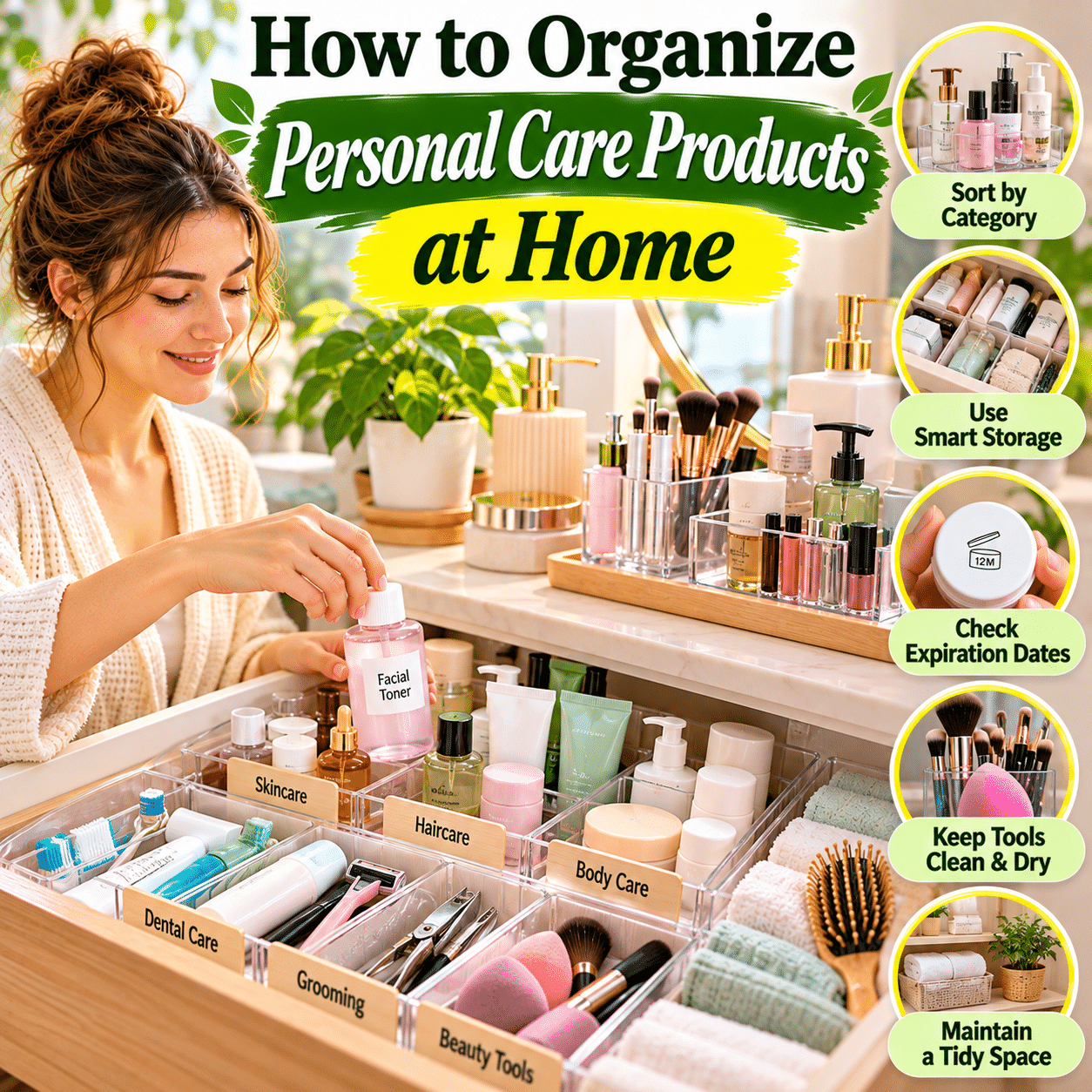
Personal care products are part of everyday life. From skincare and haircare essentials to dental hygiene supplies, grooming accessories, and body care products, most households use a variety of items to support daily comfort, cleanliness, and personal well-being.
Over time, however, these products can accumulate in bathroom cabinets, vanity drawers, bedroom shelves, shower corners, and storage baskets. A collection that begins with a few daily essentials may gradually expand into an assortment of partially used bottles, duplicate products, travel-sized containers, and accessories that are difficult to locate.
Without a practical organization system, personal care routines can become unnecessarily complicated. Frequently used products may disappear behind larger containers, expired items may remain unnoticed, and valuable storage space may be occupied by products that are rarely needed.
Organizing personal care products is not simply about creating attractive shelves or matching storage containers. The real purpose is to make everyday routines easier, maintain suitable storage conditions, reduce unnecessary purchases, and keep personal care supplies accessible when needed.
A well-organized system should reflect how products are actually used. Items needed every morning should be easy to reach, while occasional grooming tools and backup supplies can be stored separately.
It is also important to consider hygiene, product stability, household safety, and the specific storage requirements of different formulations.
Fortunately, creating an effective organization system does not require expensive cabinets or a complete bathroom makeover. With a little planning, thoughtful categorization, and regular maintenance, even a small space can accommodate a useful personal care collection.
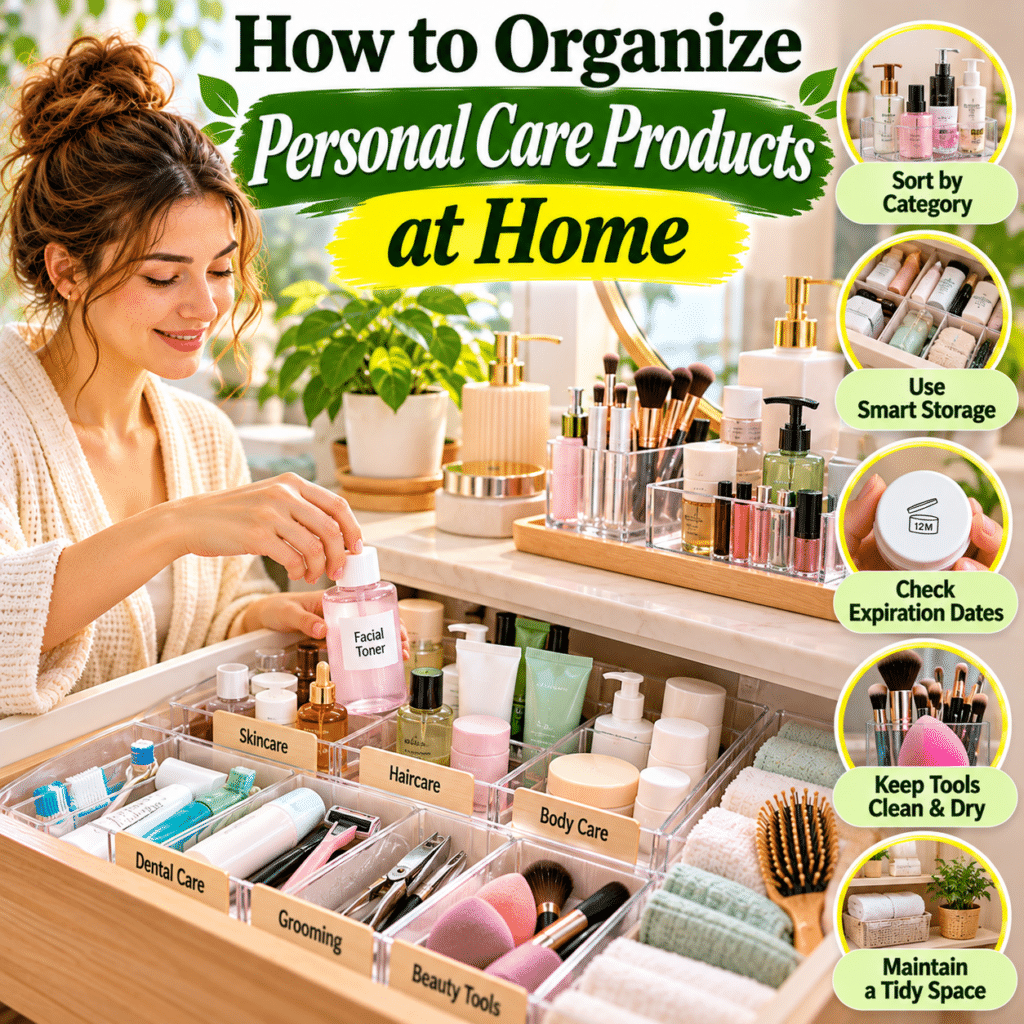
This guide explains how to sort personal care products, organize different categories, choose practical storage solutions, manage expiration dates, maintain hygiene, and create a simple system that remains functional over time.
Whether you have a compact bathroom, a shared family space, or a dedicated vanity area, these ideas can help make everyday personal care more convenient and organized.
1. Understand Why Personal Care Organization Matters
Personal care products are often used during busy parts of the day.
Morning routines may involve brushing teeth, washing the face, applying skincare products, and preparing hair before leaving home.
Evening routines may include bathing, removing makeup, moisturizing, and completing other personal hygiene activities.
When supplies are scattered or difficult to find, these ordinary tasks can take longer than necessary.
A practical organization system helps:
- Make frequently used products easier to locate.
- Reduce clutter around sinks and countertops.
- Prevent unnecessary duplicate purchases.
- Identify products approaching expiration.
- Keep clean tools separate from used accessories.
- Protect products from unsuitable storage conditions.
- Improve household safety.
- Make cleaning and maintenance easier.
- Use available storage space more efficiently.
The goal is not to own fewer products at any cost.
It is to create a collection that is manageable, accessible, and appropriate for everyday needs.
2. Recognize That Organization Should Support Your Routine
An attractive storage system is not necessarily a functional one.
For example, placing every skincare bottle inside a decorative box may make a vanity look tidy, but it can become inconvenient if the box must be opened and rearranged several times each day.
Similarly, storing frequently used toiletries on a high shelf may create unnecessary effort.
Begin by considering how you actually use your personal care products.
Ask yourself:
- Which products do I use every morning?
- Which items are part of my evening routine?
- What do I use only occasionally?
- Which products need special storage conditions?
- Which items should remain separate for hygiene?
- Where do I usually complete each personal care activity?
Use these answers to guide your organization decisions.
3. Start by Gathering Your Personal Care Products
Before buying organizers or rearranging cabinets, take inventory of the products you already own.
Collect items from relevant locations, such as:
- Bathroom cabinets.
- Vanity drawers.
- Bedroom shelves.
- Shower storage.
- Travel bags.
- Storage baskets.
- Under-sink cabinets.
- Dressing tables.
- Backup supply areas.
Place everything on a clean, dry surface.
If your collection is large, organize one area at a time rather than emptying the entire bathroom.
This first step helps reveal what you actually have.
4. Sort Products Into Practical Categories
Categorization makes it easier to understand the collection and choose suitable storage locations.
Common categories include:
Facial skincare: Cleansers, moisturizers, sunscreens, serums, and facial treatments.
Body care: Body wash, lotion, deodorant, and hand care products.
Haircare: Shampoo, conditioner, hair masks, styling products, and scalp care supplies.
Dental care: Toothbrushes, toothpaste, floss, and oral hygiene accessories.
Grooming: Razors, tweezers, nail clippers, and trimming tools.
Beauty accessories: Makeup brushes, sponges, eyelash curlers, and cosmetic applicators.
Bath and shower supplies: Frequently used bathing products and accessories.
Backup products: Unopened replacements and spare supplies.
Travel essentials: Reusable travel containers and portable personal care products.
You can adjust these categories to match your household.
5. Separate Daily Essentials From Occasional Products
Not every personal care product needs to be equally accessible.
Items used daily should generally be stored within easy reach.
Occasional products can be placed in secondary storage areas.
For example:
| Usage frequency | Examples | Suggested storage |
|---|---|---|
| Daily | Toothpaste, cleanser, moisturizer | Easy-access cabinet or drawer |
| Several times weekly | Hair masks, exfoliating products | Nearby shelf or organizer |
| Occasionally | Specialty grooming accessories | Labeled drawer or container |
| Backup supplies | Unopened shampoo, toothpaste | Separate dry storage area |
| Travel only | Travel bottles and toiletry bags | Dedicated travel kit |
This simple distinction can reduce clutter without requiring you to discard useful items.
6. Review Products Before Returning Them to Storage
Once products are sorted, examine their condition.
Look for:
- Expiration dates.
- Period-after-opening information.
- Damaged packaging.
- Leaking containers.
- Unusual odors.
- Unexpected texture changes.
- Discoloration.
- Missing labels.
- Products that are no longer used.
Do not automatically keep an item simply because some product remains inside.
A smaller collection of usable products is often easier to manage than a large assortment of questionable items.
7. Understand Product Expiration Dates
Personal care products do not all have the same shelf life.
Some display a printed expiration date.
Others include a period-after-opening symbol, often represented by an open jar with a number such as 6M, 12M, or 24M.
This symbol generally indicates the recommended period of use after opening, expressed in months.
However, labeling requirements vary by product type and country.
Some products, such as sunscreens and certain regulated treatments, have specific expiration considerations.
Always follow the manufacturer’s instructions and applicable product labeling.
8. Know When to Discard Personal Care Products
A product may need to be discarded when:
- Its labeled expiration date has passed.
- Its recommended period after opening has been exceeded.
- The formulation has visibly separated unexpectedly.
- The smell has changed significantly.
- The color or texture appears abnormal.
- The container has become contaminated.
- The packaging no longer protects the contents.
- The manufacturer has issued a relevant recall.
Not every change indicates contamination, but unusual changes deserve caution.
Do not rely on appearance or smell alone to determine whether a product is safe.
When uncertain, follow manufacturer guidance or replace the product.
9. Avoid Keeping Unnecessary Duplicates
Backup products can be convenient, particularly for frequently used essentials.
However, excessive duplicates may occupy storage space and expire before they can be used.
Before purchasing another item, check your existing supplies.
A practical backup system might include one unopened replacement of a product used consistently.
The appropriate quantity depends on usage, household size, availability, and shelf life.
Avoid stocking products simply because they are discounted.
10. Create a Dedicated Area for Unopened Products
Backup supplies should be separated from products currently in use.
This makes it easier to see what needs replacing.
Choose a clean, dry location appropriate for the product.
Organize backups by category.
Consider using a simple first-in, first-out approach, while also checking expiration dates so products with earlier expiry are used first when appropriate.
Keep packaging and labels intact.
How to Organize Skincare Products
11. Group Skincare Products by Function
Skincare collections may include several different product types.
Organize them into categories such as:
- Cleansers.
- Toners.
- Serums.
- Moisturizers.
- Sunscreens.
- Lip care.
- Exfoliating products.
- Masks.
- Specialized treatments.
Grouping similar products helps prevent items from disappearing behind unrelated supplies.
It also makes it easier to identify duplicates.
12. Separate Morning and Evening Skincare Products
Some products are used at different times of day.
For example, sunscreen is generally part of a daytime routine, while certain skincare treatments may be intended for evening use.
If your routine includes multiple steps, consider creating separate morning and evening sections.
These can be small trays, drawer compartments, or designated shelf areas.
However, products used twice daily do not need duplicate storage locations.
Keep the arrangement simple.
13. Keep Frequently Used Skincare Within Reach
Daily skincare should be easy to access without excessive searching.
Possible storage options include:
- A shallow vanity tray.
- A drawer divider.
- A small cabinet shelf.
- A countertop organizer.
- A compact rotating organizer.
Choose a location that protects the products from unnecessary heat, moisture, and direct sunlight.
Countertop storage may be convenient, but it is not ideal for every formulation.
14. Protect Skincare Products From Heat and Sunlight
Some skincare ingredients can be sensitive to environmental conditions.
Excessive heat, direct sunlight, and repeated temperature changes may affect product stability.
Store products according to their labels.
A cool, dry cabinet away from direct sunlight is often suitable for ordinary skincare.
Avoid leaving products on sunny windowsills or near heat-producing appliances.
Not every skincare product requires refrigeration.
15. Understand When Skincare Refrigeration Is Appropriate
Some products may have specific refrigeration requirements.
Others may simply feel pleasant when applied cool.
However, refrigeration is not automatically beneficial for every formulation.
Very low temperatures or repeated temperature changes may affect certain products.
Follow manufacturer guidance.
Do not assume that a skincare refrigerator is necessary for an effective routine.
16. Store Specialized Treatments Carefully
Products containing active ingredients may require particular attention to storage and usage instructions.
Examples include certain exfoliating acids, retinoids, acne treatments, and prescription skincare products.
Keep these items in their original packaging when appropriate.
Follow labeled storage conditions.
Prescription products should be stored according to pharmacy or healthcare instructions.
Avoid transferring treatments into decorative containers that remove important safety information.
How to Organize Haircare Products
17. Separate Haircare Products by Purpose
Haircare products often occupy considerable bathroom storage space because of their bottle sizes.
Group items into practical categories:
- Shampoo.
- Conditioner.
- Hair masks.
- Leave-in treatments.
- Styling products.
- Scalp care.
- Hair oils.
- Heat-protection products.
This makes it easier to identify which products belong in the shower and which should be stored elsewhere.
18. Keep Shower Essentials in the Shower Area
Products used during bathing should be accessible without overcrowding the shower.
A small shower caddy or wall-mounted organizer may help.
Choose materials suitable for humid environments.
Avoid placing bottles where they create slipping or falling hazards.
Keep drainage areas clear.
19. Reduce Excessive Shower Clutter
It is easy for partially used bottles to accumulate in the shower.
Review them periodically.
Remove empty containers and products no longer needed.
Keep only the items used regularly in the bathing area.
Store unopened backups elsewhere.
This makes shower cleaning easier and reduces the number of surfaces where soap residue can accumulate.
20. Store Styling Products Outside Excessively Humid Areas
Hair sprays, styling creams, gels, and heat-protection products may be better stored in a dry cabinet or vanity area.
Follow product-specific instructions.
Keep aerosol products away from heat, flames, and unsuitable temperatures.
Avoid placing products next to hot styling appliances.
21. Organize Hair Accessories Separately
Hair ties, clips, pins, headbands, and other small accessories can easily become scattered.
Use:
- Small drawer dividers.
- Shallow trays.
- Compartment boxes.
- Fabric pouches.
- Dedicated accessory containers.
Separate sharp pins from delicate hair accessories.
Discard broken clips and stretched or damaged hair ties.
How to Organize Dental Care Products
22. Create a Dedicated Dental Care Area
Dental hygiene supplies should be easy to locate during morning and evening routines.
Common items include:
- Toothbrushes.
- Toothpaste.
- Dental floss.
- Interdental brushes.
- Tongue cleaners.
- Mouthwash.
- Replacement brush heads.
Keep frequently used items together without overcrowding the sink.
23. Store Toothbrushes Hygienically
Toothbrushes should be allowed to dry between uses.
After brushing, rinse the toothbrush and store it upright when practical.
Avoid routinely keeping wet toothbrush heads inside tightly closed containers.
When multiple toothbrushes share a holder, prevent unnecessary contact between brush heads.
Clean the holder regularly.
Follow dental professional guidance for replacing toothbrushes and brush heads.
24. Keep Dental Products Away From Contamination
Avoid placing toothbrushes directly on dirty countertops.
Keep storage surfaces clean.
Store dental supplies away from household cleaning chemicals.
If using a shared bathroom, choose arrangements that reduce unnecessary contact between personal items.
Individual holders or labeled compartments may be useful.
25. Organize Replacement Dental Supplies
Keep unopened toothbrushes, brush heads, floss, and toothpaste together.
A small labeled container may be sufficient.
Check expiration dates where applicable.
Avoid purchasing excessive quantities of products that may not be used before their recommended dates.
How to Organize Body Care and Bath Products
26. Group Body Care Products by Daily Use
Body care products may include:
- Body wash.
- Body lotion.
- Hand cream.
- Deodorant.
- Body oil.
- Foot care products.
- Bath accessories.
Store frequently used items near the location where they are needed.
For example, hand cream may be useful near a bedside table or work area.
Body lotion may be more convenient near the dressing area.
27. Use Small Baskets for Related Products
Baskets can help contain groups of items.
For example:
Daily body care basket: Lotion, deodorant, and hand cream.
Bath accessories basket: Clean washcloths and bathing tools.
Occasional care basket: Foot care and specialized grooming products.
Choose washable or moisture-resistant materials when storing items in humid areas.
Avoid oversized baskets that encourage unnecessary accumulation.
28. Store Bath Accessories So They Can Dry
Washcloths, reusable body scrubbers, and similar accessories may remain damp after use.
Allow them to dry properly.
Avoid leaving wet accessories in closed baskets.
Wash reusable textiles regularly.
Replace accessories that become damaged or cannot be cleaned adequately.
29. Keep Personal Hygiene Products Accessible and Private
Some personal care items require convenient access and discreet storage.
Choose drawers, cabinets, or containers that support privacy without making essential products difficult to reach.
For shared households, individual storage sections may help prevent confusion.
Accessibility and hygiene should remain the main priorities.
How to Organize Grooming Tools and Beauty Accessories
30. Separate Tools From Liquid Products
Sharp or delicate grooming tools should not be mixed loosely with leaking bottles or creams.
Create separate compartments for:
- Tweezers.
- Nail clippers.
- Nail files.
- Razors.
- Eyelash curlers.
- Makeup brushes.
- Beauty sponges.
- Hairbrushes.
- Combs.
This helps protect tools and reduces unnecessary contact with product residue.
31. Store Clean Beauty Tools Separately
Makeup brushes, beauty sponges, and other reusable tools should be cleaned according to their materials and usage.
Allow them to dry completely before enclosed storage.
Keep clean accessories away from dirty or damp items.
A dedicated drawer or covered organizer can help protect them from dust.
32. Protect Sharp Grooming Tools
Razors, scissors, nail tools, and tweezers should be stored safely.
Use protective covers when available.
Avoid leaving exposed blades loose inside drawers.
Keep sharp accessories away from children.
Replace damaged or corroded tools.
33. Create a Simple Makeup Brush Storage System
Clean, dry makeup brushes may be stored:
- Upright in a suitable holder.
- Horizontally in a drawer.
- Inside protective sleeves.
- In a dedicated makeup case.
Avoid compressing bristles.
Keep wet brushes on a suitable drying surface until completely dry.
Do not confuse storage with drying.
34. Organize Small Grooming Accessories
Small accessories are easier to lose than larger products.
Use compartmentalized organizers for items such as:
- Cotton swabs.
- Hairpins.
- Nail accessories.
- Small applicators.
- Replacement grooming components.
Keep items in original packaging when labeling, cleanliness, or safety information matters.
Choosing Practical Storage Solutions
35. Use Drawer Dividers for Small Products
Drawer dividers help prevent items from shifting and mixing together.
They are particularly useful for:
- Lip care.
- Small skincare tubes.
- Grooming accessories.
- Hair ties.
- Travel-sized products.
- Dental supplies.
Adjustable dividers provide flexibility when the collection changes.
Measure the drawer before purchasing organizers.
36. Choose Clear Containers When Visibility Matters
Transparent containers make it easier to identify contents without opening every box.
They can be useful for:
- Unopened backups.
- Small accessories.
- Travel supplies.
- Cotton products.
- Replacement brush heads.
However, transparent storage may not be suitable for products requiring protection from light.
Use opaque cabinets or original packaging when necessary.
37. Consider Stackable Organizers
Stackable containers can make use of vertical space.
They may be useful inside cabinets or on shelves.
Choose stable designs that do not tip easily.
Avoid stacking heavy containers above fragile items.
Frequently used products should remain easy to access.
38. Use Rotating Organizers Selectively
Rotating organizers can provide convenient access to multiple bottles.
They may work well on a spacious vanity or inside a suitable cabinet.
However, they are not always the best option for narrow shelves or small drawers.
Consider the actual dimensions of your products before choosing one.
39. Make Use of Cabinet Doors
The inside of a cabinet door may provide additional storage space.
Small mounted organizers can hold lightweight accessories.
Before installation, check:
- Door clearance.
- Weight limits.
- Hinge strength.
- Moisture exposure.
- Accessibility.
Avoid attaching heavy products to unsuitable surfaces.
40. Organize Under-Sink Storage Carefully
Under-sink cabinets can provide useful space, but they may also contain plumbing connections and moisture.
Inspect for leaks before storing products.
Use moisture-resistant organizers.
Keep items away from pipes that may become hot or leak.
Avoid storing personal care products beside hazardous cleaning chemicals where contamination is possible.
If children can access the cabinet, use appropriate safety measures.
41. Choose Storage Materials That Are Easy to Clean
Bathroom storage often experiences humidity and occasional spills.
Suitable materials may include:
- Washable plastic.
- Coated metal.
- Glass.
- Moisture-resistant composites.
- Other water-compatible materials.
Natural baskets and untreated wood may require more care in humid environments.
Choose materials based on the location rather than appearance alone.
42. Avoid Buying Organizers Before Measuring
One common mistake is purchasing attractive organizers that do not fit the available space.
Before shopping, measure:
- Drawer width.
- Drawer depth.
- Drawer height.
- Shelf clearance.
- Cabinet opening.
- Bottle height.
- Available countertop space.
Also consider how easily items can be removed.
A perfectly fitted container is not useful if products become difficult to access.
Organizing Personal Care Products in Small Spaces
43. Prioritize Everyday Essentials
When storage space is limited, begin with products used most frequently.
Keep these items in the most accessible location.
Move backups and occasional accessories into secondary storage.
Avoid using prime countertop space for rarely used products.
44. Use Vertical Storage Thoughtfully
Wall shelves, cabinet organizers, and narrow storage units may help make use of limited space.
However, safety and accessibility are important.
Do not place heavy glass bottles on unstable shelves.
Avoid storage that obstructs ventilation, mirrors, doors, or electrical fixtures.
45. Keep Countertops Mostly Clear
A crowded countertop can make everyday cleaning more difficult.
Consider keeping only a small number of essential items visible.
For example:
- Hand soap.
- Toothbrush holder.
- One or two frequently used products.
Other items can be placed in drawers or cabinets.
The appropriate arrangement depends on your available storage and daily routine.
46. Create Portable Personal Care Kits
In small or shared spaces, a portable kit may be useful.
A small basket or toiletry caddy can hold frequently used products.
The kit can be moved between a bedroom and bathroom when needed.
Choose a container that is easy to clean and allows damp items to dry appropriately.
Organizing Personal Care Products in Shared Households
47. Give Each Person a Defined Storage Area
Shared bathrooms can become cluttered when products from several people are mixed together.
Individual drawers, baskets, or shelves may help.
Use labels when necessary.
Keep shared products separate from personal items.
48. Identify Which Products Are Suitable for Sharing
Some products may be shared safely when used according to their instructions.
Others are best kept for individual use.
Avoid sharing items such as:
- Toothbrushes.
- Used razors.
- Certain makeup applicators.
- Tools that may contact blood or broken skin.
- Products that require direct contact with sensitive areas.
Shared products should be stored and dispensed hygienically.
49. Consider Children and Household Safety
Personal care storage should account for children and other vulnerable household members.
Keep potentially hazardous products out of reach or in appropriately secured storage.
Examples include:
- Medicated treatments.
- Nail polish remover.
- Certain essential oils.
- Sharp grooming tools.
- Aerosol products.
- Products containing ingredients that may be harmful if swallowed.
Follow product labels and household safety guidance.
Attractive packaging does not mean a product is safe for unsupervised use.
Managing Product Labels and Expiration Dates
50. Keep Important Product Information Available
Original packaging often contains useful information, including:
- Ingredients.
- Directions.
- Warnings.
- Storage instructions.
- Expiration dates.
- Batch numbers.
- Manufacturer details.
Avoid removing labels simply to create a uniform appearance.
If transferring a product is permitted, ensure essential information remains available and the new container is suitable.
51. Record Opening Dates When Helpful
Some products have a recommended period of use after opening.
A small removable label with the opening month and year may help.
For example:
Opened: March 2026
This can make it easier to track products with limited post-opening shelf lives.
Avoid placing labels over important warnings or instructions.
52. Organize Products by Expiration Priority
Products with earlier expiration dates should generally be considered for use before newer products, provided they remain appropriate and safe.
A practical method is to place products approaching expiration toward the front of a storage area.
However, do not use an unsuitable product merely to avoid waste.
Safety and individual needs take priority.
53. Review Products Periodically
A brief review every few months can help identify:
- Empty containers.
- Expired products.
- Damaged packaging.
- Unused duplicates.
- Leaking bottles.
- Products requiring replacement.
The exact interval depends on collection size and usage.
A smaller collection may need less frequent attention.
How to Maintain Hygiene in Personal Care Storage
54. Clean Storage Containers Regularly
Drawers, trays, and organizers can accumulate dust, hair, and product residue.
Empty them periodically.
Wipe surfaces using cleaning methods appropriate for the material.
Allow containers to dry before returning products.
Clean spills promptly.
55. Prevent Moisture From Accumulating
Bathrooms are often humid environments.
Excess moisture may contribute to odors, material deterioration, or microbial growth on suitable surfaces.
Helpful practices include:
- Using ventilation.
- Drying wet accessories.
- Keeping containers away from standing water.
- Repairing leaks.
- Avoiding sealed storage for damp tools.
- Cleaning condensation when necessary.
Products should be stored according to their specific requirements.
56. Avoid Contaminating Products During Use
Good hygiene begins before products return to storage.
Consider:
- Washing hands when appropriate.
- Keeping applicators clean.
- Closing containers after use.
- Avoiding direct contact between dirty tools and product openings.
- Using clean spatulas for products when appropriate.
- Following instructions for pumps, droppers, and jars.
Avoid adding water or other substances to cosmetics unless the manufacturer specifically instructs it.
57. Keep Personal Care Products Away From Household Chemicals
Cleaning products, pesticides, and other hazardous substances should be stored separately from personal care supplies.
Do not place skincare bottles beside unlabeled chemical containers.
Avoid transferring household chemicals into cosmetic packaging.
Clear separation reduces the risk of accidental misuse.
58. Dispose of Unwanted Products Responsibly
Disposal methods depend on the product and local waste-management rules.
Some empty containers may be recyclable when accepted by local programs.
Products containing hazardous ingredients may require special disposal.
Medications should follow appropriate pharmaceutical disposal guidance.
Do not automatically pour unwanted chemicals or large quantities of cosmetic products into household drains.
Check relevant local instructions.
Practical Step-by-Step Guide: How to Organize Personal Care Products at Home
The following process can help create a manageable system without purchasing unnecessary storage equipment.
Step 1: Choose One Area to Organize
Begin with a bathroom cabinet, vanity drawer, or personal care shelf.
Working in sections makes the task easier.
Step 2: Remove the Products
Place items on a clean surface.
Check corners and hidden storage areas for forgotten products.
Step 3: Sort Everything Into Categories
Group skincare, haircare, dental care, body care, grooming tools, and backups separately.
Step 4: Check Product Condition
Review expiration dates, packaging, odors, and visible changes.
Set aside items that should not be used.
Step 5: Identify Daily Essentials
Choose the products used most frequently.
These should receive the easiest storage access.
Step 6: Separate Occasional Products
Move less frequently used items into secondary storage.
Step 7: Create a Backup Supply Section
Keep unopened replacement products together.
Avoid mixing them with partially used items.
Step 8: Clean the Storage Area
Wipe drawers, shelves, and containers.
Allow surfaces to dry.
Step 9: Measure the Available Space
Check dimensions before selecting organizers.
Use existing containers when practical.
Step 10: Arrange Products by Function
Place related items together.
Keep frequently used products near the front.
Step 11: Protect Sensitive Products
Follow manufacturer instructions regarding heat, light, humidity, and storage conditions.
Step 12: Organize Tools Separately
Keep clean grooming tools protected and allow damp accessories to dry.
Step 13: Add Labels When Useful
Label backup containers, shared storage sections, or rarely used supplies.
Avoid unnecessary labeling.
Step 14: Test the System During Daily Routines
Use the arrangement for several days.
Notice whether products are easy to find and return.
Step 15: Make Small Adjustments
Move inconveniently placed items.
Remove organizers that create more work than they save.
Step 16: Maintain the System Regularly
Return products to their designated locations.
Review expiration dates and clean storage surfaces periodically.
Example Personal Care Storage Layout
A practical storage arrangement may look like this:
| Storage location | Suggested contents | Main purpose |
|---|---|---|
| Easy-access bathroom drawer | Daily cleanser, moisturizer, toothpaste | Convenient daily use |
| Vanity organizer | Frequently used makeup and skincare | Support grooming routines |
| Shower caddy | Shampoo, conditioner, body wash | Keep bathing essentials accessible |
| Dry cabinet shelf | Occasional treatments and grooming products | Reduce countertop clutter |
| Drawer with dividers | Tweezers, nail tools, hair accessories | Protect small items |
| Covered brush organizer | Clean, dry makeup brushes | Reduce dust exposure |
| Ventilated drying area | Recently washed sponges and brushes | Allow proper drying |
| Backup storage basket | Unopened replacement products | Simplify inventory |
| Travel toiletry pouch | Portable personal care supplies | Prepare for travel |
| Secured storage area | Potentially hazardous or medicated products | Support household safety |
This arrangement is only an example.
Adapt it to the available space and the products you actually use.
Simple Personal Care Organization Systems for Different Homes
The Minimal Daily Essentials System
Suitable for people with small collections.
Use one drawer or cabinet for daily products.
Keep backups in a separate container.
Store clean grooming tools in a small compartment.
This system emphasizes simplicity.
The Category-Based Storage System
Suitable for medium-sized collections.
Create separate sections for:
- Skincare.
- Haircare.
- Body care.
- Dental care.
- Grooming tools.
- Backups.
Use dividers or labeled baskets when necessary.
The Morning and Evening Routine System
Suitable for people with structured personal care routines.
Group products according to when they are used.
Keep shared morning-and-evening products in a central location.
Avoid duplicating items unnecessarily.
The Shared Household System
Suitable for bathrooms used by multiple people.
Assign individual storage sections.
Keep shared supplies in a common area.
Separate personal hygiene tools.
Use labels when helpful.
The Small Bathroom System
Suitable for compact apartments or limited storage.
Keep only daily essentials near the sink.
Use vertical storage carefully.
Move unopened backups to another suitable location.
Choose compact, easy-to-clean organizers.
Practical Personal Care Organization Checklist
Sorting and Inventory
- I have gathered products from relevant storage areas.
- Products are grouped by function.
- Daily essentials are identified.
- Occasional items are separated.
- Unopened backups have a designated location.
- Unnecessary duplicates have been reviewed.
Product Safety
- Expiration dates have been checked.
- Period-after-opening information is considered.
- Damaged or leaking containers are removed.
- Important labels remain readable.
- Products are stored according to their instructions.
- Potentially hazardous items are secured appropriately.
Skincare and Haircare
- Daily skincare is easy to reach.
- Sensitive formulations are protected from unsuitable conditions.
- Shower products are organized.
- Excess shower clutter is removed.
- Styling products are stored safely.
Dental and Grooming Supplies
- Toothbrushes can dry between uses.
- Dental supplies are kept clean.
- Sharp grooming tools are protected.
- Clean beauty tools are stored separately.
- Damp accessories are allowed to dry.
- Small grooming items have designated compartments.
Storage and Maintenance
- Drawers and shelves are clean.
- Organizers fit the available space.
- Frequently used items are accessible.
- Backup products are easy to identify.
- Moisture accumulation is managed.
- Cleaning chemicals are stored separately.
- The system is simple enough to maintain.
Common Personal Care Organization Problems and Solutions
| Problem | Possible cause | Practical solution |
|---|---|---|
| Bathroom countertop is crowded | Too many products kept in the open | Store occasional items in cabinets |
| Products are difficult to find | Categories are mixed together | Group by function |
| Duplicate products accumulate | Existing supplies are not visible | Create a backup inventory section |
| Skincare bottles fall over | Unsuitable shelf or organizer | Use stable trays or dividers |
| Small grooming tools disappear | No dedicated compartment | Add a shallow organizer |
| Shower storage becomes cluttered | Empty and unused bottles remain | Review shower products regularly |
| Products expire before use | Excessive purchasing or poor rotation | Check dates and reduce backups |
| Makeup brushes become dusty | Open or unsuitable storage | Use a clean, protected holder |
| Beauty sponges remain damp | Enclosed storage without airflow | Dry completely before storing |
| Toothbrushes stay wet | Poor storage arrangement | Allow upright, separated drying |
| Cabinet develops musty odors | Excess humidity or leaks | Improve ventilation and address moisture |
| Products leak in drawers | Damaged lids or unstable storage | Inspect containers and clean spills |
| Shared bathroom becomes disorganized | Personal items are mixed together | Assign individual storage sections |
| Organizers do not fit | Measurements were not taken | Measure before purchasing |
| Storage looks tidy but is inconvenient | Appearance prioritized over daily use | Rearrange according to routine |
| Travel supplies are always missing | No dedicated travel storage | Maintain a separate toiletry kit |
Frequently Asked Questions
1. What is the best way to organize personal care products at home?
Begin by sorting products into categories, checking their condition, and separating daily essentials from occasional items.
Store frequently used products where they are easy to reach and keep backups in a designated area.
2. How do I organize skincare products in a small bathroom?
Keep only frequently used products in the most accessible space.
Use compact drawer dividers, shelves, or small trays.
Store backups elsewhere when appropriate.
3. Should skincare products be stored in the bathroom?
Many ordinary skincare products can be stored in bathrooms when conditions are suitable.
However, excessive heat, humidity, and direct sunlight may affect certain formulations.
Follow manufacturer storage instructions.
4. Is it better to store skincare products in a refrigerator?
Not necessarily.
Most skincare products do not require refrigeration unless the manufacturer specifies it.
Refrigeration may be unsuitable for some formulations.
5. How should I organize morning and evening skincare?
Create separate sections if your routines involve different products.
Keep items used at both times in a convenient central location.
Avoid making the arrangement unnecessarily complicated.
6. How do I organize haircare products?
Group shampoo, conditioner, treatments, styling products, and accessories by purpose.
Keep shower essentials near the bathing area and store backups separately.
7. How should toothbrushes be stored?
Rinse toothbrushes after use and allow them to dry.
Store them upright when practical and avoid unnecessary contact between brush heads.
Clean toothbrush holders regularly.
8. What is the best way to store makeup brushes?
Clean and dry brushes thoroughly.
Store them in a clean holder, drawer, or protective case that preserves their shape.
Avoid compressing bristles.
9. How do I organize beauty sponges?
Wash reusable sponges appropriately and allow them to dry completely.
Store dry sponges in a clean, protected location.
Avoid sealing damp sponges inside makeup bags.
10. How can I organize personal care products without buying organizers?
Reuse suitable clean containers, divide drawers with existing materials, and arrange products by category.
Removing unnecessary items may create enough space without additional purchases.
11. How often should I review personal care products?
A review every few months may be useful for many households.
Check more frequently when products have short shelf lives or are used irregularly.
12. How do I know when a personal care product has expired?
Check printed expiration dates, period-after-opening symbols, and manufacturer instructions.
Unexpected changes in odor, texture, or appearance may also indicate a problem.
13. Should I remove products from their original packaging?
Not automatically.
Original packaging may contain important safety, ingredient, storage, and expiration information.
Keep products in their original containers when required or recommended.
14. How do I organize products in a shared bathroom?
Assign separate storage areas for each person.
Keep shared products in a common section and avoid mixing personal hygiene tools.
15. How should I store backup toiletries?
Keep unopened backups in a clean, dry location that meets their storage requirements.
Group them by category and review expiration dates.
16. Can I store personal care products under the sink?
Yes, when the area is dry, safe, and suitable for the products.
Check for leaks and avoid storing personal care items alongside hazardous cleaning chemicals.
17. How can I reduce personal care clutter?
Review unused products, avoid unnecessary duplicates, keep daily essentials accessible, and establish designated storage locations.
18. What is the safest way to store razors and nail tools?
Keep sharp tools clean, dry, and protected with suitable covers or compartments.
Store them out of children’s reach.
19. How do I keep bathroom organizers clean?
Empty them periodically, remove dust and residue, wipe with suitable cleaning products, and allow them to dry before returning items.
20. How can I maintain an organized personal care collection long-term?
Choose a simple system that matches your routine.
Return items to their designated locations, check supplies before purchasing replacements, and review the collection periodically.
Final Thoughts
Organizing personal care products at home is a practical way to make everyday routines more convenient, efficient, and comfortable.
The most useful organization systems are not necessarily the most elaborate or visually impressive. They are the ones that make products easy to find, protect them from unsuitable conditions, and reduce unnecessary clutter.
By grouping products according to their purpose, separating daily essentials from occasional supplies, and creating dedicated storage areas, even a modest bathroom or vanity can become more functional.
Regular maintenance is equally important. Checking expiration dates, cleaning storage containers, allowing reusable tools to dry, and reviewing backup supplies help prevent an organized space from gradually becoming cluttered again.
It is also worth remembering that personal care organization should support individual habits rather than impose a rigid system. A simple tray may be enough for one person, while a shared household may benefit from separate drawers, labeled baskets, and clearly defined storage areas.
Start with the products you already own, use the available space thoughtfully, and make adjustments as your needs change.
With a little consistency, personal care storage can become easier to maintain and more enjoyable to use.
A well-organized personal care space is not about owning perfect storage accessories. It is about creating a clean, practical, and comfortable environment where the products you need are easy to find, easy to use, and easy to maintain every day.