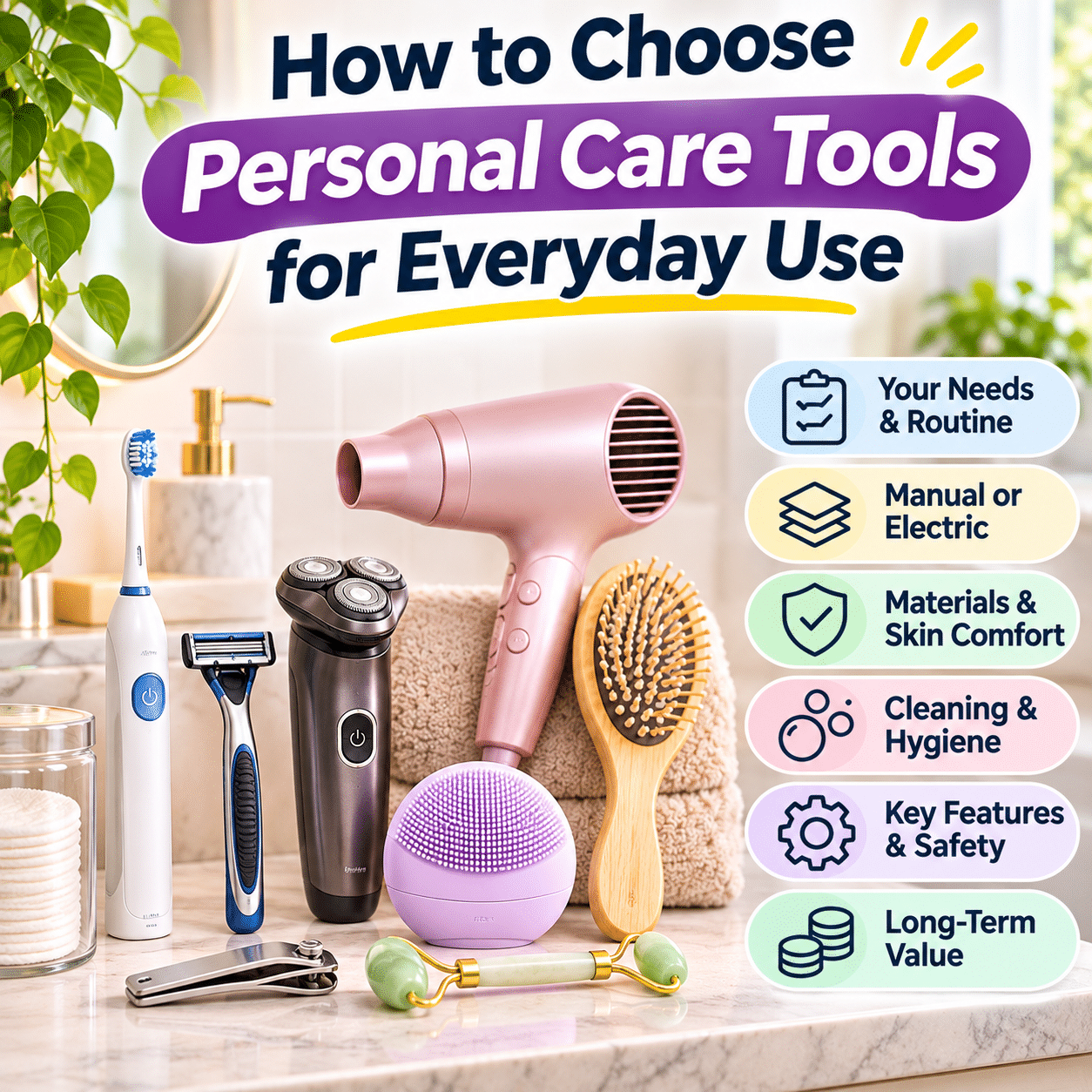
Personal care tools are part of many everyday routines, helping people maintain hygiene, manage grooming tasks, care for their skin and hair, and feel comfortable in their daily lives. From toothbrushes and hairbrushes to electric shavers, nail clippers, facial cleansing devices, and grooming accessories, these tools can make routine activities easier and more convenient.
However, choosing personal care tools is not simply about buying the most expensive products or selecting devices with the greatest number of features. The most suitable tools are those that match your actual needs, feel comfortable to use, are easy to maintain, and provide reliable performance over time.
A personal care tool that works well for one person may not be appropriate for another. Differences in skin sensitivity, hair texture, hand mobility, grooming habits, available storage, and personal preferences can influence which products are most practical.
Product quality also matters. Poorly designed tools may be uncomfortable, difficult to clean, or unnecessarily complicated. Electrical devices introduce additional considerations, including battery performance, water resistance, charging compatibility, and safe operation.
This comprehensive buying guide explains how to choose personal care tools for everyday use, compare manual and electric options, evaluate materials and ergonomics, understand hygiene and maintenance requirements, identify useful features, and make purchasing decisions that balance comfort, functionality, safety, and long-term value.
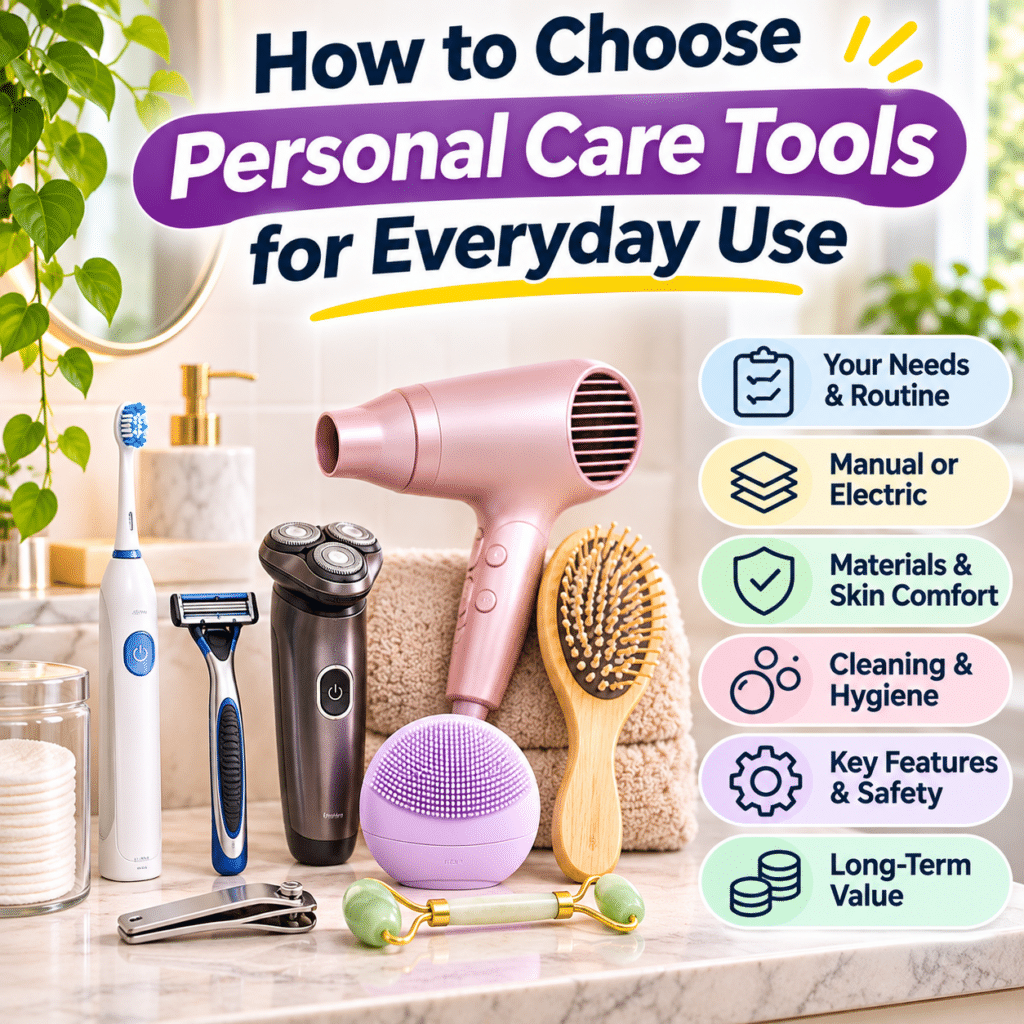
1. Understand What Personal Care Tools Include
Personal care tools cover a wide range of products used for hygiene, grooming, and routine maintenance of the body.
They are generally designed to support specific tasks rather than replace professional medical or dental care.
Oral Care Tools
Common examples include:
- Manual toothbrushes.
- Electric toothbrushes.
- Interdental brushes.
- Dental floss holders.
- Water flossers.
- Tongue cleaners.
These tools support daily oral hygiene when used appropriately.
Hair Care and Styling Tools
Examples include:
- Hairbrushes.
- Combs.
- Hair dryers.
- Hair straighteners.
- Curling tools.
- Scalp brushes.
- Hair trimming devices.
Different products serve different hair types and styling preferences.
Facial Care Tools
Common examples include:
- Facial cleansing brushes.
- Reusable cleansing pads.
- Facial massage tools.
- Eyebrow grooming tools.
- Facial hair trimmers.
- Makeup application tools.
Shaving and Hair Removal Tools
Examples include:
- Manual razors.
- Electric shavers.
- Body groomers.
- Precision trimmers.
- Epilators.
- Facial hair removal tools.
Nail Care Tools
Common products include:
- Nail clippers.
- Nail files.
- Nail scissors.
- Cuticle pushers.
- Nail brushes.
- Electric nail grooming devices.
Body Care Accessories
Examples include:
- Exfoliating cloths.
- Bath brushes.
- Foot files.
- Callus care tools.
- Reusable applicators.
- Personal grooming mirrors.
Understanding these categories helps you focus on tools that genuinely support your routine.
2. Identify Your Personal Care Needs Before Buying
The first step is understanding which activities you perform regularly.
Avoid purchasing a large collection of tools simply because they are popular or marketed as essential.
Review Your Existing Routine
Consider the tasks you perform daily, weekly, or occasionally.
Ask yourself:
- Which personal care activities take the most time?
- Which tools do I already use?
- Are my current tools comfortable?
- Do I experience difficulty handling certain products?
- Would a different design improve convenience?
- Do I need a portable option for travel?
- How much maintenance am I willing to perform?
Separate Essential Tools From Optional Accessories
Basic tools often provide everything needed for a practical routine.
Additional accessories may be useful, but they should serve a clear purpose.
Consider Frequency of Use
A product used every day deserves particular attention to comfort, durability, and ease of cleaning.
A tool used only occasionally may not require the same level of investment.
Avoid Unnecessary Complexity
More features do not automatically make a personal care tool more effective.
Choose functions that solve actual problems.
3. Prioritize Comfort and Ergonomic Design
Ergonomics describes how well a product fits the physical needs of its user.
A comfortable personal care tool should be easy to hold, control, and operate.
Handle Shape
Look for a handle that fits naturally in your hand.
Handles that are too narrow, bulky, or slippery may be difficult to control.
Grip Texture
Textured or nonslip surfaces can improve handling, particularly when hands are damp.
Weight
Lightweight tools may reduce fatigue during longer grooming sessions.
However, extremely lightweight construction does not necessarily indicate better quality.
Balance
A well-balanced tool can feel easier to maneuver.
This is particularly relevant for hair dryers, electric shavers, and styling devices.
Control Placement
Buttons and switches should be accessible without requiring awkward hand movements.
Accessibility
People with limited grip strength or hand mobility may benefit from larger handles, simplified controls, or assistive designs.
4. Compare Manual and Electric Personal Care Tools
One of the most important buying decisions is whether to choose a manual or powered product.
Both can be practical depending on the task.
Manual Tools
Manual products rely on physical movement rather than electricity.
Examples include:
- Manual toothbrushes.
- Combs.
- Nail clippers.
- Traditional razors.
- Handheld facial cleansing pads.
Advantages:
- Usually simple to operate.
- No charging required.
- Often compact.
- Generally easier to transport.
- May have fewer components that can fail.
Limitations:
- May require more manual effort.
- Performance depends heavily on technique.
- Some tasks can take longer.
Electric Tools
Electric devices use motors, heating elements, vibration, or other powered mechanisms.
Examples include:
- Electric toothbrushes.
- Electric shavers.
- Hair dryers.
- Facial cleansing devices.
- Electric nail files.
Advantages:
- May reduce manual effort.
- Can offer adjustable settings.
- May improve consistency for certain tasks.
- Some provide timers or pressure feedback.
Limitations:
- Require electricity or batteries.
- Often cost more initially.
- May require replacement heads or accessories.
- Can be more difficult to clean.
- Electronic components may eventually fail.
Manual Versus Electric Comparison
| Factor | Manual Tools | Electric Tools |
|---|---|---|
| Power requirement | None | Battery or electrical supply |
| Initial cost | Often lower | Often higher |
| Portability | Usually convenient | Depends on size and charging |
| Maintenance | Generally straightforward | May involve additional components |
| Adjustable settings | Limited | Often available |
| Noise | Usually minimal | May produce operating noise |
| Repairability | Varies | Depends on product design |
| Best choice | Simple, occasional, or low-maintenance tasks | Tasks benefiting from powered assistance |
Neither category is universally superior.
5. Evaluate Materials and Construction Quality
Materials influence durability, comfort, hygiene, and maintenance.
Stainless Steel
Stainless steel is commonly used in nail clippers, scissors, tweezers, and grooming tools.
Potential advantages include:
- Good durability.
- Corrosion resistance when appropriately specified.
- Smooth surfaces.
- Ease of cleaning.
However, stainless steel grades and manufacturing quality vary.
Plastic
Plastic is widely used for handles, housings, and accessories.
Advantages include:
- Lightweight construction.
- Flexible design options.
- Often affordable.
- Suitable for many water-resistant applications.
Considerations include potential cracking, discoloration, or surface wear.
Silicone
Silicone is used in some cleansing devices, grips, and applicators.
Advantages include flexibility and a soft surface.
However, product quality and cleaning requirements still matter.
Wood
Wooden combs and brushes can offer a comfortable natural feel.
They may require additional care to prevent moisture damage.
Ceramic
Ceramic materials or coatings appear in some hair styling devices.
Their performance depends on the complete product design rather than the presence of ceramic alone.
Metal Alloys
Different alloys may be used for blades, heating elements, and structural components.
Choose products with appropriate finishes and clearly stated material information.
6. Consider Skin and Scalp Sensitivity
Personal care tools should be appropriate for the areas of the body where they will be used.
Sensitive Skin
People with easily irritated skin may prefer:
- Soft contact surfaces.
- Gentle operating modes.
- Smooth edges.
- Minimal friction.
- Easy-to-clean materials.
Facial Skin
Facial skin can be sensitive to excessive friction and repeated mechanical exfoliation.
Avoid assuming that stronger cleansing or more frequent exfoliation produces better results.
Scalp Care
Scalp brushes should feel comfortable and should not scratch or damage the skin.
Shaving
Razors and trimmers should be selected according to hair characteristics, skin tolerance, and preferred grooming technique.
Personal Reactions
Stop using a tool if it repeatedly causes irritation, pain, or skin damage.
Persistent symptoms should be evaluated by an appropriate healthcare professional.
7. Understand Hygiene and Cleaning Requirements
Hygiene is a central consideration when choosing reusable personal care tools.
Products that contact skin, hair, nails, or the mouth can accumulate residue and microorganisms.
Choose Easy-to-Clean Designs
Look for:
- Smooth surfaces.
- Accessible components.
- Removable heads.
- Minimal unnecessary crevices.
- Clear cleaning instructions.
Clean According to Use
Cleaning frequency depends on the product and its exposure to moisture, oils, cosmetics, and other residues.
Allow Proper Drying
Tools stored while wet may develop unpleasant odors or support microbial growth.
Avoid Sharing Certain Tools
Items that contact the mouth, broken skin, or bodily fluids should generally remain personal.
Understand Cleaning Versus Disinfection
Cleaning removes visible debris and residues.
Disinfection uses an appropriate process to reduce certain microorganisms.
Not every personal care tool can safely withstand disinfectants or high temperatures.
Follow manufacturer instructions.
8. Consider Replacement Parts and Consumables
Some personal care tools require regular replacement of components.
Examples include:
- Toothbrush heads.
- Shaver foils.
- Trimmer blades.
- Razor cartridges.
- Cleansing brush heads.
- Disposable applicators.
- Specialized filters.
Check Availability
Replacement parts should be reasonably accessible.
Consider Compatibility
Not every replacement head fits every device.
Understand Replacement Intervals
Manufacturers may recommend replacement based on time or use.
Actual replacement needs also depend on wear, hygiene, and performance.
Calculate Ongoing Costs
A relatively inexpensive electric device may become costly if replacement components are expensive.
Avoid Proprietary Dependence Without Planning
Products requiring unusual or discontinued accessories can become difficult to maintain.
9. Choose Oral Care Tools Carefully
Oral care tools are among the most frequently used personal care products.
Manual Toothbrushes
Consider:
- Bristle softness.
- Head size.
- Handle comfort.
- Ease of reaching different areas.
- Replacement availability.
Soft bristles are generally preferred for routine brushing to reduce unnecessary abrasion and gum irritation.
Electric Toothbrushes
Potential features include:
- Timers.
- Pressure sensors.
- Multiple brushing modes.
- Replaceable heads.
- Rechargeable batteries.
Some electric toothbrush designs can improve plaque removal compared with manual brushing, but results depend on product design and proper use.
Water Flossers
Water flossers may be useful for certain interdental cleaning needs.
They do not automatically replace every other recommended cleaning method.
Interdental Brushes
Correct sizing is important.
Forcing an oversized brush between teeth can cause injury.
Seek Individual Dental Guidance
People with braces, implants, periodontal concerns, or other dental conditions may need specific recommendations from a dental professional.
10. Choose Hairbrushes and Combs Based on Hair Needs
Hairbrushes and combs differ in bristle design, tooth spacing, flexibility, and intended use.
Wide-Tooth Combs
These can be useful for gently separating sections of hair.
They are often preferred for detangling certain curly or textured hair types.
Paddle Brushes
Paddle brushes have broad surfaces and may be useful for smoothing or detangling longer hair.
Round Brushes
Round brushes are commonly used during blow-drying and styling.
Detangling Brushes
These often use flexible bristles designed to move through tangles with less pulling.
Scalp Brushes
Scalp brushes may assist with shampoo distribution or gentle scalp massage.
Consider Hair Condition
Wet hair may be more vulnerable to mechanical damage.
Use appropriate technique and avoid aggressive pulling.
11. Evaluate Hair Dryers
Hair dryers vary in airflow, heat settings, weight, noise, and accessories.
Airflow Performance
Effective airflow can help dry hair without relying exclusively on very high heat.
Heat Settings
Multiple heat settings provide flexibility.
Speed Controls
Adjustable airflow allows users to adapt the device to different hair types and styling tasks.
Cool-Air Function
A cool-air setting may be useful for finishing certain hairstyles.
Attachments
Common attachments include:
- Concentrator nozzles.
- Diffusers.
- Styling combs.
Weight and Balance
Consider how comfortable the dryer feels during regular use.
Cord Length
A suitable cord length improves convenience without creating unnecessary clutter.
Safety Features
Look for appropriate electrical certification, overheat protection, and clear operating instructions.
12. Choose Hair Straighteners and Curling Tools
Heated styling tools require particular attention to temperature control and safe operation.
Adjustable Temperature
Different hair types and conditions may tolerate heat differently.
Plate or Barrel Design
The size and shape of the heated surface influence styling results.
Surface Materials
Ceramic, metal, and coated surfaces may differ in heat distribution and durability.
Automatic Shutoff
An automatic shutoff feature can reduce certain risks if a device is accidentally left operating.
It should not replace proper supervision.
Heat-Resistant Storage
Allow heated tools to cool before storing them.
Avoid Excessive Heat Exposure
Repeated high-temperature styling can damage hair.
Choose the lowest effective temperature and follow suitable hair care practices.
13. Choose Manual Razors and Electric Shavers
Shaving tools differ in closeness, convenience, maintenance, and skin contact.
Manual Razors
Consider:
- Handle grip.
- Blade design.
- Replacement cartridge availability.
- Ease of rinsing.
- Skin comfort.
Electric Foil Shavers
Foil shavers use blades operating beneath a protective foil.
They may suit users who prefer certain shaving movements and finishes.
Rotary Shavers
Rotary shavers use rotating cutting elements.
They may accommodate different facial contours and shaving techniques.
Body Groomers
Body groomers are designed for specific body areas.
Precision Trimmers
Precision tools can help maintain edges and detailed grooming areas.
Avoid Assuming One Device Fits Every Body Area
Some products are designed only for the face, while others are intended for body grooming.
Follow the manufacturer’s stated use.
14. Understand Hair Removal Tool Options
Different hair removal tools operate using different mechanisms.
Trimmers
Trimmers shorten hair without necessarily removing it at skin level.
Razors
Razors cut hair close to the skin.
Epilators
Epilators mechanically remove hair from the root.
They can cause discomfort and may not suit every user.
Electric Facial Hair Removers
These are often compact devices designed for fine facial hair.
Light-Based Hair Removal Devices
Some home devices use intense pulsed light or related technologies.
These require careful evaluation of skin tone compatibility, hair characteristics, eye safety, contraindications, and manufacturer instructions.
They are not appropriate for every user or body area.
Choose Based on Tolerance and Safety
Consider comfort, skin sensitivity, maintenance, and the intended treatment area.
15. Choose Nail Clippers and Nail Care Tools
Nail care tools should provide controlled, predictable performance.
Nail Clippers
Look for:
- Properly aligned cutting edges.
- Comfortable leverage.
- Smooth operation.
- Suitable size.
- Durable construction.
Nail Files
Nail files vary in material and abrasiveness.
Choose a suitable surface for the intended nail type and task.
Nail Scissors
Scissors should have appropriate blade alignment and comfortable handles.
Cuticle Tools
Aggressive cutting or pushing can damage the protective skin around nails.
Use caution and avoid unnecessary injury.
Electric Nail Files
Powered nail tools can remove material quickly.
Improper use may damage natural nails or surrounding skin.
Foot Care
People with diabetes, impaired circulation, reduced sensation, or other conditions affecting foot health should seek professional guidance before using sharp or aggressive foot care tools.
16. Choose Facial Cleansing Tools
Facial cleansing tools may include manual pads, soft brushes, silicone devices, and powered cleansing systems.
Manual Cleansing Pads
These are simple and generally inexpensive.
Soft Facial Brushes
Brushes may help distribute cleansers and remove surface residue.
Silicone Cleansing Devices
Silicone surfaces may be easy to rinse, depending on the design.
Powered Cleansing Brushes
These may use rotation, oscillation, or vibration.
Consider Skin Tolerance
More vigorous cleansing is not necessarily more effective.
Excessive mechanical cleansing can contribute to irritation.
Evaluate Cleaning Requirements
Reusable cleansing heads should be cleaned and dried according to manufacturer instructions.
Avoid Unsupported Claims
A cleansing device should not be assumed to treat acne, reverse aging, or improve medical skin conditions without reliable evidence.
17. Evaluate Facial Massage and Beauty Tools
Facial rollers, massage devices, and similar accessories are widely available.
Manual Facial Rollers
These provide a rolling massage action.
Gua Sha Tools
These are shaped tools used with specific massage techniques.
Vibrating Massage Devices
Powered models may offer adjustable vibration.
Consider Surface Quality
Smooth edges and easy-to-clean materials are important.
Use Gentle Pressure
Excessive pressure may cause bruising or irritation.
Understand the Evidence
Temporary changes in appearance or sensations of relaxation do not establish long-term structural skin benefits.
Avoid purchasing based on exaggerated claims about lifting, detoxification, or permanent facial reshaping.
18. Choose Makeup Application Tools
Makeup tools should be comfortable, suitable for the product being applied, and easy to clean.
Makeup Brushes
Consider:
- Bristle softness.
- Shape.
- Density.
- Handle comfort.
- Shedding resistance.
Makeup Sponges
Sponges vary in texture, shape, and absorbency.
Eyelash Curlers
Choose a design that fits comfortably and operates smoothly.
Tweezers
Tweezers should have properly aligned tips and controlled grip.
Applicator Hygiene
Tools that contact the face should be cleaned appropriately.
Avoid sharing eye-area applicators when hygiene cannot be assured.
19. Consider Water Resistance
Many personal care tools are used near sinks, showers, or other water sources.
Water resistance should never be assumed.
Understand IP Ratings
Ingress Protection ratings describe specified protection against solids and water.
Different ratings correspond to different testing conditions.
Water-Resistant Versus Waterproof
Marketing terms may not provide enough information.
Check the actual manufacturer specifications.
Wet and Dry Devices
Some shavers and grooming tools are designed for wet and dry use.
Others must remain dry.
Charging Safety
Do not charge or connect electrical devices in wet conditions unless the product and installation are specifically designed for that use.
Follow Bathroom Electrical Safety Requirements
Electrical devices used near water should comply with applicable safety requirements.
20. Understand Battery Types and Charging
Rechargeable personal care devices differ in battery design and charging systems.
Rechargeable Batteries
These are common in electric toothbrushes, shavers, and trimmers.
Replaceable Batteries
Some compact grooming devices use replaceable batteries.
Corded Devices
Hair dryers and some styling tools operate directly from electrical outlets.
Battery Runtime
Consider whether the advertised runtime is sufficient for normal use.
Charging Time
A device that requires frequent charging may be inconvenient.
Battery Aging
Rechargeable batteries gradually lose capacity.
Charging Compatibility
Use compatible chargers and follow manufacturer instructions.
Travel Considerations
Check applicable transportation rules for battery-powered devices, especially those containing lithium batteries.
21. Evaluate Electrical Safety
Electrical personal care tools should be selected with safety in mind.
Recognized Safety Standards
Look for credible product compliance information relevant to the intended market.
Overheat Protection
Heating devices may include temperature-limiting mechanisms.
Automatic Shutoff
Some devices stop operating after a period of inactivity.
Cord and Plug Quality
Inspect for appropriate construction and compatibility with local electrical systems.
Voltage Compatibility
Travelers should verify whether a device supports the available voltage and frequency.
Damaged Devices
Do not continue using equipment with damaged cords, exposed electrical parts, overheating, or abnormal operation.
22. Consider Noise and Vibration
Powered personal care tools may produce noticeable sound and vibration.
Hair Dryers
Noise can be significant, particularly at high airflow settings.
Electric Shavers
Motor sound and vibration vary by design.
Electric Toothbrushes
Some users prefer gentler vibration or quieter operation.
Facial Devices
Vibration intensity should be comfortable and appropriate for the intended use.
Compare Real Performance
Marketing descriptions such as “ultra-quiet” may not use standardized measurement methods.
Look for credible specifications or demonstrations when available.
23. Evaluate Controls and Ease of Operation
A product should be easy to use without unnecessary complexity.
Physical Buttons
Buttons should be clearly identified and accessible.
Adjustable Settings
Useful settings depend on the task.
Examples include:
- Heat levels.
- Speed levels.
- Pressure feedback.
- Timers.
- Operating modes.
Display Screens
Displays can communicate settings or battery status.
However, they are not essential for every device.
Memory Functions
Some products remember the previous setting.
Avoid Feature Overload
Too many controls may make simple routines unnecessarily complicated.
24. Consider Tool Size and Storage
Personal care tools often share limited bathroom or bedroom storage.
Compact Designs
Compact tools may be easier to store in drawers or cabinets.
Hanging Storage
Some products include loops or stands.
Protective Cases
Cases can protect delicate components and help separate clean tools from other belongings.
Charging Stands
Charging bases may require dedicated counter space.
Ventilation
Tools should be dried appropriately before enclosed storage.
Cord Management
Corded devices benefit from organized storage that avoids tight bending or damage to cables.
25. Choose Tools for Small Bathrooms
Limited storage makes product selection especially important.
Prioritize Multipurpose Tools Carefully
A device with interchangeable heads may reduce the number of separate products.
However, each attachment should perform its intended function adequately.
Choose Compact Storage
Wall organizers, drawer dividers, and small containers can help keep tools accessible.
Avoid Countertop Overcrowding
Too many devices can make cleaning and everyday routines more difficult.
Consider Charging Locations
Electrical charging arrangements should remain safe and suitable for bathroom environments.
Keep Tools Dry
Avoid storing moisture-sensitive products in consistently wet locations.
26. Choose Travel-Friendly Personal Care Tools
Travel tools should balance portability, reliability, and convenience.
Compact Dimensions
Smaller tools can reduce luggage space.
Protective Covers
Blade covers and cases can prevent accidental damage.
Battery Runtime
Longer runtime may reduce charging requirements.
Universal Voltage
For corded devices, check voltage compatibility before international travel.
Charging Connections
Common charging formats may simplify travel, but compatibility must still be verified.
Transportation Restrictions
Certain batteries, blades, and grooming devices may be subject to airline or security rules.
Avoid Unnecessary Duplication
A compact travel kit should contain tools you are likely to use.
27. Consider Tools for Different Hair Types
Hair characteristics influence which grooming tools are comfortable and effective.
Fine Hair
Gentle detangling and appropriate heat control may be particularly important.
Thick Hair
Some users may benefit from brushes or dryers designed to handle larger amounts of hair.
Curly Hair
Wide-tooth combs, diffusers, and gentle detangling tools may be useful.
Coily or Highly Textured Hair
Tools should accommodate curl structure and minimize unnecessary pulling.
Damaged or Fragile Hair
Avoid excessive heat and aggressive mechanical styling.
Personal Preference Matters
Hair texture alone does not determine the ideal product.
Length, condition, styling habits, and comfort also matter.
28. Consider Tools for Sensitive Skin
People with sensitive skin should prioritize gentle contact and simple maintenance.
Smooth Surfaces
Avoid rough edges and abrasive materials.
Adjustable Intensity
Powered devices with lower settings may provide greater control.
Minimal Friction
Repeated rubbing can contribute to irritation.
Appropriate Cleaning
Residue buildup may worsen discomfort.
Avoid Unnecessary Exfoliation
Mechanical exfoliation is not essential for everyone.
Recognize Individual Limitations
People with active skin conditions or persistent irritation may need guidance from a qualified professional before using certain devices.
29. Consider Tools for Older Adults
Personal care tools should accommodate changing mobility, vision, and dexterity.
Larger Handles
Larger grips may be easier to control.
Lightweight Construction
Lower weight can reduce fatigue.
Simple Controls
Clearly labeled buttons may improve usability.
Stable Storage
Tools should be easy to retrieve without awkward reaching.
Reduced Physical Effort
Some electric devices may make certain grooming tasks easier.
Safety
Avoid tools that require excessive force, precise movements, or uncomfortable positions.
30. Consider Personal Care Tools for Children
Children’s grooming tools should be age-appropriate.
Size
Handles and tool heads should suit smaller hands or the caregiver’s use.
Gentle Materials
Soft contact surfaces may be preferable for sensitive skin.
Supervision
Sharp, heated, or powered devices require appropriate adult supervision.
Product Age Guidance
Follow manufacturer age recommendations.
Avoid Adult Tools Without Assessment
Products designed for adults may not be suitable for children.
Safe Storage
Keep sharp tools, heated devices, and small detachable parts out of reach when appropriate.
31. Consider Sustainability and Waste Reduction
Personal care tools can generate waste through disposable components, packaging, and product replacement.
Durable Construction
Long-lasting products may reduce replacement frequency.
Replaceable Components
Replaceable heads or blades can extend the useful life of some devices.
Repairability
Check whether batteries, motors, or other components can be serviced.
Reusable Accessories
Reusable tools may reduce disposable waste when properly maintained.
Packaging
Consider practical packaging and material use.
Responsible Disposal
Electrical devices and batteries may require specialized recycling or disposal.
Avoid Simplistic Environmental Claims
The environmental impact of a product depends on materials, manufacturing, energy use, lifespan, and disposal.
32. Evaluate Durability and Build Quality
A personal care tool should withstand its intended routine.
Moving Parts
Hinges, switches, and mechanical joints should operate smoothly.
Blade Quality
Cutting edges should be appropriate for the intended task.
Housing Strength
Plastic housings should not feel excessively fragile.
Water Seals
Water-resistant devices depend on intact seals and proper assembly.
Heat Resistance
Heated tools require suitable materials and construction.
Long-Term Performance
Look for credible durability information rather than relying only on appearance.
33. Understand Product Warranties
Warranty coverage can affect long-term ownership costs.
Coverage Period
Check how long the manufacturer provides coverage.
Covered Components
Some warranties exclude batteries, blades, or consumable accessories.
Usage Conditions
Improper cleaning or unauthorized modifications may affect coverage.
Service Availability
Determine whether repair services are available in your region.
Replacement Parts
A warranty is less useful if replacement components are unavailable.
Keep Purchase Records
Receipts and product documentation may be needed for service claims.
34. Compare Personal Care Tools by Category
| Tool Category | Main Buying Priorities | Important Considerations |
|---|---|---|
| Manual toothbrush | Soft bristles, comfortable handle | Head size and replacement |
| Electric toothbrush | Pressure control, replacement heads | Charging and maintenance |
| Hairbrush | Bristle design, grip | Hair texture and detangling |
| Hair dryer | Airflow, heat control | Weight, noise, electrical safety |
| Hair straightener | Temperature adjustment | Heat exposure and shutoff |
| Manual razor | Grip, blade design | Skin comfort and replacement cost |
| Electric shaver | Cutting system, ergonomics | Cleaning and replacement parts |
| Nail clipper | Blade alignment, leverage | Size and precision |
| Facial cleansing tool | Gentle surface, hygiene | Irritation and cleaning |
| Makeup brushes | Bristle quality, shape | Cleaning and durability |
| Body groomer | Appropriate attachments | Intended body areas |
| Facial massage tool | Smooth surfaces, comfortable grip | Realistic benefit expectations |
| Water flosser | Adjustable pressure, suitable tips | Cleaning and dental needs |
| Foot care tool | Controlled abrasion | Skin safety and hygiene |
35. Understand the Difference Between Useful Features and Marketing Claims
Personal care products are frequently advertised using technical or scientific-sounding language.
Not every claim indicates a meaningful benefit.
Useful Features
Features with clear practical value may include:
- Adjustable settings.
- Reliable timers.
- Pressure sensors.
- Automatic shutoff.
- Replaceable components.
- Water resistance.
- Ergonomic handles.
- Clear battery indicators.
Claims Requiring Careful Evaluation
Be cautious with broad statements such as:
- “Instant anti-aging.”
- “Permanent skin transformation.”
- “Detoxifies the skin.”
- “Eliminates all bacteria.”
- “Salon-quality results guaranteed.”
- “Suitable for everyone.”
- “Completely damage-free.”
Look for Relevant Evidence
Consider whether claims are supported by credible testing and whether the results apply to the intended use.
Distinguish Cosmetic and Medical Functions
Some devices are intended for routine grooming, while others make medical or therapeutic claims.
Products with medical purposes may require additional regulatory oversight.
36. Consider Long-Term Maintenance
Personal care tools perform best when maintained appropriately.
Clean After Use
Remove hair, cosmetic residue, or other debris as directed.
Dry Thoroughly
Allow moisture-exposed components to dry before storage.
Replace Worn Parts
Worn blades, brushes, or attachments may reduce performance or cause discomfort.
Inspect Electrical Components
Check cords, plugs, charging contacts, and housings for damage.
Avoid Improper Lubrication
Some grooming devices require manufacturer-specified lubricants.
Do not apply oils or cleaning products indiscriminately.
Follow Storage Instructions
Temperature, humidity, and handling can affect product lifespan.
37. Understand the Total Cost of Ownership
A tool’s purchase price is only one part of its long-term cost.
Initial Purchase
The price of the tool itself.
Replacement Components
Brush heads, blades, foils, and other consumables.
Electricity and Batteries
Charging and battery replacement costs.
Cleaning Supplies
Specialized cleaning products may be required.
Repairs
Some devices can be repaired, while others must be replaced.
Replacement Frequency
Durability influences how often a new product is needed.
Example
Consider two electric grooming devices.
Device A has a lower purchase price but requires expensive replacement heads.
Device B costs more initially but uses more affordable replacement components.
Over several years, Device B may have a lower total cost.
The correct comparison depends on actual replacement frequency and product lifespan.
38. Compare Budget, Mid-Range, and Premium Tools
Price categories can provide a starting point, but they do not guarantee quality.
Budget Tools
Often suitable for basic tasks.
Prioritize safe construction and reliable operation.
Mid-Range Tools
May offer improved ergonomics, adjustable settings, or better materials.
Premium Tools
May include advanced controls, specialized accessories, or distinctive designs.
Avoid Paying for Unused Features
A premium device is not necessarily the best choice if its additional functions are irrelevant.
Compare Performance Rather Than Branding
Evaluate specifications, safety information, maintenance, and suitability for your routine.
39. Common Mistakes to Avoid When Buying Personal Care Tools
Mistake 1: Buying Too Many Tools
A large collection can create clutter without improving personal care.
Better approach: Choose products that serve clear, recurring needs.
Mistake 2: Prioritizing Features Over Comfort
A device may offer many settings but feel awkward to use.
Better approach: Evaluate ergonomics and handling first.
Mistake 3: Ignoring Skin Sensitivity
Aggressive tools may cause irritation.
Better approach: Match the tool to your skin tolerance and intended use.
Mistake 4: Choosing Excessive Heat or Power
Higher settings are not automatically better.
Better approach: Use appropriate intensity and follow manufacturer guidance.
Mistake 5: Overlooking Cleaning Requirements
Difficult-to-clean tools may become inconvenient or unhygienic.
Better approach: Choose accessible, maintainable designs.
Mistake 6: Forgetting Replacement Costs
Consumable components can become expensive.
Better approach: Calculate long-term ownership costs.
Mistake 7: Assuming All Devices Are Waterproof
Water resistance varies.
Better approach: Verify the product’s specific rating and instructions.
Mistake 8: Ignoring Battery Performance
Frequent charging can reduce convenience.
Better approach: Compare runtime and charging requirements.
Mistake 9: Trusting Exaggerated Claims
Marketing language may overstate results.
Better approach: Look for credible evidence and realistic benefits.
Mistake 10: Sharing Personal Hygiene Tools
Sharing certain tools may increase hygiene risks.
Better approach: Keep appropriate tools for individual use.
Mistake 11: Choosing Poorly Made Cutting Tools
Misaligned blades or rough edges may cause injury.
Better approach: Inspect construction and choose suitable quality.
Mistake 12: Ignoring Electrical Safety
Poor-quality electrical devices can create hazards.
Better approach: Check compliance information and follow safe operating practices.
Mistake 13: Buying Incompatible Accessories
Replacement heads or attachments may not fit.
Better approach: Confirm model compatibility.
Mistake 14: Neglecting Storage
Improper storage can damage tools and reduce hygiene.
Better approach: Keep products clean, dry, and protected.
Mistake 15: Assuming Expensive Means Better
Price alone does not establish effectiveness.
Better approach: Compare practical performance, durability, and suitability.
40. How to Choose Personal Care Tools: Step by Step
A structured buying process helps avoid unnecessary purchases.
Step 1: Identify the Task
Determine exactly what the tool needs to accomplish.
Step 2: Review Your Existing Tools
Consider whether a replacement or improvement is genuinely necessary.
Step 3: Choose Manual or Electric
Evaluate convenience, effort, maintenance, and cost.
Step 4: Consider Personal Characteristics
Account for skin sensitivity, hair type, mobility, and comfort.
Step 5: Evaluate Ergonomics
Check handle design, weight, balance, and controls.
Step 6: Compare Materials
Choose durable materials appropriate for the intended use.
Step 7: Review Safety Features
Pay particular attention to sharp, heated, or electrical products.
Step 8: Check Water Resistance
Verify whether the product can be used or cleaned near water.
Step 9: Evaluate Cleaning Requirements
Choose a design that can be maintained consistently.
Step 10: Check Replacement Parts
Confirm availability and compatibility.
Step 11: Consider Storage and Travel
Choose dimensions and accessories that fit your lifestyle.
Step 12: Compare Long-Term Costs
Include consumables, charging, repairs, and replacement.
Step 13: Review Warranty Information
Check coverage and service options.
Step 14: Evaluate Product Claims
Avoid unsupported promises and unnecessary features.
Step 15: Choose the Simplest Tool That Meets Your Needs
Prioritize comfort, reliable performance, and practical maintenance.
41. Practical Personal Care Tools Buying Checklist
Use this checklist before purchasing.
Personal Needs
- I know exactly what task the tool should perform.
- The product suits my normal routine.
- I have considered my skin or hair characteristics.
- The tool is appropriate for the intended body area.
- I am not buying unnecessary features.
Comfort and Usability
- The handle appears comfortable.
- The weight is manageable.
- The controls are easy to operate.
- The design provides sufficient precision.
- The tool is suitable for my level of dexterity.
Safety and Materials
- The materials are appropriate for the intended use.
- Sharp or heated components have suitable safeguards.
- Electrical specifications are compatible.
- Water resistance has been verified where relevant.
- Manufacturer safety instructions are available.
Hygiene and Maintenance
- The tool is easy to clean.
- It can be dried and stored properly.
- Replacement components are available.
- Cleaning instructions are clear.
- Maintenance requirements are realistic.
Long-Term Value
- I have compared purchase prices.
- I understand replacement-part costs.
- Battery or charging performance meets my needs.
- Warranty information is available.
- The product is durable enough for expected use.
- The overall value fits my budget.
42. Frequently Asked Questions
What Are the Most Essential Personal Care Tools?
Essential tools vary by individual, but commonly include a toothbrush, suitable hairbrush or comb, nail clippers, and any grooming tools needed for a person’s routine.
Additional devices should be selected according to actual needs.
Are Electric Personal Care Tools Better Than Manual Ones?
Not always.
Electric tools may provide convenience or specific performance benefits, while manual tools are often simpler and easier to maintain.
The best choice depends on the task and user.
How Do I Choose a Safe Personal Care Tool?
Look for appropriate materials, reliable construction, suitable safety features, clear instructions, and credible product compliance information.
What Materials Are Best for Personal Care Tools?
The best material depends on the application.
Stainless steel, suitable plastics, silicone, wood, and other materials can all be appropriate when properly designed and maintained.
Are Stainless Steel Grooming Tools Better?
Stainless steel can provide durability and corrosion resistance, but quality depends on the grade, manufacturing, and design.
How Important Is Ergonomic Design?
Ergonomics is particularly important for tools used frequently or for extended periods.
A comfortable grip and manageable weight can improve control and reduce unnecessary strain.
Should I Buy a Rechargeable or Battery-Operated Device?
Rechargeable devices may be convenient for frequent use.
Replaceable-battery devices may suit occasional use or specific travel needs.
Compare runtime, charging, maintenance, and long-term costs.
Are Waterproof Personal Care Tools Safer?
Water-resistant designs can be useful in appropriate environments, but no rating eliminates the need for safe electrical handling.
Always follow manufacturer instructions.
Can I Use an Electric Shaver in the Shower?
Only if the manufacturer specifically states that the model is suitable for shower use.
How Often Should Personal Care Tools Be Cleaned?
Cleaning frequency depends on the product and use.
Tools that contact skin, hair, the mouth, or cosmetic products should be maintained according to their hygiene requirements and manufacturer instructions.
Can Personal Care Tools Be Shared?
Some tools can be shared after appropriate cleaning, but items that contact the mouth, broken skin, or bodily fluids should generally remain personal.
How Do I Know When to Replace a Grooming Tool?
Replace tools or components when they become worn, damaged, difficult to clean, or no longer perform properly.
Follow relevant manufacturer guidance.
Are Expensive Personal Care Tools Worth Buying?
Sometimes, but not automatically.
Higher prices may reflect additional features, branding, or design rather than meaningful performance improvements.
What Should I Look for in an Electric Toothbrush?
Consider brush head availability, comfortable handling, pressure control, timers, battery performance, and cleaning requirements.
Are Electric Toothbrushes Better Than Manual Toothbrushes?
Some powered toothbrush designs offer advantages in plaque removal and gum health outcomes.
However, proper brushing technique and consistent use remain important.
What Is the Best Hairbrush for Everyday Use?
The best brush depends on hair texture, length, condition, and styling needs.
Choose one that detangles comfortably without excessive pulling.
Should I Choose a Hair Dryer With Multiple Heat Settings?
Adjustable heat settings can improve flexibility and help users avoid unnecessary heat exposure.
Are Ceramic Hair Styling Tools Better?
Ceramic components may offer useful heat-distribution characteristics, but overall performance depends on the complete design and temperature control.
What Is the Best Razor for Sensitive Skin?
The best option varies.
Consider blade design, shaving technique, skin response, and whether a manual or electric system feels more comfortable.
Are Facial Cleansing Brushes Necessary?
No.
Many people can cleanse their skin effectively without a specialized device.
Can Facial Cleansing Devices Irritate Skin?
Yes.
Excessive friction, pressure, or frequency may contribute to irritation.
Do Facial Massage Tools Permanently Tighten Skin?
There is insufficient evidence to support broad claims of permanent structural tightening from ordinary manual facial massage tools.
Are Nail Clippers Better Than Nail Scissors?
Both can be useful.
Choose according to nail characteristics, comfort, and control.
Can Electric Nail Files Damage Nails?
Yes.
Improper technique or excessive abrasion can damage nails and surrounding skin.
What Should I Consider Before Buying a Foot Care Tool?
Consider the condition of the skin, the tool’s abrasiveness, ease of control, and hygiene.
People with certain medical conditions should seek professional guidance.
Are Multipurpose Grooming Kits Worth Buying?
They can be convenient when the attachments are useful, compatible, and easy to maintain.
However, a collection of unnecessary accessories may add cost and clutter.
How Important Is Battery Runtime?
Battery runtime matters when a device is used frequently, during travel, or away from convenient charging access.
Can I Travel Internationally With Electric Grooming Tools?
Many devices can be transported, but voltage compatibility and battery transportation rules should be checked.
What Is the Best Way to Store Personal Care Tools?
Store them clean, dry, and protected from damage.
Keep sharp and heated tools safely secured.
Are Silicone Personal Care Tools More Hygienic?
Silicone surfaces can be easy to clean, but hygiene depends on product design, cleaning practices, and proper drying.
No material remains hygienic without appropriate maintenance.
How Can I Reduce Waste From Personal Care Products?
Choose durable tools, replace components when practical, avoid unnecessary purchases, and dispose of batteries and electronics responsibly.
What Are the Most Useful Features in Electric Grooming Devices?
Useful features may include adjustable settings, ergonomic controls, battery indicators, replaceable heads, and appropriate safety mechanisms.
Do More Operating Modes Mean Better Performance?
No.
Additional modes are useful only when they provide meaningful benefits for the intended task.
How Can I Tell Whether a Product Claim Is Reliable?
Look for credible testing, clearly defined performance measures, realistic limitations, and relevant regulatory information where applicable.
Should I Buy Professional Grooming Equipment for Home Use?
Professional equipment may be unnecessary or inappropriate for routine household tasks.
Some devices require specialized training.
What Personal Care Tools Are Best for Small Bathrooms?
Compact, easy-to-clean tools with practical storage options are often suitable.
Avoid accumulating devices that duplicate existing functions.
How Long Should Personal Care Tools Last?
Service life varies by material, design, use, and maintenance.
Evaluate durability and replacement availability rather than relying on a universal lifespan estimate.
What Should I Prioritize When Buying Personal Care Tools?
Prioritize safety, comfort, suitability for the intended task, ease of cleaning, durability, and reasonable long-term costs.
Final Thoughts
Choosing personal care tools for everyday use is about finding practical products that support your routine without adding unnecessary complexity.
The most useful tools are not necessarily the newest, most expensive, or most feature-rich options. They are the ones that perform their intended tasks reliably, feel comfortable in your hands, and remain easy to clean and maintain.
Start by identifying your actual needs. Consider whether a manual tool is sufficient or whether an electric device would provide meaningful convenience. Evaluate materials, ergonomic design, skin or hair compatibility, safety features, and replacement requirements before making a decision.
For electrical and heated devices, pay particular attention to operating instructions, water resistance, temperature control, and charging safety. For reusable grooming tools, prioritize hygiene and proper storage.
Long-term value also matters. A durable product with accessible replacement parts and straightforward maintenance may be more economical than a cheaper device that wears out quickly or depends on expensive consumables.
Most importantly, personal care should remain comfortable, manageable, and appropriate for your individual needs.
The best personal care tools are those that make everyday routines simpler, support safe and effective grooming, reduce unnecessary effort, and provide dependable performance for years to come.