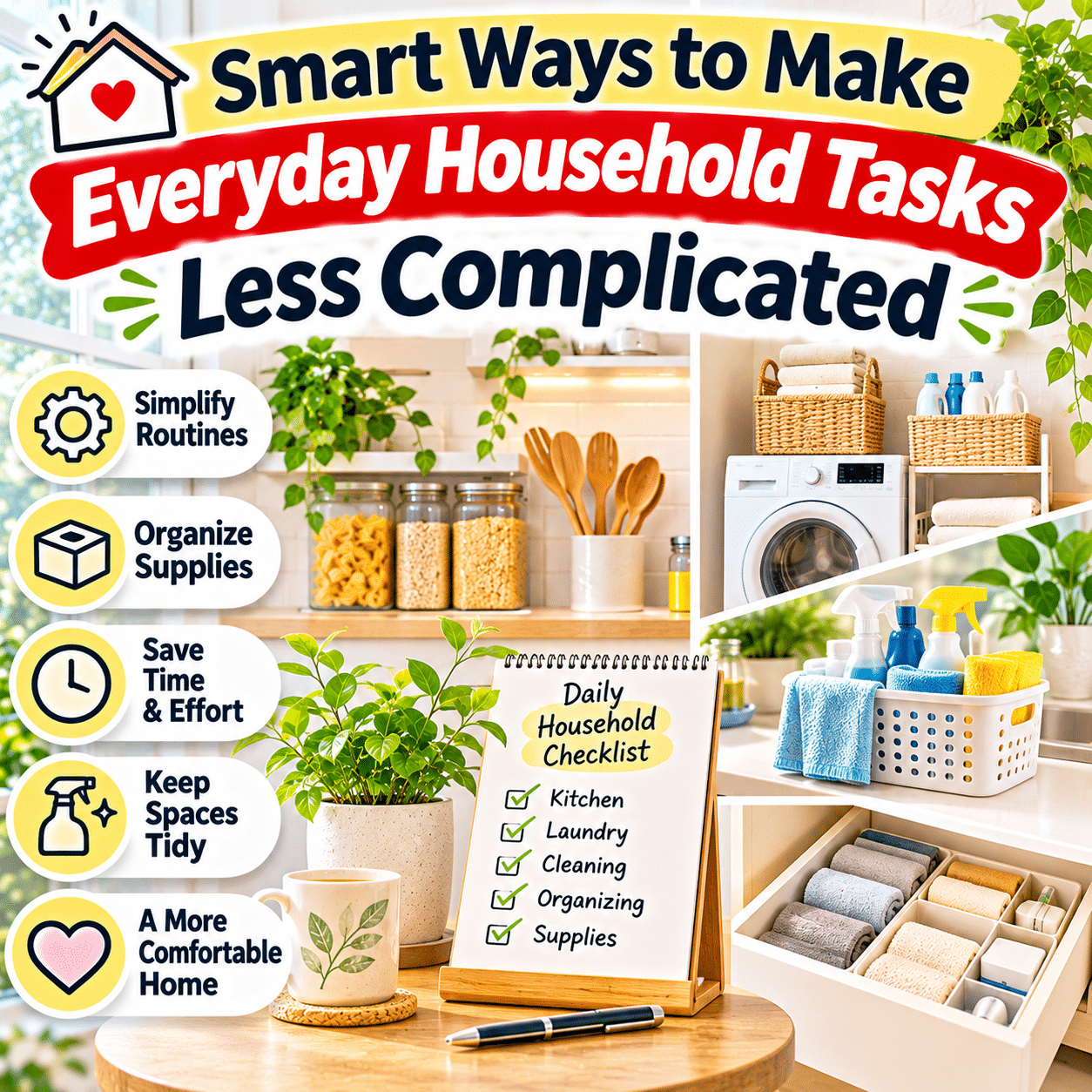
Managing a home involves countless small responsibilities. Washing dishes, preparing meals, doing laundry, cleaning surfaces, organizing belongings, replenishing supplies, and maintaining household equipment are all necessary parts of everyday life. Individually, many of these tasks are straightforward. Together, however, they can become surprisingly time-consuming and mentally demanding.
Household responsibilities often feel complicated not because the tasks themselves are especially difficult, but because they involve repeated decisions, unnecessary movement, misplaced supplies, unclear priorities, and routines that no longer fit daily life.
A simple cleaning job may require searching for the right supplies. Preparing dinner can become frustrating when ingredients are disorganized. Laundry may pile up because the process involves too many separate steps. Even putting everyday belongings away can become inconvenient when storage locations are difficult to access.
Fortunately, making household tasks easier does not require a perfectly organized home, expensive equipment, or a rigid schedule. Small improvements to daily systems can reduce unnecessary effort while making routine responsibilities more predictable.
The goal is to create a home that supports everyday activities rather than adding complications to them.
This comprehensive guide explores practical ways to simplify household responsibilities, organize essential supplies, improve daily workflows, reduce repetitive decisions, and maintain a comfortable living environment with less unnecessary effort.
1. Understand Why Everyday Household Tasks Feel Complicated
Before simplifying household routines, it helps to identify the sources of unnecessary difficulty.
Too Many Small Decisions
Many household activities involve repeated choices.
For example:
- What should be cleaned first?
- Where are the necessary supplies?
- Which laundry items need special care?
- What ingredients are available for dinner?
- Where should recently purchased items be stored?
- Which household task is most urgent?
Making these decisions repeatedly can interrupt otherwise straightforward routines.
Supplies Are Stored Inconveniently
A task becomes more complicated when necessary items are scattered across several locations.
Tasks Have Too Many Steps
Some household systems involve unnecessary preparation, movement, or cleanup.
Responsibilities Accumulate
When small tasks are postponed, they may become larger and more difficult to manage.
Routines Do Not Match Real Life
A household schedule that requires more time or energy than is realistically available may be difficult to maintain.
Simplification begins by identifying which parts of a task create unnecessary effort.
2. Identify the Household Tasks That Cause the Most Friction
Not every household responsibility needs improvement.
Focus first on activities that repeatedly create inconvenience.
Observe Your Daily Routine
Pay attention to tasks that:
- Take longer than expected.
- Require frequent searching.
- Involve unnecessary movement.
- Are repeatedly postponed.
- Create clutter afterward.
- Require the same decisions every day.
- Depend on supplies that are difficult to locate.
Make a Simple Task List
Common household responsibilities include:
| Household Area | Typical Tasks | Common Source of Difficulty |
|---|---|---|
| Kitchen | Cooking, dishes, food storage | Disorganized supplies |
| Laundry | Washing, drying, folding | Multiple handling steps |
| Bathroom | Cleaning, restocking | Scattered products |
| Living room | Tidying, dusting | Items without designated storage |
| Bedroom | Clothing care, bed making | Overcrowded storage |
| Entryway | Managing keys, shoes, bags | Frequently misplaced belongings |
| Household maintenance | Replacing supplies, minor repairs | Missing tools or unclear schedules |
| Shopping | Grocery planning, replenishment | Forgotten items and duplicate purchases |
Prioritize Repeated Problems
A small inconvenience that occurs every day may deserve attention before a larger task that happens only occasionally.
Avoid Changing Everything at Once
Choose one or two frustrating routines and improve them before reorganizing the entire household.
3. Simplify Household Tasks by Reducing Unnecessary Steps
One of the most effective ways to make daily responsibilities easier is to examine the number of actions required.
Break a Task Into Steps
Consider washing dishes:
- Gather dirty dishes.
- Remove food scraps.
- Wash or load dishes.
- Rinse when appropriate.
- Dry or allow to air-dry.
- Return items to storage.
- Clean the sink or surrounding area.
Identify Unnecessary Movement
If clean dishes must be carried across the kitchen to reach storage, consider whether frequently used items could be stored closer to the washing area.
Remove Redundant Actions
Avoid repeatedly moving the same objects between temporary locations.
Keep Necessary Supplies Nearby
Store appropriate tools near where they are used.
Make Cleanup Part of the Process
A task is easier to maintain when putting supplies away is a natural final step.
Preserve Important Safety Steps
Simplifying a task should never mean skipping necessary hygiene, electrical safety, food safety, or equipment instructions.
The goal is to remove unnecessary effort while preserving the steps that matter.
4. Create Functional Zones Around Everyday Activities
A functional zone is an area where related supplies are organized around a particular household activity.
Kitchen Preparation Zone
Keep commonly used preparation tools near the main cooking workspace.
Cleaning Zone
Store suitable cleaning supplies together in a secure, accessible location.
Laundry Zone
Keep detergent, laundry baskets, and related accessories near the washing area when practical.
Entryway Zone
Create designated places for keys, bags, shoes, and frequently carried belongings.
Home Office Zone
Organize charging cables, writing supplies, and work essentials near the desk.
Personal Care Zone
Group frequently used hygiene and grooming products according to daily routines.
Avoid Overcomplicating Zones
A functional zone does not need special furniture or decorative organizers.
A drawer, shelf, or small container may be sufficient.
The most useful zones reduce unnecessary movement and make common tasks easier to begin.
5. Keep Frequently Used Supplies Easy to Reach
Household tasks become more demanding when essential supplies are difficult to retrieve.
Identify Daily Essentials
Examples include:
- Dishwashing supplies.
- Cleaning cloths.
- Cooking utensils.
- Laundry products.
- Reusable shopping bags.
- Frequently used tools.
- Food storage containers.
- Personal care items.
Prioritize Comfortable Reach
Store regularly used items where they can be accessed without unnecessary bending, stretching, or climbing.
Keep Storage Predictable
Use consistent locations so supplies can be found quickly.
Avoid Overcrowding
Leave enough space to remove and replace items comfortably.
Balance Convenience With Safety
Hazardous chemicals, sharp tools, medications, and other potentially dangerous items may require secure storage rather than immediate accessibility.
Convenient storage should support safe household routines.
6. Use Simple Checklists to Reduce Repeated Decisions
Checklists can help make recurring tasks more predictable.
Create a Short Daily Checklist
For example:
- Clear frequently used surfaces.
- Wash or load dishes.
- Return misplaced belongings.
- Check essential household supplies.
- Prepare items needed for the next day.
Create a Weekly Checklist
Possible tasks include:
- Change bed linens.
- Clean appropriate bathroom surfaces.
- Review refrigerator contents.
- Wash commonly used household textiles.
- Check household maintenance needs.
Keep Lists Realistic
A checklist should reflect actual household needs and available time.
Avoid Excessive Detail
Too many small checklist items can make simple tasks feel more complicated.
Adjust When Necessary
Routines should remain flexible during busy periods, travel, illness, or changes in household circumstances.
The purpose of a checklist is to reduce uncertainty, not create pressure to complete every possible task.
7. Build Small Household Routines Around Existing Habits
New routines are often easier to maintain when connected to activities that already happen regularly.
Pair Tasks With Existing Activities
Examples include:
- Wipe the kitchen counter after preparing a meal.
- Return keys to their designated location after arriving home.
- Check laundry supplies before starting a wash.
- Put away personal care products after use.
- Return tools immediately after completing a repair.
Keep Tasks Manageable
A small action repeated consistently may prevent a larger problem from developing.
Avoid Rigid Timing
Not every task needs to happen at exactly the same time each day.
Choose Natural Transition Points
Useful moments include:
- After meals.
- Before leaving home.
- After finishing work.
- Before going to bed.
- After returning from shopping.
Review What Works
If a routine repeatedly fails, consider whether it is too demanding or inconvenient.
Effective habits should make household responsibilities easier, not add unnecessary complexity.
8. Simplify Kitchen Preparation and Everyday Cooking
Cooking involves preparation, timing, cleaning, and storage.
A thoughtful kitchen workflow can reduce unnecessary effort.
Keep Common Ingredients Organized
Group pantry staples according to how they are used.
Store Tools Near Their Purpose
Place frequently used utensils close to preparation areas when safe and practical.
Prepare Ingredients Before Cooking
Gather necessary ingredients and equipment before starting.
Use a Manageable Meal Rotation
A small collection of familiar meals can reduce repeated planning decisions.
Keep Food Storage Containers Accessible
Store compatible containers and lids together.
Clean During Natural Waiting Periods
When appropriate, wash small tools or clear preparation surfaces while food cooks.
Follow Food Safety Guidance
Keep raw and ready-to-eat foods appropriately separated, cook foods to safe temperatures, and refrigerate perishable foods promptly.
Simplification should improve workflow without compromising hygiene.
9. Make Dishwashing Less Complicated
Dishwashing can become frustrating when dishes accumulate or supplies are poorly organized.
Keep the Sink Area Functional
Avoid storing unnecessary items around the washing area.
Use Appropriate Cleaning Tools
Keep suitable brushes, sponges, or cloths available.
Separate Tasks When Helpful
Remove food scraps before washing or loading dishes.
Load Dishwashers According to Instructions
Follow appliance guidance to ensure proper cleaning and avoid damage.
Maintain Cleaning Tools
Replace or sanitize cleaning accessories as appropriate.
Put Dishes Away Consistently
A predictable storage arrangement reduces unnecessary sorting.
Avoid Excessive Dish Accumulation
Washing or loading dishes at manageable intervals may make the task easier.
The most effective system is one that fits the household’s cooking and eating habits.
10. Simplify Laundry From Sorting to Storage
Laundry involves several stages, each of which can create unnecessary work.
Use Practical Laundry Categories
Sort clothing according to care labels, color transfer risks, fabric type, and washing requirements.
Keep Laundry Supplies Together
Store appropriate detergent and accessories near the laundry area when safe.
Use Suitable Hampers
Separate compartments may help households with different laundry needs.
Avoid Overloading Machines
Follow appliance capacity recommendations.
Create a Folding Area
A clear surface can make sorting and folding easier.
Store Clothing Near Its Final Location
Avoid moving clean laundry through several temporary storage areas.
Reduce Unnecessary Handling
Whenever practical, fold or hang items before they become scattered.
Maintain Appliances
Clean filters and perform maintenance according to manufacturer instructions.
A straightforward laundry system reduces repeated sorting and unnecessary movement.
11. Make Bathroom Cleaning More Manageable
Bathrooms require regular attention because moisture, soap residue, and daily use can create buildup.
Keep Suitable Cleaning Supplies Organized
Use a secure storage location for bathroom-specific products.
Address Small Messes Promptly
Wiping splashes or residue when appropriate can reduce later cleaning effort.
Improve Ventilation
Use available ventilation to help manage moisture.
Follow Surface Care Instructions
Different materials may require different cleaning methods.
Avoid Mixing Cleaning Chemicals
Never combine incompatible products, particularly bleach with ammonia or acidic cleaners.
Keep Cleaning Tools Separate
Bathroom cleaning accessories should be appropriately cleaned and stored to reduce cross-contamination.
Focus on High-Use Areas
Sinks, toilets, faucets, and frequently touched surfaces often require regular attention.
A consistent routine can make bathroom maintenance less demanding.
12. Reduce Clutter on Frequently Used Surfaces
Clutter can make simple household activities more difficult.
Identify High-Traffic Surfaces
Examples include:
- Kitchen counters.
- Dining tables.
- Entryway consoles.
- Desks.
- Bedside tables.
- Bathroom counters.
Give Items Designated Locations
Frequently used belongings should have predictable storage.
Use Small Trays When Helpful
A tray can contain keys, accessories, or other small essentials.
Avoid Excessive Decorative Storage
Too many containers can make surfaces harder to clean.
Return Items After Use
Putting belongings away immediately can prevent accumulation.
Keep Work Areas Functional
Leave enough clear space for the activities performed there.
The objective is not a completely empty home but a space that supports everyday tasks.
13. Organize Household Cleaning Supplies by Purpose
Cleaning becomes more complicated when products and tools are scattered.
Group Related Supplies
Possible categories include:
- Kitchen cleaning.
- Bathroom cleaning.
- Floor care.
- Dusting.
- Laundry care.
- Specialty surface maintenance.
Use a Portable Caddy When Appropriate
A caddy may help transport compatible cleaning tools between rooms.
Avoid Carrying Hazardous Products Unnecessarily
Follow safety instructions and keep chemicals secure.
Preserve Original Labels
Important information about safe use, storage, and first aid should remain available.
Avoid Duplicate Products Without a Purpose
A large collection of overlapping cleaners may create unnecessary storage and decision-making.
Inspect Supplies Periodically
Replace damaged tools and dispose of products according to local requirements.
A practical cleaning system should be simple, safe, and easy to maintain.
14. Make Grocery Shopping and Replenishment Easier
Household shopping becomes more complicated when supplies run out unexpectedly or unnecessary duplicates accumulate.
Keep a Running Shopping List
Add items when they are running low.
Check Existing Supplies Before Shopping
Review pantry staples, cleaning products, and personal care items.
Group Purchases by Category
Organize the list into groceries, household supplies, and personal care.
Choose Realistic Quantities
Avoid buying more than can be stored or used appropriately.
Maintain a Small Backup Supply When Useful
Certain frequently used items may benefit from a reasonable reserve.
Avoid Excessive Stockpiling
Overbuying can create clutter and increase product waste.
Return Purchases to Designated Storage
Unpack and organize supplies soon after arriving home.
A consistent replenishment routine can reduce emergency purchases and unnecessary searching.
15. Simplify Food Storage and Refrigerator Organization
Disorganized food storage can make meal preparation more difficult.
Group Similar Foods
Keep related items together when appropriate.
Make Frequently Used Foods Visible
Avoid burying regularly used ingredients behind less common products.
Use Suitable Containers
Choose food-safe storage appropriate for the contents and temperature.
Label Prepared Foods When Helpful
Dates and contents can reduce confusion.
Review Perishable Foods Regularly
Use appropriate storage times and follow food safety guidance.
Avoid Overcrowding
Refrigerators need adequate airflow to maintain appropriate temperatures.
Clean Spills Promptly
Food residue can create odors and contamination risks.
Reduce Unnecessary Packaging Clutter
Remove packaging only when doing so does not compromise food safety, identification, or preservation.
A well-organized refrigerator can simplify cooking while helping reduce avoidable food waste.
16. Make Clothing and Wardrobe Tasks Easier
Clothing organization influences laundry, dressing, and daily preparation.
Keep Frequently Worn Clothes Accessible
Store regular-use items in convenient locations.
Separate Seasonal Clothing
Move rarely used seasonal items to secondary storage when appropriate.
Group Similar Garments
Categories may include:
- Shirts.
- Pants.
- Everyday dresses.
- Sleepwear.
- Exercise clothing.
- Outerwear.
Avoid Overcrowded Drawers
Clothing should be easy to retrieve without disturbing entire stacks.
Create a Simple Laundry Return System
Return clean garments directly to their designated storage.
Repair Minor Problems Promptly
Loose buttons and small tears may become more difficult to address when ignored.
Review Clothing Periodically
Remove items that no longer fit household needs.
An accessible wardrobe can reduce repeated searching and unnecessary handling.
17. Create a Practical Entryway Organization System
The entryway connects household routines with activities outside the home.
Give Keys a Consistent Location
Use a suitable hook, tray, or drawer.
Organize Shoes
Keep frequently worn footwear accessible without blocking walkways.
Store Reusable Bags Conveniently
A compact basket or hook can help prevent bags from being forgotten.
Create a Place for Everyday Accessories
Sunglasses, umbrellas, and other commonly carried items may benefit from dedicated storage.
Keep Important Items Secure
Avoid leaving valuables or sensitive information in publicly visible locations.
Reduce Floor Clutter
Keep doors, exits, and passageways clear.
A functional entryway can make departures and arrivals more predictable.
18. Simplify Household Maintenance Tasks
Minor maintenance responsibilities are easier to manage when necessary tools and information are organized.
Keep Basic Tools Together
Store suitable household tools in a secure location.
Maintain a Simple Maintenance List
Examples may include:
- Checking appliance filters.
- Inspecting visible leaks.
- Cleaning appropriate ventilation components.
- Reviewing smoke alarm maintenance requirements.
- Checking household lighting.
- Inspecting frequently used equipment.
Follow Manufacturer Instructions
Maintenance intervals and procedures vary by product.
Avoid Unsafe Repairs
Electrical, gas, structural, and other hazardous work may require qualified professionals.
Keep Important Manuals Accessible
Store appliance instructions digitally or in a designated household folder.
Address Small Problems Appropriately
Minor issues may become more disruptive when ignored.
However, safety concerns should always take priority over convenience.
19. Use Simple Digital Tools Without Creating More Work
Digital reminders and lists can help manage household responsibilities.
Maintain a Shared Shopping List
A digital list may be useful when several people contribute to household purchases.
Set Reminders for Occasional Tasks
Examples include appliance maintenance or replacing specific supplies.
Store Important Information
Keep accessible copies of relevant household instructions and warranty information.
Avoid Too Many Applications
Using several overlapping tools can create unnecessary complexity.
Keep Systems Easy to Update
A simple notes application or calendar may be sufficient.
Protect Sensitive Information
Store passwords, financial records, and other confidential information using appropriate security measures.
Digital tools should support household organization rather than become another responsibility to manage.
20. Reduce Household Decisions Through Simple Defaults
Repeatedly making the same small decisions can create unnecessary effort.
Establish Familiar Meal Options
Keep a manageable selection of meals that suit household preferences.
Use Consistent Storage Locations
Avoid deciding where to put the same items every day.
Create Regular Cleaning Patterns
Choose a realistic approach for recurring tasks.
Standardize Common Supplies When Practical
Using compatible containers or familiar household products may reduce unnecessary sorting.
Prepare Frequently Used Items in Advance
Keep everyday essentials ready for regular activities.
Preserve Flexibility
Defaults should make life easier without preventing variety or adjustment.
The purpose is to reduce repetitive decisions, not eliminate personal choice.
21. Make Household Tasks Easier in Small Living Spaces
Smaller homes can benefit from thoughtful organization because storage and work areas often serve multiple purposes.
Prioritize Frequently Used Items
Reserve accessible storage for everyday essentials.
Use Existing Space Efficiently
Evaluate drawers, shelves, and cabinets before adding furniture.
Choose Compact Organizers
Small dividers and suitable containers may be more useful than oversized storage systems.
Keep Walkways Clear
Avoid placing baskets or supplies where they create obstacles.
Use Portable Storage When Appropriate
A small caddy can support activities performed in different rooms.
Avoid Excessive Duplicates
Limited storage makes unnecessary accumulation particularly inconvenient.
Keep Multi-Purpose Areas Flexible
Dining tables and other shared surfaces should remain easy to return to their primary functions.
A compact home can be highly functional when storage supports actual daily activities.
22. Simplify Household Responsibilities in Shared Homes
Household tasks can become complicated when several people use the same spaces.
Establish Clear Storage Locations
Shared items should have predictable places.
Make Responsibilities Understandable
When appropriate, discuss who handles recurring tasks.
Use Simple Shared Lists
A short checklist may help prevent forgotten responsibilities.
Avoid Overly Detailed Rules
Complicated systems can be difficult for everyone to follow.
Consider Different Needs
Household members may have different schedules, abilities, and preferences.
Keep Communication Practical
Discuss recurring problems and adjust systems together.
Maintain Safety Standards
Shared convenience should not compromise hygiene or secure storage.
A cooperative approach can reduce confusion and repeated work.
23. Make Household Routines More Accessible
Household systems should account for different physical abilities and comfort levels.
Reduce Unnecessary Bending
Store frequently used items at comfortable heights.
Avoid Heavy Overhead Storage
Keep heavy objects where they can be handled safely.
Choose Easy-to-Use Containers
Consider handles, closures, visibility, and weight.
Improve Lighting
Adequate lighting can make storage and cleaning tasks easier.
Reduce Obstacles
Keep frequently used pathways clear.
Use Appropriate Tools
Long-handled or ergonomic tools may help with certain activities.
Adapt Tasks to Individual Needs
A practical household system should support the people who use it.
Accessibility improvements often make everyday tasks more convenient for everyone.
24. Prevent Small Household Tasks From Accumulating
Many household responsibilities become more difficult when postponed repeatedly.
Address Small Tasks at Natural Moments
For example:
- Return items after use.
- Wipe minor spills promptly.
- Put groceries away after shopping.
- Sort mail when convenient.
- Place laundry in designated hampers.
Avoid Constant Interruptions
Not every small task requires immediate attention.
Choose moments that do not interfere with important activities.
Group Similar Tasks
Completing related activities together may reduce repeated setup and movement.
Use Realistic Priorities
Focus on hygiene, safety, and necessary household functions before optional improvements.
Accept That Some Tasks Can Wait
A manageable home does not require continuous cleaning.
Avoid Perfectionism
The purpose of household organization is practical comfort, not maintaining a flawless appearance.
25. Common Mistakes That Make Household Tasks More Complicated
Mistake 1: Creating Overly Detailed Routines
Complicated schedules can become difficult to maintain.
Better approach: Use simple routines that fit available time.
Mistake 2: Buying Too Many Organizers
Extra containers may create more clutter.
Better approach: Improve existing storage before purchasing additional accessories.
Mistake 3: Storing Supplies Far From Their Use
Tasks require unnecessary movement.
Better approach: Create practical activity-based storage zones.
Mistake 4: Trying to Change Everything at Once
Large reorganizations can become overwhelming.
Better approach: Improve one recurring problem at a time.
Mistake 5: Keeping Unnecessary Duplicates
Excess supplies make storage more difficult.
Better approach: Maintain practical quantities.
Mistake 6: Ignoring Safety Instructions
Shortcuts may create hazards.
Better approach: Preserve essential hygiene and equipment safety procedures.
Mistake 7: Using Too Many Reminder Systems
Overlapping lists and applications create confusion.
Better approach: Choose one or two reliable tools.
Mistake 8: Allowing Frequently Used Areas to Become Overcrowded
Clutter reduces usable space.
Better approach: Keep essential surfaces functional.
Mistake 9: Following Rigid Schedules
Unrealistic routines may be abandoned.
Better approach: Build flexibility into household systems.
Mistake 10: Expecting Perfect Organization
Maintaining a flawless appearance can create unnecessary work.
Better approach: Prioritize cleanliness, safety, accessibility, and comfort.
26. Troubleshooting Common Household Task Problems
| Problem | Possible Cause | Practical Solution |
|---|---|---|
| Cleaning takes too long | Supplies are scattered | Organize supplies by activity |
| Laundry repeatedly piles up | Too many handling steps | Simplify sorting, folding, and storage |
| Kitchen preparation feels chaotic | Poor ingredient and tool placement | Create functional preparation zones |
| Household items are frequently misplaced | No consistent storage locations | Assign designated homes |
| Shopping trips miss essential supplies | No running list | Maintain a simple shopping checklist |
| Drawers become overcrowded | Excess items and unclear categories | Remove unnecessary belongings and add dividers |
| Cleaning routines are difficult to maintain | Unrealistic schedules | Use smaller, flexible routines |
| Bathroom supplies are hard to find | Mixed products | Group items by purpose |
| Household maintenance is forgotten | No reminder system | Use a simple calendar or maintenance list |
| Entryway becomes cluttered | No designated storage | Create a compact essentials station |
| Tasks require repeated movement | Supplies stored too far away | Move appropriate supplies closer to their use |
| Shared household tasks cause confusion | Unclear responsibilities | Establish simple shared expectations |
| Small spaces feel difficult to manage | Excess duplicates and bulky storage | Prioritize compact, functional organization |
| Household routines feel exhausting | Too many unnecessary steps | Remove redundant actions and simplify defaults |
A useful troubleshooting approach is to identify the specific source of difficulty and make the smallest practical change that addresses it.
27. Create a Practical Household Simplification Checklist
A simple checklist can help make household routines more manageable.
Initial Household Review
- Identify the most frustrating recurring tasks.
- Observe unnecessary movement or repeated searching.
- Review existing storage locations.
- Group related supplies.
- Remove unnecessary duplicates.
- Create practical functional zones.
- Keep hazardous items securely stored.
- Choose a manageable reminder system.
Daily Household Habits
- Return frequently used belongings after use.
- Keep important work surfaces functional.
- Manage dishes at practical intervals.
- Place laundry in designated containers.
- Address minor spills appropriately.
- Update the shopping list when supplies run low.
- Prepare essential items for upcoming activities.
- Avoid unnecessary household perfectionism.
Weekly Household Tasks
- Review refrigerator and pantry contents.
- Complete necessary laundry.
- Clean appropriate high-use surfaces.
- Return misplaced belongings.
- Check household supply levels.
- Review upcoming maintenance needs.
- Adjust routines that are not working.
Periodic Maintenance
- Inspect frequently used household equipment.
- Review appliance care instructions.
- Check storage areas for unnecessary accumulation.
- Replace damaged cleaning tools.
- Update household checklists.
- Reassess accessibility needs.
- Review shared responsibilities.
- Simplify any system that has become unnecessarily complicated.
The checklist should remain a flexible guide rather than a rigid requirement.
28. Frequently Asked Questions About Simplifying Household Tasks
1. What is the easiest way to make household tasks less complicated?
Identify recurring sources of inconvenience, keep necessary supplies accessible, and remove unnecessary steps from everyday routines.
2. Why do simple household chores sometimes feel overwhelming?
Repeated decisions, accumulated responsibilities, misplaced supplies, and unrealistic routines can make ordinary tasks feel more demanding.
3. How can I simplify household cleaning?
Group suitable cleaning supplies, create manageable routines, and focus on necessary tasks rather than maintaining perfect surfaces.
4. Do I need expensive organizers to simplify household tasks?
No. Existing drawers, shelves, baskets, and simple storage containers may be sufficient.
5. How can I reduce the time spent searching for household items?
Assign consistent storage locations and keep frequently used belongings near their usual point of use.
6. What is a functional household zone?
It is an area where supplies related to a particular activity are organized together.
7. How can I make kitchen tasks easier?
Organize ingredients, keep common tools accessible, prepare before cooking, and maintain a practical cleanup routine.
8. What is the best way to simplify laundry?
Use appropriate sorting categories, keep supplies together, avoid unnecessary handling, and return clean clothes directly to storage.
9. How can I make dishwashing less frustrating?
Keep the washing area functional, use suitable tools, and manage dishes at intervals that fit your household.
10. How can I simplify bathroom cleaning?
Maintain appropriate cleaning supplies, manage moisture, and address routine buildup before it becomes difficult to remove.
11. Are household checklists useful?
Yes. Simple checklists can reduce repeated decisions and help prevent necessary tasks from being forgotten.
12. How many household tasks should I do each day?
There is no universal number. Choose tasks based on household needs, available time, and personal capacity.
13. How can I avoid spending all day cleaning?
Prioritize necessary tasks, use practical routines, and avoid repeatedly cleaning areas that do not require attention.
14. Should I clean every room every day?
Not necessarily. Cleaning frequency depends on use, hygiene needs, household conditions, and the type of surface.
15. How can I simplify grocery shopping?
Maintain a running list, review existing supplies, and purchase realistic quantities.
16. How can I make household tasks easier in a small apartment?
Use compact storage, reduce unnecessary duplicates, and keep multi-purpose spaces functional.
17. How do I simplify household responsibilities when living alone?
Focus on routines that support your actual needs, group similar tasks, and avoid creating unnecessarily elaborate systems.
18. How can families simplify shared household chores?
Use clear storage locations, practical responsibilities, and simple communication.
19. What should I do when a household routine stops working?
Identify which part creates difficulty and adjust the system rather than forcing an inconvenient routine.
20. Can digital reminders help with household organization?
Yes. A simple calendar or notes application can help manage recurring tasks and supplies.
21. How can I reduce clutter without a complete home makeover?
Give frequently used items designated locations, remove unnecessary duplicates, and keep high-use surfaces manageable.
22. What household tasks should be prioritized?
Safety, hygiene, food handling, necessary maintenance, and essential daily functions generally deserve priority.
23. How can I make household tasks easier for older adults?
Use comfortable storage heights, clear pathways, appropriate tools, and accessible organization systems.
24. Is it better to complete chores immediately or schedule them?
Both approaches can work. Small tasks may fit naturally into daily routines, while larger responsibilities may benefit from scheduled time.
25. How can I prevent household chores from piling up?
Use manageable routines, address small problems at convenient moments, and avoid unnecessary accumulation.
26. Can simplifying household tasks reduce stress?
A more predictable and convenient household system may reduce frustration and unnecessary decision-making, although individual experiences vary.
27. What is the biggest mistake people make when organizing household routines?
Creating systems that are too complicated or demanding to maintain consistently.
28. What is the most important principle for simplifying everyday household tasks?
Design household systems around real habits, practical accessibility, and the least amount of unnecessary effort.
29. Build a Long-Term System for Easier Household Living
Simplifying household tasks is most effective when improvements become part of ordinary routines.
Start With the Most Repetitive Problems
Focus on tasks that repeatedly waste time or create frustration.
Keep Supplies Near Their Point of Use
Reduce unnecessary movement while preserving safe storage.
Use Simple, Predictable Systems
Consistent locations and manageable routines make responsibilities easier to remember.
Reduce Unnecessary Decisions
Establish practical defaults for common activities.
Maintain Functional Storage
Avoid overcrowded drawers, cabinets, and work surfaces.
Use Existing Resources First
Improve current storage and equipment before purchasing additional products.
Preserve Safety and Hygiene
Convenience should never replace essential household precautions.
Adjust to Changing Needs
Household routines should evolve with schedules, living arrangements, and accessibility requirements.
Avoid Perfectionism
A comfortable home does not need to remain perfectly arranged at every moment.
Focus on Sustainable Habits
Small improvements that remain useful over time are more valuable than elaborate systems that quickly become difficult to maintain.
The most successful household routine is one that supports everyday life without demanding constant attention.
Final Thoughts
Everyday household tasks are necessary, but they do not need to be unnecessarily complicated.
Cooking, cleaning, laundry, organizing, shopping, and household maintenance can become easier when supplies are accessible, storage locations are predictable, and routines reflect the way a home is actually used.
The most effective improvements are often small. Moving frequently used items closer to their purpose, simplifying a cleaning routine, keeping a running shopping list, or creating a designated place for everyday essentials can reduce repeated searching and unnecessary movement.
Equally important is recognizing that household organization should support comfort rather than perfection. A practical home is not one where every surface remains spotless or every task follows a rigid schedule.
It is a home where essential responsibilities can be completed safely, efficiently, and without unnecessary frustration.
By focusing on realistic habits, clear organization, and thoughtful workflows, households can reduce everyday complications while preserving time and energy for more meaningful activities.
The goal is simple: make the home easier to live in, easier to maintain, and more comfortable to enjoy—one practical improvement at a time.