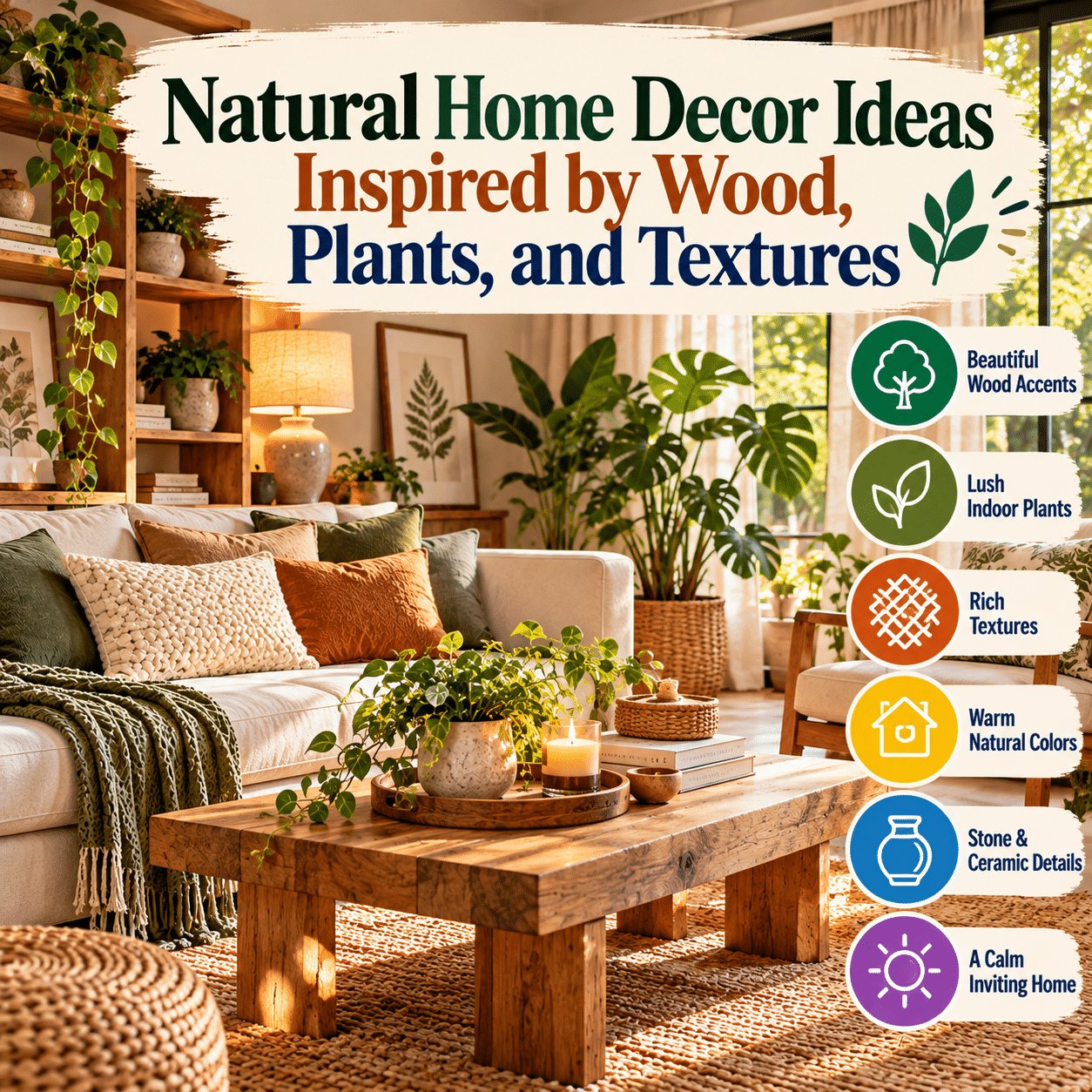
A home inspired by nature has a special kind of warmth. Natural wood, leafy plants, woven baskets, textured fabrics, and earthy colors can make everyday spaces feel more comfortable, welcoming, and connected to the outdoors. These elements introduce visual softness and organic character without requiring elaborate decorations or expensive renovations.
Natural home decor is not limited to rustic cabins, countryside cottages, or homes surrounded by gardens. It works equally well in modern apartments, compact urban houses, minimalist interiors, and traditional living spaces. Even a small collection of thoughtfully chosen natural materials can transform the atmosphere of a room.
The appeal of nature-inspired decorating comes from its versatility. Wood introduces warmth and distinctive grain patterns. Plants add color and organic shapes. Textiles such as linen, cotton, wool, and woven fibers provide softness and depth. When combined carefully, these materials create interiors that feel balanced rather than overly decorated.
However, creating a natural-looking home involves more than simply adding plants and wooden furniture. The most successful spaces consider proportion, lighting, color harmony, practical maintenance, and how different textures interact.
This guide explores natural home decor ideas inspired by wood, plants, and textures, with practical inspiration for living rooms, bedrooms, dining areas, home offices, and small spaces. Whether you prefer Scandinavian simplicity, modern organic interiors, rustic warmth, or a relaxed botanical style, these ideas can help you create a home that feels personal, functional, and naturally inviting.
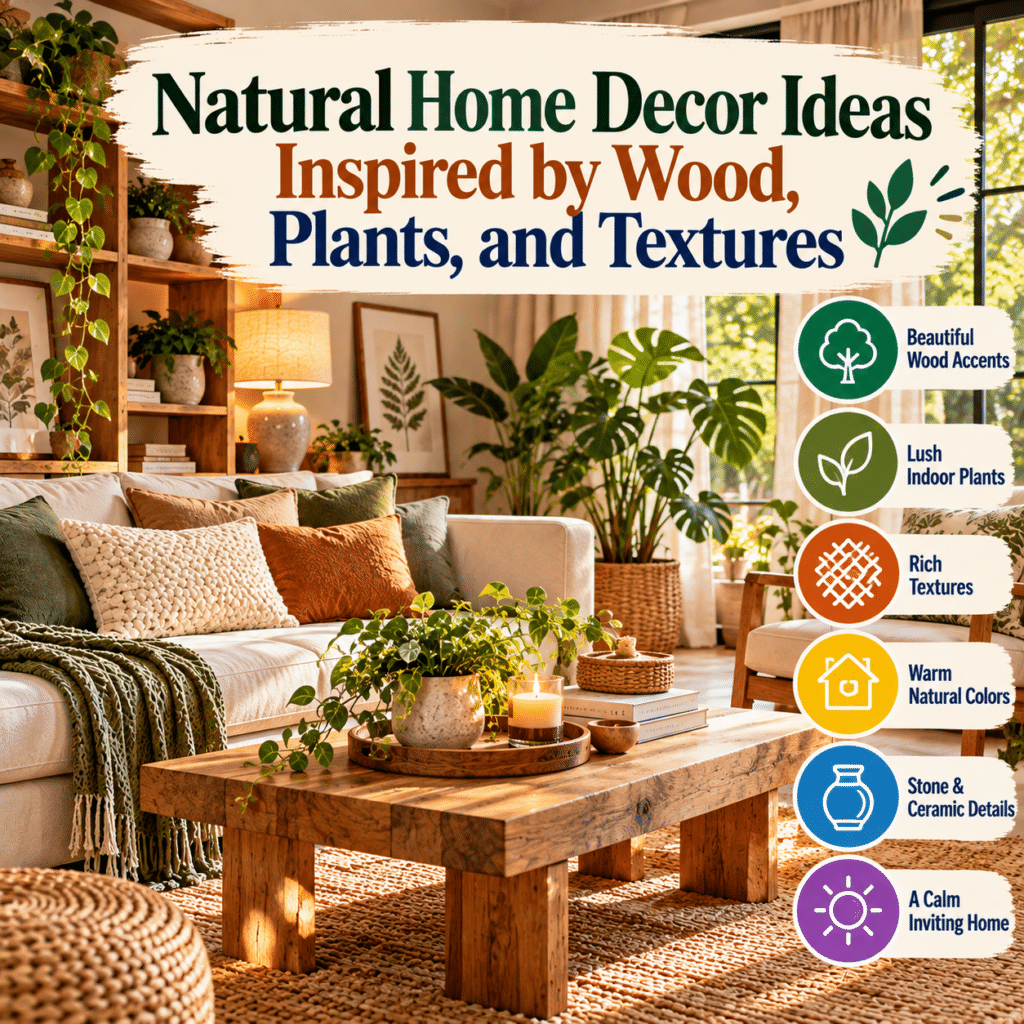
1. What Makes Natural Home Decor So Appealing?
Natural home decor draws inspiration from materials, colors, shapes, and patterns found in the natural world.
Rather than relying on a single decorating style, it emphasizes the visual and tactile qualities of organic elements.
Warmth Through Familiar Materials
Wood, woven fibers, and natural textiles introduce colors and textures that many people associate with warmth and comfort.
A wooden coffee table, linen curtains, and a woven rug can make a room feel softer than one dominated entirely by glossy or highly reflective surfaces.
Visual Variety Without Excessive Decoration
Natural materials often contain subtle variations.
Wood grain, stone patterns, woven textures, and plant leaves create visual interest without requiring bold prints or numerous accessories.
Flexibility Across Decorating Styles
Natural elements complement many interiors.
A modern apartment might feature a simple oak table and one sculptural plant.
A rustic living room might include reclaimed wood, woven baskets, and layered textiles.
A minimalist bedroom might use linen bedding, a wooden headboard, and a muted earth-tone palette.
A Connection to Everyday Comfort
Nature-inspired decorating often encourages practical choices.
Comfortable fabrics, functional wooden furniture, suitable greenery, and simple storage solutions can contribute to spaces that are pleasant to use.
The goal is not to recreate an outdoor landscape indoors. It is to incorporate natural qualities in ways that suit the home and the people living there.
2. Build a Nature-Inspired Color Palette
Color provides the foundation for a cohesive natural interior.
A thoughtful palette can connect different materials and help rooms feel calm, balanced, and welcoming.
Start With Earthy Neutrals
Earth-inspired neutrals are versatile because they complement wood, stone, and greenery.
Consider colors such as:
- Warm white
- Cream
- Sand
- Oatmeal
- Beige
- Soft taupe
- Clay
- Warm gray
These shades work well on walls, large furniture, curtains, and rugs.
For example, cream walls paired with oak furniture and a textured beige rug can create a bright, natural atmosphere.
Introduce Botanical Greens
Green is an obvious choice for nature-inspired decorating, but it does not need to dominate the room.
Sage, olive, moss, and forest green can appear in cushions, artwork, ceramics, or upholstery.
A muted green accent can complement wooden furniture while maintaining a relaxed appearance.
Add Warm Earth Tones
Terracotta, rust, ochre, caramel, and warm brown introduce depth.
These colors work particularly well in smaller accents.
A terracotta vase or rust-colored cushion can bring warmth to a neutral room without requiring a dramatic color change.
Use Darker Colors for Contrast
Natural interiors do not have to be entirely light-colored.
Charcoal, deep brown, muted black, and dark green can provide visual structure.
A dark metal lamp beside a light wooden table, for example, can create an appealing contrast.
Repeat Colors Thoughtfully
A cohesive room often repeats a few colors across different elements.
If olive green appears in a cushion, it might also appear in artwork or a ceramic planter.
This repetition helps connect objects without making everything look identical.
3. Use Wood as a Foundation for Natural Decorating
Wood is one of the most versatile materials in home decor.
Its grain, tone, and texture can introduce warmth while supporting many different design styles.
Choose Wood Tones That Suit the Atmosphere
Different wood finishes create different impressions.
| Wood Tone | Visual Character | Common Decorating Uses |
|---|---|---|
| Light oak | Bright, soft, versatile | Scandinavian and modern interiors |
| Ash | Light, understated grain | Minimalist furniture |
| Walnut | Rich, warm, sophisticated | Modern and classic spaces |
| Natural pine | Casual, rustic appearance | Relaxed and country-inspired rooms |
| Dark-stained wood | Strong contrast, traditional warmth | Statement furniture and accents |
| Reclaimed wood | Weathered character and variation | Rustic and eclectic interiors |
Actual appearance varies with species, finish, and lighting.
Introduce Wood Through Furniture
Wooden coffee tables, dining tables, shelving, benches, and bedside cabinets can establish a natural foundation.
Choose pieces according to room dimensions and practical needs.
A large wooden dining table may be suitable for a spacious room, while a compact side table can introduce the same material into a small apartment.
Use Wood Accessories
Not every room needs additional wooden furniture.
Smaller accessories can provide warmth without occupying much space.
Examples include picture frames, trays, bowls, lamp bases, and decorative boxes.
Mix Different Wood Tones
Matching every wood finish is not necessary.
Light and dark wood can work together when the overall palette remains balanced.
For example, a walnut coffee table may complement lighter oak shelving if neutral textiles and other furnishings connect the room.
Consider Wood Maintenance
Wood requires care appropriate to its finish and construction.
Protect surfaces from excessive moisture, heat, and prolonged exposure to strong sunlight when recommended by the manufacturer.
Use suitable cleaning products and avoid assuming that every wooden surface can be treated the same way.
4. Introduce Plants as Living Decorative Elements
Indoor plants add organic shapes, color, and visual movement.
They can soften architectural lines and make a room feel more connected to nature.
Choose Plants for the Available Light
The most important consideration is whether a plant can thrive in the room’s actual conditions.
Some plants prefer bright indirect light, while others tolerate lower-light environments.
Before purchasing, evaluate:
- Window orientation
- Amount of natural daylight
- Temperature
- Humidity
- Available space
- Watering requirements
- Household safety
A plant chosen for suitable growing conditions is more likely to remain attractive over time.
Use Plants of Different Heights
Combining plants of different sizes can create visual interest.
A tall floor plant may anchor an empty corner.
A medium-sized plant can complement a side table.
A small plant may work well on a shelf or desk.
Avoid overcrowding plants or blocking important walking paths.
Choose Planters That Complement the Room
Planters can become part of the decorating scheme.
Ceramic, terracotta, metal, and suitable woven-style containers offer different appearances.
Use appropriate drainage arrangements to protect furniture and flooring.
Create a Small Plant Grouping
Grouping several plants can make a stronger decorative statement than scattering many small pots around a room.
Vary leaf shapes and heights while maintaining enough space for growth and maintenance.
Understand the Limits of Indoor Plants
Plants can make interiors visually appealing, but ordinary collections of houseplants should not be relied upon to meaningfully purify indoor air.
Ventilation, source control, and appropriate building maintenance remain important for indoor air quality.
Consider Pet and Child Safety
Some popular houseplants are toxic if ingested.
Check reliable plant-safety information before introducing plants into homes with pets or young children.
Also secure heavy planters and keep fertilizers or plant-care chemicals stored safely.
5. Add Depth With Natural Textures
Texture is essential to nature-inspired decorating.
It creates visual interest through differences in surface, weave, softness, and finish.
A room with several natural textures can feel layered even when its color palette is simple.
Combine Smooth and Rough Surfaces
A polished wooden table can contrast with a textured woven rug.
A smooth ceramic vase may look appealing beside a linen-covered sofa.
These contrasts prevent the room from feeling visually flat.
Use Linen for Relaxed Softness
Linen is often associated with casual, natural interiors because of its distinctive weave and relaxed appearance.
It can be used for curtains, cushion covers, table linens, and bedding.
Linen tends to wrinkle, which some people appreciate as part of its character.
Introduce Cotton Textiles
Cotton offers a wide range of textures and fabric constructions.
Cotton cushions, throws, and bedding can provide comfort while supporting different decorating styles.
Consider Wool Where Appropriate
Wool rugs and blankets can introduce softness and texture.
However, they may require specialized cleaning and may not be ideal for every climate or household.
Add Woven Fibers
Jute, seagrass, rattan, and other woven materials can create an earthy appearance.
Their comfort, durability, and maintenance requirements vary.
Choose them according to where and how they will be used.
6. Decorate With Rattan, Wicker, and Woven Accessories
Woven accessories offer a practical way to introduce natural character.
They can also provide useful storage.
Use Baskets for Organization
Baskets can hold blankets, magazines, toys, or other lightweight belongings.
A large woven basket beside a sofa can make storage feel integrated into the decor.
Introduce Woven Furniture
Rattan-style chairs, benches, or cabinet fronts can create a relaxed atmosphere.
Check construction quality and intended use.
Not every woven furniture piece is suitable for heavy daily use or outdoor exposure.
Add Woven Lighting
Pendant shades and lamps with woven details can create interesting patterns and visual texture.
Use fixtures designed for the intended bulbs and installation conditions.
Choose Woven Trays
A woven tray can organize small decorative objects on a coffee table or console.
It can also add contrast to smooth wooden or stone surfaces.
Avoid Excessive Repetition
Too many woven pieces may make a room feel overly themed.
Balance baskets and woven furniture with smooth ceramics, upholstered surfaces, and simpler accessories.
7. Bring Stone and Ceramic Details Into the Home
Wood and plants often receive the most attention in natural decorating, but stone and ceramics can add valuable contrast.
Use Stone-Inspired Surfaces
Stone can introduce subtle patterns and a sense of permanence.
Examples include marble, slate, limestone, and other natural or engineered stone surfaces.
Each material has different maintenance requirements.
Some stones are porous and may require sealing or careful cleaning.
Introduce Ceramic Accessories
Ceramic vases, bowls, planters, and lamps can provide natural-looking texture.
Matte and handcrafted finishes often complement wood and woven materials.
Use Stone in Small Accents
A stone tray, decorative bowl, or suitable tabletop accessory can add visual weight without requiring major renovations.
Balance Hard and Soft Materials
Stone and ceramics can feel visually cool when used extensively.
Pairing them with textiles, wood, or warm lighting can create a more comfortable atmosphere.
8. Create a Natural Living Room
The living room is an ideal place to combine wood, greenery, and texture.
Because it often supports relaxation and social activities, the design should balance comfort with visual appeal.
Start With Comfortable Seating
Choose a sofa and chairs that suit the room’s size and everyday use.
Neutral upholstery can provide a flexible foundation for natural accents.
Add a Wooden Coffee Table
A wooden table introduces warmth and can serve as a central feature.
Choose proportions that allow comfortable movement around the seating area.
Layer a Textured Rug
A rug can visually connect the furniture.
Jute, wool, cotton, and suitable synthetic alternatives offer different textures and practical qualities.
Use a non-slip pad where needed.
Introduce Greenery
A floor plant near a window or a small grouping of plants can add organic shapes.
Choose plants suited to the available light.
Finish With Natural Accessories
A ceramic vase, woven basket, botanical print, or textured cushion can complete the arrangement.
Avoid adding too many decorative elements at once.
The most inviting natural living rooms allow furniture and materials to stand out without excessive clutter.
9. Design a Bedroom Inspired by Nature
Nature-inspired bedrooms can feel peaceful, warm, and personal.
The emphasis should remain on comfort and practical sleeping conditions.
Choose a Wooden Bed Frame or Headboard
A simple wooden frame can establish a natural focal point.
Select a design that fits the room and supports the mattress appropriately.
Use Soft, Breathable Bedding
Cotton, linen, and other suitable fabrics can create a relaxed appearance.
Choose bedding according to comfort, climate, and maintenance needs.
Keep the Palette Gentle
Cream, warm white, sage green, sand, and muted brown can create a cohesive atmosphere.
Darker natural colors can also work when balanced with suitable lighting.
Add a Small Botanical Detail
A botanical print or carefully chosen plant can introduce a connection to nature.
Avoid placing heavy planters or fragile objects above the bed.
Use Soft Lighting
Bedside lamps and indirect lighting can make the room more comfortable in the evening.
Provide adequate brightness for reading and dressing.
10. Create a Nature-Inspired Dining Area
A dining area can feel warm and welcoming when natural materials are used thoughtfully.
Choose a Practical Wooden Table
Wooden dining tables offer a wide range of styles and finishes.
Consider size, stability, surface protection, and ease of cleaning.
Mix Natural Materials
Wooden tables can pair with upholstered chairs, woven seats, or metal accents.
A combination of materials can prevent the room from feeling overly uniform.
Add a Simple Centerpiece
A ceramic bowl, small plant, or seasonal botanical arrangement can create a focal point.
Keep centerpieces low enough for comfortable conversation.
Use Natural Table Linens
Cotton or linen runners, napkins, and placemats can introduce texture.
Choose materials that are practical to clean.
Add Suitable Lighting
A pendant light or other well-positioned fixture can help define the dining area.
Ensure that the light provides adequate illumination without uncomfortable glare.
11. Bring Natural Elements Into the Kitchen
Natural decorating can make kitchens feel warmer while preserving their practical purpose.
Introduce Wooden Accessories
Wooden cutting boards, trays, and suitable storage containers can add warmth.
Use food-contact items according to their intended purpose and cleaning requirements.
Display Functional Ceramics
Ceramic bowls, mugs, and containers can contribute to the decor while remaining useful.
Add a Small Herb Garden
A few culinary herbs may provide greenery and practical value.
Choose herbs suited to the available sunlight and growing conditions.
Use Natural-Looking Storage
Baskets and containers can help organize suitable pantry items.
Avoid placing materials that are difficult to clean near areas exposed to grease, moisture, or food preparation.
Keep Surfaces Practical
Kitchen decoration should not interfere with safe food preparation, cleaning, ventilation, or access to essential equipment.
12. Create a Calm Home Office With Natural Details
A home office can benefit from the visual warmth of natural materials.
The goal is to create an environment that supports concentration and comfort.
Choose a Functional Desk
A wooden or wood-finish desk can provide a warm foundation.
Prioritize appropriate height, stability, and sufficient workspace.
Add a Small Plant
A compact plant can introduce greenery without occupying much desk space.
Choose a suitable location that does not interfere with equipment.
Use Practical Storage
Wooden shelves, fabric organizers, and baskets can keep supplies accessible.
Introduce Texture Through Accessories
A desk mat, curtain, or small rug can soften the workspace.
Balance Natural Light
Position the desk to benefit from daylight while avoiding excessive glare on screens.
Use suitable task lighting when necessary.
Natural decorating should support the workspace rather than compromise ergonomics or productivity.
13. Make Small Spaces Feel Natural and Inviting
Compact rooms can benefit from natural materials without becoming crowded.
Choose a Few Statement Elements
A small wooden table, one healthy plant, and a textured rug may be enough to establish the atmosphere.
Use Vertical Space
Wall-mounted shelves can display plants or accessories while preserving floor area.
Install shelving securely and respect weight limits.
Select Furniture With Appropriate Proportions
Slim furniture and multifunctional storage can help maintain comfortable movement.
Keep the Palette Cohesive
A consistent range of earthy colors can visually connect different elements.
Avoid Excessive Accessories
Natural decorating does not require filling every corner with plants or baskets.
A restrained arrangement can feel more comfortable and easier to maintain.
14. Adapt Natural Decor to Different Interior Styles
Natural materials work across many design traditions.
The key is choosing how prominently they appear.
| Decorating Style | Main Characteristics | Natural Decor Ideas |
|---|---|---|
| Scandinavian | Light colors, simplicity, practical comfort | Pale wood, soft textiles, greenery |
| Modern Organic | Clean lines, curved forms, earthy materials | Wood furniture, ceramics, textured fabrics |
| Rustic | Weathered surfaces, warm colors, traditional character | Reclaimed wood, woven baskets |
| Japandi-Inspired | Simplicity, restrained decoration, natural materials | Low-profile furniture, neutral textiles |
| Bohemian | Layered patterns, personal objects, relaxed styling | Plants, woven accessories, handmade ceramics |
| Coastal | Light colors, airy spaces, natural textures | Pale wood, linen, woven details |
| Contemporary | Balanced shapes, selective statement pieces | Sculptural plants, wood accents, stone surfaces |
Scandinavian Natural Decor
Focus on light wood, simple furniture, and soft textiles.
Use plants and carefully chosen accessories to introduce character.
Modern Organic Interiors
Combine streamlined furniture with natural materials and gentle curves.
Wood, stone, and textured fabrics can soften modern architectural lines.
Rustic Warmth
Use weathered wood, earthy colors, and practical woven accessories.
Balance rustic elements with comfortable upholstery and appropriate lighting.
Japandi-Inspired Simplicity
Choose restrained decoration, functional furniture, and natural materials.
Emphasize visual balance and comfortable everyday use.
Bohemian Natural Decor
Combine plants, handmade objects, textiles, and personal collections.
Maintain a few consistent colors to avoid visual overload.
15. Use Natural Light to Highlight Materials and Textures
Daylight influences how natural materials appear.
Wood grain, woven fabrics, and plant leaves often reveal subtle variations under natural illumination.
Keep Windows Reasonably Unobstructed
Arrange furniture so it does not unnecessarily block available daylight.
Choose Suitable Window Treatments
Sheer curtains can soften bright sunlight while allowing some light to enter.
Blinds or lined curtains may provide additional privacy and heat control.
Position Mirrors Thoughtfully
Mirrors can reflect daylight and create visual depth.
Avoid placements that produce uncomfortable glare.
Consider Sun Exposure
Prolonged direct sunlight may fade some fabrics, wood finishes, and artwork.
Choose appropriate materials and window treatments where needed.
Balance Daylight With Artificial Lighting
A room should remain comfortable after sunset.
Use ambient and task lighting to maintain functionality.
16. Decorate With Branches, Dried Botanicals, and Seasonal Finds
Natural decorative elements do not always need to be living plants.
Branches, dried flowers, and other botanical materials can introduce organic shapes.
Use Branches as Sculptural Accents
A simple arrangement of branches in a sturdy vase can create a striking focal point.
Choose materials that are clean, stable, and appropriate for indoor use.
Display Dried Flowers
Dried botanical arrangements can add texture and muted color.
Keep them away from flames, excessive moisture, and areas where they may shed onto food or frequently used surfaces.
Create Seasonal Arrangements
Seasonal branches, leaves, or flowers can refresh a room without major decorating changes.
Avoid Overcrowding
One thoughtfully arranged botanical display may have more visual impact than numerous small arrangements.
Consider Allergies and Household Safety
Some dried plants may shed particles or trigger sensitivities.
Certain botanical materials can also be harmful to pets or children if ingested.
Choose and position arrangements carefully.
17. Combine Natural Decor With Modern Technology
Modern homes often contain televisions, computers, speakers, charging equipment, and other electronic devices.
Natural decorating can coexist with these technologies.
Use Furniture to Organize Electronics
Wooden media consoles or storage cabinets can help keep equipment organized.
Maintain required ventilation around electronic devices.
Manage Visible Cables
Cable organizers can reduce visual clutter.
Avoid tightly bundling cords in ways that conflict with manufacturer safety guidance.
Choose Complementary Accessories
A wooden monitor stand or simple desk organizer can connect technology with the room’s natural aesthetic.
Balance Visual Focal Points
A television does not have to dominate the entire living room.
Artwork, shelving, and comfortable furniture arrangements can create additional points of interest.
Prioritize Function
Do not cover ventilation openings or place flammable decorative materials near equipment that generates heat.
A visually attractive arrangement should remain safe and practical.
18. Consider Sustainability When Choosing Natural Materials
Natural-looking products are not automatically environmentally sustainable.
Environmental impact depends on sourcing, production, transportation, durability, maintenance, and disposal.
Choose Materials Thoughtfully
When purchasing wood products, consider credible information about sourcing and manufacturing.
Relevant certification systems may provide useful information, although their scope and requirements differ.
Prioritize Durability
A durable product that remains useful for many years may be preferable to one that requires frequent replacement.
Consider Reclaimed Materials
Reclaimed wood and secondhand furniture can extend the useful life of existing materials.
Inspect them for safety and condition.
Repair Rather Than Replace
Refinishing suitable furniture, repairing joints, or replacing worn upholstery may extend a product’s lifespan.
Avoid Unnecessary Purchases
The simplest decorating improvement may involve rearranging items you already own.
Understand Material Tradeoffs
Natural fibers and wood may have environmental advantages in some circumstances, but they can also involve resource use, chemical treatments, or maintenance requirements.
Evaluate products individually rather than assuming that natural always means better.
19. Budget-Friendly Natural Home Decor Ideas
Creating a nature-inspired home does not require expensive furniture or extensive renovations.
Rearrange Existing Wooden Furniture
Moving a wooden table, shelf, or chair into a different room can create a new visual balance.
Refresh Cushion Covers
Choose textured fabrics or earth-inspired colors that complement existing furnishings.
Repurpose Suitable Containers
A clean ceramic bowl, basket, or tray can become a decorative organizer.
Display Personal Nature Photography
Photographs of landscapes, plants, or favorite outdoor destinations can add personal meaning.
Use One Statement Plant
A single well-chosen plant may create more impact than many small plants that are difficult to maintain.
Explore Secondhand Finds
Wooden furniture, ceramic accessories, and woven baskets may be available secondhand.
Inspect condition and cleanliness before use.
Create Simple DIY Decorations
Framed botanical prints, handmade wall art, or carefully arranged natural materials can add character.
Use appropriate tools and safety precautions.
20. Common Natural Decorating Mistakes to Avoid
Natural decor is flexible, but several common mistakes can make a room feel less comfortable.
Using Too Many Materials at Once
Combining numerous wood finishes, woven textures, stone surfaces, and patterns may create visual clutter.
Choose a few materials and repeat them thoughtfully.
Overcrowding the Room With Plants
Too many plants can restrict movement and make maintenance difficult.
Select plants according to available space and growing conditions.
Ignoring Lighting Requirements
Plants need suitable light, and natural materials may change appearance under different lighting.
Consider the room’s actual conditions.
Choosing Texture Without Considering Comfort
Some natural fibers are rough or difficult to clean.
Select materials appropriate for their intended use.
Assuming Natural Means Safe
Plants, finishes, fibers, and decorative objects can present different risks.
Check product information and household suitability.
Forgetting Practical Storage
Decorative baskets and shelves should support organization rather than simply add more objects.
Following a Theme Too Literally
A nature-inspired room does not need leaf patterns, wooden decorations, and botanical prints on every surface.
Subtle references often create a more balanced result.
21. A Step-by-Step Natural Home Decor Transformation
If you want to introduce more natural elements into your home, begin with a manageable plan.
Step 1: Evaluate the Existing Room
Identify which elements already support a natural aesthetic.
Wooden furniture, neutral walls, and suitable textiles may provide a useful foundation.
Step 2: Choose Your Preferred Atmosphere
Decide whether you want the room to feel bright, earthy, rustic, minimalist, or botanical.
Step 3: Establish a Color Palette
Choose a few compatible foundation colors and accents.
Step 4: Introduce One Main Natural Material
Wood is often a practical starting point.
Use existing furniture or add a suitable piece where needed.
Step 5: Layer Textures
Introduce a rug, curtains, cushions, or other textiles that complement the room.
Step 6: Add Greenery
Choose plants according to light, space, maintenance, and safety requirements.
Step 7: Include Ceramic or Woven Accessories
Select a few useful objects that add visual interest.
Step 8: Improve Lighting
Make the most of daylight and provide suitable evening illumination.
Step 9: Organize and Edit
Remove unnecessary clutter and allow important elements to stand out.
Step 10: Review the Space Over Time
Live with the changes before making additional purchases.
Notice which materials and arrangements are most comfortable and practical.
22. Natural Home Decor Checklist
Use this checklist to evaluate a nature-inspired room.
Colors and Materials
- The color palette feels balanced.
- Wood tones complement the room.
- Textures add visual interest without overcrowding.
- Materials suit everyday use.
- Decorative elements are practical to maintain.
Plants and Greenery
- Plants receive appropriate light.
- Planters provide suitable drainage arrangements.
- Plant choices are appropriate for pets and children.
- Greenery does not block movement.
- Plant maintenance is manageable.
Furniture and Layout
- Furniture proportions suit the room.
- Walking paths remain clear.
- Storage supports everyday routines.
- Decorative objects are positioned safely.
- Natural elements complement existing furniture.
Comfort and Atmosphere
- Lighting supports different activities.
- Textiles are comfortable for the climate.
- The room feels welcoming and personal.
- Decorative displays are not excessive.
- The space is easy to clean and maintain.
Long-Term Value
- Purchases address real needs.
- Durability and repairability have been considered.
- Existing items are reused where practical.
- Materials are evaluated beyond appearance alone.
- The design can evolve over time.
Frequently Asked Questions About Natural Home Decor
1. What is natural home decor?
Natural home decor is an approach to interior decorating that draws inspiration from nature through materials, colors, textures, and organic shapes. Common elements include wood, plants, woven fibers, stone, ceramics, and earth-inspired color palettes.
2. How can I make my home look more natural without renovating?
Start with small changes such as adding a wooden accessory, choosing textured cushion covers, introducing suitable plants, or displaying botanical artwork. Rearranging existing furniture and improving lighting can also make a difference.
3. Can natural home decor work in a modern apartment?
Yes. Natural materials complement modern interiors particularly well. A streamlined sofa, wooden coffee table, ceramic accessories, and a carefully chosen plant can create a balanced modern-organic appearance.
4. What colors work best with natural wood furniture?
Warm whites, beige, taupe, sage green, muted blue, terracotta, and earthy browns often complement wood. The best choice depends on the wood’s undertones, the room’s lighting, and personal preference.
5. Do I need many indoor plants to create a natural atmosphere?
No. One or two well-positioned plants can introduce greenery and organic shapes. Botanical artwork, wood, natural-looking textiles, and other materials can also create a nature-inspired atmosphere.
6. Is natural home decor always environmentally friendly?
Not necessarily. Environmental impact depends on sourcing, production, transportation, durability, and disposal. Natural materials are not automatically sustainable, so evaluate individual products and prioritize long-term usefulness.
7. How do I keep natural home decor from looking too rustic?
Combine natural materials with clean-lined furniture, simple lighting, and restrained accessories. Smooth surfaces, modern shapes, and a cohesive color palette can create a contemporary appearance while preserving natural warmth.
Conclusion: Create a Home That Feels Naturally Yours
Natural home decor offers a flexible way to create spaces that feel warm, comfortable, and connected to the outdoors.
Wood introduces familiar textures and distinctive character. Plants add greenery and organic shapes. Woven fibers, ceramics, stone, and soft textiles provide visual depth and balance.
Yet the most successful nature-inspired interiors are not defined by the number of natural materials they contain. They are shaped by thoughtful choices that support everyday comfort, personal preferences, and practical living.
A single wooden table, a comfortable linen cushion, a carefully chosen plant, or a handmade ceramic vase can contribute more to a room than numerous decorations added without a clear purpose.
Begin with the elements you already own. Introduce new materials gradually, pay attention to lighting and proportions, and choose objects that feel meaningful as well as attractive.
Over time, these small decisions can create a home that feels harmonious, welcoming, and easy to enjoy.
The beauty of natural home decor lies not in bringing as much of the outdoors inside as possible, but in choosing the colors, materials, and textures that make your everyday surroundings feel more comfortable, balanced, and genuinely your own.