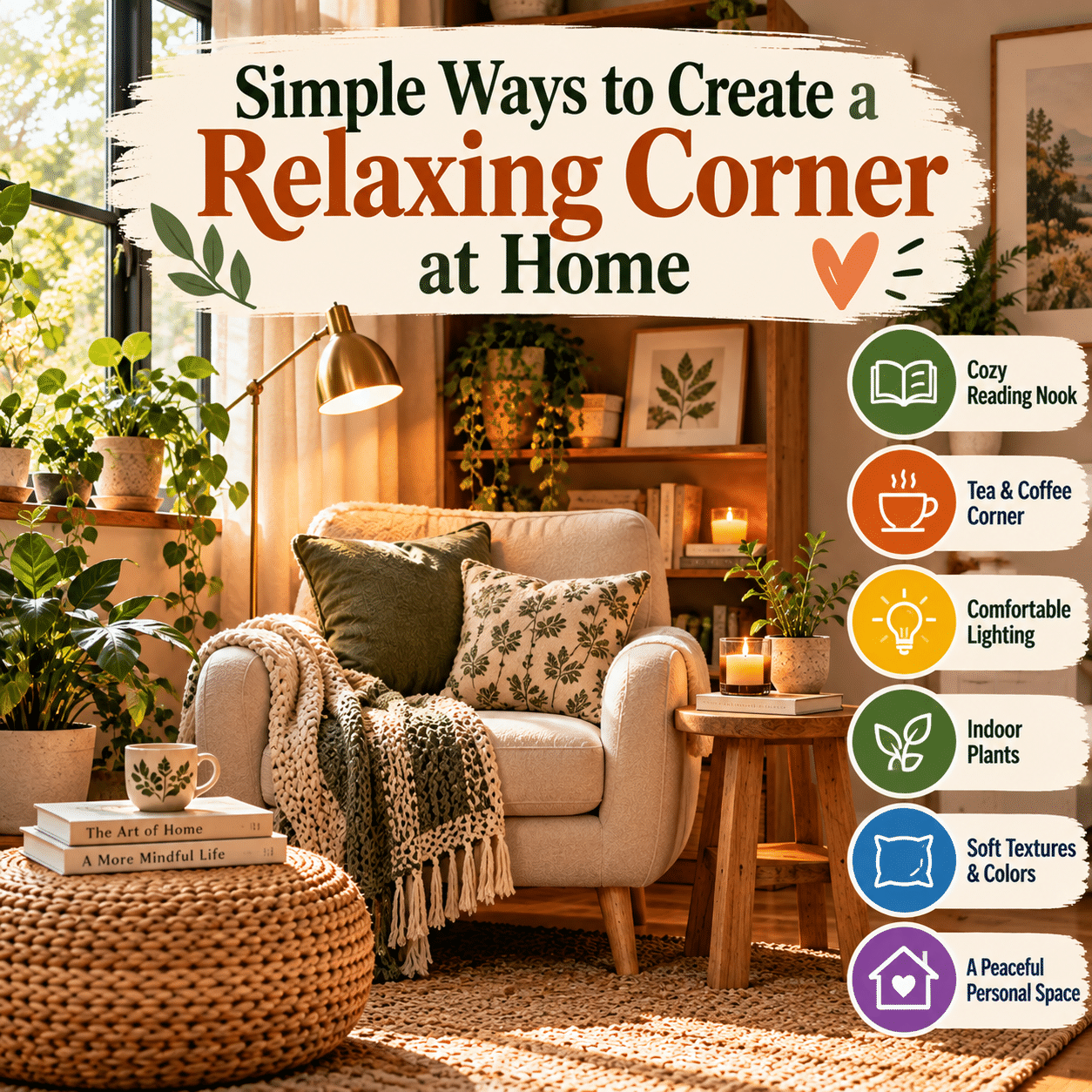
A relaxing corner at home does not need to be large, expensive, or elaborately decorated. Sometimes, a comfortable chair beside a window, a small reading lamp, and a favorite book are enough to create a peaceful place where you can step away from everyday distractions.
Modern homes often serve many purposes. Living rooms become entertainment spaces, bedrooms double as work areas, and dining tables occasionally turn into temporary desks. With so many activities sharing the same environment, having a small area dedicated to quiet moments can make everyday life feel more balanced.
A relaxing corner offers a simple opportunity to create a space around your personal preferences. It might be a reading nook, a comfortable place to enjoy tea, a quiet spot for journaling, or a peaceful area where you can sit and appreciate natural light.
The best part is that you do not need an unused room to create one. An empty bedroom corner, a section of the living room, a space beside a bookshelf, or even a small area near a window can become an inviting retreat with thoughtful planning.
Creating a comfortable corner is less about following a particular decorating trend and more about understanding what helps you feel at ease. Furniture, lighting, colors, textures, organization, and personal details all contribute to the atmosphere.
This guide explores practical and creative ways to design a relaxing corner at home, including ideas for small spaces, different decorating styles, and affordable improvements. Whether you enjoy reading, listening to music, quiet reflection, or simply taking a break, these ideas can help you create a personal space that feels comfortable, welcoming, and easy to enjoy.
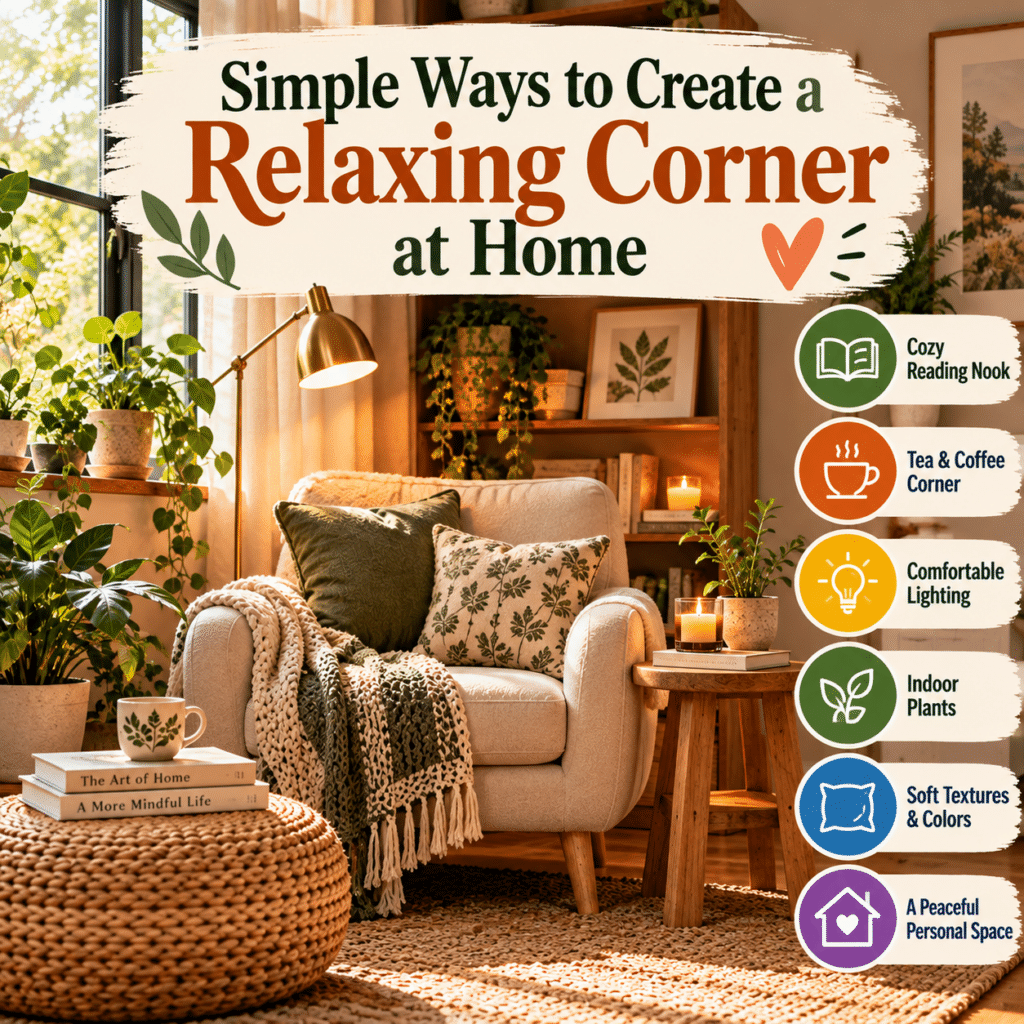
1. What Makes a Relaxing Corner Feel Special?
A relaxing corner is a small, intentionally arranged area designed around comfort and quiet activities.
Unlike a formal sitting room or a dedicated home office, it does not need to accommodate many functions.
Its purpose is to provide a pleasant environment for activities that help you slow down.
Several qualities can make a relaxing corner particularly inviting.
A Clear Purpose
A space feels more useful when it supports an activity you genuinely enjoy.
For example, a reading corner needs comfortable seating and suitable lighting.
A journaling corner may benefit from a small writing surface.
A quiet tea corner might include a chair, a side table, and convenient storage for a few favorite items.
Choosing a purpose helps prevent unnecessary furniture and decoration.
Comfortable Seating
A relaxing corner should be physically comfortable.
The right chair, cushion, or other seating option depends on your preferences, available space, and intended activities.
Gentle but Functional Lighting
Soft lighting can create a welcoming atmosphere.
However, adequate brightness is important for reading, writing, or other detailed tasks.
A Sense of Personal Connection
Favorite books, meaningful photographs, artwork, or handmade objects can make the space feel more personal.
Minimal Distractions
A relaxing corner does not have to be completely silent or empty.
However, reducing unnecessary clutter and interruptions can make it easier to enjoy the space.
The goal is to create a corner that feels naturally inviting rather than carefully staged.
2. Choose the Right Location in Your Home
The location of your relaxing corner influences how frequently you use it.
An attractive arrangement may become inconvenient if it blocks movement, lacks suitable lighting, or feels disconnected from everyday routines.
Look for Underused Spaces
Walk through your home and identify areas that are not being used effectively.
Potential locations include:
- An empty living room corner
- A space beside a bedroom window
- A quiet section of a home office
- An area near a bookshelf
- A corner of a guest room
- A small alcove
- A suitable covered balcony
- A space beside a large window
The ideal location depends on your home’s layout and how you plan to use the area.
Consider Natural Light
Daylight can make a corner feel bright and welcoming.
A chair near a window may provide pleasant illumination for reading during the day.
However, direct sunlight can create glare or excessive heat.
Window treatments may be necessary to manage brightness and comfort.
Think About Noise
If you prefer quiet activities, avoid placing your relaxing corner immediately beside frequently used televisions, appliances, or busy walkways when possible.
In an open-plan home, furniture placement and soft furnishings may help establish a sense of separation.
Keep Walking Paths Clear
The corner should not obstruct doors, hallways, or access to frequently used furniture.
A compact arrangement is often more practical than a large decorative setup.
Choose a Place You Will Actually Use
A relaxing corner does not need to be hidden away.
If you enjoy being near family members while reading, a quiet side of the living room may be ideal.
If you prefer solitude, a bedroom corner may be more suitable.
Personal habits matter more than following a fixed design rule.
3. Define the Purpose of Your Relaxing Corner
Before purchasing furniture or accessories, decide how you want to use the space.
A clear purpose makes decorating easier and helps avoid unnecessary clutter.
Reading Corner
A reading nook usually needs a supportive chair, suitable lighting, and convenient access to books.
A small side table can hold a drink or reading glasses.
Tea or Coffee Corner
A quiet beverage corner might include comfortable seating, a small table, and a tray.
If you use hot drinks, choose stable furniture and keep cups away from edges where they could be knocked over.
Journaling Corner
A journaling space benefits from a comfortable seat and a stable writing surface.
A small drawer or basket can hold notebooks and pens.
Music Listening Corner
A music corner may include a comfortable chair, suitable speakers or headphones, and a place to store favorite recordings or accessories.
Consider sound levels and the comfort of other household members.
Meditation or Quiet Reflection Corner
A simple cushion, supportive chair, or suitable floor mat may provide a place for quiet reflection.
The arrangement should support a comfortable posture without requiring uncomfortable positions.
Creative Hobby Corner
A small area for sketching, knitting, or other quiet hobbies can provide a pleasant break from routine.
Include appropriate task lighting and storage for materials.
A relaxing corner can support more than one activity, but it is usually best to prioritize a few compatible uses rather than trying to fit everything into a small space.
4. Choose Comfortable Seating That Fits the Space
Seating is often the most important element of a relaxing corner.
A beautiful chair may look inviting, but it will not be enjoyable if it lacks appropriate support or feels uncomfortable after a short period.
Consider an Armchair
A compact armchair can create a dedicated place for reading or relaxation.
Look for features such as:
- Supportive backrest
- Comfortable seat depth
- Appropriate seat height
- Suitable armrests
- Durable upholstery
- Stable construction
The best design depends on the user’s body proportions and preferences.
Try a Lounge Chair
A lounge chair with a slightly reclined position may suit activities such as reading or listening to music.
However, ensure that it provides comfortable support and does not occupy too much floor space.
Use a Floor Cushion When Appropriate
A thick floor cushion can create a casual seating arrangement.
This may work well in compact spaces or for people who enjoy sitting close to the floor.
However, floor seating is not comfortable or accessible for everyone.
Add a Small Footrest
A footrest or ottoman may improve comfort when paired with a suitable chair.
Choose a stable design that does not block walking paths.
Consider a Window Seat
A built-in or properly supported window seat can create a pleasant place to relax.
Use suitable cushions and ensure that the structure is designed to support the expected load.
Prioritize Everyday Comfort
Before choosing seating, think about how long you expect to use it.
A chair that feels comfortable for a few minutes may not provide the same support during a longer reading session.
Whenever possible, test seating before purchasing.
5. Use Soft Lighting to Create a Peaceful Atmosphere
Lighting has a strong influence on how a relaxing corner feels.
The goal is to provide enough illumination for the intended activity while avoiding uncomfortable glare.
Make the Most of Daylight
Natural daylight can create a pleasant atmosphere.
Position seating to benefit from available light without placing the sun directly in your eyes.
Add a Reading Lamp
A floor lamp or table lamp can provide focused illumination.
Adjustable lamps are especially useful because they allow light to be directed toward a book or writing surface.
Choose Warm-White Lighting for Relaxation
Warm-white bulbs, commonly around 2700K to 3000K, can create a gentle evening atmosphere.
However, brightness and light distribution are also important.
Consider Dimmable Lighting
Compatible dimmable fixtures allow you to adjust the atmosphere according to the activity.
Brighter light may be useful for reading, while softer illumination may suit quiet conversation or music listening.
Use Accent Lighting Sparingly
A small lamp on a shelf or subtle indirect lighting can add visual depth.
Avoid excessive decorative lighting that creates clutter or distracting reflections.
Keep Electrical Safety in Mind
Use appropriate fixtures and bulbs, avoid overloaded outlets, and keep electrical cords away from walking paths.
Do not place fabric decorations directly against hot light sources.
6. Create a Calming Color Palette
Color can help distinguish a relaxing corner from the surrounding room.
A cohesive palette may make the area feel more intentional and visually comfortable.
Start With Soft Neutrals
Warm white, cream, beige, taupe, and oatmeal are versatile foundations.
These shades complement many furniture styles and natural materials.
Introduce Muted Greens
Sage, olive, and moss green can create a nature-inspired atmosphere.
Use them in cushions, artwork, or small decorative objects.
Explore Gentle Blues
Muted blue and blue-gray shades may create a quiet visual impression.
They can work particularly well with light wood and neutral fabrics.
Add Warm Earth Tones
Terracotta, clay, caramel, and soft brown can introduce warmth.
These colors may be especially appealing in corners with wooden furniture or woven accessories.
Use Dark Colors Thoughtfully
Deep green, navy, or charcoal can create an intimate atmosphere.
Balance darker colors with appropriate lighting and lighter textiles.
Keep the Palette Simple
A relaxing corner does not need many competing colors.
Choose a small number of compatible shades and repeat them across the main elements.
7. Layer Textures for Extra Comfort
Texture adds visual and physical softness.
A relaxing corner can feel more inviting when it combines comfortable fabrics with natural-looking materials.
Add a Throw Blanket
A throw provides both decoration and practical comfort.
Choose a material suited to the climate.
Lightweight cotton may be comfortable in warm environments, while thicker blankets can provide warmth in cooler conditions.
Use Supportive Cushions
A cushion can add softness or provide additional back support.
Choose a size and firmness appropriate for the chair.
Avoid using so many cushions that the seating becomes inconvenient.
Introduce a Small Rug
A rug can visually define the relaxing corner.
It may also soften hard flooring.
Use a suitable non-slip pad and keep rug edges flat.
Incorporate Woven Accessories
A woven basket can hold books, blankets, or hobby supplies.
Natural-looking fibers can add texture without requiring elaborate decoration.
Balance Different Surfaces
A smooth wooden side table can contrast with a textured cushion or woven rug.
Combining a few materials often creates more interest than using many similar accessories.
8. Bring Nature Into Your Relaxing Corner
Nature-inspired details can make a small space feel more welcoming.
Plants, wood, botanical artwork, and natural textures introduce organic shapes and colors.
Add a Suitable Houseplant
A small plant can bring greenery into the corner.
Choose one that matches the available light and maintenance conditions.
Use Wooden Furniture
A wooden side table, shelf, or picture frame can introduce warmth.
Wood tones can complement neutral colors and soft textiles.
Display Botanical Artwork
A framed botanical print or landscape photograph can create a connection to nature.
This is especially useful when live plants are impractical.
Include Natural-Looking Accessories
Ceramic vases, woven baskets, and textured fabrics can contribute to the atmosphere.
Consider Household Safety
Some plants are toxic to pets or children.
Check plant suitability before bringing greenery into the home.
Keep heavy planters stable and avoid placing fragile objects where they may fall.
9. Add a Small Side Table for Everyday Convenience
A side table can make a relaxing corner more practical.
It provides a convenient place for items such as books, glasses, a drink, or a small lamp.
Choose an Appropriate Size
The table should be large enough for essential items but not so large that it restricts movement.
Consider Height
A table positioned near the chair’s armrest height may be convenient for reaching everyday objects.
Explore Different Materials
Wood can add warmth.
Metal may complement modern interiors.
Ceramic or stone surfaces can introduce texture, although their weight and maintenance requirements should be considered.
Use Multifunctional Designs
A small table with a shelf or drawer can provide additional storage.
Keep the Surface Uncluttered
Leave enough room for items you actually use.
A small tray can help organize accessories without overcrowding the table.
10. Use Shelves and Baskets to Keep the Space Organized
A relaxing corner should feel easy to use.
Practical storage helps prevent books, blankets, and other items from accumulating on the floor or seating.
Install a Small Wall Shelf
A floating shelf can hold a few books or decorative objects.
Use appropriate mounting hardware and respect weight limits.
Add a Narrow Bookcase
A slim bookcase can provide storage without occupying excessive floor space.
Secure tall furniture where necessary to reduce tipping risks.
Use a Storage Basket
A basket beside the chair can hold a throw blanket, magazines, or hobby supplies.
Choose a Storage Ottoman
An ottoman with internal storage can provide a footrest and a place for suitable lightweight items.
Organize Around Your Habits
Keep frequently used items within reach.
Store occasional items elsewhere to prevent clutter.
11. Create a Reading Nook That Encourages Daily Reading
A reading nook is one of the most popular types of relaxing corners.
It can be simple, comfortable, and practical.
Choose a Supportive Chair
A chair with suitable back support and comfortable armrests may make longer reading sessions more enjoyable.
Position the Light Carefully
A reading lamp should illuminate the pages without shining directly into your eyes.
Keep Books Accessible
A small shelf, basket, or side table can hold current reading materials.
Add a Comfortable Textile
A cushion or throw can make the space feel more inviting.
Minimize Distractions
Position the chair away from frequently used walkways or noisy equipment when possible.
Make the Nook Personal
A favorite photograph, artwork, or plant can help the space feel special.
The best reading nook is one that encourages you to sit down and enjoy a book regularly.
12. Design a Quiet Tea or Coffee Corner
A tea or coffee corner can create a pleasant place to enjoy a daily ritual.
It does not require a separate beverage station or elaborate equipment.
Begin With Comfortable Seating
Choose a chair that encourages you to sit comfortably.
Add a Stable Table
A small table provides a place for a cup, book, or notebook.
Use a Simple Tray
A tray can organize coasters and small accessories.
Introduce Warm Lighting
A nearby lamp can make the area inviting in the evening.
Keep the Arrangement Practical
Avoid overcrowding the table with decorations.
Use stable surfaces for hot beverages and keep electrical appliances in appropriate locations.
Personalize the Experience
A favorite mug, meaningful artwork, or comfortable cushion can make the corner feel uniquely yours.
13. Create a Relaxing Corner in a Small Bedroom
A bedroom corner can provide a quiet retreat without requiring a separate room.
Use Compact Furniture
A small armchair, narrow table, or wall-mounted shelf may be sufficient.
Coordinate With Existing Colors
Choose accessories that complement the bedroom’s palette.
Keep the Bed Area Accessible
Do not position furniture where it blocks wardrobes, drawers, or walking paths.
Add Soft Lighting
A wall-mounted reading light can save floor space.
Avoid Excessive Decoration
A small bedroom benefits from carefully selected objects.
The goal is to create a comfortable retreat without making the room feel crowded.
14. Make a Relaxing Corner in the Living Room
A living room corner can become a personal retreat while remaining connected to the rest of the household.
Define the Area With Furniture
Position a chair slightly apart from the main seating arrangement.
Use a Rug to Establish the Space
A small rug can visually distinguish the corner.
Add a Floor Lamp
A lamp can provide both practical illumination and a sense of separation.
Introduce a Small Shelf
A shelf can hold books or meaningful objects.
Maintain Visual Harmony
Use colors and materials that complement the rest of the living room.
The corner should feel distinct without appearing disconnected.
15. Create a Peaceful Corner in a Home Office
A home office may benefit from a separate area for short breaks.
The goal is to create a visual and functional distinction between work and relaxation.
Position Seating Away From the Desk
If space allows, place a comfortable chair in a different part of the room.
Choose Softer Materials
A cushion, throw, or small rug can distinguish the relaxation area from the workspace.
Reduce Work-Related Clutter
Keep office supplies and unfinished tasks away from the relaxing corner when practical.
Add Personal Details
Artwork, books, or a small plant can create a different atmosphere.
Keep the Space Simple
A chair and a small lamp may be enough.
The corner should provide a pleasant alternative to sitting at the desk.
16. Use a Balcony or Window Area as a Relaxing Retreat
A window or suitable balcony can provide a connection to the outdoors.
Create a Window-Side Seat
Position a comfortable chair near a window where daylight is pleasant.
Manage Sunlight and Heat
Use curtains, blinds, or other suitable shading to control glare and temperature.
Choose Appropriate Balcony Furniture
For outdoor areas, select furniture designed for the expected weather conditions.
Add Suitable Greenery
Plants can create visual softness, but they must be appropriate for the available light and outdoor exposure.
Prioritize Safety
Keep furniture away from unsafe balcony edges, do not obstruct exits, and avoid overloading balcony structures.
A window-side corner can provide much of the same visual appeal when outdoor space is unavailable.
17. Explore Different Relaxing Corner Styles
A relaxing corner can reflect many decorating preferences.
| Style | Main Characteristics | Suitable Elements |
|---|---|---|
| Scandinavian | Light colors, simple furniture, natural materials | Wooden table, soft throw, reading lamp |
| Modern Minimalist | Clean lines, limited decoration | Streamlined chair, compact lighting |
| Rustic | Earthy colors, textured materials | Wooden furniture, woven basket |
| Bohemian | Layered textiles, personal objects | Patterned cushion, plants, artwork |
| Japandi-Inspired | Simple forms, restrained decoration | Neutral fabrics, natural wood |
| Classic Cozy | Traditional shapes, comfortable upholstery | Armchair, table lamp, books |
| Modern Organic | Soft curves, earthy materials | Rounded chair, ceramics, greenery |
Scandinavian Simplicity
Choose light wood, neutral colors, and functional accessories.
Modern Minimalist Calm
Use a comfortable chair, focused lighting, and a small number of meaningful objects.
Rustic Warmth
Introduce wood, woven textures, and earthy colors.
Bohemian Comfort
Combine textiles, plants, and personal artwork while maintaining visual balance.
Japandi-Inspired Tranquility
Emphasize simplicity, natural materials, and practical comfort.
There is no need to follow one style exactly.
A relaxing corner should reflect your preferences rather than a strict decorating formula.
18. Create a Relaxing Corner on a Budget
A peaceful personal space does not require expensive purchases.
Reuse an Existing Chair
Move a comfortable chair into an underused corner.
Rearrange Furniture
Changing the layout may create enough space for a small retreat.
Use an Existing Lamp
A lamp from another room may provide suitable lighting.
Repurpose a Small Table
A sturdy stool or side table can hold books and other essentials.
Add One Comfortable Textile
A cushion or throw can make existing seating more inviting.
Display Personal Artwork
A favorite photograph or handmade print can add character.
Shop Secondhand Carefully
Secondhand chairs, tables, and shelves may offer affordable options.
Inspect furniture for structural stability, cleanliness, and condition.
Avoid Unnecessary Purchases
Start with the essentials.
Use the space for a while before deciding whether additional accessories are needed.
19. Keep Your Relaxing Corner Comfortable in Different Climates
The ideal materials and arrangement depend partly on the climate.
Warm and Humid Conditions
Choose breathable textiles and avoid unnecessary heavy layers.
Maintain appropriate ventilation and moisture control.
Cooler Conditions
A suitable throw blanket and comfortable rug may provide additional warmth.
Strong Sunlight
Use window treatments to manage glare and heat.
Limited Natural Light
Provide adequate artificial lighting for the intended activities.
Seasonal Adjustments
Small changes to textiles, lighting, or decorative colors can help the corner remain comfortable throughout the year.
A relaxing space should suit the actual environment rather than a particular decorating photograph.
20. Common Mistakes to Avoid
A relaxing corner can become less enjoyable when design choices interfere with comfort or function.
Choosing an Uncomfortable Chair
Appearance should not take priority over physical comfort.
Using Inadequate Lighting
Soft lighting may look attractive, but reading and writing require sufficient illumination.
Adding Too Many Decorations
Excessive accessories can make a small space feel crowded.
Blocking Movement
Keep doors, walkways, and storage access clear.
Ignoring Everyday Habits
A corner designed for an activity you rarely enjoy may remain unused.
Choosing High-Maintenance Materials
Select fabrics and accessories that suit your lifestyle.
Overlooking Safety
Avoid unstable shelves, loose electrical cords, heavy objects positioned overhead, and unsuitable furniture arrangements.
21. A Step-by-Step Plan to Create Your Relaxing Corner
Creating a personal retreat can be a simple process.
Step 1: Choose the Activity
Decide whether the corner will primarily support reading, journaling, music, quiet reflection, or another relaxing activity.
Step 2: Find a Suitable Location
Look for an underused area with appropriate space, lighting, and accessibility.
Step 3: Measure the Available Space
Check furniture dimensions and walking clearance.
Step 4: Select Comfortable Seating
Choose a chair, cushion, or other seating arrangement that supports the intended activity.
Step 5: Add Appropriate Lighting
Provide enough illumination without uncomfortable glare.
Step 6: Introduce a Small Surface
A side table or shelf can hold everyday essentials.
Step 7: Add Soft Textures
Choose a cushion, rug, or throw where useful.
Step 8: Include Personal Details
Display a few meaningful objects.
Step 9: Organize the Area
Keep frequently used items accessible and remove unnecessary clutter.
Step 10: Use the Corner and Adjust
Spend time in the space before making additional changes.
Notice what feels comfortable and what could be improved.
22. Relaxing Corner Checklist
Use this checklist to evaluate your personal retreat.
Location and Layout
- The location suits my preferred activity.
- Furniture fits the available space.
- Walking paths remain clear.
- The area is convenient to access.
- The arrangement does not obstruct doors or storage.
Comfort
- Seating provides appropriate support.
- Cushions and textiles are comfortable.
- Temperature and airflow are manageable.
- Frequently used items are within reach.
- The space feels pleasant during everyday use.
Lighting
- Natural light is comfortable where available.
- Task lighting is adequate.
- Glare is minimized.
- Lamps and cords are positioned safely.
- Evening lighting suits the intended activity.
Decoration and Organization
- Colors feel harmonious.
- Decorative objects reflect personal preferences.
- Storage is practical.
- Surfaces are not overcrowded.
- The area is easy to clean.
Long-Term Enjoyment
- The corner supports activities I genuinely enjoy.
- Materials suit the local climate.
- Furniture is durable enough for regular use.
- The arrangement can be adjusted over time.
- The space feels welcoming rather than overly staged.
Frequently Asked Questions About Relaxing Corners at Home
1. How much space do I need for a relaxing corner?
A relaxing corner can fit into a relatively small area. The required space depends on the seating and activities you choose. A compact chair, small side table, and suitable lamp may be enough, provided that walking paths remain clear.
2. What is the most important piece of furniture for a relaxing corner?
Comfortable seating is often the most important element. A supportive chair, suitable cushion, or other seating option should match the activity and the person using it.
3. How can I make a relaxing corner without spending much money?
Start by rearranging furniture you already own. Move a comfortable chair into an unused corner, add an existing lamp, and display a favorite book or photograph. Purchase additional items only when they improve comfort or functionality.
4. What colors work best for a peaceful corner?
Warm neutrals, muted greens, soft blues, and earthy tones are popular choices. However, the best palette depends on personal preference, lighting, and the surrounding room.
5. Can I create a relaxing corner in a small apartment?
Yes. A bedroom corner, window-side space, or section of the living room can work well. Compact furniture, wall-mounted lighting, and simple storage help preserve usable space.
6. Should a relaxing corner include plants?
Plants are optional. They can add greenery and organic shapes, but botanical artwork, wooden furniture, and natural-looking textiles can create a similar atmosphere when live plants are impractical.
7. How do I keep my relaxing corner from becoming cluttered?
Limit the area to a few essential items and meaningful accessories. Use a basket, shelf, or small drawer for storage, and return items to their designated places after use.
Conclusion: Create a Small Space That Feels Like Your Own
A relaxing corner at home is not defined by its size, cost, or decorating style. It is created through thoughtful choices that make a small part of your home more comfortable and enjoyable.
A supportive chair, suitable lighting, a practical side table, and a few meaningful details may be all you need to establish a welcoming retreat.
Natural textures, gentle colors, greenery, and personal accessories can enhance the atmosphere, but the most important consideration is how the space supports your everyday habits.
Rather than trying to create a perfectly styled corner immediately, begin with what you already have. Choose a location, arrange comfortable seating, improve the lighting, and add only the elements that genuinely make the space more useful.
Over time, you can adjust the arrangement as your preferences and routines change.
A relaxing corner might become your favorite place to read, enjoy a warm drink, listen to music, write in a journal, or simply appreciate a few quiet moments.
Sometimes, creating a more welcoming home begins with something as simple as giving yourself one comfortable corner where you can slow down, feel at ease, and enjoy being home.