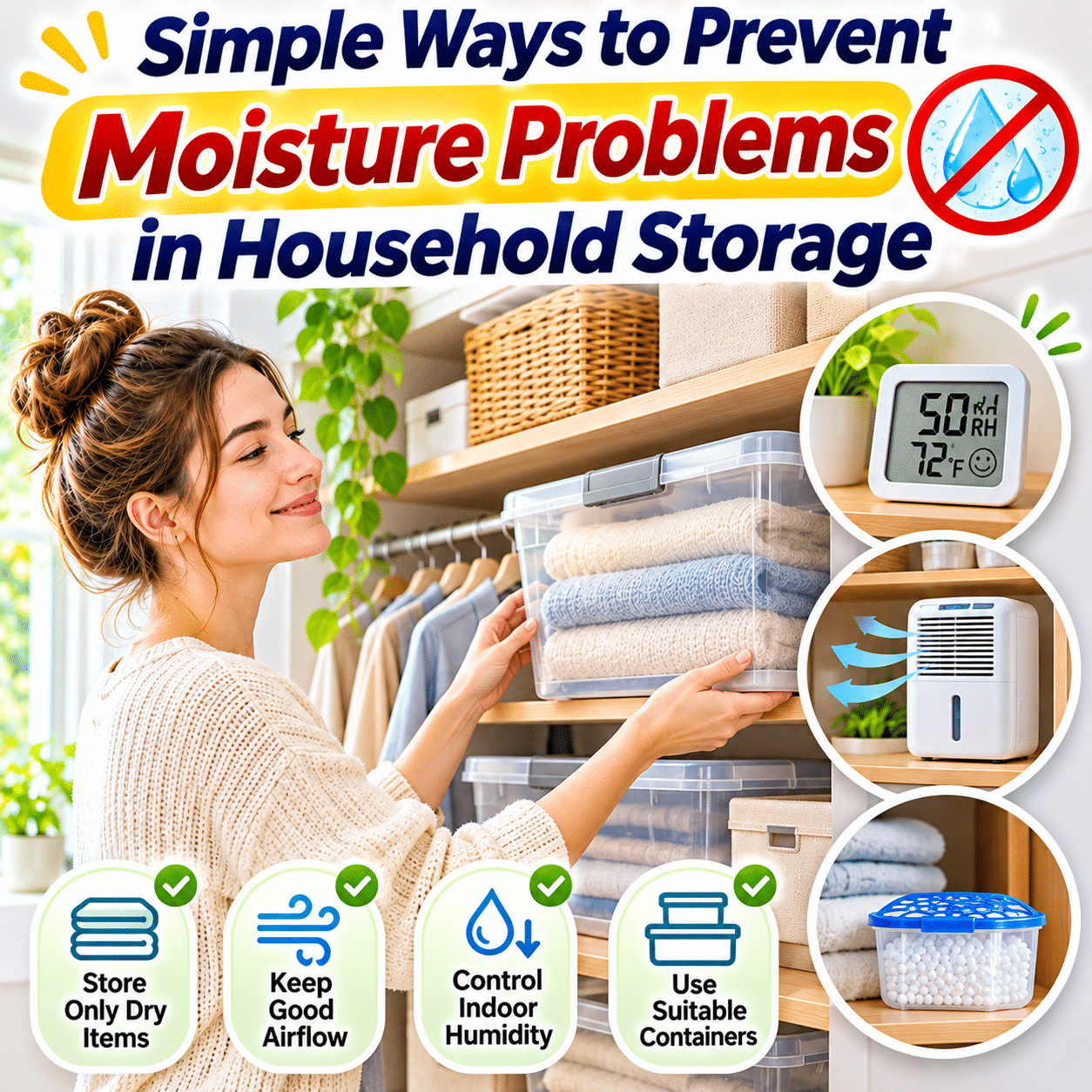
Household storage spaces help keep everyday living areas organized, but they can also develop problems that remain unnoticed until belongings are damaged. Closets, cabinets, drawers, storage boxes, and utility areas may appear clean and orderly while quietly accumulating excess moisture.
A musty smell inside a wardrobe, condensation on a storage container, discoloration along a cabinet wall, or dampness beneath stored belongings can indicate that moisture is affecting the storage environment. When these conditions persist, fabrics may develop odors, paper can become distorted, metal objects may corrode, and certain materials can support mold growth.
Moisture problems are not limited to basements or visibly damp rooms. They can occur in bedrooms, kitchens, bathrooms, laundry areas, garages, and even well-maintained living spaces. Humid outdoor air, plumbing leaks, condensation, insufficient drying, and unsuitable storage arrangements can all contribute.
Fortunately, many moisture-related storage problems can be prevented through practical habits and thoughtful organization. Keeping belongings dry before storage, maintaining appropriate indoor humidity, allowing air to circulate, and checking vulnerable areas regularly can make a significant difference.
The key is understanding that moisture prevention involves more than placing a moisture absorber inside a cabinet. Effective protection begins with identifying where moisture comes from and creating conditions that prevent it from accumulating.
This guide explores simple, realistic ways to protect household storage areas from excess moisture, preserve everyday belongings, and build maintenance routines that remain useful over time.
1. Understand Why Moisture Problems Develop in Storage Areas
Moisture is naturally present in indoor air, but problems can develop when humidity becomes excessive or water accumulates on surfaces and materials.
Understanding the main causes helps homeowners and renters choose appropriate preventive measures.
High Indoor Humidity
Relative humidity describes how much water vapor is present in the air compared with the maximum amount the air can hold at the same temperature.
When indoor humidity remains elevated, some materials may absorb moisture from the surrounding air.
This can affect:
- Clothing and household textiles.
- Books and paper documents.
- Cardboard boxes.
- Wooden furniture.
- Leather accessories.
- Certain metal objects.
- Stored decorative items.
Persistent humidity can also create conditions favorable to mold growth.
Condensation on Cool Surfaces
Condensation occurs when moist air contacts a surface cold enough for water vapor to condense into liquid.
Common locations include:
- Exterior-facing closet walls.
- Cold window frames.
- Metal storage cabinets.
- Uninsulated surfaces.
- Areas near air-conditioning equipment.
- Storage spaces with significant temperature differences.
Condensation may appear as visible droplets, but it can also create subtle dampness that is easy to overlook.
Water Leaks
Plumbing leaks, roof damage, poorly sealed windows, and appliance problems can introduce moisture directly into storage spaces.
Even a small recurring leak may damage belongings over time.
Damp Items Placed Into Storage
Clothing, towels, shoes, cleaning tools, and other household items may retain moisture after washing or use.
When stored before they are completely dry, they can introduce moisture into enclosed spaces.
Poor Storage Design
Closely packed belongings, containers placed against damp walls, and storage arrangements that prevent inspection can make moisture problems more difficult to detect and manage.
The solution is not always to increase airflow indiscriminately. In humid environments, introducing additional moist air may make conditions worse.
Effective moisture management depends on the source of the problem and the surrounding conditions.
2. Recognize Early Warning Signs of Moisture Problems
Moisture damage often develops gradually.
Identifying early warning signs can prevent small issues from becoming more serious.
Musty or Unusual Odors
A persistent musty smell may indicate damp materials or microbial growth.
The odor may be especially noticeable when opening a cabinet, wardrobe, or storage box that has remained closed for a long period.
Condensation
Water droplets on walls, lids, windows, or metal surfaces suggest that moisture is condensing.
Repeated condensation deserves attention even if the water disappears later.
Discoloration
Look for unusual marks on:
- Cabinet interiors.
- Wooden shelves.
- Walls behind storage units.
- Cardboard boxes.
- Fabric containers.
- Ceiling corners.
Discoloration may result from water exposure, staining, or microbial growth.
Changes in Stored Materials
Excess moisture can affect materials in different ways.
Examples include:
- Paper becoming wavy.
- Cardboard losing stiffness.
- Metal developing corrosion.
- Wood swelling or warping.
- Fabrics developing persistent odors.
- Adhesives losing effectiveness.
- Leather showing signs of deterioration.
Visible Mold
Mold may appear as spots or patches of different colors.
Visible mold should not be ignored or simply covered with paint or fragrance.
The underlying moisture source must be addressed.
3. Maintain Appropriate Indoor Humidity
Managing indoor humidity is one of the most important ways to reduce moisture-related storage problems.
Understand Useful Humidity Ranges
For general indoor moisture control, the U.S. Environmental Protection Agency recommends keeping indoor relative humidity below 60%, ideally between 30% and 50% when practical.
The appropriate range may vary with climate, building construction, temperature, and comfort needs.
Use a Hygrometer
A hygrometer measures relative humidity.
Small digital models can help monitor conditions in:
- Bedrooms.
- Closets.
- Storage rooms.
- Basements.
- Laundry areas.
- Utility spaces.
Position the device according to its instructions and avoid placing it directly against wet surfaces or heating and cooling outlets.
Monitor Patterns Rather Than One Reading
Humidity changes throughout the day.
Cooking, bathing, outdoor weather, and air-conditioning cycles can affect measurements.
Observe whether humidity remains elevated for extended periods rather than reacting to every brief fluctuation.
Use Dehumidification When Necessary
A properly sized dehumidifier may help reduce excess humidity in enclosed rooms.
Select equipment based on room conditions and manufacturer guidance.
Empty and clean water reservoirs as directed, or use an appropriate drainage arrangement.
Avoid Excessive Drying
Extremely low humidity can also affect comfort and certain materials.
The objective is balanced moisture control rather than making indoor air as dry as possible.
4. Store Only Completely Dry Belongings
One of the simplest moisture-prevention habits is checking that belongings are fully dry before putting them away.
Clothing and Bedding
After washing, ensure clothing, towels, sheets, and blankets are thoroughly dry.
Pay particular attention to:
- Thick seams.
- Waistbands.
- Pockets.
- Layered fabrics.
- Heavy blankets.
- Cushioned materials.
Items that feel dry on the surface may still retain moisture in thicker sections.
Shoes
Shoes can retain moisture from perspiration, rain, and cleaning.
Allow footwear to dry appropriately before placing it in closed cabinets or boxes.
Follow material-specific care instructions, especially for leather and delicate footwear.
Cleaning Tools
Mop heads, brushes, sponges, and reusable cloths should be cleaned and dried before enclosed storage.
Storing damp cleaning tools can create odors and contribute to moisture accumulation.
Outdoor Equipment
Camping gear, backpacks, umbrellas, and outdoor accessories may become wet during use.
Inspect seams, pockets, straps, and folded sections before storage.
Decorative Items
Seasonal decorations and household accessories should be clean and dry before being packed away.
This is especially important for fabric decorations, paper ornaments, and items containing absorbent materials.
5. Choose Storage Containers That Suit the Contents
Storage containers help organize belongings, but different materials require different storage conditions.
Plastic Storage Bins
Durable plastic containers can help protect belongings from dust and incidental water exposure.
However, a sealed container can also trap moisture already present inside.
Before closing a container:
- Clean the container.
- Allow it to dry completely.
- Confirm that the contents are dry.
- Arrange items without excessive compression.
- Close the lid securely.
Cardboard Boxes
Cardboard is lightweight and convenient, but it absorbs moisture.
In damp environments, cardboard can soften, warp, and become vulnerable to damage.
Avoid placing cardboard boxes directly on floors or against walls with known moisture problems.
Fabric Storage Organizers
Fabric organizers can be useful for clothing and household textiles.
However, they may absorb moisture and develop odors in humid conditions.
Choose washable designs where appropriate and avoid using them in persistently damp areas.
Vacuum Storage Bags
Vacuum storage bags can reduce the space occupied by certain textiles.
They do not remove moisture from items before sealing.
Only store fully dry materials, and follow manufacturer instructions regarding suitable fabrics and storage duration.
Specialized Storage Materials
Important documents, photographs, and valuable collectibles may require archival-quality materials and more controlled environmental conditions.
Ordinary household containers may not provide adequate protection for highly sensitive items.
6. Improve Closet Organization to Reduce Moisture Risks
Closets are common locations for moisture problems because they often contain absorbent fabrics and remain closed for extended periods.
Avoid Overcrowding
Closely packed clothing makes inspection difficult and can slow the drying of any moisture introduced into the space.
Leave enough room to retrieve items without compressing everything tightly together.
Keep Belongings Away From Damp Walls
If an exterior wall is prone to condensation, avoid pressing clothing or storage containers directly against it.
Where practical, maintain enough clearance to inspect the wall and identify moisture early.
Use Suitable Shelving
Shelves can keep items organized and prevent belongings from resting directly on potentially damp floors.
Choose materials appropriate for the storage environment.
Inspect Closet Corners
Check areas behind hanging clothes, beneath shelves, and near exterior walls.
These locations may show moisture problems before they become obvious elsewhere.
Avoid Fragrance as a Moisture Solution
Scented sachets and air fresheners may change how a closet smells, but they do not correct excess humidity or water intrusion.
A recurring musty odor should prompt an investigation.
7. Protect Under-Bed Storage From Moisture
Under-bed storage is useful in bedrooms with limited space, but it can conceal dampness and make cleaning difficult.
Inspect the Floor Before Storing Items
Check for moisture, discoloration, and unusual odors.
Avoid storing belongings beneath a bed if the area is affected by unresolved dampness.
Use Suitable Covered Containers
Covered bins can protect contents from dust and incidental exposure.
Ensure both containers and belongings are dry before closing them.
Avoid Excessive Storage
Overcrowding can make cleaning and inspection difficult.
Leave enough access to check the floor and retrieve containers.
Monitor Rooms With High Humidity
In humid climates, periodically inspect stored fabrics and paper materials.
A container that remains closed for months may conceal a developing problem.
Avoid Direct Contact With Known Damp Surfaces
If moisture is present beneath a bed, correct the cause before using the space for storage.
Simply raising containers may protect them temporarily but does not solve the underlying issue.
8. Prevent Moisture Problems in Kitchen Cabinets
Kitchen cabinets can experience moisture from cooking, dishwashing, plumbing, and stored items.
Inspect Under-Sink Cabinets
Look for:
- Dripping connections.
- Damp cabinet floors.
- Water stains.
- Swollen cabinet materials.
- Musty odors.
- Moisture around plumbing openings.
Repair leaks promptly.
Dry Dishes Before Enclosed Storage
Dishes, cookware, and reusable containers should be adequately dry before being placed in closed cabinets.
Water trapped between stacked items may remain longer than expected.
Maintain Cooking Ventilation
Cooking releases moisture into indoor air.
Use an appropriately installed range hood when practical and maintain it according to manufacturer instructions.
Clean Spills Promptly
Wipe spilled liquids and allow cabinet surfaces to dry.
Avoid returning stored items while the area remains wet.
Use Cabinet Liners Thoughtfully
Removable liners may protect some surfaces from minor spills.
However, waterproof liners can conceal trapped moisture beneath them.
Lift and inspect liners periodically rather than assuming the surface underneath remains dry.
9. Protect Bathroom Storage From Humidity
Bathrooms experience frequent humidity changes because of bathing and showering.
Storage arrangements should account for these conditions.
Use Bathroom Exhaust Ventilation
Operate a suitable exhaust fan during bathing and continue afterward as needed to remove moisture.
Maintain the fan according to manufacturer guidance.
Avoid Storing Damp Towels in Cabinets
Allow towels to dry before folding and storing them.
Wet or damp towels placed in enclosed cabinets can create odors and increase local moisture.
Choose Suitable Storage Materials
Materials used in bathrooms should tolerate the expected humidity and occasional water exposure.
Even moisture-resistant materials require proper maintenance.
Keep Products Away From Standing Water
Avoid placing storage containers where water regularly collects.
Check around sinks, showers, and plumbing fixtures for leaks.
Inspect Hidden Cabinet Surfaces
Look behind stored products and beneath removable organizers.
Moisture may remain unnoticed in areas that are rarely inspected.
10. Manage Moisture in Laundry Room Storage
Laundry areas can be vulnerable to moisture because they contain washing equipment, wet fabrics, and plumbing connections.
Maintain Washing Machines
Inspect accessible hoses and connections according to manufacturer recommendations.
Address leaks promptly.
Dry Reusable Laundry Accessories
Laundry baskets, washing bags, and cleaning cloths should not remain damp inside enclosed storage.
Keep Storage Away From Water Sources
Position supplies so that minor spills or leaks are less likely to damage them.
Do not obstruct appliance ventilation or maintenance access.
Monitor Condensation
Check nearby walls, windows, and cold surfaces for recurring condensation.
Avoid Storing Damp Laundry
Wet clothes should be dried promptly rather than left inside baskets or closed cabinets.
11. Reduce Moisture Risks in Garages and Utility Rooms
Garages and utility rooms may experience larger temperature and humidity fluctuations than conditioned living spaces.
Keep Belongings Off the Floor
Where appropriate, use stable shelving to reduce exposure to minor floor moisture.
This is particularly useful for cardboard boxes, textiles, and paper materials.
Avoid Storage Near Known Water Entry Points
Inspect doors, windows, and walls for signs of rainwater intrusion.
Do not store sensitive items against surfaces with unresolved leaks.
Choose Durable Containers
Use containers suited to the environment and contents.
Remember that even sealed containers can trap internal moisture.
Monitor Seasonal Changes
Humidity and condensation risks may change throughout the year.
Review storage conditions during wetter or more humid periods.
Store Sensitive Items Elsewhere
Important documents, photographs, electronics, and valuable textiles may be better kept in a more stable indoor environment.
12. Prevent Moisture Damage to Clothing and Textiles
Textiles can absorb moisture from surrounding air and may develop odors or deterioration when stored improperly.
Wash Before Long-Term Storage
Clean clothing and bedding according to their care instructions.
Body oils, food residue, and other contaminants may contribute to deterioration during storage.
Dry Thoroughly
Ensure all items are fully dry before folding or packing.
Avoid Excessive Compression
Some textiles benefit from storage that does not place prolonged pressure on delicate fibers or decorative elements.
Use Appropriate Containers
Choose containers that protect against dust and incidental exposure while meeting the needs of the material.
Inspect Seasonally Stored Items
Check stored clothing periodically for:
- Musty odors.
- Dampness.
- Discoloration.
- Fabric damage.
- Signs of pests.
Address problems promptly rather than returning affected items to storage.
13. Protect Books, Paper, and Important Documents
Paper-based materials are particularly sensitive to moisture.
Choose Stable Indoor Storage
Store important documents in areas with relatively stable temperature and humidity.
Avoid bathrooms, damp basements, and locations with known condensation problems.
Use Suitable Folders and Boxes
For valuable documents and photographs, archival-quality storage materials may provide better long-term protection than ordinary cardboard or plastic sleeves.
Avoid Direct Floor Storage
Use shelves or cabinets to reduce exposure to accidental spills and minor flooding.
Keep Documents Away From Exterior Moisture Sources
Avoid placing valuable paper collections against damp walls or beneath plumbing.
Inspect for Early Damage
Warning signs include:
- Wavy pages.
- Sticking sheets.
- Discoloration.
- Musty odors.
- Softened cardboard.
- Visible mold.
If valuable materials become wet or moldy, specialized conservation assistance may be appropriate.
14. Protect Electronics and Metal Objects in Storage
Moisture can affect electronic equipment and metal components.
Store Electronics in Suitable Conditions
Follow manufacturer recommendations for temperature and humidity.
Avoid storing electronics in areas with recurring condensation or water intrusion.
Allow Equipment to Acclimate
Moving cold equipment into a warm, humid room may create condensation.
Follow manufacturer guidance before powering on equipment that may have experienced condensation.
Keep Cables and Accessories Dry
Clean and dry accessories before packing them away.
Avoid placing wet materials inside electronic storage containers.
Prevent Metal Corrosion
Store metal tools and accessories in dry conditions.
Clean and dry items before storage, and use material-appropriate protective treatments where recommended.
Avoid Unnecessary Exposure to Moisture
Do not place sensitive equipment beneath plumbing or near areas where water may leak.
15. Use Moisture Absorbers and Desiccants Correctly
Moisture-control products can be useful in certain situations, but they should not replace source control.
Silica Gel
Silica gel is a desiccant that adsorbs moisture.
It is commonly used in suitable enclosed packaging and storage applications.
Its effectiveness depends on the amount used, the container conditions, and the moisture load.
Follow product instructions, including any regeneration or replacement guidance.
Calcium Chloride Moisture Absorbers
Some household moisture absorbers use calcium chloride to collect moisture.
These products may produce liquid brine as they operate.
Place them securely and follow all safety instructions.
Keep them away from children, pets, and materials that could be damaged by leaks.
Activated Charcoal
Activated charcoal is often marketed for odor management.
It should not be assumed to provide meaningful humidity control unless the product is specifically designed and validated for that purpose.
Understand Product Limitations
Small moisture absorbers cannot reliably correct:
- Active plumbing leaks.
- Roof water intrusion.
- Persistent condensation caused by building defects.
- Severe room-wide humidity problems.
- Wet building materials.
These conditions require more direct intervention.
Replace or Maintain Products as Directed
An exhausted desiccant or saturated moisture absorber may no longer provide useful protection.
Inspect products regularly and follow manufacturer instructions.
16. Understand When Ventilation Helps—and When It Does Not
Ventilation can influence indoor moisture levels, but its effectiveness depends on the moisture content of incoming air.
Ventilate When Outdoor Conditions Are Suitable
When outdoor air is sufficiently dry, ventilation may help remove indoor moisture.
Be Careful in Humid Weather
Opening windows during very humid conditions may introduce additional moisture.
In some climates, air conditioning or dehumidification may provide more reliable humidity control.
Maintain Exhaust Systems
Bathroom and kitchen exhaust fans can help remove moisture generated by everyday activities.
Ensure they operate properly and vent as intended.
Avoid Blocking Necessary Airflow
Do not obstruct ventilation grilles or appliance air intakes.
Focus on the Moisture Source
Ventilation alone cannot solve an active leak or permanently wet building material.
Repairing the source remains essential.
17. Compare Common Household Moisture-Prevention Methods
Different problems require different solutions.
| Storage Situation | Main Moisture Risk | Practical Prevention Method | Important Consideration |
|---|---|---|---|
| Bedroom closet | Humidity and damp fabrics | Store dry clothing and monitor humidity | Inspect exterior-facing walls |
| Under-bed storage | Hidden dampness | Use dry, covered containers | Maintain cleaning and inspection access |
| Kitchen cabinet | Plumbing leaks and spills | Inspect pipes and dry surfaces | Do not conceal leaks with liners |
| Bathroom cabinet | Shower humidity | Use exhaust ventilation and dry items | Avoid persistent moisture |
| Laundry storage | Wet fabrics and appliance leaks | Dry accessories and maintain equipment | Keep plumbing accessible |
| Garage shelving | Temperature changes and water intrusion | Use elevated, stable storage | Protect sensitive belongings |
| Document storage | Humidity and water damage | Use stable indoor conditions and suitable boxes | Valuable items may need archival materials |
| Electronics storage | Condensation and corrosion | Follow equipment storage requirements | Avoid powering on damp equipment |
| Seasonal clothing | Trapped moisture | Clean and dry before packing | Inspect periodically |
| Utility closet | Damp cleaning tools | Dry tools before enclosed storage | Investigate recurring odors |
The most effective strategy addresses the specific moisture source rather than applying the same solution everywhere.
18. Common Moisture-Prevention Mistakes to Avoid
Certain storage habits can unintentionally increase moisture-related problems.
Mistake 1: Sealing Damp Items in Plastic Containers
A sealed container may trap moisture inside.
Better approach: Confirm that both the container and its contents are completely dry before closing it.
Mistake 2: Assuming Airtight Storage Solves Every Problem
Airtight containers may reduce exposure to external humidity, but they cannot remove moisture already present.
Better approach: Combine suitable containers with proper drying and environmental control.
Mistake 3: Ignoring Musty Odors
A recurring musty smell may indicate hidden dampness or mold.
Better approach: Inspect the area and identify the moisture source.
Mistake 4: Placing Cardboard Directly on Damp Floors
Cardboard absorbs moisture and may deteriorate.
Better approach: Use stable shelving and address floor moisture.
Mistake 5: Overcrowding Closets
Dense storage can make inspection and cleaning difficult.
Better approach: Leave practical access and avoid unnecessary accumulation.
Mistake 6: Relying Entirely on Moisture Absorbers
Small absorbers cannot solve structural leaks or persistent room-wide humidity.
Better approach: Correct the source and use appropriate humidity management.
Mistake 7: Introducing Humid Outdoor Air
Opening windows is not always helpful in humid climates.
Better approach: Consider outdoor conditions before ventilating.
Mistake 8: Covering Visible Mold Without Correcting Moisture
Painting or placing new materials over mold does not address the underlying problem.
Better approach: Correct the moisture source and follow appropriate remediation guidance.
19. Troubleshoot Persistent Storage Moisture Problems
When moisture repeatedly returns, use a systematic approach.
Step 1: Identify the Affected Area
Determine whether dampness is limited to one container, cabinet, or room.
Step 2: Check for Direct Water Sources
Inspect nearby:
- Plumbing.
- Windows.
- Roof or ceiling areas.
- Appliances.
- Exterior walls.
- Floor surfaces.
Step 3: Measure Humidity
Use a hygrometer to understand whether elevated indoor humidity may be contributing.
Step 4: Look for Condensation
Check whether moisture appears on cold surfaces, especially during temperature changes.
Step 5: Remove and Inspect Stored Items
Carefully examine belongings for dampness, discoloration, and visible mold.
Avoid disturbing extensive mold contamination.
Step 6: Correct the Cause
Depending on the problem, this may involve:
- Repairing a leak.
- Improving moisture removal.
- Adjusting humidity control.
- Changing storage arrangements.
- Replacing damaged materials.
- Improving building insulation or addressing condensation issues.
Step 7: Monitor the Results
After corrective action, observe the area for recurring moisture.
If the problem persists, professional inspection may be appropriate.
20. Build a Practical Moisture-Prevention Routine
Moisture prevention becomes easier when small checks are incorporated into ordinary household maintenance.
Daily Habits
Focus on preventing new moisture from entering storage spaces.
Examples include:
- Drying wet towels.
- Removing damp laundry promptly.
- Wiping spills.
- Drying shoes before storage.
- Using appropriate bathroom ventilation.
- Keeping wet cleaning tools out of enclosed cabinets.
Weekly Checks
Review frequently used storage areas.
Examples include:
- Kitchen cabinets.
- Bathroom storage.
- Laundry areas.
- Shoe cabinets.
- Under-sink spaces.
Look for leaks, dampness, and unusual odors.
Monthly Maintenance
Inspect less frequently accessed areas.
Examples include:
- Bedroom closets.
- Under-bed storage.
- Utility cabinets.
- Seasonal clothing containers.
- Garage shelves.
- Storage room corners.
Seasonal Reviews
During periods of changing weather or humidity:
- Check indoor humidity patterns.
- Inspect exterior-facing walls.
- Review long-term storage containers.
- Examine important documents.
- Look for condensation.
- Assess whether dehumidification is needed.
These intervals are flexible and should reflect the home’s climate, construction, and history of moisture problems.
21. Make Moisture Prevention Part of Better Household Organization
Good organization can make moisture problems easier to identify and prevent.
Keep Storage Areas Accessible
Avoid arrangements that completely conceal walls, floors, or plumbing.
Accessible storage allows earlier detection of leaks and condensation.
Reduce Unnecessary Clutter
Fewer stored items make inspection and cleaning easier.
Review belongings periodically and remove items that are no longer needed.
Group Items by Material
Store similar materials together when practical.
For example:
- Textiles.
- Paper documents.
- Electronics.
- Metal tools.
- Seasonal decorations.
This makes it easier to apply appropriate storage conditions.
Label Containers
Labels reduce unnecessary opening and handling.
They also help identify which containers contain moisture-sensitive belongings.
Prioritize Valuable and Sensitive Items
Important documents, photographs, electronics, and sentimental belongings deserve locations with reliable environmental conditions.
Review Storage After Water Incidents
Following leaks, flooding, or significant condensation, inspect affected storage spaces before returning belongings.
Ensure the underlying problem has been resolved and materials are adequately dried.
22. Frequently Asked Questions
1. What causes moisture buildup inside storage containers?
Moisture may come from damp contents, humid air trapped during packing, condensation, or water entering through damaged containers.
2. How can I prevent mold in storage boxes?
Store only clean, fully dry belongings, use suitable containers, maintain appropriate humidity, and inspect stored items periodically.
3. Are airtight containers always better for moisture prevention?
No. They can reduce exposure to external moisture but may trap water already present inside.
4. What humidity level is suitable for household storage?
For general indoor conditions, keeping relative humidity below 60%, ideally around 30–50% when practical, can help reduce moisture-related problems.
5. How do I know whether a closet is too humid?
A hygrometer can help measure humidity. Musty odors, condensation, and damp belongings may also indicate a problem.
6. Can silica gel prevent mold?
Silica gel can help control moisture in suitable enclosed spaces, but it cannot guarantee mold prevention or correct leaks and major humidity problems.
7. Should I store clothes in plastic bins?
Plastic bins can be useful when both the container and clothing are completely dry. The best storage method depends on the fabric and environmental conditions.
8. Why do stored clothes smell musty?
Possible causes include trapped moisture, elevated humidity, inadequate drying, or microbial contamination.
9. How can I protect cardboard boxes from moisture?
Keep them in dry conditions, away from water sources, and off potentially damp floors.
10. Is it safe to store important documents in a garage?
Garages may experience humidity and temperature fluctuations. Important documents are generally better protected in stable indoor conditions.
11. Can a dehumidifier help protect stored belongings?
Yes. A properly sized and maintained dehumidifier may reduce excess room humidity.
12. Why does condensation appear inside a storage box?
Condensation can develop when moist air inside the container encounters a sufficiently cold surface.
13. Should I open closets to improve airflow?
Opening closets may help under suitable indoor conditions, but it is not a substitute for addressing high humidity, leaks, or condensation.
14. How can I prevent moisture beneath the kitchen sink?
Inspect plumbing regularly, repair leaks promptly, dry spills, and keep the cabinet accessible for maintenance.
15. Are moisture absorbers useful in wardrobes?
They may help manage limited moisture in suitable enclosed spaces, but they cannot solve significant humidity or water intrusion.
16. How often should long-term storage be inspected?
Periodic checks every few months may be useful, with more frequent inspection in humid environments or areas with previous moisture problems.
17. Can moisture damage electronic devices in storage?
Yes. Excess humidity and condensation can contribute to corrosion and equipment damage.
18. What should I do if stored books become damp?
Address the moisture source and handle the materials carefully. Valuable or extensively affected collections may require professional conservation assistance.
19. Why does a cabinet smell musty even when it looks dry?
Moisture may be hidden behind panels, beneath liners, or within stored materials. Investigate recurring odors rather than masking them.
20. Can air conditioning reduce storage humidity?
Air conditioning can remove moisture while operating under suitable conditions, but effectiveness depends on equipment performance, operating patterns, and the indoor environment.
21. Should storage containers have ventilation holes?
It depends on the contents and environment. Some materials benefit from ventilation, while others require protection from humid air. Avoid adding holes without considering the storage purpose.
22. How can I protect leather accessories from moisture?
Store clean, dry leather items under suitable temperature and humidity conditions, following material-specific care recommendations.
23. What is the difference between humidity and condensation?
Humidity refers to water vapor in the air. Condensation occurs when that vapor becomes liquid on a sufficiently cool surface.
24. Can a moisture absorber replace a dehumidifier?
Small moisture absorbers are generally intended for limited spaces and cannot reliably replace a properly sized dehumidifier for room-wide humidity problems.
25. When should I seek professional help for moisture problems?
Professional assistance may be appropriate for recurring leaks, extensive mold, persistent water intrusion, hidden moisture damage, or unresolved condensation related to building conditions.
23. Practical Household Storage Moisture-Prevention Checklist
Use this checklist to maintain safer, drier storage conditions throughout the home.
Initial Storage Assessment
- Identify moisture-prone storage locations.
- Inspect closets, cabinets, and drawers.
- Check for musty odors.
- Look for condensation and water stains.
- Examine stored belongings for damage.
- Identify nearby plumbing or water sources.
Indoor Humidity Management
- Monitor humidity with a suitable hygrometer.
- Review humidity patterns over time.
- Use appropriate dehumidification when necessary.
- Maintain kitchen and bathroom exhaust ventilation.
- Avoid introducing unnecessarily humid outdoor air.
- Investigate persistent condensation.
Clothing and Textile Storage
- Wash items before long-term storage when appropriate.
- Dry clothing and bedding completely.
- Avoid sealing damp fabrics in containers.
- Inspect seasonal clothing periodically.
- Keep storage areas clean and accessible.
- Avoid overcrowding closets.
Containers and Shelving
- Choose containers suitable for the contents.
- Ensure containers are dry before use.
- Keep moisture-sensitive items off damp floors.
- Avoid storing cardboard against wet surfaces.
- Label long-term storage containers.
- Inspect beneath liners and behind bins.
Kitchen and Bathroom Storage
- Check under-sink plumbing.
- Repair leaks promptly.
- Dry dishes before enclosed storage.
- Remove standing water from cabinets.
- Maintain bathroom ventilation.
- Keep damp towels out of enclosed storage.
Laundry and Utility Areas
- Inspect appliance hoses and connections.
- Dry cleaning tools before storage.
- Avoid storing wet laundry.
- Keep appliance maintenance access clear.
- Check utility room corners for dampness.
- Review moisture conditions during humid weather.
Sensitive Belongings
- Store important documents in stable indoor conditions.
- Protect photographs with suitable materials.
- Follow electronics storage instructions.
- Keep metal tools clean and dry.
- Inspect valuable items periodically.
- Avoid exposing sensitive belongings to condensation.
Long-Term Maintenance
- Review storage conditions monthly where appropriate.
- Inspect seasonal storage periodically.
- Replace exhausted moisture-control products.
- Correct leaks and water intrusion at their source.
- Investigate recurring musty odors.
- Seek professional help for persistent or extensive problems.
Final Thoughts
Preventing moisture problems in household storage is an important part of protecting everyday belongings and maintaining a comfortable home. Closets, cabinets, drawers, storage containers, and utility areas may seem secure, but they can still be affected by humidity, condensation, leaks, and damp materials.
The most effective preventive measures are often straightforward. Store only fully dry belongings, choose containers that suit the materials inside, monitor humidity when necessary, and keep storage areas accessible for inspection. These small habits can help reduce avoidable damage to clothing, paper, furniture, electronics, and household accessories.
It is equally important to address moisture at its source. A leaking pipe, recurring condensation, or persistently humid room cannot be reliably corrected by adding fragrance or a small moisture absorber. Effective prevention requires identifying the underlying conditions and choosing an appropriate response.
Thoughtful organization also plays a valuable role. Clear storage categories, manageable quantities, suitable shelving, and regular inspections make it easier to recognize early warning signs before significant damage occurs.
A practical moisture-prevention routine does not need to be complicated. By combining proper drying, suitable storage, balanced humidity control, and consistent maintenance, households can create storage spaces that remain cleaner, drier, and more dependable over time.
Protecting stored belongings begins with simple everyday decisions—and those decisions can help preserve the comfort, functionality, and long-term value of the things kept at home.