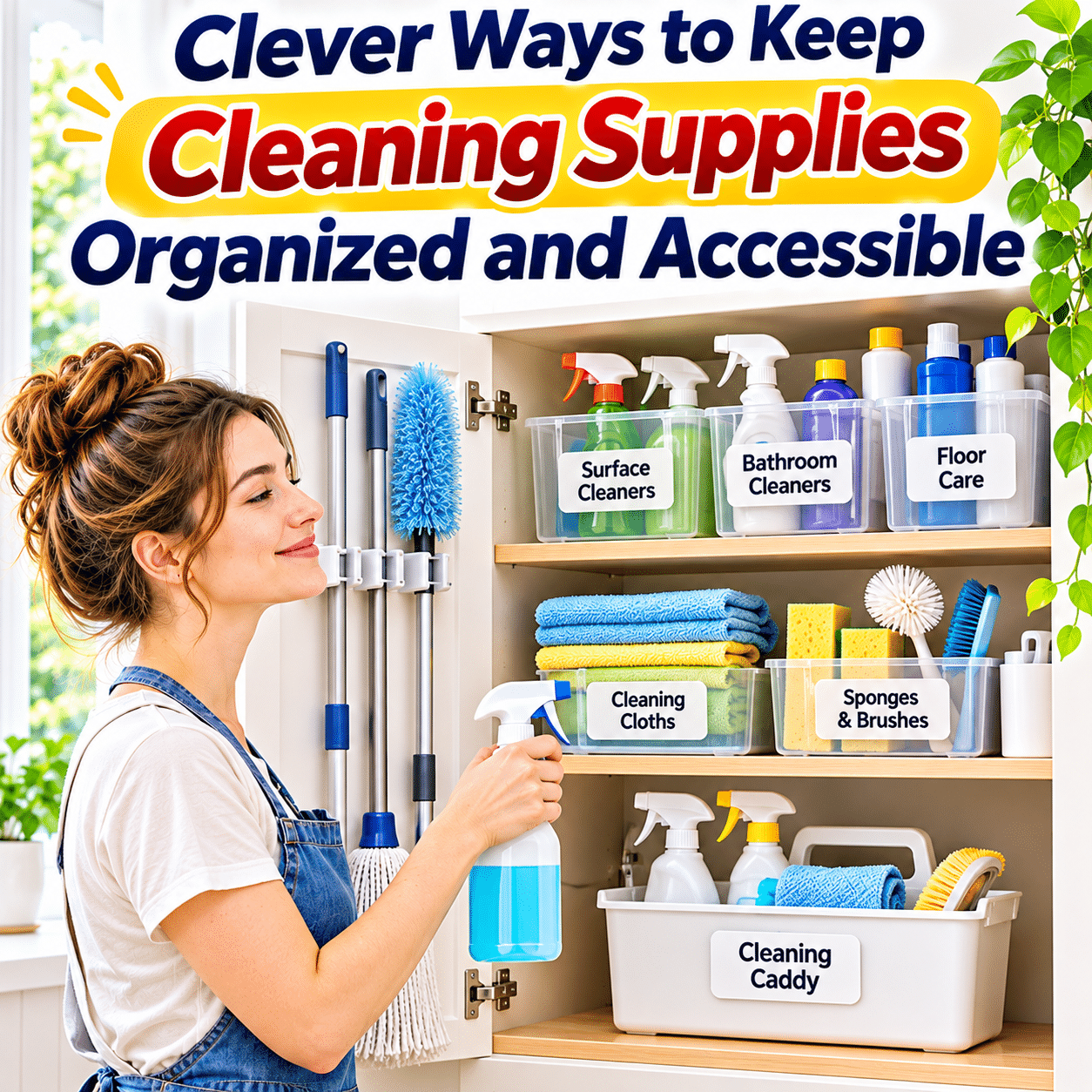
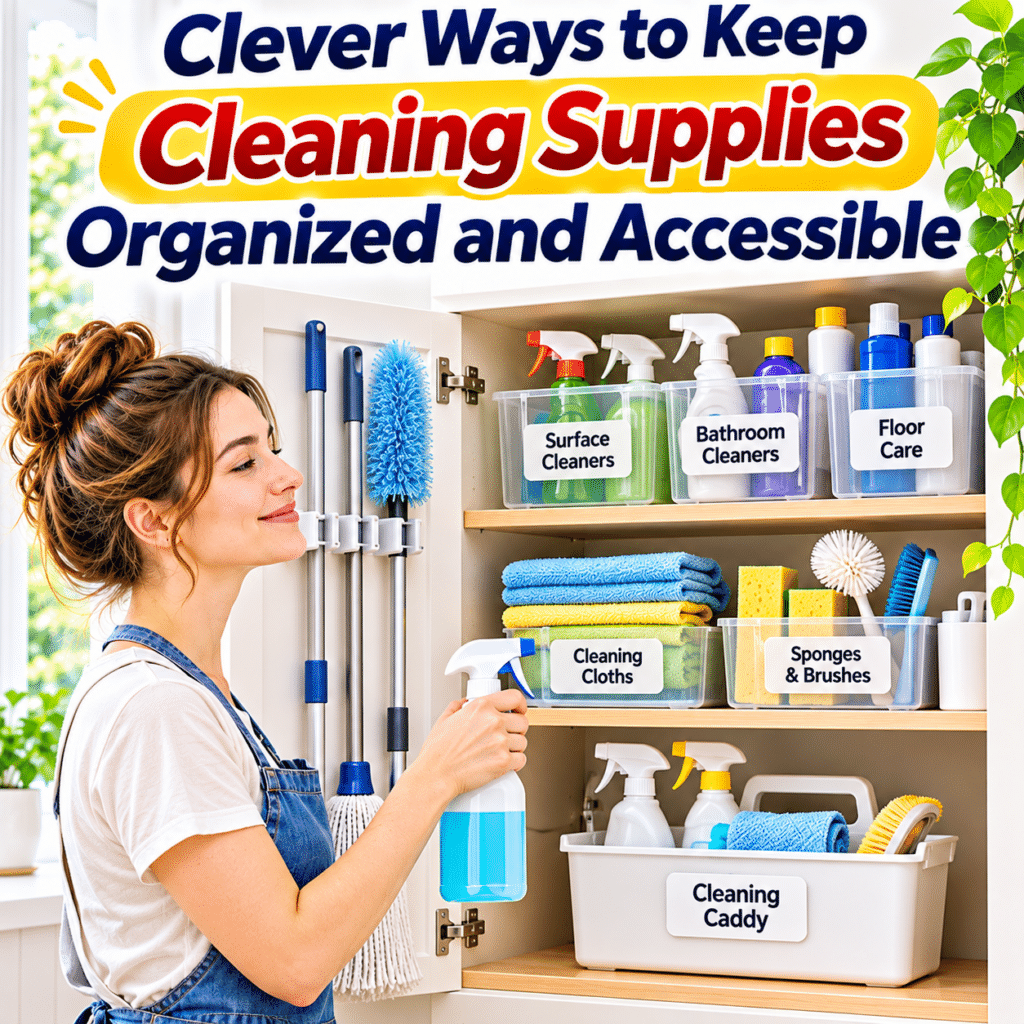
Cleaning supplies are essential to maintaining a comfortable, functional home, yet the products and tools used for everyday cleaning can easily become a source of clutter themselves. Spray bottles accumulate beneath sinks, microfiber cloths disappear into crowded drawers, brushes become tangled with other accessories, and rarely used products occupy valuable storage space.
When cleaning supplies are scattered throughout the home or difficult to reach, even simple housekeeping tasks can feel more complicated than necessary. Finding the right cleaner, locating a suitable brush, or retrieving a vacuum attachment may take longer than the cleaning itself.
A well-organized cleaning system can make these tasks easier. By grouping supplies according to their purpose, choosing practical storage solutions, and keeping frequently used items accessible, households can reduce unnecessary searching and make routine maintenance more manageable.
However, effective cleaning supply organization involves more than placing everything into attractive containers. Products must be stored safely, tools need sufficient space to dry, and storage arrangements should reflect how different areas of the home are actually cleaned.
The most useful system is one that balances convenience, safety, available space, and long-term maintenance. It should be simple enough to follow consistently without requiring a complete reorganization every few weeks.
This guide explores clever, practical ways to organize household cleaning supplies, improve accessibility, make better use of limited storage, and establish a system that remains functional over time.
1. Understand Why Cleaning Supply Organization Matters
Cleaning products and tools are often stored wherever space happens to be available.
A bottle may end up beneath the kitchen sink, a scrub brush in the bathroom, and extra cloths in a laundry cabinet. Over time, these scattered arrangements can become difficult to manage.
Organization Reduces Unnecessary Searching
When supplies have clearly defined locations, household tasks become easier to begin.
Instead of checking several cabinets for a glass cleaner or dusting attachment, the necessary item can be found in its designated place.
This is especially useful for short cleaning tasks that might otherwise be postponed because the required supplies are inconvenient to retrieve.
Organized Storage Makes Inventory Easier
Crowded cabinets can hide duplicate products and partially used containers.
A visible, structured arrangement makes it easier to recognize what is already available.
This can help prevent unnecessary purchases and reduce the accumulation of products that serve similar purposes.
Proper Storage Supports Safety
Some household cleaning products contain chemicals that require careful storage.
Keeping products upright, in their original labeled containers, and away from children and pets helps reduce avoidable risks.
An organized system also makes it easier to separate incompatible materials and identify damaged or leaking containers.
Accessibility Encourages Consistent Maintenance
A cleaning tool that is easy to retrieve is more likely to be used when needed.
Practical storage can support small, regular cleaning habits instead of allowing tasks to accumulate.
The objective is not to create a perfectly arranged cabinet for appearance alone. It is to make everyday cleaning simpler, safer, and more efficient.
2. Start by Assessing Your Existing Cleaning Supplies
Before purchasing organizers or rearranging cabinets, take inventory of the products and tools already in the home.
This first step helps identify what needs storage and what may no longer be necessary.
Gather Supplies by Storage Location
Inspect the areas where cleaning materials are currently kept.
Common locations include:
- Beneath kitchen sinks.
- Bathroom cabinets.
- Laundry rooms.
- Utility closets.
- Garage storage shelves.
- Hallway cabinets.
- Cleaning carts.
- Drawers containing brushes and cloths.
If practical, review the contents of each location on a protected surface.
For chemical products, keep containers upright and avoid placing them where children or pets can access them.
Sort Items Into Practical Categories
Useful categories may include:
- General surface cleaners.
- Bathroom cleaning products.
- Kitchen cleaning supplies.
- Floor cleaning products.
- Laundry products.
- Glass and mirror cleaners.
- Disinfectants.
- Brushes and scrubbing tools.
- Microfiber cloths and reusable wipes.
- Vacuum accessories.
- Replacement sponges and consumables.
The categories should reflect actual household needs rather than an overly complicated labeling system.
Identify Duplicates
Check for multiple products serving the same purpose.
For example, a household may have several partially used bottles of similar surface cleaners.
Keep products that remain appropriate for their intended use and avoid purchasing replacements until necessary.
Do not combine leftover chemicals from different containers to save space.
Inspect Product Condition
Check for:
- Damaged bottles.
- Loose caps.
- Leaking containers.
- Missing or unreadable labels.
- Deteriorated cleaning tools.
- Products past any manufacturer-stated expiration or use-by date.
- Materials that have become contaminated.
Dispose of unwanted chemical products according to their labels and local disposal requirements.
Never pour incompatible cleaning chemicals together or assume that all products can safely enter household drains.
3. Choose a Central Cleaning Supply Storage Area
A central storage location can simplify inventory management and make it easier to keep supplies organized.
However, the ideal location depends on the size and layout of the home.
Consider a Utility Closet
A dedicated utility closet is useful because it can accommodate both cleaning products and larger tools.
It may provide space for:
- Vacuum cleaners.
- Mops.
- Brooms.
- Buckets.
- Cleaning cloths.
- Household cleaners.
- Replacement accessories.
Choose an arrangement that keeps frequently used items accessible without requiring heavy objects to be moved.
Use Laundry Room Storage
A laundry room may offer convenient space for cleaning supplies, particularly when cabinets or shelves are already available.
Keep products away from excessive heat, moisture, and incompatible materials.
Avoid placing containers where they may fall onto appliances or interfere with ventilation.
Consider a Hallway Cabinet
In homes without a utility room, a hallway cabinet may provide a practical central location.
A cabinet with adjustable shelves can accommodate containers of different heights.
Avoid Unsuitable Storage Locations
Cleaning products should not be stored in areas that expose them to unsafe conditions.
Avoid locations with:
- Excessive heat.
- Direct sunlight when prohibited by product instructions.
- Frequent temperature extremes.
- Persistent moisture.
- Easy access for young children.
- Risk of falling or tipping.
- Proximity to food preparation or food storage.
Follow individual product labels because storage requirements vary.
4. Organize Cleaning Supplies by Frequency of Use
One of the simplest ways to improve accessibility is to arrange supplies according to how often they are needed.
Keep Daily Essentials Within Convenient Reach
Frequently used items may include:
- General surface cleaner.
- Microfiber cloths.
- Dishwashing accessories.
- Small cleaning brushes.
- Paper towels or reusable wipes.
- A handheld vacuum.
Store these items in a location that is convenient for adults who use them, while remaining inaccessible to children and pets.
Give Weekly Supplies a Dedicated Section
Products used during regular cleaning sessions can occupy a separate shelf or container.
Examples include:
- Bathroom cleaners.
- Floor cleaners.
- Glass cleaners.
- Scrubbing brushes.
- Mop accessories.
- Vacuum attachments.
Grouping these supplies makes routine cleaning easier to prepare.
Store Occasional Supplies Separately
Less frequently used products may include:
- Specialized stain removers.
- Seasonal cleaning accessories.
- Appliance-specific maintenance products.
- Extra replacement parts.
- Deep-cleaning tools.
These items do not need to occupy the most convenient storage positions.
Avoid Burying Frequently Used Tools
A common organization mistake is placing daily supplies behind rarely used containers.
Arrange shelves so that retrieving one item does not require moving several others.
The easier the system is to use, the more likely it is to remain organized.
5. Make Better Use of Under-Sink Cabinets
The space beneath a kitchen or bathroom sink is a common storage location, but it presents several challenges.
Plumbing pipes, limited clearance, and irregular cabinet shapes can make organization difficult.
Use Removable Storage Bins
Bins can group compatible supplies and make them easier to retrieve.
Choose containers that fit around plumbing without applying pressure to pipes or connections.
Removable bins also make it easier to inspect the cabinet for leaks.
Consider Pull-Out Organizers
A pull-out organizer can improve access to supplies stored toward the back of a cabinet.
Look for designs that:
- Fit the available dimensions.
- Clear existing plumbing.
- Support the intended weight.
- Slide smoothly.
- Remain stable during use.
Check installation requirements before purchasing.
Use Vertical Space Carefully
Stackable or tiered organizers may help maximize available space.
However, heavy chemical containers should not be placed on unstable elevated platforms.
Ensure that bottles remain upright and secure.
Keep Plumbing Accessible
Do not arrange storage in ways that conceal leaks or prevent access to shutoff valves.
Leave enough room to inspect plumbing connections.
Address Moisture Problems Promptly
Under-sink cabinets may experience condensation or plumbing leaks.
Inspect them periodically.
If moisture appears, identify and correct the source rather than relying on storage liners to conceal the problem.
6. Use Portable Cleaning Caddies for Everyday Convenience
A portable cleaning caddy can make routine housekeeping more efficient by keeping a small collection of supplies together.
Instead of repeatedly returning to a storage cabinet, users can carry the necessary tools from room to room.
Choose a Practical Size
A useful caddy should be large enough for essential items but not so heavy that it becomes uncomfortable to carry.
Consider:
- A sturdy handle.
- A stable base.
- Compartments for different tools.
- Surfaces that are easy to clean.
- Adequate height for upright bottles.
Avoid overloading the container.
Build a General-Purpose Cleaning Kit
A basic kit might contain:
- A compatible general surface cleaner.
- Several microfiber cloths.
- A small soft brush.
- A nonabrasive sponge.
- A suitable glass-cleaning cloth.
- Protective gloves when required.
Only include products that can be transported and stored together safely.
Do not place incompatible chemical products in a caddy where leaks could allow them to mix.
Keep Specialized Products Separate
Strong bathroom chemicals, disinfectants, and other products with specific handling requirements may be better stored in dedicated locations.
Read labels before deciding what belongs in a portable kit.
Return the Caddy After Use
A portable caddy is a temporary work station, not a reason to leave cleaning chemicals unattended.
Return it promptly to a secure storage location after cleaning.
7. Create Room-Specific Cleaning Stations
For some homes, keeping every cleaning item in one location is inconvenient.
Small room-specific stations can reduce unnecessary movement.
Kitchen Cleaning Station
A kitchen station might include:
- Dishwashing supplies.
- A suitable countertop cleaner.
- Reusable cleaning cloths.
- A small scrub brush.
- Replacement sponges.
Keep cleaning chemicals separate from food and food-contact items.
Bathroom Cleaning Station
Bathroom supplies may include:
- Toilet cleaning tools.
- A bathroom surface cleaner.
- A shower-cleaning brush.
- Dedicated bathroom cloths.
- Gloves appropriate for the products used.
Store toilet-related tools separately from items used on sinks or other surfaces.
Laundry Cleaning Station
Useful items may include:
- Laundry detergent.
- Stain-treatment products.
- A lint brush.
- Washing machine maintenance supplies.
- A container for reusable laundry accessories.
Follow product instructions and maintain safe storage.
Avoid Excessive Duplication
Room-specific stations are useful only when they improve convenience.
Buying a separate bottle of every product for every room may create unnecessary clutter.
Choose a limited number of frequently used essentials and keep specialized products in central storage.
8. Organize Microfiber Cloths and Reusable Cleaning Materials
Reusable cloths are practical household tools, but they can become difficult to manage when stored without a clear system.
Separate Cloths by Purpose
Consider assigning different cloths to:
- Kitchen surfaces.
- Bathroom surfaces.
- Glass and mirrors.
- General dusting.
- Floor or utility cleaning.
This helps reduce accidental cross-contamination.
Use a Simple Color-Coding System
Color coding can make cloth identification easier.
For example:
- Blue for glass and mirrors.
- Green for general surfaces.
- Yellow for kitchen tasks.
- Red for bathroom or toilet-related tasks.
The specific colors are not important. Consistency matters more.
Store Clean and Used Cloths Separately
Keep clean cloths in a dry, protected location.
Place used cloths in a designated collection container until they can be washed.
Do not seal damp, dirty cloths inside airtight containers for extended periods.
Allow Cloths to Dry
If cloths cannot be washed immediately, allow them to dry in an appropriate location.
Follow manufacturer washing instructions, especially regarding fabric softeners and drying temperatures.
Avoid Excessive Quantities
Keep enough cloths for normal cleaning routines and laundry cycles.
A manageable supply is easier to maintain than an oversized collection.
9. Store Brooms, Mops, and Long-Handled Tools Efficiently
Large cleaning tools can occupy significant floor space and create clutter when leaned against walls.
Install Suitable Wall-Mounted Holders
Wall-mounted organizers can keep brooms and mops upright.
They may include:
- Spring-loaded grips.
- Hooks.
- Adjustable clamps.
- Slots for long handles.
Install organizers using hardware appropriate for the wall material and expected weight.
Keep Tools From Falling
Avoid balancing brooms or mops against unstable surfaces.
Falling handles can create inconvenience or injury risks.
Allow Wet Mop Heads to Dry
After cleaning, rinse reusable mop heads as directed and allow them to dry thoroughly.
Do not store damp mop heads in enclosed spaces where moisture can accumulate.
Store Buckets Efficiently
Where appropriate, store compatible accessories inside a clean, dry bucket.
Avoid using buckets to hold leaking chemical containers or damp materials.
Consider Compact Cleaning Tools
For homes with limited storage, collapsible handles or compact tools may be useful.
Choose equipment based on durability and cleaning performance rather than compactness alone.
10. Organize Vacuum Cleaners and Their Accessories
Vacuum cleaners often come with multiple attachments that are easy to misplace.
Create a Dedicated Vacuum Storage Area
Choose a location that accommodates the vacuum without blocking walkways.
Ensure the equipment can be retrieved without moving heavy objects.
Keep Attachments Together
Use a labeled container or designated shelf for:
- Crevice tools.
- Upholstery attachments.
- Dusting brushes.
- Extension tubes.
- Replacement filters.
- Manufacturer-approved accessories.
Store Cordless Vacuums Safely
Follow manufacturer guidance for charging, mounting, and battery storage.
Use approved chargers and avoid locations with excessive heat or moisture.
Do not charge damaged equipment.
Maintain Filters and Dust Containers
Empty dust containers and maintain filters according to the appliance instructions.
Allow washable components to dry completely before reinstalling them.
Keep Replacement Parts Identifiable
Store compatible replacement filters and accessories with their packaging or identifying information.
This helps prevent confusion between similar-looking components.
11. Make Use of Cabinet Doors and Vertical Storage
Vertical storage can create additional organization opportunities in small spaces.
Use Door-Mounted Organizers
Cabinet door organizers may hold lightweight accessories such as:
- Gloves.
- Small brushes.
- Cleaning cloths.
- Sponges.
- Lightweight replacement supplies.
Check that the organizer does not interfere with hinges, plumbing, or cabinet closure.
Avoid Overloading Doors
Heavy bottles can place unnecessary stress on cabinet hinges.
Follow organizer weight limits and installation instructions.
Install Hooks for Suitable Accessories
Hooks can be useful for hanging:
- Dustpans.
- Small brushes.
- Reusable gloves.
- Lightweight cleaning tools.
Do not hang heavy chemical containers from unsuitable hooks.
Use Adjustable Shelving
Adjustable shelves can accommodate products of different heights.
Position heavy items on stable lower shelves.
Keep products upright and prevent containers from tipping.
12. Label Cleaning Supplies Clearly and Safely
Labels can improve organization, but they should never replace or obscure original product information.
Label Storage Categories
Useful organizer labels include:
- Bathroom Cleaning.
- Kitchen Cleaning.
- Floor Care.
- Microfiber Cloths.
- Vacuum Accessories.
- Replacement Supplies.
- Specialty Cleaners.
These labels help users return items to the correct location.
Keep Original Product Labels Intact
Cleaning chemicals should remain in their original labeled containers whenever possible.
Original labels provide important information about:
- Intended uses.
- Safety precautions.
- Ingredients or hazard warnings.
- Storage requirements.
- First-aid instructions.
- Disposal guidance.
Never transfer cleaning chemicals into food or beverage containers.
Avoid Unnecessary Decanting
Matching decorative bottles may look attractive, but transferring chemical products can create labeling, compatibility, and safety problems.
Use the original containers rather than prioritizing a uniform appearance.
Make Labels Easy to Read
Choose clear wording and sufficient contrast.
Avoid complicated abbreviations that other household members may not understand.
13. Prioritize Safe Storage of Cleaning Chemicals
Safety should guide every cleaning supply organization system.
Keep Products Away From Children and Pets
Store hazardous cleaning products in locked cabinets or other secure locations inaccessible to children and pets.
Do not assume that a high shelf alone provides adequate protection.
Separate Incompatible Chemicals
Some cleaning products can react dangerously when mixed.
Never mix bleach with ammonia, acids, vinegar, or other cleaners unless a manufacturer specifically provides safe instructions for a particular product combination.
Store products so leaks cannot bring incompatible chemicals into contact.
Keep Products Upright
Secure upright storage reduces the risk of spills and damaged closures.
Avoid unstable stacks of chemical containers.
Follow Temperature Requirements
Some products require protection from heat, freezing, or direct sunlight.
Read individual labels and avoid storage near heat-producing appliances.
Store Chemicals Away From Food
Keep household cleaners separate from food, beverages, utensils, and food-storage containers.
Avoid Unnecessary Stockpiling
Large quantities of cleaning chemicals create additional storage demands and potential hazards.
Purchase amounts that match realistic household use.
14. Choose Storage Solutions for Small Homes and Apartments
Limited space does not necessarily require a complicated storage system.
Compact homes often benefit from carefully selected multipurpose organizers.
Use Narrow Utility Cabinets
A slim cabinet may fit into an unused corner or utility area.
Choose a stable design that accommodates the intended items.
Tall furniture may require wall anchoring to reduce tipping risks.
Maximize Existing Shelves
Before adding furniture, evaluate whether existing shelves can be rearranged.
Adjustable shelf heights and removable bins may improve capacity.
Consider Stackable Storage
Stackable bins can be useful for lightweight, compatible accessories.
Avoid stacking heavy liquid containers or creating arrangements that could collapse.
Keep Only Essential Tools
A smaller collection of versatile cleaning tools may be more practical than numerous specialized accessories.
Evaluate whether each item serves a distinct purpose.
Use Portable Equipment Thoughtfully
A compact caddy, folding bucket, or suitable wall-mounted holder may improve accessibility without occupying much floor space.
15. Design an Accessible Cleaning System for Different Household Needs
An effective system should reflect the physical abilities and preferences of the people using it.
Minimize Unnecessary Bending
Frequently used tools can be positioned at comfortable heights when secure storage allows.
Avoid requiring users to repeatedly kneel or reach into deep cabinets.
Reduce Heavy Lifting
Store heavy containers on lower, stable shelves.
Choose manageable product sizes when possible.
Improve Visibility
Use clearly labeled bins and adequate lighting.
Transparent containers may help identify nonchemical accessories without opening every box.
Make Frequently Used Items Easy to Retrieve
Avoid placing essential supplies behind multiple layers of storage.
Pull-out shelves or accessible baskets may be helpful.
Consider Mobility Limitations
For households with limited mobility, suitable wheeled organizers or accessible storage may reduce unnecessary movement.
Choose stable designs and avoid arrangements that create trip hazards.
16. Compare Common Cleaning Supply Storage Solutions
Different organizers work best in different situations.
| Storage Solution | Best Use | Main Advantage | Important Consideration |
|---|---|---|---|
| Portable cleaning caddy | Everyday cleaning essentials | Easy to carry between rooms | Must be returned to secure storage |
| Pull-out cabinet organizer | Deep cabinets | Improves access to rear items | Requires correct dimensions and installation |
| Wall-mounted tool holder | Brooms and mops | Reduces floor clutter | Must support tool weight |
| Clear storage bin | Nonchemical accessories | Makes contents visible | Should remain clean and dry |
| Adjustable shelving | Utility closets | Accommodates different item sizes | Requires stable installation |
| Door-mounted organizer | Lightweight accessories | Uses otherwise unused space | Avoid overloading cabinet doors |
| Labeled drawer dividers | Small brushes and attachments | Keeps items separated | Needs occasional maintenance |
| Lockable cabinet | Hazardous cleaning products | Helps restrict access | Must suit the products stored |
| Utility cart | Suitable mobile cleaning tools | Improves mobility | Requires stable wheels and safe chemical handling |
| Dedicated laundry shelf | Laundry-related products | Keeps supplies near their use area | Must remain secure and dry |
No single organizer is ideal for every home.
The most useful solution is one that fits the available space and supports the household’s actual cleaning habits.
17. Avoid Common Cleaning Supply Organization Mistakes
Even attractive storage systems can become inconvenient if they overlook practical needs.
Mistake 1: Buying Organizers Before Measuring
Storage bins and shelves may not fit existing cabinets.
Better approach: Measure available width, depth, height, and any plumbing obstructions before purchasing.
Mistake 2: Keeping Too Many Duplicate Products
Multiple similar cleaners can crowd cabinets and make inventory difficult.
Better approach: Review existing supplies before buying replacements.
Mistake 3: Storing Chemicals in Decorative Bottles
Unlabeled or incorrectly labeled containers create unnecessary safety risks.
Better approach: Keep chemicals in their original containers.
Mistake 4: Mixing Clean and Dirty Tools
Storing used cloths beside clean supplies can transfer dirt and contamination.
Better approach: Establish separate storage for clean and used materials.
Mistake 5: Ignoring Drying Requirements
Damp brushes, mop heads, and cloths may develop unpleasant odors.
Better approach: Allow reusable tools to dry properly before enclosed storage.
Mistake 6: Placing Heavy Items Too High
Heavy containers can become difficult or dangerous to retrieve.
Better approach: Store heavier items on stable lower shelves.
Mistake 7: Overcomplicating Categories
Too many small categories can make the system difficult to maintain.
Better approach: Use broad, intuitive groups that match everyday cleaning tasks.
Mistake 8: Forgetting to Review Supplies
Even a well-organized cabinet can accumulate clutter over time.
Better approach: Schedule periodic inventory checks and remove unnecessary items safely.
18. Create a Simple Cleaning Supply Inventory System
An inventory system does not need to involve complicated spreadsheets or detailed tracking.
For many households, a short checklist is sufficient.
Track Essential Products
Identify the items that are used regularly.
Examples include:
- General surface cleaner.
- Dishwashing detergent.
- Laundry detergent.
- Bathroom cleaner.
- Floor cleaner.
- Microfiber cloths.
- Replacement sponges.
- Vacuum filters.
Establish Reasonable Reorder Points
Rather than purchasing multiple backups automatically, replace products when supplies are approaching a practical minimum.
For example, one unopened replacement may be sufficient for a frequently used product, depending on household needs.
Check Products Before Shopping
Review storage areas before buying additional supplies.
This helps avoid purchasing products already available.
Keep Specialty Products Separate
Rarely used cleaners may require specific storage and disposal considerations.
Review them periodically rather than allowing them to remain forgotten.
Use a Simple Inventory Table
| Supply Category | Current Stock | Reorder Needed? | Storage Location |
|---|---|---|---|
| General surface cleaner | One in use | No | Utility cabinet |
| Microfiber cloths | Several clean | No | Cleaning drawer |
| Bathroom cleaner | One in use | No | Locked cabinet |
| Replacement sponges | Limited supply | Check soon | Kitchen storage |
| Vacuum filters | One replacement | No | Vacuum accessory bin |
This example can be adapted to the household’s actual needs.
19. Maintain Your Organization System Over Time
A successful organization system should require minimal effort to maintain.
Return Items Immediately After Use
Make it a habit to put supplies back in their designated locations.
This prevents products from gradually spreading throughout the home.
Clean Storage Areas Periodically
Wipe shelves and bins when needed.
Inspect for leaks, dust, and damaged containers.
Review Supplies Every Few Months
Check for unnecessary duplicates, deteriorated tools, and products that are no longer needed.
Follow appropriate disposal guidance.
Adjust Storage When Routines Change
Household cleaning needs may change because of:
- New flooring.
- Different appliances.
- Pets.
- Changes in household size.
- Renovations.
- New cleaning equipment.
Update storage arrangements when necessary rather than forcing new items into an unsuitable system.
Keep the System Simple
If an organization method requires too many steps, it may become difficult to sustain.
Favor clear categories, easy access, and straightforward storage.
20. Practical Cleaning Supply Organization Ideas by Room
Different rooms benefit from different storage arrangements.
Kitchen
Use a compact organizer for dishwashing accessories and everyday surface-cleaning tools.
Keep chemicals securely separated from food and cooking equipment.
Bathroom
Store suitable cleaning tools in a dedicated, secure cabinet.
Separate toilet-related accessories from general surface-cleaning materials.
Laundry Room
Group laundry detergents, stain treatments, and washing machine maintenance supplies.
Keep containers upright and follow product storage requirements.
Utility Closet
Use wall-mounted holders for long-handled tools and stable shelves for heavier equipment.
Keep vacuum accessories in a labeled container.
Home Office
A small, nonchemical cleaning kit may contain screen-safe cloths and appropriate dusting tools.
Follow equipment manufacturer instructions before using cleaning products.
Garage
Use stable shelving for suitable utility tools.
Avoid storing chemicals in environments with temperature extremes or other conditions prohibited by their labels.
21. Frequently Asked Questions
1. What is the best way to organize household cleaning supplies?
Group supplies by purpose and frequency of use, choose suitable storage containers, and keep hazardous products securely stored.
2. Should all cleaning products be stored in one place?
Not necessarily. Central storage simplifies inventory, while small room-specific stations may improve convenience. Safety and product compatibility should guide the arrangement.
3. How can I organize cleaning supplies under the sink?
Use removable bins or properly fitted pull-out organizers while keeping plumbing accessible and inspecting for leaks.
4. Are portable cleaning caddies useful?
Yes. They can keep everyday tools together and reduce repeated trips between rooms. Chemical products must still be handled and stored safely.
5. How should microfiber cloths be organized?
Separate clean and used cloths, group them by cleaning purpose, and store clean materials in a dry location.
6. Can I store cleaning chemicals in matching decorative bottles?
Keeping chemicals in their original labeled containers is safer and helps preserve important product instructions and hazard information.
7. How do I organize brooms and mops in a small space?
Use a suitable wall-mounted holder or dedicated utility storage area. Allow wet mop heads to dry before enclosed storage.
8. What should I keep in an everyday cleaning kit?
A small selection of suitable cloths, brushes, and frequently used cleaners is often sufficient. Avoid unnecessary products and incompatible chemicals.
9. How can I prevent cleaning cabinets from becoming cluttered?
Review inventory periodically, avoid duplicate purchases, and return supplies to designated locations after use.
10. Where should heavy cleaning products be stored?
Place them on stable lower shelves where they are less likely to fall and can be retrieved safely.
11. Is it safe to store cleaning products in the bathroom?
Some products may be suitable for bathroom storage, provided the location meets label requirements and is secure from children and pets.
12. How should I store cleaning gloves?
Clean and dry reusable gloves according to manufacturer instructions, then store them in a designated area away from contamination.
13. Can I store cleaning products near food?
Household cleaning chemicals should be kept separate from food, beverages, utensils, and food-storage containers.
14. Are clear storage bins better than opaque bins?
Clear bins can improve visibility, especially for nonchemical accessories. Opaque bins may work equally well when clearly labeled.
15. How can I organize vacuum attachments?
Keep compatible accessories in a dedicated labeled container or compartment near the vacuum cleaner.
16. Should I buy extra cleaning supplies in bulk?
Bulk purchasing may be practical for some frequently used products, but excessive stock can create storage and safety problems.
17. What is the best way to store cleaning brushes?
Clean and dry brushes before storing them. Use separate compartments for tools used in different hygiene areas.
18. How often should cleaning supply cabinets be reorganized?
A brief review every few months may be sufficient, with adjustments whenever clutter or storage problems appear.
19. Can a utility cart replace a cleaning cabinet?
A cart can improve mobility, but it may not provide the secure storage required for hazardous products.
20. How do I prevent spills inside cleaning cabinets?
Keep containers upright, inspect closures, use stable storage, and address damaged packaging promptly.
21. Should bathroom and kitchen cleaning tools be separated?
Yes. Separating tools used for different hygiene purposes can help reduce cross-contamination.
22. How can I make cleaning supplies easier to access?
Position frequently used items in convenient, secure locations and avoid deep or overcrowded storage arrangements.
23. What should I do with old cleaning products?
Follow product labels and local household hazardous waste guidance. Do not mix leftover chemicals or assume they can be poured down drains.
24. Are wall-mounted cleaning organizers suitable for every home?
They can be useful when installed correctly on appropriate surfaces. Consider weight limits, wall construction, and accessibility.
25. How can I maintain an organized cleaning system long-term?
Keep categories simple, return items after use, monitor inventory, and adjust storage as household needs change.
22. Practical Cleaning Supply Organization Checklist
Use this checklist to create a functional storage system that supports everyday cleaning.
Initial Assessment
- Inspect existing cleaning supply storage areas.
- Identify duplicate products.
- Check for damaged or leaking containers.
- Separate cleaning tools into practical categories.
- Review rarely used products.
- Identify suitable storage locations.
Storage Planning
- Measure cabinets before purchasing organizers.
- Choose stable shelves and containers.
- Keep frequently used supplies accessible.
- Store heavy items on lower shelves.
- Maintain access to plumbing and ventilation.
- Avoid overcrowded storage arrangements.
Cleaning Tools
- Organize microfiber cloths by purpose.
- Separate clean and used materials.
- Create a designated brush storage area.
- Hang long-handled tools securely.
- Allow wet mop heads to dry.
- Keep vacuum accessories together.
Product Safety
- Keep hazardous products inaccessible to children and pets.
- Maintain original product labels.
- Store chemical containers upright.
- Separate incompatible products.
- Follow temperature and ventilation requirements.
- Keep cleaning chemicals away from food.
- Dispose of unwanted products appropriately.
Everyday Accessibility
- Prepare a manageable cleaning caddy if useful.
- Establish room-specific stations where appropriate.
- Avoid unnecessary product duplication.
- Keep frequently used items visible and reachable for authorized users.
- Return supplies to storage after use.
Long-Term Maintenance
- Review inventory periodically.
- Clean storage shelves and bins.
- Replace deteriorated cleaning tools.
- Check for leaks or damaged containers.
- Reassess storage when household needs change.
- Keep the system simple and practical.
Final Thoughts
Keeping cleaning supplies organized and accessible can make a noticeable difference in everyday household maintenance. When products are easy to locate, tools have designated storage spaces, and frequently used items are arranged thoughtfully, cleaning becomes less complicated and easier to manage.
The most effective organization systems do not depend on expensive storage products or elaborate arrangements. They begin with understanding what supplies are genuinely needed, choosing practical locations, and creating simple categories that reflect real cleaning habits.
Portable caddies, pull-out cabinet organizers, wall-mounted holders, labeled containers, and dedicated storage zones can all improve accessibility when used appropriately. However, convenience should never come at the expense of safety. Proper chemical storage, clear labeling, secure shelving, and suitable drying conditions remain essential.
It is also important to recognize that organization is an ongoing process. Supplies are used, tools wear out, and household routines change. Periodic inventory checks and small adjustments help prevent clutter from returning.
Ultimately, a well-organized cleaning supply system should make household tasks feel easier rather than adding another responsibility. By combining thoughtful storage, safe handling, and consistent habits, any home can develop a practical cleaning setup that remains useful, accessible, and manageable over time.