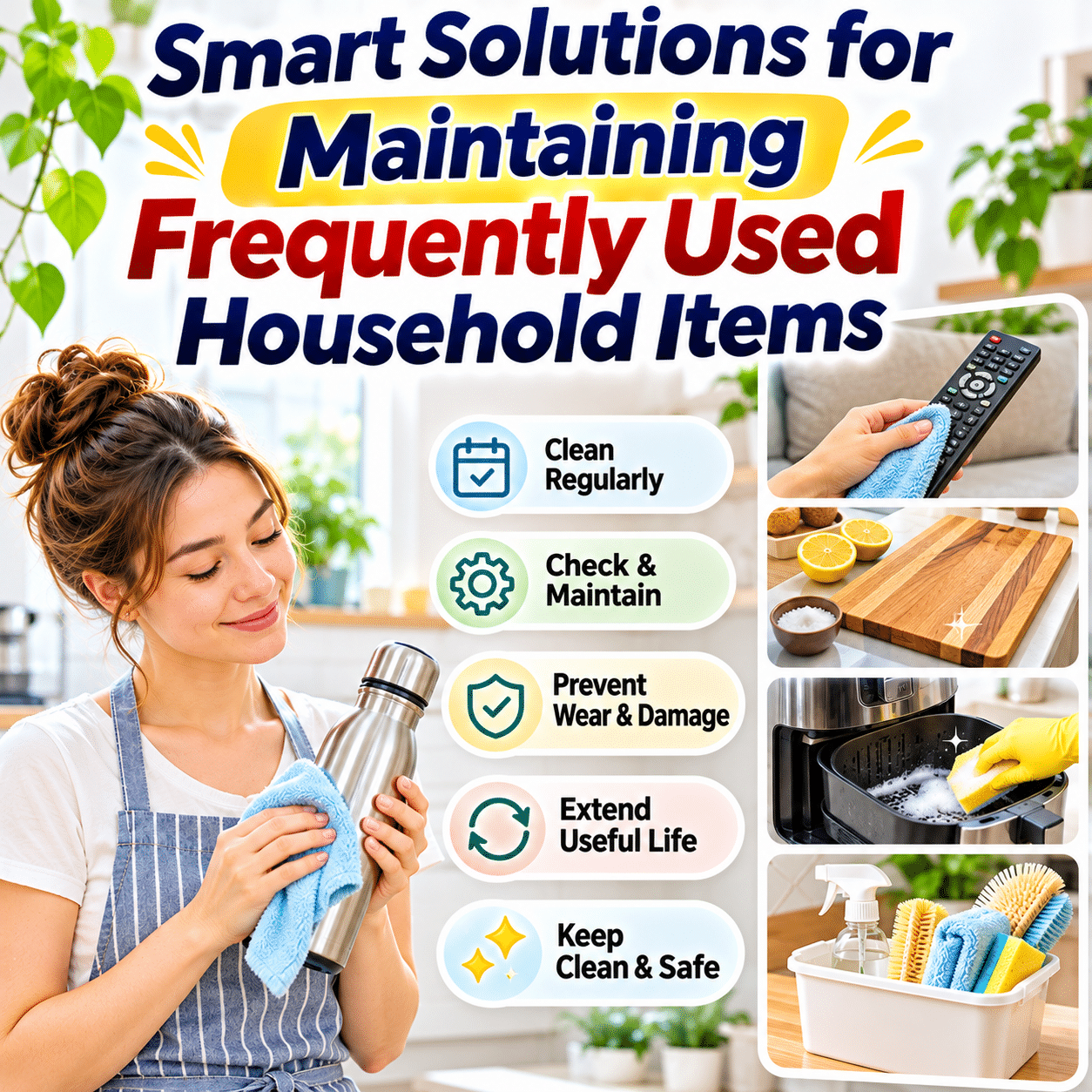
Every home contains everyday essentials that are used so regularly they can become almost invisible. Kitchen utensils, reusable water bottles, remote controls, cleaning tools, storage containers, door handles, and small appliances all play important roles in daily routines. Because these items are constantly handled, moved, washed, or exposed to ordinary wear, they can gradually lose their cleanliness, functionality, and appearance.
A frequently used household item does not necessarily need replacing when it begins showing signs of wear. Sometimes a thorough cleaning, a small adjustment, proper drying, or a change in storage habits can help restore its usefulness. In other situations, recognizing when an item is damaged or no longer safe is equally important.
The challenge is that household maintenance often focuses on major appliances, furniture, and visible surfaces. Smaller everyday objects may receive attention only when they become noticeably dirty, stop working properly, or create inconvenience.
A more practical approach is to incorporate simple maintenance habits into existing household routines. Instead of waiting for problems to develop, regular inspection, appropriate cleaning, and careful handling can help prevent avoidable damage and reduce unnecessary replacements.
Effective maintenance does not require a complicated schedule or a large collection of specialized products. It begins with understanding how different materials respond to daily use and choosing care methods that suit each item.
This guide explores smart, realistic solutions for maintaining frequently used household items, improving everyday convenience, protecting useful belongings, and creating a more organized home over time.
1. Understand Why Everyday Household Items Need Regular Maintenance
Frequently used household items experience repeated physical contact, exposure to moisture, temperature changes, cleaning products, and ordinary environmental conditions.
Even when an item appears durable, these factors can gradually affect its performance.
Repeated Handling Creates Wear
Objects such as door handles, cabinet pulls, remote controls, and reusable containers are handled repeatedly.
Over time, regular use may contribute to:
- Loose components.
- Surface scratches.
- Worn finishes.
- Accumulated dirt.
- Reduced mechanical smoothness.
- Damaged seals or closures.
Not every sign of wear requires repair, but periodic inspection helps identify problems before they become more serious.
Moisture Can Affect Different Materials
Water exposure is common in kitchens, bathrooms, and laundry areas.
Depending on the material, prolonged moisture may contribute to:
- Corrosion.
- Swelling.
- Warping.
- Discoloration.
- Unpleasant odors.
- Microbial growth.
- Deterioration of adhesives or finishes.
Proper drying and storage can reduce many of these risks.
Dirt and Residue Can Interfere With Function
Food particles, soap residue, dust, oils, and other materials may accumulate in small openings or moving components.
For example, residue around a reusable bottle lid may create odors, while dust inside an accessible appliance filter may reduce performance.
Small Maintenance Tasks Can Prevent Larger Problems
A loose cabinet handle may need only a suitable adjustment.
A reusable container may simply require careful cleaning around its seal.
A cleaning brush may remain useful longer when rinsed and dried properly.
Addressing minor issues early can help preserve functionality without unnecessary replacement.
2. Identify the Household Items That Deserve the Most Attention
Not every household object requires the same maintenance frequency.
A useful starting point is identifying items that are handled often, exposed to moisture, or essential to daily routines.
Kitchen Essentials
Common examples include:
- Cutting boards.
- Kitchen utensils.
- Food storage containers.
- Reusable water bottles.
- Dish racks.
- Small appliances.
- Measuring tools.
- Cabinet handles.
These items may require frequent cleaning because of food contact, moisture, and repeated use.
Bathroom Essentials
Frequently used bathroom items include:
- Toothbrush holders.
- Soap dispensers.
- Shower accessories.
- Bathroom storage containers.
- Reusable grooming tools.
- Towels and bathmats.
- Faucet handles.
Moisture management is particularly important in these areas.
Living Room Items
Examples include:
- Remote controls.
- Light switches.
- Furniture handles.
- Reusable blankets.
- Decorative trays.
- Small electronic accessories.
These objects may accumulate dust, oils, and other residues through regular handling.
Home Office Essentials
Common items include:
- Keyboards.
- Computer mice.
- Desk organizers.
- Charging cables.
- Headphone accessories.
- Desk lamps.
- Office chairs.
Maintenance should account for electrical safety and manufacturer guidance.
Cleaning Equipment
Cleaning tools also need maintenance.
Examples include:
- Microfiber cloths.
- Mop heads.
- Scrubbing brushes.
- Vacuum attachments.
- Dustpans.
- Buckets.
- Reusable cleaning gloves.
A dirty or damaged cleaning tool may become less effective.
3. Create a Simple Maintenance System Based on Frequency of Use
A practical household maintenance routine should reflect how often items are used and the conditions they experience.
Daily Maintenance
Daily care is most useful for objects that contact food, moisture, or frequently handled surfaces.
Examples include:
- Washing food-contact utensils after use.
- Rinsing reusable bottles.
- Drying damp cleaning tools.
- Wiping fresh spills.
- Returning accessories to suitable storage.
- Checking that frequently used containers close properly.
These tasks often take little time when performed immediately.
Weekly Maintenance
Weekly care can focus on items that accumulate residue gradually.
Examples include:
- Cleaning remote controls appropriately.
- Washing reusable cleaning cloths.
- Inspecting food storage containers.
- Cleaning desk accessories.
- Maintaining bathroom organizers.
- Checking frequently used brushes.
Monthly Maintenance
Monthly reviews may include:
- Inspecting appliance accessories.
- Checking loose furniture hardware.
- Cleaning accessible filters according to manufacturer instructions.
- Examining storage containers for damage.
- Reviewing charging cables.
- Inspecting frequently used household tools.
Occasional Maintenance
Some tasks are needed only when an item shows signs of wear or according to a manufacturer-recommended schedule.
The objective is not to clean everything constantly.
It is to maintain items often enough to preserve safe, reliable everyday use.
4. Maintain Kitchen Utensils and Cooking Tools Properly
Kitchen tools experience frequent washing, handling, heat exposure, and contact with food.
Their maintenance requirements depend on the materials used.
Clean Utensils After Use
Wash food-contact utensils using methods appropriate for the material and manufacturer instructions.
Remove food residue from:
- Handles.
- Joints.
- Grooves.
- Decorative edges.
- Connection points.
Pay attention to areas where residue may remain hidden.
Dry Tools Thoroughly
Some materials are particularly sensitive to prolonged moisture.
Wooden utensils, certain metals, and tools with joined components may deteriorate when stored wet.
Allow items to dry adequately before returning them to drawers or containers.
Inspect for Damage
Check for:
- Cracks.
- Splinters.
- Loose handles.
- Corrosion.
- Damaged coatings.
- Sharp or broken edges.
Items that can no longer be cleaned effectively or used safely may need replacement.
Avoid Unsuitable Cleaning Methods
Not all kitchen tools are dishwasher-safe.
High temperatures, prolonged soaking, and aggressive detergents may damage certain materials.
Follow manufacturer guidance rather than assuming one cleaning method works for everything.
5. Keep Cutting Boards Clean and Functional
Cutting boards are frequently used food-preparation surfaces and require careful maintenance.
Clean After Food Preparation
Wash cutting boards thoroughly after use.
Use appropriate cleaning methods based on the material.
Boards used for raw meat, poultry, seafood, or other potentially contaminating foods require particular attention to food-safety practices.
Prevent Cross-Contamination
Consider using separate boards for raw animal products and ready-to-eat foods.
Clean and sanitize food-contact surfaces when appropriate, following recognized food-safety guidance and product instructions.
Dry Boards Properly
Allow boards to dry thoroughly before enclosed storage.
Avoid leaving wooden boards submerged in water.
Maintain Wooden Boards
Some wooden boards benefit from occasional treatment with a food-safe conditioning product recommended by the manufacturer.
Do not use ordinary furniture polish or unsuitable oils on food-contact surfaces.
Recognize When Replacement Is Necessary
Deep grooves, cracks, splitting, or other damage may make thorough cleaning difficult.
Replace boards that can no longer be maintained in a hygienic condition.
6. Maintain Reusable Water Bottles and Drinkware
Reusable bottles, tumblers, and travel mugs are convenient everyday items, but their lids and seals can accumulate residue.
Wash Regularly
Clean reusable drinkware according to manufacturer instructions.
Pay attention to:
- Bottle interiors.
- Drinking openings.
- Lids.
- Straws.
- Silicone seals.
- Threaded closures.
Disassemble Removable Components
When the manufacturer permits, remove detachable seals and accessories for cleaning.
Use suitable brushes to reach narrow areas.
Dry Components Before Reassembly
Moisture trapped beneath seals or inside closed bottles can contribute to unpleasant odors.
Allow parts to dry adequately before storage.
Inspect Seals and Closures
Check for:
- Cracks.
- Deformation.
- Persistent residue.
- Damaged threads.
- Leaks.
- Worn gaskets.
Replace compatible parts when available and necessary.
Avoid Incompatible Temperatures
Not every reusable bottle is suitable for hot beverages, dishwashers, freezers, or microwaves.
Follow the product’s stated limitations.
7. Extend the Useful Life of Food Storage Containers
Food storage containers are handled, washed, stacked, and opened repeatedly.
Proper maintenance helps preserve their functionality.
Remove Food Residue Promptly
Wash containers after use rather than allowing residue to dry for extended periods.
Pay attention to corners, grooves, and lid mechanisms.
Inspect Lid Seals
Removable gaskets can collect food residue.
Clean them according to manufacturer guidance.
Check whether seals remain properly fitted.
Avoid Excessive Heat Exposure
Plastic containers may warp or deteriorate when exposed to temperatures beyond their intended range.
Use microwave- and dishwasher-safe products only as directed.
Store Containers Dry
Allow containers and lids to dry before stacking or closing them.
When appropriate, store lids separately or loosely to avoid trapping moisture.
Replace Damaged Containers
Containers with severe cracks, damaged food-contact surfaces, or unreliable closures may no longer be suitable for their intended use.
8. Maintain Frequently Used Small Kitchen Appliances
Small appliances simplify everyday tasks, but they require regular care.
Examples include:
- Coffee makers.
- Electric kettles.
- Toasters.
- Blenders.
- Air fryers.
- Rice cookers.
- Food processors.
Follow Manufacturer Instructions
Different appliances have different cleaning and maintenance requirements.
Always consult the relevant instructions before disassembly, cleaning, or servicing.
Remove Residue From Accessible Components
Food particles, mineral deposits, oils, and dust may accumulate during normal use.
Clean removable components only as directed.
Keep Electrical Components Dry
Never immerse electrical bases, plugs, or components in water unless explicitly designed for immersion.
Avoid spraying cleaning liquids directly into electrical openings.
Inspect Power Cords
Look for visible damage such as:
- Fraying.
- Exposed conductors.
- Damaged plugs.
- Discoloration.
- Signs of overheating.
Stop using equipment with suspected electrical damage and seek qualified assistance.
Maintain Ventilation Openings
Some appliances require unobstructed airflow.
Keep ventilation areas clear and follow recommended placement requirements.
9. Care for Bathroom Accessories and Reusable Personal Items
Bathrooms expose everyday objects to humidity, water, and cleaning products.
Maintain Toothbrush Holders
Clean holders regularly to remove residue and standing water.
Allow them to dry.
Store toothbrushes according to appropriate hygiene guidance, avoiding unnecessary contact between brush heads.
Clean Soap Dispensers
Wipe exterior surfaces and remove residue around pumps.
Follow manufacturer instructions when refilling or cleaning reusable dispensers.
Dry Shower Accessories
Rinse suitable accessories after use and allow them to dry.
Avoid leaving water trapped inside containers or beneath accessories.
Maintain Reusable Grooming Tools
Clean grooming tools according to their intended use and material.
Some personal care tools require specialized cleaning or disinfection methods.
Avoid sharing personal items that could transfer contamination.
Inspect Bathroom Storage
Check for moisture, corrosion, damaged finishes, and accumulated residue.
Address leaks and persistent dampness rather than concealing them.
10. Keep Remote Controls and Frequently Handled Electronics Clean
Remote controls, keyboards, computer mice, and similar devices are touched regularly.
Their surfaces may collect oils, dust, and other residues.
Turn Off Devices Before Cleaning
Follow manufacturer instructions for powering down or disconnecting devices when appropriate.
Use Suitable Cleaning Materials
A clean microfiber cloth may be sufficient for routine exterior cleaning.
If additional cleaning is required, use only products and methods approved for the device.
Avoid Excess Moisture
Do not spray liquids directly onto electronic equipment.
Avoid allowing moisture to enter buttons, ports, or battery compartments.
Clean Around Buttons Carefully
Dust and residue can accumulate near controls.
Use appropriate soft tools without forcing debris into openings.
Inspect Batteries and Compartments
For devices with replaceable batteries, follow manufacturer guidance.
Remove leaking batteries only using appropriate safety precautions.
Do not continue using equipment affected by battery leakage until it has been safely assessed.
11. Maintain Charging Cables and Everyday Electronic Accessories
Charging cables and small electronic accessories experience frequent bending, plugging, unplugging, and transportation.
Avoid Sharp Bends
Repeated bending near connectors may damage internal conductors.
Store cables with gentle curves rather than tightly wrapping them around plugs.
Disconnect by the Connector
When unplugging a cable, hold the connector rather than pulling on the wire.
Keep Connectors Clean and Dry
Avoid exposing charging ports and connectors to moisture or debris.
Follow manufacturer instructions for cleaning.
Inspect for Damage
Stop using cables that show:
- Exposed wires.
- Frayed insulation.
- Damaged connectors.
- Unusual heating.
- Intermittent electrical problems.
Do not attempt improvised repairs to damaged charging cables.
Organize Accessories
Use suitable cable organizers to prevent tangling and reduce unnecessary strain.
Avoid tightly bundling cables in ways that could interfere with safe operation or heat dissipation.
12. Maintain Door Handles, Cabinet Pulls, and Frequently Used Hardware
Small household hardware is easy to overlook because it usually works without much attention.
Clean Frequently Handled Surfaces
Wipe handles and pulls with products compatible with their finishes.
Avoid abrasive materials that may scratch coatings.
Check for Loose Components
A loose handle may require adjustment using the correct tool.
Do not overtighten screws, which can damage threads or surrounding materials.
Inspect Moving Parts
Check whether hinges, handles, and latches operate smoothly.
Use Suitable Lubricants
Some hardware may benefit from manufacturer-approved lubrication.
Avoid applying random oils or sprays that could damage finishes or attract dirt.
Recognize Structural Problems
Loose hardware caused by damaged wood, stripped mounting points, or failing components may require proper repair or replacement.
13. Keep Frequently Used Furniture in Good Condition
Chairs, tables, drawers, and storage units experience repeated movement and contact.
Clean Surfaces Appropriately
Choose cleaning methods suitable for wood, metal, glass, laminate, or upholstered materials.
Inspect Joints and Fasteners
Check for loose screws, unstable legs, or unusual movement.
Follow manufacturer guidance for adjustments.
Avoid Excessive Weight
Respect furniture load limits.
Overloading shelves, drawers, and chairs can cause premature damage or safety hazards.
Protect Surfaces
Use suitable coasters, pads, or protective accessories where helpful.
Avoid exposing moisture-sensitive finishes to standing water.
Address Damage Early
Minor scratches may be cosmetic, but structural instability requires prompt attention.
Stop using furniture that appears unsafe until it has been properly repaired or replaced.
14. Maintain Cleaning Tools So They Remain Effective
Cleaning equipment needs care just like the surfaces it cleans.
Wash Reusable Cloths
Launder microfiber and other reusable cleaning cloths according to their care instructions.
Separate heavily contaminated materials when appropriate.
Clean Brushes
Remove trapped hair, dust, and debris.
Wash compatible brushes and allow them to dry.
Maintain Mop Heads
Rinse or wash mop heads as directed.
Avoid storing them wet in enclosed spaces.
Empty Vacuum Dust Containers
Follow manufacturer instructions for emptying containers or replacing bags.
Maintain filters as recommended.
Inspect Tool Condition
Replace cleaning tools that are damaged, excessively worn, or no longer effective.
A deteriorated brush or damaged attachment may scratch surfaces or reduce cleaning performance.
15. Prevent Moisture-Related Damage to Everyday Items
Moisture is a common contributor to household wear.
Dry Items Before Storage
Avoid placing wet utensils, cleaning tools, textiles, or accessories into enclosed spaces.
Address Spills Promptly
Wipe liquids from surfaces and inspect nearby materials for trapped moisture.
Maintain Suitable Humidity
Persistent high humidity can affect wood, metal, paper, and textiles.
Use appropriate ventilation or humidity control based on household conditions.
Avoid Direct Contact With Damp Surfaces
Keep moisture-sensitive items away from known leaks and condensation-prone locations.
Inspect Storage Areas
Check cabinets, drawers, and containers for musty odors, water stains, and visible damage.
16. Choose Cleaning Methods Based on Material
Different household materials respond differently to cleaning products and environmental conditions.
| Material | Common Maintenance Concern | Practical Care Approach | Important Precaution |
|---|---|---|---|
| Stainless steel | Water spots and residue | Clean with compatible products and dry | Avoid unsuitable abrasive cleaners |
| Wood | Moisture and surface damage | Use appropriate cleaning and drying methods | Avoid prolonged soaking |
| Plastic | Scratches, warping, and staining | Follow temperature and cleaning limits | Replace severely damaged food-contact items |
| Glass | Smudges and breakage | Use suitable cloths and careful handling | Avoid sudden temperature changes unless rated |
| Silicone | Residue and odor retention | Clean removable parts thoroughly | Follow heat and product compatibility guidance |
| Fabric | Dirt, moisture, and wear | Wash or clean according to care labels | Avoid improper temperatures |
| Metal hardware | Corrosion and looseness | Keep clean, dry, and properly adjusted | Use compatible lubricants |
| Electronics | Dust and moisture | Follow manufacturer-approved cleaning | Keep liquids out of electrical components |
| Leather | Drying, staining, and moisture damage | Use material-specific care products | Avoid excessive water and heat |
| Ceramic | Chips and cracks | Clean gently and inspect | Discontinue unsafe damaged food-contact items |
Understanding material requirements helps prevent cleaning-related damage.
17. Recognize When Repair Is Better Than Replacement
Not every damaged household item needs to be discarded.
Some problems can be resolved safely with simple maintenance.
Suitable Minor Repairs
Depending on the item, reasonable repairs may include:
- Tightening a loose cabinet handle.
- Replacing a compatible container gasket.
- Installing a manufacturer-approved replacement part.
- Adjusting suitable furniture hardware.
- Replacing worn vacuum accessories.
- Repairing minor cosmetic damage using appropriate methods.
Evaluate Repair Practicality
Consider:
- Whether the item remains structurally sound.
- Whether replacement parts are available.
- Whether the repair is safe.
- Whether specialized skills are required.
- Whether the repair cost is reasonable.
- Whether the item can continue serving its intended purpose.
Know When Replacement Is Safer
Replacement may be necessary for:
- Damaged electrical cords.
- Cracked or unsafe food-contact materials.
- Structurally unstable furniture that cannot be properly repaired.
- Severely corroded components.
- Items with compromised safety mechanisms.
- Products that can no longer be cleaned adequately.
Safety should take priority over extending an item’s lifespan.
18. Avoid Common Household Maintenance Mistakes
Even well-intentioned care can damage everyday belongings when unsuitable methods are used.
Mistake 1: Using One Cleaner for Every Material
A product suitable for tile may damage wood, electronics, or delicate finishes.
Better approach: Choose cleaning methods based on material compatibility.
Mistake 2: Storing Items While Damp
Trapped moisture may contribute to odors, corrosion, and deterioration.
Better approach: Allow items to dry thoroughly before enclosed storage.
Mistake 3: Ignoring Small Mechanical Problems
Loose handles or unstable furniture components may worsen over time.
Better approach: Inspect and address minor issues promptly.
Mistake 4: Using Excessive Cleaning Products
More cleaner does not necessarily produce better results.
Residue may remain and affect surfaces.
Better approach: Follow product instructions and use appropriate quantities.
Mistake 5: Overloading Everyday Items
Exceeding weight or capacity limits can damage containers, shelves, and equipment.
Better approach: Respect manufacturer specifications.
Mistake 6: Continuing to Use Damaged Electrical Accessories
Frayed cables and damaged plugs may present hazards.
Better approach: Stop using unsafe equipment and replace or professionally service it as appropriate.
Mistake 7: Forgetting Hidden Components
Seals, filters, hinges, and removable accessories may require maintenance.
Better approach: Include these components in periodic inspections.
Mistake 8: Replacing Items Before Investigating the Problem
Some issues can be resolved through cleaning, adjustment, or approved replacement parts.
Better approach: Assess the cause before deciding whether replacement is necessary.
19. Build a Practical Household Item Maintenance Schedule
A rotating schedule can make maintenance more manageable.
Daily Tasks
- Wash food-contact utensils after use.
- Clean reusable bottles.
- Wipe fresh spills.
- Dry wet accessories.
- Return items to appropriate storage.
- Check frequently used tools for obvious damage.
Weekly Tasks
- Clean frequently handled electronic surfaces appropriately.
- Wash reusable cleaning cloths.
- Inspect food storage containers.
- Clean bathroom accessories.
- Remove debris from cleaning brushes.
- Review frequently used household organizers.
Monthly Tasks
- Inspect cabinet handles and furniture hardware.
- Check charging cables.
- Maintain appliance accessories according to instructions.
- Review vacuum attachments and filters.
- Inspect storage areas for moisture.
- Assess worn or damaged tools.
Seasonal Tasks
- Review rarely used household accessories.
- Inspect furniture stability.
- Evaluate repair or replacement needs.
- Reorganize storage.
- Check appliance maintenance schedules.
- Remove unnecessary or unusable items.
These intervals are flexible starting points rather than universal requirements.
20. Create a Simple Household Maintenance Kit
A small collection of appropriate tools can make minor maintenance easier.
Useful Basic Items
Depending on household needs, a maintenance kit may include:
- Microfiber cloths.
- Soft cleaning brushes.
- A basic screwdriver set.
- A measuring tape.
- A flashlight.
- Suitable protective gloves.
- Manufacturer-approved replacement parts.
- A small container for spare fasteners.
Keep Specialized Products Separate
Cleaning chemicals, lubricants, adhesives, and electrical maintenance materials may require specific storage conditions.
Follow their labels and keep hazardous products secure.
Avoid Unnecessary Tool Purchases
Choose tools based on actual maintenance needs.
A small, reliable collection is often more practical than a large assortment of rarely used equipment.
Keep Tools Organized
Use labeled compartments or a suitable toolbox.
Return tools after use so they remain easy to find.
21. Make Maintenance More Sustainable and Cost-Effective
Maintaining household belongings can support more thoughtful consumption.
Use Items for Their Intended Purpose
Misuse can shorten an item’s functional life.
Follow load limits, temperature ratings, and operating instructions.
Choose Repairable Products When Practical
When purchasing replacements, consider whether compatible parts and maintenance instructions are available.
Maintain Rather Than Accumulate
Regular care can reduce unnecessary purchases caused by preventable deterioration.
Avoid Excessive Cleaning Chemicals
Use appropriate products in recommended quantities.
Overuse may create residue, damage materials, or increase waste.
Replace Only When Necessary and Safe
Some items remain functional despite cosmetic wear.
Others require replacement because of safety or hygiene concerns.
Distinguishing between these situations supports responsible household decisions.
22. Frequently Asked Questions
1. Why is regular maintenance important for everyday household items?
Regular care helps remove residue, identify damage, preserve functionality, and reduce avoidable deterioration.
2. How often should frequently used household items be cleaned?
Cleaning frequency depends on use, material, and exposure. Food-contact items generally require cleaning after use, while other objects may benefit from weekly or periodic care.
3. Can proper maintenance make household products last longer?
Appropriate cleaning, storage, and handling can reduce some forms of premature wear, although every product has practical limits.
4. What household items are most often overlooked?
Remote controls, cabinet handles, reusable bottle seals, vacuum attachments, cleaning brushes, and small appliance accessories are commonly overlooked.
5. How can I maintain reusable water bottles?
Clean bottles and removable components regularly, dry them thoroughly, and inspect seals and closures.
6. Should wooden kitchen utensils be soaked in water?
Prolonged soaking may damage some wooden utensils. Follow manufacturer care instructions and dry them appropriately.
7. When should cutting boards be replaced?
Replace boards that are cracked, severely damaged, or difficult to clean adequately.
8. How can I prevent food storage containers from developing odors?
Clean them promptly, remove residue from seals, and allow all components to dry before storage.
9. Is it safe to clean electronics with household cleaning sprays?
Do not spray liquids directly onto electronics. Use only manufacturer-approved cleaning methods.
10. How should charging cables be maintained?
Avoid sharp bends, disconnect by the connector, keep them dry, and stop using damaged cables.
11. Can loose cabinet handles be repaired?
Some loose handles can be adjusted using suitable tools, provided the mounting points remain sound.
12. How can I prevent rust on household metal items?
Keep items clean and dry, address moisture exposure, and use material-appropriate protective care where recommended.
13. Why do reusable cleaning cloths develop odors?
Trapped moisture, residue, and inadequate cleaning may contribute. Wash and dry cloths appropriately.
14. How should vacuum cleaner attachments be maintained?
Remove debris, clean compatible components, and follow manufacturer instructions for filters and accessories.
15. Do small appliances need regular maintenance?
Yes. Many require cleaning of removable components, inspection of cords, and periodic maintenance according to manufacturer guidance.
16. How can I keep frequently used furniture in good condition?
Clean surfaces appropriately, inspect joints, avoid overloading, and address structural problems promptly.
17. Is it better to repair or replace a damaged household item?
The decision depends on safety, repairability, cost, and remaining functionality.
18. Can excessive cleaning damage household items?
Yes. Aggressive products, abrasive tools, excessive moisture, and unsuitable temperatures may damage materials.
19. What is the best way to store frequently used household tools?
Keep them clean, dry, organized, and accessible while following any safety requirements.
20. How can I remember routine maintenance tasks?
Use a simple checklist or rotate tasks across weekly and monthly cleaning sessions.
21. Should all household items be disinfected regularly?
Not necessarily. Routine cleaning is sufficient for many situations. Disinfection may be appropriate for specific contamination risks or circumstances, using suitable products and instructions.
22. How do I know when a reusable item is no longer safe?
Look for structural damage, compromised food-contact surfaces, electrical defects, or conditions that prevent adequate cleaning.
23. Can maintenance reduce household waste?
Maintaining suitable items can help reduce unnecessary replacement and extend their useful service life.
24. What is the simplest way to begin a household maintenance routine?
Start with a small group of frequently used items and add brief inspections to existing cleaning habits.
25. How can I maintain household items without spending much money?
Use suitable basic tools, follow manufacturer care instructions, clean regularly, and address minor issues before they worsen.
23. Practical Household Item Maintenance Checklist
Use this checklist to support consistent care throughout the home.
Kitchen Essentials
- Clean food-contact utensils after use.
- Dry wooden and moisture-sensitive tools.
- Inspect cutting boards for damage.
- Wash reusable bottles and lids.
- Clean food storage container seals.
- Check small appliance components.
- Inspect kitchen handles and hardware.
Bathroom Accessories
- Clean toothbrush holders.
- Maintain soap dispensers.
- Dry reusable shower accessories.
- Clean grooming tools appropriately.
- Inspect bathroom storage for moisture.
- Replace damaged personal care items when necessary.
Electronics and Accessories
- Clean remote controls using approved methods.
- Maintain keyboards and computer mice.
- Inspect charging cables.
- Keep connectors clean and dry.
- Follow battery maintenance instructions.
- Stop using damaged electrical equipment.
Furniture and Hardware
- Check loose handles and fasteners.
- Inspect furniture stability.
- Clean surfaces with compatible products.
- Avoid excessive loads.
- Address damaged joints.
- Protect moisture-sensitive finishes.
Cleaning Equipment
- Wash reusable cloths.
- Clean brushes and scrubbers.
- Dry mop heads.
- Empty vacuum containers as directed.
- Maintain filters according to instructions.
- Replace worn cleaning accessories.
Storage and Moisture Control
- Store belongings dry.
- Inspect cabinets for leaks.
- Avoid overcrowded storage.
- Protect sensitive materials from moisture.
- Organize frequently used items.
- Review storage conditions periodically.
Long-Term Maintenance
- Establish a manageable inspection schedule.
- Keep basic maintenance tools available.
- Follow manufacturer care instructions.
- Evaluate repair options when safe.
- Replace items that present hazards.
- Avoid unnecessary purchases.
- Adjust routines as household needs change.
Final Thoughts
Maintaining frequently used household items is one of the simplest ways to make everyday living more comfortable, organized, and efficient. Small objects such as reusable bottles, kitchen utensils, remote controls, cleaning brushes, and cabinet handles may not attract much attention, but their condition can influence daily convenience.
Regular maintenance helps prevent avoidable deterioration. Cleaning residue before it accumulates, drying materials properly, inspecting frequently handled components, and following manufacturer instructions can preserve the usefulness of many everyday belongings.
The most effective approach is not to create an exhausting maintenance schedule. Instead, it is to build small habits around existing routines. Washing a reusable bottle thoroughly, checking a charging cable for damage, drying a cleaning brush, or tightening a suitable loose handle can often be completed without significant effort.
Thoughtful maintenance also involves recognizing limits. Some items can be repaired or restored, while others should be replaced because they are damaged, unhygienic, or unsafe. Making that distinction helps balance practicality, safety, and responsible consumption.
Over time, consistent care can reduce unnecessary inconvenience, improve household organization, and support more mindful use of everyday products.
A well-maintained home is not defined by having everything new. It is shaped by how thoughtfully the things already in use are cleaned, handled, protected, and cared for—one practical habit at a time.