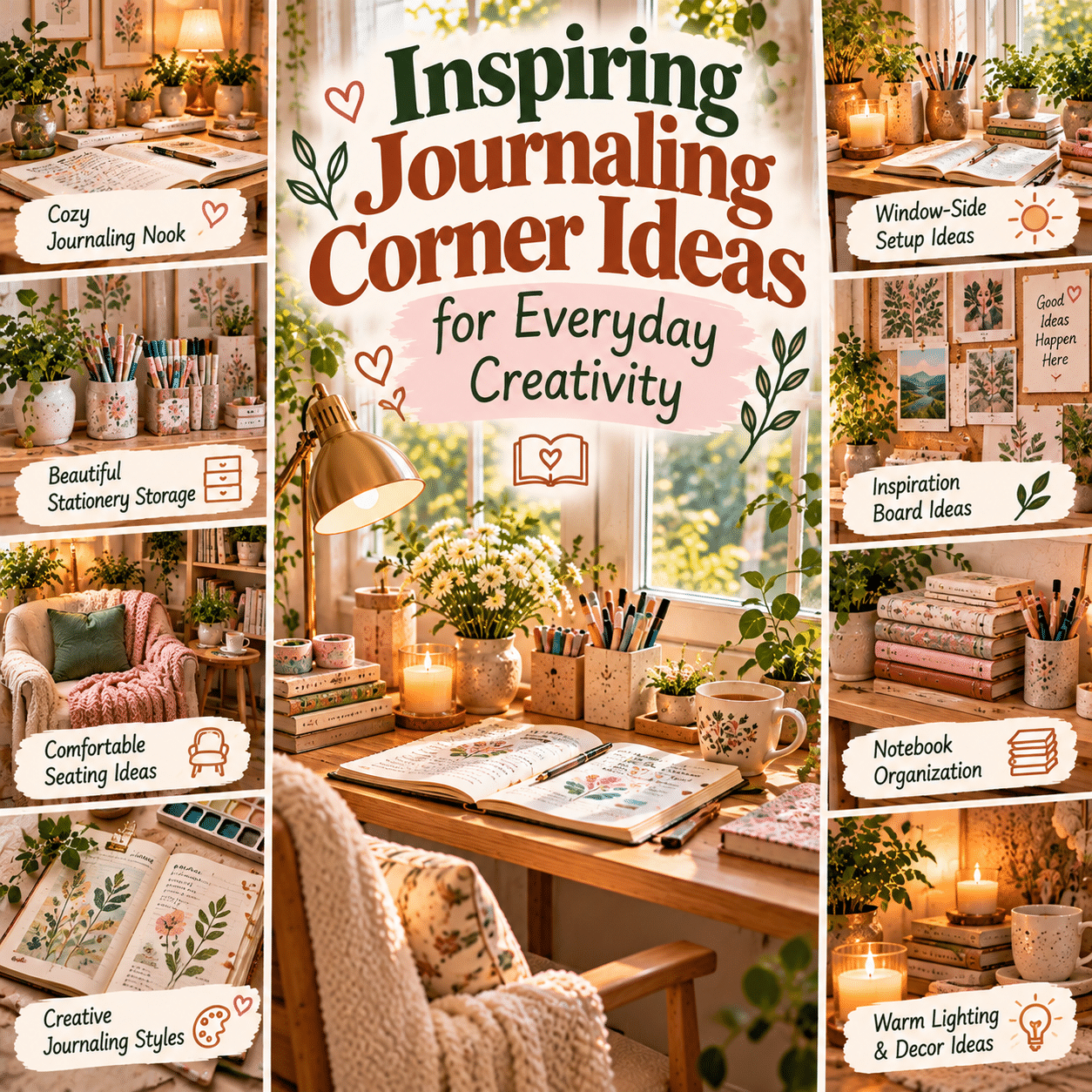
A journaling corner is more than a place to keep notebooks and pens. It is a personal space where thoughts, ideas, memories, and creative expressions can find a home.
Whether you enjoy reflective writing, creative journaling, gratitude lists, travel memories, sketching, or decorative bullet journals, having a comfortable place to write can make the experience more inviting and easier to incorporate into everyday life.
The beauty of a journaling corner is its simplicity.
You do not need a dedicated room, expensive stationery, or elaborate furniture. A small desk beside a window, a comfortable chair with a side table, or a quiet bedroom nook can become a meaningful creative retreat.
Thoughtful details can make the space feel special. Soft lighting, organized stationery, natural textures, comfortable seating, and a few inspiring decorations can transform an ordinary corner into a place you look forward to visiting.
At the same time, a practical journaling area should remain easy to use.
A beautiful arrangement loses some of its value if notebooks are difficult to reach, lighting is inadequate, or the desk becomes overcrowded with decorations.
The most successful journaling corners balance inspiration, comfort, organization, and personal style.
This guide explores creative journaling corner ideas for different homes and lifestyles, including cozy desk arrangements, small-space solutions, stationery organization, decorative themes, practical writing routines, and simple ways to make everyday creativity feel more accessible.
1. Define What Journaling Means to You
Before designing your journaling corner, consider how you plan to use it.
Journaling can take many forms, and different activities may benefit from different arrangements.
Popular approaches include:
- Personal reflection.
- Daily diary writing.
- Gratitude journaling.
- Creative writing.
- Bullet journaling.
- Travel journaling.
- Art journaling.
- Memory keeping.
- Reading notes.
- Goal planning.
- Nature journaling.
- Sketching and visual storytelling.
Design Around Your Favorite Activities
If you primarily write short reflections, a notebook and comfortable chair may be enough.
If you enjoy decorative journaling, you may need additional space for pens, stickers, washi tape, stamps, and paper.
If you combine writing with watercolor or sketching, a protected work surface and suitable lighting become more important.
Begin with the activities you genuinely enjoy rather than trying to accommodate every journaling style.
2. Choose a Quiet and Comfortable Location
A journaling corner can fit into many parts of a home.
Possible locations include:
- A bedroom corner.
- A home office.
- A living room nook.
- A window-side desk.
- A reading corner.
- A small study area.
- A sheltered balcony.
- A spare room.
- A compact alcove.
Consider Privacy
Some people enjoy writing personal thoughts in a quiet, private environment.
Others prefer journaling in a shared living area while enjoying everyday household activity.
Choose a location that feels comfortable for the type of writing you do.
Consider Convenience
The best journaling corner is one you can use easily.
If your notebook is stored in another room and your supplies require extensive setup, spontaneous writing may become less convenient.
Keep the essentials close to your preferred writing area.
3. Create a Journaling Corner Beside a Window
A window-side journaling area can feel bright, open, and connected to the outdoors.
Natural light may make daytime writing more pleasant.
A small desk or table positioned near a window can provide a comfortable place for reflection.
Manage Direct Sunlight
Strong sunlight can create glare or make the workspace uncomfortably warm.
Use curtains or blinds when needed.
Avoid leaving journals, photographs, and delicate paper materials in prolonged direct sunlight if fading is a concern.
Enjoy the View
A view of trees, a garden, a courtyard, or the changing sky can provide visual inspiration.
However, an attractive view is optional.
A well-lit corner with a simple botanical print can be equally welcoming.
4. Design a Cozy Bedroom Journaling Nook
A bedroom can provide a convenient setting for personal writing.
Choose a quiet corner with enough space for a small desk or comfortable chair.
Add a suitable lamp and a small organizer for notebooks.
Keep the Atmosphere Gentle
Consider soft colors, comfortable textiles, and minimal decoration.
A bedroom journaling nook might include:
- A compact writing desk.
- A comfortable chair.
- A warm table lamp.
- A small notebook basket.
- A framed illustration.
- A soft rug.
Separate Writing from Clutter
Avoid using the journaling desk as temporary storage for clothing or unrelated household items.
A clear surface makes the area easier to use whenever inspiration appears.
5. Create a Minimalist Journaling Space
Minimalist journaling corners emphasize simplicity and functionality.
A basic setup may include:
- One notebook.
- A favorite pen.
- A clean desk.
- A comfortable chair.
- A task lamp.
- A small storage drawer.
Reduce Visual Distractions
Keep only frequently used materials on the desk.
Store extra stationery in drawers or containers.
Choose a limited color palette for a cohesive appearance.
Minimalism does not require removing meaningful personal objects. A favorite photograph or small artwork can still make the space feel welcoming.
6. Build a Warm and Cozy Journaling Retreat
If you prefer a softer atmosphere, create a journaling corner with layered textures and warm colors.
Consider:
- Cream cushions.
- Knitted throws.
- Wooden furniture.
- Woven baskets.
- Warm lighting.
- Soft rugs.
- Muted green or terracotta accents.
Balance Comfort with Function
A cozy chair may be ideal for reflective writing, but detailed decorative journaling often requires a stable table.
Choose furniture that supports your actual activities.
A small side table or lap desk may be useful for occasional writing.
7. Choose a Comfortable Writing Desk
A dedicated desk can make journaling easier, particularly when you enjoy longer writing sessions or creative layouts.
Choose a surface large enough for your notebook and essential supplies.
Consider:
- Desk height.
- Available legroom.
- Surface stability.
- Storage needs.
- Lighting placement.
- Room dimensions.
Avoid Oversized Furniture
A large desk may overwhelm a compact bedroom.
A narrow writing desk or wall-mounted surface may provide sufficient space.
Measure carefully before purchasing furniture.
8. Create a Journaling Corner Without a Desk
A traditional desk is not essential.
You can journal comfortably in an armchair, on a sofa, or at an existing table.
Possible arrangements include:
- An armchair with a side table.
- A sofa with a lap desk.
- A reading chair with a notebook basket.
- A dining table with portable stationery storage.
- A window seat with supportive cushions.
Choose a Stable Writing Surface
For longer writing sessions, a stable surface can reduce awkward hand and wrist positions.
Avoid balancing heavy supplies or hot beverages on unstable furniture.
A portable writing board may be useful when you do not have a dedicated desk.
9. Select Supportive Seating
Comfortable seating can make journaling more enjoyable.
Choose a chair that supports your preferred posture.
Look for:
- Stable construction.
- Suitable seat height.
- Comfortable back support.
- Adequate legroom.
- Appropriate cushioning.
Change Positions During Longer Sessions
Even comfortable seating can become tiring when used for extended periods.
Take movement breaks and adjust your posture as needed.
Avoid leaning forward excessively over a low writing surface.
10. Use Soft but Practical Lighting
Lighting contributes to both the atmosphere and functionality of a journaling corner.
Warm lighting can create a cozy appearance, while clear task lighting helps you see written details.
Consider:
- Adjustable desk lamps.
- Floor lamps.
- Wall-mounted reading lights.
- Dimmable fixtures.
- Indirect accent lighting.
Prevent Glare
Position the lamp so light falls comfortably across the notebook.
If you are right-handed, placing the light toward the left may help reduce hand shadows. Left-handed writers may prefer the opposite arrangement.
Adjust according to your workspace.
Keep Lighting Adequate
A peaceful atmosphere should not require writing in dim conditions.
Use enough light to read and write comfortably.
11. Choose a Calming Color Palette
Colors can influence the visual character of your journaling space.
Popular choices include:
- Warm white.
- Beige.
- Cream.
- Sage green.
- Dusty rose.
- Pale blue.
- Soft lavender.
- Muted terracotta.
- Natural wood tones.
Use a Simple Combination
For example, cream walls, a light wood desk, and sage green accessories can create a natural appearance.
Another option is white furniture with dusty pink stationery and warm brass-inspired accents.
Choose colors that reflect your preferences rather than following a strict decorating trend.
12. Create a Botanical Journaling Corner
A nature-inspired journaling area can feel fresh and welcoming.
Consider combining:
- A wooden desk.
- Botanical artwork.
- Sage green stationery.
- A small plant.
- Natural woven storage.
- Neutral textiles.
Choose Plants Carefully
Select plants that suit the available light and your ability to care for them.
Keep watering containers away from notebooks and electrical equipment.
If pets or children can access the space, check plant safety.
Artificial greenery or botanical prints can provide a similar decorative effect without plant maintenance.
13. Design a Scandinavian-Inspired Writing Nook
Scandinavian-inspired interiors often emphasize light colors, natural materials, and practical simplicity.
A journaling corner in this style might include:
- A pale wood desk.
- A simple white lamp.
- Neutral stationery containers.
- A comfortable upholstered chair.
- Minimal artwork.
- A soft woven rug.
Add Warmth Through Texture
Combine smooth desk surfaces with fabric cushions, natural wood grain, and a few personal objects.
The result can feel understated without appearing cold or impersonal.
14. Create a Vintage-Inspired Journaling Desk
A vintage-inspired writing corner can feel nostalgic and full of character.
Consider:
- A traditional wooden desk.
- Antique-style drawer handles.
- Decorative stationery boxes.
- A framed botanical illustration.
- A classic desk lamp.
- Warm-toned notebooks.
Combine Character with Practicality
Older furniture may require inspection or repair.
Check stability, drawer function, and surface condition.
If using vintage lighting, ensure electrical components are safe.
You can achieve a vintage aesthetic with modern furniture and accessories.
15. Explore a Soft Cottage-Inspired Journaling Space
A cottage-inspired journaling corner often features gentle colors, floral details, and natural textures.
Consider:
- Floral cushions.
- Light wood furniture.
- Cream curtains.
- Woven baskets.
- Small botanical prints.
- Soft pastel stationery.
Avoid Excessive Decoration
A few floral accents may be enough.
Keep the writing surface clear so the space remains practical.
16. Organize Pens and Writing Tools Beautifully
A journaling corner becomes easier to use when writing tools have designated storage.
Consider:
- Pen cups.
- Small drawers.
- Pencil cases.
- Divided organizers.
- Portable stationery boxes.
- Wall-mounted holders.
Group Supplies by Purpose
Separate everyday pens from specialty markers or decorative tools.
Keep your most frequently used items within reach.
Avoid displaying every pen if it makes the desk feel crowded.
17. Create a Dedicated Notebook Storage Area
Journals can accumulate over time, especially when you enjoy several styles of writing.
Choose storage that protects notebooks and makes them easy to find.
Options include:
- Bookshelves.
- Desk drawers.
- Magazine holders.
- Decorative boxes.
- Closed cabinets.
- Small book carts.
Organize by Type or Date
You might group notebooks into categories such as:
- Current journals.
- Completed journals.
- Travel journals.
- Creative notebooks.
- Sketchbooks.
- Reference notebooks.
Use labels if helpful.
Keep completed journals away from moisture and excessive sunlight.
18. Use a Rolling Cart for Journaling Supplies
A compact rolling cart can provide flexible storage.
It is especially useful when your journaling area shares space with other activities.
A three-tier arrangement might include:
- Top: current notebook and favorite pens.
- Middle: stickers, tapes, and decorative supplies.
- Bottom: extra notebooks and paper.
Keep the Cart Organized
Use small containers to prevent loose items from mixing.
Place heavier materials on lower shelves.
Choose a cart that moves safely and fits your available space.
19. Create a Portable Journaling Kit
A portable journaling kit allows you to write in different parts of your home.
Choose a pouch, small box, or compact organizer.
Include essentials such as:
- A notebook.
- Two or three favorite pens.
- A pencil.
- An eraser.
- A few decorative supplies.
- A small ruler.
Keep the Kit Lightweight
Avoid carrying every stationery item you own.
Select the tools you use most often.
A compact kit can make journaling convenient during travel or while relaxing in different rooms.
20. Design a Bullet Journaling Station
Bullet journaling can combine planning, note-taking, creative layouts, and personal organization.
A dedicated station may benefit from additional desk space.
Useful supplies might include:
- A dotted notebook.
- Fine-tip pens.
- A ruler.
- Highlighters.
- Stencils.
- Sticky notes.
- Decorative tape.
Keep Layouts Manageable
Elaborate spreads are optional.
A simple functional layout can be just as useful as a highly decorated page.
Choose a style that fits your available time and preferences.
21. Create an Art Journaling Corner
Art journaling combines written thoughts with visual expression.
Activities may include drawing, collage, watercolor, stamping, or mixed-media decoration.
A suitable setup may require:
- A protected work surface.
- Paper storage.
- Drawing tools.
- Adhesive storage.
- Suitable task lighting.
- Space for drying pages.
Consider Material Safety
Use art supplies according to their instructions.
Some paints, adhesives, and solvents require ventilation or special handling.
Protect furniture and keep liquids away from electrical equipment.
22. Organize Stickers and Washi Tape
Decorative stationery can be enjoyable, but small collections may become difficult to manage.
Consider:
- Sticker folders.
- Transparent sleeves.
- Small drawers.
- Washi tape holders.
- Divided containers.
- Labeled boxes.
Organize by Theme
Possible categories include:
- Botanical.
- Travel.
- Seasonal.
- Minimalist.
- Decorative borders.
- Functional labels.
Choose a system that matches your collection.
Avoid creating overly complicated categories for a small number of supplies.
23. Create a Memory-Keeping Journaling Area
Memory journaling combines writing with photographs, tickets, postcards, and other meaningful keepsakes.
A dedicated storage box can help organize these materials.
Protect Important Items
Use suitable archival-quality materials when long-term preservation matters.
Some adhesives, plastics, and papers may damage photographs or keepsakes over time.
Keep valuable originals protected and consider using copies for decorative pages.
24. Design a Travel Journaling Corner
Travel journals can preserve experiences through writing, sketches, photographs, and collected memories.
Create a small station with:
- Travel notebooks.
- Maps or reference materials.
- Photo storage.
- Pens.
- Adhesive supplies.
- A keepsake box.
Keep Memories Organized
Group materials by trip or destination.
Label envelopes and folders.
Avoid placing fragile souvenirs where they could be damaged during everyday desk use.
25. Create a Gratitude Journaling Space
A gratitude journal can be a simple way to record moments you appreciate.
The writing area does not need special equipment.
A notebook, pen, and comfortable seat may be sufficient.
Keep the Practice Personal
You might write about:
- A pleasant conversation.
- A small accomplishment.
- Something beautiful you noticed.
- A favorite activity.
- A meaningful memory.
There is no requirement to write a fixed number of entries or maintain a perfect daily record.
The practice should feel voluntary and personally meaningful.
26. Create a Creative Writing Corner
If you enjoy poetry, storytelling, or personal essays, a dedicated writing corner can help keep your materials organized.
Consider a comfortable desk with space for notebooks and reference books.
An inspiration board may be useful for collecting ideas.
Keep Creative Prompts Nearby
You might store a small collection of prompts such as:
- Describe a favorite place.
- Write about an ordinary object.
- Imagine a conversation between fictional characters.
- Record a childhood memory.
- Describe a scene using sensory details.
Use prompts when helpful, but allow yourself to write freely.
27. Build a Reading and Journaling Combination Corner
Reading and journaling complement each other naturally.
A comfortable chair, small bookshelf, and writing surface can support both activities.
Keep a notebook nearby for recording favorite ideas, questions, or personal reflections.
Create Convenient Storage
A small basket can hold your current book and journal.
Use a reading lamp that provides sufficient illumination.
Choose seating that remains comfortable for both reading and writing.
28. Add an Inspiration Board
An inspiration board can make a journaling corner feel creative and personal.
Use a corkboard, magnetic board, or suitable wall display.
Include:
- Favorite quotations.
- Color palettes.
- Photographs.
- Illustrations.
- Writing prompts.
- Personal goals.
- Small sketches.
Refresh the Display Occasionally
Remove references that are no longer relevant.
Leave room for new ideas.
An inspiration board should encourage creativity rather than become another source of clutter.
29. Display Meaningful Artwork
Artwork can make your journaling corner feel uniquely yours.
Consider displaying:
- Personal sketches.
- Travel photographs.
- Botanical prints.
- Abstract illustrations.
- Handmade cards.
- Favorite creative projects.
Choose a Balanced Arrangement
One or two framed pieces may be enough for a compact area.
Use suitable mounting hardware.
Avoid placing heavy unsecured artwork directly above seating areas.
30. Add Natural Textures for Warmth
Natural materials can create a comfortable visual atmosphere.
Consider:
- Wooden furniture.
- Woven baskets.
- Linen cushions.
- Cotton throws.
- Ceramic pen holders.
- Rattan-inspired organizers.
Keep Materials Practical
Choose surfaces and fabrics that suit your cleaning routine.
Avoid placing drinks or art supplies directly on materials that are easily damaged.
Use protective mats or coasters when needed.
31. Create a Journaling Corner in a Small Apartment
Compact homes can accommodate meaningful creative spaces.
Choose furniture that provides useful functions without occupying excessive floor space.
Ideas include:
- A narrow desk.
- A wall-mounted writing surface.
- A compact rolling cart.
- Floating shelves.
- A storage ottoman.
- A portable stationery box.
Focus on One Main Area
Instead of spreading supplies throughout the apartment, create one organized station.
Keep the arrangement simple enough to maintain.
32. Make a Shared Space Work for Journaling
If your journaling corner is located in a shared room, choose storage that can be closed or moved easily.
A portable organizer can keep supplies together.
A desk drawer or cabinet may provide privacy for personal notebooks.
Respect Household Routines
Choose a writing time and location that works with other activities.
If you prefer privacy, consider storing completed journals in a secure location.
You do not need a separate room to maintain a personal creative practice.
33. Create a Balcony Journaling Retreat
A sheltered balcony can provide a pleasant setting for occasional journaling.
Choose weather-appropriate furniture and comfortable seating.
A small outdoor table may be sufficient.
Protect Your Supplies
Paper, notebooks, and electronics can be damaged by rain, humidity, and strong sunlight.
Bring supplies indoors after use.
Keep furniture stable and follow building safety requirements.
34. Use Gentle Background Music
Some people enjoy soft music while journaling.
Possible choices include:
- Instrumental music.
- Piano recordings.
- Acoustic music.
- Gentle jazz.
- Ambient soundscapes.
- Nature recordings.
Choose What Supports Your Focus
Music is optional.
If lyrics or background sounds distract you, silence may be preferable.
Keep the volume comfortable and considerate of others.
35. Make Your Journaling Corner Screen-Friendly When Needed
Traditional notebooks and digital tools can coexist.
You might use a tablet for reference images, a computer for creative writing, or a phone for photographs.
Keep Technology Intentional
Position screens so they do not dominate the workspace unnecessarily.
Organize charging cables and keep drinks away from electronics.
If digital notifications interrupt your writing, consider silencing nonessential alerts during journaling sessions.
36. Create a Morning Journaling Ritual
Morning journaling can be a pleasant way to begin the day.
Prepare your notebook and pen in advance.
Choose a comfortable location with suitable lighting.
Possible prompts include:
- What would I enjoy doing today?
- What is one thing I want to remember?
- What idea am I curious about?
- What would make today feel meaningful?
Keep the Routine Flexible
You do not need to write for a specific duration.
A few sentences may be enough.
Choose a practice that fits your schedule.
37. Create an Evening Reflection Routine
Evening journaling can provide an opportunity to record memories and thoughts from the day.
A simple routine might include:
- Adjusting the lighting.
- Clearing the writing surface.
- Preparing a favorite notebook.
- Writing a few reflections.
- Putting supplies away.
Avoid Making Reflection Demanding
You do not need to analyze every event or solve every problem through writing.
If journaling feels unhelpful on a particular evening, choose another relaxing activity.
38. Make Journaling Enjoyable Rather Than Perfect
One common obstacle to journaling is the expectation that every page must look beautiful or contain meaningful insights.
This is especially common when comparing personal notebooks with highly styled examples online.
Allow Imperfect Pages
Your journal can include:
- Crossed-out words.
- Quick sketches.
- Short notes.
- Unfinished ideas.
- Uneven handwriting.
- Simple lists.
A journal does not need to be visually perfect to be valuable.
Avoid Unnecessary Pressure
Missing a day does not invalidate your practice.
You can return to journaling whenever you wish.
The goal is personal expression, not completing a performance requirement.
39. Protect Your Journals and Personal Writing
Journals may contain personal reflections, private information, photographs, or meaningful memories.
Consider how you store them.
Choose Appropriate Storage
Keep notebooks away from moisture, excessive heat, and direct sunlight.
Use closed storage for private writing if desired.
If you journal digitally, consider appropriate device security and backups.
Respect Personal Privacy
A journaling corner should feel comfortable and secure.
Choose storage arrangements that match your household circumstances and privacy preferences.
40. Keep Your Journaling Space Easy to Maintain
A creative corner becomes more inviting when it is ready to use.
Develop a simple organization routine.
After writing:
- Close pens and markers.
- Return stationery to containers.
- Put away loose paper.
- Store the current journal.
- Clear spills or scraps.
- Prepare the desk for next time.
Review Supplies Occasionally
You may discover that some stationery items are rarely used.
Keep your favorites accessible and store extras separately.
A practical journaling corner can evolve as your interests change.
How to Create an Inspiring Journaling Corner Step by Step
You can build a welcoming journaling space without making major changes to your home.
Step 1: Identify Your Preferred Journaling Style
Decide whether you primarily enjoy writing, planning, drawing, memory keeping, or decorative journaling.
This determines your space and storage needs.
Step 2: Choose a Convenient Location
Select a quiet corner, desk, chair, or multipurpose area.
Consider lighting, privacy, and accessibility.
Step 3: Select a Comfortable Writing Surface
Choose a desk, table, lap desk, or other stable surface suited to your activities.
Step 4: Arrange Suitable Seating
Make sure your chair supports a comfortable writing position.
Step 5: Improve Lighting
Use daylight where practical and add adjustable task lighting.
Reduce glare and shadows.
Step 6: Organize Essential Supplies
Keep your favorite notebook and pens within reach.
Store additional materials in drawers, baskets, or containers.
Step 7: Choose a Personal Color Palette
Select colors that make the area feel welcoming.
Use existing furniture and accessories when possible.
Step 8: Add One or Two Inspiring Details
Consider artwork, a plant, an inspiration board, or a meaningful photograph.
Step 9: Create a Simple Writing Routine
Choose a convenient time or activity that naturally encourages journaling.
Step 10: Adjust the Space Over Time
Notice what makes writing easier and what creates unnecessary clutter.
Change the arrangement as your preferences evolve.
Journaling Corner Ideas for Different Personal Styles
| Journaling Style | Workspace Features | Useful Accessories |
|---|---|---|
| Minimalist | Clear desk, neutral palette | Simple notebook, pen holder |
| Cozy and warm | Soft lighting, comfortable chair | Throw blanket, wooden table |
| Botanical | Natural colors, plant-inspired decor | Green stationery, botanical prints |
| Vintage-inspired | Traditional furniture, warm accents | Decorative boxes, classic lamp |
| Scandinavian-inspired | Light wood, simple furniture | Neutral organizers, soft textiles |
| Colorful and playful | Bright accessories, cheerful artwork | Colorful pens, sticker storage |
| Artistic | Protected work surface, good lighting | Sketchbooks, paints, brushes |
| Travel-inspired | Maps, photographs, memory storage | Travel journals, keepsake boxes |
| Small-space practical | Compact desk, vertical storage | Rolling cart, portable kit |
| Reading-focused | Comfortable chair, bookshelf | Reading lamp, notebook basket |
Choose elements that reflect your personality rather than following a single design formula.
Essential Supplies for Different Journaling Activities
| Activity | Basic Supplies | Optional Extras |
|---|---|---|
| Daily journaling | Notebook, pen | Decorative bookmark |
| Gratitude journaling | Small journal, pen | Simple writing prompts |
| Bullet journaling | Dotted notebook, pen | Ruler, highlighters, stencils |
| Art journaling | Sketchbook, drawing tools | Paints, collage materials |
| Travel journaling | Portable notebook, pen | Photos, maps, keepsakes |
| Memory journaling | Journal, photo storage | Archival supplies, decorative paper |
| Creative writing | Notebook or computer | Prompt cards, reference books |
| Nature journaling | Sketchbook, pencil | Field notes, colored pencils |
| Reading journal | Notebook, pen | Bookmarks, reading tracker |
| Decorative journaling | Notebook, pens | Stickers, washi tape, stamps |
Start with basic supplies and add specialized materials only when they support activities you enjoy.
Budget-Friendly Journaling Corner Ideas
A comfortable writing space can be created with items you already own.
| Element | Simple Option | Optional Upgrade |
|---|---|---|
| Writing surface | Existing table | Dedicated writing desk |
| Seating | Comfortable household chair | Adjustable ergonomic chair |
| Lighting | Existing desk lamp | Adjustable high-quality task light |
| Pen storage | Reused container | Coordinated organizer set |
| Notebook storage | Shelf or box | Dedicated bookcase |
| Decoration | Personal artwork | Framed gallery display |
| Inspiration board | Simple corkboard | Modular wall display |
| Portable supplies | Pencil pouch | Rolling stationery cart |
| Comfort | Existing cushion | Supportive upholstered chair |
| Organization | Labeled boxes | Modular drawer system |
The most important investment is creating a space that feels convenient and enjoyable to use.
A Simple 10-Minute Journaling Corner Reset
A short reset can keep your creative space welcoming.
| Time | Activity | Purpose |
|---|---|---|
| Minutes 1–2 | Put away loose pens and tools | Reduce clutter |
| Minutes 3–4 | Organize papers and notebooks | Protect materials |
| Minutes 5–6 | Clear the writing surface | Prepare for future use |
| Minutes 7–8 | Arrange lighting and essential supplies | Improve convenience |
| Minutes 9–10 | Choose the next journal or prompt | Make starting easier |
You do not need to follow this schedule precisely.
The goal is to keep the space ready without turning organization into a demanding task.
Journaling Corner Organization Checklist
Comfort and Function
- The writing surface is stable.
- Seating feels comfortable.
- Lighting is suitable for writing.
- Frequently used supplies are accessible.
- The layout allows easy movement.
Stationery Organization
- Pens and pencils have designated storage.
- Notebooks are organized.
- Decorative supplies are grouped.
- Loose paper is stored appropriately.
- Current projects are easy to find.
Atmosphere and Inspiration
- The color palette feels personally appealing.
- Decorative details reflect individual interests.
- Artwork or inspiration materials are displayed thoughtfully.
- The desk is not overcrowded.
- The space feels welcoming.
Maintenance and Safety
- Electrical cords are organized.
- Drinks are kept away from sensitive materials.
- Plants and accessories are stable.
- Private journals are stored appropriately.
- The area is easy to clean.
Everyday Creativity
- A favorite notebook is ready to use.
- Writing tools are available.
- The routine feels flexible.
- Imperfect pages are accepted.
- Journaling remains enjoyable.
Common Journaling Corner Mistakes to Avoid
Buying Too Much Stationery
A large collection of pens, stickers, and notebooks may create clutter.
Begin with supplies you actually use.
Prioritizing Decoration Over Comfort
A beautifully styled desk may be inconvenient if the chair is uncomfortable or lighting is inadequate.
Focus on usability first.
Choosing an Inconvenient Location
A journaling corner that is difficult to access may be used less often.
Choose a location that fits your routine.
Using Insufficient Lighting
Dim lighting can make detailed writing difficult.
Add appropriate task lighting.
Overcrowding the Desk
Too many decorations reduce writing space.
Keep the main surface functional.
Creating an Overly Complicated Organization System
Dozens of categories and containers may be unnecessary.
Choose simple storage that is easy to maintain.
Expecting Every Page to Look Perfect
A journal is a personal creative tool, not a display requirement.
Allow yourself to experiment.
Following a Rigid Routine
Journaling should fit your life.
A flexible approach may be more enjoyable than a demanding schedule.
Frequently Asked Questions About Journaling Corners
1. What is a journaling corner?
A journaling corner is a designated area where you can write, reflect, plan, sketch, or create personal journal pages.
It may be a desk, chair, reading nook, or portable setup.
2. Do I need a separate room for journaling?
No.
A small bedroom corner, living room chair, or shared table can work well.
The most important elements are comfort, suitable lighting, and convenient access to supplies.
3. How can I create a journaling corner in a small apartment?
Use compact furniture, vertical storage, and portable stationery organizers.
A narrow desk or comfortable chair with a side table may be sufficient.
4. What furniture is essential for a journaling space?
Most journaling activities benefit from comfortable seating, a stable writing surface, and suitable lighting.
Additional furniture depends on your preferred journaling style.
5. How can I make my journaling corner feel cozy?
Use warm lighting, comfortable cushions, natural textures, and a few personal decorations.
Keep the area organized and avoid excessive clutter.
6. What supplies should I keep in my journaling corner?
Start with a notebook and favorite pen.
Depending on your interests, you may add highlighters, stickers, drawing tools, or decorative paper.
7. What colors work well for a journaling space?
Cream, beige, sage green, dusty pink, soft blue, and natural wood tones are popular choices.
However, the best colors are those you personally enjoy.
8. Can I create a journaling corner without a desk?
Yes.
A comfortable chair, side table, or lap desk can support many writing activities.
Choose a stable surface for longer sessions or detailed decorative work.
9. How can I organize journaling supplies?
Group items by purpose and frequency of use.
Use pen holders, drawers, folders, and labeled containers.
Keep frequently used supplies within reach.
10. Is journaling better in the morning or evening?
Neither time is universally better.
Morning journaling may suit people who enjoy planning or recording ideas early.
Evening journaling may suit those who prefer reflecting on the day.
Choose the time that fits your routine.
11. How can I make journaling a regular habit?
Keep your notebook accessible and begin with a manageable amount of writing.
You might connect journaling with an existing routine, such as morning tea or evening reading.
Avoid creating unnecessary pressure.
12. Can journaling include drawing and decoration?
Absolutely.
Art journaling, bullet journaling, and memory keeping often combine writing with visual elements.
Choose materials that suit your interests.
13. How should I store completed journals?
Keep them in a clean, dry location away from excessive sunlight and moisture.
Use closed storage if privacy is important.
Consider archival-quality materials for valuable memories.
14. What makes a journaling corner inspiring?
An inspiring journaling corner combines comfort, convenience, and personal meaning.
Good lighting, organized supplies, thoughtful decoration, and a welcoming atmosphere can make writing feel more enjoyable.
Final Thoughts: Make Everyday Creativity Feel Welcome
An inspiring journaling corner does not require a large room, expensive stationery, or a perfectly decorated desk.
It begins with creating a comfortable place where your thoughts and ideas have room to develop.
A favorite notebook, a reliable pen, suitable lighting, and a welcoming chair may be all you need.
From there, you can introduce personal details such as botanical artwork, soft textiles, organized stationery, meaningful photographs, or a small inspiration board.
The most successful journaling spaces balance creativity with practical comfort.
They make it easy to begin writing, keep supplies accessible, and allow your interests to evolve naturally.
Whether you enjoy reflective journaling, creative writing, decorative pages, travel memories, or simple daily notes, your space should support your preferred way of expressing yourself.
Start with what you already have.
Choose a quiet corner, arrange your favorite supplies, and create an atmosphere that feels personal.
There is no need to wait for the perfect desk, the perfect notebook, or the perfect moment.
Sometimes, everyday creativity begins with nothing more than a comfortable corner, an open notebook, and the freedom to put your thoughts onto the page.