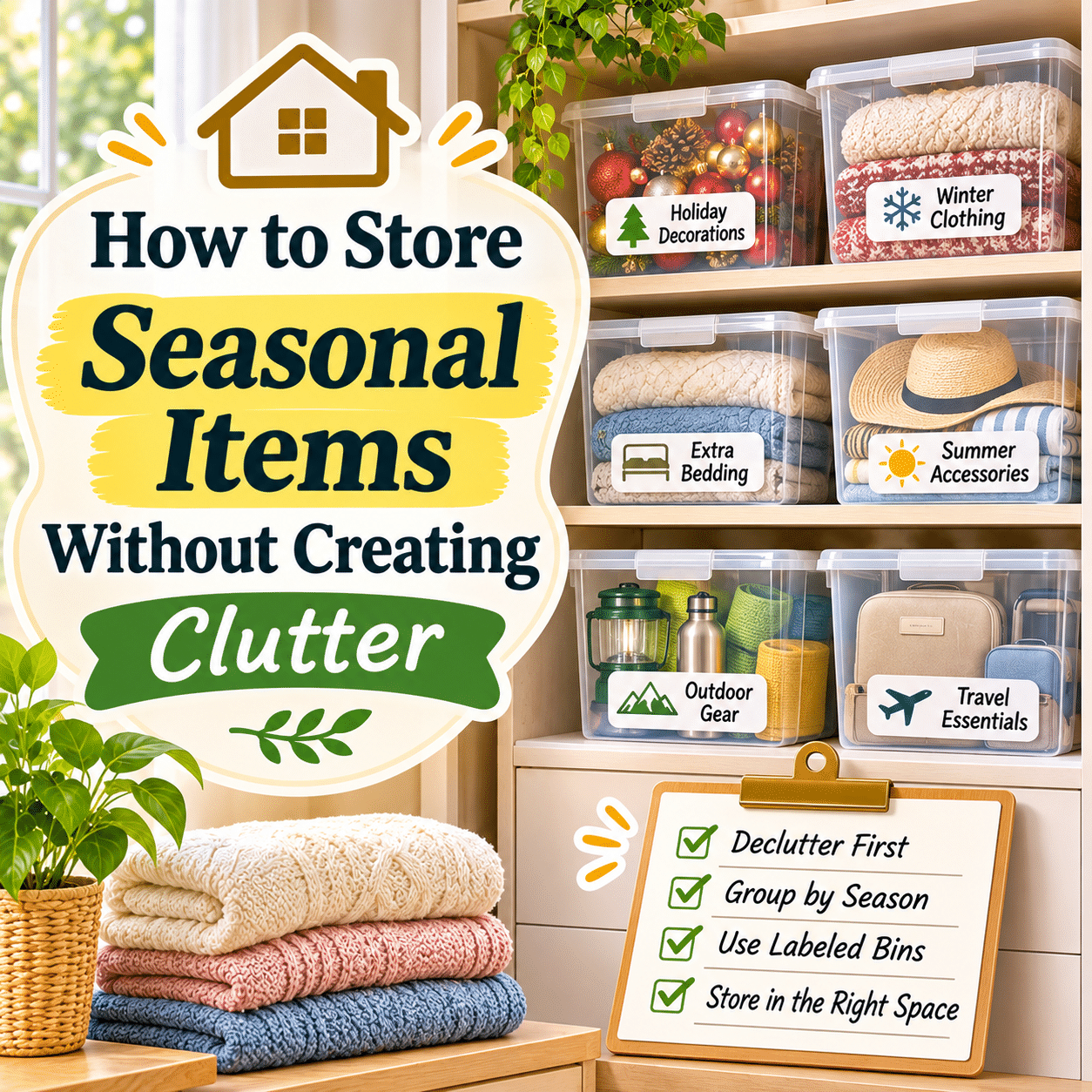
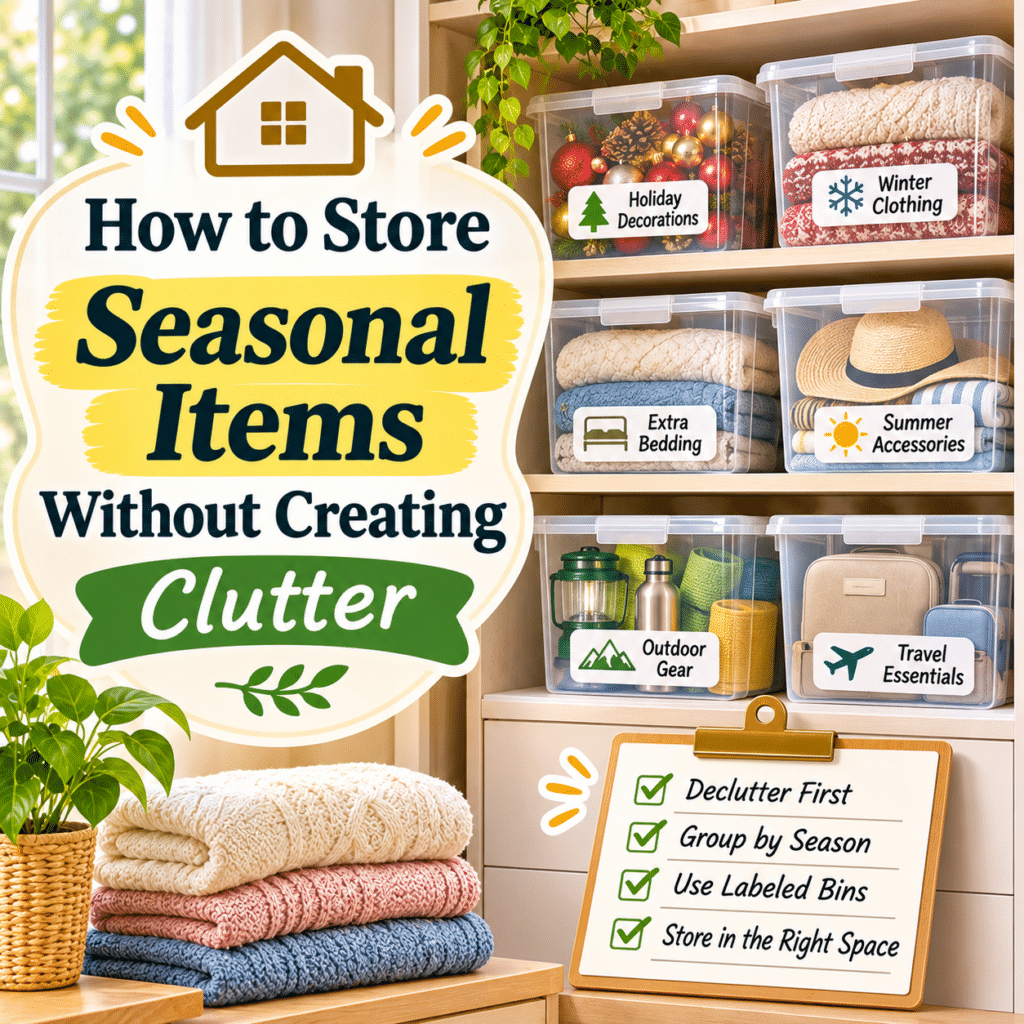
Every home contains belongings that are useful only during certain times of the year. Holiday decorations, seasonal clothing, extra bedding, outdoor accessories, travel equipment, and special-occasion household items may serve important purposes, but they can also occupy valuable storage space when they are not in use.
Without a clear storage system, these belongings gradually accumulate in closets, cabinets, spare rooms, and forgotten corners. Boxes become difficult to identify, delicate decorations get damaged, and items that should be easy to retrieve become buried beneath unrelated possessions.
The challenge is not simply finding enough space. It is creating a practical system that keeps seasonal belongings protected, organized, and accessible without allowing them to interfere with everyday living.
Effective seasonal storage begins with thoughtful decisions about what deserves to be kept. It also requires choosing appropriate containers, grouping related belongings, protecting materials from environmental damage, and establishing a routine for putting items away and bringing them back into use.
Whether you live in a compact apartment, a family home, or a larger property with dedicated storage areas, you can create an efficient seasonal storage system without purchasing expensive equipment or filling every available corner.
This guide explores practical ways to store seasonal items, reduce unnecessary clutter, protect important belongings, and maintain an organized home throughout the year.
1. Understand Why Seasonal Items Create Clutter
Seasonal belongings present a unique organization challenge because they are often necessary but rarely used.
Unlike everyday clothing, kitchen utensils, or personal care products, seasonal items may remain untouched for several months.
During that time, they still require physical storage space.
Common seasonal belongings include:
- Holiday decorations and ornaments.
- Seasonal clothing and footwear.
- Extra blankets and bedding.
- Outdoor cushions and accessories.
- Picnic and recreational equipment.
- Travel accessories.
- Seasonal table decorations.
- Special-occasion serving dishes.
- Gardening supplies.
- Weather-related household equipment.
These items can create clutter when they are stored without categories, mixed with everyday essentials, or retained long after they are no longer useful.
The goal is not to eliminate seasonal belongings.
It is to give them appropriate storage locations that support both their occasional use and your everyday need for accessible space.
2. Define What Counts as a Seasonal Item
Before organizing storage, distinguish genuinely seasonal belongings from items that are simply rarely used.
A seasonal item is generally associated with a particular time of year, weather condition, holiday, or recurring activity.
For example, winter coats may be seasonal in one climate, while rain gear may be used throughout much of the year in another.
Holiday decorations are seasonal because they are displayed during specific occasions.
Camping equipment may be seasonal for households that participate in outdoor activities during certain months.
However, an unused appliance or forgotten decorative object is not necessarily seasonal simply because it has been stored for a long time.
Making this distinction helps prevent seasonal storage from becoming a general holding area for unnecessary possessions.
3. Evaluate Your Seasonal Storage Needs
Begin by examining the belongings you currently store between seasons.
Walk through closets, cabinets, under-bed spaces, storage rooms, and other areas where occasional-use items accumulate.
Consider:
- Which seasonal items do I actually use?
- How often are they brought out?
- Which categories occupy the most space?
- Are any belongings damaged or incomplete?
- Do I own unnecessary duplicates?
- Are frequently used seasonal items difficult to retrieve?
- Which storage locations are already overcrowded?
- Are stored belongings exposed to moisture, dust, heat, or pests?
These questions help identify the main problems before you begin purchasing containers or rearranging furniture.
A clear understanding of your storage needs is more useful than simply adding more boxes.
4. Create an Inventory of Seasonal Belongings
An inventory helps you understand what you own and where it is stored.
You do not need a complicated tracking system.
A notebook, spreadsheet, or simple checklist may be sufficient.
Group belongings by season, occasion, or purpose.
| Category | Examples | Possible Storage Location |
|---|---|---|
| Holiday decorations | Ornaments, decorative lights, wreaths | Labeled storage boxes |
| Seasonal clothing | Coats, sweaters, rainwear | Closet shelves or suitable containers |
| Seasonal bedding | Blankets, quilts, spare covers | Linen closet or under-bed storage |
| Outdoor accessories | Picnic supplies, cushions, outdoor textiles | Dry utility storage |
| Travel equipment | Packing accessories, travel bags | Closet or designated luggage area |
| Gardening supplies | Small tools, seasonal accessories | Suitable utility storage |
| Special-occasion dining | Serving dishes, table linens | Protected cabinet storage |
An inventory can also reveal categories that have grown beyond what you realistically need.
Update it whenever belongings are added, donated, or discarded.
5. Declutter Before Putting Seasonal Items Away
One of the most important seasonal storage principles is to avoid storing belongings that no longer serve a useful purpose.
Before packing anything, evaluate its condition and relevance.
Ask yourself:
- Did I use this during the most recent season?
- Is it still functional?
- Does it fit my current needs?
- Is it worth repairing?
- Do I already own something similar?
- Would I realistically use it next season?
- Does it have meaningful personal value?
Not every seasonal item must be used annually to deserve storage.
Sentimental decorations, specialized equipment, and important occasion-related belongings may remain valuable despite infrequent use.
However, broken decorations, worn-out accessories, and unnecessary duplicates can gradually consume significant space.
Make deliberate decisions before returning them to storage.
6. Sort Seasonal Belongings Into Clear Categories
A simple sorting system helps prevent unnecessary items from returning to storage.
Use the following categories:
| Category | Meaning | Recommended Action |
|---|---|---|
| Keep | Useful or meaningful seasonal belongings | Clean and store appropriately |
| Repair | Items worth fixing | Arrange repair before the next season |
| Donate | Usable items no longer needed | Give to an appropriate recipient |
| Sell | Items with realistic resale value | List within a reasonable timeframe |
| Recycle | Materials accepted by local services | Follow local recycling requirements |
| Discard | Unusable items without suitable recovery options | Dispose of responsibly |
Keep the repair category limited to items you genuinely intend to fix.
Otherwise, damaged belongings may remain in storage indefinitely.
7. Choose a Dedicated Seasonal Storage Area
Seasonal items are easier to manage when they have clearly designated storage locations.
Possible areas include:
- Upper closet shelves.
- Under-bed storage.
- Linen closets.
- Built-in cabinets.
- Storage benches.
- Utility closets.
- Spare-room cabinets.
- Suitable garage shelving.
- Dedicated storage rooms.
The best location depends on available space, environmental conditions, and the types of belongings being stored.
Avoid spreading one category across several unrelated locations unless necessary.
For example, keeping all holiday ornaments together makes seasonal decorating and cleanup more convenient.
A dedicated storage area does not need to be large.
It simply needs to be organized and appropriate for its contents.
8. Consider Temperature, Humidity, and Ventilation
Storage conditions can affect the lifespan of seasonal belongings.
Excessive moisture may encourage mold growth, corrosion, odors, and material deterioration.
High temperatures may damage certain plastics, adhesives, fabrics, and electronic components.
Direct sunlight can fade colors and weaken some materials.
When selecting a storage location, consider:
- Temperature fluctuations.
- Humidity levels.
- Exposure to sunlight.
- Air circulation.
- Potential water leaks.
- Pest activity.
- Dust accumulation.
Climate-sensitive belongings may require storage inside conditioned living areas rather than garages, attics, or outdoor sheds.
In humid environments, pay particular attention to drying items thoroughly before packing them.
A storage container cannot reliably protect belongings from an unresolved moisture problem.
9. Select Storage Containers Based on Their Contents
Different seasonal belongings require different types of storage.
Plastic containers, fabric bags, cardboard boxes, and protective garment covers each have advantages and limitations.
| Storage Type | Suitable Uses | Important Considerations |
|---|---|---|
| Rigid plastic bins | Many decorations and household accessories | Choose appropriate size and lid fit |
| Fabric storage bags | Suitable clothing and soft furnishings | Consider breathability and moisture exposure |
| Cardboard boxes | Dry, stable indoor storage for appropriate items | More vulnerable to moisture and pests |
| Garment bags | Hanging formalwear and delicate clothing | Select material appropriate for the fabric |
| Compartment organizers | Fragile ornaments and small decorations | Prevent movement and contact |
| Under-bed containers | Lightweight seasonal clothing and linens | Check clearance and accessibility |
| Protective cases | Specialized equipment and delicate objects | Match protection to the item |
Avoid choosing containers based only on appearance.
Consider durability, accessibility, material compatibility, and how frequently you will need the contents.
10. Use Clear Containers When Visibility Matters
Transparent storage bins can make seasonal organization easier.
They allow you to identify general contents without opening every box.
This is particularly helpful when several containers are stored together.
Clear bins may work well for:
- Holiday decorations.
- Seasonal household accessories.
- Picnic supplies.
- Selected craft materials.
- Non-delicate outdoor accessories.
However, transparent containers are not essential.
Opaque boxes can work equally well when labeled clearly.
For light-sensitive materials, opaque storage may be preferable.
Choose the approach that provides appropriate protection and convenient identification.
11. Label Every Seasonal Storage Container
Labels are one of the simplest ways to prevent seasonal clutter.
A box labeled only “Storage” provides little useful information.
Instead, use specific descriptions.
Examples include:
- Holiday Tree Ornaments.
- Decorative String Lights.
- Winter Scarves and Gloves.
- Spare Lightweight Blankets.
- Summer Picnic Accessories.
- Seasonal Table Linens.
- Outdoor Cushion Covers.
- Travel Packing Accessories.
If a category requires several boxes, number them.
For example:
Holiday Decorations — Box 1 of 3
This makes it easier to locate missing containers and keep related belongings together.
Labels should be readable from the side that faces outward during storage.
12. Create a Simple Seasonal Storage Inventory
When several containers are involved, an inventory can save time.
Record the container label, main contents, and storage location.
For example:
| Container | Contents | Location |
|---|---|---|
| Holiday 01 | Tree ornaments and decorative accessories | Upper closet shelf |
| Holiday 02 | String lights and wreath accessories | Storage cabinet |
| Clothing 01 | Winter sweaters and scarves | Under-bed storage |
| Bedding 01 | Extra blankets and seasonal covers | Linen closet |
| Outdoor 01 | Picnic accessories and outdoor textiles | Utility cabinet |
You can keep this information in a spreadsheet or notebook.
Avoid making the inventory more detailed than necessary.
Its purpose is to help you find belongings quickly.
13. Store Seasonal Clothing Properly
Clothing often occupies a large portion of seasonal storage space.
Before packing garments, inspect them for stains, damage, and wear.
Wash or clean clothing according to its care instructions.
Allow everything to dry completely.
Group garments by category.
For example:
- Sweaters and knitwear.
- Jackets and coats.
- Seasonal trousers.
- Scarves and gloves.
- Special-occasion clothing.
- Weather-specific accessories.
Choose folding or hanging methods appropriate for the fabric.
Avoid compressing delicate or structured garments in ways that may damage their shape.
Keep clothing in a clean, suitable environment.
14. Decide What Clothing Should Be Folded or Hung
Not every garment should be stored the same way.
Some clothing benefits from folding, while other items may need hanging support.
| Clothing Type | General Storage Approach |
|---|---|
| Sweaters and heavy knitwear | Fold to help prevent stretching |
| Structured jackets | Use suitable supportive hangers |
| Delicate dresses | Follow fabric and garment care guidance |
| Casual shirts | Fold or hang according to material |
| Scarves | Fold or roll appropriately |
| Seasonal trousers | Fold or hang based on fabric and construction |
| Special-occasion garments | Use appropriate protective storage |
Always follow specific garment care instructions when available.
Avoid assuming that one storage method is suitable for every material.
15. Use Vacuum Storage Bags Selectively
Vacuum storage bags can reduce the volume of certain soft belongings.
They may be useful for suitable blankets, casual textiles, or clothing that tolerates compression.
However, they are not appropriate for every material.
Long-term compression may affect the loft, structure, or appearance of some items.
Delicate fabrics, structured garments, and certain insulated products may require alternative storage.
Vacuum bags also do not solve existing moisture problems.
Only store items that are completely clean and dry.
Follow the storage product’s instructions and consider whether compression is suitable for the specific belongings.
16. Organize Seasonal Shoes and Footwear
Seasonal footwear may include boots, sandals, rain shoes, or activity-specific shoes.
Clean footwear before storage.
Remove dirt, moisture, and debris.
Allow shoes to dry thoroughly.
Store them in a way that protects their shape and materials.
Suitable options may include individual boxes, breathable storage bags, or designated shoe shelves.
Avoid crushing delicate footwear beneath heavy containers.
Keep shoes away from excessive heat and moisture.
If you use certain shoes throughout the year, retain them in accessible everyday storage rather than packing them away.
17. Store Seasonal Bedding and Blankets
Extra blankets, quilts, comforters, and seasonal bed linens can occupy substantial space.
Before storage, clean them according to their care labels.
Ensure that they are completely dry.
Fold or roll suitable items without excessive compression.
Use containers that protect against dust while remaining appropriate for the material.
For bulky bedding, consider dedicated linen shelves or suitable under-bed storage.
Avoid placing heavy bedding containers where they are difficult to retrieve safely.
Group related items together.
For example, store a seasonal duvet cover with its matching pillowcases when practical.
18. Organize Holiday Decorations by Occasion
Holiday decorations are easier to manage when grouped by celebration or occasion.
Avoid mixing unrelated decorations in one large container.
Possible categories include:
- Tree ornaments.
- Decorative lights.
- Wreaths and garlands.
- Table decorations.
- Seasonal figurines.
- Decorative textiles.
- Outdoor decorations.
- Gift-wrapping accessories.
Keep sets together when practical.
For example, store matching decorative pieces in the same container.
Label boxes clearly so you can retrieve only what you need for a particular occasion.
19. Protect Fragile Seasonal Decorations
Fragile ornaments and decorative objects require protective storage.
Use suitable dividers, padded compartments, or protective wrapping.
Avoid placing heavy objects on top of delicate pieces.
Separate items that could scratch or damage one another.
Keep glass ornaments in stable containers that prevent movement.
Inspect decorations before packing them.
Repair or discard unsafe damaged items as appropriate.
When storing sentimental decorations, prioritize protection over maximizing storage density.
A carefully packed container may take slightly more space but reduce the risk of damage.
20. Store Decorative String Lights Without Tangling
Seasonal string lights often become tangled when placed loosely in boxes.
Before storage, inspect cords, plugs, and light components for visible damage.
Do not store damaged electrical decorations for future use without appropriate repair or replacement.
Disconnect lights and allow them to cool when applicable.
Wind suitable strings loosely around a designated organizer or appropriate support.
Avoid tight bends that may damage wiring.
Store lights in a dry location and keep related accessories together.
Label the container according to the decoration or location where the lights are used.
This can simplify future setup.
21. Store Seasonal Tableware and Dining Accessories
Special-occasion serving dishes, decorative plates, tablecloths, and napkins may be used only occasionally.
Group them according to purpose or event.
Protect fragile dishes from contact and unstable stacking.
Store heavy tableware on strong, accessible shelves.
Clean and dry textiles before packing them.
Fold suitable table linens carefully and protect them from dust.
Avoid placing fragile dishes in high storage locations where retrieval may be unsafe.
If the same serving pieces are used for several occasions, consider storing them in a general entertaining category rather than separating them by holiday.
22. Organize Seasonal Outdoor Equipment
Outdoor belongings may include picnic baskets, portable seating accessories, recreational supplies, and weather-related equipment.
Before storage, remove dirt and moisture.
Inspect items for damage.
Group accessories that are used together.
For example, picnic utensils and reusable picnic textiles can be stored in a dedicated container.
Keep outdoor equipment separate from delicate indoor textiles when appropriate.
Store items according to manufacturer recommendations.
Avoid placing damp equipment in enclosed containers.
23. Store Outdoor Cushions and Textiles
Outdoor cushions, covers, and decorative textiles can deteriorate when stored improperly.
Clean them according to their care instructions.
Allow them to dry completely.
Choose a storage location protected from unnecessary moisture and pest exposure.
Avoid compressing cushions excessively if doing so could affect their shape.
Use breathable or protective storage as appropriate for the material and environment.
Inspect items periodically during long storage periods.
If outdoor cushions are used frequently, consider an accessible storage bench or suitable cabinet rather than distant seasonal storage.
24. Organize Gardening Tools and Seasonal Supplies
Gardening equipment may include hand tools, gloves, watering accessories, plant supports, and seasonal containers.
Clean tools before storage.
Dry metal components thoroughly.
Follow appropriate maintenance recommendations to reduce corrosion.
Keep sharp tools protected and inaccessible to children.
Store fertilizers, pesticides, and other regulated garden chemicals according to their labels and applicable safety requirements.
Do not mix chemicals with household textiles or food-related belongings.
Group gardening accessories in a suitable utility area.
Avoid leaving equipment where it blocks walkways or emergency access.
25. Store Travel and Vacation Accessories
Travel-related belongings often remain unused between trips.
Examples include:
- Packing cubes.
- Luggage accessories.
- Travel organizers.
- Portable toiletry containers.
- Travel pillows.
- Adaptors and charging accessories.
- Reusable travel bags.
Group these items together.
A practical approach is to keep smaller travel accessories inside a designated luggage organizer or suitable container.
However, inspect luggage and accessories before long-term storage.
Ensure that toiletry containers are empty, clean, and dry.
Do not leave batteries or electronic devices in unsuitable storage conditions.
Keep frequently used travel essentials accessible if you travel regularly.
26. Make Use of Under-Bed Storage
The space beneath a bed may provide useful storage in homes with limited closets.
Suitable under-bed containers can hold lightweight seasonal clothing, extra linens, or selected accessories.
Measure the available clearance before purchasing containers.
Choose storage that can be removed without excessive effort.
Protect belongings from dust and moisture.
Avoid blocking ventilation or creating difficulties with cleaning and bed maintenance.
Under-bed storage is most effective when contents are clearly categorized and not needed every day.
27. Use Upper Closet Shelves Carefully
Upper closet shelves are often suitable for occasional-use belongings.
However, accessibility and safety should guide storage decisions.
Store lightweight containers overhead.
Keep heavy or fragile objects on lower, stable shelves.
Avoid overloading shelving systems.
Place labels where they can be read without removing every box.
Do not stack containers so high that they become unstable.
If accessing a shelf requires climbing, use appropriate equipment and avoid unsafe reaching.
Seasonal storage should not create unnecessary injury risks.
28. Organize Seasonal Items in Small Apartments
Small apartments often have limited dedicated storage.
This makes thoughtful selection especially important.
Begin by reducing unnecessary duplicates and reviewing seasonal items before storing them.
Use existing closets, suitable under-bed spaces, and multipurpose furniture where practical.
Choose containers that fit the available dimensions.
Avoid storing seasonal belongings in hallways, entryways, or other areas that should remain clear.
Consider whether certain bulky items are worth keeping when they are rarely used and easily borrowed or rented.
However, account for replacement costs, convenience, and personal needs before removing useful equipment.
The goal is to preserve comfortable living space while retaining meaningful seasonal belongings.
29. Use Multipurpose Furniture for Seasonal Storage
Furniture with built-in storage can help reduce visible clutter.
Examples include:
- Storage benches.
- Beds with drawers.
- Suitable ottomans with storage compartments.
- Cabinets with adjustable shelves.
- Window seating with integrated storage.
These options can be particularly useful in compact homes.
However, purchasing new furniture solely to store unnecessary belongings may not be worthwhile.
Evaluate whether the furniture meets an existing need and fits the room comfortably.
Ensure that storage furniture is stable, accessible, and used according to its design.
30. Avoid Filling Every Available Storage Space
Efficient storage does not mean using every empty corner.
Overfilled closets and cabinets can make belongings difficult to retrieve.
They may also interfere with ventilation, cleaning, and routine maintenance.
Leave enough space to:
- Remove containers safely.
- Access frequently used belongings.
- Inspect storage areas.
- Clean shelves and floors.
- Identify leaks or pest activity.
- Rearrange items when needs change.
A storage area that is completely full may be less functional than one with some available space.
The objective is practical organization rather than maximum storage density.
31. Create a Seasonal Rotation System
A seasonal rotation system helps you manage belongings as they move in and out of everyday use.
At the beginning of a new season, retrieve the items you need.
Review their condition before putting them into use.
At the end of the season, clean, inspect, and organize them before storage.
A simple rotation process includes:
- Retrieve the relevant seasonal category.
- Inspect items for damage or deterioration.
- Select what will be used.
- Review items that are no longer needed.
- Clean belongings before returning them to storage.
- Update container labels or inventories.
- Return boxes to designated locations.
This routine helps prevent seasonal items from becoming scattered throughout the home.
32. Schedule a Seasonal Storage Review
A periodic review keeps storage systems aligned with your current needs.
You may choose to review seasonal belongings when changing decorations, rotating clothing, or preparing for recurring activities.
During each review:
- Check container condition.
- Look for moisture or pest problems.
- Inspect delicate belongings.
- Remove unnecessary duplicates.
- Update labels.
- Reconsider items that have not been used.
- Confirm that storage locations remain accessible.
Not every item needs to be unpacked during every review.
Focus on categories that are being rotated or show signs of storage problems.
33. Create a Practical Seasonal Storage Calendar
A simple calendar can help you remember when to rotate and inspect belongings.
| Period | Suggested Activity | Main Purpose |
|---|---|---|
| Beginning of a season | Retrieve relevant clothing and equipment | Prepare for upcoming needs |
| End of a season | Clean and pack items no longer in use | Prevent clutter and deterioration |
| Before a holiday | Inspect decorations and accessories | Identify missing or damaged items |
| After a holiday | Sort and store decorations | Keep related belongings together |
| Periodic storage review | Check containers and storage conditions | Maintain organization |
| Annual inventory review | Reevaluate retained belongings | Reduce unnecessary accumulation |
Adjust this schedule to your climate, traditions, and lifestyle.
In regions with less distinct temperature seasons, organizing by rainy periods, holidays, travel routines, or recurring activities may be more practical.
34. Protect Stored Belongings From Pests
Seasonal storage areas can attract pests when food residue, moisture, or accessible nesting materials are present.
Clean items before packing.
Avoid storing food with clothing, decorations, or household textiles.
Inspect containers and storage locations periodically.
Keep storage areas reasonably clean and dry.
Use appropriate protective containers for vulnerable belongings.
If pest activity is discovered, address the underlying problem rather than simply adding more packaging.
Follow applicable safety guidance when using pest-control products, especially around children and pets.
35. Avoid Moisture and Mold Problems
Moisture is one of the most important considerations for long-term storage.
Packing damp clothing, cushions, or decorations can create conditions that encourage mold growth.
Always dry belongings thoroughly before storing them.
Inspect storage areas for leaks, condensation, or persistent dampness.
Use ventilation or humidity management appropriate to the space.
Do not assume that sealed containers can compensate for wet contents.
If stored items develop visible mold or persistent musty odors, evaluate the cause and follow appropriate cleaning or disposal guidance for the material.
Address structural moisture problems before returning belongings to storage.
36. Store Seasonal Items on a Limited Budget
A practical seasonal storage system does not require expensive matching containers.
Begin with existing boxes, baskets, and storage furniture.
Reuse suitable containers that are clean, dry, and structurally sound.
Create simple labels using paper and tape where appropriate.
Group related items before deciding whether additional organizers are needed.
Use folded textiles or suitable protective materials to cushion appropriate belongings.
Avoid using materials that may transfer ink, moisture, or other contaminants onto delicate objects.
Purchase specialized storage products only when they solve a genuine problem.
37. Avoid Common Seasonal Storage Mistakes
Several habits can make seasonal storage less effective.
1. Packing items without cleaning them.
Dirt and moisture can contribute to deterioration during storage.
2. Keeping unnecessary duplicates.
Review quantities before returning belongings to containers.
3. Using containers that are too large.
Oversized boxes can become heavy and difficult to retrieve.
4. Failing to label boxes.
Unidentified containers make seasonal rotation more time-consuming.
5. Mixing unrelated categories.
Keep belongings grouped according to their purpose.
6. Storing delicate items without protection.
Use appropriate wrapping or compartments.
7. Placing heavy boxes overhead.
Store substantial loads on stable lower shelves.
8. Ignoring humidity and temperature.
Choose storage locations appropriate for the materials.
9. Compressing unsuitable fabrics.
Protect garments and textiles that may lose their shape.
10. Forgetting to review stored belongings.
Periodic checks help identify damage and unnecessary accumulation.
11. Buying too many organizers.
Declutter and measure before purchasing storage products.
12. Allowing seasonal storage to spread into living areas.
Maintain designated locations and clear everyday spaces.
38. Troubleshoot Common Seasonal Storage Problems
| Problem | Possible Cause | Practical Solution |
|---|---|---|
| Boxes are difficult to identify | Labels are missing or vague | Use specific labels and container numbers |
| Seasonal clothing smells musty | Moisture or unsuitable storage conditions | Investigate humidity and ensure items are dry |
| Decorations become damaged | Insufficient protection | Use suitable dividers and protective wrapping |
| Storage shelves are overcrowded | Too many belongings or poor grouping | Declutter and reorganize categories |
| Items are difficult to retrieve | Heavy or frequently used boxes are poorly positioned | Adjust placement according to access needs |
| Clothing loses its shape | Inappropriate folding or compression | Choose fabric-appropriate storage |
| Containers become too heavy | Boxes are oversized or overfilled | Divide contents into smaller containers |
| Seasonal items are forgotten | No inventory exists | Create a simple storage list |
| Pests appear in storage areas | Food residue, moisture, or access points | Clean, inspect, and address the underlying problem |
| Clutter returns after each season | No rotation routine exists | Establish a consistent packing and review process |
39. Build Long-Term Habits That Prevent Seasonal Clutter
Seasonal storage becomes easier when it is supported by simple habits.
Return decorations to their designated containers after use.
Clean seasonal clothing before packing it away.
Keep related accessories together.
Update labels when contents change.
Avoid purchasing unnecessary duplicates simply because existing belongings are difficult to find.
Review storage space before adding new seasonal decorations or equipment.
Remove donation and recycling items promptly.
These habits reduce the likelihood of needing a major storage reorganization every year.
40. Design Seasonal Storage That Adapts to Your Lifestyle
Your seasonal storage needs may change over time.
A household may begin new hobbies, travel more frequently, change holiday traditions, or require different clothing and equipment.
Storage systems should be flexible enough to accommodate these changes.
Use categories that can be updated easily.
Choose containers that suit multiple purposes when practical.
Avoid permanently dedicating large areas to belongings that are no longer relevant.
Review what you keep and why.
An adaptable system allows seasonal belongings to remain useful without taking over your everyday living space.
Step-by-Step Guide: Organize Seasonal Storage From Start to Finish
Use this process to create a practical storage system.
Step 1: Identify Seasonal Categories
List the clothing, decorations, bedding, equipment, and accessories used during particular seasons or occasions.
Step 2: Gather Related Belongings
Bring similar items together so you can understand their total quantity.
Step 3: Evaluate What to Keep
Review usefulness, condition, personal value, and realistic future use.
Step 4: Separate Unwanted Items
Sort belongings for donation, sale, recycling, repair, or disposal.
Step 5: Clean and Dry Everything
Prepare items according to their materials and care requirements.
Step 6: Choose Suitable Storage Locations
Consider available space, temperature, humidity, accessibility, and safety.
Step 7: Select Appropriate Containers
Match containers to the size, weight, and protection requirements of their contents.
Step 8: Group Items by Purpose
Keep related seasonal belongings together.
Step 9: Protect Fragile and Delicate Items
Use suitable wrapping, compartments, or garment protection.
Step 10: Label Every Container
Include clear category names and container numbers when necessary.
Step 11: Create a Basic Inventory
Record the contents and location of each major storage category.
Step 12: Arrange Containers Safely
Keep heavy items low and frequently retrieved belongings accessible.
Step 13: Establish a Rotation Routine
Plan when items will be retrieved, inspected, cleaned, and stored again.
Step 14: Review the System Periodically
Adjust categories and storage arrangements as your household needs change.
Practical Seasonal Storage Checklist
Planning and Decluttering
- Identify all major seasonal categories.
- Gather related belongings together.
- Review items for usefulness and condition.
- Remove unnecessary duplicates.
- Separate belongings for donation, repair, or disposal.
- Identify appropriate storage locations.
Preparing Items for Storage
- Clean seasonal clothing.
- Dry textiles completely.
- Clean outdoor equipment.
- Inspect decorations for damage.
- Check electrical accessories before storage.
- Protect fragile belongings.
- Follow material-specific care instructions.
Packing and Organizing
- Choose suitable storage containers.
- Group items by season or occasion.
- Label containers clearly.
- Number boxes when necessary.
- Create a simple inventory.
- Store heavy containers on lower shelves.
- Keep storage areas accessible and safe.
Long-Term Maintenance
- Review storage conditions periodically.
- Check for moisture or pest activity.
- Update inventories when contents change.
- Rotate seasonal belongings when needed.
- Remove unwanted items promptly.
- Avoid unnecessary duplicate purchases.
- Adjust storage as household needs evolve.
Frequently Asked Questions
1. What is the best way to store seasonal items?
The best approach is to declutter first, group related belongings, clean and dry them, and store them in suitable labeled containers. Choose locations that provide appropriate protection and accessibility.
2. How can I store seasonal items in a small apartment?
Use existing closet shelves, suitable under-bed containers, and practical multipurpose furniture. Prioritize essential belongings and avoid filling hallways or everyday living areas with storage boxes.
3. Should seasonal items be stored in plastic bins or cardboard boxes?
Both can be useful in appropriate conditions. Rigid plastic bins may provide better protection from some environmental exposure, while cardboard can work in clean, dry indoor areas. Choose according to the contents and storage environment.
4. How do I prevent seasonal clothing from smelling musty?
Clean and dry clothing thoroughly before storage. Choose a suitable environment, inspect for moisture problems, and avoid packing damp garments into enclosed containers.
5. Are vacuum storage bags good for seasonal clothing?
They can be useful for certain compressible textiles, but they are not appropriate for every fabric or garment. Avoid compressing items that may lose their shape or insulating properties.
6. How should I organize holiday decorations?
Group decorations by occasion and type. Protect fragile pieces, keep related accessories together, and use clearly labeled containers.
7. What is the best way to store seasonal blankets?
Clean and dry blankets according to their care instructions. Fold them appropriately and use storage that protects against dust and unsuitable moisture conditions without damaging the material.
8. Can I store seasonal belongings in a garage?
Some belongings may be suitable for garage storage, but temperature changes, humidity, pests, and other conditions can damage sensitive materials. Evaluate the environment and the specific items before storing them there.
9. What should I avoid storing in an attic?
Items sensitive to temperature extremes, humidity, or environmental fluctuations may be unsuitable for attic storage. Consider the attic’s actual conditions and follow relevant product or material care guidance.
10. How do I organize seasonal shoes?
Clean and dry footwear before storage. Group shoes by type and use suitable boxes, shelves, or protective containers that help preserve their shape.
11. How can I label seasonal storage boxes effectively?
Use specific category names, such as “Holiday Ornaments” or “Winter Accessories.” Number multiple boxes within the same category and record their locations if necessary.
12. How often should I review seasonal storage?
Review belongings when rotating them into or out of use. Additional periodic checks may be helpful for storage areas exposed to moisture, pests, or temperature changes.
13. How do I prevent seasonal storage from becoming cluttered?
Declutter before packing, keep categories clearly defined, avoid unnecessary duplicates, label containers, and maintain a regular seasonal rotation routine.
14. Do I need expensive storage organizers?
No. Existing boxes, baskets, shelves, and furniture may be sufficient. Purchase specialized organizers only when they provide meaningful protection or improve accessibility.
15. What should I do with seasonal items I no longer use?
Evaluate whether they are suitable for donation, sale, recycling, or responsible disposal. Sentimental or specialized items may deserve additional consideration before making a final decision.
Final Thoughts
Storing seasonal items without creating clutter is about making thoughtful use of the space you already have.
Seasonal belongings can enrich everyday life by supporting celebrations, changing weather conditions, hobbies, travel, and special occasions. However, they should not make your home difficult to organize or interfere with the belongings you use regularly.
A practical storage system begins with evaluating what deserves to be kept. From there, grouping related items, selecting appropriate containers, protecting delicate materials, and labeling storage locations can make seasonal belongings easier to manage.
Environmental conditions also matter. Clean, dry, and suitable storage helps protect clothing, decorations, bedding, and equipment from avoidable deterioration.
The most sustainable approach includes regular seasonal rotation and occasional reviews. These habits prevent unnecessary accumulation and help ensure that stored belongings remain relevant to your current lifestyle.
You do not need a large storage room, expensive organizers, or perfectly matching containers to achieve good results. Clear categories, practical placement, and consistent habits can make even limited storage space more functional.
The best seasonal storage system is one that keeps occasional-use belongings protected and easy to find while allowing your everyday living spaces to remain comfortable, organized, and free from unnecessary clutter.