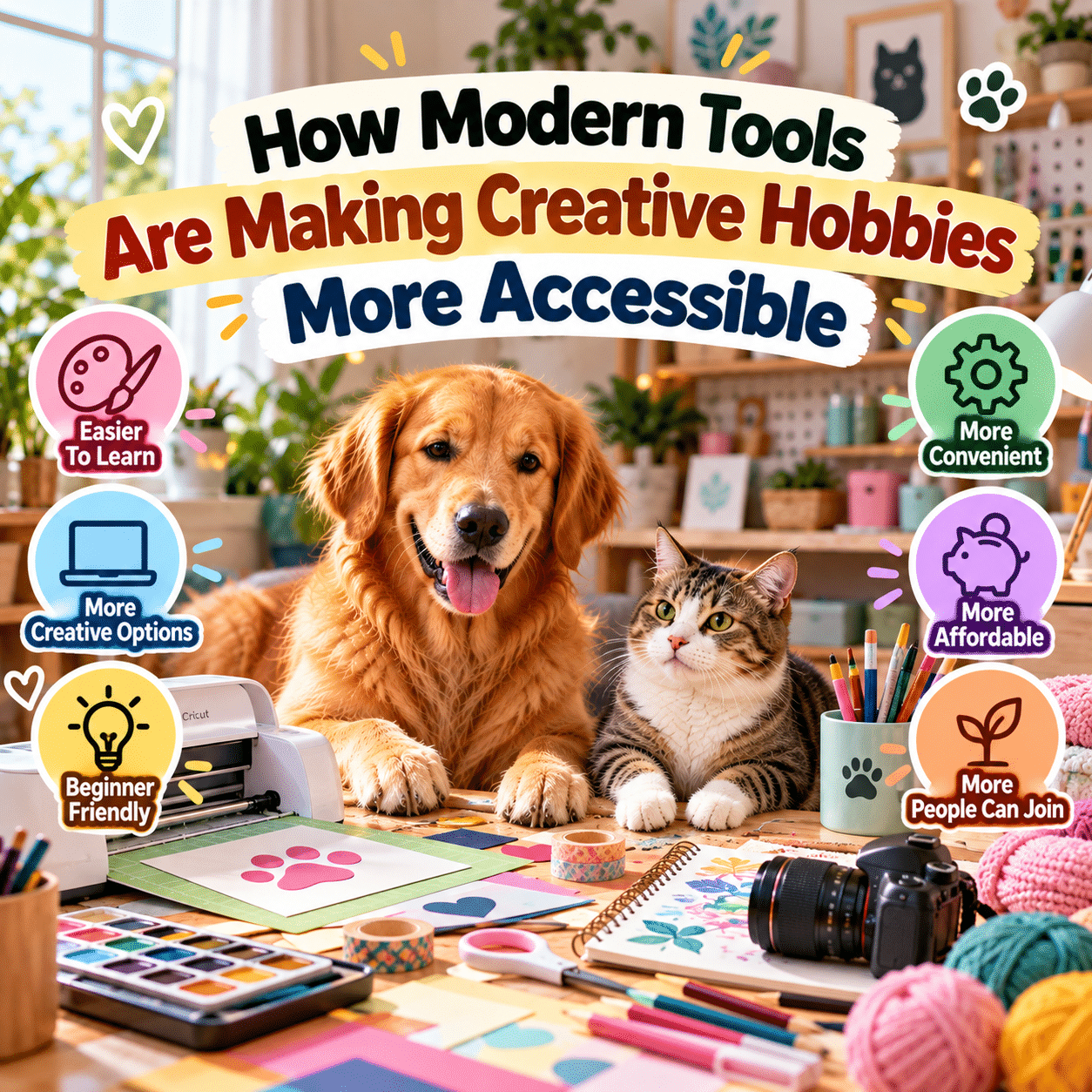
Creative hobbies have long provided opportunities for people to explore ideas, develop practical skills, and enjoy the satisfaction of making something with their own hands. From drawing and painting to sewing, photography, pottery, paper crafting, and digital design, creative activities offer ways to express individuality while learning through experimentation.
However, getting started has not always been easy.
Traditional creative hobbies can involve specialized equipment, unfamiliar techniques, dedicated workspaces, and significant investments of time. Beginners may feel overwhelmed by the number of materials available or uncertain about which skills they need to learn first.
Modern creative tools are helping reduce some of these barriers.
Beginner-friendly drawing tablets, compact cutting machines, digital design applications, portable sewing equipment, modular craft kits, and accessible learning resources are changing how people approach creative activities.
Many tools now emphasize intuitive controls, guided workflows, reusable templates, and flexible learning experiences. These developments can make it easier to experiment without requiring extensive technical knowledge from the beginning.
A person interested in illustration can explore digital drawing without purchasing a large collection of physical supplies. Someone curious about sewing can begin with simple projects using an entry-level machine. A hobbyist interested in personalized decorations can combine digital templates with paper crafting or cutting tools.
These possibilities are particularly relevant to modern households, where available space, budgets, and schedules may be limited.
Yet accessibility does not mean that creative work has become effortless.
Tools can simplify preparation, improve precision, and make certain techniques easier to learn, but creativity still involves practice, patience, decision-making, and personal expression.
The most meaningful change is that more people can explore creative interests at a pace that suits their circumstances.
This guide examines how modern tools are making creative hobbies more accessible, the technologies and design improvements behind this shift, and how beginners can build rewarding creative routines without unnecessary complexity or expense.
1. What Does Accessibility Mean in Creative Hobbies?
Accessibility in creative hobbies involves more than making equipment affordable.
It also means reducing practical obstacles that prevent people from participating.
These obstacles may involve cost, space, physical ability, time, technical knowledge, or access to instruction.
Financial Accessibility
Some hobbies require expensive equipment or recurring purchases of materials.
Modern entry-level tools and reusable supplies can reduce initial costs in selected activities.
For example, digital illustration software may provide an alternative to purchasing many different drawing materials.
However, digital equipment also has costs, including hardware, software subscriptions, repairs, and replacement accessories.
Financial accessibility depends on the complete cost of participation rather than the advertised price of a single product.
Learning Accessibility
Beginners may struggle when instructions assume prior experience.
Tools with clear controls, guided tutorials, and simple project workflows can make learning more approachable.
Accessible instruction allows people to understand not only what to do but why a technique works.
Physical Accessibility
Creative tools may include ergonomic handles, adjustable work surfaces, larger controls, or features that reduce repetitive manual effort.
These improvements can support some users with limited grip strength, mobility challenges, or other physical needs.
However, accessibility requirements vary between individuals.
A product described as ergonomic is not automatically suitable for everyone.
Space Accessibility
Not every household has a dedicated craft room or workshop.
Compact tools, foldable equipment, and organized storage systems can help people pursue hobbies in smaller spaces.
Time Accessibility
Modern tools may simplify repetitive tasks and preparation.
This can make creative activities easier to fit into busy schedules.
The goal is not necessarily to finish projects as quickly as possible, but to make participation more practical.
2. Why Creative Hobbies Matter in Everyday Life
Creative hobbies provide opportunities to engage with materials, ideas, and personal interests.
They can also offer a different experience from routine work and household responsibilities.
Encouraging Personal Expression
Creative activities allow people to make individual choices about color, form, texture, composition, and design.
A painting, handmade notebook, embroidered pattern, or digital illustration can reflect personal preferences.
The value of the activity does not depend entirely on the quality of the finished result.
Developing Practical Skills
Many hobbies involve transferable skills.
Sewing can introduce measurement and construction techniques.
Drawing encourages observation and visual decision-making.
Woodworking involves planning, material selection, and tool handling.
Digital design can develop familiarity with visual communication and software workflows.
Providing Opportunities for Focus
Creative activities often require attention to a particular task.
Some people find this engaging and enjoyable.
However, creative hobbies should not be presented as guaranteed treatments for stress, anxiety, or other health conditions.
Individual experiences vary.
Supporting Lifelong Learning
Creative skills can develop gradually over many years.
A beginner may start with simple exercises and later explore more advanced techniques.
Modern tools can support this progression by offering different levels of complexity.
Making Everyday Objects More Personal
Creative hobbies can also produce practical items.
Examples include handmade greeting cards, repaired clothing, decorated storage containers, personalized gifts, and household textiles.
These projects combine creativity with everyday usefulness.
3. How Beginner-Friendly Design Is Changing Creative Tools
One of the most important developments in creative equipment is the emphasis on usability.
Older or professional-grade tools may offer extensive control but require significant technical knowledge.
Beginner-focused products often simplify the initial experience.
Clearer Controls
Modern equipment may use labeled buttons, simplified menus, or visual indicators.
These features can make basic functions easier to identify.
For example, a beginner sewing machine may provide clearly marked stitch selections.
A digital drawing application may organize frequently used tools in an accessible interface.
Guided Setup
Some products include step-by-step setup instructions, instructional videos, or interactive tutorials.
These resources can reduce uncertainty during the first project.
Preset Functions
Presets allow users to begin with established settings.
A cutting machine may provide suggested settings for common materials.
A camera may offer automatic exposure controls.
A digital painting application may include ready-made brush presets.
Presets can provide a starting point, but users should gradually learn how settings affect results.
Error Prevention
Certain tools include features intended to reduce mistakes.
Examples include alignment guides, measurement markings, automatic stopping mechanisms, and software warnings.
These features can be useful, although they do not eliminate the need for careful operation.
Gradual Skill Development
The most effective beginner-friendly tools provide room to grow.
A product should make basic tasks approachable without preventing users from learning more advanced techniques later.
4. Digital Drawing Tools Are Expanding Access to Illustration
Digital illustration is one of the clearest examples of technology changing creative participation.
Traditional drawing remains valuable, but digital tools provide additional possibilities.
Drawing Tablets
Drawing tablets allow users to create images using a stylus.
Some connect to computers, while others include integrated displays.
They may support pressure sensitivity, customizable controls, and digital brush effects.
These features can help users explore different visual techniques.
Tablet-Based Illustration
General-purpose tablets with compatible styluses can also support drawing applications.
This allows some users to combine creative work with equipment they already own.
Layers and Undo Functions
Digital applications commonly provide layers and undo commands.
Layers allow different parts of an illustration to be edited separately.
Undo functions make experimentation less permanent.
For beginners, these features can reduce the consequences of certain mistakes.
Digital Brushes
Software may simulate pencils, ink pens, watercolor, charcoal, and other materials.
These effects offer creative flexibility.
However, digital simulations do not reproduce every physical characteristic of traditional media.
Learning Opportunities
Digital illustration tools can support activities such as:
- Sketching.
- Character design.
- Pattern creation.
- Digital lettering.
- Simple animation.
- Graphic composition.
- Visual journaling.
A beginner can start with basic shapes and gradually develop more complex work.
5. Traditional Drawing and Painting Tools Are Becoming More Approachable
Not every innovation in creative hobbies involves electronics.
Physical art supplies have also evolved.
Beginner Art Sets
Coordinated sets can help newcomers obtain compatible materials without selecting every item individually.
A watercolor set, for example, may include paints, brushes, and suitable accessories.
However, the quality of bundled materials varies.
Water-Based Paints
Water-based materials can be convenient for many home projects because cleanup may be simpler than with some solvent-based alternatives.
Acrylics and watercolors are common examples.
Even water-based products require attention to labeling, ventilation, and safe handling.
Portable Sketching Kits
Compact sketchbooks, pencils, and travel palettes make it possible to draw in different locations.
These tools are particularly useful for people who do not have permanent studio space.
Brush Pens and Markers
Brush pens and specialty markers provide different line qualities without requiring separate bottles of ink or traditional brushes.
They can make lettering and illustration more approachable.
Improved Storage
Portable cases and organizers help protect materials and simplify setup.
A well-organized kit can reduce the time needed to begin a creative session.
6. Cutting Machines Are Changing Paper Crafting and Personalization
Electronic cutting machines have expanded the possibilities for home crafting.
These devices can cut selected materials according to digital designs.
How Cutting Machines Work
A user prepares or selects a design using compatible software.
The machine then follows the cutting instructions.
Depending on the model, it may work with materials such as paper, cardstock, adhesive vinyl, or certain fabrics.
Material compatibility and cutting capabilities vary.
Reducing Repetitive Manual Cutting
Cutting machines can help reproduce detailed shapes consistently.
This may be useful for projects involving repeated patterns.
Personalized Projects
Common applications include:
- Greeting cards.
- Decorative labels.
- Paper decorations.
- Scrapbooking elements.
- Gift packaging.
- Selected fabric shapes.
- Personalized household accessories.
Templates for Beginners
Digital templates can make initial projects easier.
Users may begin with a prepared design and later learn to create their own.
Important Limitations
Cutting machines are not automatically inexpensive or simple.
They may require:
- Compatible software.
- Cutting mats.
- Replacement blades.
- Specialized materials.
- Maintenance.
- Sufficient workspace.
Some features may depend on subscriptions or proprietary accessories.
Beginners should consider ongoing costs before purchasing.
7. Modern Sewing Machines Are Making Textile Hobbies Easier to Explore
Sewing combines creativity with practical skills.
Modern sewing equipment offers features that may reduce some technical barriers.
Automatic Needle Threaders
Some machines include mechanisms that help guide thread through the needle.
These features can be convenient for users who find manual threading difficult.
Adjustable Stitch Settings
Many machines allow users to select stitch types and adjust length or width.
Clearly labeled controls can make basic operations easier to understand.
Speed Control
Adjustable speed can help beginners work at a comfortable pace.
This may be particularly useful when practicing straight seams or handling unfamiliar fabrics.
Built-In Stitch Options
Some machines include decorative stitches and buttonhole functions.
These features expand project possibilities.
However, a large number of stitches is not essential for learning basic sewing.
Beginner Sewing Projects
Approachable projects may include:
- Simple tote bags.
- Cushion covers.
- Fabric napkins.
- Basic clothing repairs.
- Drawstring pouches.
- Reusable fabric wraps.
Sewing Still Requires Foundational Skills
Machine features do not eliminate the need to understand fabric behavior, seam allowances, threading, and safe operation.
Beginners benefit from practicing basic techniques before attempting complicated garments.
8. Craft Kits Are Reducing the Difficulty of Getting Started
One of the simplest ways to make a hobby more approachable is to provide the necessary materials in one coordinated package.
Craft kits are designed around this idea.
What Craft Kits Typically Include
Depending on the activity, a kit may contain:
- Basic tools.
- Project materials.
- Templates.
- Instructions.
- Practice components.
- Storage packaging.
Reducing Decision Fatigue
Beginners may not know which materials are compatible.
A carefully assembled kit can simplify the first purchase.
Guided Projects
Many kits focus on completing one specific project.
Examples include embroidery patterns, candle-making activities, paper crafts, or beginner painting exercises.
Learning Through Completion
Finishing a manageable project can help beginners understand the steps involved.
This may encourage further exploration.
Limitations of Kits
Some kits contain low-quality tools or insufficient materials.
Others provide instructions that are difficult to follow.
A kit should be evaluated for clarity, material safety, and suitability rather than packaging alone.
9. How Modern Tools Support Different Creative Hobbies
Different hobbies benefit from different kinds of innovation.
| Creative Hobby | Modern Tools | Accessibility Benefit | Important Consideration |
|---|---|---|---|
| Digital illustration | Drawing tablets and art software | Editable layers and flexible brushes | Hardware and software costs |
| Painting | Portable palettes and beginner sets | Easier setup and material selection | Material quality and safety |
| Sewing | Beginner-friendly machines | Simplified controls and adjustable speed | Practice and maintenance |
| Paper crafting | Electronic cutting machines | Repeatable shapes and templates | Consumables and software requirements |
| Embroidery | Starter kits and pattern tools | Guided learning | Fine motor demands |
| Photography | Digital cameras and editing applications | Immediate image review | Equipment and storage needs |
| Pottery | Compact tools and beginner kits | More approachable hand-building | Workspace and firing requirements |
| Woodworking | Measuring guides and compact tools | Improved precision for selected tasks | Dust, noise, and injury risks |
| Jewelry making | Organized tool kits | Easier material preparation | Small parts and tool safety |
| Creative journaling | Templates and portable supplies | Flexible, low-barrier participation | Ongoing material purchases |
The most appropriate tool depends on the hobby, available resources, and personal goals.
10. Digital Templates Are Making Creative Projects Easier to Begin
Templates provide a structured starting point.
They can be especially useful when a beginner understands the desired result but does not yet know how to construct it.
Design Templates
Digital design applications may provide layouts for cards, posters, labels, and other projects.
Users can modify colors, text, and visual elements.
Sewing Patterns
Patterns help guide fabric cutting and assembly.
Some are available digitally and can be printed or projected using suitable equipment.
Drawing References
Guided drawing exercises and reference grids can help learners practice proportions and composition.
Craft Cutting Files
Cutting-machine users may work with compatible digital files.
These files provide predefined shapes or patterns.
Templates as Learning Tools
Templates can reduce initial complexity, but they should not replace learning entirely.
A useful progression is to begin with a template, understand its structure, and gradually make independent design decisions.
Respecting Intellectual Property
Not every template or design file can be used for commercial projects.
Users should review licensing terms and avoid copying protected work without permission.
11. Online Learning Is Expanding Access to Creative Skills
Tools alone do not make a hobby accessible.
People also need opportunities to learn how to use them.
Online educational resources have changed how creative skills can be developed.
Video Tutorials
Video instruction allows learners to observe techniques repeatedly.
This can be helpful for activities involving hand movements, tool setup, or visual demonstrations.
Step-by-Step Guides
Written tutorials provide structured instructions that can be reviewed at an individual pace.
Online Communities
Creative communities may offer feedback, inspiration, and practical advice.
However, recommendations should be evaluated critically, particularly when they involve safety or expensive equipment.
Self-Paced Learning
People can practice according to their schedules.
A beginner may spend a few minutes learning one technique rather than committing to a long class.
Combining Different Learning Methods
Some learners benefit from combining videos, written instructions, hands-on practice, and occasional in-person guidance.
No single learning method works best for everyone.
12. Compact Creative Tools Are Supporting Small-Space Hobbies
Many people live in apartments or shared households where dedicated creative space is limited.
Compact equipment can make participation more practical.
Foldable Work Surfaces
Portable tables and adjustable surfaces can provide temporary work areas.
They should be stable and suitable for the intended activity.
Portable Tool Storage
Stackable containers, drawer organizers, and carrying cases help keep supplies accessible.
Small-Format Equipment
Compact sewing machines, drawing tablets, and portable craft tools may require less permanent space.
However, smaller equipment may have limitations in power, capacity, or functionality.
Multipurpose Workspaces
A dining table or desk can sometimes serve as a temporary creative workspace.
Protective mats and organized cleanup routines can help preserve the surface.
Managing Mess
Different hobbies produce different waste materials.
Paper scraps, fabric threads, paint residue, and sanding dust require appropriate cleanup.
Activities involving fumes, dust, or hazardous materials may need specialized ventilation or a separate workspace.
13. Ergonomic Tools Are Improving Comfort and Usability
Creative hobbies often involve repeated hand movements, sustained concentration, or long periods in one position.
Ergonomic design can improve usability for some individuals.
Comfortable Handles
Tools with appropriately shaped handles may reduce the effort required for certain tasks.
Examples include scissors, craft knives, brushes, and jewelry-making pliers.
Adjustable Workstations
Adjustable chairs, tables, and drawing stands can help users position materials comfortably.
Lightweight Equipment
Lighter tools may be easier to handle during repeated tasks.
However, weight reduction should not compromise stability.
Larger Controls
Clear labels and accessible controls can benefit users who have difficulty manipulating small buttons.
Taking Breaks
Even well-designed tools cannot eliminate all risks associated with prolonged repetitive activity.
Regular breaks, varied movements, and comfortable working positions remain important.
Persistent pain or numbness should not be ignored.
14. Automation Is Reducing Repetitive Creative Tasks
Automation can help with tasks that require repeated precision.
This may allow hobbyists to focus more attention on design decisions.
Repeated Cutting
Electronic cutting machines can reproduce shapes consistently.
Embroidery Machines
Some embroidery machines can stitch digital patterns automatically.
However, setup, material stabilization, thread selection, and maintenance still require knowledge.
Digital Image Editing
Editing software may automate selected adjustments such as cropping, exposure correction, or background processing.
Pattern Generation
Certain applications can help generate repeated geometric patterns or design variations.
Batch Production
Some tools support the creation of multiple similar items.
This may be useful for gifts, decorations, or small creative projects.
The Limits of Automation
Automated results are not necessarily more creative or higher quality.
A machine can execute instructions, but the user still determines the purpose, design, materials, and final evaluation.
15. Artificial Intelligence and Creative Hobbies
Artificial intelligence is becoming part of some creative software and digital workflows.
Its role requires thoughtful consideration.
Idea Exploration
AI-assisted tools may help users explore color combinations, layouts, or possible project directions.
Design Assistance
Some applications offer automated selection, background removal, or image adjustment features.
Learning Support
AI-based assistants may explain techniques or help organize project steps.
However, generated instructions can contain errors.
Safety-related guidance should be checked against reliable sources.
Creative Ownership
AI-generated content raises questions about originality, licensing, and ownership.
Rules vary by jurisdiction and platform.
Users should review applicable terms before using generated content commercially.
Maintaining Personal Creativity
AI can assist with preparation and experimentation, but it does not need to replace personal decision-making.
Creative hobbies often derive much of their value from the process of making choices and developing skills.
16. How Modern Tools Can Reduce Material Waste
Creative projects sometimes involve trial and error.
Modern tools may help reduce unnecessary material use in selected situations.
Digital Planning
Digital sketches and layouts allow users to test ideas before using physical materials.
Precision Cutting
Accurate measurements and cutting guides may reduce certain mistakes.
Reusable Templates
Reusable patterns can support repeated projects without recreating the design each time.
Repairable Equipment
Tools with replaceable parts may remain useful longer.
Responsible Material Selection
Some products incorporate recycled or responsibly sourced materials.
However, environmental claims should be evaluated carefully.
Avoiding Unnecessary Equipment
Buying more tools than needed can create waste.
A durable, versatile tool that is used regularly may offer better long-term value than several rarely used devices.
17. The Economics of Creative Hobbies
Creative hobbies can be inexpensive or costly depending on the activity and equipment.
Modern tools offer new choices, but they can also encourage unnecessary spending.
Initial Investment
Some hobbies require little more than paper and pencils.
Others involve machines, software, or specialized materials.
Recurring Costs
Common ongoing expenses include:
- Paper.
- Fabric.
- Paint.
- Thread.
- Cutting blades.
- Replacement mats.
- Printer supplies.
- Software subscriptions.
- Maintenance.
Cost Per Project
A useful way to evaluate equipment is to consider how frequently it will be used.
An expensive machine used regularly may offer practical value.
The same machine may be unnecessary for someone who completes only occasional projects.
Borrowing and Shared Equipment
Community workshops, libraries, schools, and maker spaces may provide access to equipment in some locations.
Availability and usage rules vary.
Starting With Basic Tools
Beginners often benefit from starting with a small set of reliable materials.
Additional equipment can be purchased after interests and needs become clearer.
18. Choosing Between Manual and Digital Creative Tools
Manual and digital tools offer different experiences.
Neither is universally superior.
| Consideration | Manual Tools | Digital Tools |
|---|---|---|
| Physical experience | Direct interaction with materials | Interaction through software and devices |
| Setup | Often simple for basic projects | May require hardware and software |
| Editing | Changes may be difficult to reverse | Undo and layers are often available |
| Portability | Depends on materials | Can be compact with suitable hardware |
| Recurring costs | Physical supplies | Software, hardware, and accessories |
| Storage | Requires physical space | Requires digital storage and backups |
| Learning | Material techniques | Software and creative techniques |
| Finished output | Physical object | Digital file or printed product |
| Maintenance | Tool cleaning and replacement | Updates, charging, and repairs |
Many hobbyists combine both approaches.
A design may begin as a pencil sketch, continue in a digital application, and eventually become a physical craft project.
19. How to Choose Your First Creative Hobby
With so many available tools, choosing where to begin can feel overwhelming.
A simple decision process can help.
Step 1: Identify What You Enjoy
Consider whether you prefer:
- Drawing and visual design.
- Working with fabric.
- Building physical objects.
- Decorating everyday items.
- Photography.
- Writing and journaling.
- Making gifts.
- Exploring digital creativity.
Step 2: Consider Available Space
Some activities require little space.
Others involve equipment, drying areas, or specialized safety arrangements.
Step 3: Establish a Comfortable Budget
Include both initial and recurring costs.
Step 4: Choose a Manageable First Project
Select something that can be completed with basic tools.
Step 5: Learn Essential Safety Practices
Understand the materials and equipment before beginning.
Step 6: Evaluate the Experience
After completing a project, consider which parts were enjoyable.
The process can guide future decisions.
20. Building a Beginner Creative Toolkit
A useful toolkit does not need to be extensive.
The goal is to support a few achievable projects.
Drawing and Sketching Toolkit
A basic setup may include:
- Sketchbook.
- Pencils.
- Eraser.
- Sharpener.
- Optional fine-line pens.
- Storage pouch.
Beginner Painting Toolkit
Possible essentials include:
- Suitable paints.
- Brushes.
- Appropriate paper or painting surface.
- Palette.
- Water container when applicable.
- Protective covering.
Basic Sewing Toolkit
A simple setup may include:
- Fabric scissors.
- Measuring tape.
- Pins or clips.
- Needles.
- Thread.
- Seam ripper.
- Suitable fabric.
A sewing machine can be added when needed.
Paper Crafting Toolkit
Possible supplies include:
- Cardstock.
- Scissors.
- Ruler.
- Adhesive.
- Cutting mat.
- Decorative materials.
Digital Art Toolkit
A beginner may use:
- Compatible tablet or computer.
- Suitable drawing software.
- Stylus when needed.
- Digital file storage.
- Backup system.
The most useful toolkit is one that matches actual projects rather than an imagined future collection of hobbies.
21. Practical Beginner Projects Across Creative Hobbies
Starting with a manageable project helps turn interest into experience.
Project 1: A Handmade Greeting Card
Skills practiced: Layout, color selection, cutting, and composition.
Use cardstock and simple decorative materials.
Begin with a basic design and add personal details.
Project 2: A Simple Fabric Pouch
Skills practiced: Measuring, cutting, and basic stitching.
Choose a straightforward pattern.
Beginners can sew by hand or use a suitable machine.
Project 3: A Digital Illustration
Skills practiced: Shapes, layers, and color.
Create a simple illustration using basic digital brushes.
Focus on understanding the tools rather than producing a complex image.
Project 4: A Decorative Storage Label
Skills practiced: Typography, layout, and organization.
Create a label using paper crafting or compatible digital tools.
Project 5: A Nature Sketchbook Page
Skills practiced: Observation, line drawing, and shading.
Draw a plant, leaf, or everyday object.
Project 6: A Personalized Bookmark
Skills practiced: Composition, cutting, and finishing.
Use paper, markers, or digital design tools.
Project 7: A Repaired Household Textile
Skills practiced: Basic mending and material handling.
Practice on an item that can be repaired safely.
These projects demonstrate that creative participation does not require advanced equipment.
22. Common Mistakes Beginners Make With Creative Tools
Buying Too Much Equipment
A large collection of tools can create clutter and unnecessary expense.
Begin with essentials.
Choosing Tools That Are Too Advanced
Professional equipment may include features that are difficult for beginners to understand.
Choose tools that match current skills.
Expecting Immediate Results
Creative skills develop through practice.
Early projects may be imperfect.
Ignoring Material Compatibility
Not every tool works with every material.
Check manufacturer guidance.
Overlooking Safety
Cutting tools, heated equipment, electrical devices, paints, and adhesives may present hazards.
Depending Entirely on Templates
Templates are useful starting points, but independent experimentation supports skill development.
Comparing Progress With Experts
Experienced creators may have years of practice.
A beginner’s work should be evaluated in the context of learning.
Treating Every Hobby as a Business Opportunity
Creative hobbies do not need to generate income.
Enjoyment, learning, and personal satisfaction are valid goals.
23. Making Creative Hobbies Part of Everyday Life
Modern tools can make hobbies easier to begin, but maintaining a creative routine requires practical planning.
Create a Small Dedicated Space
A permanent studio is not necessary.
A tidy desk or portable supply box may be enough.
Keep Essential Tools Accessible
Complicated setup can discourage spontaneous participation.
Organized materials reduce preparation time.
Choose Realistic Projects
Small projects can fit into busy schedules.
Allow Time for Experimentation
Not every creative session needs to produce a finished object.
Practice and exploration are valuable.
Rotate Activities When Useful
Some people enjoy focusing on one hobby.
Others prefer alternating between different activities.
Maintain Equipment
Cleaning and storing tools correctly can improve their lifespan and usability.
Respect Personal Preferences
A hobby should fit the individual rather than follow popular expectations.
24. Creative Hobbies Across Different Ages and Abilities
Creative participation can be adapted to different life stages and circumstances.
Children
Age-appropriate creative activities may support exploration and skill development.
Materials should be selected with attention to choking hazards, sharp tools, chemicals, and supervision requirements.
Teenagers
Creative hobbies can provide opportunities to explore personal interests and develop practical skills.
Digital and traditional tools may both be useful.
Adults
Adults may pursue hobbies for enjoyment, learning, or practical projects.
Flexible equipment can help accommodate work and household schedules.
Older Adults
Some older adults may prefer tools with comfortable handles, clear controls, or reduced physical demands.
Individual abilities and preferences vary.
People With Disabilities
Adaptive tools, accessible software, and modified workspaces can support participation.
However, no single design meets every accessibility need.
The best solutions are individualized.
25. The Role of Creative Communities and Shared Learning
Creative hobbies often become more engaging when people exchange ideas.
Sharing Techniques
Communities can introduce new methods and practical solutions.
Constructive Feedback
Thoughtful feedback may help learners identify areas for improvement.
Collaborative Projects
Group projects can combine different skills.
Access to Equipment
Shared workshops may provide opportunities to try specialized tools before purchasing.
Finding Inspiration
Seeing different approaches can encourage experimentation.
Avoiding Unhealthy Comparison
Online communities often display polished finished work.
These examples may not reveal the time, mistakes, and practice involved.
Beginners should focus on personal progress rather than constant comparison.
26. Safety Considerations for Modern Creative Equipment
Accessibility should never come at the expense of safety.
Cutting Tools
Craft knives, rotary cutters, and cutting machines can cause injuries.
Use suitable protective surfaces and follow manufacturer instructions.
Heated Equipment
Heat presses, glue guns, and other heated tools can cause burns.
Allow equipment to cool before storage.
Electrical Devices
Inspect cords, plugs, and power supplies.
Avoid using damaged equipment.
Paints and Chemicals
Some materials contain substances that require ventilation, protective equipment, or special disposal.
Follow product labels and safety guidance.
Dust and Particles
Sanding, cutting, and certain craft processes can produce airborne particles.
Appropriate dust control and respiratory protection may be necessary.
Small Components
Beads, needles, blades, and other small items should be stored safely away from children and pets.
Ergonomic Considerations
Take breaks and avoid prolonged uncomfortable positions.
Persistent discomfort may require changes to technique or equipment.
27. Evaluating Creative Tools Before Buying
A structured comparison can help prevent unnecessary purchases.
| Evaluation Factor | Questions to Ask |
|---|---|
| Purpose | What specific projects will this tool support? |
| Skill level | Is it suitable for a beginner? |
| Ease of use | Are controls and instructions clear? |
| Compatibility | Does it work with intended materials? |
| Space | Is there enough room to use and store it? |
| Safety | What hazards and precautions are involved? |
| Maintenance | How much cleaning or servicing is required? |
| Ongoing cost | Are consumables or subscriptions necessary? |
| Durability | Can the tool withstand expected use? |
| Repairability | Are replacement parts available? |
| Accessibility | Does the design meet individual needs? |
| Long-term value | Will it remain useful as skills improve? |
A tool that performs a few essential functions reliably may offer greater value than one with numerous features that are rarely used.
28. The Future of Accessible Creative Hobbies
Creative tools will likely continue evolving as manufacturers and software developers respond to different user needs.
Several developments may influence future participation.
Simpler Interfaces
Equipment may become easier to configure and operate.
Clearer controls can reduce initial learning barriers.
More Flexible Digital Tools
Creative applications may offer improved compatibility across devices and workflows.
Better Adaptive Features
Manufacturers may develop more adjustable controls and accessories for different physical needs.
More Compact Equipment
Portable and modular tools may support creative activities in smaller homes.
Improved Material Efficiency
Precision tools and digital planning may help reduce selected forms of waste.
Greater Integration Between Physical and Digital Creation
Users may move more easily between digital design and physical production.
More Accessible Learning Resources
Instructional materials may become available in more formats, languages, and levels of difficulty.
Responsible Automation
Automated tools may simplify repetitive processes while leaving creative direction to the user.
The most meaningful innovations will be those that expand participation without making creativity unnecessarily expensive or complicated.
29. Frequently Asked Questions
1. How are modern tools making creative hobbies easier for beginners?
Modern tools can simplify setup, provide guided instructions, improve precision, and reduce repetitive tasks.
Features such as digital templates, adjustable controls, and beginner-friendly interfaces may help newcomers learn basic techniques more comfortably.
2. Do I need expensive equipment to start a creative hobby?
No.
Many hobbies can begin with affordable basic supplies.
Drawing, journaling, paper crafting, and simple hand sewing are examples of activities that may require relatively little equipment.
3. Are digital creative tools better than traditional tools?
Neither approach is universally better.
Digital tools offer features such as undo functions, layers, and flexible editing.
Traditional tools provide direct interaction with physical materials.
The best choice depends on personal preferences and project goals.
4. What creative hobbies are suitable for small apartments?
Drawing, digital illustration, embroidery, paper crafting, journaling, and selected sewing projects can often be adapted to small spaces.
Activities involving dust, fumes, noise, or specialized equipment may require additional arrangements.
5. Can beginners use electronic cutting machines?
Yes, many electronic cutting machines offer beginner-oriented features and templates.
However, users still need to learn material compatibility, machine settings, software operation, and safety procedures.
6. How can I avoid spending too much on craft supplies?
Start with a small toolkit, choose manageable projects, and purchase additional materials only when needed.
Consider borrowing equipment or using shared facilities where available.
7. Can AI tools help people learn creative hobbies?
AI tools may assist with brainstorming, planning, and explanations.
However, generated information can be inaccurate, and creative learning still benefits from practice, reliable instruction, and personal experimentation.
Conclusion: Modern Tools Are Opening More Doors to Creativity
Modern creative tools are making it easier for people to explore hobbies that once seemed expensive, complicated, or difficult to fit into everyday life.
Digital drawing applications, beginner-friendly sewing machines, electronic cutting tools, portable art supplies, and coordinated craft kits can reduce some of the practical barriers associated with creative activities.
Online learning resources and accessible design features are expanding these opportunities further.
However, the value of creative tools should not be measured only by technological sophistication.
A simple pencil, a reliable pair of scissors, or a basic sewing kit can be just as meaningful as an advanced digital device when it supports a project someone genuinely enjoys.
The most effective tools make creativity more approachable without removing the satisfaction of learning, experimenting, and developing personal skills.
For beginners, the best starting point is often a small project, a manageable collection of supplies, and the willingness to practice.
For experienced hobbyists, modern equipment can provide new techniques and greater flexibility.
As creative tools continue to evolve, the most important opportunity is not simply producing more objects or completing projects faster.
It is making creative participation possible for more people, in more places, and under a wider range of circumstances.
Creativity does not begin with expensive equipment or advanced skills. It begins with curiosity, and the right tools can make that curiosity easier to explore.