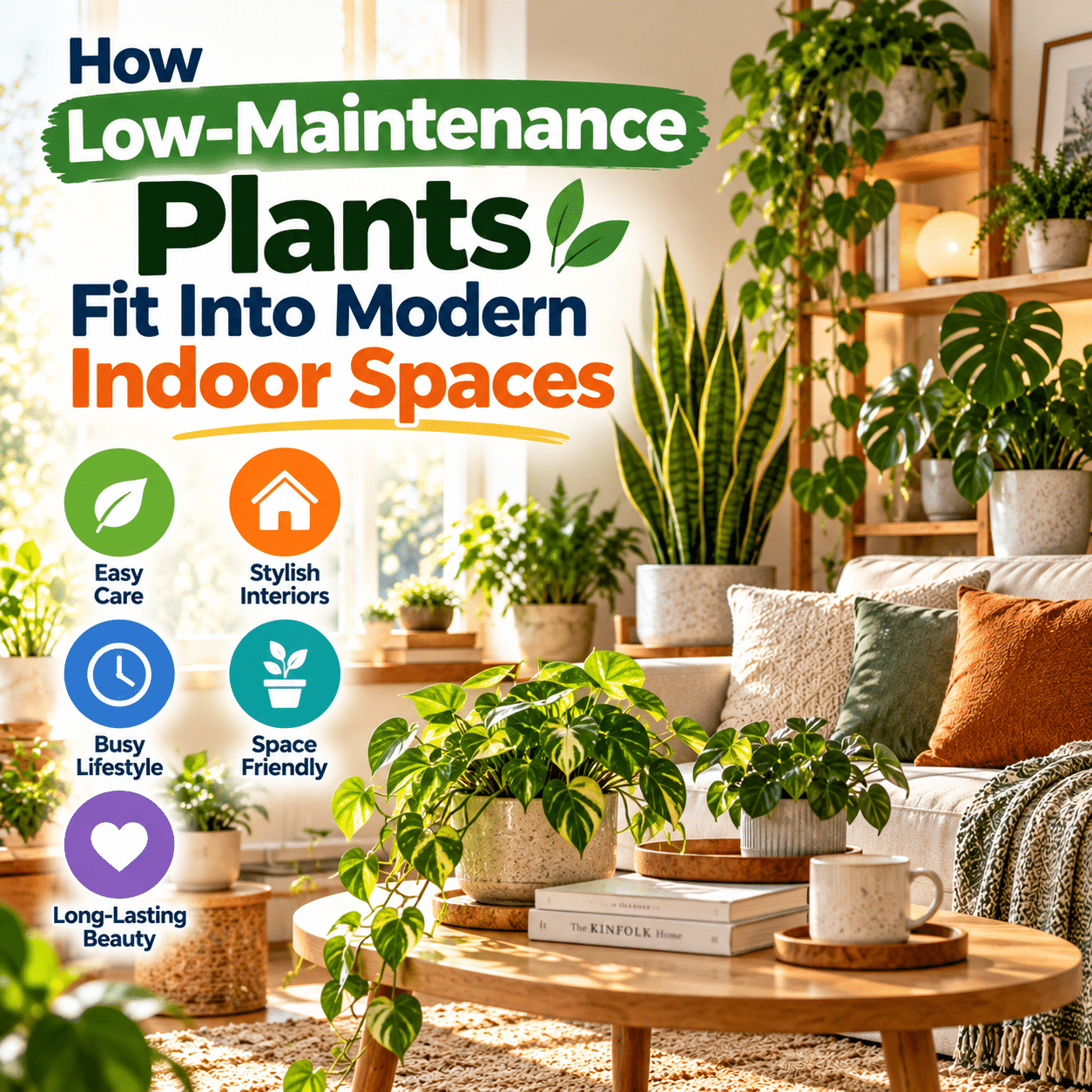
Modern homes are designed to support many different activities. A living room may also serve as a workspace, a bedroom may double as a reading retreat, and a small apartment may need to accommodate cooking, relaxation, storage, and entertainment within a limited footprint.
As living spaces become more flexible, the way people decorate and personalize them is evolving too. Indoor plants have become a natural part of this approach, offering living texture, organic shapes, and a sense of connection with nature.
However, not everyone has the time, experience, or ideal conditions to maintain a demanding collection of houseplants.
This is where low-maintenance indoor plants become particularly appealing.
Plants that tolerate occasional watering delays, adapt to a reasonable range of indoor conditions, or grow slowly can make greenery more accessible to people with busy schedules and compact homes. They can complement contemporary interiors without requiring constant attention or elaborate equipment.
Yet the term low-maintenance is often misunderstood. It does not mean that a plant can survive indefinitely without adequate light, water, or suitable growing conditions. A plant described as easy to care for may still struggle when placed in an environment that does not meet its basic needs.
The real advantage of low-maintenance plants is their ability to fit into everyday routines when chosen thoughtfully.
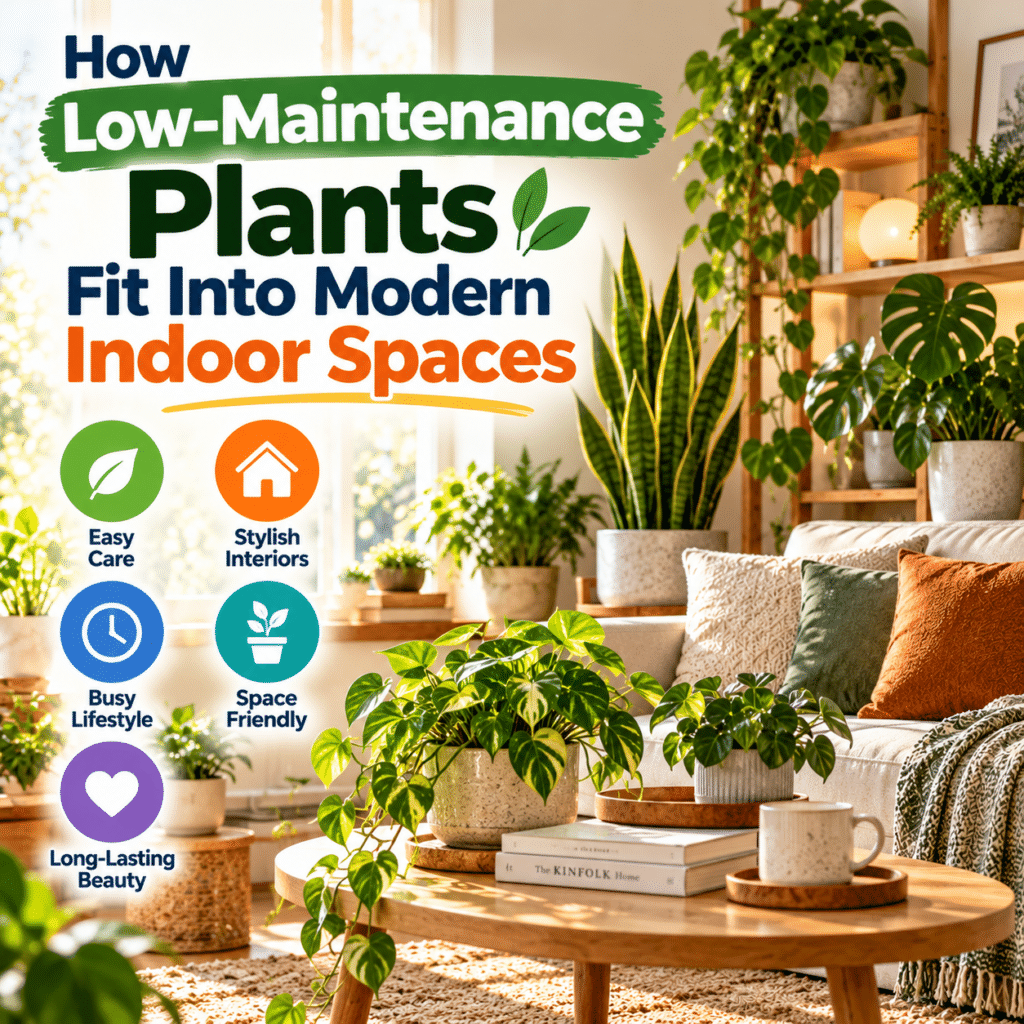
From minimalist living rooms and home offices to bedrooms, kitchens, and small apartments, these plants can become attractive, practical elements of interior design.
This guide explores why low-maintenance plants suit modern living, how to choose appropriate species, where to place them, and how to create indoor greenery that remains enjoyable rather than becoming another household responsibility.
1. What Makes an Indoor Plant Low-Maintenance?
A low-maintenance indoor plant is generally one that can remain healthy with relatively straightforward care when grown under suitable conditions.
These plants may tolerate certain environmental variations better than more demanding species.
Common characteristics include:
- Moderate or infrequent watering requirements.
- Tolerance of a range of suitable indoor light conditions.
- Relatively slow or manageable growth.
- Limited pruning needs.
- Adaptability to ordinary household temperatures.
- Less frequent repotting.
- Straightforward propagation or maintenance.
However, these characteristics vary by species.
A succulent may tolerate dry growing media but require strong light. A tropical foliage plant may tolerate lower light levels while remaining sensitive to prolonged drought.
Therefore, a plant cannot be classified as universally easy-care without considering the environment.
Low-Maintenance Is Relative
A snake plant may be easy to maintain in a bright apartment where its growing medium can dry appropriately between waterings.
The same plant may struggle in a cold, poorly lit location where the potting mix remains wet for long periods.
Similarly, a plant that thrives in a humid home may require additional attention in a very dry environment.
The most useful definition of low-maintenance is simple:
A plant is low-maintenance when its natural requirements align well with the conditions and routines of the household.
This perspective helps gardeners choose plants realistically instead of relying entirely on marketing labels.
2. Why Low-Maintenance Plants Appeal to Modern Households
Modern households often balance work, family responsibilities, personal interests, and limited leisure time.
Indoor greenery can make living spaces feel more inviting, but maintaining numerous demanding plants may not be practical.
Low-maintenance plants offer a middle ground.
They allow people to enjoy natural decorative elements while keeping plant care manageable.
They Fit Busy Schedules
Some plants can tolerate longer intervals between waterings than species requiring consistently moist growing media.
This can be useful for people who cannot inspect every plant daily.
They Work in Different Home Sizes
Compact varieties can fit on shelves and desks, while larger specimens can complement open living areas.
They Support Simple Decorating
A single well-chosen plant can add visual interest without requiring an elaborate arrangement.
They Encourage Gradual Learning
Beginners can develop basic plant-care skills before experimenting with more demanding species.
They Can Remain Attractive for Years
When properly maintained, many common houseplants can become long-term features of a home.
Their value lies not only in their appearance but also in their ability to remain compatible with everyday life.
3. The Connection Between Low-Maintenance Plants and Modern Interior Design
Contemporary interior design often emphasizes comfort, functionality, adaptable spaces, and thoughtful use of materials.
Plants can complement these priorities by introducing natural shapes and textures.
Unlike many decorative objects, plants change gradually as they grow.
New leaves, developing stems, and changes in overall form can bring subtle variety into a familiar room.
Softening Architectural Lines
Modern interiors frequently include straight edges, flat surfaces, and geometric furniture.
Plants with curved leaves or trailing stems can create visual contrast.
Introducing Natural Color
Green foliage works with many neutral color schemes, including white, beige, gray, brown, and natural wood tones.
Creating Focal Points
A larger floor plant can help define a corner or complement a seating area.
Adding Texture
Glossy, matte, patterned, or sculptural foliage introduces visual detail without requiring additional decorative accessories.
Supporting Flexible Arrangements
Container plants can often be repositioned as furniture layouts change.
The key is to treat plants as living elements of a room rather than purely decorative objects.
Their placement must support both plant health and household functionality.
4. Why Choosing the Right Plant Matters More Than Choosing the Trendiest Plant
Indoor plant popularity changes over time.
Certain varieties attract attention because of unusual leaf shapes, distinctive colors, or striking photographs.
However, visual appeal alone does not determine whether a plant will thrive in a particular home.
A plant may look beautiful in a carefully styled image while requiring conditions that are difficult to reproduce.
Start With the Environment
Before selecting a plant, consider:
- Available natural light.
- Temperature patterns.
- Humidity.
- Space for mature growth.
- Watering preferences.
- Household safety.
- Time available for care.
Consider the Plant’s Natural Growth Habit
Some plants remain compact, while others develop long trailing stems or substantial upright growth.
Understand the Maintenance Requirements
A plant that needs frequent pruning or consistently high humidity may not suit someone seeking a simple routine.
Evaluate Long-Term Suitability
The plant should remain practical as it grows.
A small specimen that eventually becomes large may require more space than the household can provide.
The best choice is not necessarily the most visually fashionable plant.
It is the one that can remain healthy and attractive under realistic conditions.
5. Popular Low-Maintenance Indoor Plants
Several commonly available houseplants are frequently recommended for relatively straightforward care.
Their suitability still depends on species-specific requirements and household conditions.
| Plant | General characteristics | Care considerations |
|---|---|---|
| Snake Plant | Upright, architectural foliage | Avoid prolonged saturation; toxic if ingested by pets |
| ZZ Plant | Glossy leaves and slow to moderate growth | Allow suitable drying between waterings; toxic if ingested |
| Spider Plant | Arching leaves and plantlets | Prefers adequate indirect light; generally considered non-toxic to cats and dogs |
| Cast Iron Plant | Durable foliage and slow growth | Tolerates relatively low light; avoid excessive watering |
| Pothos | Trailing stems and adaptable growth | Better growth with suitable indirect light; toxic if ingested |
| Heartleaf Philodendron | Attractive trailing foliage | Requires appropriate moisture and light; toxic if ingested |
| Peperomia | Many compact forms and leaf textures | Requirements vary by species |
| Haworthia | Compact succulent forms | Needs suitable light and excellent drainage |
| Ponytail Palm | Distinctive swollen trunk and narrow leaves | Prefers good light and careful watering |
| Chinese Evergreen | Decorative foliage in various patterns | Requirements vary by cultivar; toxic if ingested |
These plants are not interchangeable.
A cast iron plant and a haworthia may both be described as low-maintenance, yet their light and moisture preferences differ substantially.
Choose based on the intended location rather than selecting from a general list alone.
6. Snake Plants and Their Architectural Appeal
Snake plants are popular in contemporary interiors because of their upright, structured foliage.
Their vertical leaves can complement minimalist furniture, narrow corners, and clean-lined decorative arrangements.
They are often sold under names associated with Sansevieria, although many are now classified botanically within Dracaena.
Why They Suit Modern Spaces
Their upright growth habit can create a strong visual element without spreading extensively across a surface.
They also tolerate relatively low light, although brighter suitable conditions generally support better growth.
Basic Care
Use a well-draining growing medium.
Allow the medium to dry appropriately between waterings.
Avoid leaving the roots in persistently saturated conditions.
Common Mistake
Snake plants are sometimes marketed as plants that need almost no light or water.
They still require adequate illumination for long-term growth, and their water needs vary with environmental conditions.
Household Safety
Snake plants contain compounds that can cause gastrointestinal irritation if ingested by cats or dogs.
They should be kept away from pets likely to chew foliage.
Their appeal comes from combining distinctive form with relatively manageable care—not from being indestructible.
7. ZZ Plants for Simple, Contemporary Interiors
The ZZ plant, Zamioculcas zamiifolia, is known for its glossy foliage and upright growth.
Its polished appearance makes it particularly suitable for modern rooms with understated decorative schemes.
Visual Characteristics
ZZ plants produce compound leaves with smooth, shiny leaflets.
Their form can complement desks, sideboards, entryway furniture, and floor planters.
Why They Are Considered Easy-Care
ZZ plants can tolerate relatively low light and have underground structures that store water.
This allows them to withstand some periods of reduced watering.
Important Limitations
Low-light tolerance does not mean that the plant can thrive without light.
Excessively wet growing media can contribute to root and rhizome problems.
Placement Considerations
Choose a location with suitable indirect light and stable temperatures.
Avoid placing the plant where its leaves will be damaged by repeated contact or where containers may be knocked over.
Safety
ZZ plants contain calcium oxalate crystals and can cause irritation if chewed or ingested.
For households with curious pets or young children, accessibility should be carefully considered.
8. Spider Plants for Relaxed and Flexible Spaces
Spider plants, Chlorophytum comosum, are recognizable by their arching leaves and the plantlets that mature plants may produce.
They can work well in casual, cozy, and contemporary interiors.
Decorative Uses
Spider plants are often displayed in:
- Hanging planters.
- Plant stands.
- Shelves.
- Side tables.
- Bright indoor corners.
Their flowing foliage can soften rigid furniture arrangements.
Basic Care
Provide suitable indirect light.
Water according to the condition of the growing medium.
Avoid allowing the roots to remain continuously waterlogged.
Leaf Tip Browning
Brown leaf tips may result from several factors, including moisture stress, dissolved salts, or environmental conditions.
The cause should be evaluated rather than automatically assuming the plant needs more water.
Pet Considerations
Spider plants are generally listed as non-toxic to cats and dogs.
However, pets may still experience digestive upset after consuming plant material, and repeated chewing can damage the plant.
Their adaptable growth habit makes spider plants useful for households seeking greenery with a relaxed visual character.
9. Cast Iron Plants for Understated Greenery
The cast iron plant, commonly Aspidistra elatior, has a reputation for tolerating conditions that challenge some other foliage plants.
Its broad, upright leaves create a restrained and elegant appearance.
Why It Works in Modern Interiors
The plant can complement neutral colors, simple furniture, and natural materials.
Its relatively slow growth also means that it may require less frequent rearrangement than rapidly growing species.
Light Requirements
Cast iron plants can tolerate relatively low light.
However, they still require adequate illumination for sustained growth.
Strong direct sunlight may damage foliage, particularly when exposure is abrupt or excessive.
Watering
Allow the growing medium to dry to an appropriate degree between waterings.
Avoid prolonged saturation.
Maintenance
Remove damaged leaves when necessary and keep foliage reasonably clean.
Because growth can be slow, gardeners should not expect rapid changes.
The cast iron plant is especially appealing to people who appreciate subtle greenery and a less demanding growth habit.
10. Pothos and the Appeal of Trailing Plants
Pothos, commonly Epipremnum aureum, is frequently used in indoor decoration because of its trailing stems and attractive foliage.
It can be trained along suitable supports or allowed to cascade from shelves.
Why Trailing Plants Are Useful
Trailing growth adds movement and visual softness to spaces dominated by horizontal and vertical furniture lines.
A pothos plant can complement a bookcase, plant stand, or secure hanging arrangement.
Light Requirements
Pothos can tolerate a range of indoor light conditions.
However, insufficient light may result in slower growth, longer spacing between leaves, or reduced variegation in some varieties.
Watering
Water according to the growing medium and environmental conditions.
Avoid keeping the roots continuously saturated.
Pruning
Occasional pruning can help maintain the desired shape and manage long stems.
Safety
Pothos is toxic if ingested by cats and dogs and can irritate the mouth and digestive tract.
A high shelf is not necessarily inaccessible to climbing pets.
The plant’s adaptability makes it popular, but household safety must be part of the placement decision.
11. Compact Plants for Desks, Shelves, and Small Apartments
Not every indoor space can accommodate large floor plants.
Compact species are useful when greenery must share space with books, computers, lighting, and other everyday objects.
Peperomia
Many peperomia species remain relatively compact and offer interesting leaf shapes or textures.
Care requirements vary, so the exact species should be identified.
Haworthia
These small succulents can work well in suitable bright locations.
They require careful watering and well-draining growing media.
Small Spider Plants
Young spider plants can fit on shelves or small plant stands.
Compact Cast Iron Plant Varieties
Some smaller cultivars can provide upright foliage without requiring as much space as larger specimens.
Choosing Containers
Select containers that provide adequate drainage and root space.
Decorative outer pots should not trap excess water around the growing container.
Planning for Growth
A plant that fits perfectly on a narrow shelf today may eventually outgrow it.
Consider mature size and growth habit before deciding on permanent placement.
Compact plants can add visual interest without overwhelming functional surfaces.
12. Low-Maintenance Plants in Minimalist Interiors
Minimalist interior design often emphasizes simplicity, open space, and a limited number of intentional decorative elements.
Plants can complement this approach when selected carefully.
Choose Fewer Plants
A single plant with a distinctive form may create more visual impact than numerous small containers.
Use Simple Planters
Neutral ceramic, stone-look, or other understated containers can help maintain a cohesive appearance.
Consider Plant Silhouettes
Upright plants can reinforce clean architectural lines.
Trailing plants can provide softer contrast.
Avoid Visual Clutter
Allow enough space around plants so their shapes remain visible.
Maintain Healthy Foliage
Damaged leaves, crowded containers, and neglected plants can undermine the calm appearance of a minimalist arrangement.
The goal is not to remove personality from a room.
It is to make each decorative element feel deliberate.
13. Creating a Cozy Atmosphere With Indoor Plants
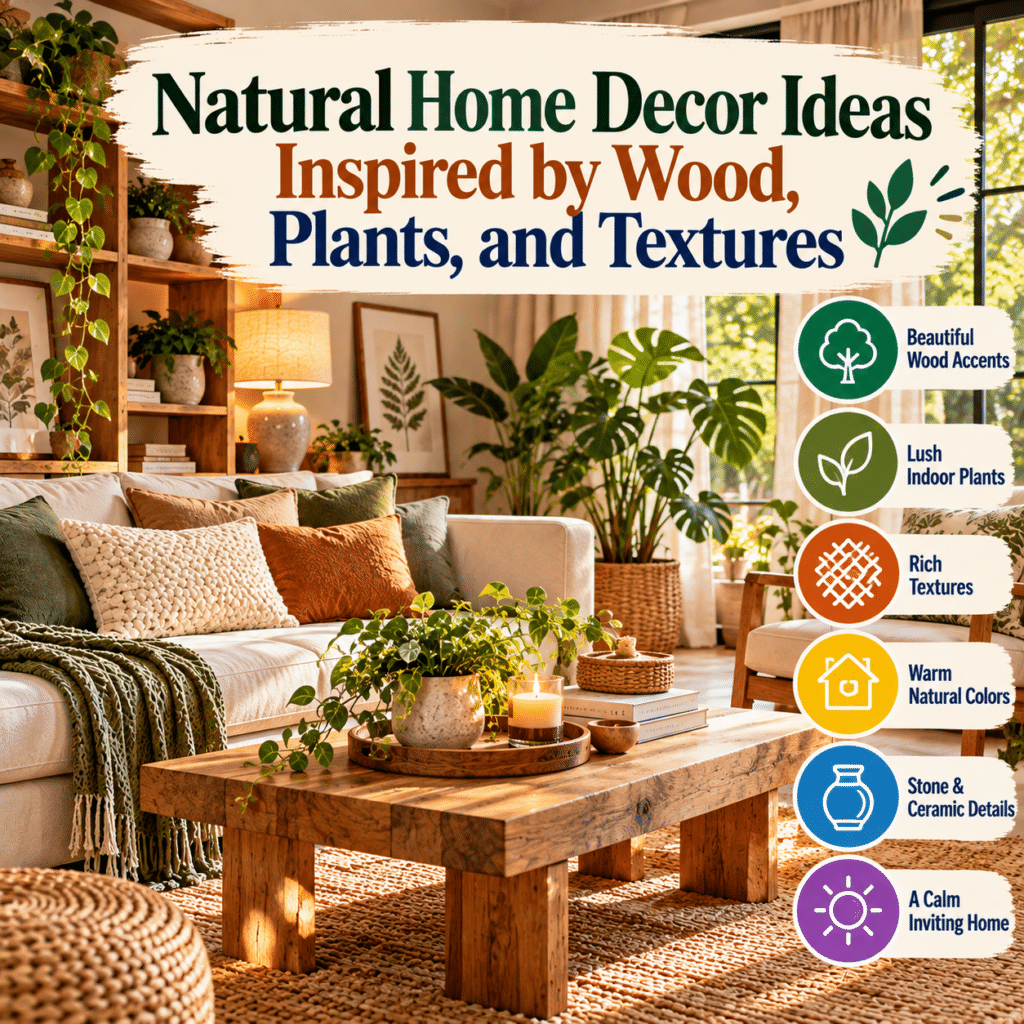
Low-maintenance plants also work well in warm, layered interiors.
Soft furnishings, natural wood, warm lighting, and textured materials can create inviting spaces where greenery feels integrated.
Combine Different Heights
A floor plant, tabletop plant, and trailing plant can create visual variety.
Use Natural Materials
Wooden furniture, ceramic planters, and woven-look accessories can complement foliage.
Balance Greenery With Open Space
Plants should contribute to the atmosphere without making the room feel crowded.
Consider Lighting
Natural daylight can highlight leaf textures.
Artificial room lighting can enhance the decorative appearance of plants, but ordinary lamps may not provide enough usable light for growth.
Keep Maintenance Accessible
A beautiful arrangement becomes inconvenient if plants are difficult to reach for watering or inspection.
Cozy design should remain practical.
The best indoor plant displays feel welcoming because they balance visual warmth with everyday usability.
14. Low-Maintenance Plants for Home Offices
Home offices often contain electronic equipment, work surfaces, storage, and task lighting.
Plants can introduce organic shapes and natural color into these functional environments.
Desk Plants
Compact plants may fit beside monitors or on shelves.
Choose containers that will not interfere with work.
Floor Plants
A larger upright plant can help soften an unused corner.
Shelf Displays
Trailing plants can complement books and storage, provided they remain accessible and secure.
Avoiding Water Damage
Keep containers away from electrical outlets, computers, and other equipment vulnerable to spills.
Use appropriate saucers and drainage management.
Considering Light
A home office may have enough light for people to work comfortably but insufficient light for some plants.
Evaluate actual growing conditions.
Indoor plants may make a workspace more personally appealing, but they should not be presented as guaranteed solutions for productivity, concentration, or stress.
Their strongest contribution is often aesthetic and experiential.
15. Choosing Plants for Bedrooms
Bedrooms are personal spaces where comfort, simplicity, and ease of maintenance are especially important.
A small number of carefully chosen plants can complement bedroom furniture and decor.
Suitable Placement
A bedside table, dresser, or secure plant stand may provide an appropriate location if light conditions are adequate.
Avoid Overcrowding
Too many containers can complicate cleaning and reduce usable space.
Consider Allergies and Sensitivities
Some people may be sensitive to mold associated with persistently damp growing media or to particular plant materials.
Proper moisture management and cleanliness are important.
Pet Safety
Pets may have access to bedrooms even when other rooms are restricted.
Choose plant species accordingly.
A Common Misconception
Houseplants should not be selected for bedrooms based on exaggerated claims that they significantly increase oxygen levels or purify the air during sleep.
Ordinary indoor plants are not substitutes for ventilation or indoor air quality management.
Their value in bedrooms is primarily their visual appeal and the enjoyment of caring for them.
16. Low-Maintenance Plants in Kitchens and Dining Areas
Kitchens and dining spaces can benefit from greenery, but they also present practical challenges.
Cooking heat, grease, water splashes, and limited counter space may affect plant placement.
Decorative Foliage Plants
Compact foliage plants can complement suitable shelves or bright corners.
Culinary Herbs
Herbs may offer a practical connection between gardening and cooking.
However, many culinary herbs require more light and attention than common low-maintenance foliage plants.
Avoid Heat Sources
Do not place plants too close to stoves, ovens, or other equipment that produces excessive heat.
Maintain Food Preparation Hygiene
Keep potting media, drainage water, and gardening tools away from food preparation surfaces.
Choose Easy-to-Clean Arrangements
Simple containers and accessible placement make maintenance more convenient.
Kitchen greenery works best when it enhances the space without interfering with cooking, cleaning, or food safety.
17. Can Low-Maintenance Plants Grow in Bathrooms?
Bathrooms are sometimes described as ideal places for tropical houseplants because they can experience elevated humidity.
However, humidity alone does not determine whether a plant will thrive.
Light Is Essential
A bathroom with no suitable natural or artificial growing light may not support healthy long-term plant growth.
Humidity Varies
Some bathrooms become humid during showers but return to relatively dry conditions afterward.
Temperature Changes Matter
Hot showers, ventilation systems, and drafts can create fluctuating conditions.
Placement and Safety
Plants should not obstruct access to sinks, showers, or other fixtures.
Containers must be stable and positioned to avoid falls.
Avoid Excess Moisture Problems
Standing water and poorly maintained growing media can contribute to mold or pest problems.
A bathroom can be a suitable growing location for certain plants, but only when the complete environment meets their needs.
18. Understanding Light Requirements for Easy-Care Plants
Light is one of the most important factors in indoor gardening.
Even plants described as tolerant of low light require enough energy for photosynthesis.
Bright Indirect Light
This generally refers to a well-lit location where a plant receives substantial ambient daylight without prolonged exposure to intense direct sun.
Moderate Light
Some plants perform well in locations with less intense but still adequate illumination.
Low Light
Low-light conditions provide relatively limited illumination.
Certain plants can tolerate these conditions, but growth may be slower.
Direct Sunlight
Some species benefit from direct sun, while others may experience leaf damage if exposed to excessive intensity.
Why Window Direction Matters
Window orientation influences the timing and intensity of sunlight.
However, building surroundings, climate, glazing, and seasonal changes also affect light availability.
Artificial Lighting
Appropriate LED grow lights can supplement insufficient natural light.
The correct intensity and operating schedule depend on the plant.
The essential lesson is that low-maintenance does not mean light-independent.
19. Watering Low-Maintenance Plants Correctly
Watering mistakes are among the most common causes of indoor plant problems.
Low-maintenance plants may tolerate occasional delays, but they still require appropriate moisture management.
Avoid Universal Watering Schedules
A rule such as watering every Sunday does not account for changes in temperature, light, humidity, or plant growth.
Check the Growing Medium
Examine moisture below the surface when appropriate.
The correct depth and drying interval depend on the plant and container.
Water Thoroughly When Needed
For many container-grown plants, watering thoroughly and allowing excess water to drain is preferable to repeatedly adding small amounts without understanding root-zone conditions.
Empty Excess Water
Do not leave plants standing in accumulated drainage water unless a specific growing method requires it.
Recognize Overwatering Risks
Persistently saturated growing media can reduce oxygen availability around roots.
Understand Underwatering
Prolonged moisture shortages can cause wilting, leaf damage, or slowed growth.
Successful watering depends on matching the plant’s needs to its environment rather than following a rigid calendar.
20. Choosing the Right Pots and Growing Media
Containers and growing media influence how easy a plant is to maintain.
A suitable pot supports root development and allows moisture to be managed effectively.
Drainage Holes
Drainage holes help excess water leave the container.
Decorative outer pots without holes can be used when they do not allow water to accumulate around the inner pot.
Container Size
Choose a container appropriate for the root system.
An excessively large pot may hold more wet growing medium than the plant can use efficiently.
Growing Medium
Different plants need different combinations of moisture retention, drainage, and aeration.
Pot Materials
Terracotta, plastic, glazed ceramic, and other materials can influence moisture behavior.
For example, unglazed terracotta allows some moisture to evaporate through the container walls.
Decorative Consistency
Planters can complement a room’s color palette and materials.
However, visual appearance should not override drainage and practical care requirements.
A beautiful container is most useful when it supports both plant health and interior design.
21. How Low-Maintenance Plants Can Reduce Decorative Clutter
Modern homes often contain many objects competing for visual attention.
Books, electronics, storage containers, and decorative accessories can make surfaces feel crowded.
Plants can sometimes replace several small decorative objects with one living focal point.
Use One Plant Instead of Multiple Accessories
A well-proportioned plant may provide enough visual interest for a side table or shelf.
Choose Containers With Simple Shapes
Understated planters can help maintain visual consistency.
Create Intentional Groupings
When using several plants, group them thoughtfully rather than distributing pots randomly.
Leave Functional Space Clear
Avoid covering work surfaces, walkways, and frequently used furniture.
Maintain Proportion
A large plant may overwhelm a narrow room, while a tiny plant may disappear visually in a spacious area.
Low-maintenance greenery can support a less cluttered appearance when used with restraint.
The objective is not to fill every empty space.
It is to make selected areas feel more complete and inviting.
22. Plant Placement and Household Safety
Plant placement affects more than appearance and growth.
It also influences safety and convenience.
Pets
Many popular houseplants contain substances that can irritate or harm animals if ingested.
Verify the exact species using a reliable veterinary toxicity resource.
Children
Young children may pull on leaves, tip over containers, or handle growing media.
Choose stable arrangements and supervise access when necessary.
Walkways
Large containers should not obstruct doors, stairs, or frequently used routes.
Shelves and Hanging Planters
Ensure supports can carry the combined weight of plants, containers, wet growing media, and water.
Electrical Equipment
Keep water and drainage away from electrical outlets, power strips, and sensitive devices.
Furniture and Flooring
Use suitable protective surfaces to prevent moisture damage.
An indoor plant arrangement should remain safe and practical as part of everyday household activity.
23. Low-Maintenance Plants and More Intentional Home Decorating
Low-maintenance plants can encourage a thoughtful approach to home decoration.
Rather than frequently replacing short-lived decorative items, homeowners may choose living elements that remain attractive over time.
However, the environmental benefits of indoor plants should not be exaggerated.
Growing and transporting plants requires resources, and some decorative arrangements involve energy-intensive production or disposable materials.
Choose Plants That Suit the Home
Appropriate plant selection can reduce repeated losses and replacements.
Use Durable Containers
Well-made planters may remain useful for many years.
Avoid Unnecessary Accessories
Not every plant needs a specialized watering device, decorative stand, or automated system.
Propagate When Appropriate
Some plants can be multiplied through cuttings or division.
Maintain Existing Plants
Good care can extend the useful life of a plant collection.
Intentional decorating focuses on choosing fewer, more suitable items rather than accumulating greenery simply because it is fashionable.
24. How to Build a Low-Maintenance Plant Collection
A manageable plant collection is easier to develop gradually.
Step 1: Evaluate Available Space
Identify locations with suitable light, stable temperatures, and convenient access.
Step 2: Define Your Preferred Style
Decide whether you prefer upright architectural plants, compact foliage, or trailing growth.
Step 3: Select Compatible Species
Choose plants whose requirements match the intended locations.
Step 4: Begin With a Small Number
Two or three plants can provide enough variety for a beginner.
Step 5: Establish a Simple Care Routine
Check moisture, foliage, and growing conditions regularly.
Step 6: Observe Plant Responses
New growth, leaf condition, and overall appearance provide useful information.
Step 7: Expand Slowly
Add plants only when existing care routines are manageable.
Step 8: Review the Arrangement
As plants grow, adjust placement to maintain both healthy conditions and practical room use.
A thoughtfully developed collection is often more satisfying than a large collection assembled quickly.
25. Simple Maintenance Habits That Make a Difference
Low-maintenance plants still benefit from regular attention.
Fortunately, basic care often requires only a few straightforward habits.
Inspect Leaves
Look for discoloration, damage, unusual spots, or pests.
Check Moisture
Water according to the plant’s requirements and actual growing conditions.
Clean Foliage When Appropriate
Dust can accumulate on leaves.
Use a suitable gentle cleaning method for the species, avoiding unnecessary leaf-polishing products.
Remove Dead Material
Dead or severely damaged leaves can be removed with clean tools when appropriate.
Rotate Containers Carefully
Some plants may benefit from occasional rotation to encourage more balanced growth.
Avoid sudden changes in exposure for light-sensitive species.
Monitor Growth
Slow growth may be normal, especially during periods of reduced light.
Repot When Necessary
Repotting should respond to root development and growing-medium condition rather than an arbitrary timetable.
These habits help keep plant care manageable without requiring constant intervention.
26. Common Problems With Low-Maintenance Indoor Plants
Even resilient plants can develop problems.
The key is to identify likely causes rather than reacting to symptoms without investigation.
| Symptom | Possible causes | What to check |
|---|---|---|
| Yellowing leaves | Excess moisture, insufficient water, aging, or stress | Soil moisture, drainage, roots, and recent changes |
| Brown leaf tips | Moisture stress, dissolved salts, or environmental conditions | Watering habits, water quality, and humidity |
| Wilting | Dry roots, damaged roots, or temperature stress | Growing medium and root condition |
| Slow growth | Low light, seasonal changes, or normal growth habit | Light availability and plant expectations |
| Leggy growth | Insufficient light in many species | Plant placement and illumination |
| Leaf scorching | Excessive sunlight or sudden exposure | Direct light and acclimation |
| Fungus gnats | Persistently moist growing media | Moisture management and drainage |
| Leaf drop | Environmental stress, watering issues, or natural aging | Recent changes and overall plant condition |
Avoid Changing Everything at Once
If a plant develops yellow leaves, immediately increasing water, fertilizer, and light may make diagnosis more difficult.
Investigate the most likely causes and make measured adjustments.
Be Patient
Plants may need time to respond to improved conditions.
Healthy growth is generally a better long-term indicator than expecting damaged leaves to recover completely.
27. Why Low-Maintenance Does Not Mean No-Maintenance
The phrase low-maintenance plant can create unrealistic expectations.
Every living plant requires suitable environmental conditions.
Even drought-tolerant species eventually need water.
Low-light-tolerant plants still need light.
Slow-growing plants still require nutrients and adequate root conditions.
Plants Are Not Artificial Decorations
Their needs change as they grow and as household conditions shift.
Neglect Is Different From Simplicity
A simple care routine can be effective, but prolonged neglect may eventually damage even resilient species.
Easy-Care Plants Still Need Observation
Checking leaves and growing media can reveal problems before they become severe.
Expectations Should Be Realistic
Some plants may survive unfavorable conditions for extended periods without thriving.
The goal should be healthy, sustainable growth rather than merely keeping a plant alive.
Understanding this distinction helps prevent disappointment and encourages more responsible plant ownership.
28. The Role of Smart Tools in Low-Maintenance Plant Care
Simple technology can support a manageable indoor garden.
However, low-maintenance plants rarely require an elaborate automated setup.
Moisture Meters
A suitable meter can help gardeners evaluate moisture conditions, particularly in deeper containers.
Digital Reminders
Calendar notifications can prompt regular plant inspections.
Grow Light Timers
Programmable timers can maintain consistent lighting schedules where supplemental lighting is necessary.
Temperature and Humidity Monitors
These devices may help identify unsuitable environmental conditions.
Self-Watering Containers
Some self-watering systems can extend intervals between refilling.
However, they must be matched to the plant’s moisture preferences and maintained properly.
Avoid Overcomplication
A plant that thrives with simple care may not benefit from additional equipment.
Technology is most useful when it solves a specific problem.
The goal is to make plant care easier, not to turn every container into a complicated project.
29. Low-Maintenance Plants and Everyday Well-Being
Many people enjoy having plants in their living spaces.
Greenery may make a room feel more personally appealing, and caring for plants can provide opportunities for focused, hands-on activity.
Some research on nature exposure and gardening suggests potential psychological benefits under certain circumstances.
However, the evidence does not support treating ordinary houseplants as guaranteed solutions for stress, anxiety, or other health conditions.
Enjoyment Through Observation
Watching a new leaf develop can be satisfying.
A Simple Routine
Checking plants can provide a brief change from screen-based activities.
Personal Expression
Choosing plant varieties and arranging containers allows people to shape their surroundings.
A Sense of Continuity
A plant cared for over several years may become a meaningful part of a home.
These experiences are individual.
Some people find plant care relaxing, while others may find a demanding collection stressful.
Low-maintenance plants can help keep the activity enjoyable by reducing unnecessary complexity.
30. How to Choose the Best Low-Maintenance Plants for Your Lifestyle
The most suitable indoor plants depend on the person and the home.
There is no universal collection that works equally well for everyone.
For Busy Professionals
Consider plants that tolerate some variation in watering intervals and do not require frequent pruning.
For Small Apartment Residents
Choose compact plants or species with manageable upright growth.
For Minimalist Interiors
Select one or two plants with distinctive shapes and simple containers.
For Cozy Living Spaces
Combine compatible foliage plants with natural materials and warm decorative elements.
For Beginners
Start with species whose care requirements are straightforward and well documented.
For Pet Owners
Prioritize verified pet-safe species and realistic placement.
For People Who Travel Frequently
Consider whether a reliable care arrangement is available during absences.
For Homes With Limited Light
Choose species that tolerate the available conditions, or provide appropriate supplemental lighting.
Ultimately, plant selection should reflect actual living conditions rather than an idealized interior photograph.
Frequently Asked Questions About Low-Maintenance Indoor Plants
1. What are the best low-maintenance plants for modern homes?
Snake plants, ZZ plants, spider plants, cast iron plants, pothos, and certain peperomia species are commonly recommended. The best choice depends on light, watering conditions, available space, and household safety. Some popular easy-care plants are toxic to pets, so species identification is important.
2. Can low-maintenance plants survive in rooms with little sunlight?
Some plants tolerate relatively low light, but no ordinary green houseplant can grow indefinitely without sufficient illumination. Low-light tolerance means the plant can function under lower light levels than some other species. A windowless room may require a suitable grow light.
3. How often should low-maintenance indoor plants be watered?
There is no universal schedule. Watering frequency depends on the species, container, growing medium, light, temperature, humidity, and season. Checking the growing medium and understanding the plant’s requirements is more reliable than watering on a fixed calendar.
4. Are low-maintenance plants suitable for bedrooms and home offices?
Yes, provided the growing conditions are suitable and the plants do not create safety or maintenance problems. Compact plants can complement desks, shelves, and bedroom furniture. Keep water away from electronics and consider allergies, pets, and available light.
5. Do low-maintenance indoor plants improve air quality?
Houseplants can remove certain compounds under controlled laboratory conditions, but a typical collection of houseplants should not be relied upon to meaningfully purify the air in an occupied home. Ventilation, source control, moisture management, and appropriate filtration are more effective strategies.
6. What is the biggest mistake people make with easy-care plants?
One of the most common mistakes is assuming that low-maintenance plants can tolerate any environment. Overwatering, insufficient light, and unsuitable containers can cause problems even for resilient species. Choosing plants according to actual growing conditions is essential.
7. Can low-maintenance plants be part of a minimalist interior design?
Absolutely. A limited number of carefully selected plants can add natural color, texture, and visual interest without creating clutter. Upright plants, compact foliage, and simple containers work particularly well when proportions and placement are thoughtfully considered.
Conclusion: Simple Greenery for Modern Living
Low-maintenance indoor plants fit naturally into modern living because they combine visual appeal with relatively manageable care.
They can soften contemporary interiors, complement natural materials, personalize workspaces, and bring living texture into rooms of different sizes.
Their greatest advantage is flexibility.
A compact plant can brighten a small desk. An upright foliage plant can complement a minimalist living room. A trailing plant can add movement to a shelf. A carefully chosen collection can create a welcoming atmosphere without requiring an elaborate gardening routine.
However, low-maintenance should never be confused with no-maintenance.
Every plant needs appropriate light, water, growing media, and environmental conditions. Even resilient species can struggle when their basic requirements are ignored.
The most successful approach is to choose plants that suit the home, start with a manageable number, and establish simple habits that support healthy growth.
There is no need to follow every decorating trend or fill every corner with greenery.
A few well-chosen plants can be enough to create a meaningful connection between nature and everyday living.
The beauty of low-maintenance indoor gardening is not that plants require no care. It is that thoughtful choices can make caring for them a simple, enjoyable, and lasting part of modern life.