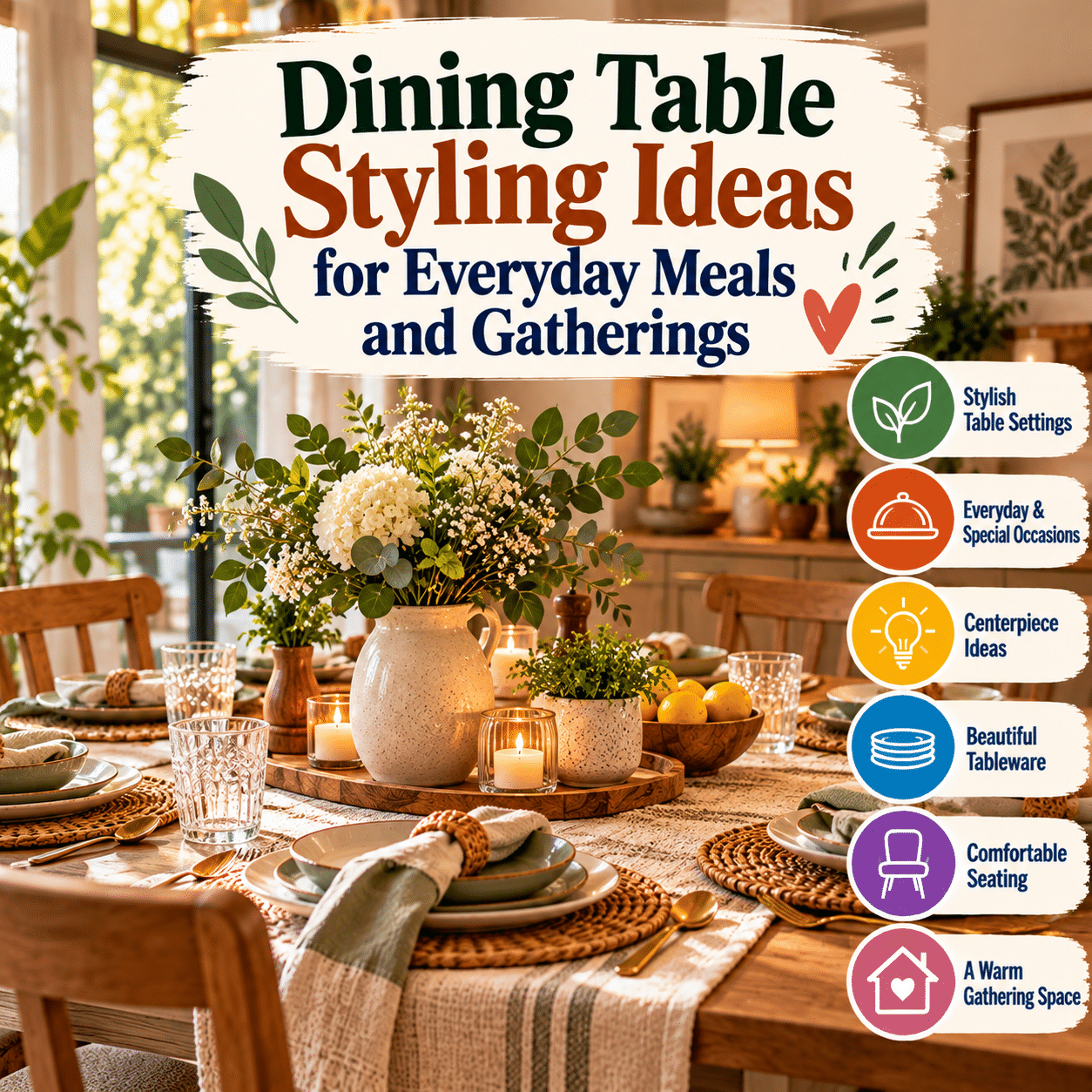
A dining table is more than a place to serve food. It is where ordinary meals become familiar rituals, conversations unfold, and people come together to share time. From a quick weekday breakfast to a relaxed weekend dinner, the dining table plays an important role in the atmosphere of a home.
Thoughtful dining table styling can make these everyday experiences feel more welcoming. A simple centerpiece, comfortable seating, coordinated tableware, and carefully chosen textures can transform a practical surface into an inviting gathering place.
However, a beautifully styled dining table should never become difficult to use. Oversized decorations, fragile arrangements, complicated place settings, and excessive accessories can interfere with the very activities the table is meant to support.
The most successful dining table designs balance appearance with everyday convenience. They provide enough room for meals, make cleaning manageable, and reflect the personality of the household without requiring elaborate preparation.
You do not need expensive dinnerware, a large dining room, or a formal occasion to create an attractive table. A small apartment table can feel just as inviting as a spacious family dining area when its proportions, colors, materials, and accessories are chosen thoughtfully.
This guide explores timeless dining table styling ideas for everyday meals and gatherings. From simple centerpieces and natural textures to practical table settings, seasonal updates, small-space solutions, and comfortable entertaining arrangements, these ideas can help you create a dining area that feels beautiful, functional, and genuinely welcoming.
1. What Makes a Dining Table Feel Beautiful and Inviting?
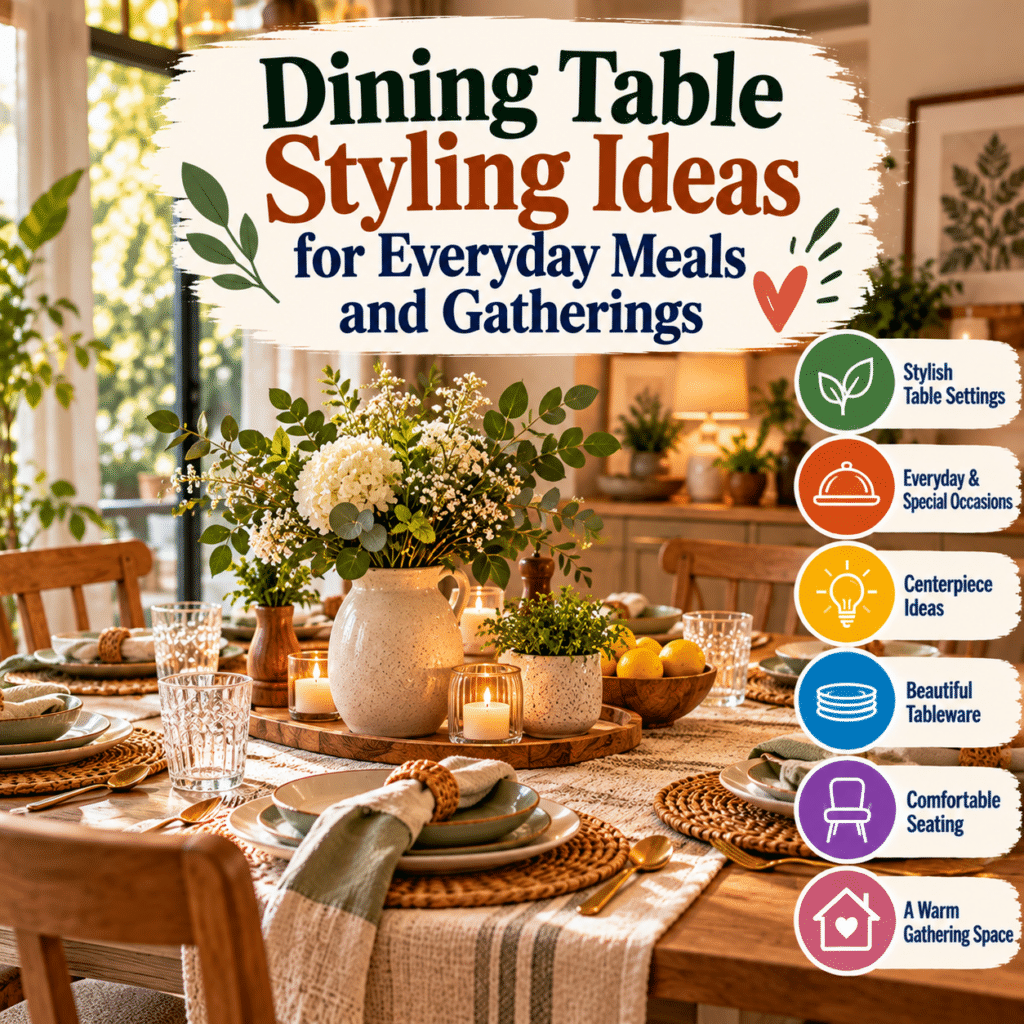
A well-styled dining table combines visual harmony with practical comfort.
Its appearance should complement the surrounding room while supporting the activities that take place around it.
A Clear and Comfortable Surface
The table should provide enough space for plates, glasses, serving dishes, and comfortable movement.
Decorative accessories should not interfere with eating or conversation.
A Cohesive Color Palette
Colors do not need to match perfectly, but they should feel connected.
Neutral linens, ceramic tableware, wooden furniture, and a few accent colors can create a balanced appearance.
Thoughtful Textures
Wood, cotton, linen, ceramic, glass, and woven materials can introduce visual depth.
Combining different textures often creates interest without requiring elaborate decorations.
Appropriate Lighting
Lighting should make food, tableware, and faces easy to see while avoiding uncomfortable glare.
Comfortable Seating
Attractive table styling cannot compensate for uncomfortable chairs or insufficient legroom.
Personal Character
A favorite serving bowl, handmade ceramic piece, or meaningful centerpiece can make the dining table feel unique.
The goal is not to recreate a formal dining display every day. It is to create an environment where people naturally enjoy sitting down.
2. Begin With How You Use Your Dining Table
Before choosing decorations, consider how the table functions in everyday life.
Different households have different needs.
Everyday Family Meals
A frequently used family table benefits from durable surfaces, easy-to-clean accessories, and simple arrangements.
Meals for One or Two
A smaller household may prefer a compact centerpiece and minimal table settings.
Frequent Entertaining
If you regularly host guests, flexible serving arrangements and comfortable seating become especially important.
Multipurpose Dining Tables
Some tables also serve as workspaces, homework areas, or places for hobbies.
Decorations should be easy to move when the surface is needed for other activities.
Casual Versus Formal Dining
A casual table might use everyday ceramic plates, simple placemats, and a small vase.
A formal setting may include additional tableware, linens, and carefully arranged accessories.
Neither approach is inherently better.
Identify Practical Priorities
Ask yourself:
- How many people usually eat at the table?
- How often do guests visit?
- Is the table used for other activities?
- How much space is available for serving dishes?
- Are spills and stains common?
- How much time do I want to spend setting and clearing the table?
- Which decorations are genuinely enjoyable to maintain?
These answers provide a useful foundation for styling decisions.
3. Choose a Dining Table Color Palette That Feels Timeless
Color is one of the simplest ways to create a cohesive table setting.
A thoughtful palette can connect tableware, linens, furniture, and decorative accessories.
Warm Neutrals
Cream, beige, taupe, warm white, and oatmeal can create a soft, welcoming atmosphere.
They work well with wooden furniture and many ceramic finishes.
Earth-Inspired Colors
Terracotta, olive, clay, rust, and warm brown introduce natural warmth.
These colors can appear in napkins, placemats, or centerpieces.
Gentle Greens
Sage and muted green can complement botanical arrangements and wooden tables.
Soft Blues
Muted blue and blue-gray can create a fresh appearance, particularly when paired with white ceramics.
Dark Accents
Charcoal, navy, deep green, and black can add contrast.
Use them selectively in tableware, napkins, or decorative objects.
Repeat Colors Thoughtfully
A cohesive table might combine cream plates, beige linens, and a small green centerpiece.
Another might use dark ceramic dishes, natural wood, and warm white napkins.
The most important principle is balance.
Avoid introducing so many competing colors that the table feels visually crowded.
4. Let the Dining Table Material Guide Your Styling
The material and finish of the table influence which accessories will look and function best.
Wooden Dining Tables
Wood introduces warmth and distinctive grain patterns.
Natural-looking linens, ceramics, and simple botanical arrangements often complement wooden surfaces.
Use suitable protection against heat, moisture, and scratches.
Glass Dining Tables
Glass can create a light, contemporary appearance.
Simple placemats and carefully chosen centerpieces can provide contrast.
Glass surfaces may show fingerprints and water marks, so consider maintenance requirements.
Stone Dining Tables
Natural or engineered stone can create a substantial visual foundation.
Some stone surfaces are sensitive to acidic spills or particular cleaning products.
Follow the manufacturer’s care instructions.
Laminate and Engineered Surfaces
These materials are available in many finishes and can be practical for everyday use.
Choose accessories that complement the surface’s color and texture.
Painted Dining Tables
Painted finishes can support traditional, modern, or cottage-inspired styling.
Use appropriate protection where needed.
Avoid Covering Every Attractive Surface
If your table has a beautiful wood grain or distinctive finish, consider using a runner or individual placemats rather than covering it completely.
The table itself can be part of the decoration.
5. Use Table Runners to Create an Effortless Focal Point
A table runner is a versatile styling accessory.
It introduces texture and color while leaving much of the tabletop visible.
Choose a Runner That Suits the Table
A narrow runner can visually emphasize the length of a rectangular table.
A shorter runner may work well beneath a centerpiece.
Explore Different Fabrics
Linen creates a relaxed appearance.
Cotton is available in many colors and patterns.
Woven materials can introduce texture.
Choose fabrics according to cleaning requirements and everyday use.
Keep the Arrangement Simple
A runner with a small vase or bowl may provide enough decoration.
Layer Carefully
A runner can be combined with placemats when the colors and textures complement one another.
However, too many overlapping fabrics may make the table feel crowded.
Consider Table Shape
Runners are especially common on rectangular tables, but they can also be used creatively on round and square surfaces.
Prioritize Practicality
Avoid runners that interfere with serving dishes or create loose fabric edges where they could be pulled accidentally.
A runner should enhance the table without complicating mealtimes.
6. Style With Placemats for Everyday Convenience
Placemats can define individual dining spaces while protecting suitable tabletop surfaces.
Choose Easy-Care Materials
Common options include:
- Cotton
- Linen
- Woven fibers
- Silicone
- Cork
- Suitable synthetic materials
Each has different cleaning and maintenance requirements.
Match the Table’s Style
Woven placemats can complement natural wood.
Simple neutral placemats may suit minimalist interiors.
Colorful designs can add personality to casual dining areas.
Consider Practical Cleaning
Some woven materials can trap crumbs or absorb spills.
Choose placemats that suit your household’s routines.
Use Consistent Shapes
Matching shapes can create an orderly appearance.
Mixing compatible colors may add interest without looking chaotic.
Avoid Excessive Layering
Placemats, chargers, runners, and tablecloths do not all need to appear together.
Choose the elements that improve the setting.
7. Create Simple Centerpieces That Work Every Day
A centerpiece can give the dining table a welcoming focal point.
However, it should not interfere with conversation, serving, or comfortable eating.
A Small Ceramic Vase
A vase with a few flowers or branches can create an attractive display.
Choose a stable container and keep the arrangement appropriately sized.
A Wooden Bowl
A wooden bowl can introduce warmth and texture.
It may hold suitable decorative objects or whole fruit when the bowl is appropriate for food contact.
A Fruit Arrangement
A bowl of fresh fruit can provide color and practical value.
Store fruit according to its needs and clean the bowl regularly.
A Decorative Tray
A tray can group a vase, small bowl, or other compatible accessories.
It also makes the arrangement easier to move.
A Small Plant
A suitable plant can introduce greenery.
Keep soil and plant-care products away from food and serving areas.
A Sculptural Ceramic Object
A single ceramic piece may provide enough visual interest.
Keep the Centerpiece Proportionate
A large arrangement may overwhelm a small table.
For everyday dining, a compact centerpiece is often the most practical choice.
8. Decorate With Flowers and Botanical Arrangements
Flowers and greenery can add freshness and organic shapes to a dining table.
Choose Low Arrangements
Low centerpieces allow people to see one another across the table.
Use Seasonal Flowers
Seasonal flowers can introduce variety without changing the entire table setting.
Try Simple Greenery
A few branches or leafy stems can create an understated arrangement.
Consider Dried Botanicals
Dried flowers can add texture and muted color.
Keep them away from flames and food preparation areas.
Avoid Strong Fragrances
Highly fragrant flowers may compete with the aroma of food or bother sensitive guests.
Check Household Safety
Some flowers and plants are toxic to pets or children.
Choose arrangements carefully.
Keep Water and Containers Clean
Refresh flower water as appropriate and clean vases regularly.
A small, well-maintained arrangement is often more attractive than a large display that requires constant attention.
9. Use Beautiful Everyday Tableware
Everyday plates, bowls, and cups can contribute significantly to the appearance of a dining table.
You do not need a separate formal dinnerware collection to create an inviting setting.
Choose Versatile Plates
Simple plates in neutral colors can complement many foods and table linens.
Explore Textured Ceramics
Matte finishes, subtle glazes, and handcrafted-looking surfaces can add visual interest.
Mix Compatible Dinnerware
Different pieces can work together when they share a common color, material, or design quality.
Consider Durability
Everyday tableware should suit the household’s cleaning and storage routines.
Check Food Safety
Use dishes intended for food contact.
Decorative ceramics should not automatically be assumed safe for serving food.
Review Care Instructions
Not all ceramics, glassware, or decorative finishes are suitable for microwaves or dishwashers.
Avoid Overcomplicated Place Settings
For everyday meals, a plate, appropriate utensils, a glass, and a napkin may be sufficient.
The best tableware is attractive, comfortable to use, and practical to maintain.
10. Make Napkins Part of the Table’s Style
Napkins can introduce color, texture, and a sense of care.
Cloth Napkins
Cotton and linen napkins can create a relaxed or refined appearance.
They are reusable but require washing.
Paper Napkins
Suitable paper napkins can be convenient for casual meals and larger gatherings.
Simple Folding Ideas
A basic rectangle or loose fold often looks attractive.
Elaborate folding is not necessary for an inviting table.
Use Napkin Rings Selectively
Napkin rings can add a decorative detail.
Choose designs that are easy to use and clean.
Coordinate Colors
Napkins can match the table’s main palette or provide a subtle accent.
Prioritize Hygiene
Provide clean napkins for each meal or guest as appropriate.
A simple, neatly arranged napkin can make an everyday setting feel more thoughtful.
11. Create Comfortable Everyday Place Settings
An everyday place setting should be easy to arrange and comfortable to use.
Start With the Essentials
For many meals, the essentials include:
- A plate or bowl
- Appropriate utensils
- A drinking glass
- A napkin
Additional items depend on the food being served.
Leave Enough Space
Avoid crowding plates and glasses too closely together.
Keep Utensils Practical
Arrange utensils where diners can reach them comfortably.
Avoid Unnecessary Layers
Multiple plates and decorative chargers may be suitable for formal occasions but are rarely essential for everyday meals.
Consider Different Needs
Children, older adults, and guests with mobility limitations may benefit from different tableware or seating arrangements.
Make Clearing Easy
Simple settings are easier to clear, wash, and store.
An attractive everyday table should support relaxed dining rather than create extra work.
12. Style a Round Dining Table
Round tables encourage face-to-face interaction and can work well in compact dining areas.
Use a Central Arrangement
A small round tray, bowl, or vase can create a balanced centerpiece.
Keep the Center Accessible
Avoid large decorations that interfere with shared serving dishes.
Choose Appropriate Placemats
Round or rectangular placemats may work depending on the table’s size.
Balance the Number of Accessories
One central arrangement is often sufficient.
Consider a Lazy Susan
A rotating serving tray may be useful for shared dishes when appropriately sized and stable.
Preserve Legroom
The surrounding chairs should fit comfortably without obstructing movement.
Round table styling often works best when the central arrangement remains simple.
13. Style a Rectangular Dining Table
Rectangular tables provide opportunities for linear arrangements.
Use a Table Runner
A runner can emphasize the table’s length.
Create a Small Centerpiece Group
A vase, bowl, and one complementary object may form a balanced arrangement.
Consider Multiple Low Arrangements
On a long table, two or three small arrangements may work better than one oversized centerpiece.
Maintain Serving Space
Leave room for shared dishes and comfortable place settings.
Avoid Excessive Symmetry
Perfectly matching every accessory is not necessary.
A relaxed arrangement can feel more personal.
Keep Sightlines Open
Tall centerpieces may interfere with conversation.
14. Make a Small Dining Table Feel Inviting
A compact dining table can be beautiful without elaborate decoration.
Choose One Main Decorative Element
A small vase, bowl, or tray may be enough.
Use Compact Placemats
Select sizes that fit without overlapping excessively.
Keep the Table Mostly Clear
Preserve space for meals.
Use Nearby Wall Decoration
Artwork or a small wall shelf can provide visual interest without occupying the tabletop.
Choose Appropriate Chairs
Compact chairs can help maintain comfortable movement.
Consider Multifunctional Accessories
A fruit bowl or practical serving tray can provide both decoration and function.
Avoid Oversized Centerpieces
Large arrangements can make a small table feel crowded.
In compact spaces, thoughtful restraint often creates the most welcoming result.
15. Create a Warm Dining Atmosphere With Lighting
Lighting influences how comfortable a dining area feels.
Use Appropriate General Lighting
The room should have sufficient illumination for safe movement and everyday activities.
Consider Pendant Lighting
A pendant fixture can help define the dining table.
Choose a size and installation height that provides illumination without blocking sightlines.
Use Warm-White Lighting
Warm-white light can create a welcoming atmosphere.
However, brightness and color rendering also matter.
Consider Dimmable Fixtures
Compatible dimmable lighting can adapt to different activities.
Add Indirect Lighting
A nearby lamp or wall light may provide additional warmth.
Be Careful With Candles
Candles can create a decorative effect, but open flames introduce fire risks.
Keep flames away from textiles, flowers, children, and pets.
Battery-operated candles may provide a lower-risk decorative alternative when used according to their instructions.
Avoid Glare
Position lighting so it does not shine uncomfortably into diners’ eyes.
Good dining lighting should support conversation and make the food easy to see.
16. Introduce Natural Textures for a Welcoming Table
Natural-looking materials can create warmth and visual depth.
Wood
Wooden tables, trays, and suitable serving accessories introduce grain and warm tones.
Linen
Linen runners and napkins can create a relaxed appearance.
Cotton
Cotton textiles offer a wide range of colors and patterns.
Woven Fibers
Woven placemats and baskets can add texture.
Choose materials appropriate for cleaning and food-service conditions.
Ceramic
Ceramic plates, bowls, and vases can introduce smooth or textured surfaces.
Glass
Glassware can add visual lightness and contrast.
Balance Materials
A wooden table with linen napkins and ceramic plates may provide enough variety.
Avoid combining too many competing textures.
17. Explore Scandinavian-Inspired Dining Table Styling
Scandinavian-inspired styling often emphasizes simplicity, practical comfort, and natural materials.
Choose Light Wood
A light wooden table can provide a warm foundation.
Use Neutral Tableware
Cream, white, and soft gray ceramics can create a cohesive appearance.
Add Simple Textiles
A linen runner or cotton napkins may provide enough softness.
Introduce Greenery
A small botanical arrangement can add color.
Keep Decorations Minimal
A single centerpiece is often sufficient.
Focus on Everyday Function
The table should remain easy to set, clear, and clean.
This approach works particularly well for households that prefer uncluttered spaces.
18. Create a Rustic Dining Table
Rustic styling emphasizes warmth, natural materials, and relaxed character.
Highlight Wood Grain
A wooden table can become the main visual feature.
Choose Earthy Colors
Cream, terracotta, brown, and muted green complement rustic materials.
Add Woven Accessories
Woven placemats or baskets can introduce texture.
Use Simple Ceramics
Stoneware plates and bowls can create a casual appearance.
Include a Botanical Centerpiece
A small arrangement of greenery or seasonal flowers can soften the setting.
Avoid Excessive Theming
Rustic styling does not require numerous decorative signs or distressed accessories.
A few authentic-looking materials can create a balanced atmosphere.
19. Design a Modern Minimalist Dining Table
Modern minimalist styling focuses on clean lines, restrained decoration, and functional simplicity.
Choose a Limited Palette
Neutral colors and one or two accents can create visual harmony.
Use Streamlined Tableware
Simple plates and glasses can support the overall appearance.
Select One Statement Centerpiece
A sculptural vase or ceramic bowl may be enough.
Keep Surfaces Uncluttered
Remove unnecessary objects before meals.
Consider Contrasting Materials
A smooth table can pair with textured napkins or a matte ceramic centerpiece.
Prioritize Practicality
Minimalism should make everyday dining easier, not less comfortable.
20. Create a Modern Organic Dining Table
Modern organic styling combines contemporary forms with natural materials and earthy colors.
Use Rounded Shapes
Curved bowls, circular trays, and softly shaped ceramics can introduce visual softness.
Choose Earthy Neutrals
Taupe, cream, sand, and muted brown create a cohesive foundation.
Add Natural Wood
Wooden furniture or suitable accessories can introduce warmth.
Include Textured Ceramics
Matte finishes and subtle glazes can add visual interest.
Introduce Greenery
A simple plant or botanical arrangement can provide an organic focal point.
Maintain Balance
Combine a few complementary materials rather than filling the table with accessories.
21. Make Everyday Breakfast Feel Special
Breakfast is often a quick meal, but simple styling can make the table more inviting.
Use a Small Tray
A tray can organize suitable breakfast essentials.
Add a Fruit Bowl
Fresh fruit can provide color and practical value.
Choose Comfortable Tableware
Favorite mugs and everyday bowls can make breakfast feel familiar and welcoming.
Keep the Arrangement Simple
Avoid elaborate decorations that slow down the morning routine.
Take Advantage of Daylight
A bright dining area can create a pleasant morning atmosphere.
Prepare Convenient Storage
Keep commonly used breakfast items accessible in suitable locations.
A welcoming breakfast table does not need to be elaborate.
It simply needs to support a comfortable start to the day.
22. Style the Table for Casual Lunches
Lunch settings can be relaxed, colorful, and practical.
Choose Easy-Care Placemats
Placemats can protect the table and define individual spaces.
Use Everyday Dishes
Simple ceramic plates and bowls can create an attractive arrangement.
Add a Small Centerpiece
A low vase or fruit bowl can provide decoration without interfering with serving.
Keep Water Accessible
A suitable water pitcher may be convenient for shared meals.
Leave Room for Serving Dishes
Avoid overcrowding the center of the table.
Make Cleaning Easy
Choose accessories that can be cleared and cleaned efficiently.
23. Create a Cozy Dinner Table
Dinner often provides an opportunity to gather and enjoy conversation.
A few thoughtful details can make the atmosphere more inviting.
Adjust the Lighting
Comfortable, warm lighting can create a pleasant evening setting.
Use Cloth Napkins
Clean cloth napkins can add texture and a sense of occasion.
Choose a Low Centerpiece
Keep decorations below comfortable sightlines.
Coordinate Tableware
A consistent color palette can create visual harmony.
Add Comfortable Seating
Ensure chairs are positioned with adequate space.
Keep the Table Functional
Leave room for food, drinks, and serving utensils.
A cozy dinner table should encourage people to relax rather than worry about disturbing the decorations.
24. Style a Dining Table for Small Gatherings
Hosting friends or family does not require an elaborate formal table.
Plan Seating First
Ensure everyone has a comfortable place.
Consider the Menu
The type of food influences the serving space required.
Choose Simple Tableware
Coordinated everyday dishes may be sufficient.
Use a Flexible Centerpiece
Choose decorations that can be moved when serving dishes arrive.
Provide Appropriate Serving Tools
Keep utensils and serving accessories convenient.
Consider Guest Preferences
Dietary restrictions, accessibility needs, and seating comfort may influence the arrangement.
Avoid Overcrowding
Guests should have enough room for plates, glasses, and comfortable movement.
The most welcoming table is one that supports easy conversation and enjoyable meals.
25. Make Buffet-Style Gatherings More Practical
For larger gatherings, a buffet arrangement may provide more flexibility than placing every dish on the dining table.
Separate Serving and Dining Areas
When space allows, use a sideboard or counter for serving dishes.
Keep the Dining Table Clear
This provides more room for guests.
Organize Serving Utensils
Each dish should have suitable serving tools.
Consider Food Temperature
Perishable foods should be handled and held according to appropriate food-safety guidance.
Arrange Traffic Flow
Position serving areas to avoid crowding.
Use Simple Decorations
A small centerpiece may be enough when guests are serving themselves.
A practical buffet arrangement can make gatherings more comfortable without sacrificing style.
26. Refresh the Table With Seasonal Details
Seasonal styling can keep a dining table feeling fresh without requiring major changes.
Spring-Inspired Styling
Soft greens, light textiles, and simple flowers can create a fresh appearance.
Summer-Inspired Styling
Lightweight fabrics, colorful fruit, and bright tableware may suit warm-weather dining.
Autumn-Inspired Styling
Terracotta, rust, warm brown, and textured accessories can introduce seasonal warmth.
Winter-Inspired Styling
Deeper colors, layered textiles, and suitable warm lighting can create a cozy atmosphere.
Adapt to Your Climate
Seasonal styling should reflect the local environment and household preferences.
Homes in tropical climates may not experience the same seasonal changes as those in temperate regions.
Reuse Accessories
Changing napkins, a runner, or a centerpiece can refresh the table without replacing everything.
Seasonal decoration works best when it remains simple and adaptable.
27. Personalize the Dining Table With Meaningful Details
A dining table can reflect the people who gather around it.
Display a Favorite Serving Bowl
A meaningful piece of tableware can become part of the everyday arrangement.
Use Handmade Accessories
Handmade ceramics or textiles can add character.
Include Family Heirlooms Carefully
A treasured serving piece may contribute sentimental value.
Check its suitability for food contact and everyday use.
Choose Colors You Enjoy
Personal preference matters more than following a particular decorating trend.
Create a Small Tradition
A favorite tablecloth for weekend meals or a special serving bowl for family gatherings can become part of the household routine.
Avoid Overdecorating
Meaningful objects often stand out more when they are not surrounded by unnecessary accessories.
28. Balance Beauty With Everyday Cleaning and Maintenance
A dining table should remain easy to care for.
Choose Practical Materials
Consider stain resistance, cleaning requirements, and durability.
Protect the Table Surface
Use appropriate placemats, coasters, or trivets.
Clean Spills Promptly
Some surfaces can be damaged by prolonged moisture or acidic substances.
Wash Textiles Regularly
Napkins, runners, and tablecloths should be cleaned according to their care instructions.
Keep Centerpieces Manageable
Avoid arrangements that require complicated cleaning.
Store Extra Accessories Properly
Keep occasional decorations in suitable storage.
Simplify When Necessary
If the table becomes difficult to maintain, reduce the number of accessories.
A practical dining table is more likely to remain inviting over time.
29. Common Dining Table Styling Mistakes to Avoid
Even attractive ideas can become inconvenient when they interfere with daily use.
Oversized Centerpieces
Tall or wide arrangements may block conversation and serving space.
Too Many Decorative Layers
Multiple runners, placemats, chargers, and accessories can overwhelm the table.
Inappropriate Tableware
Decorative dishes should not be used for food unless they are intended for that purpose.
Uncomfortable Seating
Chairs should provide suitable support and adequate space.
Poor Lighting
Insufficient illumination can make dining uncomfortable.
Fragile Arrangements
Unstable vases or delicate decorations may be impractical for active households.
Ignoring Cleaning Requirements
Some materials require more maintenance than expected.
Following Trends Too Closely
A table should reflect the home’s character and everyday needs.
Forgetting Serving Space
Always leave enough room for food, drinks, and utensils.
30. A Step-by-Step Dining Table Styling Plan
A thoughtful table refresh can begin with a few simple steps.
Step 1: Evaluate the Table
Consider its size, shape, material, and everyday uses.
Step 2: Choose a Color Palette
Select a few colors that complement the surrounding room.
Step 3: Decide on a Foundation
Choose whether to use the bare tabletop, placemats, a runner, or a tablecloth.
Step 4: Select Everyday Tableware
Use practical plates, glasses, and utensils.
Step 5: Add a Simple Centerpiece
Choose a proportionate arrangement that can remain on the table during meals.
Step 6: Review Lighting
Ensure that the table is comfortably illuminated.
Step 7: Check Seating
Confirm that chairs are comfortable and properly positioned.
Step 8: Add Personal Details
Introduce a meaningful accessory or seasonal accent.
Step 9: Test the Arrangement
Use the table during normal meals.
Notice whether decorations interfere with serving or cleaning.
Step 10: Adjust Over Time
Keep what works and simplify anything that creates inconvenience.
31. Dining Table Styling Checklist
Use this checklist to evaluate your dining table.
Layout and Comfort
- The table provides enough space for everyday meals.
- Chairs are comfortable and appropriately positioned.
- Walking paths remain clear.
- Guests can see one another comfortably.
- Serving dishes can be placed conveniently.
Colors and Materials
- The color palette feels cohesive.
- Materials complement the tabletop.
- Textures add interest without overcrowding.
- Tableware is suitable for everyday use.
- Decorative accessories reflect personal preferences.
Centerpieces and Decoration
- The centerpiece is appropriately sized.
- Decorations do not block conversation.
- Fragile items are positioned safely.
- The arrangement can be moved easily when necessary.
- The table does not feel cluttered.
Lighting and Atmosphere
- Lighting is adequate for meals.
- Glare is minimized.
- Evening lighting feels comfortable.
- Decorative lighting is used safely.
- The dining area feels welcoming.
Maintenance and Practicality
- Surfaces are easy to clean.
- Linens suit the household’s routines.
- Tableware is stored conveniently.
- The table can support other activities when needed.
- Styling choices remain practical over time.
Frequently Asked Questions About Dining Table Styling
1. How can I make my dining table look beautiful every day?
Start with a clean surface, coordinated everyday tableware, and a simple centerpiece. A small vase, wooden bowl, or suitable tray can add visual interest without making the table difficult to use.
2. What is the best centerpiece for an everyday dining table?
A compact, low centerpiece is often the most practical choice. A small ceramic vase, fruit bowl, or simple botanical arrangement can provide decoration while preserving space for meals and conversation.
3. Should I use a table runner or placemats?
Both can work well. A runner creates a central decorative feature, while placemats define individual dining spaces and may protect the tabletop. Choose according to the table’s size, material, and everyday needs.
4. How do I style a small dining table without clutter?
Use one main decorative element, compact tableware, and appropriately sized placemats. Keep the center mostly clear and use nearby wall decoration if you want additional visual interest.
5. What colors are best for timeless dining table styling?
Warm neutrals, natural wood tones, muted greens, soft blues, and earthy accents are versatile choices. The best palette depends on the surrounding room, lighting, and personal preference.
6. How can I make a dining table feel cozy for dinner?
Use comfortable lighting, practical tableware, clean napkins, and a low centerpiece. Ensure that seating is comfortable and that decorations do not interfere with serving or conversation.
7. Can I mix different plates and tableware styles?
Yes. Different pieces can work together when they share compatible colors, materials, or design characteristics. Mixing tableware can create a personal appearance without requiring a perfectly matched collection.
Conclusion: Make Everyday Dining Feel More Welcoming
A beautifully styled dining table does not need elaborate decorations, expensive tableware, or a special occasion.
Its appeal comes from thoughtful details that make everyday meals more comfortable and enjoyable.
A simple centerpiece, coordinated plates, natural textures, practical linens, and suitable lighting can transform the atmosphere while preserving the table’s essential function.
The most successful arrangements reflect how the household actually uses the space.
A compact table may benefit from a single small vase and easy-care placemats. A larger family table may accommodate a runner, comfortable place settings, and a flexible centerpiece. A dining area used for frequent gatherings may require additional serving space and adaptable seating.
There is no single formula for creating an inviting dining table.
Begin with the furniture and tableware you already own. Choose colors and materials that complement your home, introduce a few meaningful details, and keep the arrangement simple enough for everyday use.
Over time, small changes can help the dining area feel fresh without requiring constant purchases or complicated decorating.
Most importantly, remember that the purpose of a dining table is to bring people together.
The most beautiful dining table is not the one with the most elaborate setting. It is the one that makes everyday meals feel comfortable, conversations feel natural, and every gathering a little more welcoming.