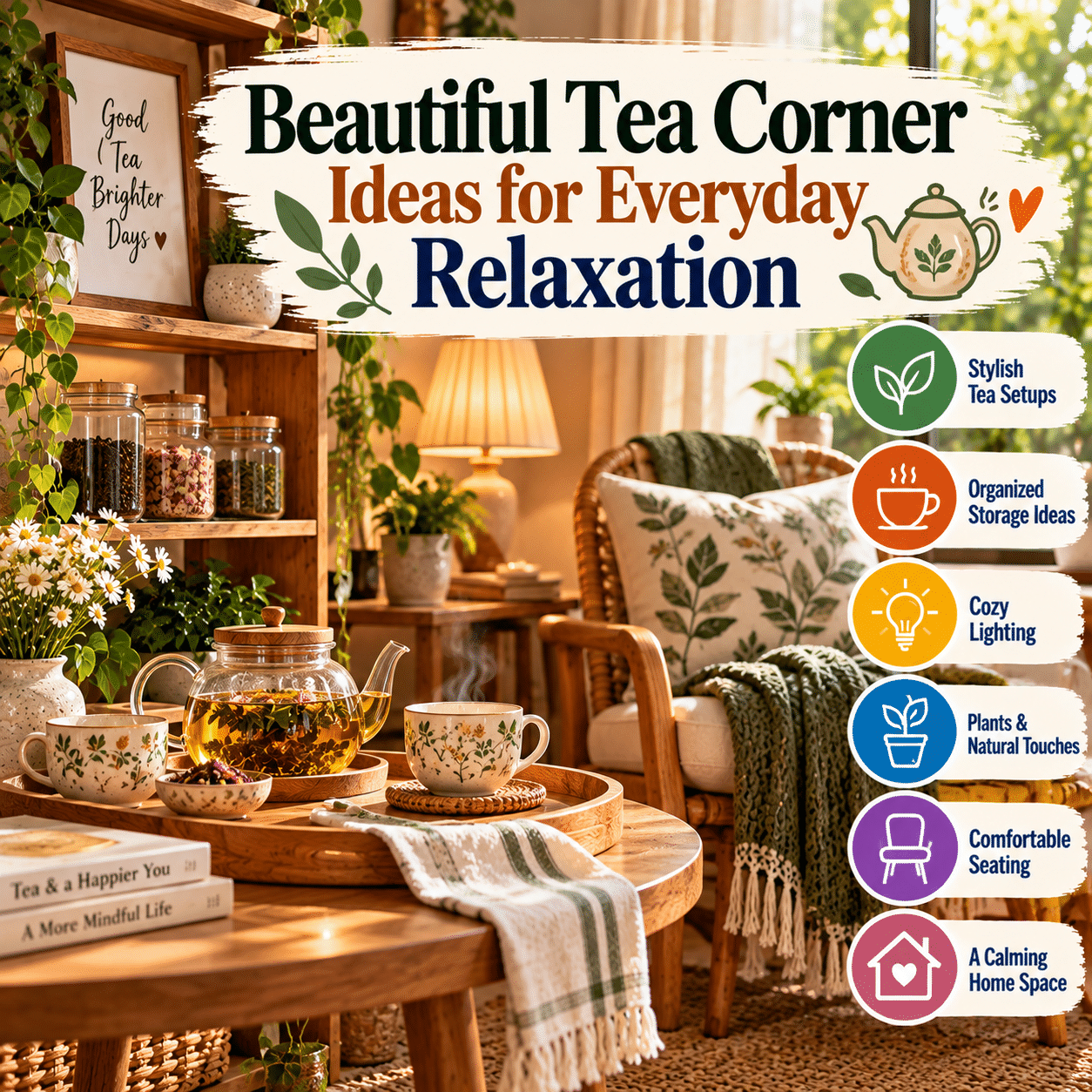
There is something comforting about preparing a cup of tea at home. The gentle sound of water being poured, the warmth of a favorite cup, and the opportunity to enjoy a few quiet moments can make an ordinary day feel a little more pleasant.
A beautiful tea corner brings these small experiences together in one thoughtfully arranged space. It offers a dedicated place for preparing, serving, and enjoying tea while adding warmth and personality to the home.
Unlike a large kitchen renovation or an elaborate home beverage bar, a tea corner can be surprisingly simple. A wooden tray, a small collection of teacups, a practical storage container, and a comfortable place to sit may be enough to create an inviting arrangement.
Tea corners can also reflect many different lifestyles and decorating preferences. Some people enjoy a minimalist setup inspired by simplicity and natural materials. Others prefer a cozy English-style tea nook, a modern tea station with clean lines, or a peaceful corner surrounded by plants and soft lighting.
The most successful tea corners balance three important qualities: beauty, functionality, and personal comfort.
An attractive tea station should make everyday preparation convenient. A comfortable seating area should encourage you to enjoy the space. Decorative details should enhance the atmosphere without creating unnecessary clutter or maintenance.
Whether you live in a spacious house, a small apartment, or a home with limited kitchen space, there are creative ways to make tea preparation and relaxation part of your everyday surroundings.
This guide explores timeless tea corner ideas, practical storage solutions, different decorating styles, comfortable seating arrangements, lighting, natural materials, and simple ways to create a peaceful tea experience at home.
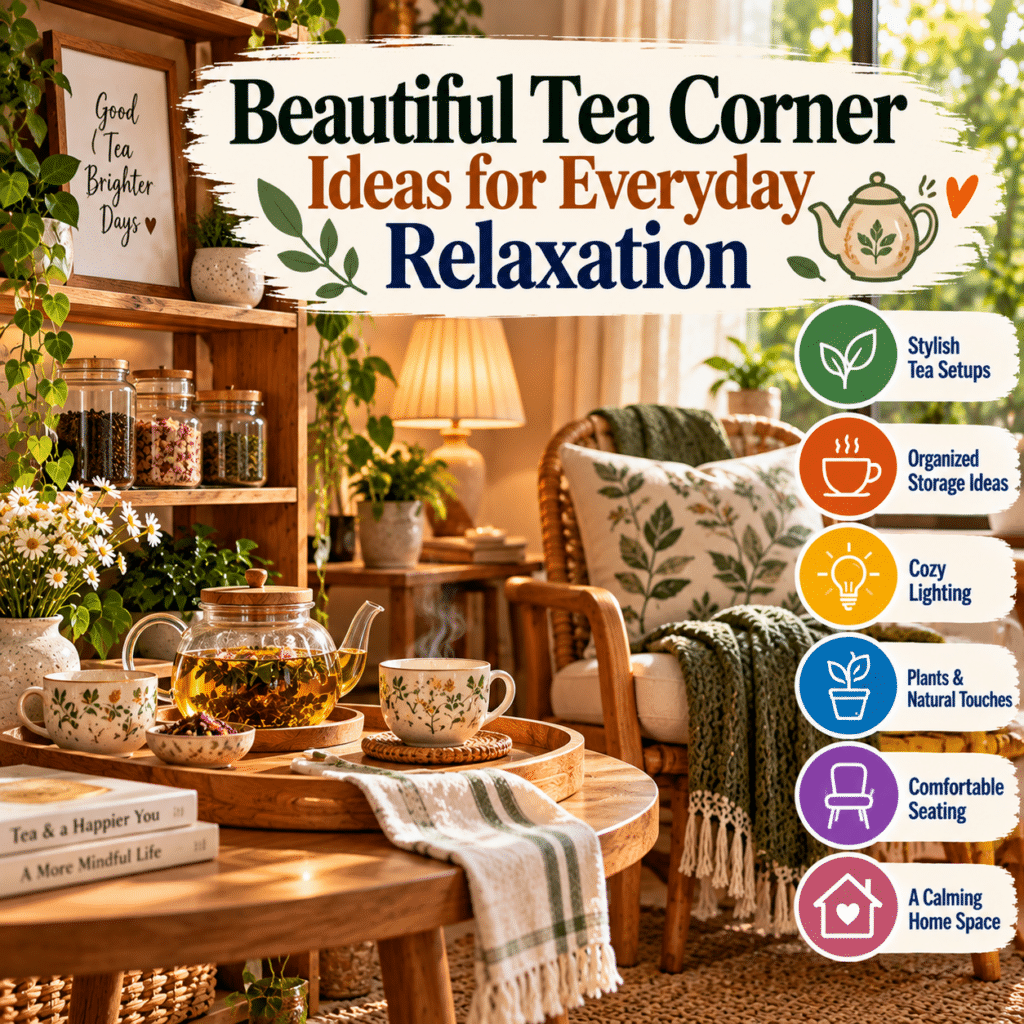
1. What Makes a Tea Corner Feel Special?
A tea corner is a designated area where tea-related supplies, accessories, and sometimes seating are arranged to support a comfortable tea-drinking routine.
It can take several forms.
A compact tea station might occupy one section of a kitchen countertop. A larger arrangement might include a sideboard, shelves, a small table, and comfortable chairs.
Some tea corners focus on preparation, while others emphasize relaxation.
The ideal design depends on how you enjoy tea.
A Dedicated Place for Everyday Rituals
Keeping tea supplies together makes preparation easier.
Instead of searching through different cabinets for tea, cups, and accessories, you can arrange the essentials in one convenient location.
An Opportunity to Slow Down
A tea corner can provide a pleasant setting for activities such as reading, journaling, conversation, or simply sitting quietly.
It does not need to be completely separate from the rest of the home.
A Personal Decorating Feature
Teacups, ceramics, wooden trays, textiles, and botanical details can contribute to a warm and welcoming atmosphere.
A Flexible Space
A tea corner can evolve over time.
You might begin with a simple tray and later introduce shelving, a small table, or additional storage.
A Practical Part of the Home
The best tea corner is not merely decorative.
It should make preparing tea, cleaning accessories, and storing supplies easier.
A beautiful arrangement becomes more valuable when it fits naturally into everyday life.
2. Choose the Right Location for Your Tea Corner
The location determines how convenient and comfortable your tea corner will be.
Before selecting furniture or accessories, consider where tea preparation and relaxation would work best.
Kitchen Countertop Tea Station
A kitchen countertop is one of the most practical locations.
It usually provides convenient access to water, electricity, and cleaning facilities.
A compact tray or organizer can define the tea area without requiring additional furniture.
However, preserve sufficient countertop space for food preparation.
Dining Room Tea Corner
A dining room sideboard can become an attractive tea station.
This arrangement works particularly well when tea is often served to guests.
A nearby dining table provides a convenient place to sit and enjoy drinks.
Living Room Tea Nook
A living room corner can create a welcoming setting for tea and conversation.
A small table, comfortable chair, and suitable storage may be enough.
If hot water is prepared elsewhere, the living room setup can focus on serving and relaxation.
Bedroom Tea Corner
A small bedroom nook can provide a quiet place for reading or enjoying a warm drink.
Keep hot beverages away from bedding, electrical devices, and unstable surfaces.
Window-Side Tea Corner
A location near a window may offer pleasant daylight and outdoor views.
Choose seating and furniture that do not obstruct access or create glare.
Covered Balcony Tea Area
A suitable covered balcony can provide a refreshing place to enjoy tea.
Use furniture appropriate for the environment and avoid placing objects near unsafe edges.
Consider Practical Requirements
Before choosing a location, ask:
- Is there enough space for the intended furniture?
- Is the surface stable and level?
- Is water conveniently available?
- Can spills be cleaned easily?
- Are electrical outlets suitable for the equipment?
- Is there enough lighting?
- Will the arrangement obstruct walking paths?
- Can hot beverages be handled safely?
A thoughtfully chosen location helps the tea corner remain comfortable and practical over time.
3. Decide Whether You Want a Tea Station or a Tea Nook
Although the terms are often used interchangeably, a tea station and a tea nook can serve slightly different purposes.
Tea Station
A tea station focuses primarily on preparing and organizing tea.
It may include:
- Tea containers
- Teacups and mugs
- A kettle
- A teapot
- Tea strainers or infusers
- Spoons
- A tray
- Suitable storage
This arrangement works well in kitchens and dining areas.
Tea Nook
A tea nook focuses more on the experience of sitting and enjoying tea.
It may include:
- Comfortable seating
- A small table
- Soft lighting
- Cushions
- Books
- Plants
- Decorative accessories
Tea may be prepared in the kitchen and brought to the nook.
Combined Tea Corner
A larger tea corner can include both preparation and seating.
For example, a sideboard might hold tea supplies while two nearby chairs create a comfortable place for conversation.
Which Arrangement Is Better?
Choose a tea station if convenience and organization are your priorities.
Choose a tea nook if you want a dedicated relaxation area.
Combine the two when space and household routines allow.
Neither arrangement requires expensive equipment or elaborate decoration.
4. Create a Warm and Welcoming Color Palette
Color plays an important role in shaping the atmosphere of a tea corner.
A cohesive palette can make the space feel calm, comfortable, and visually connected to the surrounding room.
Warm White and Cream
Warm whites and cream shades create a soft foundation.
They complement wooden furniture, ceramics, and natural textiles.
Sage and Olive Green
Muted greens can introduce a botanical character.
They work particularly well with wood, woven accessories, and neutral walls.
Beige and Soft Brown
Earth-inspired neutrals create warmth without overwhelming a small space.
Muted Blue
Soft blue and blue-gray tones can provide a gentle contrast to warm wood and cream-colored ceramics.
Terracotta and Clay
Earthy accents add character and visual depth.
A terracotta planter or ceramic bowl may be enough to introduce these colors.
Dark Green and Navy
Deeper shades can create an intimate atmosphere.
Balance them with suitable lighting and lighter accessories.
Repeat Colors Thoughtfully
Choose a few complementary colors and repeat them across teacups, cushions, containers, and artwork.
A consistent palette makes the corner feel intentional without requiring everything to match.
5. Introduce Natural Wood for a Cozy Atmosphere
Wood is a versatile material for tea corner styling.
Its grain and warm tones can complement ceramic teaware, glass containers, and metal accessories.
Choose a Wooden Tea Tray
A tray can organize cups, a teapot, and small accessories.
Select one that is stable and appropriate for serving hot beverages.
Use a Wooden Side Table
A compact side table can provide a comfortable place to set down a cup.
Choose a suitable height and stable construction.
Add Wooden Shelves
Shelves can hold tea containers, teaware, and lightweight decorative objects.
Install them securely and observe weight limits.
Consider a Wooden Tea Cabinet
A small cabinet can provide concealed storage while contributing to the room’s appearance.
Mix Wood With Ceramics
Wooden surfaces and ceramic teacups create an appealing contrast between natural grain and smooth finishes.
Protect Wooden Surfaces
Tea preparation involves heat and moisture.
Use suitable coasters or protective trays and clean spills promptly.
Follow the manufacturer’s care instructions for wood finishes.
6. Choose Teaware That Is Beautiful and Practical
Teaware can be both functional and decorative.
A small collection of thoughtfully chosen pieces often contributes more to the atmosphere than a large assortment of rarely used accessories.
Ceramic Teapots
Ceramic teapots are available in many shapes, finishes, and styles.
Choose one designed for hot beverages and suitable for your preferred brewing method.
Glass Teapots
Heat-resistant glass teapots can allow you to observe the tea as it steeps.
Use only glassware designed for the temperatures and conditions involved.
Porcelain Teacups
Porcelain cups can create a classic and elegant appearance.
Check the manufacturer’s care instructions.
Stoneware Mugs
Stoneware mugs can provide a casual, comfortable style.
Their appearance often complements rustic and modern-organic interiors.
Tea Infusers
Reusable infusers can help prepare loose-leaf tea.
Choose a design that allows sufficient space for the leaves to expand.
Serving Trays
A tray can organize teaware and make serving more convenient.
Select a stable design with sufficient capacity for the intended items.
Avoid Buying Too Much Teaware
Begin with pieces you actually use.
A favorite teapot and a few comfortable cups may be enough for an inviting everyday tea experience.
7. Organize Tea Varieties With Thoughtful Storage
Tea storage influences both convenience and quality.
An attractive tea collection should also be protected from unsuitable storage conditions.
Use Suitable Containers
Tea is generally best stored away from excessive moisture, heat, light, and strong odors.
Well-sealed containers can help preserve its aroma and character.
Consider Opaque Tea Tins
Opaque containers help limit light exposure.
They can also create a coordinated appearance on shelves.
Organize by Tea Type
You might group teas into categories such as:
- Black tea
- Green tea
- White tea
- Oolong tea
- Herbal infusions
- Flavored teas
- Decaffeinated options
The categories should reflect your actual collection.
Label Containers Clearly
Labels can help identify different varieties.
When transferring packaged tea, retain important information such as ingredients, allergens, storage instructions, and best-before dates.
Avoid Excessive Heat and Steam
Do not store tea directly above kettles or other equipment that releases significant heat or moisture.
Keep Strong Aromas Separate
Some flavored teas have strong aromas that may affect nearby products.
Appropriate sealed storage can help reduce unwanted odor transfer.
Organize for Easy Access
Place frequently used teas where they are easy to reach.
Store occasional varieties elsewhere if space is limited.
The goal is a collection that is simple to use and maintain.
8. Create a Beautiful Tea Corner With Open Shelving
Open shelves can make tea accessories part of the room’s decoration.
They are particularly useful when floor space is limited.
Display Favorite Teacups
Arrange a small collection of cups according to color, shape, or size.
Add Tea Containers
Coordinated tins or suitable storage jars can create a tidy appearance.
Include a Decorative Object
A small ceramic vase or framed botanical print can soften the arrangement.
Leave Breathing Room
Avoid filling every shelf completely.
Open space makes the display easier to appreciate.
Combine Open and Closed Storage
Display attractive everyday pieces while keeping extra supplies inside cabinets.
Consider Cleaning Requirements
Open shelves can collect dust and cooking grease.
Use them for items that are easy to clean and appropriate for the location.
Prioritize Stability
Heavy teapots and ceramic collections require secure shelving.
Avoid stacking fragile items precariously.
9. Design a Peaceful Window-Side Tea Nook
A window-side tea corner can provide a pleasant setting for quiet moments.
Natural daylight and outdoor views may make the space feel more open and inviting.
Position a Comfortable Chair
Choose seating that fits the available space.
Avoid blocking windows, doors, or walking paths.
Add a Small Table
A stable table provides a convenient place for a teacup and book.
Use Soft Window Treatments
Sheer curtains can soften bright sunlight.
Blinds or lined curtains may provide additional privacy and heat control.
Introduce a Cushion
A supportive cushion can improve seating comfort.
Add a Plant When Suitable
A plant can introduce greenery, provided the light and maintenance conditions are appropriate.
Consider the View
Arrange the chair to take advantage of a pleasant outdoor view when possible.
A window-side tea nook does not need elaborate decoration.
Comfortable seating, a stable table, and suitable lighting may be enough.
10. Create a Minimalist Tea Corner
Minimalist tea corners emphasize simplicity, functionality, and visual balance.
They are especially suitable for compact homes.
Keep Only Essential Teaware
Choose a teapot or brewing vessel, cups, and the accessories you regularly use.
Use a Limited Color Palette
Warm white, beige, natural wood, and muted accents can create a cohesive appearance.
Choose Simple Storage
A small tray or cabinet may provide sufficient organization.
Avoid Excessive Decoration
One meaningful object can create more visual interest than numerous unrelated accessories.
Keep Surfaces Clear
Leave enough space for preparing and serving tea.
Focus on Comfort
Minimalism should not make the area feel cold or inconvenient.
Soft lighting, a comfortable chair, or natural materials can add warmth.
The goal is not to own as little as possible, but to keep the space purposeful.
11. Explore Japanese-Inspired Tea Corner Ideas
Japanese-inspired tea corners often emphasize simplicity, natural materials, and thoughtful presentation.
However, traditional Japanese tea practices have cultural meanings and established customs that extend far beyond interior decoration.
A home tea corner can draw inspiration from selected design qualities without claiming to recreate a traditional tea ceremony.
Use Natural Materials
Wood, ceramics, bamboo-inspired details, and neutral textiles can create a restrained appearance.
Choose Simple Forms
Clean lines and carefully selected accessories can support visual balance.
Consider Low Furniture
A low table may suit people who enjoy floor seating.
However, floor seating is not comfortable or accessible for everyone.
Include a Small Botanical Accent
A simple branch arrangement or suitable plant can introduce an organic element.
Avoid Excessive Decoration
A restrained arrangement can help individual objects stand out.
Respect Cultural Context
If you are interested in traditional Japanese tea practices, learn about their history and etiquette through reliable cultural and educational resources.
A Japanese-inspired decorating style and a formal tea ceremony are not interchangeable.
12. Create an English Cottage-Inspired Tea Corner
An English cottage-inspired tea corner can feel warm, charming, and traditional.
It often combines classic teaware, soft textiles, and decorative details.
Choose Classic Teacups
Porcelain cups or suitable floral designs can introduce traditional character.
Add a Small Tablecloth
A cotton or linen tablecloth can soften a tea table.
Choose a fabric that is practical to clean.
Display a Teapot
A favorite teapot can become a decorative focal point.
Introduce Floral Details
Botanical prints, fresh flowers, or patterned textiles can create a cottage-inspired atmosphere.
Use Warm Lighting
A table lamp can make the corner inviting in the evening.
Avoid Overcrowding
Traditional styling can include decorative layers, but the table should remain practical for serving tea.
The goal is to create a welcoming atmosphere rather than reproduce a formal historical interior.
13. Design a Modern Organic Tea Corner
Modern organic styling combines contemporary furniture with natural materials and soft shapes.
It is well suited to tea corners because it balances simplicity with warmth.
Choose Rounded Furniture
A circular side table or gently curved chair can create a softer appearance.
Use Earth-Inspired Colors
Cream, taupe, clay, and muted green work well together.
Add Textured Ceramics
Matte ceramic teaware can introduce visual depth.
Incorporate Natural Wood
Wooden furniture and trays can complement modern finishes.
Introduce Greenery
A suitable plant or botanical artwork can provide a connection to nature.
Keep the Arrangement Balanced
Avoid filling the space with too many decorative objects.
A few thoughtfully selected materials can create a cohesive atmosphere.
14. Make a Tea Corner Feel Cozy With Soft Textures
Textiles can make a tea nook more comfortable and inviting.
Add a Throw Blanket
A lightweight throw may be useful in an air-conditioned room.
A thicker blanket may suit cooler conditions.
Choose Supportive Cushions
Cushions can improve seating comfort.
Select sizes and firmness levels appropriate for the chair.
Introduce a Small Rug
A rug can visually define the tea area and soften hard flooring.
Use a non-slip pad where appropriate.
Consider Linen or Cotton
These fabrics can create a relaxed appearance and are available in many textures.
Use Woven Storage
A basket can hold blankets, books, or other lightweight items.
Balance Soft and Hard Materials
A wooden table, ceramic teapot, and textured cushion can create visual interest through contrast.
Avoid placing loose fabrics near kettles, candles, or other heat sources.
15. Use Lighting to Create a Welcoming Tea Atmosphere
Lighting affects both the appearance and functionality of a tea corner.
Take Advantage of Daylight
A bright location can feel pleasant during the day.
Manage direct sunlight when it causes glare or excessive heat.
Add a Table Lamp
A small lamp can provide comfortable evening illumination.
Consider Warm-White Lighting
Warm-white bulbs, commonly around 2700K to 3000K, can create a gentle atmosphere.
Provide Adequate Task Lighting
Preparing tea involves handling hot water and reading instructions.
Ensure that the preparation surface is sufficiently illuminated.
Use Accent Lighting Carefully
Subtle shelf lighting can highlight teaware or decorative objects.
Avoid Unsafe Lighting Arrangements
Keep electrical cords away from walking paths and water.
Do not place fabric decorations against hot light sources.
Battery-operated decorative lights may be an option when used according to their safety instructions.
16. Add Plants and Botanical Details
Plants and botanical accessories can make a tea corner feel connected to nature.
Choose a Small Houseplant
A compact plant can fit on a shelf or side table.
Select one suited to the available light.
Use a Ceramic Planter
A planter can complement teacups and other ceramic accessories.
Display Botanical Prints
Framed botanical illustrations can provide greenery-inspired decoration without maintenance.
Try a Simple Branch Arrangement
A carefully arranged branch can create a sculptural focal point.
Consider Dried Flowers
Dried botanical arrangements can introduce texture and muted colors.
Keep them away from flames and excessive moisture.
Maintain Household Safety
Some plants are toxic to pets or children.
Choose species carefully and keep soil, fertilizers, and plant-care products away from food preparation areas.
17. Create a Tea Corner in a Small Apartment
A small apartment can accommodate a charming tea corner when the arrangement is compact and practical.
Use a Narrow Countertop Section
A small tray may be enough to organize essential supplies.
Choose Wall-Mounted Storage
Suitable shelves can provide storage without occupying floor space.
Use a Compact Side Table
A small table beside a chair can create a simple tea nook.
Consider a Storage Ottoman
An ottoman may provide seating support and storage for suitable lightweight items.
Keep Equipment Minimal
Choose brewing tools that reflect your actual habits.
Use Multipurpose Furniture
A dining table can also serve as a tea area when arranged thoughtfully.
Preserve Clear Walkways
Do not allow furniture or accessories to obstruct doors and circulation.
Small spaces often benefit from fewer, more purposeful objects.
18. Turn a Sideboard Into a Beautiful Tea Station
A sideboard can provide a dedicated surface for tea preparation and storage.
Choose a Stable Surface
Ensure the furniture can safely support the intended equipment.
Organize the Top
Use a tray to group teaware and frequently used accessories.
Store Extra Supplies Inside
Drawers or cabinets can hold additional tea, cups, and serving items.
Add a Decorative Backdrop
A framed print or suitable wall decoration can help define the area.
Use a Small Lamp
A lamp may create a welcoming atmosphere when the station is not being used for preparation.
Protect the Furniture
Use appropriate heat-resistant surfaces and clean spills promptly.
Avoid operating kettles or other heat-producing appliances where ventilation and clearance requirements cannot be met.
19. Create a Tea Corner for Reading and Journaling
Tea pairs naturally with quiet activities such as reading or journaling.
A thoughtfully arranged corner can support both.
Choose Comfortable Seating
Select a chair that provides appropriate support.
Add a Stable Table
A small table can hold a cup, notebook, and reading materials.
Provide Suitable Lighting
Reading and writing require adequate illumination.
Keep Supplies Accessible
A basket or shelf can hold books and notebooks.
Use a Simple Color Palette
Muted colors and natural materials can create a cohesive appearance.
Reduce Unnecessary Clutter
Keep the area focused on the activities you enjoy.
Protect Books and Electronics
Use a stable cup placement and avoid keeping hot beverages near sensitive items.
The most useful reading-and-tea corner is one that supports comfort without requiring elaborate preparation.
20. Make a Tea Corner Welcoming for Guests
A tea corner can become a pleasant place for conversation and hospitality.
Keep Extra Cups Available
Store clean cups where they can be accessed easily.
Offer Different Tea Options
A small selection of teas can accommodate different preferences.
Provide a Serving Tray
A stable tray can make serving more convenient.
Arrange Comfortable Seating
If space allows, position chairs to support conversation.
Keep the Table Practical
Leave room for cups and serving items.
Consider Dietary Preferences
Some guests may avoid caffeine or certain herbal ingredients.
Offer alternatives when possible and avoid assuming that all herbal teas are suitable for everyone.
Keep Preparation Simple
An organized tea station can make hosting more comfortable without requiring elaborate arrangements.
21. Combine a Tea Corner With a Coffee Station
A combined tea and coffee station can be useful in households with different beverage preferences.
Establish Separate Storage Zones
Keep tea and coffee supplies organized in distinct areas.
Share Common Accessories
Mugs, spoons, trays, and some kettles may serve both purposes.
Store Ingredients Appropriately
Tea and coffee may have different storage needs.
Keep both away from excessive moisture, heat, and strong odors.
Avoid Overcrowding
Choose equipment according to actual use.
Maintain Easy Cleaning Access
Leave enough room to prepare drinks and clean surfaces.
Use a Cohesive Design
Matching materials or complementary colors can visually connect the two areas.
A combined station can remain attractive without requiring duplicate accessories.
22. Create a Tea Corner on a Budget
A beautiful tea corner does not need expensive furniture or a large collection of teaware.
Begin With a Favorite Cup
A meaningful mug or teacup can establish the personal character of the space.
Reuse an Existing Tray
A tray can organize essential supplies.
Rearrange Furniture
Move a suitable chair or small table into an underused corner.
Repurpose Storage
An existing cabinet or shelf may provide enough space for tea supplies.
Display Personal Artwork
A favorite photograph or print can create a welcoming atmosphere.
Add One Comfortable Textile
A cushion or throw may improve the seating area.
Consider Secondhand Furniture
A sturdy secondhand side table or cabinet may offer good value.
Inspect its condition before use.
Upgrade Gradually
Use the tea corner for a while before deciding what additional items would genuinely improve it.
Thoughtful organization often makes a bigger difference than buying more accessories.
23. Keep Your Tea Corner Easy to Clean and Maintain
A relaxing space should not create unnecessary household work.
Simple maintenance helps preserve its appearance and functionality.
Clean Teaware Regularly
Wash cups, teapots, and infusers according to their materials and manufacturer instructions.
Dry Equipment Appropriately
Allow suitable accessories to dry before storing them.
Wipe Surfaces Promptly
Tea spills may stain certain materials or damage finishes.
Organize Supplies Periodically
Check tea packages and remove products that are no longer suitable for use.
Keep Shelves Clean
Open displays may collect dust.
Avoid Excessive Accessories
A smaller collection of useful objects is easier to maintain.
Review the Layout
If the arrangement becomes inconvenient, simplify it.
A beautiful tea corner should remain enjoyable during everyday use.
24. Common Tea Corner Decorating Mistakes to Avoid
Several common mistakes can make a tea corner less comfortable or functional.
Choosing an Inconvenient Location
A visually attractive corner may not be practical if it lacks suitable access or space.
Overcrowding the Table
Too many decorations can leave insufficient room for serving tea.
Using Unstable Furniture
Hot beverages require stable surfaces.
Ignoring Storage Conditions
Tea can lose quality when exposed to unsuitable moisture, heat, or odors.
Buying Too Much Teaware
A large collection can become difficult to organize and maintain.
Using Inadequate Lighting
Preparation and reading require suitable illumination.
Placing Electrical Equipment Unsafely
Kettles and other appliances should be used according to their instructions.
Choosing Uncomfortable Seating
A chair should suit the activities and people using it.
Following a Style Too Strictly
A tea corner should reflect personal preferences rather than a rigid decorating formula.
25. A Step-by-Step Plan to Create Your Tea Corner
Creating a tea corner can be a manageable home project.
Step 1: Decide How You Want to Use It
Choose whether the space will focus on tea preparation, relaxation, or both.
Step 2: Find a Suitable Location
Consider available space, lighting, access, and safety.
Step 3: Select Essential Teaware
Begin with a brewing vessel, cups, and necessary accessories.
Step 4: Organize Tea Storage
Choose suitable containers and keep frequently used varieties accessible.
Step 5: Add a Stable Surface
Use a countertop, sideboard, or small table.
Step 6: Choose a Color Palette
Select colors that complement the surrounding room.
Step 7: Introduce Natural Materials
Wood, ceramics, and suitable textiles can add warmth.
Step 8: Improve Lighting
Provide appropriate illumination for preparation and relaxation.
Step 9: Add Personal Details
Include a favorite teacup, artwork, or botanical accent.
Step 10: Use and Refine the Space
Enjoy the corner for several days.
Notice whether the arrangement supports your routines and adjust it as needed.
26. Tea Corner Planning Checklist
Use this checklist to evaluate your tea corner.
Location and Layout
- The location suits my daily routine.
- Furniture fits the available space.
- Walking paths remain clear.
- Surfaces are stable.
- Cleaning access is convenient.
Tea Preparation
- Essential teaware is accessible.
- Tea is stored appropriately.
- Hot water can be handled safely.
- Cups and accessories are easy to clean.
- Equipment has appropriate operating clearance.
Style and Comfort
- Colors complement the surrounding room.
- Materials feel cohesive.
- Lighting is comfortable and functional.
- Seating provides appropriate support.
- Decorative details reflect personal preferences.
Organization
- Tea varieties are easy to identify.
- Important labels and dates are preserved.
- Frequently used supplies are within reach.
- Extra accessories have suitable storage.
- Surfaces are not overcrowded.
Long-Term Enjoyment
- The corner is easy to maintain.
- Materials suit the home environment.
- The arrangement supports everyday use.
- Purchases serve a practical purpose.
- The space feels welcoming and personal.
Frequently Asked Questions About Tea Corners at Home
1. How much space do I need for a tea corner?
A tea corner can fit into a small countertop section or an underused part of a room. The required space depends on whether you want a preparation station, a seating nook, or both. A tray and a few essential accessories may be enough for a compact setup.
2. How can I make a tea corner look cozy?
Use warm colors, natural wood, ceramic teaware, comfortable textiles, and suitable lighting. Add a few meaningful accessories while keeping the arrangement organized and easy to use.
3. What should I include in a basic tea station?
A basic tea station may include tea, cups, a teapot or infuser, a kettle where appropriate, and suitable storage. A tray can help organize accessories, while additional items depend on personal preferences.
4. Can I create a tea corner in a small apartment?
Yes. A compact tray on the kitchen counter, a narrow shelf, or a small table beside a chair can create an inviting tea area. Prioritize practical storage and clear walking paths.
5. What is the best way to store tea at home?
Tea is generally best stored in suitable sealed containers away from excessive moisture, heat, light, and strong odors. Preserve important information from the original packaging when transferring tea into other containers.
6. Do I need special teaware to create a beautiful tea corner?
No. A favorite mug, suitable brewing vessel, and practical storage may be enough. Specialized teaware can be added if it supports your preferred brewing method.
7. Can a tea corner also be used for reading or relaxation?
Absolutely. A comfortable chair, stable side table, suitable lighting, and a small collection of books can turn a tea corner into a pleasant place for reading, journaling, or quiet reflection.
Conclusion: Create a Tea Corner That Makes Everyday Moments More Enjoyable
A beautiful tea corner is not defined by expensive teaware, elaborate furniture, or a perfectly coordinated collection of accessories.
Its appeal comes from the way thoughtful details make everyday tea preparation more convenient, comfortable, and enjoyable.
A favorite cup, a practical tray, a small wooden table, and a few well-organized tea varieties can create an inviting arrangement without requiring much space.
Natural materials, gentle colors, soft lighting, and comfortable seating can enhance the atmosphere. However, the most important consideration is whether the corner supports the way you actually enjoy tea.
Some people prefer a compact kitchen station where everything is ready for a quick morning cup. Others enjoy a window-side nook where they can read, reflect, or share conversation.
Both approaches can be equally beautiful when designed with care.
Begin with the essentials, use items you already own, and introduce additional details gradually. Allow the space to evolve as your habits and preferences change.
Over time, your tea corner may become one of the most welcoming places in your home—not because it is elaborate, but because it offers a familiar setting for small moments of comfort.
The beauty of a home tea corner lies in its simplicity: a thoughtfully arranged space, a favorite cup of tea, and the freedom to enjoy a peaceful moment in the middle of everyday life.