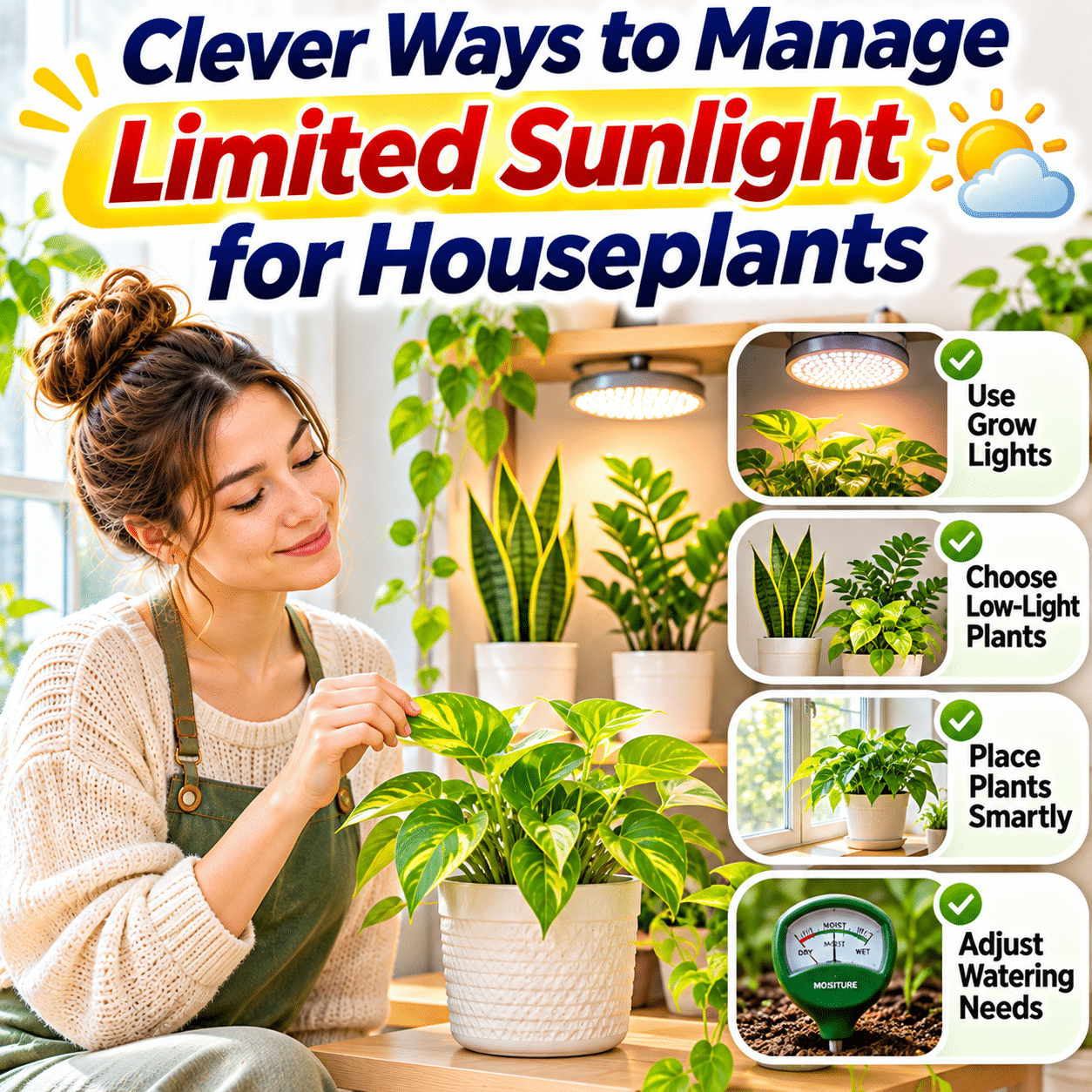
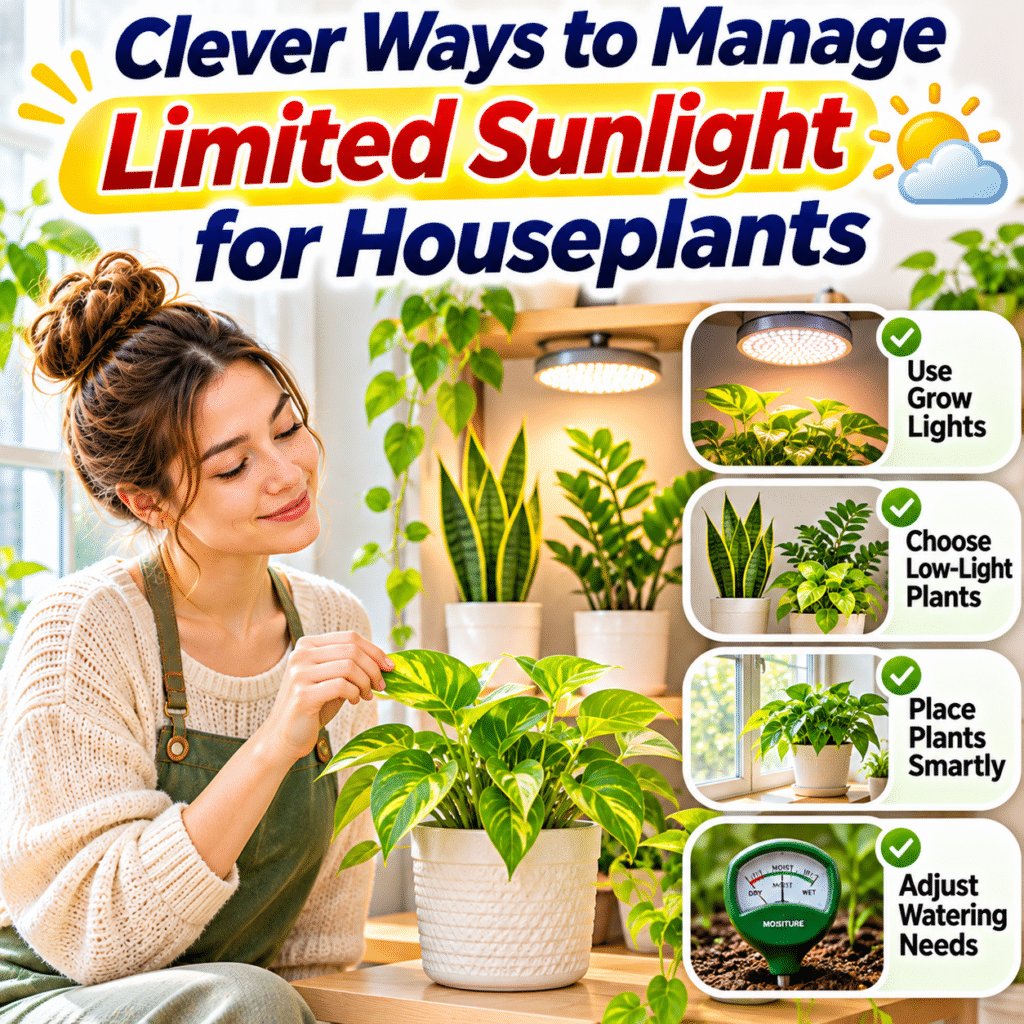
Indoor plants bring natural beauty, texture, and a refreshing touch of greenery into everyday living spaces. From small plants on bookshelves to larger leafy varieties in living rooms, houseplants can make a home feel warmer, calmer, and more connected to nature.
However, not every home receives abundant natural sunlight. Apartments surrounded by tall buildings, rooms with small windows, north-facing spaces, shaded balconies, and interior corners may receive limited daylight throughout the year.
For plant lovers, these conditions can create challenges. Some houseplants grow slowly, develop weak stems, lose their vibrant appearance, or struggle to maintain healthy foliage when they receive insufficient light.
The good news is that limited sunlight does not necessarily mean giving up on indoor greenery.
With thoughtful plant selection, careful placement, appropriate supplemental lighting, and realistic maintenance routines, many houseplants can adapt to spaces with modest natural light.
The key is understanding that different plants have different light requirements. A plant described as “low-light tolerant” may survive in a shaded room, but that does not mean it can thrive without adequate illumination.
Successful indoor gardening involves working with the light available rather than forcing unsuitable plants into conditions they cannot tolerate.
This guide explores clever, practical ways to manage limited sunlight for houseplants, identify common lighting problems, choose suitable plant varieties, and create attractive indoor displays that remain manageable throughout the year.
1. Understand Why Sunlight Matters for Houseplants
Light is essential to plant growth because it provides the energy required for photosynthesis.
During photosynthesis, plants use light energy to convert carbon dioxide and water into sugars that support growth and maintenance.
Without sufficient light, plants may struggle to produce enough energy to sustain healthy development.
Light Influences Plant Growth
Adequate light supports:
- Healthy leaf development.
- Stronger stems.
- Root growth.
- New foliage production.
- Normal plant metabolism.
- Flowering in species that require appropriate light conditions.
The amount of light needed varies significantly between plant species.
Low Light Does Not Mean No Light
A low-light environment still provides some usable illumination.
A room that appears bright to human eyes may provide relatively little light for photosynthesis, particularly several feet away from a window.
Likewise, an interior corner that receives ordinary room lighting may not provide enough light for sustained plant growth.
Light Quality and Duration Matter
Plant growth depends on more than how bright a location appears.
Important factors include:
- Light intensity.
- Duration of exposure.
- Light spectrum.
- Distance from the light source.
- Seasonal changes.
- Plant-specific requirements.
Understanding these factors helps explain why two plants in the same room may respond differently.
2. Identify the Natural Light Available in Your Home
Before purchasing plants or adding grow lights, assess the existing lighting conditions.
Observe Windows Throughout the Day
Look at how sunlight enters the room during the morning, midday, and afternoon.
Notice whether a location receives:
- Direct sunlight.
- Bright indirect light.
- Moderate indirect light.
- Weak indirect light.
- Very little natural illumination.
Consider Window Orientation
Window direction can influence light availability, although the exact pattern depends on hemisphere, latitude, season, and nearby obstructions.
For example, in many Northern Hemisphere locations:
- East-facing windows often receive morning sunlight.
- West-facing windows may receive stronger afternoon sunlight.
- South-facing windows can provide substantial sunlight.
- North-facing windows often receive less direct sunlight.
These patterns are not universal and change with geographic location.
Check Outdoor Obstructions
Buildings, trees, balconies, roof overhangs, and neighboring structures may block sunlight.
A large window does not necessarily guarantee strong plant lighting.
Observe Seasonal Changes
Sun angles and daylight duration change throughout the year.
A shelf that receives adequate light during one season may become significantly darker during another.
Assess the Actual Plant Location
Light intensity often decreases considerably as distance from a window increases.
Evaluate the specific shelf, desk, or corner where the plant will be placed rather than judging the room as a whole.
3. Understand Different Indoor Plant Light Conditions
Common plant-care descriptions can be helpful, but they are approximate rather than standardized measurements.
Bright Direct Light
Direct sunlight reaches the plant without being significantly diffused.
Some succulents, cacti, and sun-loving plants benefit from strong light, although sudden exposure may cause damage.
Bright Indirect Light
The plant receives substantial illumination without prolonged harsh direct sunlight.
Many tropical foliage plants perform well under these conditions.
Medium Indirect Light
The location receives useful daylight but is less intensely illuminated.
Some adaptable foliage plants can grow successfully in these areas.
Low Light
The location receives relatively weak natural illumination.
Certain houseplants can tolerate these conditions, often with slower growth.
Extremely Low Light
Interior spaces with little or no usable natural light may not support long-term plant growth without supplemental lighting.
No ordinary houseplant can remain healthy indefinitely in complete darkness.
4. Choose Houseplants That Tolerate Lower Light Levels
Plant selection is one of the most effective ways to manage limited sunlight.
Rather than choosing plants solely for appearance, match their natural growing requirements to the available environment.
Snake Plant
Snake plants, commonly classified within the genus Dracaena and historically known as Sansevieria, are valued for their upright leaves and adaptability.
They can tolerate relatively low light, although growth is generally better with adequate indirect illumination.
ZZ Plant
The ZZ plant (Zamioculcas zamiifolia) is known for its glossy foliage and tolerance of lower-light conditions.
It typically grows slowly when light is limited.
Pothos
Pothos (Epipremnum aureum) is a popular trailing plant.
Many varieties adapt to moderate or lower indirect light, although variegated forms may lose some of their distinctive coloration when illumination is insufficient.
Cast Iron Plant
The cast iron plant (Aspidistra elatior) is valued for its tolerance of shaded conditions.
It is often suitable for indoor areas that receive limited indirect daylight.
Chinese Evergreen
Many Aglaonema varieties adapt to moderate or lower-light environments.
However, lighting requirements vary among cultivars.
Heartleaf Philodendron
Heartleaf philodendron (Philodendron hederaceum) is another adaptable foliage plant that can tolerate modest indirect illumination.
Important Consideration
Low-light tolerance does not mean unlimited shade tolerance.
Even adaptable species need enough light to maintain essential biological functions.
Also consider household safety: several popular houseplants, including pothos, philodendrons, ZZ plants, and snake plants, can be harmful if chewed or ingested by pets or children.
5. Position Plants Closer to Available Natural Light
Sometimes the simplest solution is changing where a plant is displayed.
Use Window-Adjacent Locations
Placing suitable plants closer to windows can significantly improve their access to natural light.
Avoid Blocking Light With Furniture
Tall furniture, thick curtains, and large decorative objects may reduce illumination.
Rearranging nearby objects can improve light exposure without requiring additional equipment.
Use Window Shelves Carefully
Stable shelves can provide useful growing space near windows.
Ensure that containers are securely positioned and do not interfere with window operation.
Consider Plant Height
A tall plant placed beside a window may receive more light in its upper foliage than near its base.
Choose arrangements that provide suitable illumination across the plant.
Keep Plants Away From Temperature Extremes
Window-adjacent locations may expose plants to:
- Cold drafts.
- Hot glass.
- Strong afternoon sunlight.
- Air-conditioning airflow.
- Significant temperature fluctuations.
Light availability should be balanced with appropriate temperature conditions.
6. Make Better Use of Indirect Daylight
Not every plant needs direct sunlight.
Many common houseplants originate from environments where sunlight is filtered through surrounding vegetation.
Use Naturally Bright Rooms
A room with large windows may provide useful indirect light even when sunlight does not fall directly onto the plant.
Choose Open Display Areas
Avoid placing plants deep inside enclosed shelves or behind large furniture.
Consider Light-Colored Surroundings
Light-colored walls and nearby surfaces can reflect some incoming light.
This may modestly improve illumination in certain locations.
However, reflective decor cannot replace an adequate light source.
Keep Windows Clean
Dust and dirt on windows can reduce the amount of daylight entering a room.
Routine cleaning helps maintain available illumination.
Use Curtains Thoughtfully
Sheer curtains can diffuse strong sunlight while allowing daylight into the room.
Heavy curtains may substantially reduce light when kept closed.
Choose window treatments based on both plant requirements and household comfort.
7. Use Mirrors and Reflective Surfaces Realistically
Mirrors and reflective surfaces can redirect some existing light.
They may be useful in certain room arrangements, but their effectiveness depends on placement.
Position Mirrors Strategically
A mirror may redirect daylight toward a darker part of a room if its angle and location are suitable.
Avoid Expecting Dramatic Results
Reflected light is generally less useful than placing a plant directly in a suitably illuminated location.
Consider Glare and Heat
Strong reflected sunlight can create glare or concentrated illumination.
Avoid arrangements that direct intense sunlight toward heat-sensitive materials or create discomfort.
Choose Practical Reflective Surfaces
Light-colored walls and appropriately positioned reflective objects may help distribute daylight.
Measure Results When Necessary
If plant growth remains poor, evaluate actual light levels rather than assuming a brighter-looking room provides adequate photosynthetic light.
8. Consider Supplemental Grow Lights
Grow lights can be useful when natural daylight is insufficient.
They are particularly valuable for interior rooms, shaded apartments, and seasonal low-light conditions.
Understand What Grow Lights Do
Grow lights provide artificial illumination that plants can use for photosynthesis.
Their effectiveness depends on:
- Light output.
- Spectrum.
- Distance from the plant.
- Coverage area.
- Daily operating duration.
- Plant requirements.
Choose Lights Designed for Plant Growth
Some ordinary household lights may provide useful illumination, but products designed for horticultural use often provide clearer information about plant-growing performance.
Consider LED Grow Lights
LED grow lights are popular because they can offer relatively efficient operation and flexible installation.
However, energy use, heat output, and light performance vary among products.
Check Manufacturer Specifications
Look for information about:
- Recommended hanging distance.
- Coverage area.
- Power consumption.
- Photosynthetic photon flux density, when provided.
- Suitable plant types.
- Installation requirements.
Avoid Assuming More Light Is Always Better
Excessively intense or prolonged lighting can stress some plants.
Supplemental lighting should match the plant’s needs rather than simply maximizing brightness.
9. Understand PPFD and Daily Light Integral
For plant owners who want more precise lighting control, two horticultural measurements can be useful.
Photosynthetic Photon Flux Density
Photosynthetic photon flux density, or PPFD, describes the number of photosynthetically active photons reaching a given surface each second.
It is commonly expressed in micromoles per square meter per second (µmol/m²/s).
PPFD helps describe the intensity of plant-usable light at a particular location.
Daily Light Integral
Daily light integral, or DLI, describes the total quantity of photosynthetically active light received over a day.
It is expressed in moles per square meter per day (mol/m²/day).
Why These Measurements Matter
A plant receiving moderate light for many hours may receive a different total daily light exposure from one receiving intense light briefly.
Both intensity and duration influence the overall light environment.
Do You Need Specialized Equipment?
Not necessarily.
Many casual plant owners can achieve satisfactory results through careful placement, plant observation, and manufacturer guidance.
Precise measurements become more useful when growing demanding plants, managing larger collections, or troubleshooting persistent lighting problems.
Understand the Limitations of Phone Apps
Smartphone light-meter applications may provide rough comparisons between locations.
However, their accuracy varies, and ordinary lux measurements do not directly measure PPFD without assumptions about the light spectrum.
10. Set a Consistent Grow Light Schedule
Plants generally benefit from predictable light and dark periods.
Use a Timer
A timer can provide a consistent supplemental lighting schedule without requiring daily manual operation.
Consider Plant-Specific Requirements
Different plants need different total light exposures.
Many common foliage houseplants can be managed with artificial lighting schedules in the approximate range of 10–14 hours per day, but this is only a starting point, not a universal requirement.
Actual needs depend on light intensity, species, and existing daylight.
Account for Natural Daylight
If a plant already receives several hours of useful natural light, supplemental lighting may be needed for a shorter period.
Allow a Dark Period
Plants have biological processes influenced by light-dark cycles.
Avoid leaving grow lights on continuously unless a particular growing system specifically requires it.
Observe Plant Responses
Adjust the lighting schedule if the plant shows signs of inadequate or excessive illumination.
11. Position Grow Lights Safely and Effectively
Even a suitable grow light may perform poorly if positioned incorrectly.
Follow Recommended Distances
Light intensity generally decreases as the distance from the source increases.
Place lights according to manufacturer guidance.
Cover the Entire Plant
A narrow light beam may illuminate only part of a large plant.
Choose suitable coverage for the plant’s size and growth habit.
Avoid Excessive Heat
Some lighting equipment produces enough heat to affect nearby foliage.
Maintain safe clearance.
Secure Mounting Hardware
Use stable supports and appropriate fixtures.
Avoid unstable lamps or improvised installations.
Protect Electrical Components
Keep plugs, outlets, and electrical connections away from watering spills.
Use equipment appropriate for the installation environment.
Inspect Cords and Fixtures
Stop using lighting equipment with damaged cords, overheating, or other electrical defects.
12. Adjust Watering Habits in Low-Light Conditions
Limited sunlight often changes how quickly plants use water.
Understand Slower Water Use
Plants growing in lower light may photosynthesize and grow more slowly.
Depending on the species and environment, they may also use water more slowly.
Avoid Watering on a Rigid Schedule
A plant that needs frequent watering in a bright location may require less frequent watering in a shaded room.
Check Growing Medium Moisture
Use suitable methods such as:
- Feeling the upper growing medium.
- Checking pot weight.
- Using an appropriate moisture meter.
- Observing the plant’s condition.
Maintain Proper Drainage
Low-light conditions do not eliminate the need for drainage.
Excessively wet growing media can reduce oxygen around roots and contribute to root problems.
Consider Temperature and Humidity
Watering frequency also depends on indoor temperature, air movement, humidity, pot size, and growing medium.
Light is only one part of the watering equation.
13. Choose Appropriate Potting Mix for Low-Light Houseplants
Growing media influence how water and air move around plant roots.
Avoid Persistently Waterlogged Conditions
Many common foliage houseplants benefit from growing media that provide both moisture retention and adequate aeration.
Match the Mix to the Species
A tropical foliage plant may require different growing conditions from a succulent or cactus.
Use Containers With Suitable Drainage
For many houseplants, drainage holes make moisture management easier.
Avoid Oversized Pots
A container much larger than the root system may retain unnecessary moisture.
Monitor Changes After Repotting
Fresh growing media can behave differently from older, compacted material.
Adjust watering based on actual moisture conditions rather than previous habits alone.
14. Recognize Signs of Insufficient Light
Plants often show gradual changes when their light requirements are not being met.
Slow or Stalled Growth
A plant may produce fewer new leaves or grow very slowly.
However, slow growth can also be normal during certain seasons.
Leggy Growth
Stems may become unusually elongated as a plant grows toward available light.
This is commonly called etiolation.
Smaller New Leaves
New foliage may be noticeably smaller than earlier leaves.
Loss of Variegation
Some variegated plants may produce greener leaves when grown under insufficient light.
The response varies by species and cultivar.
Leaning Toward Windows
A plant may grow toward a brighter light source.
This is a normal response known as phototropism.
Leaf Yellowing
Yellow leaves can occur under inadequate light, but they may also result from watering problems, nutrient issues, natural aging, or pests.
Reduced Flowering
Flowering plants may produce fewer blooms when light levels are insufficient.
No single symptom proves a lighting problem. Consider the plant’s overall environment before making changes.
15. Distinguish Low-Light Stress From Other Plant Problems
Several common houseplant problems can resemble insufficient light.
| Visible Symptom | Possible Light-Related Cause | Other Possible Causes | Practical Response |
|---|---|---|---|
| Slow growth | Insufficient usable light | Seasonal dormancy, low temperature, root issues | Review growing conditions |
| Yellow leaves | Inadequate light | Overwatering, aging, pests, nutrient issues | Inspect roots and watering habits |
| Long, weak stems | Growth toward limited light | Natural growth habit | Improve suitable illumination |
| Small new leaves | Insufficient energy for growth | Nutrient or root problems | Evaluate overall plant health |
| Drooping foliage | Indirect effects of poor growth conditions | Water stress, temperature stress | Check moisture and environment |
| Faded variegation | Insufficient light for some cultivars | Normal genetic variation | Adjust light gradually |
| Brown leaf patches | Sometimes excessive direct sunlight | Water stress, pests, disease | Identify the actual cause |
| Reduced flowering | Inadequate light | Seasonal cycles, maturity, nutrition | Review species requirements |
Avoid changing watering, fertilizer, light, and potting mix simultaneously unless necessary.
Making one thoughtful adjustment at a time can make troubleshooting easier.
16. Rotate Plants for More Balanced Growth
Plants positioned near windows may receive stronger light from one direction.
Understand Phototropism
Many plants naturally orient their growth toward light.
This can produce uneven growth over time.
Rotate Suitable Pots Occasionally
Turning a pot periodically may encourage more balanced growth.
Avoid Constant Repositioning
Some plants are sensitive to frequent environmental changes.
Maintain reasonably consistent conditions.
Be Careful With Flowering Plants
Certain flowering species may respond poorly to being moved or rotated during sensitive growth stages.
Follow species-specific recommendations.
Inspect Plant Stability
Ensure containers remain stable after repositioning.
Avoid twisting or damaging trailing stems and supports.
17. Keep Plant Leaves Clean to Make Better Use of Available Light
Dust can accumulate on indoor foliage, especially in rooms with limited airflow.
Remove Dust Gently
For plants with smooth leaves, use a soft, slightly damp cloth when appropriate.
Support Delicate Leaves
Avoid pulling or bending foliage while cleaning.
Use Suitable Methods for Textured Leaves
Hairy, velvety, or delicate leaves may require dry brushing or other species-specific methods.
Avoid Unnecessary Leaf-Shine Products
Some products can leave residue or damage foliage.
Inspect for Pests
Cleaning provides an opportunity to look for insects, webbing, sticky residue, and unusual leaf changes.
Clean foliage supports normal plant function, but it cannot compensate for a severely inadequate light source.
18. Arrange Plants According to Their Light Requirements
Grouping plants by lighting needs can simplify care.
Create a Brighter Plant Zone
Reserve the strongest available window locations for plants that need more light.
Use Moderate-Light Areas for Adaptable Species
Some foliage plants can grow successfully in locations receiving useful indirect daylight.
Choose Low-Light-Tolerant Plants for Shadier Spaces
Select species capable of maintaining healthy growth under the available conditions.
Avoid Mixing Incompatible Needs
A sun-loving succulent and a shade-tolerant tropical plant may not perform equally well in the same location.
Consider Plant Size
Large leaves and dense canopies can shade neighboring plants.
Arrange containers so each plant receives suitable illumination.
Leave Maintenance Access
Allow enough space for watering, cleaning, and inspection.
19. Manage Limited Sunlight in Different Household Spaces
Different rooms create different lighting challenges.
| Household Location | Common Light Limitation | Practical Strategy | Important Consideration |
|---|---|---|---|
| North-facing room in many Northern Hemisphere locations | Limited direct sunlight | Choose shade-tolerant plants near windows | Local geography affects light patterns |
| Interior living room | Distance from windows | Use supplemental grow lighting | Ordinary room brightness may be insufficient |
| Home office corner | Furniture blocking daylight | Reposition plants near available light | Keep watering away from electronics |
| Bedroom with small windows | Limited daylight coverage | Choose adaptable foliage plants | Maintain comfortable sleeping conditions |
| Shaded balcony-adjacent room | Exterior obstructions | Use the brightest accessible location | Monitor seasonal changes |
| Bathroom with a window | Variable light and humidity | Select suitable species and placement | Humidity does not replace light |
| Windowless bathroom | No meaningful natural daylight | Use appropriate grow lights | Artificial light must support plant growth |
| Bookshelf | Shelves blocking overhead light | Use suitable plant lighting | Prevent heat and electrical hazards |
| Kitchen counter | Inconsistent daylight | Place plants near suitable windows | Maintain food-preparation hygiene |
| Hallway | Little or no daylight | Consider supplemental lighting | Avoid obstructing walkways |
A practical plant arrangement should consider both the lighting environment and the room’s everyday function.
20. Avoid Common Mistakes When Growing Plants With Limited Sunlight
Mistake 1: Assuming All Houseplants Can Survive in Shade
Different species have different minimum light requirements.
Better approach: Select plants based on their actual tolerance.
Mistake 2: Confusing Low Light With Complete Darkness
Low-light-tolerant plants still need usable light.
Better approach: Provide natural or appropriate artificial illumination.
Mistake 3: Placing Plants Too Far From Windows
A room may appear bright while a distant shelf receives little useful light.
Better approach: Evaluate the exact plant location.
Mistake 4: Watering as Frequently as in Bright Conditions
Plants may use water more slowly under reduced illumination.
Better approach: Check growing medium moisture before watering.
Mistake 5: Using Grow Lights Without Checking Their Output
Not every decorative lamp provides adequate plant-growing light.
Better approach: Review horticultural specifications and coverage.
Mistake 6: Leaving Grow Lights On Continuously
Constant illumination is not generally necessary for ordinary houseplants.
Better approach: Provide an appropriate light-dark schedule.
Mistake 7: Moving Plants Suddenly Into Strong Sunlight
Plants accustomed to shade may experience leaf damage after abrupt exposure.
Better approach: Acclimate plants gradually.
Mistake 8: Assuming Yellow Leaves Always Mean Low Light
Leaf yellowing has multiple possible causes.
Better approach: Assess watering, roots, pests, and environmental conditions.
Mistake 9: Expecting Rapid Growth in Low Light
Some plants survive well in shaded conditions but grow slowly.
Better approach: Set realistic expectations.
Mistake 10: Ignoring Seasonal Changes
A suitable location may become darker during part of the year.
Better approach: Reassess lighting as conditions change.
21. Create a Practical Low-Light Houseplant Care Routine
A simple routine helps maintain healthy plants without unnecessary complexity.
During Regular Plant Checks
- Observe leaf color and firmness.
- Check growing medium moisture.
- Look for unusual leaning.
- Inspect for pests.
- Remove fallen leaves.
- Check drainage trays.
Weekly or Periodic Tasks
- Observe whether light exposure has changed.
- Clean dusty leaves when needed.
- Check grow light operation.
- Inspect plant placement.
- Review watering frequency.
Monthly Tasks
- Compare new growth with older foliage.
- Check for stretched stems.
- Inspect light fixtures and supports.
- Clean nearby windows.
- Review whether plants need repositioning.
Seasonal Tasks
- Reassess natural daylight patterns.
- Adjust supplemental lighting if necessary.
- Review watering habits.
- Evaluate plant growth.
- Move unsuitable plants to better locations gradually.
The routine should remain flexible because plant growth and environmental conditions change over time.
22. Make Low-Light Indoor Gardening More Energy-Efficient
Supplemental lighting can improve growing conditions, but it should be used thoughtfully.
Maximize Available Daylight First
Use suitable window locations before adding artificial lighting.
Choose Efficient Lighting Equipment
Compare actual power consumption and horticultural performance rather than relying only on marketing claims.
Use Timers
Timers help prevent unnecessary operation.
Match Coverage to Plant Size
A small plant collection may not require a large lighting fixture.
Avoid Unnecessary Brightness
Provide sufficient light for the plant rather than using maximum output without a clear purpose.
Maintain Fixtures
Dust and dirt can reduce light transmission.
Clean equipment according to manufacturer instructions.
Review Electricity Use
For a simple estimate:
Daily electricity consumption (kWh) = Power (watts) × Operating hours ÷ 1,000
For example, a 20-watt grow light operating for 12 hours consumes approximately 0.24 kWh per day, excluding any additional equipment losses.
Actual costs depend on electricity rates and equipment use.
23. Frequently Asked Questions
1. Can houseplants survive without direct sunlight?
Yes. Many houseplants grow well in suitable indirect light. However, they still require enough usable illumination for photosynthesis.
2. Can plants grow in a room without windows?
Yes, if appropriate artificial lighting provides sufficient light for the species.
3. What are some good houseplants for low-light rooms?
Snake plants, ZZ plants, cast iron plants, pothos, and certain Chinese evergreen varieties are commonly considered adaptable choices.
4. Does low light mean a plant needs less water?
Often, plants use water more slowly in lower light, but watering needs also depend on species, temperature, humidity, and growing medium.
5. Can ordinary LED bulbs help houseplants grow?
Some ordinary LEDs provide usable light, but their effectiveness depends on output, spectrum, distance, and duration.
6. Are grow lights necessary for every low-light room?
No. Some rooms provide enough natural indirect light for suitable plants.
7. How long should grow lights stay on?
The appropriate duration depends on light intensity and plant requirements. Many foliage houseplants can be managed with schedules around 10–14 hours as a starting point, with adjustments based on conditions.
8. Can grow lights damage plants?
Yes. Excessive intensity, heat, or inappropriate exposure can cause stress.
9. Why is my plant growing toward the window?
Plants often grow toward available light through a response called phototropism.
10. Should I rotate houseplants?
Occasional rotation may encourage balanced growth for suitable species.
11. Why are my plant’s new leaves smaller?
Insufficient light is one possible cause, but root conditions, nutrition, and other environmental factors may also contribute.
12. Can mirrors increase sunlight for indoor plants?
Mirrors may redirect existing daylight, but their effectiveness depends on positioning and cannot replace adequate illumination.
13. Does a white wall help plants receive more light?
Light-colored surfaces can reflect some daylight, but the improvement may be limited.
14. Can plants survive under fluorescent lights?
Many plants can grow under suitable fluorescent lighting when intensity and duration meet their requirements.
15. Are low-light plants suitable for bathrooms?
Some are suitable when the bathroom provides adequate natural or artificial light and appropriate environmental conditions.
16. Can I keep a snake plant in a dark corner?
Snake plants tolerate lower light, but prolonged extremely low illumination can limit growth and plant health.
17. Why does my pothos lose variegation?
Some variegated pothos plants produce greener foliage when light is insufficient.
18. Does cleaning plant leaves improve light absorption?
Removing accumulated dust can help maintain normal light exposure, although it cannot compensate for severe light deficiency.
19. Should I move plants closer to windows during winter?
This may help when seasonal daylight decreases, provided the location does not expose plants to damaging temperatures or direct sunlight.
20. Can too much artificial light harm low-light plants?
Yes. Light intensity and duration should be appropriate for the species.
21. Do houseplants need darkness at night?
Most ordinary houseplants benefit from regular light-dark cycles rather than continuous illumination.
22. Can a phone app measure plant light accurately?
Phone apps may provide rough comparisons, but accuracy varies and ordinary light readings do not directly measure plant-usable photon flux.
23. How can I tell whether a plant needs more light?
Look for persistent slow growth, elongated stems, smaller new leaves, or reduced flowering while considering other possible causes.
24. Is it better to buy low-light plants or grow lights?
The best choice depends on the space, plant preferences, budget, and willingness to manage supplemental lighting.
25. What is the simplest way to manage limited sunlight for houseplants?
Choose adaptable species, position them near the best available natural light, adjust watering, and use suitable supplemental lighting when necessary.
24. Practical Low-Light Houseplant Care Checklist
Use this checklist to create a manageable indoor growing environment.
Evaluate Natural Light
- Observe window light throughout the day.
- Identify direct and indirect light areas.
- Check nearby buildings and other obstructions.
- Consider seasonal changes.
- Evaluate the exact plant location.
- Avoid assuming room brightness equals adequate plant light.
Choose Suitable Plants
- Research species-specific light requirements.
- Select low-light-tolerant varieties where appropriate.
- Consider mature plant size.
- Check pet and child safety.
- Avoid choosing plants based only on appearance.
- Set realistic growth expectations.
Improve Plant Placement
- Use suitable window-adjacent locations.
- Avoid unnecessary light-blocking objects.
- Maintain safe access for watering.
- Protect plants from extreme temperatures.
- Avoid overcrowding.
- Rotate suitable plants when needed.
Supplemental Lighting
- Determine whether grow lights are necessary.
- Choose appropriate horticultural lighting.
- Review output and coverage specifications.
- Follow recommended mounting distances.
- Use a suitable timer.
- Provide an appropriate dark period.
- Keep electrical equipment away from water.
- Inspect fixtures and cords.
Watering and Growing Medium
- Check moisture before watering.
- Adjust watering to lower-light conditions.
- Use suitable growing media.
- Maintain appropriate drainage.
- Avoid leaving roots in unnecessary standing water.
- Monitor changes after repotting.
Plant Health
- Observe new growth.
- Check for elongated stems.
- Monitor leaf color.
- Clean foliage appropriately.
- Inspect for pests.
- Investigate unusual leaf loss.
- Avoid changing multiple care factors unnecessarily.
Long-Term Maintenance
- Reassess light conditions seasonally.
- Adjust supplemental lighting when appropriate.
- Review plant placement as plants grow.
- Maintain lighting equipment.
- Monitor energy consumption.
- Replace unsuitable arrangements with more practical solutions.
Final Thoughts
Managing limited sunlight for houseplants is a common challenge in modern homes, particularly in apartments, shaded rooms, and living spaces with restricted window access. However, a lack of abundant direct sunlight does not mean indoor gardening is impossible.
The most effective approach begins with understanding the light actually available. Observing window conditions, recognizing seasonal changes, and evaluating specific plant locations can help identify opportunities to improve growing conditions without major changes to the home.
Choosing appropriate plants is equally important. Species that tolerate lower light levels are often better suited to shaded interiors than plants requiring strong sunlight. Even these adaptable varieties, however, need enough usable illumination to support healthy growth.
When natural light is insufficient, carefully selected grow lights can provide a practical alternative. Proper positioning, appropriate duration, and safe installation help make supplemental lighting useful without unnecessary energy consumption.
Watering habits also deserve attention. Plants growing under reduced light may use water more slowly, making it important to monitor growing medium moisture and avoid rigid watering schedules.
Ultimately, successful low-light indoor gardening is about matching plants to their environment and making thoughtful adjustments when conditions change.
With realistic expectations, suitable plant choices, practical lighting solutions, and consistent care, even homes with limited natural sunlight can support attractive indoor greenery that brings comfort and natural beauty into everyday living.