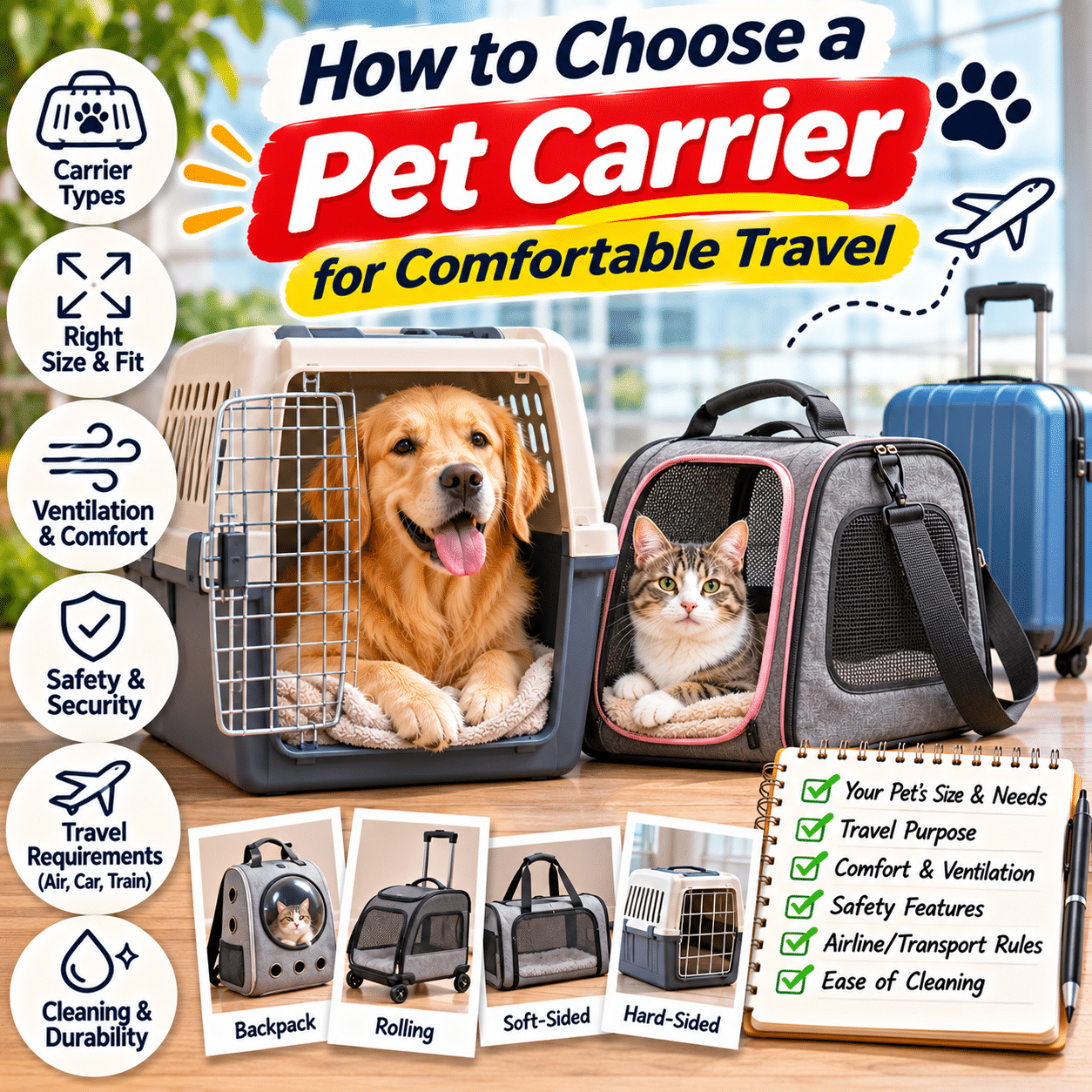
Traveling with a dog or cat can be an enjoyable experience, but choosing the right pet carrier is essential for making the journey safer, more comfortable, and less stressful. Whether you are taking your pet to a veterinary appointment, driving across town, planning a weekend getaway, or preparing for an airline journey, a suitable carrier helps provide a secure and familiar space during transportation.
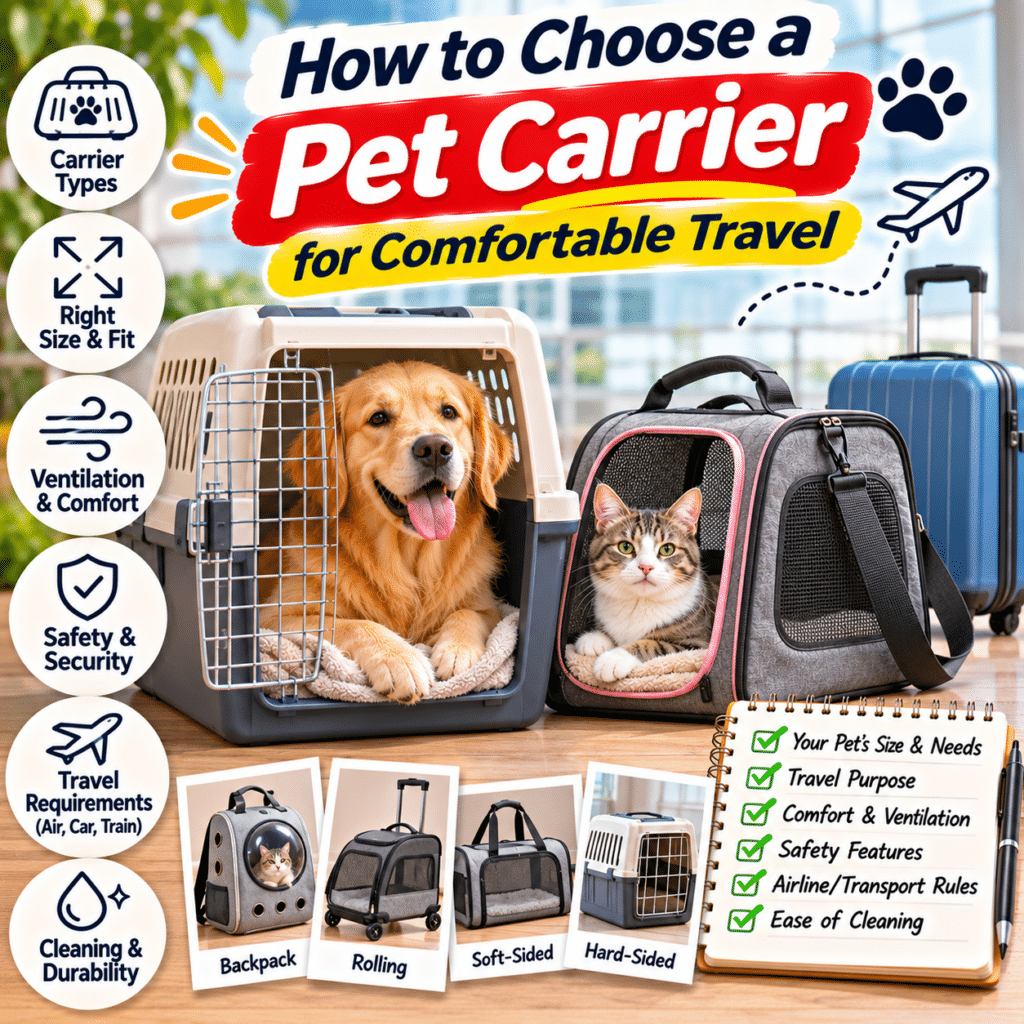
Pet carriers come in many shapes and styles, including hard-sided kennels, soft-sided travel bags, backpack carriers, rolling carriers, and airline-compatible designs. Each type offers different advantages, and the best option depends on your pet’s size, temperament, mobility, and travel requirements.
A small cat may feel more secure in a well-ventilated carrier with a stable base and partial visual coverage. A small dog may benefit from a lightweight carrier that is easy to carry through airports or hotels. Larger dogs often require sturdier transportation equipment, especially for vehicle travel.
However, comfort involves more than choosing a carrier with soft padding. Proper dimensions, ventilation, structural stability, secure closures, temperature management, and gradual familiarization all contribute to a better travel experience.
The best pet carrier is not necessarily the most expensive, fashionable, or feature-packed product. It is the one that accommodates your pet’s body comfortably, meets the requirements of the intended transportation method, and allows you to handle and maintain it safely.
This comprehensive buying guide explains how to choose a pet carrier for comfortable travel, compare different carrier styles, understand essential safety features, and prepare your dog or cat for journeys of different lengths.
1. Understand Why Choosing the Right Pet Carrier Matters
A pet carrier serves several important functions during travel.
Physical Containment
A properly secured carrier helps prevent pets from wandering into unsafe areas during transportation.
Comfortable Resting Space
An appropriately sized carrier provides a defined area where a pet can sit, lie down, and rest.
Reduced Exposure to Distractions
Some pets feel more settled when their surroundings are partially screened from unfamiliar activity.
Easier Handling
A well-designed carrier allows owners to move pets through doorways, waiting rooms, vehicles, and other travel environments.
Transportation Compliance
Airlines and other transportation providers may require carriers to meet specific dimensions, construction standards, and containment rules.
Important Distinction
A carrier does not automatically make travel safe or stress-free. Correct sizing, suitable restraint, temperature control, and the pet’s individual response remain essential.
2. Identify Your Main Travel Purpose
Before comparing products, determine how the carrier will be used most often.
Common Travel Situations
- Veterinary appointments
- Short car trips
- Long-distance driving
- Air travel
- Train journeys
- Public transportation
- Walking through airports
- Hotel stays
- Weekend trips
- Relocation
- Emergency transportation
A carrier that works well for a short veterinary visit may not be suitable for airline travel.
Similarly, a fashionable backpack carrier may be convenient for walking but inappropriate as a primary vehicle restraint.
Questions to Ask
- How frequently will my pet travel?
- How long will each journey typically last?
- Will the carrier be used in a car, airplane, train, or on foot?
- Does my pet prefer enclosed spaces or greater visibility?
- Can my pet stand, turn around, and lie down comfortably?
- Will I need to carry the carrier for extended periods?
- Does the carrier need to fit under an airline seat?
- How easily can I clean it after travel?
- Does my pet have any medical or mobility limitations?
- What safety requirements apply to the transportation method?
These questions help narrow the options before making a purchase.
3. Understand the Main Types of Pet Carriers
Pet carriers are available in several common designs.
| Carrier Type | Main Characteristics | Potential Uses |
|---|---|---|
| Hard-sided carrier | Rigid shell with secure door | Veterinary visits, vehicle travel, some airline transport |
| Soft-sided carrier | Flexible fabric construction | Small pets, short trips, some cabin travel |
| Backpack carrier | Worn on the back or front | Short walking transfers with suitable small pets |
| Rolling carrier | Carrier with wheels and handle | Moving through terminals or other smooth surfaces |
| Expandable carrier | Additional panels increase interior space | Suitable stationary waiting or resting situations |
| Airline cabin carrier | Designed to fit applicable cabin requirements | In-cabin air travel |
| Cargo-compatible kennel | Rigid transport kennel meeting applicable requirements | Certain airline transport arrangements |
| Collapsible carrier | Folds for storage | Occasional travel and convenient storage |
| Pet stroller with enclosed compartment | Wheeled pet transport | Some walking outings and mobility needs |
| Vehicle-specific travel crate | Designed for installation in vehicles | Car travel when appropriately secured |
Each design has advantages and limitations.
4. Understand Hard-Sided Pet Carriers
Hard-sided carriers typically use rigid plastic or another durable structural material.
Advantages
- Maintain their shape
- Provide a defined interior space
- Often resist scratching and chewing better than fabric
- Can be easier to wipe clean
- May offer secure door mechanisms
- Available in a wide range of sizes
Potential Limitations
- Heavier than many fabric carriers
- Require more storage space
- Less flexible in tight spaces
- Some designs have limited access points
- Quality and structural strength vary
What to Look For
- Durable shell
- Secure door
- Reliable locking mechanism
- Adequate ventilation
- Smooth interior surfaces
- Stable base
- Strong carrying handle
- Properly attached upper and lower sections
Best Uses
Hard-sided carriers are often practical for veterinary visits, everyday transportation, and situations where structural stability is important.
5. Understand Soft-Sided Pet Carriers
Soft-sided carriers use fabric panels supported by frames, seams, and reinforced bases.
Advantages
- Often lightweight
- Easier to carry
- Frequently include shoulder straps
- May fit certain airline cabin spaces
- Can offer multiple access points
- Some fold for storage
Potential Limitations
- May collapse or sag
- Fabric can be damaged by scratching or chewing
- Mesh panels can tear
- Cleaning may be more complicated
- Not suitable for every transportation situation
What to Look For
- Reinforced frame
- Stable floor panel
- Strong stitching
- Durable mesh
- Secure zippers
- Comfortable handles
- Adequate ventilation
- Washable bedding
Important Consideration
A soft carrier must still provide sufficient usable space for the animal. Flexibility should not result in the pet being compressed.
6. Compare Hard-Sided and Soft-Sided Carriers
| Feature | Hard-Sided Carrier | Soft-Sided Carrier |
|---|---|---|
| Structure | Rigid | Flexible or semi-rigid |
| Weight | Often heavier | Often lighter |
| Cleaning | Frequently straightforward | Depends on fabric and removable parts |
| Storage | Usually bulky | Some fold compactly |
| Chewing resistance | Often better | Usually lower |
| Carrying comfort | Depends on handles | Often includes shoulder straps |
| Airline compatibility | Depends on specific rules | Depends on specific rules |
| Interior stability | Usually consistent | Depends on frame and base |
| Best fit | Pets needing rigid containment | Suitable small pets and portable travel |
Neither type is universally better.
Choose based on the pet’s behavior, carrier construction, and transportation requirements.
7. Understand Pet Backpack Carriers
Backpack carriers allow owners to transport pets while keeping their hands relatively free.
Potential Advantages
- Convenient for short walking transfers
- Useful when carrying other items
- Can distribute some weight across the shoulders
- Often compact
Potential Limitations
- Limited interior space
- Movement can cause swaying
- Ventilation may be restricted
- Some designs place pets in awkward positions
- Not all pets tolerate being carried at height
What to Look For
- Stable, supportive base
- Appropriate body position
- Adequate ventilation
- Secure closures
- Padded shoulder straps
- Comfortable weight distribution
- Easy pet access
Important Safety Consideration
Avoid carriers that force pets into unnatural upright positions or restrict their ability to breathe comfortably.
8. Consider Transparent Bubble-Style Backpacks
Some pet backpacks feature a large transparent window.
Potential Advantages
- Allows pets to see outside
- Provides a distinctive design
- May interest pets that enjoy observing their surroundings
Potential Limitations
- Restricted airflow in poorly designed products
- Heat buildup
- Limited usable interior space
- Excessive visual stimulation
- Difficult cleaning
Practical Buying Advice
Prioritize ventilation, temperature control, and interior dimensions over appearance.
A large transparent panel does not guarantee comfortable airflow.
9. Understand Rolling Pet Carriers
Rolling carriers include wheels and a pull handle.
Potential Advantages
- Reduce the need to carry the full weight
- Useful on smooth surfaces
- Convenient in some terminals
- May help owners with lifting limitations
Potential Limitations
- Wheels create vibration
- Uneven surfaces may cause jolting
- Some pets dislike rolling movement
- Wheels add weight and bulk
- Stability varies
What to Look For
- Smooth wheels
- Stable base
- Reliable handle
- Secure closures
- Adequate ventilation
- Easy transition between rolling and carrying
Practical Advice
Introduce rolling movement gradually and avoid rough surfaces whenever possible.
10. Understand Expandable Pet Carriers
Expandable carriers include panels that open to create additional interior space.
Potential Advantages
- More room during appropriate stationary periods
- Flexible resting arrangements
- Convenient for some travel situations
Potential Limitations
- Additional seams and zippers
- More complicated cleaning
- Expanded sections may lack structural support
- Expanded dimensions may exceed transport limits
Important Reminder
A carrier must meet the required dimensions while configured for transportation.
Do not assume expandable panels can remain open inside an aircraft cabin or moving vehicle.
11. Choose the Correct Carrier Size
Proper sizing is one of the most important buying decisions.
A carrier should allow your pet to maintain comfortable, natural positions.
Your Pet Should Generally Be Able To
- Stand without excessive crouching
- Turn around naturally
- Lie down in a comfortable position
- Sit without unnecessary compression
- Breathe freely
Avoid Carriers That Are Too Small
Insufficient space can cause discomfort, stress, and difficulty repositioning.
Avoid Excessively Large Carriers
A very large carrier may allow excessive movement during transportation, especially if the carrier is not designed and secured appropriately.
Important Distinction
Airline and vehicle-specific requirements may impose additional constraints beyond basic comfort.
12. Measure Your Pet Before Buying
Do not rely only on breed labels or estimated weight.
Measure Body Length
Measure from the front of the chest to the rear of the body, accounting for the space needed to lie down comfortably.
Measure Standing Height
Measure from the floor to the highest relevant point when your pet stands naturally.
Measure Body Width
Consider shoulder width and the room required to turn around.
Record Weight
Check the carrier’s maximum supported weight.
Compare Usable Interior Dimensions
Exterior measurements may include walls, handles, frames, and padding.
Practical Buying Advice
Use the manufacturer’s measuring instructions and compare them with your pet’s actual dimensions.
13. Understand Interior Versus Exterior Dimensions
Carrier listings often emphasize external dimensions.
However, the pet occupies the interior space.
Exterior Dimensions
Important for:
- Airline restrictions
- Vehicle placement
- Storage
- Doorway clearance
Interior Dimensions
Important for:
- Standing
- Turning
- Lying down
- Comfortable posture
Why This Matters
Thick walls, internal frames, and padding can reduce usable space.
Practical Advice
Look for both measurements when possible.
14. Understand Carrier Weight Limits
Manufacturers often specify a maximum pet weight.
Important Considerations
- Pet weight
- Carrier weight
- Bedding
- Accessories
- Handle strength
- Shoulder strap capacity
Do Not Choose by Weight Alone
A carrier may support a pet’s weight but still be too narrow or short.
Best Approach
Confirm both dimensional fit and structural load capacity.
15. Choose a Carrier for Small Dogs
Small dogs often have many carrier options.
Useful Features
- Appropriate interior space
- Lightweight construction
- Stable floor
- Secure closures
- Comfortable carrying handles
- Adequate airflow
Consider Temperament
Some small dogs are calm in enclosed spaces, while others may scratch or push against the carrier.
Avoid Overly Decorative Designs
Comfort and secure construction matter more than appearance.
16. Choose a Carrier for Medium and Large Dogs
Larger dogs generally require more substantial transport equipment.
Important Features
- Adequate interior dimensions
- Strong structure
- Secure doors
- Appropriate ventilation
- Stable base
- Suitable handling arrangements
Vehicle Travel
Consider a properly fitted vehicle crate or another appropriate restraint system.
Airline Travel
Larger dogs may be subject to different transport rules and kennel requirements.
Important Reminder
Not every large dog can travel in an aircraft cabin.
17. Choose a Carrier for Cats
Cats often benefit from secure, stable carriers with manageable visibility.
Useful Features
- Rigid or well-supported structure
- Secure door
- Top and front access when practical
- Adequate ventilation
- Comfortable removable bedding
- Easy cleaning
Consider Privacy
Some cats feel more comfortable when part of the carrier is visually covered.
Important Safety Consideration
Never cover ventilation openings completely.
18. Consider Top-Loading Carriers for Cats
Top-loading carriers allow access through an opening above the animal.
Potential Advantages
- Easier placement for some cats
- Convenient access during veterinary visits
- Less need to pull a reluctant cat through a narrow front opening
Potential Limitations
- Additional latches or zippers
- Some top openings are too small
- Poorly designed lids may be insecure
Practical Buying Advice
Choose a top opening that is large enough for safe handling and has a dependable closure.
19. Consider Removable-Top Carriers
Some hard-sided carriers allow the upper shell to be removed.
Potential Advantages
- Easier access for examinations
- Less stressful handling for certain cats
- Convenient cleaning
Important Considerations
- Secure shell attachment
- Reliable fasteners
- Structural integrity
- Correct reassembly
Practical Advice
Check every connection before lifting the carrier.
20. Choose a Carrier for Puppies
Puppies may need carriers that accommodate their current size and developing behavior.
Useful Features
- Easy-clean surfaces
- Secure closures
- Comfortable base
- Suitable ventilation
- Appropriate dimensions
Growth Considerations
A puppy may outgrow a carrier quickly.
Important Safety Consideration
Puppies may chew fabric, straps, or plastic components.
Inspect the carrier frequently.
21. Choose a Carrier for Kittens
Kittens need secure containment and comfortable access.
Useful Features
- Small, secure openings
- Stable base
- Soft removable bedding
- Reliable door latches
- Appropriate ventilation
Prevent Escape
Check that gaps and openings are not large enough for the kitten to squeeze through.
Practical Advice
Use a carrier appropriate for the kitten’s current size and reassess as it grows.
22. Choose a Carrier for Senior Pets
Older pets may have reduced mobility, joint discomfort, or changes in balance.
Useful Features
- Low entry threshold
- Stable floor
- Comfortable bedding
- Easy access
- Minimal lifting difficulty
- Smooth handling
Consider Medical Needs
A pet with arthritis may find certain entry angles uncomfortable.
Veterinary Guidance
For significant mobility or medical concerns, consult a veterinarian about suitable travel arrangements.
23. Consider Pets With Mobility Limitations
Some pets require additional support when entering or resting inside a carrier.
Important Factors
- Entry height
- Interior stability
- Bedding thickness
- Available turning space
- Ease of lifting
- Secure support
Avoid Awkward Positions
Do not force pets into positions that cause pain or restrict movement.
Practical Advice
Choose a carrier that allows gentle, controlled handling.
24. Consider Flat-Faced Dogs and Cats
Brachycephalic pets, including some short-muzzled dogs and cats, can have increased respiratory vulnerability.
Important Considerations
- Unrestricted ventilation
- Comfortable posture
- Temperature management
- Avoidance of excessive heat
- Minimal travel stress
Airline Restrictions
Some airlines restrict or prohibit certain brachycephalic breeds or animals with respiratory risks.
Veterinary Guidance
Consult a veterinarian before travel, especially for pets with known breathing difficulties.
Important Reminder
A larger or more ventilated carrier cannot eliminate the underlying respiratory risks associated with these conditions.
25. Understand Carrier Ventilation
Ventilation is essential for maintaining airflow.
Common Ventilation Features
- Mesh panels
- Side openings
- Ventilation slots
- Front grilles
- Multiple airflow surfaces
What to Look For
- Openings that cannot be easily blocked
- Suitable airflow from more than one direction
- Secure mesh or grilles
- Appropriate placement
Avoid Poorly Ventilated Designs
Small decorative holes may not provide sufficient airflow.
26. Evaluate Mesh Quality
Soft-sided carriers often rely on mesh panels.
Important Features
- Durable weave
- Secure stitching
- Resistance to tearing
- Suitable opening size
- Adequate ventilation
Potential Problems
- Claw damage
- Loose seams
- Weak attachment points
- Excessive stretching
Practical Advice
Inspect mesh regularly, particularly if your pet scratches at the carrier.
27. Understand Temperature Management
Carriers can become uncomfortable or dangerous when exposed to excessive heat or cold.
Heat Risks
- Direct sunlight
- Poor ventilation
- Hot vehicles
- Crowded transportation spaces
- Excessive insulation
Cold Risks
- Drafty environments
- Wet bedding
- Prolonged exposure
- Inadequate protection
Important Safety Rule
Never leave a pet unattended in a parked vehicle. Interior temperatures can become dangerous rapidly, even when outdoor conditions seem moderate.
Practical Advice
Maintain an appropriate ambient temperature and monitor your pet throughout travel.
28. Consider Carrier Visibility and Privacy
Pets differ in how much visual exposure they prefer.
Open-View Carriers
May suit pets that enjoy observing their surroundings.
Partially Covered Carriers
May help some animals feel less exposed.
Important Consideration
Excessive visual stimulation can increase distress in certain pets.
Practical Advice
Choose a design that balances visibility, privacy, and airflow.
29. Evaluate Carrier Door Design
Carrier doors should allow comfortable entry and secure closure.
Common Door Types
- Front-opening rigid doors
- Top-loading lids
- Zippered fabric openings
- Side-entry panels
What to Look For
- Sufficient opening width
- Smooth operation
- Reliable locking
- No sharp edges
- Secure hinges
- Easy inspection
Practical Advice
Test the opening and closing mechanism before traveling.
30. Understand Zipper Safety
Soft carriers commonly use zippers.
Potential Problems
- Zippers opening under pressure
- Fabric catching in the mechanism
- Weak zipper pulls
- Pets pushing through partially closed openings
Useful Features
- Strong zipper construction
- Lockable zipper pulls
- Secure closure points
- Reinforced seams
Important Reminder
A zipper should remain securely closed during normal movement and handling.
31. Evaluate Hard Carrier Latches
Rigid carriers often use metal or plastic latches.
Important Features
- Secure engagement
- Durable construction
- Easy operation
- Reliable door alignment
Potential Problems
- Loose hinges
- Misaligned doors
- Weak locking points
- Damaged clips
Practical Advice
Check all latches before lifting or moving the carrier.
32. Consider Escape Prevention
Escape prevention is particularly important in airports, stations, parking areas, and veterinary clinics.
Useful Features
- Secure doors
- Strong zippers
- Reliable latches
- Reinforced seams
- Properly fitted openings
Avoid Unnecessary Openings
Extra access panels increase the number of closures that must be checked.
Travel Practice
Open the carrier only in a secure environment.
33. Evaluate Carrier Structural Stability
A carrier should maintain an appropriate shape during use.
Hard-Sided Designs
Check shell strength and attachment points.
Soft-Sided Designs
Check frame reinforcement and floor support.
Backpack Designs
Check whether the carrier remains stable while worn.
Important Consideration
A carrier that folds inward onto the pet is unsuitable for normal transport.
34. Understand the Importance of a Stable Floor
The carrier floor supports your pet’s body during travel.
Useful Features
- Rigid or reinforced base
- Even support
- Non-slip surface
- Appropriate padding
- Easy cleaning
Potential Problems
- Sagging
- Tilting
- Excessive flexing
- Slippery surfaces
Practical Advice
Test the base with an appropriate load before using the carrier.
35. Choose Comfortable Carrier Bedding
Bedding can improve comfort and reduce slipping.
Common Options
- Washable padded mats
- Thin foam inserts
- Absorbent liners
- Non-slip pads
- Soft blankets
Important Considerations
- Thickness
- Cleaning requirements
- Temperature
- Pet chewing behavior
- Available interior space
Avoid Excessive Padding
Very thick bedding can reduce usable carrier height and interfere with comfortable posture.
36. Consider Absorbent Liners
Absorbent liners may be helpful for pets prone to accidents or during longer journeys.
Potential Advantages
- Easier cleanup
- Protection for the carrier floor
- More manageable hygiene
Important Considerations
- Secure placement
- Non-slip backing
- Appropriate absorbency
- Safe materials
Practical Advice
Replace soiled liners promptly and ensure the pet is not forced to remain on wet bedding.
37. Evaluate Carrying Handles
Carrying handles should support the combined weight of the pet and carrier.
Useful Features
- Reinforced attachment points
- Comfortable grip
- Balanced placement
- Secure stitching or hardware
Potential Problems
- Handle detachment
- Uneven weight distribution
- Excessive swinging
Practical Advice
Test the handles before travel and use the carrying method specified by the manufacturer.
38. Consider Shoulder Straps
Shoulder straps can make soft carriers easier to transport.
Useful Features
- Adjustable length
- Comfortable padding
- Durable attachment points
- Balanced weight distribution
Potential Limitations
- Carrier swinging
- Shoulder discomfort
- Uneven loading
Important Consideration
The carrier should remain relatively level while carried.
39. Evaluate Backpack Shoulder and Waist Support
Backpack carriers should be comfortable for the person carrying them.
Useful Features
- Adjustable shoulder straps
- Supportive back panel
- Chest strap
- Waist support when appropriate
- Balanced load placement
Important Reminder
Human carrying comfort does not guarantee pet comfort.
Evaluate the pet’s position and ventilation separately.
40. Understand Carrier Materials
Carrier materials influence durability, cleaning, weight, and structural performance.
| Material | Common Uses | Important Considerations |
|---|---|---|
| Rigid plastic | Hard-sided carriers | Shell strength and fastening quality |
| Polyester fabric | Soft carriers | Stitching, coating, and wear |
| Nylon fabric | Soft carriers and straps | Durability and cleaning |
| Mesh | Ventilation panels | Tear resistance and attachment strength |
| Metal | Doors and hardware | Corrosion resistance and sharp edges |
| Foam | Padding | Washability and moisture retention |
| Rubber | Feet and non-slip elements | Durability and cleaning |
Practical Advice
Evaluate the complete construction rather than focusing only on the main material.
41. Consider Chewing and Scratching Behavior
Some pets scratch, bite, or push against carriers.
Potential Problems
- Torn mesh
- Broken zippers
- Damaged plastic
- Exposed padding
- Loose components
For Persistent Chewers
A suitable rigid carrier may be preferable to fabric.
For Cats That Scratch
Look for strong mesh and secure seams.
Important Reminder
A carrier should not be assumed chew-proof or escape-proof simply because it is marketed as durable.
42. Understand Car Travel Safety
A pet carrier should not move freely around a vehicle.
Potential Risks
- Sudden braking
- Sharp turns
- Collisions
- Carrier tipping
- Pet escape
- Driver distraction
Safer Approach
Use a suitable carrier or restraint system designed for vehicle travel and install it according to the manufacturer’s instructions.
Important Distinction
A carrier with a seat-belt loop is not automatically crash-tested or crashworthy.
43. Evaluate Vehicle Carrier Restraint Features
Some carriers include:
- Seat-belt routing points
- Attachment straps
- Vehicle anchoring hardware
- Reinforced mounting locations
What to Check
- Whether the product is intended for vehicle use
- Installation instructions
- Compatible vehicle positions
- Independent crash-test information, if available
- Appropriate pet weight and size range
Important Reminder
Marketing terms such as “car safe” should be evaluated against specific evidence and installation requirements.
44. Understand Crash-Tested Pet Carriers
Some products undergo crash testing intended to evaluate performance during vehicle collisions.
Important Questions
- Who conducted the testing?
- What testing procedure was used?
- What pet weight was represented?
- How was the carrier installed?
- Were the results independently verified?
- Does the tested configuration match the product being sold?
Practical Advice
Prefer clearly documented, independently evaluated performance over vague safety claims.
Important Limitation
No carrier can guarantee protection in every collision.
45. Choose a Carrier for Road Trips
Longer vehicle journeys require attention to both restraint and comfort.
Important Features
- Appropriate interior space
- Secure vehicle installation
- Adequate ventilation
- Comfortable bedding
- Easy cleaning
- Convenient access during planned stops
Travel Planning
Allow time for appropriate breaks, hydration, and toileting according to your pet’s needs.
Important Safety Rule
Do not allow pets to roam freely around the vehicle while it is moving.
46. Understand Airline Pet Carrier Requirements
Airline travel introduces additional rules.
Common Requirements May Address
- Carrier dimensions
- Maximum pet and carrier weight
- Ventilation
- Leak resistance
- Secure closures
- Structural construction
- Under-seat fit
- Pet positioning
- Number of animals
- Breed restrictions
Important Distinction
Airline rules vary by carrier, route, aircraft, cabin class, and travel arrangement.
Practical Advice
Verify the current requirements directly with the operating airline before purchasing a carrier.
47. Understand In-Cabin Airline Carriers
Some airlines permit eligible pets to travel in carriers within the passenger cabin.
Common Considerations
- Carrier must fit within the permitted space.
- Pet must fit comfortably inside.
- Carrier must meet airline specifications.
- Pet and carrier may be subject to weight restrictions.
- Advance reservations may be required.
Important Reminder
A product advertised as “airline approved” is not universally accepted by every airline.
48. Understand Under-Seat Carrier Dimensions
Under-seat dimensions vary.
Important Factors
- Aircraft type
- Seat configuration
- Airline policy
- Cabin class
- Carrier rigidity
Soft-Sided Carriers
Some airlines permit limited flexibility in carrier height, but this should never compromise the pet’s comfort.
Practical Advice
Check the exact requirements for your booked flight and aircraft when available.
Do not rely solely on a generic product listing.
49. Understand Airline Cargo and Hold Transport
Some pets may travel through specialized airline transport arrangements rather than in the passenger cabin.
Important Considerations
- Airline acceptance rules
- Kennel construction
- Door security
- Ventilation
- Animal dimensions
- Temperature restrictions
- Route limitations
- Documentation
Important Reminder
Not all airlines accept pets in the cargo hold, and acceptance conditions vary.
Practical Advice
Confirm requirements directly with the airline and consult your veterinarian about travel suitability.
50. Understand IATA-Related Carrier Claims
Some pet carriers are advertised as meeting IATA-related requirements.
IATA provides guidance concerning live animal transportation, but individual airlines determine acceptance under their applicable policies.
Important Distinction
An “IATA-approved” label on a retail product does not necessarily represent formal approval of that individual carrier by IATA.
What to Check
- Applicable airline rules
- Current transport requirements
- Carrier dimensions
- Construction details
- Door and fastening requirements
- Ventilation specifications
Practical Advice
Verify the actual requirements rather than relying on marketing terminology.
51. Consider Train and Public Transportation Travel
Train, bus, and other public transportation operators may have specific pet policies.
Common Considerations
- Carrier dimensions
- Pet size
- Ticket requirements
- Containment rules
- Placement restrictions
Practical Advice
Check the transport operator’s current policy before traveling.
Carrier Features
A lightweight, secure, easy-to-handle carrier may be convenient in crowded environments.
52. Choose a Carrier for Walking Transfers
Walking transfers may involve carrying your pet between home, parking areas, stations, and accommodations.
Useful Features
- Comfortable handles
- Balanced weight
- Secure closures
- Good ventilation
- Stable base
Consider Distance
A carrier that feels comfortable for a short walk may become tiring over a longer distance.
Practical Advice
Test the carrying method at home before travel.
53. Consider Carrier Portability
Portability involves more than low weight.
Important Factors
- Handle comfort
- Strap placement
- Balance
- Carrier dimensions
- Storage options
- Ease of lifting
Potential Trade-Off
A very lightweight carrier may sacrifice structural reinforcement.
Best Approach
Balance portability with safe, stable construction.
54. Understand Collapsible Carrier Designs
Collapsible carriers can be convenient for storage.
Advantages
- Compact when not in use
- Easier to store
- Potentially convenient for occasional travel
Limitations
- Folding mechanisms may weaken
- Some designs lack adequate rigidity
- Setup may be complicated
What to Check
- Frame locking
- Base support
- Secure assembly
- Suitable use instructions
Important Reminder
A collapsible carrier should not collapse unexpectedly while occupied.
55. Consider Carrier Storage at Home
Storage requirements may influence your purchase.
Hard Carriers
Often require dedicated floor or closet space.
Soft Carriers
Some fold flat or compress for storage.
Backpack Carriers
May hang or fit in a closet.
Practical Advice
Choose a storage arrangement that keeps the carrier dry, clean, and accessible.
56. Evaluate Cleaning Convenience
Travel carriers can accumulate hair, dirt, saliva, and occasional accidents.
Useful Features
- Removable bedding
- Wipe-clean surfaces
- Accessible corners
- Washable liners
- Removable floor panels
- Clear cleaning instructions
Potential Problems
- Hidden fabric seams
- Moisture trapped under padding
- Difficult-to-clean hinges
- Non-removable inserts
Practical Advice
Choose a carrier you can clean thoroughly after each journey.
57. Consider Odor and Moisture Management
Moisture can accumulate from spills, accidents, or damp bedding.
Important Features
- Removable absorbent materials
- Washable surfaces
- Adequate drying access
- Moisture-resistant base
Practical Advice
Dry all components thoroughly before storing the carrier.
Avoid Strong Fragrances
Heavily scented cleaning products may be unpleasant or irritating to some pets.
58. Consider Carrier Bedding for Different Climates
Bedding should suit the environmental conditions.
Warm Conditions
Use breathable, appropriately thin bedding.
Cooler Conditions
Suitable insulating bedding may improve comfort.
Important Consideration
Excessive insulation can contribute to overheating.
Practical Advice
Adjust bedding according to temperature and your pet’s individual needs.
59. Understand Travel Anxiety and Carrier Comfort
Some pets become anxious when traveling.
Possible Signs
- Vocalization
- Panting
- Trembling
- Hiding
- Restlessness
- Escape attempts
- Refusal to enter the carrier
Potential Contributors
- Unfamiliar environments
- Vehicle movement
- Noise
- Previous unpleasant experiences
- Confinement
- Motion sickness
Important Distinction
A comfortable carrier may help, but it is not a guaranteed treatment for anxiety.
60. Introduce the Carrier Before Travel
Carrier familiarization can make travel more manageable.
Step 1: Place the Carrier in a Familiar Area
Leave it accessible when safe.
Step 2: Keep the Door Open
Allow voluntary exploration.
Step 3: Add Familiar Bedding
Use a clean item with a familiar scent.
Step 4: Encourage Exploration
Place suitable treats or toys near the entrance.
Step 5: Reward Calm Entry
Avoid forcing the pet inside.
Step 6: Practice Brief Closure
Close the door for a short, comfortable period.
Step 7: Gradually Increase Duration
Proceed according to the pet’s response.
Step 8: Practice Gentle Movement
Introduce lifting or movement gradually.
Step 9: Try Short Journeys
Begin with manageable trips when appropriate.
Step 10: Maintain Positive Associations
Continue using the carrier outside stressful travel situations.
61. Avoid Forcing a Frightened Pet Into the Carrier
Forcing a distressed animal into a carrier can increase fear and create injury risks.
Better Approaches
- Gradual training
- Positive reinforcement
- Appropriate carrier design
- Calm handling
- Veterinary guidance when needed
Important Consideration
Urgent medical situations may require prompt transport despite incomplete training.
In those cases, prioritize safe handling and professional advice.
62. Consider Carrier Familiarity for Cats
Cats may associate carriers with veterinary visits.
Practical Strategy
Keep the carrier available as part of the home environment.
Add Familiar Items
Use comfortable bedding or appropriate rewards.
Allow Exploration
Avoid making the carrier appear only immediately before travel.
Potential Benefit
A familiar carrier may be less intimidating than one introduced suddenly.
63. Consider Carrier Familiarity for Dogs
Dogs can also benefit from gradual carrier training.
Useful Activities
- Voluntary entry
- Short resting sessions
- Reward-based training
- Calm door closure
- Gentle movement practice
Avoid Using the Carrier as Punishment
The goal is to create a predictable, comfortable environment.
64. Understand Travel Motion Sickness
Some dogs and cats experience motion sickness.
Possible Signs
- Drooling
- Nausea
- Vomiting
- Restlessness
- Repeated swallowing
- Distress during travel
Important Distinction
Motion sickness and anxiety may occur together but are not identical.
Veterinary Guidance
Consult a veterinarian if your pet frequently becomes ill during travel.
Do not give human motion-sickness medication without veterinary instruction.
65. Consider Carrier Placement During Travel
Carrier placement influences comfort and safety.
Vehicle Travel
Use an appropriate restraint system and follow installation instructions.
Air Travel
Follow airline placement requirements.
Waiting Areas
Choose a stable location away from excessive foot traffic.
At Home
Place the carrier in a calm, accessible area for familiarization.
Important Reminder
Never place a carrier where ventilation is blocked or where it can easily fall.
66. Consider Food and Water During Travel
Food and water arrangements depend on journey duration and the pet’s needs.
Short Trips
Special feeding arrangements may not be necessary.
Longer Journeys
Plan access to water and appropriate feeding opportunities.
Airline Transport
Follow the airline’s rules and veterinary guidance.
Important Consideration
Food and water containers should not create unnecessary spill or injury risks.
67. Consider Bathroom Needs During Travel
Travel plans should account for toileting.
Dogs
May need planned opportunities to relieve themselves.
Cats
Longer journeys may require special planning depending on duration and circumstances.
Carrier Preparation
Absorbent liners may help manage unexpected accidents.
Practical Advice
Do not assume a pet can remain comfortable for an extended period without appropriate breaks or arrangements.
68. Understand Carrier Safety During Stops
Travel stops create opportunities for accidental escape.
Important Precautions
- Keep the carrier securely closed in public areas.
- Open it only in a safe, controlled environment.
- Check doors and zippers after handling.
- Avoid placing the carrier near moving vehicles.
- Maintain appropriate temperature and ventilation.
Practical Advice
Plan how you will safely manage feeding, hydration, and toileting before opening the carrier.
69. Consider Identification and Travel Documentation
Identification is important during travel.
Useful Measures
- Up-to-date identification tag
- Microchip with current registration information
- Appropriate travel documents
- Carrier identification label
- Emergency contact information
International Travel
Requirements may include vaccinations, certificates, import permits, or other documents.
Important Reminder
Check the destination’s current animal-entry rules well in advance.
70. Evaluate Carrier Labels and Accessories
Some carriers include accessory features.
Common Features
- Identification pockets
- Document sleeves
- Storage compartments
- Removable mats
- Shoulder straps
- Interior attachment points
Practical Value
Accessories can be convenient, but they should not interfere with ventilation or usable interior space.
Important Safety Consideration
Interior tether systems must be evaluated carefully. An improperly used tether can create entanglement or injury risks.
71. Understand Interior Safety Tethers
Some carriers include short interior straps intended to attach to a pet’s harness.
Potential Purpose
May help reduce escape risk during controlled access.
Important Risks
- Entanglement
- Restriction of movement
- Neck injury if attached to a collar
- Unexpected loading during movement
Practical Advice
Follow the manufacturer’s instructions and do not assume a tether improves crash protection.
Avoid leaving pets unattended with unsafe restraint arrangements.
72. Evaluate Carrier Hardware
Hardware affects durability and secure handling.
Components to Inspect
- Hinges
- Latches
- Zippers
- Clips
- Strap anchors
- Handle attachments
- Frame connectors
Warning Signs
- Loose screws
- Cracked plastic
- Bent metal
- Frayed stitching
- Sticking closures
Practical Advice
Inspect hardware before every journey.
73. Consider Carrier Durability
Durability depends on material quality, construction, and usage.
Common Wear Areas
- Corners
- Handles
- Door hinges
- Mesh panels
- Zipper tracks
- Base supports
- Strap attachments
Important Consideration
Frequent travelers may benefit from more robust construction and replaceable components.
Replace Unsafe Equipment
Do not continue using a carrier with compromised structural integrity or unreliable closures.
74. Evaluate Manufacturer Information
Clear product information helps you make a more informed decision.
What to Look For
- Interior dimensions
- Exterior dimensions
- Weight capacity
- Material information
- Intended transportation use
- Cleaning instructions
- Safety warnings
- Warranty terms
- Replacement part availability
Avoid Vague Marketing Claims
Terms such as “premium,” “universal,” or “airline approved” should be supported by specific details.
75. Understand Pet Carrier Safety Certifications
Some carriers advertise testing or certification.
Important Questions
- What standard was used?
- Which organization conducted the testing?
- Was the testing independent?
- What carrier configuration was evaluated?
- What weight range was covered?
- Does the claim apply to the current model?
Important Distinction
A certification for material safety does not necessarily demonstrate crash performance.
Similarly, airline-compatible dimensions do not prove vehicle safety.
76. Consider Long-Term Value
The lowest purchase price does not always provide the best value.
Important Factors
- Construction quality
- Durability
- Cleaning convenience
- Frequency of use
- Comfort
- Replacement parts
- Storage requirements
- Safety documentation
Practical Advice
Choose a carrier that suits your actual travel needs rather than paying for features you are unlikely to use.
77. Compare Basic and Premium Pet Carriers
| Feature | Basic Carrier | More Feature-Rich Carrier |
|---|---|---|
| Main function | Secure pet containment | Containment plus convenience features |
| Access points | Often one | May include multiple |
| Padding | Simple or optional | May include removable cushioning |
| Carrying options | Basic handle | May include straps or wheels |
| Storage | Varies | May include folding or pockets |
| Cleaning | Depends on design | May offer removable components |
| Safety | Depends on construction | Depends on construction and evidence |
| Best choice | Straightforward transport needs | Specific travel convenience needs |
Higher price does not guarantee superior safety or comfort.
78. Common Mistakes to Avoid When Buying a Pet Carrier
Choosing by Appearance Alone
A stylish carrier may have inadequate ventilation or space.
Better approach: Prioritize fit, airflow, and secure construction.
Buying the Wrong Size
Weight limits alone do not establish fit.
Better approach: Measure your pet and compare interior dimensions.
Assuming All Carriers Are Airline Approved
Airline requirements vary.
Better approach: Verify the operating airline’s current rules.
Ignoring Structural Stability
A sagging carrier can be uncomfortable.
Better approach: Choose a stable base and reliable frame.
Overlooking Ventilation
Decorative designs may restrict airflow.
Better approach: Evaluate usable ventilation openings.
Ignoring Closure Quality
Weak zippers or latches can allow escape.
Better approach: Test all closures.
Assuming a Seat-Belt Strap Means Crash Safety
Attachment features do not necessarily demonstrate crash performance.
Better approach: Look for specific testing evidence.
Choosing Excessively Thick Bedding
Thick padding may reduce interior space.
Better approach: Use appropriate, comfortable bedding.
Introducing the Carrier Only on Travel Day
Unfamiliar confinement can increase stress.
Better approach: Practice gradual familiarization.
Ignoring Cleaning Requirements
Difficult-to-clean carriers can retain residue and odors.
Better approach: Choose accessible surfaces and removable liners.
Leaving a Pet in a Parked Car
Vehicle temperatures can become dangerous rapidly.
Better approach: Never leave pets unattended in parked vehicles.
79. How to Choose a Pet Carrier: Step by Step
Step 1: Identify Your Travel Needs
Determine whether the carrier is primarily for cars, flights, walking, or general transportation.
Step 2: Measure Your Pet
Record body length, standing height, width, and weight.
Step 3: Choose the Carrier Type
Compare hard-sided, soft-sided, backpack, and rolling designs.
Step 4: Verify Interior Space
Ensure your pet can stand, turn, and lie down comfortably.
Step 5: Evaluate Ventilation
Check airflow openings and panel placement.
Step 6: Check Structural Stability
Confirm the base and walls provide adequate support.
Step 7: Inspect Closures
Look for secure doors, zippers, and latches.
Step 8: Consider Carrying Comfort
Evaluate handles, straps, and weight distribution.
Step 9: Review Transportation Requirements
Check airline, vehicle, or public transportation rules.
Step 10: Evaluate Cleaning
Choose materials and components you can maintain easily.
Step 11: Review Safety Information
Look for clear testing and intended-use details.
Step 12: Compare Long-Term Value
Consider durability, maintenance, and replacement options.
Step 13: Introduce the Carrier Gradually
Allow your pet to become familiar with it.
Step 14: Test Before a Major Journey
Practice handling and short transportation sessions.
80. Pet Carrier Comparison by Travel Situation
| Travel Situation | Potentially Suitable Carrier | Main Considerations |
|---|---|---|
| Veterinary appointment | Hard-sided or stable soft-sided carrier | Secure access, easy cleaning |
| Short car trip | Appropriate vehicle-secured carrier | Restraint and stability |
| Long road trip | Suitable travel crate or carrier | Comfort, restraint, ventilation |
| In-cabin flight | Airline-compliant cabin carrier | Exact airline dimensions and pet fit |
| Airline cargo arrangement | Carrier meeting applicable transport requirements | Airline acceptance and construction |
| Walking transfer | Lightweight carrier | Carrying comfort |
| Airport terminal | Suitable shoulder or rolling carrier | Portability and pet comfort |
| Small dog travel | Appropriately sized soft or rigid carrier | Weight, ventilation, stability |
| Cat travel | Secure carrier with practical access | Escape prevention and comfort |
| Puppy travel | Easy-clean secure carrier | Size, chewing, growth |
| Senior pet travel | Accessible stable carrier | Mobility and padding |
| Frequent travel | Durable easy-clean carrier | Long-term wear and maintenance |
| Occasional travel | Simple reliable carrier | Storage and basic functionality |
These suggestions should always be checked against the individual pet’s needs and applicable transportation requirements.
81. Practical Pet Carrier Buying Checklist
Pet Fit
- I have measured my pet.
- The interior length is suitable.
- The interior height is sufficient.
- My pet can turn around.
- My pet can lie down comfortably.
- The carrier supports my pet’s weight.
Safety
- The structure is stable.
- Doors close securely.
- Zippers or latches are reliable.
- Ventilation is adequate.
- There are no sharp edges.
- Materials suit my pet’s behavior.
- The carrier is appropriate for the intended transportation method.
Comfort
- The base is supportive.
- Bedding is appropriate.
- My pet can maintain a natural posture.
- Visibility and privacy are suitable.
- The carrier can be kept at a comfortable temperature.
Convenience
- Handles are secure.
- Carrying weight is manageable.
- Entry and exit are practical.
- Cleaning is straightforward.
- Storage requirements are acceptable.
Travel Requirements
- Airline rules have been checked if relevant.
- Vehicle restraint requirements have been considered.
- Transportation operator policies have been verified.
- Required documents are prepared.
- The carrier has been tested before travel.
82. Frequently Asked Questions
What is the best pet carrier for travel?
The best carrier depends on your pet’s size, behavior, travel method, and comfort needs. Proper fit, ventilation, secure construction, and suitable transportation compatibility are essential.
Are hard-sided carriers better than soft-sided carriers?
Hard-sided carriers provide rigid structure and are often easier to wipe clean. Soft-sided carriers can be lighter and easier to carry. Neither is universally better.
What size pet carrier should I buy?
Choose a carrier that allows your pet to stand, turn around, and lie down comfortably while meeting the intended transportation requirements.
How do I measure my dog for a carrier?
Measure body length, standing height, body width, and weight, then compare those measurements with the carrier’s usable interior dimensions.
How do I measure my cat for a carrier?
Measure your cat’s natural body dimensions and choose enough interior space for comfortable movement and resting.
Can a pet carrier be too big?
Yes. Excessive space may allow unnecessary movement during transportation. Choose an appropriately sized carrier and use the required restraint system.
Can a pet carrier be too small?
Yes. A carrier that restricts normal posture or breathing is unsuitable.
Are soft-sided carriers safe for cats?
They can be suitable when properly sized, well constructed, and securely closed. Cats that scratch or push aggressively may require more robust containment.
Are backpack carriers comfortable for pets?
Some pets tolerate suitable backpack carriers, but comfort depends on posture, stability, ventilation, and movement.
Are bubble backpacks safe for cats?
Safety varies significantly by design. Pay particular attention to ventilation, heat buildup, and usable interior space.
Are rolling pet carriers good for travel?
They can be convenient on smooth surfaces, but vibration and movement may distress some pets.
Do pets prefer enclosed carriers?
Some do, while others prefer greater visibility. Individual temperament matters.
Should I cover my cat’s carrier?
Partial visual coverage may help some cats feel more secure, but ventilation must remain unobstructed.
What is the best carrier for a nervous cat?
A stable, secure carrier with appropriate ventilation, practical access, and gradual familiarization may help.
Are top-loading cat carriers better?
Top-loading designs can make handling easier for some cats, especially during veterinary visits.
Should a pet carrier have a soft bottom?
A stable base with appropriate removable bedding can improve comfort.
Can I use a regular bag as a pet carrier?
Ordinary bags may lack ventilation, secure closures, structural support, and suitable interior space. Use equipment specifically designed for safe pet transport.
Are all airline pet carriers approved?
No. Airlines establish their own requirements, and acceptance depends on the specific flight and carrier.
What does airline-compatible mean?
It generally means a product is designed with certain airline travel requirements in mind. It does not guarantee acceptance.
Can my dog travel in the airplane cabin?
Eligibility depends on airline rules, route, aircraft, pet size, and other conditions.
Can my cat travel in the airplane cabin?
Some airlines allow eligible cats in cabin carriers, subject to specific requirements.
Can large dogs travel in the cabin?
Most ordinary commercial airline cabin pet policies restrict eligible pet size, although policies and exceptions vary.
Are IATA-approved pet carriers guaranteed to be accepted?
No. Individual airlines determine acceptance under applicable rules.
Can I use a soft-sided carrier for airline cargo transport?
Many cargo transport arrangements require specific rigid kennel construction. Confirm the operating airline’s requirements.
Are pet carriers safe in cars?
Safety depends on the carrier, installation, restraint method, and vehicle conditions.
Does a seat-belt strap make a carrier crash-safe?
No. A seat-belt attachment does not automatically demonstrate crashworthiness.
Should I secure my pet carrier in the car?
Yes. Use an appropriate vehicle restraint arrangement according to the product and vehicle instructions.
Can I put a pet carrier on the front passenger seat?
Front-seat placement can create additional hazards, including airbag risks. Follow the carrier and vehicle manufacturer’s instructions and prefer an appropriate safer installation location.
How long can a pet stay in a carrier?
This depends on the pet’s age, health, comfort, and travel conditions. Plan suitable breaks and care rather than relying on a universal time limit.
Should I put food in a pet carrier?
Food arrangements depend on journey duration and individual needs. Avoid spills and follow veterinary or transportation guidance.
Should I put water in a pet carrier?
Water access should be planned according to journey duration, transportation rules, and the pet’s needs.
Can I leave my pet in a carrier in the car?
Never leave a pet unattended in a parked vehicle because dangerous temperatures and other risks can develop rapidly.
How can I help my cat get used to a carrier?
Leave the carrier accessible at home, encourage voluntary exploration, and gradually introduce closure and movement.
How can I help my dog get used to a carrier?
Use short, positive training sessions and gradually increase the time spent inside.
Should I sedate my pet for travel?
Do not sedate your pet without veterinary guidance. Sedation can introduce significant risks, particularly during air travel.
What if my pet vomits during travel?
Consult a veterinarian if motion sickness occurs repeatedly. Suitable travel planning and veterinary treatment may help.
How often should I clean a pet carrier?
Clean it after soiling and as needed after travel. Follow manufacturer instructions and dry it thoroughly before storage.
Are expensive pet carriers better?
Not necessarily. Construction quality, fit, comfort, and appropriate safety evidence matter more than price alone.
How long does a pet carrier last?
Lifespan depends on materials, frequency of use, maintenance, and wear. Replace carriers with compromised closures or structural damage.
What is the most important feature of a pet carrier?
Proper fit combined with secure construction, adequate ventilation, and suitability for the intended transportation method.
83. How to Prepare a Pet Carrier Before Travel
A simple preparation routine can improve safety and convenience.
Step 1: Inspect the Structure
Check the shell, frame, seams, and base.
Step 2: Test Closures
Confirm doors, latches, and zippers operate securely.
Step 3: Check Ventilation
Ensure openings are clear.
Step 4: Clean the Interior
Remove debris and odors.
Step 5: Add Suitable Bedding
Use a comfortable, non-slip liner.
Step 6: Verify Fit
Ensure your pet can rest naturally.
Step 7: Review Transportation Requirements
Confirm applicable size and safety rules.
Step 8: Prepare Identification
Check tags, microchip information, and travel documents.
Step 9: Plan Food, Water, and Breaks
Consider journey duration and individual needs.
Step 10: Introduce the Carrier Calmly
Allow your pet to enter without unnecessary pressure.
84. How to Clean and Maintain a Pet Carrier
Regular maintenance helps preserve hygiene and reliability.
Remove Bedding
Wash removable liners according to their instructions.
Clean Interior Surfaces
Use appropriate pet-safe cleaning methods.
Clean Doors and Openings
Remove accumulated hair and debris.
Inspect Seams and Hardware
Look for damage or loose components.
Rinse When Required
Follow cleaning product and manufacturer instructions.
Dry Thoroughly
Prevent trapped moisture.
Reassemble Correctly
Check all fasteners and structural connections.
Test Closures
Confirm secure operation.
Store in a Dry Location
Avoid conditions that promote deterioration.
85. Build a Practical Pet Travel Kit
A well-prepared travel kit can make journeys easier.
Essential Items May Include
- Appropriate pet carrier
- Identification information
- Travel documents
- Leash and suitable harness
- Water and portable bowl
- Appropriate food
- Waste bags or litter supplies
- Absorbent liners
- Cleaning wipes suitable for pet use
- Familiar bedding
- Necessary medications
- Veterinary contact information
Important Consideration
The exact kit depends on the pet, destination, transportation method, and journey duration.
Avoid overpacking the carrier itself.
86. Reevaluate Carrier Suitability Over Time
Your pet’s needs may change.
Growth
Puppies and kittens may outgrow their carriers.
Weight Changes
Weight gain or loss can affect fit and handling.
Aging
Senior pets may need easier access or different bedding.
Health Conditions
Respiratory, orthopedic, or other medical concerns may change travel suitability.
Travel Changes
A carrier appropriate for short car trips may not meet airline requirements.
Practical Advice
Recheck dimensions, structural condition, and comfort before major journeys.
Final Thoughts
Choosing a pet carrier for comfortable travel requires balancing your dog or cat’s physical needs, temperament, safety, and the demands of your travel plans.
Hard-sided carriers provide rigid structure and often straightforward cleaning, while soft-sided carriers can offer lightweight portability. Backpack and rolling carriers may be convenient in specific situations, but they require careful evaluation of stability, ventilation, and pet comfort.
Regardless of style, proper sizing is essential. Your pet should have sufficient usable space to stand, turn around, and lie down naturally. Strong closures, dependable construction, adequate airflow, and a supportive base are equally important.
For car travel, pay attention to appropriate restraint and documented safety performance. For air travel, verify the operating airline’s current carrier requirements before purchasing or booking. A marketing claim of airline compatibility should never replace checking the actual rules.
Finally, remember that comfortable travel begins before the journey. Gradual carrier familiarization, appropriate bedding, careful temperature management, and thoughtful travel planning can help make transportation more manageable.
The best pet carrier is one that provides a secure, well-ventilated, comfortable space for your dog or cat while making every journey easier to manage safely and responsibly.