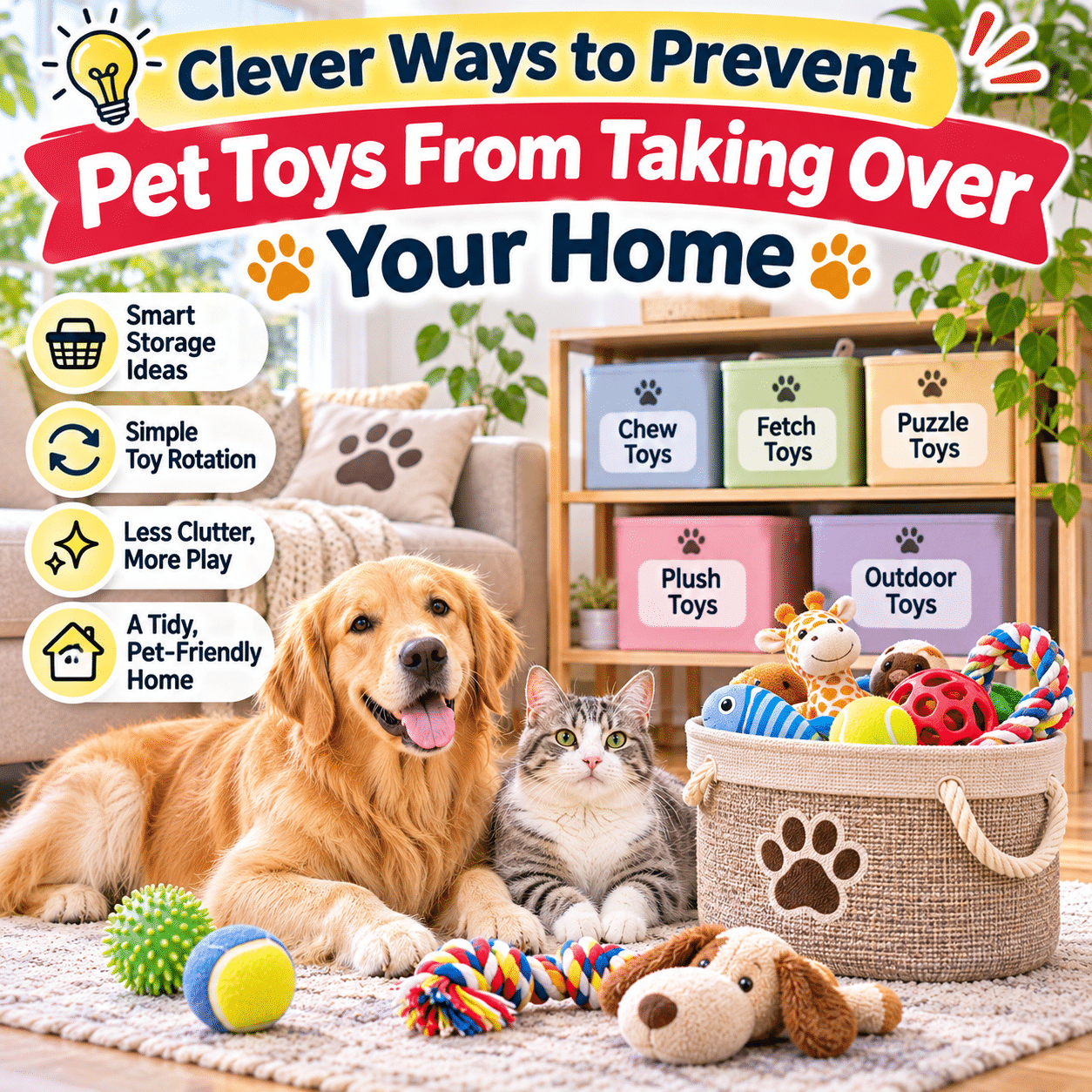
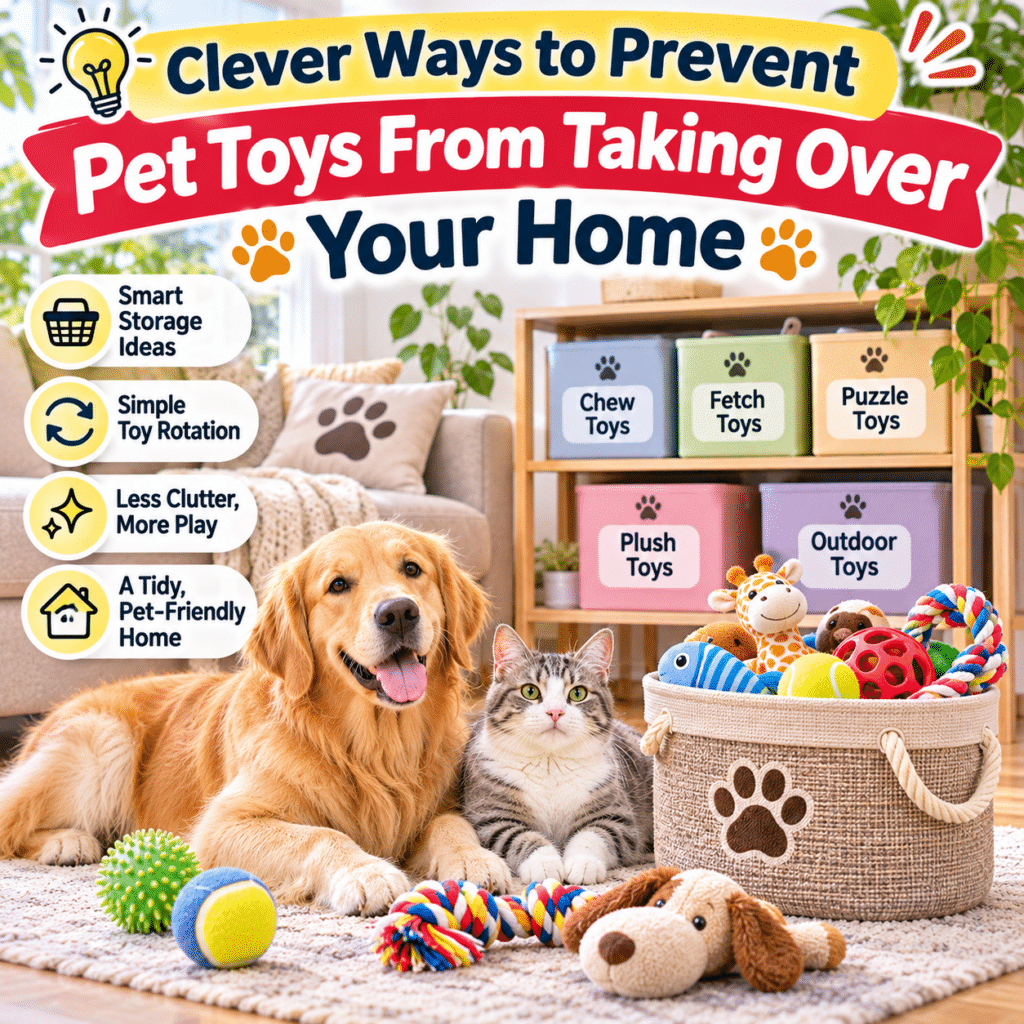
Living with pets often means sharing your home with an ever-growing collection of toys. From squeaky balls and plush animals to chew toys, puzzle feeders, and interactive play accessories, these items bring entertainment, enrichment, and comfort to the animals we love.
However, pet toys can quickly spread beyond their intended play areas. A ball rolls beneath the sofa, a rope toy appears in the hallway, and several plush toys somehow end up scattered across the living room. Before long, everyday spaces can feel cluttered, even when the rest of the home is relatively organized.
The good news is that managing pet toys does not require eliminating the things your pets enjoy. With thoughtful storage, simple organization systems, and consistent habits, you can maintain an inviting home while giving your pets easy access to safe and engaging play opportunities.
This comprehensive guide explores clever, practical ways to organize pet toys, prevent unnecessary clutter, and create a comfortable balance between a tidy living environment and your pet’s natural need for play.
1. Understand Why Pet Toys Accumulate So Quickly
Before organizing a collection of pet toys, it helps to understand why clutter develops in the first place.
Toys Serve Different Purposes
Pet toys are not all interchangeable. Different designs may support:
- Physical exercise.
- Mental stimulation.
- Natural chewing behavior.
- Interactive play with people.
- Independent entertainment.
- Comfort and familiar routines.
- Species-specific hunting or foraging behaviors.
Because toys serve different functions, owners often purchase several types to meet their pets’ needs.
Pets Move Toys Around Naturally
Dogs may carry toys between rooms, while cats often chase lightweight objects beneath furniture or into narrow spaces.
These behaviors are normal and can make toys appear in unexpected locations.
New Toys Arrive Faster Than Old Ones Leave
Toys may accumulate through purchases, gifts, seasonal occasions, and replacement items.
Without regular review, unused or damaged toys remain mixed with favorites.
Storage Systems May Not Match Daily Habits
Even a beautiful storage basket becomes ineffective if it is difficult to reach or located far from the places where pets actually play.
A successful organization system should reflect how your household functions.
2. Start With a Complete Pet Toy Inventory
The first step toward reducing clutter is understanding what you already own.
Gather Toys From Around the Home
Check common locations such as:
- Living room floors.
- Beneath sofas.
- Pet beds.
- Bedrooms.
- Hallways.
- Storage closets.
- Outdoor play areas.
- Behind furniture.
Collect toys in one convenient location for inspection.
Sort Toys Into Practical Categories
Group items by their primary purpose.
| Toy Category | Common Examples | Organization Priority |
|---|---|---|
| Chew toys | Rubber chews, durable chewing accessories | Safety and material condition |
| Fetch toys | Balls, retrieving toys | Easy access and containment |
| Plush toys | Soft animals, comfort toys | Cleanliness and fabric condition |
| Interactive toys | Puzzle toys, treat-dispensing toys | Complete parts and proper storage |
| Cat toys | Wand toys, lightweight balls, toy mice | Preventing loss and tangling |
| Outdoor toys | Flying discs, outdoor balls | Separation from indoor items |
| Training toys | Reward toys, tug accessories | Convenient supervised access |
Some toys fit more than one category. Choose a system that makes them easy to find.
Identify Unnecessary Duplicates
Multiple similar toys may be useful in some households, but excessive duplicates can create clutter without adding meaningful variety.
Keep items that serve a purpose and are used regularly.
3. Decide Which Pet Toys Are Worth Keeping
Not every toy needs to remain in your home indefinitely.
A thoughtful review helps reduce clutter while protecting your pet’s safety.
Keep Toys That Are Safe and Useful
Prioritize toys that:
- Match your pet’s size and play style.
- Remain in good condition.
- Provide meaningful enrichment.
- Are used regularly.
- Can be cleaned appropriately.
- Do not contain loose hazardous components.
Remove Damaged Toys
Inspect toys for:
- Torn seams.
- Exposed stuffing.
- Detached squeakers.
- Cracked plastic.
- Sharp edges.
- Fraying ropes.
- Loose small parts.
- Deteriorating rubber.
Discard toys that present choking, ingestion, or injury hazards.
Evaluate Toys Your Pet Ignores
A toy that has remained unused for a long time may no longer be necessary.
However, some pets enjoy familiar objects or use particular toys only in specific situations.
Observe behavior before removing items that may provide comfort.
Avoid Donating Unsafe Toys
Only donate items that are clean, intact, and accepted by the receiving organization.
Discard damaged toys rather than passing potential hazards to another animal.
4. Create a Dedicated Pet Toy Storage Station
A designated storage location prevents toys from spreading into unrelated household areas.
Choose a Convenient Location
A toy station may work well:
- Beside a pet bed.
- In a living room corner.
- Near a designated play area.
- Inside a suitable cabinet.
- Along a low, accessible shelf.
The location should be easy to use without obstructing walkways.
Match Storage to Your Pet’s Behavior
Some pets enjoy selecting toys independently.
Others may need supervised access because they chew or swallow unsuitable objects.
Storage arrangements should reflect these differences.
Keep the System Simple
A single basket may be enough for a small collection.
Larger collections may benefit from separate containers for different toy types.
Avoid creating a complicated system that takes more time to maintain than the clutter itself.
5. Choose Storage Baskets That Actually Work
Storage baskets are among the simplest ways to contain pet toys.
However, not every basket is suitable for every animal.
Look for Practical Features
Useful characteristics include:
- Stable construction.
- Smooth edges.
- Easy-to-clean surfaces.
- Appropriate capacity.
- Lightweight design when necessary.
- No exposed sharp hardware.
Consider Low-Sided Baskets
A low basket may allow some pets to retrieve toys independently.
This can encourage natural play and reduce the need for owners to distribute toys throughout the room.
Avoid Unsafe Materials
Pets that chew storage containers may damage woven baskets, fabric handles, or plastic edges.
Choose materials appropriate for the animal’s behavior.
Do Not Overfill
An overflowing basket makes toys difficult to find and encourages items to spill onto the floor.
Leave enough space for easy access and cleanup.
6. Use Separate Containers for Different Toy Types
Sorting toys into categories can make organization more efficient.
Create Simple Groups
For example:
- Everyday favorites.
- Interactive play toys.
- Puzzle and enrichment toys.
- Outdoor toys.
- Spare or rotating toys.
Use Clear Labels
Labels can help household members return items to the correct location.
Examples include:
- Everyday Toys
- Fetch & Play
- Puzzle Toys
- Outdoor Fun
- Toy Rotation
Keep labels securely attached and out of reach if your pet might chew or swallow them.
Avoid Excessive Categorization
A household with only a few toys may not need multiple containers.
The goal is to reduce effort, not introduce unnecessary organization tasks.
7. Introduce a Simple Pet Toy Rotation System
Toy rotation can help reduce visible clutter while preserving variety.
Instead of keeping every toy available at once, offer a manageable selection and store the remainder.
How Toy Rotation Works
- Select several safe, appropriate toys.
- Keep them available in the usual play area.
- Store other clean toys in a secure location.
- Observe which toys your pet uses.
- Exchange selected toys periodically.
- Retain access to important comfort items when needed.
Why Rotation Can Be Helpful
A rotation system may:
- Reduce the number of toys on the floor.
- Make cleanup faster.
- Help owners monitor toy condition.
- Provide variety during play.
- Reduce unnecessary purchases.
Adapt Rotation to Individual Preferences
Some pets show renewed interest when familiar toys return after a break.
Others strongly prefer particular toys and may become unsettled when they disappear.
Do not remove a valued comfort object simply to follow a rotation schedule.
Avoid Rigid Rules
There is no universal number of toys that every pet should have available.
Choose a selection that supports your animal’s needs and your household’s organization goals.
8. Keep Everyday Favorites Easy to Access
Frequently used toys should be convenient to retrieve and return.
Identify Your Pet’s Favorites
Observe which toys are used most often.
These may include:
- A favorite ball.
- A familiar plush toy.
- A suitable chew toy.
- A regularly used interactive accessory.
Create a Small Everyday Collection
Keep favorite toys in a basket near the primary play area.
Store less frequently used items elsewhere.
Preserve Comfort and Routine
Some pets develop strong attachments to familiar toys.
These items may provide comfort during rest or changes in routine.
Keep them available when appropriate and safe.
Review Favorites Occasionally
Preferences can change with age, health, and activity level.
Update the collection when necessary.
9. Prevent Pet Toys From Spreading Across the Living Room
Living rooms often become the main play area because pets enjoy spending time near household members.
Define a Flexible Play Zone
A washable rug or designated floor area can create a visual boundary for toy storage and play.
This does not mean pets must remain confined to one small space.
Instead, it provides a convenient place to gather toys after use.
Keep a Basket Nearby
A basket located close to the sofa or main seating area makes cleanup more convenient.
Remove Toys From Walkways
Balls and hard toys can create tripping hazards.
Collect them promptly from:
- Doorways.
- Hallways.
- Stair landings.
- Narrow walking paths.
Perform a Quick Evening Reset
A short cleanup at the end of the day can prevent toys from accumulating overnight.
Focus on returning loose items to their designated location.
10. Organize Pet Toys in Small Apartments
Limited floor space makes toy organization particularly important.
Use Compact Storage
Consider:
- Small floor baskets.
- Shallow storage bins.
- Suitable cabinet compartments.
- Wall-mounted shelves for owner-controlled storage.
- Under-furniture containers where safe and accessible.
Keep Vertical Storage Secure
Shelves should be properly installed and should not create falling-object hazards.
Avoid placing heavy containers where they could fall onto pets.
Reduce Duplicate Toys
In a small home, maintaining a thoughtful selection may be more useful than keeping a large collection.
Preserve Open Floor Space
Choose storage that does not interfere with movement, feeding areas, or pet resting locations.
Avoid Hiding Unsafe Toys Within Reach
Small parts, strings, and other toys requiring supervision should remain securely stored.
11. Create a Safe Storage System for Cat Toys
Cats often enjoy lightweight objects that are easy to chase, bat, and carry.
These toys can disappear beneath furniture or become scattered throughout the home.
Use Small Containers
A shallow container may work well for larger, safe toys that your cat can access independently.
Store Wand Toys Separately
Fishing-rod-style toys, strings, ribbons, and similar accessories should generally be stored securely when not in supervised use.
Loose strings can present serious ingestion and entanglement hazards.
Keep Small Parts Contained
Inspect toys for detachable bells, eyes, feathers, or other components.
Remove damaged toys immediately.
Create a Supervised Interactive Play Kit
Keep wand toys and similar accessories together in a secure drawer or cabinet.
This makes interactive play convenient without leaving hazardous components accessible.
Retrieve Toys From Under Furniture
Check hidden spaces regularly to prevent excessive accumulation and identify damaged or dirty items.
12. Organize Dog Toys According to Play Style
Dogs may interact with toys in very different ways.
Some prefer chewing, while others enjoy fetching, tugging, or solving food puzzles.
Separate Chew Toys
Store appropriate chew toys where they remain clean and accessible under suitable supervision.
Inspect them frequently for damage.
Keep Fetch Toys Together
Balls and retrieving toys can be stored in a dedicated container.
Choose toys large enough to avoid choking hazards for the individual dog.
Organize Tug Toys
Store tug toys where they can be retrieved for interactive play.
Replace ropes or fabric toys when they become heavily frayed.
Maintain Puzzle Toys
Keep removable components together and follow manufacturer cleaning instructions.
Consider Individual Safety Needs
Dogs that aggressively destroy toys or swallow pieces may require closer supervision and more restrictive access.
13. Keep Outdoor Pet Toys Separate From Indoor Toys
Outdoor toys often collect dirt, moisture, and debris.
Storing them with clean indoor toys can make the entire collection harder to maintain.
Create an Outdoor Toy Container
Use a suitable container near the entryway or outdoor play area.
Clean Toys Before Bringing Them Inside
Remove visible dirt and wash toys when appropriate.
Dry Toys Thoroughly
Avoid storing damp toys in closed containers.
Trapped moisture can contribute to unpleasant odors and material deterioration.
Inspect for Outdoor Damage
Sunlight, rough surfaces, and weather exposure can weaken certain materials.
Replace damaged toys when necessary.
Protect Toys From Extreme Conditions
Store toys according to manufacturer recommendations.
Some materials deteriorate when exposed to prolonged heat, sunlight, or freezing conditions.
14. Make Pet Toy Storage Part of Your Home Decor
Practical storage does not have to look out of place.
Choose Coordinated Containers
Select baskets or bins that complement existing furniture and colors.
Use Furniture With Storage
A suitable cabinet or storage bench may hold toys that require owner-controlled access.
Ensure the furniture is stable and does not create entrapment hazards.
Avoid Decorative Items That Pets May Chew
Some decorative baskets contain tassels, loose fibers, or detachable ornaments.
These may be unsuitable for animals that chew or swallow household objects.
Prioritize Function Over Appearance
A beautiful container is not helpful if it is difficult to clean, unsafe, or inconvenient.
Choose storage that supports everyday use.
15. Teach Your Dog to Help With Toy Cleanup
Some dogs can learn to place toys into a container through positive reinforcement.
This can provide mental stimulation while supporting household organization.
Start With a Familiar Toy
Choose an object your dog already enjoys carrying.
Introduce a Clear Cue
Use a consistent verbal cue, such as “Put Away,” when guiding the dog toward the toy basket.
Reward Small Steps
Initially, reward behaviors such as:
- Picking up the toy.
- Moving toward the basket.
- Holding the toy above the container.
- Releasing it into the basket.
Practice Short Sessions
Keep training positive and manageable.
Avoid forcing your dog to participate when tired or uninterested.
Use a Safe Container
Choose a stable basket with no sharp edges or parts that could trap the dog’s head.
Maintain Realistic Expectations
Not every dog will learn or enjoy this behavior.
Cleanup training is an optional enrichment activity, not a requirement for maintaining a tidy home.
16. Prevent Toys From Getting Lost Under Furniture
Small balls and lightweight toys frequently roll into difficult-to-reach spaces.
Identify Common Problem Areas
Check beneath:
- Sofas.
- Beds.
- Cabinets.
- Side tables.
- Entertainment units.
Use Appropriate Furniture Gap Barriers
Suitable barriers may prevent toys from rolling into narrow spaces.
Choose designs that do not obstruct ventilation, damage furniture, or create hazards.
Select Toys Based on the Environment
In rooms with many narrow gaps, larger or less easily rolling toys may be more practical.
Always prioritize toys appropriately sized for your pet.
Schedule Occasional Retrieval
Use suitable cleaning tools to retrieve lost toys.
Avoid moving heavy furniture without assistance.
Inspect Retrieved Toys
Clean toys that have collected dust or debris before returning them to use.
17. Keep Pet Toys Clean Without Creating Extra Work
Clean storage is most effective when the toys themselves are maintained.
Separate Washable and Non-Washable Toys
Check manufacturer instructions before cleaning.
Clean Rubber and Hard Toys
Many hard toys can be washed with suitable mild detergent and water.
Rinse thoroughly and dry completely.
Wash Fabric Toys Appropriately
Some plush toys are machine-washable, while others require hand cleaning.
Follow care labels and inspect seams after washing.
Maintain Puzzle Toys
Food-dispensing toys may retain food residue in small compartments.
Disassemble only as instructed and clean food-contact surfaces thoroughly.
Avoid Strong Chemical Residues
Use cleaning products suitable for the toy material.
Follow product instructions and keep toys away from pets until they are safe to use.
Dry Before Storage
Storing damp toys can encourage odors and microbial growth.
Ensure toys are fully dry before returning them to closed containers.
18. Establish a Regular Toy Safety Inspection
Toy organization should include routine safety checks.
Examine Surface Damage
Look for cracks, splits, sharp edges, and weakened materials.
Check Fabric Components
Inspect seams, stuffing, and attached decorations.
Evaluate Size Suitability
A toy that was appropriate for a young animal may become unsuitable as the pet grows.
Monitor Chewing Behavior
Some pets destroy toys rapidly.
Adjust toy selection and supervision accordingly.
Understand That No Toy Is Completely Indestructible
Even products marketed as durable can break or become unsafe.
Regular inspection remains important.
Remove Hazardous Toys Immediately
Do not continue using toys that expose pets to avoidable injury or ingestion risks.
19. Reduce Unnecessary Pet Toy Purchases
One of the most effective ways to prevent clutter is to control how quickly new items enter the home.
Review Existing Toys Before Buying
Check whether a new toy offers a genuinely different function.
Focus on Enrichment Needs
Choose toys based on your pet’s behavior rather than appearance alone.
Avoid Purchasing Excessive Duplicates
Keeping a spare favorite toy can be useful, but large numbers of nearly identical items may not add value.
Consider Durability
A suitable, well-made toy may provide better long-term value than several poorly constructed alternatives.
Avoid Impulse Purchases
Attractive packaging and novelty designs do not guarantee that a toy will be appropriate for your pet.
Choose Quality Over Quantity
A smaller collection of safe, engaging toys can be more practical than an overflowing assortment.
20. Manage Pet Toys in Multi-Pet Households
Households with several pets may need additional organization.
Observe Individual Preferences
Different animals may prefer different toy types.
Provide Appropriate Access
Ensure each pet has opportunities for suitable enrichment.
Monitor Resource Guarding
Some dogs may guard toys from other animals.
Separate toys or play sessions when necessary to prevent conflict.
Avoid Sharing Unsuitable Toys
A toy safe for one animal may be too small, fragile, or otherwise inappropriate for another.
Use Individual Storage When Helpful
Separate containers can make it easier to manage toys for different pets.
Supervise Shared Play
Watch for competition, distress, or unsafe interactions.
Consult a qualified behavior professional if serious conflicts develop.
21. Adapt Toy Storage as Your Pet Ages
A pet’s play preferences and physical abilities can change over time.
Puppies and Kittens
Young animals may need:
- Age-appropriate toys.
- Frequent safety inspections.
- Close supervision.
- Secure storage for small or hazardous accessories.
Adult Pets
Adult animals may benefit from a varied collection supporting physical activity and mental enrichment.
Senior Pets
Older pets may prefer:
- Softer toys.
- Lower-impact activities.
- Easy-to-carry objects.
- Accessible storage.
- Gentle puzzle activities.
Pets With Mobility Limitations
Avoid placing essential toys in locations that require uncomfortable climbing or jumping.
Review Changing Needs
If your pet suddenly loses interest in play or shows signs of pain, seek veterinary advice rather than assuming the change is simply age-related.
22. Common Pet Toy Organization Mistakes to Avoid
Even a well-intentioned storage system can become ineffective when it does not match daily habits.
Mistake 1: Keeping Every Toy Available at Once
An excessive number of toys can make floors difficult to maintain.
Better approach: Use a flexible toy rotation system while keeping important favorites accessible.
Mistake 2: Using Containers That Are Too Small
Overfilled baskets encourage toys to spill onto the floor.
Better approach: Choose appropriately sized storage or reduce unnecessary items.
Mistake 3: Storing Toys Far From Play Areas
Inconvenient storage makes cleanup less likely.
Better approach: Keep everyday toy storage near frequently used spaces.
Mistake 4: Ignoring Damaged Toys
Broken toys can create choking or ingestion hazards.
Better approach: Inspect toys regularly and discard unsafe items.
Mistake 5: Mixing Dirty Outdoor Toys With Clean Indoor Toys
Dirt and moisture may transfer between items.
Better approach: Maintain separate storage when practical.
Mistake 6: Leaving String Toys Unattended
Strings, ribbons, and similar materials can present ingestion and entanglement risks.
Better approach: Store these toys securely after supervised play.
Mistake 7: Buying Too Many Similar Toys
Duplicates can accumulate without improving enrichment.
Better approach: Choose toys based on function and individual preferences.
Mistake 8: Using Unsafe Decorative Storage
Loose fibers, sharp edges, or unstable containers may create hazards.
Better approach: Prioritize safe, durable storage materials.
Mistake 9: Forgetting to Clean Toy Containers
Dust, pet hair, and debris can accumulate inside baskets.
Better approach: Include containers in regular cleaning routines.
Mistake 10: Making Organization Too Complicated
An elaborate system may be abandoned quickly.
Better approach: Use simple categories and convenient storage locations.
23. Troubleshooting Common Pet Toy Clutter Problems
Different toy organization problems require different solutions.
| Problem | Possible Cause | Practical Solution |
|---|---|---|
| Toys cover the living room floor | Too many toys available at once | Introduce a manageable toy rotation |
| Toys constantly disappear | Small toys roll beneath furniture | Use suitable gap barriers and retrieval routines |
| Storage basket overflows | Excessive collection or insufficient capacity | Review toys and adjust storage |
| Pet ignores most toys | Individual preferences or limited engagement | Observe play behavior and vary suitable enrichment |
| Toys become dirty quickly | Outdoor use or frequent contact with food and saliva | Separate and clean toys appropriately |
| Pet chews storage containers | Unsuitable basket material or chewing behavior | Choose safer storage and restrict access |
| Toys develop unpleasant odors | Moisture or insufficient cleaning | Wash and dry toys thoroughly |
| Multiple pets compete for toys | Resource guarding or unequal access | Separate play sessions and supervise |
| Small apartment feels cluttered | Limited floor space | Use compact storage and reduce duplicates |
| Toy cleanup takes too long | Storage is inconvenient | Place containers near play areas |
| Puzzle toy parts go missing | Components stored separately | Keep complete sets together |
| Pet becomes distressed when toys are removed | Attachment to familiar objects | Keep comfort items accessible and rotate gradually |
A successful solution should address the cause of clutter rather than simply moving toys from one location to another.
24. Create a Simple Pet Toy Organization Checklist
A practical checklist can help maintain a tidy home without requiring constant attention.
Daily Tasks
- Return loose toys to their designated storage area.
- Remove toys from walkways and stairs.
- Check frequently used toys for visible damage.
- Store string-based interactive toys securely.
- Keep favorite comfort toys accessible when appropriate.
- Remove toys from feeding and cleaning areas when necessary.
Weekly Tasks
- Review the toys currently available.
- Rotate suitable toys when helpful.
- Clean toys according to manufacturer instructions.
- Wipe or vacuum storage containers.
- Retrieve toys from beneath furniture.
- Check for damaged seams, loose parts, or cracked materials.
Monthly or Periodic Tasks
- Review the complete toy collection.
- Discard damaged or unsafe toys.
- Identify unnecessary duplicates.
- Reorganize storage categories.
- Clean less frequently used toys.
- Evaluate whether storage locations remain convenient.
- Adjust toys to your pet’s changing needs.
- Review future purchases before adding more items.
The frequency of these tasks should reflect the number of pets, their play habits, and the size of the collection.
25. Frequently Asked Questions About Organizing Pet Toys
1. What is the easiest way to organize pet toys at home?
Start with one accessible storage basket for everyday toys and a separate location for toys that require supervision or occasional use.
2. How many toys should a dog have available?
There is no universal number. The appropriate selection depends on the dog’s size, preferences, behavior, and enrichment needs.
3. How many toys should a cat have?
Cats benefit from opportunities for different types of play, but they do not necessarily need a large collection. Variety and appropriate interaction are more important than quantity alone.
4. Is rotating pet toys a good idea?
Toy rotation can reduce clutter and provide variety. However, it should be adapted to individual preferences, especially when pets have favorite comfort objects.
5. How often should pet toys be rotated?
There is no fixed schedule. Rotate toys when it helps maintain interest or organization, while observing your pet’s response.
6. Should all pet toys be stored in one basket?
A single basket can work for a small collection. Larger collections may benefit from separate storage for everyday, outdoor, and supervised toys.
7. What is the best storage basket for dog toys?
A stable, easy-to-clean basket with smooth edges and suitable materials is often practical. Consider whether the dog chews containers.
8. Can cats safely access their toy baskets?
Some toys may be suitable for independent access, while string-based or easily damaged toys should be stored securely and used under supervision.
9. How can I prevent dog toys from taking over the living room?
Use a designated toy station, limit the number of toys available at once, and establish a quick daily cleanup routine.
10. How do I organize pet toys in a small apartment?
Choose compact storage, keep walkways clear, reduce unnecessary duplicates, and use secure vertical storage for owner-controlled accessories.
11. Can I store pet toys under the sofa?
Under-furniture storage can be practical when containers are accessible, clean, and safe. Avoid creating places where pets could become trapped.
12. How do I stop balls from rolling under furniture?
Use suitable furniture gap barriers or choose appropriately sized toys that are less likely to become trapped.
13. Should outdoor pet toys be stored separately?
Separate storage is often useful because outdoor toys may collect dirt, moisture, and debris.
14. How often should pet toys be cleaned?
Cleaning frequency depends on toy material, usage, visible dirt, and exposure to food or moisture. Follow manufacturer instructions and clean whenever necessary.
15. Can plush dog toys go in the washing machine?
Some plush toys are machine-washable, but others are not. Check care instructions and inspect the toy after washing.
16. How should rubber chew toys be cleaned?
Many rubber toys can be washed with suitable detergent and water. Follow manufacturer instructions and rinse thoroughly.
17. When should I throw away a pet toy?
Discard toys that are damaged, cracked, frayed, or missing components when those conditions create safety risks.
18. Can old pet toys be donated?
Some organizations accept clean, intact toys. Confirm their requirements and never donate damaged or unsafe items.
19. Why does my dog carry toys from room to room?
Carrying toys can be part of normal play, comfort-seeking, or individual behavior. It does not necessarily indicate a problem.
20. Why does my cat hide toys under furniture?
Cats often chase, bat, and carry small objects during play. Toys may naturally end up in narrow spaces.
21. Can dogs learn to put away their toys?
Some dogs can learn to place toys into a basket through positive reinforcement and gradual training.
22. Should favorite toys be included in toy rotation?
Favorite comfort toys may be best left available, particularly when removing them causes distress.
23. How can I organize toys for multiple pets?
Separate toys by animal or play type when useful, provide appropriate access, and supervise interactions if resource guarding occurs.
24. What should I do if my pet destroys toys quickly?
Choose toys appropriate for the pet’s chewing style, supervise use, and remove damaged items promptly. Seek veterinary advice if your pet frequently swallows nonfood objects.
25. How can I stop buying too many pet toys?
Review existing toys before purchasing, prioritize genuine enrichment needs, avoid unnecessary duplicates, and consider durability and suitability.
26. Build a Long-Term Pet Toy Organization Strategy
A sustainable toy organization system should make everyday life easier without reducing your pet’s opportunities for play.
Focus on Practical Storage
Choose containers that are convenient, safe, and easy to maintain.
Keep the Collection Manageable
Regularly review toys and remove unnecessary or unsafe items.
Prioritize Enrichment Over Quantity
A thoughtfully selected collection can support play, exercise, and mental stimulation without overwhelming your home.
Maintain Flexible Toy Rotation
Store some toys away when useful, but preserve access to important comfort items.
Make Cleanup a Natural Routine
A short daily reset can prevent clutter from accumulating.
Adapt to Changing Needs
Review toy types and storage arrangements as pets grow older or household circumstances change.
Encourage Safe Independent Play
Provide suitable toys for independent use while securely storing accessories that require supervision.
Keep the System Comfortable for Everyone
The goal is not to create a perfectly arranged display.
It is to maintain a practical, welcoming home where pets can play safely and people can move comfortably.
Final Thoughts
Pet toys are an important part of creating a stimulating, enjoyable environment for dogs, cats, and other companion animals. They encourage movement, support natural behaviors, and provide opportunities for interaction and comfort.
However, a growing toy collection can easily create household clutter when storage and cleanup are overlooked.
The most effective solution is not to remove every extra toy or restrict play unnecessarily. Instead, focus on thoughtful organization, safe storage, manageable toy rotation, and consistent maintenance.
Simple changes—such as keeping a basket near the main play area, separating supervised toys, retrieving lost items regularly, and reviewing the collection before purchasing more—can make a noticeable difference.
A well-organized pet-friendly home should support both comfort and enjoyment.
With a practical system that fits your pet’s behavior and your household’s daily routines, you can keep toys under control while preserving all the fun, enrichment, and companionship they bring into your home.