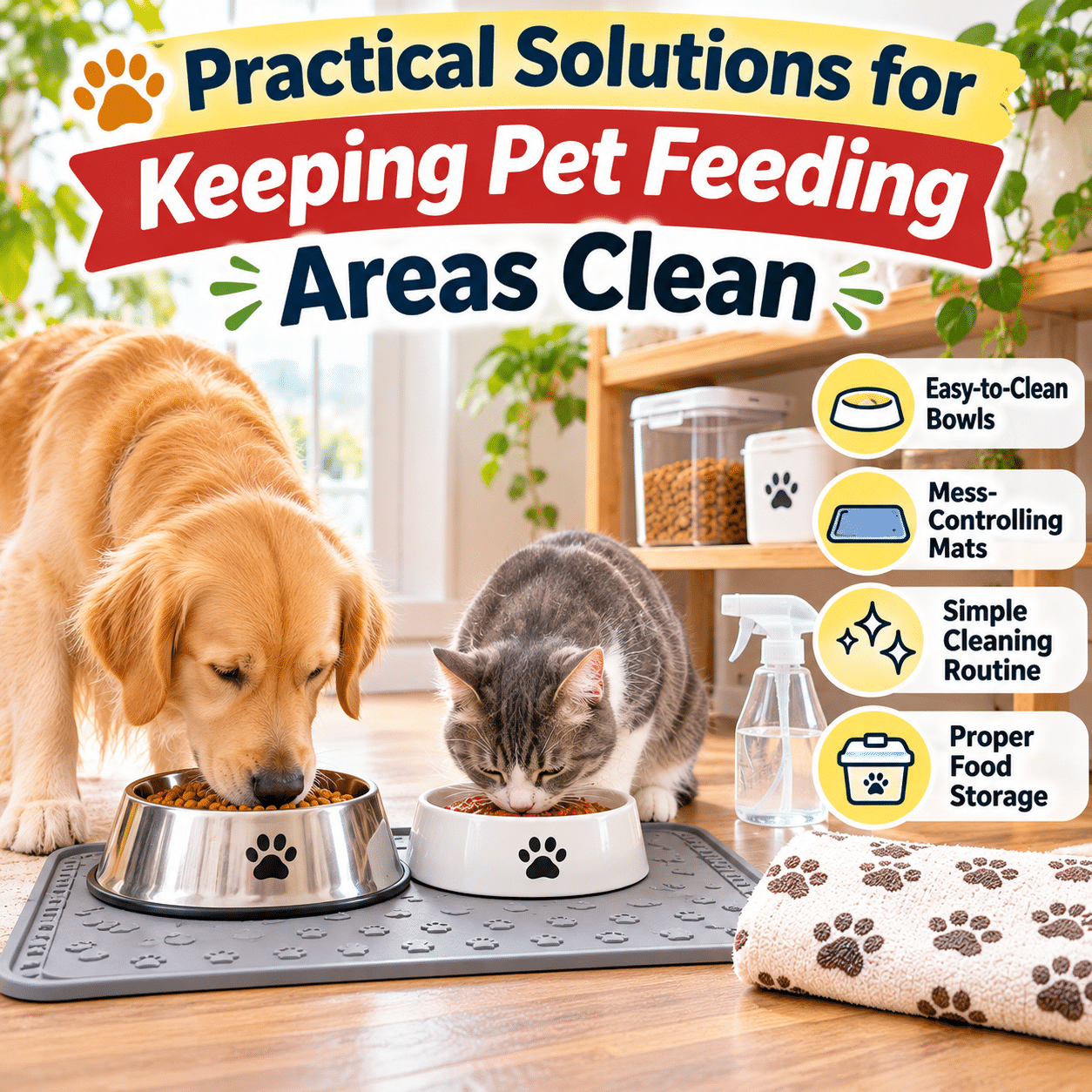
A clean feeding area is an important part of maintaining a healthy, comfortable home for both pets and their owners. Whether you share your space with a playful puppy, an independent cat, or several animals with different feeding routines, food bowls, water dishes, and surrounding floors can quickly become messy.
Scattered kibble, spilled water, food residue, and accumulated dust may seem like minor inconveniences. However, when these problems are left unattended, they can contribute to unpleasant odors, attract pests, damage certain flooring materials, and create unhygienic conditions.
Fortunately, keeping a pet feeding station clean does not require complicated equipment or an elaborate cleaning schedule. A thoughtful layout, suitable feeding accessories, consistent hygiene practices, and a few preventive habits can make everyday maintenance much easier.
This comprehensive guide explores practical solutions for organizing, cleaning, and maintaining pet feeding areas while supporting your pet’s comfort, safety, and natural eating habits.
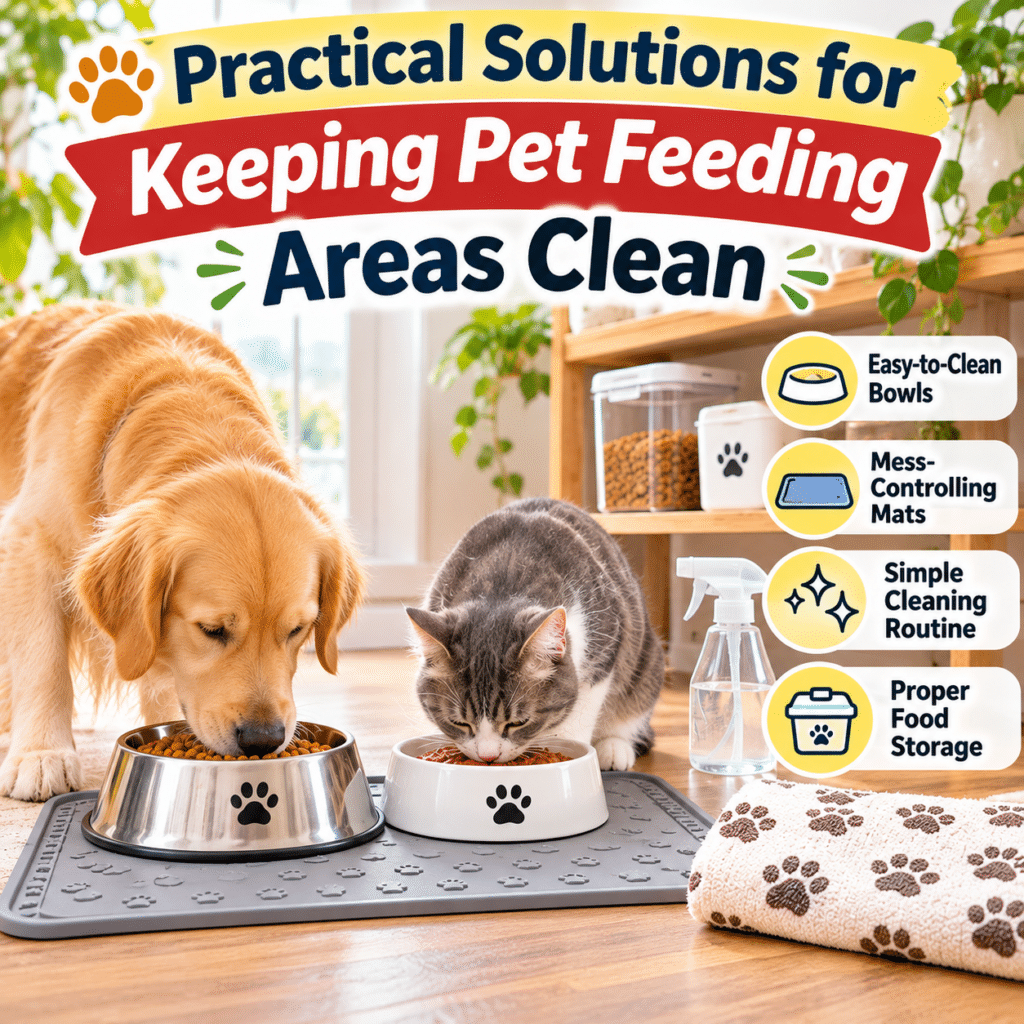
1. Understand Why Pet Feeding Areas Become Messy
Before improving your pet’s feeding station, it helps to identify the sources of everyday mess.
Common Sources of Food-Related Mess
Pet feeding areas may accumulate:
- Scattered dry kibble.
- Wet food residue.
- Food crumbs and small particles.
- Water droplets and spills.
- Saliva around bowls.
- Pet hair and dust.
- Mud or debris carried on paws.
- Food packaging waste.
Some pets eat neatly, while others push food outside their bowls, move dishes across the floor, or splash water while drinking.
How Feeding Habits Influence Cleanliness
Different animals have different eating behaviors.
For example, some dogs eat enthusiastically and push their bowls forward, while certain cats prefer to remove pieces of food from their dishes before eating.
Pets with long ears, facial hair, or particular physical characteristics may also create additional mess during meals.
Understanding these behaviors helps you choose cleaning solutions that address the actual problem rather than relying on unnecessary accessories.
Why Small Messes Should Be Addressed Promptly
Food residue and standing moisture can create conditions that encourage microbial growth.
Leftover food may also attract insects or rodents.
Cleaning spills promptly reduces these risks and makes the feeding area easier to maintain over time.
2. Choose the Right Location for Your Pet Feeding Station
The location of a feeding area can influence cleanliness, accessibility, and your pet’s comfort.
Select an Easy-to-Clean Surface
Whenever possible, place feeding bowls on flooring that tolerates regular cleaning.
Suitable options may include:
- Ceramic tile.
- Properly sealed resilient flooring.
- Other moisture-resistant surfaces approved for routine cleaning.
Carpeted areas are generally more difficult to maintain because food particles and moisture can become trapped in fibers.
Avoid High-Traffic Walkways
A feeding station positioned in a busy hallway may increase the risk of accidental spills.
Choose a location where your pet can eat without being repeatedly interrupted.
Keep Feeding Areas Away From Household Hazards
Avoid placing food and water bowls near:
- Electrical outlets or exposed cords.
- Household cleaning chemicals.
- Unsecured storage items.
- Hot appliances.
- Areas where doors may strike the bowls.
The feeding station should remain accessible without creating a tripping hazard.
Consider Your Pet’s Preferences
Some pets prefer quiet, predictable feeding locations.
Cats may be especially sensitive to feeding near noisy appliances or busy passageways.
In multi-pet homes, separate feeding locations may reduce competition and stress.
3. Choose Food Bowls That Are Easy to Clean
The material, shape, and construction of feeding bowls affect how easily they can be maintained.
Stainless Steel Bowls
Stainless steel is a practical option for many households because it is generally durable, nonporous, and easy to wash.
Choose food-grade bowls with smooth surfaces and no sharp edges.
Replace bowls that become damaged or develop areas that are difficult to clean.
Ceramic Bowls
Glazed ceramic bowls can be attractive and relatively easy to maintain.
However, chipped or cracked surfaces may trap residue and create cleaning difficulties.
Choose products intended for pet feeding and avoid damaged dishes.
Plastic Bowls
Plastic bowls are lightweight and widely available, but scratches can develop over time.
These scratches may make thorough cleaning more difficult.
Inspect plastic bowls regularly and replace them when surfaces become heavily worn.
Comparing Common Pet Bowl Materials
| Bowl Material | Advantages | Cleaning Considerations |
|---|---|---|
| Stainless steel | Durable, generally nonporous, easy to wash | Inspect for damage and clean thoroughly |
| Glazed ceramic | Stable, available in many designs | Replace chipped or cracked bowls |
| Plastic | Lightweight and often inexpensive | Scratches may retain residue |
| Silicone | Flexible and convenient for some uses | Follow manufacturer cleaning instructions |
| Glass | Smooth and generally easy to clean | Breakage may create safety hazards |
No material eliminates the need for regular washing.
4. Use Feeding Mats to Contain Everyday Mess
A feeding mat creates a designated surface beneath food and water bowls.
It can help prevent spills from spreading across the surrounding floor.
Choose a Mat With Raised Edges
Raised borders can contain small amounts of water and scattered food.
This may be particularly useful for pets that drink enthusiastically.
Prioritize Easy-Clean Materials
Look for mats that are:
- Water-resistant.
- Easy to wipe or wash.
- Suitable for contact with pet feeding accessories.
- Resistant to slipping.
- Appropriately sized for the feeding area.
Avoid Mats That Trap Moisture
Absorbent materials may hold water beneath bowls or against flooring.
If using fabric mats, wash and dry them regularly.
Clean Beneath the Mat
Even when the top surface appears clean, moisture and crumbs may accumulate underneath.
Lift the mat frequently to inspect and clean the floor.
This is especially important on moisture-sensitive flooring.
5. Prevent Food Bowls From Sliding Across the Floor
Moving bowls can scatter food and water.
Use Stable Bowls
Bowls with wide bases are often more resistant to tipping.
Choose a size appropriate for your pet.
Consider Non-Slip Bases
Rubberized bases or suitable non-slip mats may reduce movement during meals.
Inspect these materials for wear and clean them regularly.
Avoid Improvised Restraints
Do not secure bowls with exposed adhesives, loose cords, or small detachable objects that pets might chew or swallow.
Observe Your Pet’s Eating Behavior
Some pets move their bowls because of the way they eat, while others may be uncomfortable with the bowl’s shape or location.
If the behavior is persistent, consider whether a different bowl design or feeding position would help.
6. Reduce Scattered Kibble and Dry Food
Dry pet food is convenient, but small pieces can spread across floors during enthusiastic meals.
Choose an Appropriate Bowl Size
A bowl that is too shallow or too small may allow food to spill over the edges.
A properly sized bowl should accommodate the meal without excessive crowding.
Avoid Overfilling
Large piles of kibble can spill when pets begin eating.
Measure portions according to your pet’s nutritional needs and feeding plan.
Consider Feeding Mats or Trays
A shallow feeding tray can catch pieces that fall outside the bowl.
Choose a design that is stable and easy to clean.
Clean Scattered Food Promptly
Use a small brush, dustpan, or suitable vacuum attachment to collect dry particles.
Do not return food from the floor to the bowl.
Discard food that has become contaminated.
7. Keep Wet Food Feeding Areas Hygienic
Wet food can leave residue that dries onto bowls and surrounding surfaces.
It also requires careful handling because moisture-rich foods can support microbial growth.
Serve Manageable Portions
Offer amounts appropriate for your pet’s needs and eating habits.
Avoid leaving large quantities of wet food exposed unnecessarily.
Remove Leftovers Promptly
Discard uneaten wet food according to the food manufacturer’s guidance and relevant food-safety recommendations.
The safe time depends on factors such as temperature, food formulation, and storage conditions.
When in doubt, avoid leaving perishable food at room temperature for extended periods.
Wash Bowls After Wet Food Meals
Remove residue with warm water and dishwashing detergent.
Rinse thoroughly and allow the bowl to dry appropriately.
Clean Nearby Surfaces
Check for splashes on:
- Feeding mats.
- Floors.
- Walls.
- Bowl stands.
- Nearby furniture.
Removing residue before it dries usually makes cleaning easier.
8. Maintain Clean and Accessible Drinking Water
Fresh drinking water is essential for pet well-being.
Water bowls also require regular cleaning because saliva, food particles, dust, and other debris can accumulate.
Replace Drinking Water Regularly
Provide fresh water daily and more often when it becomes dirty.
Some pets require more frequent water changes because of their drinking habits or environmental conditions.
Wash Water Bowls
Empty and wash water bowls at least daily, or more often when visibly soiled.
Use a suitable detergent, rinse thoroughly, and refill with clean water.
Prevent Water Contamination
Avoid placing water bowls where debris frequently falls into them.
Keep them away from litter boxes, household chemicals, and other potential contamination sources.
Monitor Water Availability
Pets should have reliable access to suitable drinking water unless a veterinarian has provided specific medical instructions.
Check bowls regularly to ensure they have not tipped over or become empty.
9. Reduce Water Spills Around Drinking Bowls
Water spills can create slippery surfaces and damage certain floors.
Use Wide, Stable Bowls
A bowl with a stable base is less likely to tip during normal use.
Choose an Appropriate Water Level
Avoid filling bowls so close to the rim that ordinary movement causes overflow.
However, ensure enough water remains available for your pet.
Use Water-Resistant Mats
A mat with a raised border may contain minor splashes.
Empty trapped water promptly.
Check the Floor Frequently
Water can travel beneath mats, cabinets, or nearby furniture.
Inspect surrounding surfaces, especially when using wood or laminate flooring.
Consider Your Pet’s Drinking Style
Some dogs splash water because of their mouth shape or drinking behavior.
Certain specialized bowls may reduce splashing, but they should not restrict comfortable access to water.
10. Clean Automatic Pet Feeders Properly
Automatic feeders can support predictable feeding schedules, but they still require routine maintenance.
Clean Food-Contact Components
Follow the manufacturer’s instructions for removing and washing:
- Food trays.
- Bowls.
- Dispensing components.
- Removable storage containers.
Keep Dry Food Storage Areas Dry
Moisture entering a dry-food dispenser can contribute to spoilage and mechanical problems.
Ensure components are fully dry before refilling.
Inspect Dispensing Mechanisms
Food crumbs and oils may accumulate around moving parts.
Clean only the areas approved by the manufacturer.
Protect Electronic Components
Never immerse electronic bases, motors, or power connections unless the product is specifically designed for that treatment.
Disconnect power before maintenance when instructed.
Check Portion Accuracy
Confirm that the feeder dispenses the intended amount.
A clean feeder should also function reliably.
11. Maintain Pet Water Fountains
Pet water fountains circulate water through pumps and filters.
Although circulation may help keep water moving, it does not replace cleaning.
Replace Water Regularly
Follow the manufacturer’s recommendations and refresh water whenever it becomes dirty.
Clean the Fountain Reservoir
Disassemble removable components as instructed.
Wash food-contact surfaces and remove accumulated residue.
Maintain the Pump
Hair, debris, and mineral deposits may interfere with pump operation.
Clean accessible pump components according to the product instructions.
Replace Filters as Recommended
Filters have limited service lives.
Follow the manufacturer’s replacement guidance and consider water quality and usage conditions.
Watch for Biofilm
Slippery films may develop on wet surfaces.
Thorough cleaning is necessary to remove these deposits.
Do not assume that filtered or moving water is automatically hygienic.
12. Organize Pet Food Storage Near the Feeding Area
An organized food storage system makes daily feeding more convenient and reduces unnecessary mess.
Keep Food in Suitable Containers
Store pet food according to the manufacturer’s instructions.
For dry food, a clean, dry container with a secure lid can help protect against moisture and pests.
Preserve Original Packaging Information
Keeping dry food in its original bag inside a suitable storage container can help preserve important information, including:
- Product name.
- Ingredient information.
- Lot number.
- Expiration or best-by date.
- Manufacturer instructions.
This information may be important if a food recall occurs.
Avoid Mixing Old and New Food Without Cleaning
Repeatedly topping up containers can leave older crumbs and oils at the bottom.
Empty and clean storage containers appropriately before adding a fresh supply.
Keep Food Away From Cleaning Products
Pet food should not be stored next to chemicals, pesticides, or other hazardous substances.
13. Prevent Pet Food From Attracting Household Pests
Pet food can attract insects and rodents when it remains exposed.
Remove Spilled Food
Collect scattered kibble after meals.
Pay attention to floor edges and areas beneath cabinets.
Store Food Securely
Use containers that close properly and follow food storage instructions.
Avoid Leaving Unnecessary Food Out Overnight
For pets on scheduled meals, remove leftovers according to their feeding plan and food-safety needs.
Some animals require different feeding arrangements for medical or behavioral reasons, so adjust routines appropriately.
Inspect Storage Areas
Look for signs such as:
- Damaged packaging.
- Unusual debris.
- Insect activity.
- Droppings.
- Gnaw marks.
If pests are present, address the underlying access points and food sources.
Use pest-control methods that are safe for households with animals.
14. Reduce Odors Around Pet Feeding Stations
Persistent odors often indicate residue, moisture, or insufficient cleaning.
Wash Bowls Thoroughly
Food oils and saliva can leave films on surfaces.
Use suitable dishwashing detergent and rinse completely.
Clean Feeding Mats
A mat that appears clean may still contain residue along edges or textured areas.
Remove Old Food
Discard spoiled or contaminated food promptly.
Dry Surfaces Completely
Moisture trapped beneath bowls or mats can contribute to unpleasant smells.
Avoid Strong Fragrances
Highly scented cleaning products may irritate sensitive pets or discourage them from using the feeding area.
Cleanliness should come from removing residue rather than masking odors.
15. Use Pet-Safe Cleaning Methods
Cleaning products must be selected and used carefully around animals.
Start With Routine Washing
For many everyday feeding messes, warm water and suitable dishwashing detergent are effective for removing food residue.
Rinse Food-Contact Surfaces
Remove detergent residue thoroughly before returning bowls to use.
Use Disinfectants Only When Appropriate
If disinfection is necessary, choose a product suitable for the intended surface and follow all label directions.
Pay attention to:
- Required dilution.
- Contact time.
- Ventilation.
- Rinsing instructions.
- Pet re-entry requirements.
Cleaning and disinfection are different processes. Visible food residue should generally be removed before disinfection.
Avoid Mixing Cleaning Chemicals
Never mix bleach with ammonia, acids, or other cleaning agents.
Dangerous gases or chemical reactions may result.
Keep Pets Away During Cleaning
Prevent animals from licking wet cleaning products or accessing cleaning supplies.
Return feeding accessories only when they are safe to use.
16. Protect Floors From Food and Water Damage
Repeated spills can affect certain flooring materials.
Tile Floors
Tile is often relatively easy to clean, but grout lines may retain residue.
Clean grout using methods suitable for the specific material.
Vinyl and Resilient Flooring
Many resilient floors tolerate routine damp cleaning, but seams and edges may still be vulnerable to moisture.
Follow manufacturer instructions.
Wood Floors
Standing water can damage wood finishes and penetrate seams.
Use protective mats and wipe spills promptly.
Laminate Flooring
Excess moisture may cause swelling or edge damage.
Avoid allowing water to remain beneath feeding mats.
Carpeted Floors
Carpets can trap food particles and moisture.
If relocation is not possible, use a stable, washable protective surface and clean spills immediately.
17. Keep Feeding Areas Clean in Small Homes
Limited floor space can make pet feeding stations difficult to organize.
Choose a Compact Location
Look for a quiet, accessible corner that does not obstruct movement.
Use Vertical Storage
Store sealed food containers and feeding accessories on suitable shelves or inside cabinets.
Ensure heavy items are securely supported.
Keep Only Essential Items Nearby
A compact feeding area may need only:
- Food bowl.
- Water bowl.
- Protective mat.
- Small cleaning cloth.
- Appropriate storage for feeding supplies.
Avoid Crowding the Pet
Space-saving arrangements should not make eating or drinking uncomfortable.
Pets need enough room to approach and use their bowls naturally.
18. Organize Feeding Areas for Multiple Pets
Multi-pet households may experience additional mess because animals have different eating speeds, food preferences, and behaviors.
Provide Separate Feeding Spaces When Needed
Some pets eat more comfortably when they are not competing for food.
Prevent Food Sharing When Diets Differ
Animals receiving prescription diets, age-specific foods, or controlled portions may need separate feeding arrangements.
Monitor Mealtime Behavior
Watch for:
- Food guarding.
- Bowl stealing.
- Rapid eating.
- Anxiety around other animals.
- Unequal access to food.
Clean Each Feeding Station
Multiple bowls create additional surfaces requiring attention.
A consistent routine helps prevent overlooked residue.
Consider Supervised Feeding
For animals with feeding conflicts, supervised meals or physical separation may improve safety and comfort.
Consult a veterinarian or qualified behavior professional if conflicts persist.
19. Make Feeding Areas Accessible for Senior Pets
Older pets may experience changes in mobility, vision, or comfort.
Provide Stable Bowls
Avoid dishes that slide or tip easily.
Reduce Slipping Hazards
Keep floors dry and consider suitable non-slip surfaces.
Maintain Easy Access
Position bowls where pets do not need to climb stairs unnecessarily or navigate obstacles.
Evaluate Bowl Height Individually
Some animals may benefit from a different feeding position, but elevated bowls are not universally appropriate.
For dogs, particularly those at risk of gastric dilatation-volvulus, bowl height should not be changed based on assumptions that elevation prevents digestive problems.
Ask a veterinarian when medical or mobility considerations affect feeding posture.
Observe Changes in Eating Behavior
Difficulty reaching food, dropping food, or reluctance to eat may indicate health or dental concerns.
Seek veterinary advice when changes persist.
20. Keep Feeding Areas Safe for Puppies and Kittens
Young animals may explore feeding accessories through chewing, pawing, and play.
Choose Durable Accessories
Avoid bowls with sharp edges or easily detachable small parts.
Prevent Tipping
Use stable dishes suited to the animal’s size.
Keep Cleaning Supplies Out of Reach
Store detergents, disinfectants, and cleaning tools securely.
Supervise New Feeding Arrangements
Observe how puppies and kittens interact with mats, stands, and automatic feeders.
Clean Frequently
Young pets may scatter food or spill water while learning feeding routines.
Gentle, consistent cleanup helps maintain a safe environment.
21. Common Mistakes That Make Pet Feeding Areas Harder to Clean
Even well-intentioned routines can create unnecessary maintenance problems.
Mistake 1: Leaving Food Residue in Bowls
Dried residue becomes harder to remove and may support microbial growth.
Better approach: Wash food bowls after meals, particularly when serving wet food.
Mistake 2: Forgetting to Clean Water Bowls
Fresh water in a dirty bowl does not provide the same hygiene benefits as a properly cleaned container.
Better approach: Wash water bowls at least daily and whenever visibly soiled.
Mistake 3: Ignoring Moisture Beneath Feeding Mats
Water can become trapped against flooring.
Better approach: Lift mats regularly and dry the underlying surface.
Mistake 4: Using Damaged Bowls
Scratches, chips, and cracks can make cleaning difficult or create injury risks.
Better approach: Inspect bowls and replace damaged items.
Mistake 5: Storing Food in Damp Containers
Moisture can contribute to food deterioration.
Better approach: Keep storage containers clean, dry, and properly closed.
Mistake 6: Using Strong Fragrances to Hide Odors
Fragrance does not remove the underlying source of contamination.
Better approach: Remove residue and moisture directly.
Mistake 7: Neglecting Automatic Feeder Maintenance
Mechanical components and dispensing areas can accumulate debris.
Better approach: Follow the manufacturer’s cleaning schedule.
Mistake 8: Placing Feeding Stations in Busy Walkways
Frequent movement increases spill risks.
Better approach: Choose a quiet, accessible location.
Mistake 9: Using Unsafe Chemical Cleaners
Improper chemical use may expose pets to harmful residues.
Better approach: Follow label directions and rinse food-contact surfaces as required.
Mistake 10: Overcomplicating the Feeding Station
Too many accessories create additional surfaces to clean.
Better approach: Use a simple arrangement that meets your pet’s needs.
22. Troubleshooting Common Pet Feeding Area Problems
Different feeding-area problems require different solutions.
| Problem | Possible Cause | Practical Solution |
|---|---|---|
| Kibble scatters across the floor | Enthusiastic eating or unsuitable bowl | Use an appropriately sized bowl and washable mat |
| Water frequently spills | Unstable bowl or drinking behavior | Choose a stable bowl and protective mat |
| Feeding area smells unpleasant | Food residue or trapped moisture | Wash bowls and mats, then dry surfaces |
| Bowls slide during meals | Smooth flooring or lightweight dishes | Use non-slip bases or stable bowls |
| Food attracts insects | Exposed leftovers or scattered kibble | Remove food promptly and secure storage |
| Water bowl develops a slippery film | Accumulated residue and microbial growth | Wash thoroughly and refresh water regularly |
| Automatic feeder becomes clogged | Food crumbs, moisture, or unsuitable kibble | Clean approved components and check food compatibility |
| Pet avoids the feeding station | Noise, location, bowl discomfort, or other concerns | Review placement and consult a veterinarian if eating changes |
| Floor beneath mat stays damp | Trapped spills or poor drying | Lift the mat, clean, and dry the floor |
| Multiple pets compete for food | Shared feeding space | Separate feeding locations and supervise meals |
| Pet food becomes stale | Poor storage or prolonged exposure | Follow packaging guidance and use secure storage |
| Bowls retain visible residue | Incomplete cleaning | Wash with suitable detergent and rinse thoroughly |
Troubleshooting is most effective when the cause of the problem is identified before changing the feeding setup.
23. Create a Simple Pet Feeding Area Cleaning Schedule
A realistic cleaning routine can prevent small messes from becoming larger household problems.
After Each Meal
- Remove leftover perishable food.
- Wash food bowls after use.
- Collect scattered kibble.
- Wipe visible food splashes.
- Check for water spills.
Daily Tasks
- Wash and refill drinking water bowls.
- Wipe the feeding mat.
- Inspect the floor around the station.
- Remove visible pet hair and dust.
- Check for signs of pests or unusual odors.
- Ensure food and water remain safely accessible.
Weekly Tasks
- Thoroughly clean feeding mats.
- Inspect bowls for scratches, chips, or damage.
- Clean nearby floor edges and corners.
- Wipe suitable food storage surfaces.
- Inspect automatic feeding equipment.
- Review the condition of feeding accessories.
Periodic Tasks
- Deep-clean food storage containers when empty.
- Maintain water fountain pumps and filters.
- Inspect feeding stands and non-slip bases.
- Review storage conditions and food freshness.
- Replace worn or damaged accessories.
- Reassess the feeding station’s layout.
The schedule should be adjusted according to the number of pets, food types, equipment, and household conditions.
24. Frequently Asked Questions About Keeping Pet Feeding Areas Clean
1. How often should pet food bowls be washed?
Food bowls should generally be washed after meals, particularly when used for wet or perishable food. Regular washing removes residue and helps maintain hygiene.
2. How often should pet water bowls be cleaned?
Water bowls should be washed at least daily and more frequently when visibly dirty. Replace drinking water regularly.
3. What is the best material for a pet food bowl?
Food-grade stainless steel is a practical choice for many households because it is durable and relatively easy to clean. Other suitable materials can also work when maintained properly.
4. Are plastic pet bowls hygienic?
Plastic bowls can be used, but scratches may make them harder to clean. Inspect them regularly and replace heavily worn dishes.
5. Do ceramic pet bowls need special care?
Check ceramic bowls for chips and cracks. Damaged surfaces can trap residue or create safety hazards.
6. Are feeding mats worth using?
Feeding mats can help contain food particles and minor water spills, especially when they are easy to wash and dry.
7. What type of feeding mat is easiest to clean?
A smooth, water-resistant mat with suitable raised edges is often convenient. Choose a material appropriate for your flooring and cleaning routine.
8. How can I stop my dog from pushing the food bowl around?
Try a stable bowl with a wide base or an appropriate non-slip surface. Observe whether bowl size or location contributes to the behavior.
9. Why does my cat take food out of the bowl?
Some cats remove food because of individual feeding preferences, bowl design, or other factors. A shallow, appropriately sized dish may help some cats.
10. How do I prevent kibble from scattering everywhere?
Use suitable bowl dimensions, avoid overfilling, and place a washable tray or mat beneath the feeding area.
11. Can I leave wet pet food out all day?
Wet food should not be left exposed for prolonged periods. Follow manufacturer guidance and food-safety recommendations for the specific product and conditions.
12. Why does my pet’s water bowl become slippery?
A slippery film can develop from accumulated organic residue and microbial growth. Wash the bowl thoroughly and refresh the water.
13. Do pet water fountains need regular cleaning?
Yes. Pumps, reservoirs, filters, and drinking surfaces require maintenance according to the manufacturer’s instructions.
14. Does filtered fountain water stay clean indefinitely?
No. Filtration does not eliminate the need for water replacement and routine cleaning.
15. Can I wash pet bowls in the dishwasher?
Some pet bowls are dishwasher-safe. Check manufacturer instructions and use an appropriate cleaning cycle.
16. Is ordinary dish soap safe for cleaning pet bowls?
Suitable dishwashing detergent can be used for routine cleaning when bowls are rinsed thoroughly. Follow product instructions and avoid leaving residues.
17. Should pet feeding areas be disinfected every day?
Routine washing is important. Additional disinfection may be appropriate in certain situations, but it should be performed with suitable products and correct instructions rather than automatically using strong chemicals every day.
18. How can I remove unpleasant odors from feeding mats?
Wash the mat thoroughly, remove trapped residue, and allow it to dry completely. Replace materials that retain persistent odors despite appropriate cleaning.
19. How do I protect hardwood floors beneath pet bowls?
Use a suitable water-resistant mat, wipe spills promptly, and inspect beneath the mat regularly.
20. What is the best place for a pet feeding station in a small apartment?
Choose a quiet, accessible area with easy-to-clean flooring that does not block walkways or expose the pet to household hazards.
21. Should food and water bowls be placed next to each other?
They can be placed together when the arrangement suits the pet. Some animals prefer separate locations, so observe individual behavior.
22. How can I prevent ants from reaching pet food?
Remove scattered food, store supplies securely, clean feeding surfaces, and address pest entry points using pet-safe methods.
23. Is it better to keep pet food in its original bag?
Keeping the original bag inside a clean, dry storage container can preserve labeling and help protect food. Follow the food manufacturer’s storage instructions.
24. How do I keep feeding areas clean with several pets?
Provide sufficient feeding space, clean individual bowls, separate animals when needed, and maintain consistent routines.
25. How can I make pet feeding cleanup faster?
Use easy-to-clean bowls, a washable protective mat, accessible cleaning supplies, and a simple routine that addresses spills immediately.
25. Build a Long-Term Pet Feeding Area Maintenance Strategy
A clean feeding station is easier to maintain when its design supports everyday habits.
Focus on Simplicity
Choose a practical setup with only the accessories your pet genuinely needs.
Fewer unnecessary components mean fewer surfaces requiring cleaning.
Prevent Mess Before It Spreads
Stable bowls, suitable mats, and appropriate food portions can reduce scattered food and water.
Make Cleaning Convenient
Keep a small set of cleaning supplies in a safe, accessible location.
The easier cleanup becomes, the more likely it is to happen consistently.
Adapt to Your Pet’s Behavior
Observe how your pet eats and drinks.
Adjust bowl shape, placement, or protective surfaces when they improve comfort and cleanliness.
Maintain Equipment Regularly
Automatic feeders and water fountains require more than surface wiping.
Follow maintenance instructions and inspect components for damage.
Review the Setup Periodically
As pets age or household circumstances change, feeding arrangements may need adjustment.
A flexible approach helps keep the station practical over time.
Prioritize Hygiene Without Creating Stress
The feeding area should remain a comfortable place for your pet.
Cleaning routines should support healthy feeding behavior rather than interrupt meals unnecessarily.
Final Thoughts
Keeping pet feeding areas clean is one of the simplest ways to improve everyday household hygiene while supporting your pet’s comfort and well-being.
Food crumbs, water spills, and residue are normal parts of caring for animals, but they become much easier to manage with thoughtful preparation and consistent habits.
Choosing easy-to-clean bowls, using protective mats, storing food properly, washing feeding accessories regularly, and addressing spills promptly can make a meaningful difference.
The most effective feeding station is not necessarily the most elaborate one. It is a safe, accessible, comfortable space that suits your pet’s needs and remains easy to maintain.
By combining practical organization with regular cleaning, you can create a feeding area that stays fresher, tidier, and more welcoming for both your pets and everyone who shares your home.