Gardening is a rewarding way to bring nature into everyday life, whether you care for a collection of indoor houseplants, grow herbs on a sunny windowsill, or maintain a small balcony garden. Even a modest gardening setup can provide opportunities for creativity, relaxation, and hands-on learning.
However, gardening also comes with a surprising number of supplies. Watering cans, pruning scissors, potting mix, plant fertilizers, spare containers, gloves, labels, and small tools can gradually accumulate. Without an organized storage system, these essentials may end up scattered across shelves, cabinets, balconies, and living areas.
For people living in apartments or homes with limited storage, keeping gardening supplies organized can be especially challenging. A full-size garden shed or dedicated utility room may not be available, and everyday household storage often needs to accommodate many other belongings.
Fortunately, maintaining an organized gardening collection does not require a large space or expensive storage equipment.
The most effective approach is to choose practical tools, use available vertical space, group supplies by function, and establish simple habits that make gardening accessories easy to find and return after use.
Thoughtful organization can also help protect supplies from moisture, prevent unnecessary purchases, reduce clutter, and make routine plant care more enjoyable.
This guide explores smart, realistic ways to organize gardening supplies in small spaces, from compact indoor plant-care stations to balcony storage systems and portable gardening kits.
1. Understand Why Gardening Supplies Become Cluttered
Before reorganizing gardening equipment, it helps to understand why clutter develops.
Even small plant collections can require several different types of accessories.
Gardening Tasks Require Different Tools
Common gardening activities include:
- Watering.
- Pruning.
- Repotting.
- Cleaning plant leaves.
- Mixing growing media.
- Applying fertilizers.
- Supporting climbing plants.
- Managing pests.
- Labeling containers.
Each activity may require its own supplies.
Items Are Often Stored Where They Were Last Used
A watering can may remain beside a windowsill, while pruning scissors are left on a bookshelf and potting mix is stored under a sink.
Over time, supplies become scattered.
Spare Containers Accumulate
Plant owners often keep empty nursery pots, decorative planters, saucers, and propagation containers for future use.
These items can occupy substantial storage space.
Packaging Takes Up Room
Partially used bags of potting mix, fertilizer containers, and bulky product packaging can make small cabinets feel overcrowded.
Duplicate Purchases Create More Clutter
When tools are difficult to find, it becomes easier to purchase replacements unnecessarily.
A clear organization system helps prevent this problem.
2. Start by Sorting and Evaluating Your Gardening Supplies
An effective storage system begins with understanding what you already own.
Gather Supplies Into One Area
Collect gardening accessories from their usual storage locations.
Place them on a protected table or another suitable work surface.
Group Items by Function
Useful categories include:
- Watering equipment.
- Pruning and cutting tools.
- Potting and repotting supplies.
- Fertilizers and plant treatments.
- Plant supports and labels.
- Cleaning accessories.
- Spare pots and saucers.
- Seasonal gardening equipment.
Identify Frequently Used Items
Separate supplies used regularly from those needed only occasionally.
For example, a watering can may be used frequently, while a large repotting mat may be needed only a few times each year.
Check for Damage
Inspect tools for:
- Rust.
- Cracked handles.
- Broken components.
- Damaged cutting edges.
- Leaking containers.
- Unusable accessories.
Repair or replace items when appropriate.
Remove Unnecessary Duplicates
Keep enough tools for practical use without accumulating excessive quantities.
Review Old Products
Check gardening products for expiration dates, damaged packaging, or storage requirements.
Dispose of unwanted chemicals and fertilizers according to product instructions and local regulations.
3. Create a Compact Gardening Supply Station
A dedicated gardening station can simplify everyday plant care.
It does not need to be a large cabinet or separate room.
Choose a Convenient Location
Possible locations include:
- A balcony corner.
- A utility closet.
- A laundry room shelf.
- A covered storage area.
- A cabinet near indoor plants.
- A small rolling cart.
- A dedicated drawer.
Choose a location that is easy to access and suitable for the items being stored.
Keep Essentials Together
Frequently used supplies might include:
- A small watering can.
- Pruning scissors.
- A microfiber cloth.
- A soft plant brush.
- A small scoop.
- Plant labels.
- A compact repotting mat.
Use a Defined Storage Boundary
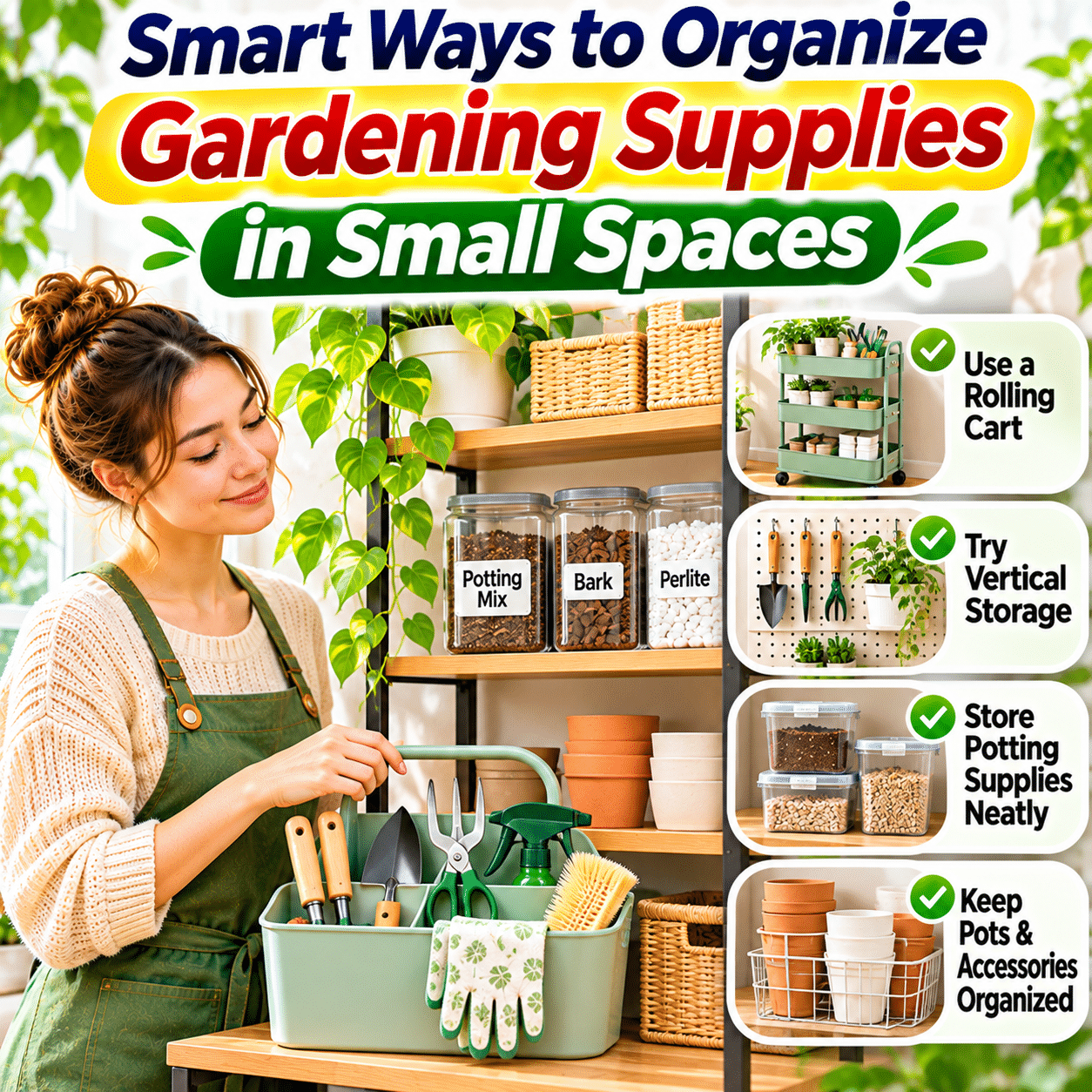
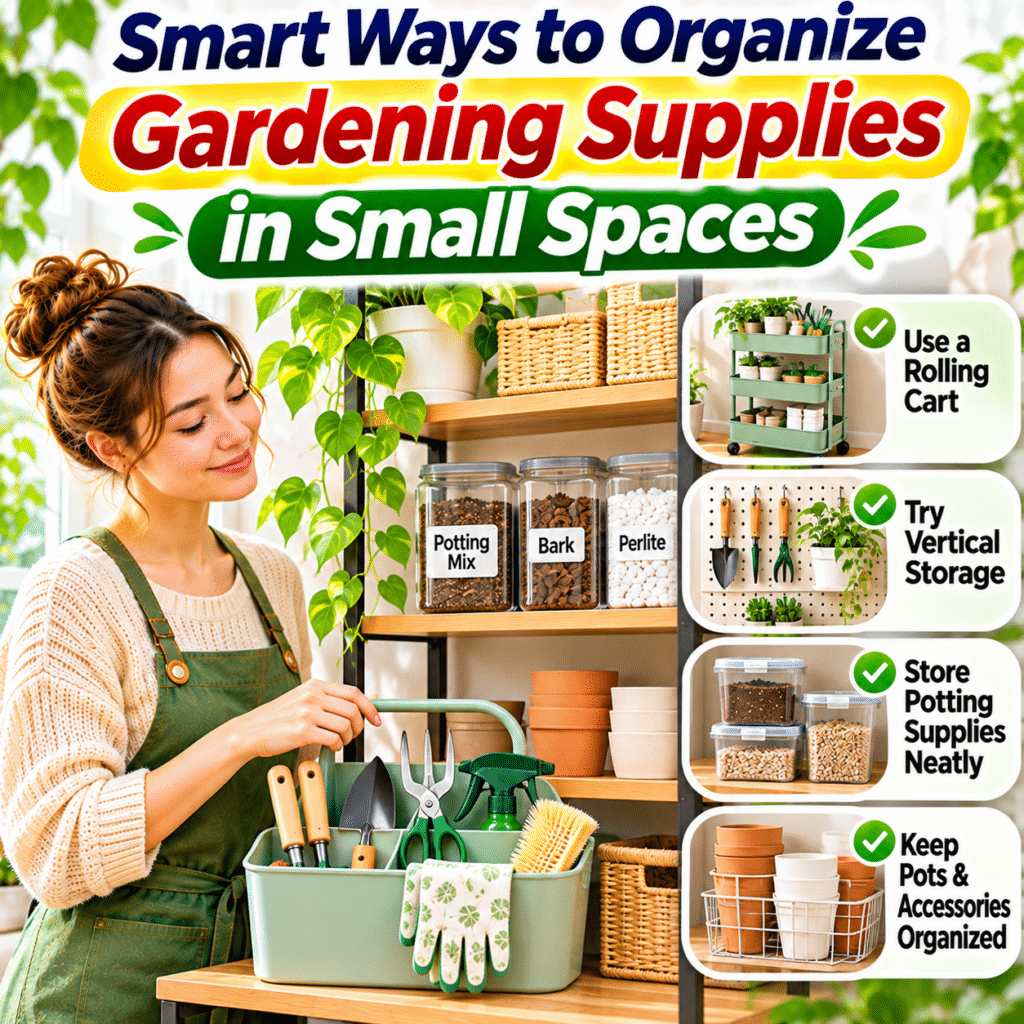
A tray, caddy, basket, or cabinet shelf can establish a clear space for gardening equipment.
Avoid Overcrowding
Leave enough room to remove individual items without disturbing everything else.
Make Cleanup Part of the Routine
After plant care, clean and return tools to the gardening station.
This small habit helps prevent supplies from spreading throughout the home.
4. Use Vertical Storage to Save Floor Space
Vertical storage is particularly useful in apartments and compact homes.
Install Wall Hooks
Hooks can hold suitable lightweight items such as:
- Gardening gloves.
- Small hand tools.
- Empty watering cans.
- Cleaning brushes.
- Lightweight accessories.
Choose hooks appropriate for the wall material and expected load.
Use Wall-Mounted Shelves
Shelves can store small containers, spare pots, and organized accessories.
Keep heavier items on lower, stable surfaces whenever practical.
Consider Pegboards
Pegboards provide flexible storage for tools and accessories.
Hooks and holders can be rearranged as storage needs change.
Use Cabinet Door Organizers
Suitable organizers attached to cabinet doors can hold small lightweight items.
Ensure they do not interfere with door movement or hinges.
Avoid Unsafe Overhead Storage
Do not place heavy bags of potting mix or large liquid containers on high shelves that are difficult to reach.
Storage should remain stable and accessible.
5. Organize Gardening Tools With Portable Caddies
A portable caddy is one of the simplest solutions for small-space gardening.
Choose a Manageable Size
A compact caddy should hold essential tools without becoming unnecessarily heavy.
Look for Useful Compartments
Dividers can separate:
- Pruning scissors.
- Small scoops.
- Plant labels.
- Cleaning cloths.
- Gloves.
- Soft brushes.
Choose Easy-to-Clean Materials
Plastic or other moisture-resistant materials may be convenient for gardening supplies.
Keep Sharp Tools Secure
Store cutting tools with protective covers when available.
Avoid leaving exposed blades where they can cause injury.
Use the Caddy During Plant Care
Carry the caddy between different plant locations.
Return It to One Storage Location
A consistent storage spot prevents tools from becoming scattered.
6. Make the Most of a Small Rolling Storage Cart
Rolling carts can provide flexible storage for indoor gardening supplies.
Choose a Compact Cart
Select a size that fits the available floor space without obstructing movement.
Organize by Frequency of Use
A practical arrangement might include:
Top shelf: Frequently used tools and a small watering can.
Middle shelf: Spare saucers, plant labels, and repotting accessories.
Bottom shelf: Heavier supplies such as sealed potting mix containers.
Use Small Bins
Bins prevent loose accessories from rolling or falling between shelves.
Check Weight Capacity
Follow manufacturer load limits.
Secure the Cart
Use locking wheels when appropriate.
Avoid Moisture Damage
Do not leave wet tools or leaking containers on surfaces that may corrode or deteriorate.
A rolling cart can serve as both a storage unit and a convenient mobile plant-care station.
7. Store Potting Mix Without Creating a Mess
Potting mix is one of the bulkiest supplies in many indoor gardening collections.
Keep Bags Properly Closed
Secure opened bags to reduce spills and contamination.
Consider Suitable Storage Containers
A durable container with a secure lid can help contain loose growing media.
Choose a size appropriate for the amount stored.
Keep Potting Mix Dry
Protect stored growing media from rain, leaks, and unnecessary moisture.
Follow manufacturer storage recommendations.
Label Different Mixes
If you use several types of growing media, label containers clearly.
Examples include:
- General indoor potting mix.
- Succulent and cactus mix.
- Orchid bark mix.
- Seed-starting medium.
- Specialty growing media.
Store Heavy Supplies Low
Large bags and containers are generally safer on low shelves or stable floors.
Use a Small Scoop
Keep a scoop with the potting mix to make filling containers easier and reduce spills.
8. Organize Spare Plant Pots and Saucers
Empty plant containers can occupy valuable space if they are not organized.
Sort Pots by Size
Group small, medium, and large containers separately.
Stack Compatible Pots
Clean, dry nursery pots can often be nested to save space.
Avoid forcing containers together.
Separate Fragile Materials
Ceramic and terracotta pots may chip or crack when stacked carelessly.
Match Saucers With Containers
Store compatible saucers near their corresponding pots.
Keep Only Useful Extras
Consider whether you realistically need every spare container.
Clean Before Storage
Remove old growing media and residue.
When pest or disease contamination is suspected, clean and sanitize containers using suitable methods before reuse.
Inspect for Damage
Discard or appropriately repair containers that are structurally unsafe.
9. Store Fertilizers and Plant Treatments Safely
Gardening products require more careful storage than ordinary accessories.
Keep Products in Original Packaging
Original containers provide important information about ingredients, directions, precautions, and expiration dates.
Follow Label Instructions
Storage requirements vary by product.
Some materials may need protection from heat, sunlight, freezing, or moisture.
Keep Products Secure
Store fertilizers, pesticides, and other plant treatments away from children, pets, food, and food-preparation areas.
Avoid Unlabeled Containers
Never transfer gardening chemicals into beverage bottles or food containers.
Separate Incompatible Products
Follow label guidance regarding storage and chemical compatibility.
Check for Leaks
Inspect containers periodically.
Dispose of Products Properly
Do not pour unwanted pesticides or concentrated gardening chemicals into household drains unless explicitly permitted by applicable instructions and regulations.
A tidy storage system should never compromise safety.
10. Keep Watering Equipment Organized
Watering accessories are frequently used and can become cluttered when stored separately.
Choose an Appropriately Sized Watering Can
A compact watering can may be more practical than a large outdoor model for indoor plants.
Store Watering Cans Empty When Appropriate
Empty unnecessary standing water and allow containers to dry before enclosed storage.
Keep Spray Bottles Clearly Identified
If using spray bottles for plant care, label them according to their contents.
Never reuse chemical containers for unrelated purposes.
Organize Watering Accessories Together
Useful items may include:
- A watering can.
- A suitable measuring container.
- A microfiber cloth.
- A small waterproof tray.
- A moisture meter, if useful.
Avoid Leaking Storage
Inspect watering cans and containers for cracks or damaged seals.
Keep Electrical Equipment Separate
Do not store watering equipment where leaks could reach outlets, chargers, or other electrical devices.
11. Create a Dedicated Repotting Supply Kit
Repotting can create significant mess if supplies are scattered.
A dedicated kit makes the process easier.
Include Essential Tools
Depending on your plants, a kit may contain:
- A waterproof repotting mat.
- A small scoop.
- Suitable gloves.
- Clean pruning tools.
- Plant labels.
- A soft brush.
- A container for plant debris.
Choose a Foldable Mat
A foldable repotting mat can be stored in a drawer or compact bin.
Keep Small Accessories Contained
Use a pouch or small organizer for labels and other lightweight items.
Store Growing Media Separately
Large potting mix bags may be too bulky for a portable kit.
Clean After Every Session
Remove soil residue, wash suitable tools, and dry everything before storage.
Return the Kit to Its Designated Location
This prevents repotting accessories from occupying living surfaces between uses.
12. Organize Small Gardening Accessories
Small items are easy to misplace.
Examples include:
- Plant labels.
- Twist ties.
- Soft plant ties.
- Support clips.
- Small stakes.
- Replacement tool parts.
- Measuring spoons.
- Propagation accessories.
Use Divided Containers
Compartment organizers help keep small accessories separated.
Label Compartments
Simple labels make items easier to locate.
Avoid Excessive Categories
Too many tiny compartments can make organization unnecessarily complicated.
Keep Similar Items Together
Store plant supports and ties near each other.
Review Supplies Periodically
Remove broken clips, unusable labels, and unnecessary duplicates.
13. Make Use of Existing Household Storage
A dedicated gardening cabinet is not always necessary.
Existing storage areas may provide enough space.
Use a Utility Closet
A small section of a utility closet can hold gardening accessories.
Organize One Cabinet Shelf
Use a tray or bin to keep supplies separate from other household items.
Consider Under-Shelf Baskets
Suitable under-shelf organizers can create additional storage for lightweight accessories.
Use Drawer Dividers
A shallow drawer may accommodate small hand tools, labels, and cleaning accessories.
Consider Storage Benches
A suitable storage bench may provide concealed space for dry, nonhazardous supplies.
Avoid Unsuitable Storage Locations
Do not place gardening chemicals near food, medications, or other incompatible household products.
14. Organize Gardening Supplies on a Small Balcony
Balconies often serve as compact gardening areas, but outdoor conditions require additional consideration.
Choose Weather-Resistant Storage
Outdoor storage containers should be appropriate for exposure to humidity, sunlight, and occasional rain.
Protect Tools From Moisture
Keep metal tools dry to reduce corrosion.
Secure Lightweight Items
Wind may move empty pots, labels, or loose accessories.
Avoid Overloading Balcony Storage
Consider the weight of containers, wet growing media, water, and storage furniture.
Follow building requirements and manufacturer load limits.
Keep Drainage Paths Clear
Do not block balcony drains with storage bins or potting materials.
Protect Supplies From Direct Sunlight
Some plastic accessories and gardening products may deteriorate under prolonged UV exposure.
Maintain Safe Access
Avoid obstructing doors, emergency access, or normal balcony movement.
15. Create a Small Indoor Plant-Care Corner
A compact plant-care corner can combine attractive greenery with practical organization.
Select a Suitable Location
Choose an area with convenient access and enough space for maintenance.
Use a Small Shelf or Cart
Keep everyday supplies close to the plants without overcrowding the display.
Separate Plants From Stored Chemicals
Fertilizers and treatments should be stored securely rather than displayed casually among decorative plants.
Use Coordinated Storage Containers
Simple baskets or bins can create a visually cohesive appearance.
Protect Surfaces
Use waterproof trays beneath draining pots and watering accessories.
Leave Room for Cleaning
Avoid filling every available surface.
Keep the Arrangement Flexible
Plant collections may change over time, so choose storage that can be adjusted easily.
16. Use Labels to Make Gardening Storage More Efficient
Labels are especially useful when several supplies look similar.
Label Storage Bins
Examples include:
- Watering Tools.
- Pruning Tools.
- Plant Supports.
- Potting Supplies.
- Spare Pots.
- Cleaning Accessories.
Identify Growing Media
Label specialty potting mixes to prevent confusion.
Keep Original Product Information
Do not replace safety labels on fertilizers or plant treatments with simplified labels that omit important instructions.
Use Clear, Readable Text
Labels should be easy to recognize at a glance.
Avoid Overlabeling
A small gardening collection may need only a few categories.
The purpose is to simplify storage, not create unnecessary work.
17. Choose Storage Solutions Based on Available Space
Different homes benefit from different organization methods.
| Available Space | Common Storage Challenge | Practical Solution | Important Consideration |
|---|---|---|---|
| Small apartment | Limited floor space | Portable gardening caddy | Keep essentials compact |
| Balcony corner | Moisture and weather exposure | Weather-resistant storage bin | Protect products from heat and rain |
| Utility closet | Mixed household supplies | Labeled bins and shelves | Separate hazardous products |
| Narrow wall | Little horizontal storage | Hooks or pegboard | Follow mounting load limits |
| Under a worktable | Unused low space | Stackable storage bins | Keep heavy items accessible |
| Small cabinet | Loose accessories | Drawer dividers and trays | Avoid overcrowding |
| Plant shelf | Tools mixed with decor | Dedicated storage basket | Keep watering away from electronics |
| Laundry room | Limited cabinet space | Compact rolling cart | Maintain clear walkways |
| Covered patio | Bulky potting supplies | Sealed storage containers | Prevent moisture exposure |
| Multipurpose room | Gardening items scattered | Portable repotting kit | Return supplies after use |
The best storage solution is one that fits both the available space and the gardening routine.
18. Avoid Common Gardening Supply Organization Mistakes
Mistake 1: Buying Storage Containers Before Sorting Supplies
This may result in unnecessary purchases or poorly sized organizers.
Better approach: Evaluate the existing collection first.
Mistake 2: Keeping Every Empty Plant Pot
Unused containers can occupy valuable space.
Better approach: Retain practical extras and remove unnecessary items.
Mistake 3: Storing Wet Tools in Closed Containers
Trapped moisture may contribute to corrosion, odors, or deterioration.
Better approach: Clean and dry tools before storage.
Mistake 4: Placing Heavy Supplies on High Shelves
Large bags of growing media can be difficult to lift safely.
Better approach: Store heavy items low.
Mistake 5: Mixing Gardening Chemicals With Household Essentials
Improper storage can create safety risks.
Better approach: Keep products securely separated according to label instructions.
Mistake 6: Using Too Many Small Organizers
An overly complicated system may be difficult to maintain.
Better approach: Choose a few clear storage categories.
Mistake 7: Ignoring Balcony Weather Conditions
Sunlight and rain may damage supplies.
Better approach: Use suitable protective storage.
Mistake 8: Leaving Tools Where They Were Used
Supplies gradually spread across the home.
Better approach: Return tools to their designated location after each task.
Mistake 9: Keeping Damaged Equipment Indefinitely
Broken tools and containers occupy space without providing useful function.
Better approach: Repair, recycle, or dispose of them appropriately.
Mistake 10: Buying More Tools Than Necessary
A large collection does not automatically make gardening easier.
Better approach: Choose versatile, durable tools suited to actual needs.
19. Build a Simple Gardening Supply Organization Routine
A practical storage system should require minimal ongoing effort.
After Every Gardening Session
- Clean used tools.
- Remove soil residue.
- Dry wet accessories.
- Close potting mix containers.
- Return items to their storage locations.
- Wipe spills.
- Secure fertilizers and treatments.
Weekly Maintenance
- Check frequently used tools.
- Organize loose accessories.
- Remove plant debris.
- Inspect watering equipment.
- Clean storage trays when necessary.
Monthly Maintenance
- Review spare containers.
- Inspect tools for damage.
- Check storage bins for moisture.
- Assess whether supplies remain accessible.
- Remove unnecessary packaging.
Seasonal Maintenance
- Review gardening needs.
- Reorganize supplies based on current plants.
- Check stored product labels and expiration dates.
- Clean storage areas.
- Evaluate whether additional equipment is genuinely necessary.
A small amount of regular maintenance is often easier than reorganizing everything after clutter has accumulated.
20. Make Gardening Storage More Sustainable
Thoughtful organization can reduce waste and support responsible consumption.
Reuse Durable Containers
Clean storage bins, baskets, and suitable household containers can often serve new purposes.
Do not reuse food or beverage containers for gardening chemicals.
Choose Long-Lasting Tools
Durable tools that can be maintained or repaired may reduce unnecessary replacement.
Avoid Duplicate Purchases
Knowing what you already own helps prevent buying additional supplies unnecessarily.
Maintain Existing Equipment
Cleaning, drying, and properly storing tools can reduce premature deterioration.
Share or Donate Usable Extras
Unneeded pots or tools may be useful to other gardeners when they are clean and in good condition.
Buy Supplies in Practical Quantities
Large packages may appear economical but can create storage challenges or deteriorate before use.
Use Available Space Efficiently
A compact, well-organized storage system can reduce the need for additional furniture.
21. Frequently Asked Questions
1. How can I organize gardening supplies in a small apartment?
Use a compact caddy, labeled bins, vertical storage, and a dedicated shelf or cabinet area.
2. What gardening supplies should I keep easily accessible?
Frequently used items such as a watering can, pruning scissors, small scoop, cleaning cloth, and plant labels are useful to keep nearby.
3. How should I store potting mix indoors?
Keep it in secure packaging or a suitable container, protected from excess moisture and contamination.
4. Can I store gardening tools on a balcony?
Yes, provided the storage arrangement protects tools from unsuitable weather conditions and remains stable.
5. How do I organize spare plant pots?
Sort them by size, clean them, and stack compatible containers safely.
6. What is the best storage solution for a small plant collection?
A portable caddy or dedicated storage bin is often sufficient.
7. Are rolling carts useful for gardening supplies?
Yes. They provide movable storage and can help organize tools by frequency of use.
8. How can I keep pruning tools from rusting?
Clean and dry them after use, and follow manufacturer maintenance instructions.
9. Where should plant fertilizers be stored?
Store them securely in their original containers according to label instructions, away from children, pets, food, and incompatible products.
10. Can I store potting mix in plastic bins?
Suitable bins can help contain potting mix when they are clean, secure, and appropriate for the material.
11. How can I organize small plant labels and clips?
Use divided containers or small labeled compartments.
12. Should I keep all my gardening supplies together?
Grouping supplies is helpful, but chemicals and other hazardous products may require separate secure storage.
13. How can I make repotting less messy?
Prepare a dedicated repotting kit and work over a waterproof mat or tray.
14. What should I do with unused plant pots?
Keep useful extras and consider donating, reusing, or appropriately recycling unnecessary containers.
15. Are wall hooks suitable for gardening tools?
Yes, for lightweight items when hooks are installed securely and rated for the load.
16. Can gardening supplies be stored in a laundry room?
Often yes, if the location is suitable and products are kept away from incompatible materials.
17. How can I prevent gardening tools from getting lost?
Assign each tool a consistent storage location and return it after use.
18. What is the best way to organize watering equipment?
Keep watering cans, trays, and related accessories together in a designated area.
19. How can I store gardening supplies without buying new furniture?
Use existing shelves, drawers, cabinets, hooks, and reusable containers.
20. Should gardening tools be cleaned before storage?
Yes. Removing soil and moisture helps maintain tools and keeps storage areas tidy.
21. How do I keep balcony gardening supplies dry?
Use appropriate weather-resistant containers and protect sensitive items from rain and condensation.
22. How often should I reorganize gardening supplies?
Brief regular maintenance helps, with more thorough reviews when the collection or seasonal needs change.
23. Can I use household baskets for gardening storage?
Yes, provided they are suitable for the items, weight, and moisture conditions.
24. What should I avoid storing near gardening chemicals?
Avoid storing food, beverages, medications, and other incompatible household items nearby.
25. What is the simplest way to keep gardening supplies organized?
Keep a small collection of essential tools, group items by function, and return everything to a designated location after use.
22. Practical Small-Space Gardening Supply Organization Checklist
Use this checklist to create an efficient and manageable gardening storage system.
Sorting and Planning
- Gather existing gardening supplies.
- Group items by function.
- Identify frequently used tools.
- Check for damaged equipment.
- Remove unnecessary duplicates.
- Evaluate available storage space.
Everyday Tools
- Keep watering equipment accessible.
- Organize pruning tools.
- Store small scoops and brushes.
- Use protective covers for sharp tools.
- Clean tools after use.
- Return accessories to designated locations.
Potting and Repotting Supplies
- Store potting mix securely.
- Label specialty growing media.
- Keep a compact repotting mat.
- Organize spare pots by size.
- Store saucers together.
- Keep repotting accessories in one kit.
Storage Furniture and Containers
- Use vertical space where appropriate.
- Install secure hooks or shelves.
- Consider a portable caddy.
- Use labeled storage bins.
- Keep heavy supplies on low shelves.
- Avoid overcrowded storage.
Safety and Product Storage
- Keep fertilizers in original containers.
- Follow product storage instructions.
- Secure hazardous products.
- Keep chemicals away from food.
- Inspect containers for leaks.
- Dispose of unwanted products appropriately.
Balcony and Outdoor Storage
- Protect supplies from rain.
- Avoid prolonged heat exposure.
- Secure lightweight items.
- Keep drainage paths clear.
- Respect weight limits.
- Maintain safe walking space.
Long-Term Maintenance
- Clean and dry tools.
- Review unused supplies.
- Inspect storage areas for moisture.
- Check product expiration dates.
- Reorganize when gardening needs change.
- Avoid unnecessary purchases.
- Maintain a simple, repeatable storage routine.
Final Thoughts
Organizing gardening supplies in a small space is less about having more storage and more about making thoughtful use of what is already available. Even a modest collection of houseplants can require several tools and accessories, but these essentials do not need to overwhelm shelves, cabinets, balconies, or living areas.
The most effective organization systems begin with simplicity. Sorting supplies by function, keeping frequently used tools accessible, and storing occasional-use items separately can make everyday plant care more convenient.
Compact storage solutions such as portable caddies, rolling carts, wall hooks, divided containers, and labeled bins help maximize limited space without requiring major changes to the home.
Proper storage also protects gardening equipment. Cleaning and drying tools, securing potting mix, organizing spare containers, and following fertilizer storage instructions can reduce clutter while supporting safe, long-term use.
It is equally important to avoid accumulating unnecessary accessories. A carefully selected collection of reliable tools is often more useful than a large assortment of products that are rarely used.
Ultimately, an organized gardening area should make caring for plants easier and more enjoyable. When supplies are easy to find, safe to store, and simple to return after use, gardening becomes a smoother part of everyday life.
With a few practical storage choices and consistent habits, even the smallest home can support a tidy, functional gardening setup that leaves more room for what matters most—enjoying healthy plants and the natural beauty they bring indoors.