Indoor plants bring natural beauty, texture, and a refreshing sense of greenery into everyday living spaces. Whether displayed on windowsills, shelves, desks, plant stands, or decorative tables, houseplants can make a home feel more welcoming and connected to nature.
However, caring for indoor plants also introduces an everyday household challenge: managing water.
A little water can easily escape from a watering can, overflow from a plant saucer, drip through drainage holes, or collect beneath a decorative pot. While an occasional spill may seem harmless, repeated moisture exposure can damage wooden furniture, stain flooring, affect painted surfaces, and create damp conditions around storage areas.
Water spills are especially common when plants are arranged in small spaces, placed above valuable furniture, or watered without considering how quickly their containers drain. Even experienced plant owners may discover moisture beneath a pot that appeared completely dry from the outside.
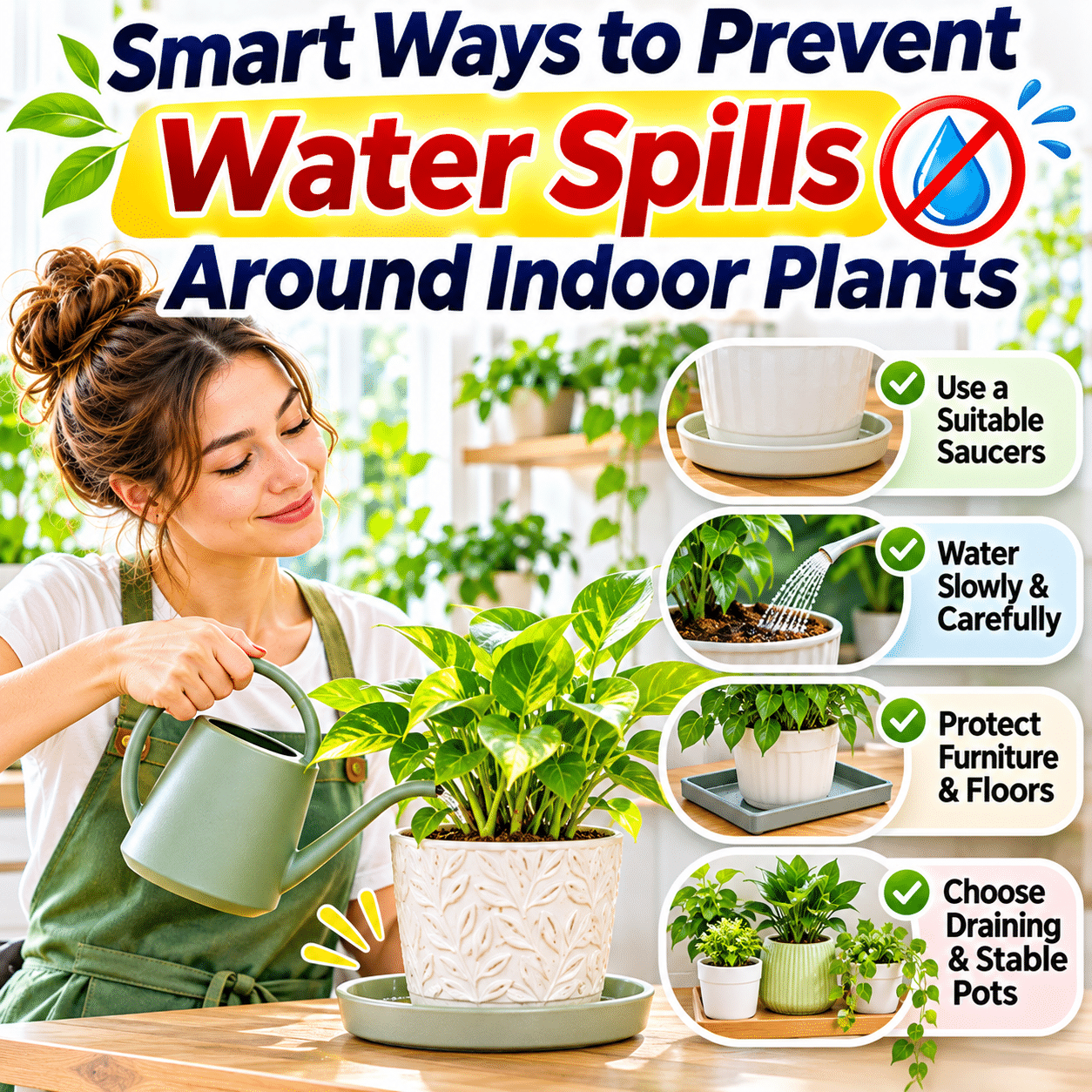
Fortunately, preventing water spills does not require expensive equipment or complicated gardening routines. Simple choices—such as selecting suitable containers, using stable saucers, watering gradually, and protecting surrounding surfaces—can make indoor plant care cleaner and more manageable.
The goal is not to eliminate drainage or reduce watering to the point that plants suffer. Healthy roots still need appropriate moisture, oxygen, and drainage conditions. Instead, the objective is to create a watering system that supports plant health while protecting the home.
This guide explores practical ways to prevent water spills around indoor plants, manage drainage safely, protect furniture and floors, and establish a tidy watering routine that works for different plant types and living spaces.
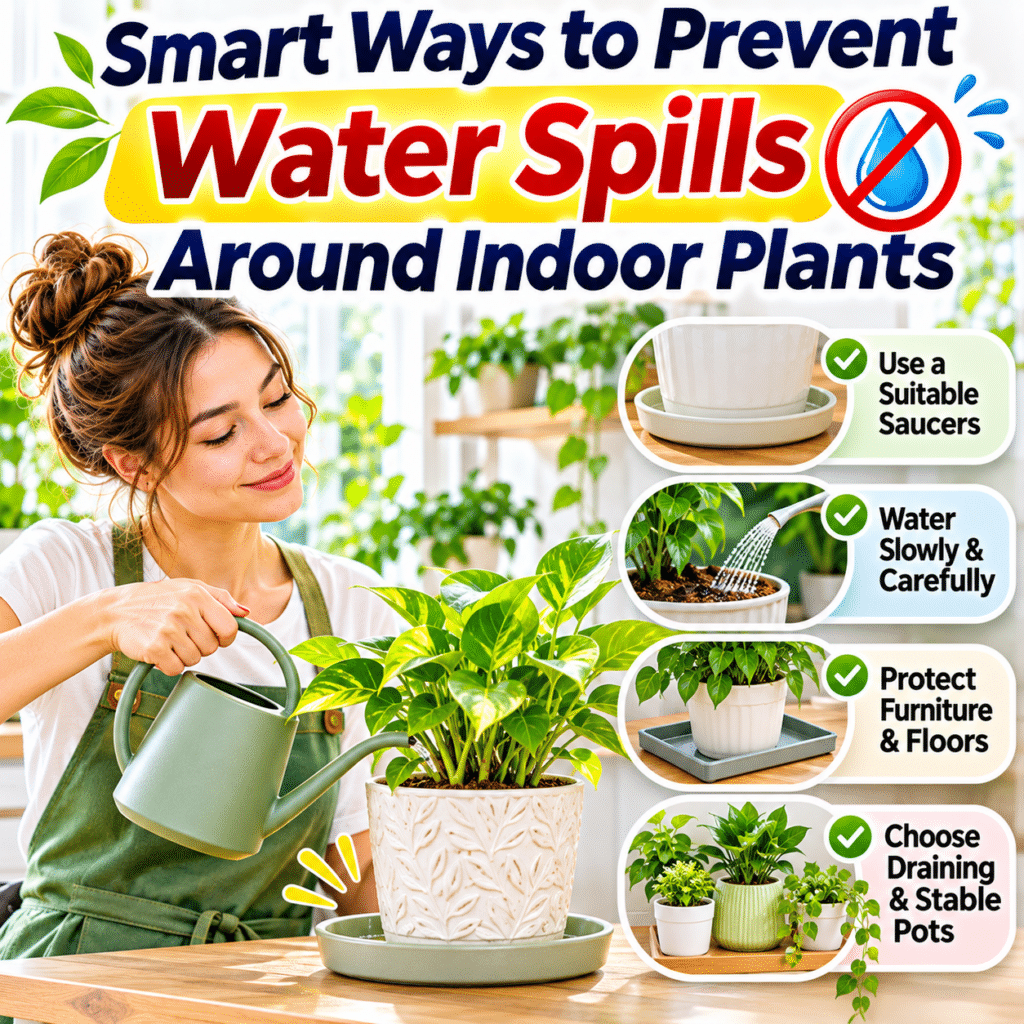
1. Understand Why Water Spills Happen Around Indoor Plants
Before choosing spill-prevention solutions, it helps to understand how water escapes from plant containers.
Indoor plant spills usually result from a combination of watering methods, container design, drainage behavior, and placement.
Excess Water Flowing Through Drainage Holes
Many indoor plants grow best in containers with drainage holes.
These openings allow excess water to leave the pot, helping reduce the risk of waterlogged growing media.
However, water draining from the bottom can damage nearby surfaces when there is no suitable collection tray.
Overflowing Plant Saucers
A saucer may catch drainage water initially but overflow if its capacity is too small.
This is particularly common when:
- Plants are watered heavily.
- The saucer is shallow.
- The pot contains fast-draining growing media.
- Several plants share one tray.
- Previously collected water has not been emptied.
Water Escaping During Pouring
Water may spill over the edge of a pot when poured too quickly or from an awkward angle.
Dense foliage can also make it difficult to see where the water is going.
Moisture Trapped Beneath Containers
Even when there is no visible puddle, moisture may remain beneath a pot or saucer.
Condensation, small leaks, and residual drainage water can affect surfaces over time.
Unstable Plant Placement
Plants positioned on narrow shelves, uneven stands, or crowded windowsills may be more vulnerable to accidental spills.
A watering can, sleeve, or moving leaf can disturb an unstable container.
Understanding these common causes makes it easier to choose preventive solutions that address the actual problem.
2. Choose Plant Pots With Appropriate Drainage
Container selection is one of the most important factors in managing indoor plant water.
Understand the Purpose of Drainage Holes
Drainage holes allow excess water to escape from the growing medium.
For many common houseplants, adequate drainage helps reduce prolonged root saturation.
However, drainage requirements vary by plant species, potting medium, container design, and growing conditions.
Use an Inner Nursery Pot
A practical arrangement is to keep the plant in a nursery pot with drainage holes and place it inside a decorative outer container.
This allows the plant to receive appropriate drainage while providing a more attractive appearance.
The inner pot can be removed for watering and draining.
Check Decorative Containers Carefully
Some decorative planters have no drainage holes.
Others have small openings, removable plugs, or integrated reservoirs.
Inspect the container before use rather than assuming it is watertight.
Avoid Using Sealed Pots Without a Suitable Watering Strategy
Growing directly in a container without drainage can make excess water difficult to remove.
For many houseplants, a draining inner pot is a more forgiving choice.
Match Pot Size to the Plant
An excessively large pot may retain more moisture than the plant can use efficiently.
Choose containers appropriate for the root system and growing medium rather than selecting size based only on appearance.
3. Use Plant Saucers That Can Contain Drainage Water
Plant saucers are among the simplest tools for preventing water from reaching furniture and floors.
Choose a Saucer With Adequate Capacity
The saucer should be wide enough to catch water leaving the drainage holes.
It should also have enough depth to accommodate the expected drainage without overflowing.
A saucer that barely extends beyond the pot may not provide sufficient protection.
Check Saucer Materials
Common saucer materials include:
- Plastic.
- Glazed ceramic.
- Glass.
- Metal.
- Terracotta.
Choose materials appropriate for the surface and watering conditions.
Some porous materials may allow moisture to pass through or remain trapped underneath.
Keep Saucers Level
A saucer placed on an uneven surface may collect water on one side.
This increases the chance of overflow.
Empty Standing Water
After watering and allowing the pot to drain, remove excess water from the saucer.
Do not routinely leave plant roots sitting in accumulated drainage water unless the plant and growing system specifically require it.
Inspect Saucers for Damage
Small cracks or chips may allow water to escape.
Replace damaged saucers that no longer provide reliable containment.
4. Water Indoor Plants Slowly and Carefully
Watering technique can make a significant difference in spill prevention.
Use a Watering Can With a Narrow Spout
A narrow spout provides greater control over where water is directed.
It is particularly useful for:
- Small pots.
- Crowded shelves.
- Plants with dense foliage.
- Containers positioned near furniture.
- Narrow planting openings.
Pour Water Gradually
Avoid adding a large volume of water all at once.
Instead:
- Position the spout close to the growing medium.
- Begin pouring slowly.
- Allow water to soak into the medium.
- Pause if water begins collecting at the surface.
- Continue as appropriate for the plant’s needs.
Avoid Pouring Directly Against Pot Edges
Water poured too close to the rim may run over the side.
Direct water toward the growing medium rather than the exterior of the container.
Account for Dry Potting Mix
Very dry growing media, especially some peat-based mixes, may initially resist absorbing water.
Water can run down the sides of the pot and escape quickly.
Gradual watering or an appropriate soaking method can help rehydrate the medium more evenly.
Stop Before the Collection Tray Overflows
If drainage begins accumulating rapidly, pause and check the saucer.
The goal is to provide suitable moisture without allowing water to escape onto surrounding surfaces.
5. Consider Watering Plants Away From Furniture
One of the most reliable spill-prevention strategies is to move suitable plants to a dedicated watering area.
Use a Sink for Small Plants
Small pots may be watered in a kitchen or utility sink when appropriate.
Allow excess water to drain before returning them to their display locations.
Avoid allowing soil and plant debris to enter plumbing.
Use a Bathtub or Shower Area
For larger groups of plants, a bathtub or suitable shower area can provide a contained watering space.
Protect drains from loose potting material.
Clean the area afterward.
Use a Waterproof Watering Tray
A large, stable tray can provide a portable watering station.
Choose a tray with sufficient depth to contain expected drainage.
Allow Drainage to Finish
After watering, wait until excess water has largely stopped flowing from the pot.
The necessary time varies with container size, growing medium, and watering method.
Dry the Exterior Before Returning the Plant
Wipe moisture from the outside and bottom of the container.
This helps prevent residual droplets from reaching shelves and furniture.
6. Protect Wooden Furniture From Plant Water Damage
Wooden furniture can be particularly vulnerable to repeated moisture exposure.
Water may affect finishes, joints, veneers, and other components depending on the furniture’s construction.
Use Waterproof Barriers
Place a suitable waterproof tray or protective mat beneath plant containers.
Make sure the barrier covers the area where water may drip.
Avoid Direct Pot-to-Wood Contact
Even a pot that appears dry may retain moisture around its base.
A protective barrier helps reduce direct contact.
Use Plant Stands When Appropriate
A stable plant stand can separate a container from delicate furniture surfaces.
However, a stand alone does not contain drainage water.
Combine it with a suitable saucer or tray.
Wipe Spills Immediately
If water reaches wooden furniture, remove it promptly using a suitable cloth.
Avoid leaving standing water around seams or edges.
Inspect Hidden Moisture
Periodically lift pots and protective trays to check the surface beneath.
Look for:
- Water rings.
- Discoloration.
- Softened finishes.
- Swelling.
- Persistent dampness.
Early detection can prevent repeated exposure.
7. Prevent Water Spills on Hardwood and Laminate Floors
Flooring materials respond differently to moisture.
Wood-based flooring may be vulnerable to swelling, staining, or damage when water enters joints.
Use Stable Floor Trays
Place large plant pots on waterproof trays with raised edges.
Choose trays that extend beyond the drainage area.
Avoid Placing Drainage Pots Directly on Floors
A pot with drainage holes should not rest directly on moisture-sensitive flooring without suitable protection.
Use Plant Stands With Protective Bases
A raised stand may make floor cleaning easier.
However, water must still be collected before it reaches the floor.
Check Around Large Planters
Large plants may conceal moisture behind their foliage or containers.
Inspect the surrounding floor periodically.
Clean Spills Promptly
Remove standing water immediately and dry the affected area.
Follow the flooring manufacturer’s care instructions.
Avoid allowing water to remain along seams, edges, or beneath floor coverings.
8. Protect Shelves, Desks, and Windowsills
Small display surfaces can be especially vulnerable because they often provide limited space for watering.
Choose Compact, Stable Saucers
Select a saucer that fits the shelf while still providing adequate water collection.
If a proper saucer cannot fit safely, consider moving the plant.
Use Waterproof Shelf Protectors
A suitable waterproof mat can provide an additional layer of protection.
However, the mat should not conceal standing water.
Avoid Overcrowding
Closely packed plants make watering more difficult.
Leave enough space to reach each pot without disturbing neighboring containers.
Check Window Condensation
Moisture around windows may come from condensation rather than plant watering.
Inspect both potential sources.
Be Careful With Electronics
Avoid placing watering equipment or drainage containers where spills could reach computers, charging devices, electrical outlets, or other electronics.
Water and electrical equipment should be kept safely separated.
9. Use Self-Watering Planters Thoughtfully
Self-watering planters can simplify moisture management for some plants.
However, they are not automatically spill-proof or suitable for every species.
Understand How They Work
Many self-watering planters use a reservoir and a wicking system to supply moisture to the growing medium.
The design may reduce the frequency of manual watering.
Follow Fill-Level Indicators
Do not fill reservoirs beyond the manufacturer’s recommended level.
Overfilling may cause leakage or overflow.
Inspect Reservoir Components
Check for:
- Cracks.
- Loose plugs.
- Damaged seals.
- Blocked openings.
- Improperly assembled components.
Match the System to the Plant
Plants differ in their moisture requirements.
A continuously moist growing medium may be unsuitable for species that prefer drying periods between watering.
Clean Reservoirs Periodically
Follow manufacturer instructions to reduce residue accumulation and maintain proper operation.
Self-watering systems still require inspection and maintenance.
10. Use Bottom Watering to Reduce Surface Spills
Bottom watering is a method in which water is absorbed through drainage holes from a container beneath the pot.
It can be useful for some houseplants and growing media.
How Bottom Watering Works
A typical process involves:
- Placing a pot with drainage holes in a suitable waterproof tray.
- Adding an appropriate amount of water to the tray.
- Allowing the growing medium to absorb moisture.
- Removing the pot when adequately watered.
- Allowing excess water to drain.
- Emptying remaining water before returning the plant to display.
Potential Advantages
Bottom watering may help:
- Reduce splashing onto foliage.
- Limit spills around narrow pot openings.
- Encourage more even rehydration of some dry growing media.
- Provide a controlled watering location.
Important Limitations
Bottom watering is not suitable for every plant or situation.
It may also leave accumulated fertilizer salts near the upper portion of the growing medium over time.
Occasional appropriate top watering may be needed for some plants to help flush accumulated salts.
Follow species-specific care guidance.
Avoid Prolonged Standing Water
Do not leave pots soaking indefinitely.
Extended saturation may reduce oxygen availability around roots and contribute to plant health problems.
11. Prevent Spills When Watering Hanging Plants
Hanging plants create a distinctive decorative effect, but drainage water can fall onto floors and furniture below.
Use Suitable Hanging Planters
Choose planters designed for secure hanging and appropriate water containment.
Check Drainage Arrangements
Some hanging pots include detachable saucers or integrated reservoirs.
Inspect them before watering.
Avoid Watering Directly Above Sensitive Surfaces
Where practical, remove hanging plants and water them in a suitable contained area.
Allow Excess Water to Drain
Return the plant only after significant dripping has stopped.
Inspect Hanging Hardware
Ensure hooks, brackets, and supports are suitable for the combined weight of the container, plant, growing medium, and water.
Watering can increase the weight of a hanging planter.
Keep Walkways Clear
Avoid arrangements where dripping water could create slippery floors.
12. Manage Water Around Large Indoor Floor Plants
Large indoor plants may be difficult to move for watering.
They benefit from carefully planned drainage and surface protection.
Use Oversized Collection Trays
Choose a tray with sufficient width and capacity for the container.
Consider Plant Caddies
Wheeled plant caddies can make some heavy planters easier to reposition.
Select models rated for the full loaded weight.
Ensure wheels lock securely when required.
Check Decorative Outer Pots
Large decorative planters may conceal accumulated drainage water.
Inspect and empty them as needed.
Avoid Unstable Raised Platforms
Heavy plants should rest on stable supports appropriate for their weight.
Use Controlled Watering Amounts
Water gradually and observe how quickly moisture moves through the growing medium.
Avoid adding water simply because the container is large.
Plant needs depend on multiple factors, including root size, species, temperature, light, and growing medium.
13. Keep Plant Watering Equipment Organized
Spill prevention also depends on how watering tools are stored and used.
Choose an Appropriate Watering Can
Consider:
- Comfortable handling.
- Manageable capacity.
- A controlled pouring spout.
- A stable base.
- Easy cleaning.
A very large watering can may be difficult to control in tight spaces.
Avoid Overfilling
Leave enough space at the top of the watering can to reduce splashing while carrying it.
Use a Dedicated Watering Station
Keep watering equipment near a suitable water source or plant-care area.
Store Tools Dry
Empty unnecessary standing water and allow equipment to dry when appropriate.
Keep Accessories Together
Useful accessories may include:
- A watering can.
- A waterproof tray.
- A small cloth.
- A moisture meter, if useful.
- A suitable plant-care brush.
- A container for collecting excess drainage water.
Organized tools make the watering process easier and reduce unnecessary movement.
14. Avoid Overwatering as a Spill-Prevention Strategy
Overwatering is a common plant-care problem, but it is not defined only by how much water is added at one time.
It often involves watering too frequently or keeping the growing medium excessively wet for the plant’s needs.
Check the Growing Medium
Before watering, assess moisture using a suitable method.
Depending on the plant and pot, this may involve:
- Checking the upper growing medium.
- Feeling the weight of the pot.
- Observing plant condition.
- Using a moisture meter appropriately.
Learn Each Plant’s Requirements
Different species have different watering needs.
Succulents, tropical foliage plants, ferns, and flowering houseplants may require different moisture conditions.
Consider Environmental Factors
Water use changes with:
- Light exposure.
- Temperature.
- Humidity.
- Air movement.
- Season.
- Plant growth.
- Container size.
- Growing medium.
Avoid Fixed Watering Quantities for Every Plant
Giving every pot the same amount of water may lead to uneven results.
Adjust watering to the individual plant and its conditions.
Watch for Drainage Problems
If water remains on the surface for an unusually long time or fails to drain appropriately, investigate the growing medium and container.
Do not assume that adding less water will solve every drainage problem.
15. Prevent Hidden Moisture Beneath Decorative Pots
Hidden moisture is one of the most easily overlooked causes of surface damage.
Lift Pots Periodically
Check beneath planters and saucers.
Inspect Decorative Cachepots
A cachepot is an outer decorative container that often holds a smaller growing pot.
Drainage water may accumulate inside it without being visible.
Empty Collected Water
Remove standing water after watering and draining.
Dry Container Bases
Wipe moisture from the bottom of containers before returning them to sensitive surfaces.
Check Protective Mats
Waterproof mats can trap water underneath if spills are not noticed.
Lift and dry them periodically.
Look for Early Surface Changes
Warning signs include:
- Water rings.
- Discoloration.
- Swollen wood.
- Peeling finishes.
- Musty odors.
- Persistent dampness.
Address the moisture source promptly.
16. Choose Practical Spill-Prevention Solutions for Different Plant Locations
Different display areas require different protective strategies.
| Plant Location | Common Spill Risk | Practical Solution | Important Consideration |
|---|---|---|---|
| Wooden table | Drainage water and condensation | Waterproof saucer or tray | Inspect beneath regularly |
| Windowsill | Narrow surface and overflow | Stable, properly sized saucer | Keep away from electrical fixtures |
| Bookshelf | Dripping onto lower shelves | Water plants in a separate area | Protect books and electronics |
| Hardwood floor | Water entering flooring seams | Raised-edge floor tray | Dry spills promptly |
| Office desk | Spills near electronics | Contained watering away from desk | Separate water from electrical devices |
| Hanging planter | Dripping from drainage holes | Removable watering arrangement | Check support strength |
| Large floor planter | Hidden reservoir overflow | Oversized tray or suitable cachepot | Empty collected water |
| Kitchen counter | Splashing during watering | Narrow-spout watering can | Maintain food-preparation hygiene |
| Bathroom shelf | Water accumulation | Stable waterproof tray | Monitor general bathroom humidity |
| Plant stand | Water falling onto surfaces below | Secure collection saucer | Ensure stand stability |
The most effective solution depends on the plant, container, location, and surrounding materials.
17. Common Indoor Plant Watering Mistakes to Avoid
Small watering mistakes can create recurring spills and unnecessary cleanup.
Mistake 1: Using a Saucer That Is Too Small
A shallow saucer may overflow during ordinary watering.
Better approach: Choose a stable tray with enough capacity for expected drainage.
Mistake 2: Watering Too Quickly
Fast pouring can cause water to run over pot edges or escape before the growing medium absorbs it.
Better approach: Pour gradually and pause when necessary.
Mistake 3: Leaving Water Inside Decorative Pots
Standing water may remain hidden and affect plant roots.
Better approach: Inspect and empty outer containers after watering.
Mistake 4: Placing Pots Directly on Wood
Repeated moisture exposure may damage furniture finishes.
Better approach: Use suitable waterproof protection.
Mistake 5: Ignoring Residual Dripping
A pot may continue draining after it appears finished.
Better approach: Allow sufficient drainage time before returning it to display.
Mistake 6: Overcrowding Plant Shelves
Crowded arrangements make watering difficult and increase the risk of accidental spills.
Better approach: Leave adequate space around containers.
Mistake 7: Assuming Self-Watering Pots Cannot Leak
Reservoirs and seals may fail or overflow.
Better approach: Inspect components and follow fill limits.
Mistake 8: Watering Near Electronics
A minor spill may damage electrical equipment or create safety risks.
Better approach: Move suitable plants to a separate watering area.
Mistake 9: Using Unstable Plant Stands
A top-heavy or poorly supported planter may tip during watering.
Better approach: Choose stable supports rated for the full loaded weight.
Mistake 10: Reducing Water Without Considering Plant Health
Underwatering can harm plants just as inappropriate overwatering can.
Better approach: Improve containment and watering technique while meeting the plant’s actual moisture requirements.
18. Troubleshoot Recurring Water Spills Around Indoor Plants
If water repeatedly appears around a plant, use a systematic approach to identify the cause.
Step 1: Identify Where the Water Appears
Check whether moisture is collecting:
- Beneath the pot.
- Around the saucer.
- Along the outside of the container.
- On the shelf below.
- Inside a decorative planter.
- Around the watering area.
Step 2: Inspect the Container
Look for cracks, damaged drainage plugs, unstable bases, or poorly fitted components.
Step 3: Check Saucer Capacity
Determine whether the saucer is overflowing during normal watering.
Step 4: Observe Watering Technique
Check whether water is being poured too quickly or outside the growing medium.
Step 5: Examine the Growing Medium
Very dry, compacted, or poorly structured growing media may affect water absorption and drainage.
Step 6: Review Plant Placement
Consider whether the plant is difficult to reach or positioned on an unsuitable surface.
Step 7: Adjust the System
Possible improvements include:
- A larger saucer.
- A waterproof tray.
- A narrow-spout watering can.
- A separate watering station.
- A more suitable pot.
- A different display location.
- Improved growing medium where appropriate.
Step 8: Monitor the Results
Check the area after subsequent watering sessions.
If moisture continues appearing, investigate hidden leaks or other sources.
19. Build a Clean and Efficient Indoor Plant Watering Routine
A consistent routine can reduce spills while supporting healthy plant growth.
Before Watering
- Check whether the plant actually needs water.
- Inspect the pot and drainage arrangement.
- Confirm that the saucer has enough available capacity.
- Move suitable plants to a contained watering area.
- Keep a clean cloth nearby.
During Watering
- Use a controlled spout.
- Pour gradually.
- Direct water toward the growing medium.
- Pause if drainage accumulates quickly.
- Avoid splashing surrounding surfaces.
After Watering
- Allow excess water to drain.
- Empty standing water from collection trays.
- Wipe the exterior and base of the container.
- Check the surrounding surface.
- Return the plant to a stable position.
- Clean and store watering equipment.
Periodic Maintenance
Inspect:
- Plant saucers.
- Decorative pots.
- Waterproof mats.
- Plant stands.
- Shelf surfaces.
- Floor areas.
- Watering tools.
These simple checks can help prevent repeated moisture exposure.
20. Make Indoor Plant Care More Practical in Small Spaces
Small apartments and compact rooms often require creative plant placement.
However, limited space can make spills more disruptive.
Use Vertical Displays Carefully
Wall shelves and tiered plant stands can create additional display space.
Ensure they are securely installed and that drainage cannot drip onto lower surfaces.
Choose Manageable Pot Sizes
Very large or heavy containers may be difficult to move and water safely.
Choose pot sizes appropriate for the plant and available space.
Group Plants Thoughtfully
Grouping plants with similar care requirements may simplify watering.
However, avoid placing so many plants together that individual pots become inaccessible.
Use Portable Watering Trays
A portable waterproof tray can help manage several small plants in one location.
Protect Multipurpose Surfaces
Desks, dining tables, and bookshelves may serve several purposes.
Use protective barriers and avoid watering directly beside sensitive belongings.
Keep Walkways Dry
Spilled water can create slipping hazards, particularly on smooth flooring.
Clean spills immediately and avoid placing watering equipment where it obstructs movement.
21. Make Spill Prevention More Sustainable
Thoughtful watering practices can help reduce unnecessary water use and household maintenance.
Water According to Plant Needs
Avoid watering simply because a fixed calendar date has arrived.
Check growing conditions and moisture requirements.
Collect Drainage Safely
Use suitable trays to prevent water from reaching floors and furniture.
Avoid allowing collected water to remain stagnant.
Maintain Existing Containers
Replace damaged saucers or seals when possible rather than discarding entire planters unnecessarily.
Choose Durable Accessories
A sturdy watering can, reliable tray, and stable plant stand may provide years of practical use.
Avoid Unnecessary Products
Spill prevention does not require a large collection of gadgets.
A suitable pot, adequate saucer, controlled watering method, and protective surface are often sufficient.
Protect Furniture From Avoidable Damage
Preventing repeated water exposure may help reduce the need for refinishing or replacing household surfaces.
22. Frequently Asked Questions
1. Why does water leak from the bottom of my indoor plant pot?
Many plant pots have drainage holes that allow excess water to escape. Use a suitable saucer or water the plant in a contained area.
2. How can I stop plant water from damaging wooden furniture?
Place a waterproof tray beneath the container, remove standing water, and inspect the surface regularly.
3. Are plant saucers necessary?
Saucers are useful for collecting drainage water when plants are displayed on surfaces that need protection.
4. What size saucer should I use?
Choose one wide and deep enough to collect expected drainage without overflowing.
5. Can I keep an indoor plant in a pot without drainage holes?
Some growing systems use containers without conventional drainage, but they require careful moisture management. For many common houseplants, a draining inner pot is easier to manage.
6. Why does water run straight through my plant pot?
Very dry growing media, large drainage pathways, or uneven absorption may contribute.
7. Is bottom watering better for preventing spills?
Bottom watering can reduce some surface spills when performed in a suitable tray, but it is not ideal for every plant.
8. Should I leave water in the plant saucer?
For most common houseplants, excess standing water should be removed after drainage. Follow species-specific care guidance.
9. How can I water plants on high shelves?
When safe and practical, move them to a contained watering area. Avoid reaching awkwardly with a full watering can.
10. Are self-watering planters completely spill-proof?
No. Reservoirs may overflow or leak if damaged, overfilled, or improperly assembled.
11. How do I prevent hanging plants from dripping?
Use suitable drainage collection systems or water removable plants in a separate area and allow them to drain before rehanging.
12. Can plant water damage laminate flooring?
Yes. Repeated moisture exposure may affect joints and underlying materials.
13. What is the safest way to water plants near electronics?
Move the plant to a separate watering location whenever practical and keep water away from electrical equipment.
14. Why is water collecting inside my decorative planter?
Drainage water from the inner nursery pot may accumulate in the outer container.
15. How can I prevent water rings beneath plant pots?
Use a waterproof barrier, dry container bases, and inspect beneath saucers periodically.
16. Should I water indoor plants every day?
Not necessarily. Watering frequency depends on plant species, growing medium, container size, and environmental conditions.
17. Can overwatering cause more spills?
Yes. Excessive or poorly controlled watering may cause saucers to overflow and increase drainage.
18. How can I water large indoor plants without moving them?
Use a suitable collection tray, water gradually, and remove excess drainage water safely.
19. Are terracotta saucers waterproof?
Unglazed terracotta is porous and may allow moisture to pass through. Choose a suitable waterproof barrier for sensitive surfaces.
20. Can waterproof mats replace plant saucers?
A mat can protect against minor drips, but a raised-edge saucer or tray is generally better for collecting significant drainage.
21. How often should I check beneath plant pots?
Inspect periodically and after watering, especially when containers rest on moisture-sensitive surfaces.
22. What should I do if water spills onto wooden furniture?
Wipe it promptly, dry the area, and follow the furniture manufacturer’s care guidance.
23. Can I reuse water collected in plant saucers?
Reusing drainage water may transfer dissolved salts, fertilizer residues, or plant pathogens. Fresh, suitable water is generally preferable.
24. How can I keep a plant shelf clean?
Use stable containers, appropriate saucers, controlled watering, and regular inspections for hidden moisture.
25. What is the easiest way to prevent indoor plant spills?
Combine a properly draining pot, adequately sized waterproof saucer, slow watering, and prompt removal of excess water.
23. Practical Indoor Plant Water Spill Prevention Checklist
Use this checklist to protect household surfaces while maintaining healthy indoor plants.
Plant Containers
- Choose pots suitable for the plant’s drainage needs.
- Inspect containers for cracks.
- Check drainage openings.
- Use suitable inner nursery pots when helpful.
- Inspect decorative outer containers.
- Avoid unstable or poorly fitted planters.
Saucers and Protective Trays
- Use adequately sized saucers.
- Choose waterproof materials for sensitive surfaces.
- Keep trays level.
- Empty standing drainage water.
- Replace cracked or leaking saucers.
- Inspect beneath protective mats.
Watering Technique
- Check whether plants need water.
- Use a controlled watering spout.
- Pour gradually.
- Direct water toward the growing medium.
- Pause when drainage accumulates.
- Avoid unnecessary splashing.
Furniture and Floor Protection
- Keep draining pots off unprotected wood.
- Use raised-edge trays on floors.
- Protect desks and shelves.
- Keep water away from electronics.
- Wipe spills immediately.
- Inspect for hidden moisture.
Hanging and Large Plants
- Check hanging planter drainage.
- Inspect mounting hardware.
- Allow removable plants to drain before rehanging.
- Use suitable trays beneath large planters.
- Check decorative reservoirs.
- Keep heavy containers stable.
Watering Equipment
- Choose a manageable watering can.
- Avoid overfilling watering containers.
- Keep a cloth nearby.
- Use a dedicated watering area when practical.
- Clean and dry watering equipment.
- Store accessories neatly.
Long-Term Maintenance
- Inspect plant saucers periodically.
- Check beneath decorative pots.
- Monitor moisture-sensitive furniture.
- Review watering habits as seasons change.
- Adjust drainage arrangements when needed.
- Replace damaged accessories.
- Keep surrounding surfaces clean and dry.
Final Thoughts
Preventing water spills around indoor plants is an important part of creating a home that is both plant-friendly and easy to maintain. Houseplants bring natural beauty into living spaces, but their watering needs should be managed thoughtfully to avoid unnecessary damage to furniture, flooring, shelves, and nearby belongings.
The most effective solutions are usually simple. Choosing suitable pots, using adequately sized waterproof saucers, watering gradually, and removing excess drainage water can prevent many common problems. For plants displayed on delicate surfaces, watering in a separate contained area offers an additional level of protection.
It is also important to remember that spill prevention should support healthy plant care rather than interfere with it. Proper drainage, suitable growing media, and watering based on individual plant needs remain essential.
Regular inspection makes a difference as well. Moisture trapped beneath decorative pots or inside outer containers may remain unnoticed long after watering is finished. Checking these areas helps prevent repeated exposure and allows small problems to be addressed early.
A practical indoor plant setup balances greenery, convenience, and household protection. With thoughtful placement, appropriate accessories, and consistent watering habits, plant owners can enjoy their indoor gardens without turning routine watering into a recurring cleanup task.
Ultimately, caring for houseplants and protecting the home are complementary goals. A few smart everyday choices can keep both plants and living spaces healthier, cleaner, and more enjoyable for years to come.