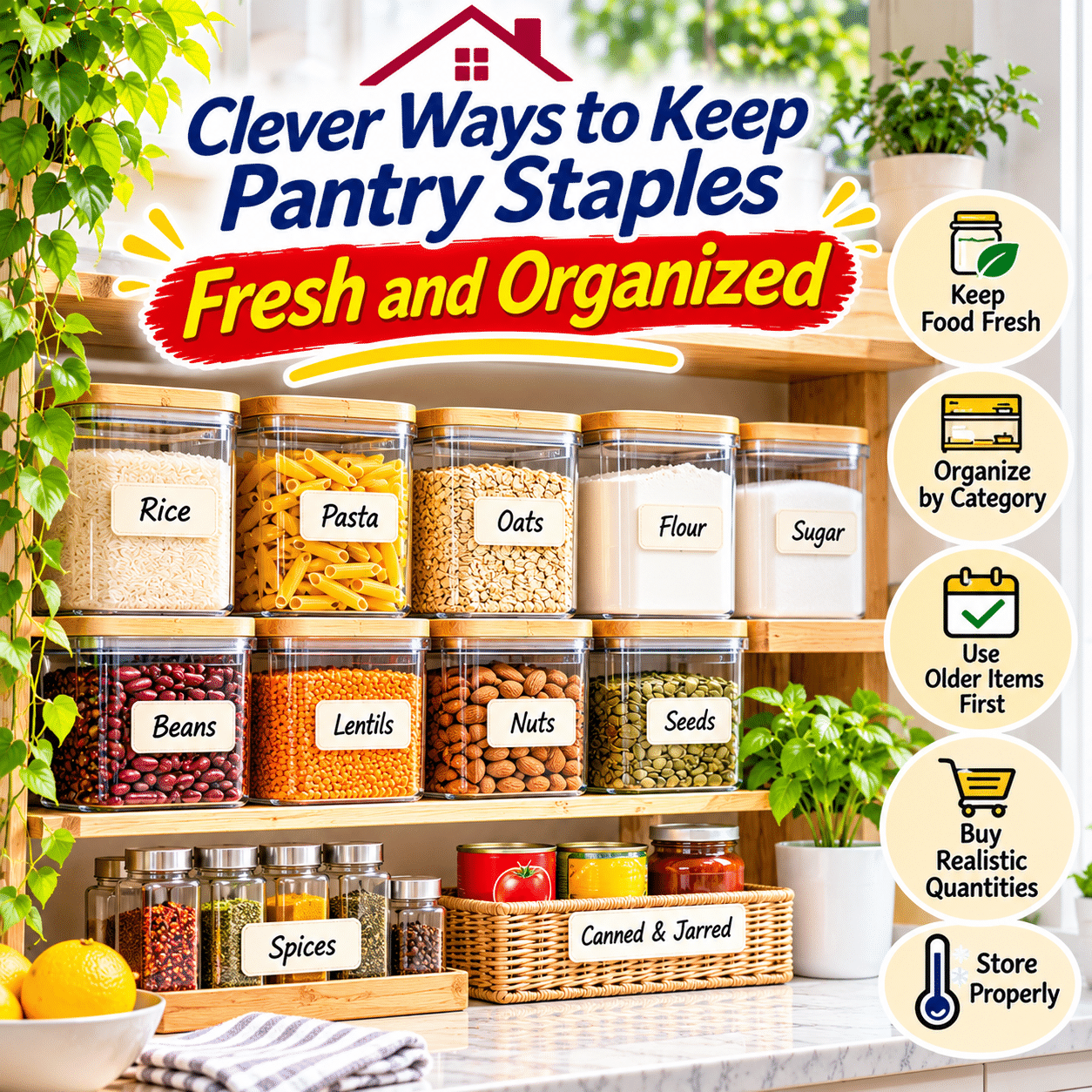
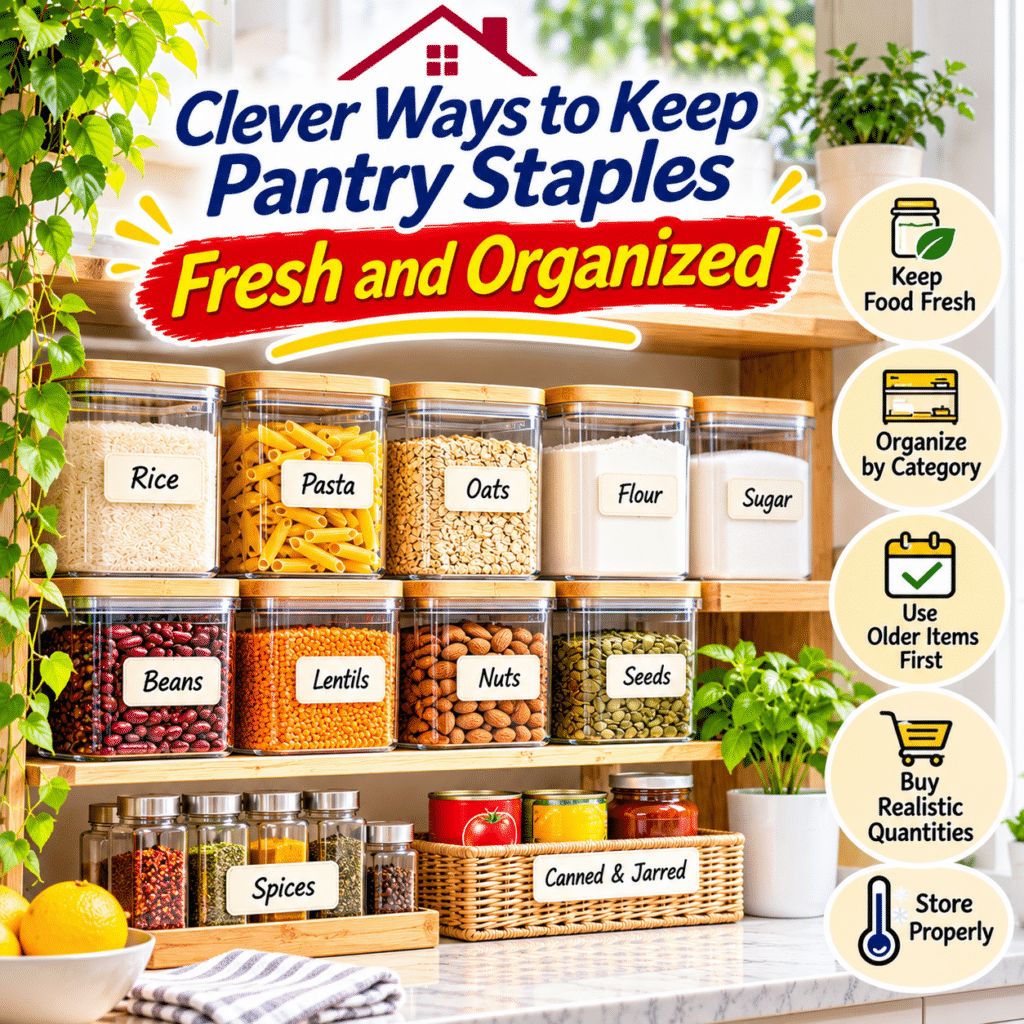
A well-organized pantry can make everyday cooking easier, reduce unnecessary food waste, and help household essentials stay fresh for longer. Whether your kitchen has a spacious walk-in pantry, a few cabinets, or a compact shelf, the way you store everyday ingredients can make a significant difference in how efficiently you use them.
Pantry staples such as rice, pasta, flour, oats, beans, lentils, sugar, spices, and canned foods are often purchased because they are versatile and convenient. However, even ingredients with relatively long shelf lives can lose quality when exposed to unsuitable temperatures, moisture, air, light, or pests.
Organization presents another challenge. When shelves become crowded, older packages can disappear behind newer purchases, partially opened bags may spill, and duplicate products may accumulate without anyone realizing they are already available.
The solution is not necessarily to buy expensive storage containers or redesign the entire pantry. Simple habits, thoughtful storage choices, clear labeling, and regular inventory checks can help preserve food quality while keeping ingredients easy to find.
A practical pantry should also reflect how a household actually cooks. Frequently used staples deserve accessible locations, while occasional baking supplies and specialty ingredients can be stored elsewhere. Food safety, packaging instructions, and individual ingredient requirements should always take priority over appearance.
This guide explores clever, realistic ways to keep pantry staples fresh and organized, including storage methods for different ingredients, strategies for preventing pests and moisture problems, and simple routines that make pantry maintenance easier over time.
1. Understand What Pantry Staples Need to Stay Fresh
Not every pantry ingredient has the same storage requirements.
Some dry foods remain suitable for extended periods when stored correctly, while others contain natural oils that can become rancid or lose flavor more quickly.
The most important factors affecting pantry storage are temperature, moisture, air exposure, light, packaging, and cleanliness.
The Main Factors That Affect Pantry Freshness
| Factor | Why It Matters | Practical Solution |
|---|---|---|
| Temperature | Excessive heat can accelerate quality deterioration | Choose a relatively cool, stable storage location |
| Moisture | Humidity can encourage clumping, mold, and spoilage | Keep dry goods away from damp areas |
| Air exposure | Oxygen can affect flavor, aroma, and freshness | Close packages securely or use suitable containers |
| Light | Light can affect the quality of oils, spices, and some other foods | Use cabinets or appropriately shaded storage |
| Pests | Insects and rodents can contaminate stored food | Maintain cleanliness and inspect packages |
| Packaging | Damaged or unsuitable packaging can expose food to contamination | Use intact packaging or appropriate food-safe containers |
| Storage duration | Food quality can decline over time | Rotate supplies and avoid unnecessary stockpiling |
| Cross-contamination | Spills and damaged packaging can affect nearby foods | Separate ingredients and clean storage areas |
A successful pantry system addresses these factors without becoming unnecessarily complicated.
2. Start With a Complete Pantry Assessment
Before purchasing organizers or transferring ingredients into containers, examine what is already in your pantry.
This step helps identify unnecessary duplicates, forgotten ingredients, damaged packages, and storage problems.
Remove Items Section by Section
If the pantry is large, work on one shelf or cabinet at a time.
This makes the process more manageable and prevents the kitchen from becoming overwhelmed with temporarily displaced food.
Group Similar Ingredients
Create categories such as:
- Rice and grains.
- Pasta and noodles.
- Flour and baking ingredients.
- Beans and lentils.
- Sugar and sweeteners.
- Breakfast cereals and oats.
- Nuts and seeds.
- Spices and seasonings.
- Canned and jarred foods.
- Cooking oils and condiments.
- Coffee and tea.
- Snacks and specialty ingredients.
Inspect Packaging
Look for damaged seals, moisture exposure, pest activity, unusual odors, or other signs of deterioration.
Discard food that is contaminated, spoiled, or otherwise unsafe.
Identify Duplicate Purchases
Several partially used packages of the same ingredient can make inventory management difficult.
Where appropriate, prioritize using existing supplies before purchasing more.
Do not combine old and new products if doing so would obscure important dates, allergen information, or contamination concerns.
3. Create Practical Pantry Storage Zones
Organizing by category makes ingredients easier to locate and helps prevent unnecessary purchases.
A pantry zone is simply a designated shelf, drawer, cabinet section, or container group.
Suggested Pantry Organization
| Pantry Zone | Typical Contents | Organization Goal |
|---|---|---|
| Everyday cooking staples | Rice, pasta, grains, beans | Quick access during meal preparation |
| Baking supplies | Flour, sugar, baking powder, cocoa | Keep related ingredients together |
| Breakfast essentials | Oats, cereal, spreads | Simplify morning routines |
| Canned and jarred foods | Tomatoes, vegetables, legumes, sauces | Improve visibility and rotation |
| Spices and seasonings | Dried herbs, spices, seasoning blends | Protect quality and make labels readable |
| Beverages | Coffee, tea, drink ingredients | Keep beverage preparation supplies organized |
| Snacks | Crackers, suitable packaged snacks | Prevent scattered packages |
| Specialty ingredients | Less frequently used cooking supplies | Keep occasional-use items identifiable |
| Backup inventory | Unopened replacement products | Avoid mixing reserves with active packages |
Not every household needs all these zones.
In a compact kitchen, several compatible categories can share one shelf.
The goal is consistency rather than creating a separate organizer for every product.
4. Choose the Right Storage Containers
Storage containers can help protect pantry staples from moisture, pests, spills, and unnecessary air exposure.
However, not every ingredient needs to be transferred from its original packaging.
When Airtight Containers Are Helpful
Appropriately designed airtight containers may be useful for:
- Rice.
- Flour.
- Sugar.
- Oats.
- Dry beans.
- Lentils.
- Pasta.
- Certain cereals.
- Other suitable dry ingredients.
They can help prevent spills and reduce exposure to environmental moisture.
Choose Food-Safe Materials
Use containers intended for food storage.
Common options include suitable glass, plastic, and stainless steel containers.
Follow manufacturer instructions regarding cleaning, food compatibility, and temperature limitations.
Consider Container Shape
Rectangular and square containers can sometimes make efficient use of cabinet space.
Round containers may be convenient for particular ingredients or storage areas.
Choose shapes based on the available shelf dimensions.
Avoid Buying Too Many Containers
Measure shelves and review actual food quantities before purchasing storage products.
A pantry does not need matching containers to function well.
Preserve Original Product Information
When transferring ingredients, retain important details such as:
- Product name.
- Best-before or use-by date.
- Lot or batch identification.
- Allergen information.
- Preparation instructions.
- Relevant storage guidance.
A small label or retained packaging section may be useful.
5. Keep Rice Fresh and Easy to Access
Rice is a common pantry staple in many households, but proper storage is important for preserving quality.
Store Rice in a Cool, Dry Place
Keep uncooked rice away from excessive heat and moisture.
Use intact original packaging or a suitable food-safe container.
Protect Against Pantry Pests
Close packages securely and inspect storage areas regularly.
Avoid placing rice directly on damp floors or near water sources.
Separate Different Rice Varieties
White rice, brown rice, jasmine rice, and other varieties may have different storage characteristics.
Brown rice contains more natural oils and generally has a shorter quality shelf life than refined white rice.
Buy According to Consumption
Large quantities may be practical for households that eat rice frequently.
Smaller households should consider whether bulk purchases can be used within an appropriate storage period.
Label Storage Containers
Include the rice variety and purchase or package date.
This makes rotation easier when several types are stored.
6. Store Flour and Baking Ingredients Properly
Flour and baking ingredients are vulnerable to moisture, pests, and quality deterioration.
Different flours also have different storage needs.
Keep Flour Dry
Use tightly closed packaging or an appropriate food-safe container.
Store away from sinks, steam, and other moisture sources.
Understand Differences Between Flour Types
Refined white flour generally has different storage characteristics from whole-grain flour.
Whole-grain flour contains more natural oils and may deteriorate faster.
Depending on the product and storage duration, refrigeration or freezing may help preserve quality.
Keep Baking Ingredients Separate
Organize:
- All-purpose flour.
- Whole-wheat flour.
- Specialty flours.
- Baking powder.
- Baking soda.
- Cocoa powder.
- Cornstarch.
- Other suitable dry baking ingredients.
Check Leavening Ingredients
Baking powder and baking soda can lose effectiveness under certain storage conditions.
Follow product guidance and replace ingredients when necessary.
Remember That Raw Flour Is Not Ready to Eat
Flour is a raw agricultural product and may contain harmful microorganisms.
Avoid tasting raw flour or uncooked dough containing it unless the ingredients have been specifically processed for safe raw consumption.
7. Keep Pasta and Noodles Organized
Dry pasta and noodles are versatile ingredients that can be stored efficiently.
Group Similar Products
Separate long pasta, short pasta, noodles, and specialty varieties when useful.
Protect Opened Packages
Use suitable closures or food-safe containers to reduce exposure to moisture and pests.
Avoid Unnecessary Transfers
An unopened, intact package may already provide suitable storage.
There is no need to transfer every product into a decorative container.
Use Older Packages First
Arrange products so that older suitable packages remain visible.
Keep Cooking Instructions
Different pasta and noodle varieties require different preparation methods.
Preserve the original cooking instructions when transferring products.
8. Organize Dry Beans, Lentils, and Legumes
Dry beans and lentils are useful pantry staples, but they can become difficult to manage when stored in numerous partially opened bags.
Separate Varieties
Store different beans and lentils in clearly identified packages or containers.
Keep Them Dry
Moisture exposure can damage dry legumes.
Use suitable storage in a cool, dry environment.
Avoid Excessive Stockpiling
Although dried legumes can remain usable for extended periods under appropriate conditions, their cooking quality may decline with age.
Older beans may require longer cooking and may not soften as expected.
Follow Safe Preparation Instructions
Certain dry beans, especially red kidney beans, require appropriate preparation and thorough cooking to address naturally occurring toxins.
Do not assume that every slow-cooking method is sufficient.
Rotate Supplies
Use older suitable packages before opening new ones.
9. Store Sugar, Salt, and Sweeteners Effectively
Sugar and salt are generally stable pantry ingredients when stored appropriately.
However, moisture can affect their texture and usability.
Keep Containers Dry
Use clean, dry utensils when measuring ingredients.
Avoid introducing moisture into storage containers.
Prevent Clumping
Tightly closed containers can help protect suitable products from humidity.
Separate Sweetener Types
Store white sugar, brown sugar, powdered sugar, and alternative sweeteners according to their individual requirements.
Preserve Product Labels
Different sweeteners may have specific handling, storage, or usage instructions.
Avoid Storing Near Steam
Cabinets directly exposed to steam from cooking appliances may be unsuitable for some dry ingredients.
10. Protect Oats, Cereals, and Breakfast Staples
Breakfast ingredients are often opened and used repeatedly.
Without proper storage, they can lose crispness, absorb moisture, or become stale.
Close Packages After Each Use
Use suitable package closures or food-safe containers.
Keep Cereals Away From Moisture
Dry cereal products can lose their intended texture when exposed to humidity.
Consider Natural Oil Content
Some whole-grain products contain oils that may deteriorate over time.
Follow package guidance and avoid excessive storage periods.
Group Breakfast Supplies
Keep frequently used oats, cereals, and other appropriate breakfast ingredients together.
Avoid Keeping Too Many Open Packages
Finish suitable existing products before opening additional packages whenever practical.
11. Keep Nuts and Seeds Fresh
Nuts and seeds contain natural oils that can become rancid.
Their storage requirements may differ from those of refined grains and other dry pantry staples.
Protect Against Heat and Light
Store nuts and seeds away from warm appliances and direct sunlight.
Consider Refrigeration or Freezing
For longer storage, refrigeration or freezing may help maintain quality, particularly in warm environments.
Use appropriate packaging to limit moisture and odor absorption.
Buy Realistic Quantities
Large packages may not be economical if the contents lose quality before they are consumed.
Watch for Quality Changes
Unusual rancid odors or flavors can indicate deterioration.
Discard products showing signs of spoilage or contamination.
Label Different Varieties
Clearly identify nuts and seeds, especially in households where food allergies are a concern.
Prevent allergen cross-contact during storage and handling.
12. Store Spices and Dried Herbs to Preserve Flavor
Spices and dried herbs may remain usable for extended periods, but their flavor and aroma can gradually decline.
Avoid Heat and Steam
Storing spices directly above a stove may expose them to excessive heat and moisture.
Choose a more suitable cabinet or drawer when possible.
Protect Against Light
Some spices retain quality better when stored away from strong light.
Keep Containers Closed
Secure lids after use to limit moisture and aroma loss.
Use Clean, Dry Utensils
Avoid introducing steam or moisture into spice containers.
Organize by Practical Use
Possible groups include:
- Everyday seasonings.
- Baking spices.
- Dried herbs.
- Whole spices.
- Specialty seasoning blends.
Buy Smaller Quantities When Appropriate
Frequently used spices may justify larger purchases.
Rarely used spices are often better purchased in smaller quantities.
13. Organize Canned and Jarred Foods
Canned foods can provide convenient meal options, but overcrowded shelves can make inventory management difficult.
Group by Food Type
Examples include:
- Canned tomatoes.
- Beans and legumes.
- Vegetables.
- Fruit.
- Soups.
- Seafood.
- Sauces.
Keep Labels Visible
Arrange cans and jars so their contents can be identified easily.
Inspect Packaging
Do not use cans that are bulging, leaking, or otherwise show signs of compromised safety.
Severely damaged or suspicious containers should be discarded according to appropriate guidance.
Store Away From Excessive Heat
Follow package instructions and avoid unsuitable storage environments.
Refrigerate After Opening When Required
Once opened, canned or jarred foods may require refrigeration.
Transfer contents to suitable food-safe containers when appropriate and follow product-specific instructions.
14. Store Cooking Oils Carefully
Cooking oils are common pantry staples, but exposure to heat, light, and air can affect quality.
Choose Suitable Storage Locations
Keep oils away from excessive heat and direct sunlight.
Close Bottles Securely
Limit unnecessary air exposure.
Consider Oil Type
Different oils have different stability characteristics.
Some specialty oils may benefit from refrigeration after opening, depending on manufacturer recommendations.
Avoid Keeping Too Many Open Bottles
Purchase and open quantities that match actual cooking habits.
Inspect Quality
Discard oils that develop clear signs of rancidity or other concerning deterioration.
15. Keep Coffee and Tea Fresh
Coffee and tea are often stored alongside pantry staples, but their aroma and flavor can be sensitive to storage conditions.
Store Coffee Appropriately
Keep coffee in suitable packaging that protects it from excessive air, moisture, heat, and light.
Avoid Unnecessary Moisture Exposure
Repeated temperature changes can cause condensation in some storage situations.
Choose storage methods appropriate for the coffee product and expected consumption period.
Protect Tea From Strong Odors
Tea can absorb surrounding odors.
Store it away from strongly scented products.
Keep Varieties Organized
Separate coffee beans, ground coffee, tea bags, and loose-leaf tea when helpful.
Purchase According to Use
Smaller quantities may help maintain flavor quality for households that consume coffee or tea slowly.
16. Understand Pantry Date Labels
Food date labels can help with inventory rotation, but they should be interpreted correctly.
Meanings vary by country, product, and regulatory system.
Common Date Labels
| Label | General Purpose | Practical Approach |
|---|---|---|
| Best Before / Best If Used By | Often indicates expected quality | Follow applicable safety and quality guidance |
| Use By | May indicate a safety-related deadline | Follow the date and relevant product instructions |
| Sell By | Often relates to retail stock management | Do not assume it is always a consumer safety deadline |
| Freeze By | May indicate a recommended freezing time | Follow product instructions |
Do Not Rely on Dates Alone
Storage conditions, packaging integrity, and signs of contamination also matter.
Never Taste Questionable Food to Test Safety
Some unsafe foods may not have obvious odors or visible changes.
Preserve Date Information
When transferring products into containers, retain important labeling details.
Follow Local Food-Safety Guidance
Regulatory requirements and labeling practices differ across regions.
17. Use the First-In, First-Out Method
First-in, first-out, commonly called FIFO, is a simple way to manage pantry inventory.
It means using older suitable products before newer equivalent ones.
Put New Purchases Behind Existing Supplies
When practical, position newly purchased products behind older packages.
Check Dates Before Opening
Use suitable older ingredients first.
Avoid Mixing Batches Unnecessarily
Combining old and new ingredients may make it difficult to track storage dates and product information.
Review Backup Supplies
If several unopened packages are stored, check whether they are likely to be used before purchasing more.
Remember That Safety Comes First
FIFO should never be used to justify consuming spoiled or unsafe food.
18. Prevent Pantry Pests
Pantry insects and rodents can contaminate food and damage packaging.
Preventing infestations is easier than managing a widespread problem.
Inspect New Purchases
Check packaging for damage or signs of pest activity.
Use Suitable Containers
Appropriate food-safe containers can help protect dry ingredients.
Clean Spills Promptly
Crumbs, flour, grains, and other food residues can attract pests.
Inspect Shelves Regularly
Look for insects, webbing, damaged packaging, droppings, or other signs of infestation.
Respond Carefully to Infestations
Discard contaminated food appropriately.
Clean affected areas thoroughly and inspect nearby products.
If professional pest control is needed, ensure treatments are appropriate for food storage environments.
Never apply household pesticides directly to food or food-contact surfaces unless the product is specifically approved and labeled for that use.
19. Protect Pantry Staples From Moisture
Moisture is a major concern for dry food storage, especially in humid climates.
Choose Dry Storage Locations
Avoid cabinets with persistent dampness, leaks, or condensation.
Check Nearby Plumbing
Inspect cabinets near sinks or water lines for moisture problems.
Keep Containers Closed
Secure packaging after each use.
Avoid Introducing Wet Utensils
Use clean, dry measuring tools for flour, grains, sugar, and similar ingredients.
Address the Source of Humidity
If the pantry is persistently damp, investigate ventilation, leaks, and environmental conditions.
Do not rely on containers alone to solve a significant moisture problem.
Discard Moldy Food
Dry ingredients showing mold or other unsafe deterioration should not be consumed.
20. Keep Pantry Shelves Clean and Easy to Maintain
Clean shelves help protect food and make pest activity easier to detect.
Clean One Section at a Time
Remove products from a shelf before cleaning.
Use Appropriate Cleaning Methods
Follow cabinet material instructions and use suitable cleaning products.
Dry Surfaces Thoroughly
Avoid returning dry foods to damp shelves.
Inspect Containers
Check lids, seals, and packaging for damage.
Remove Spills Promptly
Flour, sugar, grains, and other loose ingredients should not be allowed to accumulate.
Avoid Strong Chemical Residues
Cleaning products should be used according to their labels and kept away from food.
21. Make Better Use of Deep Pantry Shelves
Deep cabinets can provide useful storage capacity, but items at the back may be forgotten.
Group Similar Products
Keep related items together to reduce searching.
Use Suitable Pull-Out Organizers
Where practical, pull-out trays or baskets can improve visibility.
Check dimensions and weight limits before installing accessories.
Keep Heavier Items Lower
Large jars, bulk containers, and heavy products should be stored on suitable lower shelves.
Avoid Overstacking
Excessive stacking can make products difficult to retrieve and increase the risk of falling objects.
Review Hidden Areas
Periodically check the back of shelves for forgotten packages.
22. Organize a Small Pantry Without Extra Furniture
A small pantry can function well when storage is arranged thoughtfully.
Prioritize Everyday Staples
Keep frequently used ingredients at comfortable heights.
Reduce Unnecessary Duplicates
Avoid purchasing large backup quantities without adequate space.
Use Existing Cabinet Space
Rearranging shelves may provide more benefit than adding organizers.
Choose Appropriately Sized Containers
Large containers can waste space when they hold only small quantities.
Use Vertical Space Safely
Suitable shelf risers or organizers may improve access, but avoid unstable stacking.
Keep Categories Simple
A small pantry rarely needs numerous separate storage zones.
23. Avoid Overbuying Pantry Staples
Buying in bulk can reduce shopping frequency, but excessive stockpiling may create waste.
Consider Consumption Rate
Estimate how quickly the household uses each ingredient.
Compare Package Size With Storage Life
A larger package is not always economical if the contents lose quality before they can be used.
Review Existing Inventory
Check available supplies before shopping.
Be Careful With Specialty Ingredients
Products purchased for one recipe may remain unused for months.
Consider additional practical uses before buying large quantities.
Maintain Reasonable Backup Supplies
Keep replacement products according to household needs, storage space, and expected use.
24. Create a Simple Pantry Inventory
An inventory can help prevent duplicate purchases and forgotten ingredients.
It does not need to be complicated.
Record Essential Information
A basic inventory might include:
- Ingredient name.
- Approximate quantity.
- Storage location.
- Relevant date.
- Whether a replacement is needed.
Use a Format That Fits Your Routine
Possible methods include:
- A small notebook.
- A whiteboard.
- A simple spreadsheet.
- A digital note.
- A basic pantry checklist.
Focus on Useful Information
Tracking every gram may be unnecessary.
For many households, knowing whether an ingredient is available is sufficient.
Update During Normal Activities
Adjust the inventory when shopping, opening packages, or finishing supplies.
Review Before Grocery Shopping
A quick inventory check can reduce unnecessary purchases.
25. Make Pantry Organization Work for Different Household Sizes
The best pantry arrangement depends partly on household size and cooking habits.
Smaller Households
Households with one or two people may benefit from:
- Smaller packages.
- Fewer open containers.
- Limited backup inventory.
- Flexible ingredients used across several meals.
- More frequent checks of products with shorter quality shelf lives.
Larger Households
Larger households may benefit from:
- Clearly defined storage zones.
- Consistent labeling.
- Larger quantities of frequently used staples.
- Shared inventory routines.
- Accessible backup supplies.
Households With Different Dietary Needs
Separate and clearly label ingredients where necessary.
Prevent allergen cross-contact and respect individual food requirements.
Households With Children
Keep hazardous products, sharp objects, and unsuitable items secured.
Place appropriate food supplies where intended users can access them safely.
26. Build a Pantry System Around Your Cooking Habits
A pantry should reflect what you actually cook, not an idealized collection of ingredients.
Identify Your Core Staples
Think about ingredients used every week.
These deserve the most convenient storage locations.
Keep Specialty Ingredients Separate
Occasional baking supplies or specialty seasonings can remain in secondary storage.
Group Ingredients Used Together
For example, baking supplies may be stored together, while frequently used cooking grains and legumes may occupy another section.
Avoid Unnecessary Complexity
A system with too many categories can become difficult to maintain.
Adjust Over Time
Cooking preferences, household size, and meal routines may change.
Review the pantry arrangement when needed.
27. Create a Weekly Pantry Maintenance Routine
A short weekly check can help prevent small problems from becoming larger ones.
Weekly Pantry Checklist
- Look for spills or damaged packaging.
- Check frequently used ingredients.
- Review opened packages.
- Identify products that should be used soon.
- Confirm that containers are properly closed.
- Check for signs of moisture or pests.
- Update the shopping list.
- Return misplaced items to their designated locations.
This routine can often be completed without reorganizing the entire pantry.
The goal is to maintain a functional system rather than repeatedly starting over.
28. Common Mistakes When Organizing Pantry Staples
Transferring Every Ingredient Into Decorative Containers
This may create unnecessary work and cause important packaging information to be lost.
Better approach: Transfer products only when it improves storage or accessibility, and preserve essential label information.
Buying Organizers Before Measuring Shelves
Poorly sized organizers can waste space.
Better approach: Measure available storage and review actual needs first.
Keeping Old Products Behind New Purchases
Older ingredients may be forgotten.
Better approach: Use a consistent rotation system.
Storing Ingredients Near Heat
Excessive heat can reduce quality.
Better approach: Choose suitable storage locations away from warm appliances.
Ignoring Moisture Problems
Humidity can damage dry ingredients.
Better approach: Address leaks and damp conditions promptly.
Overfilling Containers
Overfilled containers can spill or become difficult to use.
Better approach: Choose appropriate capacities and leave sufficient room for handling.
Mixing Ingredients Without Labels
Unidentified foods can create confusion and allergen risks.
Better approach: Label contents clearly.
Buying Too Much in Bulk
Large quantities may deteriorate before use.
Better approach: Match purchases to consumption and storage conditions.
Keeping Damaged Packages
Compromised packaging may expose food to contamination.
Better approach: Inspect and handle damaged products according to food-safety guidance.
Organizing Only for Appearance
Beautiful shelves are not necessarily practical.
Better approach: Prioritize freshness, accessibility, safety, and ease of maintenance.
29. Troubleshooting Common Pantry Problems
| Problem | Possible Cause | Practical Solution |
|---|---|---|
| Flour develops clumps | Moisture exposure | Improve dry storage and inspect for spoilage |
| Rice packaging attracts pests | Inadequate protection or infestation | Inspect supplies and use suitable storage |
| Spices lose aroma quickly | Heat, light, or prolonged storage | Relocate and purchase realistic quantities |
| Nuts develop rancid odors | Heat, oxygen, or extended storage | Use appropriate cool storage and smaller quantities |
| Pasta packages spill | Open bags are poorly secured | Use suitable closures or containers |
| Pantry shelves feel overcrowded | Excess inventory or poor grouping | Review quantities and reorganize categories |
| Duplicate products accumulate | No inventory check | Review supplies before shopping |
| Older products remain unused | Poor visibility | Apply first-in, first-out |
| Cans are difficult to identify | Labels are hidden | Arrange products for visibility |
| Brown sugar becomes hard | Moisture balance changes | Use appropriate storage and product-specific handling |
| Cereal becomes stale | Excess air or moisture exposure | Close packaging securely |
| Coffee loses aroma | Unsuitable storage or extended exposure | Use appropriate packaging and quantities |
| Pantry smells musty | Moisture or ventilation problem | Investigate and correct the source |
| Containers do not fit shelves | Incorrect measurements | Choose storage based on actual dimensions |
| Ingredients are difficult to find | Categories are inconsistent | Simplify and label storage zones |
| Pantry pests reappear | Contaminated products or unresolved infestation | Inspect all affected areas and address the source |
| Specialty ingredients expire unused | Purchased without a broader plan | Buy smaller quantities and plan multiple uses |
| Pantry looks organized but is inconvenient | Appearance prioritized over function | Rearrange based on actual cooking routines |
30. A Step-by-Step Plan for Organizing Pantry Staples
A pantry refresh can be completed gradually without purchasing an entirely new storage system.
Step 1: Choose One Pantry Section
Start with a shelf, cabinet, or category.
Step 2: Remove and Inspect Products
Check packaging, condition, and relevant dates.
Step 3: Sort by Ingredient Type
Group similar foods together.
Step 4: Identify Frequently Used Staples
Reserve accessible locations for everyday ingredients.
Step 5: Evaluate Storage Conditions
Check for excessive heat, moisture, sunlight, and pest activity.
Step 6: Improve Packaging Where Needed
Use suitable closures or food-safe containers.
Preserve essential product information.
Step 7: Arrange Products by Age and Frequency
Keep older suitable products visible and frequently used ingredients accessible.
Step 8: Label Clearly
Identify transferred ingredients and relevant dates.
Step 9: Create a Basic Inventory
Record important supplies and products that need replacement.
Step 10: Establish a Maintenance Routine
Review the pantry regularly and adjust the system as household needs change.
31. Frequently Asked Questions
1. What is the best way to organize pantry staples?
Group ingredients by category, keep frequently used items accessible, protect foods from unsuitable storage conditions, and rotate supplies consistently.
2. Do all pantry staples need airtight containers?
No. Many products can remain in intact original packaging. Suitable airtight containers are useful when they improve protection or prevent spills.
3. How should I store uncooked rice?
Store rice in a cool, dry place using intact packaging or an appropriate food-safe container.
4. Does brown rice need different storage from white rice?
Brown rice contains more natural oils and generally has a shorter quality shelf life. Cooler storage may help maintain its quality.
5. What is the best way to store flour?
Keep flour dry and protected from pests. Some whole-grain or specialty flours may benefit from refrigeration or freezing for longer storage.
6. How can I prevent pantry pests?
Inspect packages, clean spills, use suitable storage containers, and check regularly for signs of infestation.
7. Should spices be stored beside the stove?
Excessive heat and steam can reduce quality. A suitable cabinet or drawer away from cooking heat is generally preferable.
8. How do I keep pasta fresh after opening?
Close the package securely or transfer the pasta to an appropriate food-safe container, preserving important product information.
9. Can I store sugar in an airtight container?
Yes. A clean, dry, suitable container can help protect sugar from moisture and spills.
10. How should I store nuts and seeds?
Protect them from heat, light, and excessive air exposure. Refrigeration or freezing may help maintain quality for longer storage.
11. What is the first-in, first-out method?
It is a system of using older suitable products before newer equivalent ones, while always following food-safety requirements.
12. Should I remove all food from its original packaging?
No. Original packaging often provides useful protection and important information. Transfer products only when appropriate.
13. How can I organize a pantry without buying new containers?
Group existing packages, rearrange shelves, remove unnecessary duplicates, and establish consistent storage locations.
14. How do I organize a very small pantry?
Prioritize frequently used staples, limit excess inventory, and use available cabinet space efficiently.
15. How can I prevent flour and sugar from spilling?
Use secure packaging, suitable containers, and clean, dry measuring utensils.
16. What should I do if I find pantry insects?
Inspect affected products, discard contaminated food, clean storage areas, and address the source of infestation.
17. Is it safe to use food from a bulging can?
No. Bulging or leaking cans may indicate serious safety problems and should not be consumed.
18. How should I organize canned foods?
Group them by type, keep labels visible, inspect packaging, and use older suitable products first.
19. Can pantry ingredients spoil even before their printed date?
Yes. Improper storage, damaged packaging, moisture, and contamination can make food unsuitable before the printed date.
20. How do I protect pantry staples in humid weather?
Use appropriate storage containers, maintain a dry environment, address moisture problems, and inspect supplies regularly.
21. Should cooking oils be refrigerated?
Storage needs depend on the oil. Follow manufacturer instructions, especially for specialty oils.
22. How can I keep coffee and tea fresh?
Protect them from excessive heat, moisture, air, light, and strong odors using suitable packaging.
23. Is buying pantry staples in bulk always economical?
No. Bulk purchases are useful only when the food can be stored appropriately and consumed before unacceptable quality deterioration.
24. How often should I check pantry supplies?
A brief weekly review and a check before grocery shopping can help maintain organization and reduce unnecessary purchases.
25. How can I avoid buying duplicate ingredients?
Maintain a simple inventory or check shelves before shopping.
26. Should I combine old and new flour or rice?
It is generally better to avoid unnecessary mixing because it can obscure storage dates, product information, and possible contamination concerns.
27. How can I make deep pantry shelves easier to use?
Group related products, keep labels visible, and consider suitable pull-out organizers where practical.
28. What should I do with ingredients that have developed mold?
Discard them. Do not attempt to make moldy dry ingredients safe by removing only the visible affected portion.
29. How can I keep pantry organization from becoming complicated?
Use a small number of practical categories, accessible storage locations, and simple maintenance habits.
30. What is the most important habit for keeping pantry staples fresh?
Consistently storing ingredients under appropriate conditions, closing packages securely, and using existing supplies before purchasing more are among the most effective habits.
32. Practical Checklist for Keeping Pantry Staples Fresh and Organized
Use this checklist to create a practical pantry system that supports everyday cooking and reduces unnecessary waste.
Assess Existing Supplies
- Review pantry contents section by section.
- Group similar ingredients.
- Identify duplicate products.
- Inspect packaging for damage.
- Check relevant dates.
- Look for signs of moisture or pests.
- Discard contaminated or unsafe foods.
- Identify frequently used staples.
Improve Storage Conditions
- Keep dry foods away from excessive heat.
- Protect ingredients from moisture.
- Avoid unnecessary direct sunlight.
- Use suitable food-safe containers when helpful.
- Close packages securely.
- Keep storage shelves clean and dry.
- Address leaks or persistent humidity.
- Follow ingredient-specific storage instructions.
Organize Pantry Categories
- Group rice and grains.
- Organize pasta and noodles.
- Separate flour and baking supplies.
- Group beans and lentils.
- Organize sugar and sweeteners.
- Keep cereals and oats together.
- Store nuts and seeds appropriately.
- Group spices and seasonings.
- Organize canned and jarred foods.
- Create suitable storage for oils, coffee, and tea.
Improve Accessibility
- Keep frequently used ingredients within comfortable reach.
- Store heavy items on suitable lower shelves.
- Keep labels visible.
- Avoid overcrowded shelves.
- Use existing storage efficiently.
- Choose appropriately sized organizers.
- Preserve clear access to pantry supplies.
- Avoid unstable stacking.
Manage Inventory
- Use older suitable products first.
- Place newer purchases behind existing supplies when practical.
- Preserve important packaging information.
- Label transferred ingredients.
- Keep a simple inventory.
- Review supplies before shopping.
- Avoid unnecessary bulk purchases.
- Monitor specialty ingredients that are rarely used.
Prevent Food Waste and Contamination
- Inspect packages for pest activity.
- Clean food spills promptly.
- Keep measuring tools clean and dry.
- Avoid mixing unidentified ingredients.
- Prevent allergen cross-contact.
- Follow food-safety guidance for damaged packaging.
- Discard spoiled or contaminated food.
- Never taste questionable food to determine safety.
Maintain Long-Term Organization
- Perform a brief weekly pantry check.
- Return ingredients to their assigned locations.
- Review opened packages.
- Update the shopping list.
- Clean shelves when needed.
- Reassess storage as cooking habits change.
- Avoid unnecessary organizer purchases.
- Prioritize freshness, safety, and convenience over appearance.
Final Thoughts
Keeping pantry staples fresh and organized is one of the most practical ways to make everyday kitchen routines easier.
A well-arranged pantry helps ingredients remain visible, accessible, and appropriately stored. It can reduce unnecessary purchases, prevent forgotten packages, and make meal preparation more efficient.
The most effective system begins with understanding the needs of different foods. Rice, flour, pasta, beans, nuts, spices, oils, and canned products do not all respond to storage conditions in the same way. Choosing suitable locations and packaging helps preserve their quality.
Organization is equally important. Grouping related ingredients, keeping labels visible, and rotating supplies can prevent older products from disappearing behind newer purchases.
However, a functional pantry does not need to look like a perfectly coordinated display. Matching containers, elaborate labels, and expensive organizers are optional. Simple arrangements using existing shelves, cabinets, and suitable packaging can work just as well.
Food safety should always remain a priority. Pantry ingredients must be protected from moisture, pests, contamination, and unsuitable temperatures. Products showing signs of spoilage or compromised safety should not be consumed simply to avoid waste.
Long-term success depends on manageable habits. Checking supplies before shopping, closing packages properly, cleaning spills, and reviewing inventory regularly can help maintain an organized pantry without constant effort.
The best pantry is not necessarily the largest or most visually impressive. It is one that reflects the household’s cooking habits, protects the food stored inside it, and makes everyday ingredients easy to find and use.
With thoughtful storage choices and consistent routines, even a small pantry can become a reliable, efficient, and welcoming part of the kitchen.