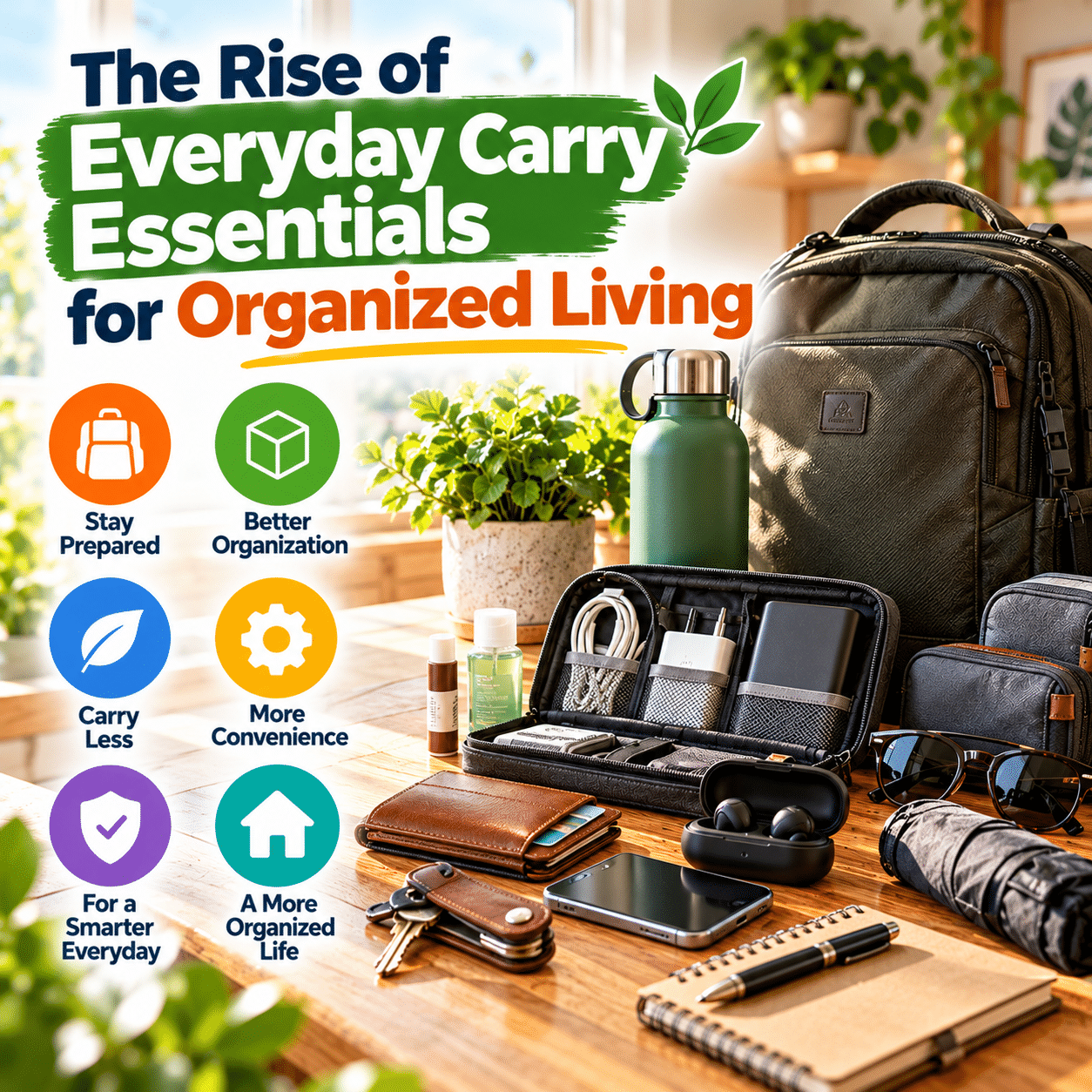
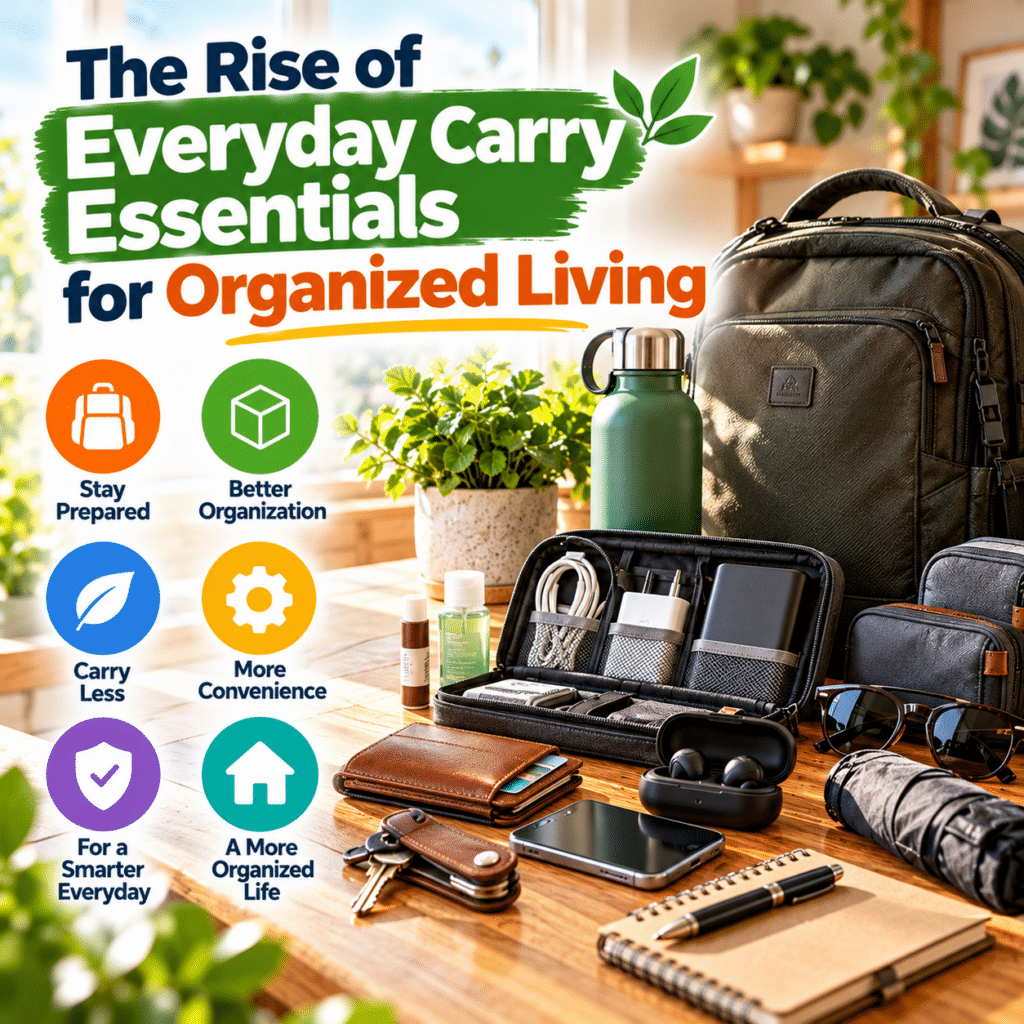
Every day involves a series of small transitions. People leave home for work, run errands, visit friends, attend appointments, travel across town, or move between different activities. Along the way, they rely on a collection of personal belongings that help them stay prepared, connected, and organized.
A phone, wallet, keys, reusable water bottle, notebook, charging cable, or compact bag may seem ordinary on its own. Together, however, these items form an important part of daily life.
The challenge is not simply deciding what to carry. It is knowing what is genuinely useful, keeping essentials accessible, and avoiding the frustration of misplaced belongings or unnecessarily heavy bags.
This is where the concept of everyday carry, often abbreviated as EDC, becomes relevant.
Everyday carry refers to the personal items someone routinely keeps with them to support daily activities. What began as a practical way to describe commonly carried essentials has developed into a broader interest in organization, portability, thoughtful product design, and intentional living.
Modern everyday carry systems are increasingly shaped by compact accessories, multifunctional products, digital technology, modular organizers, and a preference for carrying fewer but more useful items.
For some people, everyday carry means a minimalist wallet, keys, and phone. For others, it includes work equipment, personal-care items, a small emergency kit, or supplies needed for commuting and family responsibilities.
There is no universal collection of essentials that works for everyone.
A well-designed everyday carry system reflects individual routines, environments, responsibilities, and preferences.
This guide explores why everyday carry essentials are gaining attention, how they support organized living, which products are most useful in different situations, and how to build a practical system without accumulating unnecessary accessories.
1. What Does Everyday Carry Mean?
Everyday carry describes the items a person regularly brings along to support ordinary activities.
These belongings may be carried in pockets, handbags, backpacks, briefcases, crossbody bags, or other suitable containers.
The concept emphasizes preparedness, convenience, and consistent access to frequently used items.
Common Everyday Carry Essentials
Examples include:
- Smartphone.
- Wallet or cardholder.
- House and vehicle keys.
- Identification.
- Reusable water bottle.
- Charging cable.
- Compact power bank.
- Notebook and pen.
- Eyeglasses or sunglasses.
- Tissues and personal hygiene supplies.
- Small first-aid essentials.
- Weather-appropriate accessories.
Not everyone needs every item.
Someone working from home may carry very little during a short walk. A commuter may need transportation cards, headphones, and a portable charger. A parent may carry additional supplies for children.
Everyday Carry Is Personal
The most useful everyday carry collection is not the largest or most expensive.
It is the one that supports a person’s real daily activities with minimal inconvenience.
2. Why Everyday Carry Is Becoming Part of Organized Living
Everyday carry is closely connected to the broader desire for simpler and more predictable daily routines.
People often manage multiple responsibilities, locations, and schedules.
A forgotten key, misplaced wallet, or missing charging cable can interrupt an otherwise ordinary day.
Reducing Small Daily Frustrations
Keeping essential items in consistent locations makes them easier to find.
Supporting Routine Preparation
A predictable carry system reduces the need to reconsider every item before leaving home.
Improving Accessibility
Frequently used belongings can be placed where they are easy to reach.
Avoiding Unnecessary Clutter
A carefully selected collection can reduce the number of unused items carried around.
Supporting Flexible Schedules
A few practical essentials may help someone manage unexpected changes in plans.
Encouraging Intentional Purchases
Evaluating what is actually useful can discourage buying accessories that serve no meaningful purpose.
Everyday carry is therefore less about owning specialized equipment and more about developing a practical relationship with personal belongings.
3. The Difference Between Everyday Carry and Emergency Preparedness
Everyday carry and emergency preparedness overlap, but they are not identical.
Everyday carry focuses primarily on items that support routine activities.
Emergency preparedness focuses on equipment and supplies intended for unexpected or potentially hazardous situations.
Everyday Carry Examples
- Wallet.
- Keys.
- Phone.
- Charging cable.
- Water bottle.
- Notebook.
Basic Preparedness Examples
- Essential medication.
- Emergency contact information.
- Small first-aid supplies.
- Appropriate weather protection.
- A compact flashlight when relevant.
Specialized Emergency Equipment
Certain environments or activities may require additional safety equipment.
These needs should be evaluated separately.
Avoid Overcomplicating Everyday Carry
A person does not need to carry a large emergency kit everywhere to have an effective everyday carry system.
The appropriate level of preparedness depends on personal circumstances, location, activity, and risk.
The goal is to support daily life without turning ordinary outings into an unnecessarily complicated packing exercise.
4. Why Minimalist Everyday Carry Appeals to Many People
Minimalist everyday carry focuses on keeping only the items that provide meaningful daily value.
This approach can be especially appealing to people who dislike bulky pockets, heavy bags, or cluttered accessories.
Fewer Items to Manage
A smaller collection is easier to check and organize.
Less Weight
Removing unnecessary belongings can make carrying more comfortable.
Faster Access
A simple layout reduces the time needed to find essential items.
Easier Transfers Between Bags
A compact collection can move between a work bag and a weekend bag more easily.
Reduced Purchasing Pressure
Minimalism encourages evaluating usefulness before adding another accessory.
Minimalism Has Limits
Carrying fewer items should not mean leaving behind necessary medication, identification, accessibility equipment, or other essentials.
The purpose is not to achieve an arbitrary item count.
It is to remove unnecessary complexity while preserving what matters.
5. The Smartphone as a Modern Everyday Carry Essential
For many people, the smartphone is one of the most frequently used everyday carry items.
It combines functions that once required several separate devices or accessories.
Communication
Phones support calls, messages, and other communication methods.
Navigation
Maps and location services can help people find destinations and transportation routes.
Digital Payments
Compatible phones may support payment applications and digital wallets.
Scheduling
Calendars, reminders, and notes help manage daily responsibilities.
Information Access
Phones provide access to reservations, tickets, documents, and other information.
Photography
Built-in cameras reduce the need for separate equipment in many ordinary situations.
Important Limitations
Smartphones depend on battery power, software, connectivity, and functioning hardware.
Digital identification and payment options may not be accepted everywhere.
A thoughtful everyday carry system considers which essential functions still require physical alternatives.
6. Slim Wallets and Compact Cardholders
Traditional wallets may accumulate receipts, unused cards, coins, and other items over time.
Slim wallets and compact cardholders are designed to reduce unnecessary bulk.
Common Designs
- Minimalist cardholders.
- Bifold wallets.
- Compact zippered wallets.
- Money clips.
- Small coin pouches.
- Phone-compatible wallet accessories.
Advantages of Compact Wallets
A smaller wallet can be easier to carry and organize.
It may also encourage people to remove outdated receipts and unnecessary cards.
Important Considerations
Not every compact wallet provides enough room for cash, identification, or other necessary items.
RFID-Blocking Features
Some wallets incorporate materials intended to reduce certain forms of radio-frequency communication.
However, these features are not universal protection against financial fraud.
Choosing the Right Wallet
Consider card capacity, cash requirements, closure security, material durability, and comfort.
The best wallet is the one that holds necessary items without creating unnecessary bulk.
7. Key Organizers and the Evolution of Everyday Key Carry
Keys are small but essential objects that can easily become disorganized.
Traditional key rings may accumulate duplicate keys, decorative attachments, and unused accessories.
Modern key organizers attempt to make key storage more compact and predictable.
Compact Key Holders
Some designs arrange keys inside a folding or stacked mechanism.
Key Clips
Clips can attach keys to suitable bag loops or other secure locations.
Retractable Holders
Certain designs provide convenient access to frequently used keys.
Key Tracking Devices
Compatible tracking devices may help locate misplaced keys.
Important Limitations
Electronic trackers depend on batteries, network availability, and supported technology.
They do not guarantee recovery.
Security Considerations
Avoid attaching unnecessary identifying information to keys.
Choose secure attachment methods that reduce accidental loss.
A simple key system can eliminate a surprisingly common source of daily frustration.
8. Everyday Carry Bags and Personal Organization
Not everyone can comfortably carry essentials in clothing pockets.
Bags provide additional storage and help separate belongings.
Crossbody Bags
Crossbody bags can keep small essentials accessible during errands and city activities.
Sling Bags
Compact sling bags may offer a balance between portability and capacity.
Tote Bags
Totes provide flexible storage for larger everyday items.
Backpacks
Backpacks can be useful for commuters, students, and people carrying laptops or additional equipment.
Briefcases and Work Bags
Structured bags may provide dedicated storage for documents and professional equipment.
Choosing a Bag
Consider:
- Capacity.
- Empty weight.
- Carrying comfort.
- Compartment layout.
- Closure security.
- Material durability.
- Weather resistance.
- Cleaning requirements.
A larger bag is not necessarily more useful.
The right bag provides enough space for essentials while remaining comfortable and manageable.
9. Why Sling Bags and Crossbody Bags Are Popular
Compact sling and crossbody bags offer a practical alternative to carrying a full-size backpack.
They are particularly useful when pockets are insufficient but a large bag would be unnecessary.
Convenient Access
A properly designed bag can keep frequently used belongings within reach.
Compact Storage
Small compartments may accommodate a wallet, phone, keys, and selected accessories.
Hands-Free Carrying
A secure shoulder strap allows belongings to be carried without occupying the hands.
Flexible Use
These bags may suit commuting, shopping, sightseeing, and casual outings.
Limitations
A small bag may not accommodate larger equipment.
A poorly adjusted strap can become uncomfortable.
Security
Zippers and secure compartments can help contain belongings, but no bag eliminates theft risk.
The most practical design balances access, comfort, and secure storage.
10. Modular Organizers and Pouches
Modular organization is becoming an important part of everyday carry.
Instead of storing every item loosely inside one large compartment, people can group related accessories into smaller pouches.
Technology Pouches
These can hold charging cables, adapters, earbuds, and small electronic accessories.
Personal-Care Pouches
A small pouch can organize tissues, hygiene supplies, and other essentials.
Stationery Pouches
Pens, pencils, and small notebooks can be kept together.
First-Aid Pouches
Appropriate basic supplies can be stored separately when needed.
Benefits of Modular Organization
- Easier access.
- Less clutter.
- More predictable storage.
- Simpler transfers between bags.
- Better separation of different item categories.
Avoid Excessive Compartmentalization
Too many small pouches can make belongings harder to find.
Modular organization is most useful when each organizer serves a clear purpose.
11. Compact Power Banks for Daily Mobility
Portable charging has become relevant because many daily activities depend on electronic devices.
A compact power bank can provide backup energy when access to wall outlets is limited.
Common Uses
- Long commuting days.
- Extended appointments.
- Travel.
- Outdoor activities.
- Events.
- Work away from a fixed desk.
Capacity Considerations
Battery capacity influences the amount of stored energy and often affects weight.
Charging Compatibility
Check supported connectors, charging protocols, and output power.
Portability
A small power bank may be more convenient for daily carry than a high-capacity model.
Safety
Choose reputable products and follow manufacturer instructions.
Avoid damaged, swollen, or overheating batteries.
A Practical Question
Does the phone regularly run low before the end of the day?
If not, carrying an additional battery may be unnecessary.
Everyday carry should respond to actual needs rather than hypothetical situations.
12. Cable Organizers and Compact Charging Accessories
Charging cables are easy to misplace or tangle with other belongings.
A simple organization system can improve convenience.
Short Cables
Short cables can reduce clutter in compact bags.
However, they may be inconvenient when power outlets are far away.
Cable Ties
Reusable ties can keep cables neatly coiled.
Small Technology Pouches
Dedicated pouches prevent accessories from becoming scattered.
Multi-Port Chargers
A compatible charger may support several devices.
Connector Compatibility
Devices using the same connector shape do not necessarily support identical charging speeds or data functions.
Electrical Safety
Use suitable cables and chargers that meet applicable safety requirements.
Avoid damaged insulation or overloaded electrical connections.
The most effective charging kit is usually small, compatible, and easy to maintain.
13. Reusable Water Bottles as Everyday Essentials
A reusable water bottle is a common everyday carry accessory.
It can provide convenient access to drinking water when safe refill sources are available.
Material Options
Common materials include stainless steel, glass, and suitable plastics.
Insulated Bottles
Some designs help maintain beverage temperature for a period of time.
Lightweight Bottles
Simple single-wall designs may weigh less than insulated alternatives.
Leak Resistance
A reliable closure is particularly important when carrying a bottle near electronics or documents.
Cleaning
Bottles, lids, seals, and drinking spouts require appropriate cleaning.
Choosing Capacity
A larger bottle holds more liquid but increases carrying weight when filled.
The ideal size depends on the duration of the outing, refill availability, and personal preferences.
14. Notebooks and Pens in a Digital World
Despite the widespread use of smartphones, notebooks and pens remain useful everyday carry items for many people.
Quick Notes
A small notebook can capture ideas, reminders, and observations.
Sketching
Paper may be convenient for diagrams and visual thinking.
Meetings
Some people prefer handwritten notes during discussions.
Backup Communication
A pen can be useful when electronic devices are unavailable.
Compact Designs
Pocket notebooks and slim pens can fit inside small bags.
Digital Alternatives
Note-taking applications provide search, synchronization, and backup features.
Choosing the Right Method
Paper and digital tools can complement one another.
A notebook is worth carrying when it supports an established habit rather than becoming another unused accessory.
15. Everyday Carry for Commuters
Commuting creates predictable needs that can shape a personal carry system.
Someone traveling by train, bus, bicycle, or car may require different accessories.
Public Transportation
Useful items may include:
- Transportation card.
- Phone.
- Headphones.
- Compact umbrella.
- Reusable water bottle.
- Small personal-care kit.
Bicycle Commuting
Appropriate safety equipment, visibility, weather protection, and secure storage may be important.
Car Commuting
Necessary documents, charging accessories, and appropriate vehicle-related supplies may be useful.
Walking
Comfortable carrying arrangements and weather-appropriate accessories can improve convenience.
The Importance of Context
Commuting conditions vary by location, climate, transportation system, and individual needs.
An effective commuter carry system should reflect the actual journey rather than a generic product checklist.
16. Everyday Carry for Office Workers
Office workers often need a combination of personal and professional essentials.
Common Items
- Identification or access card.
- Phone.
- Wallet.
- Keys.
- Laptop when required.
- Charging accessories.
- Notebook.
- Pen.
- Reusable water bottle.
- Personal-care essentials.
Laptop Protection
A padded compartment or suitable sleeve may help protect devices during ordinary transport.
Cable Management
A small technology pouch can reduce clutter.
Document Organization
Folders or sleeves may protect important papers.
Comfort
Bag weight and carrying method matter, especially during long commutes.
Avoiding Duplicate Equipment
Some workplaces provide chargers or other accessories.
Understanding what is already available can reduce unnecessary daily carrying.
A practical work carry system supports productivity without turning a commute into an equipment-heavy routine.
17. Everyday Carry for Students
Students may need to transport learning materials, electronic devices, personal belongings, and supplies throughout the day.
Common Essentials
- Backpack.
- Identification.
- Notebook.
- Writing tools.
- Water bottle.
- Required textbooks or devices.
- Charging equipment.
- Personal hygiene supplies.
Organization
Separate compartments can help keep books, electronics, and smaller items accessible.
Weight Management
Unnecessary books and accessories can make bags heavier.
Device Protection
Suitable sleeves or compartments can help protect electronics.
Accessibility
Easy-to-use zippers and organized storage can improve convenience.
Age-Appropriate Choices
Younger students may need different carrying systems and safety considerations from university students.
The goal is to support learning and daily movement with a manageable collection of essentials.
18. Everyday Carry for Remote Workers and Flexible Workdays
Flexible work arrangements can create situations where people move between home offices, shared workspaces, libraries, and other suitable locations.
A portable work kit may help maintain consistency.
Laptop and Charger
These may be essential for certain work tasks.
Compact Mouse
Some users prefer a separate pointing device.
Headphones
Headphones may help with calls or concentration.
Notebook
A small notebook can support planning and quick notes.
Cable Organizer
A dedicated pouch can keep accessories together.
Portable Stand
A suitable stand may improve screen positioning when used with an appropriate workstation.
Security Considerations
Protect confidential information and follow workplace policies.
Avoid Building an Unnecessary Mobile Office
The best portable work setup contains only what is needed for the expected tasks.
19. Everyday Carry for Parents and Caregivers
Parents and caregivers often manage additional responsibilities when leaving home.
Their everyday carry needs may include supplies for another person.
Common Considerations
- Appropriate snacks.
- Water.
- Hygiene supplies.
- Spare clothing.
- Essential medication.
- Emergency contact information.
- Comfort items.
- Age-appropriate activities.
Modular Organization
Separate pouches can help organize supplies by purpose.
Easy Access
Frequently needed items should be placed where they can be reached conveniently.
Weight Distribution
A properly fitted bag can make carrying supplies more manageable.
Safety
Products should be appropriate for the age and needs of the person receiving care.
Avoid small detachable items that could present choking hazards to young children.
Caregiving carry systems should prioritize preparedness and practicality rather than minimalism alone.
20. Everyday Carry and Personal Hygiene
Small hygiene accessories can make everyday activities more comfortable.
Tissues
A compact tissue pack can be useful in many situations.
Hand Hygiene
Hand sanitizer may be useful when soap and water are unavailable, provided it is appropriate for the situation.
Personal-Care Items
Lip balm, hair accessories, or other items may support individual routines.
Reusable Handkerchiefs
Some people prefer washable cloth alternatives for suitable uses.
Small Waste Pouches
A suitable pouch can help temporarily contain certain personal waste until proper disposal is available.
Hygiene Considerations
Reusable items require cleaning.
Personal-care products should be stored according to manufacturer instructions.
Avoid carrying products that may leak or deteriorate under expected temperatures.
A small hygiene kit can be useful without becoming an oversized collection of products.
21. Weather-Ready Everyday Carry
Weather can change daily carry requirements significantly.
Compact Umbrellas
A foldable umbrella may provide convenient rain protection.
Lightweight Rain Jackets
Packable jackets can be useful in wet conditions.
Sunglasses
Appropriate sunglasses can improve comfort in bright environments.
Hats
A suitable hat may provide shade or warmth.
Gloves
Cold-weather conditions may require hand protection.
Reusable Water Bottles
Water availability is important in warm conditions and during extended activities.
Check the Forecast
Weather preparation should reflect realistic conditions.
Carrying a heavy collection of seasonal accessories every day may be unnecessary.
The most practical approach is to adjust the carry system according to the environment.
22. Small First-Aid Essentials and Responsible Preparedness
A compact first-aid kit can be useful for certain daily activities.
However, its contents should reflect personal needs, training, and expected circumstances.
Common Basic Supplies
Depending on the situation, a small kit may contain:
- Adhesive bandages.
- Sterile gauze.
- Suitable wound-cleaning supplies.
- Disposable gloves.
- Personal medication when needed.
Personal Medication
Medication should be stored and carried according to its instructions and applicable rules.
Avoid Unnecessary Medical Equipment
Specialized equipment may require training.
Replace Expired Supplies
Check expiration dates and packaging integrity.
Understand Limitations
A small first-aid kit is not a substitute for professional medical care.
For serious injuries or emergencies, seek appropriate assistance.
Basic preparedness should remain proportionate to everyday activities and individual needs.
23. Everyday Carry and Personal Security
Everyday carry can support personal security through better organization and responsible habits.
Secure Wallet Storage
Keep payment cards and identification in appropriate compartments.
Reliable Bag Closures
Zippers and other closures can help prevent accidental loss.
Device Security
Use appropriate authentication and keep software updated.
Emergency Contacts
Maintain accessible contact information.
Backup Payment Options
Where practical, having an alternative payment method may be useful.
Avoid Overreliance on Accessories
A specialized bag or wallet does not guarantee protection against theft.
Situational Awareness
Remain attentive to surroundings and local conditions.
Security is best supported by practical habits rather than exaggerated product claims.
24. Smart Trackers and Connected Everyday Carry
Electronic tracking accessories are increasingly used with keys, wallets, bags, and other belongings.
Bluetooth Trackers
Many consumer trackers use Bluetooth and compatible device networks to help report item locations.
Location Notifications
Some systems can notify users when a tracked item is separated from a compatible device.
Replaceable Batteries
Certain trackers use replaceable batteries, while others require recharging or eventual replacement.
Compatibility
Tracking features depend on supported devices and software ecosystems.
Limitations
Location information may be delayed or unavailable.
Tracking does not guarantee recovery of lost belongings.
Privacy
Tracking devices should be used responsibly and in accordance with applicable laws.
A tracker can supplement an organized carry system, but consistent storage habits remain important.
25. The Role of Material Choices in Everyday Carry
Everyday carry products are made from materials selected for durability, appearance, weight, and functionality.
Leather
Leather is used in wallets, bags, and accessories.
Its characteristics depend on material quality, processing, and maintenance.
Nylon
Nylon is common in bags and pouches because it can provide useful strength with relatively low weight.
Polyester
Polyester is widely used in travel and everyday accessories.
Stainless Steel
Stainless steel may be used in bottles, pens, and hardware.
Aluminum
Aluminum can provide lightweight structural components.
Silicone
Silicone is used in selected flexible accessories and protective components.
Recycled Materials
Some products incorporate recycled plastics, metals, or textiles.
Sustainability Considerations
No material is automatically superior in every application.
Durability, manufacturing, maintenance, and end-of-life options all matter.
A well-made product used consistently may provide better long-term value than a fashionable accessory that is quickly replaced.
26. Why Durability Is Essential for Everyday Carry Products
Everyday carry items often experience frequent handling.
Wallets are opened repeatedly. Bags are placed on different surfaces. Keys and accessories move in and out of pockets.
Durability therefore matters.
Construction Quality
Stitching, seams, zippers, and attachment points should withstand intended use.
Material Suitability
Materials should be appropriate for expected wear and environmental conditions.
Repairability
Replaceable straps, clips, or other components may extend product life.
Ease of Cleaning
Frequently handled accessories may require regular maintenance.
Functional Design
A product should remain easy to use over time.
Long-Term Value
A durable accessory that performs reliably for years may offer better value than a cheaper alternative requiring frequent replacement.
The best everyday carry products are not necessarily the most elaborate.
They are the ones that remain dependable through ordinary use.
27. How Everyday Carry Supports Better Home Organization
Everyday carry begins and ends at home.
Without a consistent storage system, even a carefully selected collection can become disorganized.
Create a Dedicated Drop Zone
A tray, shelf, drawer, or small organizer near the entrance can hold frequently carried items.
Assign Consistent Locations
Keep keys, wallets, and other essentials in predictable places.
Use a Charging Station
A designated charging area can help keep electronic devices ready.
Separate Daily and Occasional Items
Not every accessory needs to be carried every day.
Review Contents Regularly
Remove receipts, unnecessary papers, and unused objects.
Prepare for the Next Day
A quick check can reduce morning preparation.
Keep the System Simple
An elaborate organization system may be difficult to maintain.
The best home setup makes it easy to put belongings away and retrieve them again.
28. The Everyday Carry Checklist Method
A checklist can help establish a reliable daily routine.
However, it should remain short enough to use consistently.
Core Essentials
Items commonly needed for most outings:
- Phone.
- Wallet or payment method.
- Keys.
- Required identification.
Routine-Specific Essentials
Items needed for particular activities:
- Work access card.
- Laptop.
- Transportation card.
- Notebook.
- Charging accessories.
Personal Essentials
Items based on individual needs:
- Medication.
- Eyeglasses.
- Hygiene supplies.
- Water bottle.
Conditional Essentials
Items needed only under certain conditions:
- Umbrella.
- Rain jacket.
- Travel documents.
- Extra clothing.
- Activity-specific equipment.
The Benefit of Categories
Separating essentials by purpose prevents the checklist from becoming unnecessarily long.
The goal is to create a repeatable preparation habit rather than a complicated inventory.
29. How to Build Your Own Everyday Carry System
An effective everyday carry system develops through observation and adjustment.
Step 1: Review Your Daily Routine
Identify the places you visit and activities you perform regularly.
Step 2: List Essential Items
Write down belongings that are genuinely required.
Step 3: Identify Recurring Problems
Do you frequently misplace keys?
Does your phone run out of power?
Is your bag difficult to organize?
Step 4: Choose Appropriate Storage
Decide whether pockets, a compact bag, or a larger backpack best fits your needs.
Step 5: Group Related Items
Use small organizers only when they improve access.
Step 6: Reduce Unnecessary Weight
Remove items that are rarely used and not needed for preparedness.
Step 7: Establish a Home Storage Location
Create a consistent place for essentials.
Step 8: Test the System
Use the collection during ordinary activities.
Step 9: Adjust Based on Experience
Add or remove items according to actual needs.
Step 10: Review Periodically
Routines change, and everyday carry should change with them.
The best system is flexible rather than permanent.
30. Everyday Carry Essentials by Lifestyle
Different routines require different collections of belongings.
| Lifestyle or activity | Common everyday carry priorities |
|---|---|
| Office commuting | Phone, wallet, keys, access card, work equipment |
| University life | Student identification, notebook, writing tools, water bottle |
| Remote work outside home | Laptop, charger, headphones, compact organizer |
| Urban errands | Wallet, keys, phone, reusable shopping bag |
| Public transportation | Transit card, phone, headphones, compact weather protection |
| Parenting and caregiving | Personal essentials, hygiene supplies, age-appropriate care items |
| Short outdoor activities | Water, weather protection, suitable safety supplies |
| Frequent local travel | Documents, charging accessories, compact personal-care items |
These examples are starting points rather than mandatory packing lists.
Individual circumstances should determine the final selection.
31. Common Mistakes in Everyday Carry
Everyday carry can become less useful when accessories accumulate without a clear purpose.
Carrying Too Many Items
An oversized collection increases weight and makes organization harder.
Buying Products Before Identifying Needs
Attractive accessories may remain unused.
Choosing Style Over Function
A visually appealing wallet or bag may not provide enough capacity or comfort.
Ignoring Weight
Several small accessories can collectively become heavy.
Using Too Many Organizers
Excessive compartments can make items difficult to locate.
Neglecting Maintenance
Dirty pouches, damaged cables, and worn closures can reduce reliability.
Relying Entirely on Electronics
A dead battery or connectivity problem may interrupt access to essential functions.
Failing to Adjust the System
A carry setup that worked for a previous routine may no longer be appropriate.
The solution is regular evaluation rather than constantly purchasing new products.
32. How to Choose Everyday Carry Products Wisely
Before purchasing an accessory, consider several practical questions.
Does It Solve a Real Problem?
Identify the inconvenience the product is intended to address.
Will It Be Used Regularly?
Frequent use can justify greater attention to durability and comfort.
Is It the Right Size?
Avoid unnecessary bulk.
Is It Comfortable?
Carrying comfort matters for bags and frequently handled accessories.
Is It Durable?
Check materials and construction quality.
Is It Easy to Maintain?
Cleaning and repair should be practical.
Does It Work With Existing Items?
Compatibility can prevent unnecessary purchases.
Is the Cost Reasonable?
Consider long-term value rather than price alone.
Can an Existing Product Do the Job?
Sometimes the most practical choice is to continue using something already owned.
Thoughtful selection keeps everyday carry focused on usefulness rather than consumption.
33. Everyday Carry and Responsible Consumption
The everyday carry category includes many products marketed around premium materials, specialized designs, and personal style.
These products can be useful, but collecting accessories can become an end in itself.
Buy for Function
Choose items that solve genuine needs.
Avoid Unnecessary Duplicates
Several wallets or organizers may not provide additional practical value.
Maintain Existing Products
Cleaning and repair can extend product life.
Choose Durable Construction
Reliable products may reduce replacement frequency.
Consider Recycled Materials
Evaluate specific material claims rather than assuming recycled content guarantees overall sustainability.
Resist Constant Upgrading
A functional accessory does not need replacement simply because a newer design becomes available.
Value Consistent Use
The most responsible product is often one that remains useful over time.
Everyday carry should support organized living, not encourage endless accumulation.
34. The Future of Everyday Carry Essentials
Everyday carry products may continue evolving as personal technology, materials, and lifestyle preferences change.
Several directions are particularly relevant.
More Compact Designs
Manufacturers may continue reducing unnecessary size and weight.
Better Modular Systems
Accessories may become easier to transfer between bags and activities.
Improved Device Compatibility
Charging and electronic accessories may support more standardized connections.
More Durable Construction
Repairability and replaceable components may receive greater attention.
Greater Accessibility
Designers may develop products that are easier to use for people with different physical needs.
More Thoughtful Material Selection
Manufacturers may provide clearer information about sourcing, recycled content, and product longevity.
Simpler Organization Solutions
Consumers may favor accessories that solve practical problems without unnecessary complexity.
These developments are possibilities rather than guarantees.
Their long-term value will depend on whether they improve convenience, reliability, and real-world usability.
35. Why Everyday Carry Is Ultimately About Better Habits
Products can help people stay organized, but accessories alone do not create an effective routine.
A premium wallet will not prevent misplaced cards if it is constantly left in different locations.
A key organizer provides limited value if keys are never returned to a consistent place.
A technology pouch becomes cluttered when unnecessary cables accumulate.
The underlying habits matter.
Put Essentials Back in the Same Place
Consistency makes belongings easier to find.
Prepare Before Leaving
A brief check can prevent common oversights.
Remove Unused Items
Regular review keeps the carry system manageable.
Maintain Equipment
Cleaning, charging, and inspection support reliability.
Adapt to Changing Needs
Different activities may require different essentials.
Focus on Practical Value
The purpose of everyday carry is to make daily life easier.
The most effective system combines a small collection of useful products with simple habits that can be maintained consistently.
Frequently Asked Questions About Everyday Carry Essentials
1. What are everyday carry essentials?
Everyday carry essentials are personal items someone regularly brings along to support daily activities. Common examples include a phone, wallet, keys, identification, water bottle, and selected accessories. The ideal collection depends on individual routines and responsibilities.
2. Why is everyday carry becoming more popular?
Everyday carry attracts attention because it offers a practical approach to organization, portability, and preparedness. Compact products and consistent storage habits can make frequently used belongings easier to manage while reducing unnecessary clutter.
3. What should a minimalist everyday carry include?
A minimalist setup often begins with a phone, wallet, keys, and required identification. Additional items should reflect genuine needs, such as medication, eyeglasses, or transportation cards. Minimalism should never compromise essential safety or accessibility requirements.
4. Are everyday carry organizers worth buying?
Organizers can be useful when they keep related items together and make them easier to access. However, too many pouches or compartments can create unnecessary complexity. An organizer is worthwhile when it solves a recurring problem.
5. Is a sling bag better than a backpack for everyday carry?
Neither is universally better. Sling bags may be convenient for small collections of essentials, while backpacks can provide greater capacity and potentially better load distribution for heavier equipment. The appropriate choice depends on comfort, storage needs, and daily activities.
6. How can I avoid carrying too many everyday essentials?
Review what you actually use during a typical week. Separate daily necessities from occasional items, remove unnecessary duplicates, and choose accessories that serve clear purposes. A consistent home storage system can also reduce the temptation to carry everything.
7. How often should I update my everyday carry setup?
Review your setup whenever your routine changes or when recurring inconveniences appear. A periodic check can help identify worn products, unused accessories, and new needs. There is no reason to replace functional equipment simply to follow product trends.
Conclusion: Everyday Carry as a Foundation for Organized Living
Everyday carry essentials are gaining attention because they address a familiar challenge: keeping important belongings organized, accessible, and ready for daily activities.
From compact wallets and key organizers to sling bags, reusable bottles, charging accessories, and modular pouches, modern products offer different ways to simplify how people carry and manage their possessions.
Yet the value of everyday carry is not determined by the number of accessories someone owns.
A carefully selected collection can support smoother routines, reduce small frustrations, and make transitions between activities easier. An oversized collection, on the other hand, may introduce additional weight, clutter, and maintenance.
The most effective everyday carry system begins with understanding personal needs.
It considers where someone goes, what they do, which belongings they use regularly, and what problems they want to solve.
It also recognizes that organization depends on habits as much as products.
Returning keys to the same place, preparing essentials before leaving home, maintaining equipment, and removing unused items can provide lasting benefits without requiring expensive purchases.
As everyday carry accessories continue to evolve, the most useful innovations will be those that combine portability, durability, comfort, and thoughtful design.
Ultimately, organized living is not about carrying everything that might someday be useful.
It is about having the right essentials available when they matter.
The best everyday carry system is not the one with the most impressive accessories. It is the one that makes ordinary life simpler, more organized, and easier to manage.