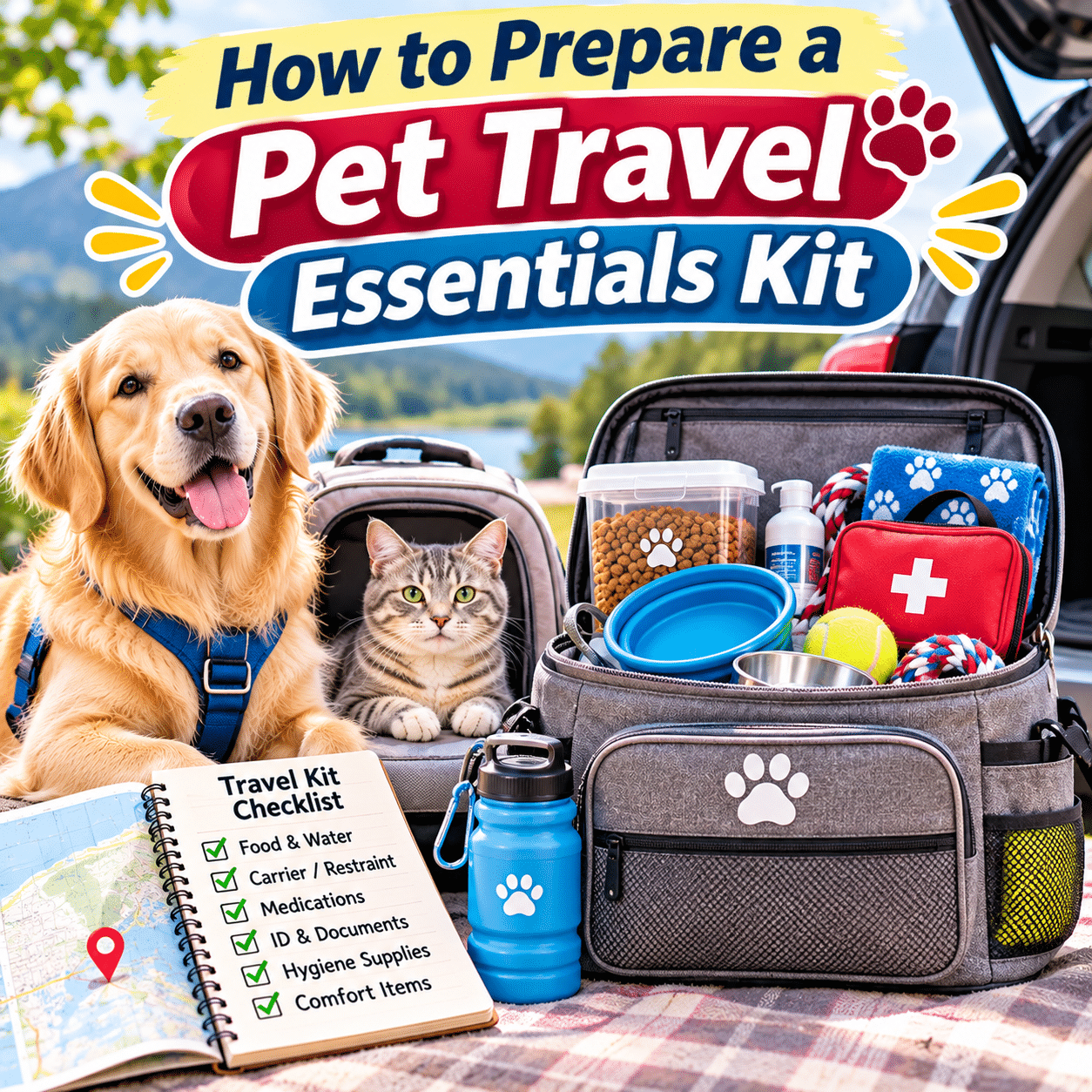
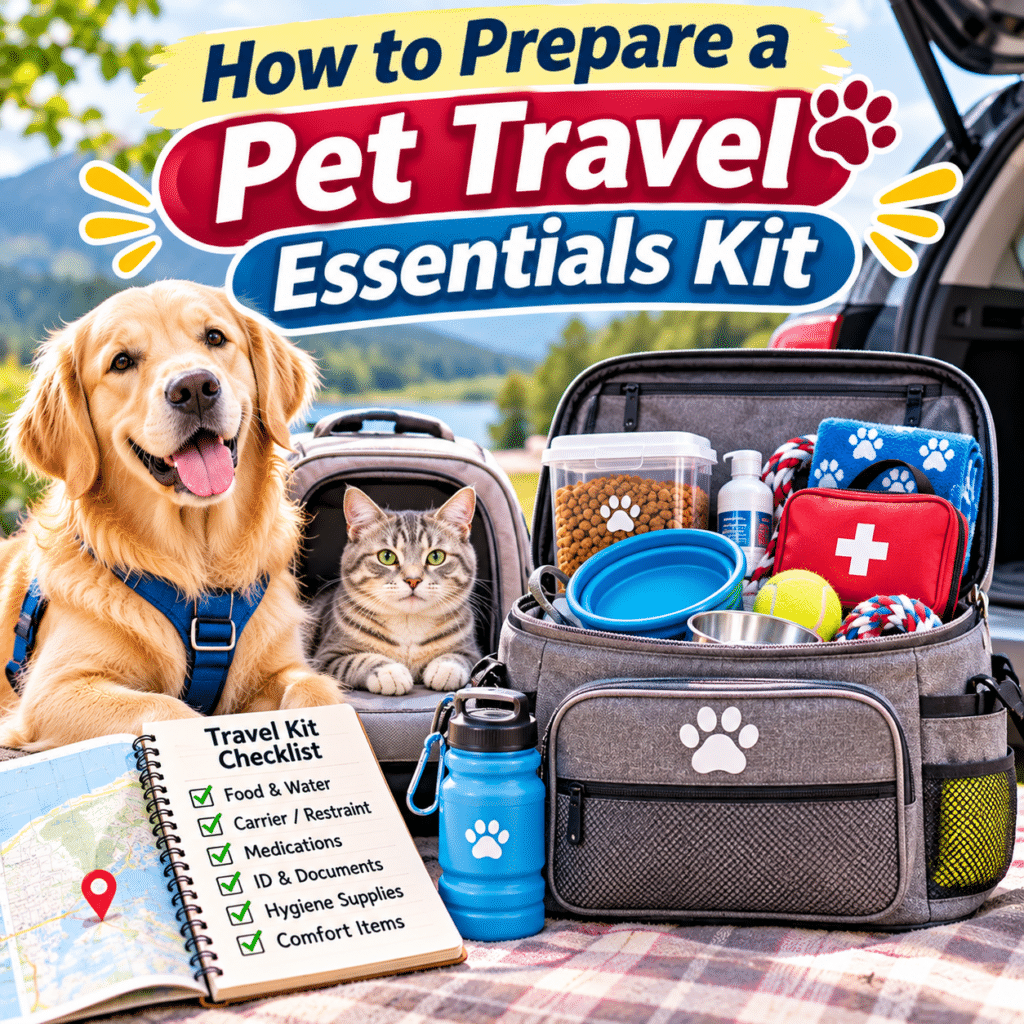
Traveling with a pet can be a rewarding experience, whether you are planning a short car ride, a weekend getaway, a family visit, or a longer journey. Bringing a familiar companion along can make an adventure more enjoyable, but it also introduces additional responsibilities that require thoughtful preparation.
Unlike people, pets cannot explain when they have forgotten something important or when their usual routine has been disrupted. They depend on their owners to provide appropriate food, fresh water, safe transportation, familiar comforts, and access to essential care throughout the journey.
A well-prepared pet travel essentials kit helps make these responsibilities easier to manage.
Instead of searching through several bags for a leash, water bowl, medication, or cleaning supplies, you can keep important items organized in one practical system. This can reduce unnecessary stress, make travel routines more predictable, and help you respond more efficiently to unexpected situations.
The ideal kit depends on your pet’s species, size, age, health, travel habits, and destination. A dog joining a road trip may need different supplies from a cat traveling in a carrier, while a senior pet or an animal with a medical condition may require additional planning.
Fortunately, preparing a useful travel kit does not mean packing every pet accessory you own. The goal is to select the right essentials, organize them logically, and ensure they are safe, accessible, and suitable for your journey.
This comprehensive guide explains how to prepare a pet travel essentials kit, organize food and hydration supplies, select transportation equipment, manage medications and documents, plan for different types of trips, and maintain a reliable packing checklist for future adventures.
1. Why Every Traveling Pet Needs an Essentials Kit
A dedicated travel kit provides a practical foundation for caring for your pet away from home.
Even familiar journeys can involve changes in feeding schedules, weather, transportation conditions, and access to everyday supplies.
Keep Important Supplies Together
At home, pet essentials may be stored in several locations.
Food might be in the kitchen, grooming tools in a cabinet, walking accessories near the entrance, and medications in a separate secure area.
A travel kit brings the necessary items together.
This makes packing easier and reduces the likelihood of forgetting something important.
Maintain Familiar Daily Routines
Many pets benefit from predictable routines.
Travel may change when and where they eat, drink, rest, exercise, or use the bathroom.
Packing familiar supplies helps you maintain appropriate aspects of their usual care.
For example, bringing your pet’s regular food can help avoid an unnecessary dietary change during a trip.
Prepare for Unexpected Delays
Traffic, transportation changes, weather conditions, and accommodation problems can affect travel plans.
Extra food, water, medication, and hygiene supplies may be useful when a journey takes longer than expected.
Support Safer Transportation
Travel preparation includes more than convenience.
Appropriate carriers, restraints, identification, and emergency information are important parts of responsible pet transportation.
A travel kit helps keep supporting supplies ready, although it does not replace a properly secured transportation system.
Make Future Trips Easier
Once you establish a reusable travel kit, preparing for subsequent trips becomes simpler.
You can maintain a core collection of supplies and adjust it for each destination.
2. Assess Your Pet’s Travel Needs Before Packing
Before choosing a bag or creating a checklist, consider the specific requirements of your pet and the journey.
Consider Your Pet’s Species
Different animals have different transportation and care requirements.
Dogs may need regular opportunities for appropriate exercise and toileting.
Cats generally require secure carriers and may benefit from additional privacy and familiar bedding.
Small mammals, birds, reptiles, and other companion animals may have specialized needs involving temperature, ventilation, feeding, and enclosure safety.
For species with particular environmental requirements, obtain guidance from a veterinarian experienced with that animal.
Consider Age and Health
Young animals, senior pets, and pets with medical conditions may require additional supplies.
Examples include:
- Prescribed medications.
- Special diets.
- Mobility assistance.
- Additional bedding.
- More frequent care breaks.
- Veterinary documentation.
- Temperature-management precautions.
A pet with an ongoing health condition may also need a pre-travel veterinary consultation.
Consider the Length of the Journey
A short local trip usually requires fewer supplies than a multi-day vacation.
However, even short trips should include appropriate transportation equipment and access to essential care.
Consider Your Destination
Think about the environment your pet will encounter.
Questions to ask include:
- Will the destination be hot, cold, or humid?
- Is fresh drinking water readily available?
- Are pets allowed at the accommodation?
- Are there safe places for exercise or toileting?
- Will the journey involve public transportation?
- Are there local animal health requirements?
- Is veterinary care accessible nearby?
The answers help determine what belongs in the kit.
3. Choose the Right Bag for Your Pet Travel Kit
A practical travel kit begins with suitable storage.
The bag should be easy to carry, durable enough for repeated use, and organized so that essential items can be found quickly.
Look for Useful Features
Consider a bag with:
- A comfortable carrying handle or strap.
- Several compartments.
- Easy-to-clean interior materials.
- Secure closures.
- Space for food and accessories.
- A separate section for documents.
- Enough capacity without excessive bulk.
A backpack, compact duffel bag, or dedicated pet travel organizer may work well.
Choose a Size That Matches Your Trip
A small bag may be sufficient for short outings.
Longer journeys may require a larger organizer or several separate containers.
Avoid choosing an oversized bag that becomes difficult to carry or search through.
Separate Clean and Used Items
Keep food, clean bowls, and fresh bedding away from used waste bags, soiled towels, and contaminated equipment.
Water-resistant pouches can help organize certain supplies, but they do not replace proper hygiene.
Keep Important Items Accessible
Items such as water, a leash, waste bags, and emergency information should be easy to retrieve.
Avoid burying them beneath clothing or bulky accessories.
4. Build Your Core Pet Travel Essentials Kit
Every kit should begin with the supplies most relevant to daily care, safe transportation, and unexpected needs.
Essential Packing Categories
| Category | Essential Items | Main Purpose |
|---|---|---|
| Food | Regular food, suitable treats, measuring tool | Maintain feeding routines |
| Hydration | Drinking water, travel bowl | Provide access to water |
| Transportation | Appropriate carrier or restraint | Support safe travel |
| Identification | ID tag, identification details | Help identify the pet |
| Walking | Leash, harness, suitable accessories | Manage movement safely |
| Hygiene | Waste bags, cleaning materials | Maintain cleanliness |
| Comfort | Familiar blanket or suitable bedding | Provide a familiar resting surface |
| Health | Required medications, veterinary information | Support continuity of care |
| Emergency | Contact details, relevant first-aid supplies | Prepare for unexpected situations |
| Documents | Health records and destination-specific paperwork | Meet applicable requirements |
Not every item applies to every species or trip.
Use the table as a starting point rather than a rigid packing requirement.
5. Pack Enough Food for the Entire Journey
Food preparation is one of the most important parts of traveling with a pet.
An unfamiliar environment is not necessarily the best time to introduce a new diet.
Bring Your Pet’s Regular Food
Whenever practical, pack the food your pet normally eats.
Sudden dietary changes can cause digestive upset in some animals.
If a dietary change is unavoidable, consult your veterinarian about an appropriate transition.
Estimate the Required Quantity
Start with your pet’s usual daily feeding amount.
Multiply it by the number of travel days and include a reasonable reserve for unexpected delays.
For example, if a pet normally eats 200 grams of food per day and the trip lasts four days:
200 grams × 4 days = 800 grams
An additional reserve may be appropriate depending on the journey and access to replacement supplies.
This calculation is only an example. Actual feeding amounts depend on the individual pet and its diet.
Keep Food Properly Packaged
Retain the original packaging or preserve essential product information.
Choose storage that protects food from moisture, contamination, and excessive temperatures.
For refrigerated or perishable food, follow the manufacturer’s storage instructions and use appropriate temperature control.
Pack a Measuring Tool
A small food scoop or portable scale can help maintain consistent portions.
Keep it clean and separate from contaminated accessories.
Include Suitable Treats
Treats may be useful for familiar reward-based routines.
Choose products your pet already tolerates well.
Avoid excessive treats or unfamiliar foods during travel.
6. Prepare Water and Hydration Supplies
Access to safe drinking water is essential during travel.
The amount required varies according to species, body size, diet, activity level, environmental conditions, and health.
Bring a Reliable Water Container
A leak-resistant bottle or other suitable container can make water easier to transport.
Use a container intended for drinking water.
Pack a Portable Water Bowl
Common options include:
- Collapsible silicone bowls.
- Lightweight stainless steel bowls.
- Compact travel bowls.
- Carrier-compatible water containers.
Choose a design appropriate for your pet and travel method.
Offer Water at Appropriate Intervals
Provide opportunities to drink throughout the journey.
Some pets may be reluctant to drink in unfamiliar surroundings.
Offer water calmly without forcing intake.
Monitor Environmental Conditions
Warm weather and physical activity can increase hydration needs.
Pets should never be left unattended in a parked vehicle, where dangerous temperatures can develop rapidly even when outdoor conditions seem mild.
Clean Travel Water Equipment
Wash portable bowls regularly and dry them before storage.
Replace water that becomes contaminated.
7. Choose Safe Transportation Equipment
Transportation equipment is a core part of pet travel preparation.
A travel kit should support a safe transport arrangement, not replace one.
Select an Appropriate Carrier
For pets traveling in carriers, choose one that allows suitable positioning and movement according to the animal’s needs and applicable transport requirements.
Important considerations include:
- Appropriate size.
- Secure closures.
- Adequate ventilation.
- Durable construction.
- Stable positioning.
- Ease of cleaning.
- Safe handling.
The carrier should be suitable for the species and transportation method.
Secure Pets During Car Travel
Unrestrained animals can be injured during sudden braking or collisions and may distract the driver.
Use a properly selected, vehicle-compatible restraint or secured carrier appropriate for the pet.
A product being marketed as a pet seat belt does not necessarily mean it has been independently crash-tested.
Review available safety information and installation instructions carefully.
Check Airline and Public Transportation Rules
Carriers and animal travel requirements vary between transportation providers.
Confirm current rules directly with the relevant airline, railway, ferry, or other operator before departure.
Requirements may address carrier dimensions, animal weight, documentation, and permitted travel arrangements.
Introduce Equipment Before the Trip
Allow your pet to become familiar with its carrier or restraint through gradual, positive experiences.
Avoid making the first encounter with unfamiliar equipment occur immediately before a long journey.
8. Prepare Identification and Important Documents
Identification is particularly important when traveling away from familiar surroundings.
Check Your Pet’s ID Tag
For pets that wear collars, ensure the identification tag is secure and legible.
Include appropriate contact information.
Confirm Microchip Information
If your pet is microchipped, check that the registration details are current.
A microchip is not a GPS tracking device, and its usefulness depends on successful scanning and access to accurate registration information.
Keep Veterinary Records Accessible
Depending on the journey, useful documents may include:
- Vaccination records.
- Relevant medical history.
- Medication information.
- Veterinary contact details.
- Health certificates when required.
- Identification or registration records.
- Destination-specific permits.
Prepare Digital Copies
Secure digital copies can provide a useful backup.
However, digital documents may not replace original paperwork when a transportation provider or authority requires it.
Verify Travel Requirements in Advance
International travel and some domestic routes may involve vaccination, microchip, parasite treatment, quarantine, or health certificate requirements.
These rules vary by destination, route, species, and travel date.
Check official government and transportation-provider requirements well before traveling.
9. Pack a Pet Health and First-Aid Kit
A basic first-aid kit can help you manage minor situations while seeking appropriate veterinary care.
It is not a substitute for professional treatment.
Consider Basic Supplies
Depending on veterinary advice, a kit may include:
- Sterile gauze pads.
- Nonstick wound dressings.
- Appropriate bandaging materials.
- Disposable gloves.
- Blunt-tip scissors.
- A digital thermometer suitable for veterinary use.
- A clean towel.
- Emergency contact information.
- Any veterinary-recommended first-aid items.
Only use equipment and techniques you understand.
Improper bandaging, medication, or wound treatment can cause harm.
Bring Prescribed Medications
Pack enough medication for the journey, plus a suitable reserve when practical and permitted.
Keep medications in their original labeled containers.
Follow storage requirements, including refrigeration where necessary.
Do Not Pack Human Medications for Unsupervised Use
Many medications commonly used by people can be dangerous to pets.
Never give a pet human pain relievers, sedatives, anti-nausea products, or other medications without specific veterinary instructions.
Identify Veterinary Services
Before traveling, locate suitable veterinary services near your destination.
For remote journeys, consider how emergency transport and communication would work.
Prepare for Travel-Related Anxiety or Motion Sickness
Some pets experience stress or nausea during transportation.
Consult your veterinarian before travel if your pet has a history of these problems.
Avoid introducing sedatives, supplements, or other treatments without professional guidance.
10. Pack Hygiene and Waste Management Supplies
Travel can make routine cleanup more complicated.
A small hygiene kit helps you manage accidents and maintain a clean environment.
Essential Hygiene Supplies
Consider packing:
- Pet waste bags.
- Disposable gloves.
- Paper towels.
- Washable cleaning cloths.
- Suitable pet-safe cleaning products.
- Sealable bags for soiled items.
- Spare bedding or absorbent liners when appropriate.
For Dogs
Pack enough waste bags for the journey.
Carry extras in case of delays or unexpected stops.
Follow local waste disposal rules.
For Cats
Depending on the trip, you may need:
- A suitable portable litter box.
- Familiar litter.
- A litter scoop.
- Waste disposal bags.
- A protective mat.
Plan how the cat will access a safe toileting area without risking escape.
Keep Dirty Items Separate
Use designated containers for soiled towels or other used materials.
Do not place contaminated items alongside food or clean feeding equipment.
Choose Cleaning Products Carefully
Use products suitable for the surfaces involved and follow their instructions.
Avoid strong fragrances and potentially harmful chemicals around pets.
11. Include Familiar Comfort Items
Travel introduces new sounds, smells, people, and environments.
Familiar belongings may help some pets settle more comfortably.
Pack a Familiar Blanket
A clean blanket from home can provide a recognizable resting surface.
Choose one appropriate for the pet and travel conditions.
Bring a Favorite Safe Toy
A familiar toy may provide comfort or an opportunity for suitable play.
Avoid toys with small detachable parts or other hazards.
Consider a Portable Resting Mat
A lightweight mat can create a familiar place to rest in accommodation or during suitable stops.
Avoid Overpacking Comfort Items
A few useful items are generally more practical than bringing a large collection of toys and blankets.
Select belongings that your pet regularly uses.
Respect Your Pet’s Individual Response
Not every pet finds unfamiliar travel environments comfortable.
Familiar items can help, but they do not guarantee that an animal will feel relaxed.
Observe behavior and adjust your plans when necessary.
12. Organize the Kit Into Practical Compartments
A well-organized kit should allow you to locate supplies quickly.
Compartment 1: Food and Feeding
Store:
- Regular food.
- Treats.
- Measuring tools.
- Clean travel bowls.
Keep food protected from contamination.
Compartment 2: Walking and Outdoor Equipment
Store:
- Leash.
- Harness.
- Waste bags.
- Suitable outdoor accessories.
Compartment 3: Hygiene
Store:
- Cleaning cloths.
- Disposable gloves.
- Waste disposal supplies.
- Appropriate cleaning products.
Keep potentially hazardous cleaning products securely separated.
Compartment 4: Health and Documents
Store:
- Veterinary records.
- Emergency contacts.
- First-aid supplies.
- Required medications.
Medication storage must follow its specific temperature and security requirements.
Compartment 5: Comfort
Store:
- Lightweight blanket.
- Suitable toy.
- Portable resting mat.
Use Simple Labels
Small labels or color-coded pouches can make organization easier.
Avoid creating so many categories that packing becomes unnecessarily complicated.
13. Prepare a Pet Travel Kit for a Road Trip
Road trips offer flexibility, but they require careful planning for vehicle safety and rest stops.
Before Departure
Check:
- Transportation restraint or carrier.
- Identification details.
- Food and water supplies.
- Medication requirements.
- Weather conditions.
- Planned rest stops.
- Emergency veterinary contacts.
During the Journey
Provide appropriate opportunities for water, toileting, and rest.
The frequency of breaks depends on the pet’s age, health, and needs.
Never allow a pet to ride loose in a way that interferes with driving.
At Rest Stops
Keep your pet securely restrained before opening vehicle doors.
Use a leash or appropriate containment method.
Avoid unfamiliar hazards such as hot pavement, traffic, and unsafe vegetation.
At the Destination
Set up a familiar resting area.
Provide water and follow your pet’s usual feeding routine as closely as practical.
Inspect the accommodation for hazards before allowing unrestricted exploration.
14. Prepare a Pet Travel Kit for Air Travel
Air travel involves additional requirements that must be confirmed in advance.
Check Airline Policies
Airlines may have different rules regarding:
- Eligible animal species.
- Cabin or cargo transport.
- Carrier dimensions.
- Weight restrictions.
- Health documentation.
- Seasonal limitations.
- Booking procedures.
Never assume that one airline’s rules apply to another.
Confirm Destination Requirements
International travel may involve veterinary certification, vaccination requirements, import permits, or other procedures.
Some preparations must be completed within specific time windows.
Prepare the Carrier
Use a carrier that meets the applicable requirements.
Attach identification as permitted.
Follow airline instructions for bedding, food, and water arrangements.
Consult a Veterinarian
Discuss your pet’s suitability for air travel, particularly if the animal is elderly, has a medical condition, has respiratory difficulties, or has previously experienced severe travel stress.
Avoid Unapproved Sedation
Sedation can introduce risks during transportation.
Do not administer sedatives or calming medications unless specifically directed by a veterinarian who understands the travel circumstances.
15. Prepare for Overnight Stays and Pet-Friendly Accommodation
A pet-friendly accommodation does not automatically mean every area is safe or suitable for your animal.
Confirm Property Rules
Check:
- Pet size or species restrictions.
- Additional fees.
- Areas where pets are permitted.
- Rules about leaving pets unattended.
- Cleaning expectations.
- Outdoor access.
Set Up a Temporary Pet Corner
Choose a quiet, safe location for bedding and water.
Keep food and hygiene supplies organized.
Inspect the Room
Look for potential hazards such as:
- Accessible electrical cords.
- Unsafe plants.
- Cleaning chemicals.
- Open windows.
- Small objects.
- Unsecured balconies.
- Spaces where a pet could become trapped.
Maintain Familiar Routines
Keep feeding, exercise, and resting schedules reasonably consistent.
Introduce the new environment gradually.
Respect Other Guests
Manage noise, clean up waste, and follow property rules.
Do not assume every animal will be comfortable being left alone in unfamiliar accommodation.
16. Adjust Your Kit for Different Weather Conditions
Weather can influence what your pet needs during travel.
Warm Weather
Consider:
- Adequate drinking water.
- A suitable travel bowl.
- Access to shade.
- Appropriate ventilation.
- Safe rest opportunities.
- A suitable cooling accessory when appropriate.
Never leave a pet unattended in a parked vehicle.
Avoid exposing paws to dangerously hot surfaces.
Cold Weather
Depending on the animal, consider:
- Appropriate bedding.
- Suitable protective clothing.
- Dry towels.
- Protection from wind and moisture.
Not every pet requires clothing, and poorly fitting garments can interfere with movement.
Rainy Weather
Useful supplies may include:
- Absorbent towels.
- A suitable rain covering.
- Waterproof storage pouches.
- Spare dry bedding.
- Cleaning materials for muddy paws.
Humid Conditions
Protect food and bedding from moisture.
Dry reusable accessories thoroughly before packing them away.
17. Customize the Kit for Dogs, Cats, and Other Pets
A general travel checklist should be adapted to the animal.
Dog Travel Essentials
Common items include:
- Appropriate restraint or carrier.
- Collar and identification.
- Leash and harness.
- Regular food.
- Water and travel bowl.
- Waste bags.
- Familiar bedding.
- Suitable toys.
- Required medications.
- Veterinary information.
Cat Travel Essentials
Common items include:
- Secure carrier.
- Identification information.
- Familiar bedding.
- Regular food.
- Water and suitable bowl.
- Portable litter arrangements when needed.
- Cleaning supplies.
- Required medications.
- Veterinary documents.
Cats should be kept securely contained during travel and when entering unfamiliar environments.
Small Mammal Travel Essentials
Depending on the species, supplies may include:
- Appropriate secure enclosure.
- Familiar food.
- Suitable water system.
- Species-appropriate bedding.
- Temperature-management arrangements.
- Veterinary information.
Small mammals can have specialized dietary and environmental requirements.
Bird Travel Essentials
Birds may require:
- A suitable secure travel enclosure.
- Appropriate food and water.
- Stable environmental conditions.
- Protection from drafts and overheating.
- Veterinary documentation when applicable.
Avoid exposure to fumes, aerosols, and unsuitable temperatures.
Reptile and Exotic Pet Travel
Reptiles and other exotic animals may require specialized temperature, humidity, enclosure, and transportation arrangements.
Seek species-specific veterinary guidance before travel.
18. Prepare a Kit for Senior Pets and Pets With Special Needs
Some animals need additional planning to travel comfortably.
Senior Pets
Consider:
- Supportive bedding.
- Easy-access transportation arrangements.
- Appropriate mobility assistance.
- More frequent rest opportunities.
- Regular medications.
- Veterinary guidance.
Pets With Mobility Limitations
A suitable ramp, lifting harness, or other support may be helpful when recommended and properly used.
Avoid equipment that causes discomfort or creates additional injury risk.
Pets With Medical Conditions
Prepare a written care summary that includes:
- Relevant diagnoses.
- Medication schedules.
- Feeding requirements.
- Veterinary contact details.
- Emergency instructions provided by the veterinarian.
Pets With Anxiety
Gradual carrier training, short practice journeys, and familiar routines may help some pets.
For significant travel anxiety, seek professional guidance rather than relying on unverified calming products.
19. Create a Pet Travel Packing Timeline
Preparing gradually can reduce last-minute problems.
Several Weeks Before Travel
For complex journeys, especially international travel:
- Research transportation requirements.
- Confirm accommodation policies.
- Review veterinary documentation.
- Check vaccination and health requirements.
- Discuss medical concerns with a veterinarian.
- Begin gradual carrier familiarization when needed.
Some international requirements may need preparation months in advance.
Several Days Before Travel
- Inspect the carrier or restraint.
- Check food supplies.
- Confirm medication quantities.
- Wash travel bowls.
- Prepare hygiene supplies.
- Review weather conditions.
- Save emergency contacts.
- Confirm reservations and travel rules.
The Day Before Travel
- Pack the core essentials.
- Prepare food portions when appropriate.
- Charge relevant electronic accessories.
- Check documents.
- Prepare clean bedding.
- Confirm transport arrangements.
Immediately Before Departure
- Provide appropriate food and water according to your pet’s needs and veterinary guidance.
- Allow suitable toileting opportunities.
- Check identification.
- Secure the pet properly.
- Confirm that essential supplies are accessible.
Avoid making major feeding changes immediately before travel without veterinary advice.
20. Maintain Your Travel Kit Between Trips
A reusable travel kit is most useful when it remains clean, complete, and ready for future use.
Unpack Perishable Items
Remove food that should not remain stored in the bag.
Check expiration dates and storage conditions.
Wash Reusable Equipment
Clean travel bowls, suitable toys, and other used accessories.
Dry everything thoroughly before storage.
Inspect Transportation Equipment
Check carriers, straps, clips, zippers, and closures for damage.
Replace unsafe components.
Replenish Consumables
Restock waste bags, appropriate cleaning supplies, and other frequently used items.
Review Documents
Update veterinary information and emergency contacts when necessary.
Store the Kit Properly
Choose a clean, dry location away from excessive heat, moisture, pests, and unauthorized pet access.
Keep medications and other items with special storage requirements in their appropriate locations rather than leaving them in the travel bag.
21. Common Pet Travel Packing Mistakes to Avoid
Packing Too Much
An oversized kit can become difficult to carry and organize.
Focus on essentials and items relevant to the journey.
Forgetting Drinking Water
Water should be part of the basic travel plan, even for short journeys where access may be uncertain.
Changing Food Suddenly
Unnecessary dietary changes may cause digestive problems.
Bring familiar food whenever practical.
Ignoring Carrier Training
An unfamiliar carrier can make travel more difficult for some animals.
Introduce equipment gradually before departure.
Leaving Documents Until the Last Minute
Travel requirements may involve deadlines and official procedures.
Check them early.
Forgetting Medication Storage Requirements
Some medications require refrigeration or other specific conditions.
Plan how these requirements will be maintained throughout the journey.
Using Unsecured Transportation Equipment
A carrier or restraint must be used correctly to provide its intended protection.
Follow applicable installation and transport instructions.
Leaving Pets in Parked Vehicles
Vehicle temperatures can become dangerous quickly.
Never leave pets unattended in parked vehicles.
Overlooking Destination Hazards
An unfamiliar room, yard, or outdoor area may contain risks that are not present at home.
Inspect the environment before allowing your pet to explore.
Failing to Replenish the Kit
A kit that contains empty waste bag rolls, expired food, or missing equipment may not be useful when needed.
Review it before every trip.
22. Troubleshooting Common Pet Travel Problems
| Problem | Possible Cause | Practical Response |
|---|---|---|
| Pet refuses unfamiliar food | Sudden dietary change or travel stress | Offer the regular diet and consult a veterinarian if refusal persists |
| Pet avoids drinking | Unfamiliar surroundings or stress | Offer familiar water equipment and monitor intake |
| Travel bag becomes disorganized | Too many loose items | Use labeled compartments |
| Pet resists the carrier | Insufficient familiarization or discomfort | Practice gradual positive introductions before travel |
| Food spills inside the bag | Inadequate packaging | Use secure, suitable containers |
| Bedding becomes wet | Spills or weather exposure | Carry an appropriate spare and separate wet items |
| Pet experiences motion sickness | Sensitivity to transportation | Seek veterinary advice before future travel |
| Medication is forgotten | No packing checklist | Use a dedicated medication reminder and verification step |
| Pet becomes restless during a road trip | Discomfort, stress, or unmet needs | Stop safely and assess the pet |
| Destination lacks suitable pet facilities | Incomplete advance research | Confirm facilities and alternatives before departure |
Seek veterinary care promptly if your pet shows concerning symptoms such as breathing difficulty, collapse, repeated vomiting, severe distress, or signs of overheating.
23. Frequently Asked Questions
1. What should be included in a basic pet travel essentials kit?
A basic kit usually includes regular food, water, suitable bowls, transportation equipment, identification, hygiene supplies, familiar bedding, required medications, and relevant documents.
2. How much pet food should I pack for a trip?
Calculate the amount based on your pet’s normal daily intake and the trip duration. Include a reasonable reserve for delays while following food storage requirements.
3. Should I bring my pet’s regular food when traveling?
Yes, whenever practical. Familiar food helps avoid unnecessary dietary changes during a journey.
4. What is the best type of travel bowl?
A lightweight, durable, easy-to-clean bowl appropriate for your pet is a practical choice. Collapsible bowls are convenient for many situations.
5. Do pets need their own travel bag?
A dedicated bag is not essential, but it can make supplies easier to organize and retrieve.
6. How do I prepare my dog for a long car journey?
Introduce the transportation restraint gradually, plan appropriate breaks, provide water, pack familiar supplies, and discuss health concerns with a veterinarian.
7. How do I travel safely with a cat?
Use a secure, appropriate carrier, maintain identification, plan for food and toileting needs, and prevent escape during stops and arrival.
8. Should I bring a pet first-aid kit?
A basic veterinary-appropriate first-aid kit can be useful, especially for longer journeys. Learn how to use its contents safely and seek professional care when needed.
9. Can I give my pet medication for travel anxiety?
Only under veterinary guidance. Medications and supplements may have risks and are not suitable for every animal.
10. What documents are needed for pet travel?
Requirements depend on the destination, species, and transportation method. They may include vaccination records, health certificates, microchip information, and permits.
11. Is a microchip enough identification for travel?
A microchip is valuable, but it is often useful to combine it with other identification methods appropriate for the animal. Keep registration information current.
12. How often should pets take breaks during road trips?
Break needs vary by species, age, health, and journey conditions. Plan regular opportunities to assess comfort, hydration, and toileting needs.
13. Should I pack extra pet medication?
A suitable reserve may be useful for unexpected delays when permitted. Discuss quantities and storage requirements with your veterinarian.
14. Can I use a regular backpack as a pet travel kit?
Yes, if it provides suitable storage and allows clean, safe separation of supplies. It should not be used as an animal carrier unless specifically designed and appropriate for that purpose.
15. What should I pack for a pet-friendly hotel?
Bring familiar bedding, food, water bowls, hygiene supplies, identification, medications, and any items required by the accommodation.
16. How can I keep pet food fresh during travel?
Follow the manufacturer’s storage instructions, protect food from heat and moisture, and use appropriate containers. Perishable foods may require refrigeration.
17. Are cooling mats necessary for summer travel?
Not necessarily. Their usefulness depends on the pet and conditions. Shade, ventilation, appropriate water access, and avoidance of dangerous heat are more fundamental.
18. What should I do if my pet becomes sick while traveling?
Contact a veterinarian promptly, especially if symptoms are severe or persistent. Keep relevant medical information and emergency contacts accessible.
19. How should I clean pet travel accessories after a trip?
Wash reusable bowls and suitable equipment according to care instructions, clean carriers as needed, and dry items thoroughly before storage.
20. How can I make future pet travel packing easier?
Maintain a reusable core kit, keep an updated checklist, inspect equipment after trips, and replenish supplies before the next journey.
24. Complete Pet Travel Essentials Checklist
Use this checklist before departure and adapt it to your pet’s individual needs.
Food and Hydration
- Regular pet food.
- Suitable food reserve.
- Familiar treats.
- Food measuring tool.
- Drinking water.
- Portable water bowl.
- Suitable food bowl.
- Appropriate food storage containers.
- Temperature-controlled storage when required.
Transportation and Identification
- Appropriate carrier or vehicle restraint.
- Secure leash and harness when applicable.
- Identification tag.
- Updated microchip registration information.
- Carrier identification.
- Transportation booking confirmation.
- Required travel documentation.
Comfort and Rest
- Familiar blanket.
- Suitable resting mat.
- Favorite safe toy.
- Appropriate weather-related accessories.
- Spare bedding when needed.
Hygiene and Cleanup
- Waste bags.
- Disposable gloves.
- Paper towels.
- Suitable cleaning cloths.
- Pet-appropriate cleaning products.
- Sealable bags for soiled items.
- Portable litter arrangements when needed.
- Spare absorbent liners when appropriate.
Health and Emergency
- Prescribed medications.
- Medication instructions.
- Appropriate first-aid supplies.
- Veterinary contact details.
- Emergency veterinary information.
- Relevant medical records.
- Vaccination documentation.
- Health certificates or permits when required.
- Special dietary instructions.
- Required medication temperature control.
Travel Planning
- Destination pet policies confirmed.
- Transportation rules reviewed.
- Weather conditions checked.
- Appropriate rest stops planned.
- Veterinary services identified.
- Accommodation safety considered.
- Pet’s travel suitability assessed.
- Carrier or restraint inspected.
- Emergency contacts saved.
Final Departure Check
- Food and water supplies are sufficient.
- Important documents are accessible.
- Medications are packed appropriately.
- Identification is secure.
- The pet is safely contained or restrained.
- Cleaning supplies are available.
- The travel kit is organized.
- The destination is ready to accommodate the pet.
Final Thoughts
Preparing a pet travel essentials kit is a practical way to make journeys more organized, comfortable, and manageable for both pets and their owners.
Whether you are planning a short outing or an extended trip, thoughtful preparation helps you maintain familiar routines, provide appropriate food and water, manage hygiene, and respond more effectively when unexpected situations arise.
A reliable travel kit begins with the essentials: regular food, safe drinking water, suitable feeding equipment, secure transportation arrangements, identification, cleaning supplies, and any necessary medications or documents.
From there, you can customize the contents according to your pet’s species, age, health, personality, and destination.
Remember that packing supplies is only one part of responsible pet travel. Safe transportation, appropriate environmental conditions, advance planning, and attention to your pet’s behavior are equally important.
The best kit is not necessarily the largest or most elaborate. It is one that contains the right items, keeps them accessible, and can be maintained easily between journeys.
By creating a reusable packing system and reviewing it before each trip, you can spend less time worrying about forgotten supplies and more time focusing on your pet’s comfort and well-being.
With the right preparation, traveling together can become a more enjoyable experience filled with familiar routines, new surroundings, and meaningful moments of companionship.