Life can become surprisingly busy, even when our daily routines seem familiar. Between work, household responsibilities, digital distractions, and personal commitments, finding a few peaceful moments can make a meaningful difference in how we experience each day.
Creating a cozy self-care corner at home is a simple way to make those moments more intentional.
A self-care corner does not need to be a luxurious spa, a dedicated wellness room, or an expensive interior design project. It can be a comfortable chair beside a window, a small reading nook in the bedroom, a peaceful spot filled with soft cushions, or a thoughtfully arranged table with a journal and a warm cup of tea.
What matters most is how the space supports your personal sense of comfort, calm, and relaxation.
A well-designed self-care corner combines practical organization with soothing colors, comfortable textures, gentle lighting, and meaningful personal details. It offers a welcoming place to slow down, enjoy quiet activities, and reconnect with everyday pleasures.
Whether you live in a spacious house, a compact apartment, or a shared home, there are countless ways to create a relaxing retreat that fits your lifestyle.
This guide explores cozy self-care corner ideas, thoughtful decorating techniques, space-saving solutions, and practical habits that can help transform an ordinary area into a comforting part of your daily routine.
1. Start by Defining What Self-Care Means to You
Before choosing furniture or decorations, think about the activities that help you feel comfortable and refreshed.
Self-care looks different for everyone.
Some people enjoy reading a book in complete silence, while others prefer journaling, listening to gentle music, practicing mindful breathing, or spending time with a favorite creative hobby.
Your self-care corner should reflect your own preferences rather than follow a rigid decorating formula.
Consider activities such as:
- Reading books or magazines.
- Writing in a personal journal.
- Practicing meditation or gentle breathing exercises.
- Enjoying tea or another favorite beverage.
- Listening to relaxing music.
- Sketching, coloring, or crafting.
- Practicing simple stretching.
- Following a skincare routine.
- Sitting quietly without digital distractions.
Choose one or two primary activities to guide the design.
A corner designed for reading may need a supportive chair and adjustable lighting, while a meditation space may benefit from an open floor area and a comfortable cushion.
The most inviting self-care spaces are designed around real habits, not just attractive photographs.
2. Choose a Quiet and Comfortable Location
The location of your self-care corner can influence how often you use it.
Look for a space that feels relatively peaceful, comfortable, and easy to access.
Possible locations include:
- An unused bedroom corner.
- A living room alcove.
- A spot beside a window.
- A quiet section of a home office.
- An area near a bookshelf.
- A covered balcony with suitable weather protection.
- A small corner of a guest room.
You do not need a large amount of floor space.
Even a compact area can become a relaxing retreat when it is arranged thoughtfully.
Consider Noise and Household Activity
Choose a location away from frequent interruptions when possible.
A bedroom corner may offer more privacy than a busy living room, while a quiet window seat may provide a pleasant escape from household activity.
If you share your home, consider whether the space can remain available during the times you most want to relax.
Make the Space Easy to Use
Avoid placing your self-care corner somewhere that requires moving furniture or clearing clutter every time you want to use it.
Convenience encourages consistency.
A comfortable chair that is always ready for a short reading session may be more useful than an elaborate relaxation setup that takes several minutes to prepare.
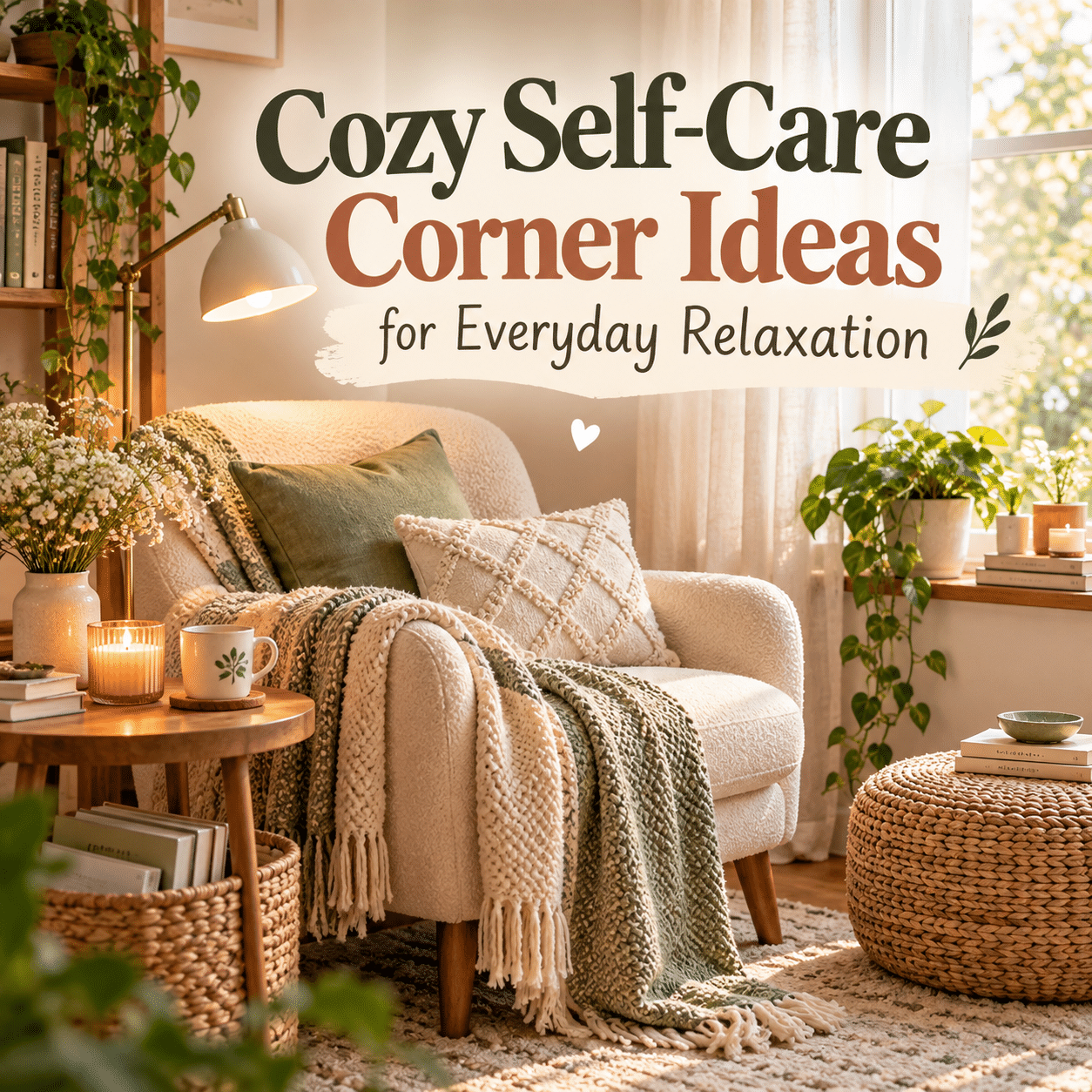
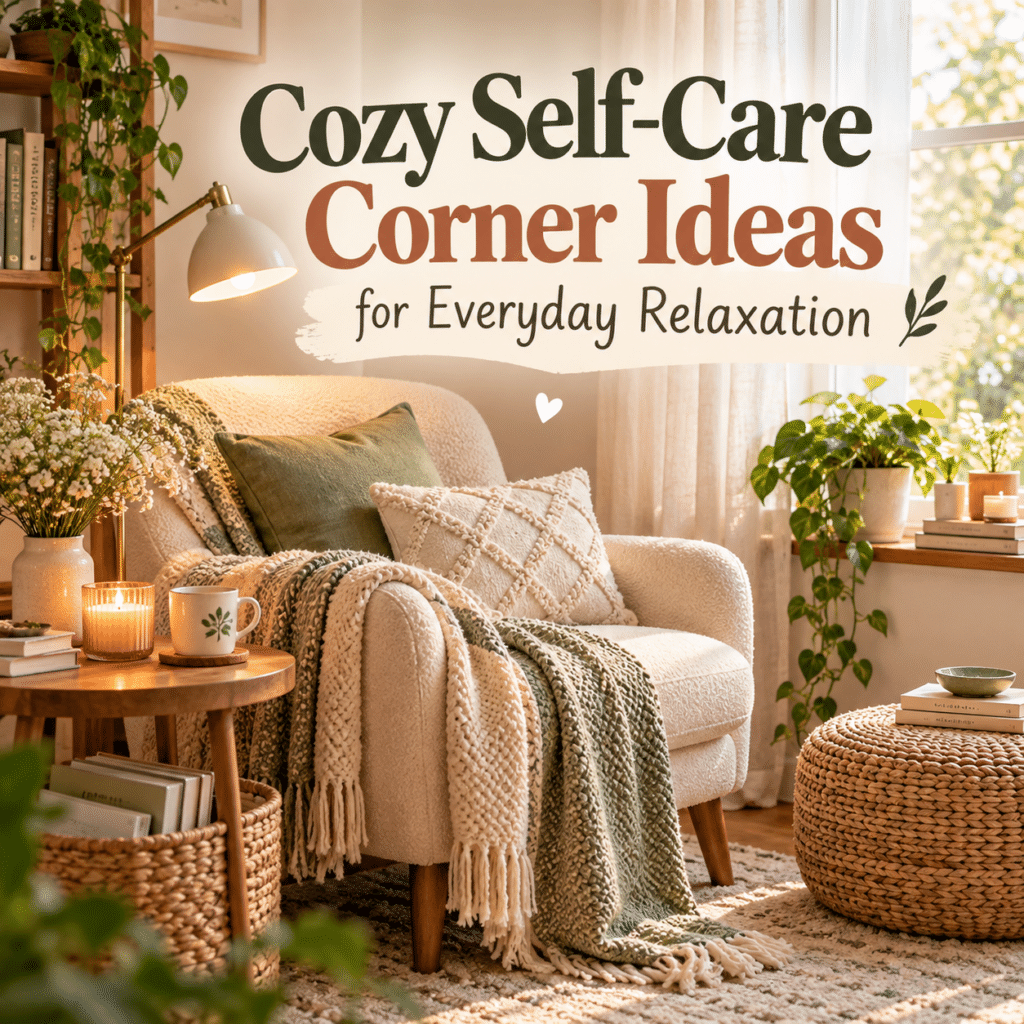
3. Create a Cozy Reading Chair Retreat
A comfortable reading chair is one of the simplest foundations for a self-care corner.
<escape>Choose a chair that supports your preferred sitting position and fits the available space.</escape>
An upholstered armchair can create a soft, inviting atmosphere, while a compact accent chair may work better in smaller rooms.
Consider adding:
- A supportive lumbar cushion.
- A soft throw blanket.
- A small side table.
- An adjustable reading lamp.
- A basket for books and magazines.
- A footrest if space allows.
Place the chair near natural light when practical, but make sure you also have sufficient lighting for evening reading.
A neutral chair paired with textured cushions and a warm blanket can create a timeless appearance without requiring complicated decoration.
The goal is to create a spot where sitting down feels effortless and enjoyable.
4. Design a Soft Floor Cushion Sanctuary
Not every self-care corner needs traditional furniture.
A floor-based relaxation space can feel informal, flexible, and especially suitable for compact rooms.
Start with a comfortable floor cushion, meditation cushion, or supportive floor chair.
Layer the area with a soft rug and a few cushions to create a welcoming arrangement.
A low table can hold a journal, a book, or a cup of tea.
Keep Comfort and Support in Mind
Floor seating is not equally comfortable for everyone.
If sitting on the floor causes discomfort in your knees, hips, or back, choose a supportive chair instead.
For those who enjoy floor seating, consider using cushions with enough structure to maintain a comfortable position.
Keep the arrangement simple so the space remains easy to clean and rearrange.
5. Build a Peaceful Window-Side Corner
Natural light can make a self-care corner feel open, cheerful, and connected to the outdoors.
A window-side retreat is particularly appealing for morning journaling, reading, or enjoying a quiet beverage.
Position a chair or bench where you can comfortably appreciate the view.
Add lightweight curtains to soften strong sunlight while maintaining privacy.
A small plant, a woven basket, and a neutral throw can complete the arrangement.
Manage Sunlight and Temperature
Consider how the window affects comfort throughout the day.
Direct afternoon sunlight may make the area too warm, while cold drafts can reduce comfort during cooler weather.
Adjustable curtains, blinds, or window coverings can help create a more pleasant environment.
Protect books, fabrics, and decorative objects that may fade under prolonged direct sunlight.
6. Use Warm and Gentle Lighting
Lighting is one of the most effective ways to change the atmosphere of a room.
Bright overhead lighting may be useful for cleaning or working, but softer lighting often feels more comfortable during quiet activities.
Try combining several light sources:
- A warm-toned table lamp.
- A small floor lamp.
- An adjustable reading light.
- Indirect LED lighting.
- Decorative battery-operated candles.
Warm white lighting can create an inviting atmosphere, particularly in the evening.
However, reading, journaling, and detailed hobbies still require adequate illumination.
Layer Lighting for Different Activities
A practical self-care corner may include both ambient and task lighting.
Ambient lighting creates the overall atmosphere, while task lighting supports activities requiring visual attention.
A dimmable lamp can provide flexibility throughout the day.
Avoid placing bright lights directly in your line of sight, and choose fixtures that do not produce uncomfortable glare.
7. Choose a Calming Color Palette
Colors influence the visual character of a space and can help establish a peaceful atmosphere.
For a cozy self-care corner, consider a palette that feels gentle and personally appealing.
Popular combinations include:
| Color Palette | Visual Character | Suggested Accents |
|---|---|---|
| Cream and beige | Warm and understated | Linen, wood, woven baskets |
| Sage green and ivory | Fresh and natural | Plants, ceramics, light oak |
| Dusty rose and cream | Soft and welcoming | Cushions, candles, artwork |
| Warm gray and white | Minimal and balanced | Textured throws, natural wood |
| Terracotta and sand | Earthy and comforting | Clay pottery, cotton textiles |
| Pale blue and warm white | Airy and peaceful | Light fabrics, simple artwork |
| Taupe and muted brown | Cozy and grounded | Rattan, wool, warm lighting |
You do not need to repaint the entire room.
A few cushions, a rug, artwork, or a throw blanket can establish a cohesive palette.
Choose colors you genuinely enjoy rather than assuming that one particular shade will automatically make everyone feel relaxed.
8. Add Layers of Soft and Comfortable Textures
Texture plays an important role in creating a cozy atmosphere.
A self-care corner can feel warmer and more inviting when smooth surfaces are balanced with soft fabrics and natural materials.
Consider combining:
- Cotton cushions.
- Linen pillow covers.
- Knitted blankets.
- Soft rugs.
- Woven baskets.
- Upholstered seating.
- Wooden furniture.
- Ceramic accessories.
The combination of different materials adds visual depth without requiring many decorative objects.
Avoid Excessive Layering
Too many cushions and blankets can make a small space feel crowded.
Choose a few comfortable pieces that are easy to maintain.
Washable fabrics are especially practical for spaces used frequently.
The best arrangement balances visual softness with everyday convenience.
9. Create a Minimalist Self-Care Corner
A minimalist approach is ideal for anyone who prefers uncluttered surroundings.
Instead of filling the corner with accessories, focus on a few carefully selected essentials.
A simple arrangement might include:
- One comfortable chair.
- One small table.
- One warm lamp.
- One soft blanket.
- One meaningful decorative object.
Use furniture with clean lines and keep the color palette consistent.
Hidden storage can help maintain a tidy appearance.
Minimalism does not mean removing everything that brings you joy.
It means giving your favorite items enough space to feel intentional.
10. Bring Nature Indoors with Greenery
Plants can add color, texture, and a natural decorative element to a self-care corner.
A small potted plant on a side table or a taller plant beside a chair can soften the appearance of the space.
Consider plants that suit the available light and your willingness to provide regular care.
Examples include:
- Spider plants.
- Peperomia.
- Cast iron plants.
- Parlor palms.
- Certain ferns.
- Other houseplants suited to your specific indoor conditions.
Choose Plants Responsibly
Research each plant’s light, watering, and temperature requirements.
If pets or young children share your home, check whether a particular species is considered toxic before bringing it indoors.
Place plants securely to prevent tipping, and use protective trays to keep water away from furniture and electrical equipment.
Houseplants are primarily valuable here for their decorative appeal and connection to nature. A few plants should not be treated as a substitute for proper indoor ventilation or air-quality management.
11. Design a Cozy Tea and Beverage Corner
A small beverage station can make everyday relaxation feel more intentional.
You might enjoy preparing herbal tea, coffee, warm milk, or another favorite drink before settling into your self-care corner.
Create a simple setup with:
- A favorite mug.
- A small tray.
- Tea bags or other beverage supplies.
- A coaster.
- A container for spoons.
- A nearby shelf or cabinet.
If your relaxation area is away from the kitchen, consider preparing drinks there and carrying them to your corner rather than installing appliances.
Keep the Setup Safe and Practical
Avoid placing hot drinks on unstable surfaces or near the edge of a low table.
Keep electrical appliances away from fabrics and water, and follow their ventilation and operating instructions.
A beverage corner should make relaxation easier, not introduce unnecessary clutter or maintenance.
12. Set Up a Journaling and Reflection Space
Journaling can be a meaningful part of a personal self-care routine.
A dedicated writing area provides a convenient place to reflect on daily experiences, record ideas, or organize thoughts.
You only need a few essentials:
- A notebook or journal.
- A comfortable pen.
- A stable writing surface.
- Suitable lighting.
- A small storage tray.
Choose a table height that allows you to write comfortably.
If your space is limited, a compact side table or lap desk may be sufficient.
Simple Journaling Prompts
You can begin with questions such as:
- What made today enjoyable?
- What is one thing I appreciate right now?
- What would make tomorrow feel more manageable?
- Which activities helped me feel refreshed?
- What is something I would like to spend more time doing?
Journaling does not need to be lengthy or perfectly organized.
A few thoughtful sentences may be enough to make the practice personally rewarding.
13. Create a Meditation and Mindfulness Nook
A quiet corner can provide a consistent setting for meditation or mindful breathing.
Choose a space where you can sit comfortably without unnecessary distractions.
Use a chair, floor cushion, or meditation bench depending on your preferences and physical comfort.
Keep the area simple.
A small rug, soft lighting, and a peaceful decorative element may be all you need.
Make Mindfulness Approachable
You do not need special equipment or a complicated routine.
Begin by sitting comfortably and paying attention to your breathing for a short period.
If focusing on breathing feels uncomfortable, try noticing sounds in the room or observing the surrounding environment instead.
Meditation is a personal practice, and it is perfectly reasonable to adjust or discontinue an exercise that does not feel helpful.
14. Add a Gentle Aromatherapy Element
Pleasant scents can contribute to the sensory character of a relaxation space.
Some people enjoy subtle fragrances from scented candles, sachets, or other home fragrance products.
However, scent preferences vary, and strong fragrances may be unpleasant or irritating for some individuals.
Choose Fragrance Carefully
If you enjoy fragrance, use it lightly and ensure the room has appropriate ventilation.
Avoid assuming that essential oils are harmless simply because they are natural.
Some oils and fragrance products can pose risks to pets, and certain scents may aggravate respiratory sensitivities.
For a low-maintenance alternative, consider an unscented candle, fresh air, or a clean textile with no added fragrance.
A self-care corner can feel peaceful without any scent at all.
15. Make a Relaxing Bedroom Retreat
The bedroom is a natural location for a self-care corner because it is often associated with rest and privacy.
Choose a spot that does not interfere with movement around the bed or access to wardrobes.
A small upholstered chair, wall-mounted shelf, and soft lamp can create a useful arrangement.
Keep the design visually connected to the bedroom by repeating colors or materials already present.
Separate Relaxation from Household Tasks
Avoid turning the corner into temporary storage for laundry, paperwork, or miscellaneous belongings.
A small basket can hold your relaxation essentials, but it should not become a catch-all container.
Keeping the area ready for use helps preserve its purpose.
16. Transform a Living Room Corner into a Personal Retreat
A living room self-care corner can work beautifully when a separate room is unavailable.
Choose a location away from the main television viewing area if possible.
Use a small rug, accent chair, or floor lamp to visually distinguish the space.
A narrow bookshelf or open shelving unit can provide gentle separation without making the room feel closed off.
Maintain Visual Harmony
Coordinate the self-care corner with the surrounding furniture.
You might repeat the living room’s wood finish, accent colors, or upholstery textures.
This allows the retreat to feel intentional rather than disconnected from the rest of the room.
17. Create a Self-Care Corner in a Small Apartment
Limited square footage does not prevent you from creating a comfortable personal space.
The key is choosing furniture and accessories that serve multiple purposes.
Consider:
- A compact armchair with a small footprint.
- A nesting side table.
- A wall-mounted reading light.
- A storage ottoman.
- A foldable floor cushion.
- A narrow floating shelf.
- A lightweight basket for essentials.
Use Vertical Space
Wall shelves can hold books, journals, and decorative items without occupying valuable floor space.
Install shelves according to the manufacturer’s instructions and the wall’s construction.
Keep heavier objects on appropriately rated supports and avoid placing unsecured items above seating areas.
A well-organized compact corner can feel just as welcoming as a larger retreat.
18. Design a Window Bench Relaxation Spot
If your home already has a suitable window bench, it can become a charming self-care destination.
Add a fitted seat cushion, supportive pillows, and a soft throw.
A nearby shelf can hold books and small accessories.
For a cohesive appearance, choose fabrics that complement the window coverings.
Check Structural Safety
A decorative window ledge is not automatically designed to support a person’s weight.
Use only a bench or seating surface intended for sitting, and confirm that it is structurally appropriate.
In homes with children, maintain suitable window safety precautions and avoid creating climbing access to unprotected windows.
Comfort should never come at the expense of safety.
19. Introduce a Cozy Canopy or Curtain Detail
Soft curtains can help visually define a relaxation corner.
A lightweight curtain panel beside a chair or reading nook can create a sense of separation from the surrounding room.
This is especially useful in multipurpose spaces.
Choose breathable, easy-to-clean fabrics and avoid overly elaborate arrangements.
Keep Fabrics Away from Heat
Curtains and canopies should remain clear of lamps, heaters, candles, and other heat sources.
Use appropriate mounting hardware and avoid installations that could obstruct exits or ventilation.
A simple curtain divider can create a pleasant atmosphere without requiring permanent architectural changes.
20. Create a Spa-Inspired Self-Care Corner
A spa-inspired space can emphasize cleanliness, soft textures, and simple sensory details.
Choose a restrained color palette with warm white, beige, pale green, or natural wood.
Arrange a small tray with everyday personal-care items.
You might include:
- A clean hand towel.
- Hand cream.
- A soft headband.
- A reusable facial cloth.
- A small mirror.
- A container for skincare essentials.
Keep products in suitable storage conditions and follow their individual usage instructions.
Avoid Overcomplicating the Experience
A relaxing routine does not require a large collection of beauty products.
A few familiar items may be more practical than an elaborate display.
The objective is to create a comfortable place for everyday care rather than imitate a commercial spa.
21. Make Room for Creative Self-Care Activities
Creative hobbies can provide an enjoyable way to spend quiet time.
If drawing, knitting, coloring, or crafting helps you unwind, design your corner around that activity.
A compact creative setup may include:
- A small desk or side table.
- Organized art supplies.
- A comfortable chair.
- Adjustable task lighting.
- A storage basket.
- A protective work mat.
Choose activities that fit the space and are easy to begin.
Keep Supplies Accessible
Organize frequently used materials in labeled containers or shallow drawers.
Avoid storing too many unrelated supplies in the same corner.
For activities involving sharp tools, adhesives, paints, or other specialized materials, follow appropriate safety and ventilation guidance.
A tidy creative area can make spontaneous hobby sessions much easier.
22. Add a Small Bookshelf for Everyday Inspiration
Books can make a self-care corner feel personal and welcoming.
A compact bookshelf or wall-mounted shelf provides a place for favorite novels, poetry, magazines, or reflective reading.
Arrange books in a way that makes them easy to reach.
You can mix vertical stacks with a few horizontal arrangements to create visual variety.
Add one or two decorative objects rather than filling every available gap.
Curate Your Collection
You do not need to display every book you own.
Choose titles you enjoy revisiting or hope to read soon.
Rotate books occasionally to keep the space interesting.
If you prefer digital reading, a simple stand for an e-reader may be enough.
23. Use Natural Materials for an Earthy Atmosphere
Natural materials can introduce warmth and visual texture.
Consider incorporating:
- Light oak or bamboo furniture.
- Rattan baskets.
- Linen textiles.
- Cotton cushions.
- Ceramic trays.
- Wooden picture frames.
- Stone-inspired decorative accessories.
Combining a few natural textures can create a grounded appearance.
Avoid assuming that every product described as natural is automatically more sustainable or safer.
Material sourcing, durability, manufacturing practices, and maintenance requirements all matter.
Choose well-made pieces that suit your budget and can be used for years.
24. Create a Soft and Romantic Self-Care Corner
A romantic decorating style can feel cozy without becoming overly ornate.
Use soft fabrics, gentle colors, and delicate decorative details.
Possible elements include:
- Blush or cream cushions.
- A textured throw.
- Floral artwork.
- A small ceramic vase.
- A curved accent chair.
- A warm table lamp.
Balance decorative softness with functional simplicity.
A few carefully selected details can create an inviting atmosphere without overwhelming the space.
25. Try a Scandinavian-Inspired Relaxation Corner
Scandinavian-inspired interiors often emphasize functionality, natural light, and understated comfort.
This style works particularly well for self-care corners because it combines practical furniture with welcoming textures.
Choose light wood, neutral upholstery, simple shapes, and soft blankets.
Keep decorations limited but meaningful.
A comfortable chair, woven rug, and warm lamp can establish the entire look.
The emphasis is on creating a space that feels easy to live in, rather than perfectly styled at every moment.
26. Explore a Bohemian-Inspired Cozy Retreat
A bohemian-inspired self-care corner offers a more layered and expressive aesthetic.
Combine natural materials, varied textures, and personal decorative pieces.
Consider:
- A patterned rug.
- Floor cushions.
- Woven wall art.
- A rattan chair.
- Ceramic planters.
- Textured blankets.
- Handmade accessories.
Choose a consistent underlying color palette to keep the arrangement visually balanced.
Bohemian style can be colorful and creative, but the space should still feel comfortable and organized.
27. Create a Digital-Free Relaxation Zone
Phones, notifications, and other devices can easily interrupt quiet activities.
If you enjoy taking occasional breaks from screens, consider making your self-care corner a digital-free zone.
Place a small basket or tray outside the immediate seating area where you can leave your phone.
Keep books, journals, or creative supplies nearby as alternatives.
Establish Gentle Boundaries
You do not need to avoid technology completely.
Some people enjoy guided meditation, audiobooks, or relaxing music through digital devices.
The goal is to use technology intentionally rather than allow constant notifications to shape your relaxation time.
Choose boundaries that fit your responsibilities and preferences.
28. Add a Small Music and Listening Corner
Music can be an enjoyable part of a personal relaxation routine.
A compact speaker or comfortable headphones may be enough to create a listening space.
Choose seating that allows you to relax comfortably.
Keep volume at a reasonable level, particularly when using headphones.
You might enjoy:
- Instrumental music.
- Acoustic recordings.
- Nature soundscapes.
- Audiobooks.
- Gentle background playlists.
- Favorite familiar albums.
Avoid placing speakers where vibrations could disturb nearby objects.
If you share your home, consider how sound travels to other rooms.
29. Personalize the Corner with Meaningful Objects
A self-care corner becomes more special when it reflects your personality.
Personal touches might include:
- A favorite photograph.
- A framed illustration.
- A handmade ceramic piece.
- A souvenir from a memorable trip.
- A small collection of meaningful books.
- A handmade cushion.
- Artwork you created yourself.
Choose objects that bring pleasant associations or personal significance.
Keep Personalization Intentional
Not every meaningful item needs to be displayed.
Select a few favorites and allow enough space around them.
Rotating decorative pieces occasionally can keep the corner fresh without requiring new purchases.
The purpose is to create a familiar, comforting environment rather than a crowded display.
30. Make Your Self-Care Corner Comfortable Throughout the Seasons
A relaxation space can evolve with changing temperatures and daily routines.
Small seasonal adjustments help maintain comfort without redesigning the entire area.
During Warmer Months
Choose breathable cotton or linen fabrics.
Use lighter throws and maintain comfortable airflow.
Reduce unnecessary textile layers if the room becomes warm.
During Cooler Months
Add a thicker blanket or warmer cushion covers.
Use comfortable layered lighting to create a welcoming evening atmosphere.
Keep all fabrics safely away from heaters and other heat sources.
During Rainy or Humid Weather
Monitor moisture around windows, walls, and upholstered furniture.
Avoid storing damp fabrics in closed baskets.
Good ventilation and appropriate humidity management help protect the space from unpleasant odors and moisture damage.
31. Organize Your Self-Care Essentials Beautifully
Organization helps a relaxation corner remain useful.
Instead of storing everything in one large container, group items by activity.
For example:
| Activity | Useful Essentials | Storage Idea |
|---|---|---|
| Reading | Books, glasses, bookmarks | Small shelf or basket |
| Journaling | Notebook, pens, writing prompts | Desk tray |
| Meditation | Cushion, timer, light blanket | Low storage basket |
| Tea time | Mug, coaster, napkins | Small serving tray |
| Skincare | Hand cream, towels, headband | Lidded organizer |
| Creative hobbies | Pencils, paper, tools | Portable supply box |
| Relaxing music | Headphones, audio device | Drawer or compact stand |
Choose storage solutions that fit the available space.
Transparent containers may be useful for supplies, while woven baskets or closed boxes can create a softer visual appearance.
Keep frequently used items within comfortable reach.
32. Create a Self-Care Corner on a Budget
A beautiful self-care corner does not require expensive furniture.
Start with items you already own.
An existing chair can become more inviting with a freshly washed blanket and a comfortable cushion.
A small table from another room may work perfectly as a reading surface.
Consider affordable improvements such as:
- Rearranging existing furniture.
- Reusing a decorative tray.
- Repurposing a basket.
- Updating cushion covers.
- Adding a simple lamp.
- Displaying favorite books.
- Framing personal artwork.
- Choosing one easy-care plant.
Prioritize Comfort Before Decoration
If your budget is limited, spend first on the element that makes the space functional.
For a reading corner, that might be supportive seating or proper lighting.
For a journaling corner, it may be a stable writing surface.
Decorative accessories can be added gradually.
A thoughtfully arranged space with a few useful pieces is often more satisfying than a crowded corner filled with inexpensive decorations.
33. Adapt Your Self-Care Corner for Shared Homes
Creating personal space can be challenging when you live with family members, roommates, or other household members.
A self-care corner does not necessarily need complete privacy.
Instead, focus on establishing a predictable and comfortable place for quiet activities.
Choose a location that does not interfere with shared walkways or essential household functions.
A lightweight room divider, bookshelf, or curtain may help define the area visually.
Communicate Your Preferences
If you share your home, explain when you would appreciate a short period of uninterrupted time.
Be flexible when household needs change.
You may also find it helpful to create a portable self-care kit containing a journal, headphones, book, and other essentials.
This allows you to enjoy a familiar routine in different locations.
34. Make the Space Pet-Friendly and Child-Conscious
A cozy self-care corner should remain practical for everyone who uses the home.
If pets or young children can access the area, consider how furniture, decorations, plants, and small accessories are arranged.
Important precautions include:
- Secure tall or unstable furniture.
- Keep electrical cords organized and inaccessible where necessary.
- Avoid leaving lit candles unattended.
- Check houseplant toxicity.
- Store small objects that could present choking hazards.
- Keep hot beverages away from edges.
- Avoid unstable stacks of books or decorative items.
- Follow safety instructions for lamps and electrical accessories.
Choose durable, washable textiles if the corner is frequently used by pets.
A comfortable and safe environment is more valuable than a perfectly styled photograph.
35. Avoid Common Self-Care Corner Design Mistakes
Even a small relaxation area can become less enjoyable when practicality is overlooked.
Adding Too Many Decorations
Excessive accessories may make the space difficult to use and maintain.
Leave enough room for comfortable movement and everyday activities.
Choosing Furniture Based Only on Appearance
A beautiful chair may not provide suitable support for extended reading or sitting.
Test comfort and dimensions whenever possible.
Ignoring Lighting Needs
Dim lighting may create atmosphere but can be insufficient for reading or detailed activities.
Combine gentle ambient lighting with appropriate task lighting.
Forgetting About Storage
Without designated storage, journals, blankets, and personal items may accumulate in untidy piles.
Use simple containers that suit the scale of the corner.
Making the Space Too Complicated
A relaxation area that requires constant rearranging may discourage regular use.
Prioritize convenience and simplicity.
Copying a Style That Does Not Suit You
A popular decorating style is not necessarily the best choice for your home.
Personal comfort should guide your decisions.
How to Create Your Cozy Self-Care Corner Step by Step
If you are ready to create your own retreat, follow this practical process.
Step 1: Identify Your Main Relaxation Activity
Choose whether the space will primarily support reading, journaling, meditation, creative hobbies, or quiet rest.
This decision will guide your furniture and accessory choices.
Step 2: Select a Suitable Location
Find a comfortable area with enough space for your preferred activity.
Consider privacy, lighting, ventilation, temperature, and accessibility.
Step 3: Measure the Available Space
Measure the floor area and check nearby doors, drawers, and walkways.
Allow enough clearance to move comfortably.
Step 4: Choose the Main Furniture Piece
Select a chair, floor cushion, bench, or compact desk depending on your needs.
Prioritize stability and comfort.
Step 5: Establish a Simple Color Palette
Choose two or three complementary colors.
Use existing room colors as a starting point to maintain visual harmony.
Step 6: Add Comfortable Textiles
Introduce a cushion, blanket, or rug.
Select materials appropriate for the room’s temperature and maintenance requirements.
Step 7: Improve the Lighting
Use natural light where practical.
Add suitable artificial lighting for evening activities and tasks requiring visual attention.
Step 8: Organize Essential Items
Place books, journals, headphones, or other supplies in convenient storage.
Keep surfaces relatively clear.
Step 9: Add Personal Decorative Details
Choose a few meaningful objects, artwork, or plants.
Avoid filling the space simply because empty surfaces are available.
Step 10: Test the Corner in Everyday Life
Spend time using the space before making further purchases.
Notice whether the chair feels comfortable, the lighting is sufficient, and supplies are easy to reach.
Adjust the arrangement based on actual experience.
Cozy Self-Care Corner Ideas for Different Spaces
The ideal arrangement depends on your home’s layout and the activities you enjoy.
| Space | Recommended Setup | Key Consideration |
|---|---|---|
| Bedroom | Accent chair, lamp, soft throw | Privacy and easy access |
| Living room | Reading chair, rug, side table | Visual harmony with existing furniture |
| Small apartment | Compact chair, wall shelf, basket | Efficient use of floor space |
| Home office | Comfortable secondary chair, small shelf | Separation from work activities |
| Window area | Bench or chair, cushions, curtains | Sunlight and temperature control |
| Guest room | Foldable chair, portable storage | Flexibility for occasional guests |
| Covered balcony | Weather-appropriate seating, small table | Moisture and outdoor conditions |
| Shared room | Portable self-care kit, compact seating | Flexible use and household coordination |
There is no single ideal layout.
Choose the arrangement that makes relaxation practical and enjoyable within your own home.
Everyday Self-Care Rituals to Enjoy in Your Cozy Corner
Once your corner is ready, consider introducing a few simple routines.
A self-care space becomes more meaningful through regular use rather than decoration alone.
A Gentle Morning Routine
Spend a few quiet minutes enjoying natural light.
Prepare a favorite beverage, read a few pages, or write down your intentions for the day.
Keep the routine manageable so it does not become another obligation.
A Midday Reset
Take a short break from work or household activities.
Sit comfortably, stretch gently if appropriate, or enjoy a few minutes away from screens.
Even a brief change of environment can provide a pleasant pause.
An Evening Wind-Down
Use softer lighting and choose a quiet activity.
Read, listen to music, or reflect on the day.
If you find screens stimulating before bedtime, consider using a physical book or journal instead.
A Weekend Creative Session
Set aside time for a favorite hobby.
Sketch, write, knit, or explore another enjoyable activity without focusing on productivity.
A Quiet Reflection Moment
Spend a few minutes considering what went well during the day and what you might like to approach differently tomorrow.
There is no requirement to turn every self-care moment into a formal exercise.
Sometimes sitting comfortably and enjoying a peaceful environment is enough.
Practical Checklist for a Cozy Self-Care Corner
Use this checklist to review your space before considering it complete.
Location and Comfort
- The location feels reasonably peaceful.
- Seating is comfortable and supportive.
- There is enough room to move safely.
- Temperature and ventilation are suitable.
- The space is easy to access and use.
Lighting and Atmosphere
- Natural light is managed appropriately.
- Task lighting is sufficient when needed.
- Lighting does not create uncomfortable glare.
- Colors and textures feel personally appealing.
- Decorative items do not overcrowd the area.
Organization and Practicality
- Frequently used items are within reach.
- Books and supplies have designated storage.
- Surfaces are easy to clean.
- Fabrics are suitable for regular maintenance.
- Electrical cords are organized safely.
Personalization and Safety
- The corner supports your preferred activities.
- Personal decorations have meaningful value.
- Plants and fragrances are appropriate for the household.
- Furniture and shelving are secure.
- Heat sources are safely positioned.
- The space can adapt to changing routines.
You do not need every possible accessory.
A self-care corner is successful when it feels comfortable, practical, and welcoming to you.
Frequently Asked Questions About Cozy Self-Care Corners
1. What is a self-care corner?
A self-care corner is a designated area of the home arranged for personal relaxation, quiet activities, or everyday restorative routines.
It may include comfortable seating, soft lighting, books, journals, or other items that support the activities you enjoy.
The space can be simple or elaborate depending on your needs.
2. How much space do I need for a self-care corner?
A self-care corner can fit into a relatively small area.
You may only need enough room for a compact chair and a small side table.
The exact amount of space depends on furniture dimensions, movement clearance, and your preferred activities.
3. Can I create a self-care corner without buying new furniture?
Yes.
Start by rearranging furniture you already own.
An existing chair, blanket, lamp, and basket may provide everything needed for a comfortable setup.
Focus on improving convenience and atmosphere before purchasing additional items.
4. What colors work best for a cozy self-care corner?
Warm neutrals, muted greens, soft blues, earthy tones, and gentle pastels are popular choices.
However, there is no universally relaxing color.
Choose a palette that suits your personal preferences and complements the surrounding room.
5. What furniture should I prioritize?
Prioritize the furniture that supports your main activity.
A reading corner may benefit most from a supportive chair, while a journaling corner needs a comfortable writing surface.
Good lighting and convenient storage are also important.
6. How can I make a self-care corner feel cozy?
Combine comfortable seating, soft textiles, suitable lighting, and a few meaningful decorative details.
Keep the space organized and avoid overcrowding it with accessories.
A consistent color palette can help create a harmonious appearance.
7. Can a self-care corner be part of my bedroom?
Absolutely.
A bedroom corner can offer a convenient place for reading, journaling, or quiet reflection.
Choose furniture that does not obstruct movement and keep the area separate from everyday clutter.
8. Are plants necessary for a relaxing self-care space?
No.
Plants can add natural color and decorative appeal, but they are optional.
If plant care is inconvenient, consider botanical artwork, natural wood, or other nature-inspired accessories.
9. Should I use scented candles or essential oils?
Only if you enjoy them and they are appropriate for your household.
Fragrances can be irritating for some people and potentially hazardous to certain pets.
Unscented candles, soft lighting, or simple decorative objects can create an inviting atmosphere without fragrance.
10. How do I keep my self-care corner organized?
Use a few designated storage containers for books, journals, blankets, and accessories.
Return items to their places after use and periodically remove things you no longer need.
Keeping the arrangement simple makes maintenance easier.
11. Can I use my self-care corner for several activities?
Yes.
A comfortable chair and small table can support reading, journaling, listening to music, and quiet reflection.
Choose flexible furniture and portable storage so the space can adapt without becoming cluttered.
12. How can I create a self-care corner in a shared home?
Choose a small area that does not interfere with household activities.
Use a rug, bookshelf, or lightweight divider to establish a visual boundary.
A portable basket of personal essentials can also help you enjoy a consistent routine in different locations.
13. How often should I use my self-care corner?
There is no required schedule.
You may enjoy using it for a few minutes each day or during longer sessions whenever time allows.
The purpose is to support your well-being and personal enjoyment, not create another task to complete.
14. What is the most important element of a self-care corner?
Comfort and usability matter more than any particular decorating style.
The space should support activities you genuinely enjoy, remain easy to maintain, and feel welcoming whenever you choose to use it.
Final Thoughts: Create a Little Space for Everyday Comfort
A cozy self-care corner is more than a decorative feature. It is a thoughtfully arranged part of your home where you can enjoy quiet moments, personal interests, and simple everyday comforts.
You do not need a large room, expensive furniture, or an elaborate collection of accessories to create one.
A comfortable chair, gentle lighting, a favorite book, and a soft blanket may be enough to establish a peaceful retreat.
The most successful self-care corners combine personal style with practical design. They provide comfortable seating, appropriate lighting, useful storage, and just enough decoration to feel inviting without becoming difficult to maintain.
Whether you prefer a minimalist reading nook, a plant-filled window retreat, a cozy journaling station, or a softly decorated meditation space, the best design is the one that naturally fits your daily life.
Start with a small area, use what you already have, and make thoughtful improvements over time.
As your preferences and routines evolve, allow the corner to evolve with them.
Sometimes, creating a more relaxing home begins with something as simple as giving yourself one comfortable place to slow down and enjoy the moment.