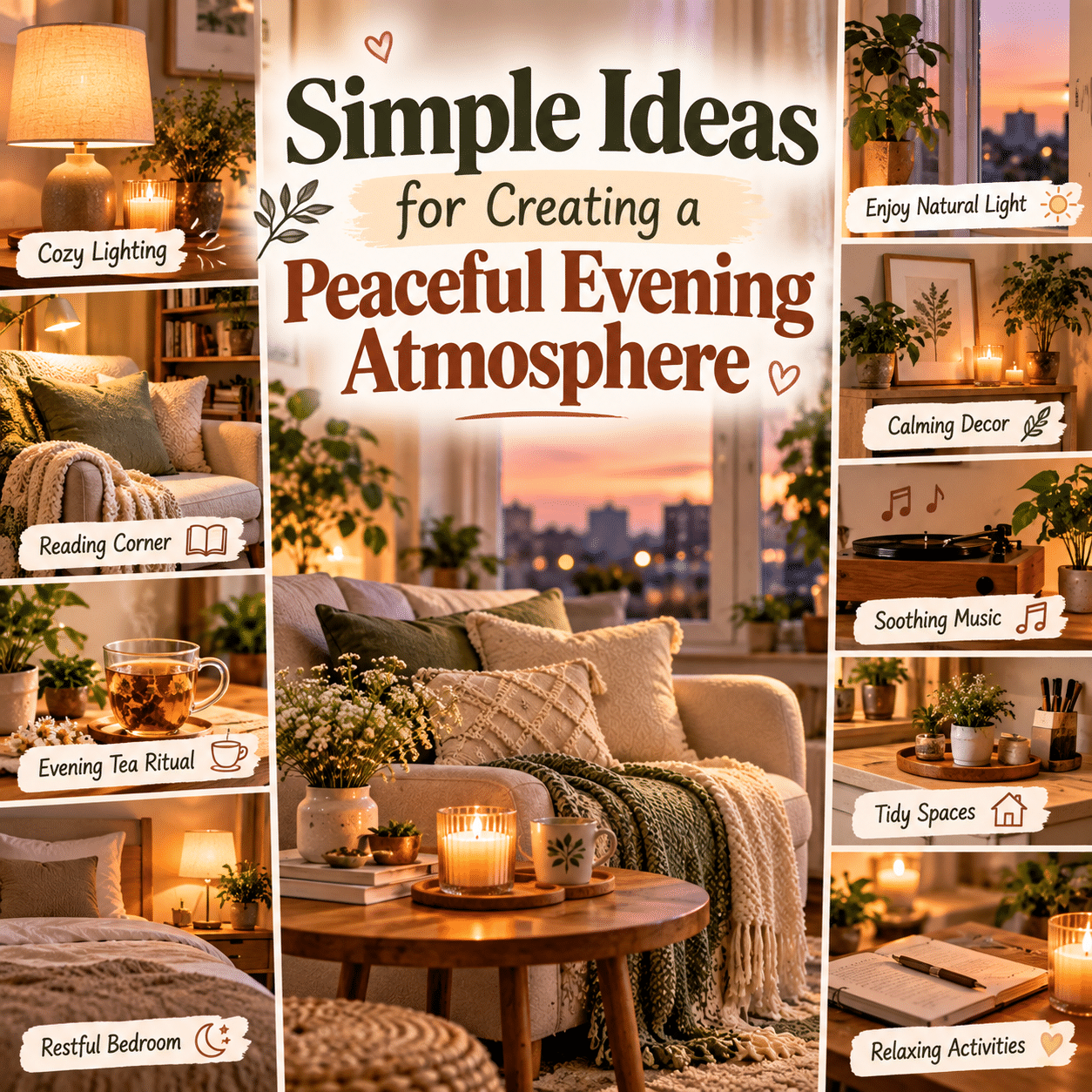
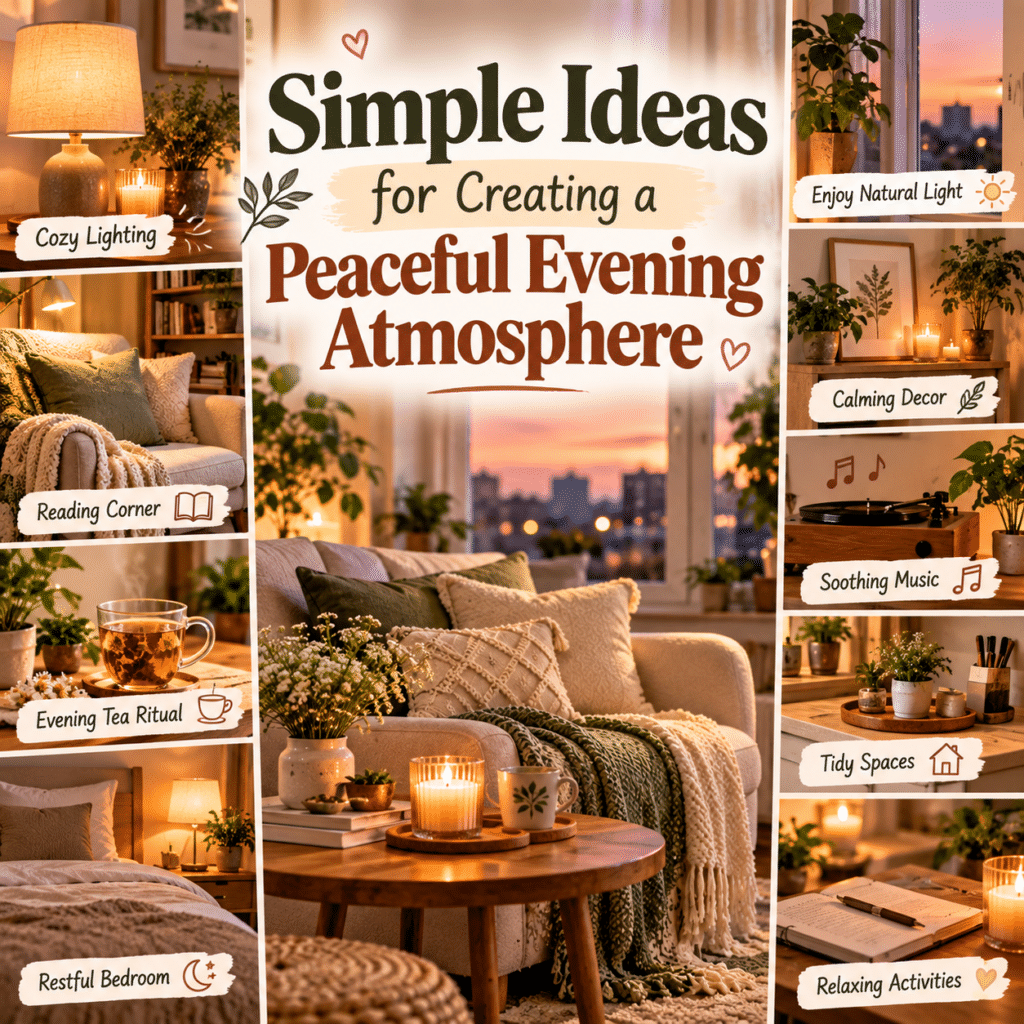
Evenings offer a natural opportunity to shift away from the demands of the day and enjoy a slower, more comfortable pace. After hours of work, household responsibilities, errands, and digital distractions, coming home to a peaceful environment can make ordinary moments feel more enjoyable.
Creating a relaxing evening atmosphere does not require a complete home makeover, expensive decorations, or an elaborate nighttime routine. Often, the most meaningful changes are surprisingly simple: switching on a warm lamp, clearing a cluttered table, preparing a favorite beverage, or settling into a comfortable chair with a good book.
The goal is to create a home environment that feels welcoming, manageable, and personally comforting.
A peaceful evening atmosphere involves more than appearance. Lighting, sound, temperature, texture, organization, and everyday habits all influence how a space feels. When these elements work together, they can help create a gentle transition between daytime activities and nighttime rest.
Whether you live in a compact apartment, a busy family home, or a quiet personal retreat, thoughtful adjustments can make your evenings more pleasant without adding unnecessary complexity.
This guide explores practical ideas for creating a peaceful evening atmosphere, from soft lighting and cozy textiles to calming activities, organized spaces, and simple routines that are easy to maintain throughout the year.
1. Begin with a Gentle Transition from Daytime to Evening
One of the simplest ways to create a peaceful evening atmosphere is to establish a small transition between your daytime responsibilities and your personal time.
When work, household tasks, and entertainment happen in the same space, it can be difficult to recognize when one part of the day has ended.
A simple transition ritual can help create that distinction.
You might:
- Put away work materials.
- Change into comfortable clothing.
- Open a window briefly when outdoor conditions are suitable.
- Turn off bright task lighting.
- Prepare a favorite drink.
- Spend a few minutes tidying your surroundings.
- Choose a relaxing activity for the evening.
The transition does not need to take long.
Even five or ten minutes of intentional preparation can make your home feel more welcoming.
Keep the Ritual Flexible
Some evenings are busier than others.
Rather than following a rigid schedule, choose a few actions that fit naturally into your routine.
A peaceful evening should feel like an opportunity for comfort, not another list of obligations.
2. Replace Harsh Lighting with Warm, Gentle Illumination
Lighting is one of the most influential elements of evening atmosphere.
Bright overhead lights are useful for cleaning, cooking, and detailed tasks, but they may feel unnecessarily intense when you want to relax.
Consider using softer lighting in areas where you spend your evenings.
Options include:
- Warm-toned table lamps.
- Floor lamps with fabric shades.
- Wall sconces.
- Indirect LED strips.
- Dimmable lighting.
- Small decorative lamps.
Warm white light often creates a welcoming residential atmosphere.
Use Different Lighting for Different Activities
A peaceful room does not need to be dark.
Reading, crafting, cooking, and other detailed activities require sufficient illumination.
Try combining soft ambient lighting with adjustable task lighting.
For example, a warm floor lamp can provide general illumination while a focused reading lamp lights your book.
Avoid glare and position lights so they do not shine directly into your eyes.
3. Create Small Pools of Light Around the Room
Instead of relying on one central ceiling fixture, distribute several gentle light sources throughout your space.
This approach creates visual depth and allows different areas to feel more intimate.
A living room might include:
- A table lamp beside the sofa.
- A floor lamp near a reading chair.
- A softly illuminated bookshelf.
- A small accent light on a console table.
Each light source serves a purpose while contributing to the overall atmosphere.
Avoid Overcomplicating the Setup
You do not need lamps in every corner.
Start with one or two additional light sources and evaluate how they change the room.
Choose fixtures with stable bases, suitable bulbs, and appropriate electrical safety features.
4. Make the Most of Natural Evening Light
The transition from daylight to dusk can be one of the most visually pleasant moments of the day.
If your home receives soft evening light, consider arranging your seating to appreciate it.
A chair near a window or a sofa facing an open view can provide a comfortable place to enjoy the changing sky.
Keep window areas reasonably clear so natural light can enter the room.
Adjust Window Coverings as Needed
Lightweight curtains can soften strong sunlight while maintaining an airy appearance.
As darkness falls, close curtains or blinds when privacy becomes important.
Choose window coverings that suit your climate, room orientation, and personal preferences.
5. Choose a Soft and Comfortable Color Palette
Colors contribute to the visual character of a room.
For a peaceful evening atmosphere, consider shades that feel warm, balanced, and easy to live with.
Popular options include:
- Warm white.
- Cream.
- Beige.
- Soft taupe.
- Sage green.
- Dusty blue.
- Muted terracotta.
- Gentle gray.
- Natural wood tones.
You do not need to repaint your walls.
Cushions, blankets, curtains, rugs, and small accessories can introduce a softer palette.
Build a Balanced Combination
Choose one primary neutral color, one complementary shade, and a small accent color.
For example, cream upholstery, sage green cushions, and natural wood furniture can create a cohesive arrangement.
The most important consideration is choosing colors that you personally enjoy.
6. Add Cozy Blankets and Soft Throws
A comfortable throw blanket is one of the easiest ways to make an evening space feel more inviting.
Drape a knitted blanket over a sofa, fold a cotton throw across an armchair, or keep a lightweight blanket in a nearby basket.
Choose materials according to your climate.
Cotton and linen blends may be comfortable during warmer weather, while thicker knits can provide additional warmth in cooler conditions.
Keep Textiles Practical
Select fabrics that are easy to clean and maintain.
Avoid piling too many blankets onto seating areas.
One or two thoughtfully chosen pieces can create warmth without making the room look cluttered.
7. Refresh Your Sofa with Comfortable Cushions
Cushions can improve both the appearance and comfort of a seating area.
Combine a few sizes and textures to create visual interest.
For example:
- Two larger neutral cushions.
- One smaller textured cushion.
- One accent cushion in a muted color.
Arrange them so there is still enough room to sit comfortably.
Choose Support Over Decoration Alone
Decorative cushions should not make seating awkward.
If you spend long periods reading or watching television, consider a cushion that provides suitable back support.
A comfortable sofa arrangement is more valuable than a perfectly symmetrical display.
8. Create a Peaceful Reading Corner
Reading is a simple evening activity that can be enjoyed without an elaborate setup.
Choose a comfortable chair, add a suitable lamp, and keep a few books nearby.
A small side table can hold a drink, reading glasses, or a bookmark.
Make the Corner Easy to Use
Keep your current book within reach.
Avoid placing unnecessary decorations on the table.
If you enjoy reading before bedtime, consider choosing material that feels pleasant rather than overly stimulating.
A dedicated reading corner can become a familiar and welcoming part of your evening routine.
9. Introduce Gentle Background Music
Music can help establish the mood of an evening.
Depending on your preferences, you might enjoy:
- Soft instrumental music.
- Acoustic recordings.
- Piano music.
- Gentle jazz.
- Ambient soundscapes.
- Familiar relaxing albums.
Keep the volume comfortable and considerate of other household members.
Match Music to the Activity
Quiet instrumental music may work well during reading or journaling.
More energetic music may be enjoyable while cooking or tidying.
There is no universally relaxing playlist.
Choose sounds that complement the atmosphere you want to create.
10. Enjoy Natural Soundscapes
Some people prefer environmental sounds to music.
Rainfall, flowing water, rustling leaves, and other nature-inspired recordings can provide a gentle background.
These sounds may be particularly appealing in urban homes where outdoor noise is noticeable.
A small speaker or sound machine can be used if desired.
Keep the Sound Subtle
Background sound should not become another distraction.
Use a comfortable volume and turn it off if silence feels more pleasant.
Avoid assuming that one type of sound will suit everyone.
11. Reduce Unnecessary Household Noise
A peaceful evening atmosphere often benefits from reducing avoidable noise.
Simple adjustments may include:
- Turning off unused televisions.
- Lowering notification volumes.
- Closing doors gently.
- Moving noisy appliances to another time when practical.
- Using rugs or curtains to soften sound reflections.
- Choosing quieter household activities.
Soft furnishings can help reduce some indoor sound reflections, although they do not provide the same sound isolation as specialized construction materials.
Focus on practical changes rather than trying to eliminate every sound.
12. Make Your Home Feel Fresh and Comfortable
Air quality, temperature, and humidity affect how comfortable a room feels.
A pleasant evening environment should have suitable ventilation and avoid excessive heat, cold, or dampness.
When outdoor conditions are appropriate, opening windows briefly may help refresh indoor air.
In other situations, mechanical ventilation or air conditioning may be more practical.
Pay Attention to Humidity
Excess moisture can contribute to musty odors and damage certain materials.
Use appropriate ventilation and address moisture problems rather than simply covering odors with fragrance.
Keep fabrics dry and clean.
A fresh-feeling home begins with good maintenance, not strong scents.
13. Use Home Fragrance Thoughtfully
A subtle fragrance can be a pleasant decorative detail for people who enjoy scented environments.
Options include:
- Lightly scented candles.
- Fragrance sachets.
- Mild room sprays.
- Other home fragrance products used according to instructions.
However, fragrances are optional.
Some people experience headaches, irritation, or discomfort from scented products.
Consider Pets and Household Sensitivities
Certain essential oils and fragrance ingredients may be hazardous to pets.
Always check product guidance and consult reliable veterinary information when needed.
Avoid spraying fragrance near animals, food, or sensitive surfaces.
If anyone in the household is sensitive to fragrance, an unscented environment may be the better choice.
14. Create a Simple Evening Tea Ritual
Preparing a warm beverage can become an enjoyable transition into a quieter evening.
Choose a drink you genuinely like, such as herbal tea, warm milk, or a caffeine-free alternative.
Use a favorite mug and take a few minutes to enjoy the preparation process.
Set Up a Small Beverage Tray
A simple tray might hold:
- A mug.
- A coaster.
- Tea supplies.
- A small spoon.
- A napkin.
Keep the arrangement convenient rather than elaborate.
If caffeine affects your sleep, consider choosing a lower-caffeine or caffeine-free drink later in the day.
Always place hot beverages on stable surfaces away from children, pets, and vulnerable electronics.
15. Create a Cozy Dining Atmosphere
Evening meals can feel more enjoyable when the dining area is thoughtfully arranged.
You do not need a formal table setting.
Start with a clean table and a few simple details.
Consider:
- Neutral placemats.
- Cloth napkins.
- A small vase.
- A warm pendant light.
- Simple dinnerware.
- A modest centerpiece.
Keep the Table Functional
Leave enough room for serving dishes and comfortable dining.
Avoid tall centerpieces that obstruct conversation.
A peaceful dining atmosphere comes from comfort and ease, not complicated decoration.
16. Make the Kitchen Feel Calm After Dinner
A cluttered kitchen can make the entire home feel unfinished at the end of the day.
A short evening reset may help create a more comfortable atmosphere.
Focus on a few essential tasks:
- Put away perishable food.
- Clear frequently used countertops.
- Wash or load dishes.
- Wipe dining surfaces.
- Return cooking tools to their places.
Avoid Turning Tidying into a Major Project
You do not need to deep-clean the kitchen every evening.
A manageable routine is more sustainable than an ambitious checklist.
Choose the tasks that make the greatest difference to your comfort.
17. Introduce a Gentle Evening Decluttering Habit
Visual clutter can make a room feel busy even when it is otherwise beautifully decorated.
Spend a few minutes returning everyday items to their designated places.
Focus on visible surfaces such as:
- Coffee tables.
- Sofa armrests.
- Dining tables.
- Entryway consoles.
- Bedside tables.
Use baskets or trays to organize small objects.
Keep the Process Simple
Avoid creating complicated storage systems that are difficult to maintain.
A few convenient containers may be enough.
The goal is not to achieve a perfectly empty room but to make your surroundings comfortable and functional.
18. Design a Peaceful Bedroom Atmosphere
The bedroom often plays an important role in evening relaxation.
Begin with comfortable bedding and suitable lighting.
Choose fabrics appropriate for your climate and personal preferences.
A peaceful bedroom arrangement may include:
- Clean bedding.
- Supportive pillows.
- A lightweight or warm blanket.
- Soft bedside lighting.
- Organized nightstands.
- Curtains that provide appropriate privacy and light control.
Reduce Unnecessary Distractions
Keep work materials and unrelated household clutter away from the bed when possible.
If your bedroom also serves as a workspace, consider putting work equipment away or visually separating it during the evening.
A simple distinction between work and rest areas can make the room feel more intentional.
19. Make Your Bed an Inviting Place to Unwind
Comfortable bedding contributes to the sensory experience of a bedroom.
Choose sheets and pillowcases that feel pleasant against your skin.
Natural fibers and breathable fabrics may be suitable for warmer environments, while thicker materials can provide additional warmth in cooler seasons.
Focus on Practical Comfort
There is no need to use numerous decorative pillows.
A few functional pillows and a comfortable blanket may be sufficient.
Keep bedding clean and follow fabric care instructions to maintain comfort and durability.
20. Create a Relaxing Bathroom Experience
A bathroom can become a pleasant part of an evening routine with a few thoughtful adjustments.
Start by keeping frequently used surfaces clean and organized.
Add a soft towel, a simple storage tray, and suitable lighting.
If you enjoy a warm shower, allow enough time to make the experience comfortable rather than rushed.
Keep Bathroom Accessories Safe
Use non-slip surfaces where needed.
Avoid placing electrical devices near water.
Follow product instructions for skincare and bathing products.
A spa-inspired atmosphere should remain practical and safe.
21. Add Natural Greenery to Evening Spaces
Plants can introduce soft shapes and natural color into a room.
A small plant on a side table or a taller plant near a window can complement warm evening lighting.
Choose species suited to the available conditions.
Keep Plant Care Manageable
Avoid placing plants in locations that are too dark for their needs.
Protect furniture from moisture and use stable planters.
If you have pets, research plant toxicity before choosing species.
Plants can enhance the decorative character of a room, but a few houseplants should not be relied upon to significantly purify indoor air.
22. Decorate with Natural Materials
Natural textures can make an evening space feel warm and welcoming.
Consider materials such as:
- Wood.
- Rattan.
- Cotton.
- Linen.
- Ceramic.
- Wool.
- Stone-inspired finishes.
A wooden side table, woven basket, and linen cushion can create a balanced combination.
Avoid Excessive Matching
Natural materials often look appealing when combined rather than perfectly matched.
Use a consistent color palette to maintain visual harmony.
Choose durable materials that suit your maintenance preferences.
23. Create a Candlelit Look Without Open Flames
Candles are often associated with cozy evenings, but open flames require careful attention.
For a similar visual effect with fewer fire-related concerns, consider battery-operated LED candles.
These can be placed on shelves, tables, or decorative trays.
Some models offer warm flickering light that resembles a traditional candle.
If Using Real Candles
Place them on stable, heat-resistant surfaces.
Keep them away from curtains, blankets, paper, and other combustible materials.
Never leave burning candles unattended, and follow all manufacturer safety guidance.
LED alternatives may be particularly practical in homes with pets or children.
24. Use Decorative Trays to Create Order
A small tray can turn several everyday objects into one organized arrangement.
Place a tray on a coffee table, sideboard, or bedside table.
It might hold:
- A book.
- A coaster.
- A small ceramic bowl.
- A decorative object.
- A battery-operated candle.
Leave Some Empty Space
Avoid filling the tray completely.
A few well-chosen objects are often more visually appealing than a crowded collection.
Choose a tray that fits the furniture surface and remains stable during everyday use.
25. Create a Quiet Journaling Routine
Journaling can be an enjoyable way to reflect on the day.
Keep a notebook and pen in a convenient location.
You might write about:
- A pleasant moment from the day.
- Something you learned.
- An idea you want to remember.
- A personal goal.
- An activity you would like to enjoy tomorrow.
Keep Journaling Pressure-Free
You do not need to write several pages or follow a strict format.
A short paragraph or a few notes may be enough.
If journaling feels unhelpful on a particular evening, choose another activity.
The purpose is personal enjoyment and reflection rather than completing a daily assignment.
26. Try a Gentle Evening Reading Habit
Reading can provide a pleasant alternative to screen-based entertainment.
Choose a book that suits your interests and mood.
Keep it near a comfortable chair or bedside table.
A dedicated reading light can make the experience easier on your eyes.
Choose Enjoyable Material
You may prefer fiction, poetry, travel writing, essays, or another genre.
There is no requirement to read educational or productivity-focused books during personal relaxation time.
Enjoyment is a perfectly valid reason to read.
27. Make Time for Creative Evening Activities
Creative hobbies can add variety to an evening routine.
Consider activities such as:
- Sketching.
- Coloring.
- Knitting.
- Crocheting.
- Scrapbooking.
- Simple paper crafts.
- Creative writing.
- Hand lettering.
Choose activities that do not require excessive preparation or cleanup.
Prepare a Portable Hobby Kit
Store frequently used supplies in a small box or basket.
This allows you to begin an activity without searching for materials.
Use appropriate lighting and follow safety instructions for tools and supplies.
28. Create a Comfortable Screen-Free Corner
Many evening routines involve televisions, smartphones, or computers.
If you would like occasional breaks from screens, designate a comfortable area for offline activities.
A chair, lamp, and small bookshelf may be sufficient.
Keep a journal, puzzle book, or creative project nearby.
Make Screen-Free Time Optional
Technology can also support enjoyable activities such as audiobooks, music, or connecting with loved ones.
The goal is to make your screen use intentional.
Choose a balance that works for your lifestyle.
29. Organize Digital Distractions Before Bed
Notifications can interrupt otherwise peaceful evenings.
Consider adjusting your devices to reduce unnecessary interruptions.
Options may include:
- Using Do Not Disturb settings.
- Silencing nonessential notifications.
- Charging devices away from your relaxation area.
- Setting boundaries for work-related messages.
- Choosing specific times to check social media.
Keep Important Communication Available
If you need to remain reachable for family, work, or emergencies, configure appropriate exceptions.
A peaceful routine should support your responsibilities rather than create additional stress.
30. Create a Small Evening Reflection Space
A reflection corner does not need to be separate from your reading or journaling area.
Use a comfortable chair with gentle lighting and minimal distractions.
Spend a few minutes considering the day.
You might reflect on what you enjoyed, what felt challenging, and what you would like to approach differently.
Avoid Overanalyzing
Reflection should not become an extended review of every mistake or unfinished task.
If detailed planning makes you feel more alert, move it to an earlier part of the evening.
Choose a practice that feels constructive and manageable.
31. Make the Entryway Feel Welcoming
The entrance to your home can influence your first impression when returning after a busy day.
A tidy entryway creates a pleasant transition into your personal space.
Consider:
- A small shoe rack.
- A tray for keys.
- Wall hooks for bags.
- A simple mirror.
- A compact lamp.
- A decorative plant where appropriate.
Keep Walkways Clear
Avoid placing baskets, shoes, or decorative items where they obstruct movement.
A welcoming entryway should be easy to navigate and maintain.
32. Create a Cozy Balcony Evening Retreat
A covered balcony or sheltered outdoor area can become a lovely place to enjoy the evening.
Choose seating designed for outdoor conditions.
Add a small table, suitable lighting, and weather-resistant cushions.
A few plants may create a pleasant natural backdrop.
Consider Climate and Safety
Outdoor spaces require attention to rain, wind, humidity, and temperature.
Use lighting and electrical equipment rated for the intended environment.
Keep furniture stable and avoid placing objects where they could fall from elevated areas.
Follow building rules and balcony load restrictions.
33. Use Seasonal Details to Refresh the Atmosphere
A peaceful evening environment can change subtly throughout the year.
You do not need to redesign your home each season.
Small adjustments may be enough.
| Season or Condition | Simple Atmosphere Ideas |
|---|---|
| Warm weather | Breathable throws, light fabrics, comfortable airflow |
| Cooler weather | Knitted blankets, warmer textiles, cozy lighting |
| Rainy evenings | Soft lamps, dry textiles, comfortable indoor seating |
| Humid conditions | Moisture management, ventilation, uncluttered surfaces |
| Festive periods | Subtle decorations, warm accent lighting, simple centerpieces |
| Everyday evenings | Neutral textiles, organized surfaces, flexible lighting |
Choose changes that improve comfort rather than creating unnecessary storage or maintenance demands.
34. Create a Peaceful Evening Atmosphere in a Small Apartment
Compact homes can feel especially cozy when space is used intentionally.
Choose multipurpose furniture and avoid oversized accessories.
Practical ideas include:
- A compact floor lamp.
- A small nesting table.
- Wall-mounted shelving.
- A storage ottoman.
- A lightweight throw.
- A narrow decorative tray.
- A portable reading light.
Focus on One Main Relaxation Area
Instead of decorating every corner, create one particularly comfortable place.
This might be your sofa, a reading chair, or a small bedroom nook.
A focused arrangement can make a compact home feel welcoming without overcrowding it.
35. Keep Your Evening Atmosphere Simple and Sustainable
A peaceful home should be comfortable to maintain over time.
Avoid creating routines that depend on constant shopping, complicated decoration, or lengthy preparation.
Choose durable furniture, washable fabrics, and lighting that suits your needs.
Reuse existing accessories whenever practical.
Let Your Space Evolve Naturally
Your evening preferences may change with work schedules, family responsibilities, seasons, or personal interests.
Adjust the environment as needed.
A peaceful atmosphere is not a fixed decorating style.
It is a practical combination of comfort, personal preference, and everyday habits.
How to Create a Peaceful Evening Atmosphere Step by Step
If you want to make your evenings more comfortable without changing your entire home, begin with this straightforward process.
Step 1: Choose Your Main Evening Relaxation Area
Identify where you spend most of your personal time after daily responsibilities are finished.
It might be the living room, bedroom, reading corner, or balcony.
Focus on improving this area first.
Step 2: Remove Unnecessary Clutter
Clear the most visible surfaces.
Return everyday objects to their designated storage locations.
Avoid attempting a complete home organization project in one evening.
Step 3: Adjust the Lighting
Turn off unnecessarily bright overhead lights when appropriate.
Switch on a warm lamp or another gentle light source.
Ensure that reading and other detailed activities remain adequately illuminated.
Step 4: Improve Seating Comfort
Arrange cushions and blankets.
Check whether your seating provides suitable support.
Move small furniture pieces if doing so improves convenience and movement.
Step 5: Check Temperature and Ventilation
Make sure the room feels comfortable.
Adjust fans, air conditioning, windows, or other ventilation systems as appropriate.
Address excessive humidity or unpleasant odors at their source.
Step 6: Introduce One Pleasant Sensory Detail
Choose something you enjoy.
This might be quiet music, a warm beverage, a soft blanket, or a favorite decorative object.
Avoid adding too many elements at once.
Step 7: Prepare a Simple Relaxing Activity
Place a book, journal, puzzle, or hobby project within reach.
Choose an activity that fits your energy level.
Step 8: Reduce Avoidable Interruptions
Silence nonessential notifications and put away unnecessary work materials.
Maintain access to important communication when needed.
Step 9: Enjoy the Space Without a Strict Schedule
Spend time using your evening environment.
There is no requirement to follow a perfectly timed routine.
Step 10: Adjust Based on Experience
Notice what makes the space more comfortable and what feels unnecessary.
Keep the elements you enjoy and simplify anything that creates extra work.
Peaceful Evening Atmosphere Ideas for Different Rooms
Different areas of the home benefit from different approaches.
| Room or Area | Atmosphere Ideas | Practical Priority |
|---|---|---|
| Living room | Warm lamps, cushions, throws, gentle music | Comfortable seating and lighting |
| Bedroom | Soft bedding, bedside lamps, organized surfaces | Restful environment and temperature |
| Dining room | Simple table setting, warm pendant light | Comfortable meals and easy cleanup |
| Kitchen | Clear countertops, organized essentials | Practical evening reset |
| Bathroom | Clean towels, soft lighting, tidy storage | Safety and everyday comfort |
| Reading nook | Supportive chair, books, adjustable lamp | Adequate task lighting |
| Home office | Put away work items, switch to softer lighting | Separation between work and personal time |
| Balcony | Outdoor seating, weather-safe lights, plants | Weather protection and safety |
| Small apartment | Multipurpose furniture, compact lighting | Efficient use of space |
These ideas can be adapted to your home’s layout, climate, and existing furniture.
Simple Evening Routines for Different Lifestyles
A peaceful atmosphere becomes easier to maintain when it supports the way you actually live.
For Busy Professionals
Keep your routine short and predictable.
After finishing work, put away your equipment, change the lighting, and spend a few minutes in a comfortable seating area.
Choose one enjoyable activity rather than planning an elaborate evening.
For Families with Children
Focus on practical comfort and shared routines.
Soft lighting, organized play materials, and a comfortable family seating area can create a welcoming environment.
Keep decorations safe and avoid fragile or hazardous accessories within children’s reach.
For People Living Alone
Use the flexibility of your space to create an atmosphere that reflects your preferences.
You might enjoy a quiet reading session, cooking a favorite meal, listening to music, or spending time on a creative hobby.
Personal comfort matters more than following a conventional evening routine.
For Small-Space Living
Choose one main relaxation zone and use multipurpose furniture.
A single comfortable chair with a lamp and blanket can establish a peaceful retreat.
Keep storage simple and avoid adding unnecessary accessories.
For People with Irregular Schedules
A peaceful evening does not need to begin at a specific clock time.
Create a flexible wind-down routine that works whenever your responsibilities allow.
The same principles of comfortable lighting, manageable clutter, and enjoyable activities can apply at different times.
A Practical 15-Minute Evening Reset
You do not need an hour to prepare your home for relaxation.
This short routine can help create a more welcoming atmosphere.
| Time | Activity | Purpose |
|---|---|---|
| Minutes 1–3 | Clear the main table and put away clutter | Reduce visual distractions |
| Minutes 4–5 | Adjust lighting and window coverings | Create comfortable illumination |
| Minutes 6–8 | Arrange cushions and blankets | Improve seating comfort |
| Minutes 9–10 | Check temperature and ventilation | Make the room physically comfortable |
| Minutes 11–12 | Prepare a favorite beverage | Introduce a pleasant personal ritual |
| Minutes 13–15 | Choose a book, music, or quiet activity | Transition into relaxation |
Treat this as a flexible example rather than a strict requirement.
If you only have a few minutes, focus on the changes that make the biggest difference.
Checklist for a Peaceful Evening Atmosphere
Use this checklist to identify simple improvements that fit your home.
Lighting and Visual Comfort
- Bright overhead lighting is reduced when appropriate.
- Warm or gentle lighting is available.
- Reading and task areas remain adequately illuminated.
- Window coverings provide suitable privacy.
- Lighting does not create uncomfortable glare.
Physical Comfort
- Seating is supportive and comfortable.
- Cushions and blankets are easy to access.
- Room temperature feels pleasant.
- Ventilation is appropriate.
- Fabrics are clean and dry.
Organization
- Main surfaces are reasonably tidy.
- Frequently used items have designated storage.
- Work materials are put away when possible.
- Walkways remain clear.
- The room is easy to maintain.
Relaxation Activities
- A favorite book, journal, or hobby is available.
- Background sound is comfortable.
- Nonessential notifications are managed.
- Evening activities fit personal preferences.
- The routine feels flexible rather than demanding.
Household Safety
- Lamps and electrical accessories are used appropriately.
- Candles are never left burning unattended.
- Hot beverages are placed securely.
- Fragrances are suitable for household members and pets.
- Furniture and decorative items are stable.
A peaceful evening environment does not require every box to be checked.
Use the checklist as a guide for practical improvements rather than a standard of perfection.
Frequently Asked Questions About Creating a Peaceful Evening Atmosphere
1. What makes a home feel peaceful in the evening?
A peaceful evening atmosphere usually combines comfortable lighting, manageable clutter, pleasant temperatures, supportive seating, and activities that feel enjoyable.
Personal preferences play an important role.
Some people prefer silence and minimal decoration, while others enjoy soft music and layered textiles.
2. How can I make my living room feel cozy at night?
Start by using warm lamps instead of relying entirely on bright overhead lighting.
Add a comfortable throw, arrange cushions, and clear unnecessary items from the coffee table.
A favorite book or gentle background music can complete the atmosphere.
3. What type of lighting is best for a relaxing evening?
Warm-toned, adjustable lighting is a popular choice for creating a welcoming atmosphere.
However, the ideal setup depends on the activity.
Use sufficient task lighting for reading, cooking, and detailed hobbies.
4. Can I create a peaceful evening atmosphere on a budget?
Yes.
Rearranging furniture, using existing lamps, washing blankets, and clearing clutter can make a noticeable visual difference.
You do not need to purchase expensive decorations.
5. What colors are suitable for a calming evening environment?
Cream, beige, sage green, soft blue, taupe, and muted earthy tones are common choices.
However, color preferences are personal.
Choose shades that feel comfortable to you and complement your existing home.
6. How can I make a small apartment feel peaceful at night?
Focus on one main relaxation area.
Use compact lighting, comfortable textiles, and simple storage.
Avoid overcrowding the room with decorative accessories.
A small, organized space can feel inviting without extensive furniture.
7. Are candles necessary for a cozy evening?
No.
Table lamps, floor lamps, and battery-operated LED candles can create gentle lighting without open flames.
Choose the option that best suits your household and safety needs.
8. Does background music help create a peaceful atmosphere?
Many people enjoy soft background music during evening activities.
However, preferences vary.
Some people find silence more comfortable.
Choose a sound level and music style that feels pleasant rather than distracting.
9. How can I reduce evening clutter without spending too much time cleaning?
Focus on a few visible surfaces.
Put away loose items, clear the main table, and return everyday objects to their designated places.
A short, consistent routine is often easier to maintain than occasional intensive cleaning.
10. What are some relaxing activities to enjoy in the evening?
Popular options include reading, journaling, listening to music, drawing, knitting, enjoying a warm beverage, or spending quiet time with loved ones.
Choose activities that suit your interests and energy level.
11. Should I avoid screens completely during the evening?
Not necessarily.
Screens can support enjoyable activities, including films, music, audiobooks, and communication.
If screen use interferes with your preferred routine or sleep, consider adjusting timing, brightness, or notification settings.
12. How can I make my bedroom feel more peaceful?
Choose comfortable bedding, reduce unnecessary clutter, use suitable bedside lighting, and maintain a pleasant temperature.
Window coverings that manage privacy and unwanted light may also be helpful.
13. Can plants improve the atmosphere of an evening room?
Plants can add natural color, texture, and decorative interest.
Choose species suited to your home’s conditions and household safety needs.
They should not be treated as a replacement for appropriate ventilation or indoor air-quality management.
14. How long does it take to create a peaceful evening routine?
There is no required duration.
A few minutes of tidying, adjusting lighting, and preparing a comfortable activity may be enough.
The most useful routine is one that fits naturally into your lifestyle.
Final Thoughts: Make Every Evening Feel a Little More Comfortable
Creating a peaceful evening atmosphere is not about achieving a perfectly decorated home or following an elaborate routine.
It is about making thoughtful choices that support comfort, simplicity, and personal enjoyment.
Soft lighting, cozy textiles, organized surfaces, comfortable seating, and gentle background sounds can transform the feeling of an ordinary room.
Equally important are the small habits that help you transition away from daily responsibilities.
Putting away work materials, preparing a favorite beverage, reading a few pages, or enjoying a quiet creative activity can make evenings feel more intentional.
You do not need to change everything at once.
Begin with one area of your home and choose a few improvements that fit your budget, schedule, and preferences.
Over time, adjust the environment as your routines and needs evolve.
A peaceful home is not necessarily silent, minimalist, or perfectly organized. It is a place where you feel comfortable being yourself and enjoying the moments that matter to you.
Sometimes, the most beautiful evening atmosphere begins with a warm light, a comfortable place to sit, and the simple pleasure of slowing down.