Indoor plants bring a refreshing sense of nature into everyday living spaces. From a small potted plant on a windowsill to an elegant collection of greenery in a living room corner, plants can add color, texture, and personality to almost any interior.
One of the most appealing aspects of decorating with indoor plants is their versatility. They can complement minimalist apartments, cozy family homes, contemporary interiors, and traditional spaces. Their natural shapes soften furniture arrangements, create visual interest, and introduce an organic element that works beautifully with wood, ceramic, stone, and textiles.
However, creating an attractive indoor plant display involves more than placing greenery wherever there is empty space.
Different rooms offer different lighting conditions, temperatures, humidity levels, and practical considerations. A plant that thrives beside a bright living room window may struggle in a dim hallway. A beautiful trailing plant might look perfect on a bookshelf but require careful placement in a home with curious pets or young children.
Thoughtful plant styling balances appearance with the needs of living plants.
The best displays consider plant health, available space, furniture arrangements, and the atmosphere you want to create. They also make watering, cleaning, and regular maintenance convenient.
Whether you have a large collection of houseplants or are beginning with just one or two, there are countless creative ways to incorporate greenery into your home.
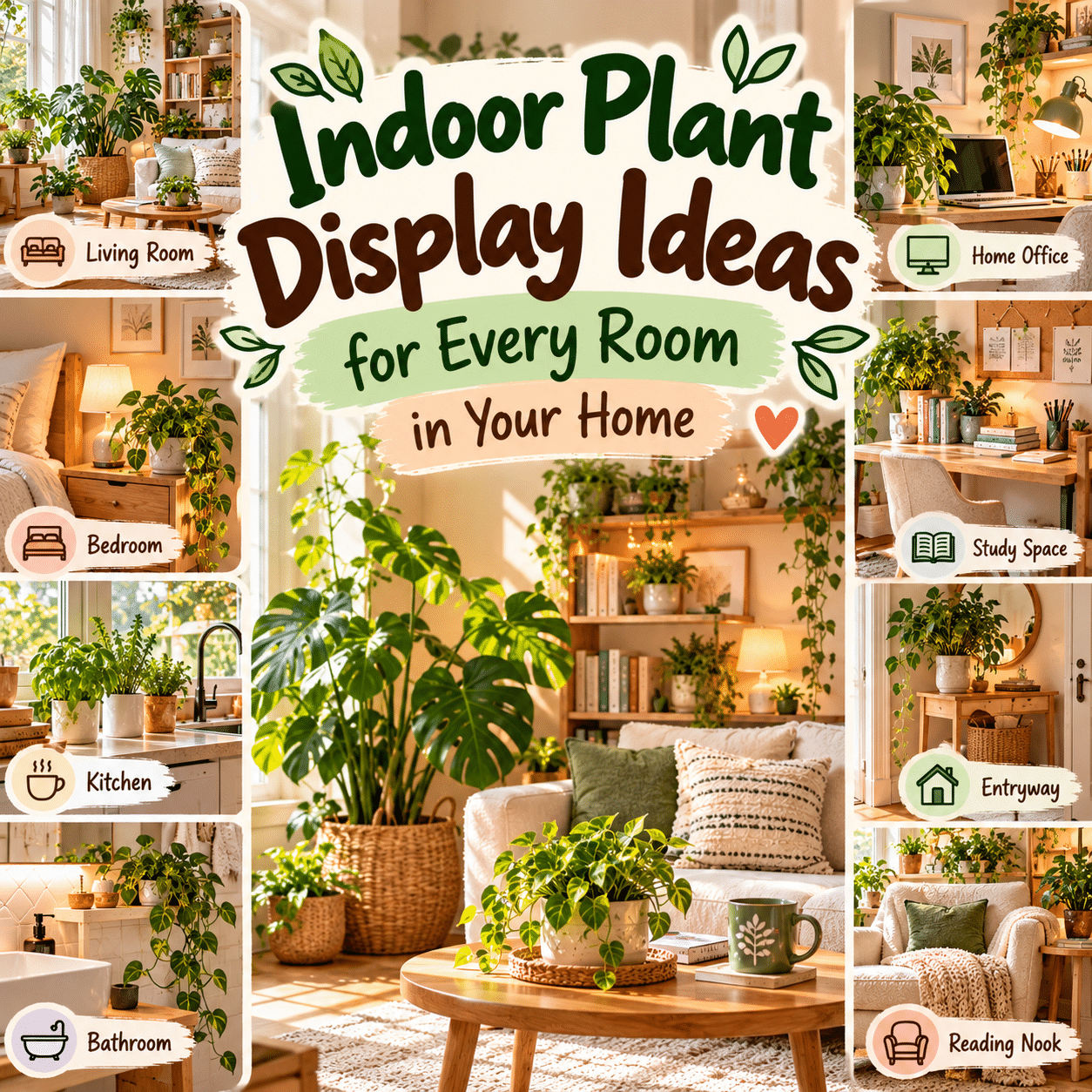
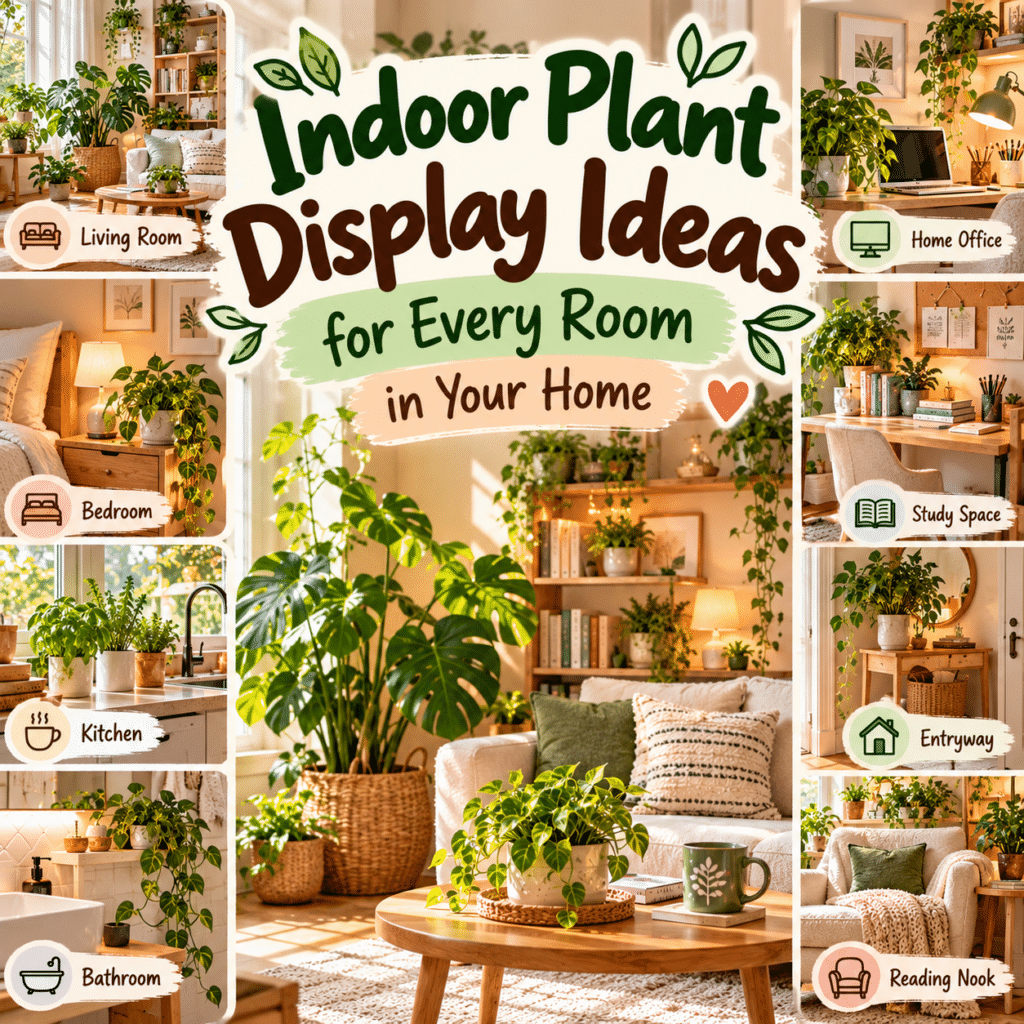
This guide explores indoor plant display ideas for living rooms, bedrooms, kitchens, bathrooms, home offices, entryways, and other spaces. It also covers plant stands, shelves, hanging arrangements, decorative containers, and practical styling techniques to help you create beautiful greenery displays that can evolve with your home.
1. Start With the Right Plants for Your Home
Before planning an indoor plant display, consider the growing conditions available in your home.
A beautiful arrangement will be easier to maintain when the plants are suited to their surroundings.
Understand Your Natural Light
Indoor lighting varies significantly from room to room.
A large unobstructed window may provide bright light for much of the day, while a narrow hallway may receive very little natural illumination.
Common indoor light conditions include:
- Bright direct light: Sunlight reaches the plant directly for part of the day.
- Bright indirect light: The area is well illuminated without prolonged direct sun exposure.
- Medium indirect light: Natural light is available but less intense.
- Low light: The room receives limited natural illumination.
These descriptions are general. Actual conditions depend on window direction, nearby buildings, seasonal changes, and distance from the window.
Some houseplants tolerate lower light better than others, but low-light tolerance does not mean a plant can grow indefinitely in complete darkness.
Consider Temperature and Humidity
Indoor temperatures and humidity levels can influence plant health.
Air-conditioning, heating, ventilation, and seasonal changes may create different conditions throughout the home.
Choose plants suited to the environment rather than assuming every variety will thrive in every room.
Think About Maintenance
Some plants require frequent attention, while others tolerate less frequent watering.
Consider how much time you realistically want to spend caring for your collection.
Check Household Safety
Some common houseplants are toxic to cats, dogs, or people if ingested.
Before introducing a new plant, verify its safety for your household.
Place plants, fertilizers, and gardening supplies where children and pets cannot access potentially harmful materials.
2. Create a Statement Plant Display in the Living Room
The living room is often one of the best places to feature indoor plants because it typically offers opportunities for larger decorative arrangements.
A well-positioned plant can become a natural focal point without requiring additional furniture or artwork.
Choose One Statement Plant
A large plant can anchor an otherwise empty corner.
Depending on the room’s conditions and available space, options may include suitable indoor palms, rubber plants, or other upright foliage plants.
Choose a mature size appropriate for the room.
A plant that looks compact when purchased may eventually need considerably more space.
Position Plants Beside Furniture
A floor plant can soften the straight lines of a sofa, cabinet, or bookshelf.
For example, placing a tall plant beside a reading chair can create a welcoming corner.
Avoid blocking walkways or placing unstable containers where they may be knocked over.
Use Plants to Balance the Room
If one side of the living room contains visually heavy furniture, a plant arrangement on the opposite side may create a more balanced composition.
The display does not need to be perfectly symmetrical.
Natural variation often adds character.
Combine Different Heights
Try arranging a tall floor plant with a medium-sized plant on a stand and a smaller plant on a nearby shelf.
This creates visual layers without requiring a large collection.
Leave Room for Growth
Avoid positioning plants too close to walls, curtains, or furniture.
Allow enough space for leaves to expand and for you to rotate, clean, and care for the plants.
3. Style Indoor Plants on Living Room Shelves
Shelves provide an excellent opportunity to combine plants with books, photographs, and decorative accessories.
They are particularly useful when floor space is limited.
Add Small Plants Between Books
A compact plant can break up long rows of books and introduce organic shapes.
Choose a stable container and protect shelves from moisture.
Use Trailing Plants
Trailing varieties can create graceful lines along the edge of a shelf.
Their stems may soften the appearance of rectangular furniture.
Make sure trailing foliage does not interfere with doors, electronics, or nearby objects.
Create a Balanced Arrangement
Avoid placing identical plants at evenly spaced intervals unless you specifically want a symmetrical look.
A mix of plants, books, and decorative objects can feel more natural.
Consider Shelf Strength
Plant containers can become heavy, especially after watering.
Check the shelf’s load capacity and installation.
Keep Plants Accessible
A plant placed on a high shelf may look attractive but become difficult to water or inspect.
Choose locations that allow practical maintenance.
4. Design a Cozy Plant Corner
A dedicated plant corner can become one of the most inviting features in a home.
It brings several plants together into a coordinated display.
Begin With a Focal Plant
Choose one plant with a distinctive shape or size.
This establishes the visual center of the arrangement.
Add Supporting Plants
Place smaller plants around the focal plant.
Choose varieties with complementary foliage and compatible growing conditions.
Use Different Elevations
Plant stands, low stools, and suitable shelves can help create a layered composition.
Ensure every support is stable and designed to hold the container’s weight.
Introduce Natural Materials
Wooden stands, ceramic planters, and woven-look decorative containers can complement greenery.
Use waterproof liners or inner pots where necessary to protect furniture and flooring.
Keep the Arrangement Manageable
Avoid filling every available space.
Plants need appropriate light, airflow, and access for maintenance.
5. Add Indoor Plants to Your Bedroom
Plants can introduce a gentle natural element into bedroom decor.
A carefully selected display may make the room feel more welcoming and personal.
Place a Small Plant on a Dresser
A compact plant can complement a dresser, provided the surface receives suitable light.
Choose a stable container with appropriate drainage.
Create a Window-Side Arrangement
A bedroom window may provide a useful location for plants that match its light conditions.
Use a narrow plant stand or suitable windowsill if space allows.
Style a Bedside Table
A small plant can add color to a bedside arrangement.
However, keep the table practical for lamps, books, and other essentials.
Choose a Calm Display Style
A few plants in coordinated containers may suit a peaceful bedroom atmosphere.
Soft green foliage can complement neutral bedding and natural wood furniture.
Avoid Overcrowding
Bedrooms need clear circulation paths and comfortable access to furniture.
Keep large plants away from doors, wardrobes, and frequently used walkways.
Consider Realistic Benefits
Plants can contribute to the visual appeal of a bedroom, but ordinary numbers of houseplants should not be relied upon to purify indoor air or significantly improve air quality.
Appropriate ventilation and established indoor air-quality practices remain important.
6. Create a Beautiful Kitchen Plant Display
Kitchens offer opportunities to combine greenery with everyday functionality.
Plants can soften cabinets, complement natural materials, and add visual interest to countertops.
Use a Bright Kitchen Windowsill
A windowsill may be suitable for small plants or culinary herbs when the light conditions are appropriate.
Choose containers that fit securely.
Create a Small Herb Display
Herbs such as basil, mint, parsley, and rosemary can be attractive and useful, but they have different growing requirements.
Many culinary herbs need substantial light.
Check each plant’s needs before placing it indoors.
Add Greenery to Open Shelves
Small plants can complement dishes, jars, and decorative containers.
Keep foliage away from cooking surfaces and food preparation areas.
Use a Compact Plant Stand
A narrow stand may fit into an unused kitchen corner.
Choose materials that tolerate the surrounding conditions.
Avoid Heat and Grease
Do not place plants directly beside stovetops, ovens, or other sources of intense heat.
Cooking grease and frequent temperature changes may also affect foliage.
Keep Food Safety in Mind
Avoid allowing potting mix, fertilizers, or plant drainage water to contaminate food preparation surfaces.
Wash hands after handling soil or gardening products.
7. Style Plants Above Kitchen Cabinets
The space above kitchen cabinets may seem like an attractive place for greenery.
However, it requires careful consideration.
Choose Suitable Plants
Only use living plants if the location provides enough light and allows safe maintenance.
High cabinet areas are often darker and warmer than expected.
Consider Trailing Foliage
Trailing plants can create a soft decorative effect.
Make sure foliage remains clear of heat sources and ventilation equipment.
Protect Cabinet Surfaces
Use suitable waterproof protection beneath containers.
Avoid allowing water to collect on cabinet materials.
Plan for Watering
High displays can be difficult to maintain safely.
Do not climb onto unstable furniture to reach plants.
Consider Artificial Alternatives
Where light and access are inadequate, high-quality artificial greenery may provide a similar decorative appearance with fewer practical challenges.
8. Introduce Plants Into the Bathroom
Bathrooms can be attractive places for greenery, particularly when they receive natural light.
However, humidity alone does not guarantee suitable growing conditions.
Evaluate the Available Light
A bathroom with a window may support plants suited to its conditions.
A windowless bathroom generally requires appropriate artificial grow lighting for living plants.
Choose Plants for the Environment
Some tropical foliage plants appreciate relatively humid conditions.
However, every variety has its own light, temperature, and watering requirements.
Use a Small Shelf Display
A compact shelf can hold a few plants without occupying counter space.
Choose moisture-resistant materials.
Add a Plant Near the Vanity
A small plant may soften the appearance of mirrors, tiles, and bathroom fixtures.
Keep it away from frequently splashed areas unless the container and plant are suitable.
Consider Hanging Plants
A hanging planter can make use of vertical space.
Install it securely and avoid placing it where it interferes with movement.
Maintain Ventilation
Bathrooms need appropriate ventilation to manage excess moisture.
Plants should not obstruct exhaust fans or airflow.
9. Decorate Your Home Office With Plants
A home office can benefit visually from greenery, particularly when the room contains computers, monitors, and other equipment.
Plants introduce organic shapes that contrast with technology and straight-edged furniture.
Add a Small Desk Plant
A compact plant can provide a natural accent without consuming much working space.
Place it where it will not interfere with the keyboard, mouse, or monitor.
Use a Floor Plant Beside the Desk
A taller plant can soften the appearance of office furniture.
Choose a location that does not obstruct chair movement.
Create a Plant Shelf
A small shelf can hold several plants while preserving desk space.
Ensure the shelf receives suitable light.
Combine Greenery With Natural Materials
Wooden furniture, cork accessories, and neutral containers can complement plant displays.
Protect Electronics
Keep water, drainage trays, and unstable planters away from electrical equipment.
Avoid Excessive Visual Clutter
A home office does not need a large plant collection.
One or two well-positioned plants may be enough to create a welcoming atmosphere.
10. Add Plants to a Study Space
Plants can contribute to the visual character of a study area.
A simple arrangement may make the space feel more inviting without interfering with learning activities.
Choose Compact Plants
Small plants are often easier to incorporate into study desks.
Keep the Main Surface Clear
Position plants toward the edge of the desk or on a nearby shelf.
Preserve enough room for books, notebooks, and equipment.
Use Coordinated Planters
A consistent color palette can help the display feel organized.
Create a Nature-Inspired Study Corner
Combine a plant with botanical artwork and natural wood accessories.
Prioritize Practical Maintenance
Choose plants that match the available light and your care routine.
Avoid varieties that require frequent attention during busy study periods.
11. Welcome Guests With Entryway Plants
An entryway creates the first impression of a home.
A plant can make this transitional space feel welcoming.
Place a Plant Beside a Console Table
A medium-sized plant may complement a narrow entryway table.
Add a Small Plant to a Shelf
A compact planter can sit beside a decorative bowl or framed photograph.
Use a Tall Plant in a Spacious Entryway
A large plant can provide a focal point when there is enough room.
Keep Walkways Clear
Entryways often have limited circulation space.
Avoid plants with containers or leaves that obstruct doors and movement.
Consider Light Availability
Many entryways receive limited natural light.
Choose plants based on actual conditions rather than appearance alone.
12. Create Greenery Displays in Hallways
Hallways can benefit from decorative greenery, but they often present lighting and space limitations.
Use Narrow Plant Stands
A slim stand may fit against a wall in a sufficiently wide hallway.
Consider Wall-Mounted Planters
Wall-mounted containers can preserve floor space.
Install them securely and ensure they do not create hazards.
Add Plants Near Windows
If the hallway has natural light, place suitable plants nearby.
Avoid Dark Locations Without Supplemental Light
Living plants need sufficient light for sustained growth.
Artificial greenery or properly designed grow lighting may be more appropriate for very dark hallways.
Maintain Safe Clearance
Keep plants away from stairs, emergency exits, and narrow passages.
13. Display Plants on Floating Shelves
Floating shelves create opportunities for vertical plant styling.
They can be particularly useful in apartments and small rooms.
Choose an Appropriate Wall
Consider light exposure, wall construction, and access.
Mix Plant Shapes
Combine upright, rounded, and trailing foliage for visual variety.
Use Complementary Containers
Planters in related colors or materials can make the display feel cohesive.
Leave Space Between Plants
Avoid crowding leaves against walls or neighboring containers.
Check Load Limits
Water, soil, and ceramic containers can make a plant display surprisingly heavy.
Use appropriate mounting hardware.
Protect the Wall
Prevent water from dripping onto painted or finished surfaces.
14. Create a Hanging Plant Display
Hanging plants introduce greenery at different heights and can preserve valuable floor space.
Hang Plants Near Suitable Windows
Choose locations with appropriate light.
Avoid direct sunlight for plants that require filtered conditions.
Use Ceiling Hooks Correctly
Ceiling-mounted planters require suitable structural support and hardware.
Do not attach heavy planters to unsupported ceiling materials.
Try Wall-Mounted Hanging Planters
Wall brackets can provide an alternative to ceiling hooks.
Check weight limits and installation requirements.
Create a Layered Arrangement
Different hanging heights can add visual interest.
Avoid positioning planters where people may walk into them.
Keep Watering Practical
Choose arrangements that allow safe removal or watering.
Protect floors and furniture from drainage.
15. Explore Decorative Plant Stand Ideas
Plant stands can elevate greenery and help create attractive arrangements.
They also provide flexibility when arranging plants of different sizes.
Wooden Plant Stands
Wooden stands complement natural and Scandinavian-inspired interiors.
Choose finishes suited to the surrounding moisture conditions.
Metal Plant Stands
Metal stands can work well in contemporary or industrial-inspired spaces.
Check stability and corrosion resistance.
Tiered Plant Stands
Tiered designs can hold several plants in a compact footprint.
Arrange plants so each receives suitable light.
Minimalist Plant Stands
Simple stands can make the foliage itself the focal point.
Decorative Pedestals
A stable pedestal may highlight a special plant.
Avoid placing heavy containers on narrow or unstable supports.
Choose the Right Height
Plant stands should complement nearby furniture without obstructing views or movement.
16. Mix and Match Decorative Planters
Planters are an important part of indoor plant styling.
Their colors, shapes, and materials influence the overall appearance of a display.
Ceramic Planters
Ceramic containers come in many finishes and colors.
Some include drainage holes, while others are decorative outer pots.
Terracotta Pots
Terracotta offers a warm, natural appearance.
Its porous material can influence how quickly potting mix dries.
Concrete-Look Planters
Concrete and concrete-look containers can complement modern interiors.
Check weight and surface protection requirements.
Woven Baskets
Decorative baskets can add texture.
Use a suitable inner container and waterproof protection.
Glass Containers
Glass can create interesting decorative displays, but not every plant is suited to growing in water or a container without drainage.
Coordinate Without Matching Everything
A collection of planters can feel cohesive when they share a color family, material, or general design style.
Identical containers are not necessary.
17. Create Visual Interest With Different Plant Heights
Height variation is one of the simplest ways to create a more dynamic plant display.
Use a Tall Focal Plant
Begin with a larger plant that establishes the main vertical element.
Add Medium-Sized Plants
Place medium plants nearby to connect the tall plant with smaller accessories.
Include Low-Growing Plants
Compact plants can fill lower visual areas without overwhelming the arrangement.
Introduce Trailing Foliage
Trailing plants can create downward lines that contrast with upright leaves.
Maintain Balance
Avoid placing every tall plant on one side unless the arrangement is intentionally asymmetrical.
Consider Mature Plant Size
Leave room for plants to grow.
18. Combine Different Leaf Shapes and Textures
Foliage offers a wide range of visual possibilities.
Different leaf forms can make a display interesting even when every plant is green.
Broad Leaves
Large leaves create bold shapes and can become focal points.
Fine Foliage
Delicate leaves can soften an arrangement.
Upright Forms
Vertical foliage can complement narrow spaces.
Trailing Growth
Trailing plants add movement and flowing lines.
Variegated Leaves
Leaves with contrasting colors or patterns can introduce visual interest.
Keep Growing Conditions Compatible
Plants grouped for appearance should still receive suitable light and care.
Avoid combining plants with very different requirements in a single container unless their needs are genuinely compatible.
19. Create a Plant Display With a Cohesive Color Palette
A coordinated palette can make a collection feel intentional.
Green and White
White containers can create a clean, bright foundation for foliage.
Green and Natural Wood
Wooden stands and furniture add warmth.
Green and Terracotta
Terracotta tones create an earthy appearance.
Green and Black
Black planters can provide a contemporary contrast.
Green and Soft Neutrals
Cream, beige, and gray can complement many interior styles.
Add Subtle Accent Colors
A muted blue or warm yellow container can add personality without overwhelming the arrangement.
20. Design a Minimalist Indoor Plant Display
Minimalist interiors often benefit from carefully selected greenery.
The emphasis is on quality of placement rather than the number of plants.
Choose One Statement Plant
A single well-positioned plant can become the focal point.
Use Simple Containers
Neutral planters with clean lines can support a restrained aesthetic.
Preserve Empty Space
Allow the plant’s shape to stand out.
Avoid Excessive Accessories
Keep surrounding decorations limited.
Consider Proportion
Choose a plant that suits the furniture and room dimensions.
Maintain the Display
Clean leaves and remove dead foliage as appropriate.
A simple display is most effective when it is well cared for.
21. Create a Lush, Layered Plant Display
For plant enthusiasts who enjoy abundant greenery, a layered arrangement can create a garden-like atmosphere indoors.
Group Plants by Height
Use tall plants behind medium and smaller varieties.
Introduce Multiple Leaf Textures
Mix broad, narrow, upright, and trailing foliage.
Use Shelves and Stands
Different elevations help create depth.
Maintain Airflow
Avoid packing plants so tightly that leaves remain damp or air circulation becomes restricted.
Monitor for Pests
Dense collections may make pests more difficult to detect.
Inspect leaves and stems regularly.
Keep Care Manageable
A lush display should still allow watering, pruning, and cleaning without difficulty.
22. Style Plants Around a Reading Nook
Plants can complement a reading corner by introducing natural textures and a welcoming atmosphere.
Add a Floor Plant Beside the Chair
A medium or tall plant can soften the surrounding furniture.
Place a Small Plant on a Side Table
Choose a compact container that leaves room for books and reading essentials.
Use a Nearby Plant Shelf
A shelf can display greenery without occupying the reading surface.
Coordinate Colors
Green foliage works beautifully with warm wood, cream upholstery, and earthy textiles.
Protect Books
Keep watering containers and drainage away from books and paper materials.
Preserve Reading Light
Do not position large leaves where they block essential task lighting.
23. Add Plants to Dining Room Decor
Dining rooms offer opportunities to use greenery as part of a welcoming gathering space.
Create a Simple Table Centerpiece
A small plant in a decorative container can provide a natural focal point.
Keep the arrangement low enough for comfortable conversation.
Use a Sideboard Display
A collection of plants can complement serving furniture.
Add a Floor Plant Near the Dining Area
A tall plant may soften an empty corner.
Coordinate With Table Materials
Wood, ceramic, linen, and natural textures pair well with greenery.
Keep Dining Surfaces Practical
Avoid arrangements that interfere with serving food or cleaning.
Consider Plant Safety
Keep soil, fertilizers, and plant drainage away from food and eating surfaces.
24. Create a Plant Display on a Staircase Landing
A staircase landing may provide an attractive location for greenery when there is sufficient room and light.
Choose Stable Containers
Avoid tall, narrow pots that could tip easily.
Preserve Walking Space
Do not place plants on stairs or in locations that interfere with safe movement.
Use Natural Light
A landing near a window may support suitable plants.
Keep Maintenance Safe
Choose plants that can be watered without awkward reaching.
Avoid Blocking Handrails
Plant displays should not interfere with stair safety features.
Consider One Statement Plant
A single plant may be more appropriate than a crowded collection.
25. Decorate Small Apartments With Indoor Plants
Limited space does not prevent you from enjoying indoor greenery.
The key is selecting plants and displays that fit comfortably.
Start With Compact Plants
Small plants can be placed on suitable shelves or tables.
Use Vertical Space
Wall-mounted planters and shelving can preserve floor area.
Choose Narrow Stands
A slim stand may fit beside a window or furniture piece.
Avoid Oversized Collections
A few well-positioned plants can create a strong visual effect.
Select Multipurpose Displays
A bookshelf can hold books, decorations, and suitable plants.
Plan for Growth
Consider the mature dimensions of each plant before choosing its location.
26. Create a Seasonal Plant Display Without Constantly Replacing Plants
An indoor plant arrangement can feel fresh throughout the year without frequent purchases.
Rearrange Decorative Containers
Changing planter covers can alter the appearance of a display.
Rotate Decorative Accessories
Artwork, trays, or other accessories can provide seasonal variety.
Adjust Plant Placement Carefully
Seasonal light changes may require some plants to move closer to suitable windows.
Refresh the Arrangement
Reposition plants when growth changes their proportions.
Maintain Consistent Care
Watering and light requirements may change with seasonal conditions.
Observe the plants rather than following an inflexible schedule.
Avoid Unnecessary Repotting
Repot plants when their condition and growth needs justify it, not simply to change the display’s appearance.
27. Combine Plants With Wall Art and Home Accessories
Plants can work beautifully alongside artwork, books, mirrors, and decorative objects.
Botanical Artwork
Leaf illustrations and nature-inspired prints can reinforce a greenery theme.
Mirrors
A mirror may reflect a plant display and create additional visual interest.
Avoid reflections that produce uncomfortable glare.
Decorative Trays
Trays can group small containers and accessories.
Use appropriate waterproof protection.
Books
Plants can soften the appearance of bookshelves.
Keep moisture away from paper materials.
Natural Textiles
Linen, cotton, and woven textures complement many plant arrangements.
Handmade Objects
Ceramic pieces or personal artwork can add individuality.
28. Make Indoor Plant Displays Easier to Maintain
An attractive plant display should support healthy plants and practical care.
Group Plants With Similar Needs
Plants requiring similar light and humidity conditions may be easier to manage in nearby locations.
Check Soil Moisture Appropriately
Watering needs vary by plant, potting mix, container, and environment.
Avoid watering every plant on the same schedule without checking its condition.
Provide Suitable Drainage
Many houseplants benefit from containers with drainage holes.
Decorative outer pots should not allow excess water to remain around roots for prolonged periods.
Clean Leaves When Needed
Dust can accumulate on foliage.
Use cleaning methods suitable for the plant species.
Inspect for Pests
Check leaves, stems, and potting mix periodically.
Rotate Plants Carefully
Some plants benefit from occasional rotation for more balanced growth.
Avoid frequent disruptive movement for varieties sensitive to environmental changes.
Monitor Growth
Prune or repot when appropriate for the plant’s needs.
29. Common Indoor Plant Display Mistakes to Avoid
Beautiful plant styling should never come at the expense of plant health or household safety.
Choosing Plants Based Only on Appearance
A plant may not thrive in the available light or temperature.
Overcrowding Plants
Dense arrangements can restrict airflow and make maintenance difficult.
Ignoring Drainage
Water collecting inside decorative containers may contribute to root problems.
Placing Plants Too Close to Heat Sources
Stoves, radiators, and hot air outlets can damage foliage.
Using Unstable Stands
Heavy containers require secure support.
Blocking Walkways
Large leaves and pots should not interfere with movement.
Overlooking Pet Safety
Some popular indoor plants are toxic when ingested.
Placing Plants in Complete Darkness
Living plants need adequate light for sustained growth.
Assuming Plants Purify Indoor Air
Houseplants should be appreciated primarily for their decorative and personal value rather than treated as substitutes for ventilation or air filtration.
Making Maintenance Difficult
Displays that require unsafe climbing or awkward reaching may be impractical.
30. Indoor Plant Display Ideas by Room
Different rooms offer different styling opportunities and growing conditions.
| Room | Display Idea | Practical Consideration |
|---|---|---|
| Living room | Large floor plant or layered plant corner | Allow room for growth and movement |
| Bedroom | Small dresser or window-side display | Choose suitable light and stable containers |
| Kitchen | Herb pots or compact windowsill plants | Keep away from heat and food preparation |
| Bathroom | Shelf or hanging greenery | Verify light and ventilation |
| Home office | Small desk plant or nearby floor plant | Protect electronics from water |
| Study area | Compact plant beside books or stationery | Preserve working space |
| Dining room | Small table centerpiece or sideboard display | Keep eating surfaces practical |
| Entryway | Console plant or suitable floor planter | Maintain clear access |
| Hallway | Narrow stand or wall-mounted planter | Check light and walking clearance |
| Reading nook | Floor plant beside a chair | Avoid blocking reading light |
| Staircase landing | Single stable statement plant | Preserve stair safety |
| Small apartment | Vertical shelves or compact stands | Plan for mature plant size |
The most suitable arrangement depends on your home’s actual conditions and the plants you choose.
31. A Step-by-Step Guide to Styling Indoor Plants
Creating an attractive indoor plant display is easier when approached gradually.
Step 1: Evaluate the Room
Observe natural light, temperature, humidity, and available space.
Step 2: Choose Suitable Plants
Select varieties that match the environment and your maintenance preferences.
Step 3: Identify a Focal Point
Choose one plant or location to anchor the display.
Step 4: Plan Different Heights
Use floor placement, shelves, or suitable stands to create visual layers.
Step 5: Select Coordinated Containers
Choose planters that complement the room while meeting drainage and care requirements.
Step 6: Arrange Plants With Enough Space
Allow room for growth, airflow, and maintenance.
Step 7: Add Supporting Decorations
Introduce books, artwork, or other accessories where appropriate.
Step 8: Check Practical Safety
Make sure containers are stable and walkways remain clear.
Step 9: Observe the Plants
Monitor light exposure, watering needs, and overall condition.
Step 10: Adjust Over Time
Rearrange the display as plants grow or room conditions change.
32. Indoor Plant Display Checklist
Use this checklist when planning or refreshing greenery arrangements throughout your home.
Plant Selection
- Each plant is suited to the available light.
- Temperature and humidity needs have been considered.
- Plant safety has been checked for children and pets.
- Mature plant size is appropriate for the location.
- Maintenance requirements fit my routine.
Containers and Supports
- Planters are stable.
- Drainage requirements are addressed.
- Furniture is protected from moisture.
- Shelves and stands support the intended weight.
- Hanging planters are securely installed.
Display Design
- Plants complement the room’s style.
- Different heights create visual interest.
- Containers have a cohesive appearance.
- The arrangement does not feel overcrowded.
- Plants have sufficient room to grow.
Practical Functionality
- Walkways remain clear.
- Plants do not block essential lighting.
- Water is kept away from electronics.
- Maintenance access is convenient.
- Plants are positioned away from unsuitable heat sources.
Long-Term Care
- Watering is based on individual plant needs.
- Foliage is inspected regularly.
- Pest problems can be detected early.
- Plant growth is monitored.
- The display can adapt as the collection changes.
Frequently Asked Questions About Indoor Plant Displays
1. How can I arrange indoor plants to make my home look beautiful?
Start with a focal plant and add supporting plants of different heights and leaf shapes.
Use coordinated containers and consider the surrounding furniture.
Leave enough space for plants to grow and for people to move comfortably.
The most attractive arrangements balance visual interest with practical care.
2. Where should I place indoor plants in my living room?
Suitable locations may include corners near windows, spaces beside furniture, shelves, and dedicated plant stands.
Choose placements based on the plant’s light requirements.
Avoid blocking walkways or placing unstable containers near frequently used areas.
3. How can I display plants in a small apartment?
Use compact plants, vertical shelves, narrow stands, and suitable hanging planters.
Choose arrangements that preserve floor space and remain easy to maintain.
A few thoughtfully positioned plants can make a strong visual impact.
4. Can indoor plants grow in rooms without windows?
Living plants require adequate light for sustained growth.
Some varieties tolerate lower light levels, but a windowless room generally needs suitable artificial grow lighting.
Artificial greenery may be a practical decorative alternative where plant care conditions are unsuitable.
5. What is the best way to group indoor plants?
Group plants with compatible environmental requirements.
Vary their heights and foliage shapes to create visual interest.
Avoid crowding them so tightly that maintenance and airflow become difficult.
6. How do I choose decorative pots for indoor plants?
Consider the room’s style, the plant’s size, drainage needs, and the weight of the container.
Ceramic, terracotta, metal, and decorative outer pots offer different appearances.
Choose containers that are stable and practical for the plant.
7. Are indoor plants safe for homes with pets?
Some indoor plants are safe for pets, while others can be toxic if chewed or ingested.
Check each plant’s species and toxicity information before bringing it home.
Keep potentially harmful plants and gardening materials out of reach.
8. How many plants should I display in one room?
There is no ideal number.
The appropriate quantity depends on room size, lighting, available space, and your ability to care for the plants.
One statement plant may be enough for a minimalist room, while a larger collection may suit a dedicated plant corner.
9. Can I mix artificial plants with real plants?
Yes. Artificial greenery can complement living plants, particularly in areas where light or maintenance access is limited.
Choose realistic materials and coordinate the containers for a cohesive appearance.
Keep artificial foliage clean and away from inappropriate heat sources.
10. How can I keep my indoor plant display looking fresh?
Provide suitable light, water according to individual plant needs, clean foliage when appropriate, and inspect plants regularly.
Remove dead leaves and adjust the arrangement as plants grow.
A well-maintained collection often looks more attractive than a larger but neglected display.
Conclusion: Bring Natural Beauty Into Every Room
Indoor plant displays offer a flexible and creative way to make a home feel more welcoming, expressive, and connected to nature.
From a statement plant in the living room to a compact windowsill herb collection, greenery can complement nearly every interior style. Shelves, hanging planters, decorative pots, and plant stands provide opportunities to experiment with height, texture, and arrangement.
The most successful displays begin with understanding the plants themselves. Suitable light, appropriate containers, practical watering arrangements, and safe placement are essential for maintaining healthy greenery.
Once these foundations are in place, decorating becomes an enjoyable process of combining different leaf shapes, natural materials, and personal design preferences.
You do not need a large collection or a dedicated indoor garden to create something beautiful. A single thoughtfully positioned plant can bring character to a quiet corner, while a carefully arranged group can become a memorable feature of an entire room.
Start with the spaces you use most often, choose plants that suit your home, and allow your arrangements to evolve naturally.
With creativity, practical planning, and consistent care, indoor plants can become lasting decorative companions that bring color, texture, and everyday inspiration into every room of your home.