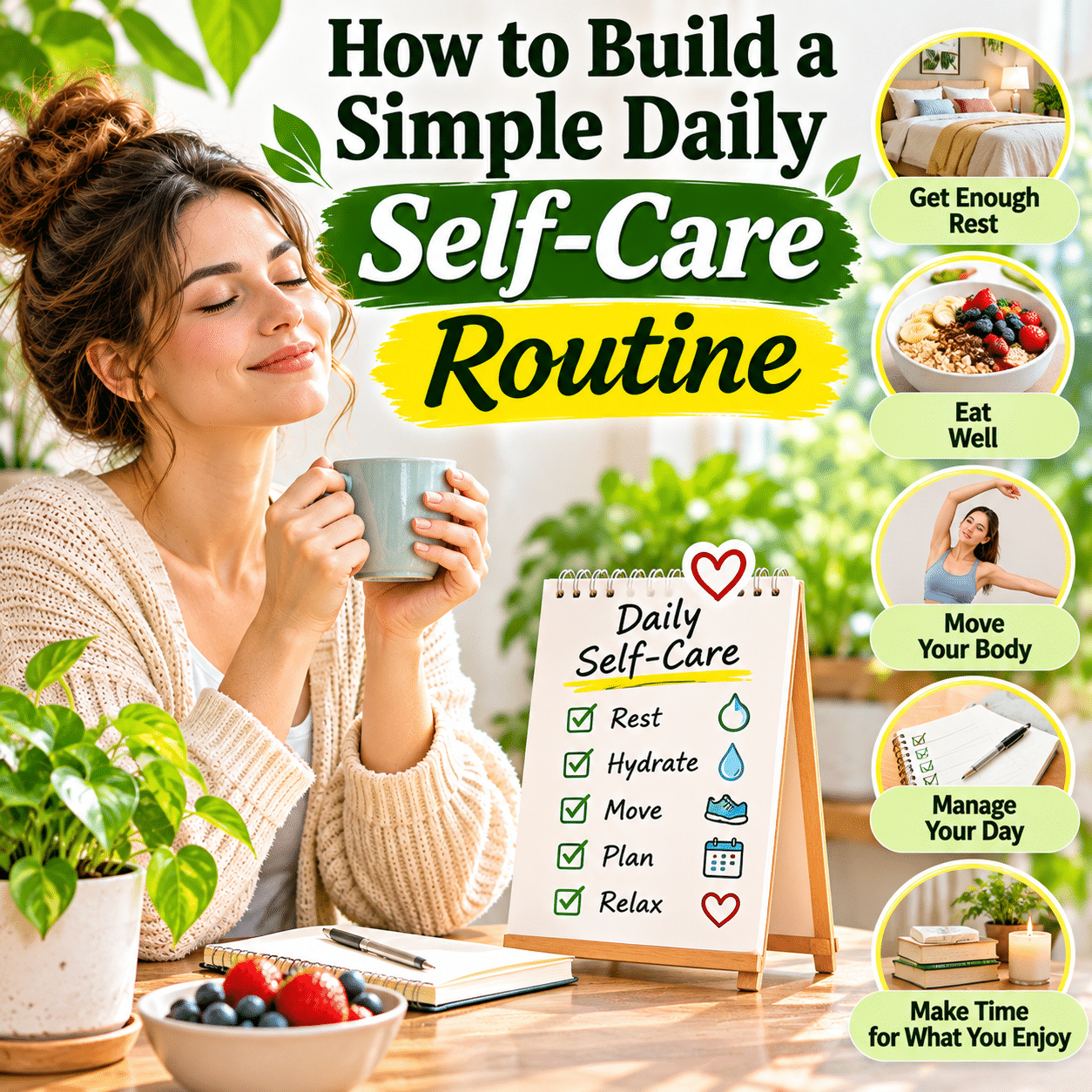
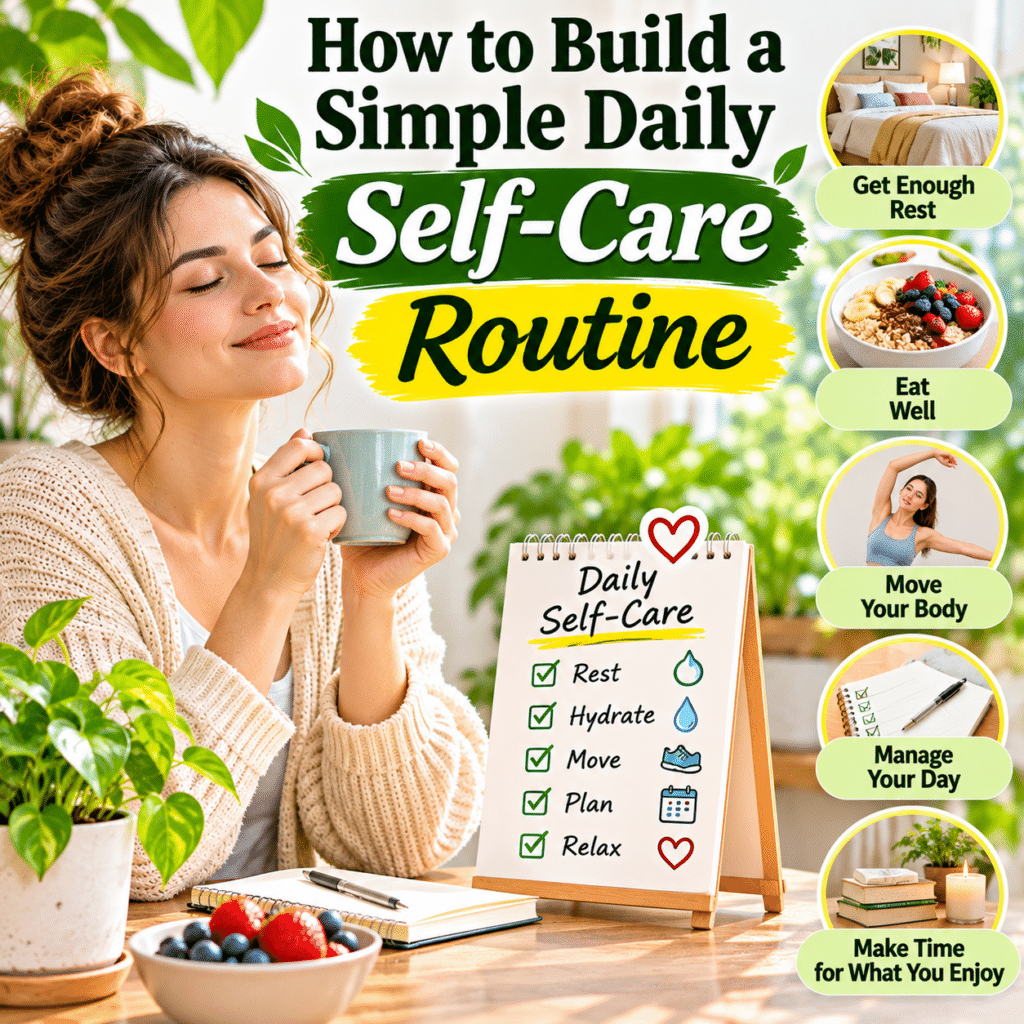
Self-care is often associated with relaxing baths, skincare products, spa treatments, or occasional moments of indulgence. While these activities can be enjoyable, meaningful self-care involves much more than special experiences or elaborate routines.
At its core, self-care is about recognizing everyday needs and making practical choices that support physical comfort, emotional well-being, and a more balanced lifestyle.
A simple daily self-care routine does not require expensive products, complicated schedules, or large amounts of free time. In many cases, small and consistent habits can be more sustainable than ambitious plans that are difficult to maintain.
Drinking water regularly, taking short breaks, getting enough sleep, spending time outdoors, maintaining personal hygiene, and making room for enjoyable activities are all examples of everyday self-care.
The challenge is not necessarily knowing which activities are beneficial. It is finding realistic ways to include them in daily life without creating additional pressure.
A routine that feels supportive for one person may feel inconvenient or overwhelming for another. Work schedules, family responsibilities, health needs, personal preferences, and living environments all influence what practical self-care looks like.
The most useful approach is to create a flexible routine that fits naturally into your existing lifestyle.
This guide explores how to identify your self-care needs, choose manageable habits, build supportive morning and evening routines, maintain healthy boundaries, and adapt your approach when everyday circumstances change.
Whether you are beginning a self-care routine for the first time or simplifying an existing one, the goal is to make everyday well-being easier to support through thoughtful, repeatable actions.
1. Understand What Daily Self-Care Really Means
Daily self-care refers to the intentional habits and choices people use to support their everyday well-being.
It includes activities that help maintain physical health, emotional balance, personal comfort, and the ability to manage ordinary responsibilities.
Self-care may involve:
- Getting sufficient sleep.
- Eating regular, nourishing meals.
- Drinking enough fluids.
- Maintaining personal hygiene.
- Moving the body comfortably.
- Taking breaks from demanding tasks.
- Managing stress.
- Maintaining social connections.
- Setting reasonable boundaries.
- Making time for enjoyable activities.
Self-care does not need to look impressive or require special equipment.
A practical routine is one that responds to genuine needs and can be maintained without unnecessary difficulty.
2. Recognize That Self-Care Is More Than Relaxation
Relaxation is one part of self-care, but it is not the entire concept.
Some self-care activities are immediately pleasant, such as reading a favorite book or enjoying a quiet cup of tea.
Others involve necessary responsibilities, including scheduling medical appointments, preparing meals, maintaining a comfortable living environment, or managing personal finances.
These activities may not always feel relaxing, but they can contribute to long-term stability and well-being.
A balanced routine includes both restorative activities and practical habits that make daily life easier.
3. Understand Why Simple Routines Are Often Easier to Maintain
Complicated routines can become difficult to follow when schedules change.
A plan that requires an hour of uninterrupted time every morning may be unrealistic for someone with early work commitments or family responsibilities.
Simple routines are easier to adjust.
They may also reduce the effort required to decide what to do each day.
Instead of creating a long list of activities, begin with a few meaningful habits.
For example:
- Drink water after waking.
- Take a short movement break during the day.
- Spend a few minutes preparing for tomorrow.
- Maintain a consistent bedtime routine.
These actions may seem modest, but their practicality makes them easier to repeat.
4. Identify Your Personal Self-Care Needs
Before building a routine, consider which areas of daily life need the most attention.
Different people have different priorities.
One person may want to improve sleep consistency.
Another may need more movement during long workdays.
Someone else may benefit from creating quieter evenings or making time for personal interests.
Ask yourself:
- What parts of my day feel unnecessarily stressful?
- When do I feel most tired or distracted?
- Which basic needs do I sometimes overlook?
- What activities help me feel comfortable and refreshed?
- Which habits would make everyday life easier?
- How much time can I realistically dedicate to self-care?
Use these reflections to identify a small number of practical priorities.
5. Focus on Needs Rather Than Idealized Routines
Self-care routines are sometimes presented as carefully organized schedules filled with exercise, journaling, skincare, meditation, and elaborate meals.
These activities may be helpful for some people, but they are not universal requirements.
A routine should not become another standard against which you judge yourself.
Instead of copying an idealized schedule, focus on what is useful in your circumstances.
For example, a person working irregular hours may benefit more from a flexible sleep routine than from waking at the same early hour every day.
Practical self-care should support your life rather than force your life to fit a particular routine.
6. Start With One or Two Manageable Habits
Trying to change many behaviors simultaneously can make a routine difficult to maintain.
Begin with one or two habits that are easy to understand and repeat.
Examples include:
- Preparing a glass of water in the morning.
- Taking a brief walk after lunch.
- Stretching gently after sitting for long periods.
- Setting aside a few minutes to tidy a workspace.
- Reading before bed.
- Preparing tomorrow’s essentials in the evening.
Once these habits become familiar, consider adding another.
There is no need to build a complete routine immediately.
7. Connect New Habits to Existing Activities
One practical way to remember a new habit is to connect it with something you already do regularly.
For example:
- After brushing your teeth, take a moment to stretch.
- After making breakfast, prepare water for the morning.
- After finishing lunch, take a short walk.
- After shutting down your computer, organize your desk.
- After changing into evening clothes, begin a relaxing activity.
This approach creates recognizable cues.
The goal is to make a new habit easier to remember without relying entirely on motivation.
8. Keep Your Routine Flexible
Daily life rarely follows exactly the same pattern.
Meetings run late, household responsibilities change, and unexpected events interrupt plans.
A self-care routine should be able to adapt.
For example, if a usual 20-minute walk is not possible, a shorter movement break may still be worthwhile.
If an evening reading session is interrupted, a few quiet minutes may be enough.
Flexibility helps prevent an occasional missed activity from becoming a reason to abandon the routine.
Building a Supportive Morning Self-Care Routine
9. Begin the Morning Without Unnecessary Pressure
A supportive morning routine does not need to start before sunrise or include numerous activities.
The purpose is to create a manageable transition from sleep to daily responsibilities.
For some people, this may involve a quiet breakfast.
For others, it may mean allowing enough time to get ready without rushing.
Choose activities that help you begin the day comfortably.
Avoid turning the morning into a demanding checklist.
10. Maintain a Consistent Wake-Up Pattern
Regular sleep and wake times can support the body’s internal timing system.
When possible, aim for a schedule that allows sufficient sleep and fits your responsibilities.
Consistency may be more useful than choosing an unusually early wake-up time.
People who work shifts or have changing schedules may need a more adaptable approach.
The priority is obtaining adequate rest and maintaining a practical routine.
11. Make Time for Basic Morning Hygiene
Personal hygiene is a fundamental form of self-care.
A simple morning routine may include:
- Brushing your teeth.
- Washing your face.
- Showering when appropriate.
- Wearing clean, comfortable clothing.
- Following any necessary personal care routines.
These activities support cleanliness and everyday comfort.
Keep the process practical.
An extensive collection of skincare or grooming products is not necessary for a meaningful self-care routine.
12. Drink Water According to Your Needs
Hydration supports normal bodily functions.
Beginning the day with water can be a convenient habit, particularly after a night’s sleep.
However, hydration needs vary depending on body size, activity, climate, diet, and health conditions.
There is no universal requirement to drink a specific large amount of water immediately after waking.
A practical approach is to make drinking water accessible throughout the day and respond appropriately to individual needs.
13. Consider a Nourishing Breakfast
Breakfast preferences and needs differ.
Some people enjoy eating soon after waking, while others prefer a later first meal.
When preparing breakfast, consider foods that provide useful nutrients and help support your daily activities.
Depending on dietary needs, options may include:
- Whole grains.
- Fruit.
- Eggs.
- Yogurt.
- Nuts.
- Vegetables.
- Other protein-rich foods.
Choose meals that suit your appetite, health needs, cultural preferences, and schedule.
Avoid treating one particular breakfast style as essential for everyone.
14. Include Gentle Morning Movement
Movement can be a practical way to begin the day.
It does not need to involve an intense workout.
Options include:
- Gentle stretching.
- A short walk.
- Comfortable mobility exercises.
- Light household activity.
- A brief yoga session.
- Other enjoyable physical activities.
Choose movements appropriate for your abilities and health.
If you have an injury or medical limitation, follow relevant professional guidance.
15. Use Natural Light When Available
Exposure to daylight can help support the body’s daily sleep-wake rhythm.
Opening curtains, sitting near a bright window, or spending time outdoors may be convenient ways to experience natural light.
The appropriate amount and timing depend on personal circumstances.
Avoid looking directly at the sun.
Protect your skin and eyes when outdoor conditions require it.
Natural light can be a useful part of a morning routine without becoming a complicated activity.
16. Create a Simple Morning Priority Check
Before beginning work or household responsibilities, identify what matters most for the day.
A brief planning session may help reduce unnecessary decision-making.
Consider writing down:
- One important task.
- One practical responsibility.
- One personal well-being priority.
Avoid creating an excessively long list.
The goal is to establish direction, not to fill every available minute.
Supporting Self-Care Throughout the Day
17. Take Regular Breaks From Demanding Activities
Long periods of concentrated work can contribute to fatigue and discomfort.
Short breaks provide opportunities to change position, rest the eyes, and step away from repetitive tasks.
A break might involve:
- Standing up.
- Walking briefly.
- Looking away from a screen.
- Drinking water.
- Stretching comfortably.
- Spending a few minutes in a quieter environment.
The ideal timing depends on the activity and individual needs.
Choose a break pattern that supports your work without becoming unnecessarily disruptive.
18. Pay Attention to Physical Comfort
Physical discomfort can develop gradually during ordinary activities.
Long periods of sitting, repetitive movements, and poorly arranged workspaces may contribute.
Notice whether you need to:
- Change your sitting position.
- Adjust your chair.
- Reposition a monitor.
- Take a movement break.
- Improve lighting.
- Reduce unnecessary strain.
Small adjustments may make daily activities more comfortable.
Persistent or worsening pain deserves appropriate medical evaluation rather than relying solely on self-care adjustments.
19. Build Movement Into Everyday Life
Physical activity does not need to happen only during scheduled exercise sessions.
Everyday movement can include:
- Walking to nearby destinations.
- Taking the stairs when suitable.
- Doing household tasks.
- Gardening.
- Dancing.
- Cycling.
- Taking short movement breaks.
Choose activities that match your abilities and preferences.
For overall health, established physical activity guidelines can provide useful direction, but any exercise plan should be adapted to individual circumstances.
20. Make Meals a Practical Part of Self-Care
Eating regularly and obtaining adequate nutrition support everyday functioning.
A sustainable routine may involve preparing simple meals, keeping useful ingredients available, or planning ahead for busy days.
Consider:
- Including a variety of foods.
- Making meals accessible.
- Choosing reasonable portions.
- Allowing enough time to eat.
- Accommodating dietary needs.
- Avoiding unnecessary food-related pressure.
Healthy eating does not require elaborate cooking or expensive ingredients.
Consistency and suitability matter more than presentation.
21. Create Convenient Hydration Habits
Forgetting to drink fluids can be easy during busy periods.
Simple strategies include:
- Keeping a water bottle nearby.
- Drinking with meals.
- Refilling water during breaks.
- Carrying water when traveling.
- Adjusting intake for activity and weather.
Individual fluid requirements vary.
People with medical conditions requiring fluid restrictions should follow professional guidance.
22. Practice Brief Moments of Mental Rest
Mental rest can involve temporarily stepping away from demanding thoughts or tasks.
Examples include:
- Sitting quietly.
- Listening to calming sounds.
- Looking outdoors.
- Taking a slow walk.
- Practicing gentle breathing.
- Enjoying a short screen-free break.
These activities do not need to produce a particular emotional result.
Their value lies in creating space away from constant demands.
23. Reduce Unnecessary Multitasking
Switching repeatedly between tasks can make work feel fragmented.
When practical, focus on one activity at a time.
For example:
- Finish a short task before opening another.
- Silence nonessential notifications.
- Group similar responsibilities.
- Set aside a dedicated period for focused work.
Not every situation allows uninterrupted attention.
The goal is to reduce avoidable distractions where possible.
24. Set Reasonable Boundaries Around Work
Self-care includes recognizing when work responsibilities need limits.
Possible boundaries include:
- Defining a realistic stopping time.
- Taking appropriate meal breaks.
- Avoiding unnecessary after-hours notifications.
- Communicating availability clearly.
- Protecting time for personal responsibilities.
Some occupations require irregular schedules or emergency availability.
Boundaries should reflect actual responsibilities while preserving opportunities for rest.
25. Include Small Enjoyable Activities
Personal enjoyment is an important part of everyday living.
Simple activities may include:
- Listening to music.
- Reading.
- Caring for plants.
- Drawing.
- Cooking.
- Watching a favorite program.
- Spending time with pets.
- Enjoying a favorite beverage.
- Working on a creative hobby.
These activities do not need to be productive.
Making room for enjoyment can help create a more balanced daily experience.
26. Maintain Supportive Social Connections
Relationships can contribute to emotional well-being and a sense of belonging.
Self-care may include making time to connect with people who matter to you.
Examples include:
- Sending a thoughtful message.
- Sharing a meal.
- Calling a friend.
- Spending time with family.
- Participating in a community activity.
Social needs vary.
Some people prefer frequent interaction, while others value smaller amounts of meaningful contact.
Choose connections that feel respectful and supportive.
Creating a Relaxing Evening Self-Care Routine
27. Establish a Gentle Transition From Work to Personal Time
Moving directly from demanding activities into bedtime can make evenings feel rushed.
A short transition routine may help mark the end of work or household responsibilities.
Possible activities include:
- Putting away work materials.
- Changing into comfortable clothing.
- Washing your face.
- Preparing a simple meal.
- Taking a short walk.
- Listening to music.
The transition does not need to take long.
Its purpose is to create a recognizable change in daily pace.
28. Reduce Unnecessary Evening Stimulation
Evenings often include television, phones, computers, and other forms of entertainment.
These activities are not automatically harmful, but highly stimulating content or late-night work may interfere with relaxation for some people.
Consider whether you would benefit from:
- Reducing nonessential notifications.
- Avoiding stressful work messages near bedtime.
- Choosing calmer entertainment.
- Lowering overly bright lighting.
- Setting a reasonable stopping point for demanding tasks.
The goal is to support rest without imposing unrealistic restrictions.
29. Prepare Your Bedroom for Comfort
A comfortable sleep environment is an important part of everyday self-care.
Consider:
- Suitable room temperature.
- Comfortable bedding.
- Appropriate lighting.
- Manageable noise.
- Clean sleeping surfaces.
- Reduced unnecessary clutter.
Preferences vary, but a quiet, dark, and comfortably cool environment is often helpful for sleep.
Adjust the room according to your needs and circumstances.
30. Maintain a Consistent Bedtime Routine
A predictable sequence of evening activities can help signal that the day is coming to an end.
A simple routine might include:
- Finishing essential tasks.
- Preparing for the following day.
- Completing personal hygiene.
- Reducing stimulating activities.
- Reading or relaxing quietly.
- Going to bed at a suitable time.
Most adults generally need at least seven hours of sleep, although individual needs vary.
Prioritize sufficient sleep over completing an elaborate bedtime checklist.
31. Practice Simple Evening Reflection
Reflecting briefly on the day may help identify useful patterns.
You might consider:
- What went reasonably well today?
- What felt unnecessarily difficult?
- Did I make time for basic needs?
- Is there anything I can simplify tomorrow?
- What would help me feel more prepared?
Reflection does not need to involve lengthy journaling.
A few thoughts or short notes may be enough.
Avoid turning reflection into repetitive self-criticism.
32. Prepare Small Things for Tomorrow
Simple preparation can reduce morning decisions.
Examples include:
- Choosing clothing.
- Preparing a bag.
- Checking appointments.
- Organizing essential items.
- Planning a simple breakfast.
- Tidying a frequently used surface.
Choose tasks that genuinely make the next day easier.
Avoid extending evening preparation so long that it reduces needed rest.
33. Make Room for Screen-Free Leisure
Screen-free activities can provide a different kind of evening experience.
Options include:
- Reading a printed book.
- Sketching.
- Journaling.
- Gentle stretching.
- Listening to music without browsing.
- Caring for plants.
- Completing a simple craft.
- Having a conversation.
There is no need to eliminate screens completely.
Instead, consider whether a little variety would make your evening more enjoyable.
Supporting Emotional and Mental Well-Being
34. Recognize Emotional Needs Without Judgment
Emotional self-care begins with noticing how you feel.
Some days may be calm and productive.
Others may involve frustration, worry, sadness, or fatigue.
These experiences are part of ordinary human life.
Rather than expecting yourself to feel positive all the time, consider what support may be useful.
This might involve rest, conversation, practical problem-solving, or seeking professional guidance when needed.
Self-care is not a requirement to eliminate uncomfortable emotions.
35. Use Simple Stress-Management Practices
Stress-management activities can be incorporated into everyday routines.
Possible options include:
- Gentle breathing exercises.
- Walking.
- Listening to music.
- Taking a short break.
- Spending time outdoors.
- Writing down concerns.
- Talking with a trusted person.
- Engaging in a relaxing hobby.
Different strategies work for different people.
If stress becomes persistent, overwhelming, or significantly interferes with daily functioning, professional support may be appropriate.
36. Practice Self-Compassion in Everyday Decisions
Self-compassion involves responding to personal difficulties with reasonable understanding rather than excessive criticism.
For example, missing a planned walk does not mean the entire routine has failed.
Being tired after a demanding day does not mean you must complete every optional activity.
A practical self-care routine allows for changes in energy, circumstances, and priorities.
Treat habits as tools that support your life, not as tests of personal worth.
37. Learn to Recognize When Rest Is Needed
Rest is not limited to nighttime sleep.
People may also benefit from short breaks, quieter activities, and periods without demanding responsibilities.
Signs that additional rest may be useful include:
- Difficulty concentrating.
- Increased irritability.
- Persistent fatigue.
- Reduced motivation.
- Physical tension.
- Feeling overwhelmed by ordinary tasks.
These signs can also have medical or psychological causes.
If symptoms are persistent, severe, or unusual, seek appropriate professional evaluation.
38. Understand That Self-Care Is Not a Substitute for Healthcare
Everyday self-care can support well-being, but it cannot replace necessary medical or mental health treatment.
Routine activities such as sleep, nutrition, movement, and stress management are valuable.
However, persistent symptoms, significant emotional distress, or worsening health concerns may require professional attention.
Follow prescribed treatments and medical recommendations.
A responsible self-care routine includes knowing when additional support is needed.
Making Your Home Support Everyday Self-Care
39. Create a Comfortable Personal Space
Your surroundings can influence how easy it feels to relax and complete daily activities.
A supportive environment does not require a complete home makeover.
Small improvements may include:
- Clearing a frequently used surface.
- Improving lighting.
- Adding comfortable seating.
- Organizing essential items.
- Reducing unnecessary noise.
- Making personal care supplies accessible.
Choose changes that address practical needs.
40. Organize Self-Care Essentials
Keeping useful items accessible can make routines easier to follow.
For example:
- Store personal hygiene products together.
- Keep water bottles easy to reach.
- Place reading materials near a comfortable chair.
- Organize exercise accessories.
- Prepare a simple bedtime basket.
- Keep frequently used items in predictable locations.
Avoid buying organizers or products unless they solve a genuine problem.
An effective system can be simple and inexpensive.
41. Use Lighting to Support Daily Activities
Lighting influences visibility, comfort, and the atmosphere of a room.
Bright, appropriate lighting can support activities such as reading, cooking, and working.
Softer lighting may feel more comfortable during relaxing evening activities.
Consider combining natural light with suitable task lighting.
Avoid glare and insufficient illumination.
Choose lighting that matches the activity rather than relying on decorative appearance alone.
42. Keep Your Living Environment Manageable
Household maintenance can be part of practical self-care.
A reasonably organized environment may make daily responsibilities easier.
Consider small recurring tasks such as:
- Washing dishes.
- Clearing a desk.
- Putting away clothing.
- Removing household waste.
- Preparing clean towels.
- Maintaining frequently used surfaces.
Avoid expecting a perfectly tidy home at all times.
The goal is functionality and comfort, not constant perfection.
Practical Step-by-Step Guide: How to Build a Daily Self-Care Routine
The following process can help beginners create a routine that is realistic and sustainable.
Step 1: Review Your Current Day
Think about your typical morning, afternoon, and evening.
Identify existing habits, responsibilities, and available time.
Step 2: Choose Your Main Priorities
Select two or three areas that would benefit from attention.
Examples include sleep, hydration, movement, relaxation, or personal organization.
Step 3: Start With Small Actions
Choose habits that can be completed without major schedule changes.
For example, begin with a five-minute movement break rather than committing immediately to a lengthy exercise session.
Step 4: Connect Habits to Existing Routines
Attach new activities to familiar daily events.
This may make them easier to remember.
Step 5: Prepare Your Environment
Keep useful supplies accessible.
Remove unnecessary obstacles where practical.
Step 6: Create a Simple Morning Routine
Choose a few actions that help you begin the day comfortably.
Avoid overloading the morning.
Step 7: Add One Midday Self-Care Habit
Consider a movement break, regular meal, hydration check, or brief period of mental rest.
Step 8: Create an Evening Wind-Down Routine
Choose activities that support relaxation and sufficient sleep.
Step 9: Keep a Flexible Alternative
Prepare a shorter version of your routine for especially busy days.
Step 10: Observe What Works
Notice which habits feel useful and which create unnecessary pressure.
Step 11: Adjust Gradually
Modify activities based on your schedule, energy, and needs.
Step 12: Review the Routine Periodically
Revisit your routine when circumstances change.
Keep helpful habits and remove those that no longer serve a clear purpose.
Example of a Simple Daily Self-Care Routine
This example illustrates how self-care can fit into ordinary daily activities without requiring an elaborate schedule.
| Time of day | Simple activity | Purpose |
|---|---|---|
| After waking | Drink water and complete basic hygiene | Support hydration and personal care |
| Morning | Eat a suitable meal and identify priorities | Support daily preparation |
| During work or study | Take short movement and screen breaks | Reduce prolonged inactivity |
| Midday | Eat lunch and take a brief pause | Support nourishment and rest |
| Afternoon | Check posture, hydration, and energy | Maintain awareness of basic needs |
| After work | Transition into personal time | Create separation between responsibilities and leisure |
| Evening | Enjoy a hobby or supportive connection | Make room for personal enjoyment |
| Before bed | Prepare essentials and reduce unnecessary stimulation | Support a calmer bedtime routine |
| Bedtime | Allow sufficient opportunity for sleep | Support recovery and daily functioning |
This is only an example.
The most useful routine is one that fits your own responsibilities, preferences, and circumstances.
Three Simple Self-Care Routine Options
Different days may require different levels of effort.
The 5-Minute Routine for Busy Days
When time is limited, focus on basic needs.
- Take a short pause.
- Drink water if needed.
- Stretch or change position.
- Check whether you need food or rest.
- Identify one manageable next step.
This brief routine does not replace sleep, meals, or other essential care.
It simply provides a practical moment of attention during a demanding day.
The 15-Minute Routine for Ordinary Days
A short dedicated period may include:
- Five minutes of comfortable movement.
- Five minutes of quiet relaxation.
- Five minutes of planning, journaling, or organizing.
Adjust the activities according to personal needs.
The 30-Minute Routine for More Flexible Days
When time allows, consider:
- Ten minutes of gentle movement.
- Ten minutes of enjoyable leisure.
- Five minutes of personal reflection.
- Five minutes preparing for the next part of the day.
There is no need to complete every activity in one uninterrupted session.
Practical Daily Self-Care Checklist
Use this checklist as a flexible reminder rather than a strict requirement.
Physical Well-Being
- I allowed enough opportunity for sleep.
- I ate meals appropriate for my needs.
- I drank fluids throughout the day.
- I included some comfortable movement.
- I paid attention to physical discomfort.
- I completed necessary personal hygiene.
Mental and Emotional Well-Being
- I took a break when practical.
- I noticed how I was feeling.
- I made room for a calming activity.
- I avoided unnecessary self-criticism.
- I recognized when additional support might be helpful.
Work and Daily Responsibilities
- I identified realistic priorities.
- I reduced avoidable distractions.
- I took appropriate breaks.
- I respected reasonable personal boundaries.
- I avoided adding unnecessary tasks.
Personal Enjoyment
- I made room for something enjoyable.
- I connected with someone if I wanted to.
- I spent time on a personal interest.
- I allowed leisure without requiring productivity.
Evening Preparation
- I completed essential evening hygiene.
- I prepared useful items for tomorrow.
- I created a comfortable sleep environment.
- I allowed time to wind down.
- I prioritized adequate rest.
You do not need to check every box every day.
The checklist is intended to support awareness, not create another obligation.
Common Self-Care Routine Problems and Solutions
| Problem | Possible reason | Practical solution |
|---|---|---|
| The routine feels overwhelming | Too many habits introduced at once | Start with one or two priorities |
| There is not enough time | Activities require too much uninterrupted time | Choose shorter, flexible versions |
| Habits are easy to forget | No consistent reminder or cue | Connect them to existing activities |
| Motivation changes | Routine depends on feeling motivated | Reduce effort and prepare the environment |
| Morning routines feel rushed | Too many activities before work | Move optional tasks to another time |
| Evening routines interfere with sleep | Activities take too long | Prioritize rest and simplify |
| Missing one day feels discouraging | All-or-nothing expectations | Resume at the next practical opportunity |
| Self-care feels expensive | Focus on products or paid experiences | Choose accessible, low-cost habits |
| The routine becomes repetitive | Activities no longer feel meaningful | Introduce appropriate variety |
| Personal time is constantly interrupted | Unclear boundaries or competing responsibilities | Identify realistic protected periods |
| A habit no longer feels helpful | Needs or circumstances have changed | Reassess and replace it |
| Rest creates feelings of guilt | Productivity-focused expectations | Recognize rest as a legitimate need |
| The routine is difficult during travel | Dependence on specific equipment or locations | Create a portable version |
| Progress is difficult to notice | Expectations are too immediate | Focus on consistency and practical usefulness |
A routine should be adjusted when it stops supporting everyday life.
Frequently Asked Questions
1. What is a simple daily self-care routine?
A simple daily self-care routine is a manageable collection of habits that support everyday physical comfort, emotional well-being, and personal needs.
It may include hygiene, hydration, meals, movement, breaks, leisure, and sleep.
2. How do I start a self-care routine as a beginner?
Begin by identifying one or two areas of daily life that need attention.
Choose small habits that fit your schedule.
Add more activities gradually only when they remain useful and manageable.
3. How much time should I spend on self-care every day?
There is no universal requirement.
Some self-care activities take only a few minutes, while essential needs such as sleep and meals require more time.
Focus on meeting your needs rather than reaching a particular daily time target.
4. Can self-care be free?
Yes.
Many meaningful self-care activities require little or no money.
Examples include walking, resting, drinking water, maintaining hygiene, reading borrowed books, and spending time with supportive people.
5. What are the most important self-care habits?
Important foundations often include sufficient sleep, adequate nutrition and hydration, appropriate physical activity, personal hygiene, stress management, and access to necessary healthcare.
Individual priorities vary.
6. Do I need a morning self-care routine?
Not necessarily.
Some people find morning routines helpful, while others prefer to focus on different parts of the day.
A routine should match your schedule and needs.
7. What should I include in an evening self-care routine?
An evening routine may include personal hygiene, preparing for tomorrow, reducing unnecessary stimulation, enjoying quiet activities, and allowing sufficient time for sleep.
8. Is skincare an essential part of self-care?
Basic skin hygiene and appropriate skin protection can be useful.
However, elaborate skincare routines are not necessary for everyone.
Choose products and practices according to individual skin needs.
9. Can hobbies count as self-care?
Yes.
Enjoyable activities can provide opportunities for leisure, creativity, personal expression, and relaxation.
They do not need to produce measurable results to be worthwhile.
10. What if I do not have time for a long routine?
Choose a shorter version.
Focus on essential needs and small practical actions.
A routine that fits your available time is generally more sustainable than one that requires unrealistic commitments.
11. How do I maintain self-care habits consistently?
Connect habits to existing routines, keep supplies accessible, begin with manageable actions, and allow flexibility.
Consistency develops through repetition rather than perfection.
12. What should I do if I miss a day?
Resume when practical.
Missing a day does not erase previous effort.
Avoid compensating with an unnecessarily demanding schedule.
13. Can self-care help with stress?
Some self-care practices, such as adequate sleep, physical activity, relaxation, and supportive social contact, may help people manage everyday stress.
However, persistent or severe stress may require additional professional support.
14. How do I know whether my self-care routine is working?
Consider whether the routine helps you meet basic needs, manage responsibilities, maintain comfort, and make room for rest and enjoyment.
A useful routine should feel reasonably manageable rather than constantly burdensome.
15. Should I follow the same self-care routine every day?
Not necessarily.
Some habits benefit from regularity, but flexibility is important.
Adjust activities when your schedule, health, energy, or responsibilities change.
Final Thoughts
Building a simple daily self-care routine is not about creating a perfect schedule or completing an impressive list of wellness activities.
It is about recognizing everyday needs and developing practical habits that help support a comfortable, balanced, and sustainable lifestyle.
Meaningful self-care can begin with ordinary actions: drinking water, eating nourishing meals, moving comfortably, taking breaks, maintaining personal hygiene, making time for enjoyable activities, and allowing sufficient sleep.
The most effective routine is not necessarily the longest or most elaborate. It is the one that fits naturally into your circumstances and remains flexible enough to adapt when life changes.
Starting with a few manageable habits makes it easier to learn what works. Over time, these habits can become familiar parts of daily living rather than additional responsibilities.
It is also important to remember that self-care includes asking for help and seeking professional support when necessary. Personal routines are valuable, but they do not replace healthcare or the support of others.
By approaching self-care with practicality, flexibility, and patience, you can create a routine that supports your needs without adding unnecessary pressure.
A meaningful daily self-care routine is built not through perfect habits or elaborate rituals, but through small, thoughtful choices that make caring for yourself a natural part of everyday life.