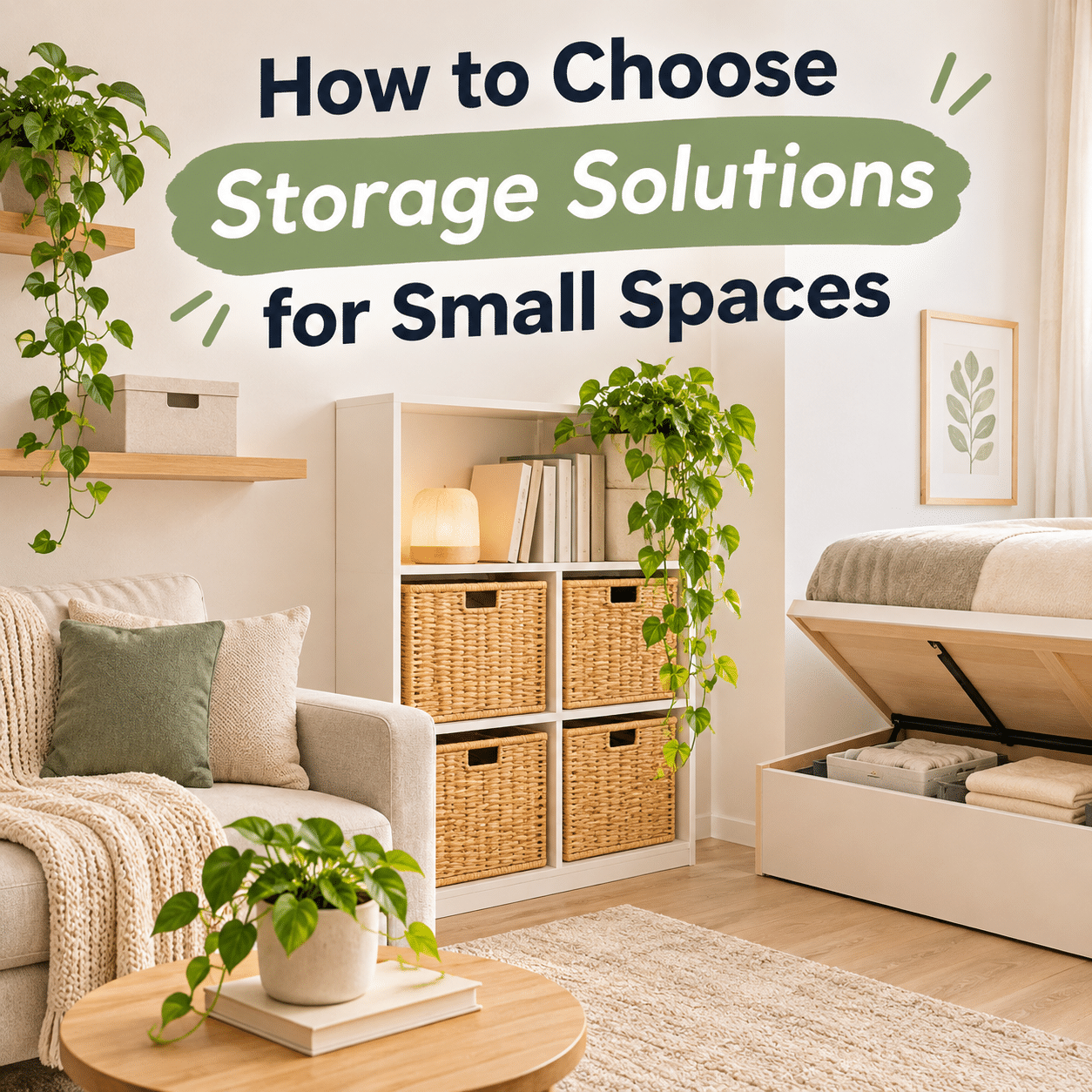
Living in a small space does not necessarily mean living with clutter. Whether you have a compact apartment, a small bedroom, a narrow kitchen, or a home with limited built-in storage, thoughtful organization can make everyday life more comfortable and manageable.
The challenge is not simply finding somewhere to put your belongings. It is choosing storage solutions that fit your available space, accommodate the things you actually use, and support your daily routines without making rooms feel crowded.
A well-designed storage system should balance capacity, accessibility, durability, flexibility, and appearance. The right combination of shelves, drawers, cabinets, baskets, organizers, and multifunctional furniture can help you make better use of overlooked spaces while maintaining a welcoming home environment.
This guide explains how to choose storage solutions for small spaces, compare different storage options, avoid common purchasing mistakes, and create an organization system that remains practical over time.
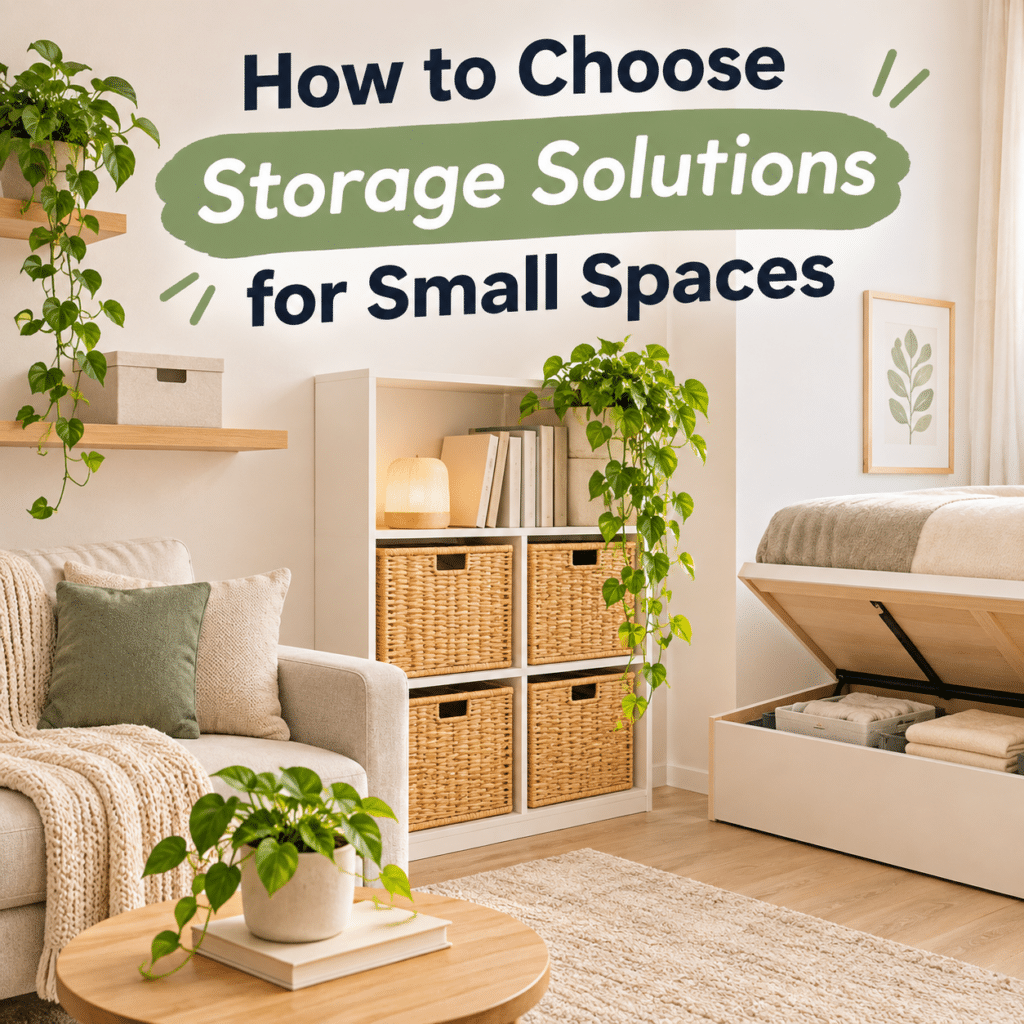
1. Understand Your Storage Needs Before Buying Anything
One of the most common storage mistakes is purchasing organizers before understanding what needs to be stored.
A storage container may look attractive, but it will not necessarily solve the underlying problem if it is the wrong size, difficult to access, or poorly suited to its contents.
Begin by evaluating your belongings and the space available.
Identify What You Need to Store
Walk through each room and identify the items that regularly create clutter.
Common categories include:
- Clothing, shoes, and seasonal accessories.
- Books, documents, and stationery.
- Kitchen utensils, cookware, and pantry supplies.
- Cleaning products and household essentials.
- Electronics, chargers, and cables.
- Personal care products and toiletries.
- Hobby materials and craft supplies.
- Bedding, towels, and extra linens.
- Pet accessories and supplies.
- Seasonal decorations and occasional-use equipment.
Grouping similar belongings makes it easier to estimate the storage capacity required.
Separate Items by Frequency of Use
Not every belonging needs equally convenient access.
A useful approach is to divide items into three categories.
Daily-use items: These should remain easily accessible without moving other objects.
Occasional-use items: These can be stored in cabinets, higher shelves, or secondary drawers.
Seasonal or rarely used items: These may be suitable for under-bed storage, upper cabinets, or other less accessible locations.
This simple classification helps prevent frequently used belongings from becoming buried behind items that are rarely needed.
Evaluate What You Already Own
Before purchasing new organizers, examine your existing storage furniture.
You may already have cabinets, drawers, or shelves that could work more efficiently with dividers, stackable inserts, or better grouping.
Improving existing storage is often more economical and space-efficient than adding another piece of furniture.
2. Measure Your Available Space Carefully
Accurate measurements are essential when selecting storage solutions for compact rooms.
A product that appears small in photographs may occupy more space than expected once installed or opened.
Measure Width, Height, and Depth
For every potential storage location, record:
- Available width.
- Usable height.
- Maximum practical depth.
- Clearance around doors and drawers.
- Distance from nearby furniture.
- Space required for walking and movement.
Remember that usable dimensions may differ from the overall dimensions of a cabinet or shelf.
For example, a drawer’s exterior width does not represent the full interior width available for organizers.
Account for Access and Movement
Storage furniture should not interfere with daily activities.
Consider whether:
- Cabinet doors can open completely.
- Drawers can extend far enough to access their contents.
- People can move comfortably through the room.
- Windows remain accessible.
- Electrical outlets are blocked.
- Furniture obstructs ventilation or heating equipment.
In small spaces, access clearance can be just as important as storage capacity.
Check Irregular Spaces
Narrow corners, sloped ceilings, baseboards, and uneven walls can complicate furniture placement.
Measure at multiple points when necessary, particularly for tall cabinets, built-in shelves, or organizers designed to fit tightly between existing furniture.
3. Compare the Main Types of Small-Space Storage
Different storage solutions serve different purposes.
Understanding their strengths and limitations makes it easier to select products that complement your room rather than simply occupy it.
| Storage Solution | Best For | Main Advantage | Main Limitation |
|---|---|---|---|
| Wall-mounted shelves | Books, decor, lightweight essentials | Uses vertical space | Requires suitable mounting |
| Floating shelves | Small displays and everyday items | Minimal visual footprint | Limited by load capacity and installation |
| Stackable containers | Clothing, supplies, pantry items | Flexible arrangement | Lower containers may be difficult to access |
| Drawer organizers | Accessories, utensils, stationery | Keeps small items separated | Must fit drawer dimensions |
| Under-bed containers | Bedding, seasonal clothing | Uses concealed space | Accessibility depends on bed clearance |
| Over-door organizers | Shoes, accessories, cleaning supplies | Uses existing door space | May interfere with door operation |
| Storage ottomans | Blankets, toys, living room items | Combines seating and storage | Capacity and structural strength vary |
| Modular shelving | Mixed household belongings | Adaptable configuration | Requires careful planning |
| Rolling carts | Craft supplies, toiletries, kitchen essentials | Easy to relocate | Requires floor space and stable positioning |
| Storage benches | Shoes, bags, entryway essentials | Combines seating and organization | May be bulky in narrow areas |
The best choice depends on what you are storing, how frequently you need it, and how the storage solution interacts with the surrounding room.
4. Make Better Use of Vertical Space
When floor space is limited, vertical storage can provide additional capacity without requiring a larger room.
However, maximizing wall height should not come at the expense of accessibility or safety.
Wall-Mounted Shelves
Wall shelves work well for:
- Books and decorative objects.
- Lightweight storage baskets.
- Small household accessories.
- Frequently used kitchen items.
- Office supplies.
Choose shelves based on their intended contents, mounting requirements, and manufacturer-specified load capacity.
For heavy items, confirm that the wall structure and mounting hardware are appropriate.
Tall Storage Cabinets
Tall cabinets can provide substantial storage while occupying relatively little floor area.
They are especially useful for narrow bedrooms, home offices, and utility areas.
Look for cabinets with adjustable shelves so the interior can accommodate belongings of different heights.
Tall furniture should be secured against tipping according to the manufacturer’s instructions, particularly in homes with children or pets.
Over-Door Storage
Over-door organizers can make use of space that might otherwise remain empty.
They are useful for storing:
- Shoes.
- Scarves and accessories.
- Cleaning cloths.
- Toiletries.
- Small household tools.
Before purchasing, check door thickness, top clearance, hinge movement, and the organizer’s weight limits.
Avoid configurations that prevent doors from closing properly.
High Shelves and Upper Cabinets
Upper storage areas are suitable for lightweight belongings that are not needed frequently.
Avoid placing heavy or fragile items where retrieving them would be difficult or hazardous.
A storage system is only useful when its contents can be accessed safely.
5. Choose Storage Furniture That Serves Multiple Purposes
Multifunctional furniture is particularly valuable in small homes because it can reduce the need for separate pieces.
Instead of adding storage furniture to an already crowded room, consider replacing existing furniture with options that incorporate storage.
Storage Beds
Beds with built-in drawers or lift-up compartments can accommodate bedding, seasonal clothing, and other bulky belongings.
When comparing storage beds, consider:
- Drawer clearance.
- Accessibility from both sides.
- Mattress lifting mechanisms.
- Structural durability.
- Available space around the bed.
- Ease of cleaning beneath or around the frame.
A bed with side drawers may be inconvenient when positioned close to a wall or another piece of furniture.
Storage Ottomans
A storage ottoman can function as a footrest, occasional seat, and concealed storage compartment.
It may be suitable for blankets, cushions, toys, or small accessories.
Check whether the product is designed to support seated weight rather than assuming every ottoman can safely function as seating.
Storage Benches
Storage benches are practical for entryways, bedrooms, and compact living areas.
They can provide a place to sit while putting on shoes and a compartment for organizing footwear or accessories.
Choose a bench with dimensions that leave adequate circulation space.
Desks With Built-In Storage
For compact workspaces, a desk with integrated drawers, shelves, or cable-management features can reduce the need for additional cabinets.
However, excessive built-in storage may reduce legroom or make the desk feel bulky.
Evaluate the working surface and ergonomic comfort alongside storage capacity.
6. Understand Open Storage Versus Closed Storage
One important decision is whether belongings should remain visible or be concealed.
Both approaches have advantages.
Open Storage
Open shelves, transparent containers, and exposed organizers allow you to see and retrieve items quickly.
They work well for frequently used belongings and attractive objects.
Advantages include:
- Easy visibility.
- Convenient access.
- Flexible arrangement.
- Potentially lighter visual appearance.
Disadvantages include greater exposure to dust and the possibility of visual clutter.
Closed Storage
Cabinets, drawers, lidded boxes, and concealed compartments create a more uniform appearance.
They are useful for storing miscellaneous belongings, private items, and objects that do not need to remain visible.
However, poorly organized closed storage can hide clutter rather than resolve it.
A Balanced Approach
For many small rooms, combining open and closed storage is more practical than relying exclusively on either option.
Use open storage for items that are attractive or frequently needed, and closed storage for miscellaneous belongings that benefit from containment.
7. Choose the Right Storage Containers
Storage containers are among the most versatile organization products, but differences in materials, shapes, and construction affect their suitability.
Plastic Storage Containers
Plastic containers are commonly used for household supplies, clothing, and miscellaneous belongings.
Potential advantages include low weight, easy cleaning, and a wide range of available sizes.
Consider whether the plastic is sufficiently rigid for the intended load and whether the lid closes securely.
For food storage, use containers specifically intended for food contact and follow their temperature and cleaning instructions.
Fabric Storage Bins
Fabric bins can work well in bedrooms, closets, and open shelving units.
They are often lightweight and visually softer than rigid containers.
However, fabric may absorb moisture or odors, and some collapsible designs offer limited structural support.
Choose reinforced options when the contents require a more stable container.
Woven Baskets
Woven baskets can provide both storage and decorative texture.
They are useful for blankets, accessories, and lightweight household items.
Check for rough edges, loose fibers, and surfaces that could catch delicate fabrics.
Natural materials may require additional care in humid environments.
Metal Storage Baskets
Metal baskets are suitable for certain utility, kitchen, and office applications.
Their open construction can improve visibility and airflow.
However, they may not protect small objects from dust, and unfinished edges or exposed wire can damage delicate items.
Wooden Storage Boxes
Wooden boxes can provide a durable, decorative storage option.
Their weight, finish, moisture resistance, and construction quality should be considered before purchasing.
They may be less suitable for persistently damp locations unless designed for those conditions.
8. Compare Storage Container Materials
| Material | Common Uses | Strengths | Considerations |
|---|---|---|---|
| Plastic | Clothing, household supplies, pantry organization | Lightweight, easy to clean | Quality and durability vary |
| Fabric | Closets, shelves, accessories | Soft appearance, often collapsible | Can absorb moisture and odors |
| Natural woven materials | Blankets, decorative storage | Warm appearance, breathable construction | Cleaning and moisture sensitivity |
| Metal | Utility storage, office supplies | Often sturdy, easy visibility | Weight, corrosion, sharp edges |
| Wood | Decorative boxes, shelving | Rigid construction, timeless appearance | Weight and moisture exposure |
| Glass | Suitable food storage and small displays | Nonporous, easy to inspect | Heavy and breakable |
No single material is ideal for every situation.
The most practical choice depends on the contents, surrounding environment, cleaning requirements, and expected frequency of use.
9. Look for Space-Efficient Shapes and Dimensions
The shape of a storage product can affect how efficiently it uses limited space.
Rectangular Containers
Rectangular containers often fit more efficiently into rectangular shelves, cabinets, and drawers than round containers.
They can also be easier to arrange side by side.
However, exterior dimensions alone do not determine usable capacity.
Thick walls, tapered sides, and bulky lids may reduce interior space.
Stackable Containers
Stackable designs can increase vertical storage density.
Look for stable bases, compatible lids, and construction designed to support the intended stacking arrangement.
Avoid stacking heavy containers at excessive heights.
If lower containers must be accessed frequently, front-opening containers or drawers may be more convenient.
Nesting Containers
Nesting containers fit inside one another when empty.
They are useful when storage needs change frequently or when empty containers must be stored compactly.
Slim Organizers
Slim organizers can fit into narrow gaps beside appliances, furniture, or cabinets.
Before purchasing, check the entire clearance area rather than measuring only the visible opening.
Also consider whether the organizer can be pulled out without hitting nearby objects.
10. Consider Modular Storage Systems
Modular storage systems use components that can be rearranged, expanded, or replaced.
They can be particularly useful when household needs change over time.
Benefits of Modular Storage
A modular system may allow you to:
- Adjust shelf positions.
- Add or remove compartments.
- Reconfigure the arrangement.
- Separate different categories of belongings.
- Adapt storage after moving.
- Replace individual components.
Important Compatibility Questions
Not all modular systems remain compatible across different product lines or generations.
Before investing, check:
- Component dimensions.
- Connection mechanisms.
- Available replacement parts.
- Load limits.
- Expansion options.
- Stability requirements.
A flexible system should remain practical even if you never purchase additional components.
11. Choose Storage Based on Room Function
Different rooms create different storage challenges.
A solution that works well in a bedroom may be unsuitable for a kitchen or bathroom.
Small Living Rooms
Living rooms often need to accommodate entertainment equipment, books, blankets, and everyday accessories.
Consider:
- Storage coffee tables.
- Media consoles with drawers.
- Floating shelves.
- Storage ottomans.
- Narrow bookcases.
- Decorative baskets.
Prioritize storage that maintains comfortable movement and does not dominate the room visually.
Small Bedrooms
Bedrooms benefit from concealed storage that supports a calm environment.
Useful options include:
- Under-bed drawers.
- Bedside tables with compartments.
- Wardrobe organizers.
- Hanging closet shelves.
- Drawer dividers.
- Storage beds.
Avoid overfilling the bedroom with furniture solely to increase capacity.
Small Kitchens
Kitchen storage should support safe food preparation and convenient access to everyday equipment.
Potential solutions include:
- Drawer dividers.
- Cabinet shelf risers.
- Pull-out organizers.
- Pantry containers.
- Wall-mounted utensil storage.
- Adjustable shelving.
Keep frequently used cookware and utensils near their point of use.
Do not install storage where it interferes with appliance ventilation, safe cooking clearances, or electrical access.
Small Bathrooms
Bathrooms require storage solutions suited to moisture exposure.
Consider:
- Wall cabinets.
- Under-sink organizers.
- Narrow shelving.
- Shower caddies.
- Drawer trays.
- Over-toilet storage where appropriate.
Choose materials that tolerate the bathroom environment and allow adequate ventilation.
Avoid placing storage products where they obstruct plumbing access or create slipping and tripping hazards.
Small Home Offices
Home offices often accumulate papers, cables, accessories, and electronic devices.
Useful solutions include:
- Vertical document organizers.
- Drawer inserts.
- Cable-management trays.
- Wall shelves.
- Compact filing cabinets.
- Desk-mounted accessories.
Prioritize a clear working surface and accessible equipment.
Small Entryways
Entryways benefit from storage that keeps frequently used belongings close to the door.
Consider:
- Wall hooks.
- Slim shoe cabinets.
- Key trays.
- Storage benches.
- Narrow shelves.
- Small baskets.
Ensure that furniture does not obstruct doors or necessary exit routes.
12. Make Better Use of Closet Space
Closets often contain unused vertical space and inefficiently arranged belongings.
Before buying a larger wardrobe, examine how the existing closet is organized.
Add Shelf Dividers
Shelf dividers help prevent stacked clothing, towels, or bags from spreading into neighboring sections.
They are especially useful on wide shelves without built-in compartments.
Use Hanging Organizers
Hanging organizers can create additional compartments for folded clothing, accessories, and lightweight belongings.
However, they occupy hanging space that might otherwise be used for garments.
Consider Double Hanging Rods
A second hanging rod may increase usable hanging capacity for shorter garments.
Check garment lengths and available vertical clearance before installation.
Choose Appropriate Hangers
Slim hangers can sometimes increase usable closet space, but they should still provide adequate support for the garments being stored.
Heavy coats and structured clothing may require stronger hangers.
Organize by Category
Grouping clothing by type or frequency of use can make the closet easier to maintain.
Avoid creating an overly complicated system that requires substantial effort every time clothing is returned.
13. Evaluate Under-Bed Storage Carefully
Under-bed storage can be useful for belongings that do not require daily access.
However, the space beneath a bed may be shallower or less accessible than expected.
Measure the Clearance
Measure from the floor to the lowest obstruction beneath the bed.
Account for support beams, legs, and other structural components.
Choose the Right Opening Style
Common options include:
- Soft zippered storage bags.
- Rigid containers with removable lids.
- Rolling under-bed drawers.
- Built-in bed compartments.
Rolling containers work best on suitable floor surfaces with sufficient clearance.
Consider Dust and Moisture
Under-bed storage may collect dust, particularly in spaces that are difficult to clean.
Use appropriate containers for textiles and avoid storing damp items.
Allow belongings to dry completely before placing them in enclosed storage.
Avoid Overloading
Large containers can become difficult to pull out when filled with heavy objects.
Choose manageable sizes and respect the product’s intended load capacity.
14. Use Corners and Narrow Gaps Thoughtfully
Small homes often contain spaces that appear too awkward for conventional furniture.
These areas may accommodate specialized organizers.
Corner Shelves
Corner shelves can hold books, decorative objects, or lightweight essentials.
They work best when the surrounding furniture leaves enough room to access the shelves.
Narrow Rolling Carts
Rolling carts can fit into selected gaps between furniture or appliances.
Look for smooth-rolling wheels, stable construction, and locking casters where needed.
Do not assume a narrow cart is stable simply because it fits the space.
Adjustable Tension Shelves
Some storage systems use tension mechanisms rather than permanent mounting.
Their suitability depends on the installation surfaces, load limits, and manufacturer instructions.
Do not use them for heavy or hazardous items unless explicitly designed for that purpose.
Custom-Fit Organizers
Custom or adjustable organizers may be worthwhile for irregular spaces.
However, consider whether the solution will remain useful if the room layout changes.
15. Think About Accessibility Before Maximum Capacity
A storage system that holds many items but makes them difficult to retrieve may create more frustration than convenience.
Accessibility is one of the most important considerations in small-space organization.
Prioritize Frequently Used Items
Place everyday belongings where they can be reached comfortably.
Avoid storing frequently used objects behind several other containers.
Use Pull-Out Storage
Pull-out drawers, sliding shelves, and rolling organizers can improve access to deep cabinets.
Check that the mechanisms operate smoothly and can support the intended weight.
Label Similar Containers
Labels help distinguish containers that look alike.
They are particularly useful for:
- Pantry supplies.
- Seasonal clothing.
- Craft materials.
- Office documents.
- Household maintenance items.
Choose labels that are easy to update as contents change.
Consider Everyone Who Uses the Space
Storage should accommodate the people who use it.
Height, reach, mobility, and daily routines all influence which arrangements are practical.
Frequently used belongings should not require unsafe reaching or repeated heavy lifting.
16. Evaluate Storage Capacity Realistically
Storage products are sometimes described using volume measurements or general capacity claims.
These figures may not indicate how well your belongings will fit.
Internal Versus External Dimensions
A container’s exterior dimensions include its walls, base, and lid.
Its usable interior may be noticeably smaller.
For fitted storage, compare internal measurements with the dimensions of the items you intend to store.
Weight Capacity
Weight limits are particularly important for shelves, drawers, wall-mounted organizers, and stacked systems.
Follow the manufacturer’s instructions and account for the combined weight of the contents.
Shape and Accessibility
A deep container may hold more than a shallow one but can make smaller belongings harder to locate.
Sometimes several smaller containers are more practical than one large container.
Avoid Filling Every Compartment Completely
Leaving some free space can make it easier to retrieve items, return belongings, and accommodate modest changes in storage needs.
Maximum theoretical capacity is not always the most usable capacity.
17. Choose Durable Storage Products
Durability affects both long-term value and everyday convenience.
A poorly constructed organizer may sag, crack, jam, or become unstable with regular use.
Examine Construction Quality
Consider:
- Material thickness.
- Joint strength.
- Shelf rigidity.
- Drawer mechanisms.
- Hinges and handles.
- Surface finishes.
- Edge quality.
- Base stability.
Check Moving Components
For storage furniture with drawers, doors, wheels, or lifting mechanisms, moving parts are particularly important.
Look for designs that operate smoothly and can be maintained or replaced when necessary.
Consider Repairability
Products with replaceable hardware or straightforward construction may be easier to maintain.
A durable storage solution should not become unusable because one small component fails.
Match Durability to the Intended Use
Lightweight organizers may be sufficient for scarves or stationery.
Books, cookware, tools, and heavy supplies require stronger storage systems.
18. Consider Safety and Stability
Storage furniture should make a home more functional without introducing unnecessary hazards.
Prevent Furniture Tip-Overs
Tall cabinets, bookcases, and other furniture with tipping risks should be anchored according to manufacturer instructions.
Place heavier items lower when practical.
Respect Shelf Load Limits
Overloading shelves can damage the product or its mounting system.
For wall-mounted storage, the supporting wall and fasteners matter as much as the shelf itself.
Avoid Blocking Exits
Storage furniture, baskets, and rolling carts should not obstruct doorways, stairs, or emergency exit routes.
Consider Children and Pets
Keep hazardous supplies, sharp objects, medications, and other dangerous items in appropriate secured storage.
Avoid placing tempting objects on high furniture in ways that encourage climbing.
Protect Electrical Equipment
Do not crowd electrical equipment, cover required ventilation openings, or store combustible materials against heat-producing devices.
Follow the relevant equipment instructions.
19. Choose Storage That Is Easy to Clean
Storage products require maintenance, particularly in kitchens, bathrooms, and dusty areas.
Smooth Surfaces
Smooth, wipeable materials are often easier to maintain than highly textured surfaces.
Removable Components
Removable trays, liners, and dividers can simplify cleaning.
Ventilation
Some belongings require airflow to avoid trapped moisture.
Avoid sealing damp textiles, shoes, or other moisture-containing items in airtight containers.
Floor Access
Consider whether storage furniture allows cleaning beneath and behind it.
A unit that is difficult to move may create inaccessible areas where dust accumulates.
Material-Specific Care
Wood, fabric, metal, and plastic require different cleaning methods.
Follow the manufacturer’s care instructions to avoid damage.
20. Consider Visual Balance in Small Rooms
Storage choices affect how spacious or crowded a room feels.
A storage system can be technically efficient while still making the room visually overwhelming.
Choose Consistent Finishes
Using a limited range of colors and materials can create a more cohesive appearance.
This does not mean every organizer must match perfectly.
Avoid Excessive Visual Clutter
Open shelves filled with many unrelated containers can appear busy.
Use closed storage for miscellaneous belongings and reserve selected open areas for frequently used or decorative objects.
Consider Furniture Proportions
Oversized cabinets may dominate a small room even when they provide substantial storage.
Compare furniture dimensions with the room’s overall scale.
Maintain Comfortable Sightlines
Avoid unnecessarily blocking windows or placing tall furniture where it makes circulation awkward.
Use Transparency Selectively
Transparent containers make contents easy to identify.
Opaque containers can create a calmer appearance when storing miscellaneous items.
Choose based on whether visibility or visual simplicity is more important.
21. Understand the Trade-Off Between Portable and Permanent Storage
Some storage products are designed to remain in one location, while others can be moved or reconfigured.
Portable Storage
Examples include rolling carts, freestanding shelves, and lightweight containers.
Advantages:
- Easier rearrangement.
- Potential suitability for rental homes.
- Flexibility when needs change.
Limitations:
- May occupy additional floor space.
- Can be less stable than properly installed fixed storage.
- May require frequent repositioning.
Permanent or Fixed Storage
Examples include built-in cabinets and securely mounted shelving.
Advantages:
- Can make efficient use of specific dimensions.
- Often provides a more integrated appearance.
- May offer substantial capacity when properly designed.
Limitations:
- Installation requirements.
- Reduced portability.
- Potential wall or furniture modifications.
- Less flexibility after installation.
Choose based on your living arrangements, budget, and likelihood of changing the room layout.
22. Consider Storage Solutions for Rental Homes
Renters may need organization systems that avoid permanent alterations.
Potential options include:
- Freestanding shelving.
- Over-door organizers.
- Stackable containers.
- Removable drawer dividers.
- Storage furniture with built-in compartments.
- Rolling carts.
- Adjustable organizers designed for nonpermanent use.
However, removable does not automatically mean damage-free.
Adhesive hooks, tension systems, and other temporary mounting products have specific installation requirements and load limits.
Check your rental agreement and the manufacturer’s instructions before installing wall-mounted or adhesive storage.
Safety should take priority over avoiding permanent fixtures, especially when furniture requires anti-tip anchoring.
23. Choose Storage Based on Your Lifestyle
Storage needs differ according to daily habits, household size, and personal interests.
For People Who Work From Home
Prioritize document organization, cable management, desk storage, and accessible work supplies.
For Hobby Enthusiasts
Use modular compartments, labeled containers, and adjustable shelving to accommodate materials of different sizes.
For Families
Choose durable storage that supports shared routines and safe access.
Frequently used items may need clearly designated locations.
For Pet Owners
Consider dedicated storage for leashes, grooming supplies, toys, and food.
Keep hazardous items inaccessible to pets and use suitable containers for pet food according to its storage instructions.
For People Who Move Frequently
Lightweight, modular, and easy-to-disassemble storage may offer greater flexibility than custom built-ins.
The most effective system is the one that fits how you actually live.
24. Plan for Changing Storage Needs
A storage system should remain useful as your belongings and routines change.
Adjustable Shelves
Adjustable shelving accommodates objects of different heights without replacing the entire unit.
Removable Dividers
Removable dividers allow compartments to be reconfigured.
Expandable Systems
Expandable organizers may be useful for drawers and cabinets with changing contents.
Standardized Containers
Using compatible container dimensions can simplify rearrangement and stacking.
However, standardization should not force you to use containers that are poorly suited to their contents.
Avoid Excessive Specialization
Highly specialized organizers may become unnecessary when the items they were designed for are no longer used.
Where practical, choose versatile products that can serve multiple purposes.
25. Balance Storage Capacity With Available Floor Space
Adding storage furniture is not always the best solution.
In some cases, a room becomes less functional because too much floor area is devoted to storing belongings.
Before purchasing a new unit, ask:
- Can existing storage be reorganized?
- Can unused vertical space be used safely?
- Can one piece of furniture replace two?
- Can rarely used belongings be relocated?
- Will the new unit interfere with movement?
- Is the added capacity worth the space it occupies?
A compact home benefits from deliberate choices rather than simply maximizing the number of storage compartments.
26. Evaluate the Total Cost of Storage Solutions
The purchase price is only one aspect of value.
A storage product may also require:
- Mounting hardware.
- Installation tools.
- Additional shelves.
- Replacement containers.
- Drawer inserts.
- Maintenance supplies.
- Professional installation for certain fixtures.
Compare Cost With Expected Use
An inexpensive organizer that fails quickly may offer less value than a durable alternative.
However, a premium product is not automatically necessary for lightweight or occasional storage.
Avoid Buying Complete Sets Prematurely
Large matching storage sets may seem convenient but can result in unused containers or poorly fitting components.
Begin with the areas that have the clearest organizational needs.
Consider Long-Term Flexibility
Products that can be reused in different rooms may provide better long-term value.
Prioritize Function Over Appearance
Attractive storage products can improve a room, but visual appeal should not outweigh dimensions, stability, accessibility, and durability.
27. Compare Storage Solutions by Household Need
| Household Need | Suitable Storage Options | What to Prioritize |
|---|---|---|
| Limited floor space | Wall shelves, tall cabinets | Safe installation and accessibility |
| Small bedroom | Under-bed storage, wardrobe organizers | Clearance and convenient retrieval |
| Narrow kitchen | Drawer inserts, cabinet risers, pull-out organizers | Fit and safe access |
| Small bathroom | Wall cabinets, moisture-resistant organizers | Moisture tolerance and cleaning |
| Compact workspace | Desk drawers, vertical organizers | Accessibility and cable management |
| Frequently changing needs | Modular shelving, adjustable dividers | Flexibility and compatibility |
| Seasonal belongings | Lidded containers, under-bed boxes | Protection and labeling |
| Visually cluttered room | Closed cabinets, opaque containers | Simple appearance and organization |
| Rental apartment | Freestanding units, removable organizers | Portability and installation requirements |
| Shared household | Labeled bins, dedicated compartments | Clear ownership and easy maintenance |
28. Common Mistakes to Avoid When Buying Storage Solutions
Even useful storage products can create problems when chosen without careful planning.
Mistake 1: Buying Before Measuring
A product may not fit once doors, handles, baseboards, or nearby furniture are considered.
Better approach: Measure the complete installation and access area before purchasing.
Mistake 2: Prioritizing Capacity Over Accessibility
A large container may hold many belongings but make frequently used items difficult to retrieve.
Better approach: Choose storage that matches how often its contents are needed.
Mistake 3: Using Too Many Small Organizers
Excessive compartmentalization can create unnecessary complexity.
Better approach: Organize belongings into practical categories rather than assigning a separate container to every object.
Mistake 4: Ignoring Weight Limits
Overloaded shelves and drawers may become unstable or damaged.
Better approach: Verify load limits and distribute weight appropriately.
Mistake 5: Choosing Materials Unsuitable for the Environment
Fabric or untreated materials may perform poorly in damp locations.
Better approach: Match materials to the room’s moisture, temperature, and cleaning conditions.
Mistake 6: Blocking Natural Movement
Storage furniture may create narrow walkways or interfere with doors.
Better approach: Preserve comfortable circulation before maximizing capacity.
Mistake 7: Buying Matching Containers Without Checking Fit
A coordinated appearance does not guarantee efficient storage.
Better approach: Prioritize dimensions and functionality, then consider visual consistency.
Mistake 8: Storing Everything Out of Sight
Concealed storage can become disorganized when belongings lack designated locations.
Better approach: Use categories, dividers, and labels where helpful.
Mistake 9: Overlooking Maintenance
Some storage systems are difficult to clean or require complicated upkeep.
Better approach: Choose materials and designs that match the amount of maintenance you are willing to perform.
Mistake 10: Treating Storage as a Substitute for Decluttering
Additional containers may simply accommodate more unnecessary belongings.
Better approach: Review what you own before increasing storage capacity.
29. How to Choose Storage Solutions for Small Spaces: Step by Step
A systematic approach can help you avoid unnecessary purchases and create a more functional home.
Step 1: Identify the Problem Area
Choose one room, cabinet, closet, or storage zone that needs improvement.
Avoid attempting to reorganize the entire home at once.
Step 2: Review the Contents
Remove or examine the belongings in that area.
Group similar items and identify what should remain.
Step 3: Determine Access Requirements
Separate frequently used items from occasional and seasonal belongings.
Step 4: Measure the Space
Record usable dimensions and necessary clearance.
Step 5: Choose the Storage Category
Decide whether the area needs shelves, drawers, containers, cabinets, hooks, or multifunctional furniture.
Step 6: Compare Materials and Construction
Evaluate durability, moisture resistance, weight, cleaning requirements, and intended use.
Step 7: Check Safety Requirements
Review load limits, anchoring instructions, stability, and any installation restrictions.
Step 8: Evaluate Accessibility
Imagine retrieving and returning the stored items during an ordinary day.
If the process seems inconvenient, consider another arrangement.
Step 9: Consider Future Flexibility
Choose adjustable or reusable products when your needs are likely to change.
Step 10: Purchase and Organize Gradually
Begin with the most important storage problem.
Test the solution before expanding the system.
Step 11: Establish Simple Maintenance Habits
Assign belongings consistent locations and return them after use.
Step 12: Review the System Periodically
Adjust compartments and storage locations as routines change.
A practical storage system should evolve with the household rather than remain fixed regardless of changing needs.
30. Practical Buying Checklist for Small-Space Storage
Use this checklist before purchasing storage furniture or organizers.
Space and Measurements
- I have measured the usable width, height, and depth.
- I have checked doors, drawers, and movement clearance.
- I have accounted for baseboards, handles, and nearby fixtures.
- The storage product will not obstruct ventilation or exits.
Storage Function
- I know exactly which belongings will be stored.
- The product has sufficient usable interior capacity.
- Frequently used items will remain accessible.
- The storage arrangement fits my daily routine.
Materials and Durability
- The material suits the intended environment.
- The construction is appropriate for the expected weight.
- Drawers, hinges, and moving parts appear suitable for regular use.
- The product can be cleaned and maintained conveniently.
Safety
- I have checked relevant weight limits.
- Required mounting or anti-tip hardware is considered.
- The product will remain stable when loaded.
- Hazardous items can be stored securely when necessary.
Flexibility and Value
- The storage solution can accommodate reasonable changes.
- I have compared it with improving existing storage.
- I understand any additional installation costs.
- The product offers practical value beyond appearance.
- I am not purchasing unnecessary extra capacity.
31. Frequently Asked Questions
What Is the Best Storage Solution for a Small Apartment?
There is no single best solution for every small apartment.
Wall-mounted shelving, under-bed containers, modular furniture, and multifunctional pieces can all be useful.
The best combination depends on the apartment’s layout, the belongings being stored, and the accessibility requirements of the household.
How Can I Create More Storage Without Adding Furniture?
Start by reorganizing existing cabinets and drawers.
Shelf risers, dividers, hanging organizers, and suitable wall-mounted accessories can improve usable capacity without requiring additional freestanding furniture.
Decluttering may also reduce the amount of storage needed.
Are Open Shelves Better Than Cabinets for Small Rooms?
Open shelves can make belongings easy to access and may create a visually lighter appearance.
Closed cabinets can reduce visible clutter and protect certain items from dust.
A combination often works best.
Are Stackable Storage Containers Good for Small Spaces?
Stackable containers can use vertical space efficiently when designed for stacking.
However, they may be inconvenient if lower containers need frequent access.
Choose stable products and avoid exceeding the manufacturer’s stacking or weight limits.
What Should I Store Under My Bed?
Under-bed storage is generally suitable for belongings that are not needed constantly, such as seasonal clothing, spare linens, and selected accessories.
Use containers appropriate for the contents and ensure that stored items remain dry and accessible.
How Do I Choose Storage Containers That Fit My Shelves?
Measure the shelf’s usable width, height, and depth.
Compare those measurements with the container’s external dimensions, including lids, handles, and protruding components.
Leave enough clearance to remove and replace containers comfortably.
Is Vertical Storage Always Better for Small Spaces?
Not necessarily.
Vertical storage can preserve floor area, but tall furniture and high shelves may create accessibility and stability concerns.
Choose vertical solutions only where they can be installed and used safely.
How Can I Organize a Small Closet Without Replacing It?
Consider shelf dividers, appropriate hangers, hanging compartments, drawer organizers, and a second hanging rod if the available space permits.
Begin by grouping clothing and removing items that no longer need to occupy the closet.
Are Storage Beds Worth Considering?
Storage beds can be useful when a bedroom lacks space for additional furniture.
Their value depends on storage accessibility, construction quality, bed placement, and whether the compartments suit your belongings.
Should I Choose Clear or Opaque Storage Containers?
Clear containers make it easier to identify contents.
Opaque containers can create a more uniform appearance and conceal miscellaneous belongings.
Choose according to visibility needs, location, and personal preference.
How Can I Keep Storage Baskets From Looking Cluttered?
Use a limited number of basket styles and group contents by purpose.
Avoid overfilling baskets or placing too many unrelated containers on open shelves.
What Storage Materials Work Best in Humid Rooms?
Materials designed to tolerate moisture and regular cleaning are generally preferable.
Evaluate the specific product’s finish, construction, corrosion resistance, and care instructions.
Good ventilation and dry storage practices remain important.
How Can I Organize a Small Kitchen With Limited Cabinets?
Prioritize frequently used items, reorganize drawers, use suitable shelf risers, and consider pull-out organizers where dimensions permit.
Avoid overcrowding cooking areas or blocking appliance ventilation.
Are Rolling Storage Carts Practical?
Rolling carts can be convenient for supplies used in different locations.
However, they require floor space and may be unsuitable for heavy or unstable loads.
Look for sturdy construction and appropriate wheel or locking mechanisms.
How Do I Choose Storage for a Rental Apartment?
Favor portable, freestanding, or removable solutions where practical.
Check rental restrictions and product installation requirements.
Do not compromise essential furniture anchoring or other safety measures simply to avoid wall modifications.
How Much Extra Storage Capacity Should I Plan For?
There is no universal amount.
Allow enough flexibility for ordinary changes in belongings without purchasing excessive unused capacity.
Focus on the actual dimensions and categories of items rather than a fixed percentage.
What Is the Most Common Small-Space Storage Mistake?
A frequent mistake is purchasing storage products before measuring the space and evaluating the belongings.
This can result in poorly fitting furniture, inaccessible containers, and unnecessary expense.
Can Storage Furniture Make a Small Room Look Bigger?
Well-proportioned furniture, concealed storage, and consistent organization can make a room feel less cluttered.
However, adding oversized furniture may have the opposite effect.
Visual balance matters alongside capacity.
How Often Should I Reorganize My Storage?
There is no required schedule.
Review storage when belongings become difficult to find, compartments become overcrowded, or household routines change.
Small adjustments are often easier than complete reorganizations.
Is It Better to Buy One Large Storage Unit or Several Smaller Organizers?
A large unit may provide consolidated storage, while smaller organizers offer flexibility and more precise categorization.
The better choice depends on available space, item sizes, accessibility, and whether future rearrangement is likely.
How Can I Make a Storage System Easier to Maintain?
Keep categories simple, place everyday items within easy reach, label similar containers when useful, and avoid filling every compartment to maximum capacity.
A system that requires minimal effort is more likely to remain organized.
Final Thoughts
Choosing storage solutions for small spaces is about making the best use of available room without sacrificing comfort, accessibility, or safety.
The most effective approach begins with understanding your belongings, measuring carefully, and identifying how storage needs relate to everyday routines.
Vertical shelving, modular organizers, under-bed containers, drawer dividers, and multifunctional furniture can all contribute to a more organized home. However, their usefulness depends on proper dimensions, suitable materials, durable construction, and convenient access.
Rather than purchasing as many organizers as possible, focus on solutions that solve specific problems and work naturally with the way you live.
A thoughtfully organized small space does not need to hold everything in sight or hide everything behind closed doors. It needs clear storage locations, manageable routines, and enough flexibility to adapt as your needs change.
The best storage solution is not necessarily the one that holds the most. It is the one that helps you use your space comfortably, find your belongings easily, and maintain an organized home over time.