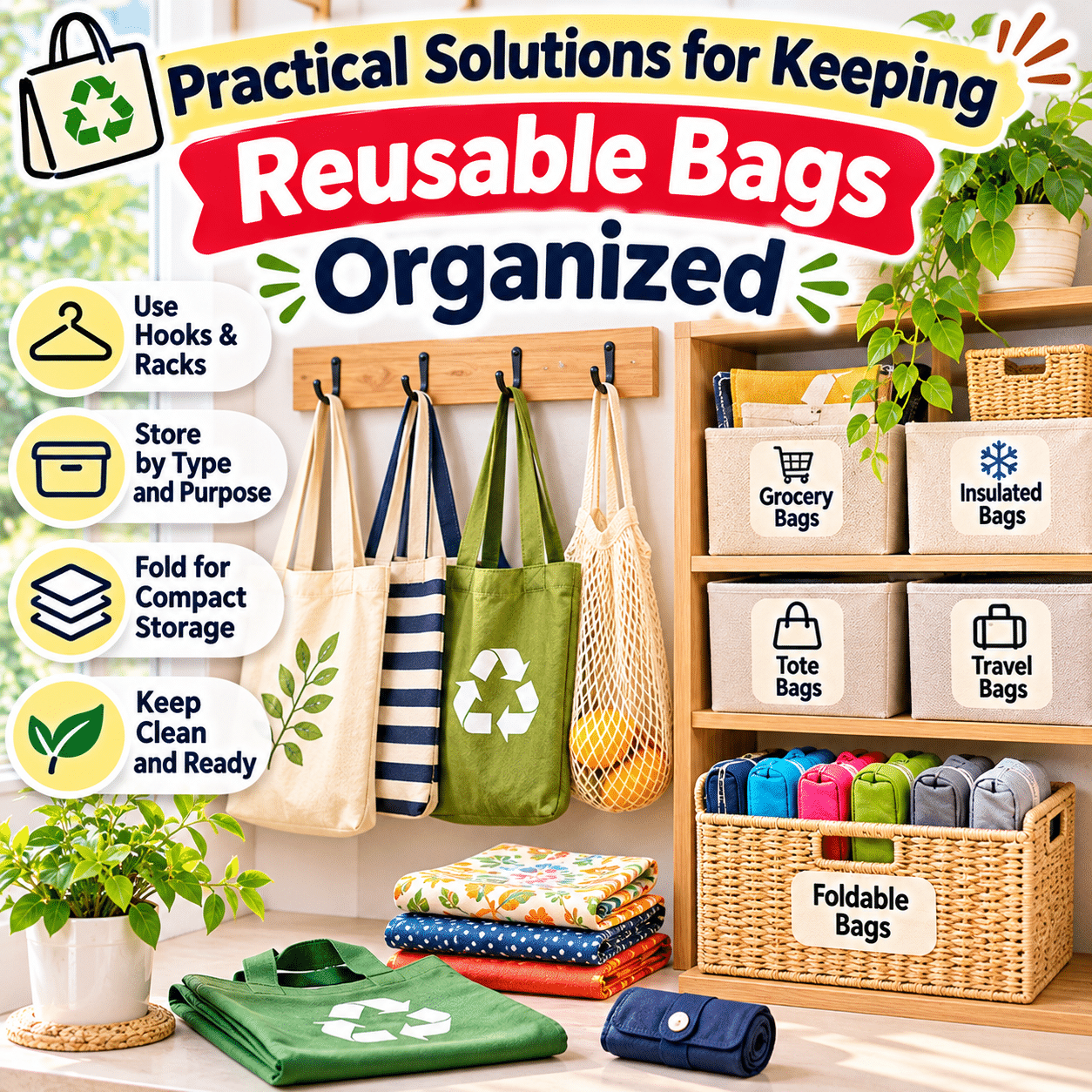
Reusable bags have become practical everyday essentials for shopping, commuting, traveling, carrying personal belongings, and managing household activities. From lightweight foldable shopping bags to sturdy canvas totes and insulated grocery carriers, these versatile accessories can help reduce reliance on disposable bags while making daily routines more convenient.
However, reusable bags can quickly become a source of household clutter. They accumulate inside kitchen drawers, hang from door handles, fill entryway baskets, and become forgotten in closets or vehicle compartments. Some are used regularly, while others remain buried beneath a growing collection of similar bags.
The challenge is not simply finding enough storage space. It is creating an organization system that makes reusable bags easy to locate, convenient to carry, and simple to return after use.
Fortunately, keeping reusable bags organized does not require elaborate storage furniture or expensive accessories. Thoughtful sorting, compact folding methods, dedicated storage locations, and consistent cleaning habits can make a significant difference.
This comprehensive guide explores practical solutions for organizing reusable bags at home, preparing them for everyday errands, maintaining different bag materials, and building a long-term system that prevents unnecessary clutter.
1. Understand Why Reusable Bags Become Disorganized
Before improving storage, it helps to understand why reusable bags tend to accumulate in unexpected places.
Reusable Bags Serve Different Purposes
Households often keep several types of bags for different activities.
Common examples include:
- Lightweight grocery bags.
- Foldable shopping bags.
- Canvas tote bags.
- Insulated food carriers.
- Reusable produce bags.
- Large household shopping bags.
- Travel totes.
- Everyday carry bags.
- Specialty bags for particular activities.
Because these bags have different shapes, sizes, and materials, they are not always easy to store together.
Bags Are Frequently Moved Between Locations
Reusable bags travel between homes, stores, workplaces, vehicles, and other destinations.
After use, they may be left wherever belongings are unpacked.
New Bags Accumulate Over Time
Reusable bags are sometimes included with purchases, distributed at events, or acquired because they feature attractive designs.
Without regular review, the collection can grow beyond practical needs.
Storage Locations Are Often Inconvenient
A bag stored deep inside a crowded cabinet may be difficult to retrieve before a quick shopping trip.
When storage is inconvenient, bags are more likely to remain scattered around the home.
Understanding these patterns helps create a system that supports actual everyday habits.
2. Start With a Complete Reusable Bag Inventory
The first step toward organizing reusable bags is identifying what you already own.
Gather Bags From Around the Home
Check locations such as:
- Kitchen drawers.
- Entryway cabinets.
- Coat closets.
- Laundry areas.
- Bedroom wardrobes.
- Storage baskets.
- Backpacks and handbags.
- Vehicle compartments.
- Travel luggage.
Bring the bags together so you can assess the collection.
Sort Bags by Function
Group bags according to their primary use.
| Bag Type | Typical Purpose | Storage Consideration |
|---|---|---|
| Foldable shopping bags | Everyday purchases | Compact, accessible storage |
| Canvas tote bags | Shopping and daily activities | Hooks, shelves, or folded storage |
| Insulated grocery bags | Temperature-sensitive groceries | Clean, dry, shape-supporting storage |
| Reusable produce bags | Fruits and vegetables | Small pouch or kitchen drawer |
| Large grocery carriers | Bulkier shopping trips | Cabinet or designated shelf |
| Travel totes | Trips and occasional outings | Closet or travel storage |
| Specialty reusable bags | Specific activities | Category-based storage |
Inspect Each Bag
Look for:
- Torn seams.
- Damaged handles.
- Broken zippers.
- Holes.
- Persistent odors.
- Stains.
- Worn insulation.
- Moisture damage.
Identify Unnecessary Duplicates
Several bags of the same type may be useful, but excessive duplicates can make storage difficult.
Keep a practical number based on your household’s actual needs.
3. Decide Which Reusable Bags Are Worth Keeping
A manageable collection is easier to organize and maintain.
Prioritize Bags You Actually Use
Consider how frequently each bag is used.
A sturdy grocery tote that accompanies weekly shopping trips may deserve a convenient storage location.
A rarely used specialty bag may belong in secondary storage.
Evaluate Durability
Keep bags with reliable handles, intact seams, and materials appropriate for their intended purpose.
Consider Capacity and Comfort
A bag may be attractive but impractical if it is difficult to carry or unsuitable for common errands.
Remove Damaged Bags
Bags with weakened handles or structural damage may fail while carrying belongings.
Repair them when practical and safe, or remove them from regular use.
Donate Only Suitable Bags
Clean, functional bags may be accepted by some donation organizations.
Confirm acceptance requirements before donating.
Avoid Keeping Bags Without a Purpose
A collection should reflect actual activities rather than the possibility that every bag might someday become useful.
4. Create a Dedicated Reusable Bag Storage Station
A consistent storage location is one of the simplest ways to prevent reusable bags from spreading throughout the home.
Choose a Convenient Area
Possible locations include:
- Entryway closet.
- Kitchen cabinet.
- Pantry shelf.
- Utility cupboard.
- Laundry room.
- Storage drawer.
Match the Location to Daily Routines
If bags are typically needed when leaving home, an entryway storage station may be convenient.
If they are primarily used for grocery shopping, a kitchen or pantry location may be more practical.
Keep Bags Together
Avoid scattering the same category of bags across several unrelated storage areas.
Maintain Easy Access
Frequently used bags should be retrievable without moving heavy objects or unpacking crowded shelves.
Keep the Storage Area Simple
A single basket, hook system, or drawer may be enough for a small collection.
The goal is reliable access, not an elaborate display.
5. Use Wall Hooks to Organize Tote Bags
Hooks can provide convenient storage for bags with sturdy handles.
Choose Appropriate Hooks
Select hooks designed to support the expected weight.
Group Bags by Purpose
For example:
- Everyday shopping.
- Larger grocery trips.
- Work and commuting.
- Occasional activities.
Avoid Overloading
Hanging too many bags from one hook may damage the hook, wall attachment, or bag handles.
Keep Walkways Clear
Bags should not obstruct doors, hallways, or frequently used passageways.
Consider Appearance
A small row of neatly arranged totes can blend into an entryway or utility area.
Store Empty Bags
Avoid leaving heavy contents inside hanging bags unless the hooks and supporting structure are designed for the load.
6. Use Baskets and Bins for Foldable Reusable Bags
Foldable bags are compact but can become tangled when stored loosely.
Choose a Suitable Container
A small basket or bin can hold several folded bags.
Fold Bags Before Storage
Consistent folding reduces unnecessary bulk.
Avoid Overfilling
An overcrowded basket makes individual bags difficult to retrieve.
Consider Open Storage
An open basket can be convenient when bags are used frequently.
Use Closed Storage When Appropriate
A cabinet or lidded container may protect clean bags from dust.
Keep the Container Clean
Remove accumulated debris and wipe or wash the container as appropriate.
7. Learn Simple Folding Methods for Reusable Bags
Folding techniques can make reusable bags easier to store and carry.
Basic Flat-Folding Method
- Empty the bag completely.
- Smooth the material on a clean surface.
- Fold the sides inward.
- Fold the bag into a narrow rectangle.
- Fold from the bottom toward the handles.
- Secure the folded shape using an attached strap or pouch when provided.
Compact Rolling Method
Some lightweight fabric bags can be rolled rather than folded.
This method may work well for flexible materials that do not contain rigid inserts.
Built-In Pouch Method
Certain reusable bags include an attached storage pocket.
Follow the manufacturer’s folding instructions.
Avoid Forcing Structured Bags
Insulated bags, rigid-bottom carriers, and reinforced totes may be damaged by aggressive folding.
Store these bags according to their construction.
Keep Folding Practical
A simple, repeatable fold is more useful than a complicated technique that takes too much time.
8. Organize Reusable Bags Inside Kitchen Cabinets
Kitchen storage is convenient for households that primarily use reusable bags for groceries.
Choose a Dedicated Cabinet Section
Reserve a small shelf or drawer for shopping bags.
Separate Bags by Size
Possible groups include:
- Small foldable bags.
- Medium grocery totes.
- Large shopping carriers.
- Insulated bags.
Store Frequently Used Bags Near the Front
Avoid burying everyday bags behind occasional-use accessories.
Keep Bags Away From Cleaning Chemicals
Do not store food-carrying bags where they may become contaminated by household chemicals.
Protect Against Moisture
Ensure bags are clean and dry before placing them in enclosed cabinets.
Avoid Excessive Compression
Structured bags may lose their shape when tightly packed.
9. Make Reusable Bags Easy to Find Near the Entryway
An entryway storage system can reduce the likelihood of forgetting bags when leaving home.
Create a Grab-and-Go Station
Use a small basket, drawer, or hook system near the exit.
Keep Everyday Bags Accessible
Store one or two frequently used bags where they can be retrieved quickly.
Separate Empty Bags From Personal Belongings
Avoid mixing reusable bags with keys, mail, footwear, and unrelated items.
Use a Simple Reminder
A checklist near the door or a recurring shopping routine may help you remember bags.
Keep the Area Uncluttered
An entryway should remain comfortable to move through.
Avoid allowing bags to accumulate on the floor.
10. Keep Reusable Bags Ready for Grocery Shopping
A practical shopping routine can prevent last-minute searching.
Prepare a Grocery Bag Set
Choose bags suited to your usual shopping needs.
A set might include:
- General grocery totes.
- Produce bags.
- An insulated carrier when appropriate.
- A spare foldable bag.
Match Bags to Shopping Habits
Smaller shopping trips may require only one compact bag.
Larger trips may require multiple sturdy carriers.
Check Bag Condition Before Leaving
Inspect handles and seams, especially when carrying heavier groceries.
Avoid Overloading
Follow any stated weight limits and distribute loads appropriately.
Return Bags After Unpacking
Once groceries are removed, clean bags as necessary and return them to their storage location.
11. Organize Reusable Bags in a Vehicle
For households that regularly travel by car, vehicle storage can make shopping bags more convenient.
Use a Dedicated Compartment
A suitable trunk organizer or secure storage area may help keep bags contained.
Prevent Bags From Moving Around
Loose bags can shift during driving.
Keep them secured and away from pedals, driver controls, and visibility areas.
Avoid Excessive Heat Exposure
Vehicle interiors can become very hot.
Prolonged heat may affect certain bag materials, coatings, or adhesives.
Do Not Store Damp Bags
Moisture trapped in a vehicle may contribute to odors and material deterioration.
Keep Bags Clean
Inspect bags regularly for food residue and dirt.
Maintain a Home Storage Backup
A small set at home can be useful when vehicle bags are unavailable.
12. Keep Foldable Bags Inside Everyday Handbags or Backpacks
A compact reusable bag can be useful for unexpected purchases.
Choose a Lightweight Design
A small folded bag should not take up excessive space.
Use a Dedicated Pocket
Keep the bag in a consistent compartment.
Avoid Mixing With Sharp Objects
Keys, tools, or other sharp accessories may damage lightweight fabric.
Clean After Use
If the bag carries food or becomes dirty, clean it appropriately before returning it to your personal bag.
Check It Periodically
Ensure the bag remains in good condition and has not become damp or damaged.
Avoid Carrying Too Many Spares
One suitable compact bag may be enough for occasional errands.
13. Separate Grocery Bags From Bags Used for Other Purposes
Different uses can expose bags to different types of dirt and contamination.
Create Functional Categories
For example:
- Food shopping bags.
- General shopping bags.
- Outdoor activity bags.
- Household utility bags.
Avoid Cross-Contamination
Bags used for shoes, cleaning equipment, or dirty household items should not be used for unpackaged food without appropriate cleaning and suitability.
Consider Dedicated Raw Food Carriers
Raw meat, poultry, and seafood should be packaged to prevent leakage and contamination.
Using a designated, washable bag or secondary protective packaging may help reduce cross-contamination.
Keep Bags Clearly Identifiable
Simple labels or color differences can help distinguish purposes.
Wash When Necessary
Cleaning requirements depend on the bag material and what it has carried.
14. Clean Reusable Bags Properly Before Storage
Reusable bags can accumulate dirt, moisture, food residue, and odors.
Check Care Instructions
Different materials require different cleaning methods.
Wash Suitable Fabric Bags
Some cotton and polyester bags can be machine-washed, while others require hand washing.
Follow manufacturer instructions.
Wipe Coated or Structured Bags
Certain bags are designed for surface cleaning rather than immersion.
Clean Insulated Bags Carefully
Wipe interior surfaces using methods suitable for the lining.
Pay attention to seams and corners where spills may collect.
Dry Completely
Never place damp bags into tightly enclosed storage.
Inspect After Cleaning
Check for weakened seams, damaged coatings, or other deterioration.
Clean Food-Carrying Bags Regularly
Wash or clean bags whenever they become soiled, especially after leaks involving raw foods or other potentially contaminating materials.
15. Prevent Moisture and Odors in Stored Reusable Bags
Moisture is a common cause of unpleasant storage conditions.
Dry Bags Before Folding
Even small amounts of trapped moisture can create problems.
Avoid Damp Storage Locations
Choose a dry area with suitable ventilation.
Clean Food Residue Promptly
Food particles can contribute to odors and attract pests.
Avoid Masking Odors With Strong Fragrances
Fragrance does not remove contamination.
Clean the source of the odor instead.
Inspect Long-Stored Bags
Occasionally unfold bags that have been stored for extended periods.
Replace Bags That Cannot Be Cleaned Adequately
Persistent contamination, damaged linings, or material deterioration may make a bag unsuitable for continued use.
16. Organize Insulated Reusable Bags
Insulated bags require special attention because they may contain foam layers, reflective linings, or reinforced structures.
Store Them Clean and Dry
Wipe interior surfaces after use and allow them to dry thoroughly.
Preserve Their Shape
Avoid forcing rigid insulated bags into tightly compressed spaces.
Use Suitable Storage Locations
A cabinet shelf or utility storage area may work well.
Inspect Interior Linings
Look for tears, peeling, or damage that makes cleaning difficult.
Understand Their Limitations
Insulated bags may help maintain food temperatures for a limited time, but they do not replace proper refrigeration or safe food-handling practices.
Use Additional Cooling When Needed
For temperature-sensitive groceries, follow food-safety guidance and use appropriate cooling methods when necessary.
17. Keep Reusable Produce Bags Organized
Reusable produce bags are often smaller and lighter than standard shopping bags.
Store Them Together
Use a small pouch, drawer organizer, or dedicated basket.
Separate Clean and Used Bags
Do not mix bags that need washing with clean ones.
Choose Suitable Materials
Mesh and lightweight fabric bags may be convenient for certain produce items.
Consider Food Contact
Use bags intended for food contact when carrying unpackaged produce.
Wash Appropriately
Follow care instructions and clean bags when they become dirty.
Keep Them With Grocery Supplies
Storing produce bags near regular grocery totes can make shopping preparation easier.
18. Organize Reusable Bags in Small Apartments
Limited storage space makes compact organization especially valuable.
Use Vertical Storage
Suitable hooks or wall-mounted organizers may free up cabinet space.
Choose Foldable Bags
Flexible bags often require less storage space than rigid carriers.
Use Existing Cabinet Space
A small section of an entryway or kitchen cabinet may be sufficient.
Avoid Large Storage Containers
Oversized bins can consume more space than the bags themselves.
Limit Unnecessary Duplicates
Keep a practical collection based on actual usage.
Preserve Walkways
Do not allow bags to accumulate near doors or narrow passages.
Consider Multi-Purpose Storage
A suitable drawer organizer or compact basket may accommodate several related shopping accessories.
19. Create a Reusable Bag System for Family Households
Households with multiple people may need a shared organization system.
Establish a Common Storage Location
Choose a place everyone can access appropriately.
Use Simple Categories
Separate grocery bags from general-purpose totes and specialty carriers.
Make Returning Bags Easy
Encourage household members to return clean, dry bags after use.
Keep Storage Rules Clear
A simple system is easier to maintain than complicated sorting requirements.
Consider Individual Needs
Some family members may prefer smaller or lighter bags.
Review the Collection Together
Periodically identify bags that are no longer useful.
20. Reduce Unnecessary Reusable Bag Purchases
Reusable bags are intended for repeated use, but accumulating more than necessary can undermine their practical benefits.
Check Your Existing Collection
Before buying another bag, consider whether a suitable one is already available.
Choose Bags for Specific Needs
Prioritize capacity, durability, comfort, and cleaning requirements.
Avoid Purchasing Based Only on Appearance
Attractive designs may encourage unnecessary accumulation.
Consider Long-Term Use
A durable bag that is used regularly may be more practical than several rarely used alternatives.
Repair When Appropriate
Minor stitching problems or replaceable components may sometimes be repaired.
However, do not rely on repairs that leave handles or structural areas unsafe.
Focus on Repeated Use
The environmental benefits of reusable bags depend on factors such as material, production impacts, number of uses, and end-of-life handling.
No single bag material is automatically the best choice in every circumstance.
Using suitable bags consistently and for a long time is a sensible general approach.
21. Make Reusable Bag Storage More Visually Appealing
Practical storage can also contribute to an organized home.
Choose Coordinated Containers
A simple basket or storage bin can complement existing furniture.
Fold Bags Consistently
Uniform folding creates a tidier appearance and improves accessibility.
Use Neutral Storage Locations
Cabinets and drawers can keep large collections out of sight.
Display Only Suitable Bags
A few frequently used totes may look attractive on hooks.
Avoid Decorative Overcrowding
Too many hanging bags can make an entryway appear cluttered.
Prioritize Function
An attractive storage system should still be easy to use and maintain.
22. Common Mistakes When Organizing Reusable Bags
Even simple storage systems can become ineffective when common problems are overlooked.
Mistake 1: Keeping Every Bag Ever Acquired
An excessive collection creates unnecessary clutter.
Better approach: Keep bags that serve practical purposes and remove unnecessary duplicates.
Mistake 2: Storing Bags While Damp
Trapped moisture can contribute to odors and material deterioration.
Better approach: Dry bags completely before folding or enclosing them.
Mistake 3: Mixing Dirty and Clean Bags
Contamination may transfer between items.
Better approach: Separate bags that require cleaning.
Mistake 4: Using One Bag for Every Purpose
Bags used for dirty equipment may be unsuitable for carrying food.
Better approach: Separate bags by intended use when appropriate.
Mistake 5: Overloading Hooks
Excessive weight may damage hooks or supporting surfaces.
Better approach: Use properly installed hardware and distribute loads.
Mistake 6: Folding Structured Bags Too Tightly
Rigid components or insulated linings may become damaged.
Better approach: Store structured bags without excessive compression.
Mistake 7: Keeping Bags in Inconvenient Locations
Bags become easy to forget.
Better approach: Store frequently used bags near regular departure or shopping preparation areas.
Mistake 8: Ignoring Bag Damage
Weak handles or torn seams can lead to failure during use.
Better approach: Inspect bags and remove unsafe items.
Mistake 9: Buying More Bags Without Reviewing Existing Ones
Unnecessary purchases increase clutter.
Better approach: Evaluate the current collection before adding new bags.
Mistake 10: Creating an Overcomplicated System
Too many categories or containers make organization difficult to maintain.
Better approach: Use a simple arrangement based on real habits.
23. Troubleshooting Common Reusable Bag Organization Problems
| Problem | Possible Cause | Practical Solution |
|---|---|---|
| Bags overflow from cabinets | Excessive collection | Remove unnecessary duplicates and sort by purpose |
| Foldable bags become tangled | Loose storage | Fold consistently and use a small container |
| Bags are forgotten before shopping | Inconvenient storage location | Create an entryway or shopping preparation station |
| Tote bags clutter door handles | No designated hanging area | Install suitable hooks or use cabinet storage |
| Bags develop unpleasant odors | Moisture or food residue | Clean and dry thoroughly before storage |
| Insulated bags lose their shape | Excessive compression | Store with adequate support |
| Grocery bags become dirty | Food spills or contamination | Clean according to material and usage |
| Bags are scattered between rooms | No consistent return routine | Establish a designated storage location |
| Vehicle bags become dusty | Long-term exposure and poor containment | Use suitable storage and inspect regularly |
| Small apartment feels crowded | Bulky bags and unnecessary duplicates | Prioritize foldable bags and compact storage |
| Family members cannot find bags | Inconsistent storage | Use shared locations and simple categories |
| Bag handles become damaged | Overloading or improper hanging | Respect capacity limits and inspect regularly |
Troubleshooting is most effective when the underlying cause is addressed rather than simply moving bags into another crowded space.
24. Build a Simple Reusable Bag Organization Checklist
A consistent checklist can help maintain a manageable collection.
Initial Organization
- Gather reusable bags from around the home.
- Sort bags by type and purpose.
- Inspect handles, seams, and closures.
- Remove damaged or unnecessary bags.
- Choose a dedicated storage location.
- Fold flexible bags consistently.
- Store structured bags appropriately.
- Separate clean and dirty bags.
- Keep frequently used bags accessible.
Before Shopping
- Choose bags suited to the planned purchases.
- Check that bags are clean and dry.
- Inspect handles and seams.
- Include suitable produce bags when needed.
- Prepare an insulated carrier if appropriate.
- Avoid carrying unnecessary extra bags.
After Shopping
- Empty all bags completely.
- Check for spills and food residue.
- Clean bags when necessary.
- Allow bags to dry thoroughly.
- Fold suitable bags.
- Return bags to their designated locations.
- Keep food-carrying bags separate from dirty utility bags.
Weekly Tasks
- Return misplaced bags.
- Check the main storage area.
- Remove accumulated debris.
- Inspect frequently used bags.
- Reorganize bags that have become tangled.
- Prepare a convenient shopping set.
Periodic Tasks
- Review the complete bag collection.
- Identify unnecessary duplicates.
- Inspect less frequently used bags.
- Clean storage containers.
- Reassess storage capacity.
- Repair or replace damaged bags when appropriate.
- Adjust the system to changing household needs.
25. Frequently Asked Questions About Organizing Reusable Bags
1. What is the easiest way to organize reusable shopping bags?
Choose one designated storage location, fold flexible bags consistently, and keep frequently used bags near the area where you prepare to leave home.
2. How many reusable bags should a household keep?
There is no universal number. Keep enough bags for typical shopping and household activities without maintaining unnecessary duplicates.
3. What is the best place to store reusable grocery bags?
A kitchen cabinet, pantry shelf, entryway closet, or suitable storage basket can work well. Choose a location that matches your routine.
4. How can I keep reusable bags from cluttering my kitchen?
Use a dedicated drawer, cabinet section, or compact container rather than leaving bags on countertops and handles.
5. Should reusable bags be folded before storage?
Flexible bags are generally easier to organize when folded. Structured or insulated bags may require different storage methods.
6. What is the best way to fold reusable shopping bags?
A simple flat fold or roll often works well for lightweight fabric bags. Follow manufacturer guidance for bags with built-in storage pouches.
7. Can reusable bags be stored on hooks?
Yes, provided the hooks are securely installed, the bags are appropriately supported, and the arrangement does not obstruct movement.
8. How can I organize canvas tote bags?
Fold them neatly or hang them from suitable hooks. Avoid overloading handles or compressing bags unnecessarily.
9. How should insulated grocery bags be stored?
Clean and dry them thoroughly, then store them without excessive compression that could damage their structure.
10. Can reusable bags be stored in a car?
They can be stored in a secure vehicle compartment, but consider heat exposure, cleanliness, moisture, and the risk of loose items moving during driving.
11. How can I remember to bring reusable bags when shopping?
Keep a shopping set near your departure area and include bags in your regular shopping preparation routine.
12. Should I keep a reusable bag in my handbag?
A compact foldable bag can be convenient for unexpected purchases, provided it fits comfortably and remains clean.
13. How do I organize reusable produce bags?
Store them together in a small pouch or kitchen drawer near your regular grocery bags.
14. Should grocery bags be separated from other reusable bags?
Separating food-carrying bags from bags used for dirty equipment or unrelated purposes can help reduce contamination risks.
15. How often should reusable grocery bags be washed?
Clean them whenever they become soiled, after leaks or contamination, and according to their material and care instructions. Bags used for unpackaged food may require more frequent attention.
16. Can canvas reusable bags go in the washing machine?
Some canvas bags are machine-washable, while others may shrink, lose shape, or contain components unsuitable for machine washing. Check care instructions.
17. How should reusable bags with coated interiors be cleaned?
Follow manufacturer instructions. Many coated bags are intended for wiping rather than full immersion.
18. Why do stored reusable bags develop unpleasant odors?
Food residue, moisture, inadequate drying, or contamination may contribute to odors.
19. How can I prevent reusable bags from developing mildew?
Clean and dry bags thoroughly before storage and avoid keeping them in damp, poorly ventilated locations.
20. Are reusable bags safe for carrying groceries?
Reusable bags can be suitable for groceries when they are made for the intended purpose, kept clean, and used with appropriate food-handling practices.
21. How can I organize reusable bags in a small apartment?
Use compact folding methods, suitable hooks, small cabinet sections, and a manageable collection.
22. Should I donate extra reusable bags?
Clean, functional bags may be suitable for donation if a receiving organization accepts them.
23. When should a reusable bag be replaced?
Replace bags when damage, contamination, or material deterioration makes them unsuitable or unsafe for their intended use.
24. Are reusable bags always better for the environment?
Environmental impacts vary by material, manufacturing, usage frequency, and disposal. Repeated use and avoiding unnecessary purchases are important considerations.
25. What is the most important habit for keeping reusable bags organized?
Returning clean, dry bags to a consistent storage location immediately after use is one of the most effective habits.
26. Create a Long-Term Reusable Bag Organization System
A sustainable storage system should remain convenient as household needs change.
Keep the Collection Manageable
Maintain a practical number of bags based on real activities.
Choose Consistent Storage Locations
Avoid scattering reusable bags throughout the home.
Prioritize Frequently Used Bags
Keep everyday shopping bags accessible and store occasional-use bags separately.
Maintain Cleanliness
Wash or wipe bags when appropriate and dry them thoroughly before storage.
Protect Bag Materials
Use folding and storage methods suited to each bag’s construction.
Reduce Unnecessary Purchases
Review existing bags before adding new ones.
Make Returning Bags Easy
Choose storage that supports natural routines.
Review the System Periodically
Adjust storage arrangements when shopping habits, household size, or available space changes.
Focus on Practical Reuse
A well-maintained bag collection should support repeated use without creating unnecessary household clutter.
Final Thoughts
Reusable bags are useful everyday accessories, but their convenience can quickly disappear when they become scattered throughout the home.
The most effective organization solutions are often simple: sort bags by purpose, keep a manageable collection, fold flexible bags consistently, and establish dedicated storage locations that match daily routines.
Small changes such as creating an entryway shopping station, using a compact storage basket, separating grocery bags from utility bags, and returning clean bags after each trip can make a noticeable difference.
Regular cleaning and proper drying are equally important. A well-organized collection should not only be easy to access but also hygienic, durable, and ready for repeated use.
The goal is not to create a perfectly arranged collection of bags. It is to make reusable bags convenient enough that they become a natural part of everyday life.
With thoughtful storage and a few consistent habits, reusable bags can remain practical, accessible, and easy to maintain—supporting a tidier home and more intentional everyday routines for years to come.