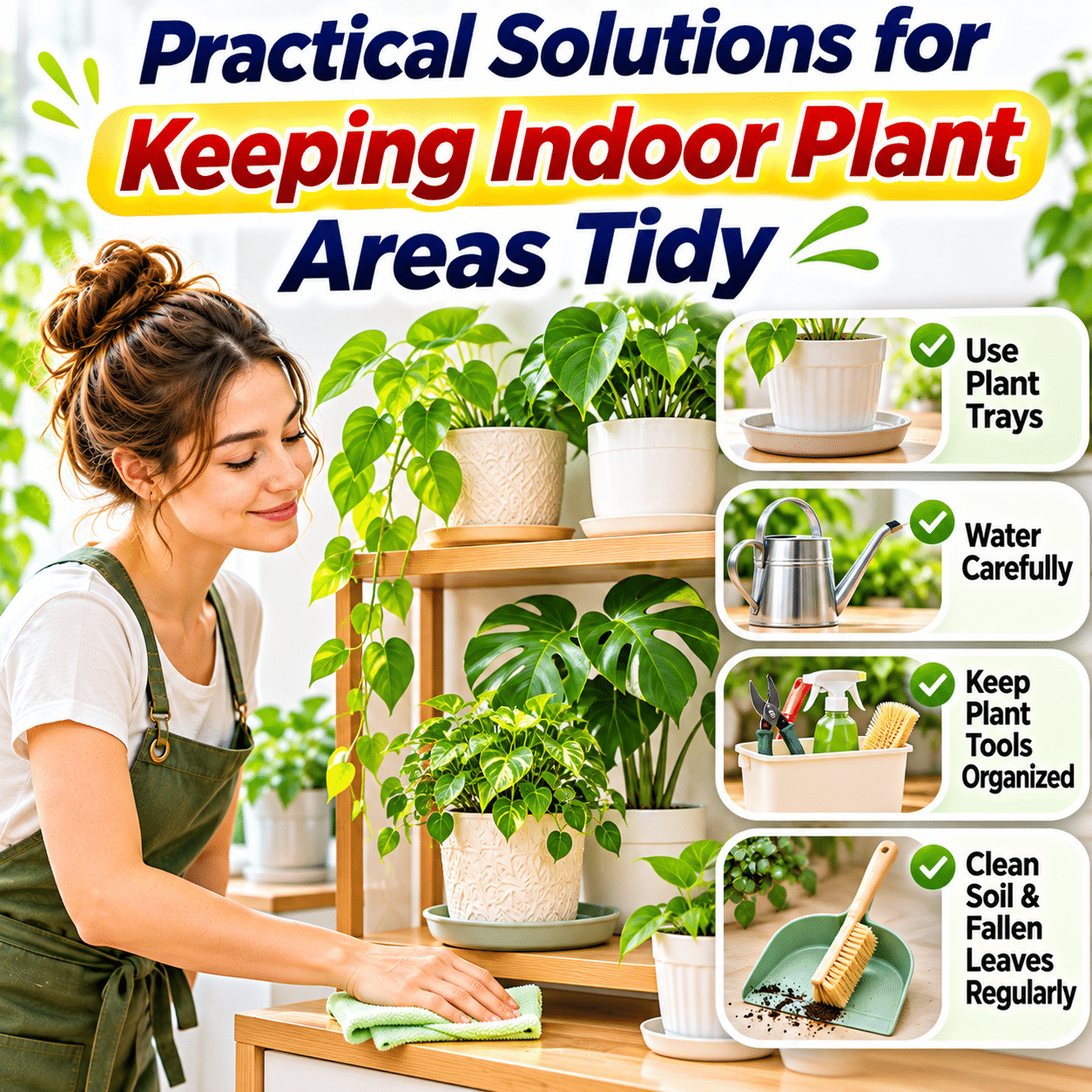
Indoor plants can transform ordinary living spaces into inviting, nature-inspired environments. A few carefully placed houseplants can soften the appearance of furniture, introduce natural textures, and make rooms feel more welcoming. Whether arranged on windowsills, shelves, desks, or dedicated plant stands, greenery adds character to everyday home decor.
However, maintaining an attractive indoor plant display involves more than choosing beautiful containers and keeping plants healthy. Potting mix can scatter during repotting, fallen leaves may collect beneath containers, watering tools can become cluttered, and moisture may accumulate around plant stands or decorative pots.
Over time, even a small collection of houseplants can create unexpected housekeeping challenges. Soil particles may spread across shelves, empty plant pots can occupy valuable storage space, and plant-care accessories may end up scattered throughout the home.
Fortunately, keeping indoor plant areas tidy does not require elaborate organization systems or constant cleaning. A few thoughtful habits can make plant care more convenient while preserving the natural beauty of indoor greenery.
The most effective approach combines practical plant placement, controlled watering, suitable storage, routine cleanup, and simple maintenance. These strategies help prevent messes before they develop rather than relying on frequent intensive cleaning.
This guide explores practical solutions for organizing indoor plant areas, managing soil and fallen leaves, protecting household surfaces, storing gardening supplies, and creating attractive plant displays that remain easy to maintain over time.
1. Understand What Makes Indoor Plant Areas Messy
Before improving an indoor plant setup, it helps to identify the most common sources of clutter and mess.
Loose Potting Mix
Potting mix may escape from containers during watering, moving, or repotting.
Small particles can collect around drainage holes, beneath pots, and along shelf edges.
Fallen Leaves and Plant Debris
Indoor plants naturally shed some leaves as they grow.
Dried leaves, flower petals, and small stems may accumulate around containers, particularly when plants have dense foliage.
Watering Spills
Water can drip from drainage holes, overflow from saucers, or splash onto surrounding surfaces.
Repeated moisture exposure may also leave stains or mineral deposits.
Scattered Plant-Care Supplies
Common accessories include:
- Watering cans.
- Plant scissors.
- Small pruning tools.
- Potting mix.
- Fertilizers.
- Plant labels.
- Cleaning cloths.
- Spare containers.
- Plant supports.
Without designated storage, these items can gradually spread across living areas.
Overcrowded Displays
Too many plants placed close together can make cleaning difficult.
Crowded arrangements may also limit access for watering, inspection, and routine maintenance.
Understanding these challenges makes it easier to create a plant-care system that is both attractive and practical.
2. Choose Plant Locations That Are Easy to Maintain
The placement of indoor plants affects not only their growing conditions but also how easily surrounding areas can be cleaned.
Consider Access Before Decorating
A plant may look beautiful on a high shelf, but reaching it for watering or pruning can be inconvenient.
Choose locations that allow safe access without awkward stretching or moving several objects.
Keep Plants Away From Sensitive Belongings
Avoid placing containers where soil or water could damage:
- Books.
- Important documents.
- Electronics.
- Delicate furniture.
- Electrical outlets.
- Valuable decorative objects.
Use suitable protective surfaces when plants are displayed near household belongings.
Allow Space Around Containers
Leave enough room to lift pots, remove fallen leaves, and wipe surrounding surfaces.
This is especially important for plants with trailing stems or spreading foliage.
Consider Natural Light Requirements
A tidy display should still support plant health.
Choose locations that provide suitable light for each species.
Avoid placing plants in unsuitable conditions simply because a particular corner looks attractive.
Keep Walkways Clear
Large floor plants should not obstruct doors, hallways, or frequently used walking areas.
Stable placement helps reduce accidental tipping and spilled potting mix.
3. Use Protective Trays Beneath Plant Containers
Protective trays are among the simplest ways to keep indoor plant displays clean.
Choose Waterproof Materials
A waterproof tray can collect minor spills, loose soil, and debris.
Common options include:
- Plastic trays.
- Glazed ceramic trays.
- Suitable metal trays.
- Waterproof plant mats.
- Durable resin trays.
Choose materials appropriate for the weight of the plants and the surrounding surface.
Use Trays With Raised Edges
Raised edges help contain water and loose particles.
Flat decorative mats may protect against minor splashes but cannot reliably contain significant drainage.
Group Small Plants on One Tray
A single large tray can hold several small containers.
This creates a visually organized display and simplifies cleaning.
However, ensure the tray remains stable and has sufficient capacity for any drainage water.
Empty Standing Water
After watering, remove excess water from trays and saucers.
Prolonged standing water may affect plant roots, create unpleasant conditions, or attract certain pests.
Clean Trays Regularly
Lift containers periodically and remove accumulated debris.
Wash and dry trays using methods suitable for their materials.
4. Prevent Potting Mix From Spreading Around Plants
Loose growing media can make otherwise attractive plant displays appear untidy.
Fill Pots Carefully
When adding potting mix, avoid filling containers above their practical capacity.
Leave suitable space below the rim to help contain the medium during watering.
Use a Small Potting Scoop
A scoop provides greater control than pouring directly from a large bag.
It can help reduce spills when filling small indoor pots.
Work Over a Protective Surface
When adding or replacing potting mix, use:
- A waterproof repotting mat.
- A large utility tray.
- A washable work surface.
- A suitable outdoor work area.
Clean Pot Exteriors
After repotting, wipe loose soil from the outside of containers.
Check the bottom of each pot before returning it to furniture.
Avoid Unnecessary Soil Disturbance
Repeatedly moving or rearranging containers may loosen surface material.
Handle pots carefully and avoid disturbing roots or growing media without a reason.
5. Create a Dedicated Indoor Repotting Station
Repotting is one of the messiest indoor plant-care activities.
A dedicated workspace can make the process easier to manage.
Choose an Appropriate Work Area
Suitable locations may include:
- A utility table.
- A laundry room counter.
- A protected kitchen work surface.
- A balcony.
- A covered outdoor area.
Choose a stable surface with adequate lighting and enough space for tools.
Use a Repotting Mat
A waterproof mat with raised or foldable edges can help contain loose growing media.
After repotting, collected material can be handled without spreading it across the room.
Prepare Supplies Before Starting
Gather:
- The new container.
- Suitable potting mix.
- A small scoop.
- Clean pruning tools when needed.
- A collection container for debris.
- A cloth for cleanup.
- A suitable watering tray.
Having everything ready reduces unnecessary movement during the task.
Keep Clean and Used Materials Separate
Avoid mixing contaminated or pest-affected growing media with fresh potting mix.
Use clean tools and containers when appropriate.
Clean the Workspace Immediately
After repotting:
- Collect loose growing media.
- Remove plant debris.
- Clean reusable tools.
- Wipe the work surface.
- Dry the area.
- Return supplies to storage.
This prevents a temporary gardening activity from becoming lasting household clutter.
6. Manage Fallen Leaves and Plant Debris Regularly
Some leaf shedding is a normal part of plant growth.
However, accumulated debris can make plant displays appear neglected.
Remove Fallen Leaves Promptly
Check beneath plants and around containers during routine watering.
Collect dried leaves and fallen petals before they accumulate.
Inspect the Growing Medium
Fallen plant material may collect on the surface of the potting mix.
Remove excessive debris when practical without disturbing healthy roots.
Use Appropriate Pruning Tools
Clean, sharp tools can make removing dead or damaged plant material easier.
Follow species-specific pruning recommendations.
Avoid Removing Healthy Foliage Unnecessarily
Not every yellowing or older leaf indicates a problem requiring immediate pruning.
Assess the plant’s condition before removing foliage.
Investigate Unusual Leaf Loss
Excessive shedding may result from:
- Inappropriate watering.
- Insufficient or excessive light.
- Temperature stress.
- Pest activity.
- Environmental changes.
- Natural seasonal or growth patterns.
Correcting the underlying cause may reduce recurring debris.
7. Keep Watering Areas Clean and Dry
Watering is essential for indoor plant care, but it can also create spills and moisture buildup.
Use a Controlled Watering Can
A narrow-spout watering can helps direct water toward the growing medium.
This is particularly useful for small containers and crowded displays.
Water Gradually
Pour slowly and allow the growing medium to absorb moisture.
Avoid adding water so quickly that it overflows the pot.
Use Suitable Saucers
Place draining pots on properly sized waterproof saucers.
Check that the saucers are level and stable.
Consider a Separate Watering Area
Small plants may be watered in a suitable sink or waterproof tray.
Allow excess water to drain before returning them to display.
Wipe Residual Moisture
Check the outside and bottom of containers after watering.
Dry surrounding surfaces promptly.
Inspect Hidden Water
Decorative outer pots can conceal collected drainage water.
Empty them when necessary rather than allowing water to remain unnoticed.
8. Organize Watering Cans and Plant-Care Tools
A tidy plant area benefits from having a designated location for everyday accessories.
Create a Small Plant-Care Kit
A basic kit may contain:
- A watering can.
- A small scoop.
- Pruning scissors.
- A soft cleaning brush.
- A microfiber cloth.
- Plant labels.
- A small collection container.
Keep only the tools regularly needed for the plants in the home.
Use a Storage Caddy
A portable caddy can keep accessories together.
Choose one that is easy to clean and comfortable to carry.
Separate Wet and Dry Tools
Allow watering equipment and washed tools to dry before enclosed storage.
Store Sharp Tools Safely
Keep pruning scissors and other sharp accessories securely stored.
Keep Fertilizers in Original Containers
Follow manufacturer storage instructions.
Keep fertilizers and other gardening chemicals away from children, pets, food, and inappropriate storage conditions.
Avoid Overbuying Accessories
A few versatile tools are often sufficient for a modest indoor plant collection.
9. Organize Plant Shelves for Easier Cleaning
Plant shelves can create attractive vertical displays, but they require thoughtful arrangement.
Avoid Overcrowding
Leave enough space between containers to lift and clean them.
Use Stable Shelving
Choose shelves capable of supporting the combined weight of pots, growing media, plants, and water.
Remember that wet growing media can be considerably heavier than dry material.
Place Heavier Pots Lower
Large, heavy containers are generally better positioned on stable lower shelves.
This can improve accessibility and reduce tipping risks.
Protect Shelf Surfaces
Use waterproof saucers or trays beneath draining containers.
Keep Trailing Plants Manageable
Trailing stems can be arranged using suitable supports.
Avoid forcing or tightly binding delicate stems.
Clean One Shelf at a Time
During routine maintenance:
- Remove containers carefully.
- Collect loose debris.
- Wipe the shelf.
- Dry the surface.
- Inspect saucers.
- Return plants to stable positions.
This approach makes larger displays easier to maintain.
10. Keep Windowsill Plant Displays Tidy
Windowsills are popular locations for houseplants because they may provide useful natural light.
However, their narrow surfaces require careful organization.
Choose Appropriately Sized Pots
Avoid containers that extend dangerously beyond the edge.
Use Stable Saucers
Select trays that fit the available space while collecting drainage water.
Check for Condensation
Moisture near windows may come from condensation rather than watering.
Inspect the window frame and surrounding surfaces.
Remove Fallen Leaves
Leaves and soil particles can accumulate in corners and window tracks.
Clean these areas periodically.
Avoid Blocking Window Operation
Ensure plants do not prevent windows from opening, closing, or locking properly.
Consider Temperature Exposure
Windows may expose plants to strong sunlight, cold drafts, or temperature fluctuations.
Choose species and placements accordingly.
11. Maintain Clean Surfaces Around Large Floor Plants
Large houseplants can become focal points in living rooms and entryways.
They also require additional attention because their containers may be difficult to move.
Use Large Waterproof Trays
Choose trays with adequate drainage capacity.
Keep Floors Accessible
Avoid surrounding large planters with unnecessary decorative objects that make cleaning difficult.
Consider Suitable Plant Caddies
Wheeled plant caddies can help reposition heavy containers when rated for the total load.
Use stable designs and lock wheels when appropriate.
Remove Debris Beneath Foliage
Large leaves may conceal fallen material.
Inspect the floor and potting surface regularly.
Check for Moisture Damage
Look for water rings, discoloration, or dampness around containers.
Avoid Unstable Decorative Supports
Heavy planters should not rest on furniture or stands that cannot safely support their weight.
12. Clean Plant Leaves Without Creating Extra Mess
Dust can accumulate on indoor plant leaves.
Cleaning suitable foliage may improve appearance and make pest inspection easier.
Use a Soft Cloth
For plants with smooth, sturdy leaves, a clean, slightly damp cloth may help remove dust.
Support the leaf gently while wiping.
Use a Soft Brush for Delicate Foliage
Some plants have textured, hairy, or delicate leaves that should not be wiped with a wet cloth.
Use species-appropriate methods.
Avoid Excessive Water Spraying
Misting or spraying leaves can create water droplets on furniture and flooring.
It is not a reliable humidity-control method and may be unsuitable for some plants.
Avoid Unnecessary Leaf-Shine Products
Some commercial or homemade leaf-shine treatments may leave residue or damage sensitive foliage.
Use only products specifically appropriate for the plant.
Inspect While Cleaning
Look for:
- Unusual spots.
- Sticky residue.
- Webbing.
- Visible insects.
- Damaged leaves.
- Changes in plant condition.
Early identification of problems can help prevent further issues.
13. Prevent Pest-Related Mess Around Indoor Plants
Indoor plant pests can contribute to sticky residue, damaged foliage, and fallen plant material.
Inspect New Plants
Before placing a new plant near an established collection, inspect its leaves, stems, and growing medium.
Monitor Existing Plants
Check plants regularly for signs of pests.
Common indoor plant pests include:
- Fungus gnats.
- Spider mites.
- Mealybugs.
- Scale insects.
- Aphids.
Remove Fallen Debris
Excess organic debris and persistently wet growing media may contribute to conditions favorable for some pests.
Avoid Overwatering
For plants susceptible to fungus gnats, reducing unnecessarily wet growing conditions may help limit breeding opportunities.
However, watering changes should remain appropriate for the plant species.
Use Appropriate Pest Management
Identify the pest before choosing a treatment.
Follow product instructions and use only methods suitable for indoor plants and household conditions.
Keep Treatments Away From Sensitive Areas
Avoid applying sprays or other treatments near food, electronics, or surfaces that could be damaged.
14. Store Potting Mix and Spare Plant Containers Properly
Unused gardening supplies can create clutter when left scattered around plant displays.
Keep Potting Mix Contained
Store unused potting mix according to manufacturer guidance.
Use suitable containers or secure the original packaging to reduce spills.
Avoid Damp Storage Conditions
Protect growing media from unnecessary water exposure and contamination.
Organize Spare Pots by Size
Stack compatible, clean, dry containers when safe.
Avoid unstable stacks.
Clean Used Pots Before Reuse
Remove old growing media and wash containers as appropriate.
When pest or disease contamination is suspected, use suitable sanitation methods before reuse.
Separate Damaged Containers
Cracked pots may leak or become unstable.
Repair or replace them when appropriate.
Review Unused Supplies
Periodically assess whether extra containers and accessories are still needed.
Avoid allowing spare materials to occupy valuable living space indefinitely.
15. Create Attractive Plant Displays Without Excessive Clutter
A tidy indoor plant arrangement should balance visual appeal and everyday functionality.
Group Plants by Visual Scale
Combining different heights and leaf shapes can create interest without requiring excessive numbers of plants.
Use Coordinated Containers Thoughtfully
Pots do not need to match exactly.
A consistent material, color palette, or general style can create a cohesive appearance.
Leave Negative Space
Empty space around plants helps individual forms stand out.
It also makes cleaning and maintenance easier.
Avoid Too Many Decorative Accessories
Decorative stones, figurines, trays, and ornaments may add personality, but excessive accessories can complicate cleaning.
Consider Plant Growth
A compact plant may eventually become much larger.
Allow enough space for natural growth and future maintenance.
Prioritize Healthy Placement
An attractive arrangement should still provide suitable light, airflow, and accessibility.
Plant health and visual organization work best together.
16. Choose Practical Organization Solutions for Different Plant Areas
Different indoor plant locations benefit from different cleaning and storage strategies.
| Plant Area | Common Challenge | Practical Solution | Maintenance Consideration |
|---|---|---|---|
| Windowsill | Soil particles and water drips | Stable saucers and compact trays | Clean window tracks |
| Bookshelf | Fallen leaves and difficult access | Leave space between pots | Protect books and shelf surfaces |
| Living room floor | Hidden debris around large pots | Waterproof trays and accessible placement | Inspect beneath foliage |
| Home office desk | Water near electronics | Use contained watering elsewhere | Keep electrical devices dry |
| Plant stand | Soil falling onto lower levels | Use trays beneath containers | Check stand stability |
| Hanging planter | Falling leaves and dripping water | Suitable drainage collection | Inspect hanging hardware |
| Kitchen plant corner | Potting mix near food areas | Dedicated trays and careful placement | Maintain food-preparation hygiene |
| Bathroom plant shelf | Humidity and standing water | Stable waterproof containers | Monitor moisture buildup |
| Balcony-adjacent area | Outdoor debris entering indoors | Cleaning mat and designated tool storage | Remove tracked-in soil |
| Repotting workspace | Loose potting mix | Waterproof repotting mat | Clean immediately after use |
The best solution depends on the location, plant type, container design, and surrounding household materials.
17. Establish a Simple Indoor Plant Cleaning Routine
Regular light maintenance is often easier than occasional intensive cleaning.
Daily or During Routine Plant Checks
Look for:
- Visible water spills.
- Fallen leaves.
- Tipped containers.
- Loose potting mix.
- Standing water.
- Tools left outside their storage area.
Not every plant needs daily attention, but visible messes should be addressed promptly.
Weekly Maintenance
Useful tasks may include:
- Collecting fallen leaves.
- Wiping plant saucers.
- Cleaning nearby surfaces.
- Inspecting watering equipment.
- Checking for pests.
- Removing unnecessary clutter.
Monthly Maintenance
Consider:
- Lifting pots to inspect hidden moisture.
- Cleaning plant shelves.
- Washing reusable trays.
- Organizing plant-care supplies.
- Reviewing damaged containers.
- Checking plant stands and supports.
Seasonal Maintenance
During broader plant-care reviews:
- Reassess plant placement.
- Adjust watering habits.
- Inspect growing media.
- Review repotting needs.
- Clean storage areas.
- Remove unused accessories.
These intervals can be adjusted according to the number of plants, species, and growing conditions.
18. Avoid Common Indoor Plant Organization Mistakes
Some familiar habits make indoor plant areas harder to maintain.
Mistake 1: Placing Too Many Plants on One Shelf
Overcrowding limits access and increases the chance of spills.
Better approach: Leave sufficient space for watering and cleaning.
Mistake 2: Using Containers Without Suitable Drainage Protection
Water may escape onto furniture and floors.
Better approach: Use appropriately sized waterproof saucers or trays.
Mistake 3: Leaving Fallen Leaves in Place
Plant debris can accumulate and make displays appear untidy.
Better approach: Remove fallen material during routine checks.
Mistake 4: Repotting Without a Protective Surface
Loose growing media can spread across furniture and flooring.
Better approach: Use a dedicated repotting mat or tray.
Mistake 5: Storing Wet Tools in Closed Containers
Trapped moisture may create odors and contribute to deterioration.
Better approach: Clean and dry tools before storage.
Mistake 6: Ignoring Hidden Water
Decorative outer pots can collect water without visible signs.
Better approach: Inspect and empty collected drainage water.
Mistake 7: Using Unstable Plant Stands
Poorly supported containers may tip and scatter soil.
Better approach: Choose stable supports suitable for the loaded weight.
Mistake 8: Buying Too Many Plant Accessories
Unused tools, containers, and decorations can create unnecessary clutter.
Better approach: Keep a practical collection based on actual plant-care needs.
Mistake 9: Cleaning Leaves With Unsuitable Products
Aggressive cleaners or excessive moisture may damage foliage.
Better approach: Use species-appropriate cleaning methods.
Mistake 10: Prioritizing Appearance Over Accessibility
A beautiful arrangement may become inconvenient if plants are difficult to reach.
Better approach: Balance visual design with safe, practical maintenance.
19. Troubleshoot Common Indoor Plant Area Problems
When a plant display repeatedly becomes messy, identify the underlying cause.
Problem: Soil Keeps Appearing Around the Pot
Possible causes include:
- Overfilled containers.
- Spilled growing media.
- Rough handling.
- Watering too quickly.
- Disturbed surface material.
Practical solution: Adjust the potting level, water carefully, and use a suitable protective tray.
Problem: Water Collects Beneath Decorative Pots
Possible causes include:
- Hidden drainage water.
- Overflowing saucers.
- Cracked containers.
- Residual moisture.
Practical solution: Inspect the drainage arrangement and empty collected water.
Problem: Fallen Leaves Accumulate Quickly
Possible causes include natural shedding, environmental stress, or plant health problems.
Practical solution: Remove debris and assess the plant’s growing conditions.
Problem: Plant Shelves Are Difficult to Clean
Possible causes include overcrowding or unsuitable container placement.
Practical solution: Reduce clutter and leave enough room to move individual pots.
Problem: Plant-Care Tools Are Always Misplaced
Possible causes include scattered storage and excessive accessories.
Practical solution: Create a dedicated plant-care kit and return tools after use.
Problem: Plant Areas Develop Musty Odors
Possible causes include standing water, persistently wet growing media, damp trays, or moisture-damaged surrounding materials.
Practical solution: Identify the moisture source, improve appropriate drainage, and clean affected areas.
20. Make Indoor Plant Organization Work in Small Apartments
Limited space can make plant displays challenging, but thoughtful organization helps maximize available room.
Choose Compact Plant Groupings
A small collection of healthy, well-positioned plants may be easier to maintain than numerous crowded containers.
Use Vertical Space Safely
Stable shelves and plant stands can create display space without occupying large floor areas.
Avoid Blocking Everyday Activities
Keep plants away from frequently used pathways, cabinet doors, and work surfaces where they interfere with normal routines.
Choose Multipurpose Trays
A decorative waterproof tray can organize several small plants while protecting the surface beneath.
Keep Supplies in One Compact Location
A small storage caddy or dedicated drawer may be sufficient for watering and maintenance tools.
Consider Lightweight Containers
Where appropriate, lightweight pots can make moving and cleaning easier.
However, stability and plant needs should still guide container selection.
Maintain Easy Access
Plants that are difficult to reach are more likely to be neglected or watered carelessly.
Convenient placement supports both plant care and household tidiness.
21. Keep Indoor Plant Care Sustainable and Low-Maintenance
A tidy plant area does not need to depend on frequent purchases or disposable cleaning products.
Reuse Suitable Containers
Clean and reuse durable pots and trays when they remain functional.
Choose Long-Lasting Accessories
Sturdy watering cans, washable mats, and reliable plant stands can support repeated use.
Avoid Unnecessary Decorative Products
A few well-chosen accessories are often enough to create an attractive display.
Maintain Plants Before Problems Escalate
Regular observation can help identify watering, pest, and placement issues early.
Reduce Waste During Repotting
Work over a contained surface to prevent unnecessary loss of usable growing media.
Do not reuse material suspected of significant pest or disease contamination without appropriate assessment.
Use Reusable Cleaning Materials
Washable cloths and durable brushes can help maintain plant areas without relying heavily on disposable wipes.
Focus on Practical Habits
The most sustainable organization system is one that remains easy to follow over time.
22. Frequently Asked Questions
1. How can I keep indoor plant areas clean?
Use protective trays, remove fallen leaves, clean spills promptly, and organize plant-care supplies in designated locations.
2. Why does soil keep falling out of my indoor plant pots?
Loose growing media may escape because of overfilling, rough handling, watering technique, or container design.
3. What is the best way to protect furniture beneath houseplants?
Use suitable waterproof saucers or trays and inspect beneath containers regularly.
4. How often should I clean plant shelves?
Light weekly cleaning may be useful, with more thorough cleaning whenever dust, soil, or moisture accumulates.
5. Should I remove fallen leaves from potting mix?
Removing excessive fallen debris can help maintain tidiness and make plant inspection easier.
6. Can I use one large tray for several plants?
Yes, provided the tray is stable, appropriately sized, and capable of collecting expected drainage.
7. How do I prevent mess when repotting indoors?
Use a waterproof repotting mat, prepare supplies beforehand, and clean the workspace immediately afterward.
8. What should I keep in an indoor plant-care kit?
A watering can, small scoop, suitable pruning tools, soft brush, cleaning cloth, and basic plant accessories are often sufficient.
9. How can I organize indoor plants in a small apartment?
Use stable vertical displays, compact groupings, protective trays, and accessible storage.
10. Why does water collect inside decorative plant pots?
Drainage from an inner pot may accumulate in the outer container.
11. How can I keep plant stands clean?
Use protective trays, remove debris, wipe surfaces, and inspect for moisture regularly.
12. Is it safe to place plants on bookshelves?
Plants can be displayed on suitable shelves, but water, soil, weight, and accessibility must be considered.
13. How can I prevent indoor plants from making floors dirty?
Use stable containers, waterproof trays, controlled watering, and regular debris removal.
14. Should I clean dust from plant leaves?
Many smooth-leaved plants benefit from gentle dust removal, but cleaning methods should suit the species.
15. Can I use household cleaning sprays on plant leaves?
Avoid using ordinary household cleaners on foliage unless the product is specifically approved for that purpose.
16. How can I prevent fallen leaves from accumulating?
Remove debris regularly and maintain suitable growing conditions to reduce avoidable plant stress.
17. What is the easiest way to organize plant tools?
Keep frequently used accessories together in a dedicated caddy, drawer, or storage container.
18. Are waterproof plant mats useful?
Yes. They can protect surfaces from minor spills and soil particles, although raised-edge trays provide better containment for larger amounts of water.
19. How do I keep a windowsill plant display tidy?
Use stable pots, properly sized saucers, and regular cleaning of window tracks and surrounding surfaces.
20. Why does my indoor plant area smell musty?
Possible causes include standing water, damp growing media, poor drainage, or moisture trapped beneath containers.
21. How can I clean around large floor plants?
Use accessible placement, suitable plant caddies when appropriate, and regular inspection beneath foliage.
22. Should indoor plant pots be grouped together?
Grouping can create an attractive display and simplify maintenance, but avoid overcrowding or combining plants with incompatible care needs.
23. How can I store unused potting mix?
Keep it contained, protected from unnecessary moisture, and stored according to manufacturer guidance.
24. What should I do with cracked plant pots?
Replace or appropriately repair containers that leak, have sharp edges, or are structurally unstable.
25. What is the simplest way to maintain a tidy indoor plant corner?
Use a small number of well-positioned plants, waterproof trays, a dedicated tool kit, and a consistent cleanup routine.
23. Practical Indoor Plant Area Organization Checklist
Use this checklist to create a clean, attractive, and manageable indoor plant setup.
Plant Placement
- Choose locations with suitable light.
- Keep plants accessible for maintenance.
- Avoid overcrowded displays.
- Protect nearby electronics and documents.
- Keep walkways clear.
- Use stable shelves and plant stands.
Pots and Protective Surfaces
- Inspect pots for cracks.
- Use suitable drainage arrangements.
- Place waterproof trays beneath containers.
- Empty standing water.
- Clean saucers periodically.
- Inspect beneath decorative pots.
Soil and Repotting
- Avoid overfilling pots.
- Use a small potting scoop.
- Prepare a protective repotting surface.
- Collect loose growing media.
- Clean tools after repotting.
- Store unused potting mix securely.
Leaves and Plant Debris
- Remove fallen leaves.
- Inspect potting surfaces.
- Prune damaged growth when appropriate.
- Check for unusual leaf loss.
- Inspect plants for pests.
- Keep surrounding surfaces clean.
Watering and Moisture
- Water plants according to their needs.
- Use a controlled watering spout.
- Avoid overflowing saucers.
- Wipe spills promptly.
- Allow drained pots to stop dripping.
- Inspect furniture and floors for moisture.
Tools and Accessories
- Create a dedicated plant-care kit.
- Keep pruning tools secure.
- Clean and dry reusable accessories.
- Store fertilizers safely.
- Organize spare pots.
- Remove unnecessary supplies.
Regular Maintenance
- Perform brief plant-area checks.
- Clean shelves and trays.
- Inspect plant stands.
- Review watering habits.
- Reassess plant placement as plants grow.
- Address recurring messes at their source.
Final Thoughts
Keeping indoor plant areas tidy is an important part of enjoying greenery without adding unnecessary household work. While plants naturally produce fallen leaves, loose growing media, and occasional watering spills, these challenges can be managed through thoughtful placement, suitable accessories, and consistent care.
The most effective solutions are often simple. Waterproof trays protect furniture, dedicated repotting surfaces contain soil, organized tool kits reduce clutter, and regular removal of plant debris keeps displays looking fresh. Choosing stable containers and leaving enough space for maintenance can also prevent many common problems.
A tidy indoor plant area should never come at the expense of plant health. Proper drainage, appropriate watering, suitable lighting, and species-specific care remain essential. Good organization supports these needs by making plants easier to inspect, clean, and maintain.
It is also worth remembering that a beautiful plant display does not require a large collection of containers or decorative accessories. A few healthy plants arranged thoughtfully can create a welcoming atmosphere while remaining easy to care for.
By combining practical storage, controlled watering, regular cleanup, and mindful plant placement, households can create indoor green spaces that stay attractive and functional throughout the year.
Ultimately, the best indoor plant setup is one that brings more enjoyment than inconvenience—a comfortable, organized corner of nature that fits naturally into everyday living.