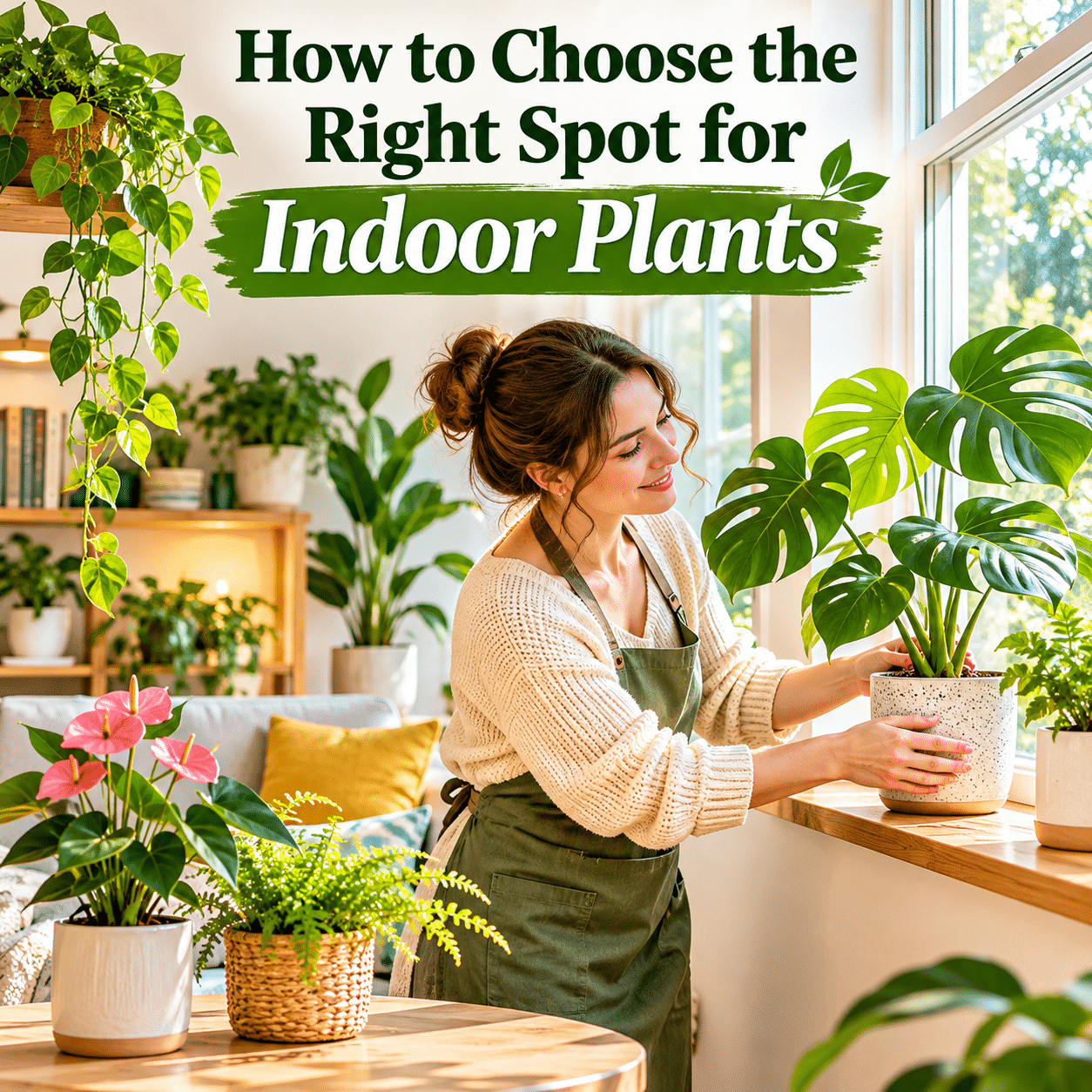
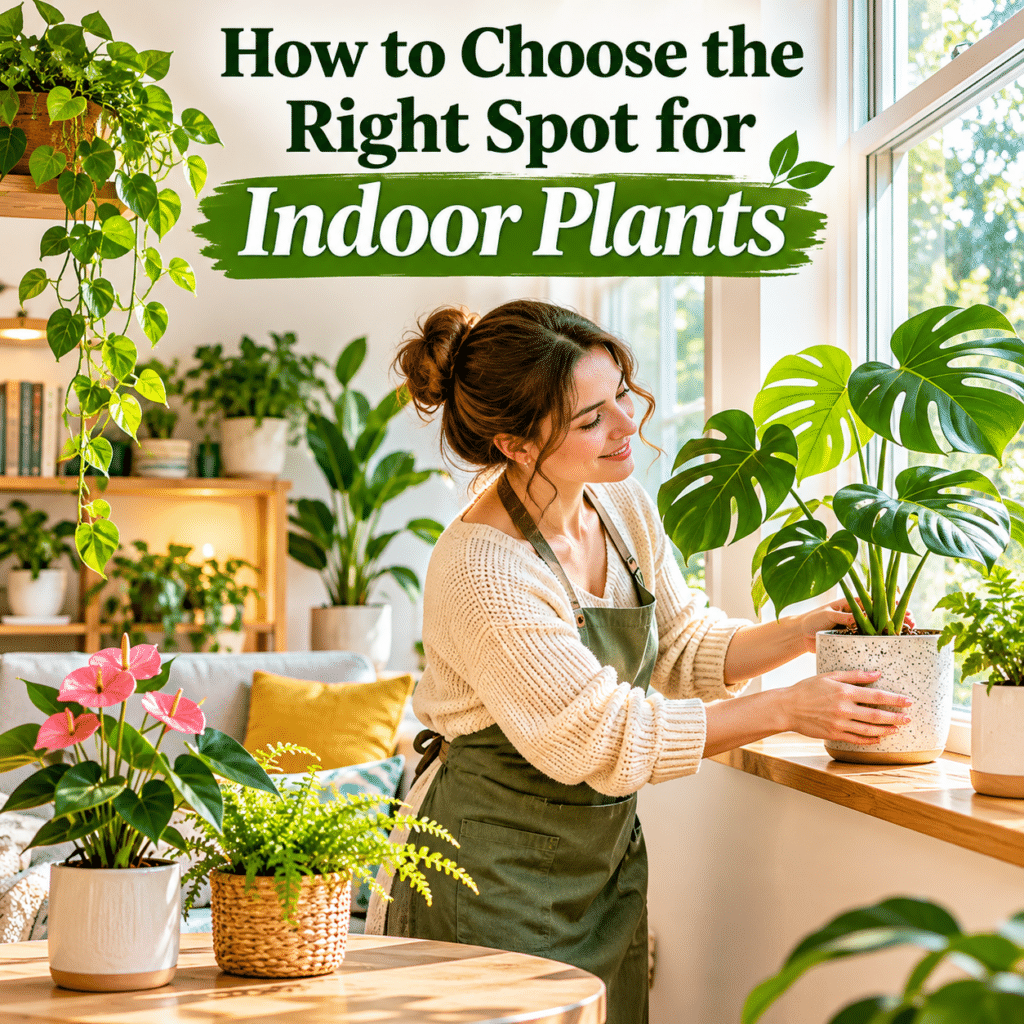
Indoor plants can bring natural beauty, freshness, and a sense of comfort into almost any living space. Whether placed on a windowsill, arranged on a bookshelf, or displayed in a quiet corner, greenery can make a room feel more welcoming and connected to nature.
However, choosing where to place an indoor plant involves more than finding an attractive location. Every plant has environmental needs that influence its growth, appearance, and long-term health.
Light exposure, temperature, humidity, airflow, available space, and daily household activities can all affect how well a plant adapts to its surroundings.
A location that looks perfect from a decorating perspective may not provide the conditions a plant needs. Similarly, a spot that works beautifully for one species may be unsuitable for another.
Understanding how indoor environments influence plant growth makes it easier to create arrangements that are both visually appealing and practical to maintain.
This guide explores how to evaluate different areas of your home, match plants with suitable growing conditions, avoid common placement mistakes, and create a comfortable environment where indoor greenery can thrive.
1. Understand Why Plant Placement Matters
The location of an indoor plant affects nearly every aspect of its growth.
Plants rely on their surroundings to obtain the light, moisture, warmth, and air exchange necessary for healthy development.
An unsuitable location may contribute to:
- Slow or uneven growth.
- Yellowing or discolored leaves.
- Weak, elongated stems.
- Leaf scorching or excessive drying.
- Increased moisture-related problems.
- Poor flowering.
- Greater sensitivity to environmental stress.
A suitable location helps plants use available resources more effectively and can make everyday care easier.
Rather than selecting a location based on appearance alone, consider how the surrounding environment supports the plant’s biological needs.
2. Start by Identifying Your Plant’s Needs
Before deciding where a plant should go, identify the species or variety whenever possible.
Different plants have evolved under different environmental conditions.
For example:
- Many tropical foliage plants prefer bright, indirect light.
- Numerous succulents require several hours of strong light.
- Some ferns appreciate higher humidity and protection from intense sunlight.
- Certain flowering houseplants need brighter conditions than foliage plants.
- Some understory plants tolerate lower light levels but still require sufficient illumination to grow.
Plant labels, reputable horticultural references, and species-specific care guides can help identify appropriate conditions.
Remember that plants sold under broad names such as tropical foliage plant or indoor greenery may have very different requirements.
Accurate identification is the foundation of successful placement.
3. Evaluate the Natural Light in Your Home
Light is one of the most important factors when choosing a location for indoor plants.
Plants use light to support photosynthesis, the process through which they convert light energy into chemical energy.
Insufficient light can limit growth, while excessive light can damage sensitive foliage.
Indoor light conditions vary depending on:
- Window direction.
- Window size.
- Distance from the window.
- Nearby buildings.
- Outdoor trees.
- Curtains and blinds.
- Seasonal sun angles.
- Interior walls and furniture.
A room that appears bright to the human eye may still provide relatively little usable light for plants.
Evaluate actual growing conditions rather than relying entirely on how illuminated the room feels.
4. Understand the Difference Between Direct and Indirect Sunlight
Direct sunlight reaches a plant without being significantly blocked or diffused.
Indirect light is sunlight that has been scattered, filtered, or reflected before reaching the foliage.
Both can support plant growth, but different species respond differently.
Direct sunlight may be suitable for many cacti, succulents, and sun-loving herbs.
Bright indirect light often works well for tropical foliage plants such as many philodendrons, monsteras, and pothos.
Moderate indirect light may support plants that naturally grow beneath taller vegetation.
The intensity and duration of exposure matter just as much as whether the light is direct or indirect.
Morning sunlight is often gentler than strong afternoon sunlight, although this varies with climate, season, and window conditions.
5. Understand How Window Direction Affects Light
Window orientation influences the amount and timing of sunlight entering a room.
In the Northern Hemisphere, south-facing windows generally receive substantial sunlight over the year, while north-facing windows typically receive less direct sun.
In the Southern Hemisphere, these patterns are broadly reversed.
East-facing windows often receive morning sunlight, while west-facing windows commonly receive stronger afternoon exposure.
Near the equator, seasonal changes and the sun’s shifting position can make these patterns less straightforward.
| Window direction | Typical characteristics | Placement considerations |
|---|---|---|
| East-facing | Often receives morning sun | Useful for plants that appreciate gentler direct light |
| West-facing | Often receives afternoon sun | Monitor heat and leaf scorching |
| North-facing | Usually softer light in the Northern Hemisphere | Suitable for some shade-tolerant plants |
| South-facing | Often strong light in the Northern Hemisphere | Useful for light-loving plants with appropriate protection |
These are general guidelines rather than fixed rules.
Nearby buildings, roof overhangs, climate, and seasonal changes can substantially alter actual exposure.
6. Observe Sunlight at Different Times of Day
A location that receives soft light in the morning may become intensely sunny later.
Before positioning a sensitive plant, observe the area at several times.
Check:
- Early morning.
- Late morning.
- Midday.
- Mid-afternoon.
- Early evening.
Notice whether sunlight falls directly onto the intended plant location and how long the exposure lasts.
A simple observation over several days can reveal patterns that are not obvious during a quick inspection.
For especially valuable or sensitive plants, observing the location over a longer period may be worthwhile.
7. Consider How Far the Plant Will Be From a Window
Light intensity generally decreases as a plant moves farther from a window.
A location only a short distance from the glass may provide considerably more light than a spot deep inside the room.
The exact difference depends on window size, light direction, surrounding surfaces, and obstructions.
For plants that require bright light, placing them close to an appropriate window is often beneficial.
Plants with greater shade tolerance may be able to grow farther away, provided they still receive sufficient illumination.
Avoid assuming that a brightly painted room automatically offers adequate growing light.
8. Recognize the Limitations of Low-Light Areas
The term low-light plant can be misleading.
Most plants described as low-light tolerant can survive under reduced illumination, but their growth may slow considerably.
Low-light tolerance does not mean that a plant can grow indefinitely in complete darkness.
Potential signs of inadequate light include:
- Long spaces between leaves.
- Stems leaning toward windows.
- Smaller new leaves.
- Loss of colorful variegation in some species.
- Reduced flowering.
- Slow soil drying because of lower water use.
If a room has little or no natural light, appropriate artificial grow lighting may be necessary.
9. Match Bright-Light Plants With Suitable Locations
Plants adapted to strong sunlight generally perform best where light is abundant.
Examples may include:
- Many cacti.
- Numerous succulents.
- Rosemary.
- Certain citrus plants.
- Some flowering houseplants.
However, strong indoor light and intense outdoor sunlight are not identical.
A plant moved suddenly from a shaded nursery environment to a sunny window may experience leaf damage.
Introduce stronger light gradually when appropriate for the species.
Also monitor temperature near the glass, especially during hot weather.
10. Choose Bright Indirect Light for Many Tropical Plants
Many popular tropical houseplants originate from environments where taller vegetation filters sunlight.
These plants often appreciate bright conditions without prolonged exposure to intense direct sun.
Examples include many varieties of:
- Monstera.
- Philodendron.
- Pothos.
- Peace lily.
- Calathea and related plants.
Suitable locations may include a position near an east-facing window or slightly away from a window with stronger exposure.
A sheer curtain can help diffuse intense sunlight.
Species and cultivars vary, so adjust placement according to the plant’s actual response.
11. Understand Which Plants Tolerate Moderate or Lower Light
Some houseplants can tolerate less intense light than others.
Common examples include:
- Snake plants.
- ZZ plants.
- Cast iron plants.
- Certain pothos varieties.
- Some dracaenas.
These plants are often considered for bedrooms, hallways, and living room corners.
However, even tolerant plants need sufficient light to maintain healthy growth.
A dim interior location may be acceptable for a limited period but unsuitable for sustained growth.
Monitor the plant rather than relying only on its reputation for tolerating shade.
12. Use Artificial Grow Lights When Natural Light Is Limited
Grow lights can expand the range of locations available for indoor plants.
They may be useful in:
- Windowless rooms.
- Dark home offices.
- Interior shelves.
- Apartments with obstructed windows.
- Indoor propagation areas.
- Seasonal growing setups.
Choose lighting designed for plant growth and follow the manufacturer’s guidance regarding distance, coverage, operating duration, and electrical safety.
Different plants require different amounts of light, and a small decorative lamp may not provide enough illumination.
Avoid leaving grow lights operating continuously unless a specific growing protocol calls for it.
Most houseplants benefit from a consistent daily light-and-dark cycle.
13. Consider the Temperature of Each Location
Indoor temperature influences plant metabolism, water use, and growth.
Many commonly grown tropical houseplants prefer relatively stable, moderate temperatures.
However, temperature requirements vary considerably among species.
Potentially problematic locations include:
- Directly beside heaters.
- Above heating vents.
- Near frequently opened exterior doors.
- Against very cold windows.
- Beside appliances that release substantial heat.
- In areas exposed to strong air-conditioning drafts.
A room’s average temperature may seem comfortable while individual spots experience significant fluctuations.
Evaluate the immediate environment around the plant.
14. Avoid Sudden Temperature Changes
Rapid temperature changes can stress sensitive plants.
For example, a plant placed beside an exterior door may experience repeated bursts of hot or cold air.
Similarly, a plant near an air-conditioning outlet may receive a continuous stream of cool, dry air.
Some plants respond to environmental stress by dropping leaves or slowing growth.
Choose locations with reasonably consistent conditions whenever possible.
If a plant must remain near a draft-prone area, observe its response and adjust its position when necessary.
15. Keep Plants Away From Direct Heating and Cooling Airflow
Heating and cooling systems can create localized conditions that differ from the rest of the room.
Warm airflow may accelerate moisture loss from leaves and potting media.
Cold airflow may lower leaf temperature and stress plants that prefer warmth.
Strong airflow can also increase evaporation.
Avoid placing delicate foliage directly in the path of vents or fans.
Gentle air circulation is generally beneficial, but continuous strong drafts may create unnecessary stress.
16. Understand the Role of Humidity
Humidity refers to the amount of water vapor in the air.
Different plants have different humidity preferences.
Many tropical foliage plants appreciate moderately humid conditions, while numerous succulents and cacti are adapted to drier environments.
Low humidity may contribute to:
- Brown leaf tips.
- Crispy leaf edges.
- Faster moisture loss.
- Difficulty maintaining delicate foliage.
However, brown leaf tips can have several causes, including watering problems, fertilizer accumulation, or water quality.
Humidity should be evaluated alongside other growing conditions rather than treated as the automatic explanation for every symptom.
17. Choose Humid Locations for Moisture-Loving Plants
Bathrooms, kitchens, and laundry areas may experience higher humidity than other rooms.
These spaces can sometimes suit humidity-loving plants.
However, adequate light remains essential.
A bathroom with a bright window may provide suitable conditions for certain tropical plants.
A bathroom without a window or grow light may not.
Consider ventilation as well.
Persistently damp surfaces, poor airflow, and excessive moisture can contribute to mold or plant disease.
Choose a location that balances humidity, light, and air circulation.
18. Avoid Assuming Bathrooms Are Suitable for Every Plant
Bathrooms are often associated with indoor greenery, but they are not universally ideal.
Some bathrooms experience large humidity fluctuations.
Others remain relatively dry because of mechanical ventilation or climate control.
Low natural light can also be a major limitation.
Before placing a plant in a bathroom, assess:
- Available light.
- Average temperature.
- Humidity patterns.
- Ventilation.
- Space around the plant.
- Exposure to cleaning chemicals.
Select species that match the actual conditions rather than the room’s intended decorative style.
19. Pay Attention to Air Circulation
Air circulation helps prevent stagnant conditions around foliage and potting media.
Gentle airflow can support evaporation and reduce the persistence of moisture on leaves.
However, excessive airflow may increase water loss or cause physical damage.
Avoid crowding plants tightly together without space for air movement.
When using a fan, aim for gentle circulation rather than a concentrated stream directed continuously at delicate leaves.
Good airflow works best alongside appropriate watering, humidity, and sanitation.
20. Consider the Size of the Plant at Maturity
A small houseplant may eventually become much larger.
Before selecting a location, consider its expected mature dimensions under indoor growing conditions.
Think about:
- Overall height.
- Leaf spread.
- Growth direction.
- Root development.
- Need for support.
- Access for pruning.
- Space for repotting.
Large foliage plants may need substantial floor space.
Climbing plants may benefit from a support structure.
Trailing plants may require elevated placement.
Planning for future growth reduces the need for frequent rearrangement.
21. Allow Enough Space Around the Foliage
Leaves need room to develop without being repeatedly crushed, bent, or rubbed against surrounding objects.
Avoid squeezing plants between furniture pieces or placing large foliage directly against walls.
Crowded arrangements can make inspection, cleaning, and watering more difficult.
They may also reduce airflow.
Leave enough space for the plant’s natural shape while preserving comfortable movement through the room.
22. Think About the Plant’s Growth Habit
Different plants grow in different directions.
Upright plants often work well on floors, side tables, or spacious shelves.
Trailing plants can be displayed on elevated shelves or in securely installed hanging planters.
Climbing plants may benefit from moss poles, trellises, or other appropriate supports.
Compact plants can fit on desks, windowsills, and small tables.
Spreading plants need more horizontal space.
Matching the plant’s natural growth habit to its location creates a more practical arrangement.
23. Choose Safe and Stable Surfaces
A suitable plant location must support the weight of the container, potting media, plant, and water.
Large pots can become surprisingly heavy after watering.
Check that shelves, stands, tables, and hanging supports are rated for the expected load.
Avoid unstable furniture and narrow surfaces where containers could be knocked over.
Use appropriate mounting hardware for hanging planters.
A beautiful display should never compromise household safety.
24. Protect Floors and Furniture From Water Damage
Indoor plants require watering, and excess moisture can damage nearby surfaces.
Water may escape through drainage holes, overflow from saucers, or spill during maintenance.
Consider using:
- Waterproof plant trays.
- Properly sized saucers.
- Protective mats.
- Stable plant stands.
- Moisture-resistant surfaces.
Do not allow pots to remain in standing water unless a particular growing method specifically requires it.
Empty excess drainage water when appropriate.
Protecting surrounding surfaces makes indoor gardening easier to maintain over time.
25. Consider Drainage When Selecting a Location
Container drainage affects plant health regardless of where a plant is displayed.
Many houseplants benefit from containers that allow excess water to escape.
A decorative outer pot can conceal a functional nursery pot, but trapped water should not accumulate unnoticed.
Choose locations where watering and drainage can be managed conveniently.
For example, a delicate wooden bookshelf may not be the most practical location for a large plant requiring frequent watering.
Think about maintenance before finalizing the arrangement.
26. Keep Plants Accessible for Everyday Care
A location may look attractive but become inconvenient if the plant is difficult to reach.
Plants need periodic attention, including:
- Checking potting media.
- Watering.
- Removing damaged leaves.
- Inspecting for pests.
- Cleaning foliage.
- Rotating containers when useful.
- Pruning.
- Repotting.
Avoid placing plants so high or deep inside furniture that basic maintenance becomes difficult.
Accessibility encourages consistent care and helps problems get noticed earlier.
27. Consider Household Traffic Patterns
Busy walkways are often poor locations for delicate plants.
People may accidentally brush against leaves, knock over containers, or damage stems.
Large plants can also obstruct doors, corridors, and furniture access.
Choose positions that allow people to move comfortably.
Good options may include unused corners, spacious side tables, or areas beside furniture where the plant does not block circulation.
The goal is to integrate greenery into daily life without creating obstacles.
28. Think About Children and Pets
Plant safety is especially important in homes with children or animals.
Some popular houseplants contain substances that can irritate the mouth, skin, or digestive system if chewed or swallowed.
Others may have sharp spines or irritating sap.
Before bringing a plant home, verify its safety using a reliable species-specific reference.
Do not assume that placing a potentially harmful plant on a shelf makes it inaccessible to a climbing cat or curious child.
Choose safer species and secure locations whenever possible.
For pet-owning households, resources from veterinary organizations such as the ASPCA can help identify plants known to be toxic or non-toxic to cats and dogs.
29. Evaluate Windowsills Carefully
Windowsills are popular locations because they provide convenient access to natural light.
However, they can also create challenges.
Potential concerns include:
- Intense direct sunlight.
- Hot glass during sunny periods.
- Cold glass in cooler weather.
- Limited space.
- Unstable containers.
- Curtains brushing against foliage.
- Difficulty opening windows.
Make sure the plant fits securely and that leaves are not pressed against glass exposed to extreme temperatures.
Windowsills are useful only when their conditions match the plant’s needs.
30. Use Shelves Thoughtfully
Plant shelves can create attractive vertical displays.
They are particularly useful for compact and trailing plants.
However, shelves farther from windows may receive much less light than expected.
Upper shelves may also be warmer or drier depending on the room.
When arranging plants on shelves:
- Place higher-light plants where illumination is strongest.
- Keep containers stable.
- Avoid overcrowding.
- Protect shelf surfaces from water.
- Leave room for growth.
- Make sure plants remain accessible.
For darker shelves, appropriate grow lighting may be necessary.
31. Choose Suitable Locations for Large Floor Plants
Large indoor plants can become focal points in living rooms, bedrooms, and open-plan spaces.
Examples include certain ficus, monstera, palms, and dracaenas.
Choose a location that provides enough light while accommodating the plant’s mature dimensions.
Avoid placing large containers where they interfere with walking paths.
Consider whether the floor can tolerate occasional moisture exposure.
Large plants are often easier to maintain when they have sufficient room for watering, leaf cleaning, and inspection.
32. Consider Hanging Plants for Vertical Spaces
Hanging planters can make use of space that would otherwise remain empty.
Trailing plants such as certain pothos and hoyas can create attractive displays.
However, hanging locations require careful planning.
Check:
- Support strength.
- Mounting security.
- Light availability.
- Watering accessibility.
- Drainage protection.
- Clearance from walkways.
- Distance from fans and vents.
Never rely on decorative hooks that are not rated for the loaded planter.
A hanging display should remain practical and secure throughout the plant’s growth.
33. Match Plants With Living Room Conditions
Living rooms often provide a variety of possible locations.
Large windows may support bright-light plants, while interior areas may suit species that tolerate moderate light.
Consider placing plants:
- Near suitable windows.
- Beside sofas where space allows.
- On stable side tables.
- On shelves with adequate illumination.
- In corners that receive sufficient light.
Avoid blocking television screens, walkways, or access to furniture.
Choose plant sizes and growth habits that complement the room without sacrificing growing conditions.
34. Choose Bedroom Plant Locations Carefully
Indoor plants can contribute to a pleasant bedroom atmosphere through their appearance and connection to nature.
However, they should not be treated as substitutes for ventilation or air filtration.
Choose plants based on actual bedroom conditions.
A bedroom with limited sunlight may require shade-tolerant species or supplemental lighting.
Avoid placing large containers where they obstruct movement or create tripping hazards.
Keep plants away from heating and cooling drafts when possible.
A practical location supports both plant care and comfortable daily use.
35. Select Practical Locations in the Kitchen
Kitchens can offer useful growing spaces, particularly near bright windows.
Some culinary herbs may grow well indoors when sufficient light is available.
However, kitchen environments can also present challenges.
Avoid placing plants:
- Directly beside hot cooking surfaces.
- Near open flames.
- Where grease accumulates heavily.
- In areas exposed to frequent splashes of cleaning products.
- Where they interfere with food preparation.
Choose stable, accessible locations that allow plants to receive appropriate light without creating hygiene or safety concerns.
36. Use Indoor Plants in Home Offices
Plants can make a workspace feel more inviting and visually balanced.
Small plants may fit on desks, shelves, or nearby stands.
Consider how the arrangement affects daily work.
Avoid placing containers where water could spill onto computers, cables, or electrical outlets.
Keep foliage from blocking monitors or lighting.
Choose plants that match the workspace’s natural or artificial light conditions.
A compact plant in a practical location is often easier to maintain than a large decorative arrangement that interferes with work.
37. Consider Hallways and Entryways Carefully
Hallways and entryways can benefit visually from greenery, but they may have limited light.
Some entryways also experience temperature fluctuations when exterior doors open.
Before placing plants in these areas, evaluate whether the conditions are suitable for sustained growth.
Avoid narrowing walkways or blocking emergency exits.
Use stable containers that are unlikely to be knocked over.
If natural light is insufficient, consider suitable grow lighting or a nonliving decorative alternative.
38. Avoid Placing Plants Too Close to Electronics
Indoor plants and electronic equipment can share a room, but their placement requires care.
Watering spills, drainage leaks, and unstable containers can create problems around electrical devices.
Keep plants and watering equipment away from:
- Power strips.
- Electrical outlets.
- Computers.
- Charging stations.
- Exposed cables.
- Sensitive electronic equipment.
Do not place containers directly above electronics where drainage or accidental spills could reach them.
Electrical safety should take priority over decorative convenience.
39. Consider Seasonal Changes in Light and Temperature
A location that works well during one season may become less suitable during another.
Sun angles change throughout the year, affecting how far sunlight reaches into rooms.
Outdoor trees may create different shading patterns as their foliage changes.
Heating and cooling systems may also alter indoor conditions.
Observe plants during seasonal transitions.
A plant may need to move closer to a window during darker months or farther from intense sunlight during hotter periods.
Make changes gradually when possible.
40. Monitor How Plants Respond to Their Location
Even careful planning cannot guarantee that every plant will respond perfectly.
The plant itself provides valuable information about growing conditions.
Look for healthy new growth, appropriate leaf color, and stable overall appearance.
Potential warning signs include:
| Observation | Possible contributing factors | What to check |
|---|---|---|
| Long, weak stems | Insufficient light | Light intensity and duration |
| Leaves leaning toward a window | Uneven light exposure | Direction and availability of light |
| Pale or scorched patches | Excessive direct sun or sudden exposure | Sun intensity and acclimation |
| Brown leaf edges | Watering, humidity, salts, or temperature stress | Moisture, water quality, and environmental conditions |
| Yellowing leaves | Watering problems, light stress, aging, or other causes | Potting media, roots, and overall care |
| Slow growth | Low light, seasonal dormancy, temperature, or nutrition | Growing conditions and species needs |
| Repeated leaf drop | Environmental changes, watering stress, pests, or disease | Recent changes and plant condition |
| Persistently wet potting media | Low water use, poor drainage, or unsuitable watering | Light, drainage, and watering frequency |
No single symptom proves a particular problem.
Evaluate several factors before changing care routines.
Practical Step-by-Step Guide: How to Find the Best Spot for an Indoor Plant
Choosing a suitable location becomes easier when approached systematically.
Step 1: Identify the Plant
Determine the plant’s species or variety.
Research its preferred light, temperature, humidity, and growing conditions.
Step 2: Inspect Available Locations
Walk through the home and identify possible positions.
Consider windowsills, shelves, side tables, floor spaces, and hanging locations.
Step 3: Evaluate Light Exposure
Observe sunlight at different times of day.
Note window direction, nearby obstructions, and the distance from natural light sources.
Step 4: Check Temperature and Airflow
Look for heating vents, air-conditioning outlets, exterior doors, and other sources of temperature fluctuations.
Choose a reasonably stable environment.
Step 5: Consider Humidity
Determine whether the plant prefers relatively dry or humid conditions.
Avoid selecting a humid location if it lacks sufficient light or ventilation.
Step 6: Check Available Space
Consider the plant’s current dimensions and expected growth.
Allow room for leaves, stems, supports, and future maintenance.
Step 7: Evaluate Safety
Check container stability, household traffic, electrical equipment, and access by children or pets.
Confirm that the location is safe for everyone in the home.
Step 8: Plan for Watering and Drainage
Choose a location where watering is convenient and excess water can be managed.
Protect surrounding surfaces.
Step 9: Place the Plant and Observe
Position the plant in the selected location.
Monitor its condition over the following weeks.
Avoid making multiple major care changes simultaneously unless necessary.
Step 10: Adjust Gradually
If the plant shows signs of environmental stress, reassess the conditions.
Move it gradually when changing light exposure substantially.
Continue monitoring until a suitable balance is established.
Practical Checklist for Indoor Plant Placement
Use this checklist before deciding on a permanent location.
Light
- I know the plant’s approximate light requirements.
- The location receives an appropriate amount of light.
- I have considered direct versus indirect sunlight.
- I have checked for shading from buildings, trees, or curtains.
- I have considered seasonal changes.
Temperature and Humidity
- The location has a suitable temperature range.
- The plant is protected from strong heating or cooling drafts.
- Humidity is reasonably appropriate for the species.
- The area has adequate air circulation.
Space and Stability
- The plant has enough room to grow.
- Leaves will not be repeatedly damaged by nearby objects.
- The surface can support the container’s weight.
- The container is stable.
- The plant does not obstruct walkways.
Maintenance
- I can reach the plant for watering.
- Drainage water can be managed safely.
- Nearby furniture and flooring are protected.
- I can inspect leaves and potting media regularly.
- The location allows future pruning and repotting.
Household Safety
- The plant is appropriate for a home with children or pets.
- The container is away from vulnerable electronics.
- The arrangement does not create a tripping hazard.
- Hanging supports are securely installed when applicable.
Common Indoor Plant Placement Problems and Solutions
| Problem | Possible cause | Practical solution |
|---|---|---|
| Plant stretches toward the window | Insufficient or uneven light | Move to a brighter suitable location |
| Leaves develop scorched patches | Excessive direct sunlight | Provide filtered light and acclimate gradually |
| Plant grows very slowly | Inadequate light or unfavorable conditions | Review light, temperature, and seasonal growth |
| Leaf tips become dry | Dry air or other moisture-related stress | Check humidity, watering, and water quality |
| Plant loses leaves after moving | Environmental adjustment or stress | Stabilize conditions and monitor carefully |
| Potting media stays wet too long | Low light, poor drainage, or overwatering | Improve growing conditions and watering practices |
| Plant becomes crowded | Insufficient space for mature growth | Relocate or rearrange nearby objects |
| Leaves touch cold window glass | Unsuitable placement near glass | Move foliage away from the surface |
| Plant is difficult to water | Inaccessible shelf or hanging location | Choose a more practical position |
| Furniture develops water marks | Drainage spills or trapped moisture | Use protective trays and remove excess water |
| Plant receives strong air-conditioning drafts | Direct airflow from a vent | Move it outside the direct airflow path |
| Plants repeatedly fall over | Unstable containers or narrow surfaces | Use secure stands and suitable containers |
The most effective solution depends on identifying the underlying cause rather than responding to symptoms alone.
Frequently Asked Questions
1. What is the best place to put indoor plants?
The best location depends on the plant’s species and environmental needs.
For many tropical foliage plants, a position with bright, indirect light, stable temperatures, and adequate airflow works well.
Other plants may require stronger sunlight or different humidity conditions.
2. Should indoor plants be placed directly in front of windows?
Some plants benefit from direct sunlight, while others may experience leaf damage.
The appropriate placement depends on the species, window orientation, climate, and intensity of exposure.
3. Can indoor plants survive in a room without windows?
Plants need light to grow.
In a windowless room, suitable artificial grow lighting can provide the illumination necessary for many species.
Ordinary room lighting may not be sufficient.
4. How far should indoor plants be from a window?
There is no universal distance.
Plants requiring strong light often benefit from being relatively close to an appropriate window.
Shade-tolerant species may grow farther away if enough usable light remains available.
5. Is a north-facing window good for indoor plants?
In the Northern Hemisphere, north-facing windows commonly provide softer light and may suit some plants that tolerate moderate or lower illumination.
In the Southern Hemisphere, north-facing windows often receive stronger sunlight.
Actual conditions depend on location and surrounding obstructions.
6. Can I place indoor plants in the bedroom?
Yes, provided the room offers suitable growing conditions and the plants are positioned safely.
Choose species that match the available light and temperature.
Keep containers stable and away from electrical equipment.
7. Are bathrooms good places for indoor plants?
Some bathrooms provide useful humidity for certain tropical plants.
However, adequate light and ventilation are essential.
A dark bathroom may require grow lighting.
8. Can indoor plants be placed near air conditioners?
It is generally better to avoid placing sensitive plants directly in strong cooling airflow.
Air-conditioning drafts can create temperature and moisture stress.
A location outside the direct airflow path is often preferable.
9. How do I know if my plant is getting enough light?
Healthy growth, appropriate leaf development, and stable foliage can indicate suitable conditions.
Weak elongated stems, reduced growth, and persistent leaning toward light may suggest inadequate illumination.
Evaluate the species and other care factors before making changes.
10. Can too much sunlight harm indoor plants?
Yes.
Plants not adapted to intense sunlight may develop scorched or discolored leaves.
Sudden exposure to stronger light can also cause damage.
Gradual acclimation can help when moving suitable species into brighter conditions.
11. Should I rotate my indoor plants?
Rotating some plants occasionally can encourage more balanced growth when light comes primarily from one direction.
However, not every plant responds equally well to frequent movement.
Avoid unnecessary disturbance of sensitive plants.
12. Can I place indoor plants on bookshelves?
Yes, if the shelf provides sufficient light, adequate space, and safe support.
Protect books and furniture from watering spills.
Grow lights may be useful for shelves that receive little natural illumination.
13. What is the best location for a large indoor plant?
Choose a spacious area with appropriate light and stable environmental conditions.
Ensure the container does not obstruct movement and that watering and maintenance remain convenient.
14. How often should I change my plant’s location?
There is no fixed schedule.
Move a plant when its current environment is unsuitable or when seasonal changes require adjustment.
Avoid frequent unnecessary relocation, especially for plants sensitive to environmental changes.
15. Is it better to choose the plant first or the location first?
Either approach can work.
If you already own a plant, choose a location that meets its needs.
If you want greenery for a specific corner or room, evaluate that location first and select a compatible species.
The important principle is matching the plant with the environment rather than forcing an unsuitable combination.
Final Thoughts
Choosing the right spot for indoor plants is a balance between understanding plant needs and making thoughtful use of your living space.
Light, temperature, humidity, airflow, available room, and everyday accessibility all contribute to successful placement.
A beautiful location is not necessarily a healthy growing environment, and a plant that thrives in one part of the home may struggle in another.
The most reliable approach is to understand the plant’s requirements, observe the conditions in your home, and make gradual adjustments based on how the plant responds.
With careful placement, indoor greenery can become a lasting and enjoyable part of your surroundings without creating unnecessary maintenance challenges.
The best place for an indoor plant is not simply where it looks most beautiful, but where its natural needs and your everyday living environment come together comfortably.