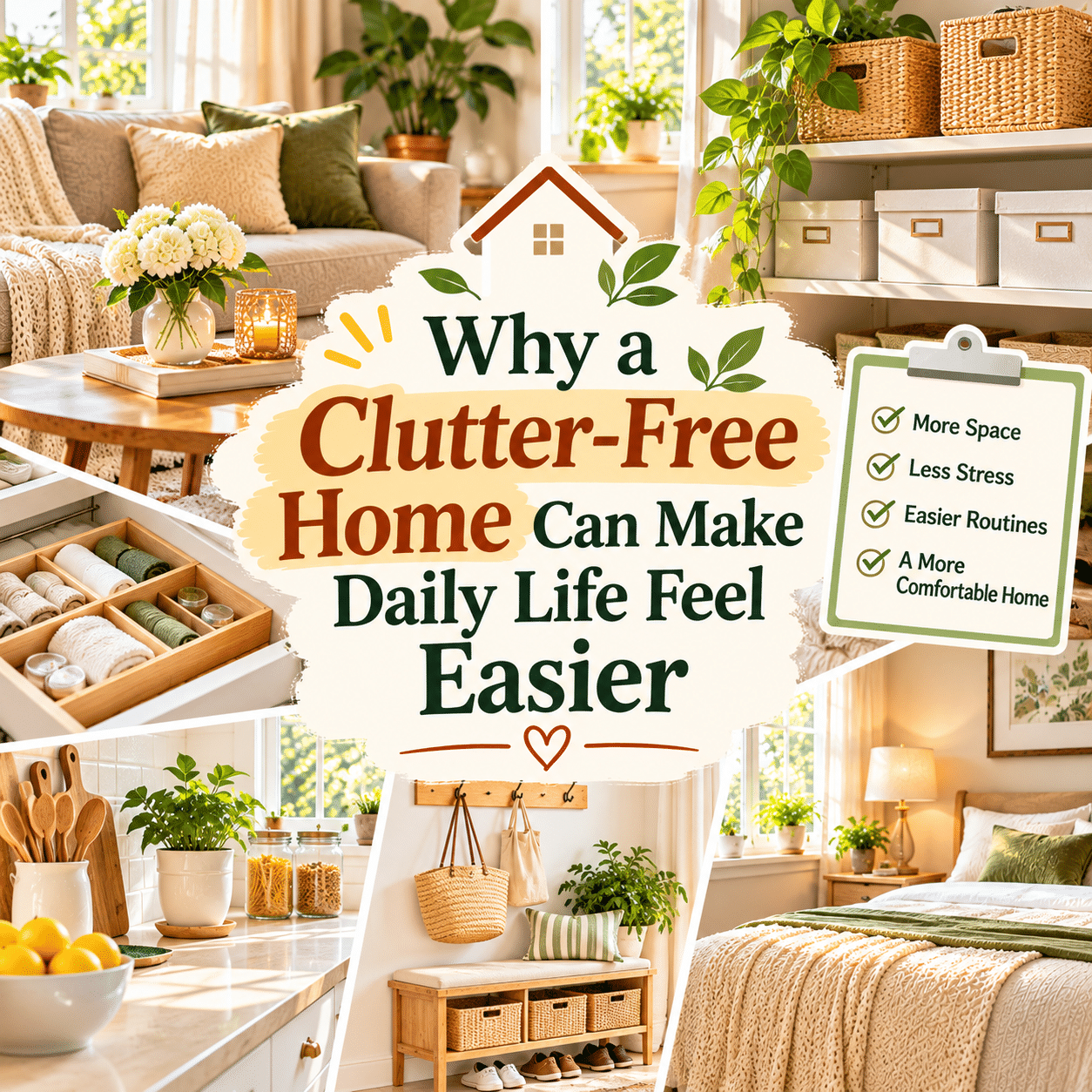
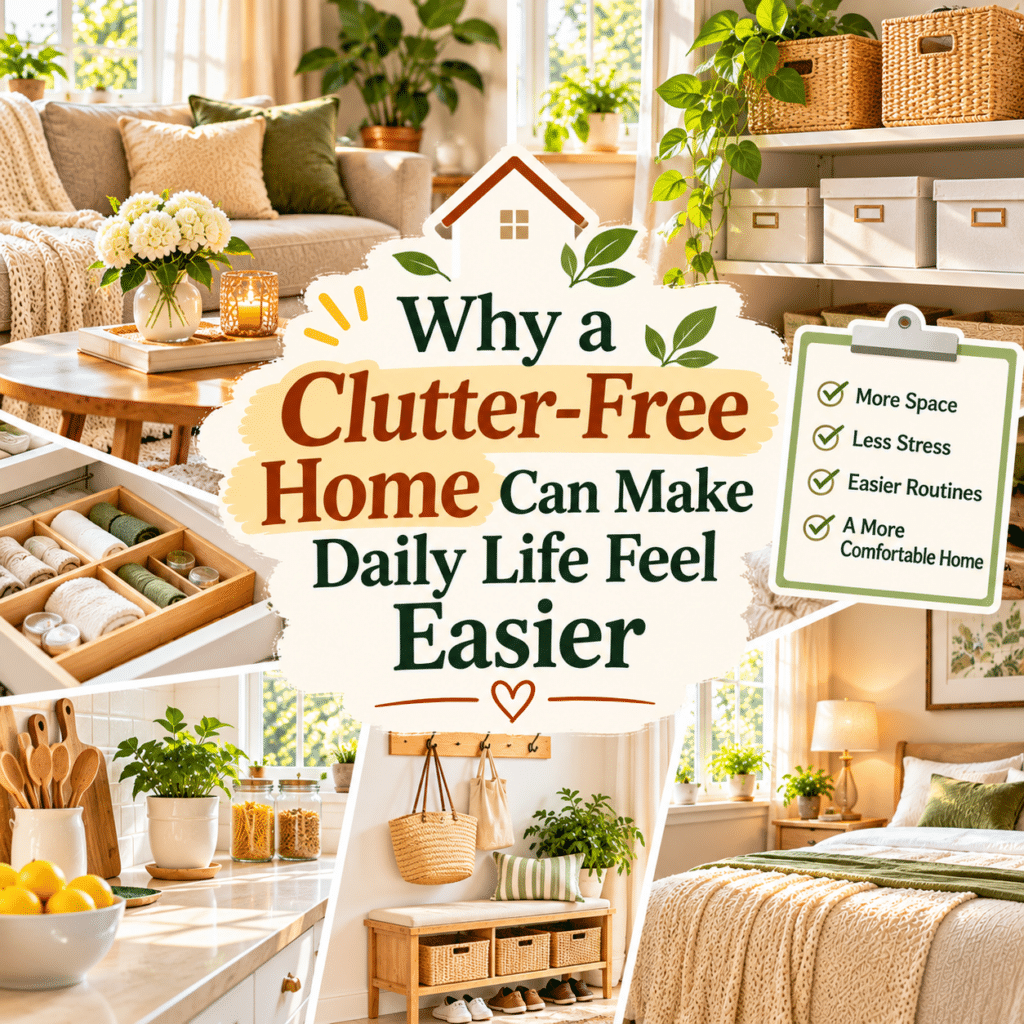
A home is meant to support everyday living, offering a place to rest, prepare meals, enjoy personal interests, and spend meaningful time with others. Yet when belongings accumulate without clear organization, even simple activities can become more complicated than necessary.
Crowded countertops, overflowing drawers, misplaced essentials, and storage areas filled with rarely used items can create small frustrations throughout the day. Finding a set of keys may take longer than expected, preparing dinner may require clearing space first, and cleaning can become more demanding when surfaces are covered with unnecessary objects.
A clutter-free home does not mean an empty home. It does not require minimalist furniture, perfectly arranged shelves, or the removal of meaningful possessions. Instead, it involves creating a practical balance between the belongings people value and the space available to use them comfortably.
Thoughtful decluttering can make household routines more manageable by improving accessibility, simplifying cleaning, and reducing unnecessary decisions. It may also help some people feel more comfortable in their surroundings, although responses to clutter vary according to personal preferences and circumstances.
The most effective approach is not to eliminate possessions indiscriminately. It is to understand what is useful, what is meaningful, and what makes daily life unnecessarily difficult.
The following ideas explore why a clutter-free home can make everyday living easier and how simple, sustainable organization habits can create a more comfortable environment.
1. A Clutter-Free Home Makes Everyday Essentials Easier to Find
One of the most immediate benefits of reducing clutter is improved access to frequently used belongings.
Keys, wallets, glasses, charging cables, and household tools are easier to locate when they have designated places.
Instead of searching through crowded drawers or moving unrelated objects, residents can retrieve what they need directly.
A small tray near the entrance, a dedicated charging station, or a clearly organized kitchen drawer can make a noticeable difference.
The goal is to establish predictable locations for everyday essentials.
2. Clear Surfaces Make Household Tasks More Convenient
Countertops, tables, and desks are most useful when they provide enough space for their intended activities.
A kitchen counter covered with appliances, mail, and decorative objects may leave little room for preparing meals.
Similarly, a crowded desk can make writing or computer work inconvenient.
Keeping a reasonable amount of surface space available allows activities to begin without unnecessary preparation.
This does not mean removing every object.
Frequently used items and meaningful decorations can remain visible as long as they do not interfere with the surface’s main purpose.
3. Less Clutter Can Reduce Repeated Small Frustrations
Daily inconvenience often comes from minor obstacles rather than major household problems.
A drawer that will not close, a crowded closet, or a shelf that requires moving several objects to reach one item can interrupt routines.
Individually, these problems may seem insignificant.
Repeated throughout the day, however, they can consume time and attention.
Reducing clutter helps remove some of these avoidable obstacles.
The result is a home that works more smoothly with ordinary activities.
4. Organized Entryways Make Leaving Home Easier
The entryway is one of the most important areas for everyday organization.
Shoes, bags, coats, keys, umbrellas, and deliveries often accumulate near the door.
Without designated storage, this area can quickly become difficult to navigate.
A simple arrangement might include wall hooks, a shoe rack, a key tray, and a small basket for frequently carried items.
Keep the pathway clear and avoid storing objects where they obstruct doors.
A practical entryway can make arriving home and leaving again more convenient.
5. A Decluttered Kitchen Supports Easier Meal Preparation
Kitchens contain many objects that serve different purposes.
Cookware, utensils, ingredients, appliances, and food-storage containers all compete for space.
When unnecessary items occupy preparation areas, cooking can become more complicated.
Begin by identifying the tools used most frequently.
Store these near their intended tasks and move occasional-use equipment to appropriate storage.
Review duplicate utensils, damaged containers, and appliances that no longer serve a useful purpose.
A more organized kitchen provides room for preparing meals and makes cleanup easier.
6. Clear Dining Tables Encourage More Enjoyable Meals
Dining tables often become temporary storage areas for paperwork, bags, packages, and miscellaneous household items.
This can make ordinary meals less convenient.
Keeping the table reasonably clear allows residents to sit down without first moving unrelated belongings.
A simple centerpiece or frequently used dining accessories can remain.
The important distinction is between intentional decoration and objects that have accumulated without a purpose.
A functional dining table supports everyday meals, conversation, and shared activities.
7. Decluttering Can Make Living Rooms More Comfortable
Living rooms are frequently used for relaxation, entertainment, conversation, and hobbies.
When furniture surfaces and walking areas become crowded, the room may feel less convenient.
Review items that accumulate around sofas, coffee tables, and entertainment units.
Keep frequently used belongings accessible while creating designated storage for remote controls, books, games, and other supplies.
Avoid filling every shelf or corner simply because space is available.
A comfortable living room should support both relaxation and ordinary household activity.
8. A Tidy Bedroom Can Simplify Evening Routines
Bedrooms often collect clothing, accessories, books, and personal belongings.
When these items accumulate on beds, chairs, and floors, preparing for sleep can require additional effort.
Designate practical locations for clean clothing, laundry, and bedside essentials.
Keep the sleeping area reasonably clear and choose storage that suits daily habits.
A clutter-free bedroom does not guarantee better sleep, but it can create a more convenient environment for winding down.
The aim is to support rest without imposing unrealistic standards of tidiness.
9. Organized Closets Make Getting Dressed Easier
Closets become difficult to use when clothing is crowded together or items are stored without a clear system.
Begin by reviewing what is actually worn.
Separate frequently used clothing from seasonal or occasional items.
Group garments by type when helpful, and keep everyday pieces within comfortable reach.
Clothing that no longer fits or serves a purpose can be evaluated for donation, resale, repair, or responsible disposal.
A practical closet helps residents see available options and retrieve clothing without unnecessary searching.
10. Clear Bathroom Counters Support Daily Self-Care
Bathrooms often contain toiletries, cosmetics, grooming tools, medications, and cleaning supplies.
Crowded counters can make washing, grooming, and cleaning more difficult.
Keep regularly used products accessible and store occasional-use items appropriately.
Review expired or unwanted products according to their specific disposal requirements.
Medicines should be stored safely and according to their labels, rather than automatically placed in humid bathroom cabinets.
An organized bathroom supports convenient routines while maintaining appropriate safety and hygiene.
11. Decluttering Makes Cleaning More Manageable
Cleaning becomes more complicated when surfaces are covered with numerous objects.
Dusting a shelf requires additional time if every item must be moved.
Vacuuming can also be more difficult when floors contain unnecessary belongings.
Reducing clutter decreases the number of objects that need to be handled during routine cleaning.
This does not eliminate the need for cleaning, but it can simplify the process.
The greatest benefit often comes from maintaining clear access to floors, counters, and frequently used surfaces.
12. Fewer Unnecessary Belongings Can Reduce Storage Problems
Storage systems become less effective when they are filled beyond practical capacity.
Adding more containers may not solve the problem if the household continues accumulating items that are rarely used.
Before purchasing additional storage, review what needs to be kept.
Consider whether duplicate, damaged, or unused belongings still serve a purpose.
Reducing unnecessary possessions can free existing storage space.
This may be more economical and sustainable than repeatedly buying organizers.
13. A Clutter-Free Workspace Supports More Efficient Tasks
Home offices and study areas often contain documents, cables, stationery, notebooks, and electronic accessories.
When these items are scattered across a desk, beginning a task may require unnecessary preparation.
Keep essential equipment within reach and store less frequently used supplies elsewhere.
Use folders or digital organization systems for documents when appropriate.
Cable management can also improve accessibility and reduce tangling.
A functional workspace should provide enough clear space for the activities performed there.
14. Organized Paperwork Makes Important Information Easier to Retrieve
Paper clutter can accumulate through bills, receipts, manuals, warranties, and household records.
Without a consistent system, important documents may become difficult to locate.
Create a small number of clearly labeled categories.
Separate documents that require action from those that need long-term storage.
Shred sensitive paperwork when disposal is appropriate.
Digital copies may be useful for certain records, but original documents should be retained when legally or practically necessary.
A simple filing system is usually easier to maintain than numerous complicated categories.
15. Decluttering Can Make Small Homes Feel More Functional
Limited floor space makes practical organization particularly important.
In small apartments, crowded furniture and excess belongings can interfere with movement and daily activities.
Focus on keeping walking paths clear and selecting storage that matches available space.
Vertical shelves, under-bed containers, and multifunctional furniture may help.
However, storage should remain accessible and safe.
A small home does not need to look empty to function well.
It needs arrangements that make the available space useful.
16. Clear Walkways Improve Household Safety
Objects left in hallways, stairways, and frequently used paths can create tripping hazards.
Loose cables, shoes, boxes, and small household items deserve particular attention.
Keeping these areas clear helps residents move through the home more safely.
This is especially important for households with young children, older adults, or people with mobility limitations.
Furniture placement should also allow doors and essential exits to function properly.
Safety is one of the most practical reasons to prevent clutter from accumulating in movement areas.
17. Decluttering Helps Household Items Stay in Better Condition
Crowded storage can contribute to damaged belongings.
Clothing may become crushed, delicate objects can be knocked over, and equipment may be stored in unsuitable conditions.
Organizing items according to their material and purpose can help protect them.
Use appropriate containers for fragile objects and avoid stacking heavy items on delicate belongings.
Store equipment according to manufacturer recommendations.
Thoughtful organization supports both convenience and the long-term care of household possessions.
18. A Simpler Environment Can Reduce Visual Distractions
Visual clutter occurs when many unrelated objects compete for attention within a space.
Some people find crowded surroundings distracting, particularly during activities that require concentration.
Others enjoy visually rich interiors and feel comfortable surrounded by personal collections.
There is no universal amount of decoration that suits everyone.
A useful approach is to keep work surfaces relatively clear while allowing meaningful objects to remain displayed.
The objective is personal comfort rather than strict minimalism.
19. Decluttering Can Support More Intentional Purchasing
Reviewing existing belongings often reveals how much the household already owns.
This can make future purchasing decisions more deliberate.
Before buying another kitchen gadget, storage container, or decorative accessory, consider whether a similar item is already available.
Ask where the new object will be stored and how frequently it will be used.
These questions can help reduce unnecessary duplication.
Intentional purchasing supports a more manageable home without requiring residents to avoid all new purchases.
20. Organized Storage Makes Shared Living Easier
In shared households, belongings may be used by several people.
Confusion can arise when essential items are stored inconsistently.
Designated locations for shared supplies can make routines more predictable.
For example, cleaning tools, charging cables, and commonly used kitchen utensils can have agreed storage areas.
Labels may help when multiple household members use the same cabinets.
Clear systems should be practical for everyone, including children and people with different accessibility needs.
21. Decluttering Can Make Hosting Guests Less Demanding
Welcoming visitors often involves preparing seating, clearing surfaces, and organizing shared areas.
When a home already has practical storage systems, these tasks may require less effort.
A reasonably clear living room can accommodate guests without major rearrangement.
A designated place for visitors’ shoes, bags, or coats can also be useful.
Hospitality does not require a perfectly organized home.
It benefits from comfortable seating, accessible shared spaces, and a welcoming atmosphere.
22. A Clutter-Free Home Makes Maintenance Easier
Household maintenance often requires access to appliances, fixtures, windows, and storage areas.
Excess belongings can make these locations difficult to reach.
Keeping access clear around equipment can simplify inspection and servicing.
However, appliance clearance requirements should always follow manufacturer instructions.
Avoid storing items in front of electrical panels, ventilation openings, or emergency exits.
Practical organization supports routine maintenance and reduces unnecessary obstacles.
23. Decluttering Helps Create More Flexible Living Spaces
Many homes use the same room for several activities.
A dining table may occasionally become a workspace, while a living room may accommodate exercise or hobbies.
When surfaces and floors are already crowded, changing activities becomes more difficult.
Flexible storage allows residents to put supplies away and use the space for another purpose.
Portable containers, folding furniture, and designated storage areas can help.
A decluttered environment makes multifunctional rooms easier to adapt.
24. Organized Hobby Supplies Encourage Easier Creative Activities
Hobbies often involve materials that accumulate over time.
Crafting supplies, sewing tools, books, art materials, and gardening accessories can become difficult to manage.
Organize supplies according to the activities they support.
Keep frequently used materials accessible and store specialized items safely.
Transparent containers or labels may be useful for small objects.
A practical hobby area makes it easier to begin and finish projects without spending excessive time searching for supplies.
25. Decluttering Can Reveal Forgotten Useful Belongings
Crowded storage sometimes hides items that are still useful.
People may purchase replacements because they cannot find what they already own.
Reviewing cabinets, drawers, and storage boxes can reveal forgotten tools, accessories, or supplies.
These items can be returned to active use, repaired, or passed along when no longer needed.
Decluttering is therefore not only about removing possessions.
It is also about understanding and making better use of existing resources.
26. Seasonal Organization Keeps Storage More Practical
Seasonal clothing, decorations, and equipment may not need to remain accessible throughout the year.
Separating these items from everyday essentials can free convenient storage space.
Use suitable containers and label them clearly.
Store seasonal belongings in conditions appropriate for their materials.
Before packing items away, check whether they are clean, dry, and in usable condition.
A seasonal review also provides an opportunity to reconsider belongings that have not been used for several years.
27. A Clear Laundry Area Simplifies Clothing Care
Laundry areas often contain detergents, baskets, hangers, cleaning supplies, and clothing awaiting attention.
Without organization, these spaces can become crowded.
Designate separate locations for dirty laundry, clean clothing, and supplies.
Keep detergents and other hazardous products safely stored away from children and pets.
Avoid blocking appliance ventilation or access points.
A practical laundry arrangement can make washing, drying, folding, and putting away clothes more manageable.
28. Decluttering Can Help Reduce Unnecessary Household Purchases
When belongings are organized and visible, residents can more easily assess what they already have.
This may reduce accidental duplicate purchases.
A clearly arranged pantry, for example, makes it easier to check existing ingredients before shopping.
Organized cleaning supplies can prevent buying products that are already stored elsewhere.
The benefit depends on maintaining accurate awareness of household inventory.
Simple organization can support more thoughtful spending without requiring elaborate tracking systems.
29. Clear Pantries Make Food Management Easier
Pantries can become crowded with opened packages, duplicate ingredients, and products that are difficult to see.
Group similar foods together and keep frequently used items accessible.
Check expiration or best-before information as appropriate, while following food-safety guidance for storage and disposal.
Store food according to package instructions.
Avoid placing new products in front of older items when doing so makes them easy to forget.
A practical pantry arrangement helps residents understand what is available and plan meals more conveniently.
30. Decluttering Can Support More Responsible Disposal
Removing unwanted belongings creates opportunities for reuse, repair, donation, resale, and recycling.
Not every item belongs in ordinary household waste.
Electronics, batteries, medications, chemicals, and certain other products may require specialized disposal.
Check local guidance before discarding these materials.
Usable clothing, books, furniture, and household items may be suitable for donation or resale.
Responsible decluttering considers what happens to belongings after they leave the home.
31. Sentimental Belongings Deserve Thoughtful Decisions
Photographs, letters, gifts, inherited objects, and travel keepsakes often carry emotional significance.
Decluttering should not require discarding meaningful possessions.
Instead, consider how to preserve and enjoy them.
A dedicated memory box, photo album, or carefully arranged display can help.
For large collections, residents may choose to rotate displays or organize items by theme.
The goal is to respect personal memories while maintaining practical living space.
32. Decluttering Should Respect Different Household Preferences
People have different relationships with their belongings.
One household member may prefer minimal surfaces, while another enjoys displaying books, crafts, or collections.
Shared living requires reasonable communication.
Discuss which areas need to remain clear for practical reasons and which can accommodate personal expression.
Avoid discarding another person’s belongings without permission.
A comfortable home balances individual preferences with shared responsibilities.
33. Children Can Learn Simple Organization Habits
Children may benefit from age-appropriate systems that make belongings easy to identify and put away.
Low shelves, picture labels, and accessible toy containers can support simple routines.
Storage should be stable, appropriately secured, and suitable for the child’s age.
Avoid expecting young children to maintain adult standards of organization.
Short, manageable cleanup activities are often more practical than complicated rules.
The objective is to build useful habits while preserving opportunities for play and creativity.
34. Pet Supplies Benefit From Dedicated Storage
Pet food, toys, grooming tools, leashes, and cleaning accessories can accumulate throughout the home.
Designated storage helps keep these supplies organized.
Store food according to manufacturer instructions and protect it from moisture or contamination.
Keep medications and hazardous products securely out of pets’ reach.
Frequently used items, such as leashes or feeding accessories, should be easy for responsible household members to access.
A practical pet-care area supports daily routines without unnecessarily crowding shared spaces.
35. Decluttering Does Not Require a Minimalist Lifestyle
Minimalism is one approach to managing possessions, but it is not the only way to create a functional home.
A household can enjoy books, artwork, plants, hobbies, and personal collections while remaining organized.
The important question is whether belongings support or interfere with everyday life.
A room filled with meaningful objects may feel comfortable when those items are arranged intentionally.
Decluttering should create usable space without removing the personality that makes a home feel special.
36. Small Decluttering Sessions Can Be More Sustainable
Trying to organize an entire home in one day can become exhausting.
A more manageable approach is to work on one drawer, shelf, or small area at a time.
Set a realistic objective and complete it before moving elsewhere.
For example, organizing a kitchen utensil drawer may take less effort than attempting to reorganize every cabinet simultaneously.
Small sessions also provide opportunities to evaluate which systems work.
Consistency is often more useful than occasional large-scale organizing projects.
37. A Designated Place for Incoming Items Prevents Accumulation
Mail, packages, shopping bags, and miscellaneous objects enter the home regularly.
Without a clear system, they may accumulate on tables and counters.
Create a practical location for incoming items that require attention.
Sort mail, unpack purchases, and put belongings away within a reasonable timeframe.
Avoid allowing the collection area to become permanent storage.
A simple routine can prevent small piles from gradually spreading throughout the home.
38. Regular Reviews Help Maintain Long-Term Organization
Decluttering is not necessarily a one-time project.
Household needs change as people develop new interests, replace equipment, or experience different life stages.
Periodic reviews help identify items that are no longer useful.
These reviews do not need to follow a strict schedule.
They can occur during seasonal changes, room reorganizations, or whenever storage becomes difficult to use.
The goal is to maintain practical systems rather than repeatedly reorganize the entire home.
39. A Clutter-Free Home Can Support More Intentional Daily Routines
When household spaces are organized around actual activities, routines can become easier to follow.
A clear kitchen counter supports meal preparation.
An accessible entryway simplifies leaving home.
A functional desk makes work supplies easier to manage.
These arrangements reduce some of the preparation required before ordinary tasks.
A clutter-free environment does not automatically create better habits, but it can remove practical obstacles that make routines inconvenient.
40. The Best Decluttering System Is One You Can Maintain
A successful organization system should fit the household’s lifestyle.
Complicated labeling methods, excessive storage containers, and strict rules may be difficult to maintain.
Simple arrangements often work better.
Keep frequently used belongings accessible, provide logical storage locations, and allow enough flexibility for normal daily activity.
A comfortable home will not remain perfectly tidy at every moment.
The goal is to make returning it to a functional condition reasonably easy.
Ultimately, a clutter-free home should support everyday living rather than become another demanding responsibility.
Understanding the Difference Between Clutter and Meaningful Belongings
Not every visible object is clutter.
A home may contain books, plants, artwork, family photographs, and personal collections without becoming difficult to use.
The distinction often depends on purpose, accessibility, and the relationship between belongings and available space.
| Type of Belonging | When It Supports Daily Life | When It May Become Clutter |
|---|---|---|
| Everyday Essentials | Frequently used and easy to access | Misplaced or scattered across unrelated areas |
| Clothing | Worn regularly and stored practically | Crowded with unused or unsuitable items |
| Kitchen Tools | Useful for normal cooking routines | Excessive duplicates restrict workspace |
| Books | Read, referenced, or meaningfully collected | Stored in ways that obstruct movement or access |
| Decorations | Add personal meaning or visual enjoyment | Overcrowd surfaces needed for other activities |
| Sentimental Objects | Preserve valued memories | Stored without protection or in unmanageable quantities |
| Hobby Supplies | Support active interests and projects | Difficult to locate or stored unsafely |
| Household Paperwork | Necessary and retrievable | Mixed with outdated or irrelevant documents |
| Seasonal Items | Used periodically and stored appropriately | Occupy prime everyday storage unnecessarily |
| Broken Equipment | Awaiting a realistic repair | Accumulates indefinitely without a plan |
Decluttering is most useful when decisions reflect real needs rather than arbitrary limits on the number of possessions.
How to Declutter Your Home Step by Step
A practical decluttering process begins with understanding how each space is used.
Step 1: Choose One Manageable Area
Start with a drawer, shelf, countertop, or small section of a room.
Avoid emptying multiple storage areas at once.
Step 2: Identify the Area’s Main Purpose
Consider what activities should take place there.
A kitchen counter needs preparation space, while a desk needs room for work.
Step 3: Review the Belongings
Examine items individually or in small groups.
Consider whether each object is useful, meaningful, or necessary.
Step 4: Separate Items by Next Action
Create practical categories such as:
- Keep and use.
- Move to a more appropriate location.
- Repair.
- Donate or give away.
- Sell.
- Recycle or dispose of responsibly.
Avoid creating large undecided piles that remain indefinitely.
Step 5: Clean the Available Space
Once the area is clear, clean it using appropriate products and methods.
Allow surfaces to dry before returning belongings.
Step 6: Return Frequently Used Items First
Place essential objects where they are easy to retrieve.
Keep the arrangement simple.
Step 7: Store Occasional-Use Items Appropriately
Move seasonal or specialized belongings to suitable storage locations.
Ensure storage conditions match the items’ requirements.
Step 8: Remove Unwanted Items Responsibly
Complete donations, recycling, resale, or disposal rather than leaving bags in the home.
Step 9: Test the Arrangement
Use the space normally for several days.
Notice whether the new organization makes activities easier.
Step 10: Adjust and Maintain
Change storage locations if they prove inconvenient.
A practical system should adapt to real habits.
Room-by-Room Decluttering Priorities
Different rooms accumulate different types of clutter.
| Room | Common Clutter | Main Priority | Practical Solution |
|---|---|---|---|
| Entryway | Shoes, bags, keys, mail | Easy arrivals and departures | Hooks, trays, designated shoe storage |
| Living Room | Remote controls, books, accessories | Comfortable shared space | Organized shelves and accessible containers |
| Bedroom | Clothing, bedside items | Rest and personal convenience | Laundry storage and clear bedside surfaces |
| Kitchen | Utensils, appliances, food containers | Efficient meal preparation | Accessible tools and clear countertops |
| Dining Area | Mail, packages, miscellaneous items | Convenient everyday meals | Separate storage for non-dining belongings |
| Bathroom | Toiletries, cosmetics, grooming tools | Practical self-care | Suitable cabinets and drawer organizers |
| Home Office | Paperwork, cables, stationery | Focused work activities | Filing systems and organized equipment |
| Laundry Area | Clothing, detergents, baskets | Efficient clothing care | Dedicated sorting and supply storage |
| Storage Closet | Seasonal items, unused equipment | Easy retrieval | Labeled containers and periodic reviews |
| Hobby Area | Craft materials, tools, projects | Convenient creative activities | Category-based storage and project containers |
The most effective improvements address recurring problems rather than attempting to make every room look identical.
How to Maintain a Clutter-Free Home With Simple Daily Habits
Long-term organization depends on routines that are easy to repeat.
Return Items After Use
Whenever practical, place belongings back in their designated locations.
This reduces the number of objects left scattered throughout the home.
Keep Frequently Used Surfaces Functional
Review kitchen counters, dining tables, and desks regularly.
Remove unrelated items before they become permanent fixtures.
Manage Incoming Belongings
Unpack purchases and sort mail instead of allowing them to accumulate.
Use Storage According to Frequency
Keep everyday essentials accessible and move occasional-use belongings to less prominent storage.
Review One Small Area Periodically
A drawer or shelf can be checked without reorganizing the entire home.
Avoid Unnecessary Duplicate Purchases
Check existing supplies before buying replacements.
Make Organization Easy for Everyone
Shared storage systems should be understandable and practical for household members.
Allow Normal Everyday Activity
A home should accommodate cooking, hobbies, family life, and relaxation.
The purpose of organization is to make these activities easier, not to prevent them.
Budget-Friendly Decluttering Ideas
Creating a more organized home does not require purchasing expensive storage systems.
No-Cost Improvements
- Rearrange existing shelves.
- Reuse suitable boxes and containers.
- Group related belongings together.
- Remove unnecessary duplicates.
- Clear frequently used countertops.
- Reorganize drawers according to daily routines.
- Move seasonal items away from prime storage areas.
- Donate usable belongings that are no longer needed.
Low-Cost Improvements
- Add simple drawer dividers.
- Use labels for shared storage.
- Install appropriate wall hooks.
- Introduce small baskets for everyday essentials.
- Add shelf organizers where useful.
- Use document folders for paperwork.
- Choose suitable containers for small accessories.
Larger Improvements
- Install additional shelving where structurally appropriate.
- Replace unsuitable storage furniture.
- Add practical built-in cabinetry.
- Improve closet organization systems.
- Choose multifunctional furniture for limited spaces.
Before purchasing storage products, measure the available area and confirm that the new item solves a specific problem.
Common Decluttering Mistakes to Avoid
Trying to Organize Everything at Once
Large projects can become exhausting and difficult to finish.
Start with manageable areas.
Buying Storage Before Reviewing Belongings
Additional containers may simply hold unnecessary possessions.
Evaluate what needs to be kept first.
Discarding Meaningful Objects Too Quickly
Sentimental items deserve thoughtful consideration.
Preserve belongings that genuinely matter.
Creating Complicated Organization Systems
Systems with too many categories may be difficult to maintain.
Choose simple arrangements that suit daily habits.
Ignoring Household Preferences
Different residents may have different needs and attachments.
Discuss shared spaces and respect personal belongings.
Moving Clutter Instead of Resolving It
Transferring unwanted items from one room to another does not solve the underlying problem.
Decide on an appropriate next action.
Keeping Broken Items Without a Repair Plan
Damaged objects can occupy storage indefinitely.
Evaluate whether repair is realistic and worthwhile.
Expecting Permanent Perfection
Normal household activities create temporary messes.
Focus on systems that make cleanup manageable.
Decluttering Without Considering Disposal
Unwanted items may require recycling, donation, or specialized handling.
Plan responsible removal.
Copying Minimalist Rules That Do Not Fit Your Lifestyle
A home should reflect personal interests and real needs.
Keep meaningful possessions while maintaining practical functionality.
A Practical Clutter-Free Home Checklist
Use this checklist to identify opportunities for improvement.
Everyday Essentials
- Keys, wallets, and frequently carried items have designated locations.
- Important household tools are easy to find.
- Frequently used belongings are stored near their intended activities.
- Shared supplies have understandable storage systems.
- Incoming mail and packages have a temporary sorting area.
Living Spaces
- Walking paths remain reasonably clear.
- Seating areas are comfortable and accessible.
- Coffee tables and shelves support their intended purposes.
- Personal decorations do not interfere with daily activities.
- Storage systems are practical to maintain.
Kitchen and Dining
- Food preparation surfaces have adequate working space.
- Frequently used utensils are accessible.
- Pantry items are organized and stored appropriately.
- Food containers are in usable condition.
- The dining table is available for everyday meals.
Bedroom and Bathroom
- Clothing storage is manageable.
- Laundry has a designated location.
- Bedside essentials are easy to reach.
- Bathroom products are organized.
- Medicines and hazardous products are stored safely.
Long-Term Organization
- Seasonal belongings are stored appropriately.
- Important documents can be retrieved.
- Unwanted items are donated, recycled, or disposed of responsibly.
- Storage areas are reviewed when necessary.
- Organization systems reflect actual household routines.
This checklist is intended to support gradual improvements rather than create an unrealistic standard of perfection.
Frequently Asked Questions About Clutter-Free Homes and Everyday Living
1. Why does a clutter-free home make daily life easier?
A clutter-free home can make belongings easier to find, create more usable space, simplify cleaning, and reduce unnecessary interruptions during household activities.
2. Does decluttering improve well-being?
Some people find organized surroundings more pleasant and less distracting. However, individual responses vary, and decluttering should not be treated as a guaranteed solution to stress or other well-being concerns.
3. Do I need to become a minimalist to have a clutter-free home?
No. A clutter-free home can contain meaningful decorations, collections, books, hobbies, and personal belongings. The goal is practical organization rather than owning as little as possible.
4. Where should I start decluttering?
Begin with a small area that causes frequent inconvenience, such as an entryway, kitchen drawer, desk, or crowded countertop.
5. How can I declutter without feeling overwhelmed?
Work on one manageable area at a time. Set a clear objective, avoid creating large unfinished piles, and complete the removal or storage of items before beginning another area.
6. How do I decide what to keep?
Consider whether an item is useful, meaningful, necessary, or realistically likely to be used. Also evaluate its condition, storage requirements, and replacement difficulty.
7. What should I do with sentimental belongings?
Preserve items that carry genuine personal meaning. Use suitable memory boxes, albums, or displays, and avoid making rushed decisions about irreplaceable possessions.
8. How can I keep kitchen counters clutter-free?
Store occasional-use appliances elsewhere, keep frequently used tools near preparation areas, and provide designated locations for mail and unrelated household objects.
9. How can I organize a small home without buying more furniture?
Use existing storage more efficiently, remove unnecessary duplicates, rearrange belongings according to frequency of use, and keep walking paths clear.
10. How often should I declutter?
There is no required schedule. Small periodic reviews or decluttering when storage becomes inconvenient can be sufficient. The best routine is one that fits the household.
11. Can decluttering help save money?
It may help residents recognize existing supplies, avoid duplicate purchases, and make better use of belongings. Actual savings depend on purchasing habits and household circumstances.
12. How can families maintain a clutter-free home?
Create simple shared storage systems, assign reasonable responsibilities, and respect individual belongings. Organization methods should suit household members’ ages and abilities.
13. Should I buy organizers before decluttering?
Usually, it is more practical to review belongings first. Once the necessary items are identified, storage products can be selected according to actual needs.
14. What if my home becomes messy again?
Temporary mess is a normal part of everyday living. Review whether the storage system is convenient and make adjustments that simplify returning items to their places.
15. What is the most important principle of a clutter-free home?
Keep belongings that serve useful or meaningful purposes, organize them according to everyday routines, and maintain enough accessible space for comfortable living.
Final Thoughts
A clutter-free home can make everyday life easier by reducing unnecessary obstacles and helping living spaces function more effectively.
When frequently used belongings are easy to find, surfaces remain practical, and storage systems reflect real household routines, ordinary activities often require less preparation and effort.
However, decluttering should never be confused with creating an empty or impersonal home. Books, artwork, family photographs, hobbies, and treasured collections can all contribute to a welcoming environment.
The purpose of decluttering is to make room for what matters while reducing the inconvenience caused by belongings that no longer serve a useful purpose.
Meaningful improvements do not require expensive furniture, elaborate storage products, or complete household transformations. Small changes, completed gradually and maintained through simple habits, can make a lasting difference.
Ultimately, the most comfortable clutter-free home is not one that always looks perfectly organized. It is one where possessions have practical places, daily activities can unfold naturally, and residents have the freedom to enjoy their living spaces without unnecessary complications.
By focusing on functionality, personal meaning, and sustainable habits, a home can become easier to manage, more adaptable, and more enjoyable for everyday living.