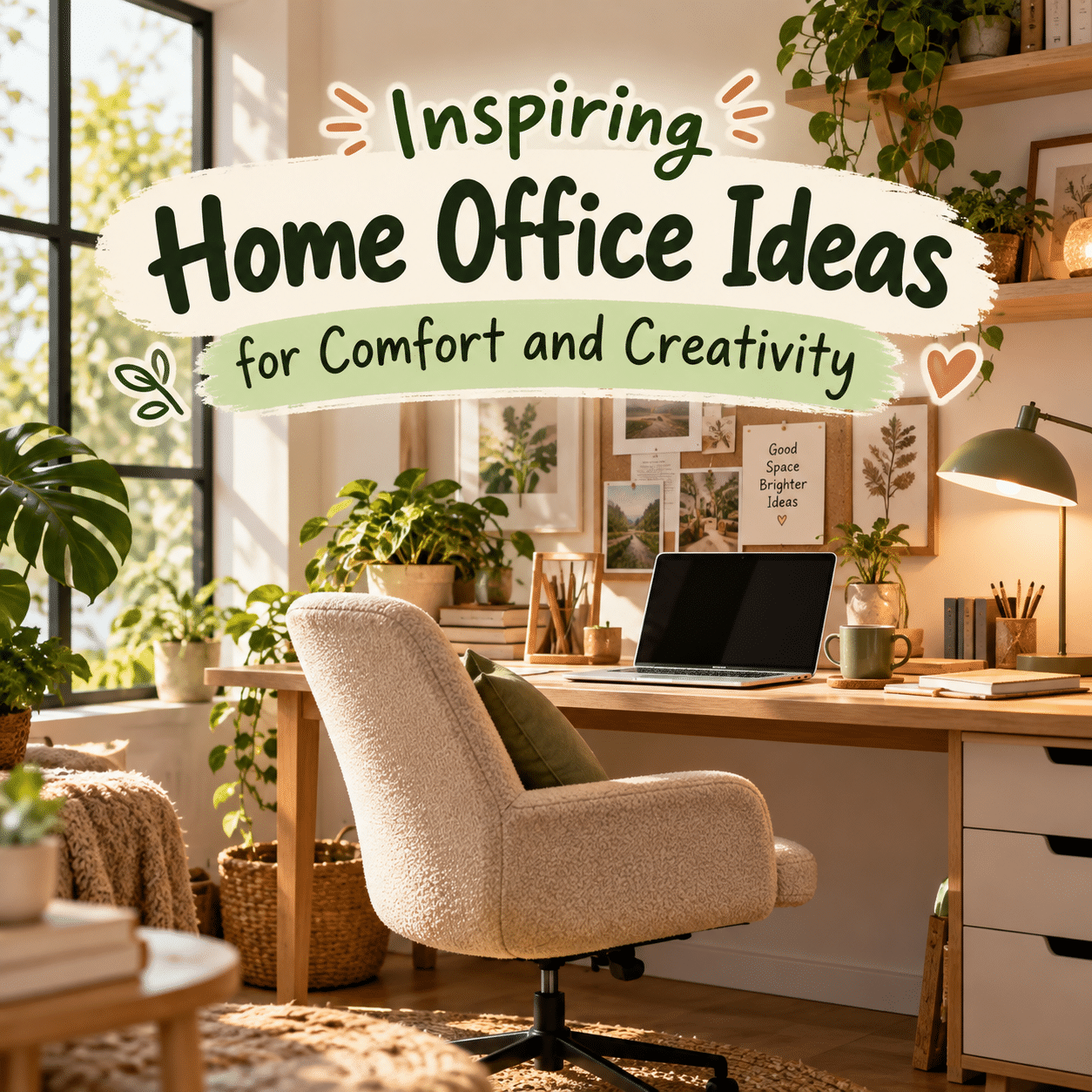
A home office is more than a place to sit with a laptop or complete a list of daily tasks. It is a personal environment where ideas take shape, decisions are made, and meaningful work happens. Whether you work remotely, manage household responsibilities, study, run a small business, or enjoy creative hobbies, the way your workspace is designed can influence how comfortable, organized, and inspired you feel throughout the day.
A thoughtfully arranged home office does not need to be large, expensive, or filled with sophisticated equipment. Even a small desk in a quiet corner can become an inviting workspace when it combines practical organization, comfortable furniture, suitable lighting, and details that reflect your personality.
The most successful home offices balance several important qualities: functionality, physical comfort, visual appeal, flexibility, and personal expression. A beautiful workspace should support the activities that happen there rather than simply look impressive in photographs.
This guide explores inspiring home office ideas for different spaces, working styles, and creative interests. From choosing the right desk and improving lighting to introducing natural textures, organizing supplies, and creating room for imagination, these ideas can help transform an ordinary work area into a place where you genuinely enjoy spending time.
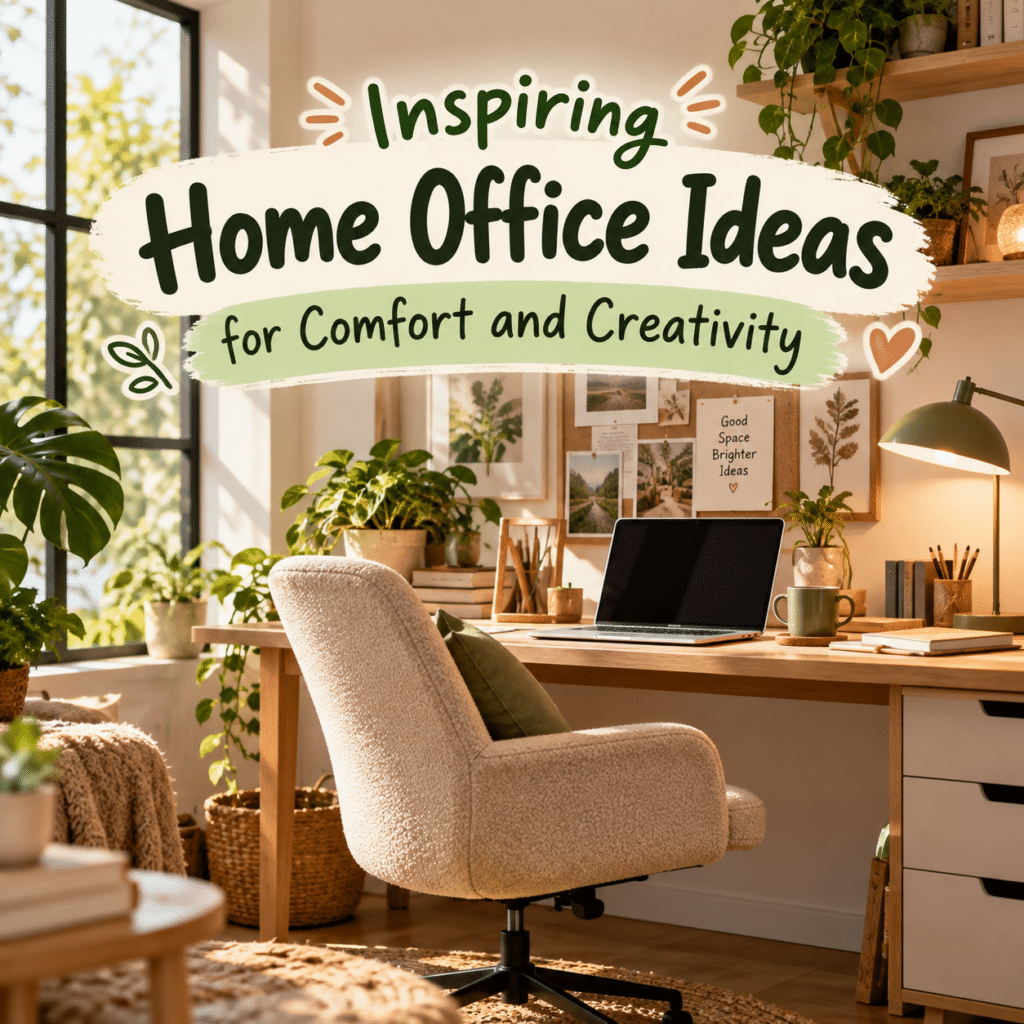
1. Begin With a Clear Vision for Your Home Office
Before choosing furniture or decorative accessories, consider what you want your home office to accomplish.
A workspace designed primarily for video meetings may require different arrangements from one used for drawing, writing, crafting, or managing paperwork. Understanding your daily activities helps you make decisions that improve comfort and efficiency.
Identify Your Main Activities
Start by thinking about the tasks you perform most frequently.
For example:
- Computer-based work: Prioritize a comfortable desk, suitable monitor positioning, and convenient access to charging outlets.
- Writing and planning: Allow sufficient space for notebooks, documents, and reference materials.
- Creative projects: Include flexible work surfaces and accessible storage for tools and supplies.
- Video meetings: Consider background appearance, lighting, privacy, and sound.
- Studying: Create a distraction-conscious environment with space for books and learning materials.
- Household administration: Organize bills, records, calendars, and frequently used stationery.
Some home offices must accommodate several activities. In these cases, adaptable furniture and clearly defined storage areas become particularly valuable.
Choose the Feeling You Want to Create
A home office can feel calm and understated, warm and welcoming, colorful and expressive, or modern and streamlined.
Think about the atmosphere that makes you comfortable.
Do you prefer natural wood and soft neutral colors? Do you enjoy bright artwork and playful accessories? Would a minimalist environment help you concentrate, or do familiar objects make the space feel more inviting?
There is no universal answer.
The goal is to create an environment that supports your work while feeling connected to your personal preferences.
Plan Around Your Existing Space
Before purchasing anything, evaluate the room or corner available.
Consider natural light, electrical outlets, ventilation, furniture dimensions, walking paths, and nearby household activities.
Measure the area carefully, including the space needed to pull out a chair, open drawers, and move comfortably.
A successful home office begins with a realistic understanding of its physical surroundings.
2. Find the Right Location for Your Workspace
One of the most important home office decisions is where to place it.
A dedicated room can provide privacy and flexibility, but many effective workspaces are created within bedrooms, living rooms, guest rooms, and other shared areas.
A Dedicated Home Office Room
A separate room offers the opportunity to organize furniture around your specific working habits.
You may have space for:
- A primary desk and ergonomic chair.
- Bookshelves or storage cabinets.
- A small reading or brainstorming area.
- A secondary surface for creative projects.
- A whiteboard or planning wall.
- Comfortable lighting for different activities.
A dedicated room can also make it easier to establish boundaries between work and personal life.
However, the room should still feel welcoming rather than overly formal.
Soft furnishings, artwork, plants, and carefully chosen colors can make the space feel like a natural part of your home.
A Home Office in the Living Room
A living room workspace can be practical when a separate room is unavailable.
Choose a location that allows the desk to fit comfortably without interrupting the room’s main activities.
A slim desk near a window, a compact workstation beside a bookshelf, or a small writing table against an unused wall can provide a functional working area.
To maintain visual harmony, select furniture that complements the existing living room.
For example, a wooden desk with simple lines may blend naturally with a warm, contemporary interior.
Storage boxes and cabinets can keep office supplies out of sight when the workday ends.
A Bedroom Office Corner
A bedroom workspace requires thoughtful separation between work and relaxation.
Position the desk away from the bed when possible, and avoid allowing paperwork or equipment to spread across sleeping areas.
A compact desk, wall-mounted shelves, and a comfortable chair can create a useful work zone without overwhelming the room.
Consider using a small rug, a distinct wall color, or a dedicated lamp to visually define the workspace.
At the end of the day, clearing the desk and putting away work materials can help restore the bedroom’s relaxing atmosphere.
An Underused Corner or Alcove
An overlooked corner can become one of the most charming areas of a home.
A narrow desk, a floating shelf, and a small task lamp may be all that is needed.
Unused alcoves can also accommodate custom-sized furniture or compact storage systems.
The key is to avoid forcing too much furniture into a limited space.
Leave enough room for comfortable seating and movement, and make sure the area has appropriate lighting and ventilation.
3. Choose a Desk That Supports Comfort and Creativity
The desk is usually the central feature of a home office.
Its size, shape, surface, and placement affect how easily you can perform everyday tasks.
Select a Desk Based on Your Work
Different desk styles serve different needs.
| Desk Style | Best Suited For | Main Consideration |
|---|---|---|
| Compact writing desk | Small spaces and laptop work | Limited surface area |
| Standard rectangular desk | Everyday computer tasks | Requires adequate floor space |
| L-shaped desk | Multiple monitors or work zones | Needs a suitable corner |
| Height-adjustable desk | Alternating between sitting and standing | Requires proper adjustment |
| Wall-mounted desk | Minimal or multipurpose rooms | Installation and load capacity |
| Large creative table | Drawing, crafting, and design | Requires generous space |
Rather than choosing the largest desk available, consider how much working surface you genuinely need.
A desk should comfortably accommodate essential equipment while leaving room for movement.
Create an Uncluttered Primary Work Surface
A visually appealing desk does not need to be completely empty.
However, frequently used items should have clear locations.
Keep the central area available for your main activity.
Place your keyboard, mouse, notebook, or creative tools where they are easy to reach without awkward stretching.
Move less frequently used items into drawers, shelves, or nearby organizers.
This arrangement helps the desk remain functional while preserving space for new ideas.
Consider Adjustable Desk Options
A height-adjustable desk can be useful for people who prefer changing working positions.
However, standing all day is not automatically better than sitting all day.
The important principle is variation.
Changing posture, taking movement breaks, and adjusting the workspace to suit your body are generally more useful than remaining in one position for extended periods.
If using an adjustable desk, ensure that the keyboard, screen, and other equipment remain appropriately positioned at each working height.
4. Invest in Comfortable and Supportive Seating
An attractive chair can contribute to the appearance of a home office, but comfort and adjustability should guide the decision.
A chair that looks beautiful but provides inadequate support may become uncomfortable during longer work sessions.
Look for Practical Ergonomic Features
Useful features may include:
- Adjustable seat height.
- Appropriate support for the lower back.
- A stable base.
- Comfortable seat cushioning.
- Armrests that do not interfere with desk positioning.
- A seat depth suited to your body.
- Materials appropriate for your room’s temperature and ventilation.
When seated, aim to keep your feet supported and your shoulders relaxed.
Your elbows should be able to rest near your sides while using the keyboard.
If your feet do not comfortably reach the floor, a suitable footrest may help.
Avoid Choosing a Chair Based on Appearance Alone
A stylish dining chair or decorative accent chair may work for occasional writing sessions.
For regular computer work, however, a properly fitted office chair is usually more practical.
You can still create a beautiful workspace by choosing a chair with a finish, upholstery, or silhouette that complements the room.
Comfort and design do not need to compete.
Remember That Movement Matters
Even a well-designed chair cannot eliminate the need to move.
Stand, stretch, walk, or change positions periodically.
Place frequently used supplies within easy reach, but allow natural opportunities to get up during the day.
A comfortable workspace should encourage healthy variation rather than keeping you fixed in one position.
5. Use Natural Light to Create an Inviting Atmosphere
Natural light is one of the most appealing features of a home office.
It can make a room feel open, welcoming, and visually connected to the outdoors.
However, effective lighting involves more than placing a desk directly in front of a window.
Position Your Desk Thoughtfully
A window beside the desk often provides pleasant daylight while reducing the chance of strong reflections on the screen.
If the monitor faces a bright window, glare may make the display difficult to see.
If the window is directly behind the monitor, the contrast between the bright background and the screen may also be uncomfortable.
Experiment with different positions before settling on a permanent arrangement.
Control Glare and Brightness
Window coverings can make daylight more adaptable.
Options include:
- Light-filtering curtains.
- Adjustable blinds.
- Roller shades.
- Sheer curtains combined with heavier coverings.
Choose a solution that allows you to regulate brightness without making the room unnecessarily dark.
The ideal arrangement depends on window orientation, climate, nearby buildings, and the tasks performed at the desk.
Add a View of Nature
If your workspace overlooks a garden, balcony, trees, or an interesting outdoor scene, consider making that view part of the design.
Even a modest view can add visual interest to the room.
If the window faces a wall or neighboring building, indoor plants, artwork, and natural materials can provide a similar sense of visual warmth.
6. Layer Your Lighting for Different Activities
Natural daylight changes throughout the day, so a comfortable home office also needs reliable artificial lighting.
A layered lighting plan combines general illumination with more focused light sources.
Ambient Lighting
Ambient lighting provides overall illumination.
Ceiling fixtures, pendant lights, and wall-mounted lights can help prevent the room from feeling too dark.
Choose lighting that distributes brightness comfortably across the space.
Task Lighting
A desk lamp provides focused illumination for activities such as reading, writing, drawing, or working with small objects.
An adjustable lamp is especially useful because it allows you to direct light where needed.
For handwritten work, position the lamp to minimize shadows from your writing hand.
Avoid directing strong light into your eyes or onto reflective screens.
Accent Lighting
Accent lighting adds atmosphere.
A small shelf light, a softly illuminated bookcase, or a decorative lamp can make the workspace feel more personal.
Accent lighting should complement rather than replace practical task lighting.
Choose Appropriate Light Color
Warm lighting can create a cozy atmosphere, while neutral or cooler lighting may suit some detail-oriented tasks.
Instead of assuming one color temperature is ideal for everyone, consider the activity, time of day, and personal comfort.
Adjustable lighting can provide flexibility when a workspace is used for both focused tasks and relaxed creative activities.
7. Create a Color Palette That Inspires You
Color has a strong influence on the visual character of a room.
A home office color palette should reflect your preferences while remaining comfortable to spend time in.
There is no single color guaranteed to improve creativity or productivity.
The best choice is one that supports the atmosphere you want and works well with the available lighting.
Warm Neutrals for a Calm Workspace
Soft white, cream, beige, taupe, and warm gray create a versatile foundation.
These shades work particularly well with wooden furniture, woven accessories, and natural textiles.
A neutral background also allows colorful books, artwork, and stationery to stand out.
Green for a Nature-Inspired Office
Sage, olive, and muted forest green can complement plants and wooden surfaces.
These colors are especially appealing in workspaces inspired by gardens, botanical illustrations, or natural materials.
You might introduce green through a painted wall, upholstered chair, curtains, or decorative accessories.
Blue for a Refined Contemporary Look
Soft blue, dusty blue, and navy can create different moods.
Lighter shades may feel airy and understated, while darker tones can create a more dramatic setting.
Pair blue with warm wood, brass-colored accents, or cream textiles to balance the palette.
Cheerful Colors for Creative Spaces
A creative workspace can incorporate terracotta, mustard, coral, turquoise, or other expressive colors.
Use colorful accessories, artwork, or a feature wall rather than assuming every surface needs a bold finish.
This approach makes it easier to refresh the room as your preferences evolve.
Build a Cohesive Palette
A practical starting point is to choose:
- One primary background color.
- One supporting color.
- One or two accent colors.
- A consistent group of material finishes.
This creates visual continuity while leaving room for personality.
8. Introduce Natural Materials and Textures
Natural textures can make a home office feel warmer and more welcoming.
Wood, woven fibers, cotton, linen, cork, and ceramic accessories provide visual variety without requiring elaborate decoration.
Use Wood to Add Warmth
Wooden desks, shelves, storage boxes, and picture frames can soften the appearance of technology.
Light wood may suit Scandinavian-inspired interiors, while darker finishes can create a more traditional or sophisticated look.
You do not need to match every wooden item exactly.
A coordinated range of finishes often feels more natural than identical furniture throughout the room.
Add Soft Furnishings
A small rug, curtains, or an upholstered chair can make a workspace feel less formal.
Textiles can also help reduce some sound reflections in rooms with many hard surfaces, although they are not substitutes for proper acoustic treatment when significant noise control is needed.
Choose materials that are easy to clean and appropriate for the room.
Experiment With Tactile Accessories
Consider:
- A cork bulletin board.
- A ceramic pencil holder.
- A woven storage basket.
- A wooden monitor stand.
- A linen-covered notebook.
- A textured desk mat.
These small details can contribute to a pleasant working environment without occupying excessive space.
9. Bring Plants and Botanical Inspiration Into Your Office
Plants are a popular way to introduce color, texture, and a connection to nature.
They can make a workspace feel more inviting, especially when the room contains mostly furniture and electronic equipment.
Choose Plants That Suit the Conditions
Before selecting plants, consider the available light, room temperature, and your ability to maintain them.
A plant that requires bright light may struggle in a dim corner.
Similarly, a plant that prefers evenly moist soil may not be suitable for someone who travels frequently.
Choose varieties according to their actual care requirements rather than appearance alone.
Arrange Plants Without Crowding the Desk
Possible locations include:
- A windowsill with suitable light.
- A nearby bookshelf.
- A plant stand beside the desk.
- A hanging planter away from equipment.
- A small side table.
Keep watering areas separate from electrical equipment, power strips, and important documents.
Use stable containers with appropriate drainage arrangements.
If children or pets share the space, check whether selected plants are safe for them.
Explore Botanical Alternatives
Live plants are not the only way to introduce natural inspiration.
Botanical prints, landscape photography, dried arrangements, and nature-inspired patterns can create a similar decorative theme.
These options may be especially practical in low-light rooms or spaces where plant maintenance is difficult.
10. Design an Organized Desk That Still Feels Personal
Organization and creativity are often treated as opposites, but they can work together.
A tidy workspace does not need to look empty or impersonal.
The objective is to reduce unnecessary obstacles while keeping meaningful items accessible.
Create Zones for Different Tasks
Divide the desk into functional areas.
For example:
- Primary work zone: Computer, keyboard, mouse, or writing surface.
- Reference zone: Notebook, planner, or frequently consulted materials.
- Creative zone: Sketchbook, idea cards, or project tools.
- Accessory zone: Lamp, stationery holder, and selected decorative objects.
The zones do not need physical dividers.
Their purpose is simply to give frequently used objects predictable locations.
Use Drawer Organizers
Small objects can quickly create visual clutter.
Drawer dividers help separate pens, clips, sticky notes, charging cables, and other accessories.
Choose compartments based on the items you actually own.
Oversized organizers may waste space, while excessively small compartments can make everyday storage inconvenient.
Keep Everyday Essentials Accessible
Store frequently used items close to the desk.
Move occasional supplies into cabinets, shelves, or labeled containers.
A simple organizational principle is to arrange objects according to how often they are used.
This reduces unnecessary reaching, searching, and rearranging.
Leave Space for Personal Objects
A framed photograph, favorite mug, small sculpture, or meaningful souvenir can make the office feel more personal.
Choose a few items that genuinely contribute to the atmosphere.
Too many decorations may compete with the space needed for work.
11. Make Vertical Storage Part of the Design
When floor space is limited, walls can provide valuable storage opportunities.
Vertical organization can also create an attractive visual feature.
Install Floating Shelves
Floating shelves are useful for books, lightweight containers, and decorative objects.
Arrange them at heights that allow comfortable access without interfering with your seated workspace.
Use appropriate wall anchors and follow the manufacturer’s load and installation instructions.
Create a Functional Pegboard
A pegboard can hold stationery, small baskets, headphones, and frequently used creative tools.
It is particularly useful for flexible workspaces because the arrangement can change as your needs evolve.
Keep heavier objects within the board’s rated capacity and use suitable mounting hardware.
Combine Open and Closed Storage
Open shelves make frequently used objects easy to access.
Closed cabinets and drawers conceal less attractive supplies, spare cables, and paperwork.
Combining the two approaches creates a balance between convenience and visual simplicity.
Avoid Overloading the Walls
Not every wall needs shelves, artwork, or organizers.
Leaving some open space helps prevent the room from feeling crowded.
A carefully arranged wall can be more effective than filling every available surface.
12. Build a Creative Inspiration Wall
An inspiration wall can turn an ordinary home office into a place for exploration and fresh ideas.
Unlike purely decorative artwork, an inspiration wall can evolve with your projects.
Create a Mood Board
A mood board may include:
- Color combinations.
- Fabric or material samples.
- Photographs.
- Illustrations.
- Typography examples.
- Personal sketches.
- Inspirational places or objects.
Arrange the materials around a particular project or theme.
Update the board when your interests or work changes.
Use a Whiteboard for Active Thinking
A whiteboard can support brainstorming, planning, and visual problem-solving.
It may be useful for outlining projects, mapping ideas, or tracking tasks.
Position it where you can see and use it comfortably.
Display Meaningful Artwork
Choose artwork that reflects your interests rather than relying only on generic motivational messages.
A landscape photograph, abstract painting, architectural illustration, or handmade piece can add personality.
The most inspiring artwork is often something with personal significance.
Keep the Wall Flexible
Use removable display systems where appropriate, especially in rented homes.
Avoid permanently attaching materials that need frequent replacement.
An inspiration wall should remain useful rather than becoming a static collection of outdated notes.
13. Create a Workspace That Encourages Creative Thinking
Creativity does not require an elaborate studio.
Often, a few thoughtful adjustments make it easier to capture ideas and explore different approaches.
Keep a Notebook Within Reach
Digital tools are useful, but a physical notebook can provide a simple place to record thoughts without opening another application.
Use it for sketches, questions, rough outlines, or unexpected ideas.
A dedicated notebook can also help separate exploratory thinking from formal task lists.
Provide Space for Experimentation
If your work involves drawing, crafting, design, or planning, leave an area where materials can be arranged temporarily.
A movable tray or portable supply cart can help when the same desk is used for multiple purposes.
Change Your Visual Perspective
Sometimes moving from the desk to a comfortable chair or standing beside a window can provide a welcome change of environment.
A small secondary work area may be useful for reading, reviewing ideas, or thinking away from the computer.
Make Creative Tools Easy to Access
Store frequently used creative materials where they can be retrieved without extensive preparation.
For example, keep drawing pencils together, organize reference books by topic, or place craft tools in clearly labeled containers.
Reducing setup effort can make creative activities easier to begin.
14. Design a Home Office for Small Spaces
A compact home office can be both functional and attractive.
The key is choosing furniture and storage solutions that match the available area.
Choose Furniture With a Small Footprint
A narrow writing desk may fit along a wall or beneath a window.
Look for designs that provide enough working space without unnecessary bulk.
Avoid choosing furniture solely because it is marketed as space-saving. Check its actual dimensions and usable surface area.
Consider Wall-Mounted Workstations
Wall-mounted desks can be useful in very small rooms.
Some designs fold away when not in use.
However, proper installation is essential, and not every wall is suitable for supporting a workstation.
Follow mounting instructions and consider professional installation when necessary.
Use Multipurpose Furniture
A bookshelf with an integrated desk, a cabinet with a pull-out work surface, or a console table that doubles as a writing desk may help conserve space.
Choose designs that remain comfortable for their intended use.
A multipurpose surface should not require awkward posture simply to save floor area.
Keep the Color Scheme Cohesive
Using related colors across furniture, walls, and storage can make a compact office feel visually unified.
Mirrors may also add a sense of openness, provided they do not create distracting reflections.
Minimize Unnecessary Accessories
Small spaces benefit from careful editing.
Keep the items you use regularly and select a few meaningful decorations.
The objective is not extreme minimalism, but comfortable movement and practical access.
15. Explore Different Home Office Design Styles
A home office can reflect the broader character of your home or introduce a distinct personal atmosphere.
Different styles offer useful inspiration.
Scandinavian-Inspired Home Office
<text weight=”medium”>Key characteristics:</text>
- Light wood furniture.
- White and soft neutral backgrounds.
- Simple functional shapes.
- Natural textures.
- Uncomplicated storage.
- Comfortable lighting.
This style suits people who appreciate a bright, understated environment.
Modern Minimalist Home Office
<text weight=”medium”>Key characteristics:</text>
- Clean furniture lines.
- Limited decorative accessories.
- Concealed storage.
- Coordinated finishes.
- Clear working surfaces.
Minimalism works best when storage is sufficient to keep essential items accessible without leaving them permanently on display.
Cozy Rustic Home Office
<text weight=”medium”>Key characteristics:</text>
- Warm wood tones.
- Woven baskets.
- Textured fabrics.
- Vintage-inspired accessories.
- Earthy colors.
- Soft ambient lighting.
This approach can make a workspace feel relaxed and welcoming.
Contemporary Creative Studio
<text weight=”medium”>Key characteristics:</text>
- Flexible furniture.
- Colorful artwork.
- Open shelving.
- Inspiration boards.
- Modular storage.
- Space for changing projects.
This style is particularly suitable for creative work involving multiple materials or activities.
Classic and Timeless Home Office
<text weight=”medium”>Key characteristics:</text>
- Traditional wooden furniture.
- Bookshelves.
- Framed artwork.
- Coordinated desk accessories.
- Layered lighting.
- Refined neutral or deeper colors.
A classic office can feel established and elegant without requiring expensive furnishings.
Eclectic Personal Workspace
<text weight=”medium”>Key characteristics:</text>
- A mixture of furniture styles.
- Collected artwork.
- Meaningful objects.
- Varied textures.
- Expressive colors.
- Unconventional decorative combinations.
The secret to a successful eclectic office is maintaining some visual connection through recurring colors, materials, or shapes.
16. Improve Your Computer and Monitor Setup
A visually attractive office should also support comfortable computer use.
Poor equipment positioning can create unnecessary strain, regardless of how beautiful the surrounding room appears.
Position the Monitor Comfortably
For many desktop setups, a useful starting point is to place the monitor approximately an arm’s length away, then adjust according to screen size, vision, and comfort.
The top of the visible screen is often positioned around eye level or slightly below, with the main viewing area below the horizontal line of sight.
Individual needs may differ, particularly for people using certain types of eyewear.
Avoid arrangements that require prolonged upward or sideways head positions.
Use a Separate Keyboard When Appropriate
Laptop screens and keyboards are physically connected, which can make it difficult to position both comfortably for extended work.
A laptop stand combined with an external keyboard and mouse can provide greater flexibility.
Ensure the equipment is stable and does not obstruct ventilation.
Organize Cables Safely
Cable clips, sleeves, and under-desk organizers can reduce visual clutter.
However, cable management should never compromise electrical safety.
Avoid overloading outlets, tightly bundling heat-producing power cords, or placing cables where they may be crushed or damaged.
Keep power connections accessible for inspection and maintenance.
Make Frequently Used Equipment Easy to Reach
Printers, chargers, headphones, and other accessories should have practical locations.
Place heavier equipment on stable surfaces designed to support its weight.
Avoid positioning equipment where reaching for it repeatedly causes awkward movement.
17. Make Video Meetings More Comfortable and Professional
For people who regularly participate in online meetings, the home office background and lighting deserve special attention.
A professional-looking setup does not need to resemble a television studio.
Simple, thoughtful arrangements are often sufficient.
Choose a Calm Background
A bookshelf, neutral wall, framed artwork, or carefully arranged plant can provide a pleasant backdrop.
Avoid displaying sensitive documents, personal information, or distracting clutter.
If the room is shared, consider how much of the surrounding home will be visible.
Improve Facial Lighting
Position a suitable light source in front of or slightly beside your face.
Strong light directly behind you may cause the camera to underexpose your face.
Soft, even lighting is generally more flattering and comfortable than a harsh, unshielded lamp.
Reduce Background Noise
Choose the quietest available location for important calls.
Close doors when practical, use a suitable microphone or headset, and reduce avoidable household noise.
Rugs, curtains, and upholstered furniture may help reduce room reflections, but they cannot fully block sound traveling from other spaces.
Keep Meeting Essentials Ready
A simple meeting station might include:
- Headphones.
- A microphone or webcam.
- A notebook.
- A pen.
- A water glass.
- Accessible charging connections.
Having these items prepared can make transitions between tasks smoother.
18. Add a Reading or Reflection Corner
If space allows, a small area away from the main desk can make the home office more versatile.
It may be used for reading, reviewing documents, brainstorming, or taking short breaks.
Choose a Comfortable Chair
A supportive lounge chair or compact armchair can provide an alternative to the desk.
Select a size that fits the room without obstructing movement.
Add a Small Side Table
A side table provides a place for books, notebooks, and drinks.
Keep liquids away from electrical equipment and important papers.
Include Suitable Reading Light
A floor lamp or adjustable wall light can provide focused illumination.
Choose a position that minimizes shadows and glare.
Create a Distinct Atmosphere
A small rug, cushion, plant, or piece of artwork can distinguish the corner from the main workstation.
This separation can make the room feel more flexible without requiring additional walls.
19. Personalize Your Home Office With Meaningful Details
A home office should reflect the person who uses it.
Personalization can make the environment more enjoyable without reducing its practical value.
Display Objects With Personal Significance
Consider photographs, travel souvenirs, handmade crafts, or gifts.
Choose objects that bring positive associations and fit comfortably within the available space.
Incorporate Your Hobbies
A person who enjoys photography might display favorite images.
A gardening enthusiast could use botanical artwork.
A writer might arrange a small collection of meaningful books.
A craft enthusiast could display a few completed projects.
These details create a workspace that feels distinctive rather than generic.
Use Accessories That Combine Beauty and Function
Examples include:
- An attractive desk clock.
- A ceramic stationery holder.
- A decorative storage tray.
- A textured desk mat.
- A coordinated planner.
- A small wooden organizer.
Functional accessories are especially valuable because they contribute to the room’s appearance while supporting everyday tasks.
Avoid Overdecorating
Personalization should not interfere with movement, lighting, or access to equipment.
Leave enough open space to work comfortably.
A few carefully chosen objects often have greater visual impact than a crowded collection.
20. Create a Flexible Home Office for Changing Needs
Your work habits may evolve over time.
A home office designed with flexibility in mind can adapt without requiring a complete redesign.
Choose Movable Storage
Rolling carts, portable organizers, and modular shelves can accommodate changing projects.
Ensure movable furniture remains stable and can be secured when necessary.
Use Furniture With Multiple Functions
A desk may support computer work during the day and creative hobbies in the evening.
A bookshelf can store reference materials alongside decorative objects.
A small table can serve as a planning surface or temporary project area.
Plan for Equipment Changes
Leave reasonable space for future accessories or replacement equipment.
However, avoid buying oversized furniture for hypothetical needs that may never arise.
Refresh the Space Gradually
A home office can feel renewed through small changes:
- Rearranging artwork.
- Updating a desk lamp.
- Reorganizing storage.
- Introducing a different accent color.
- Replacing worn accessories.
- Adjusting furniture placement.
Thoughtful maintenance is often more valuable than frequent major purchases.
21. Make Your Home Office More Sustainable
A sustainable approach to home office design emphasizes durability, responsible purchasing, and making good use of existing resources.
Start With What You Already Own
Before buying new furniture, examine whether an existing table, shelf, or storage unit could be adapted.
A sturdy piece of furniture may need only cleaning, refinishing, or a small modification.
However, avoid using furniture that is unstable, damaged, or unsuitable for the intended load.
Choose Durable Materials
Look for furniture that can withstand regular use.
Consider construction quality, repairability, and maintenance requirements.
A well-made desk that remains useful for many years may be preferable to repeatedly replacing poorly constructed alternatives.
Consider Secondhand Furniture
Secondhand desks, bookshelves, and cabinets can add character while extending the useful life of existing products.
Inspect structural stability, surface condition, and hardware before purchasing.
For electrical accessories, use particular caution and choose equipment that meets applicable safety requirements.
Reduce Unnecessary Purchases
Instead of buying a complete set of matching accessories immediately, add items as genuine needs arise.
This approach can reduce clutter and help the workspace develop naturally.
Maintain Your Equipment
Regular cleaning, appropriate ventilation, and proper cable care can help preserve office equipment.
Follow manufacturer guidance for maintenance and safe use.
22. Balance Comfort, Creativity, and Everyday Functionality
A home office should support both the practical and personal sides of working from home.
It is possible to create a room that looks beautiful but feels uncomfortable.
It is equally possible to build a technically functional workstation that feels cold or uninspiring.
The most satisfying spaces find a balance.
Think About Physical Comfort
Consider chair support, desk height, lighting, ventilation, temperature, and opportunities for movement.
These elements influence how comfortable the room feels during regular use.
Think About Mental Comfort
Visual clutter, noise, interruptions, and inadequate privacy can make work more difficult.
A predictable organizational system and clear boundaries may help create a calmer environment.
Think About Creative Freedom
Leave room for sketches, experiments, books, or materials that inspire new ideas.
A workspace does not need to be perfectly arranged at every moment.
Some activities naturally require temporary mess.
The important distinction is between useful project materials and clutter that interferes with work.
Think About Long-Term Practicality
Choose solutions that are easy to clean, maintain, and adapt.
A workspace that requires constant rearranging or complicated upkeep may become frustrating over time.
23. Home Office Ideas for Different Working Styles
Not everyone uses a home office in the same way.
Matching the design to your working style can be more effective than following a particular decorating trend.
| Working Style | Helpful Design Ideas | Main Priority |
|---|---|---|
| Remote professional | Ergonomic seating, monitor setup, meeting background | Daily comfort and communication |
| Writer or researcher | Clear desk, bookshelves, reading light | Concentration and reference access |
| Designer or artist | Large surface, inspiration wall, organized supplies | Creative flexibility |
| Student | Compact desk, task lighting, accessible materials | Study organization |
| Small business owner | Filing system, computer equipment, planning board | Administrative efficiency |
| Occasional home worker | Multipurpose desk, concealed storage | Space flexibility |
| Hobby enthusiast | Portable supplies, adaptable work surface | Easy setup and cleanup |
These are starting points rather than fixed rules.
Many people combine several working styles, and their home offices should accommodate that flexibility.
24. Common Home Office Design Mistakes to Avoid
Understanding common mistakes can help you create a workspace that remains comfortable and useful.
Choosing Style Over Comfort
An attractive chair or desk may not be suitable for prolonged use.
Test furniture when possible and prioritize practical fit.
Ignoring Lighting Conditions
A beautiful desk beside a window may still be uncomfortable if sunlight creates constant glare.
Evaluate lighting throughout the day.
Buying Too Much Furniture
Large desks, cabinets, and shelves can overwhelm a small room.
Measure carefully and preserve comfortable circulation space.
Neglecting Storage
Without appropriate storage, even a spacious office can become cluttered.
Plan where documents, cables, and supplies will go before adding decorative accessories.
Using Too Many Decorative Objects
Decorations should contribute to the room without competing with essential working surfaces.
Edit your collection periodically.
Forgetting Electrical Safety
Overloaded outlets, damaged cords, unstable equipment, and liquids near electrical devices create avoidable hazards.
Follow appropriate electrical safety practices and equipment instructions.
Failing to Separate Work and Personal Time
When the office is part of a bedroom or living room, work materials can gradually spread into relaxation areas.
A simple end-of-day cleanup routine can help preserve boundaries.
Designing for an Imaginary Lifestyle
A workspace should reflect how you actually work.
If you rarely use printed documents, an enormous filing cabinet may be unnecessary.
If you regularly create physical projects, an extremely small desk may be impractical.
Design around real habits rather than an idealized photograph.
25. A Practical Step-by-Step Home Office Makeover
You do not need to redesign the entire room at once.
A gradual approach can make the process more manageable.
Step 1: Evaluate Your Current Workspace
Spend a few days observing what works and what causes frustration.
Notice lighting problems, uncomfortable furniture, cluttered surfaces, and items that are difficult to reach.
Step 2: Define Your Priorities
Identify the most important improvements.
For example:
- Better seating.
- More suitable lighting.
- Additional storage.
- A larger working surface.
- Less visual clutter.
- More room for creative projects.
Focus on changes that address actual problems.
Step 3: Measure and Plan
Measure the available floor and wall space.
Sketch a simple furniture arrangement.
Include chair clearance, storage access, doors, windows, and electrical outlets.
Step 4: Improve the Essential Setup
Prioritize the desk, chair, lighting, and computer arrangement.
These elements support everyday use and should generally come before purely decorative additions.
Step 5: Organize Your Supplies
Sort items into categories based on frequency of use.
Assign clear locations and remove unnecessary duplicates.
Step 6: Add Personal Style
Introduce artwork, plants, textiles, and accessories that complement the room.
Use a consistent color palette to create visual harmony.
Step 7: Test the Workspace
Use the redesigned office for several days.
Notice whether the desk is comfortable, lighting works at different times, and supplies are easy to access.
Make adjustments based on actual experience.
Step 8: Establish Simple Maintenance Habits
Set aside a few minutes to clear the desk, return supplies, and prepare for the next session.
A practical maintenance routine helps the workspace remain inviting.
26. Home Office Design Checklist
Use this checklist when planning a new workspace or refreshing an existing one.
Layout and Furniture
- The desk fits the available space.
- The chair supports comfortable working posture.
- There is enough room to move freely.
- Drawers and cabinets can open without obstruction.
- Furniture is stable and appropriately positioned.
Lighting and Comfort
- Daylight can be controlled when necessary.
- Task lighting suits the activities performed.
- Computer screens are positioned to reduce glare.
- The room has appropriate ventilation.
- The working environment allows changes in posture.
Organization
- Frequently used supplies are accessible.
- Cables are organized safely.
- Documents have designated storage.
- The primary work surface remains functional.
- Storage systems are easy to maintain.
Creativity and Personal Style
- The color palette reflects personal preferences.
- Artwork or meaningful objects add character.
- Creative materials have practical storage.
- The workspace allows flexibility.
- Decorative accessories do not interfere with work.
Long-Term Use
- Furniture and accessories are easy to maintain.
- Electrical equipment is used safely.
- The arrangement can adapt to changing needs.
- Unnecessary purchases have been avoided.
- The office feels comfortable and welcoming.
Frequently Asked Questions About Home Office Design
1. How can I make my home office feel more inspiring?
Start by improving the atmosphere around your main work area. Introduce comfortable lighting, a coordinated color palette, meaningful artwork, and a few personal accessories.
A plant, inspiration board, or small collection of favorite books can add visual interest.
The most important step is to create a space that reflects your interests while remaining practical for everyday tasks.
2. What is the best way to design a home office in a small room?
Choose compact furniture, use vertical storage, and keep the primary working surface clear.
A narrow desk, wall-mounted shelves, and multipurpose storage can help make efficient use of limited space.
Measure carefully and avoid crowding the room with oversized furniture.
Comfortable movement and practical access should remain priorities.
3. Which colors work best for a comfortable home office?
There is no single best color for every person.
Warm neutrals can create an understated foundation, greens can complement natural materials, blues can provide a refined appearance, and brighter accents can express creativity.
Choose colors that suit your lighting conditions, personal preferences, and the atmosphere you want to create.
4. How can I make my home office cozy without making it cluttered?
Use a limited number of warm, textured elements such as a rug, curtain, wooden accessory, or soft desk lamp.
Choose decorative objects that have personal meaning or practical value.
Keep storage organized and leave enough open working space.
Cozy design is about comfort and atmosphere rather than filling every surface.
5. Do I need expensive furniture to create a beautiful home office?
No. A functional and attractive workspace can be created with modest resources.
Existing furniture, secondhand pieces, simple organizers, and carefully selected accessories can work well together.
Prioritize a suitable desk, comfortable seating, and effective lighting before spending money on decorative upgrades.
6. How can I combine a home office with a creative hobby space?
Use flexible furniture, portable storage, and clearly defined activity zones.
Keep frequently used creative supplies organized in drawers, carts, or containers.
Protect the desk surface when working with materials that could cause damage.
A multipurpose workspace is most successful when switching between activities is straightforward.
7. How often should I refresh my home office?
There is no fixed schedule.
Make changes when your needs, equipment, comfort, or personal preferences change.
Small adjustments such as improving storage, moving a lamp, or rearranging artwork may be sufficient.
A well-designed home office should evolve gradually rather than requiring frequent complete makeovers.
Conclusion: Create a Home Office That Feels Like Your Own
An inspiring home office is not defined by its size, price, or resemblance to a perfectly styled interior photograph. Its real value comes from how well it supports the person who uses it.
A comfortable chair, thoughtfully positioned desk, suitable lighting, and organized supplies create a practical foundation. Natural textures, meaningful artwork, favorite colors, and creative details add warmth and individuality.
Whether your workspace occupies an entire room or a small corner of your home, the most effective design choices begin with understanding your everyday activities and personal preferences.
Focus first on comfort and functionality, then introduce the elements that make the space enjoyable. Allow the arrangement to evolve as your work, interests, and routines change.
With thoughtful planning and a little creativity, even a simple home office can become a welcoming environment where concentration feels easier, ideas have room to develop, and everyday work becomes a more pleasant part of life.