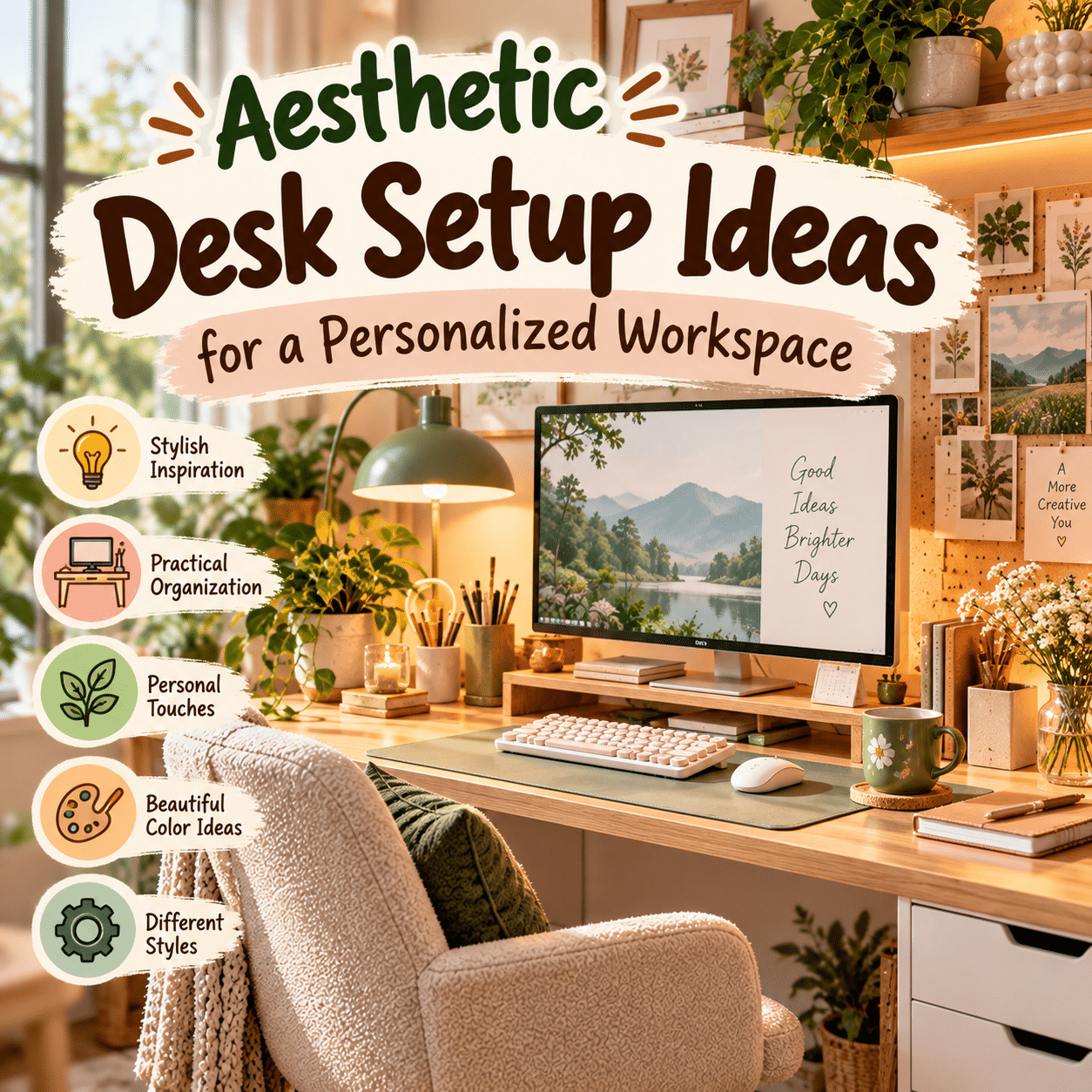
A desk is more than a surface for a computer, notebooks, and everyday essentials. It is a personal space where ideas develop, creative projects begin, and important tasks take shape. Whether you work from home, study, manage a small business, or enjoy creative hobbies, your desk setup can influence how comfortable, organized, and inspired you feel throughout the day.
An aesthetic desk setup combines visual appeal with practical functionality. It brings together colors, textures, lighting, furniture, storage, and personal details to create a workspace that feels inviting without sacrificing comfort or efficiency.
However, a beautiful desk does not need to follow a particular decorating trend or resemble a perfectly arranged social media photograph. The most successful setups reflect the person using them. Some people prefer a clean minimalist arrangement with neutral colors, while others enjoy colorful accessories, natural materials, vintage-inspired details, or an expressive collection of meaningful objects.
The goal is not simply to create a desk that looks attractive. It is to build a workspace that supports your activities, suits your surroundings, and makes everyday routines more enjoyable.
This guide explores aesthetic desk setup ideas for different styles, spaces, and working habits. From choosing a cohesive color palette and arranging equipment to adding creative accessories and personal touches, these ideas will help you design a workspace that feels distinctly your own.
1. Start With Your Personal Workspace Style
Before buying accessories or rearranging furniture, consider what kind of environment makes you feel comfortable.
Aesthetic desk design is highly personal. A workspace that feels peaceful to one person may seem too plain to another, while a colorful creative desk may inspire one user but distract someone who prefers visual simplicity.
Understanding your preferences is the foundation of a successful setup.
Identify the Atmosphere You Want
Think about how you would like your desk to feel when you sit down.
Possible directions include:
- Calm and minimal: Clean surfaces, neutral colors, and carefully selected essentials.
- Warm and cozy: Soft lighting, wood textures, comfortable accessories, and welcoming details.
- Creative and colorful: Expressive stationery, artwork, playful objects, and vibrant accents.
- Modern and sophisticated: Streamlined equipment, coordinated finishes, and refined accessories.
- Nature-inspired: Plants, botanical artwork, natural fibers, and earthy colors.
- Vintage-inspired: Classic stationery, traditional materials, and carefully chosen decorative pieces.
You do not have to follow one style exclusively.
A warm wooden desk can work beautifully with modern technology, while minimalist furniture can provide a balanced foundation for colorful accessories.
Consider Your Everyday Activities
Your working habits should guide your design decisions.
A desk used primarily for computer work needs sufficient room for a monitor, keyboard, mouse, and comfortable arm positioning.
A writing desk may benefit from an open surface, good task lighting, and accessible notebooks.
A creative workstation may require storage for tools, materials, and projects in progress.
List your most frequent activities before deciding which objects deserve permanent space on the desk.
Collect Inspiration Without Copying Everything
Browse workspace photographs, interior design examples, or your own favorite rooms to identify appealing elements.
Instead of copying an entire setup, notice individual details:
- A particular wood finish.
- A pleasing color combination.
- An interesting desk lamp.
- A practical storage arrangement.
- A creative wall display.
- A comfortable balance between technology and decoration.
Combine the ideas that genuinely suit your space and lifestyle.
2. Build a Cohesive Desk Color Palette
Color is one of the easiest ways to establish a recognizable desk aesthetic.
A thoughtful palette helps furniture, equipment, and accessories feel connected, even when they come from different collections or brands.
Choose a Primary Color
Begin with a dominant color that complements the room.
Popular options include white, cream, beige, gray, soft green, muted blue, and natural wood tones.
A primary color does not need to cover every object. It simply provides a visual foundation.
For example, a cream-colored wall and light wooden desk can establish a warm neutral background.
Add Supporting Colors
Choose one or two complementary colors for accessories.
Sage green, terracotta, dusty blue, blush pink, and charcoal are examples of colors that can work with neutral foundations.
You might introduce supporting colors through:
- A desk mat.
- Storage containers.
- Notebook covers.
- A chair cushion.
- Artwork.
- A lamp.
- Small decorative accessories.
Repeating a color in several locations creates visual continuity.
Use Accent Colors Thoughtfully
Accent colors introduce personality.
A small orange organizer, a deep green lamp, or a bright yellow artwork can become a focal point.
You do not need numerous colorful objects to create visual interest.
Sometimes one expressive accessory provides enough contrast.
Consider a Simple Color Distribution
A useful starting point is to let the primary color dominate, use supporting colors across several objects, and reserve stronger accents for smaller details.
This is a design guideline rather than a strict formula.
The best proportions depend on your furniture, room lighting, and personal preferences.
3. Explore Popular Aesthetic Desk Setup Styles
Different desk aesthetics can provide inspiration for a personalized workspace.
Each style offers a distinct combination of colors, materials, and decorative elements.
Minimalist Desk Setup
A minimalist desk emphasizes clarity, functionality, and intentional choices.
Typical features include:
- A simple desk.
- Neutral colors.
- Concealed cable management.
- Limited decorative accessories.
- Streamlined storage.
- An uncluttered work surface.
The goal is not to eliminate personality but to make each visible object feel purposeful.
A single framed print, attractive lamp, or carefully selected plant can add character without overwhelming the arrangement.
Cozy Desk Setup
A cozy desk focuses on warmth and comfort.
Consider combining:
- Natural wood furniture.
- Soft ambient lighting.
- Warm neutral colors.
- A textured desk mat.
- A small plant.
- Comfortable seating.
- A few meaningful decorative objects.
A cozy workspace can feel especially welcoming during early mornings or quiet evening activities.
Avoid placing decorative fabrics near equipment that produces significant heat or requires ventilation.
Scandinavian-Inspired Desk
Scandinavian-inspired interiors often emphasize simplicity, natural materials, and practical design.
A desk in this style might feature light wood, white accessories, soft gray textiles, and understated storage.
The result is a bright, functional environment with a relaxed appearance.
Modern Monochrome Desk
A monochrome setup uses variations of one color family.
Black, white, and gray are common choices.
For example, a dark desk paired with a black monitor, charcoal desk mat, and metallic accessories can create a refined contemporary look.
To prevent the arrangement from feeling visually flat, introduce contrasting textures or finishes.
Pastel Desk Setup
Pastel colors create a gentle and playful atmosphere.
Soft pink, lavender, mint, pale yellow, and powder blue can be combined with white or cream furniture.
This style works particularly well with colorful stationery, small organizers, and simple artwork.
Keep the overall palette coordinated so the desk feels intentional rather than crowded.
Nature-Inspired Desk
A nature-inspired setup emphasizes organic materials and earthy colors.
Wood, cork, ceramic, linen, woven baskets, and botanical decorations work well together.
Plants can add freshness when lighting and maintenance conditions are suitable.
Vintage-Inspired Desk
Vintage aesthetics introduce character through traditional materials and nostalgic details.
Possible elements include:
- A classic-style desk lamp.
- Wooden drawers.
- Brass-colored accessories.
- Framed illustrations.
- Leather-look notebook covers.
- Antique-inspired clocks.
Mixing vintage details with modern equipment can create an appealing contrast.
4. Choose a Desk That Fits Your Space and Activities
The desk itself has a major influence on the appearance and usability of your workspace.
Before focusing on decorative details, make sure the desk supports your everyday tasks.
Match Desk Size to Your Needs
A compact writing desk may be sufficient for a laptop and notebook.
A larger surface may be useful for multiple monitors, drawing materials, or creative projects.
Measure your available space carefully.
Remember to account for chair movement, drawers, nearby doors, and walking paths.
Consider the Desk Shape
Different shapes offer different advantages.
| Desk Type | Suitable For | Design Consideration |
|---|---|---|
| Compact rectangular desk | Small rooms and simple setups | Keeps the footprint manageable |
| Standard office desk | Everyday computer work | Provides versatile surface space |
| L-shaped desk | Multiple work zones | Requires suitable corner space |
| Wall-mounted desk | Limited floor space | Needs secure installation |
| Height-adjustable desk | Changing working positions | Requires appropriate equipment positioning |
| Large creative table | Art, crafts, and design | Needs generous room for movement |
Choose a desk based on actual activities rather than appearance alone.
Select a Finish That Complements Your Style
Light wood can create an airy atmosphere.
Dark wood may feel traditional or sophisticated.
White finishes can support minimalist and pastel aesthetics.
Black or charcoal surfaces can suit contemporary setups.
Consider durability, cleaning requirements, and how easily the surface shows scratches or fingerprints.
Keep the Surface Practical
An aesthetic desk should still provide sufficient working room.
Avoid choosing an unusually narrow or shallow desk if it forces the monitor too close or leaves inadequate space for comfortable keyboard use.
Practical proportions matter more than achieving a particular visual trend.
5. Make Your Monitor Setup Visually Balanced
For computer-based work, the monitor often becomes the largest visible object on the desk.
Its placement can influence both comfort and visual balance.
Position the Screen Comfortably
A useful starting point is to place the monitor approximately an arm’s length away, adjusting for screen size, eyesight, and personal comfort.
For many users, the top of the visible display is around eye level or slightly below.
Avoid positions that require prolonged upward head tilt or awkward neck rotation.
Consider a Monitor Stand
A monitor stand can create additional storage beneath the screen.
It may also help achieve a more suitable viewing height.
Choose a stable stand designed to support the monitor’s weight and dimensions.
Avoid stacking unstable objects beneath expensive equipment.
Use a Monitor Arm When Appropriate
A compatible monitor arm can free desk space and allow flexible positioning.
It may be particularly useful for compact desks or setups involving multiple screens.
Check the monitor’s mounting compatibility, the arm’s weight capacity, and the desk’s structural suitability.
Create Visual Symmetry
Some people enjoy placing a monitor centrally with matching accessories on either side.
Others prefer an asymmetrical arrangement, such as a monitor on one side and a lamp or plant on the other.
Neither approach is inherently better.
Choose a layout that looks balanced while keeping frequently used equipment comfortable to access.
6. Use Desk Mats to Add Color and Texture
A desk mat is a simple accessory that can change the appearance of a workspace.
It creates a visual foundation for the keyboard, mouse, and other desktop items.
Choose a Suitable Material
Common options include fabric, felt, cork, synthetic leather, and other durable surface materials.
Each has different characteristics.
Fabric mats may provide a soft texture.
Cork offers a natural appearance.
Smooth synthetic surfaces can be easy to wipe clean, depending on their construction.
Consider how the material interacts with your mouse and other equipment.
Coordinate the Mat With Your Palette
A neutral desk mat can create a calm foundation.
A colorful mat can introduce an accent without requiring numerous decorative objects.
For example, a sage green mat can complement a wooden desk and botanical artwork.
Select an Appropriate Size
An extended mat may accommodate both keyboard and mouse.
A smaller mat may be more suitable for a compact workspace.
Measure the usable desk area before purchasing.
Leave enough exposed surface for notebooks, lamps, or other essentials.
Keep Maintenance in Mind
Follow the manufacturer’s cleaning instructions.
Avoid allowing moisture to collect beneath mats, particularly on surfaces that may be sensitive to water.
7. Create an Aesthetic Keyboard and Mouse Arrangement
Keyboards and mice can contribute to the visual identity of a desk setup.
However, appearance should not outweigh usability.
Choose Coordinated Accessories
Matching or complementary colors can create a cohesive look.
For example, a cream keyboard, beige mouse, and light desk mat can support a warm minimalist aesthetic.
A black keyboard and mouse may suit a modern monochrome setup.
Consider Keyboard Comfort
Different keyboards vary in key spacing, travel, layout, and typing feel.
Choose a design that suits your typing habits.
A compact keyboard can save space, but it may remove keys you regularly use.
Test unfamiliar layouts when possible.
Position Input Devices Properly
Keep the keyboard and mouse within comfortable reach.
Avoid stretching your arms forward or sideways for prolonged periods.
Try to maintain relaxed shoulders and neutral wrist positions.
Add a Wrist Rest Only When Useful
Some people find a suitable wrist or palm support comfortable during pauses.
However, wrist rests should not encourage sustained pressure on the wrists while typing.
Position accessories according to ergonomic guidance and personal comfort rather than decorative appearance alone.
8. Design Beautiful and Functional Desk Lighting
Lighting can dramatically influence the atmosphere of a desk setup.
A thoughtful combination of natural light, task lighting, and decorative illumination can create both comfort and visual interest.
Take Advantage of Daylight
Position your desk where daylight is available without creating excessive screen glare.
A window to the side of the workstation is often a practical arrangement.
Use curtains or adjustable blinds when sunlight becomes too strong.
Add a Practical Desk Lamp
A desk lamp provides focused illumination for reading, writing, and creative activities.
Look for adjustable positioning and suitable brightness.
Choose a design that complements the desk’s aesthetic.
A classic metal lamp may suit a vintage-inspired setup, while a streamlined lamp may complement modern furniture.
Explore Warm Accent Lighting
Small accent lights can make a desk feel cozy.
Examples include:
- A decorative table lamp.
- Soft shelf lighting.
- A light positioned behind the monitor.
- A carefully installed LED strip.
Accent lighting should not replace adequate general or task lighting.
Avoid Excessive Brightness and Glare
Very bright decorative lights, exposed bulbs, and reflective surfaces can become distracting.
Choose lighting that remains comfortable during extended use.
Keep electrical accessories away from liquids and avoid obstructing equipment ventilation.
9. Organize Cables for a Cleaner Appearance
Visible cables can interrupt an otherwise cohesive desk setup.
Cable management helps create a more orderly appearance while making equipment easier to maintain.
Identify Your Main Cables
Start by identifying power cords, display cables, charging connections, and peripheral cables.
Disconnect equipment safely before rearranging connections.
Use Cable Clips
Adhesive or mechanically attached clips can guide lightweight cables along suitable surfaces.
They are useful for keeping charging cables accessible.
Choose products appropriate for the surface and cable type.
Consider Under-Desk Cable Management
Under-desk trays and organizers can hold suitable cables and accessories.
However, power strips and electrical cords must be installed and used according to their safety instructions.
Avoid tightly bundling cords that may generate heat, covering ventilation openings, or placing electrical connections where they may be damaged.
Label Similar Cables
Small labels can help identify connections when equipment needs to be moved or replaced.
This is particularly useful for setups involving several monitors or devices.
Preserve Accessibility
A tidy appearance should not make electrical connections difficult to inspect or disconnect.
Keep safety and maintenance ahead of visual perfection.
10. Add Plants and Natural Details
Plants can soften the appearance of electronic equipment and introduce organic shapes into a workspace.
They also provide opportunities to personalize a desk through different containers, leaf shapes, and arrangements.
Start With One Small Plant
A single plant may be enough to create a natural focal point.
Choose a variety suited to the available light and your maintenance habits.
A plant should not block the monitor, interfere with keyboard use, or crowd the working surface.
Use Decorative Planters
Ceramic, terracotta, and other suitable containers can complement the overall aesthetic.
Choose stable containers and protect furniture from moisture.
Create a Botanical Corner
If space allows, group a few plants on a nearby shelf or stand rather than placing everything on the desk.
This creates a natural visual feature while preserving working space.
Consider Plant Safety
Some popular indoor plants can be harmful if chewed or swallowed by pets or children.
Check plant safety before introducing unfamiliar varieties.
Try Low-Maintenance Alternatives
Botanical prints, artificial greenery, landscape photographs, and natural textures can create a similar decorative atmosphere without requiring watering.
11. Use Wall Decor to Personalize Your Desk Setup
The wall behind or beside your desk provides valuable space for creative expression.
A thoughtful wall arrangement can make the workstation feel complete.
Create a Small Gallery Wall
Combine framed artwork, photographs, or illustrations.
Choose pieces that share a color palette, theme, or visual style.
A coordinated arrangement can feel intentional without requiring identical frames.
Add a Corkboard
A corkboard is useful for displaying notes, photographs, sketches, and reminders.
It can also become a changing collection of personal inspiration.
Install a Pegboard
Pegboards combine decoration and practical organization.
They can hold lightweight accessories, stationery, and small containers.
Use suitable mounting hardware and follow load limits.
Display a Personal Quote
A meaningful phrase can add character.
Choose words that genuinely resonate with you rather than filling the wall with generic motivational messages.
Leave Some Empty Space
Not every section of wall needs decoration.
Open space can help individual objects stand out and prevent the arrangement from feeling visually crowded.
12. Choose Desk Accessories That Combine Beauty and Function
Desk accessories are among the easiest elements to personalize.
They can introduce color, texture, and character while helping you organize daily essentials.
Pen and Pencil Holders
Choose a holder that suits the number of writing tools you use regularly.
Ceramic, wood, metal, and other materials offer different visual styles.
Storage Trays
A small tray can organize frequently used objects such as clips, sticky notes, and charging accessories.
Grouping small items creates a cleaner visual appearance.
Notebook Organizers
A vertical holder or small shelf can keep notebooks accessible without spreading them across the desk.
Desk Clocks
A clock can be both functional and decorative.
Choose a design that complements the room without becoming distracting.
Headphone Stands
A suitable stand can provide a dedicated location for headphones.
Ensure it is stable and does not obstruct other equipment.
Small Decorative Objects
A miniature sculpture, favorite figurine, framed photograph, or meaningful souvenir can make the desk feel personal.
Select a few pieces rather than filling every available surface.
13. Create a Personalized Stationery Collection
Stationery can be a distinctive part of an aesthetic desk setup.
Notebooks, pens, planners, and paper accessories introduce opportunities for color coordination and creative expression.
Choose a Consistent Theme
You might prefer neutral stationery, botanical designs, pastel colors, or classic black-and-white accessories.
A coordinated collection can make everyday supplies feel visually connected.
Organize by Function
Separate writing tools, planning materials, paper accessories, and creative supplies.
Store items according to how often you use them.
Display Your Favorites
A few attractive notebooks or pens can remain visible.
Less frequently used supplies can be stored in drawers or containers.
Avoid Collecting More Than You Need
Beautiful stationery can be tempting to purchase.
However, a practical collection should support actual activities.
Choose useful items that you enjoy rather than accumulating accessories solely for appearance.
14. Add a Personal Inspiration Board
An inspiration board can make your workspace feel creative and evolving.
It is particularly useful for people who write, design, plan projects, or enjoy visual thinking.
Collect Meaningful Inspiration
Possible materials include:
- Photographs.
- Color swatches.
- Illustrations.
- Typography examples.
- Sketches.
- Personal goals.
- Travel memories.
- Project references.
Organize Around Themes
You might create a board focused on one project or a broader collection of ideas.
Group related materials to make the display easier to understand.
Refresh the Board Periodically
Remove outdated references and introduce new material as your interests change.
A changing inspiration board can keep the workspace visually engaging.
Keep Practical Notes Separate
Important deadlines and task reminders should remain easy to find.
Avoid mixing essential information into a crowded decorative display where it may be overlooked.
15. Make a Small Desk Feel More Spacious
A compact desk can still look beautiful and function effectively.
The key is careful organization and appropriate furniture choices.
Prioritize Essential Equipment
Keep only the items required for your main activity on the working surface.
Move occasional accessories into nearby storage.
Use Vertical Space
A monitor stand, wall shelf, or compact organizer can create additional usable space.
Make sure accessories are stable and properly installed.
Choose Slim Accessories
Compact lamps, narrow organizers, and appropriately sized desk mats can reduce visual crowding.
Limit Decorative Clutter
A small plant and one meaningful object may be more effective than several competing decorations.
Keep the Desk Edge Clear
Preserve comfortable space for your arms, keyboard, and movement.
Avoid arranging decorations where they interfere with everyday tasks.
16. Create an Aesthetic Desk Setup on a Budget
A personalized workspace does not require expensive furniture or accessories.
Thoughtful choices can produce an attractive result with modest resources.
Rearrange Before Buying
Try changing the position of your desk, lamp, and storage.
A different arrangement may improve lighting, movement, and visual balance without additional purchases.
Reuse Existing Containers
Suitable jars, boxes, and trays can organize stationery or small accessories.
Choose containers that are stable, clean, and appropriate for their intended purpose.
Refresh Furniture Carefully
An existing desk may benefit from cleaning, refinishing, or replacing worn hardware.
Follow appropriate preparation and safety procedures when working with coatings or tools.
Create Your Own Artwork
Personal photographs, drawings, or handmade decorations can add character.
These pieces often feel more meaningful than generic decorative products.
Upgrade Gradually
Prioritize improvements in this order:
- Comfortable and functional furniture.
- Suitable lighting.
- Practical organization.
- Useful equipment accessories.
- Decorative details.
This approach helps prevent spending money on appearance while overlooking basic comfort.
17. Personalize Your Desk for Different Activities
An aesthetic setup should reflect how you actually use the workspace.
Different activities benefit from different arrangements.
For Writers and Journalers
Prioritize an open writing surface, comfortable lighting, and accessible notebooks.
A small bookshelf or reference area may be useful.
Keep writing tools organized without overcrowding the desk.
For Students
Create space for textbooks, a computer, and handwritten notes.
Use practical organizers and a simple planning system.
Avoid decorations that interfere with studying.
For Designers and Artists
Allow space for sketchbooks, drawing tablets, color references, and creative tools.
A flexible storage system can accommodate changing projects.
For Remote Workers
Focus on monitor positioning, keyboard comfort, video meeting needs, and reliable equipment access.
A visually calm background can be helpful for online meetings.
For Content Creators
Consider camera positioning, suitable lighting, and the appearance of visible backgrounds.
Store recording accessories where they are easy to access but do not obstruct normal desk use.
For Hobby Enthusiasts
Choose an adaptable surface and portable storage for materials.
Protect furniture when using paints, adhesives, cutting tools, or other potentially damaging supplies.
18. Balance Visual Aesthetics With Ergonomic Comfort
A desk may look attractive in a photograph while being uncomfortable during regular use.
Practical comfort should always remain part of the design.
Adjust Chair Height
Choose a chair height that allows comfortable keyboard use with relaxed shoulders.
Your feet should be supported.
A suitable footrest may help if your feet cannot rest comfortably on the floor.
Position the Keyboard and Mouse
Keep input devices within easy reach.
Avoid prolonged awkward wrist angles or excessive reaching.
Reduce Screen Glare
Adjust the monitor, window coverings, and lighting to minimize uncomfortable reflections.
Change Positions Regularly
Remaining in one posture for extended periods can become uncomfortable.
Take opportunities to stand, walk, and move.
Avoid Sacrificing Function for Symmetry
Perfectly centered equipment may look appealing, but comfort matters more.
Arrange objects according to how you use them.
19. Make Your Desk Setup Feel Cozy and Welcoming
A cozy desk aesthetic emphasizes comfort, warmth, and personal atmosphere.
Small changes can make a significant visual difference.
Use Warm Lighting
A softly illuminated lamp can create an inviting mood.
Combine decorative lighting with sufficient task illumination.
Add Natural Textures
Wood, cork, woven materials, and suitable textiles can soften the appearance of technology.
Include Meaningful Objects
A favorite photograph, handmade decoration, or small souvenir can add familiarity.
Choose Comfortable Accessories
A supportive chair cushion or suitable footrest may improve comfort when properly selected.
Keep the Area Clean
A cozy workspace should still feel fresh and functional.
Regular cleaning helps prevent dust and clutter from accumulating.
20. Try Creative Desk Themes Without Overcommitting
A themed desk setup can be enjoyable, especially when it reflects a hobby or personal interest.
However, themes work best when they remain flexible.
Botanical Workspace
Combine natural wood, green accents, botanical prints, and suitable plants.
Artistic Studio Desk
Use colorful stationery, creative tools, an inspiration board, and adaptable storage.
Vintage Library Desk
Introduce traditional wood finishes, classic lighting, books, and understated accessories.
Soft Neutral Workspace
Combine cream, beige, light wood, and textured materials.
Modern Tech Desk
Emphasize coordinated equipment, clean lines, and practical cable organization.
Playful Creative Desk
Use bright accents, illustrated accessories, and personal collectibles.
Choose themes that complement your interests rather than requiring constant purchases.
21. Design a Desk Setup That Can Evolve Over Time
Personal preferences and working habits change.
A flexible setup can adapt without requiring a complete redesign.
Choose Adaptable Accessories
Neutral furniture can provide a long-lasting foundation for changing accent colors.
Modular organizers can accommodate different supplies.
Avoid Overly Specialized Purchases
Before buying an accessory, consider whether it will remain useful if your equipment or working habits change.
Refresh Small Details
Changing artwork, desk mats, or stationery arrangements can give the workspace a new appearance.
Reevaluate Your Needs
If you begin using a second monitor, studying a new subject, or working on creative projects, your storage and layout requirements may change.
Adapt the desk to your current activities.
22. Common Aesthetic Desk Setup Mistakes to Avoid
A beautiful desk is not necessarily a practical one.
Avoiding common mistakes can help preserve both comfort and visual appeal.
Buying Accessories Before Planning the Layout
Decorative items may not fit once essential equipment is arranged.
Start with furniture and work requirements.
Using Too Many Colors
Numerous unrelated colors can make a small workspace feel visually busy.
A coordinated palette usually creates a more intentional appearance.
Overcrowding the Desk
Too many decorations reduce usable surface space.
Keep frequently used items accessible and move unnecessary objects elsewhere.
Ignoring Lighting
Aesthetic lighting may look attractive but fail to illuminate the work surface adequately.
Combine decorative and practical lighting.
Hiding Cables Unsafely
Cable management should never create overheating, damage, or inaccessible electrical connections.
Follow equipment instructions and electrical safety guidance.
Choosing Uncomfortable Furniture
A decorative chair may not be suitable for extended computer work.
Prioritize physical comfort and appropriate support.
Copying Someone Else’s Setup Exactly
A workspace designed for another person’s equipment, room, and habits may not suit your needs.
Use inspiration as a starting point rather than a rigid blueprint.
23. A Step-by-Step Guide to Creating Your Aesthetic Desk Setup
A gradual process makes it easier to build a workspace that is both attractive and functional.
Step 1: Define Your Main Activities
List the tasks you perform most frequently.
Identify the equipment and supplies needed for those activities.
Step 2: Evaluate Your Available Space
Measure the desk area and surrounding room.
Consider lighting, outlets, ventilation, and movement.
Step 3: Choose Your Aesthetic Direction
Select a style or combination of styles that reflects your preferences.
Create a simple color palette.
Step 4: Arrange Essential Equipment
Position the monitor, keyboard, mouse, and other tools for comfortable use.
Do not begin with decorative accessories.
Step 5: Improve Lighting
Adjust daylight exposure and add suitable task lighting.
Introduce accent lighting only where it contributes to comfort and atmosphere.
Step 6: Organize Cables and Supplies
Give frequently used objects clear locations.
Use appropriate organizers and safe cable-management solutions.
Step 7: Add Personal Details
Introduce artwork, plants, stationery, or meaningful objects.
Choose a few items that complement the overall design.
Step 8: Test the Setup
Use the workspace during normal activities.
Notice whether the layout feels comfortable and practical.
Step 9: Make Small Adjustments
Move accessories, improve storage, or change lighting based on actual experience.
Step 10: Maintain the Arrangement
Establish a simple routine for cleaning and returning objects to their designated places.
A well-maintained desk is easier to enjoy over time.
24. Aesthetic Desk Setup Checklist
Use this checklist when designing or refreshing your workspace.
Style and Appearance
- The desk reflects my personal preferences.
- The color palette feels coordinated.
- Materials and textures complement one another.
- Decorative objects have meaningful or practical value.
- The overall arrangement feels visually balanced.
Comfort and Functionality
- The desk provides enough working space.
- The chair supports comfortable posture.
- The monitor is positioned appropriately.
- Keyboard and mouse placement feels natural.
- Lighting is suitable for everyday tasks.
Organization
- Frequently used supplies are easy to access.
- Storage containers fit the available space.
- Cables are managed safely.
- Unnecessary clutter has been removed.
- The desk is easy to clean and maintain.
Personalization
- Artwork or decorations reflect my interests.
- The workspace includes details I genuinely enjoy.
- The setup supports my creative activities.
- Accessories do not interfere with essential equipment.
- The design can adapt as my needs change.
Frequently Asked Questions About Aesthetic Desk Setups
1. What makes a desk setup aesthetic?
An aesthetic desk setup combines a cohesive visual style with thoughtful arrangement and personal details.
Color coordination, attractive materials, suitable lighting, organized accessories, and meaningful decorations can all contribute.
The best setups also remain comfortable and functional for everyday use.
2. How can I make my desk look aesthetic without spending much money?
Start by rearranging existing equipment, clearing unnecessary clutter, and choosing a simple color palette.
Reuse suitable organizers, display personal artwork, and improve lighting where possible.
Small changes can make a noticeable difference without requiring expensive purchases.
3. Which colors are best for an aesthetic desk setup?
The best colors depend on your preferences and surrounding room.
Neutral tones create a versatile foundation, pastels can feel gentle and playful, earthy colors complement natural materials, and monochrome palettes can create a modern appearance.
Choose colors that work together rather than following a fixed trend.
4. How do I decorate my desk without making it cluttered?
Choose a small number of decorative objects and give each one a clear location.
Keep the main working area available for essential tasks.
Use shelves, drawers, and organizers for items that do not need to remain on the desk.
5. Can a small desk still look aesthetic?
Yes. Compact desks can be attractive and highly functional.
Choose appropriately sized accessories, use vertical storage, and keep the layout simple.
A coordinated desk mat, small lamp, and one or two personal decorations may be enough to create a distinctive appearance.
6. How can I make my desk setup feel more personal?
Introduce objects that reflect your interests, experiences, and creative preferences.
Photographs, handmade artwork, favorite books, meaningful souvenirs, and customized stationery can add character.
Personalization is most successful when the objects have genuine significance to you.
7. Should I prioritize aesthetics or ergonomics?
Comfort and functionality should come first, especially for workspaces used regularly.
An attractive arrangement is valuable, but it should not require awkward posture, inadequate lighting, or unsafe equipment placement.
The most successful desk setups combine visual appeal with practical comfort.
Conclusion: Build a Desk Setup That Reflects You
An aesthetic desk setup is not about owning the most expensive equipment, following every decorating trend, or creating a perfectly arranged photograph. It is about designing a personal environment that makes everyday activities more comfortable, organized, and enjoyable.
A cohesive color palette, suitable furniture, thoughtful lighting, and practical storage create the foundation. Plants, artwork, stationery, textures, and meaningful accessories bring individuality to the space.
Whether you prefer a minimalist workstation, a cozy wooden desk, a colorful creative corner, or a modern technology-focused arrangement, the most important consideration is how well the setup supports your real needs.
Start with the essentials, make thoughtful improvements, and allow your workspace to evolve naturally.
With a balance of comfort, creativity, and personal expression, even a simple desk can become an inspiring place where ideas grow, projects develop, and everyday work feels a little more enjoyable.